The seven-car caravan has the movement of a very big accordion stretching down the highway. The lead car slows down, and the other six bunch up behind it one by one. Fingers start shooting out windows, pointing at distant cliffs or a sandy river bottoms in low-lying valleys. One can only imagine the discussion in the lead car: “Too much shadow over there. But the afternoon light will be better. OK, let’s keep going.” Brake lights go off, the first car accelerates and slowly the accordion pulls back apart.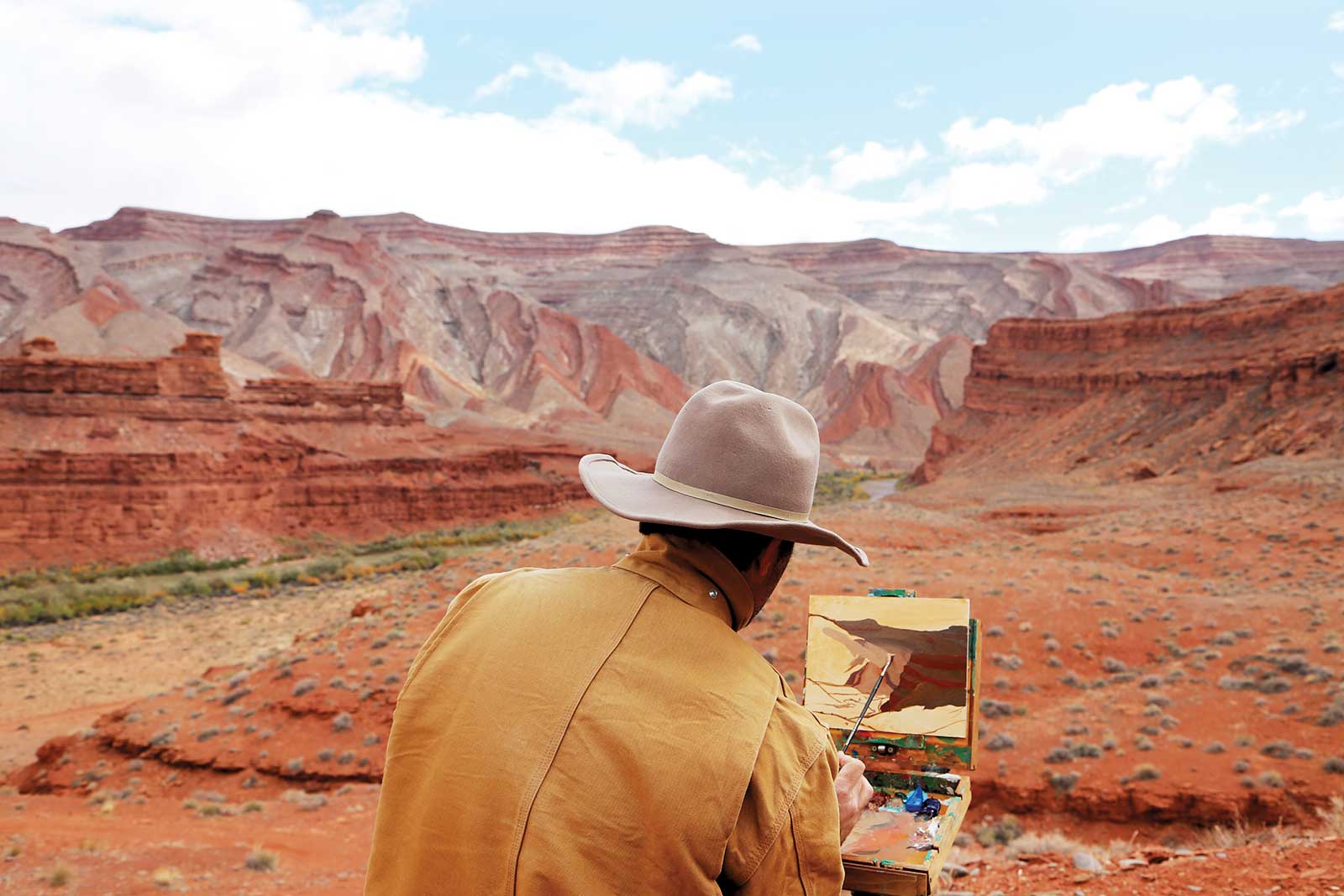 Logan Maxwell Hagege at Mexican Hat Bluff in Southern Utah. Image courtesy Maxwell Alexander Gallery.
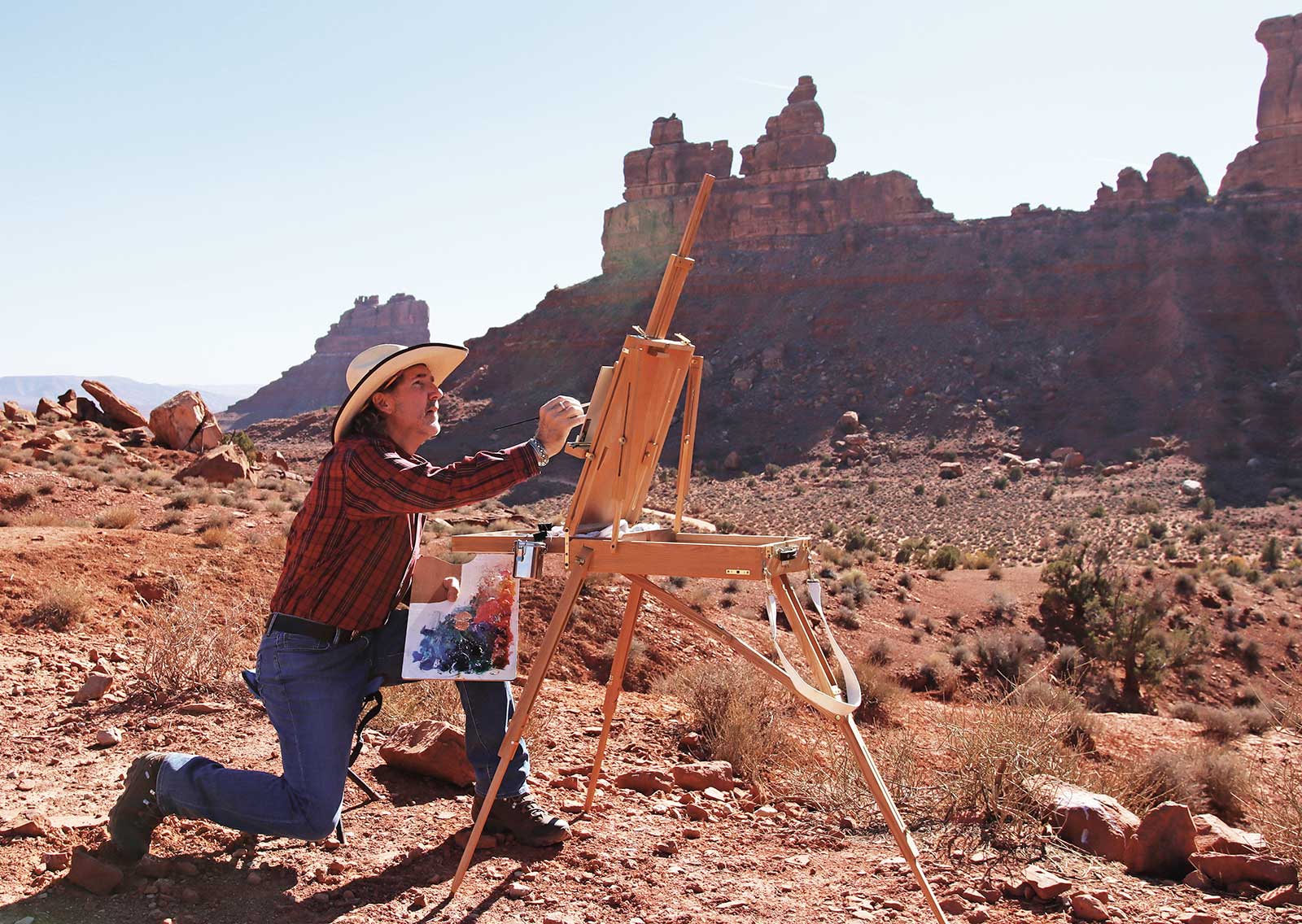 Kim Wiggins painting in the Valley of the Gods in Southern Utah. Image courtesy the artist.
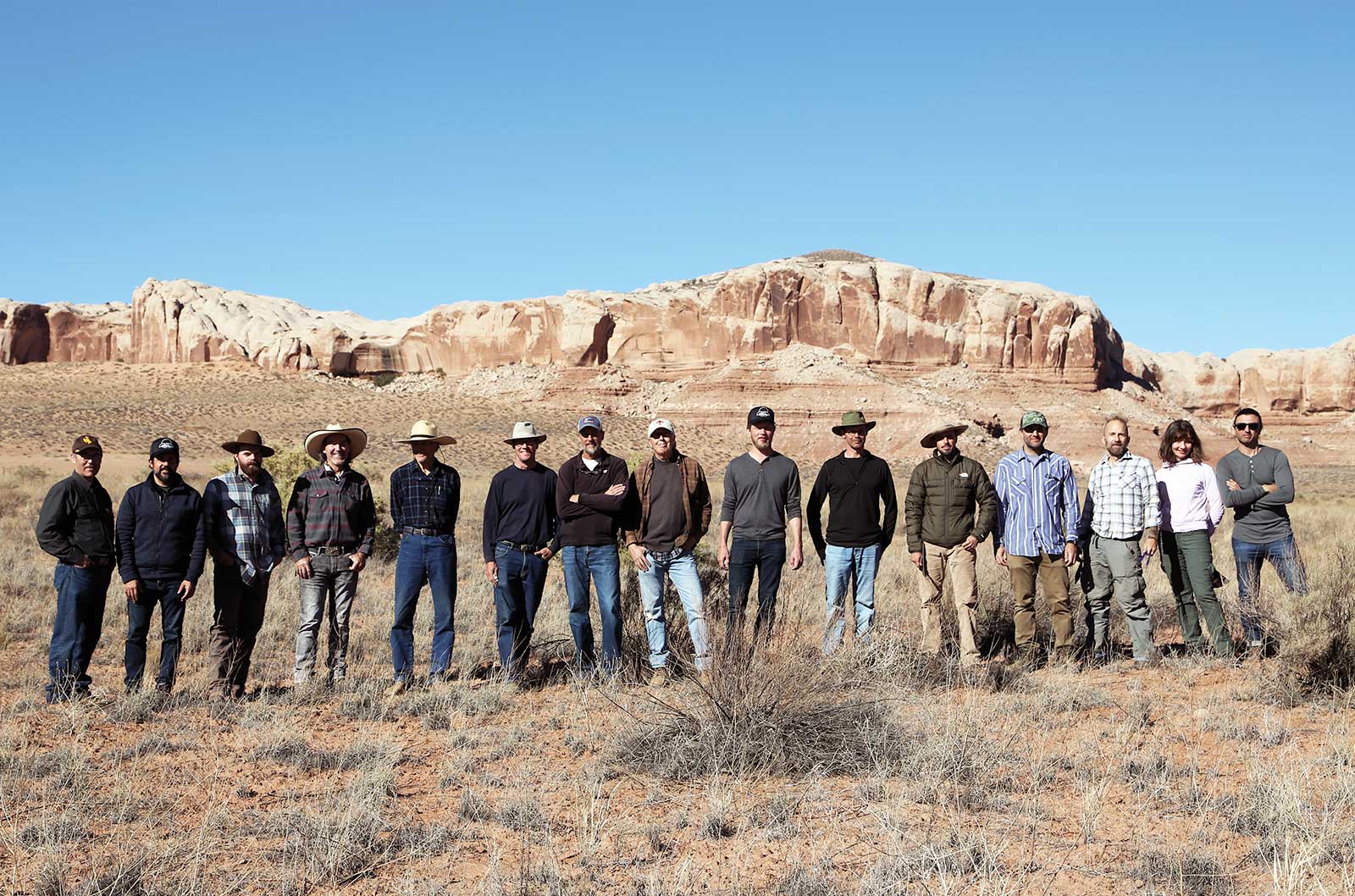 Artists from Maxwell Alexander Gallery in Bluff, Utah, in October 2021. From left: Grant Redden, Danny Galieote, Brett Allen Johnson, Kim Wiggins, Len Chmiel, T. Allen Lawson, G. Russell Case, Eric Bowman, Joshua LaRock, Scott Burdick, Joseph Todorovitch, Logan Maxwell Hagege, Jeremy Mann, Nadezda and gallery owner Beau Alexander. Image courtesy Maxwell Alexander Gallery.
The vehicles—including a truck with a camper shell, a rented Jeep, several SUVs, an electric car and tall utility van—are bounding down U.S. Highway 191 near Bluff, Utah. As road signs indicate turns-offs for places such as Calf Canyon, Sand Island, Mexican Hat, Valley of the Gods and Monument Valley, the cars start peeling off the main group and heading in their own directions as the occupants seek out ideal painting spots. Three cars end up pulling off onto a dirt road and parking 50 yards off the highway. Four artists emerge with bundles that are almost identical: painting boxes rattling with tubes of paint and brushes, a tripod, a roll of paper towels and a trash bag. They trudge through silty red sand, so fine it feels like powdered sugar, to get to a short hill with a clear line of sight on distant cliffs that are seemingly painted in alternating stripes of chalk and rust. Within 10 minutes all four artists—Logan Maxwell Hagege, Joshua LaRock, Joseph Todorovitch and Brett Allen Johnson—are mixing paint and making initial dabs on boards. Within 90 minutes, they’re all done. Over on Johnson’s easel, the Utah painter has created a study that speaks to the kind of work he is known for: stunning land forms, a heightened sense of contrast and vivid colors that exaggerate and emphasize the natural hues that are already there in the rock and soil. “The drama is in the shadows, and how it plays with the light,” he says as he twirls a brush in a paper towel. “Nothing beats this country right here. There’s a painting waiting everywhere you look.”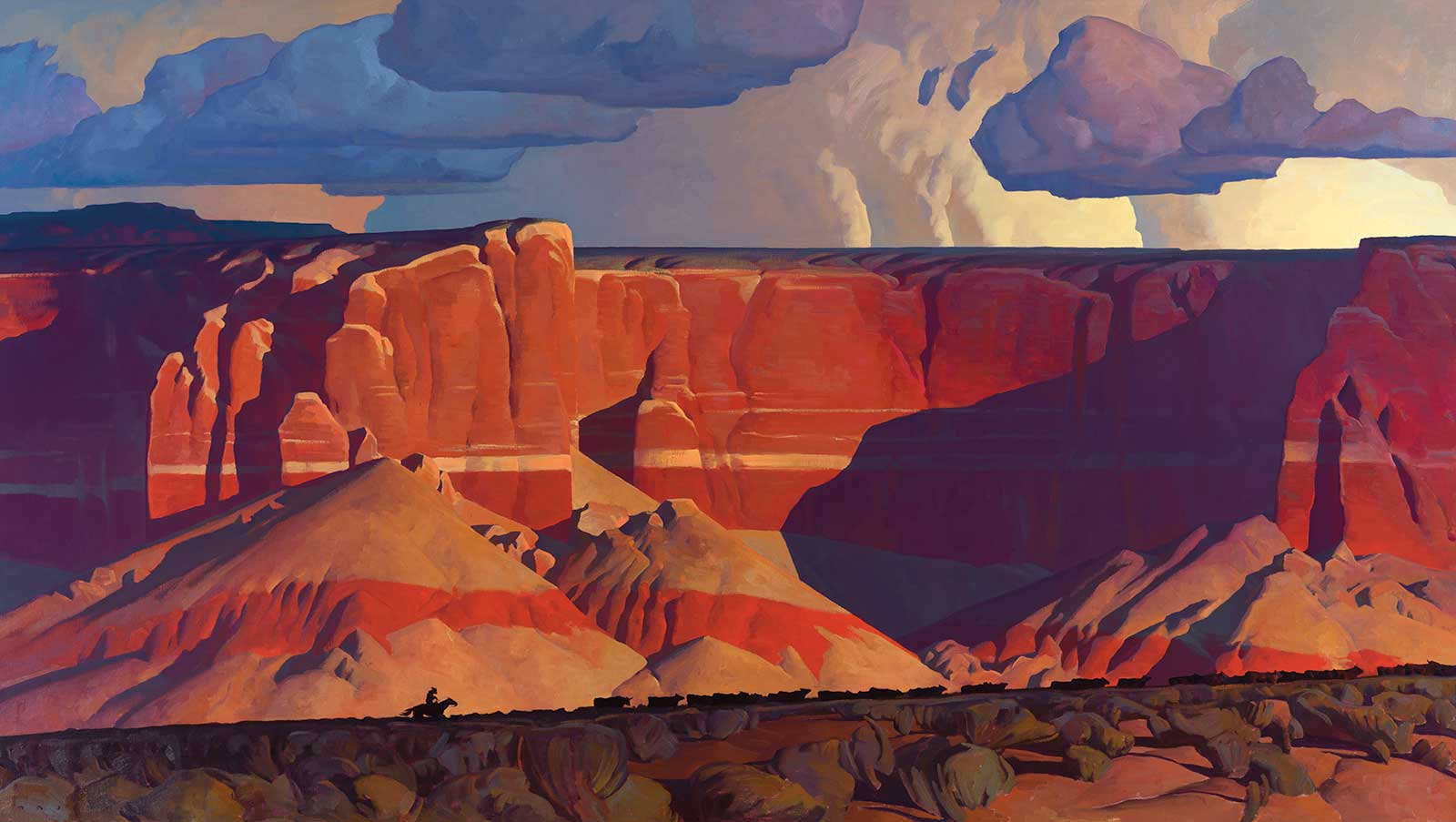 Brett Allen Johnson, Trailing Shadows, oil, 34 x 60”
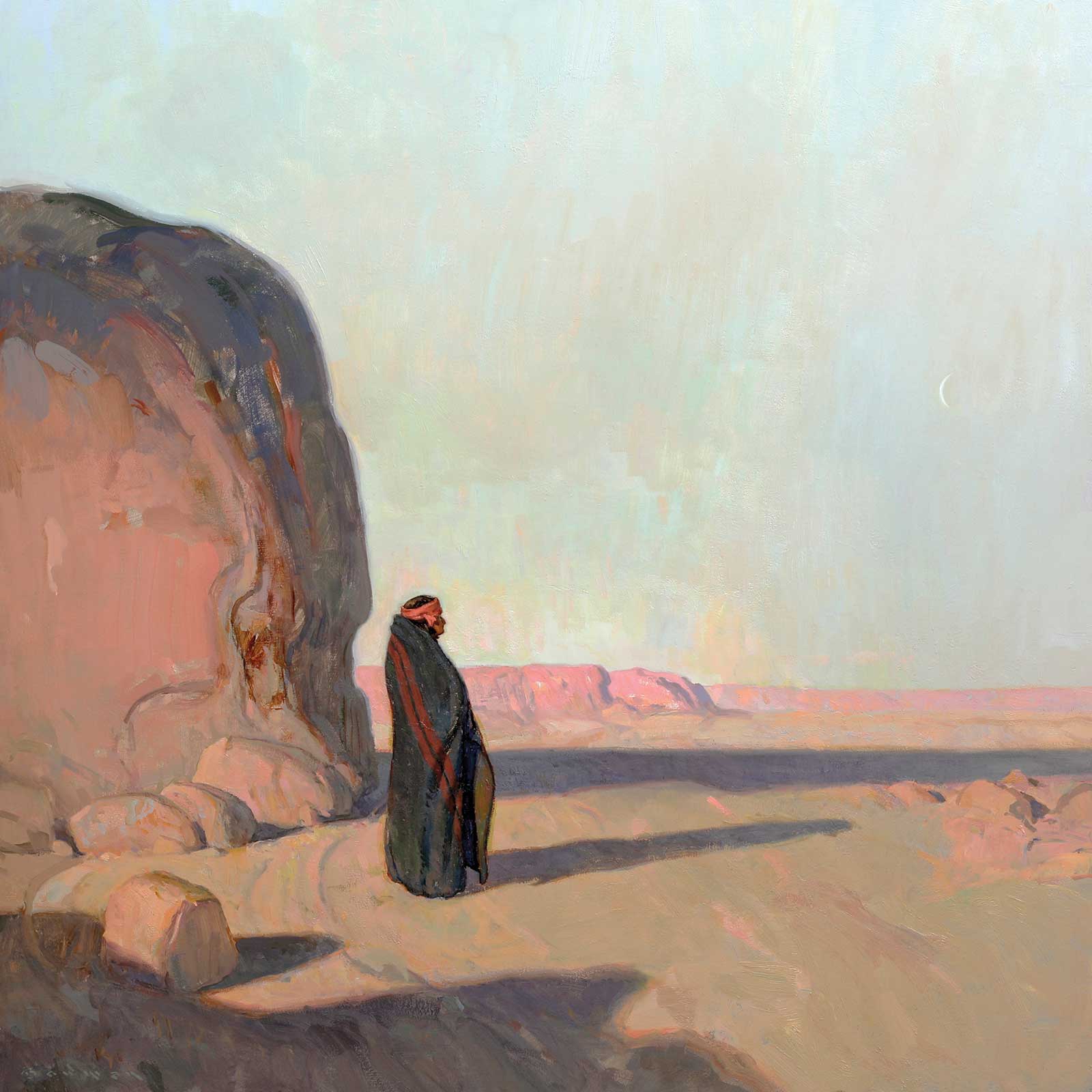 Eric Bowman, Crescent Moon, oil, 24 x 24"
Over at Hagege’s painting, the artist admits that he prefers to be painting rather than sitting in the car. “I’ve tried to stop looking for the perfect place all the time. If that’s all you’re doing, you end up driving around all day and don’t paint anything. Sometimes you have to just stop and get out and do it already. Just do what you came out here to do,” he says. Hagege is mostly known for his studio work, but he is very much a plein air painter and these trips with him and his painting friends have become a running thread within the story of his great career. “It all started back in 2001. I was taking these trips with the California Art Club. That’s where I met Glenn Dean,” he says. “It was very much a formative period for us back then. I remember our first day out together we had a flat tire and a dead battery on the same trip.” Later outdoor adventures would add Josh Elliott and others. And as their stars rose in Western art, it was obvious they would be leading the next generation of artists forward. And they were all friends and coming up together. There was competition, but it was playful, and everyone was cheering each other on.
Twenty years later, and they are still painting together. This trip to Bluff is to commemorate their friendships—the old and new—but also to mark the 10th anniversary of Los Angeles-based Maxwell Alexander Gallery. “To think where we started, and then where we ended up,” says Beau Alexander, gallery owner and Hagege’s brother, “it’s just amazing where these artists have taken us. A trip to bring them all together, it felt like a fitting way to start our 10th anniversary.”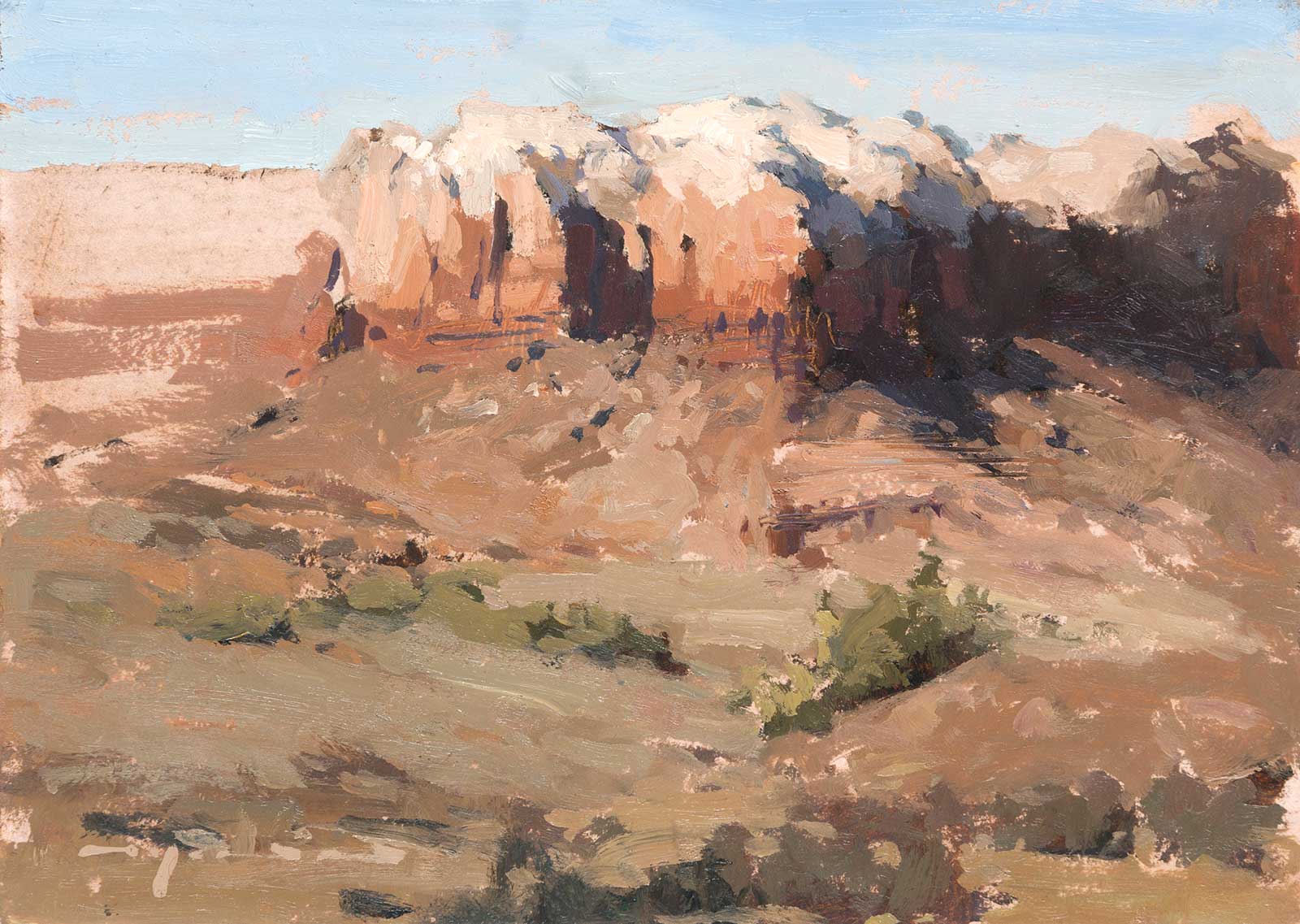 Jeremy Mann, Below the Bluffs of Utah, oil, 6 x 8”
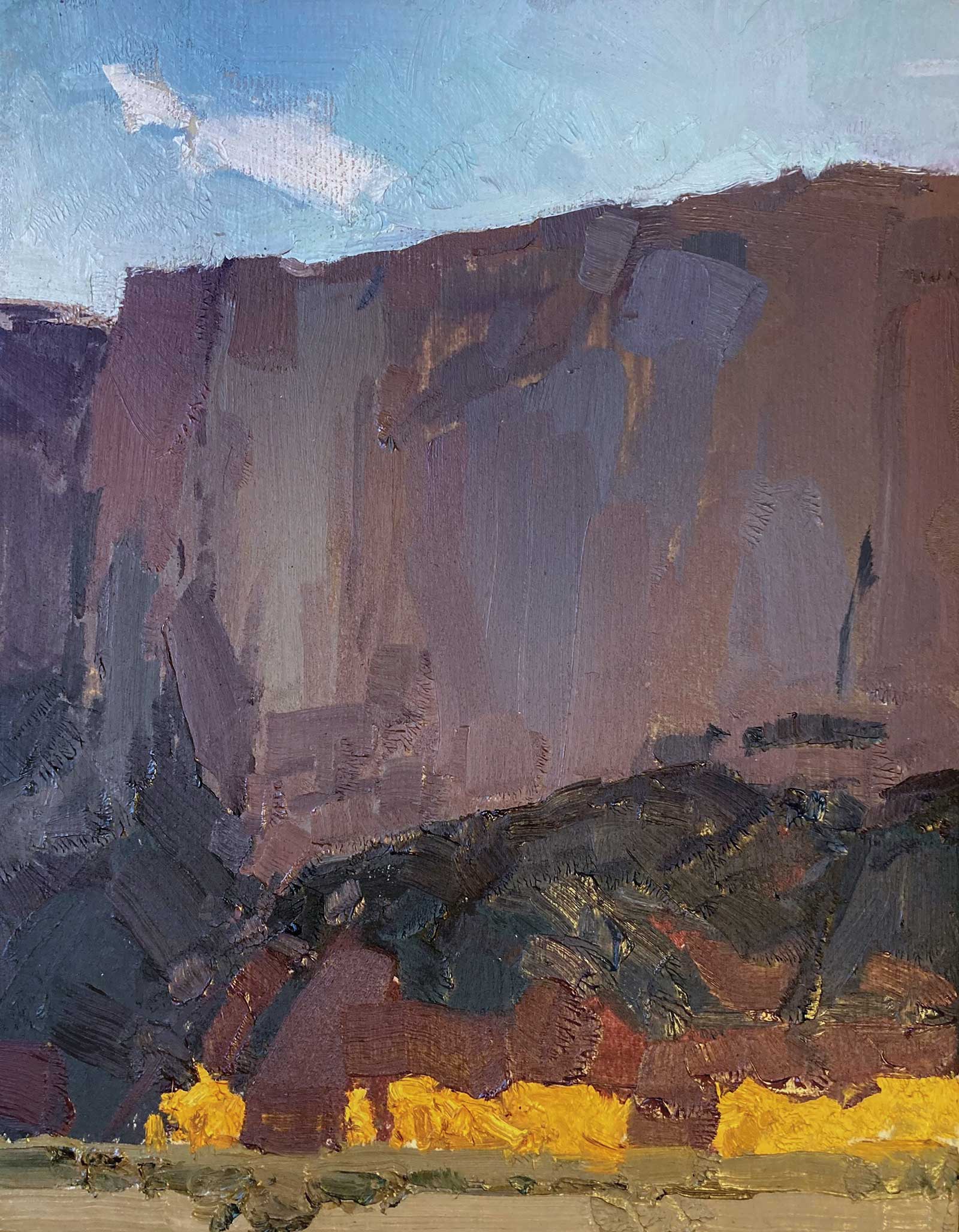 T. Allen Lawson, Bluff, Utah, Field Study, oil, 9 x 7”
Back at that first painting location, just as soon it was all set up, it was all taken down again, and off the artists went searching for that next spot. Down the highway they turned onto another dirt path, this one a loop leading through the Valley of the Gods, Monument Valley’s denser and more compact cousin. The road winded down through tall rock spires and razor-edge ridgelines. Once they turned toward the sun and the light started favoring west-facing cliffs, the caravan stopped. Johnson set up his easel by his truck, while the rest of the group climbed a nearby hill. Hagege came up with a camera on his shoulder and a sketchpad in his hands. Small talk drifted toward brands of paint everyone was using, updates on kids and families, upcoming shows and historic artists they favor, including Taos painters Victor Higgins and Ernest L. Blumenschein, whose names are mentioned amid scenery they would have certainly appreciated. At the bottom of the hill, New Mexico modernist Kim Wiggins has arrived, a day late after a tire blow-out in his home state. How and why do artists of different backgrounds connect and travel together like this? They are united in their hunt for truth in paint, and they bond over that shared interest. And with Maxwell Alexander’s artists, they are also united in their desire to find new paths into and out of Western art, be it through Johnson’s intense color, or Hagege’s iconography, or Wiggins’ contemporary regionalism—for these artists, there is room for tradition, but also subversions of those traditions.
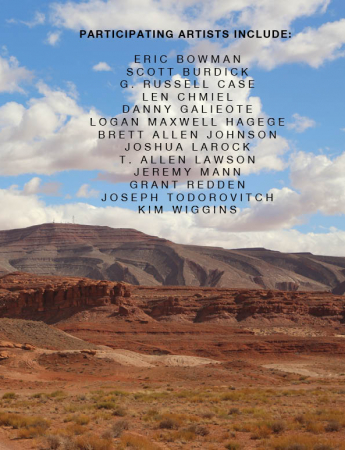
The artists continued to paint all day, and met back for dinner at their hotel, which was positioned in a narrow canyon with cliffs on opposite sides. There is a motley crew of painters in attendance: Hagege, LaRock, Johnson, Kim Wiggins, Scott Burdick, T. Allen Lawson, Len Chmiel, G. Russell Case, Eric Bowman and Grant Redden, as well artists who have stronger links outside of the West: Joseph Todorovitch, Danny Galieote and Jeremy Mann, who is with his wife, Nadezda, also a painter. There are several notable absentees, including Dean, who’s in Switzerland, and Josh Elliott, who was spending time with his father, the late painter Stephen C. Elliott. Many of the artists show in multiple galleries, including prominent Western venues in Texas, Arizona, Wyoming and New Mexico. But they share a close bond when it comes to Maxwell Alexander Gallery. Many of them credit the brothers, Logan and Beau, for making it all happen. “They just do things a little different, and they encourage that from the artists,” Bowman says. “They love the work and they respect the artists, not to mention they are creating a lot of excitement in this genre.”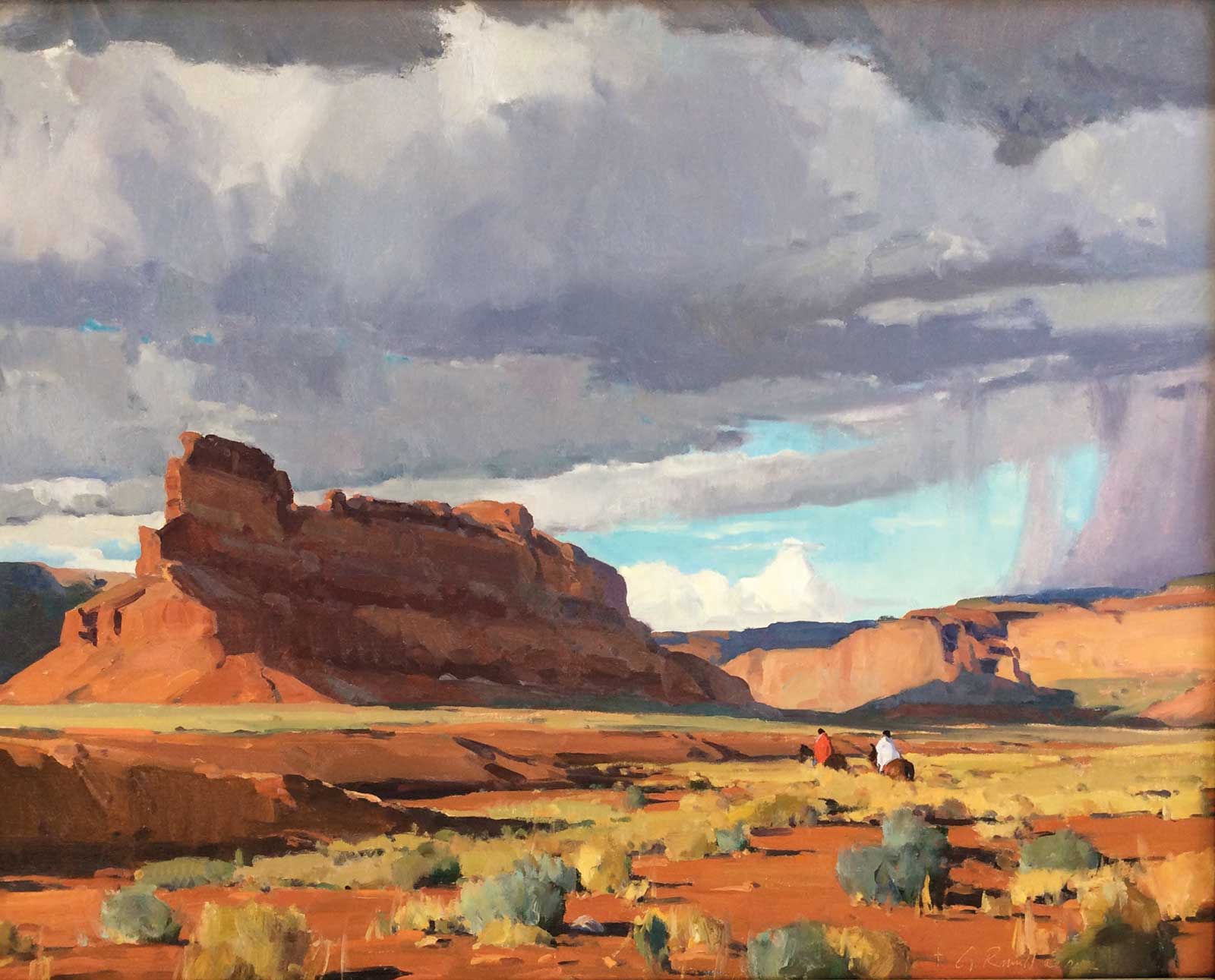 G. Russell Case, Storm Over Bluff, 24 x 30”
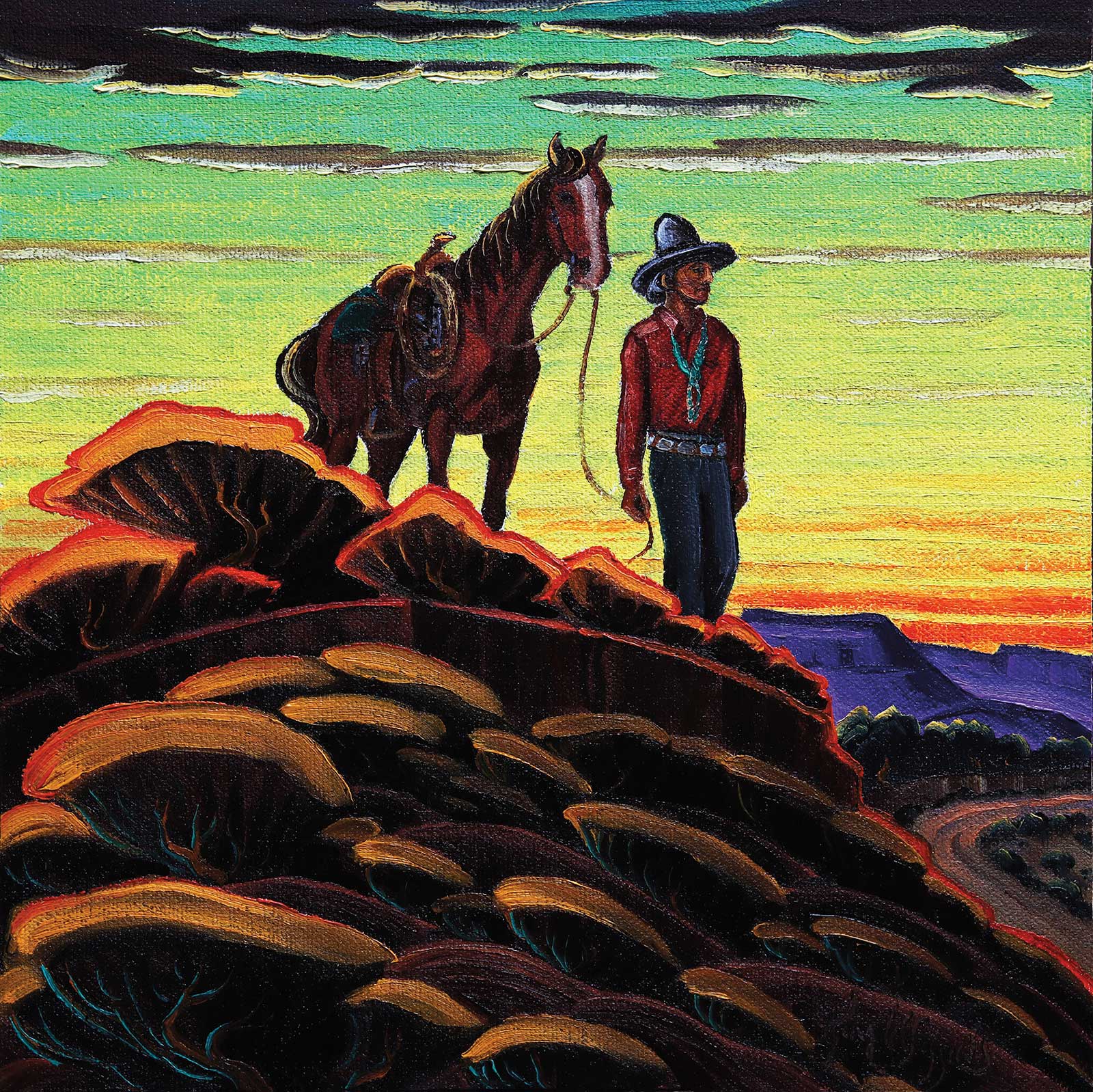 Kim Wiggins, Navajo Dawn, oil, 8 x 8”
After beers and pizza by a fire, many were in bed early, ready to start again the next morning. During the night, an autumn storm rolled in and kicked out the mild weather, replacing it with soggy conditions and a surging wind, a potent combination that would leave many paintboxes unopened for most of the next morning. But art does not wait for clear skies, so off the accordion went in search of its next batch of paintings. One of the groups that took a more southwestern journey outside of Bluff had a unique group of artists: LaRock, Burdick, Chmiel, Lawson and Galieote, whose work is less known in Western art but it certainly calls out to the nostalgia of the past. Chmiel and Lawson were leading the way as the cars bounced down dirt roads with high views over cottonwood-lined streams and mesas fractured open by narrow box canyons. Chmiel, at 79 years old, is the oldest member of the group, but you wouldn’t know it by the spring in his step. He’s the first one out of the car, and the last one back in. And he’ll frequently order a halt, jump out and race down a hill to snap a picture of fading clouds or light dancing through a stand of trees in the distance. He’s asked, “What are you searching for?” He stumbles around an answer, and then finally blurts out, “I don’t know what art is, but I do know it’s a curiosity,” he says. “A curiosity to see and to know. That’s what I’m doing out here, and that’s probably what all artists are doing anywhere.”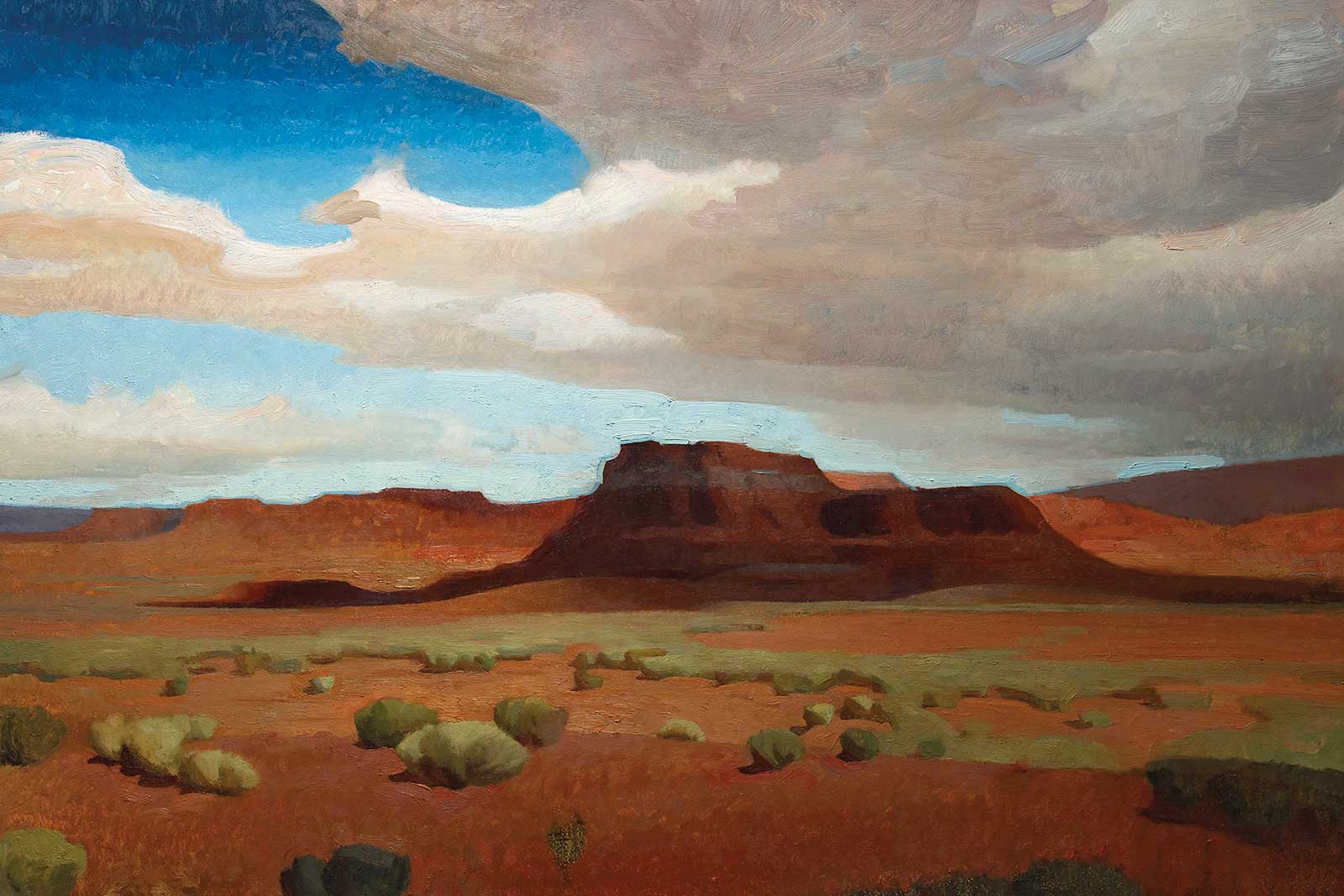 Joseph Todorovitch, Bluff, oil, 24 x 36”
Eventually, they come to a huge crater with a small rocky peak in the middle. At first it looks almost volcanic, but as they hike around the rim it becomes clearer: Millions of years ago, the nearby San Juan River had cut an oxbow into the Utah earth, and eventually the river just bypassed it altogether leaving an empty bundt pan of jagged rock (even on a satellite map it’s impressive: 37.21812, -109.73998). The open crater is there, the river is making its turn around the corner, nearby there are painted hills and crumbling forests of petrified wood, and off in the distance there are chimneys of stacked rock untouched by time, and yet the artists turn their attention to little moments: when light brings out the purple of the shadows, or how the cottonwood leaves can glow under the right conditions, or how wet soil seems to soak up the light and reflect it back with different textural qualities. These are the kinds of artists who would go to the Grand Canyon and paint some overlooked nature scene out past the visitor center’s parking lot. The obvious doesn’t always interest them, but the work is always beautifully painted and it’s created with care by exceptional artists. And just as quick as it rolled in, the wind rolls out with little fanfare, leaving happy painters once again dabbing at boards and gazing into Utah’s immaculate horizon.
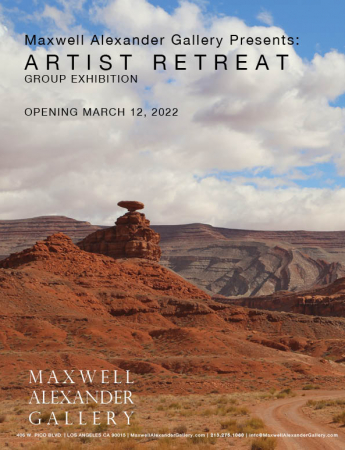
The gallery will kick off its 10th-anniversary celebration on March 12 with Maxwell Alexander Gallery Presents: Artist Retreat, a group exhibition featuring the work painted during or inspired by the Bluff trip. The show will be a prelude to a bigger bash in October that will officially mark a decade of the influential gallery and its role within Western art. —
Maxwell Alexander Gallery Presents: Artist Retreat
March 12-April 5, 2022
Maxwell Alexander Gallery, 406 W. Pico Boulevard, Los Angeles, CA 90015
(213) 275-1060, www.maxwellalexandergallery.com
Powered by Froala Editor