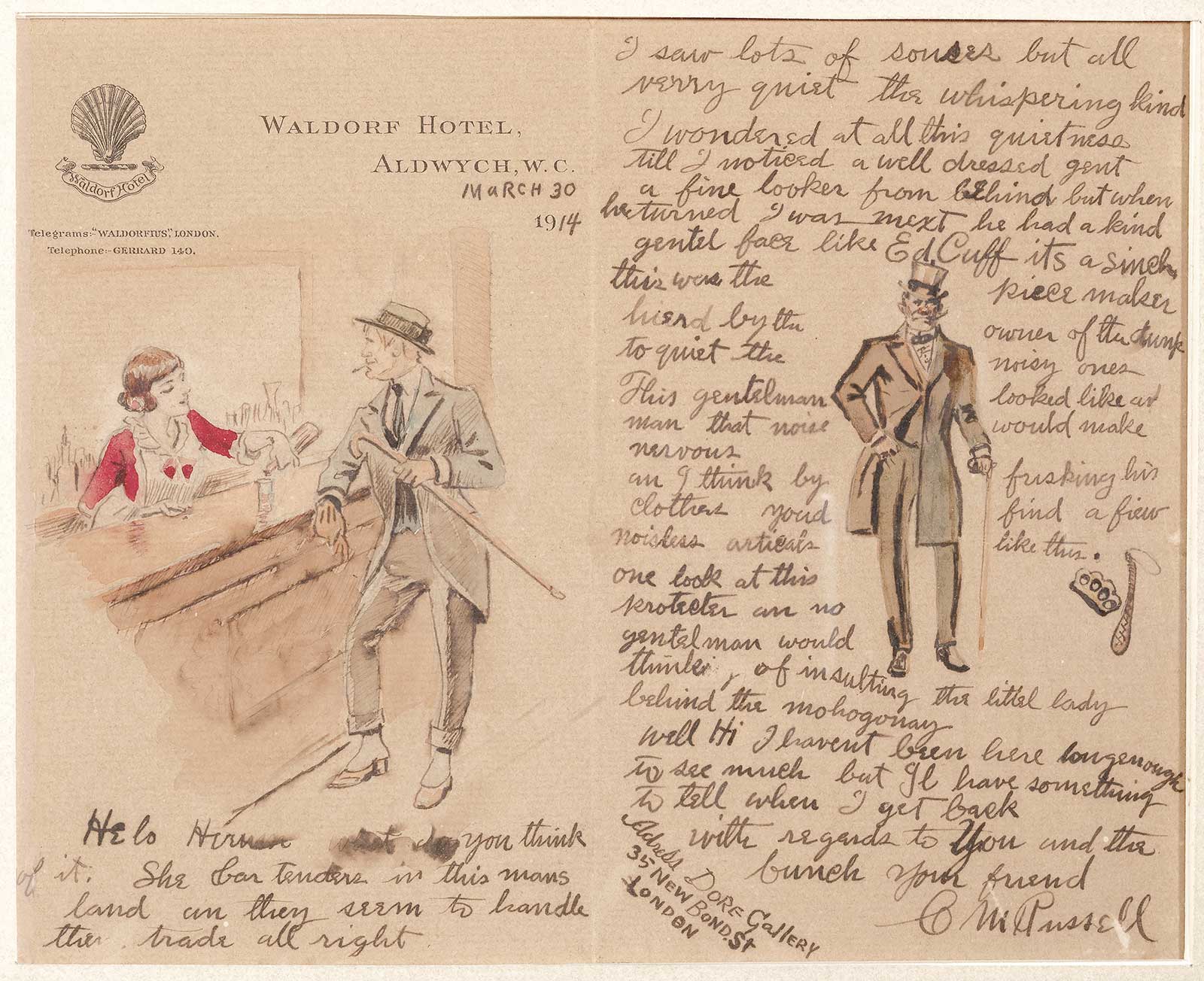
 Charles M. Russell (1864-1926), Letter to Keros A. Hinote (“Hiram”), March 30, 1914. Petrie Collection.
Complementing Nancy’s account of British perceptions of American women and their custom of chewing gum is Charlie’s bemused report to one of his bar owner friends in Great Falls on English drinking traditions and the bouncer’s influence over inebriated patrons in the presence of a female bartender. Such an arrangement stood in sharp contrast to that in Montana where the Silver Dollar and Mint Bars were closed to regular male customers on certain days in order to be “suitable” establishments for ladies to come and enjoy seeing Russell’s art.
Editor’s Note: This is an excerpt from Nancy Russell’s recently published third book, Back-Tracking in Memory: The Life of Charles M. Russell, Artist. The manuscript for the book, which includes Nancy’s “recollections, reflections and personal perspectives,” was thought to have been lost after work stopped on it in 1929, but it was discovered a decade ago by Thomas A. Petrie, who paved the way for its publication in 2021 with the help of Western author and scholar Brian W. Dippie.
In Canada [at the first Calgary Stampede in 1912 as well as a year later in Winnipeg] we received so much encouragement to show Charlie’s work in London that we began to think seriously of such a plan. As we were going to New York that winter with the pictures for exhibition, I started immediately to lay the foundation for an exhibition in London [in April 1914]. Arrangements were made with the Doré Gallery in Bond Street. [Today these are the auctioneer offices of Sotheby’s.]
My first thrill came in sending a cable and getting a reply dated before the original message had left me! After our exhibition in New York we arranged to bond the pictures so that they would get into England and out again without trouble.
We crossed on the Oceanic, which later went down during the [First] World War. Strangely enough, the same fate was met by the ship we chose for the return voyage—the Lusitania.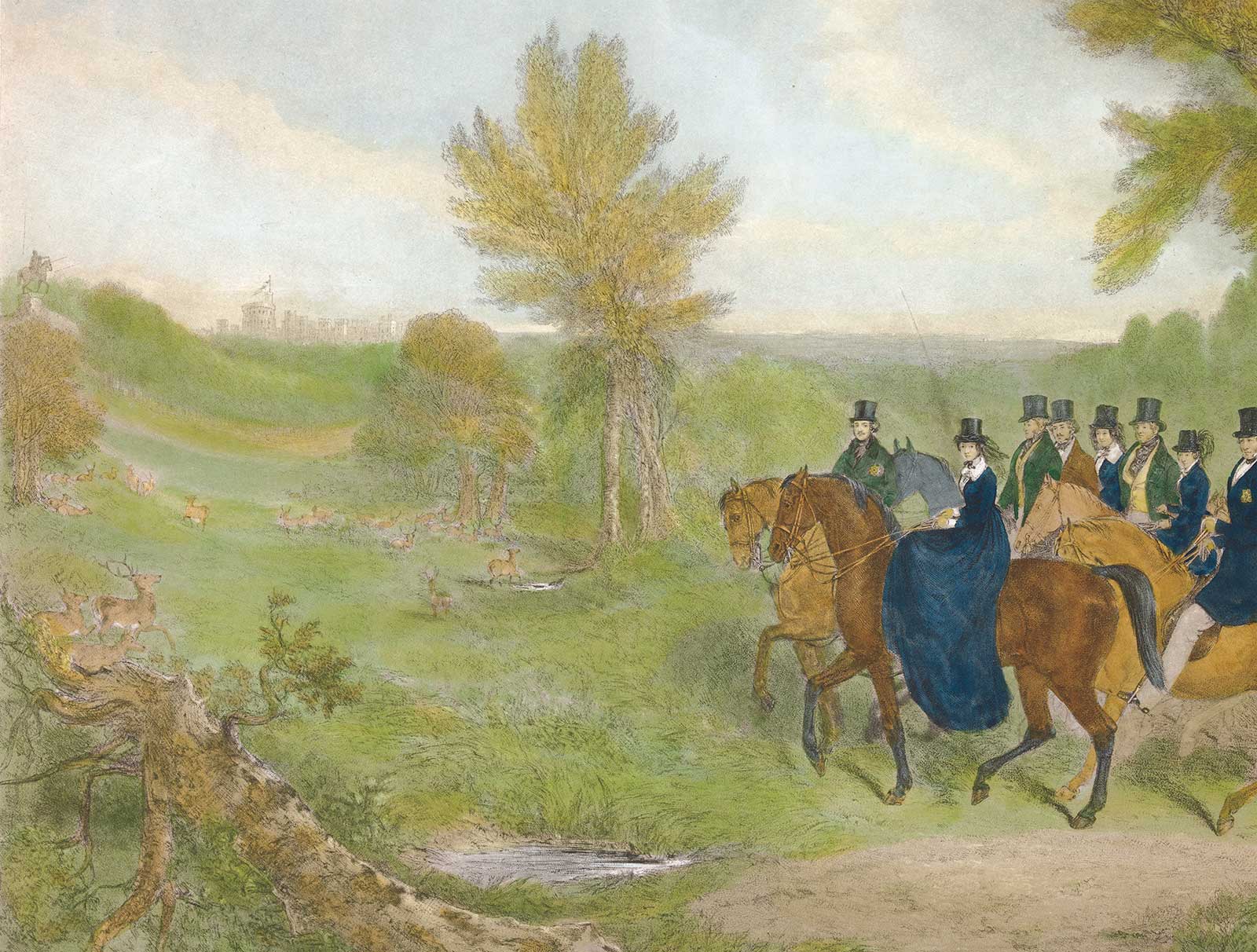 Detail from Royal Cortege at Windsor Park. Engraving by F. Bromley of original painting by R.B. Davis, detail created by Luc Demers. Petrie Collection.
March is a very bad month on the Atlantic, and the ocean did everything but empty us out of the ship. And two prairie people were very sick! Charlie said, “I feel like I swallowed a bull snake, and he won’t keep still.” There was someone in the next stateroom who was also very sea-sick. Charlie called out, “Wait a minute; I’ll throw in with you!”
The poor, suffering man on the other side of the wall would then be quiet for a while.
We continued to be so ill ourselves that with what strength we had left we decided to get off at Plymouth. And for the first time in our married lives, Charlie had to pack up the bags. To my surprise he did a very good job.
It was wonderful to get onto the ground, except that it was less solid than we had supposed it would be, for it had a swell like the ocean and kept us from walking [in a] straight [line] for over a week after we got to London.
We got through customs miraculously in no time at all and entered the boat train for London. Charlie’s first thought was for a substantial breakfast, and we at once found the diner, where I had the first food I had eaten since leaving New York—except for a saltine cracker and a split bottle of champagne. Charlie liked the English bacon and sole and grilled tomatoes.
So our visit to England began auspiciously.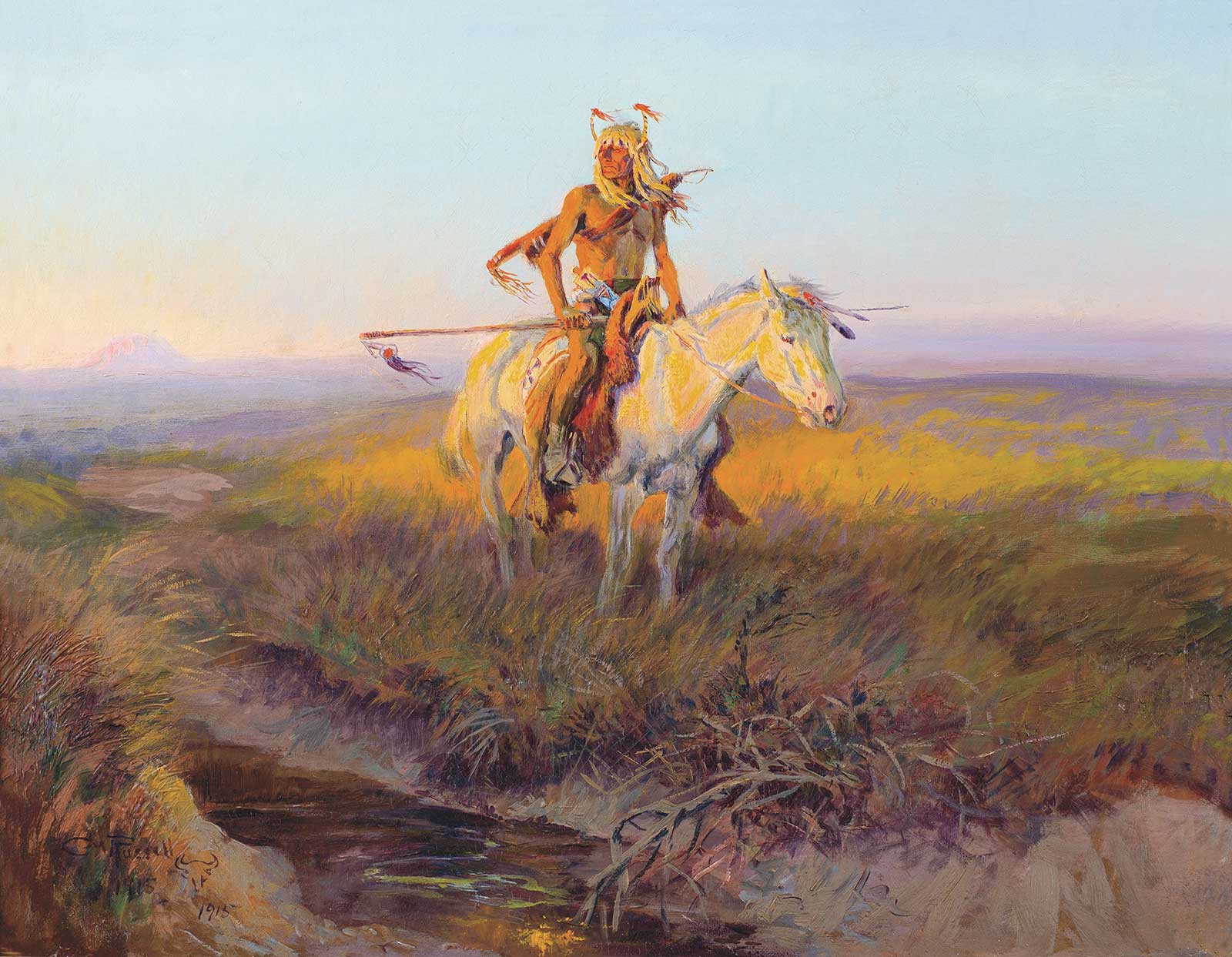 Charles M. Russell (1864-1926), The Scout, 1915, oil, 16 x 21”. Petrie Collection.
We were amazed by the neatness of the woods we passed through. There was not a twig on the ground, and there were no waste papers or boxes or cans to be seen anywhere. At the stations beautiful little flower gardens smiled at us.
At the London station the trainman said, “You must look after your own luggage.”
That was some assignment! We couldn’t run in so many directions at once after the various pieces of luggage. But finally we got them all together and got a man to take them.
We stayed at a small hotel where the doorman was most kind in directing us to the gallery at Bond Street. When the bus conductor asked for the fare, Charlie held out a handful of silver so strange to us with these words, “Take it out of that.” The addition of sixpence assured us that we would not go past our corner. With the greatest politeness we were told which way to turn to get to our destination.
The boxes of pictures had been delivered to the gallery, and the manager was anxious that they should be hung as soon as possible. So that was the next thing to be done—to get the exhibition in order.
When the pictures were in place, a great banner was swung out over Bond Street, announcing “Charles M. Russell, cowboy painter of the West that has passed.”
And often later, as we rode along the bus, we would see sandwich men telling [their customers] about
the exhibition.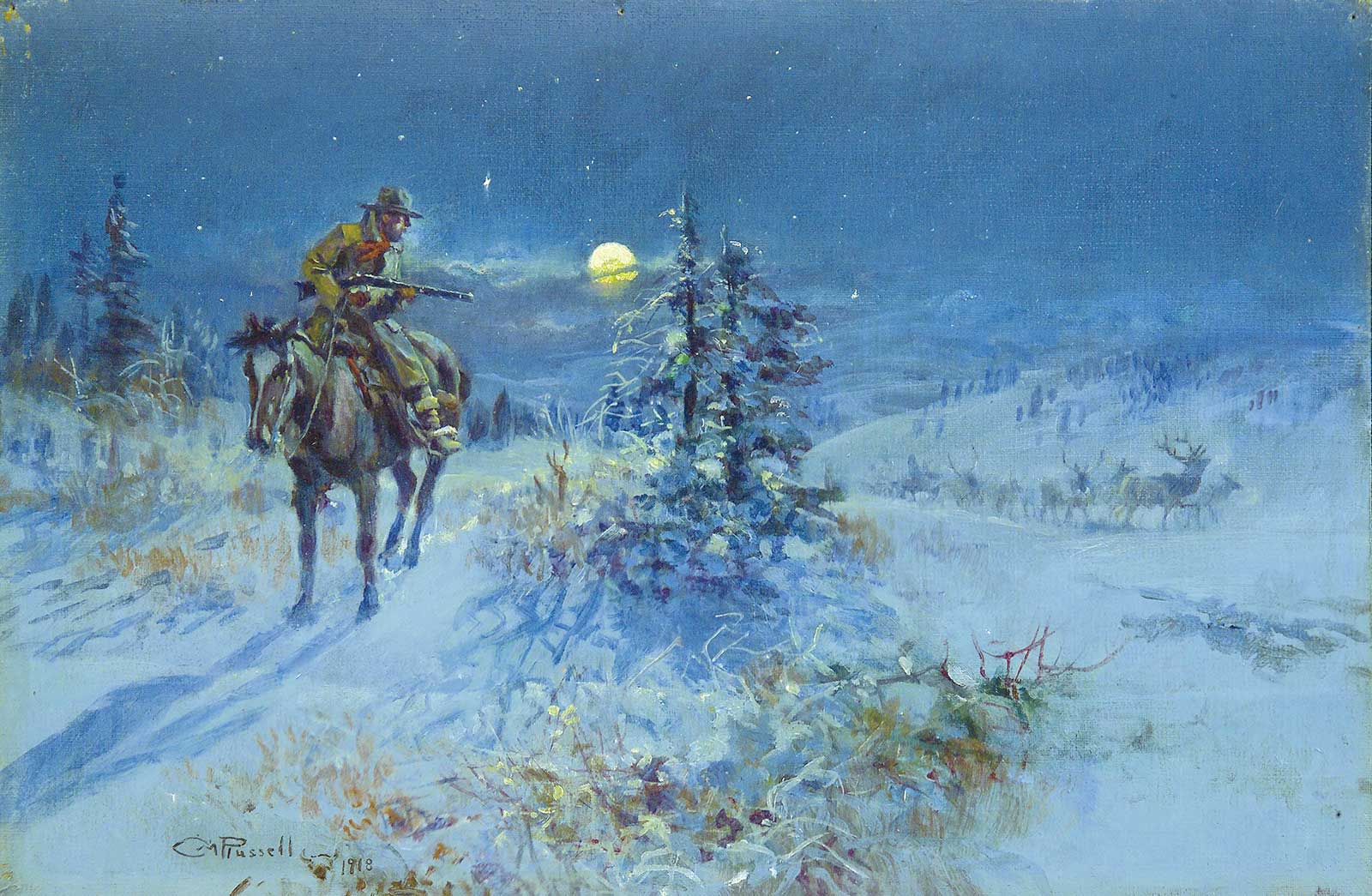 Charles M. Russell (1864-1926), Joshing Moon, 1918, oil on canvas, 8½ x 13½”. Petrie Collection.
At 4 o’clock every afternoon all of us quit work and went into the main office of the gallery for tea. Then the men would smoke, and as I didn’t smoke, the attendants regretted that they did not have some chewing gum to offer me! I assured them that I didn’t care about chewing gum.
“Oh, don’t all American women chew gum?” they asked, baffled.
“Not all of them,” I said, “and not all of the time.”
It was an education to meet the art critics in London. They did not want to be introduced to either Charlie or me until after their criticisms had been written. They didn’t want our personalities to influence them in their judgement.
But the results couldn’t have been any better if we had tried to tell them how good we were. The English people like outdoor action pictures. Most of them are great travelers and have seen a good deal of life, so when it is put on a canvas that is true to life, they appreciate it. So Charlie’s work was received with marked enthusiasm and understanding.
Once the favorable criticisms had reached the press, there was an excellent attendance at the exhibition. It was interesting to see an elderly man with a group of young boys taking pleasure in the collection, asking such natural questions about the handling of horses and cattle.
Although it was April and the World War [WWI] was but four months away, we heard no whisper of trouble on the continent. So different was it from the months preceding the present war [Note: Nancy is contrasting it with the onset in 1940 of WWII]. Occasionally we heard talk of the trouble with Ireland, but the opinion seemed to be that it would be straightened out in no time. So people were happy and gay; the exhibition continued to be well attended; and we made friends and were invited to English homes—which we understood was the thing that never happened!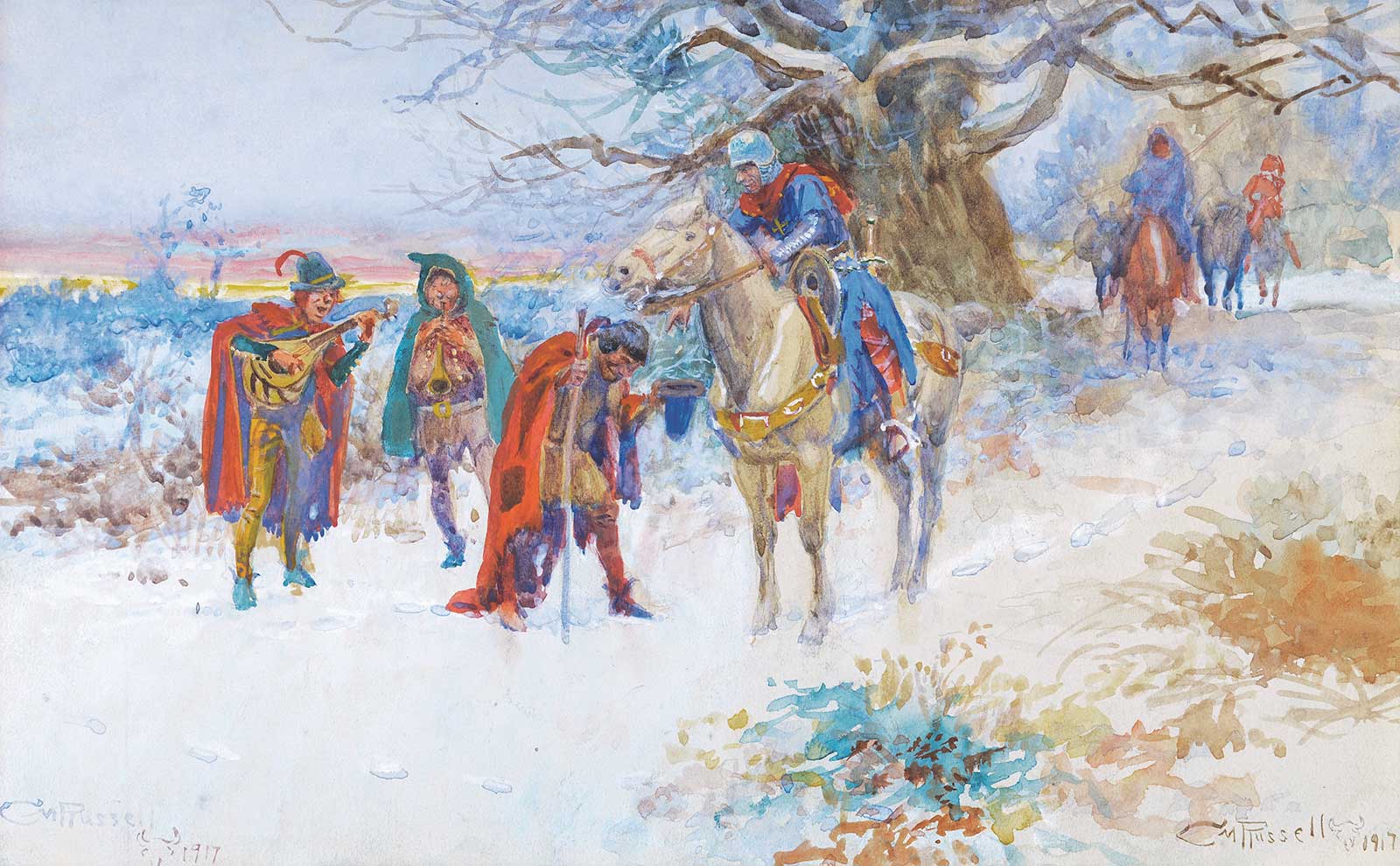 Charles M. Russell (1864-1926), Knight and Jester, 1917. Petrie Collection.
However, Charlie had so much that he was doing for the world that the English accepted him as a man who had done his part [by informing the public about western American history] for coming generations. They recognized his genius and were not slow to say so.
One of the people who came to see the exhibition was Sir William Ramsay. He had heard of Charlie through his brother-in-law who lived in Montana. He and Lady Ramsay invited us to dinner at their home near Regent’s Park.
When we rang the doorbell, a tall, liveried servant appeared. We both felt that we should bow to him, he looked so impressive! He took our wraps, then showed us the way upstairs where the party was waiting. The door was opened; we were announced, only to find ourselves decidedly bewildered in this strange drawing-room. We gradually drifted to the end of the room where most of the guests were assembled. I think I was enticed over there by the sight of cups of steaming tea in the hand of the guests. Not accustomed to the utter lack of heat in English private homes, I had innocently come clad in a whisper of chiffon dress because it was becoming! However, my chattering teeth didn’t add to the charms of the gown, and nothing ever seemed so welcome as that first cup of hot tea. I was pleased to see how eagerly Charlie juggled his cup, too; I suspected that he was just as cold as I, in spite of having several more layers of clothing.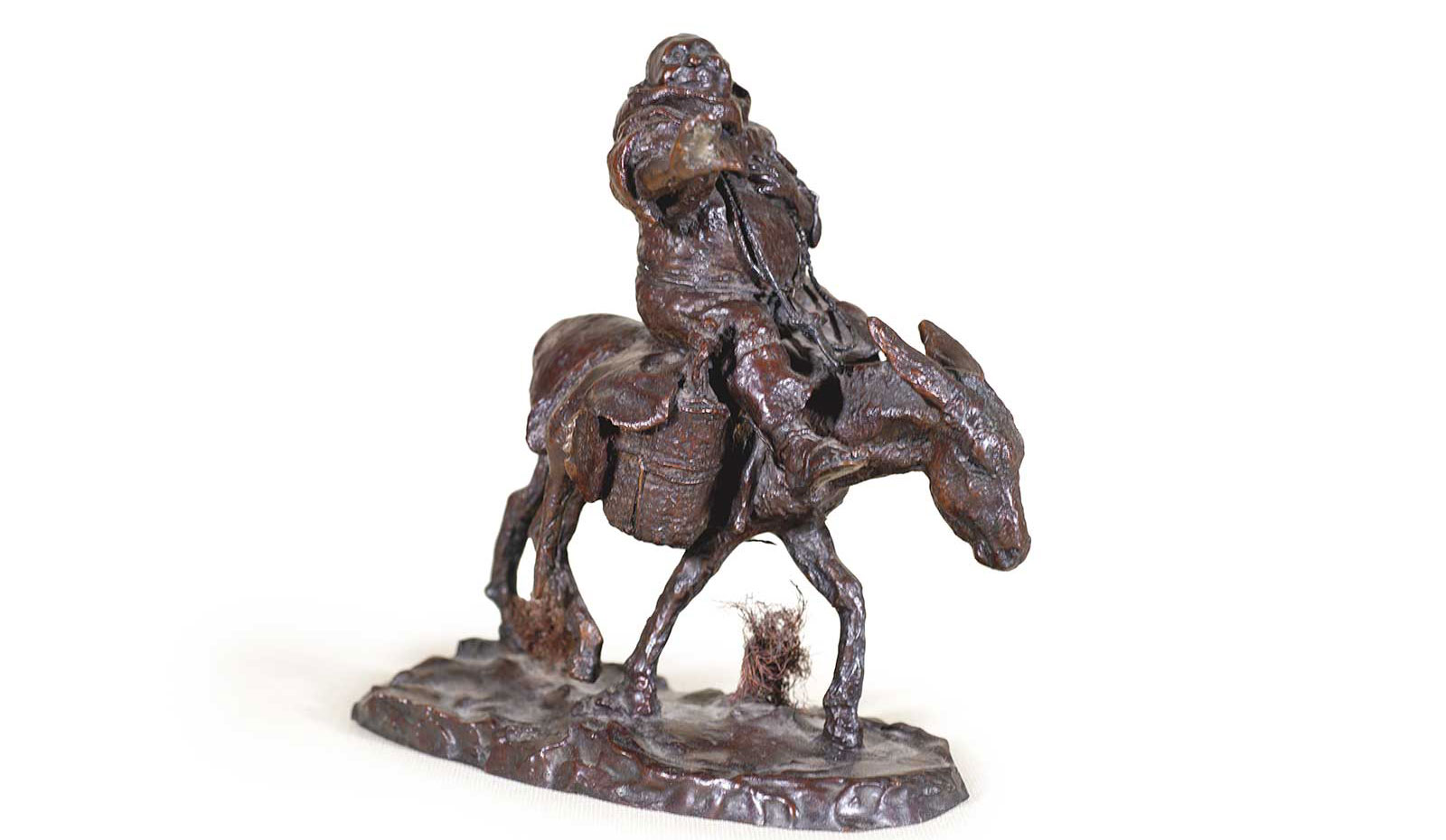 Charles M. Russell (1864-1926), Friar Tuck, bronze cast from the plaster model. Petrie Collection. Pursuing further the “Friar Tuck” theme, Russell fashioned a model in honor of that legendary figure.
Almost immediately dinner was announced. I went with Sir William, and Charlie escorted Lady Ramsay. When they reached the threshold of the dining-room, Charlie naturally stepped back to allow Lady Ramsay to enter the room first. But in stepping back, he landed on her train, and there was a harsh, ominous sound of ripping silk. The gown seemed to be crying out in horror that its wearer was going to be minus a train in a minute.
Lady Ramsay hesitated, seemed to be about to kneel. My cowboy husband straightened the train so that his hostess could proceed without further mishap.
Charlie later confessed that he had suffered with embarrassment the entire evening and wanted desperately to ask someone how a lady could go through a doorway without having her escort step on her gown. Long after we had got back home, Charlie had forgotten his embarrassment enough to tell his cowboy friends about his little difficulty. But they were of no help to him, for they could suggest nothing more skillful than [what] he had done.
At any rate, Charlie was sure that Lady Ramsay would never forget him.
A man we had met in Canada, Mr. Hamilton Pfyfe of the Daily Mail, looked Charlie up in London and wanted to show us some interesting places in England. He took us out along the Thames River to Windsor Castle. In the nearby park were many deer, the sight of which delighted Charlie. All of it was as nature had made it, and the animals were happy.
Pfyfe also took us to the little church about which Gray’s Elegy was written, and we visited the spot where Gray and his mother were entombed. I am sure the same tree stood near the church where lived the owl that Gray immortalized in his Elegy.
This was one of many happy excursions to see the country and its treasures. Stratford-on-Avon was not more interesting to Charlie than that day spent on the Thames.
At Broadway, where lived artists of all types, Charlie visited the home of Millett [Francis Millet] and there saw the work of Elma-Tadema [Lawrence Alma-Tadema]. These men were great friends, and there were many examples of their finest work.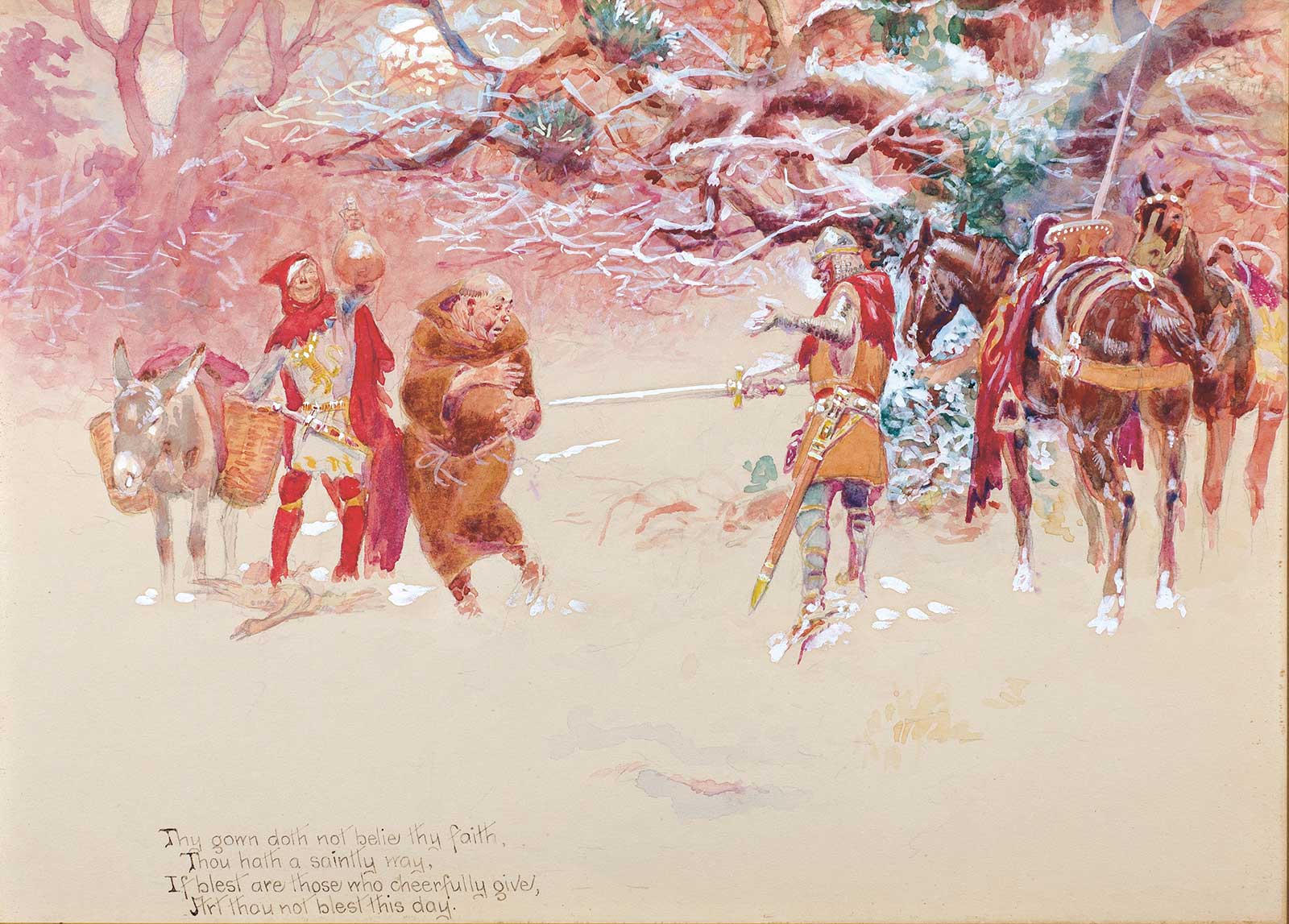 Charles M. Russell (1864-1926), Knight and Friar Tuck, 1917. Petrie Collection.
[During our visits to galleries and museums] Charlie loved the smaller pictures of artists; for instance, he especially enjoyed the Wallace collection in London because of the small picture of Mesange [a type of bird].
At Broadway Charlie also had tea with Mary Anderson Navarro, the famous American actress. I missed this treat because I [Nancy] was out climbing through hedges in the search for wild hyacinths. A game-keeper came along just as I untangled myself from one hedge. In great surprise he asked, “Did you come through there?” And when I nodded in reply he said, “It will be easier to go through the gate down below. It’s a quarter of a mile away.” I objected that the gates were all locked, but he assured me that this one was not. [One interpretation of this is that he may have been discreetly and politely telling Nancy where she would not be trespassing!]
At any rate, the troublesome hedges were responsible for keeping me from the tea-party. But in addition to rents in my clothes and scratches on my skin, I had a lovely bunch of wild hyacinths. They made up, in small measure, for the lost opportunity of taking tea with the glamorous Mary Anderson.
Because England was natural and was the mother of all the countries Charlie knew, he loved it. Everything was old and settled, and this appealed to him, too. However, he was continually struck by the fact that—as he put it—there seemed to be more people under the ground than on top of that island. —
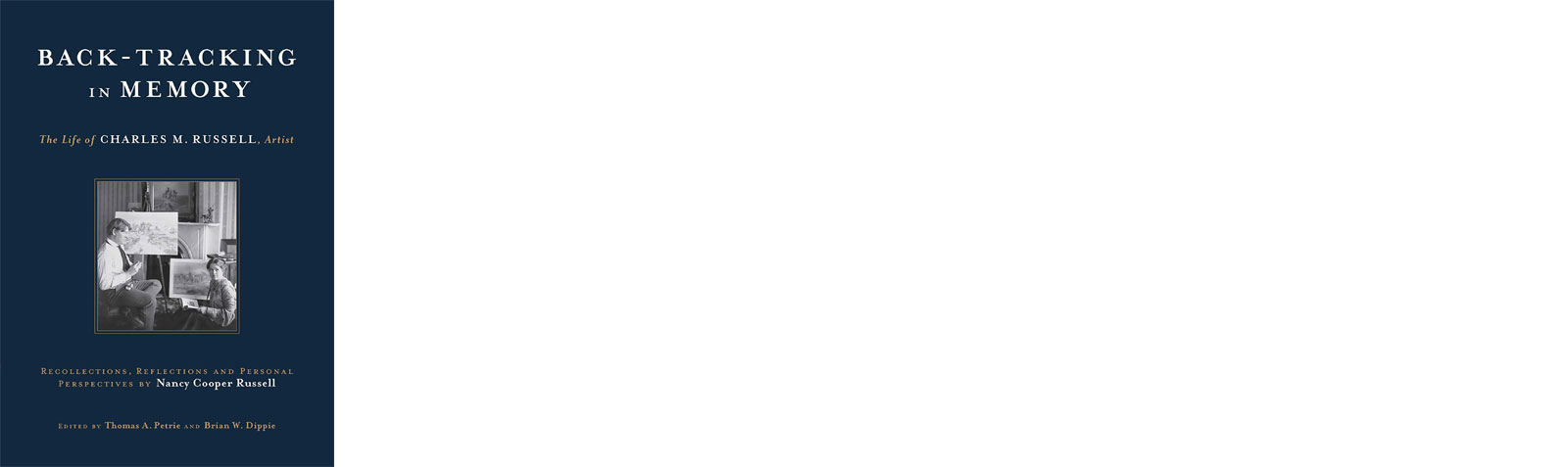 Back-Tracking in Memory: The Life of Charles M. Russell, Artist — Recollections, Reflections and Personal Perspectives
Back-Tracking in Memory: The Life of Charles M. Russell, Artist — Recollections, Reflections and Personal Perspectives
by Nancy Cooper Russell
Edited by Thomas A. Petrie and Brian W. Dippie (Sweetgrass Books, Helena, MT. 2001).
Powered by Froala Editor