Some of the West’s most famous masterpieces are large works. They are pieces that command a room through sheer size and scale. And yet, the foundation of the genre is made up of smaller—sometimes much smaller—works of art.
These smaller pieces are sometimes preliminary works meant to explore composition, color or smaller vignettes inside a larger piece of art. And sometimes, the small work is its own treasure: a complete work of art painted small, maybe on location, that serves no greater purpose than that’s what the artist wanted to complete.
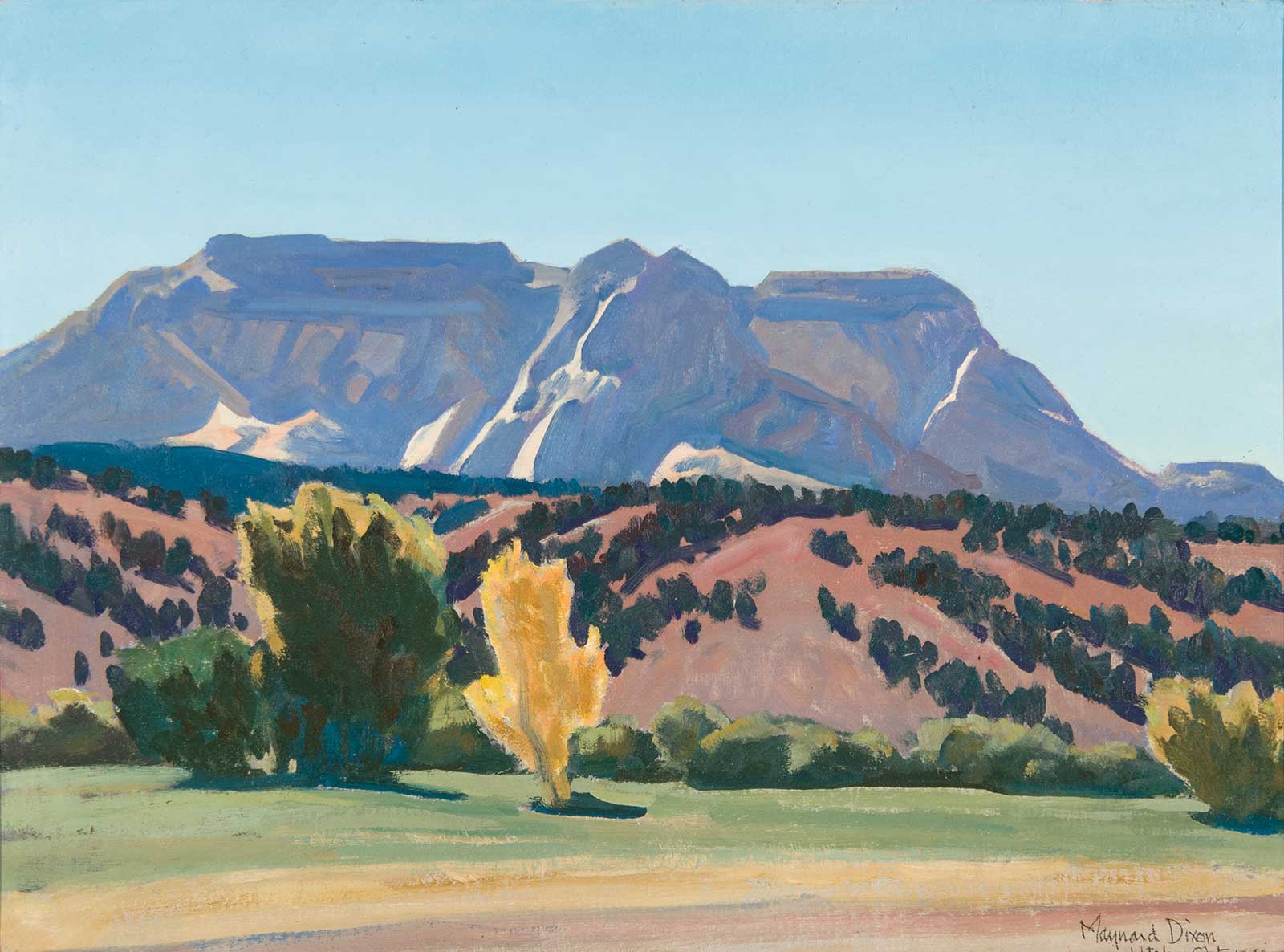
Maynard Dixon (1875-1946), Shadow Side, oil on board, 12 x 16 in.
Maynard Dixon sketched and painted studies of all kinds. Many of these were meant for larger works, even masterpieces. Many others were completed as their own unique works of art. Dixon, who frequently painted outdoors, used a menagerie of sizes for his small works, studies and plein air studies. Some were as small as 3 by 5 inches or 4 by 6 inches. A more common dimension was 12 x 16 inches, a size in which he produced hundreds of paintings.
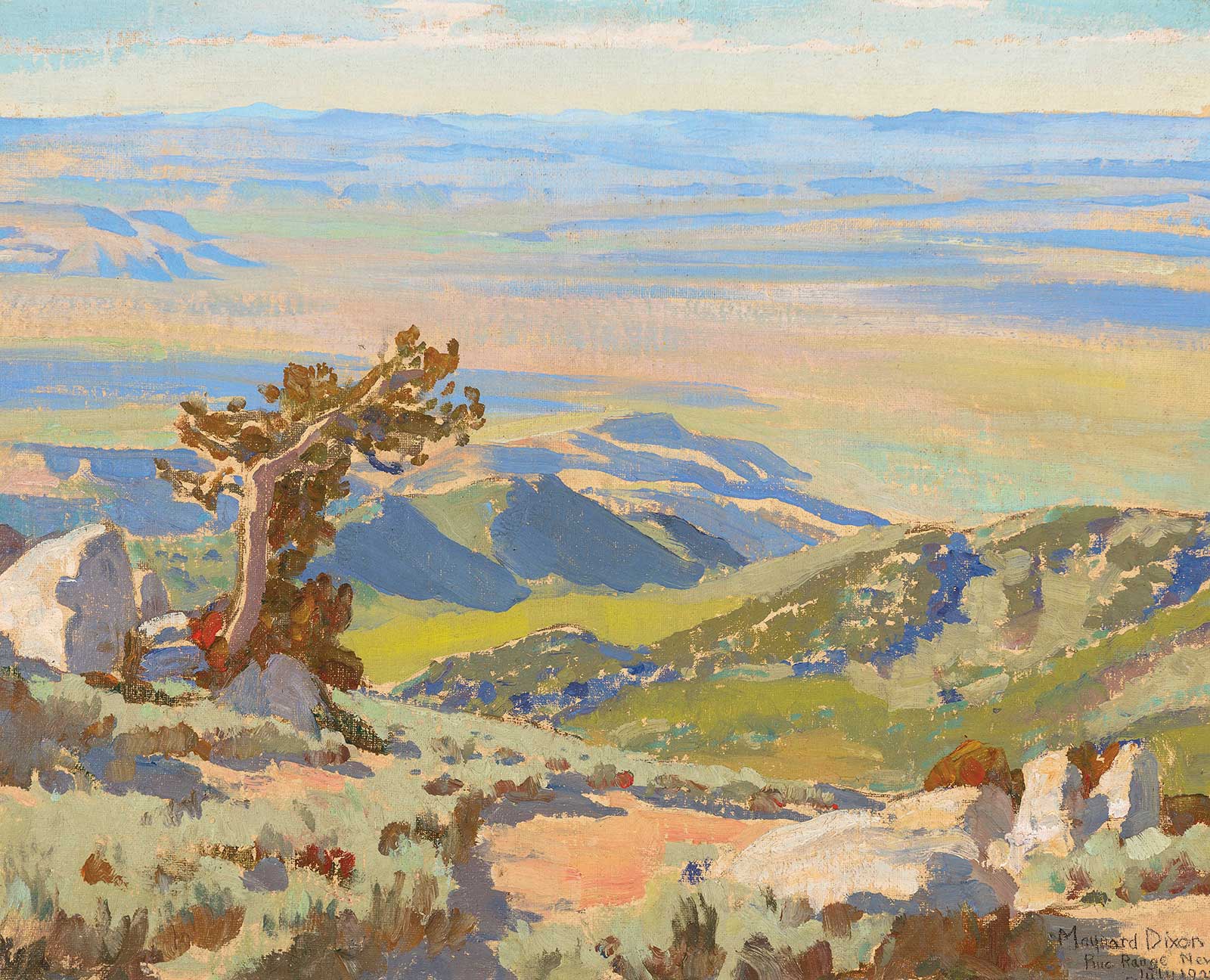
Maynard Dixon (1875-1946), Northwest from Pine Forest Range, 1927, oil on board, 16 x 20 in.
In The Art of Maynard Dixon, author Donald Hagerty writes about Dixon’s 1927 trip to Nevada, which included furloughs in Winnemucca, Denio, Rainbow Ridge, the Pine Forest Range, Alder Creek Ranch, Death Valley, Tonopah and Carson City. “The trip was enormously productive for Dixon, producing 56 paintings either in the field or back in his San Francisco studio after return,” Hagerty writes. Dixon frequently worked small—the panels were easy to travel with, could be painted in an afternoon and the were immensely important to his studio. Most artists work small, but Dixon’s works have always been special, even today as collectors clamber to own one.
Many artists continue in that Dixon style. They work small, travel light and produce art at a steady clip. These small works, whether they are studies or their own stand-alone pieces, are treasured pieces for collectors—both seasoned veterans and newcomers who are looking for entry-level prices. As we celebrate small works in our section, consider adding a small work or miniature to your own collection.
Continue reading this collector’s focus for more insights into small works and foundation of the Western genre.
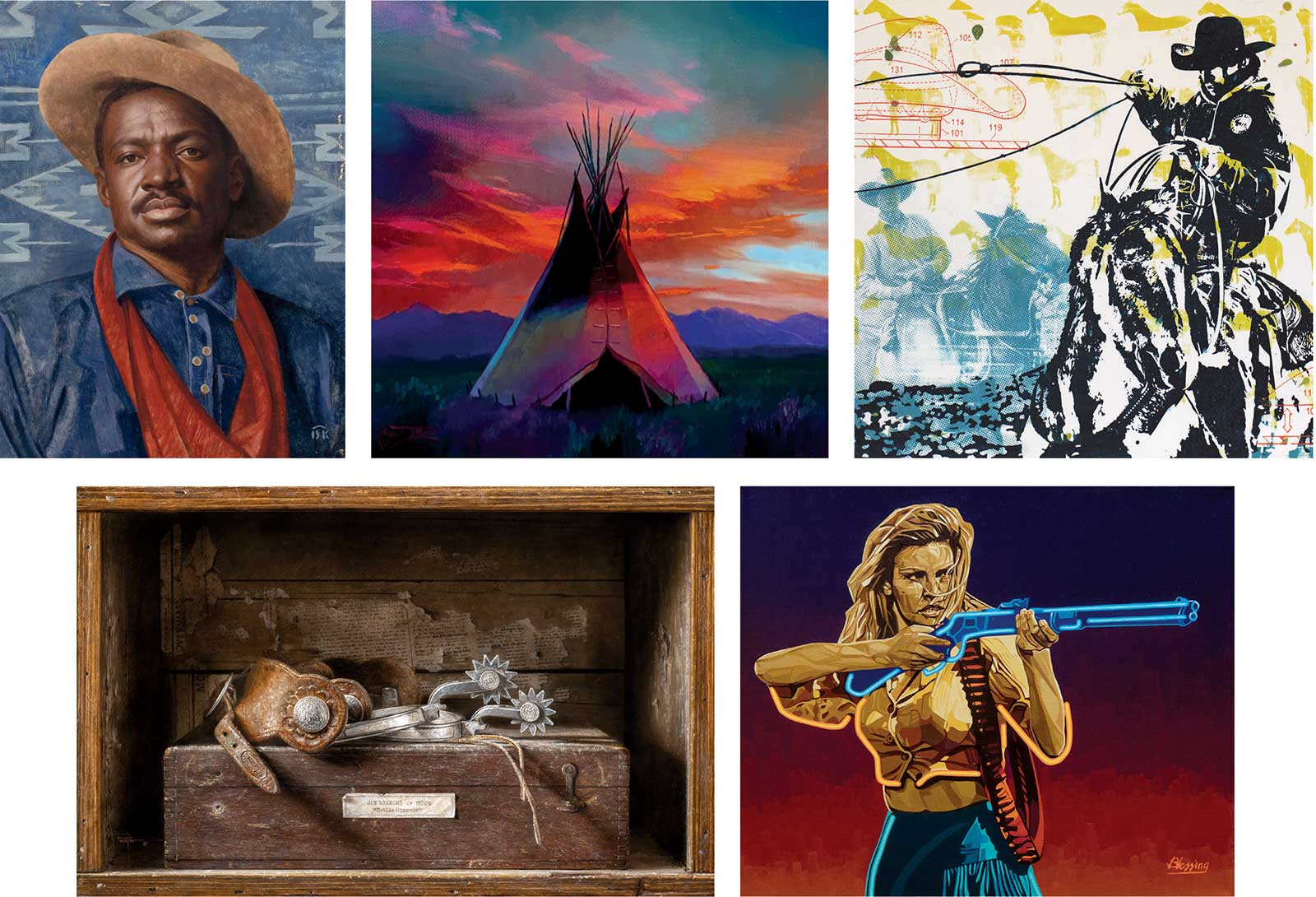
Top: Legacy Gallery, The Unnamed Cowboy, oil, 9 x 12 in., by David Kassan. Legacy Gallery, Prairie Blush, oil, 8 x 8 in., by Colt Idol. Altamira Fine Art, Living in Rodeo III, acrylic on panel, 16 x 16 in., by Maura Allen. Bottom: Legacy Gallery, Texas Bottle Openers, oil, 11½ x 17½ in., by Kyle Polzin. Altamira Fine Art, Line in the Sand, oil on canvas, 20 x 24 in., by Michael Blessing.
At Legacy Gallery, “Small works offer a unique opportunity to experience an artist’s vision on a more intimate scale. Inspired by landscapes, wildlife, people and everyday moments, these pieces often capture the essence of a subject with remarkable focus and clarity,” says Cyndi Hall, the gallery’s general manager. “Their smaller format encourages close viewing, allowing collectors to appreciate the thoughtful details, confident brushwork and craftsmanship within each composition. Though modest in size, small works can carry just as much presence, emotion and artistic significance as larger pieces.”
“Small works are an approachable way to begin a collection, explore the work of a new artist or add variety to an established collection. They are also incredibly versatile, fitting naturally into intimate spaces or grouped displays,” says Hall.
Jason Williams, owner of Altamira Fine Art observes that, “Small works have a particular kind of intensity. There is nowhere for the artist to hide, and the strongest pieces can communicate an entire point of view within a very concentrated space.”
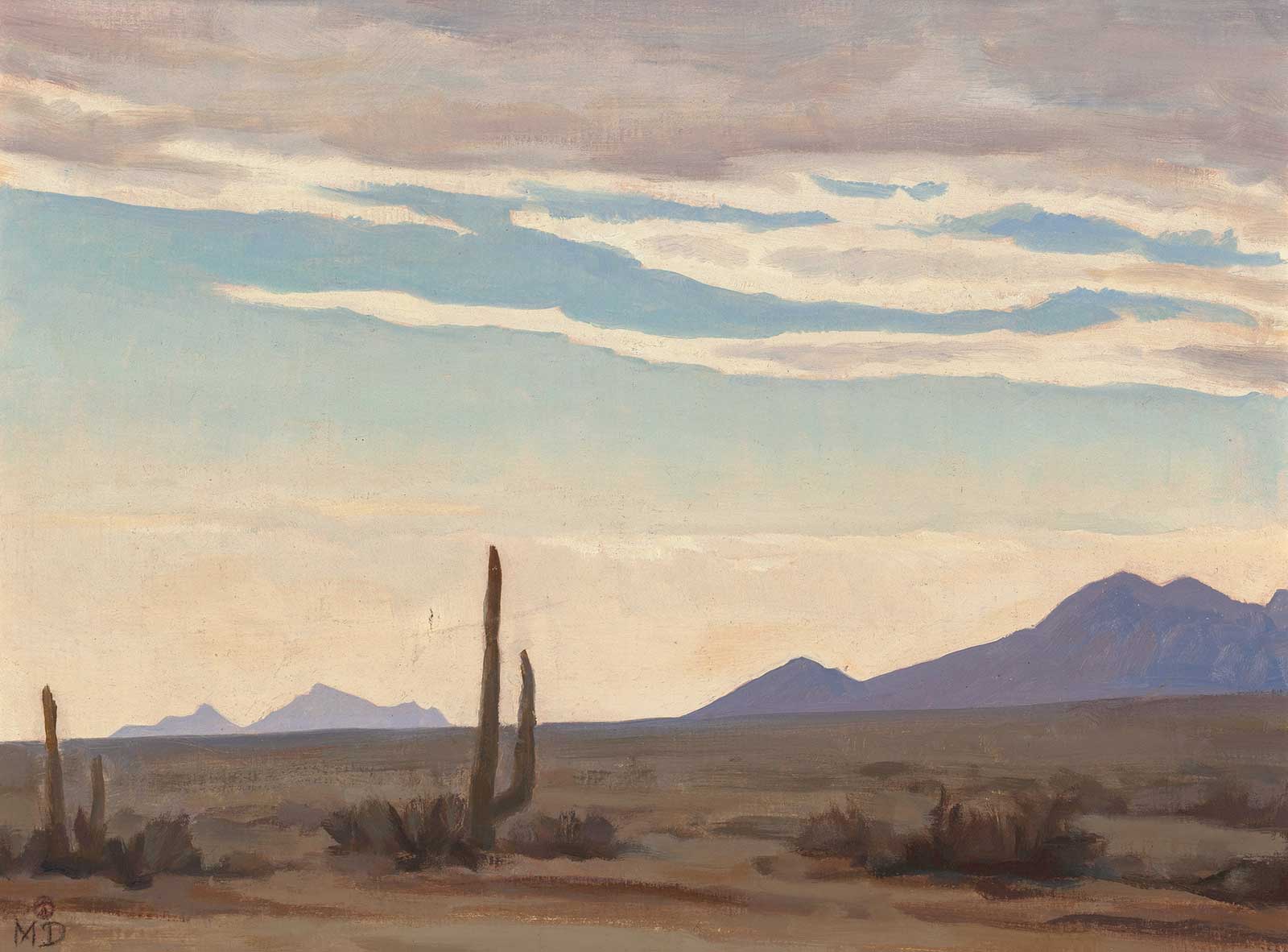
Maynard Dixon (1875-1946), Desert Sky at Evening, Tucson, Arizona, ca. 1946, oil, 12 x 16 in.
Maura Allen, Michael Blessing and Maeve Eichelberger are three artists at Altamira that approach the West from a distinctly contemporary perspective in their small works. “Maura layers familiar Western imagery with graphic marks and references that make the history feel active rather than fixed. Michael takes an iconic Western figure and pushes it into an almost cinematic, neon-lit world that feels both nostalgic and completely current. Maeve goes even further in rethinking the traditional object, transforming the saddle into something transparent, luminous and sculptural. What I love about these works is that none of the artists are simply illustrating the West—they are using its imagery as a visual language,” says Williams.
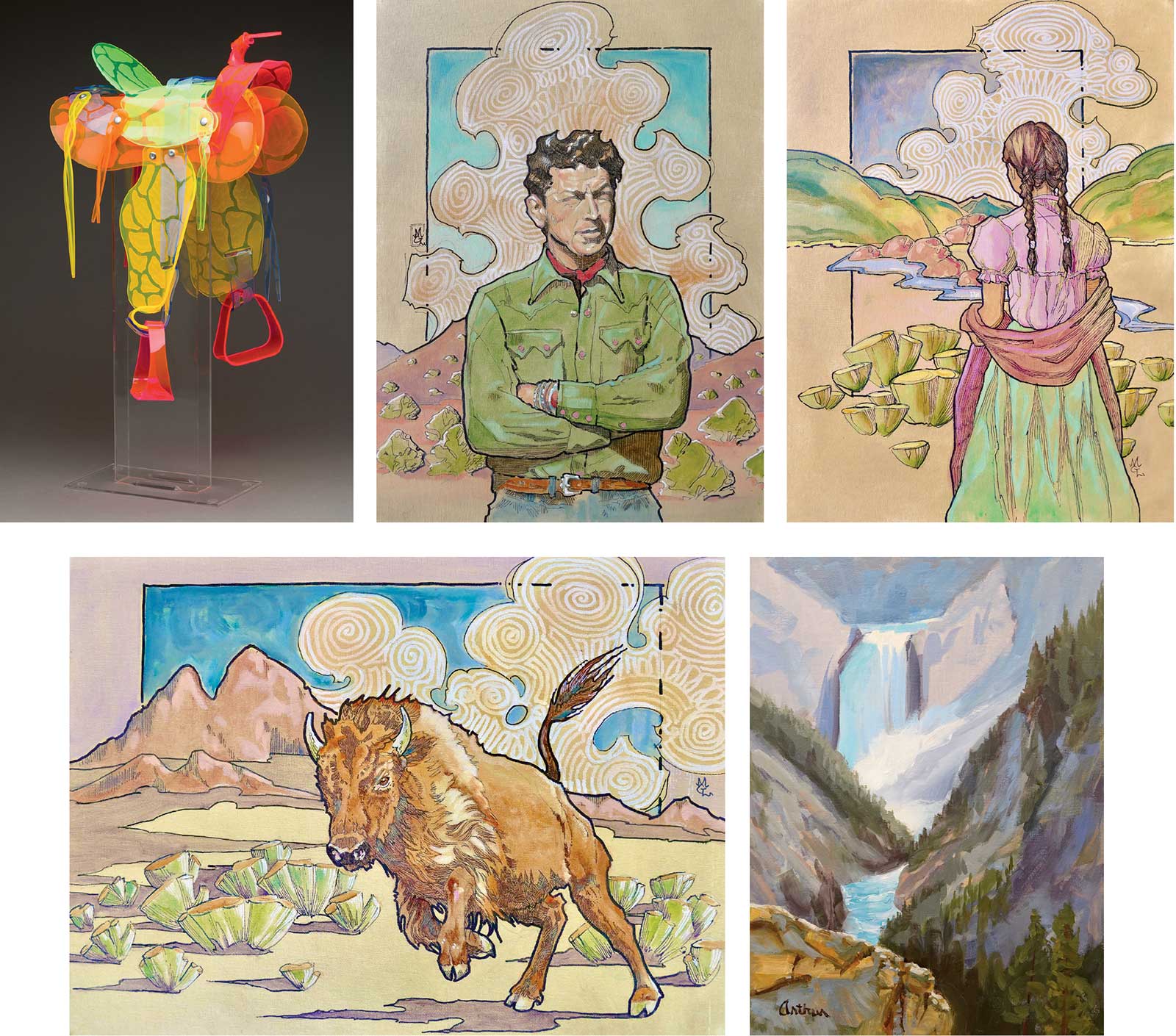
Top: Altamira Fine Art, Riff Raff, hand etched and formed fluorescent acrylic, 21 x 13 x 12 in., by Maeve Eichelberger. Maia Chávez Larkin, Norteño, oil and ink on panel, 16 x 12 in. Maia Chávez Larkin, Girl of the Red Willow, oil and ink on panel, 16 x 12 in. Bottom: Maia Chávez Larkin, Home on the Range, oil and ink on panel, 12 x 16 in. Melissa Arthur, Artist Point, acrylic, 12 x 9 in.
Artist Maia Chavez Larkin's larger works are often formed from smaller studies where she experiments and establishes her subject. “I often use paintings of this size as studies for potential larger works, though sometimes they stand alone. Smaller works give me the chance to work faster and to experiment with the evolution of my technique,” she says. “Norteño is inspired by my late father, the artist Edward Chávez, who was born in the northern part of New Mexico, where his family had lived since before it was a part of the United States. Girl of the Red Willow is inspired by the landscape around Taos, New Mexico, where many of my father’s relatives lived, where he had a gallery in Cabot Plaza during the ‘70s, and where I spent some of my grade school years being inspired by the vibrant art culture of that era on the Taos Plateau. Home on the Range is a tribute to my current home on Colorado’s beautiful Front Range.”
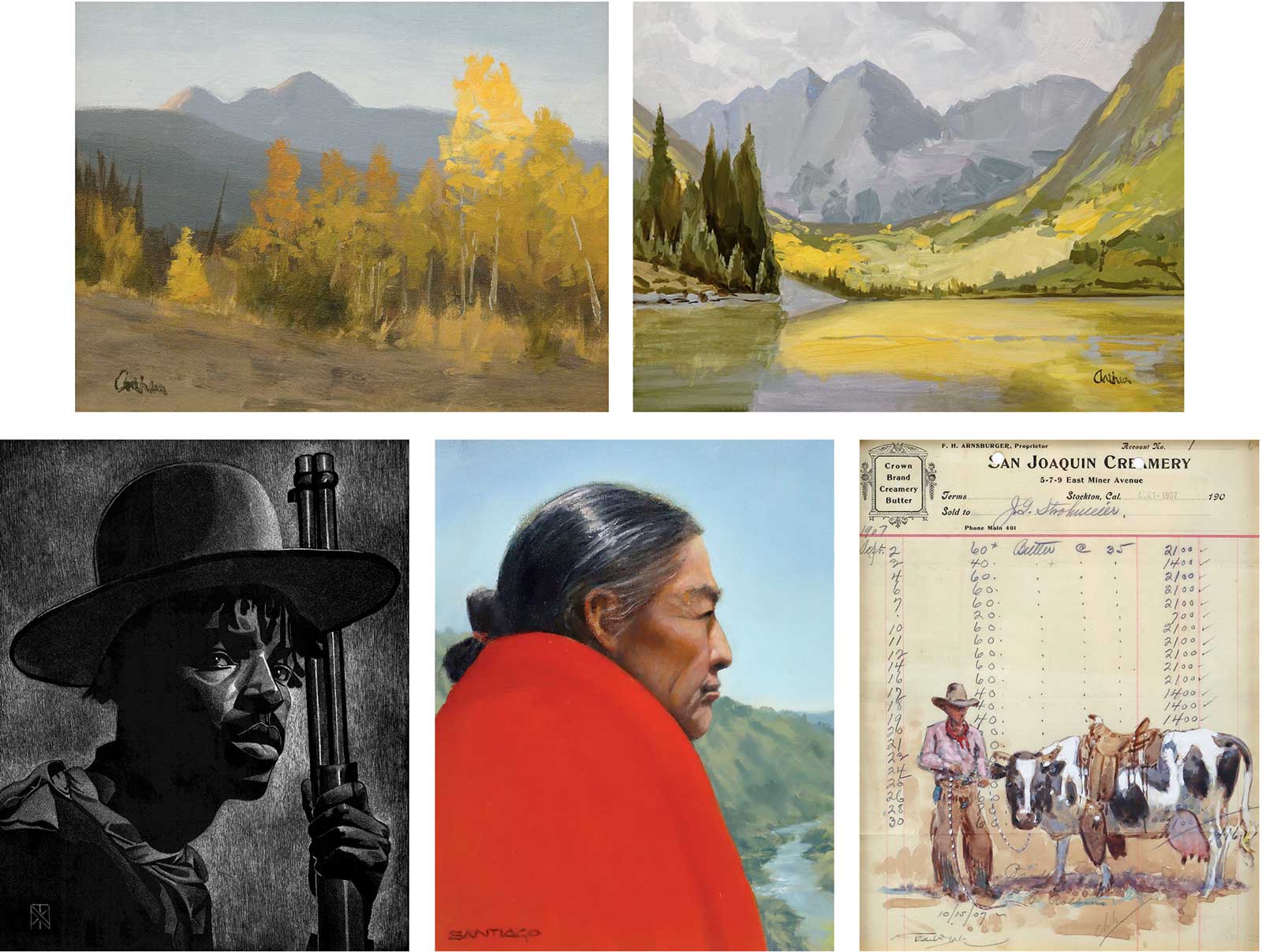
Top: Melissa Arthur, Autumn Hues, acrylic, 8 x 10 in. Melissa Arthur, Fall Bells, acrylic, 12 x 16 in. Bottom: Medicine Man Gallery, Who? Me?, scratchboard, 10 x 8 in., by Nelson Tucker. Medicine Man Gallery, Along the Rio Grande, oil, 14 x 11 in., by Roseta Santiago. Medicine Man Gallery, San Joaquin Creamery, watercolor, 9 ¾ x 8 ¾ in., by Teal Blake.
Melissa Arthur is also inspired by the natural world around her. She enjoys setting up a portable easel along the trail to capture a moment of beauty with a paintbrush. Fresh air, sunlight, a gentle breeze and nature’s orchestra turn outdoor painting into an immersive experience. The finished piece is a poem about the essence of the landscape. Favorite subjects include sweeping vistas of changing aspens during autumn in Colorado and Texas hill country bluebonnet scenes in the Spring. A mindset of curiosity, experimentation and a desire to learn fuel her passion.
Medicine Man Galleryoffers a variety of small works for collectors to experience and connect with. Artist Nelson Tucker works with unforgiving scratchboard, carving out of darkness and leaving no room for mistakes, like a sculptor. Teal Blake’s canvas is ledger paper from 1907 and in his work ranching, dairy and art come together in a distinctly modern take on the West, with the history of the object becoming part of the work itself. In Roseta Santiago’s work, a figure wrapped in a vivid red manta brings intensity to an otherwise contemplative scene. She delicately captures that feeling of the West as her subject searches for wisdom beyond the frame. Each piece speaks with authenticity, capturing the sense of identity we look for in great artists.
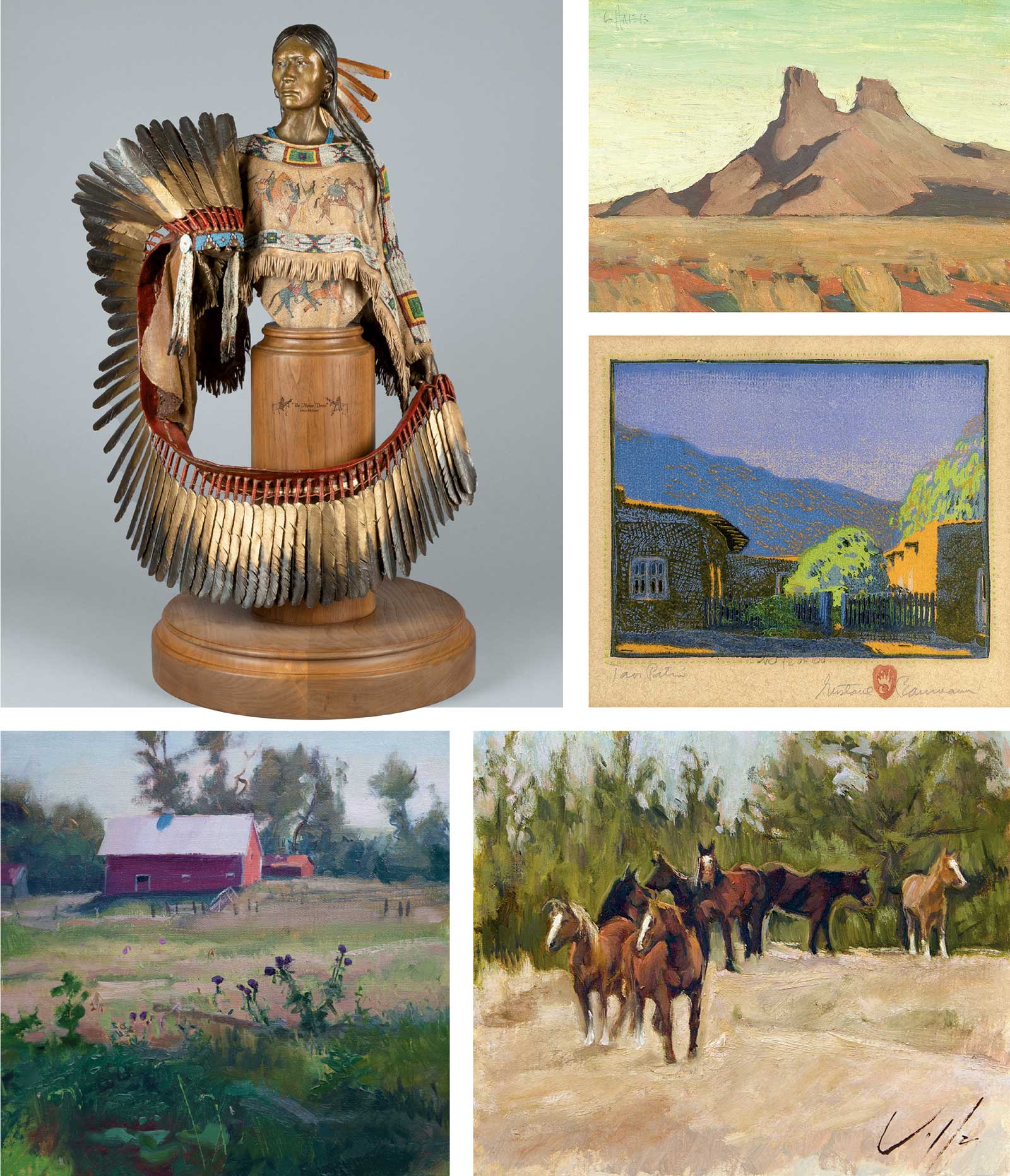
Clockwise from top left: Santa Fe Art Auction, The Honor Dress, bronze, 21½ x 16¼ x 8¾ in., by Dave McGary (1958-2013). Santa Fe Art Auction, Teaching Rock, oil on linen, 8¾ x 117⁄8 in., by Logan Maxwell Hagege. Santa Fe Art Auction, Taos Patio, woodcut, 7¼ x 83⁄8 in., by Gustave Baumann (1881-1971). Cassens Fine Art, Half a Dozen or More, oil on ACM panel, 10 x 12 in., by Coila Evans. Cassens Fine Art, No Keys, oil on linen panel, 8 x 8 in., by Nic Fischer.
Among the wide selection of lots on offer at Santa Fe Art Auction and their 2026 Signature Live Sale, collectors will find many small treasures from jewel-like paintings and prints to tabletop sculptures. Logan Maxwell Hagege’s Teaching Rock is a fine work by this important contemporary Western artist, providing viewers a glimpse into the artist’s unique sense of light and extraordinary brushwork through its simplified forms. A small, jewel-toned woodcut by Gustave Baumann, titled Taos Patio, 1925 is a vibrant, high-contrast work by the artist in a more intimate scale than many of his prints, which allows for a close look at the artist’s masterful formal and compositional decisions.
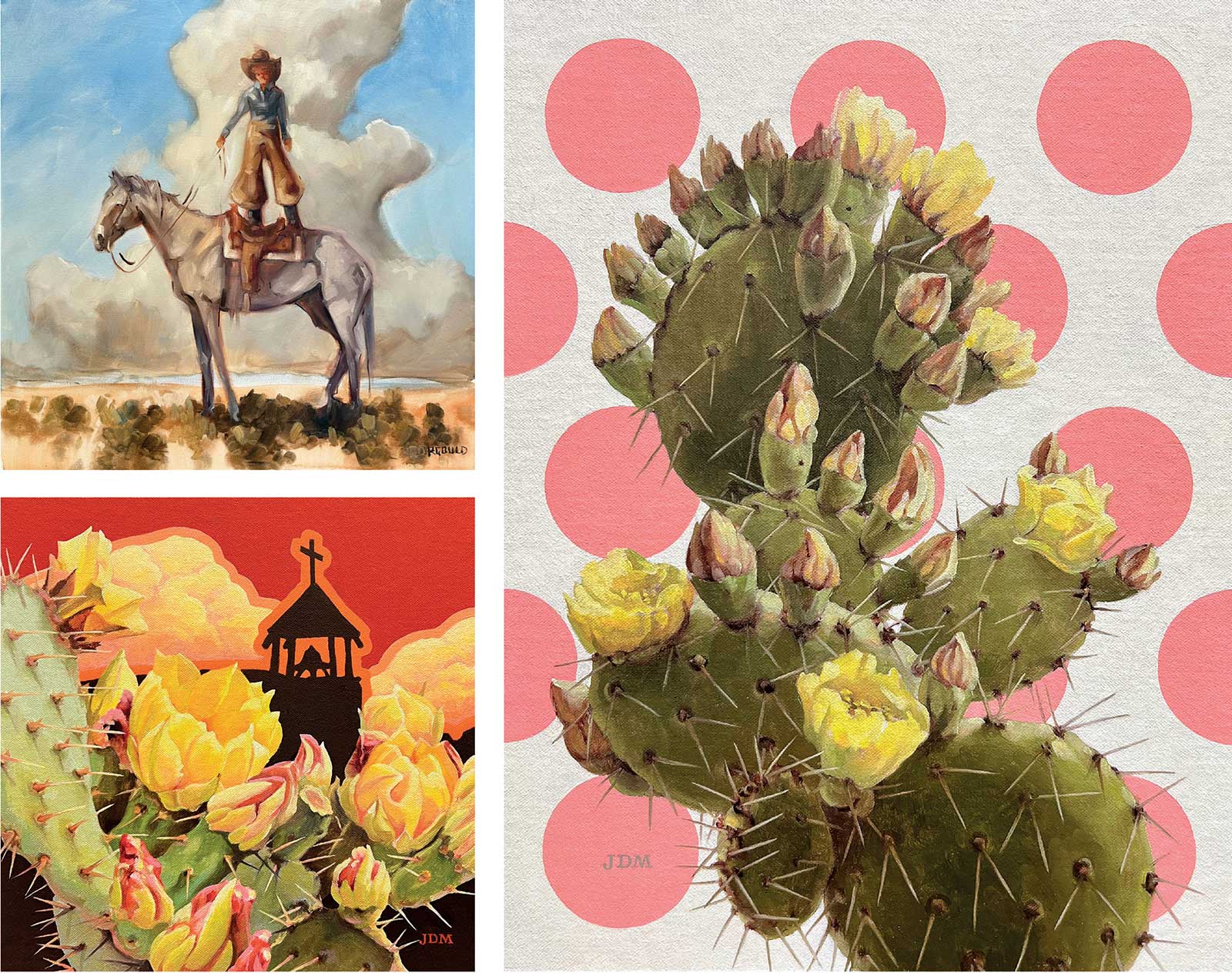
Clockwise from top left: Gallery Wild, I’ll Ride How I Please, oil on canvas, 24 x 24 in., by Renee Gould. John Meister, Pricky Polkas in Pink, oil, 16 x 12 in. John Meister, Red Morada Evening, oil, 10 x 10 in.
These smaller-scale works offer collectors an exceptional opportunity to acquire pieces at a more accessible entry point, while also serving as a testament to the versatility of these important artists.
At Cassens Fine Art in Hamilton, Montana, small works are a way to glimpse into the where the art world is heading. While contemporary Western art is having a moment, most if is painted big, with bag canvases, big walls and big commitment. However, it’s the small works are rewarding in their own right—they are a piece of the West collectors can hold in two hands.
Gallery Wild,located in Jackson Hole, Wyoming, features some of the most cutting-edge wildlife and landscape painters working today. Many of them are not afraid to go big, with pieces soaring over 60 inches. But it’s the small works that often capture the eye of many collectors, especially during this time of year as gift-giving enters the minds of art enthusiasts. Among artists that are working in smaller sizes are Carrie Wild, Renee Gould, Ally Morgan and many others.
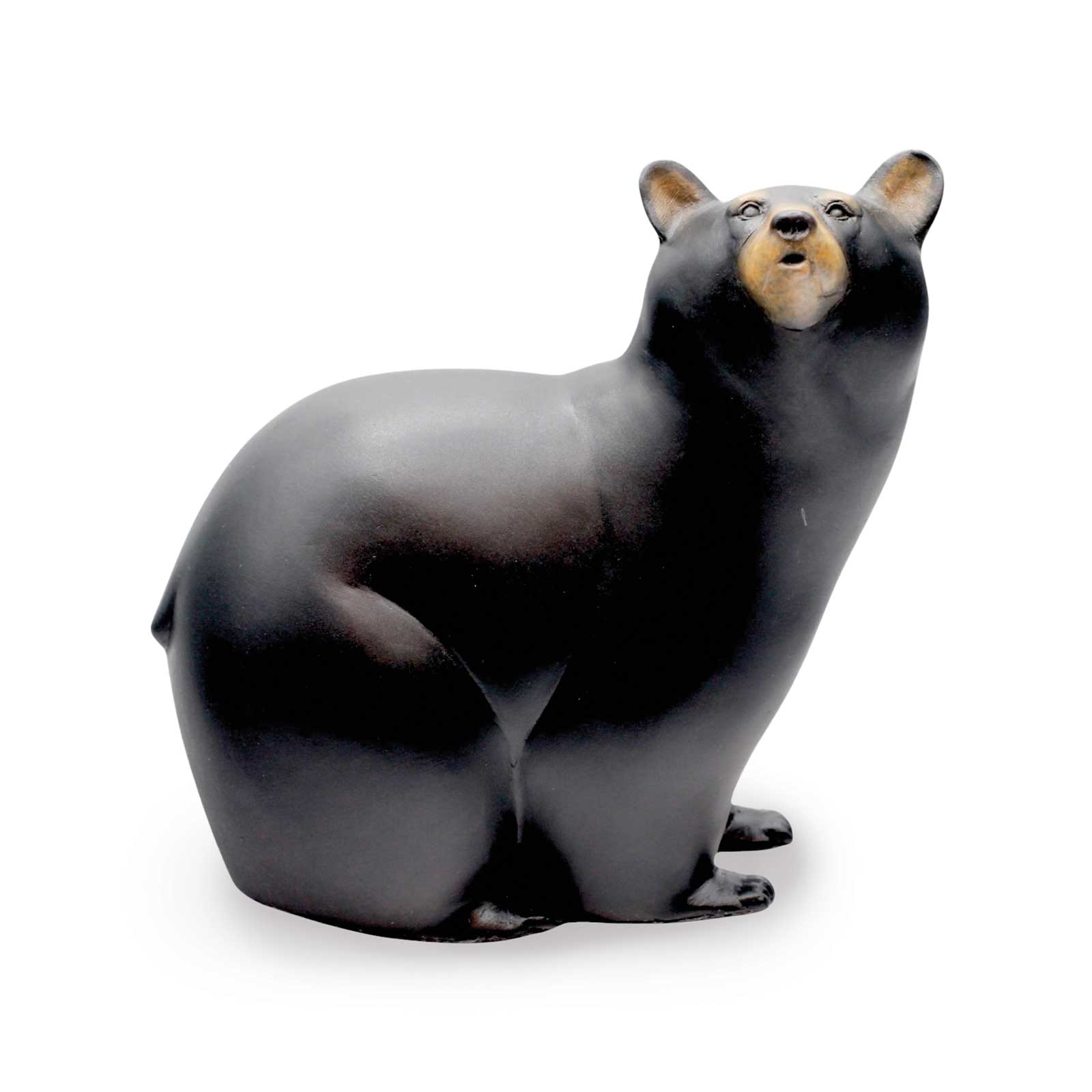
Cassens Fine Art, Bear-Handed, bronze, 6 x 5 x 4 in., by Jeremy Bradshaw.
Like many Western artists, John Meister considers the New Mexico outdoors the best classroom for an artist. “I divide my oil painting production between my Albuquerque studio and painting in plein air. I paint a lot of botanicals, so the outdoor work usually informs my studio work,” says Meister. “The term ‘magical realism’ had to be created for this state. Living here, I appreciate the aesthetic of life, in all its forms, and I gravitate toward smaller intimate views of nature. Life must do a little something extra to thrive here, and sometimes it displays great beauty in the process. I strive to capture that.”
To Dale Terbushthe American Southwest is one of the most magical places on the planet; his small works capture both the real and imagined landscapes of the Southwest. “There is the overwhelming grandeur of the Grand Canyon, of Zion, of Sedona and on and on. But then there are also those little bits of magic that happen when the amazing light, the heavenly light that is as much a part of the Southwest as it’s landscape, when it starts to take effect on the ordinary and it too, can be otherworldly. That is why in in my paintings, because they are imaginary, I often refer to them as skyscapes rather than landscapes.”
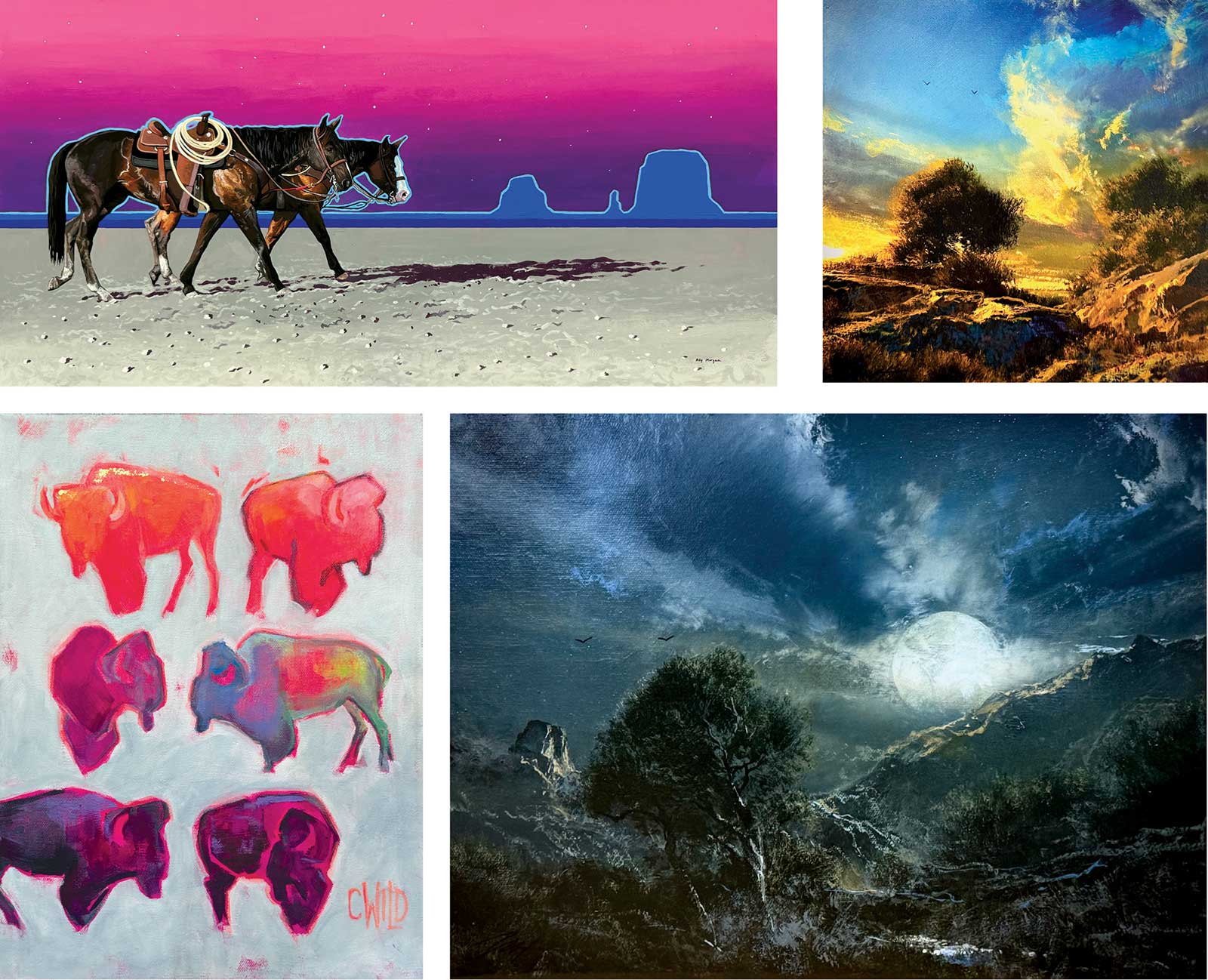
Top: Gallery Wild, These Things That Feel Good, gouache, 12 x 24 in., by Ally Morgan. Dale Terbush, Your Dream or Mine, acrylic on canvas, 12 x 12 in. Bottom: Gallery Wild, Rendezvous in Color Six.0, acrylic and gold leaf on canvas, 16 x 12 in., by Carrie Wild. Dale Terbush, As far as the eye and moon can see, acrylic on canvas, 12x 16 in.
Patricia Ridge Bradley’s small works capture the enchanting landscape, architecture and people of New Mexico. In her work she is drawn by, “the rich quality of light that is heavily influenced by the dry desert climate, with its rust-colored cliffs, and high-altitude, cerulean skies. I am drawn to the unique architectural style that blend Pueblo, Spanish Colonial and territorial-era features. I am drawn to the resilient Native American people who are also part of the landscape, inextricably bound by centuries of traditions and culture.”
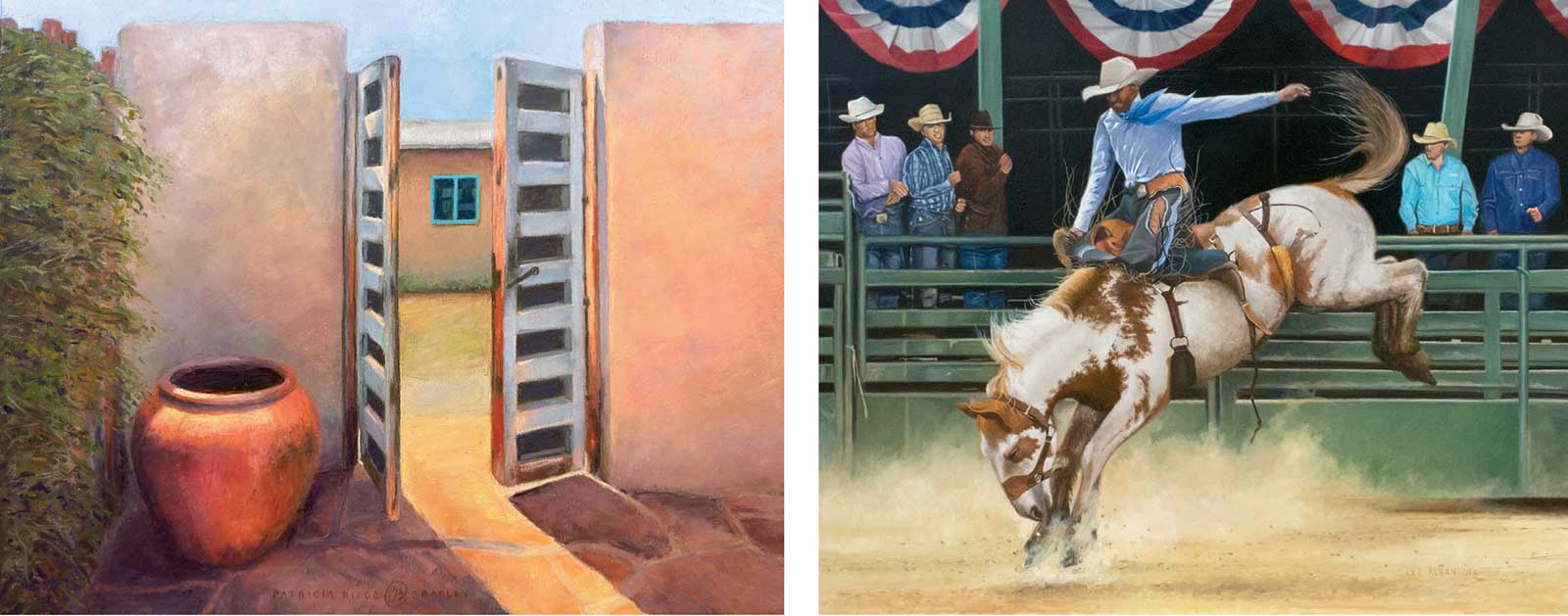
Patricia Ridge Bradley, A Certain Slant of Light, soft pastel, 14 x 11 in. Plainsmen Gallery, Eight Second of Frenzy, oil, 16 x 20 in., by Lee Alban.
The Plainsmen Gallery features work from artists Lee Alban in their upcoming Small Works and More group show. “Regarding small works, I have come to realize that they are an important part of a balanced portfolio,” says Alban. “Small paintings can provide access to prestigious shows and expose my work to more collectors. I not only include small paintings in my portfolio now, but I also make every effort to attend small works shows.” —
Featured Artists & Galleries
Altamira Fine Art
7038 E. Main Street, Scottsdale, AZ 85251
172 Center Street, Jackson, WY 83001
(307) 739-4700, www.altamiraart.com
Cassens Fine Art
215 W Main Street, Hamilton, MT 59840
(406) 363-4112, www.cassensfineart.com
Dale Terbush
daleterbush@cox.net
www.daleterbushart.com
John Meister
(505) 235-3213, www.johnmeisterart.com
john@meistergraphics.com
IG: johnmeisterart
Legacy Gallery
225 Canyon Road, Santa Fe, NM 87501
7178 E. Main Street, Scottsdale, AZ 85251
(480) 945-1113, www.legacygallery.com
Maia Chávez Larkin
www.maiachavezlarkin.com
Medicine Man Gallery
www.medicinemangallery.com
IG: medicinemangallery
Melissa Arthur
www.melissaarthur.com
IG: at.the.easel
Patricia Ridge Bradley
prb@patriciaridgebradley.com
(405) 627-0091
The Plainsmen Gallery
www.plainsmengallery.com
(727) 734-8200
Santa Fe Art Auction
932 Railfan Road, Santa Fe, NM, 87505
(505) 954-5858
www.santafeartauction.com
Powered by Froala Editor


