I spent six years at the Art Students League in New York, working from a live model almost every day. Grants took me to Italy to study the Old Masters firsthand. I came three credits short of a minor in art history, concentrating on American art, Robert Henri and the Ashcan School. That grounding—in the figure, in tradition, and especially in Henri’s belief in an honest, direct realism—became the spine of everything I’ve painted since.
For years, that meant portraiture. My grandfather escaped the pogroms in Ukraine in the 1920s and came to America, so that history had always been part of my own family story. When I began meeting Holocaust survivors, I felt an urgency to document their stories while they were still here to tell them. The work was built around research, testimony and time spent getting to know each person before picking up a brush. It taught me the responsibility that comes with painting another person: to listen first, resist imposing my own narrative, and be as honest as possible to the person who trusted me with their story.
Then I moved to New Mexico for love, and everything shifted.
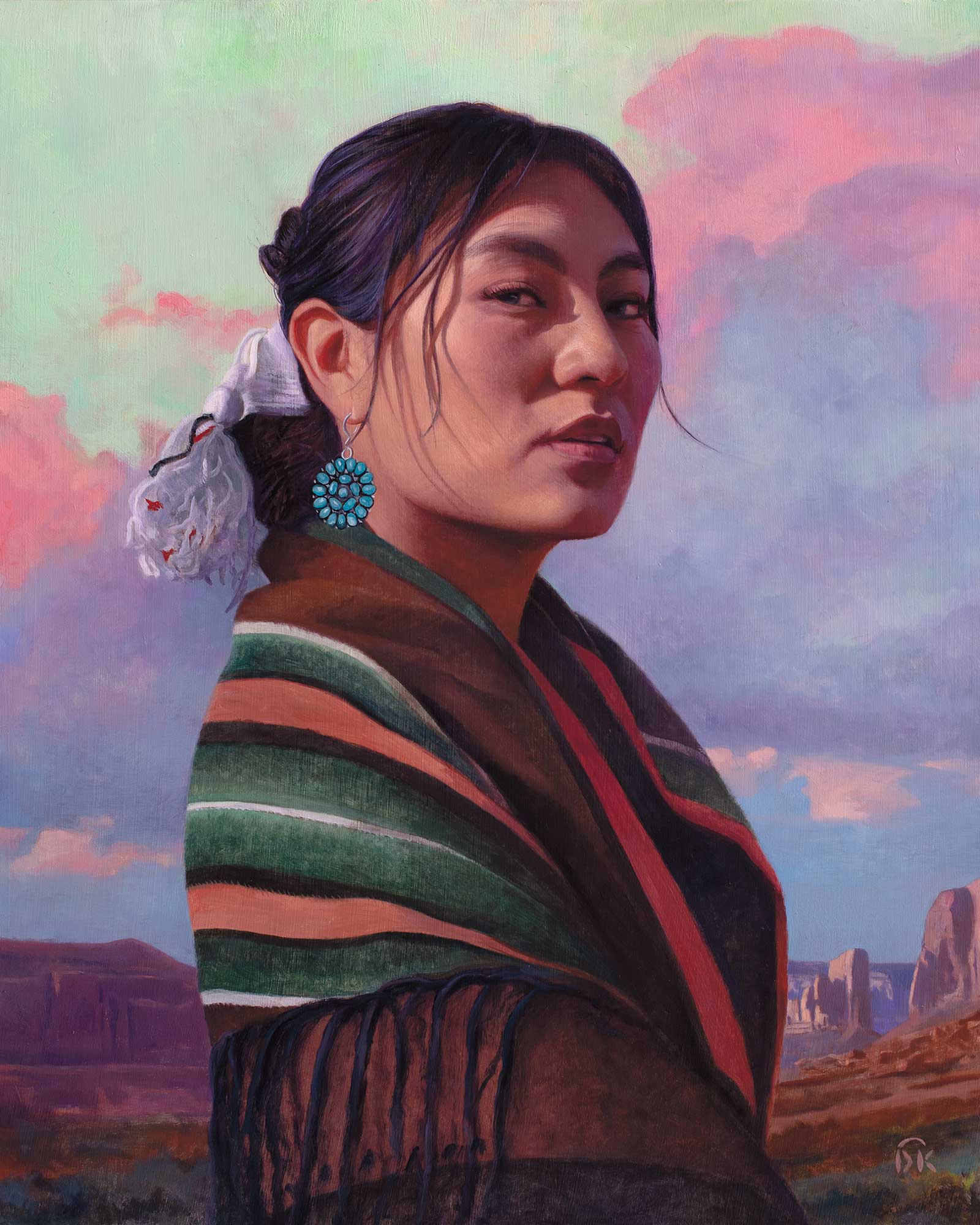
Memory of the Land, oil on panel, 20 x 16 in.
I grew up a military brat, living on Air Force bases around the country and in Germany, and I’m proud of my father’s 22 years of service in the United States Air Force. Military history museums were a regular part of my childhood, especially those dealing with World War II. Looking back, I’ve always been drawn to the intersection of individual lives and larger history—when something you know from books and museums is suddenly sitting across from you as a person.
In New Mexico, that interest eventually led me to the Navajo Code Talkers. I had known their story since I was young, but sitting across from someone who had actually lived it was something entirely different. Meeting them wasn’t easy, and I’m glad it wasn’t.
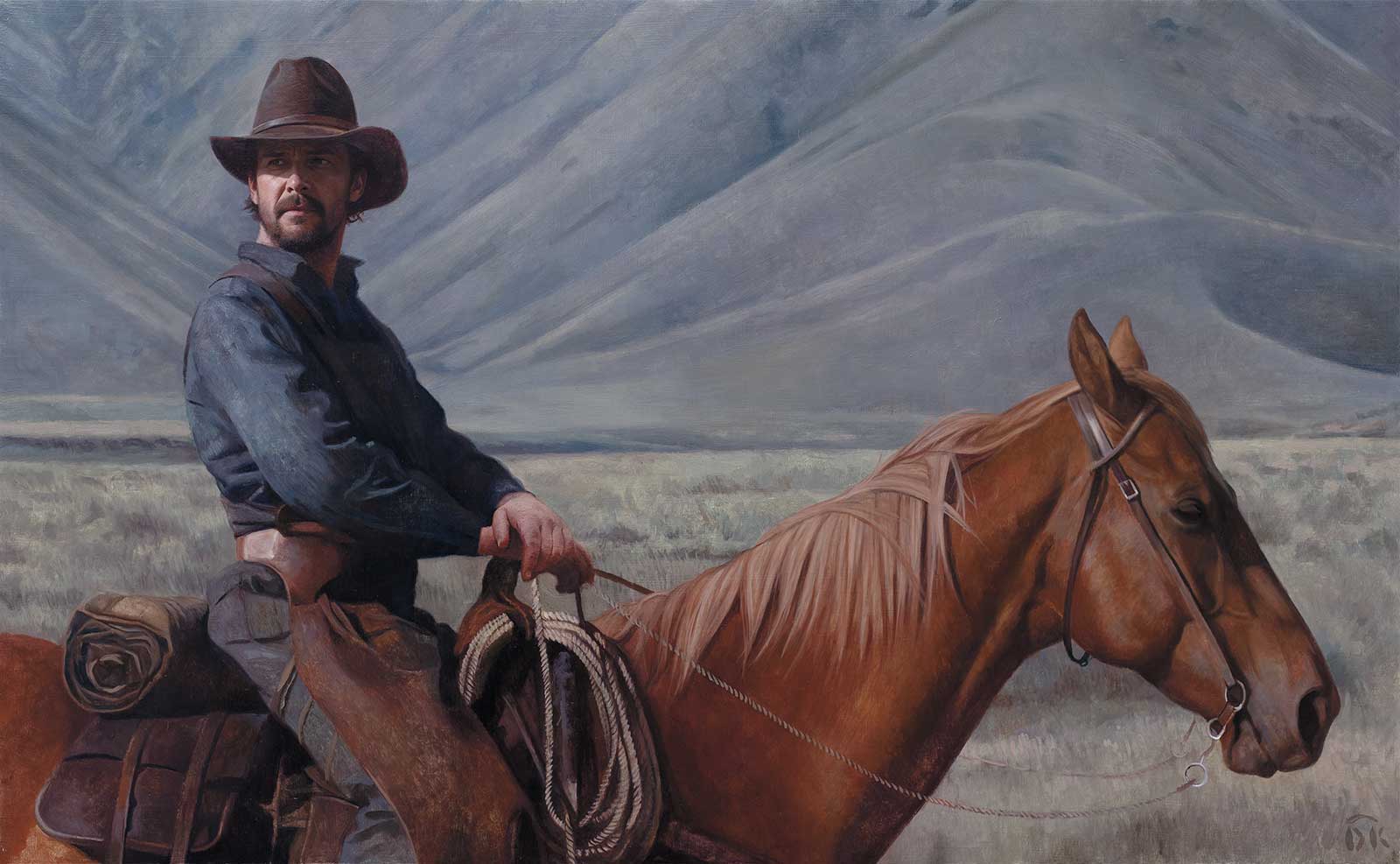
Under the Montana Sky, oil on panel, 16 x 26 in.
With only a few Code Talkers still living, I knew I couldn’t wait. A friend connected me with Loren Anthony, who delivers firewood and other necessities to elders in remote communities across the Navajo Nation.
I first met Loren at his home in Gallup, New Mexico. I arrived early with no real idea what the day was going to look like. I jumped into his truck and we drove for nearly three hours into a lightly forested part of the Navajo Nation. Eventually we stopped, and Loren pulled out some mountain smoke and rolled it. We puffed the smoke and blew it in each of the four directions, then over our hands. Once we had that protection, he pulled out the chainsaw.
For the next few hours, we cut fallen trees into 12-inch “bucks,” rolling and heaving them down the hillside until the trailer was full. Exhausted, we climbed back into the truck.
We drove another three hours. By then I had no idea where we were in relation to New Mexico or Arizona. After a stop for gas-station nachos, we turned onto a red-dirt road and eventually pulled up beside a small, one-room home beneath a line of mesas.
What I hadn’t realized was that we had been making a delivery to John Kinsel’s home. At the time, John was the oldest living Navajo Code Talker at 106 years old.
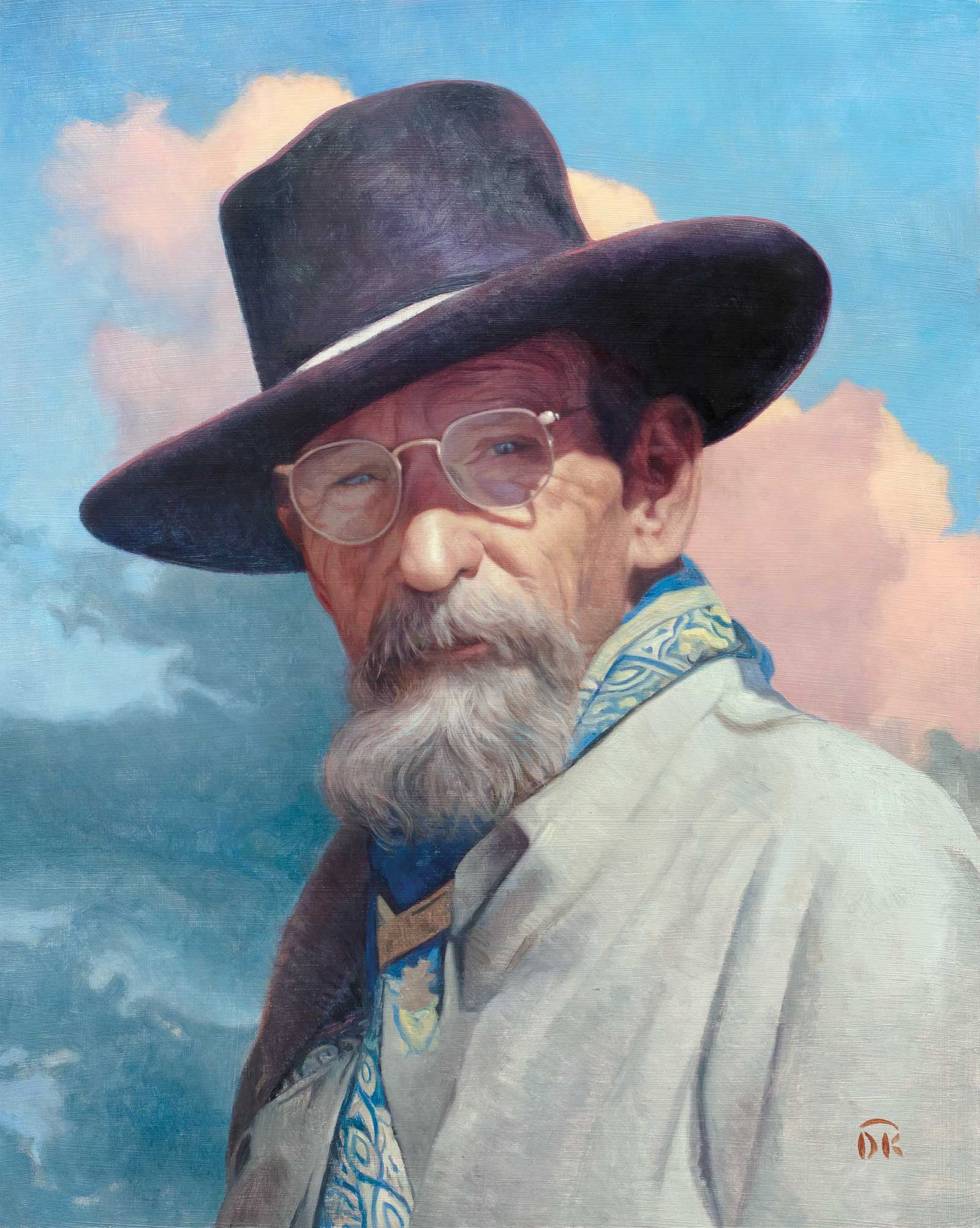
MD – The Legend, oil on aluminum, 16 x 12 in.
By the time Loren and I finished unloading the firewood, it was late and John was exhausted. He came out only briefly to thank us before returning inside. There was something fitting about that first meeting: we hadn’t come asking him for anything. We had come to help.
Two weeks later, Loren and I went back, stopping along the way for strong black coffee and John’s favorite—mutton. He was a different person that day, full of energy. We ate lunch together, John made fry bread on his camp stove, and afterward we split and stacked the bucks we’d delivered, filling the firewood rack inside his home. This time there was room simply to be there—to work, eat, talk and listen.
Before we left, John let me photograph him and paint on his property. I spent about an hour painting the mesas in the distance, the same place where John had cut and hauled down the timber to build his home decades earlier.
During that hour, something shifted. I began to see that the landscape wasn’t simply a backdrop; the histories of the people I painted were inseparable from the land.
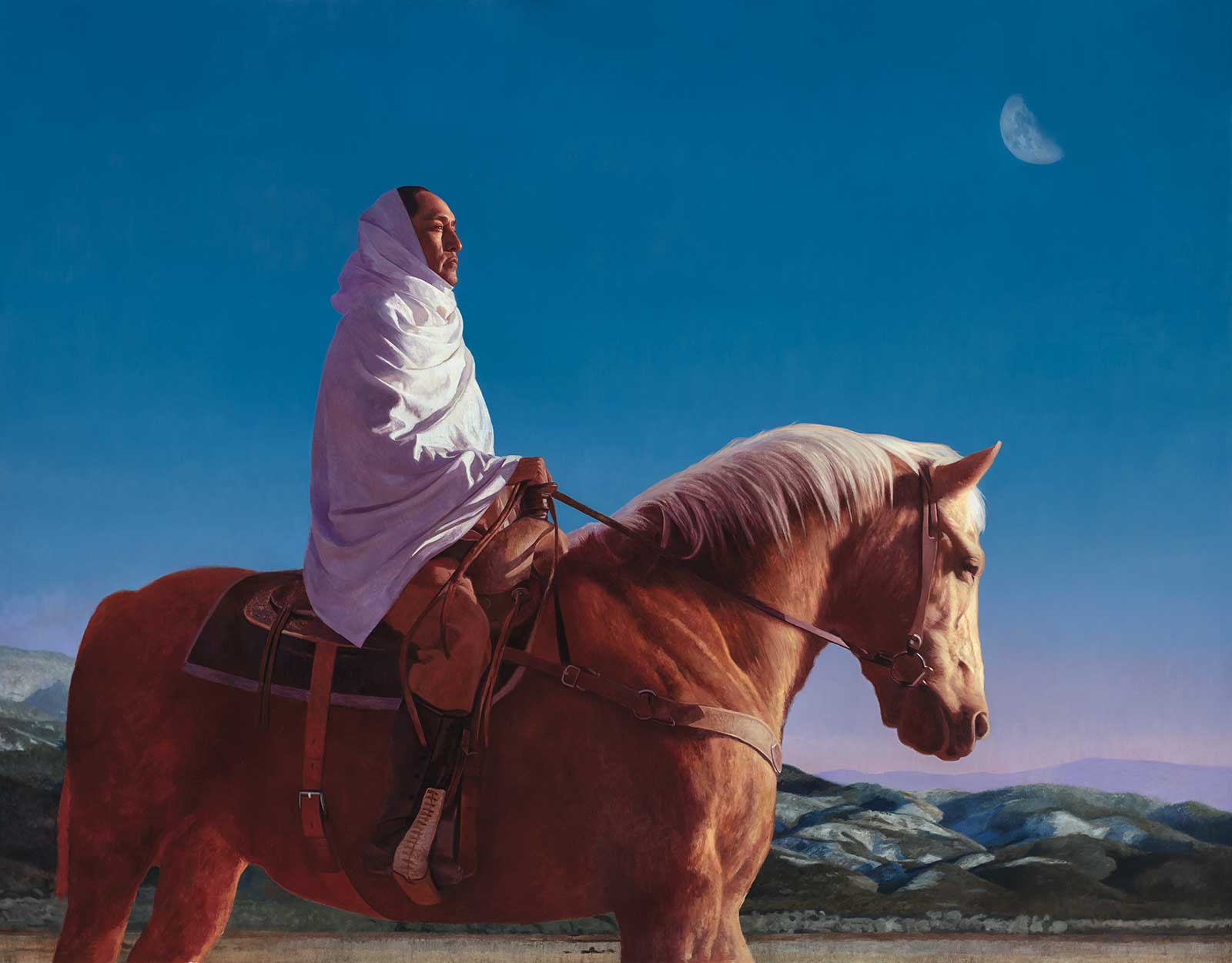
Red Willow Moon, Taos, oil on panel, 31 x 40 in.
For that hour, time seemed to collapse a little. John’s history, the landscape and the painting I was making all occupied the same moment. Place and art have a strange ability to do that—a painting can make something from a century ago feel present, just as standing in a particular place can make the past feel closer than any history book ever could.
I had come looking for one of the last Navajo Code Talkers, but somewhere along the way I began to see the West differently. Its history didn’t need to be recreated; it was still alive in the people, places and art around me.
One evening last December, I found myself in Taos photographing Dwight Concha for a painting to be exhibited at the Couse-Sharp Historic Site’s biennial gala. Dwight is the great-grandson of Ben Lujan, one of Eanger Irving Couse’s principal models more than a century ago.
As the sun faded that night, I was aware of the history surrounding us, but I didn’t want that history to determine how I saw him. I wasn’t interested in painting a “Native American subject.” I was interested in painting Dwight. The history was already there. I didn’t need to invent it or romanticize it.
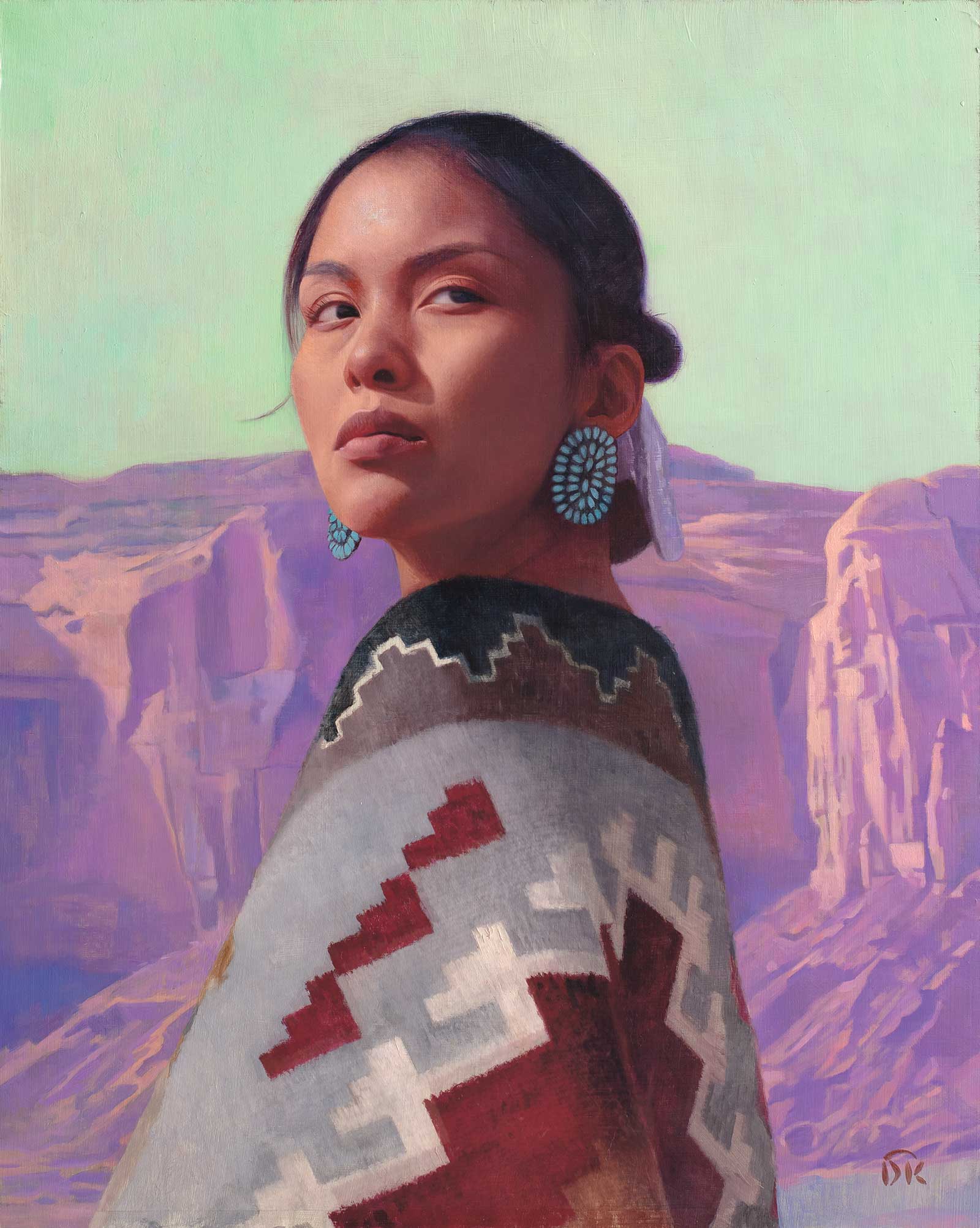
Promise of the Sky, oil on panel, 20 x 16 in.
There was something remarkable about knowing Couse had painted Dwight’s great-grandfather and that, more than a century later, I was standing there making a painting of him. In Taos, that century suddenly didn’t feel like much distance at all. Again, place seemed to collapse time. Couse’s paintings had preserved one moment, and generations later I was standing in that same landscape with Ben Lujan’s great-grandson.
But I wasn’t interested in recreating Couse’s moment. Dwight lives in the West of today. The connection to the past is real, but so is everything that has happened since. My responsibility was to paint the person standing in front of me now.
By then I had already exhibited Western work at the Far West shows in New York and Austin, Texas, but the painting of Dwight felt different. For the first time, I didn’t feel like I was reaching toward Western art from the outside. I was beginning to understand my own place within its tradition.
That realization sent me deeper into the artists who had come West before me. Remington, Blumenschein, O’Keeffe—artists with their own connections to the Art Students League—each arrived here by a different route. What interests me isn’t simply that we shared a school, but what happened to their work once they encountered the West. They brought their training with them, but allowed the place to change them.
I recognize that in my own work. New Mexico hasn’t pulled me away from portraiture; it has given the same concerns—people, history, identity and honest observation—a larger landscape.
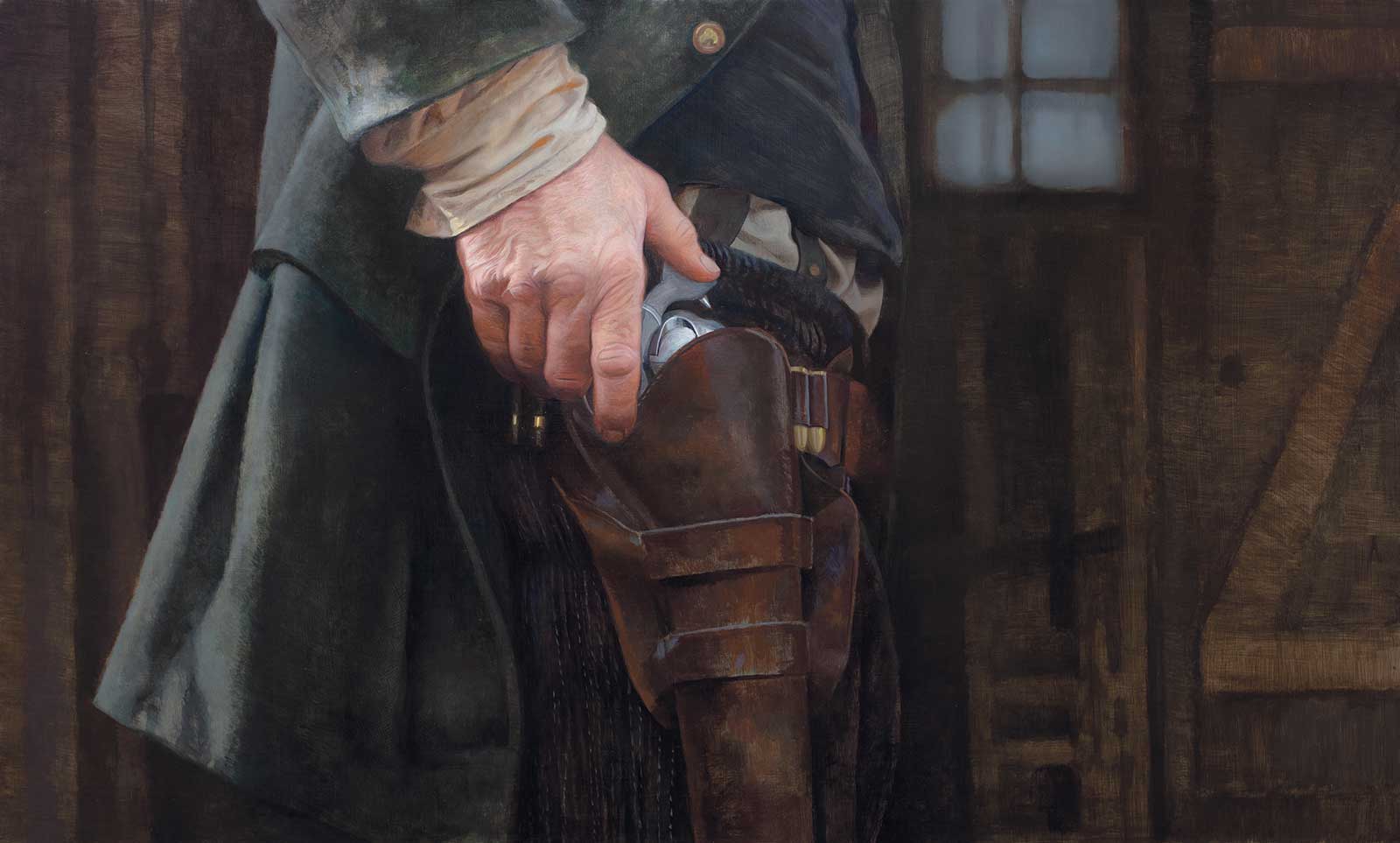
Gunslinger, oil on panel.
The more time I spend here, the more I see Western art as a living tradition. Native communities, Hispanic traditions, Black cowboys, women ranchers and working families have always been part of the American West and continue to shape it today. Recognizing that complexity doesn’t diminish the mythology; it deepens it and makes it more honest.
One of the surprises has been discovering just how deeply Western art collectors know that history. Many can talk about Remington, the Taos Society of Artists or a Couse painting with the seriousness of a curator. They aren’t simply buying an image; they understand the tradition it belongs to. That has raised the bar for me. Making a compelling painting isn’t enough. There’s a responsibility to understand what came before and ask what, if anything, I can honestly contribute to it.
I’m grateful to the collectors who have believed in this work and given me the freedom to take risks, to fund the travel, research and time with the people I paint without every decision being driven by what might sell. That trust is a gift, and it’s one reason Western art has never felt like simply a market to break into.
Rather than paint what the West is supposed to look like, I’d rather let the people and places show me what it actually is. I’d rather get my hands dirty—hauling firewood, driving roads without knowing where they lead, standing in the cold waiting for the light, spending time with people long before asking them to be part of a painting.
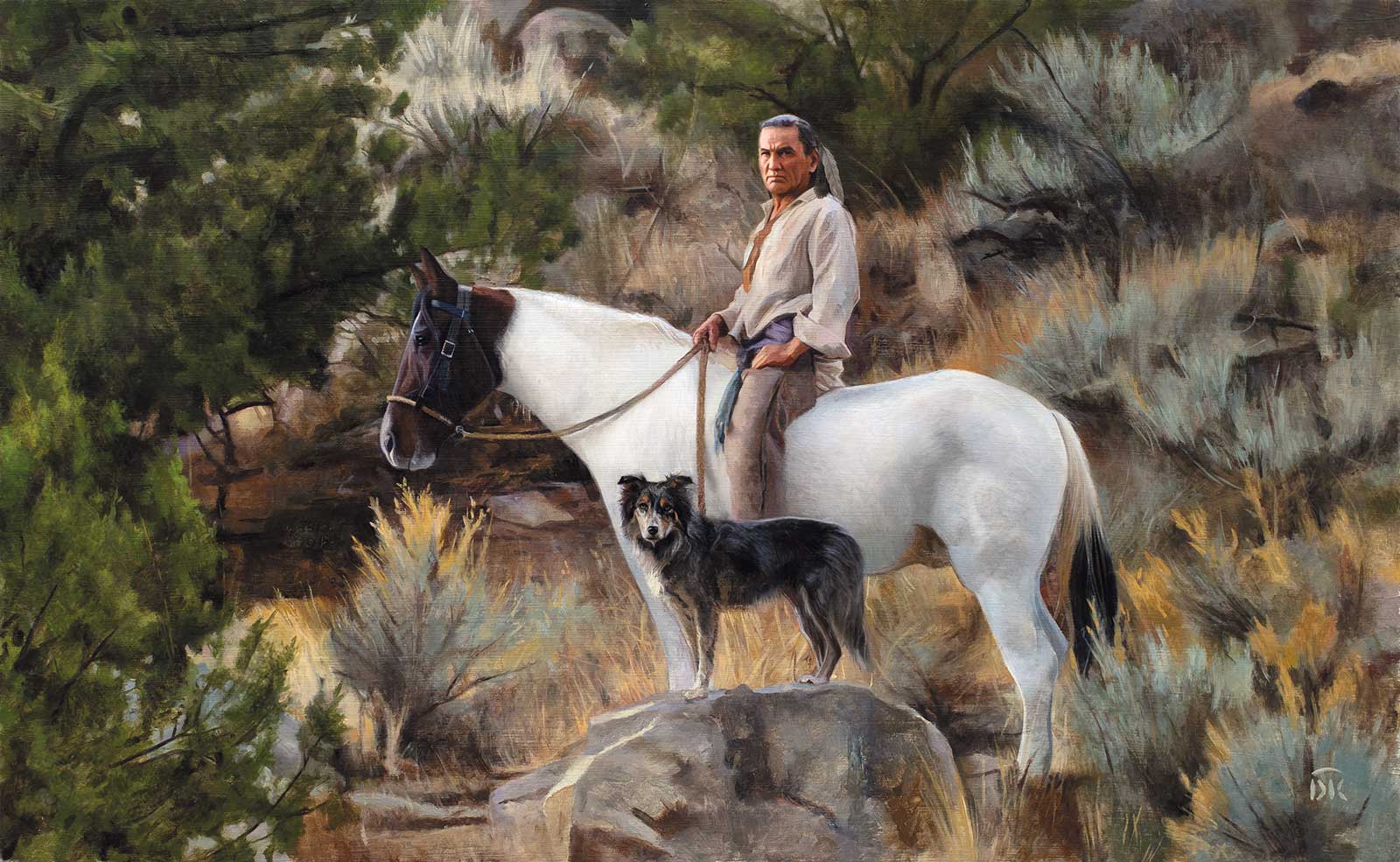
A Quiet Inheritance, oil on panel, 16 x 26 in.
A year ago, I thought I was learning how to become a Western artist. Now I’m beginning to understand that the work hasn’t really changed. It’s still about individual lives connecting us to a larger history.
Maybe that’s what I’ve been painting all along: the people and places where past and present briefly come together. A Holocaust survivor sitting across from me, John Kinsel making fry bread at his home, Dwight on horseback in Taos on the ancestral land where his great-grandfather had stood a century before. Painting can’t stop time, but every once in a while it seems capable of erasing the distance between then and now. When we stand before a Couse painting, we briefly see what he saw from his place at the easel. For a moment, a century disappears.
The landscape has changed, but the responsibility hasn’t—to listen, to look honestly, and hopefully to make paintings worthy of the people who trust me with a small part of their story. —
See More
Davad Kassan is represented by Acosta Strong Fine Art in Santa Fe, New Mexico. See more at www.acostastrong.com.
Powered by Froala Editor


