Oregon painter Eric Bowman recalls that uncomfortable feeling of silent terror as his former career as an illustrator slowly caved in beneath him, sending him nearly tumbling into the void. “It had peaked,” he says. “Illustration felt like it was coming to an end as Photoshop took over. The party was ending.”
And yet, the party was just beginning for Bowman, who transitioned from illustration into fine art with relative ease beginning in 2016. The leap from illustration couldn’t have come at a better time: contemporary art was roaring back to life (again), collectors were becoming more supportive of fresh perspectives of the West and there were an increasing number of venues willing to include artists who had unique visions of time-honored American subjects. They say timing is everything, and that’s certainly how Bowman felt. “I had some trepidation leaving illustration,” he says. “But I got the green light to do it in my own way. It felt like I finally got invited to the party on time.”
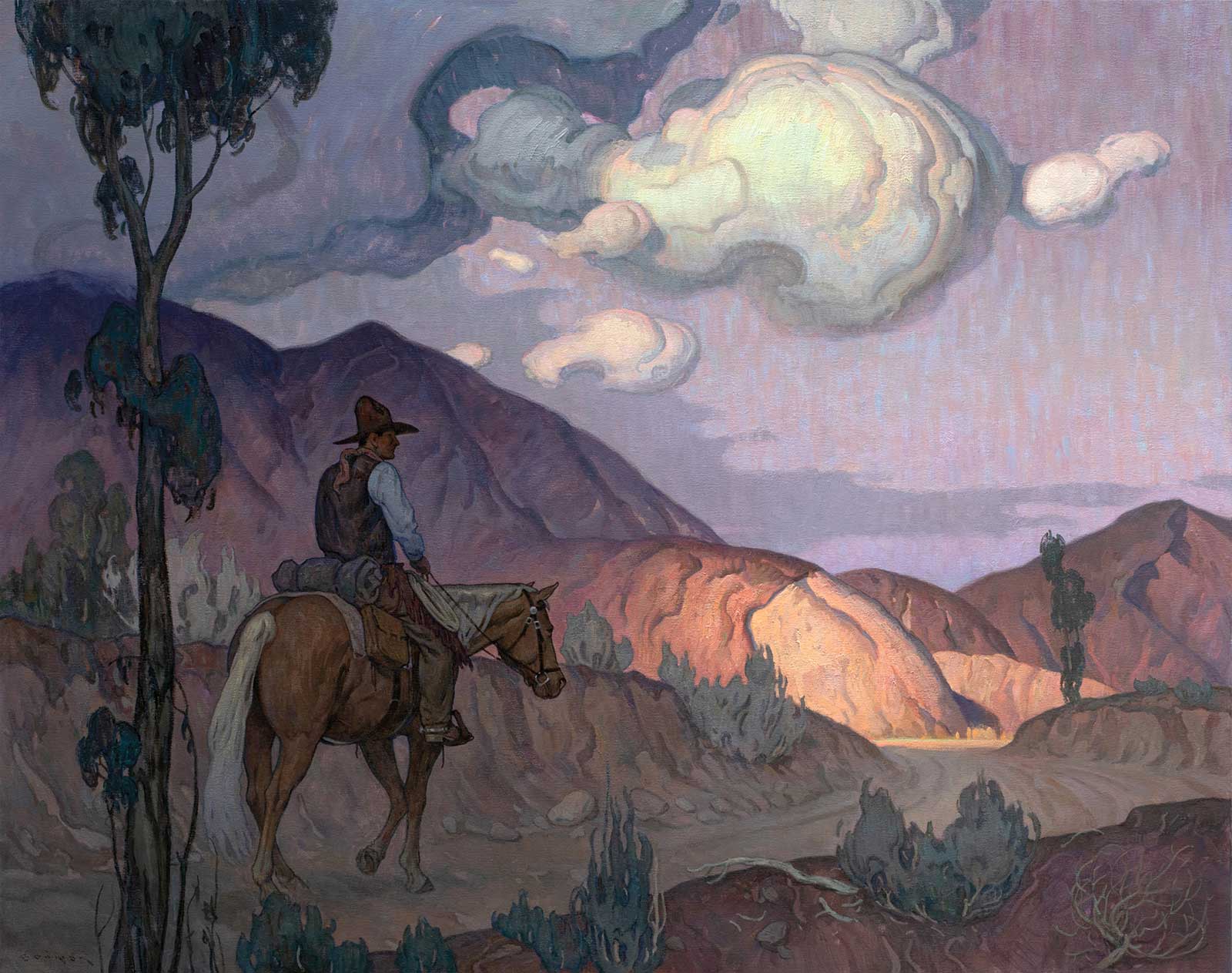 Evening in the Arroyo, oil, 40 x 50 in.
The painter is celebrating the last 10 years, the first decade of his fine art career, with a major new solo show, Eric Bowman: Decade, opening May 16 at Maxwell Alexander Gallery in Pasadena, California. The show will feature a dozen new works. In a simple twist of fate, not only is the show a celebration of his art history, it’s also a return to his roots: Bowman was born in Pasadena.
“I started planning this show a year ago. I concentrated on just this, which is why every piece is already done,” he says. “The problem with having the paintings done early is the longer they sit in my studio the more opportunity I have to mess with them. Now, that didn’t happen with these simply because I know there is a time to cut something loose. Having extra time was also really important because it results in a high-quality show, which is what I think I’ve done here.”

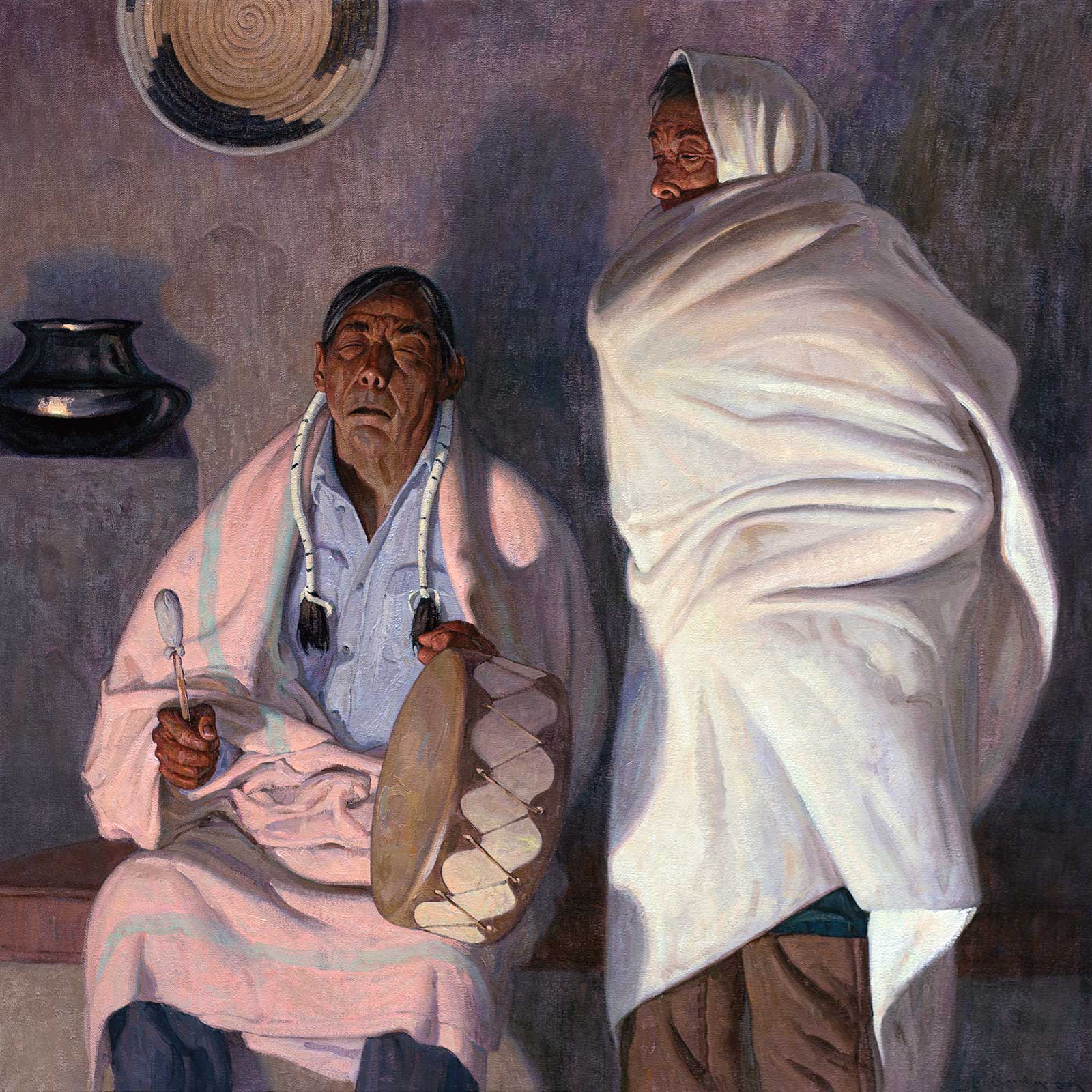
Art & Culture, oil, 36 x 36 in.
Decade is not a retrospective, but it does give the artist an opportunity to look back at where he came from, and how it led to where he is now 10 years later. He credits his initial exposure to the fine art market to fellow Maxwell Alexander artist Tim Solliday, a California painter who shared Bowman’s interest in famed illustrators like Dean Cornwell and Frank Brangwyn. “Tim was the one who introduced me to the idea of seeing my work in a stylized manner. I liked the Western genre, but I didn’t want to do it in that detailed way of the old guard—people like John Clymer or Tom Lovell or Howard Terpning. They were all ex-illustrators who went into fine art,” Bowman says. “There wasn’t anything wrong with the way they were doing it—they’re all great—but I wanted to do it a stylized way. Tim gave me the signal that it was OK to do that.”
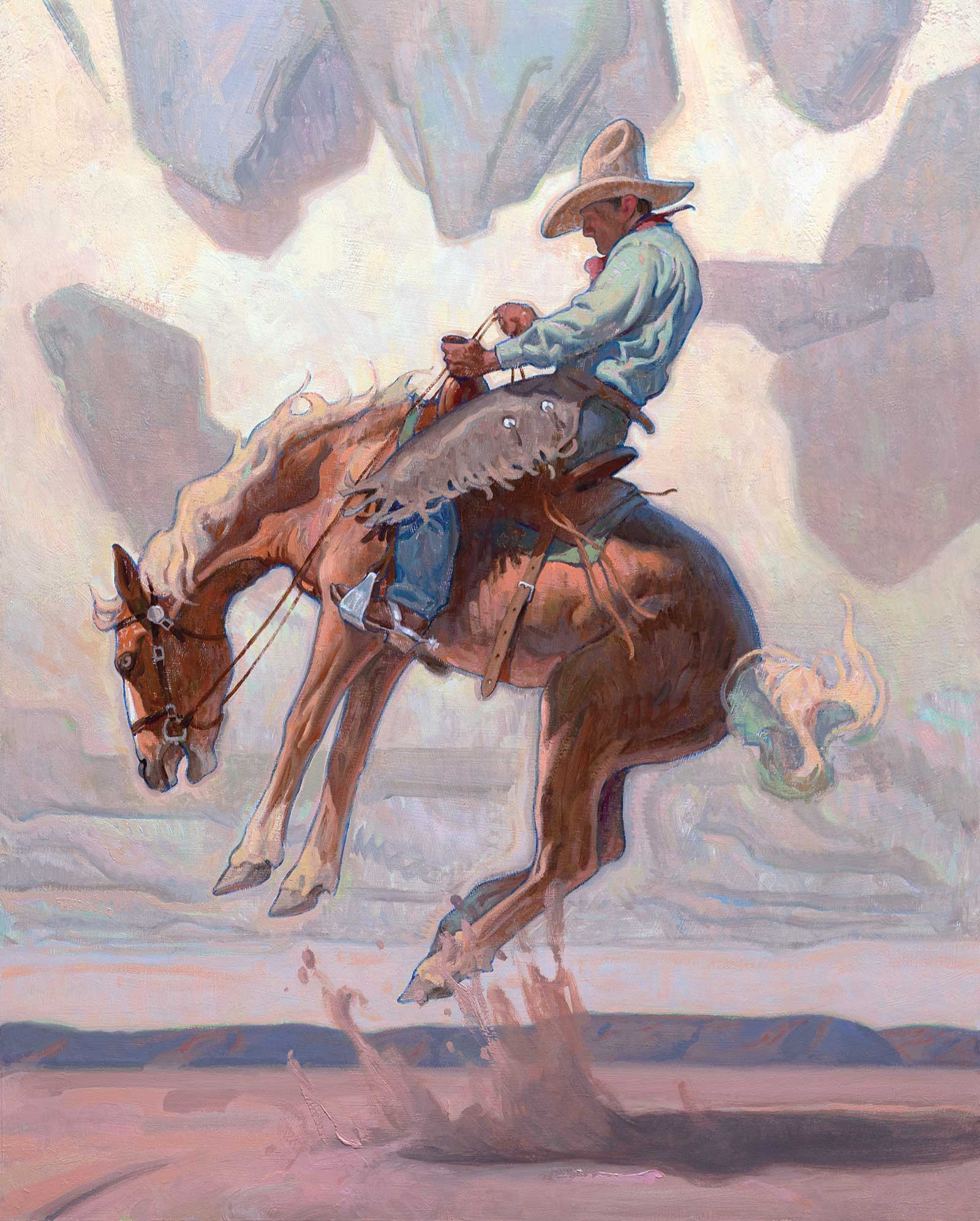
Wallflower Never!, oil, 20 x 16 in.
Make no mistake, Bowman’s work is very stylized—luscious color, rounded rocks and cloud forms nestled comfortably in his rich compositions, cinematic storytelling, simplified renderings of plants and land formations amid deep shadows and brilliant light—and yet there’s more to it than just the “Old West.” Bowman wants to create pictures that speak to the drama and emotion of his design.
“The truth is that I’m not now, or ever been, interested in depicting Western history,” he says. “I want to make beautiful pictures and it just so happens to be Western subjects. I’m an artist first. And I’m not a cowboy at all, and yet the cowboy fits with my aesthetic. The cowboy is the best vehicle for what I want to say about my art. I have an affinity for the Desert Southwest—it’s about making an artist statement, not historical one.”
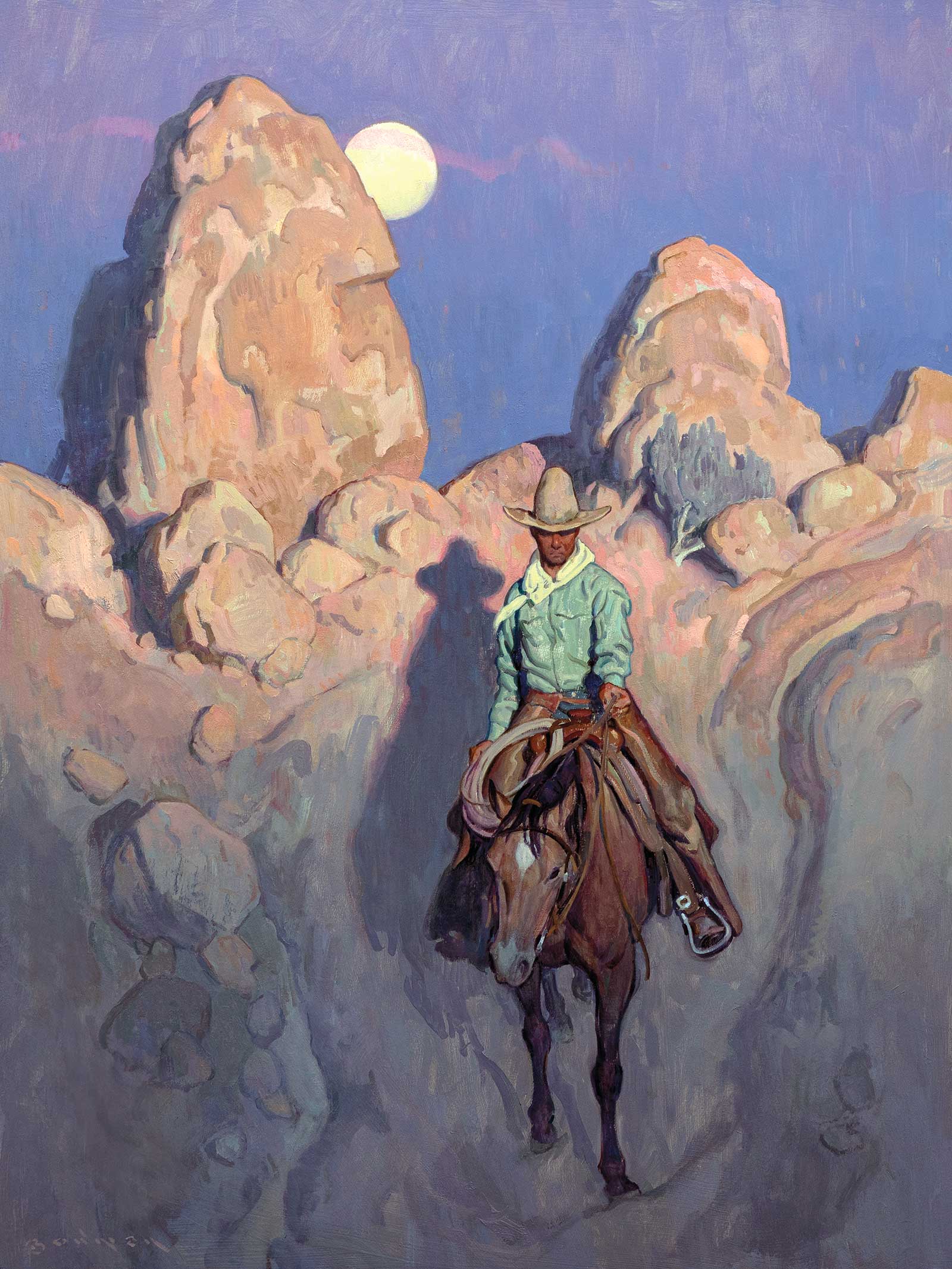
Shortcut, oil, 24 x 18 in.
Bowman refers to the artists and illustrators of the past and notes that their contributions have freed him, in more ways than one, to be his own artist. “Western art peaked 100 years ago, and that’s a hill I will die on,” he adds. “I say that because it’s impossible to do anything different, especially when they did it a lot better. Some things you can’t improve on. Knowing that allows me to work with more freedom.”
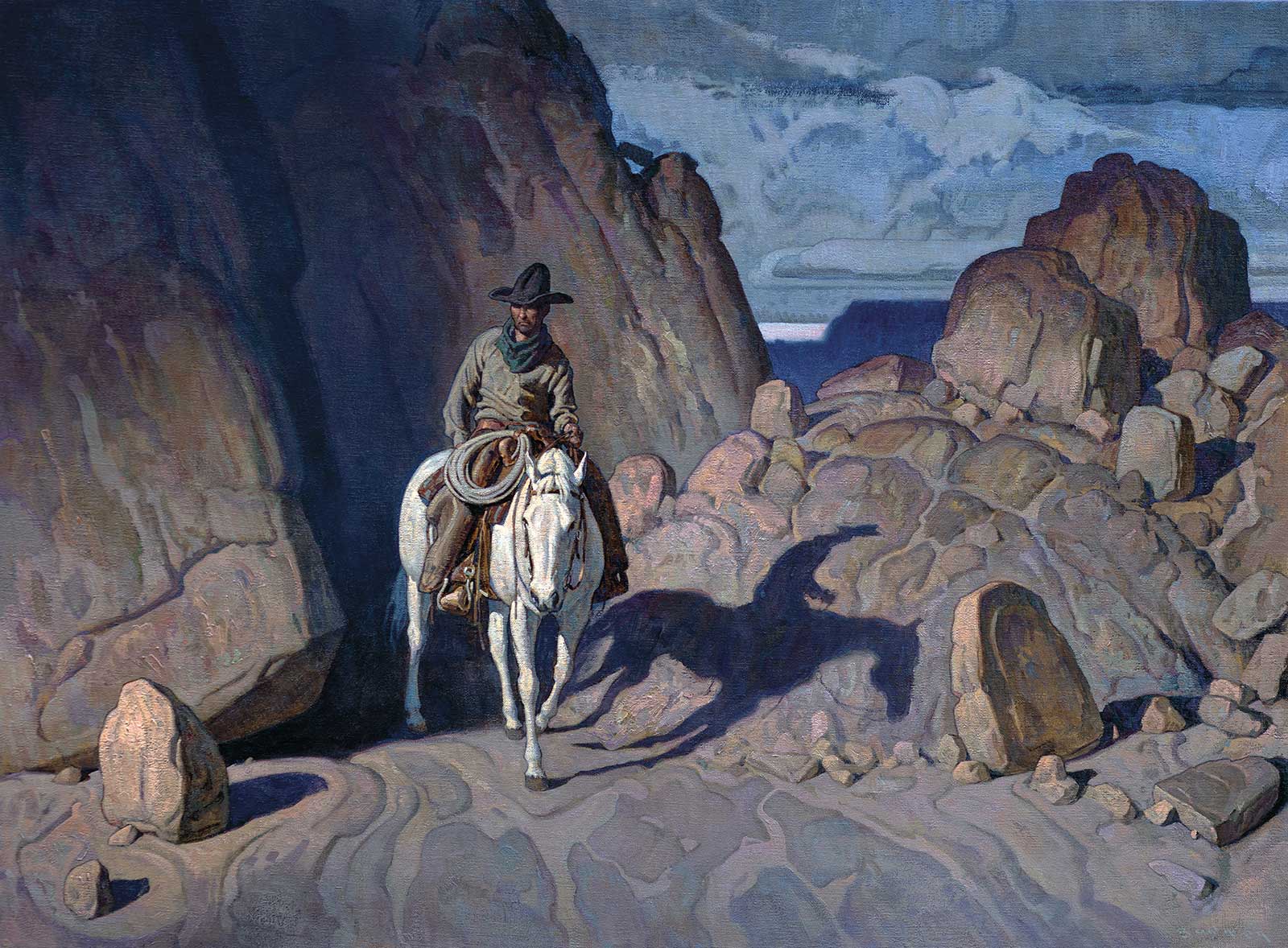
Tombstone Shadows, oil, 30 x 40 in.
One of those freedoms is the ability to break the rules with confidence. He was told once that Western fans don’t want to see images of California. The thinking here is that the Golden State, with its long coastline and different varieties of plants, doesn’t look like the classic West. Bowman disagrees. For this show he has created Evening in the Arroyo,a painting of a cowboy entering a dry creekbed with a single eucalyptus tree near the horse and rider. It doesn’t scream “California,” but sharp-eyed viewers may recognize the presence of elements not normally seen in Southwest paintings. Bowman hopes those little details register for his collectors.
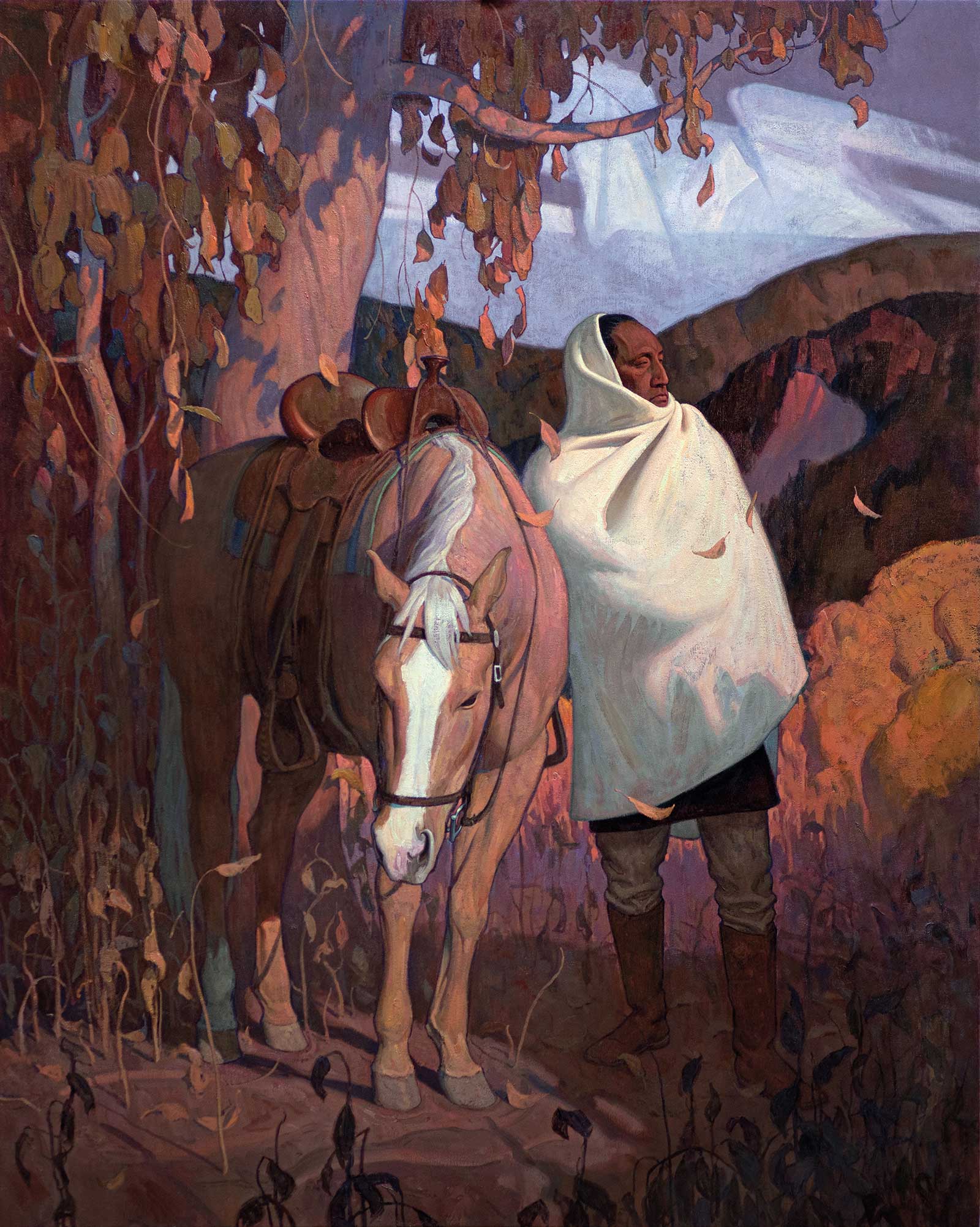
Crossroads of Season, oil, 50 x 40 in.
Many of the paintings in Decade have a familiar element of Bowman’s work that brings together both warm and cool colors. “It’s all about the juxtapositions of temperature, which makes for a more interesting picture. I will utilize a full palette, but let colors play off each other,” Bowman says. “I see the influence of these colors in nature. I then use artistic license to pump them up and push them. Almost all of the background settings are made up, but made up from real-world experiences, plein air studies and my imagination. With landscapes, you can have the bandwidth to move them around. You can move a mountain, or change a rock, or take a limb off a tree. You can’t do that with the figure, so why not do it with the land?”
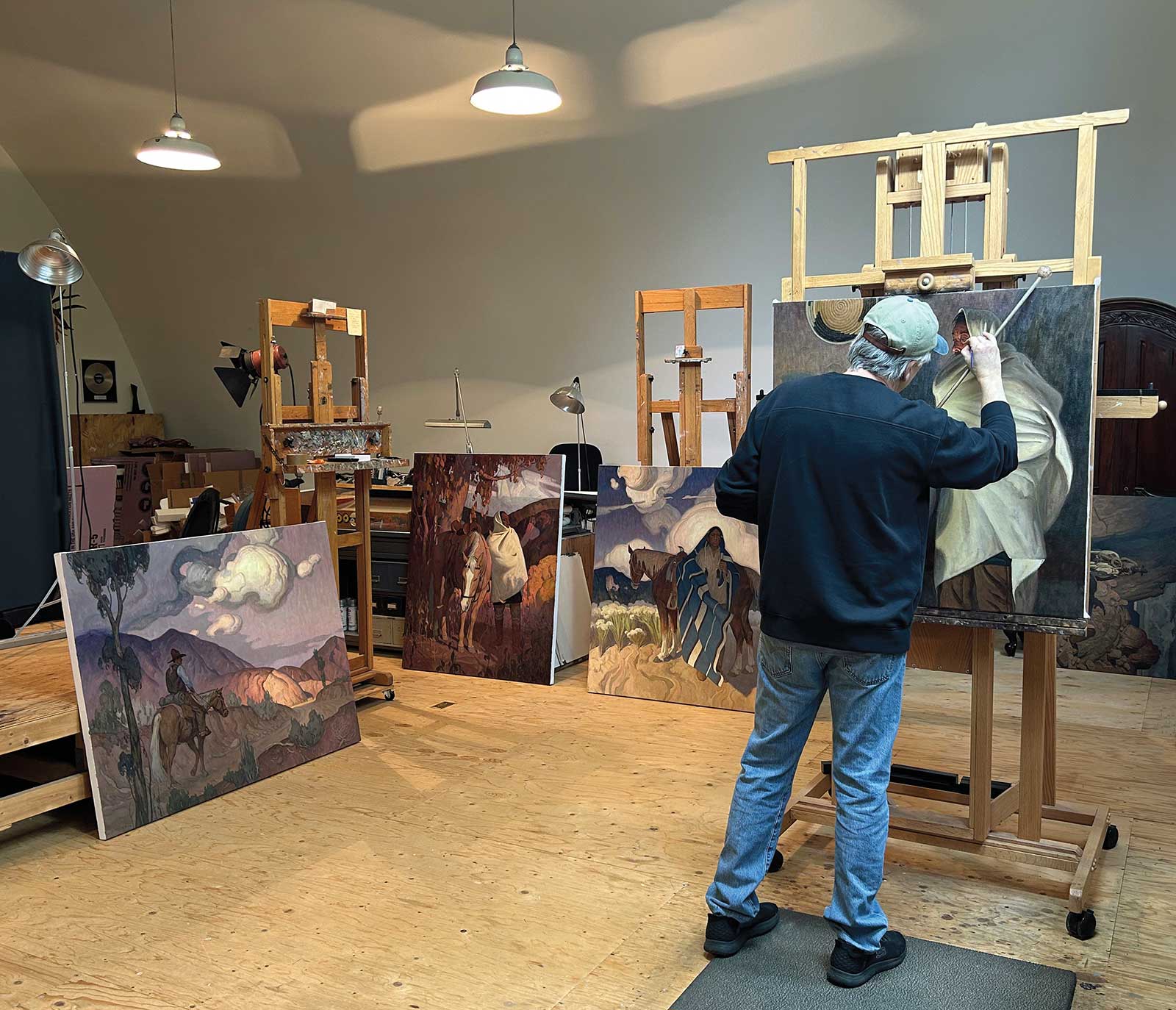
Eric Bowman in his Portland studio. Courtesy the artist.
A number of new works—Earth Rhythms, Art & Culture, Crossroads of Season—were inspired by Taos, New Mexico, where Bowman spent time at the Couse-Sharp Historic Site. During a recent trip to Northern New Mexico, he hired three Taos Pueblo residents as his models. Their inclusion in both outdoor settings and tranquil interior scenes will likely take viewers back to the early 20th century and the Taos Society of Artists.
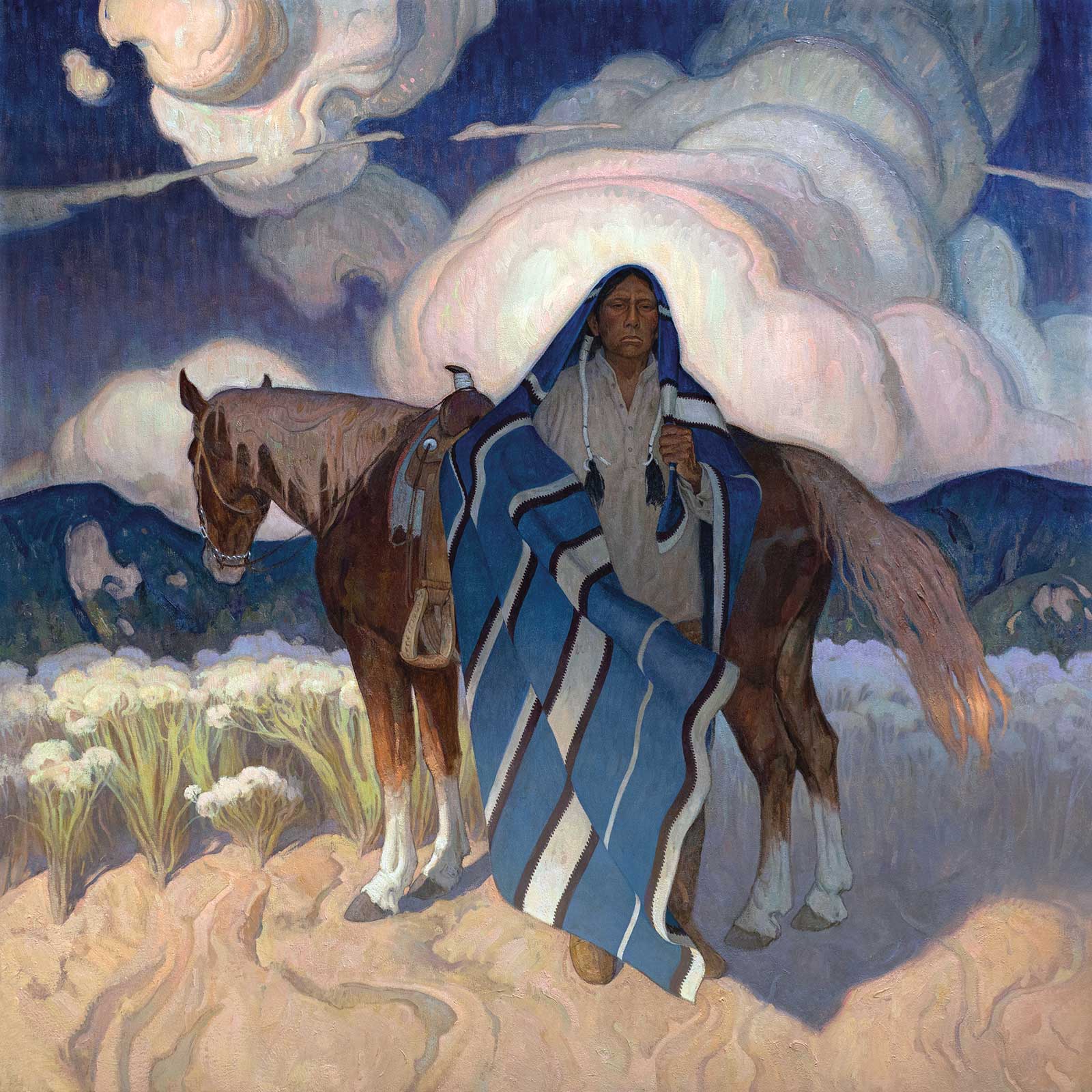
Earth and Sky, oil, 48 x 48 in.
In almost all of the new pieces, Bowman focuses on the quiet resilience of his Western subjects. In many paintings, his figures are isolated by the land or framed against a limitless sky. They regard what is before them with grace, but also indifference—his cowboys are stoic and weary for this world. These are men who have seen a lot of miles and regard their journey with a solemn reverence as they push through beautiful desert landscapes. These paintings allow viewers to admire the scenery but also pay respect to the ruggedness of the land and its people.
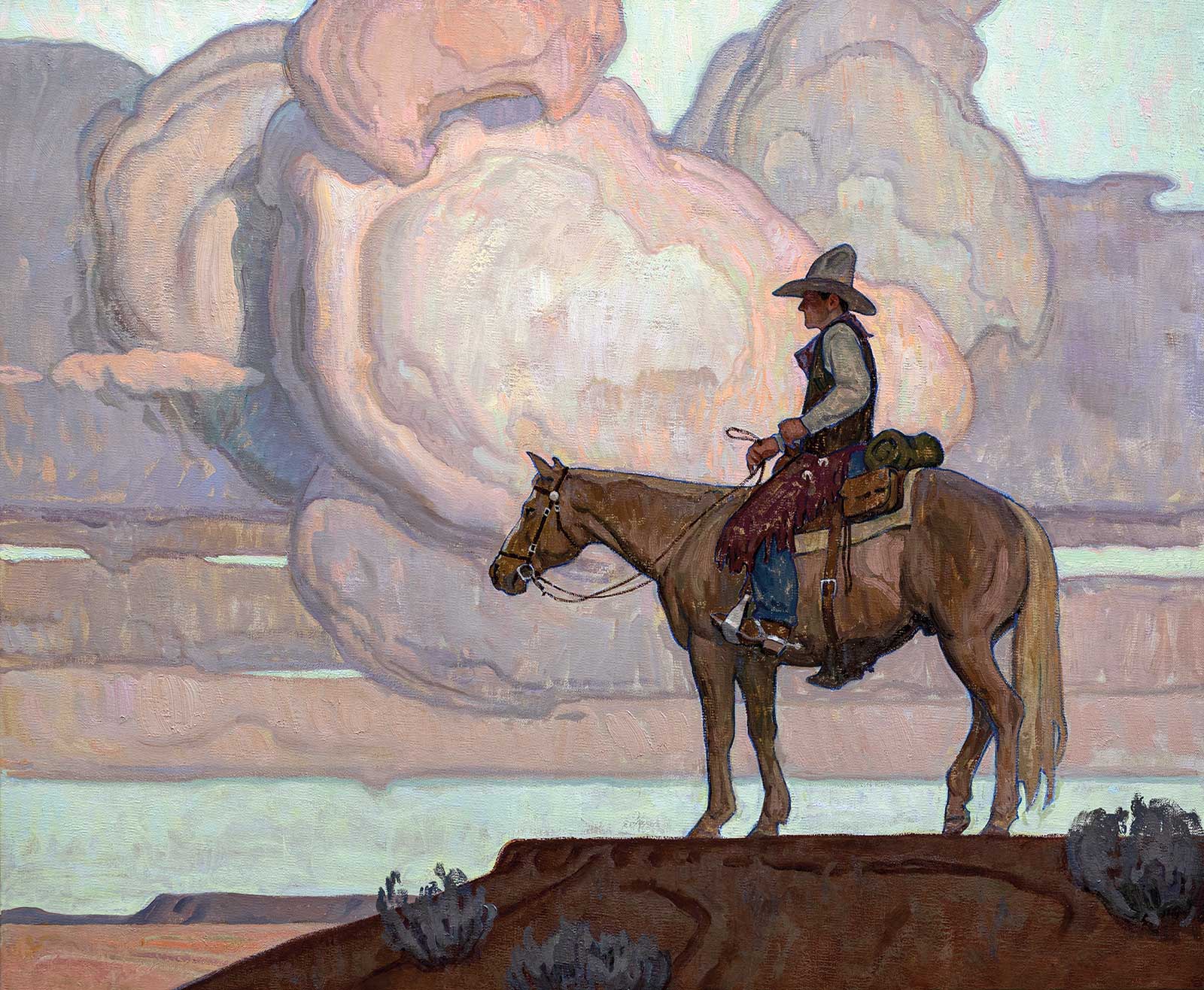
Vantage Point, oil, 20 x 24 in.
What’s more remarkable is that these works come from an artist who’s still mostly at the beginning of his own journey. Ten years in the fine art world is not a long time, and Bowman has a lot of road still in front of him. Where he will go, what he will see and how he will interpret it? The promise of those answers is thrilling. —
Eric Bowman: Decade
May 16-June 13, 2026
Maxwell Alexander Gallery
1300 N. Lake Avenue, Pasadena, CA 91104
(213) 275-1060, www.maxwellalexandergallery.com
Powered by Froala Editor


