Many of the most iconic examples of landscape art were painted at the Grand Canyon, Arizona’s vast and unchallenged colossus of nature carved over millions of years by nothing more than wind and water. These paintings were created by some of the greatest landscape painters to ever set foot in the Southwest. Artists such as Thomas Moran, Gunnar Widforss, William R. Leigh, Carl Oscar Borg and others. The fact that Curt Walters not only belongs in that group, but near the front of it, is a testament to the artist’s endearing link to one of the greatest natural landmarks on the planet.
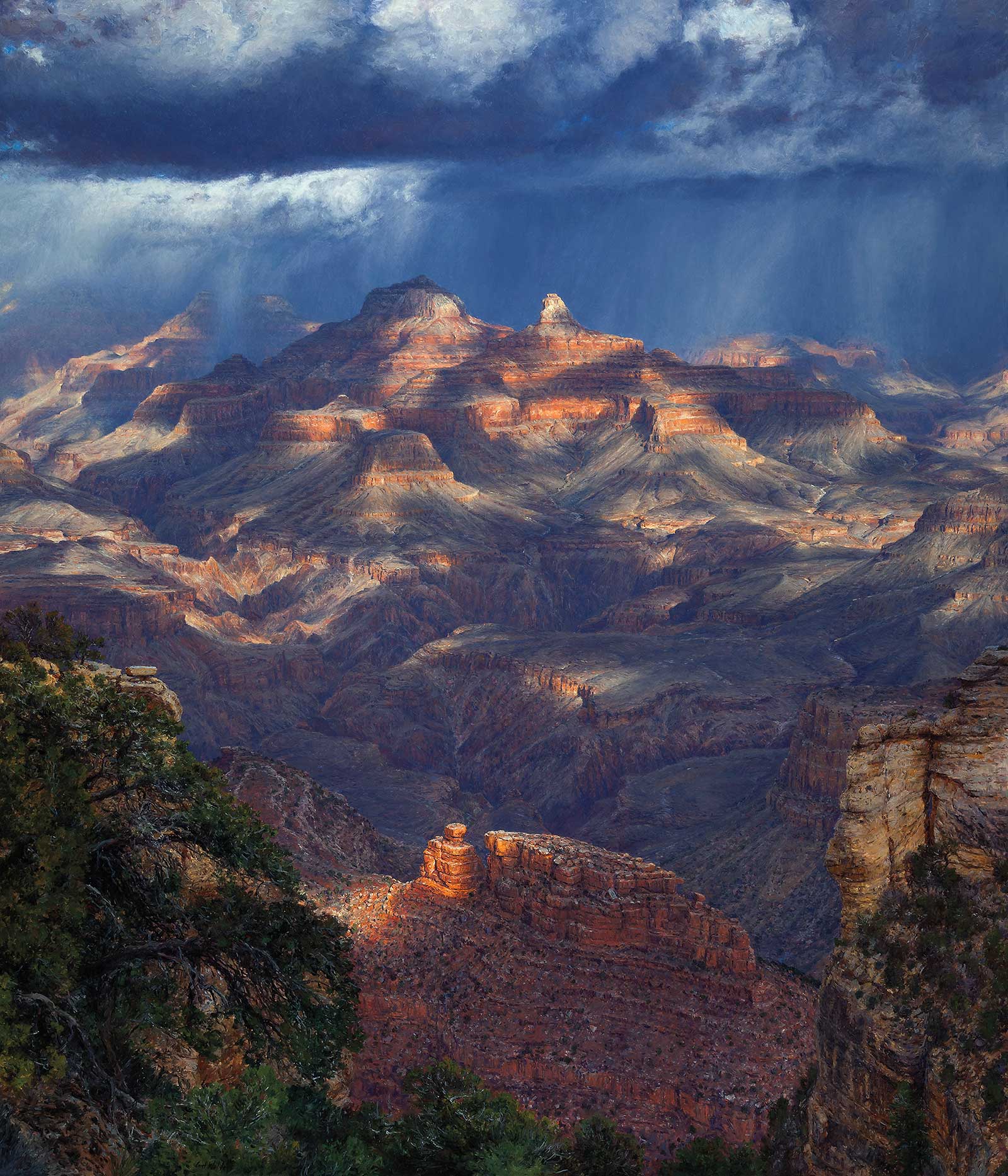
Compilation of the Gods, 2017, oil on canvas, 72 x 60 in.
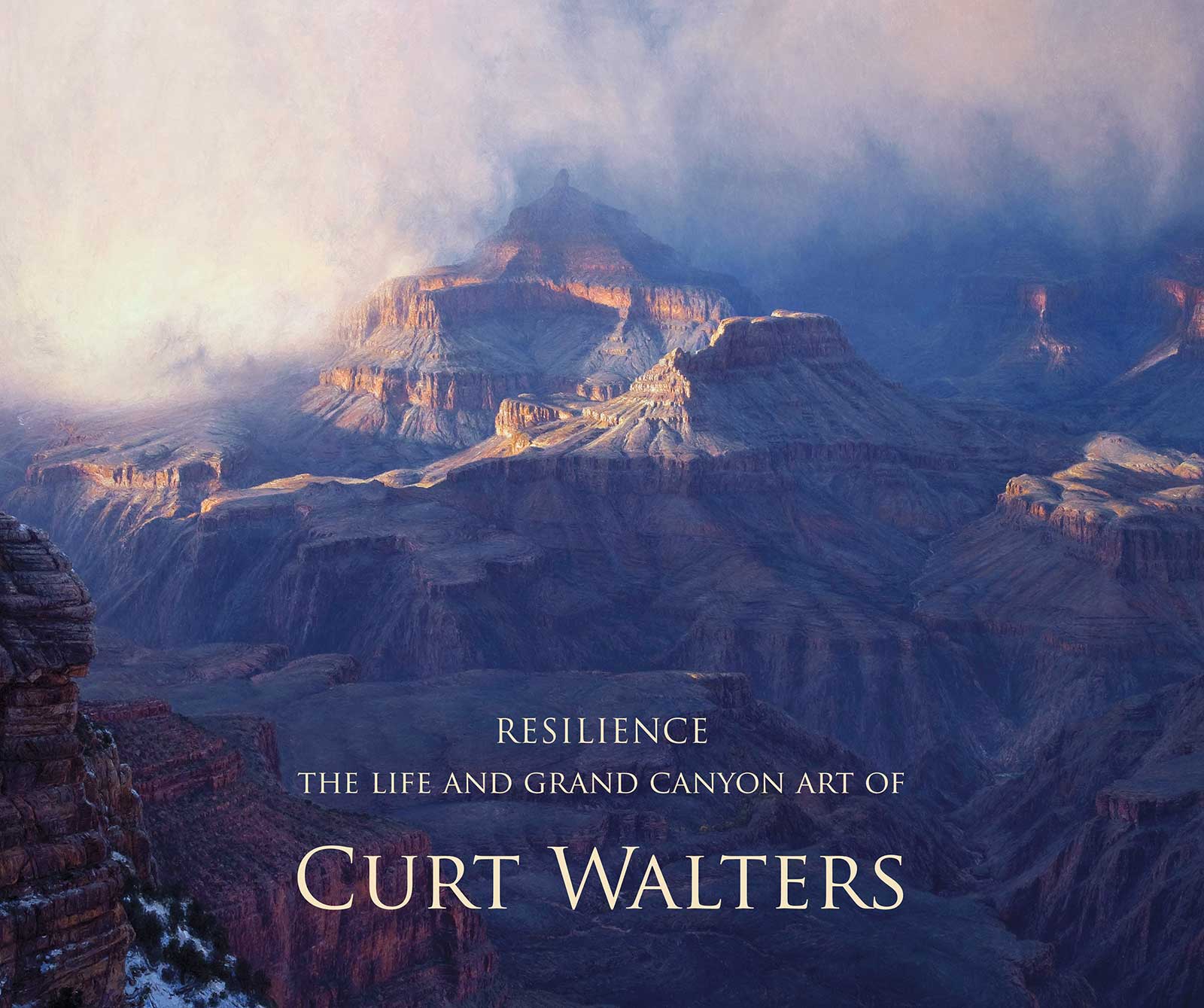
Walters will celebrate the canyon—as well as his vast and unchallenged colossus of a career—with a new retrospective at Western Spirit: Scottsdale’s Museum of the West in Scottsdale, Arizona. The exhibition will also mark the release of his book, Resilience: The Life and Grand Canyon Art of Curt Walters, a nearly 400-page examination of the artist’s vision and work. The book was written by his grandson, dDamian Foreman, who notes in the preface, “Curt and I have an inexplicable love of the physical landscape of the Southwest. There are many gorgeous places in the world—but this small slice of the planet’s face, [the Grand Canyon,] has burrowed deep into our hearts.”
For Walters, the book and retrospective gave him ample opportunity to reflect back on his life, although he’s ready to march forward again. “None of it is over. I’m still painting. Always. So I’m ready to get back to work on a normal schedule,” he says with a laugh. “But it was a fun experience working with dDamian on these stories. We went through a lot of history.”
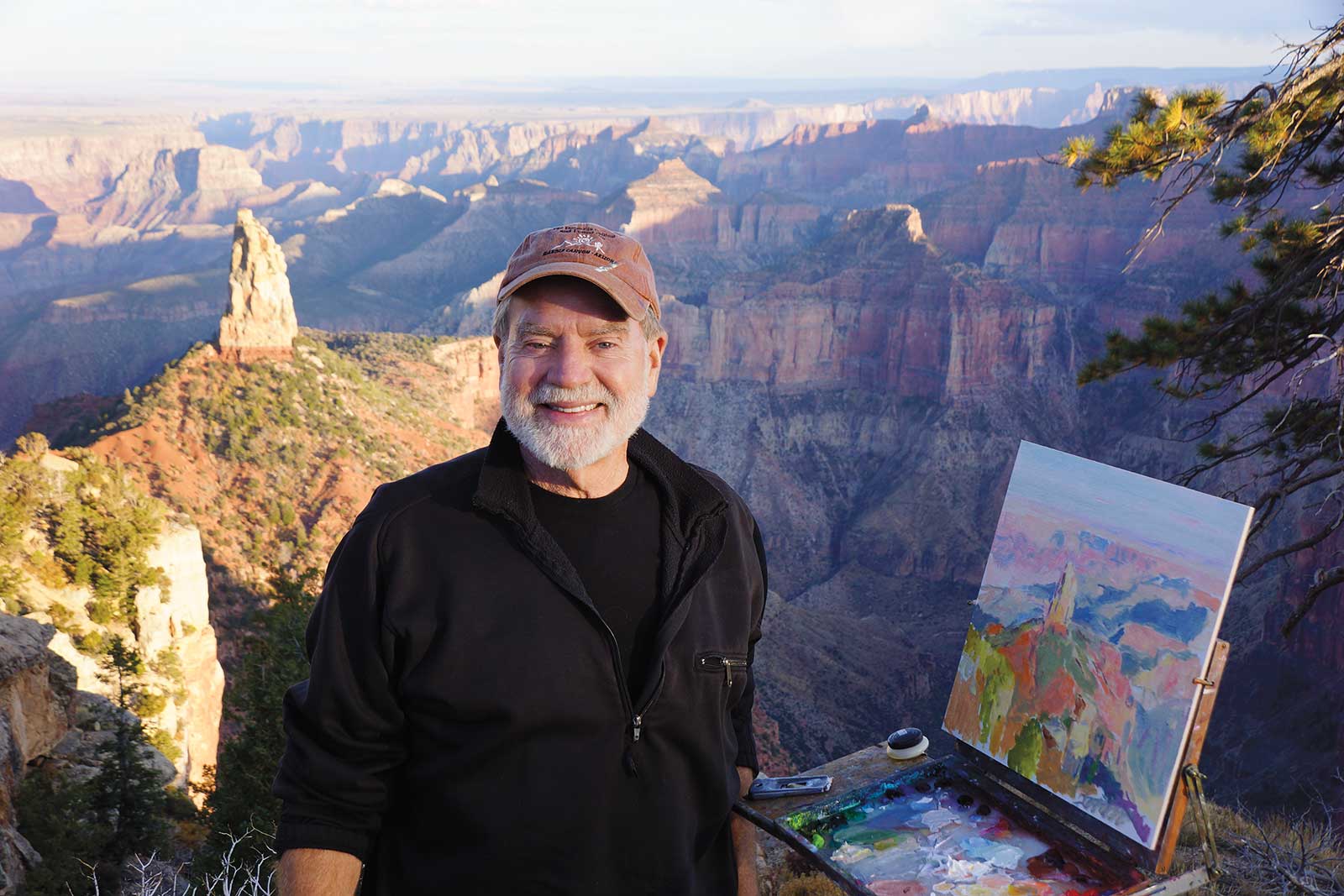
Curt Walters plein air painting at the Grand Canyon. Courtesy the artist.
While the book covers much of Walters’ fascination with the Grand Canyon—his first trip was made alone in 1969—it also punctuates his interest in the land and conservation. In one early adventure around the age of 14, the artist went with his family to Glen Canyon Dam near Page, Arizona. The road trip in the family’s Mercury was miserable, he notes. “Though the journey portion of the adventure left the children bored and overheated, Curt’s reaction to the dam far outweighed the hours of morbidity he had endured on route,” Foreman writes. “While [Curt’s father] admired the extraordinary architectural and engineering feat, praising the genius of the thing, Curt was horrified by his realization that, as water piled up at the dam, it would inevitably submerge miles of the canyon behind the dam. He was sickened by the ramifications of such a massive, unnatural body of water: Why would anyone intentionally destroy the gorgeous canyon? Didn’t they realize that the network of slot canyons and grottoes lining Glen Canyon’s edges would suffer the same fate? What kind of impact would the dam have on the plants and animals—both upstream and down? Curt later discovered that environmentalists and Native Americans in the region shared his dismay at the loss and the flooding of significant ecological and cultural sites.”
This early realization about the land, and its misuses, colors much of his career and later support of conservation projects and groups.
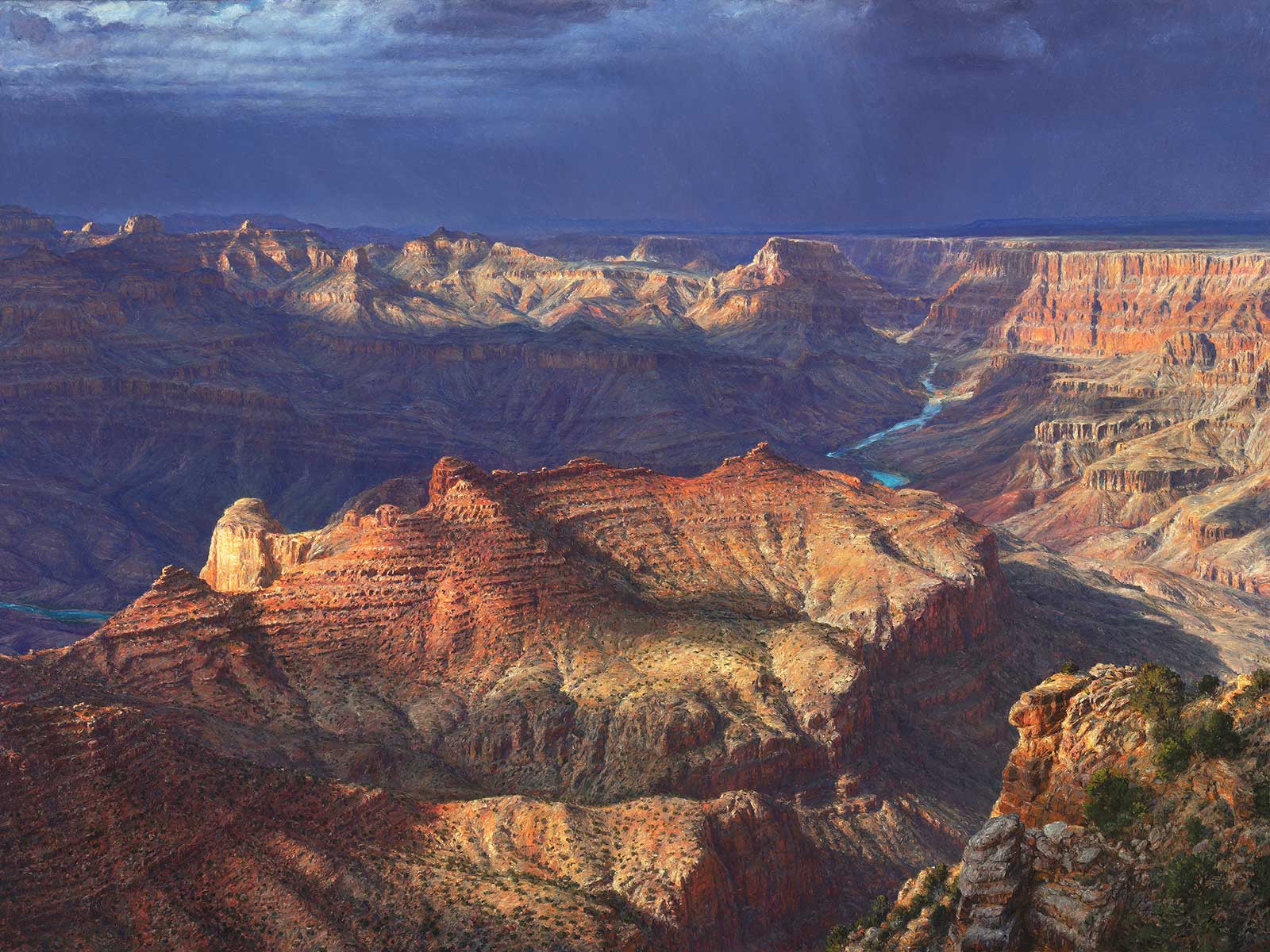
Through the Eyes of Cardenas 1540, 2021, oil on canvas, 36 x 48 in.
Resilience also speaks at length on the artist’s feelings as a gay man during the 1970s and beyond. Walters even told his first wife he was gay; she thought marriage would “solve” him. “It was a very dangerous time for men like me. It was common for police departments worldwide to use painful electric shock and chemical aversion, often ending in an innocent person’s cruel, senseless death. I was simply in fear most of the time. I understood that professional careers could be destroyed by a rumor,” he says in the book. “I desperately wanted to believe that marriage was the right path. I saw no other path open to me. I felt that I must follow the rules of society as I perceived them, even if my instincts and friends tried to tell me different. Marriage, I thought, was my only chance to become a professional artist and protect myself at the same time. It was a Faustian bargain: I gave up a core part of myself in exchange for the potential to chase art and, by extension, my happiness.”
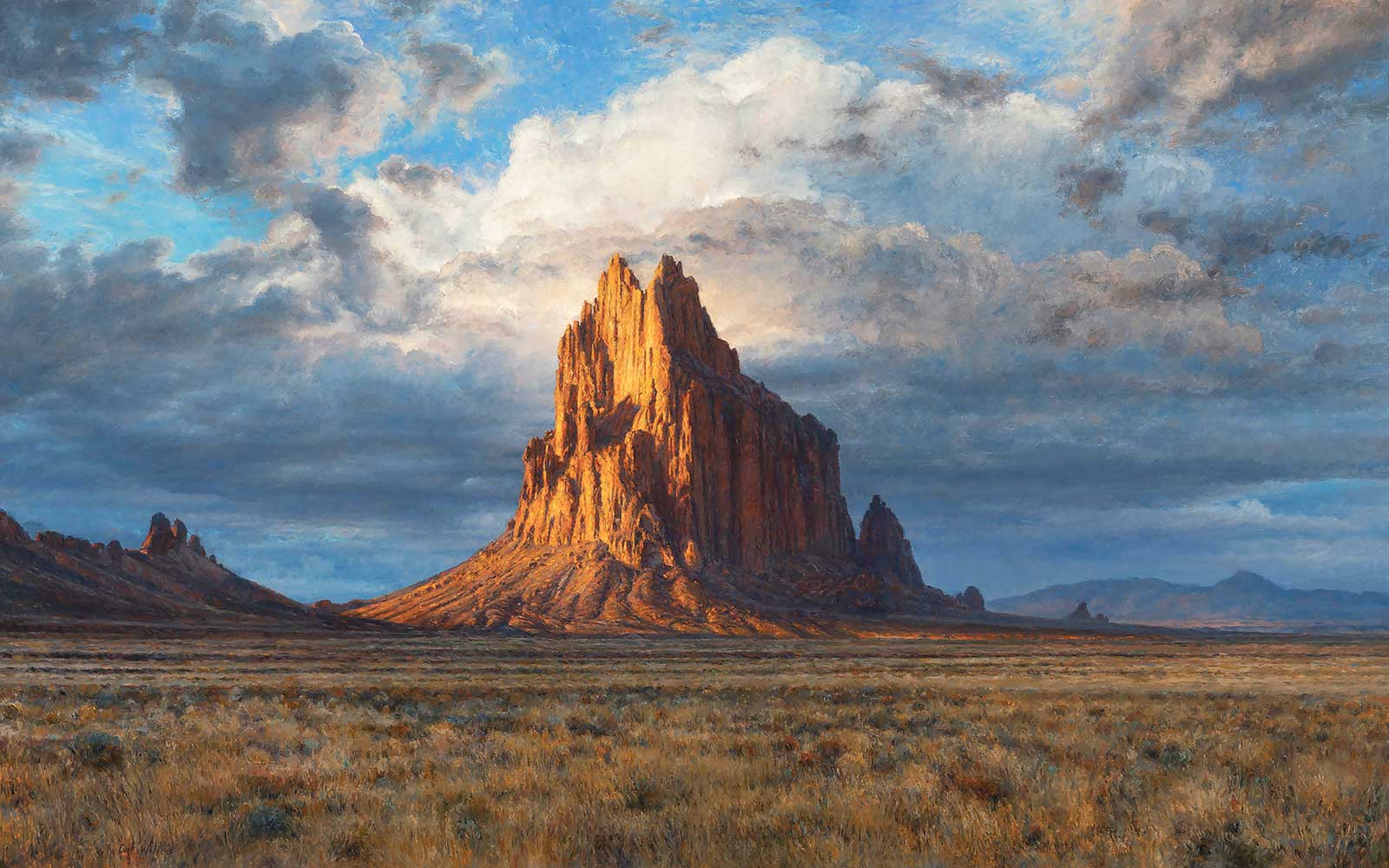
Inexorable Shiprock, 2022, oil on canvas, 30 x 48 in.
Later, after he divorced his wife and then met his partner Tom Dailey, Walters was careful with his personal life. He says that life in Sedona, where he moved in 1979, was somewhat normal due the accepting nature of the community. He was not always offered the same acceptance in the art world. In one painful section in Resilience, Walters relates how some artists refused to shake his hand, and others ended friendships. In 1984, painter Wilson Hurley confided to the artist that the board of directors would never invite him to the Prix de West. “Curt had been submitting his work for five years and naturally wanted to know why he had been unsuccessful,” Foreman writes. “In what Curt describes as a ‘boot to the stomach,’ Hurley told him: ‘It’s your lifestyle choice. If your work makes it through the doors, it will have to be better than the best.’”
Foreman continues, “When Curt recovered from the shock of Hurley’s pronouncement, he felt surprisingly liberated. All his life he had been playing by the rules of others, hoping that they’d cut him some slack. That had not—and would not—happen, so he saw no reason to continue playing by their arbitrary social stigmas. Despite the hurdles he worked to overcome, Curt found the next two years especially creative and filled with personal growth.”
The painter was invited to the Prix de West in 1998. He consistently won awards at the show from the very beginning of his run and, in 2007, he won the Prix de West Purchase Award. He is still active in the show and even won the buyer’s choice in the 2025 exhibition.
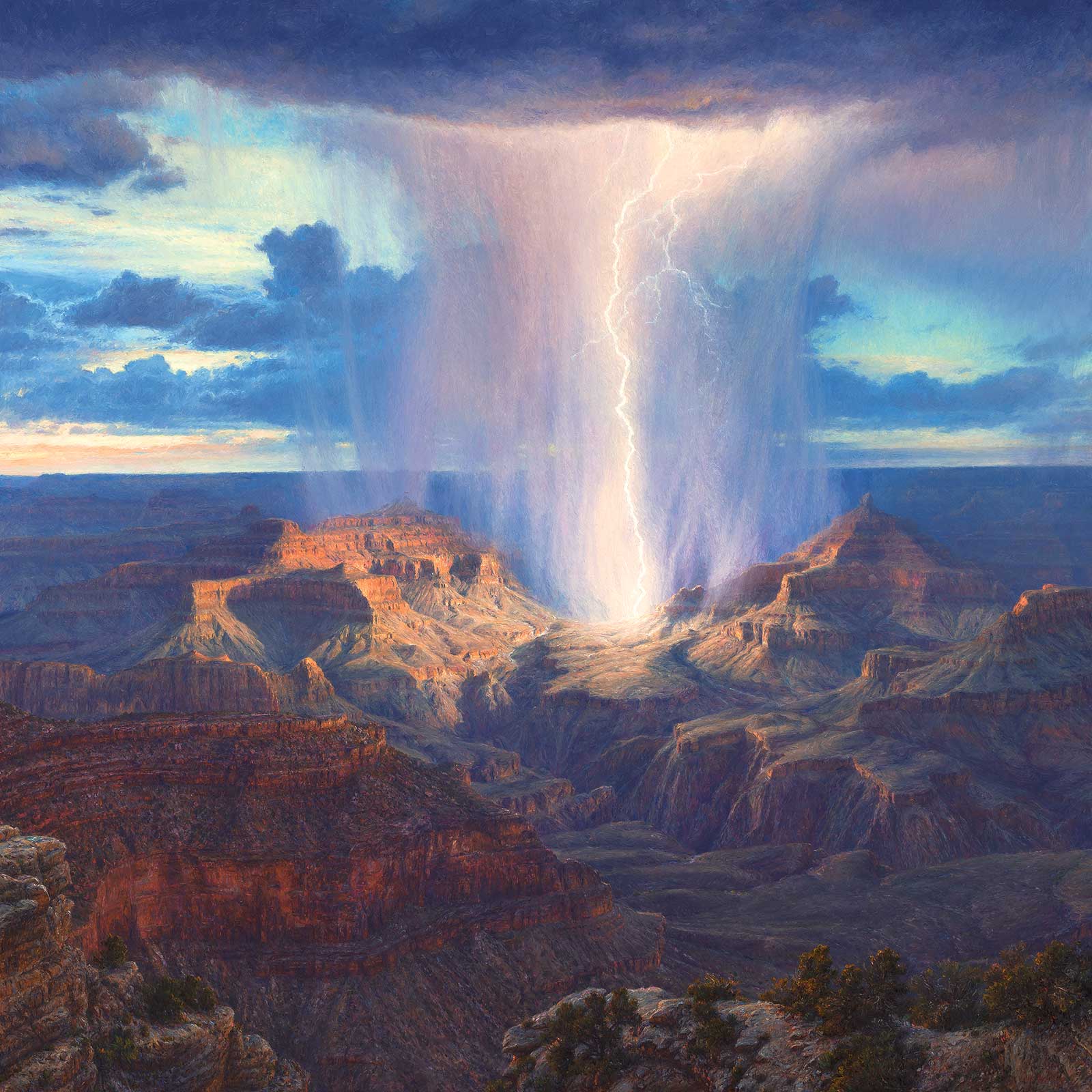
Instant Opus, 2019, oil on canvas, 48 x 48 in.
Walters admits he’s hesitant to push these stories forward because he wants people to see him as an American artist, not a gay American artist. The minor distinction is important to him. “These were difficult parts of my life, but they don’t define me. I could have left them out, but I want this book to speak for me for generations,” he says.
No story about Walters would be complete without the Grand Canyon, which looms large—although not entirely—over his career. The fact that his first trip to the canyon was alone, adds to the poetry of the moment.
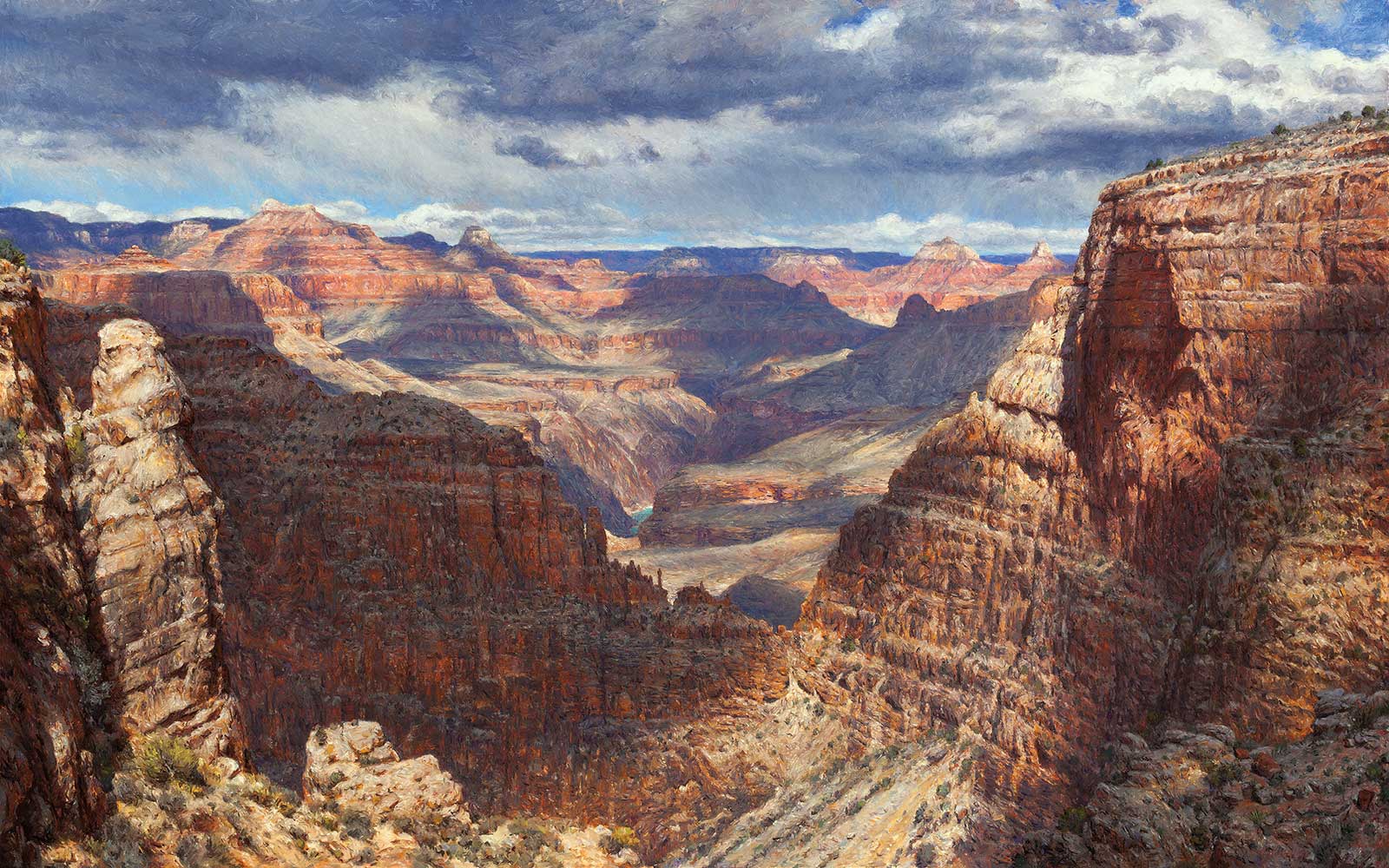
Cathedral Gap, 2018, oil on canvas, 30 x 48 in.
“As I approached the edge of Grand Canyon for the first time, I was astonished at the marvelous sight. But my excitement was tempered by sudden intimidation. And yet, somehow, I knew I belonged there, and I felt joy. I’d been working hard on the farm that summer, and I’d sold a Shiprock painting at the country store for $15. Gas was 32 cents a gallon. Mom sent along a large tin of her homemade oatmeal cookies, my diet for two days. I took my wood easel and paints, my TV tray, and a glass palette. I borrowed Dad’s 35mm camera from his dental office and bought a couple of canisters of black-and-white film, about 48 frames, all that I could afford. I had never used a camera before.”
He continues, “I entered through the east entrance, parked my car, and walked to Desert View, my heart racing. I was stunned by Grand Canyon’s magnificence. It was far beyond anything I could have imagined: vaster, more varied, and infinitely more complex. It seemed unfathomable. I slept in the back seat of my car and awoke at sunrise to walk to Powell Point. As I watched morning light fill the spectacular chasm, I knew I was literally falling in love with Grand Canyon. I eagerly set up my easel and began to paint. I was such a novice, with so little understanding of the nuanced geology, that those efforts were awkward. Although humbled by the experience, my inadequate and disappointing efforts only fired me up: I made up my mind that I would learn to paint it.”
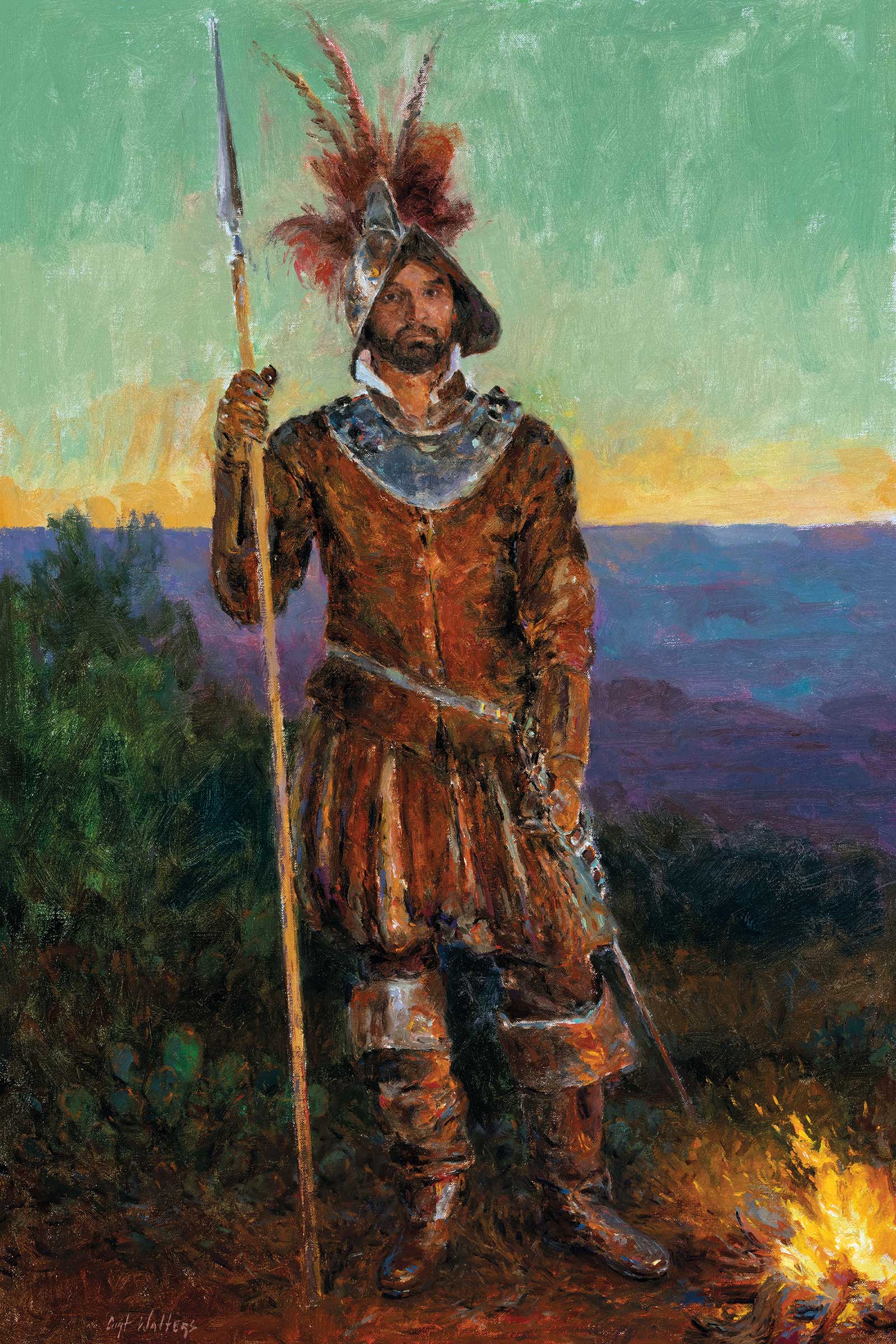
Cardenas, Evening Watch—September 1540, 2022, oil on canvas, 30 x 20 in.
And paint it he did. Today his works are some of the most iconic and identifiable images of the canyon ever painted. And to the lucky few who stumble upon him and his easel in the park, it’s like bumping into Elvis at Graceland. Not since Andy Warhol and the soup aisle, Sydney Laurence and Denali, or Monet and his Giverny lily pads has an artist been so intrinsically linked to a single subject or place as Walters and the Grand Canyon.
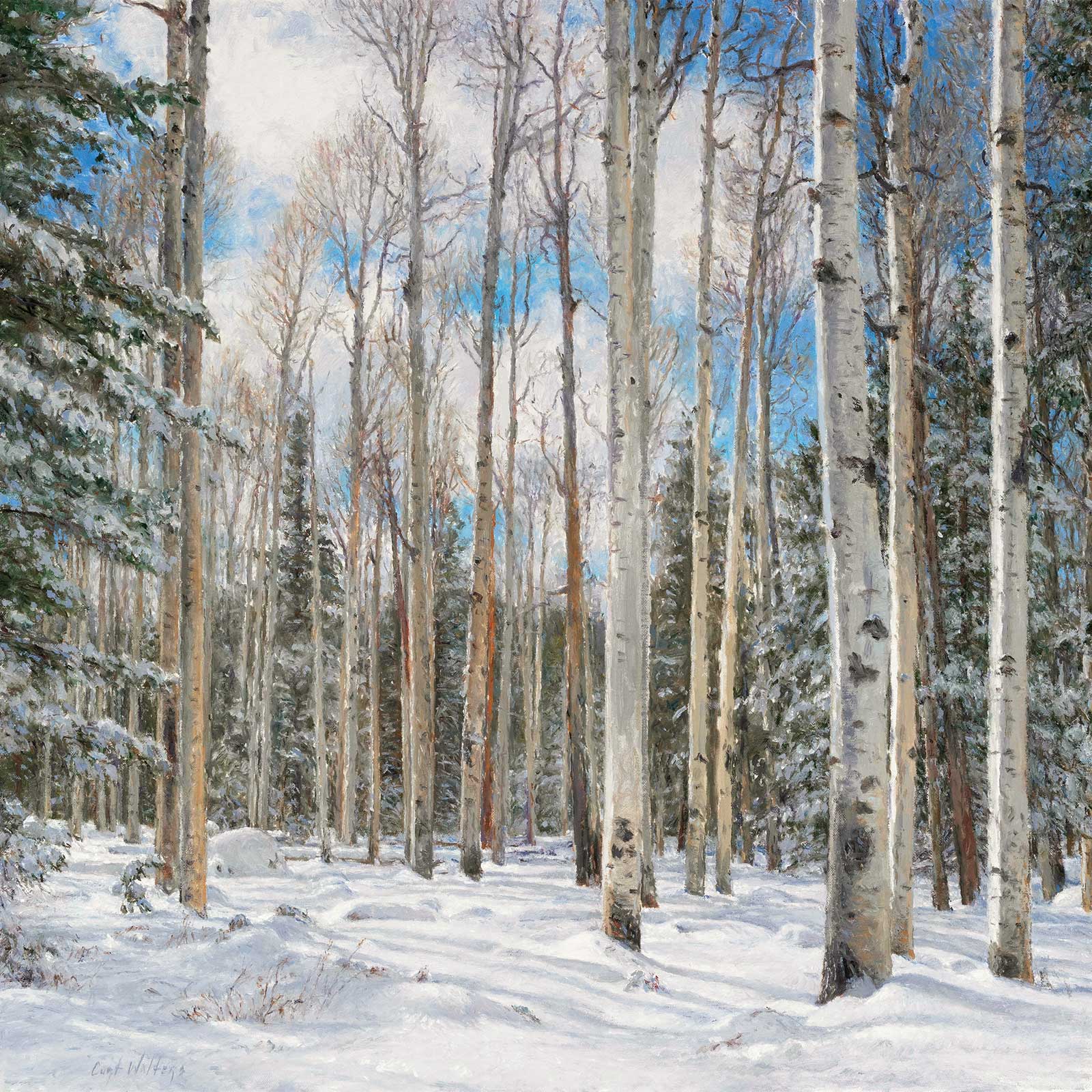
Winter’s Silk Shadows, 2023, oil on canvas, 24 x 24 in.
It is this dynamic that will be at play in Curt Walters: Resilience, the Western Spirit retrospective, which runs from January 17 to April 12. The museum will host a ticketed VIP night on January 16, as well as several seminars and a book signing after the opening. Refer to the website for updated scheduling. In addition, the museum will be offering his book, Resilience: The Life and Grand Canyon Art of Curt Walters, which releases in January. —
Curt Walters: Resilience
January 17-April 12, 2026Western Spirit: Scottsdale’s Museum of the West
3830 N. Marshall Way, Scottsdale, AZ 85251
(480) 686-9539, www.westernspirit.org
Resilience: The Life and Grand Canyon Art of Curt Walters
By Damian Foreman • 387 Pages
Published by SF Design / Fresco Books, NM, 2025
Powered by Froala Editor


