Award-winning photographer Jay Dusard, who shot timeless images of working cowboys and Western landscapes, took great pride in his hometown of St. Louis, which was also the birthplace of one of his heroes, Charles M. Russell. Although the two men worked a century apart and in very different mediums, their works reverberated throughout the West. Dusard died on September 20. He was 88 years old.
In an interview with Western Art Collector in 2018, the photographer revealed how carefully he planned his career as he chased down a coveted Guggenheim Fellowship. “[A friend] told me the best advice he could offer was to pick something I was truly interested in because if I got the award I was stuck with that subject,” Dusard said. “The moment I got off the phone I knew I wanted to photograph cowboys.”
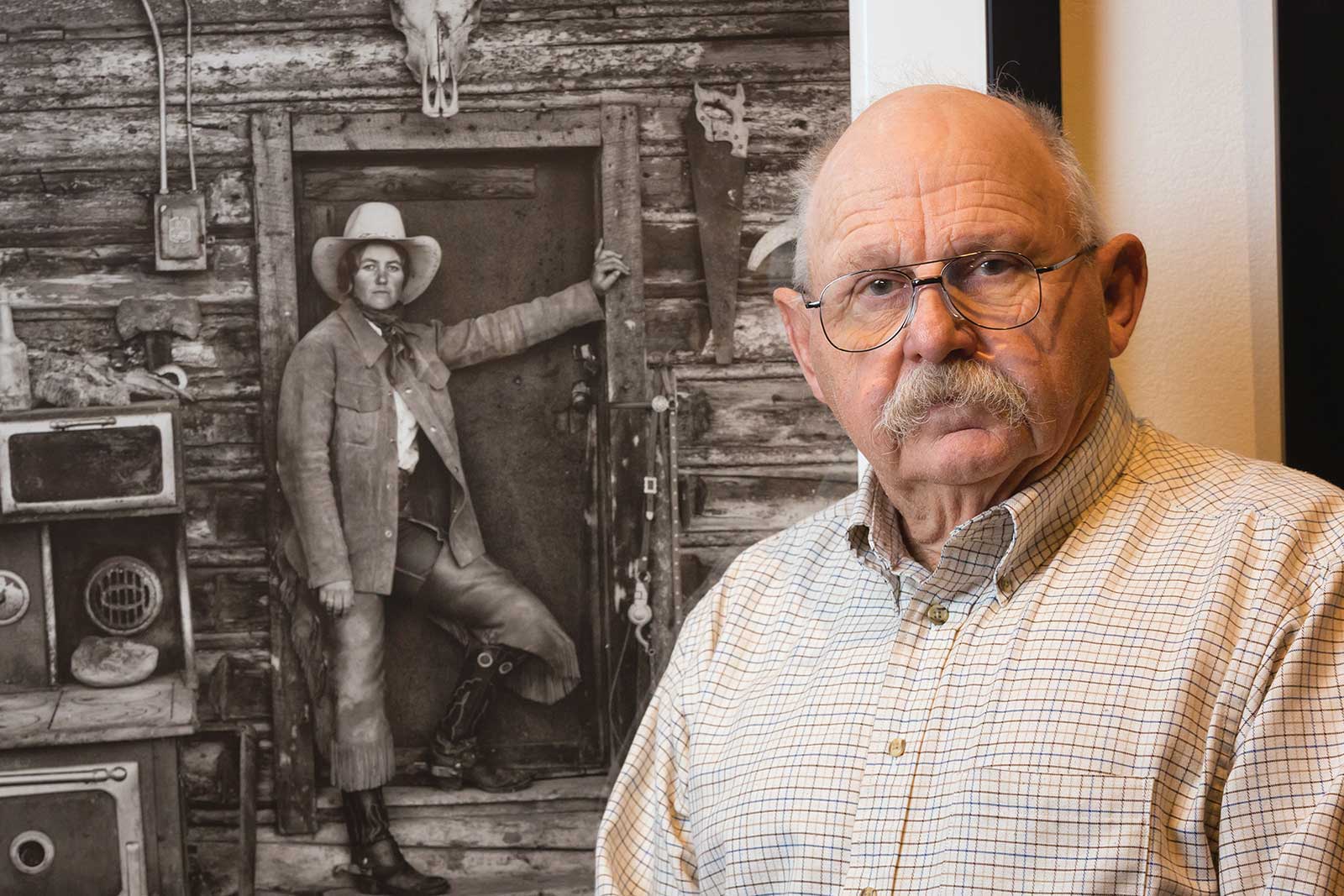 Jay Dusard in 2016 with his image Julie Hagan, Little Jennie (Wagstaff) Ranch, Wyoming, 1981.A year later, in 1981, the photographer was awarded a Guggenheim Fellowship for his cowboy subjects. The portfolio of work that originated from that experience would include a monumental collection of images, many of which are still celebrated today.
 Dusard, who settled in Arizona in the 1960s, shot primarily in large- and medium-format black-and-white film. Although he shot countless cowboys, including the Cowboy Artists of America and painter Tom Lea, he also snapped stunning images of blacksmiths, musicians, saddlemakers, cricket players and actors.
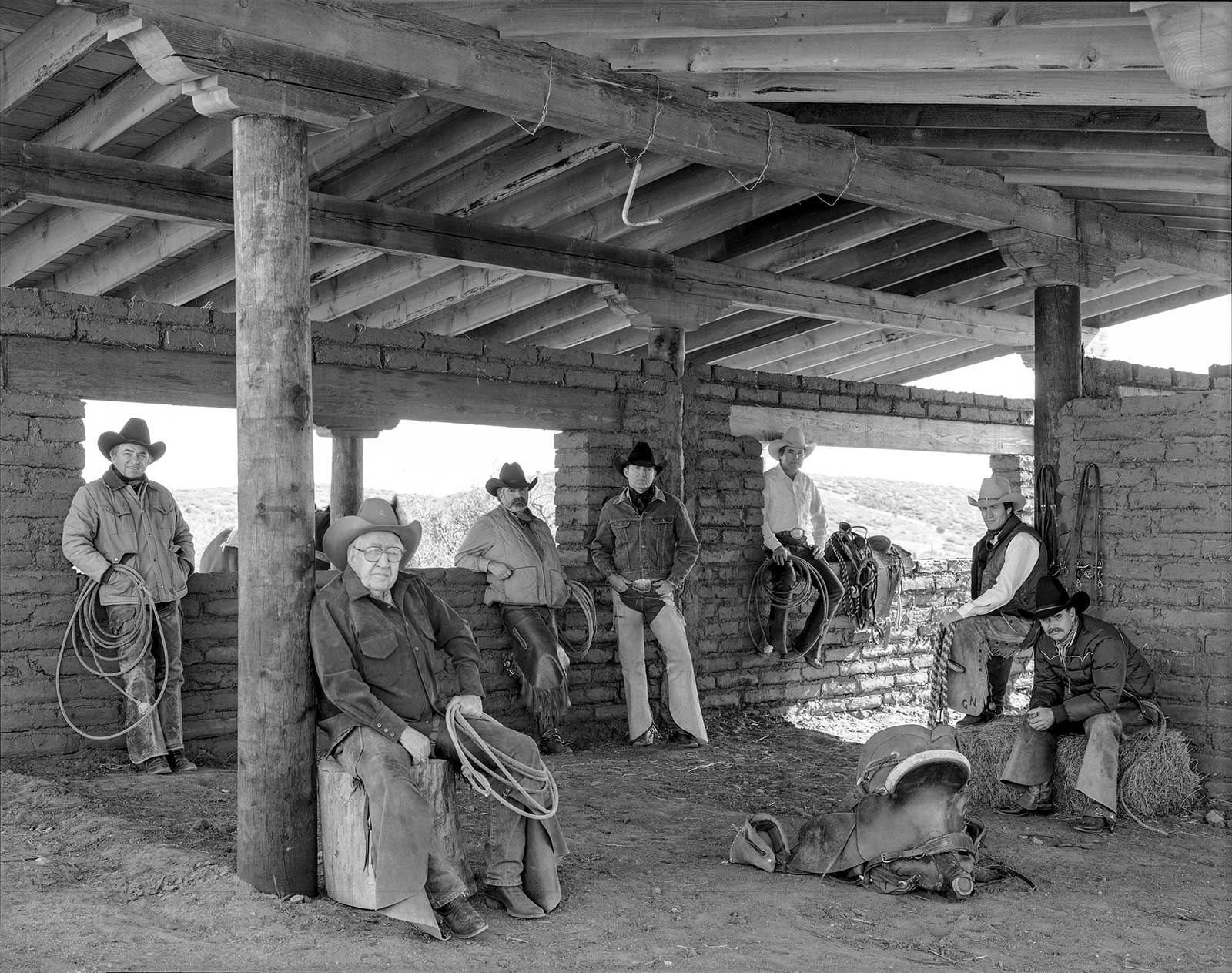
Joe Beeler, Frank Polk, Gordon Snidow, Bill Owen, Fred Fellows, Gary Niblett and Bill Nebeker, Living Cowboy Artists of America, ca. 1985, archival pigment print, 15½ x 19½ in.
The photographer chose the Booth Western Art Museum, where he had a major 2018 retrospective, as the home of his archives. “We are saddened to learn of the passing of the important Arizona-based, American photographer Jay Dusard. He and is work are synonymous with the West, but his legacy extends far beyond the region,” says Seth Hopkins, the museum’s former executive director. “The Booth Museum is proud to have been personally chosen by Jay to be the repository of his archives, negatives and related ephemera. We will strive to honor him through the preservation and interpretation of his impactful body of work.” —
Powered by Froala Editor


