There are horse people who want to be artists and artists who want to be horse people. Rare is the combination of a naturally talented artist with decades of experience around horses. Sculptor Stephanie Revennaugh is that rare combination.
“Knowing horses, they’re very emotional creatures and their communication is most often subtle,” Revennaugh says. “If you don’t understand that, if you don’t understand what the flick of an ear means, the posture, the shape of the nostril [all] says something. Horse people fully understand that language. It’s a language. Horse people are so picky about that [in artwork].”
Portent, bronze, 17 x 17 x 7 in.
Revennaugh has loved horses since childhood. Prior to committing herself to a career in art, she was managing a barn—mucking stalls, grooming horses. The day prior to the interview for this story, she was competing in a horse eventing competition. Eventing is a horse triathlon involving two jumping disciplines and dressage. She took first place.
Revennaugh knows horses.
She also displayed an early aptitude for art. She was the kid always drawing horses on her school notebooks. The kid whose drawings were always advanced for her age despite any training.
A horse person and an artist.
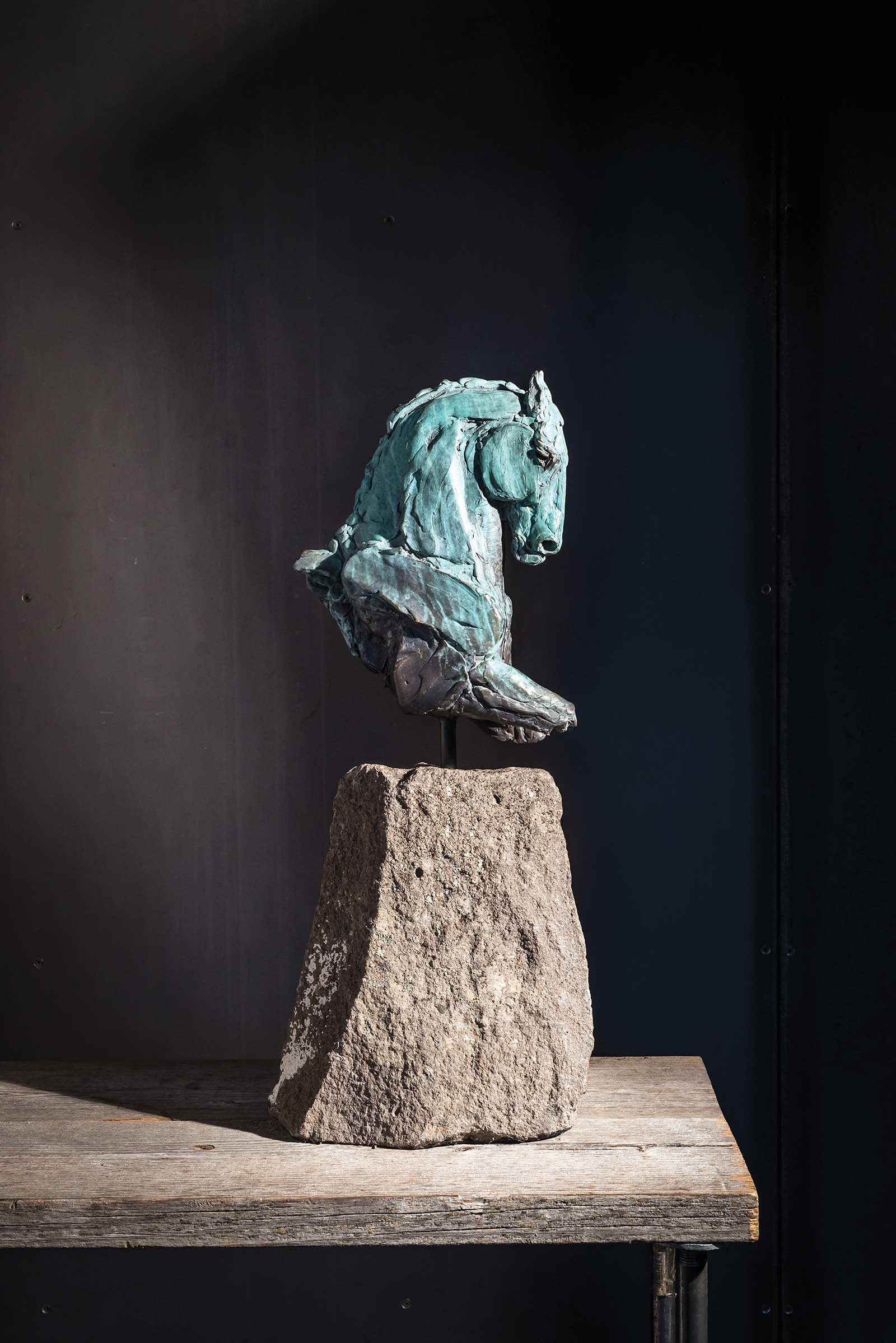
Olympia, bronze, 12 x 9 x 4 in.
“There are a lot of wonderful artists, but if they don’t know horses, immediately, something can be so wrong that it is like nails on a chalkboard to somebody who knows horses,” Revennaugh says. When a sculpture or painting misses a horse’s subtlety, a horse person will notice it from across the room. “I get so many comments—I hear through my galleries—horse people say, ‘she really knows horses,’ and I do. You have to understand anatomy. I thought I did when I when I first started sculpting, and I realized how much I lack, and I still feel like I should study more, understanding the inside, the muscles, the nuance of how they fit together.”
From Stablehand to Artist
Revennaugh’s previous position managing a private barn in Evergreen, Colorado, provided her a stable income with health insurance and the privilege of spending all day, every day around horses. Still, she couldn’t help feeling, in her mid-30s, there was something more waiting for her. Did she want to be mucking stalls in her 60s?
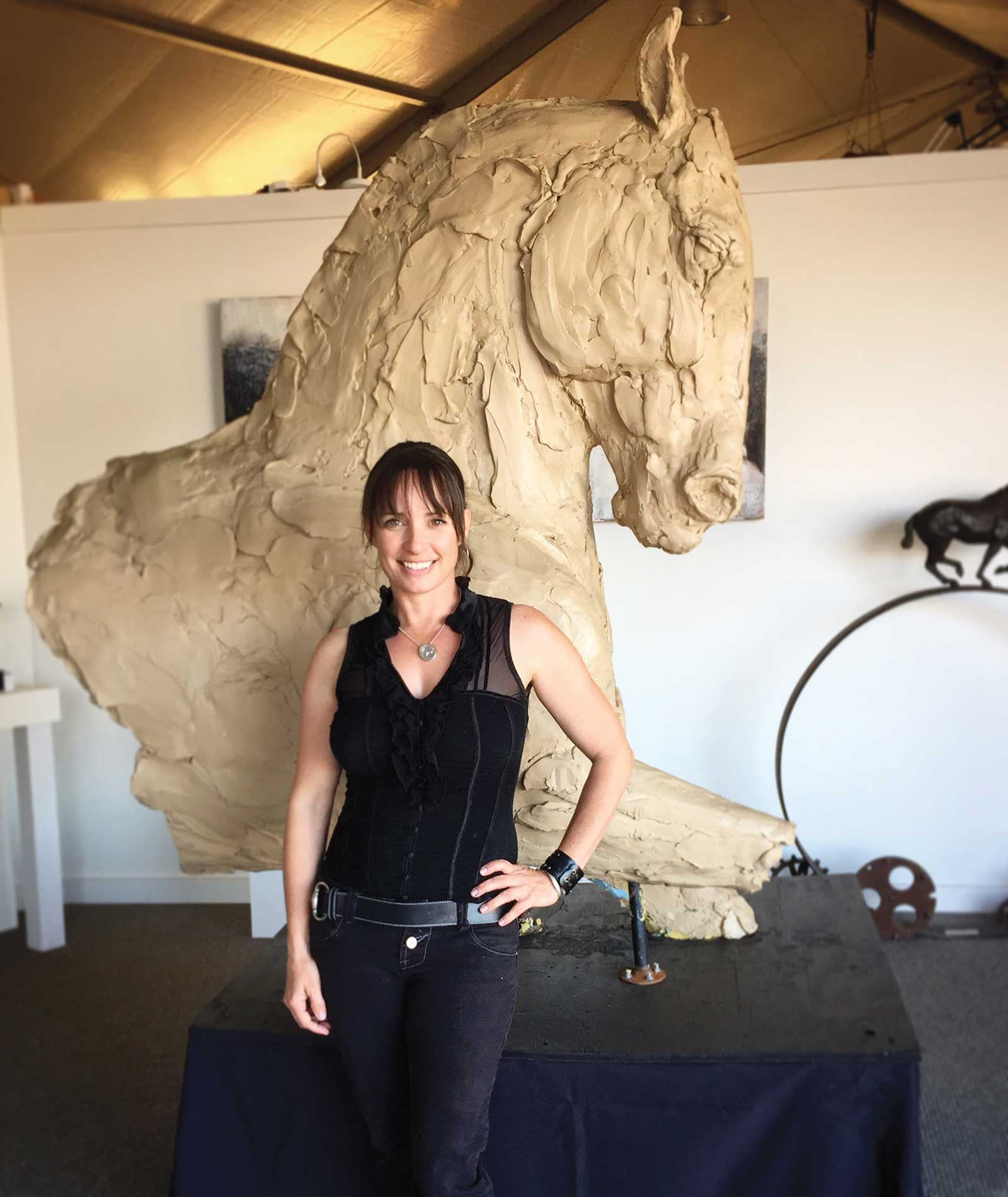
Stephanie Revennaugh with the clay of Epeius.
“Something more” presented itself with an opportunity to paint in France.
“I let go of that job that was the most secure and most fun job I’d ever [had] and that was where I committed to art, because there was no turning back. I left everything. It was my home. My dog got hit by a car; everything in my life there ended,” she recalls. “There’s no going back. I didn’t want to go back. When I came back to the states after six months, I didn’t want to go get a job. I already had the job that I wanted, so now it’s just go forward and sink or swim. There was no plan B.”
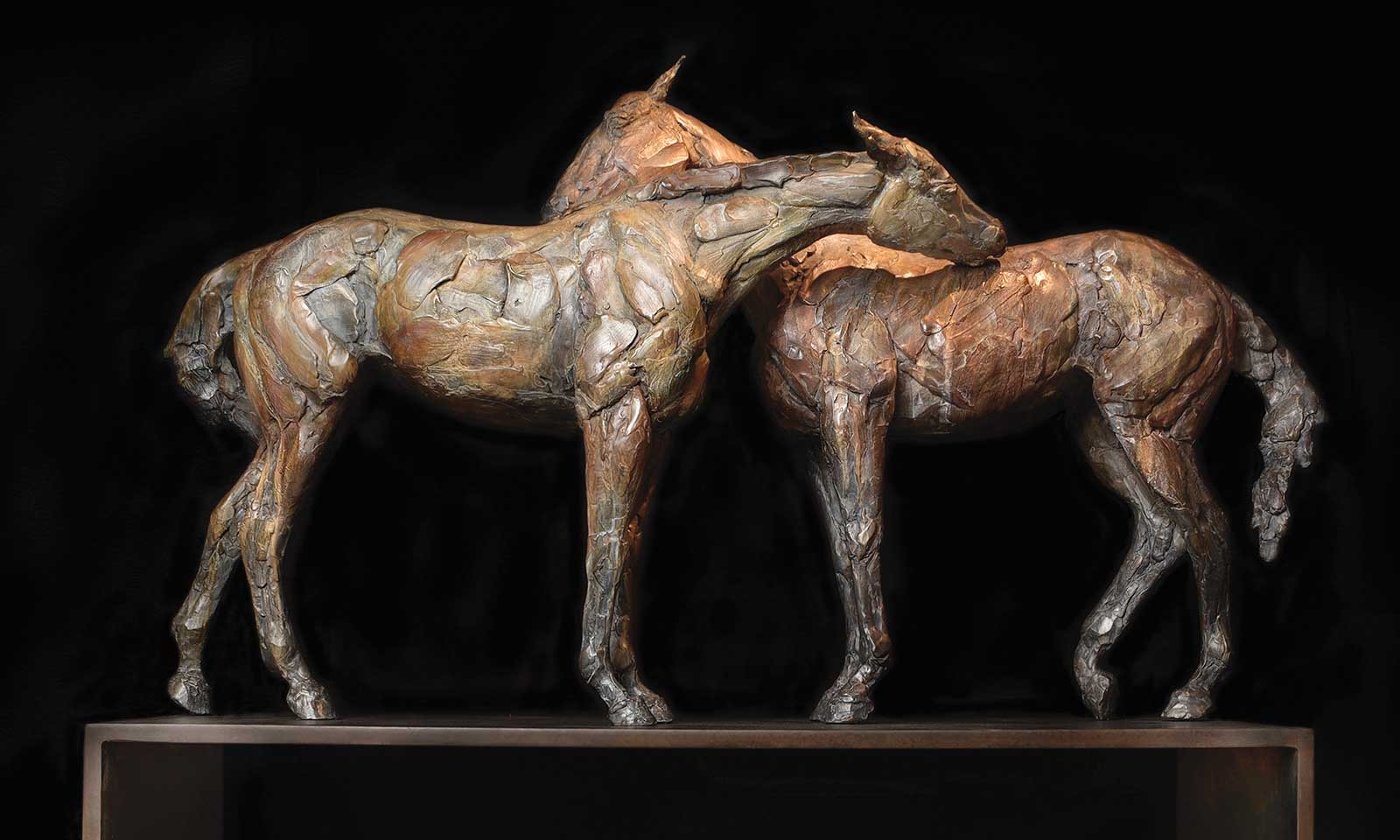
Mutual, bronze, ed. of 21, 30 x 52 x 12 in.
What convinced Revennaugh she could make it as a professional artist without any training in that notoriously risky field? “I knew my whole life I’ve always had skill. It’s been obvious to everyone I’ve had some degree of proficiency, but I hadn’t had training. I just felt like I could, but I didn’t know,” she says. “At the time when I committed to painting, I realized I didn’t really have a career. I was floating around through life and playing a lot, spent a lot of time in the mountains, rock climbing and mountain biking and climbing peaks. I was divorced and hadn’t met anyone else, and I thought, what’s my future?”
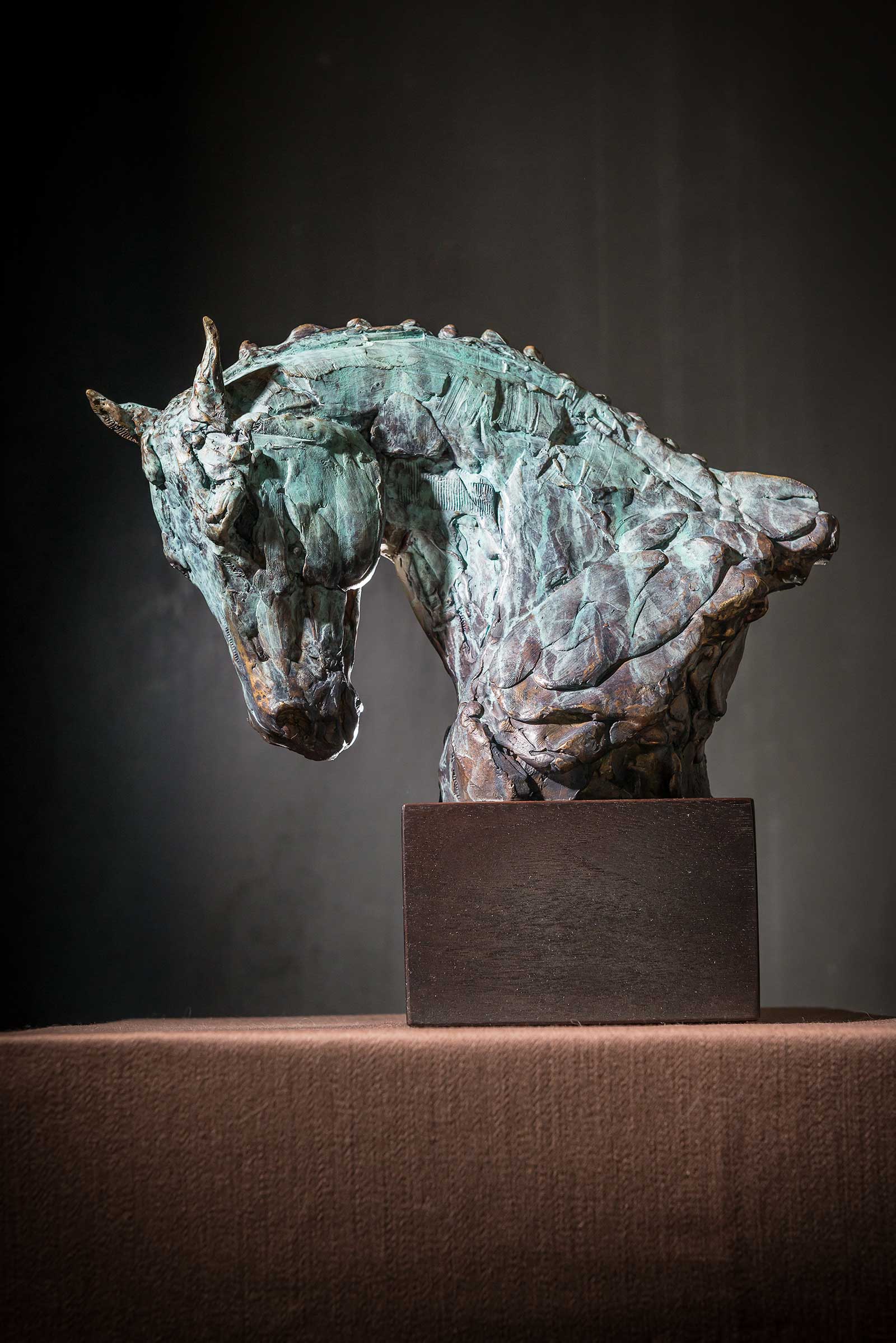
Whisper, bronze, ed. of 21, 10 x 11 x 5 in.
She wasn’t certain her future was art, but she had to know for sure. “I would never feel fulfilled in life if I didn’t at least try 100 percent to give art a chance to see what I could do. I didn’t really know if it would work,” Revennaugh says. “I just had to go for it. It was really hard. I was depressed because I just didn’t know, it was scary. If I had had something to fall back on through the hardest times, I don’t know how hard I would have pushed to make it work because it was really hard for a few years.”
From Painter to Sculptor
She spent the first two years of her full-time commitment to art painting. Spinning her wheels. She was good. Maybe even better than good, but even better than good wasn’t going to cut it as far as making a career as a painter. Not with all the competition in that field. She needed to be great and she wasn’t.
Taking a sculpture workshop with Rod Zullo at the Scottsdale Artists’ School changed her direction.
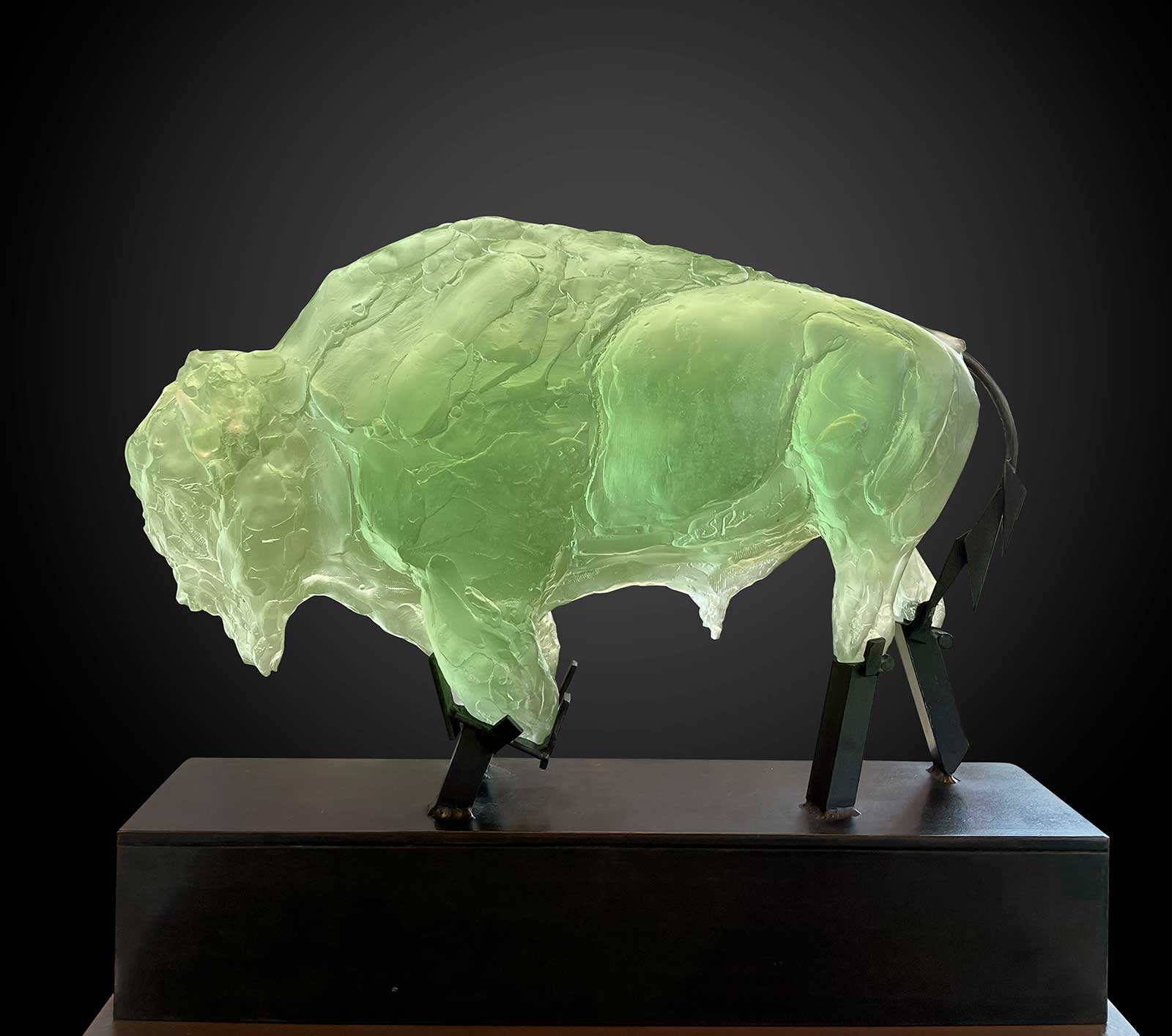
Portent (in bottle green), cast glass and steel, 14 x 17 x 4 in.
“That’s the moment when I was like, ‘Oh, sculpture is my path,’” she remembers realizing. “I followed him up to Montana—he offered another workshop a couple months later, and I went up there to Montana to take a three-day workshop and I ended up staying in Montana.”
Revennaugh still lives in Livingston, Montana, today. “That wasn’t the plan, I just fell in love with [sculpture] immediately. I had been staying with my parents and that’s not where I wanted to be, in Ohio, so I decided to stay for the summer [in Montana], and just stayed,” she adds.
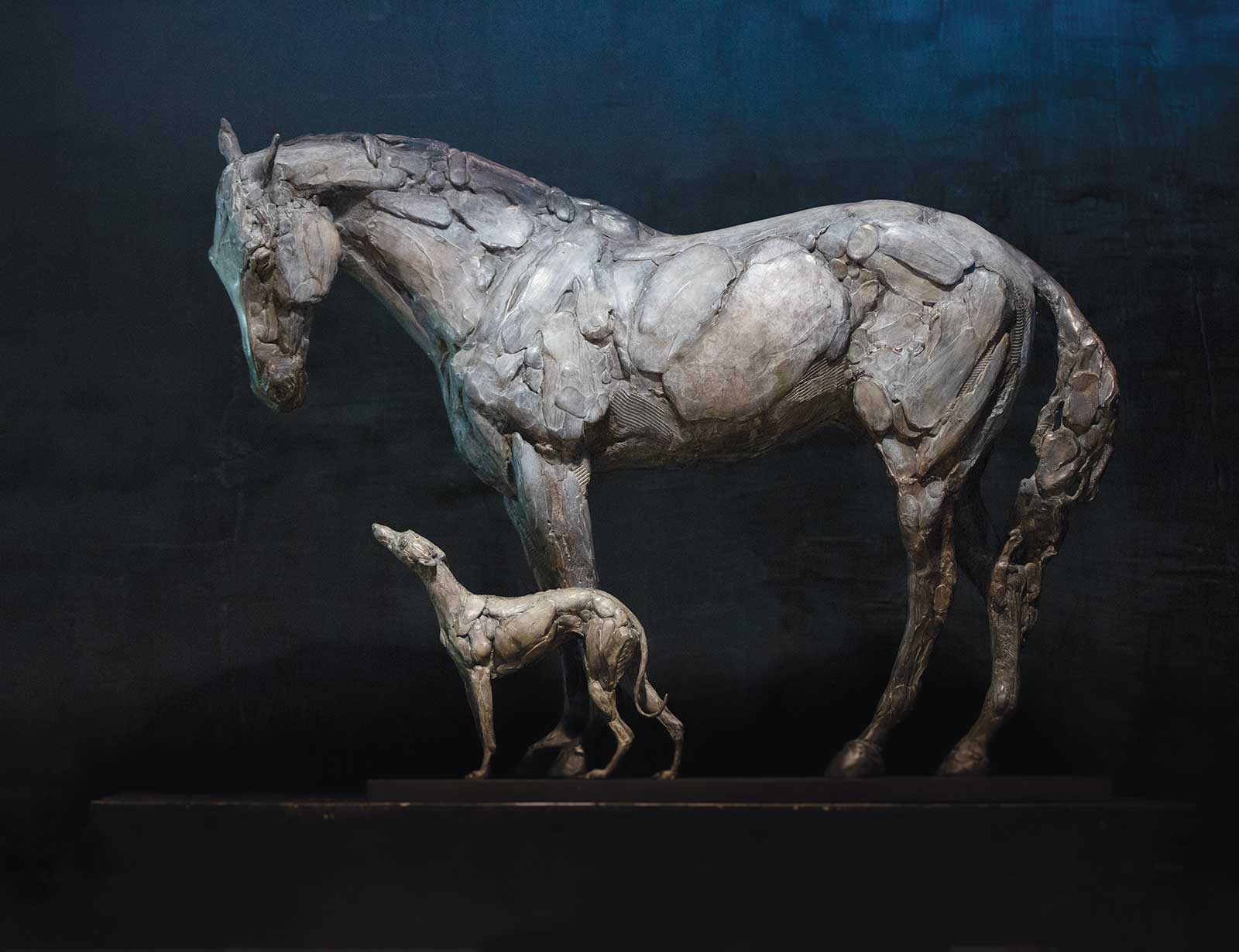
Presence, bronze, 30 x 28 x 8 in.
It wasn’t Montana that changed her life, it was sculpture. She could be a great sculptor.
“I naturally have a fluency with 3-D that’s easier for me, the form. I think from the inside out; I think of the skeleton and the muscles,” she explains. “When you’re doing 2-D, you’re thinking differently, you’re really thinking about how would light create this illusion of form, where the sculpture is the form.”
Starting a career as a professional sculptor, however, is even more difficult than starting a career as a professional painter, not least of which is because the materials are so much more expensive. Stone and bronze compared to canvas. Then you have to find somewhere to cast your pieces and that expense. And galleries and collectors have always been less receptive to sculpture compared to painting.
Revennaugh scraped by for a couple more years, creating a few pieces at a time, what her budget would allow for, selling them, and making a few more. But they sold. The feedback was positive. She could tell what she was creating stood out from the marketplace.
Coincidentally enough, what distinguished her sculptures she owes to her paintings.
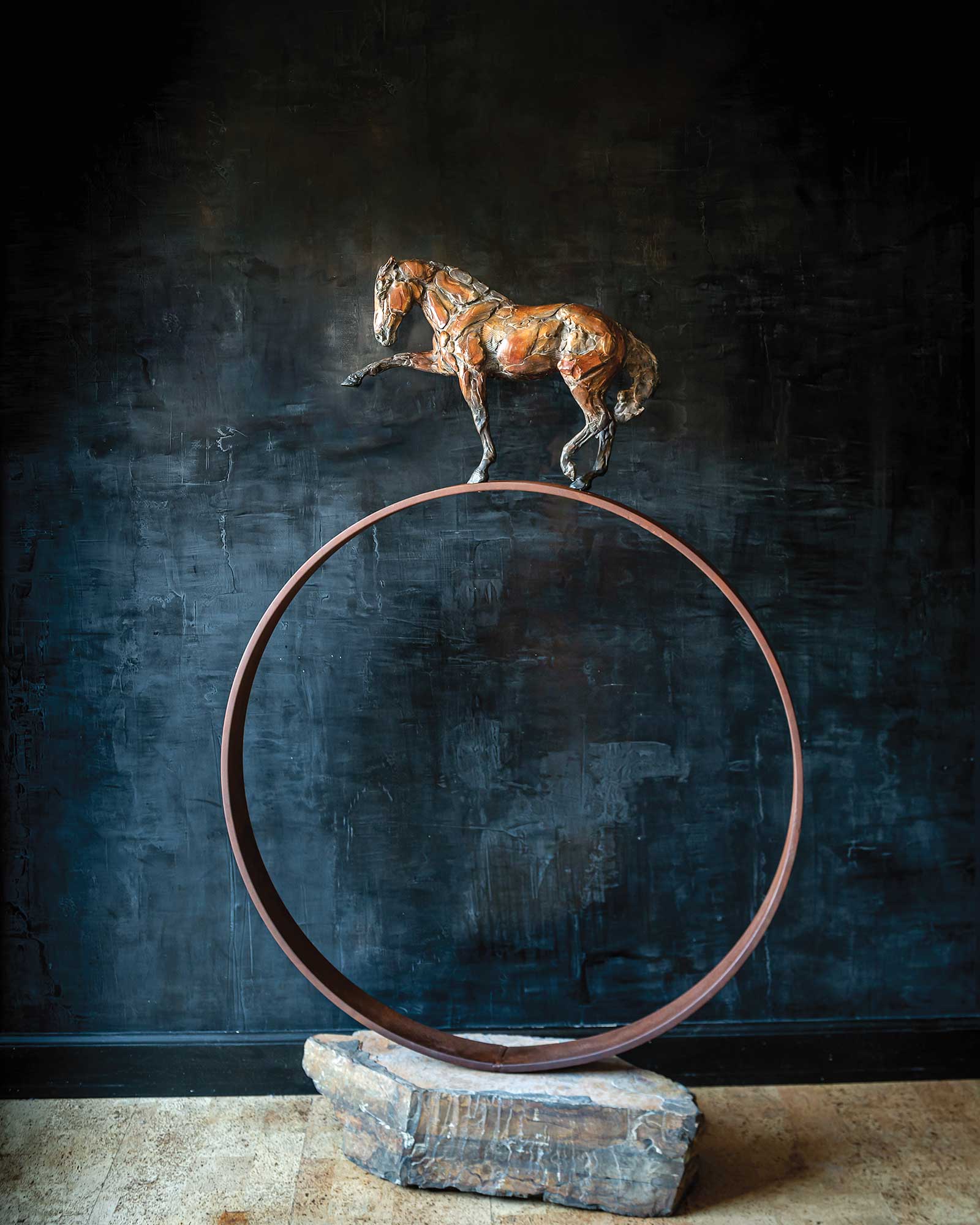
Con Brillo, bronze, ed. of 21, 55 x 36 x 15 in.
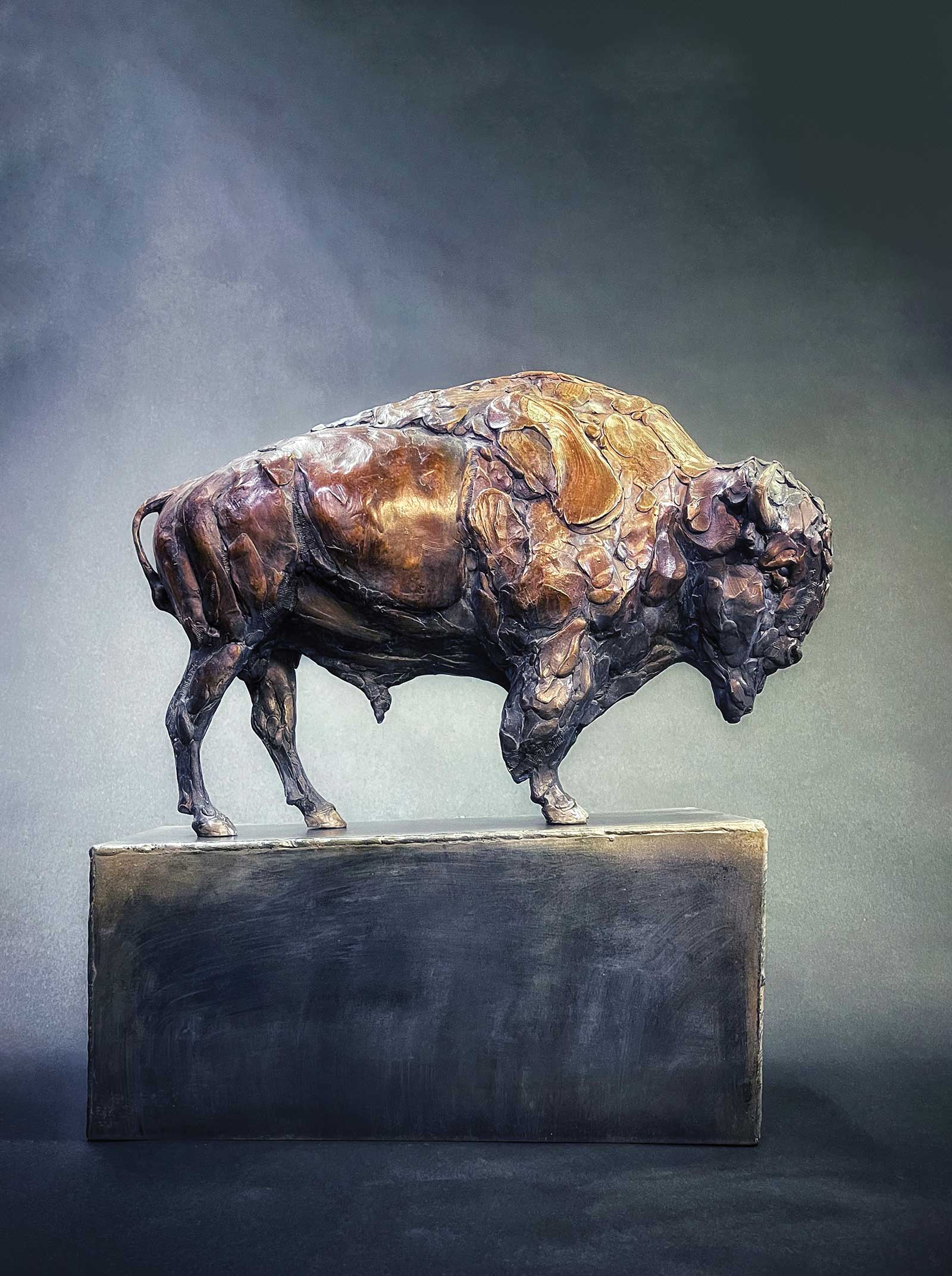
“If I hadn’t pursued painting first, I wouldn’t sculpt as I do, because when I’m laying down the clay, I think of it like loose brushwork, leaving those marks, which has become my signature, that impressionistic feel that has a lot of life in it,” she says.
Revennaugh’s risk pursuing art has paid off. Galleries and collectors now seek her out. Everything isn’t hard anymore.
She mostly sculpts horses, but will slip in a bison or dog, too. Working in bronze and glass mixed with steel, the artist sees her next step as scaling up the size of her pieces, particularly the glass work. That presents its own difficulties, finding manufacturers able to cast glass at the size and detail matching her ambition.
Everything isn’t hard anymore, but that doesn’t mean it’s easy. —
See more: www.stephanierevennaughfineart.com
Powered by Froala Editor
Powered by Froala Editor


