Western art is not just a celebration of the American West, but also a documentation of it. The works are meant to broadcast to viewers: “Here is the West. This is what it looks like.” There is an element of history at play here, an element that will serve later generations as a record of what Western life was like when the work was created. Nowhere is this more evident than with art showing cowboys.
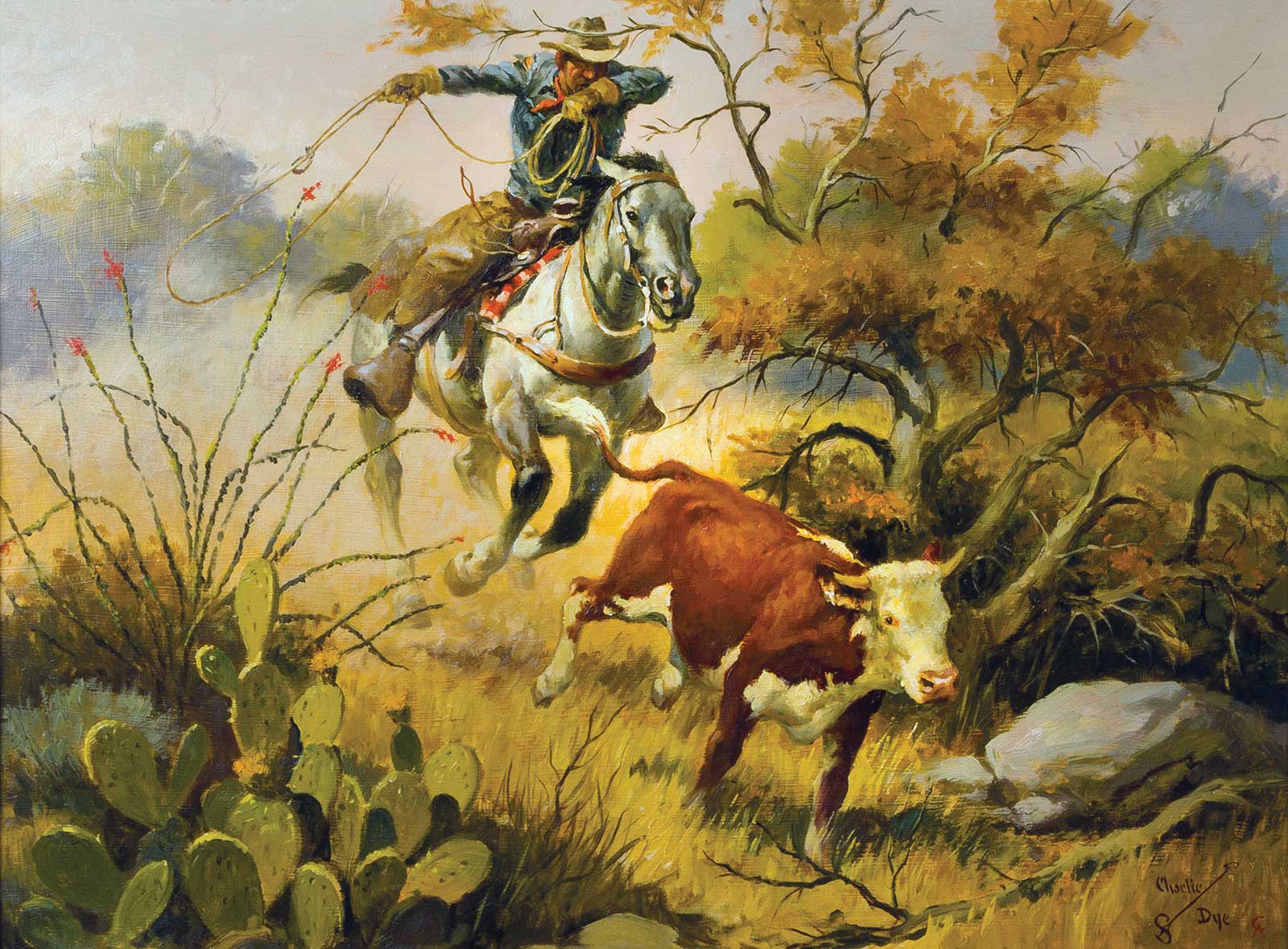
Charlie Dye (1906-1972), Brush Poppin’, oil on board, 18 x 24 in.
Paintings, drawings and sculptures showing the American cowboy at work in their vast and dangerous playground of the West are some of the most cherished artworks in all of the Western art genre. Cowboy art often portrays a specific time and place, and further ties the cowboy to a long and continuous thread that runs through American history. Consider the work of Charlie Dye, Charles M. Russell or James Reynolds. Collectors are drawn to these works for a variety of reasons—beauty, authenticity, thrills, nostalgia—but these works, and many others, are also time-stamped to a certain time and place. They are documents of people who lived, worked and rode the West.
This is underlined and emphasized repeatedly in the book We Pointed Them North: Recollections of a Cowpuncher,by E.C. “Teddy Blue” Abbott, a cowboy who worked the open ranges in the late 1800s. In an early chapter of the book, Abbott tries to explain who cowboys are, and the description provides a stunning picture of early cowboys.
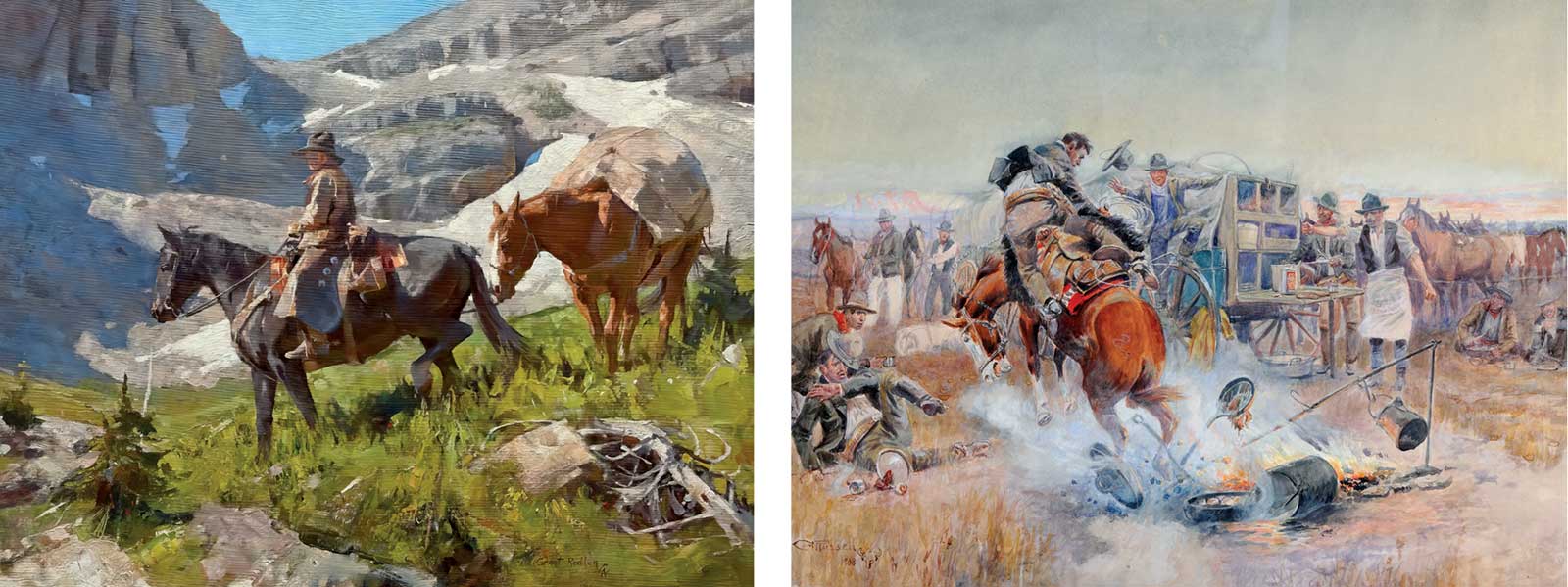
Legacy Gallery, Packing in the Headwaters of the Bear River, oil, 22 x 28 in., by Grant Redden; Charles M. Russell (1864-1926), Bronc to Breakfast, 1908, watercolor on paper. Montana Historical Society.
“Most all of them were Southerners, and they were a wild, reckless bunch. For dress they wore wide-brimmed beaver hats, black or brown with a low crown, fancy shirts, high heeled boots and sometimes a vest. Their clothes and saddles were all homemade. Most of them had an army coat with cape which was a slicker and blanket, too. Lay on your saddle blanket and cover up with a coat was about the only bed used on the Texas trail at first. A few had a big buffalo robe to roll up in, but if they ever got good and wet you never had time to dry them, so they were not popular. All had a pair of bullhide chaps, or leggins they called them then. They were good in the brush and wet weather, but in fine weather were left in the wagon.
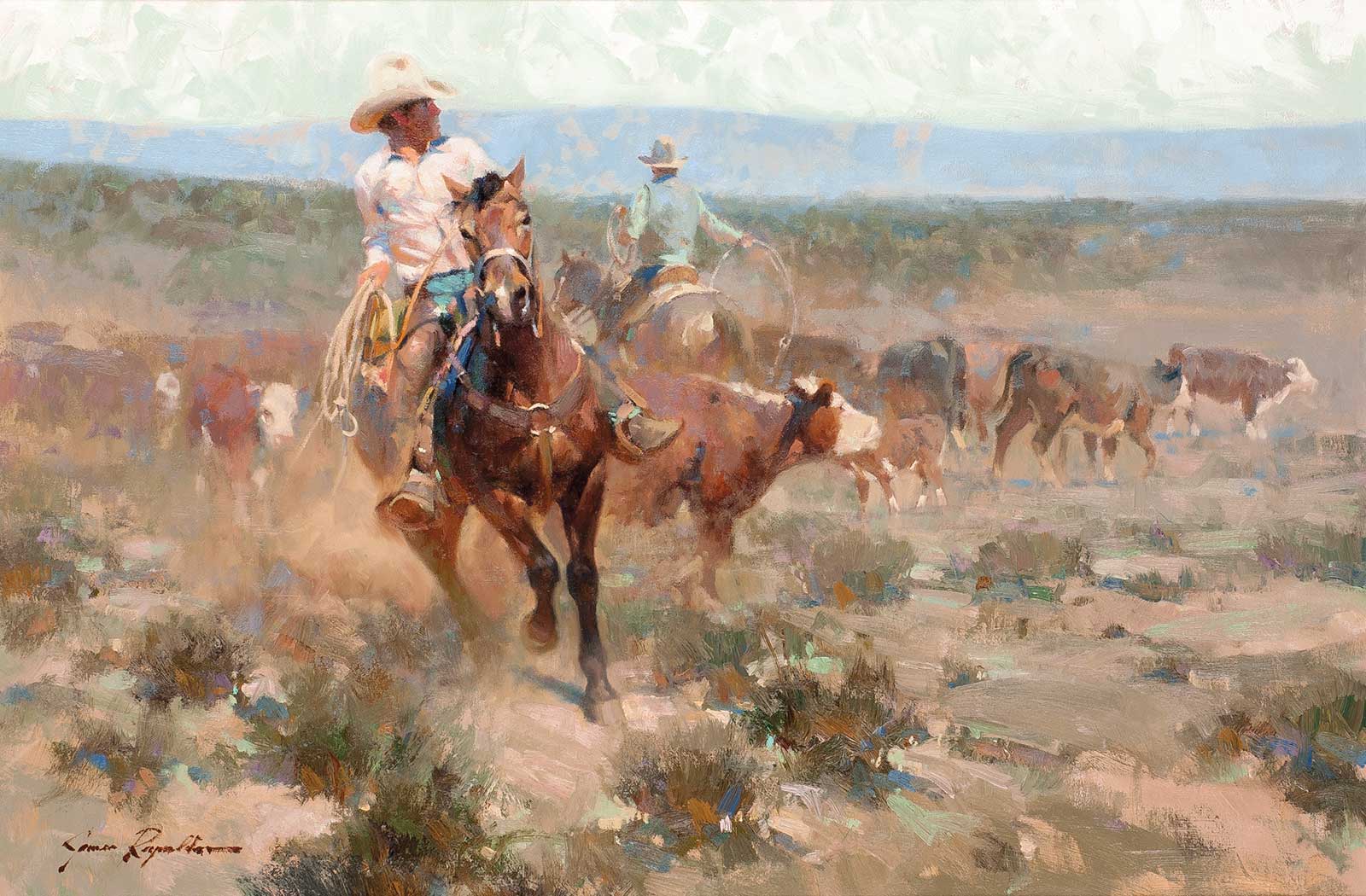
James Reynolds (1926-2010), Victorio Cowboy, oil on canvas, 61 x 91½ in.
“As the business grew, great changes took place in their style of dress, but their boots and cigarettes have lasted nearly the same for more than sixty years. In place of the low crowned hat of the [1870s] we had a high-crowned, white Stetson hat, fancy shirts with pockets, and striped or checked California pants made in Oregon City, the best pants ever made to ride in. Slickers came in, too. In winter we had nice cloth overcoats with beaver collars and cuffs. The old twelve-inch barrel Colt pistol was cut down to a six or seven and-a-half inch barrel, with black rubber, ivory or pearl handle. The old, big roweled spurs with bells give place to hand-forged silver inlaid spurs with droop shanks and small rowels, and with that you had the cowpuncher of the [1880s] when he was in his glory.
“In person, the cowboys were mostly medium-sized men—as a heavy man was hard on horses—quick and wiry and, as a rule, very good-natured; in fact it did not pay to be anything else. In character their like never was or will be again. They were intensely loyal to the outfit they were working for, and would fight to the death for it. They would follow their wagon boss through hell and never complain. I have seen them ride into camp after two days and nights on herd, lay down on their saddle blankets in the rain and sleep like dead men, then get up laughing and joking about some good time they had had in Ogallala or Dodge City. Living that kind of a life, they were bound to be wild and brave. In fact there was only two things the old-time cowpuncher was afraid of, a decent woman and being set afoot.”
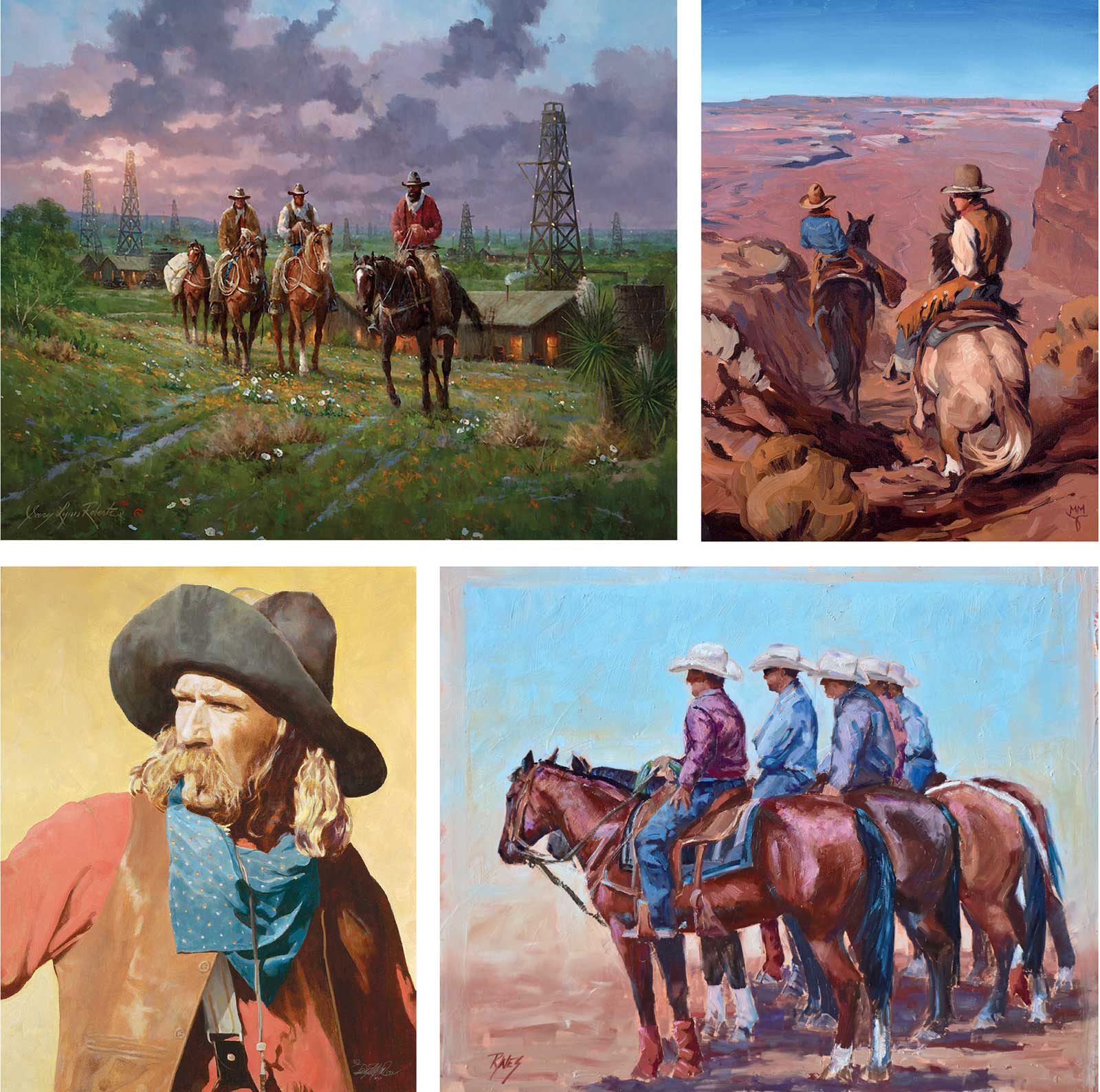
Top: J Watson Fine Art, End of a Good Day, oil on canvas, 32 x 40 in., by Gary Lynn Roberts; J Watson Fine Art, On Top of the World, oil on canvas, 12 x 9 in., by Mark Maggiori. Bottom: Den Schofield, Yellow Sky, oil on canvas, 20 x 16 in.; Nancy Rynes, Take Five, oil, 16 x 20 in.
Teddy Blue’s story in We Pointed Them North is a historic record of one cowpuncher’s life in the West, but fine art also marks history—for the artist, for the market it was sold in, for the collector who buys it, for the gallery that shows it and the subjects depicted.
Celebrate cowboy history with us in our annual Art of the Cowboy special section, which includes incredible examples from this exciting sub-genre of Western art.
Legacy Gallery in Scottsdale, Arizona, represents some of the top artists working in Western subject matter today, including Bill Anton, Grant Redden and C. Michael Dudash.
Anton was inspired by Western painting when he attended a Cowboy Artist of American exhibition in the late 1970s at the Phoenix Art Museum. In 1982, he turned to art full time, and visiting ranches in Flagstaff and Prescott, he rode in roundups and learned to work with cattle.
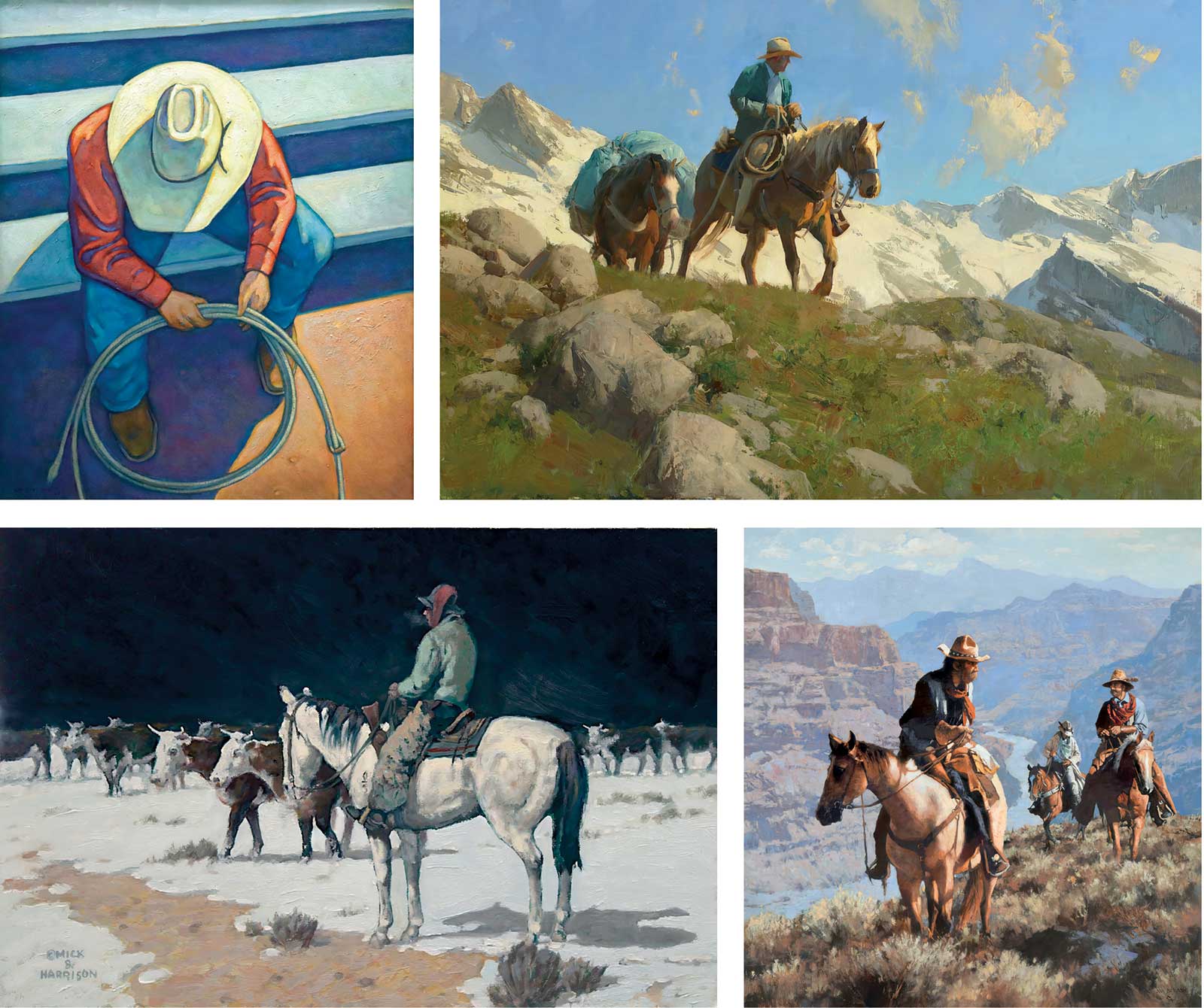
Top: Mark Sublette Medicine Man Gallery, A New Rope, oil on canvas, 30 x 24 in., by Howard Post; Legacy Gallery, The Mountain Horse, oil, 24 x 36 in., by Bill Anton. Bottom: Mick B. Harrison, For the Brand, oil on panel, 16 x 24 in.; Legacy Gallery, A Million Acres from Nowhere, oil, 42 x 40 in., by C. Michael Dudash.
Born and raised in southwest Wyoming, Redden grew up on a sheep and cattle ranch. The land, livestock and people of the West are naturally his subjects and provide an abundant source of inspiration for his paintings. C. Michael Dudash’s first passion in life was always art. After a brief year of college as an art major, he quit school to give a career as a musician some serious effort. After six years in the music business, he decided to return to his art. He was offered a job as a staff illustrator by a local art director and began working full time in the field of illustration.
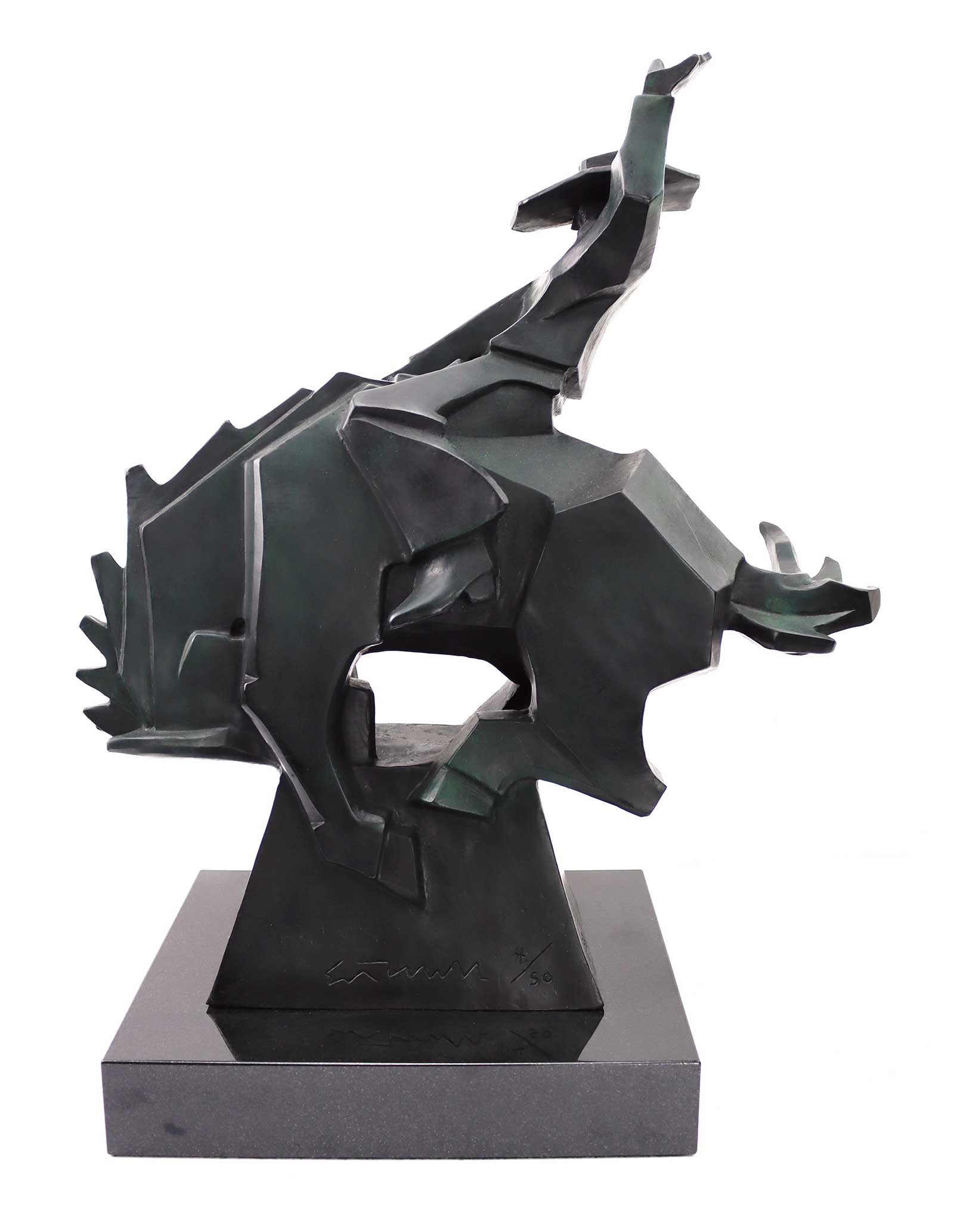
Mark Sublette Medicine Man Gallery, Jack Knife, bronze, 20 x 117/8 in., by Ed Mell (1942-2024).
Located in Tucson, Arizona, Mark Sublette Medicine Man Gallery features a variety of artists’ interpretations of the mythic and working cowboy, from Ed Mell to Howard Post to Peggy Judy. “All bring to life the history and energy that is the West, a place each has known since childhood and whose lifework reflects real world interactions,” says owner Mark Sublette.
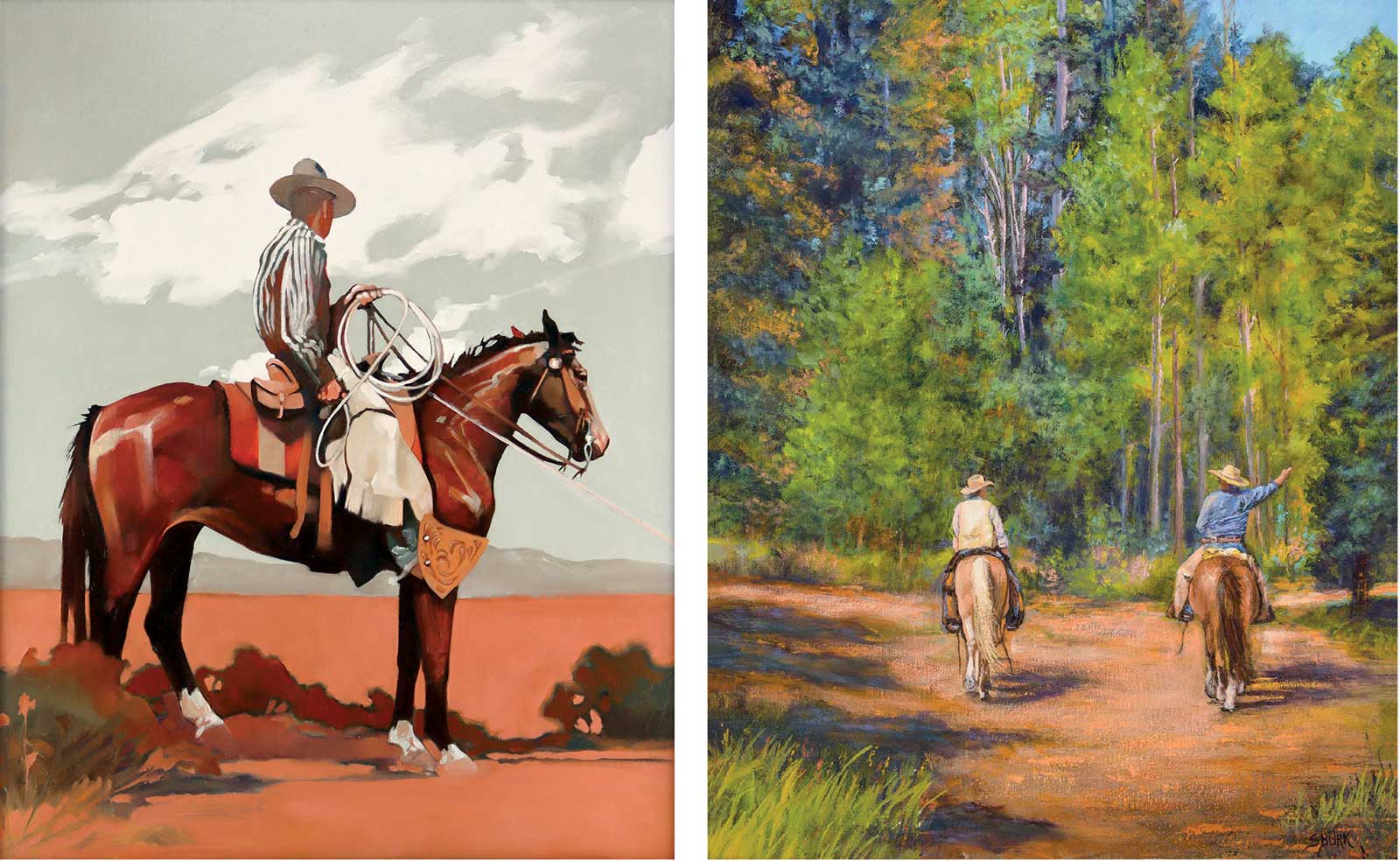
Mark Sublette Medicine Man Gallery, Waiting, oil on canvas, 28 x 22 in., by Peggy Judy; Stephanie Burk, Forever Young, oil on canvas, 20 x 16 in.
Fort Worth, Texas, and South Fork, Colorado, are the places that artist Stephanie Burk calls home. “The West and all it offers has been at my doorstep for decades and never disappoints,” she says. “The opportunity to paint and create art that embodies all I hold dear, the endless horizons and the stunning sunlight, alongside people engaged in tasks of daily living, are precisely where deep joy is hidden. When I jump into a new painting, it is both exciting and excruciating. And then, the moment when the painting starts to come together, and almost talks to me from the canvas, is astonishing. The Wild West is my home, and for that I am forever grateful.” Burk is an associate member of Women Artists of the West.
J Watson Fine Art in Los Angeles and Jackson Hole, Wyoming, offers a robust collection of Western, wildlife, equine and landscape art. Among these is esteemed artist Mark Maggiori, whose oil On Top of the World depicts a pair of cowboys making their way down a canyon. Also available at J Watson is Gary Lynn Roberts’ End of a Good Day,a pastoral scene capturing three cowboys on horseback with a riderless horse bringing up the rear.
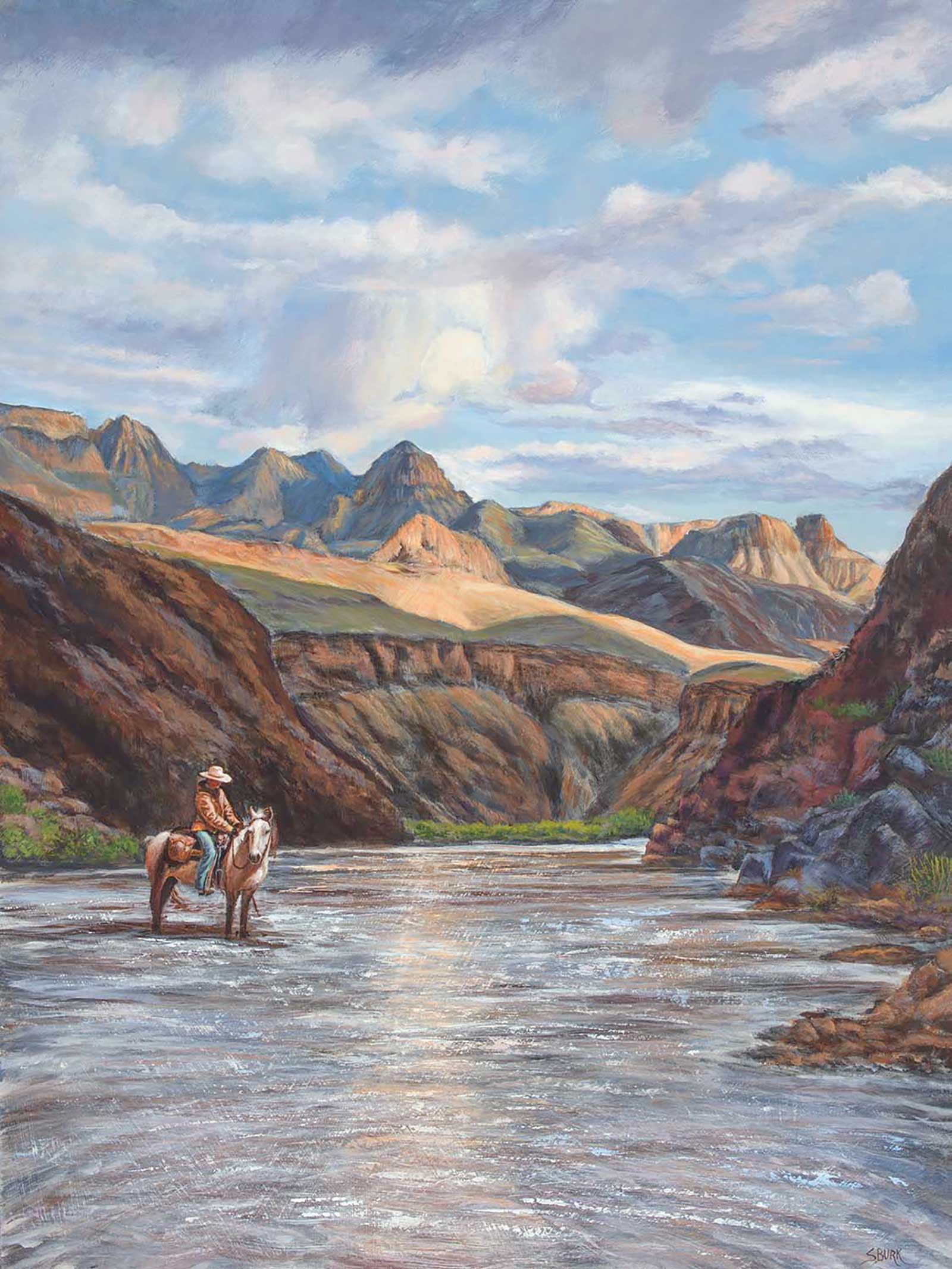
Stephanie Burk, Safe Crossing, acrylic on panel, 40 x 30 in.
With a 50-year career in fine Western art, self-taught artist Mick B. Harrison continues to spend hours at the easel every day. “I never tire of it and learn something new each painting,” he says. Having cut his teeth on his grandfather’s ranch near the Missouri River in South Dakota and presently immersed in cowboy country, inspiration is ever present. “I’m particularly interested in maintaining a certain hardiness in my work, much like the nature of my subject matter,” says the artist. His oil painting For The Brand, depicts a rancher on horseback surveying his cattle, possibly late at night or in the early hours of the morning before the sunrise.
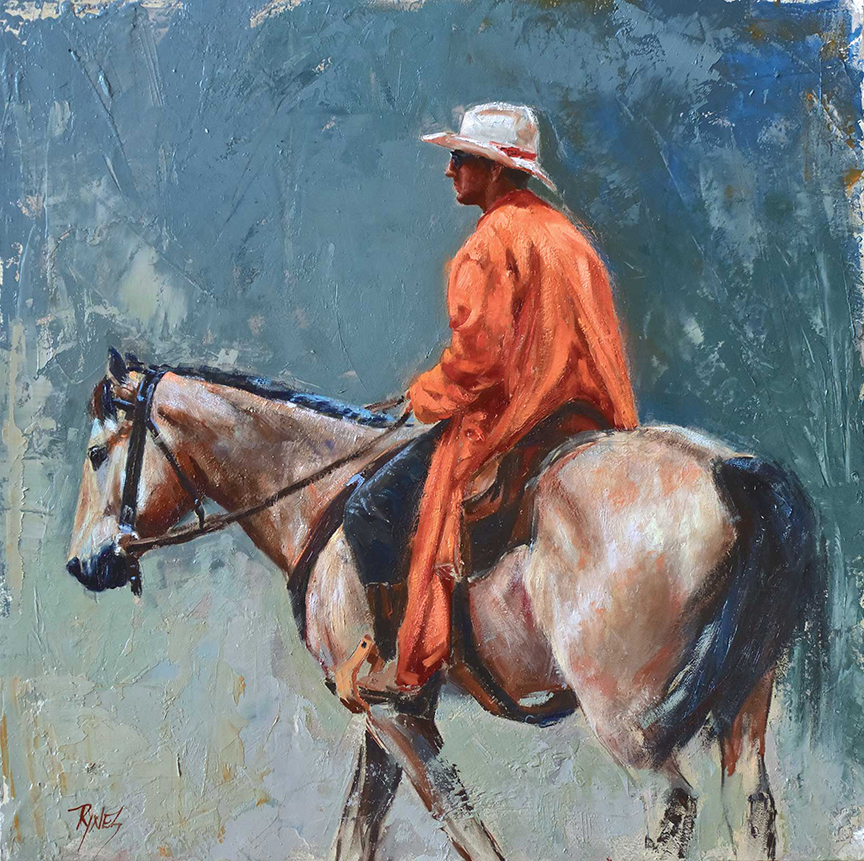
Nancy Rynes, Orange Slicker, oil, 18 x 18 in.
The ranching life has inspired artist Nancy Rynes since childhood. Growing up on a small farm gave her an appreciation for a way of life that’s intimately connected to the environment, the land and animals. Drawing upon years of living in active ranching and farming communities, the artist creates sketches and studies to work out her bold compositions. She creates a finished drawing and transfers that to canvas before adding layers of varied color and brushwork. Rynes’ work is available at her studio in Tucson, as well as through galleries across the United States.
Depicting the life and culture of the cowboy, Den Schofield is best known for his accurate portrayals of historical subjects. In 2006, he moved from Philadelphia to the town of Riverton, Wyoming, a long-time dream for the artist. Schofield has always been thrilled by the open, beautiful country that is the American West. —
Featured Artists & Galleries
Den Schofield
(307) 240-1673 , (307) 463-2207
denschofield@gmail.com
J Watson Fine Art
(661) 476-7558, www.jwatsonfineart.com
Legacy Gallery
7178 Main Street, Scottsdale, AZ 85251
(480) 945-1113, www.legacygallery.com
Mark Sublette Medicine Man Gallery
6872 E. Sunrise Drive, Suite 130
Tucson, AS 85750
(520) 722-7798 sales@medicinemangallery.com
www.medicinemangallery.com
Mick B. Harrison
Belle Fourche, SD 57717, (605) 569-2275
mickart@mickharrison.com
www.mickharrison.com
Nancy Rynes
Tucson, AZ
nancy@nancyrynesstudio.com
www.nancyrynesstudio.com
Stephanie Burk
(817) 312-4811
www.stephanieburkfineart.com
Powered by Froala Editor
Powered by Froala Editor


