In our August 2009 edition of Western Art Collector, we profiled the artist Billy Schenck and his collection of paintings and prehistoric Native pottery. At that time he told me, “To collect successfully, you need contextual information, which means you need to be constantly reading, learning and looking, relentlessly asking questions and bothering everyone who might have relevant information.”
The “reading, learning and looking” have resulted in his recently published book, Women Artists of the Ancient Southwest.At more than 400 pages, the book is full of images and in-depth analysis of pottery from 700 to 1700. Schenck laughs that he didn’t set out to create a brick, but the volume weighs in at 7.1 pounds.
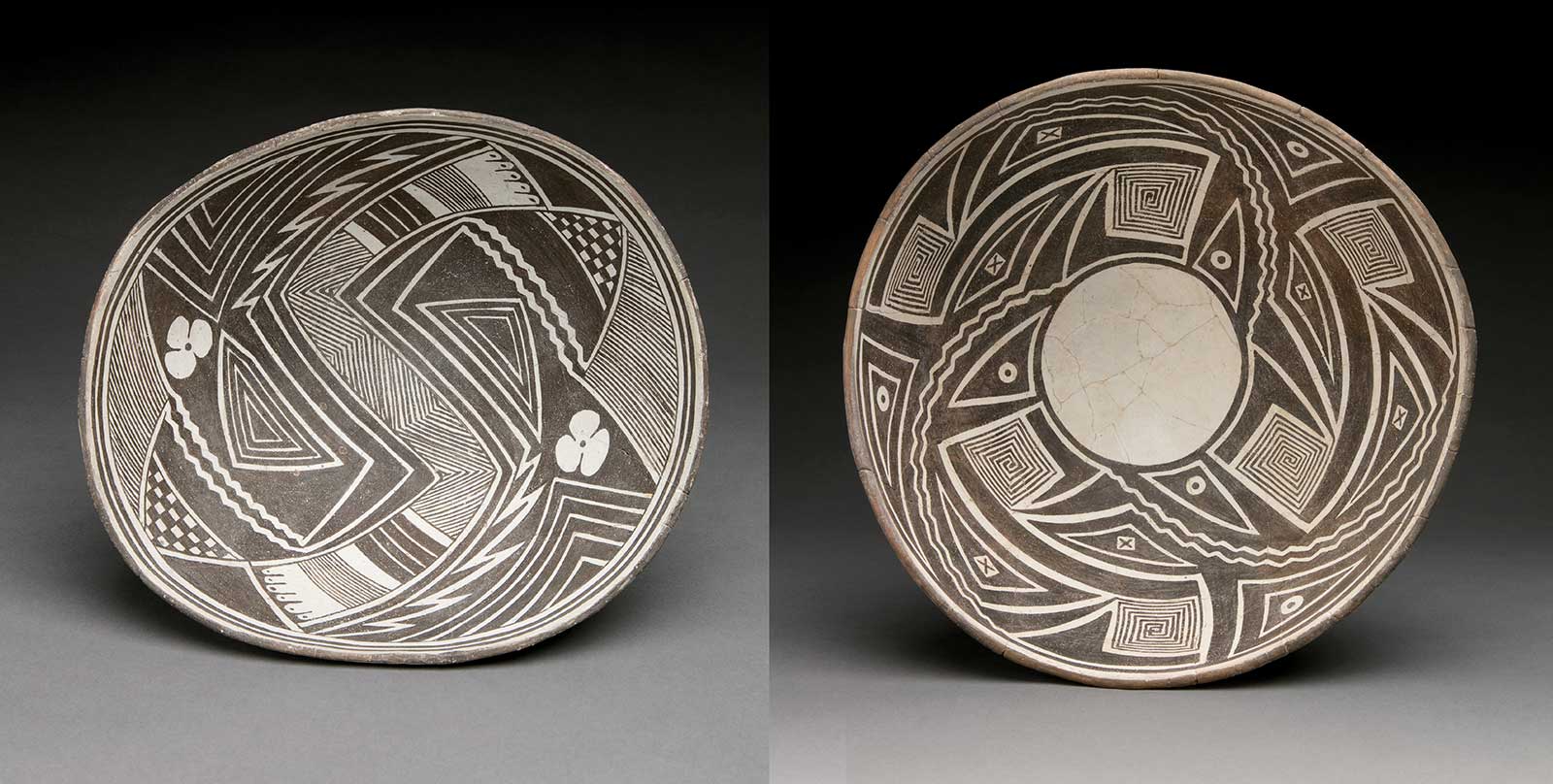
Gladys, M-6284 and M-6309, Upper Gila River district, 1060-1130. Schenck collection. Matt Thomas considered these two bowls as the best-known geometric examples of the Upper Gila River district of the Mimbres painters.
When we spoke back in 2009, he said, “A few of these potters were brilliant artists, but we don’t know their names. I have a magnificent example of a Sikyatki jar which, I’ve always speculated, was made at about the same time as the Sistine Chapel was painted. I think the Hopi woman who made and painted that pot was no less an artist than Michelangelo.”
He told me, “They were artists who lived and worked within their society, no different than any artist living and working in our societies. They traded their efforts to others for food, clothing, tools, etc. They worked pretty much full time at designing, painting and building their pottery.”
Over time, scholars in any field develop an awareness of the subtleties that distinguish one object from another. He recalls an archaeologist who said that other than Mimbres pottery it’s impossible to identify individual artists. He comments, “I can do it in every single culture here in the Southwest. What you have to do is be familiar with thousands and thousands of prehistoric pots.”
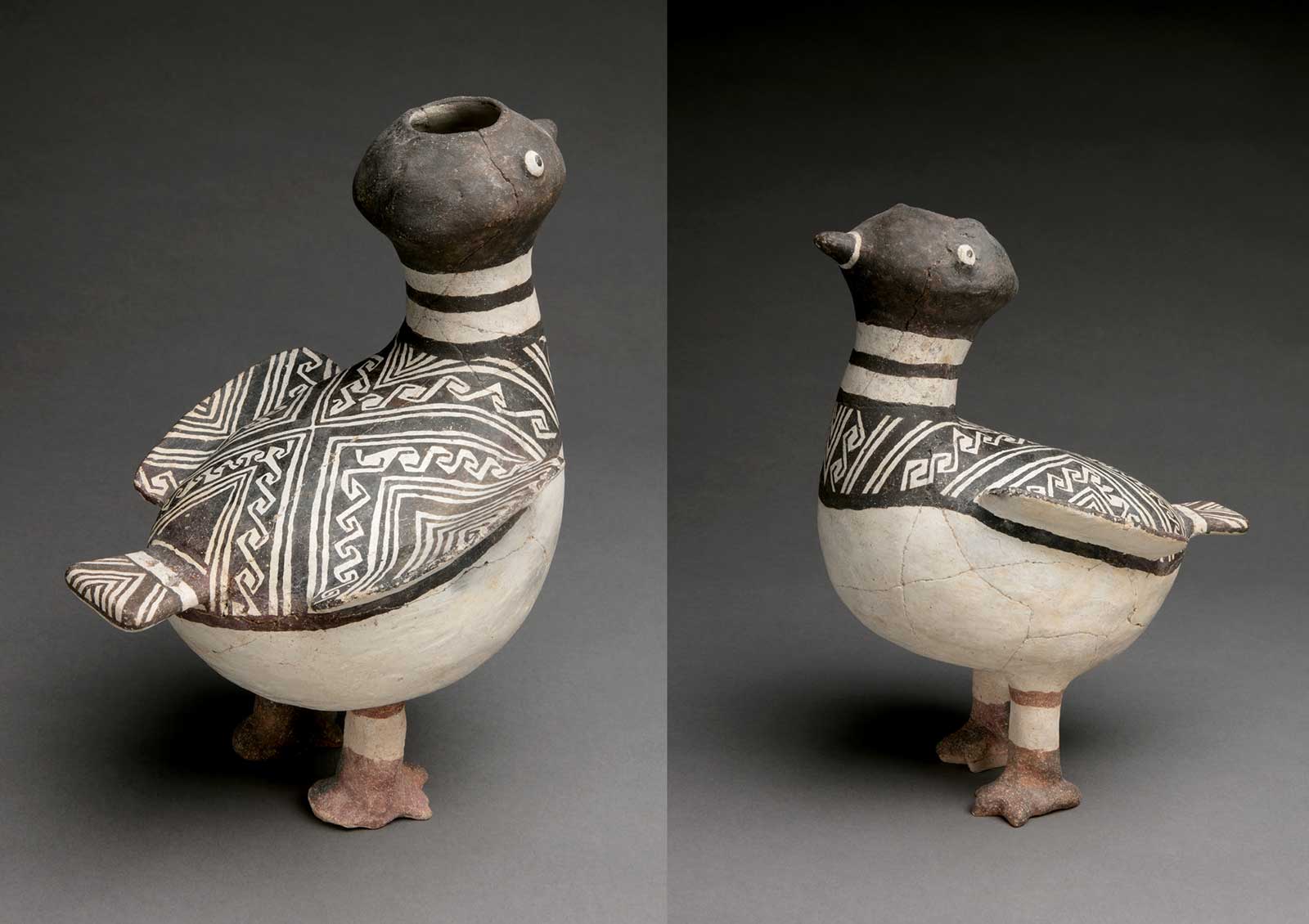
Jennifer, PI-6206, Pinedale black-on-white duck effigy. Schenck collection.
Schenck writes, “This is the only known two-legged bird effigy of the prehistoric Southwest. Jennifer is easily one of the most creative effigy artists of her time.”
Among those whose help he acknowledges in the book is his late friend Matt Thomas, the ceramic artist and archaeologist who restored the Mimbres bowl on the cover of the book, depicting a woman artist intently painting a bowl while her baby plays behind her. As an aside, Schenck comments, “In 1540, when Coronado first makes contact at Zuni Pueblo and from all the written observations, all the ledgers, all the letters, nobody ever once mentions any male making pots.
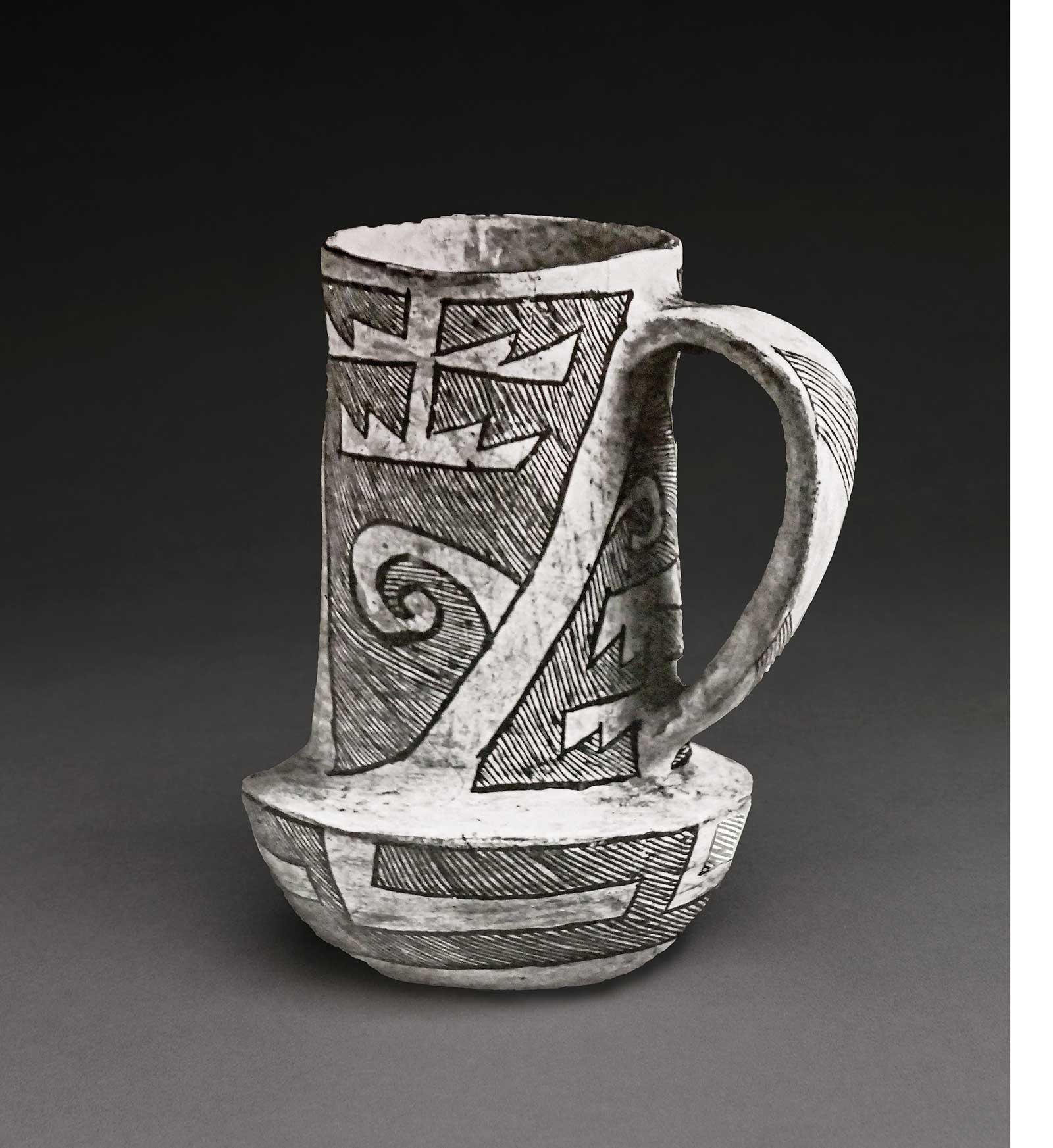
Isabelle, CH-6281, Gallup black-on-white. Schenck collection.
“I want to make people aware of just how significant this stuff is—that it’s not just decorative. It’s something beyond just craft. It’s something that’s really fine art. The women making these pots were not thinking fine art, necessarily, but they were refining their designs. Think of the Renaissance artists who were working at the same time in their ateliers with north light, inside, in a controlled environment.
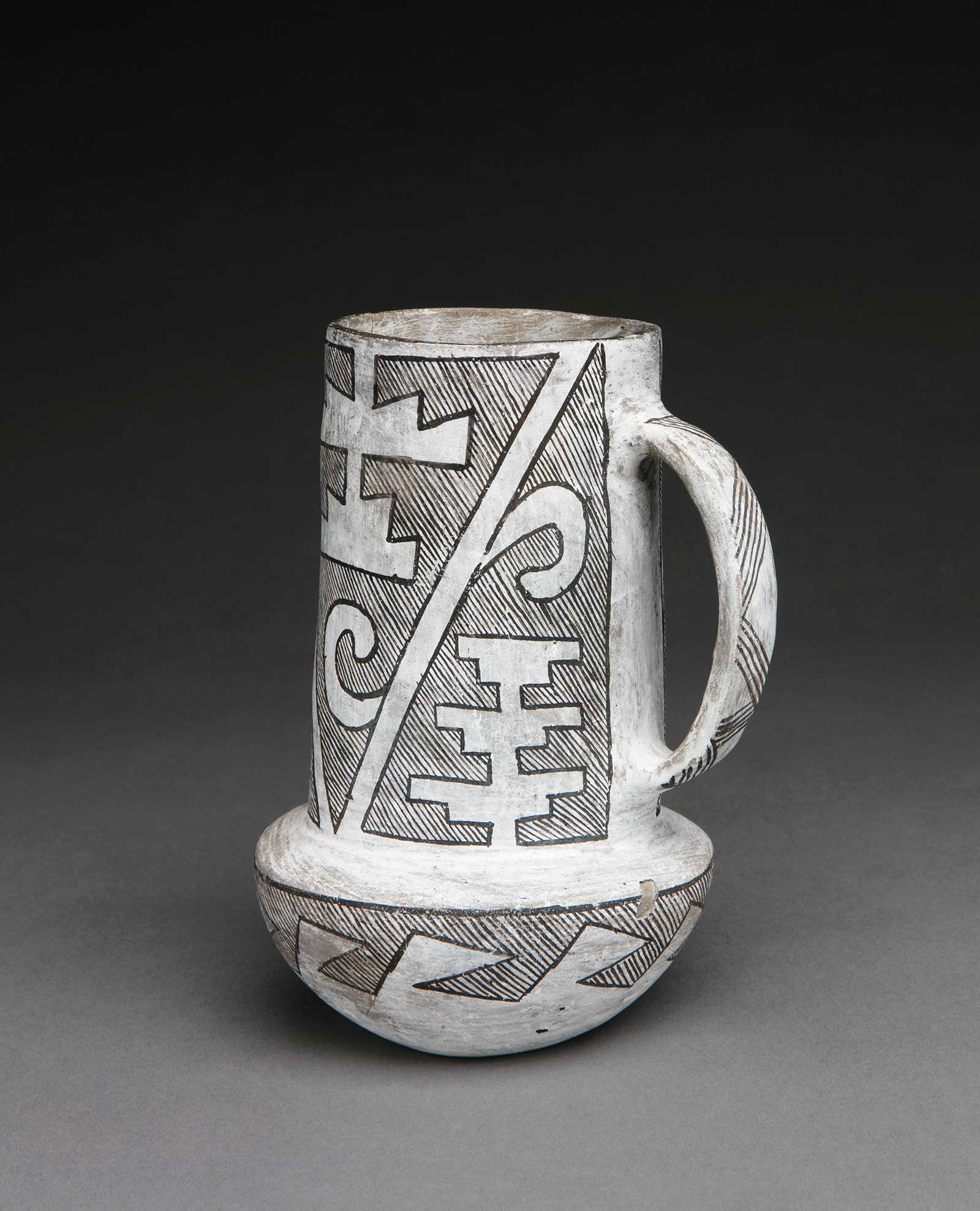
Isabelle, Gallup black-on-white. American Museum of Natural History, New York, collection.
He continues, “These women were outdoors in all kinds of elements and can’t make anything in this month because they’ve got monsoon rains or it’s too windy or they have kids running around. They have to be moms. They’ve got all kinds of other chores and they’re still rising to a level of competence and sophistication. There could even be a competitive spirit.’
“Back in 1980, Matt Thomas and I first thought about identifying an artist’s signature style. When you get to a master level as an artist, you have a style that can be recognized. If you’ve done your homework and you know your history, you can identify that a pot has been done by the same person.” Thomas did a lot of the field work and salvage archaeology over the past five decades, Schenck adds. “I have spent hundreds of hours on hundreds of phone calls and visits to pick Matt’s brain about aspects and nuances regarding the prehistoric Southwest (sometimes we didn’t agree).
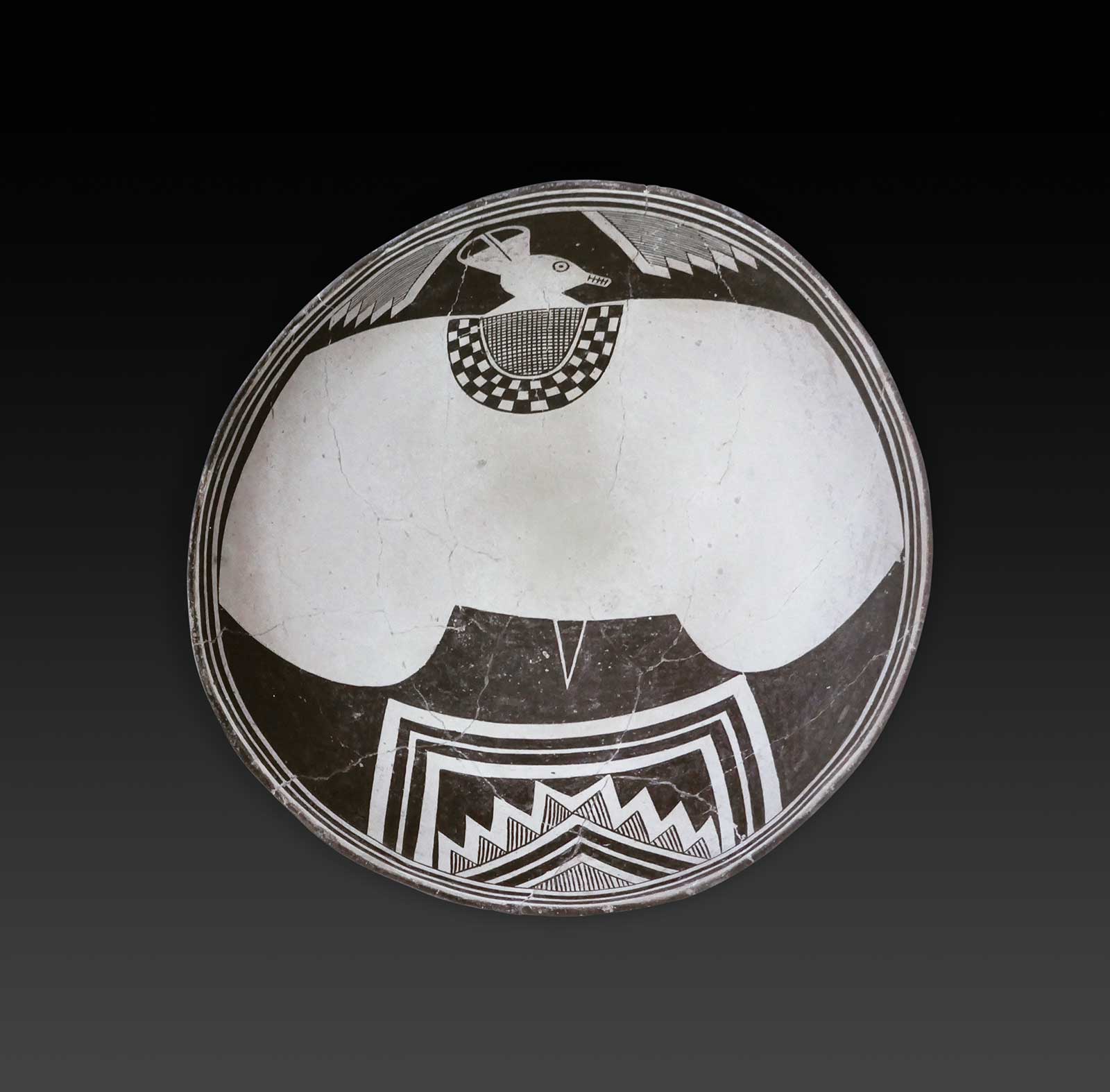
Beverly, Upper Gila River district, 1060-1130. Private collection.
“At Chaco, it’s really difficult to identify individual artists because there were such rigid parameters of drawing there,” he says. In his collection is a Chaco “tall neck” that he has been able to identify as being made by an artist he calls Isabelle. “Isabelle is the only artist who deviated from the rectilinear and 45-degree and 90-degree geometric shapes to include a scroll element. The pitcher was found in 1934 and was first featured in 1972 in National Geographic magazine. Over the decades, Isabelle’s pitcher became the poster child for all things Chaco.”
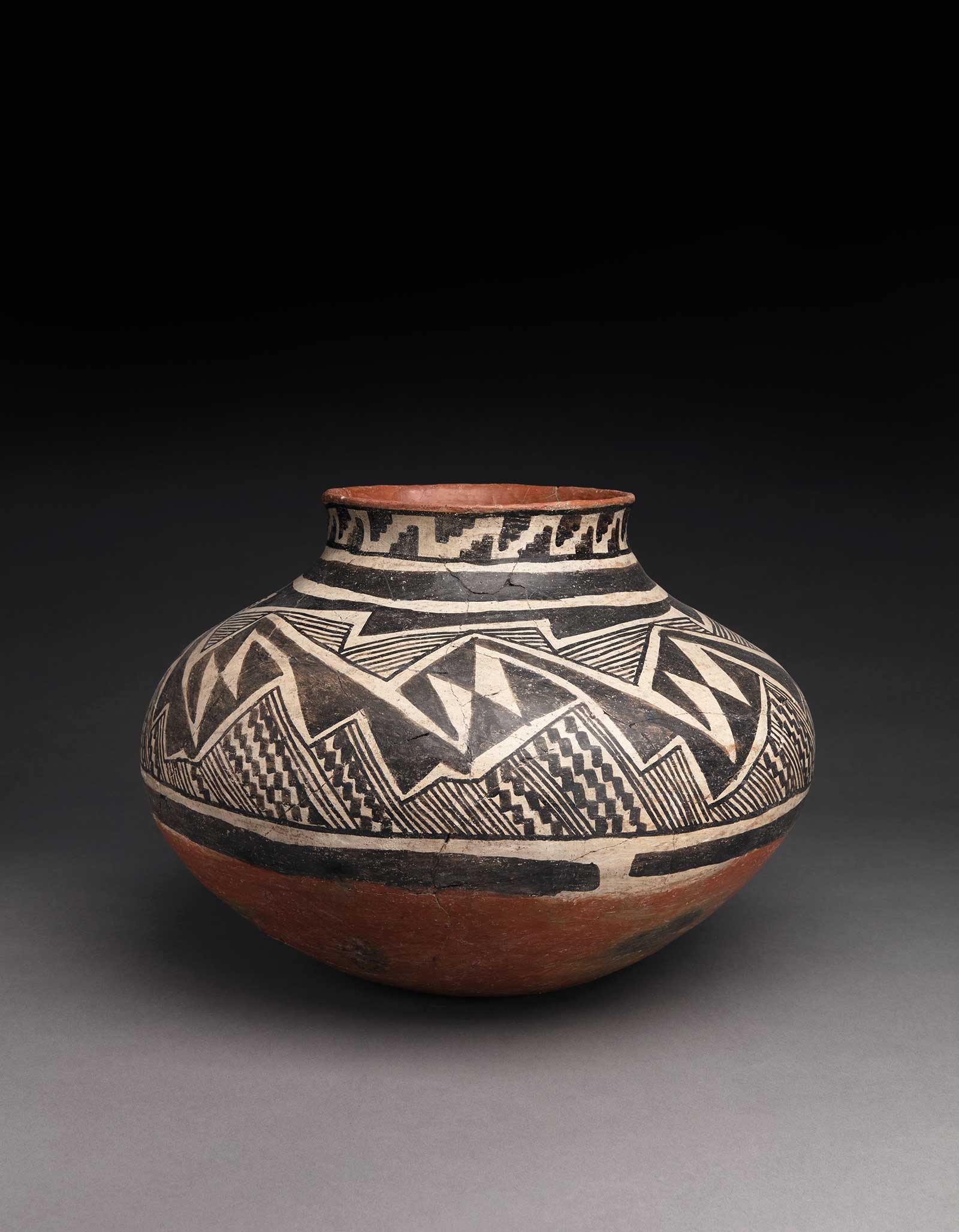
TG-6247, Gila Polychrome, 1300-1400. Schenck collection. This jar “was created by an artist appropriating nearly every design element of a Pinedale jar from 1275 to 1325, as well as imitating its exact same scale and shape.”
Another tall neck pitcher he has identified to be by Isabelle is in the collection of the American Museum of Natural History in New York.
“I talked to some art historians and they would cringe at the fact that I gave names to anonymous people. I had other historians that thought that was terrific. I went through all the American Indian art magazines, Native art magazines and Navajo weavers, and I used names that were already in use in the Native community.”
“Another artist we’ve identified is Beverly who lived in one of the villages on the Upper Gila River around 1060 to 1130. She has eliminated any design elements on the bat wings in her designs and then placed them in a negative space.”
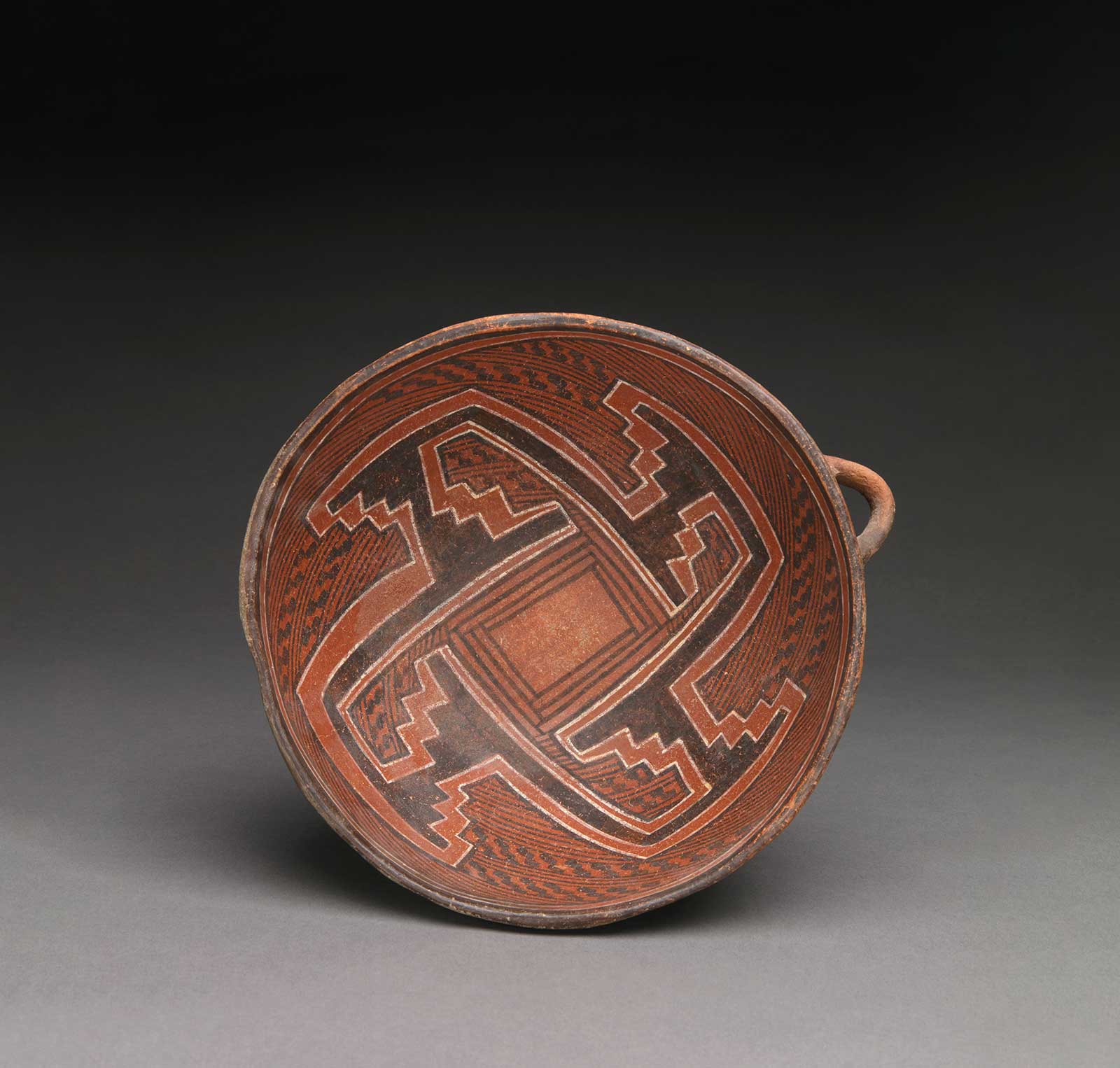
K-6245, Kiet Siel Polychrome. Schenck collection. The pot is from the Tsegi canyons in Navajo County, Arizona.
Throughout the book there are references to art historical parallels and comparisons as well as detailed histories, charts and maps of the influences among the Indigenous cultures of the Southwest.
Schenck begins Chapter 1 with, “In the beginning, there were the Hohokam. The culture emerged as the earliest of the painted ceramic traditions and lasted the entire length of the ceramic tradition of the Southwest, until it all collapsed (with the exception at Hopi and Zuni) at 1450 AD.”
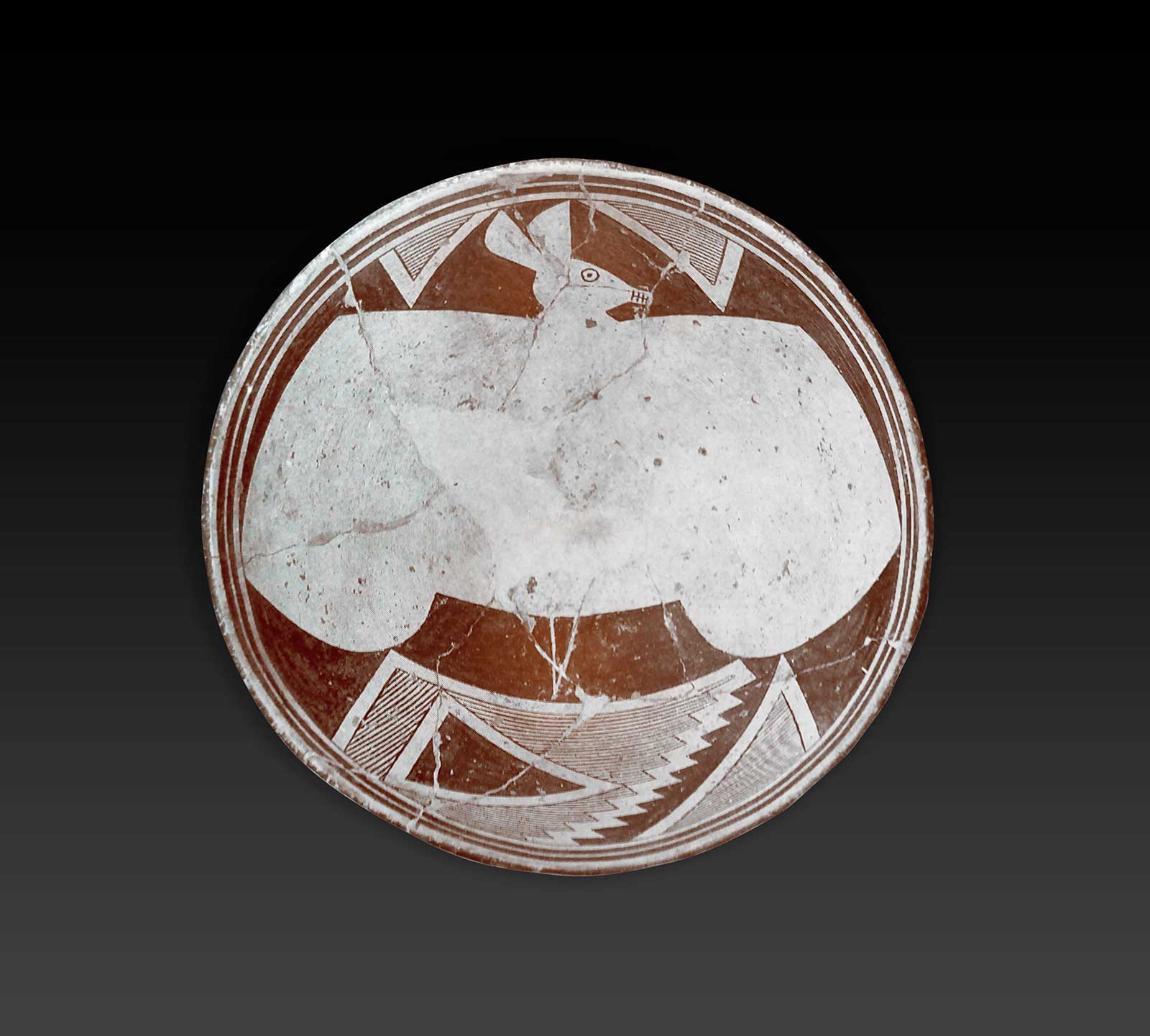
Beverly. Smithsonian Institution, Washington, DC.
The Hohokam of Southern Arizona had close ties to Mesoamerican cultures such as the Toltec, Aztec and Maya. The Hohokam influenced the nearby Mimbres Mongollon culture. Schenck begins the chapter on classic Mimbres pottery with a history provided by Matt Thomas—as he includes the scholarship of other scholars throughout the book.
Thomas wrote that “Mimbres towns along the upper Gila River extended into New Mexico where some of their largest towns were located. Trade in goods, information and people moved along this Gila River corridor.”
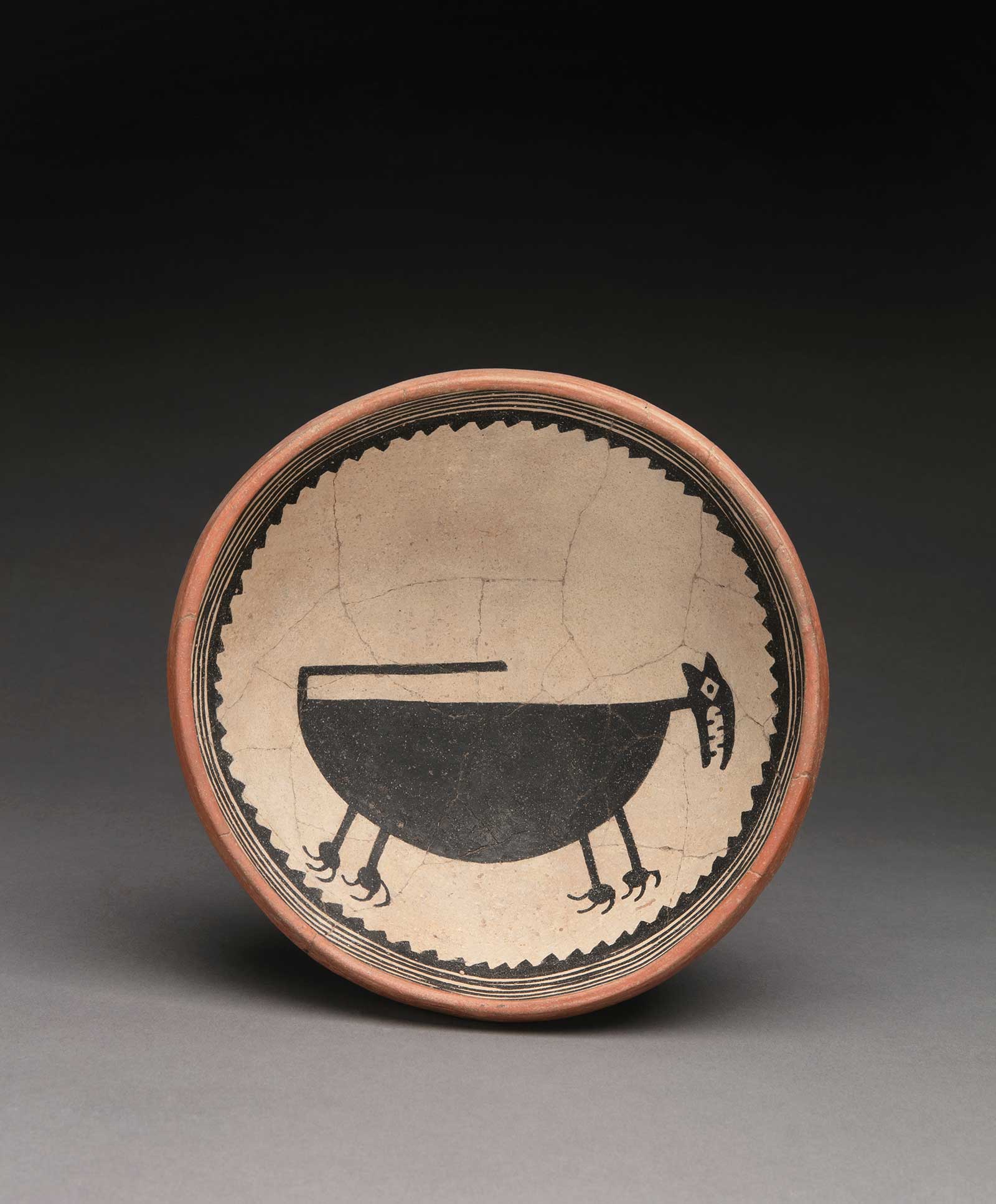
TG-5069, Gila polychrome, Black Hills Ruin. Schenck collection, showing the influence of Mimbres design on Salado artists.
Schenck notes that trade in the region was not unlike today’s system of interstate highways with Pilot Flying J truck stops along the routes. “In those years,” he says, “people could walk probably 30 to 40 miles a day through all kinds of terrain. They had burden baskets and could haul maybe as many as 75 small pots, ladles and pitchers.”
After Schenck and Thomas identified three Mimbres artists in 1980, “a group including Matt, Barbara L. Moulard, Tony Berlant, Steven Le Blanc and Andrew Bauer began a three-year process in Santa Monica of identifying as many of the Mimbres artists as possible. They worked with approximately 6,500 photographs of Mimbres bowls.
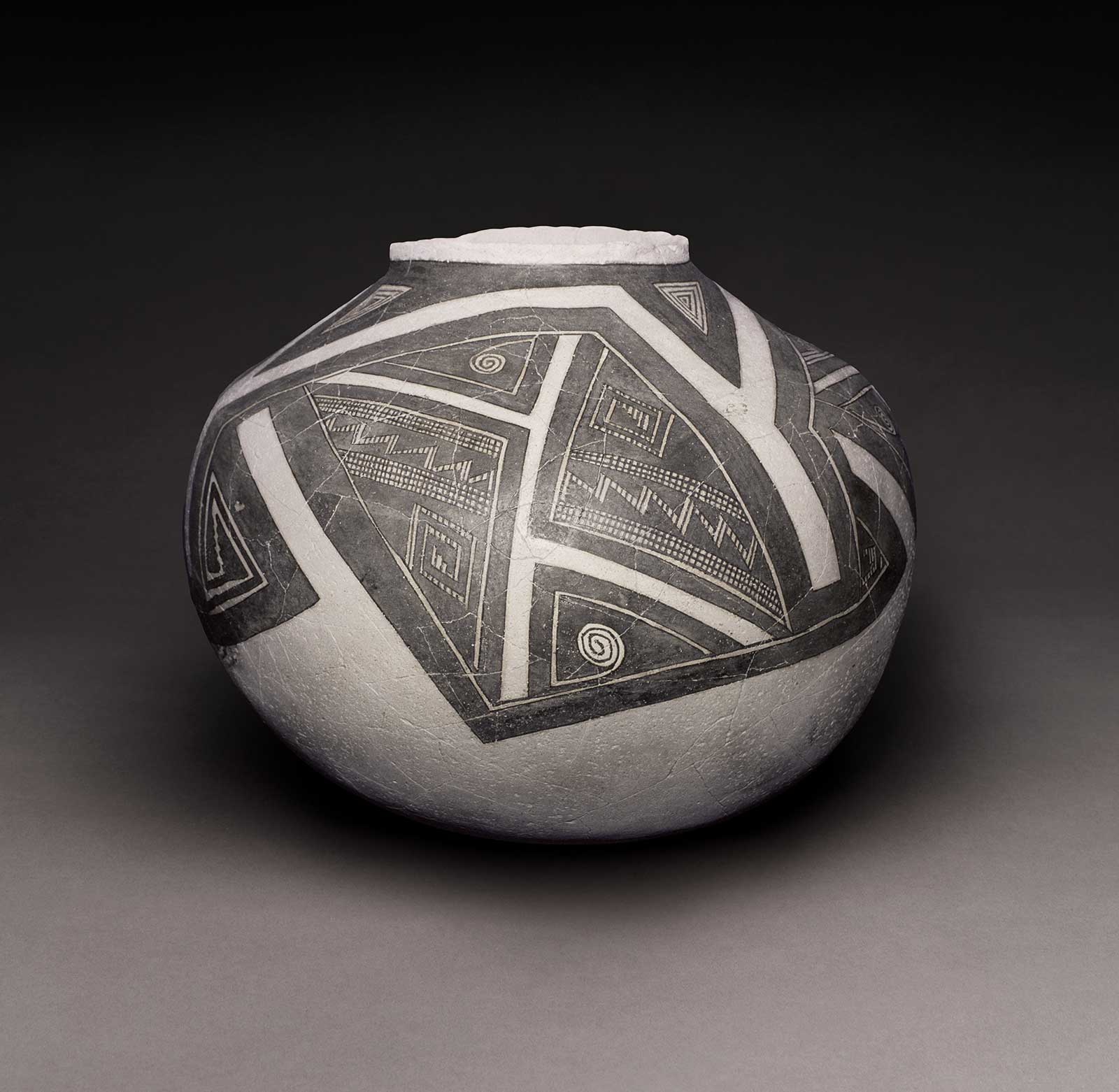
Typical Late Kayenta Y-bar with examples of mosquito-bar design elements. Formerly with the Schenck collection. In 1286, the last of the Ancestral Puebloans of the Kayenta region of northeastern Arizona and southeastern Utah abandoned the region. Schenck notes that some moved south to the region of the Salado culture in Southern Arizona. “For one generation, approximately 1286 to 1325, some of the Kayenta artists adapted Kayenta Y-bar and mosquito-bar and other design elements to the Salado jar and bowl shapes.”
“I concluded from their efforts that I could expand on that. I did discover that the more time you spent with actual pots as well as photographs of them, the more you could actually see an individual’s hand. The result of all this research was that the process could be endless. What appears in this book is a broad rough survey of master artists as well as signature style artists.
“What this book represents is just the beginning of recognizing the great women artists who lived and worked in the American Southwest.” —
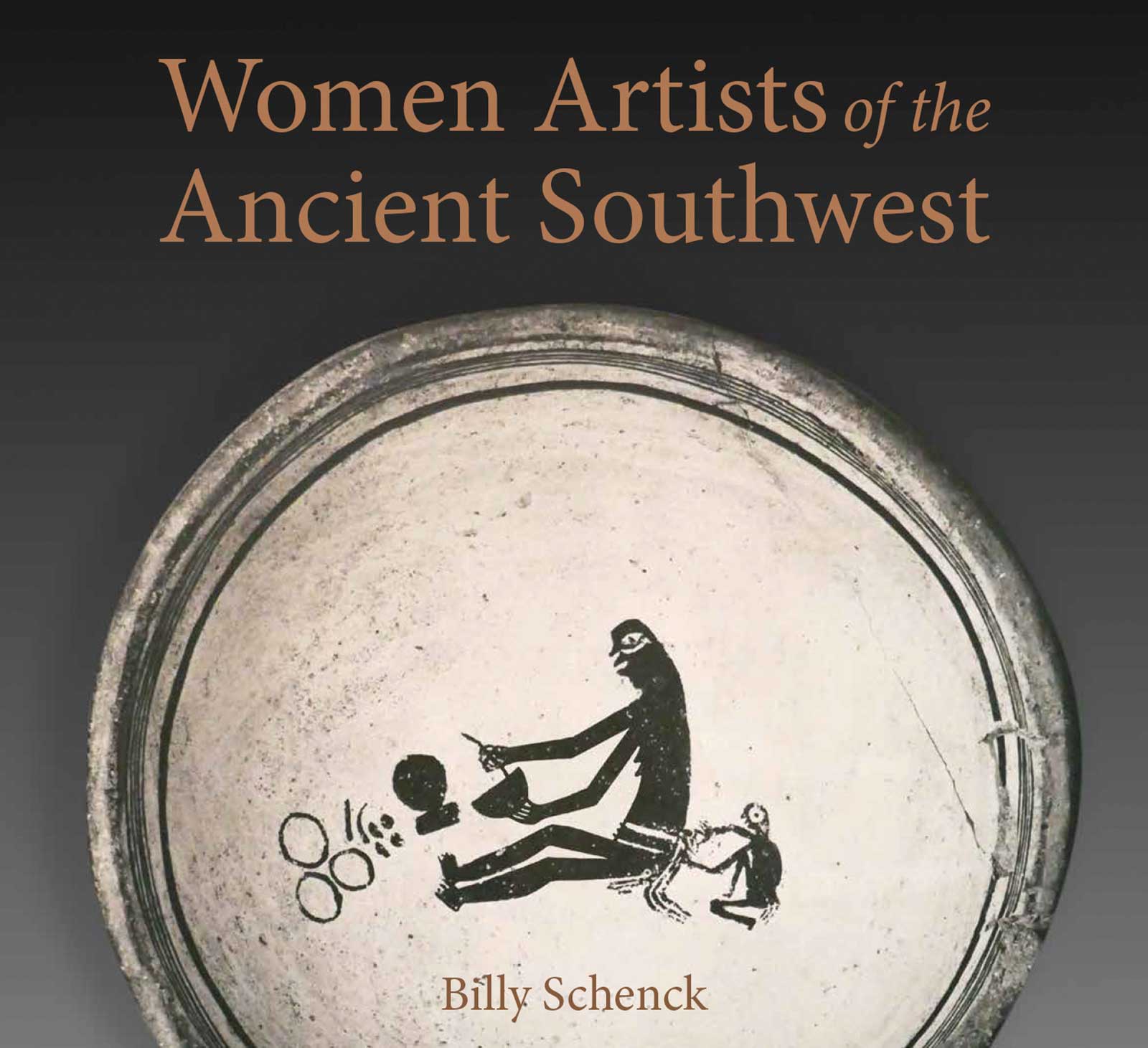
Women Artists of the Ancient Southwest
By Billy Schenck
400+ pages, hardcover
Limited edition of 1,000
Powered by Froala Editor


