Many similarities exist between artists Harry Jackson (1924-2011) and Allan Houser (1914-1994). Both were painters first before becoming successful sculptors. Both were involved in World War II, with Houser working in the wartime shipyards of Los Angeles, and Jackson serving in the Marines (as soldier and sketch artist) before being injured twice in the Pacific Theater. Both men bucked the art worlds where they originated, and went on to strike their own paths. Today, both artists are collected at high levels by major collectors and institutions.
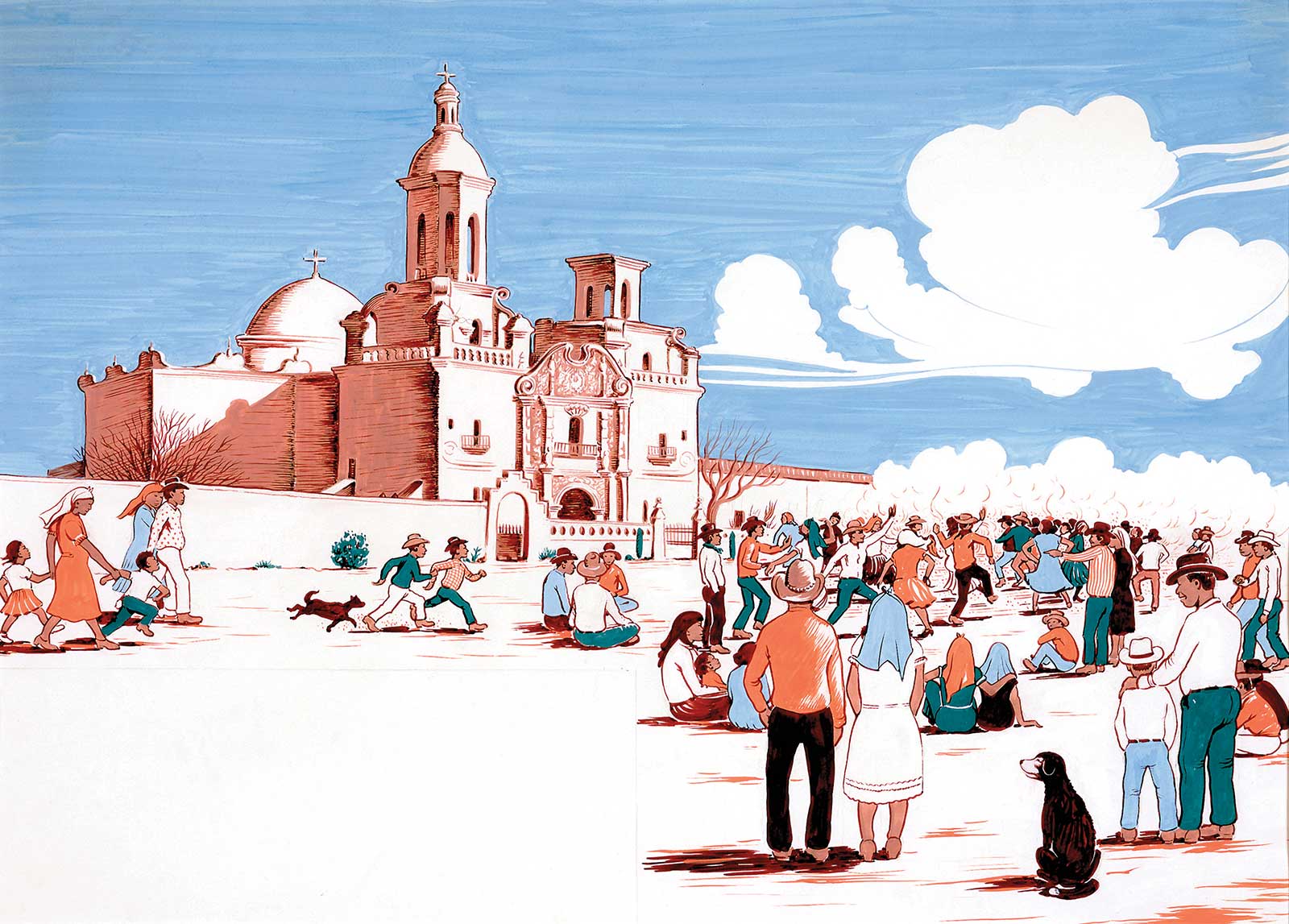 Allan Houser (Chiricahua Apache, 1914-1994), San Javier del Bak, 1961, tempera on paper
But it is the differences that make their stories so uniquely compelling. Mainly, their paths through their respective careers were inversely charted: Houser began painting in a very traditional manner before becoming more and more modern, while Jackson started his career amid the abstract expressionism craze only to abandon it and move into traditional Western art. It’s this mirrored creative journey that will be explored at the exhibition Parallel Paths: The Art of Allan Houser & Harry Jackson, opening December 14 at the Booth Western Art Museum in Cartersville, Georgia.
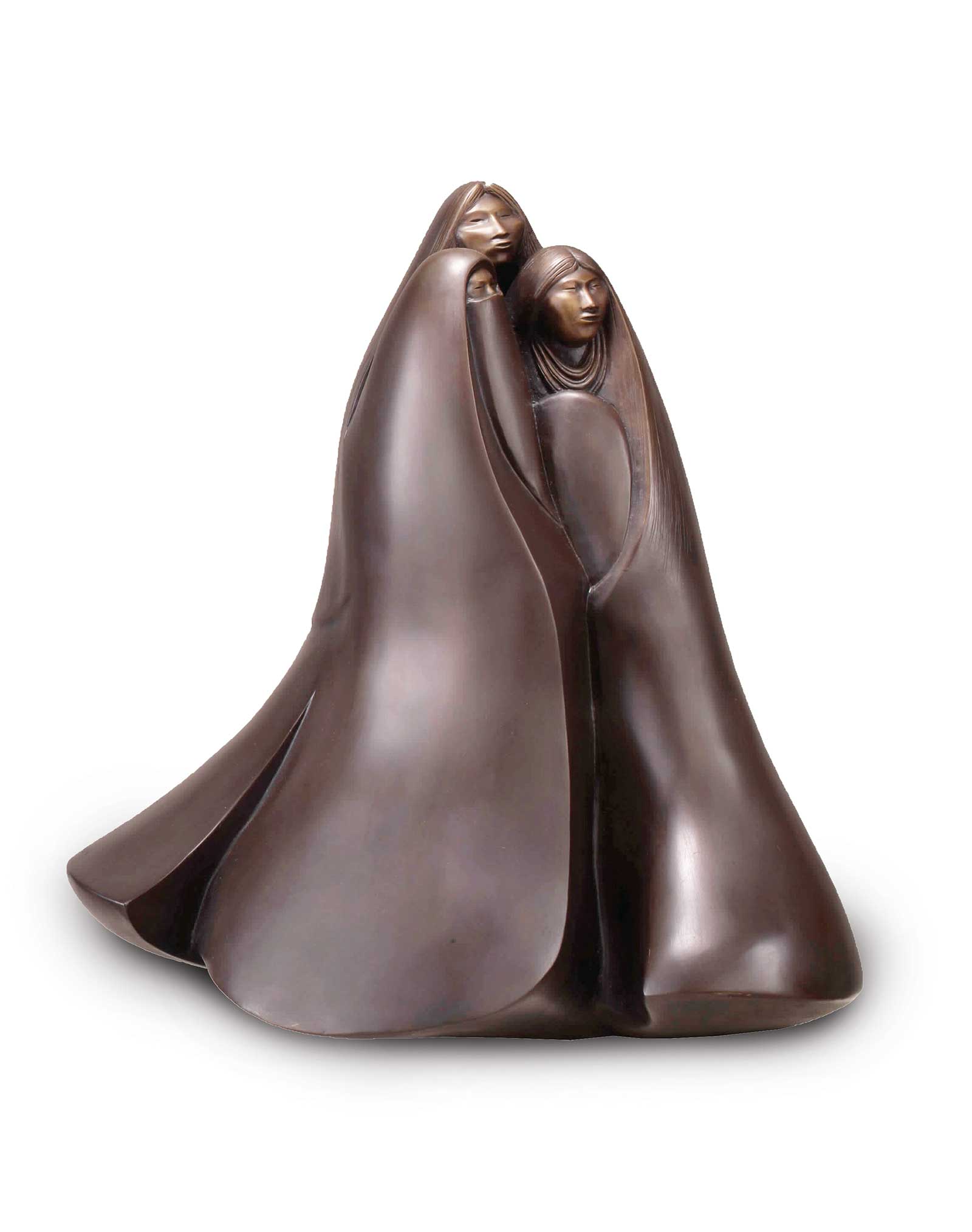 Allan Houser (Chiricahua Apache, 1914-1994), New Gossip, 1983, bronze, 28 x 26 x 26 in. On loan from the Allan Houser Foundation. © Allan Houser. Photograph © Chiinde LLC.
Seth Hopkins, the executive director at the famous East Coast Western art museum, curated the show and points to several big milestones happening in 2024, including what would have been Jackson’s 100th birthday and Houser’s 110th birthday. Deeper, though, Hopkins acknowledges that he’s had his eye on both artists for a long time.
“I wrote a graduate paper on Jackson in the early 2000s, so I’ve been interested in his work for a long time, plus we have a lot of it in the collection,” he says. “We do have a few Housers, but I really became more interested in his work after many visits to the Houser compound in Santa Fe, New Mexico. It was there I fell in love with his work and his story. When I realized they were both hitting big numbers this year, I thought an exhibition to compare and contrast their careers, and really focus on their works individually, was the best way to celebrate them.”
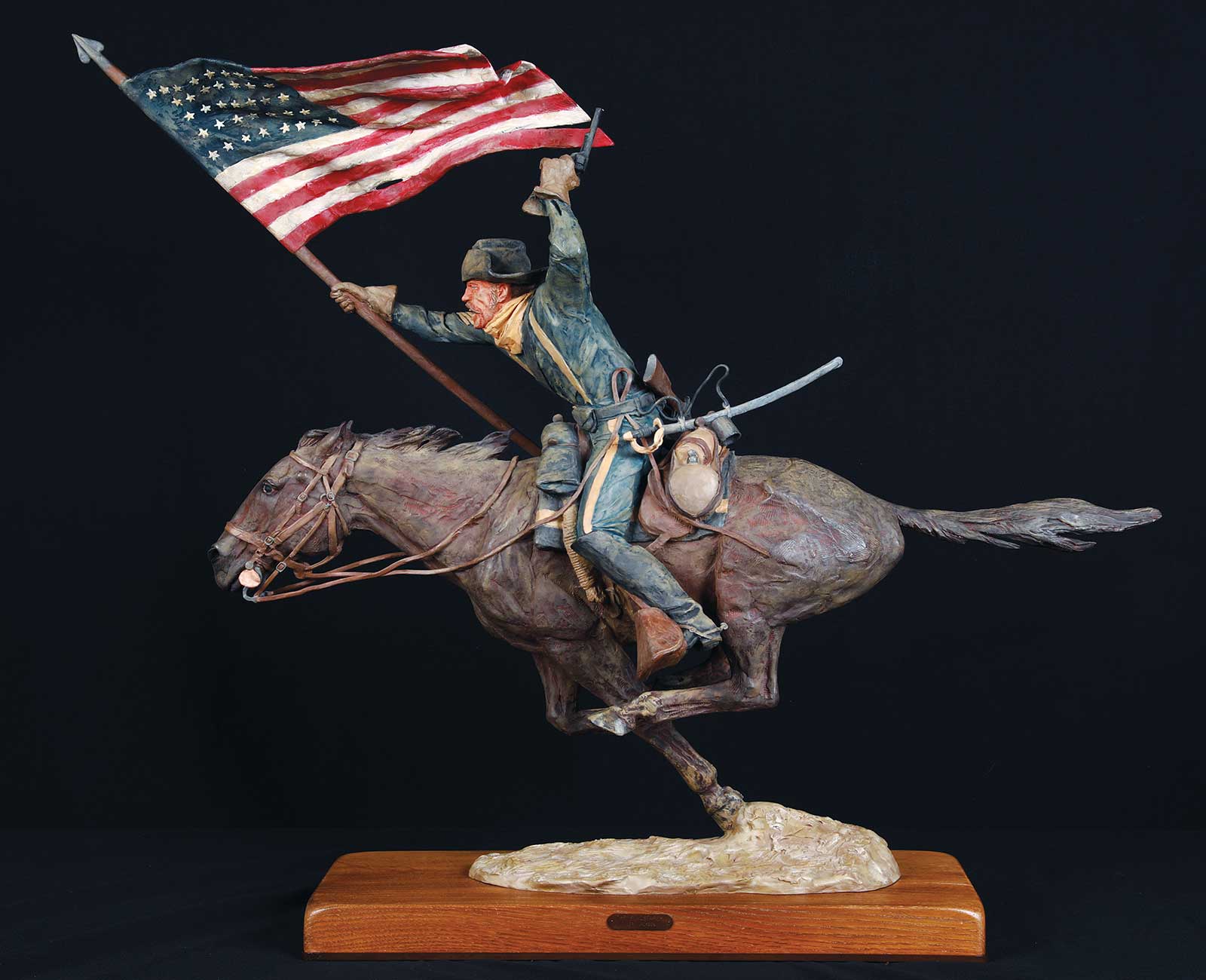
Harry Jackson (1924-2011), The Flag Bearer, 1983, painted bronze, 291/8 x 36 x 10¼ in. © Harry Jackson. Booth Western Art Museum permanent collection, Cartersville, GA.
The exhibition will feature about 20 pieces of sculpture from both artists and around a dozen flat works by each as well. For Houser, the museum borrowed the bulk of his side of the exhibition from the Houser estate in Santa Fe. The museum does own five Houser pieces that will be on view as well.
“Allan started as a flat-style painter under the tutelage of Dorothy Dunn at the Santa Fe Indian School. It was there he attracted some attention and he did get some commissions. Later, [after the war], he was commissioned by the Haskell Institute, where he did his first marble carving,” Hopkins says. “You really see the evolution of his work very clearly. When he was with Dorothy Dunn, she would basically tell him what to paint. But then when he was on his own, he began to explore more, particularly when he was studying the work of English sculptor Henry Moore.”
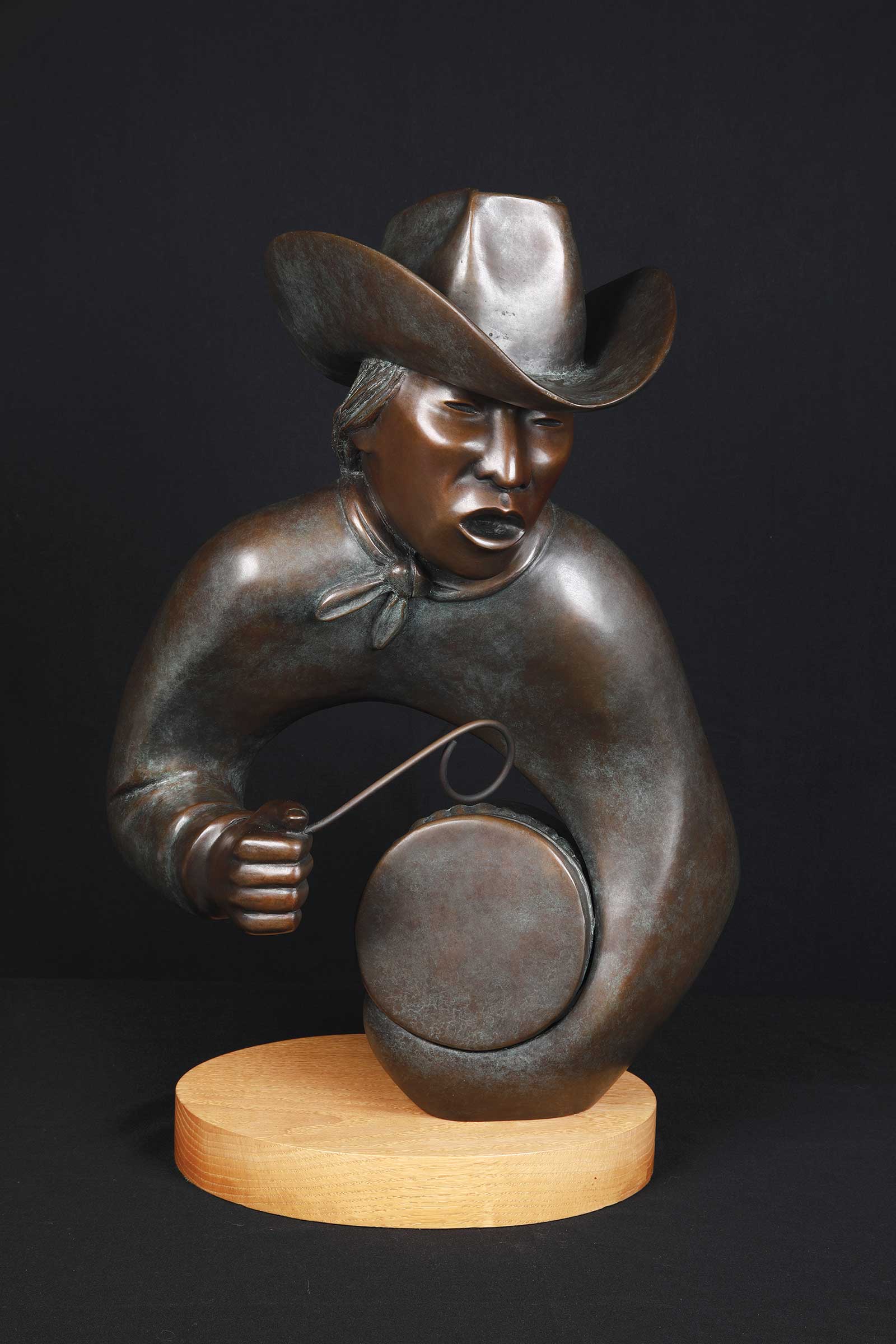
Allan Houser (Chiricahua Apache, 1914-1994), Mescalero Drummer, 1984, bronze, 26 x 15 x 17 in. © Mrs. Anna Marie Houser/The Allan Houser Foundation.
While many of Houser’s works would veer into themes of motherhood, grace and beauty—see the 1983 bronze New Gossip, which exhibits many of the artist’s visual themes—some of his work was also pulled from his heritage as a Chiracahua Apache with a storied family history, including Houser’s father, Sam Haozous, who served as a translator for Geronimo. In works like Mescalero Drummer, Houser shows a simple and stylized figure beating on a drum with a note that seems to be frozen as it leaves his bronze mouth. Like much of his work, Mescalero Drummer uses negative space to convey movement, drama and story.
The museum has a robust collection of Jackson's work, in addition to two major murals, Range Burial and Stampede, both on long-term loan from the Buffalo Bill Center of the West. The bronzes will surely delight collectors, especially because visitors might not realize they know more of Jackson’s work than they realized. “It’s kind of like when you go to a concert with a really good band and as they start a song and you think, ‘Oh, I forgot they did this song,’” Hopkins says.
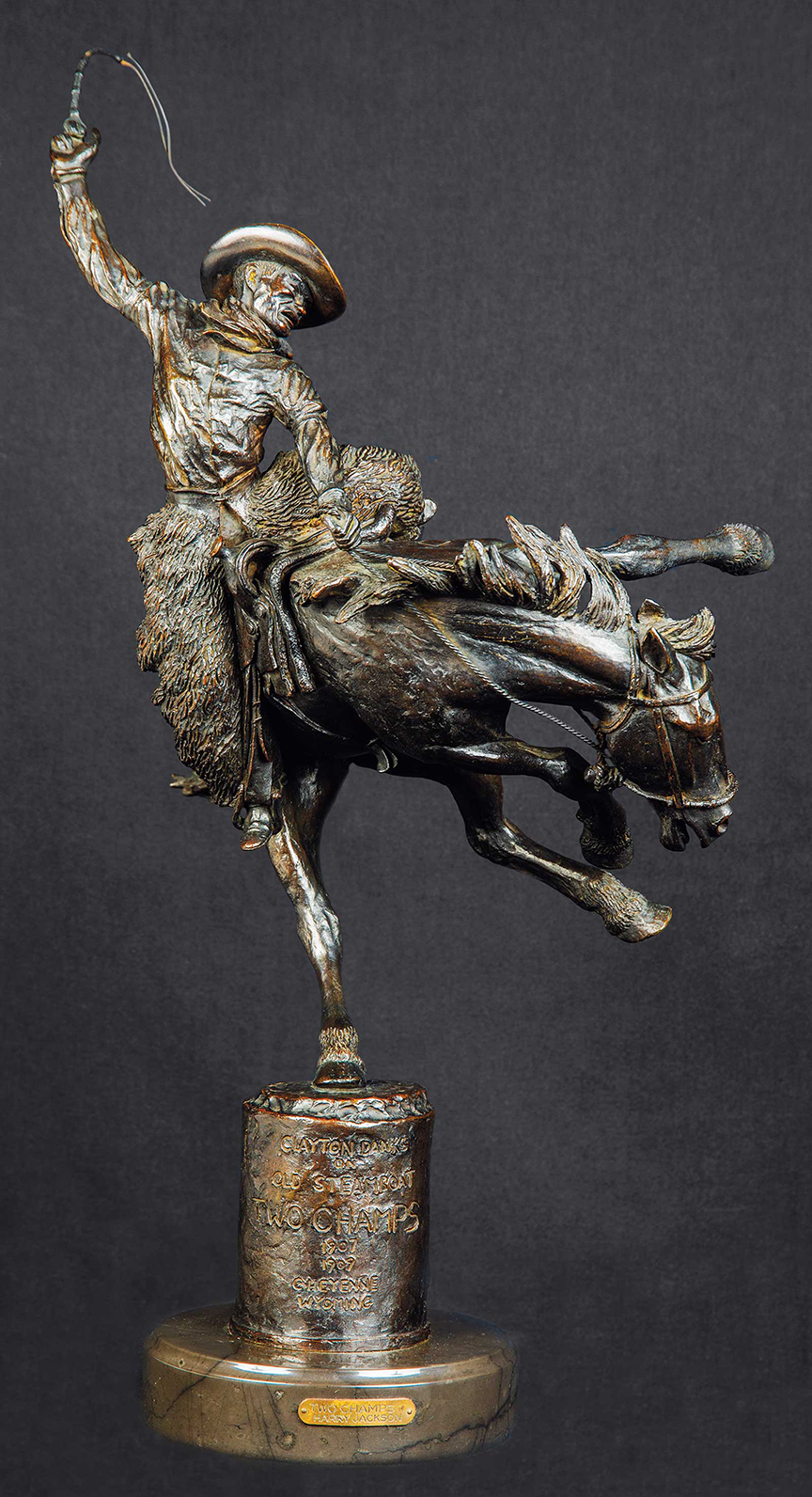
Harry Jackson (1924-2011), Two Champs, 1977, bronze, 23 x 11 x 15 in. © Harry Jackson. Booth Western Art Museum permanent collection, Cartersville, GA
“Harry’s story really is interesting, and the opposite of Houser’s,” Hopkins adds. “When he started, he was friends with Jackson Pollock. Critics had even predicted he would be the next Jackson Pollock. He does this grand tour of Europe and he comes back and wants to be a realist. Pollock tells him realism is dead. But Harry was the kind of guy that if you told him something, he would do his own thing.”
Hopkins points to a July 1956 article in Life magazine with the headline “Painter Striving to Find Himself: Harry Jackson Turns to the Hard Way.” Across seven pages, the magazine captures an artist in the middle of a great transition.
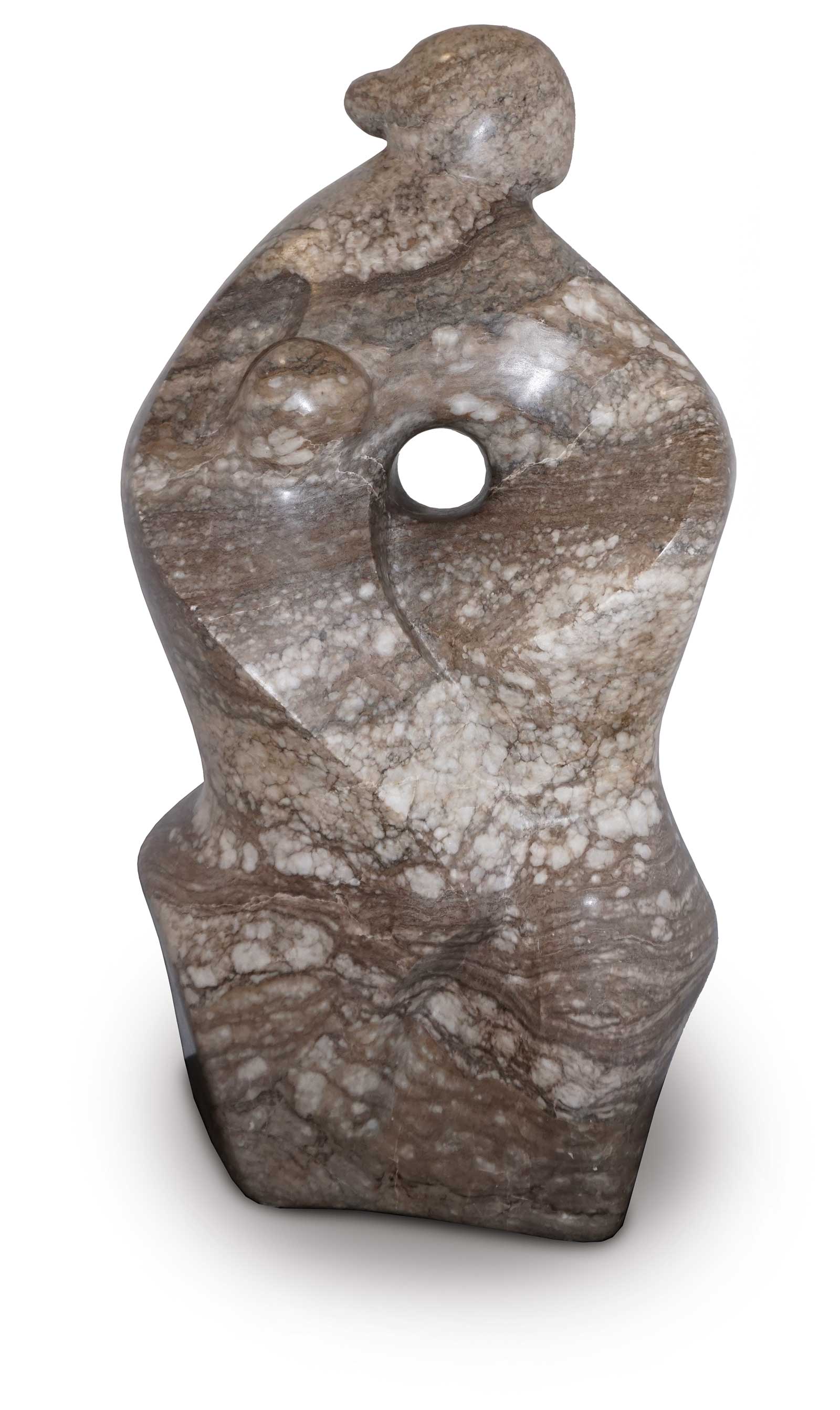
Allan Houser (Chiricahua Apache, 1914-1994), Legends Begin, 1990, alabaster, 46 x 21 x 15 in. © Allan Houser. Tia Collection.
“For Harry Jackson, a 32-year-old American painter of surging talent and ambition, this is a tough and lonely time. Sitting in his studio scrutinizing his work, he is faced with the problem every serious artist must face, the problem of determining his own course and developing his own means of expression, unaffected by the fashions or pressures of the outside world,” Life writes. “This problem is perhaps harder for the artist today than ever before. With abstract art in the ascendancy around the world, there is a temptation to ride with the current or to strive for individuality merely by going to extremes.”
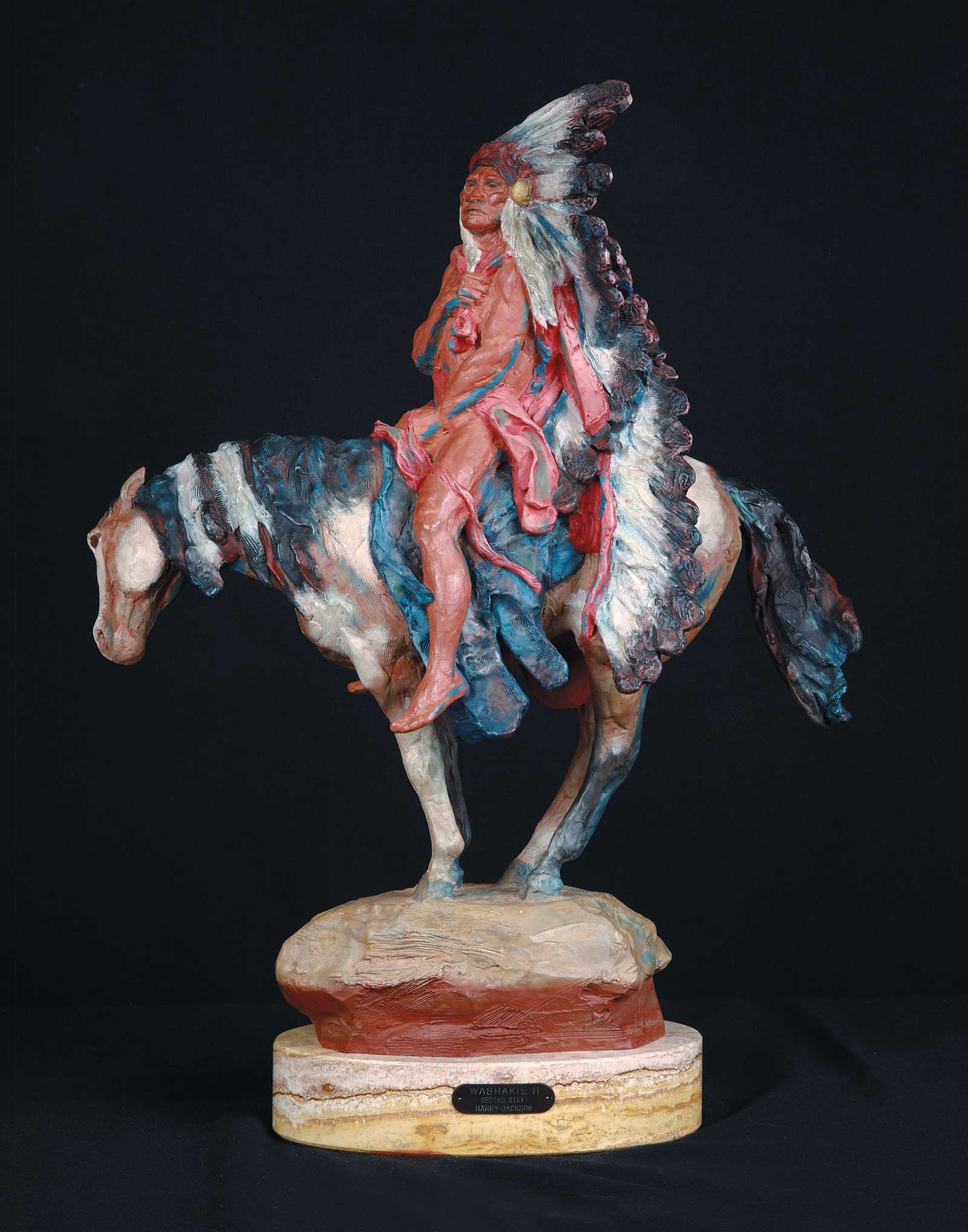
Harry Jackson (1924-2011), Washakie II, 1981, painted bronze, 20 x 15 x 6 in. © Harry Jackson. Booth Western Art Museum permanent collection, Cartersville, GA.
Jackson’s myth grew as he entered Western art with a big personality, and a bigger attitude. Some of that legend still survives today, for better or worse. “Some of the stories about Harry are to his detriment because they were sometimes about outrageous behavior. As you know in the Western art world, the artists are all nice to each other and love each other, and art is sold through friendship and mutual admiration. Well, Harry never bought into that much, so there are lots of stories out there about him. But he was a great artist. For this exhibition, we want people to separate the stories from the artist so they can see that his work can stand on its own.”
Parallel Paths: The Art of Allan Houser & Harry Jackson will remain on view through May 4, 2025. —
Parallel Paths: The Art of Allan Houser & Harry Jackson
December 14, 2024-May 4, 2025
501 N. Museum Drive, Cartersville, GA 30120, (770) 387-1300
www.boothmuseum.org
Powered by Froala Editor


