Western art has no real birthplace. No headquarters. No corporate office where all the details are stored. There is no central hub where all the artists gather every year to collect their mail and organize the exhibition calendar. The West has many homes and many satellite branches, in places like Fort Worth, Cody, Scottsdale, Santa Fe, Denver and Great Falls. The West is everywhere.
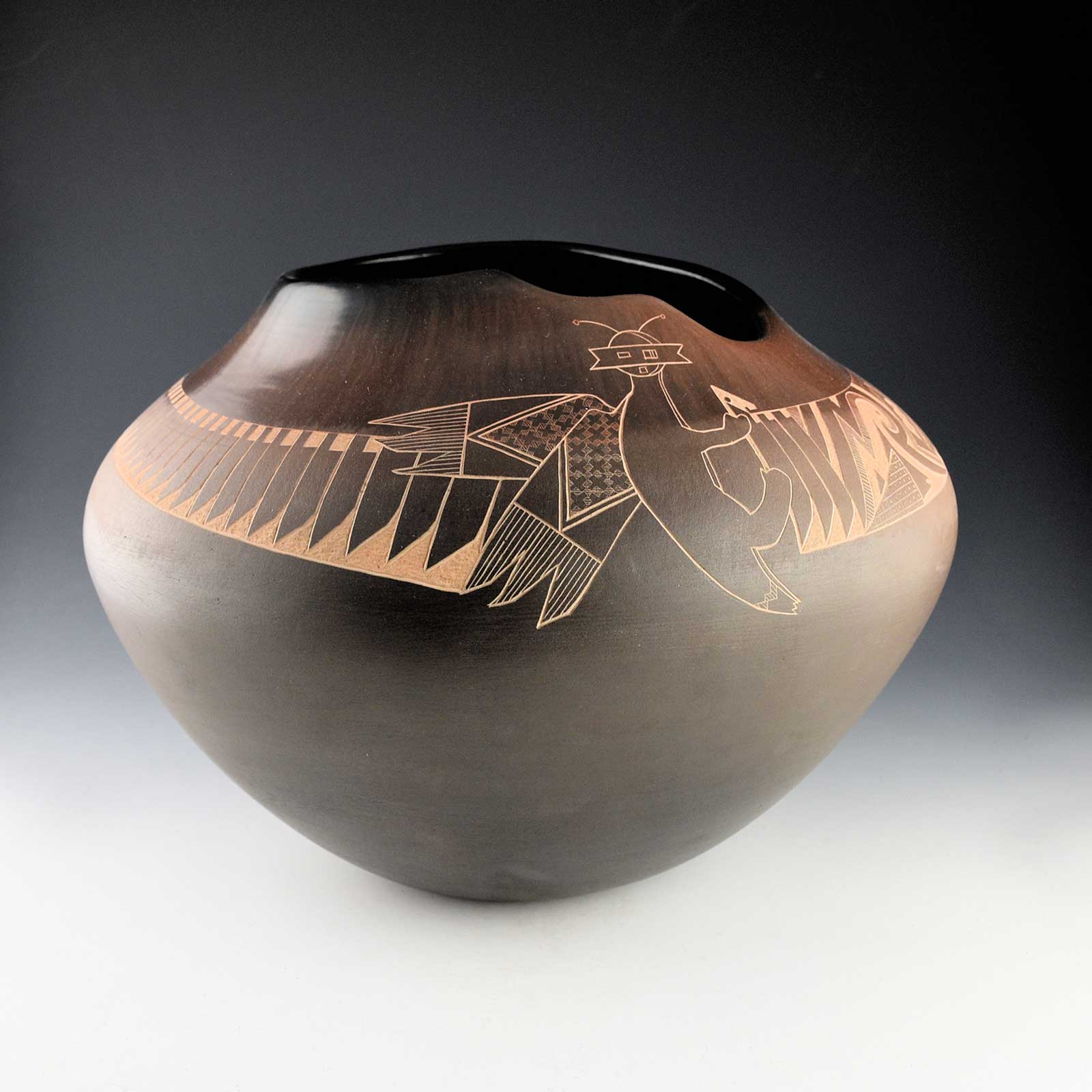
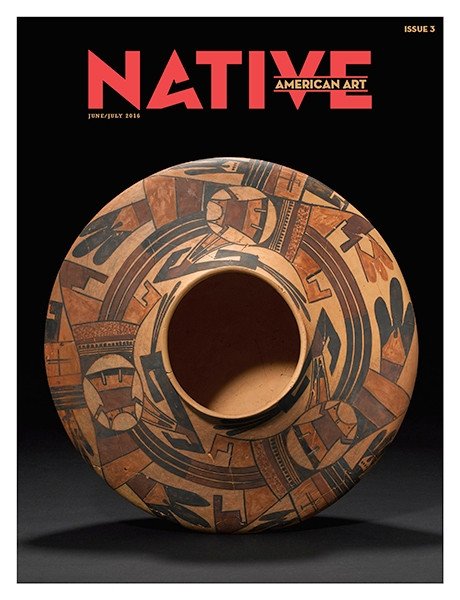
Jody Folwell (Santa Clara Pueblo) and Susan Folwell (Santa Clara Pueblo), Large Jar with Asymmetric Rim and Mosquito Man Design, hand-coiled clay, 13 x 9½ in.
And yet, if you were to poll the artists—and we have, albeit informally over many years—they routinely point to one place where the stars align and Western art forms a nexus of creative energy stored in the high desert. That place is Taos, New Mexico, where six artists converged together to form the Taos Society of Artists in the early 20th century, forever changing the way the Southwest could be depicted. The artists have long since died, but others have come behind them to pay homage and tribute to the work that was done in Taos more than a century ago. At the center of this continued appreciation of Taos is the Couse-Sharp Historic Site, the former home and studios of Eanger Irving Couse and Joseph Henry Sharp.
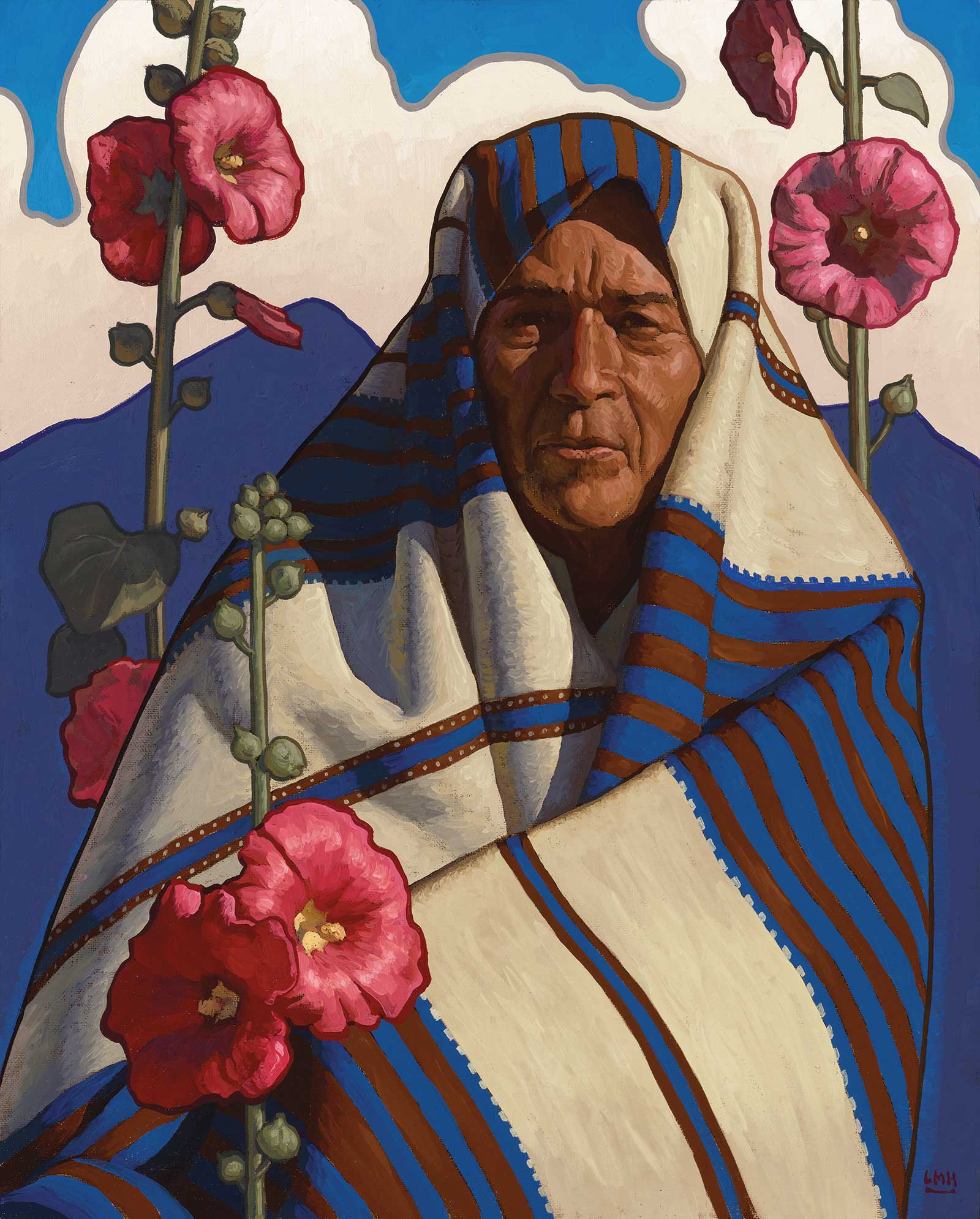
Logan Maxwell Hagege, Rio Grande & Hollyhocks, oil, 20 x 16 in.
The historic site—which also houses the Lunder Research Center, an archive and repository for a growing collection of materials devoted to Western art—is presently exhibiting La Luz de Taos, a biannual gala and sale to benefit and celebrate the site. The show’s sale portion will be held June 14 and 15, and it will bring an impressive group of artists into Taos for the event. The artists, even the ones that haven’t been to Taos before, recognize the event as a homecoming for Western art.
“Today, I continue to feel a deep connection with these artistic pioneers [in Taos], and I’m just as enchanted by the unique Northern New Mexican light—La Luz—as they were a century ago,” says Nathanael Volckening. “I’m honored to be showing my work in La Luz de Taos alongside other incredible living artists who share my appreciation for the rich artistic legacy of Taos and the TSA. With La Luz de Taos,the Couse-Sharp Historic Site continues to demonstrate their commitment to cultural and artistic stewardship. I deeply appreciate their efforts and am glad to contribute through my own work.”
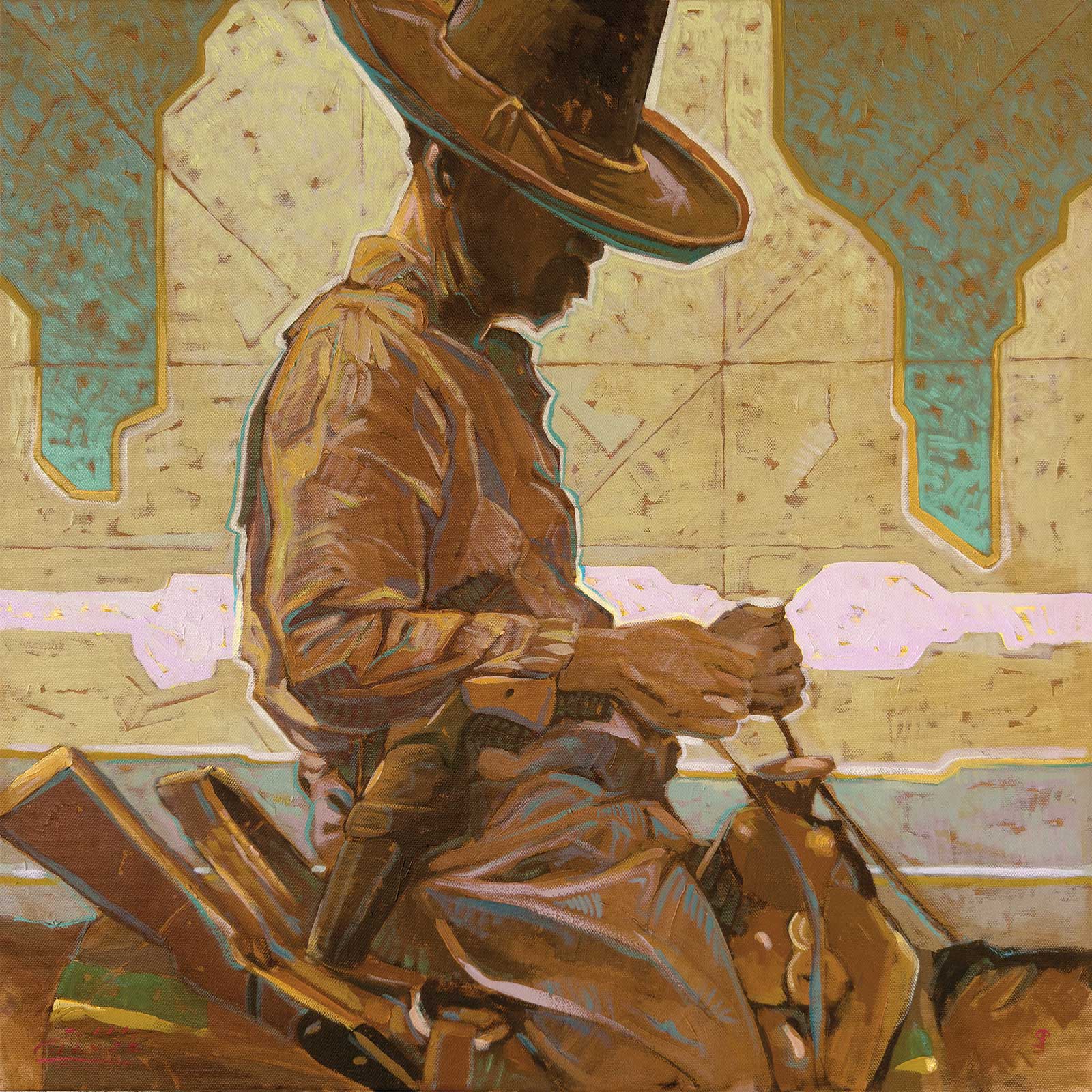
Sean Michael Chavez, Double Down, oil on canvas, 24 x 24 in.
Volckening will be showing Soaring Gaze, a work that’s easy to imagine being admired by Victor Higgins or Ernest L. Blumenschein. “I’ve always been fascinated by the great geological formations sculpted by the passage of rivers and time, such as the Rio Grande gorge and the Grand Canyon. These landscapes offer a perspective of sublime vastness, a viewpoint shared by the noblest of winged creatures. With my painting Soaring Gaze, I try to evoke this expansive and transcendent perspective while also exploring formal abstractions,” the artist says. “Growing up in New Mexico, I was fortunate to be surrounded by such landscapes and the rich artistic heritage they inspired. As a budding artist in Taos, I was drawn to the works of the Taos Society of Artists and other painters from the Taos art colony. In their work I saw the potential of an artistic journey that reveres tradition while embracing the spirit of modernity and experimentation.”
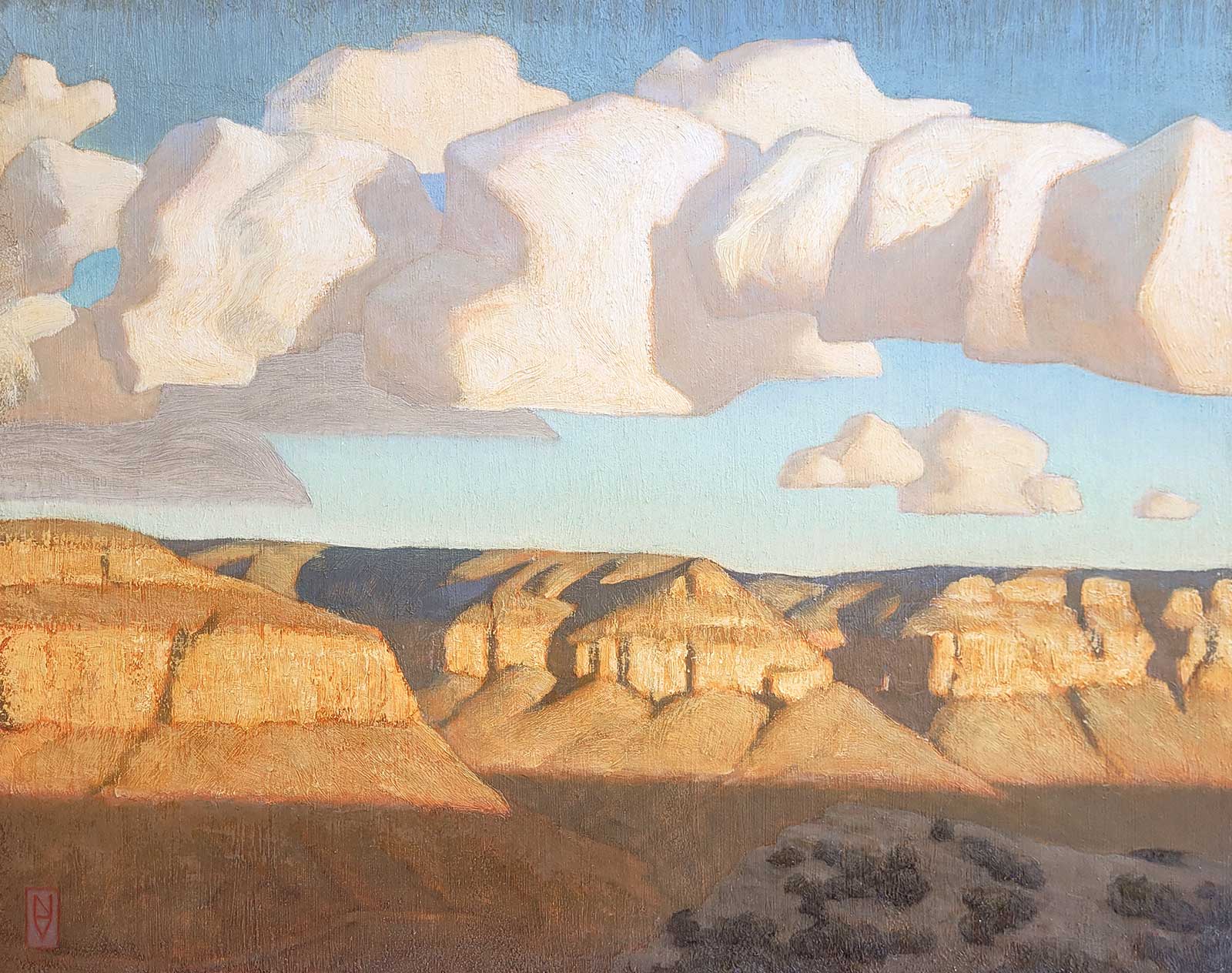
Nathanael Volckening, Soaring Gaze, oil, 16 x 20 in.
Sean Michael Chavez, who is also from New Mexico, says Taos and its history carries weight for him that he feels in his own studio. “As a native New Mexican artist painting in a Western style, the Couse-Sharp Historic Site is a source of pride for me. The artists who founded it and their associates played a significant role in shaping the identity of the American West, New Mexico and its people. Being world-class and classically trained artists, their decision to settle in the Taos Valley speaks volumes about the unique and precious resources this area offered. The quality of their work and the imagery they portrayed continue to influence art internationally,” Chavez says. “The fact that this site, a historical treasure, remains a living and breathing entity today—with a contemporary artist gallery, library, preservation efforts and a growing collection of important works—is a testament to its value not only for New Mexican culture but also for world culture. I am thrilled to contribute to the Couse-Sharp Historic Site in any way I can, and to do so as a New Mexican artist is an absolute honor.”
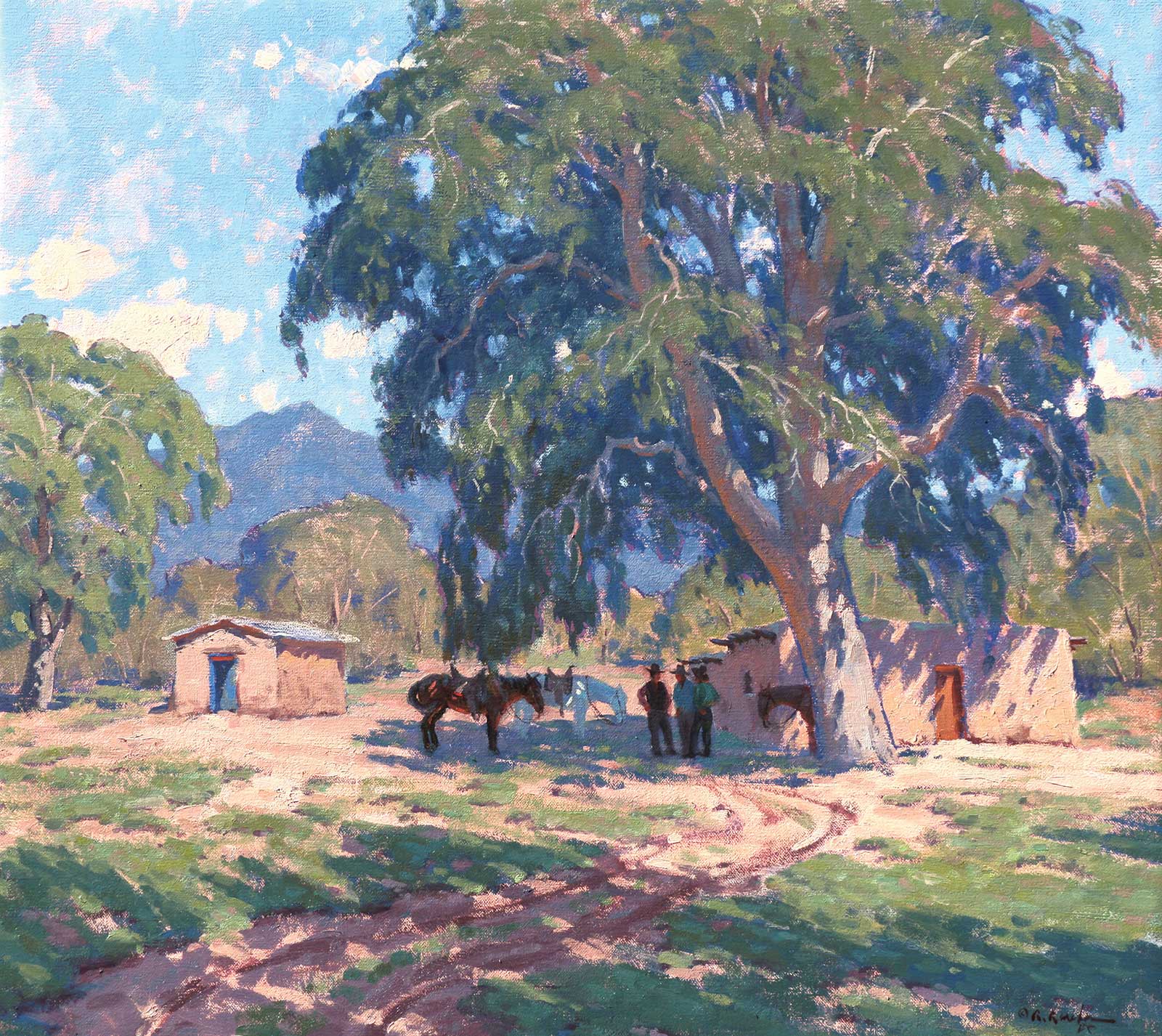
Ron Rencher, Seeking Shade, oil on linen, 22 x 20 in.
Chavez will be showing Double Down, which was the result of an extended period of inactivity in the artist’s studio. “With my brushes, canvases and paints inaccessible during several weeks away from the studio, I found time for reflection and consideration about what I was doing with my art. I broke my routine, took time for research and took time to play. In doing so, I gained a sense of objectivity and excitement toward my work. I found that I very much liked what I had been creating, but I also discovered an opportunity and avenue to distill my unique style even further,” he says. “The title serves as a personal manifesto to ‘double down’ on what defines my art, my commitment to it and to build upon my artistic identity. This painting marks the beginning of what I believe will show a noticeable change in my work—bold, confident, and even more distinctly the style of S.M. Chavez.”
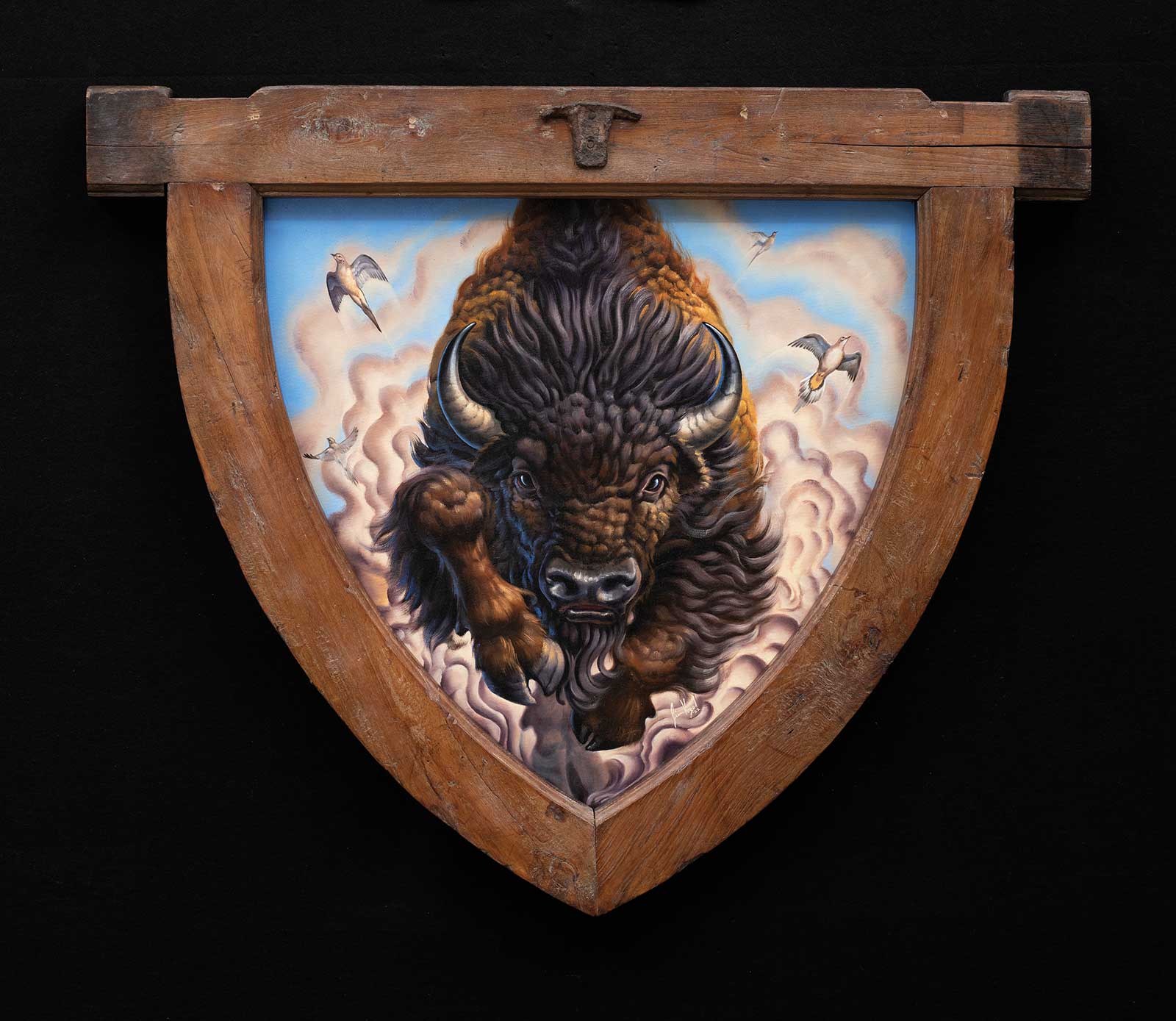
Jim Vogel, Buffalo Wings, oil on canvas panel in antique arched window frame, 26½ x 28 in.
Another New Mexican artist in the show is Jim Vogel, who is based in the small town of Dixon, which is nestled between Española and Taos north of Santa Fe. He will be showing Buffalo Wings, an image that was first inspired by the frame that contains it. “I started noticing how many artists do buffalo images, and I started to think how I could do it differently. Then [my wife] Christen and I found this salvaged doorway made with antique wood. Part of the frame looked like a bison running right at you when it was turned upside down. Usually I do the paintings first and then Christen will come up with the frames next, but this was a case where the frame came first and then informed the painting,” he says. “I finished the buffalo but it needed something. I didn’t know what it was, but when I took our two dogs out for a walk I was noticing how the mourning doves would explode from the brush under our feet as we walked. That is what inspired the birds in the painting. Later, while renovating a property with my son, we found this great piece of rusted iron that looks like a steer head that we mounted to the frame.”
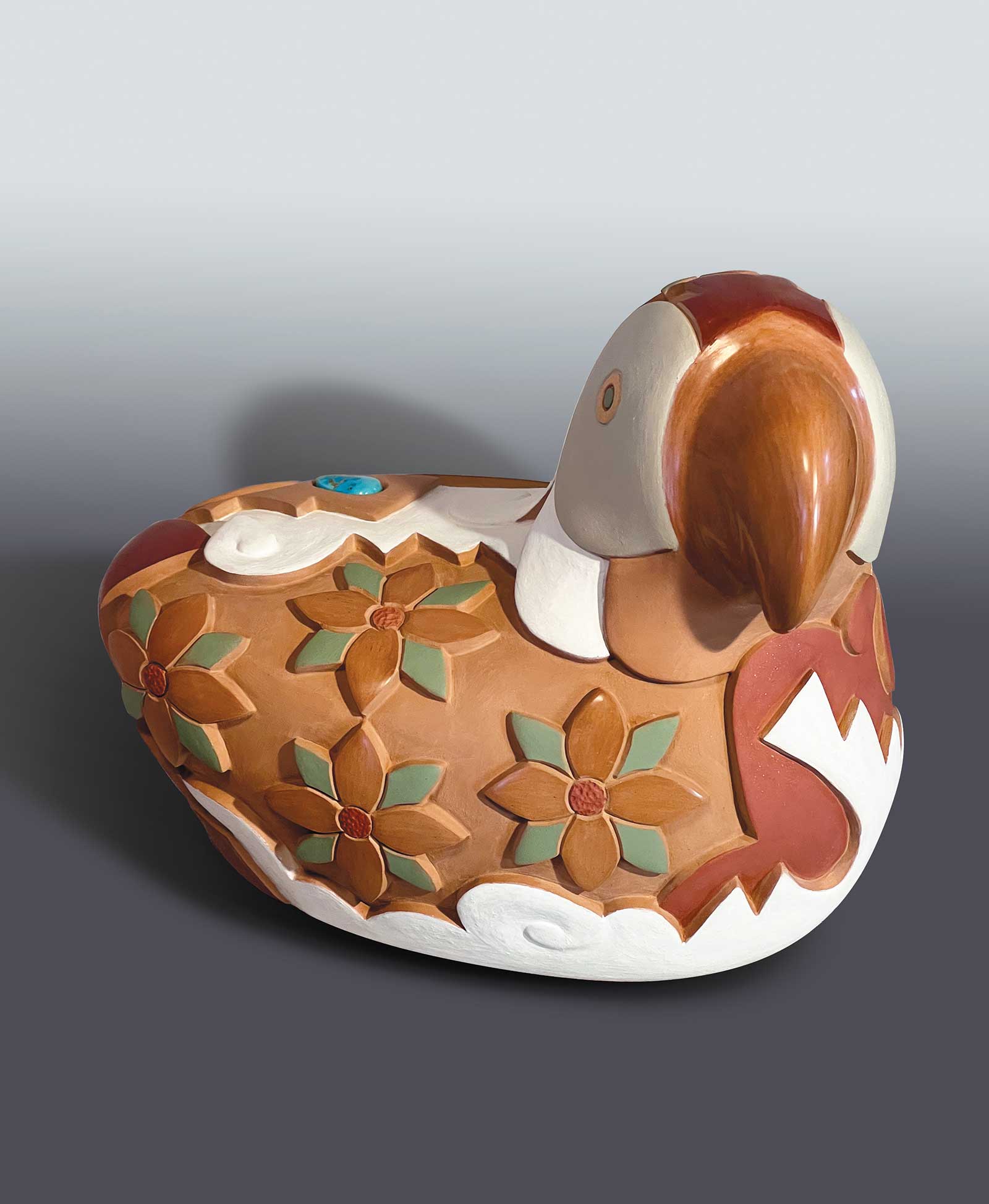
Autumn Borts-Medlock (Santa Clara Pueblo), Pueblo Cloud Parrot, hand-coiled clay, 6¼ x 7½ x 4¾ in.
Vogel adds that his inspiration often goes beyond Western art—into Spanish art, folk and regional art, and wood carvings—but says a place like the Couse-Sharp Historic Site is important because it unifies art in Northern New Mexico. “The Taos founders are always there in my visual catalog. It’s always exciting to walk through the site, especially with [executive director] Davison Koenig, who is so good at giving you the sense of the place and what it was like,” he says. “That place is vital to New Mexico and the West.” —
La Luz de Taos
Through June 15, 2024
Exhibition reception, art preview and open house, June 14
Gala and art sale, June 15, El Monte Sagrado Resort
Couse-Sharp Historic Site,
138 and 146 Kit Carson Road, Taos, NM 87571
(575) 751-0369, www.couse-sharp.org
Powered by Froala Editor


