Earlier in his career, Luke Anderson painted more traditional Western imagery—cowboys and cowgirls, animal skulls, wildlife—but over time landscapes have become his primary focus. “A lot of what I do now emphasizes flatness as I abstract and simplify, but the overall senses of design and composition and forms and massing comes from the influence of historical Western painters that I was always drawn to,” says Anderson.
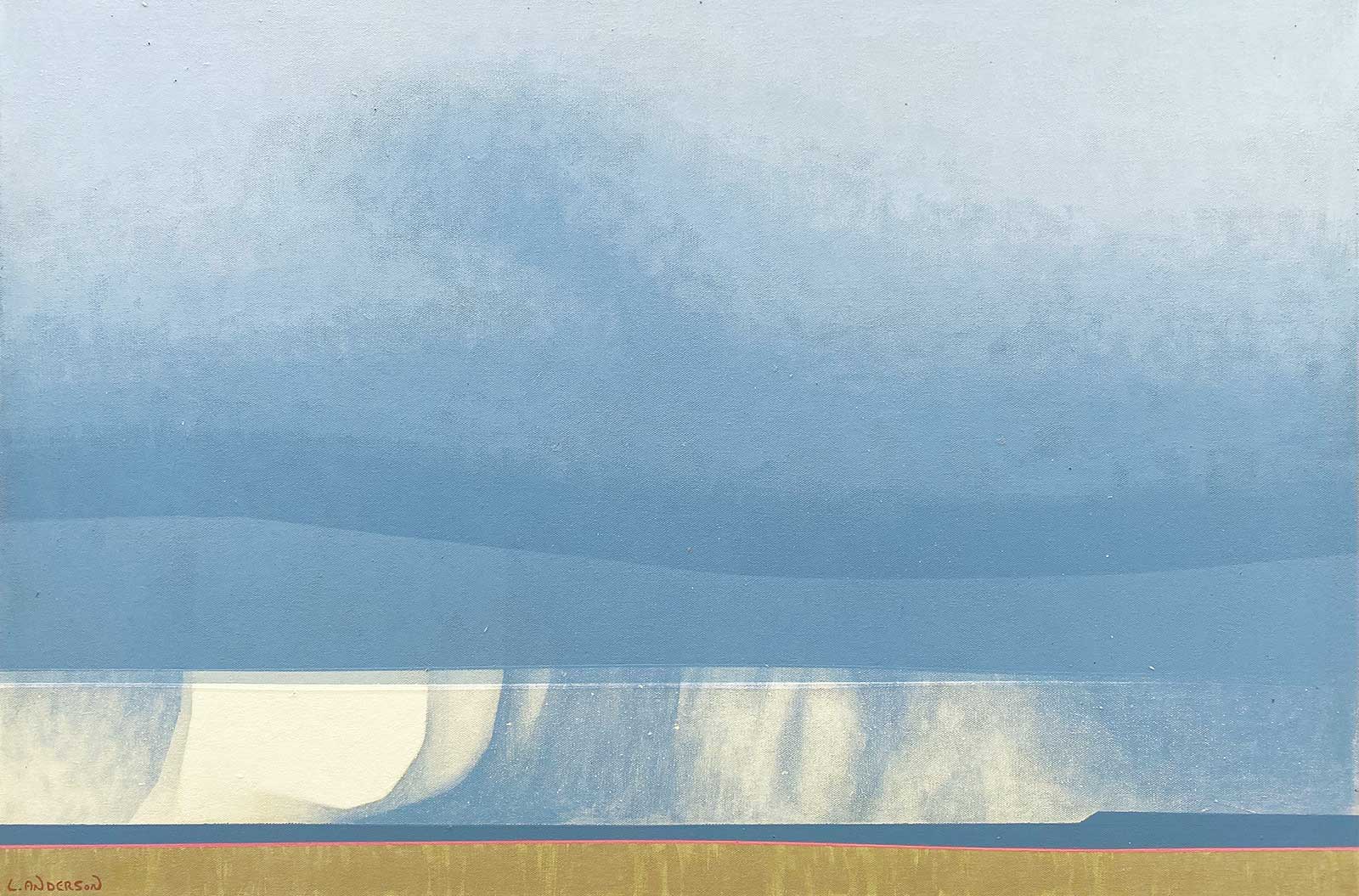
Luke Anderson, Prairie Rains, acrylic and oil on canvas, 24 x 36 in.
Later, Anderson discovered contemporary Western painters like the late Ed Mell and Logan Maxwell Hagege, who showed him that Western art can break the mold, and be bold and exciting. “So I suppose the more ‘traditional’ Western themes and aesthetics I was inspired by were already quite modern which I think set me on a pretty clear path to where I am today,” he says.
Today he is squarely in the company of contemporary painters who are redefining our notions of what constitutes Western art, and transcending the confines of the genre entirely. Anderson’s recent landscapes range from the more painterly to the highly graphic with a minimalistic style running throughout, as can be seen in Prairie Rains and Drifters.
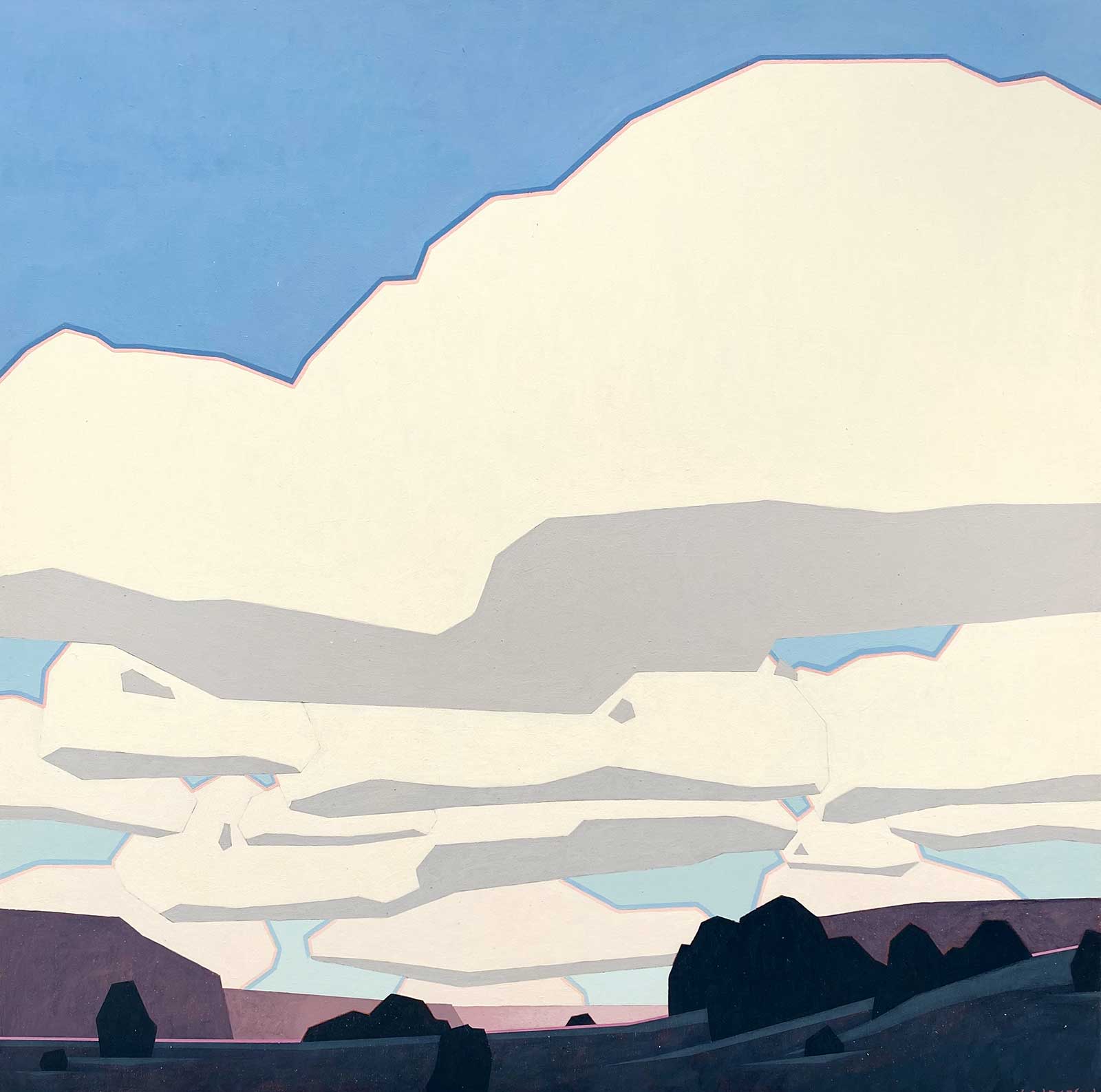
Luke Anderson, Drifters, acrylic and oil on canvas, 36 x 36 in.
“One of the things that I find fascinating about art is just the endless possibilities—how the same scene can be interpreted and presented in so many different ways and yet we are still able to recognize it,” says Anderson, adding that he often does multiple versions of a painting, stripping it down until only its essence remains. “Ultimately I’m trying to convey vastness, great distances and heights and depths and masses…My work is my way of an unending quest to understand the planet I live on, and I think I tend to portray those things that I find most awe-inspiring in nature.”
Anderson will be showing his latest landscapes in a June show at Gallery Wild in Jackson, Wyoming, alongside fellow contemporary Western artist Christy Stallop.
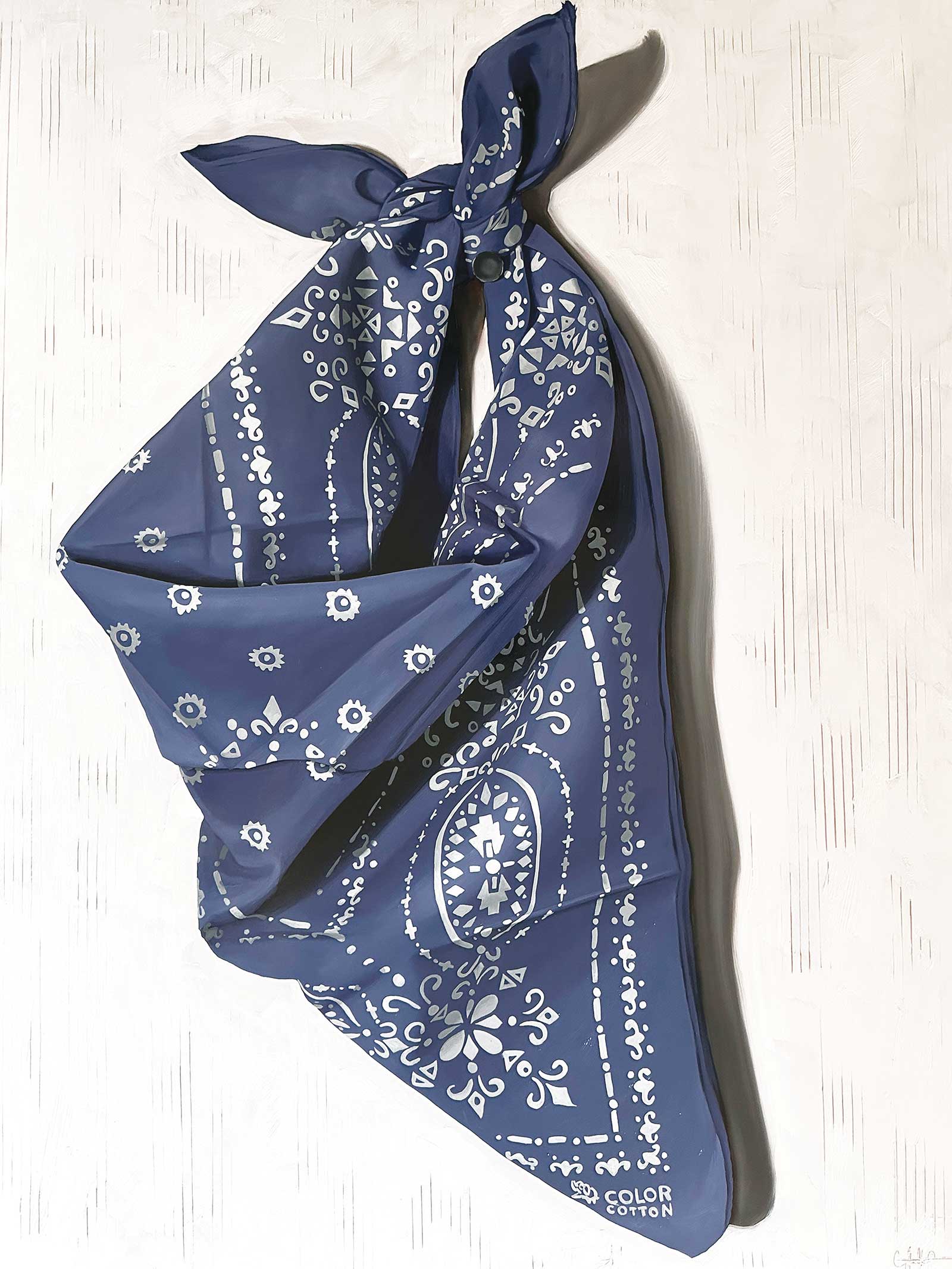
Christy Stallop, Blue Friend, oil on wood panel, 40 x 30 in.
Stallop is primarily a still life artist who takes a minimalistic approach to her highly realistic renderings of objects, many of them associated with the Western way of life. Rather than depicting a bandana or cowboy hat or horseshoe in situ, they are placed against simple backgrounds with subtle textures or subdued patterns.
Stallop didn’t intentionally set out to be a Western artist, but having spent most of her life in Texas, she had always been deeply immersed in ranching culture, so she started painting what she knew—and already had around the house. “My goal was and is to create a quiet reflection of these iconic Western objects, allowing the subject to tell their own story independently,” Stallop explains.
One of Stallop’s favorite subjects is the bandana. “Each bandana seems to have its own personality,” says Stallop. “The way it hangs, the design work, and the wear and tear of the cloth all go into making the subject unique and challenging.” Stallop emphasized the stylized shape of the hat in Stetson by setting it against patterned vintage wallpaper.
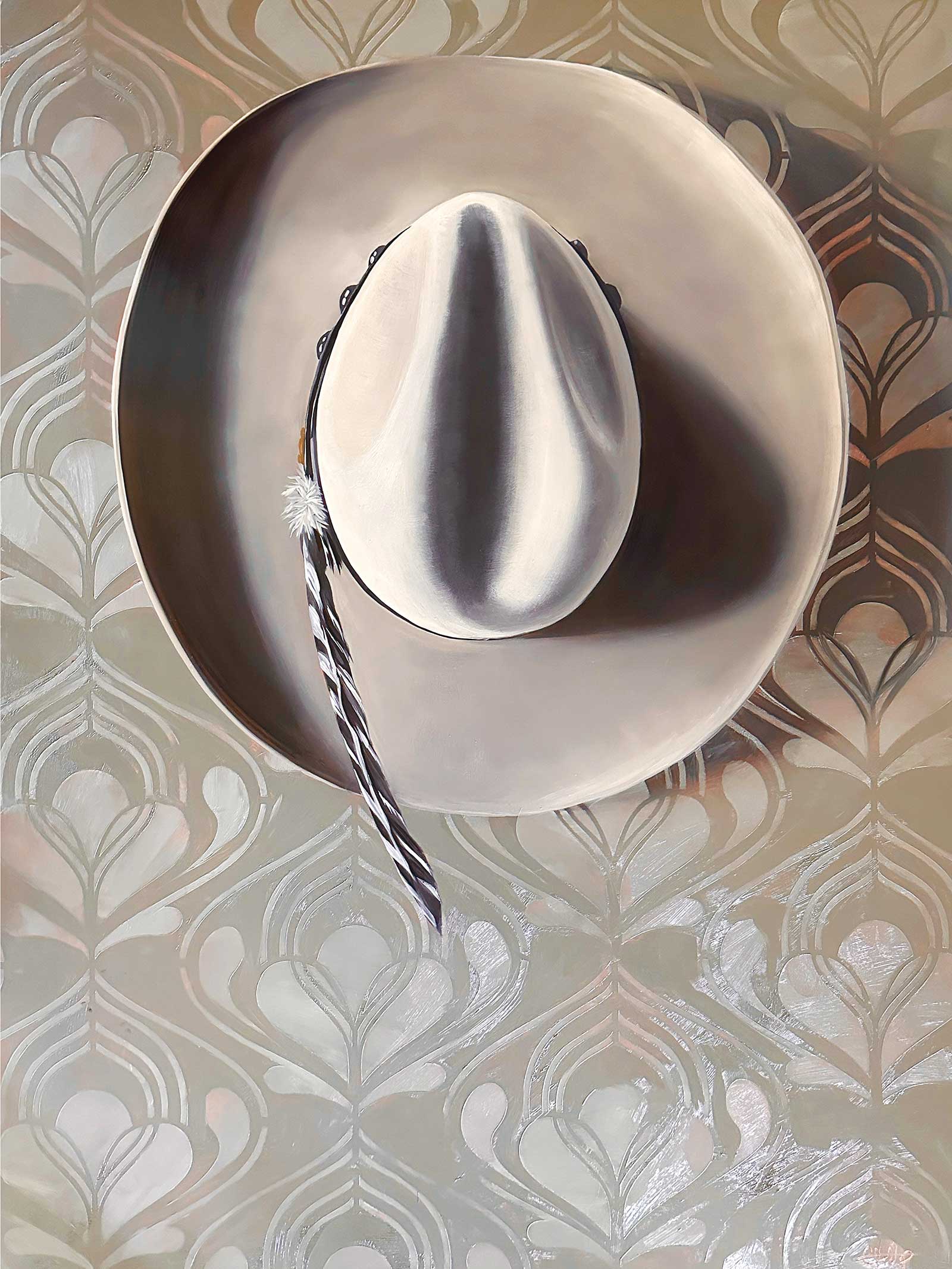
Christy Stallop, Stetson, oil on wood panel, 40 x 30 in.
“By elevating these objects as the subjects of my work I intend to draw the viewer into quiet reflection where they can apply their own history to the subject. It can evoke emotions, feelings, and an appreciation for these everyday objects that might otherwise be overlooked.”
Visions of the Neo-West opens with a reception on June 6 from 5 to 8 p.m. and hangs through June 16. —
Gallery Wild 80 W. Broadway Avenue, Jackson, WY 83001, (307) 203-2322, www.gallerywild.com
Powered by Froala Editor


