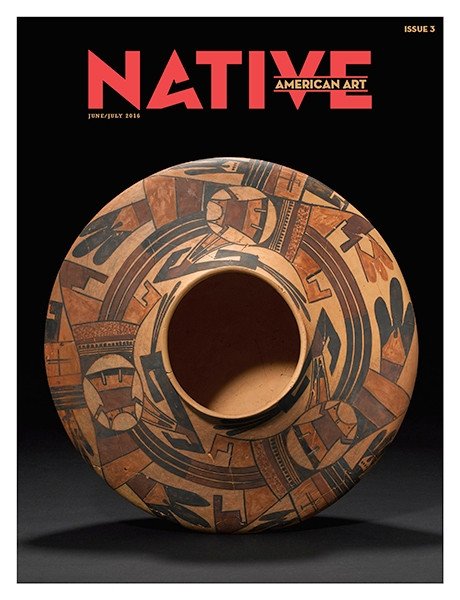
Proving that Western art is a universal language in the United States, a major new exhibition about the West and Southwest is open in Maine, a state known more for its lighthouses and lobsters than its desert canyons and sagebrush. Painted: Our Bodies, Hearts, and Village is now on view at the Colby College Museum of Art in Waterville, Maine.
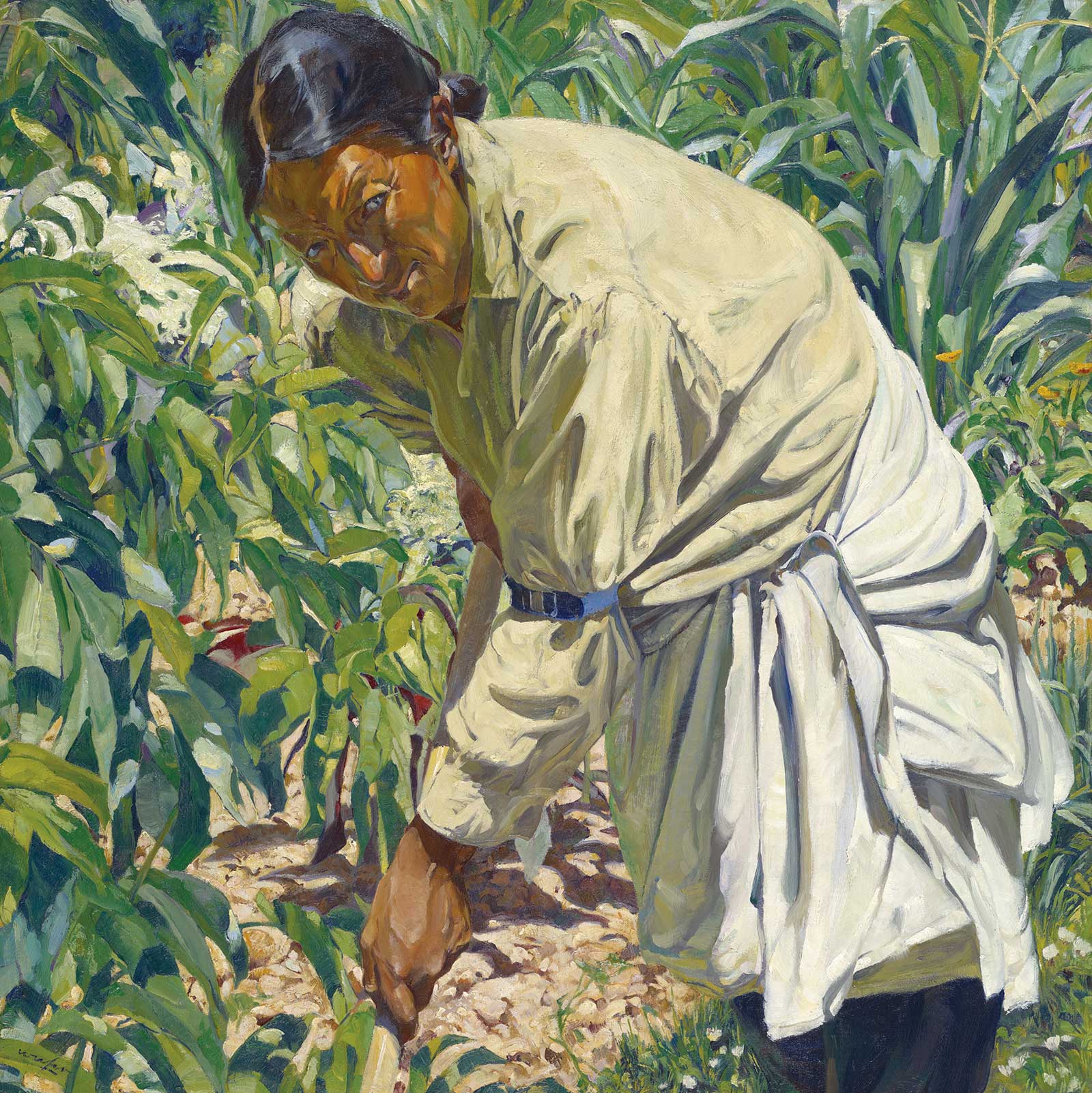 Walter Ufer (1876-1936), In His Garden, 1922, oil on canvas, 30½ x 30½”. The Lunder Collection, 285.2008.
The exhibition, drawn largely from the museum’s Lunder Institute for American Art, will highlight artwork from around the West, but will focus on Taos and the Taos Pueblo, both in Northern New Mexico. Works by the Taos Society of Artists—including Walter Ufer, Victor Higgins, Ernest L. Blumenschein and Joseph Henry Sharp—will be on view, but special attention will also be paid to Indigenous artists from the region. The exhibition contextualizes the works of the visiting artists within the framework of the Taos Pueblo and its people.
“We see it as telling a fuller and more reparative and redemptive story, a pueblo-centered story,” says Siera Hyte, the Colby Museum’s assistant curator of modern and contemporary art. “To help us tell these stories, we convened an advisory council that included both pueblo and Wabanaki advisors who were instrumental in talking through different interpretations of the artwork.”
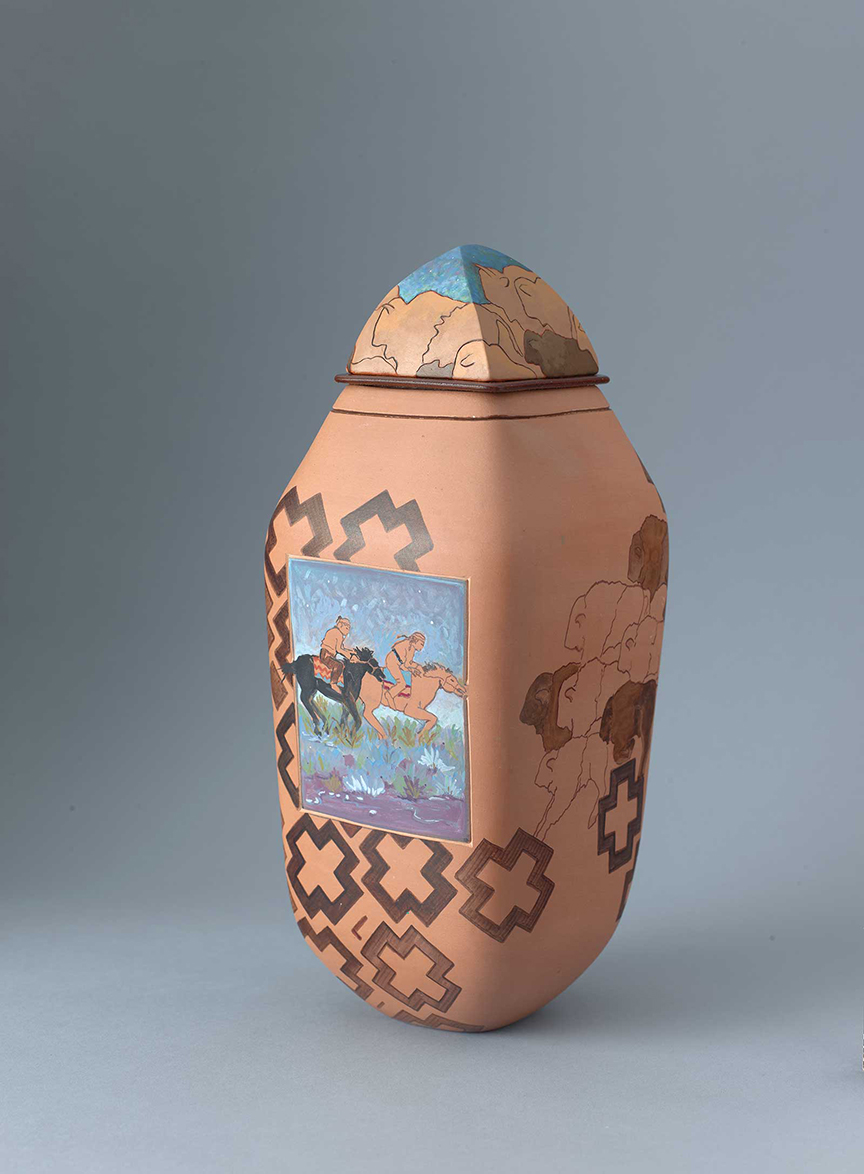
Jody Naranjo Folwell (Santa Clara Pueblo/Tewa), Ghost Hunters, ca. 2015, redware, 16 x 6½ x 6½”. Museum purchase from the Jere Abbott Acquisitions Fund, 2022.063.
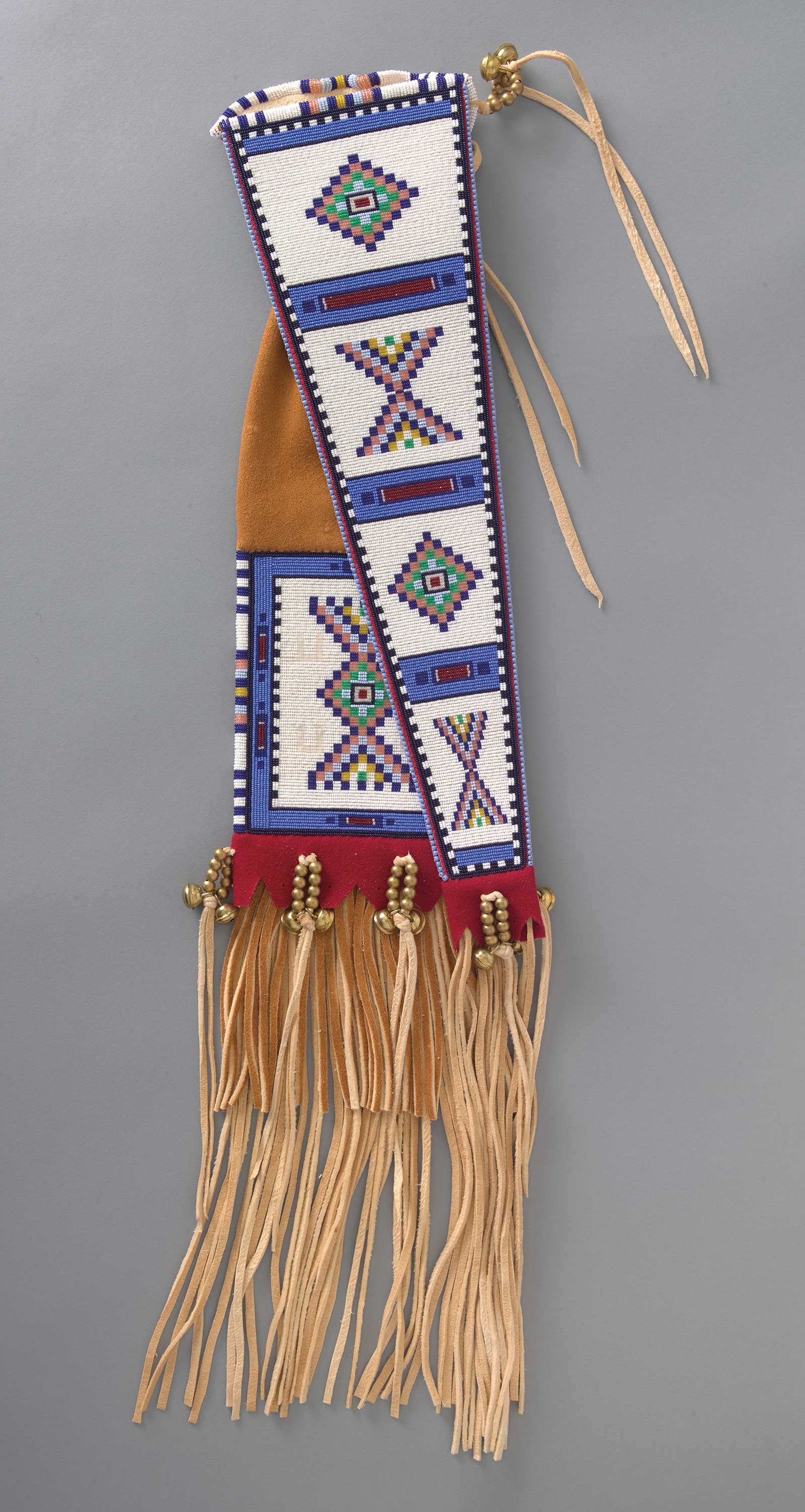
Jessa Rae Growing Thunder (Fort Peck Dakota/Nakoda), Assiniboine (Nakoda) Pipe Bag, 2022. Smoked brain-tanned buckskin, antique seed beads, wool, brass bells, brass beads, 27½ x 5½”. Museum purchase from the Jere Abbott Acquisitions Fund, 2022.068
The exhibition is curated by Hyte and 2021-22 Lunder Institute research fellows Juan Lucero (Isleta Pueblo) and Jill Ahlberg Yohe. Hyte notes that the exhibition features around 75 objects and works of art with more than 30 people contributing to the wall labels. The exhibition aims to be a celebration of both sides of Taos’ rich artistic history: the visitors that helped build the Taos Art Colony and the Indigenous people whose culture and traditions still remain there today.
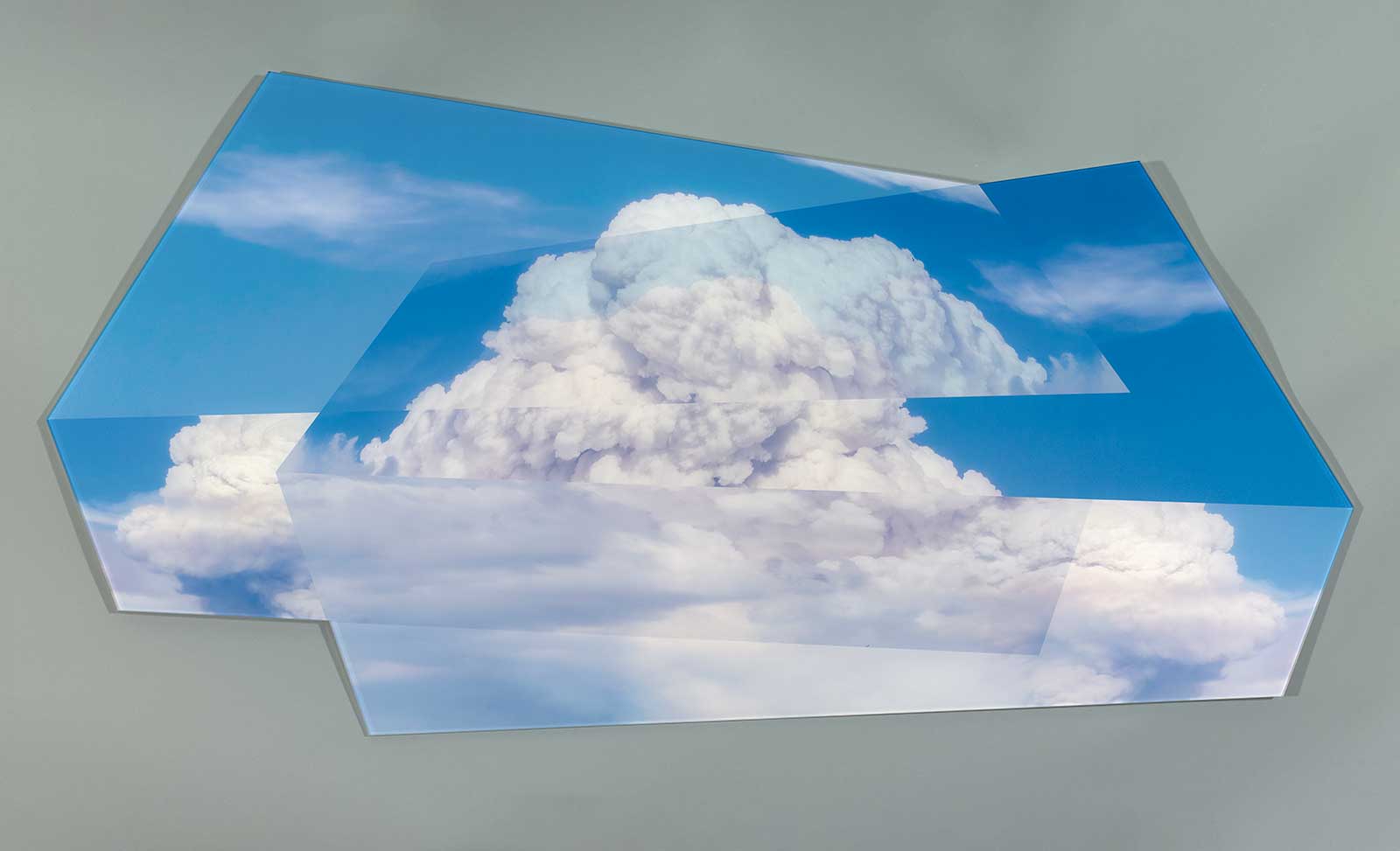
Michael Namingha (Tewa/Hopi), Altered Landscape 15, 2022, chromogenic print on shaped acrylic mount, 25 x 50 x 1”. Museum purchase from the Jere Abbott Acquisitions Fund, 2022.065.
Native American artists represented in the show include jeweler Ken Romero, painters Dan and Michael Namingha, multimedia artist and painter Pop Chalee, basketmaker Sarah Sockbeson, bead artist Jessa Rae Growing Thunder, photographer Cara Romero and potters Diego Romero and Jody Naranjo Folwell, as well as many others. Their works will be on display next to prominent works by many of the Western greats, providing a richer picture of the Southwest.
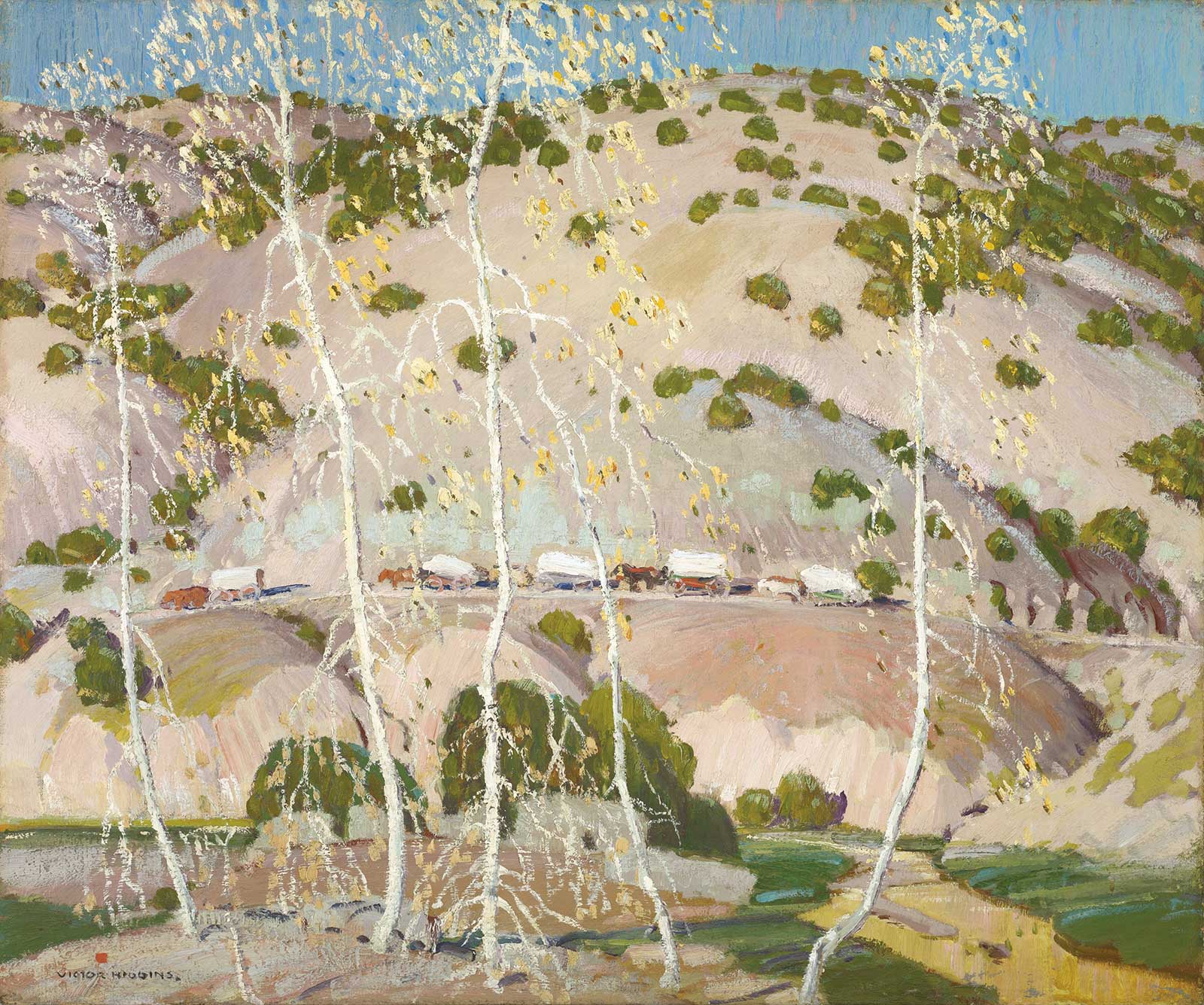
Victor Higgins (1884-1949), Ute Park Freighters, 1922-23, oil on canvas, 25⅛ x 30¼”. The Lunder Collection, 2013.140.
Visitors will easily pick out echoes of the past in new works, and view exchanges shared between different works of art. An example of this includes John Marin’s loosely painted watercolors of New Mexico and Tony Abeyta’s modernist oil paintings of pueblos and desert skies. Separated by nearly a century, the two artists’ works are linked in their interpretation of the land and its beauty.
The exhibition will remain on view through July 28, 2024. —
Painted: Our Bodies, Hearts, and Village
Through July 28, 2024
Colby College Museum of Art, 5600 Mayflower Hill Drive, Waterville, ME 04901
(207) 859-5600, museum.colby.edu
Powered by Froala Editor