Piegans (1908) by Charles M. Russell is one of his finest examples of an early “breakout” work of art. Masterfully executed, it is a demonstration of the artist reaching a new higher level of career accomplishment in oil on canvas. Utilizing his fast-maturing paintbrush techniques and compositional skills, Russell in 1908 captured an intriguing combination of light interacting with both landscape as well as iconic bead-decorated Piegan braves on the move. These elements contributed a special rising sense of empathy by Russell as he exhibited ever greater respect for the culture of Native American tribes moving across the northern Montana territory. In sum, it is powerfully complementary to an earlier, slightly smaller-sized, nevertheless unusually strong composition that one sees in his 1906 oil When the Plains Were His.That painting is now a central feature of the Haub Family Collection of the Tacoma Art Museum.
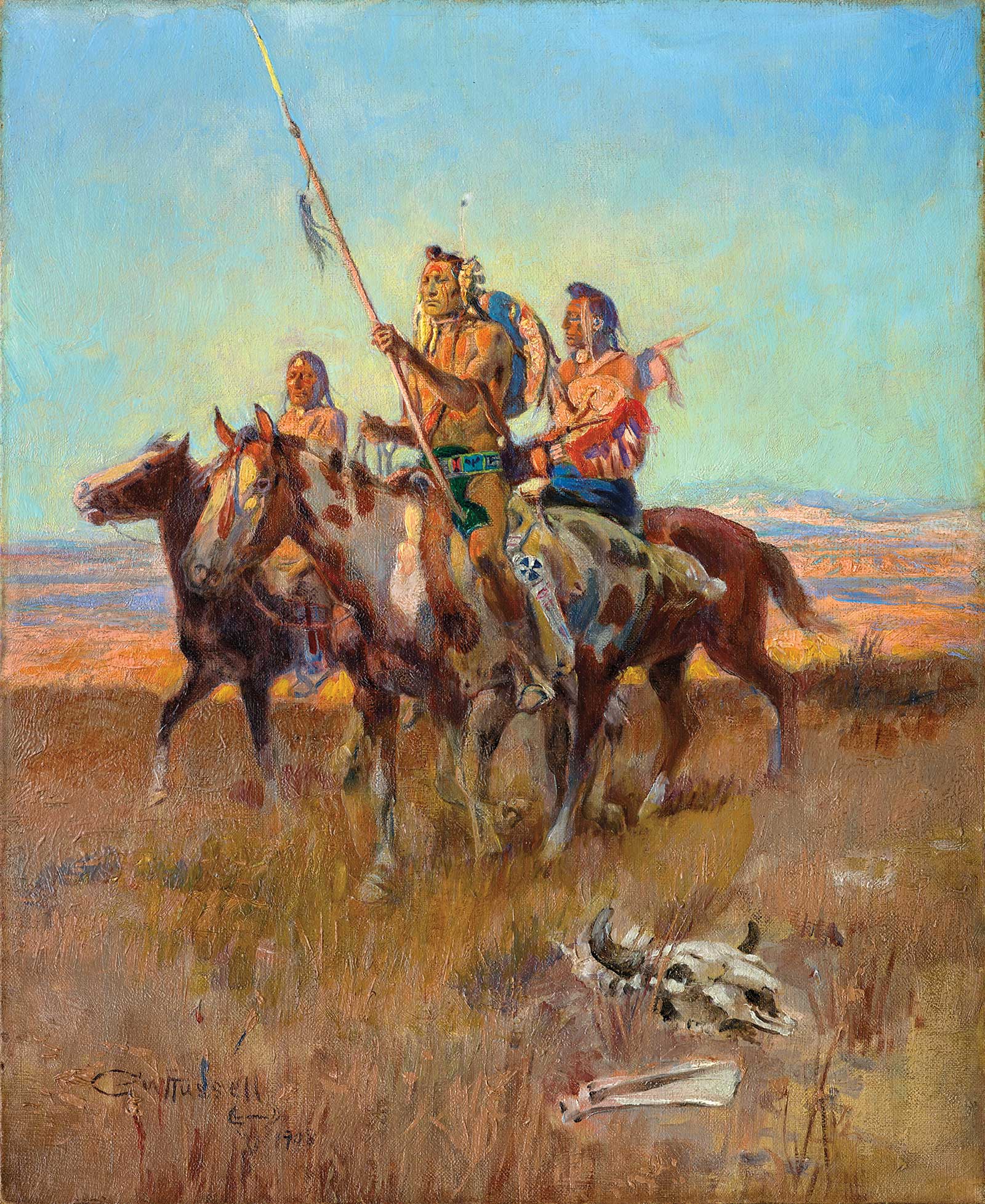 FIGURE 1 Charles M. Russell (1864-1926), Piegans, 1908, oil on canvas, 17½ x 14¼”Russell’s completion of Piegans (1908) occurred during his fifth year of consistently rapid improvement in his artistry. Back in the spring of 1904, having spent about six weeks in a series of meetings in New York City with a half dozen or more illustrators and other artists, Russell returned to Great Falls, Montana, motivated and freshly equipped to “up” his game. That year he completed a special 24-by-36-inch work titled The Gunfighters (alternatively titled Death of a Gambler). It may have been inspired by Russell witnessing the firing of “live bullets” in a shooting-up incident (without casualties) on 42nd Street in Midtown Manhattan in the immediate neighborhood of Russell’s hotel and the Will Crawford/John Marchand studio. The painting can be seen as a Russell statement about the aiming accuracy of Western gunfighters he had actually known. In the same year, he painted other very effective works. The Broken Rope (1904) was similarly sized to The Gunfighters and reflected his cowboy experiences dealing with truly wild longhorn “mad cows” that had lost calves to wolves. Another involved a slightly smaller, yet intensely action-packed horseback lassoing scene titled Roping a Wolf (1904).
 In Nancy Russell’s biography of Charlie titled Back-Tracking in Memory, she proudly describes her 1904 milestone marketing success in selling an oil painting in New York at almost four times the roughly comparable sale prices she was achieving back in Great Falls. As Nancy recounts on Pages 107 to 109 in that memoir:
“ Our buyer was very pleased with his purchase, and he made it the first step toward a successful trip East for us. Our visit in New York became a yearly event for us. Mr. Crawford [and John Marchand’s] studio there was Charlie’s to work in. This was fine, because Charlie had no chance to get homesick…Charlie loved to get a crowd of artists together and have them all talk about their own work. He invited them to visit him in Montana, where he said he could show them the country. Even if the life had changed, he could tell them about it…how he never overlooked an opportunity to study animals and people from life.”
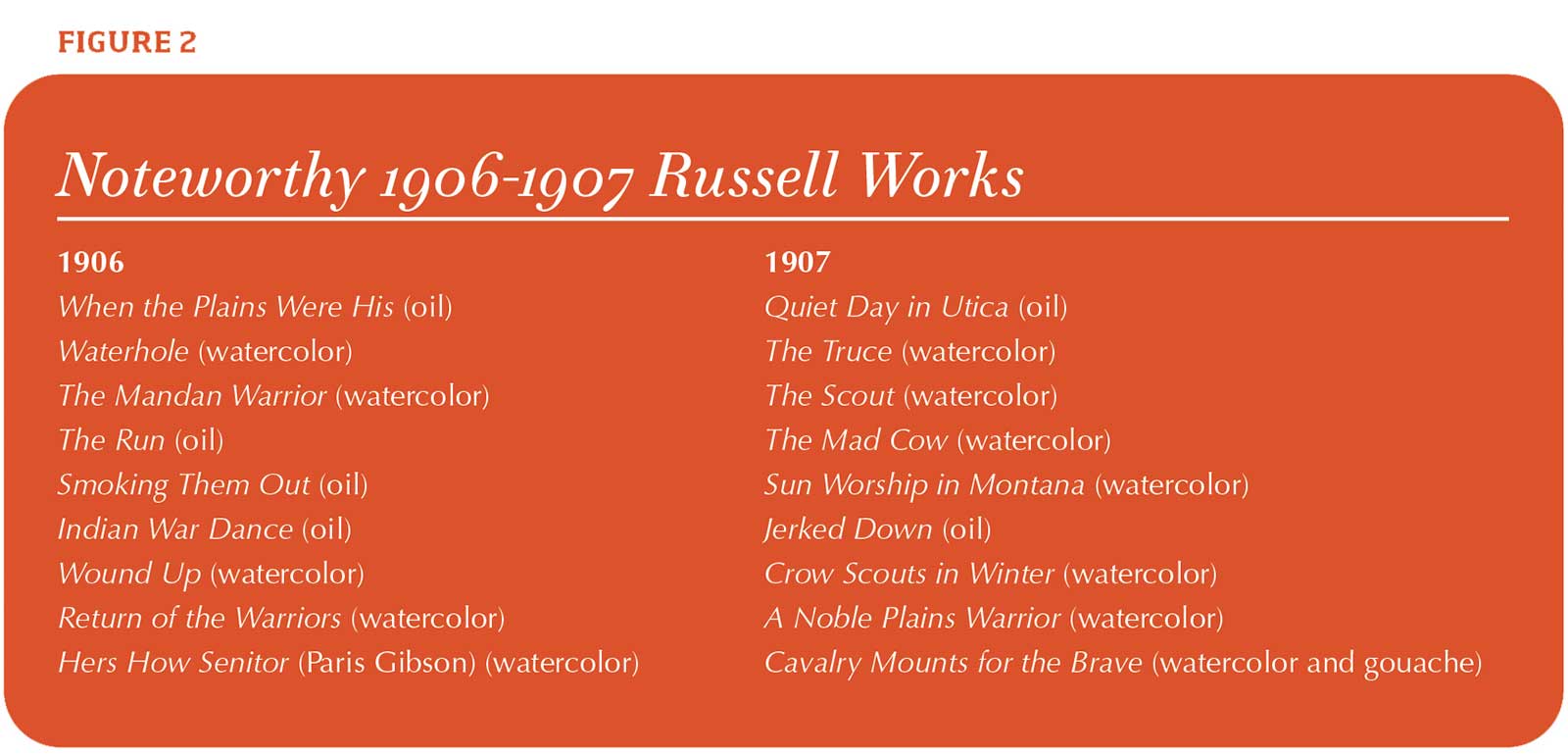
 In 1905, Charlie and Nancy made a return trip to New York and the benefit of Russell’s previous and ongoing conversations with his artist friends again began to emerge in his output for that year. Among others, this can be seen in Women of the Plains, Wild Horse Hunters, Lewis & Clark on the Lower Columbia, When I was a Kid, Bridgers Men, Blackfeet Burning Crow Buffalo Range. Both the quality and variety of Russell’s work were discernably improving. This trend continued throughout the following two years with noteworthy works in both oil and watercolor (see Figure 2).
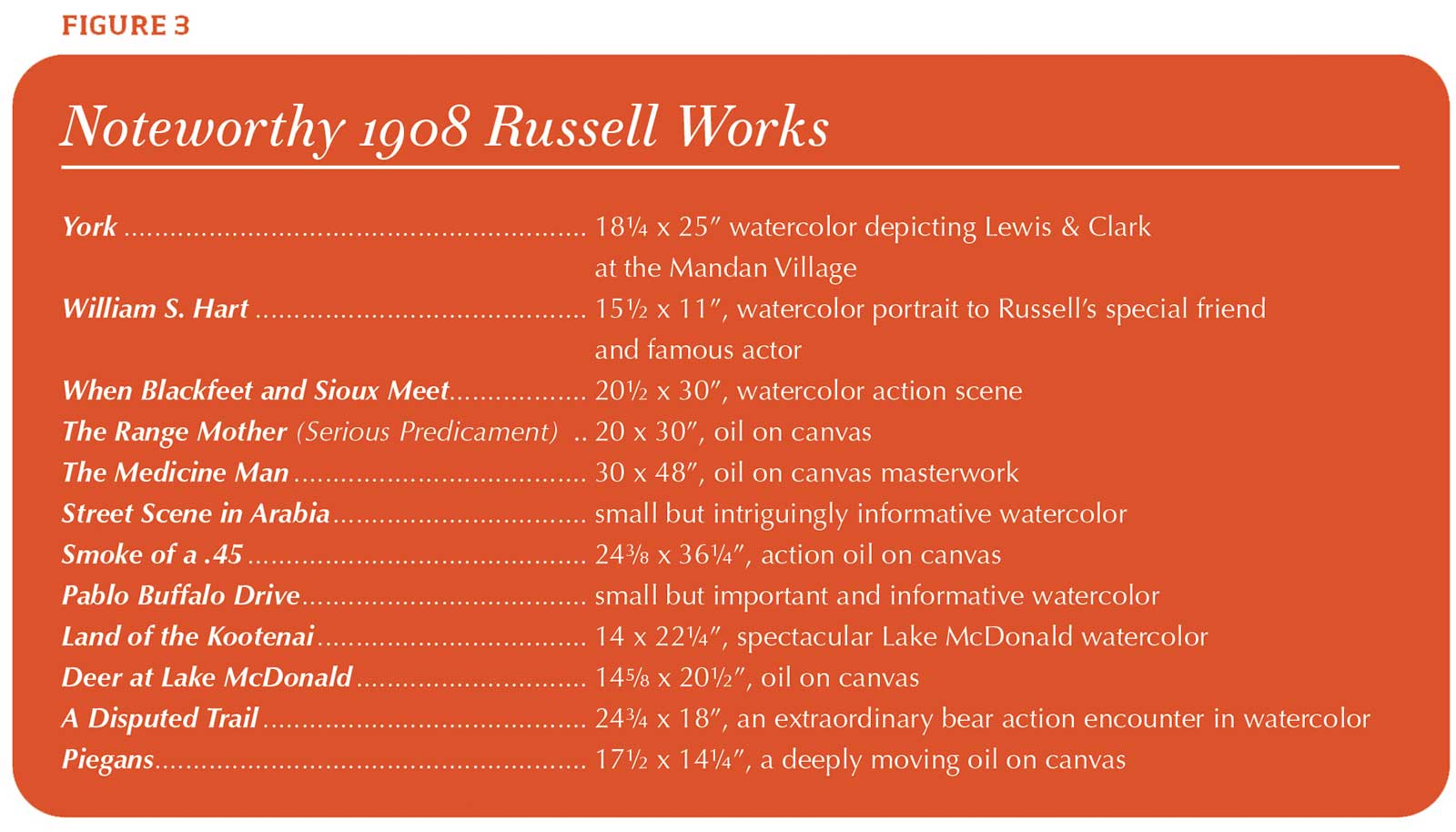
By 1908, Charlie’s widening scope of creative output became fully evident due in part to the Russells’ now-regular annual New York trips. This can be seen in the works listed in Figure 3. As a result, during the four-year period following the Russells’ momentous, even life-changing, 1904 experiences in New York, Charlie completed more than a dozen iconic paintings that are now featured in the permanent collections of more than a half dozen leading Western art museums and major private collections. Many, if not most, works painted during those years were meant to be sold to generate Charlie and Nancy’s much-needed annual income as well as to ultimately provide funding to build Bull Head Lodge, the Russells’ beloved summer home at Lake McDonald inside what is now Glacier National Park.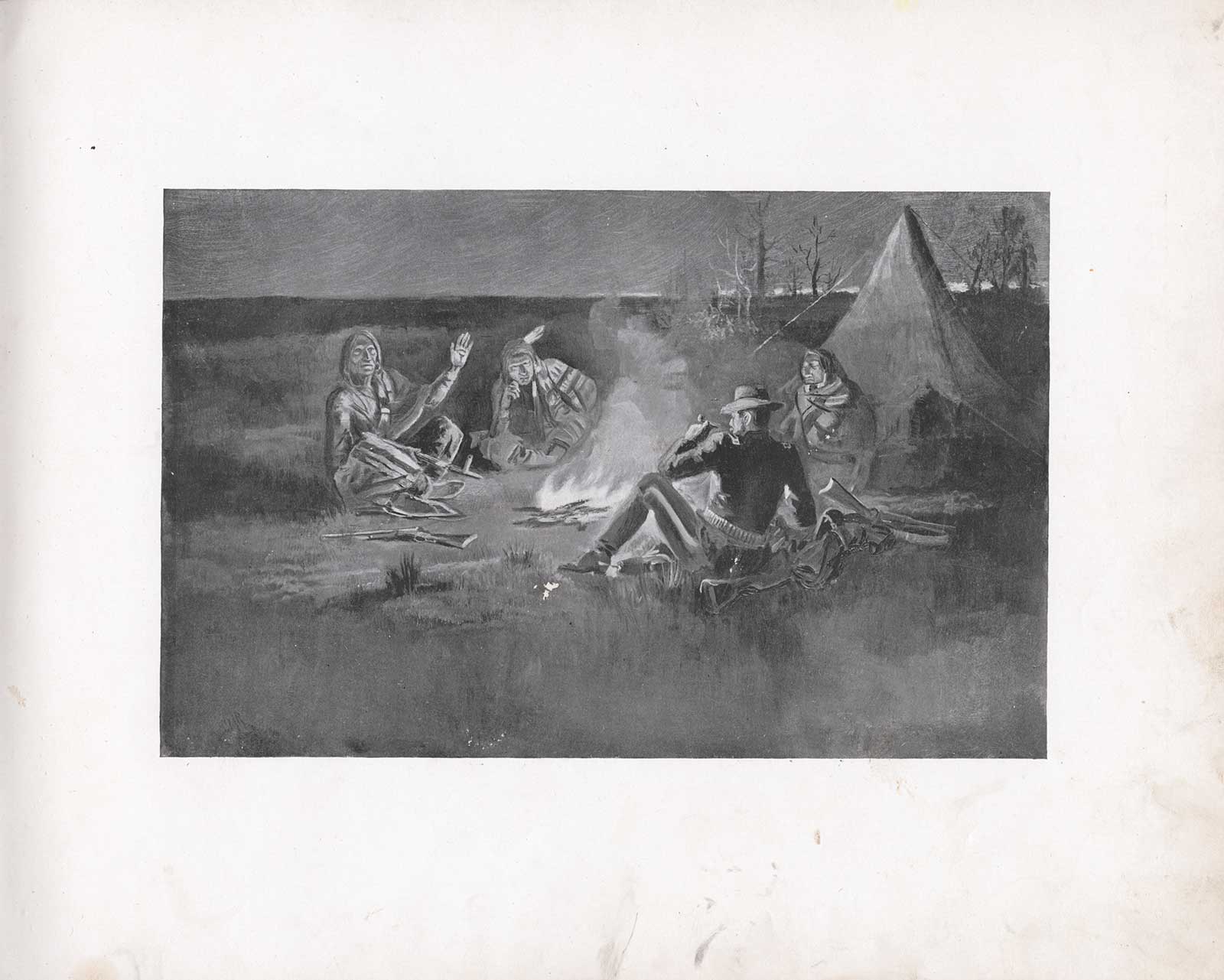 FIGURE 4 Charles M. Russell (1864-1926), An Evening With Old Nis-sÚ Kai-yo, ca. 1894, oil on canvas, black and white, 11¾ x 17¾”, signed: ‘CMR l.l.’ Nevertheless, it is a particularly noteworthy contrast that Piegans (1908) was not sold immediately, rather it was kept and enjoyed by Charlie and Nancy as a very special career accomplishment. It would still be subject to what Nancy might consider to be a compelling sale price. The occasion for a sale presented itself in 1912 at the first Calgary Stampede. As Russell scholar Brian Dippie has described in “Capturing Western Legends Russell and Remington and the Canadian Frontier” in Alberta History (Spring 2004, Volume 52, Issue 2): “Russell’s sales at the 1912 Calgary Stampede were nothing short of astounding. Thirteen of 20 paintings listed in his catalog…found buyers, and two buyers accounted for nine of the paintings sold. Sir Henry Mill Pellatt of Toronto purchased four oils and a watercolor; his taste ran to cowboys at work and play. An Englishman identified as A. M. Grenfell by Nancy Russell bought three oils and a watercolor, all Indian subjects. Shortly thereafter these latter works surfaced in the possession of Alick C. Newton, another Englishman of high birth who managed the estates of Alberta cattleman [and Calgary Stampedeco-founder] Pat Burns.”
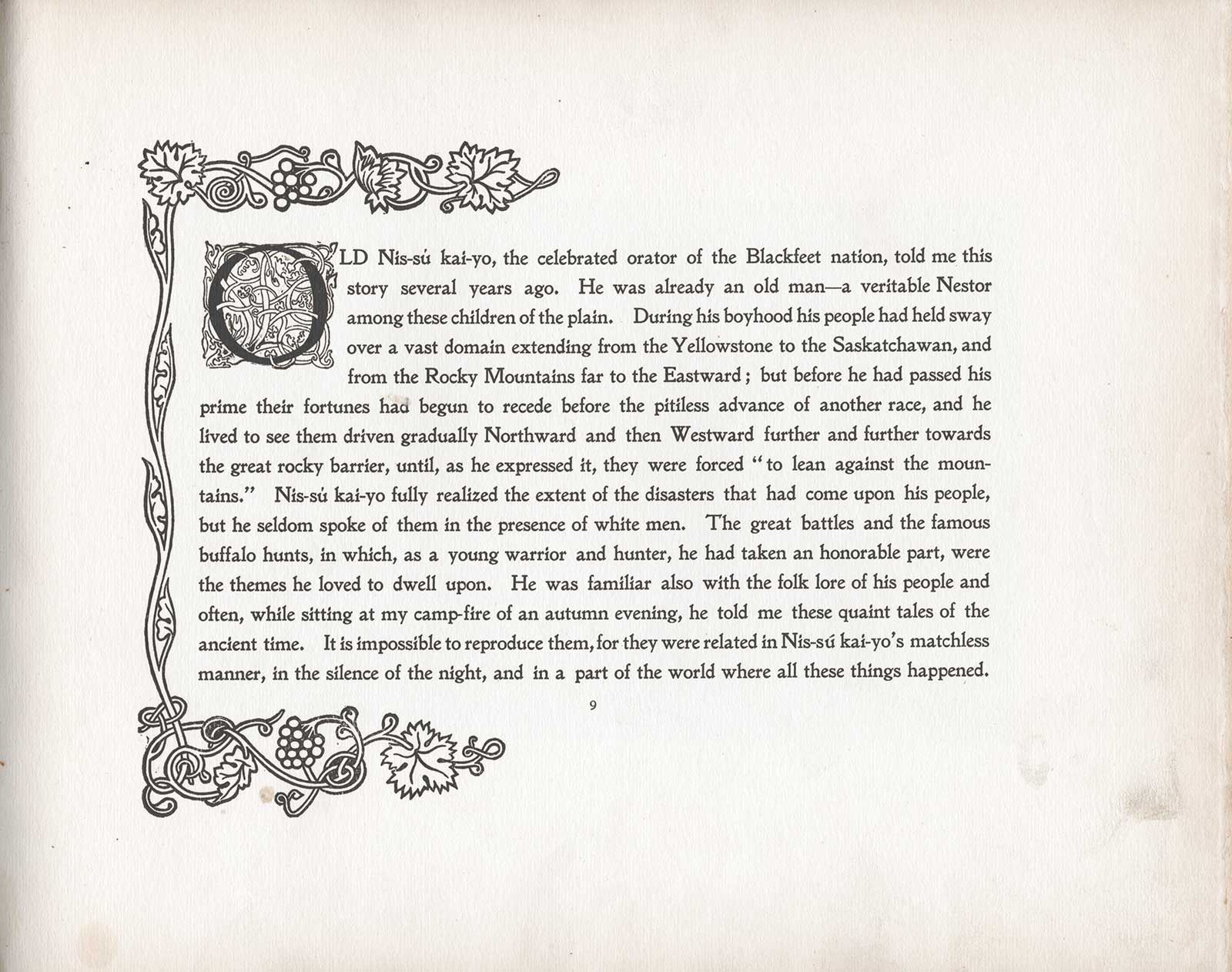 FIGURE 5 John H. Beacom’s introduction to his book How the Buffalo Lost His Crown.
Intriguingly, the Grenfell family was J.P. Morgan’s partner in his London investment banking operations (aka Morgan Grenfell). Why and how the transfer of title to these paintings (including Piegans [1908]) so quickly passed to Alick Newton is not clear, but most likely these were purchased on behalf of Newton and then remained in the Newton family for 93 years. The Newton family’s acquisitions represented an astute recognition of Charlie Russell’s ever-deepening affinity for and empathy in depicting the lifestyle and values of the nomadic Northern Plains Indians. This was especially the case for members of the Blackfoot Confederacy. Russell’s early focus on these tribes is probably attributable in large part to what he had learned in the mid-1890s while providing extraordinarily creative images for a rare book titled How the Buffalo Lost His Crown. This book was published and copyrighted in 1894 by John H. Beacom. An 1882 graduate of the United States Military Academy at West Point, Lieutenant Beacom had been stationed in the late 1880s at Fort Shaw just a few miles upstream from Great Falls on the Sun River. An Evening With Old Nis-sú Kai-yo (Figure 4) reveals Lieutenant Beacom was a fully engaged and particularly empathetic witness to revealing storytelling experiences, as he describes in the book’s introduction (see Figure 5).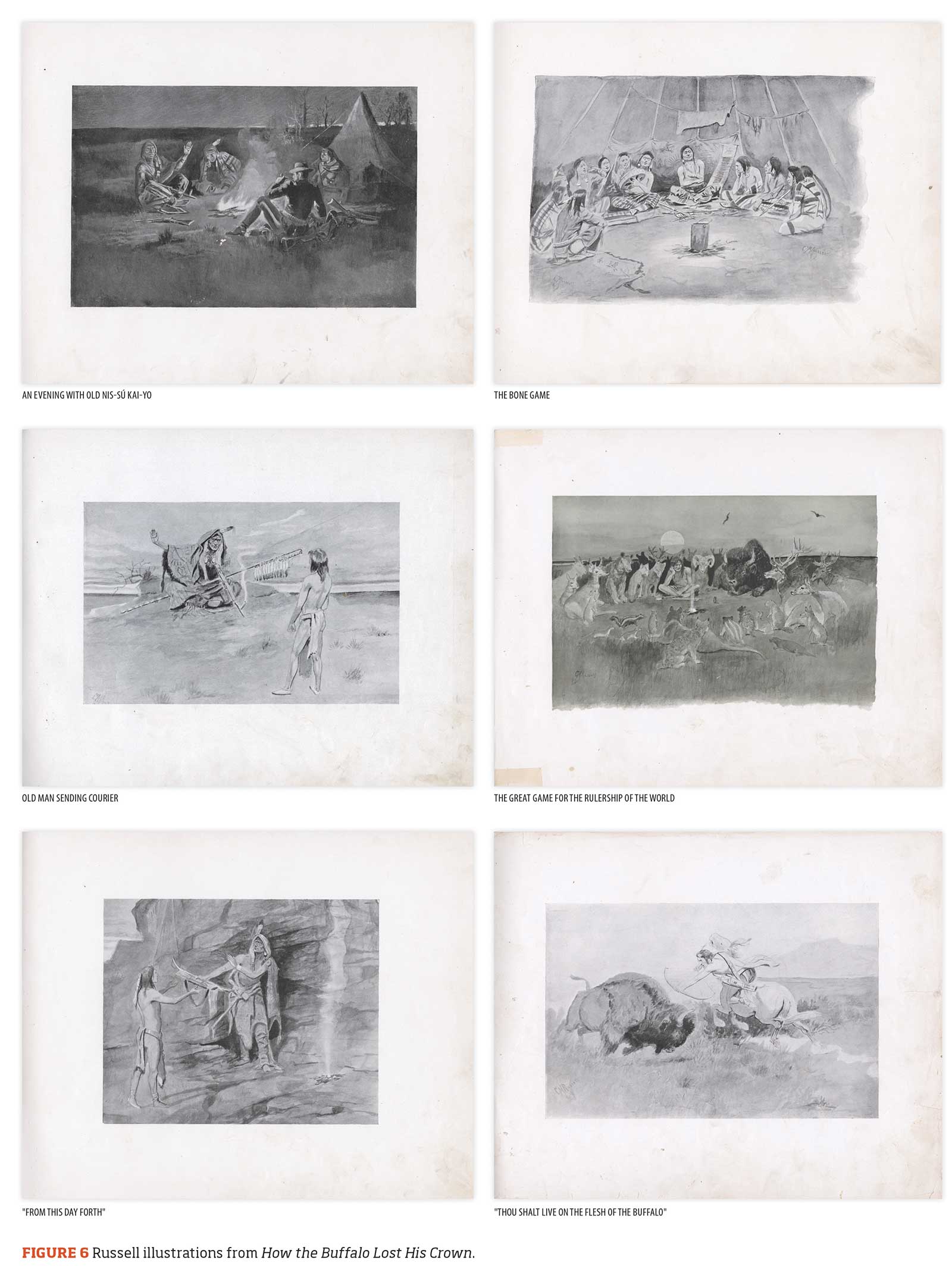 Figure 6 provides a collage of the illustrations that Beacom asked Charlie Russell to develop for his book. As one can surmise from the text in Figure 5, Lieutenant Beacom’s sensitivity to and interest in capturing his favorable impressions of Blackfeet folklore stands in contrast to many of today’s stereotypically negative portrayals of U.S. Army officers deployed to Western fortifications in the mid-to-late 1800s. These tales amount to fascinating Indian myths and explanations about the way that they saw their world working and the role of wildlife and mother nature in general. Much of these tales became preparation for C.M. Russell’s later role in helping Frank Linderman by illustrating his even broader and deeper portrayals of similar Blackfoot folklore in Indian Why Stories, Sparks from War Eagle’s Lodge Fireand others.
Beacom’s conclusion to the book provides a window into why he chose young Charlie Russell to visually supplement the tales he recorded, as shown in Figure 7. This engagement by Beacom was importantly formative preparation for Russell’s rising to the level of artistic admiration in his execution improvements that are evident in Piegans(1908).
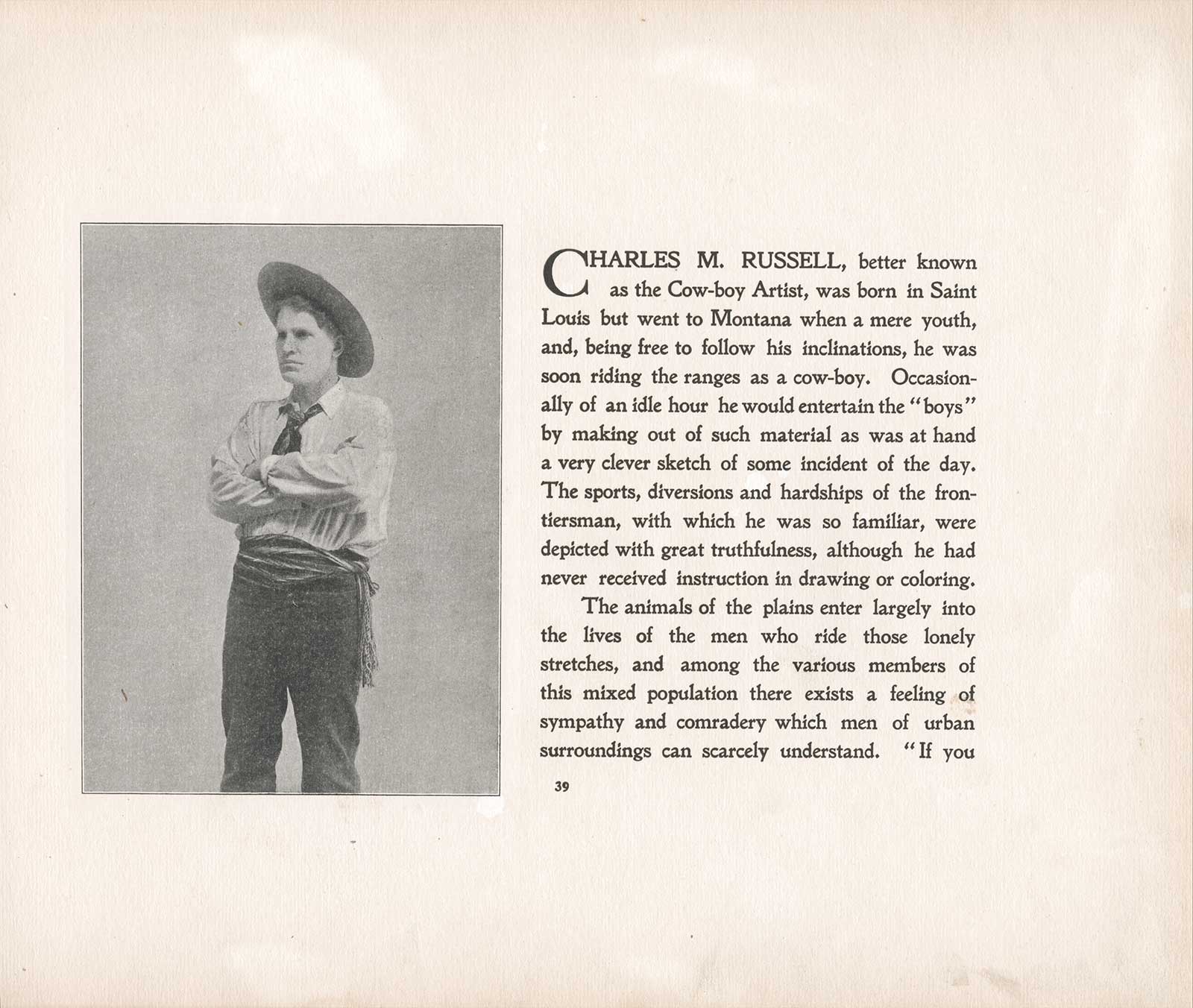 FIGURE 7 A brief biography on Russell in John H. Beacom’s book How the Buffalo Lost His Crown.
As a Russell collector and far more recent West Point graduate (1967), I find Beacom’s mid-1890s description of Russell right on point. His concluding observation about C.M. Russell is accurate and resoundingly insightful about what unfolded in the following three-plus decades.
Russell’s early knowledge about Native American perspectives and their folklore was gained from Indian interactions as a Montana cowboy as well as from his experience illustrating How the Buffalo Lost His Crown. In 1907, an extended Bull Head Lodge visit by Philip R. Goodwin with the Russells may have further influenced the artist’s subsequent work. For example, in choosing to use a vertical compositional format, Russell was somewhat moving away from his previously typical reliance on landscape canvases. In Dr. Larry Len Peterson’s book Philip R. Goodwin: America’s Sporting & Wildlife Artist,one can see how Russell’s friend and artist was able to so effectively utilize vertically oriented compositions that command the viewer’s attention (see Pages 31 to 62 as well as Pages 125 to 154 in that book). The Goodwin images in Figure 8 underscore how a vertical-driven composition can be so effectively engaging.
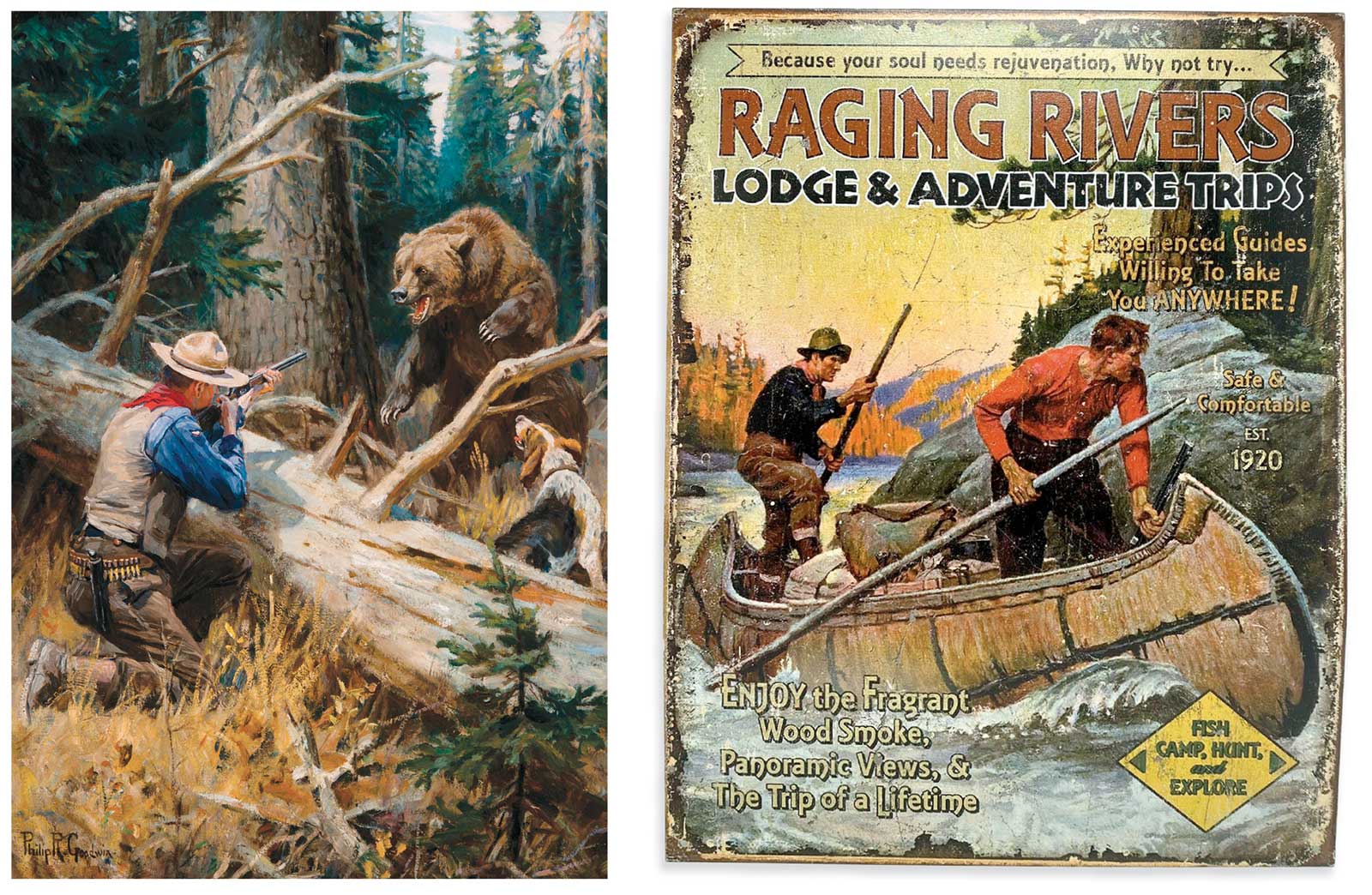 FIGURE 8 Examples of Philip R. Goodwin’s vertical compositions: Dangerous Sport, circa 1939, and Raging Rivers cover illustration, circa 1920.
Further to these points, Brian Dippie has observed that the vertical format enables the artist to provide an enhanced dramatic quality to the image. By facilitating the framing of a triangular composition of figures against Montana’s big sky, there is developed a feeling for greater depth to the landscape. This is due to the variegated horizontal diminishing bands of color. This format also better focuses one’s attention on the Russellesque symbols in the foreground of the buffalo skull and the clavicle bone. Each of these features serves to more powerfully provide engagement with the details in the picture with subtle but effective messaging about the “West that has passed.” Beacom’s closing paragraph in Figure 7 underscores his personal regard for C.M. Russell. How the Buffalo Lost His Crown provides a powerfully moving tale into the campfire scene depicted in Figure 4:
“The story finished we sat there for a time smoking our pipes in silence. Doubtless we were contemplating the same scene but our points of view were essentially different. My race had mastered his and had dealt hardly with him and with all the other dwellers on the plains. Few of the great brotherhood were left alive and his dear prairie land, once so full of life and happiness, had become a lonely desert. As his mind wandered back over the past, it doubtless occurred to him as it did to me, that if the countless dead could rise again and meet in council as they had done in the long ago, they would choose the Indian and not the white man for their Chief. But what Nis-sú kai-yo thought is mere conjecture, for he sat there calm and impenetrable as became one of his race and dignity.”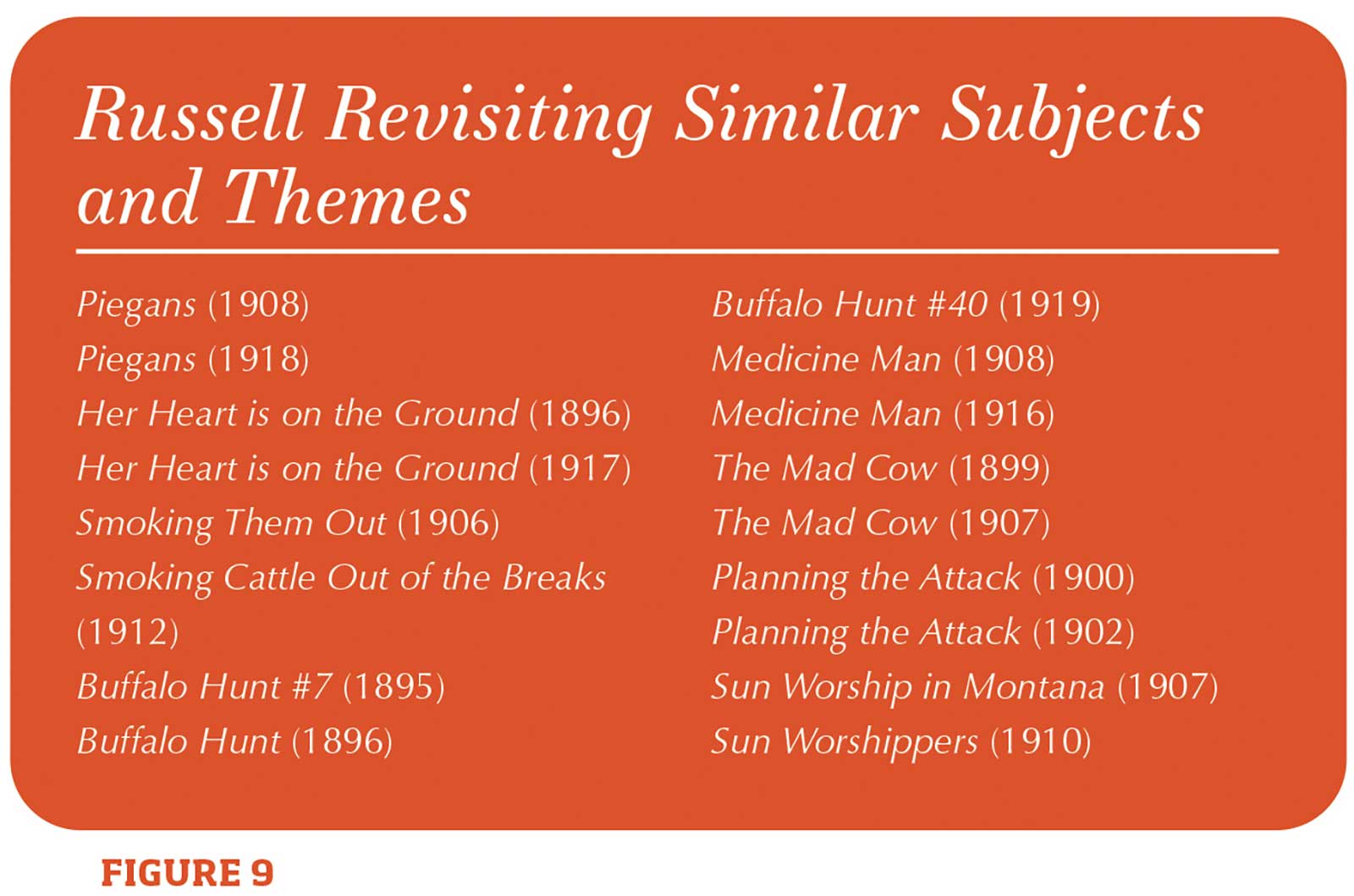
With the passage of time, it is now possible to see how the successful sale of Piegans (1908) in 1912 set up the potential for Russell’s ongoing professional development to unfold a decade later. That result actually occurred during the last of the important phases of completing the C.M. Russell artistic legacy. Moreover, this would involve the artist returning to and building on his noteworthy prior success at the 1912 Calgary Stampede. An exhilarating sales outcome then, Piegans (1908) was undoubtedly deemed an idea worthy of a revisit and further examination.
Throughout his career as an artist, Russell often returned to the concepts for successful previous works and applied his subsequent experiences to produce a similar but often expanded perspective. Figure 9 lists a number of examples of this process. Surveying the Charles M. Russell: A Catalogue Raisonné, one can readily find a dozen or more examples of this revisiting approach to previous creative triumphs. For Piegans (1908) and Piegans (1918) the case is clear. Was Russell so motivated by what Brian Dippie describes as the “astounding” results of 1912? The answer is yes; certainly, Nancy’s thought process would support that conclusion.
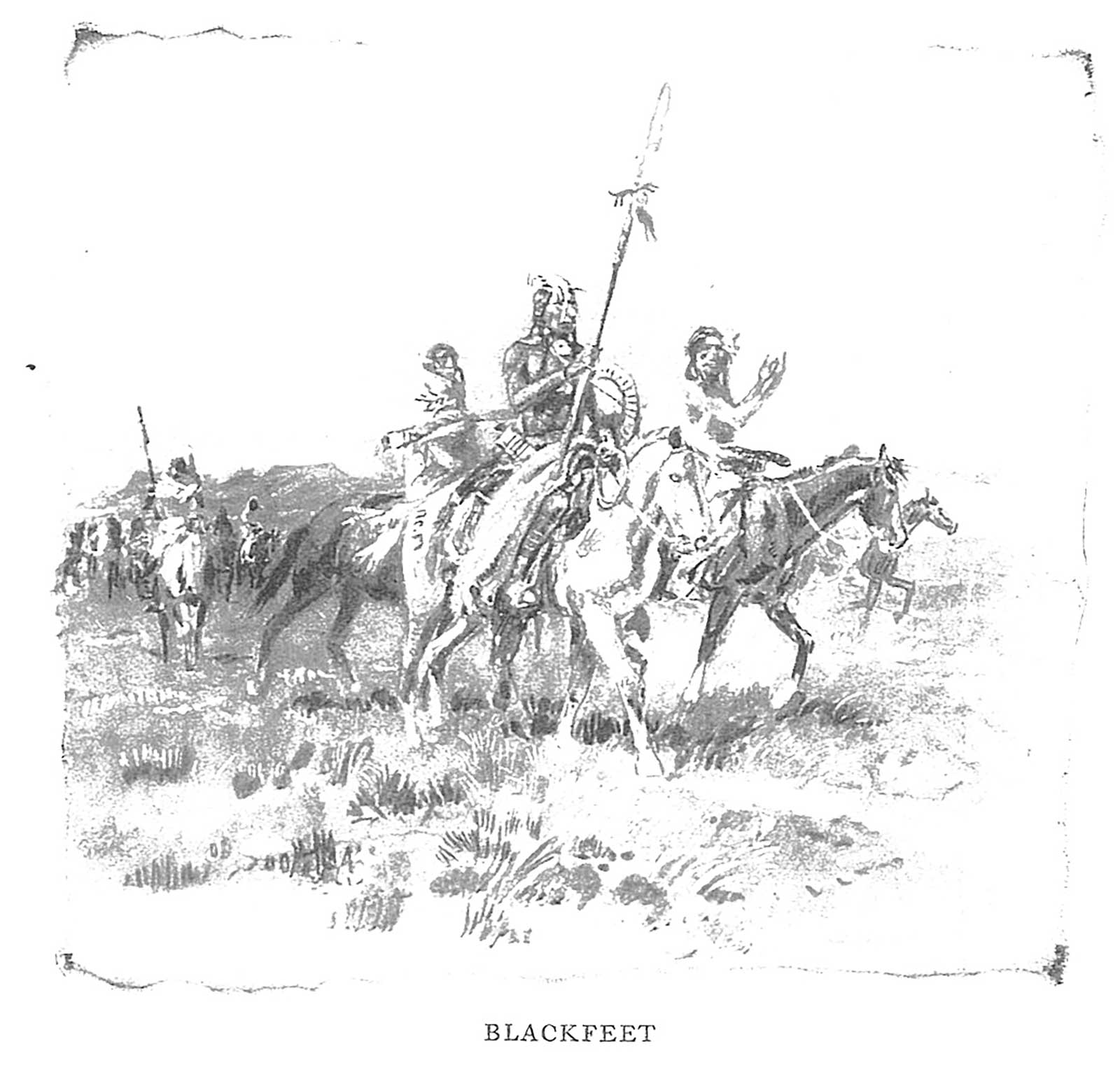
FIGURE 10 Charles M. Russell (1864-1926), Blackfeet, 1906, watercolor, 11 x 12½”
In 1918 as World War I was coming to a close, plans were being made for a second rodeo in Canada billed as the “Victory Stampede” in 1919 to celebrate what was then thought to be “the war to end all wars.” With encouragement by Nancy, Charlie was contemplating which compositions to undertake to provide further insights about North American Indian culture at his second Calgary Stampede exhibition. Certainly, the artist’s objective was to expand upon his already successful visual theme of “The West that has passed.” That retrospective narrative had ultimately emerged as the explicit title for his 1911 exhibition at the Folsom Gallery in New York. It had continued during the 1912 Calgary Stampede and became an overall defining focus for the artist in London.
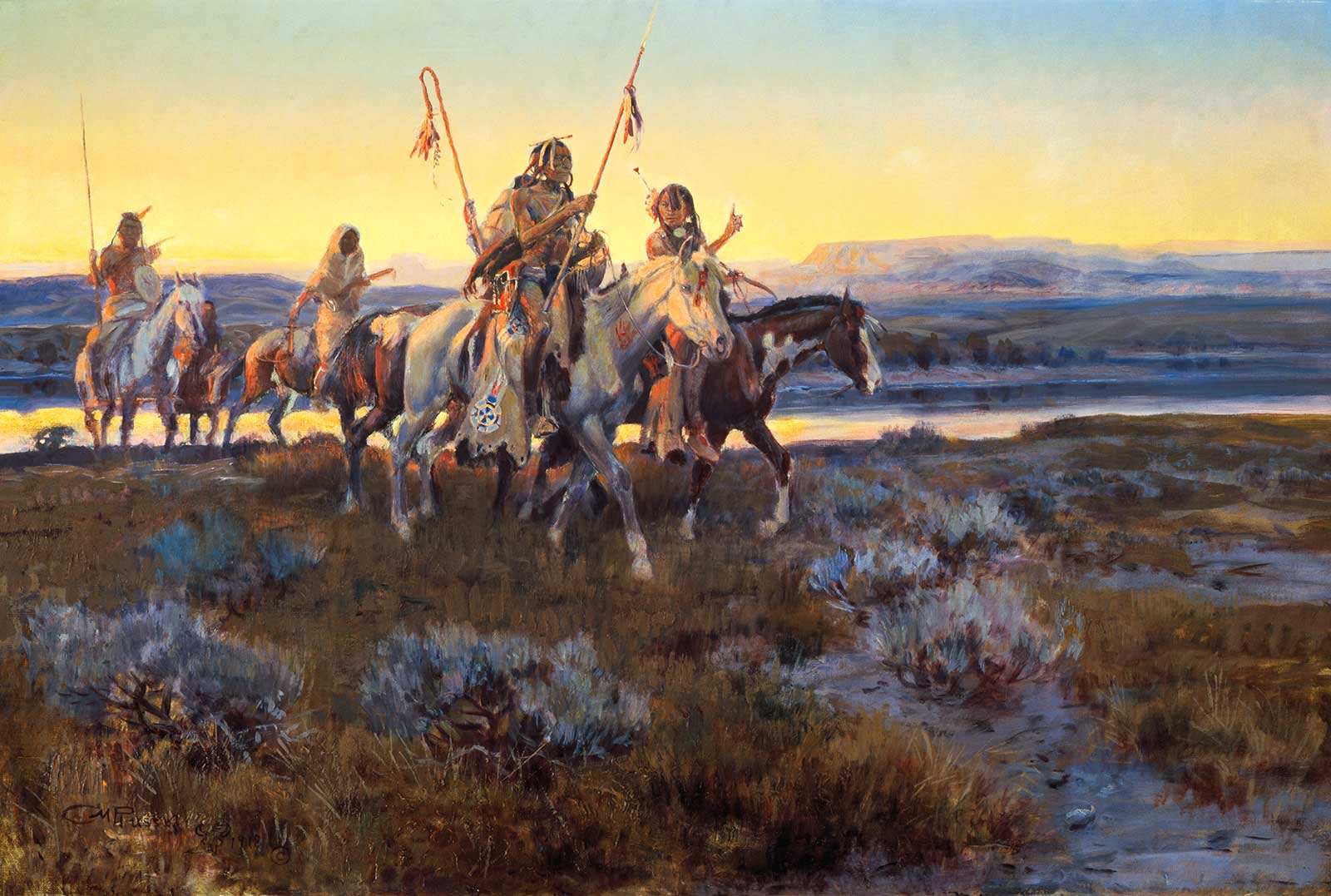
FIGURE 11 Charles M. Russell (1864-1926), Piegans, 1918, oil on canvas, 24 x 36”
Another clue to the Russells’ planning for Canada in 1918 can be found in the database of Charles M. Russell: A Catalogue Raisonné. When one looks up CR.NE.385, a watercolor titled Blackfeet (Figure 10), one sees a 1906 version of the Piegans composition that is strikingly similar to Russell’s 1918 oil on canvas depiction of Piegans (Figure 11). In the 1927 edition of Trails Plowed Under, Nancy used this same 1906 image on Page 121. Accordingly, it is difficult to not conclude that his Piegans (1908) more than anticipates a special future image to be executed later. In sum, the success of the 1908 version at the 1912 Calgary Stampede all but assured Russell’s likely return to do an expanded and caringly reworked composition involving another masterwork in oil a full decade later. As the Figure 10 watercolor composition strongly suggests, the general idea for the Piegans (1918) composition was already tumbling over in C.M. Russell’s mind during the two years leading up to his execution of Piegans (1908). Accordingly, this one is now increasingly recognizable as a small-scale, yet still a stunning portrayal of the glory of BIG SKY MONTANA. —
Powered by Froala Editor