Artists have many ways of modernizing their studios for the 21st century. For some, modernization comes in the form of large flatscreen TVs for looking at reference material near an easel, or in drawing tablets to quickly capture digital studies or sketches, or even just the introduction of cameras to record video or time lapses as artwork is completed.
For Arturo Chávez, one of the tools he added to his studio was a unique piece of equipment that was largely unavailable to artists 15 years ago, but more readily accessible to the United States military or deep-pocketed hobbyists. The new tool in his toolbox: drones.
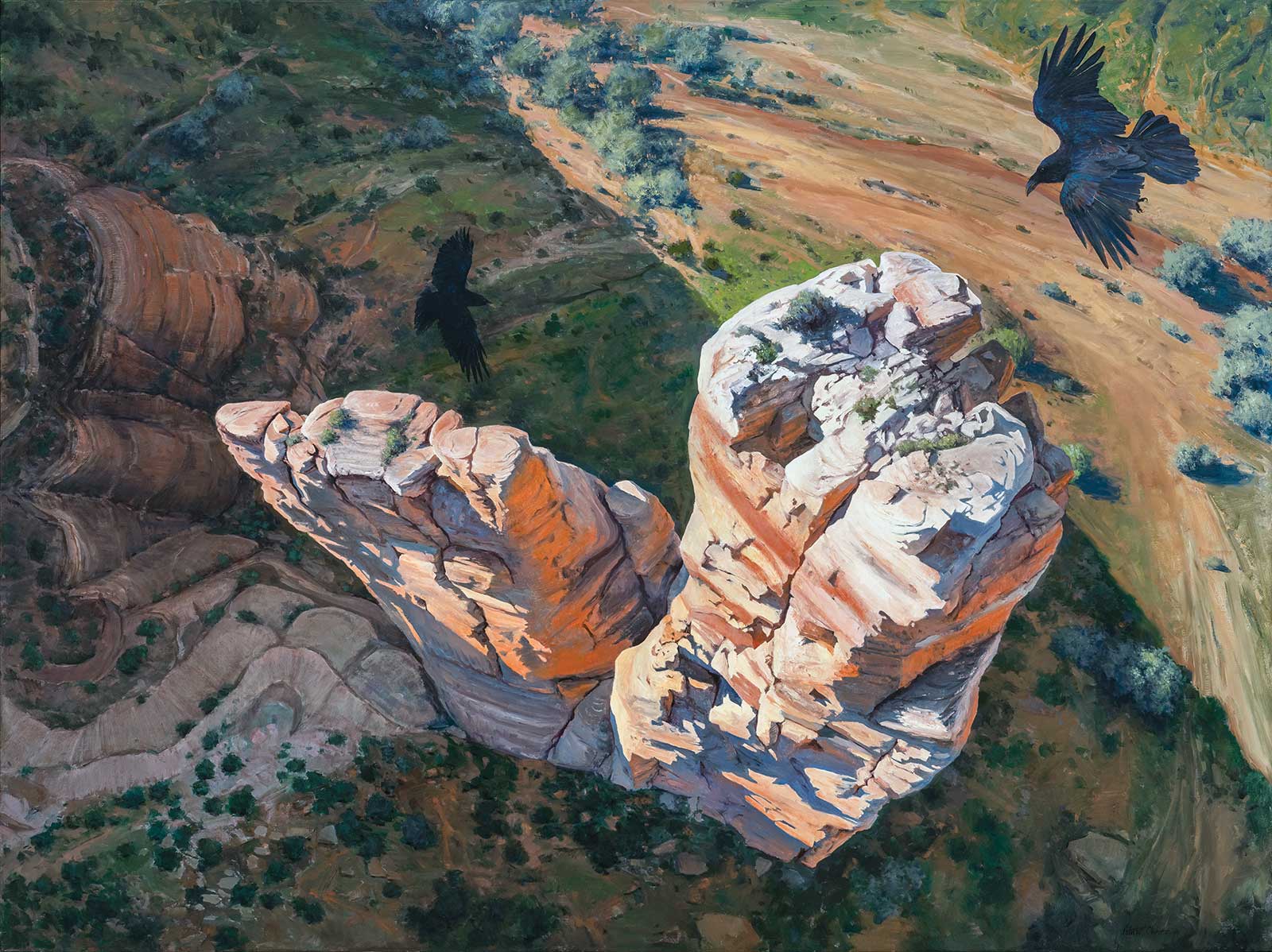
Three Ravens (detail), oil, 45 x 60”
“I used to fly in airplanes all the time, including twice a month to keep my license updated, but I haven’t been in the cockpit for a number of years,” Chávez says. “But then I started work with drones, and the views were just as incredible.”
Anyone familiar with Chávez’s work knows of his fondness for flying, which is reflected in his paintings, including his high perspectives of the Southwest, the canted angles made during a plane’s roll or pitch, and the views up above the clouds of storms breaking and sunlight peeking from behind thunderheads.
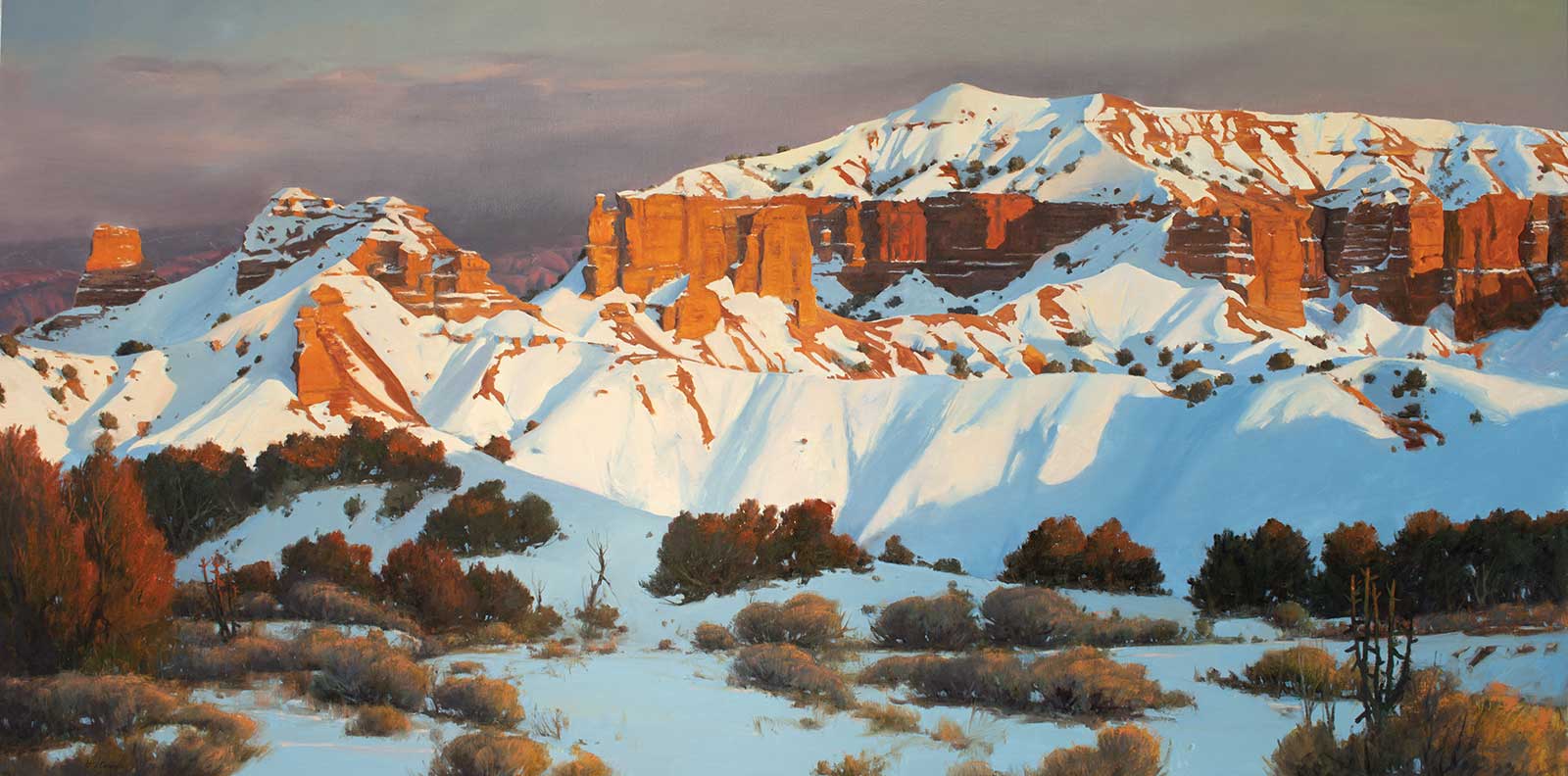
Gabriel’s Throne, oil, 48 x 96”
“I got my license in the 1970s. I was instrument rated so I could fly in the clouds. I did some commercial flying, and I also flew for the Civil Air Patrol, mostly search-and-rescue missions in rugged mountains and narrow valleys with high winds. Once I had an engine failure at about 300 feet. I had to quickly go through the emergency procedures to get the booster pump on the engine going. It was one of those times I pulled on my seatbelt extra tight. Thank God, the engine came back,” he says, adding that he doesn’t miss every aspect of flying. “I tried out a drone to see if it could work, and it worked really well. It’s definitely easier to operate and also more convenient.”
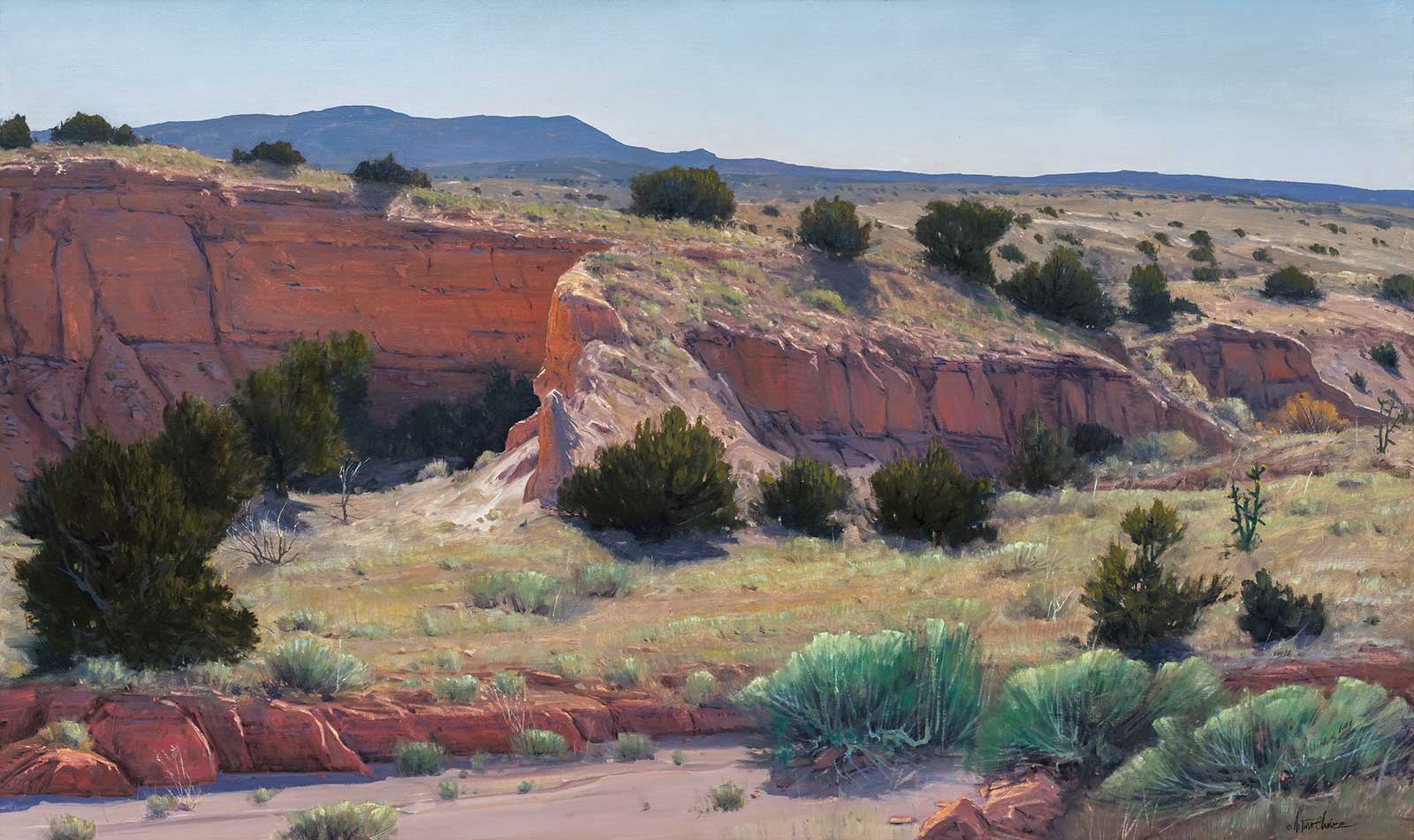
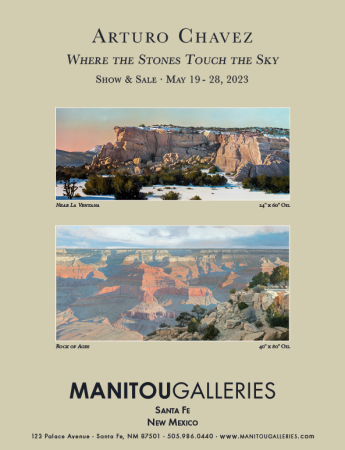
Near La Bajada, oil, 36 x 60”
During a recent trip to Canyon de Chelly, Chávez asked his Navajo guide for a place he could set up and launch his drone. “He took me out to his property and I flew the drone out a mile and a half into Canyon de Chelly. I took eight or so videos and 500 to 600 images of the canyon and the spires,” he says. One of the works from that shoot was Three Ravens,showing a rare top-down view of the iconic rock spires in the canyon. “I have a long-range antenna and everything is done on instruments and pre-planned on GPS so I can fly it out by coordinates. I also have a tracking bug on it in case I lose it and have to go cross-country to retrieve it.”
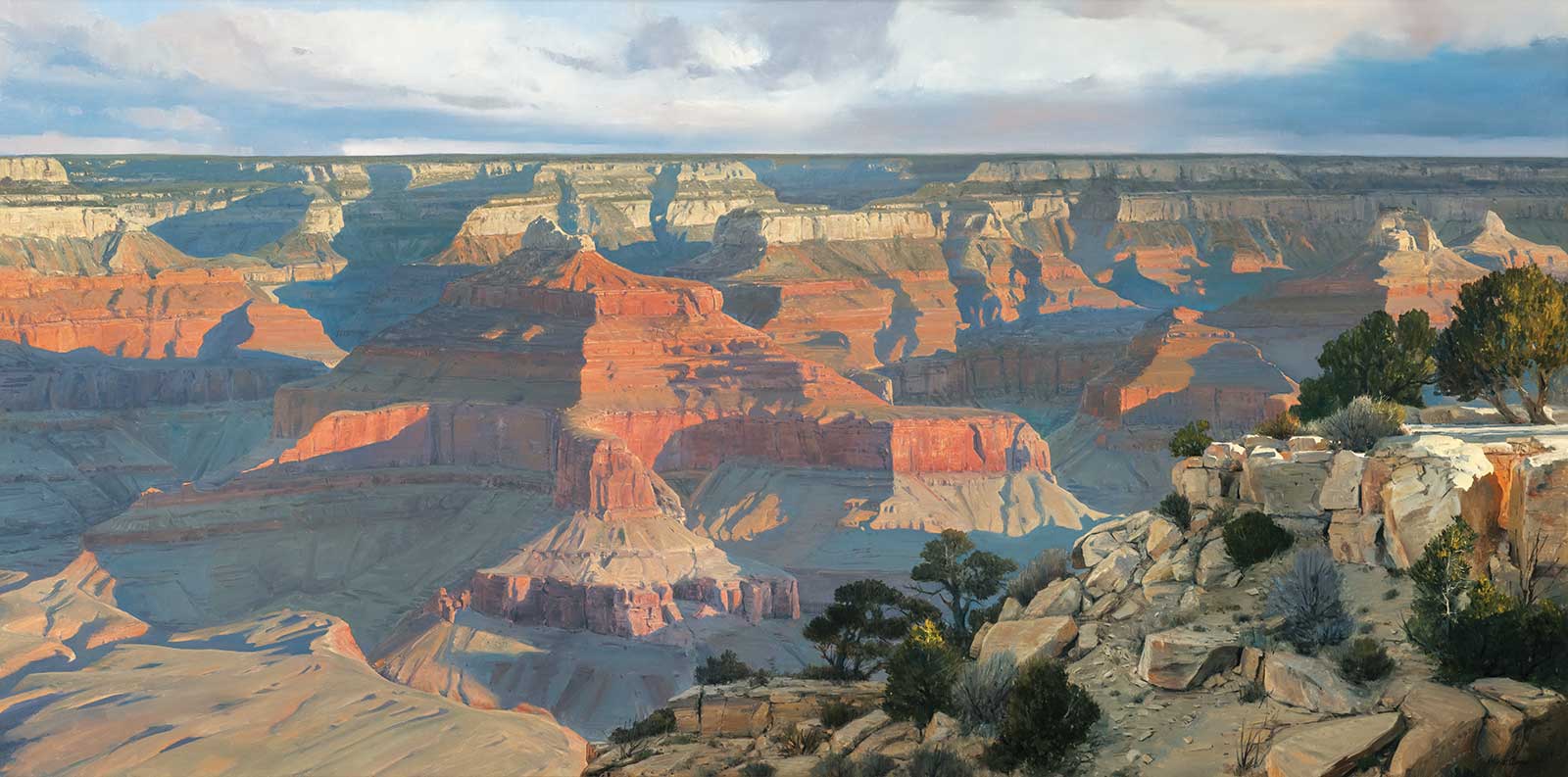
Rock of Ages, oil, 40 x 80”
He continues: “It’s magical to see that land from those heights. It’s like seeing it for the first time.”
Three Ravens will join many other works on May 19 when Chávez opens Where the Stones Touch the Sky, his newest solo show, which will be held at Manitou Galleries in Santa Fe, New Mexico. The artist has a deep connection to New Mexico and its lands. Not only was Chávez born in Chimayo just north of Santa Fe, but he also comes from a long line of descendants that originally came to the region from Spain in 1601. “My mother even traced our family back before Christopher Columbus,” he says. “So I have a very strong connection to the land and the people.”
Even his first painting was of New Mexico and was completed when he was in the seventh grade. The subject was the Sangre de Cristo Mountains from Los Alamos. “It astounded me that I could do it, so I tried to do it again and it was a failure,” he says. “That was the beginning.”
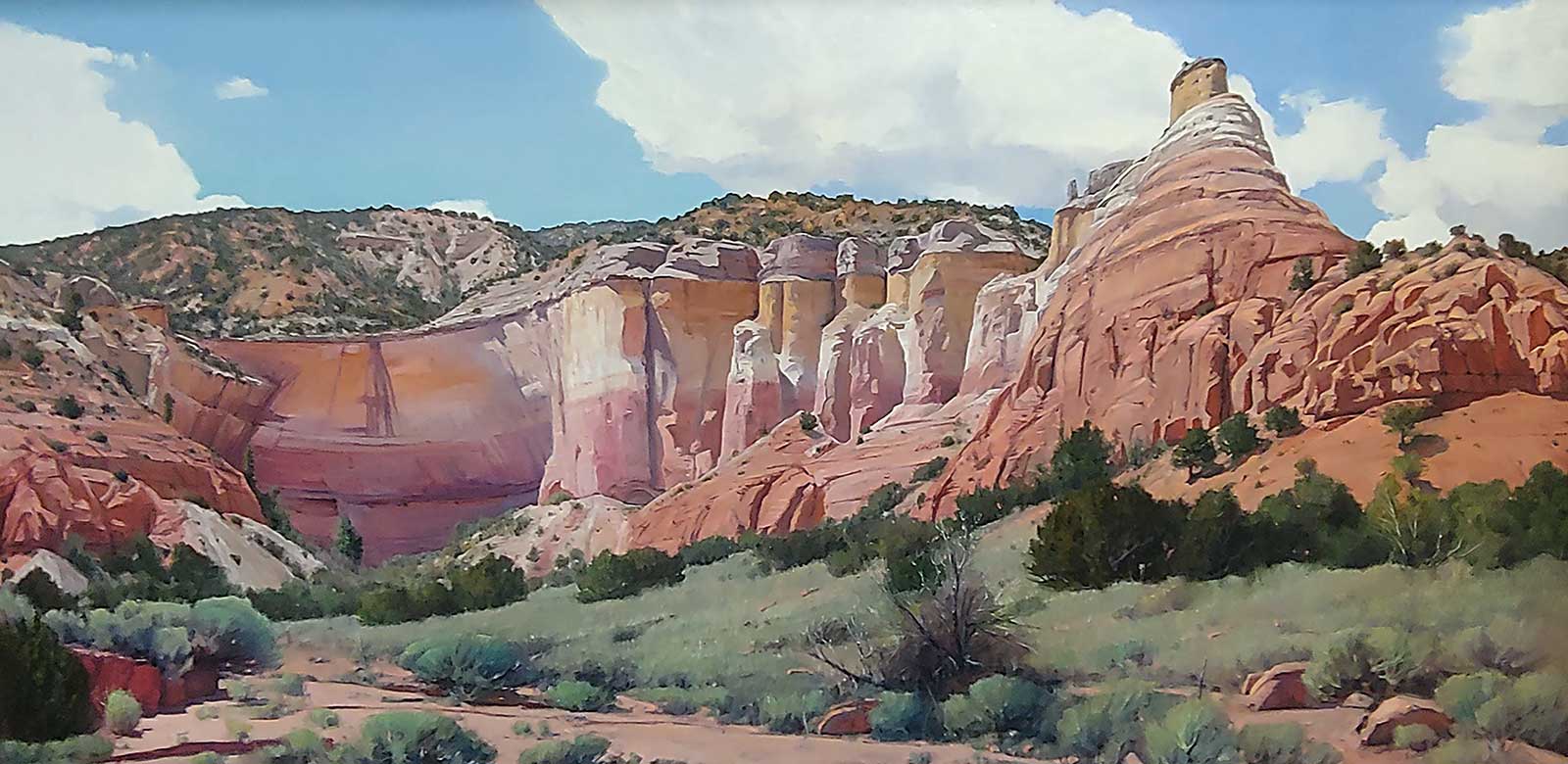
O’Keeffe Country, oil, 49 x 98”
Despite the early introduction, art almost never happened for Chávez after he started studying classical guitar. At one point he had studied guitar for a dozen years, and in that time had started a painting but never completed it. It remained incomplete for 10 years. As he looked at the painting one day, he would glance down at his guitar, then back to the painting. Back to the guitar. And back to the painting. He knew what he had to do. “I knew I had to paint full time,” he says. “What was great about music, though, was how it applied to my work—texture, color, sound, timbre—and allowed me to show those through the visual arts. Also, the big paintings often take on a symphonic nature, and the small paintings are more like a popular song.”
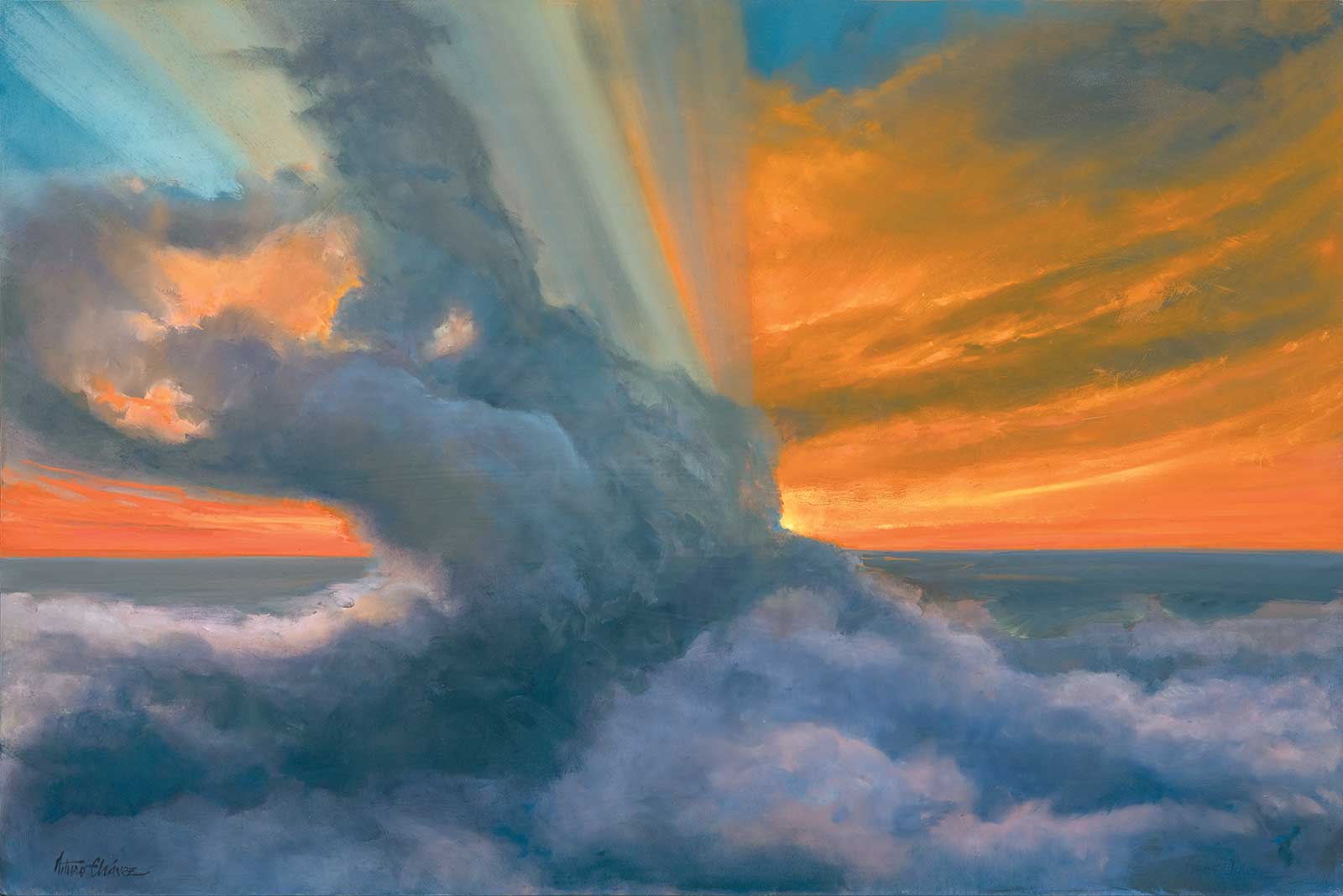
Above the Whirling Din, oil, 24 x 36”
For the new Manitou show, there are more symphonies than pop songs. Not only has he gone big, including 60-inch paintings, he’s also gone huge, with works measuring as wide as 96 inches. One 80-inch work is of one of his favorite subjects, the Grand Canyon, as seen in Timeless Beauty and Rock of Ages.
“That canyon is so immense and beautiful that no one will ever finish painting it. The first time I painted the canyon, I just looked at it thinking how it was even possible to simplify any of it. I had to look at work by Frederic Church, Wilson Hurley, Thomas Moran and others, and really study them to begin to understand their own approaches,” Chávez says. “Even today I’m still learning from them.”
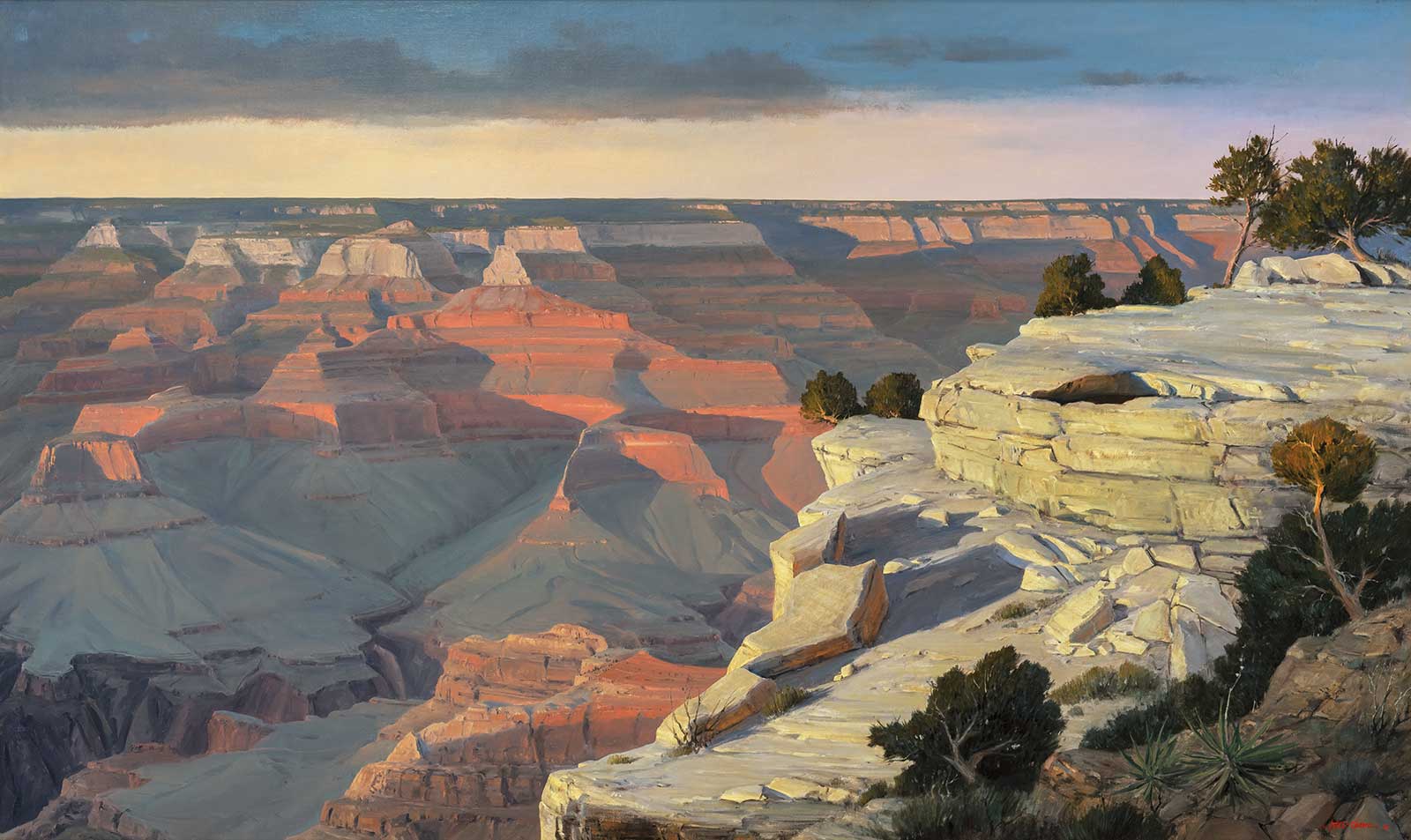
Timeless Beauty, oil, 36 x 60”
Other works in the show include Gabriel’s Throne, the 96-inch-wide painting showing snow-covered mountains in the high desert, and O’Keeffe Country, which is a nod to one of New Mexico’s most famous painters, Georgia O’Keeffe. In Above the Whirling Din, Chávez paints high in the air as ethereal light shines through a tower of clouds.
“I do a lot of those from memory, but also some from imagination,” the artist says. “Up there is peace and solace.”
The new show will continue at Manitou Galleries in Santa Fe until June 4. —
Arturo Chavez: Where the Stones Touch the Sky
May 19-June 4, 2023
Manitou Galleries, 123 W. Palace Avenue, Santa Fe, NM 87501
(505) 986-0440, www.manitougalleries.com
Powered by Froala Editor