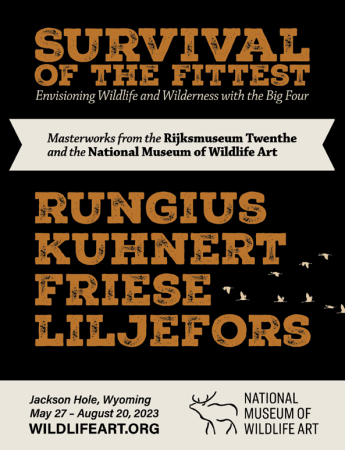
“Ask any wildlife painter to name an inspiration, and it is likely that one of the Big Four will be mentioned. Most often you will hear Liljefors or Rungius with Kuhnert coming in a close second. The lesser-known Friese may not be on the top of everyone’s list, but since he was a mentor to Rungius and Kuhnert, his work helped shape what we know today as wildlife art,” says Adam Duncan Harris. Harris is the Grainger/Kerr Director of the Carl Rungius Catalogue Raisonné, a project initiated by the National Museum of Wildlife Art in 2020. He’s also curator of the museum’s new exhibition Survival of the Fittest: Envisioning Wildlife and Wilderness with Carl Rungius and his Contemporaries, Masterworks from the Rijksmuseum Twenthe and the National Museum of Wildlife Art,on view May 27 to August 20.
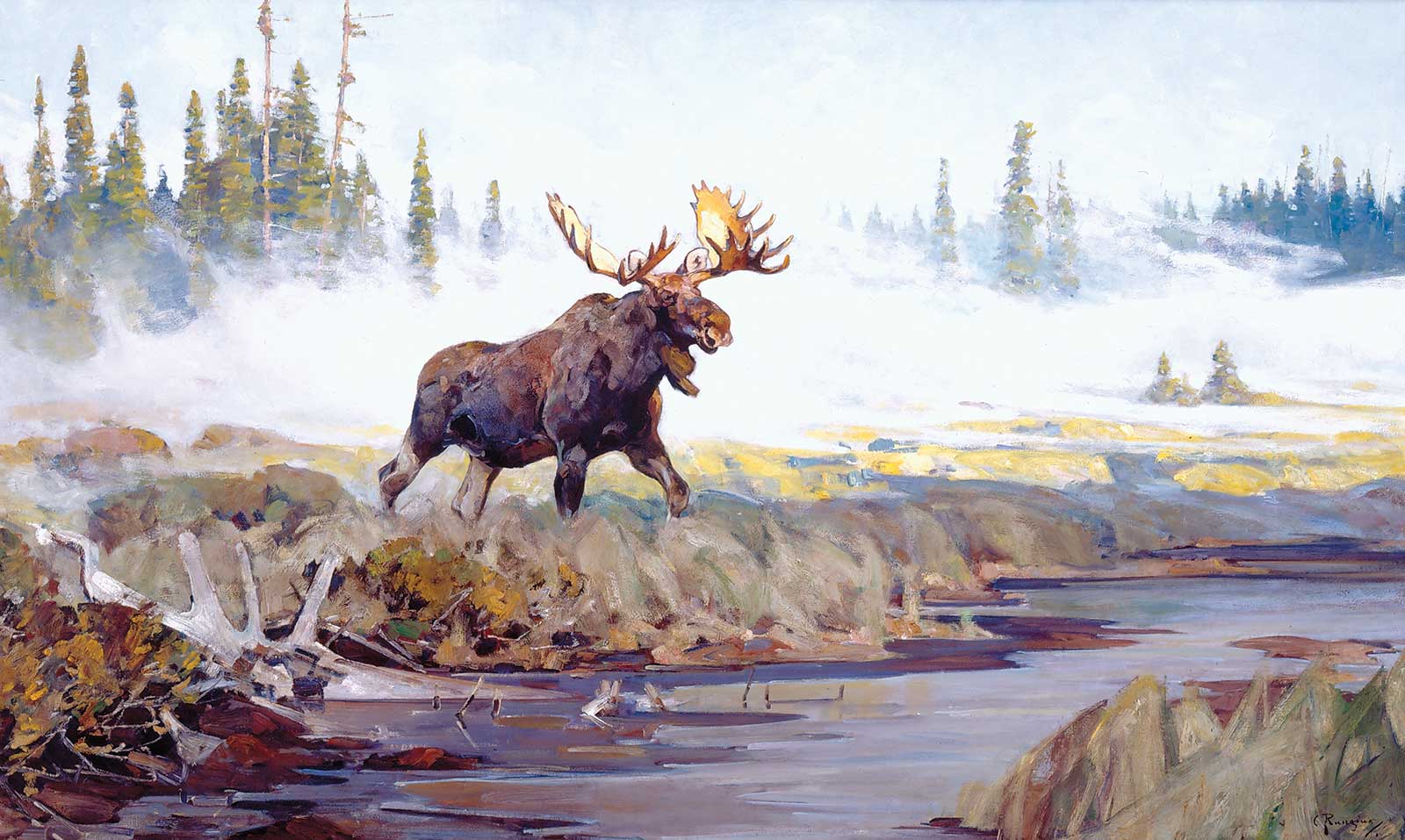
Carl Rungius (1869-1959), Morning Mist (Harlow Triptych), ca. 1930, oil on canvas, 47 x 79½”. JKM Collection, National Museum of Wildlife Art. © Estate of Carl Rungius.
The exhibition features 45 masterworks created by an influential group of 19th- to 20th-century painters known as the Big Four: American Carl Rungius, Germans Richard Friese and Wilhelm Kuhnert, and Swede Bruno Liljefors.
Works in the exhibition are drawn from the collections of the Rijksmuseum Twenthe in the Netherlands, as well as the National Museum of Wildlife Art in Wyoming, which are the only two museums in the world to hold masterpieces by each member of the Big Four. Harris explains that these four artists presented an important view of wildlife to the world—one that inherently valued the animals themselves, their natural behaviors and habitats as subjects worthy of being depicted in their own right.
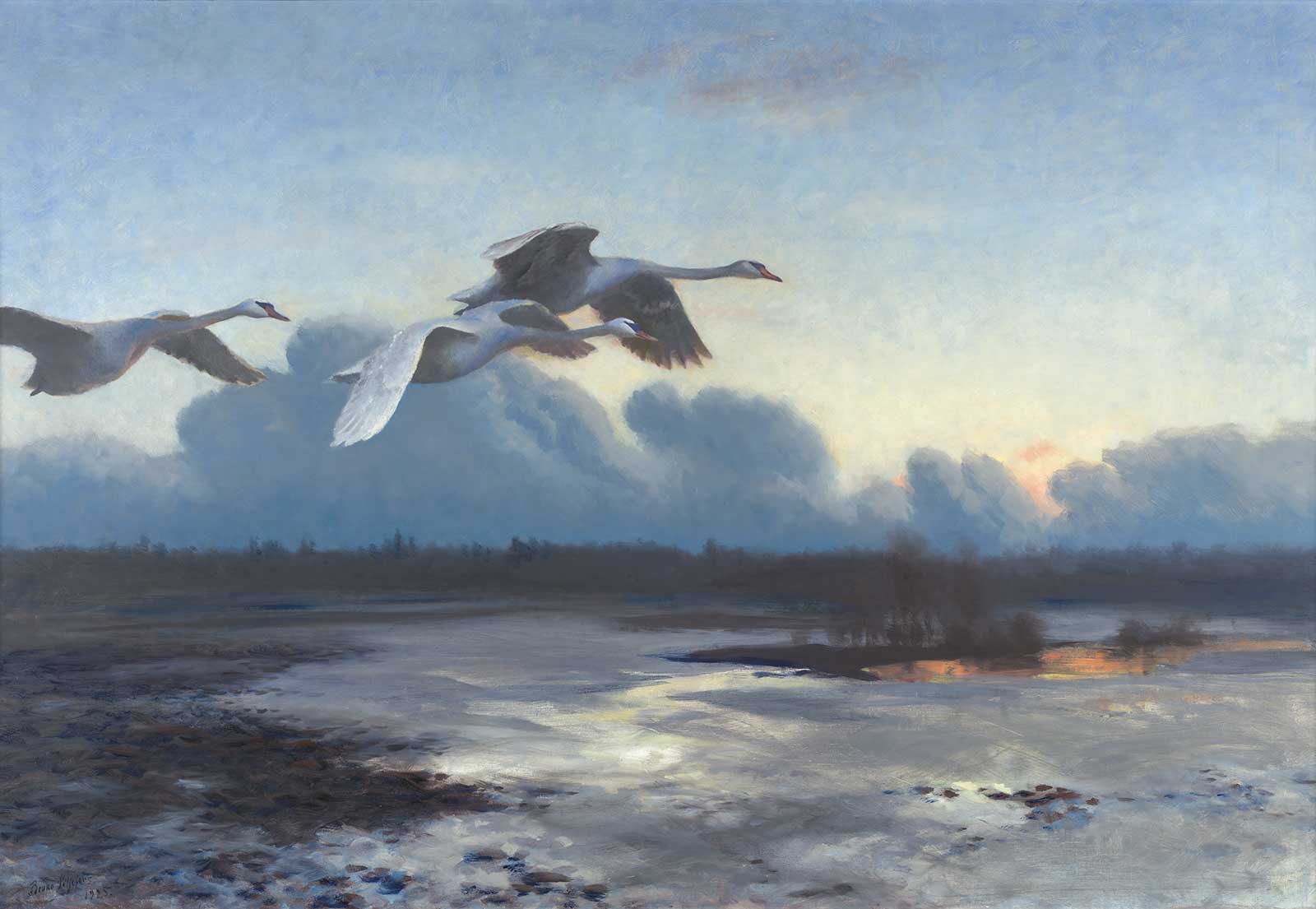
Bruno Liljefors (1860-1939), Migrating Mute Swans, 1925, oil on canvas. 41½ x 62”. Collection of the Rijksmuseum Twenthe, Enschede, Netherlands. Photograph by Rik Klein Gotink.
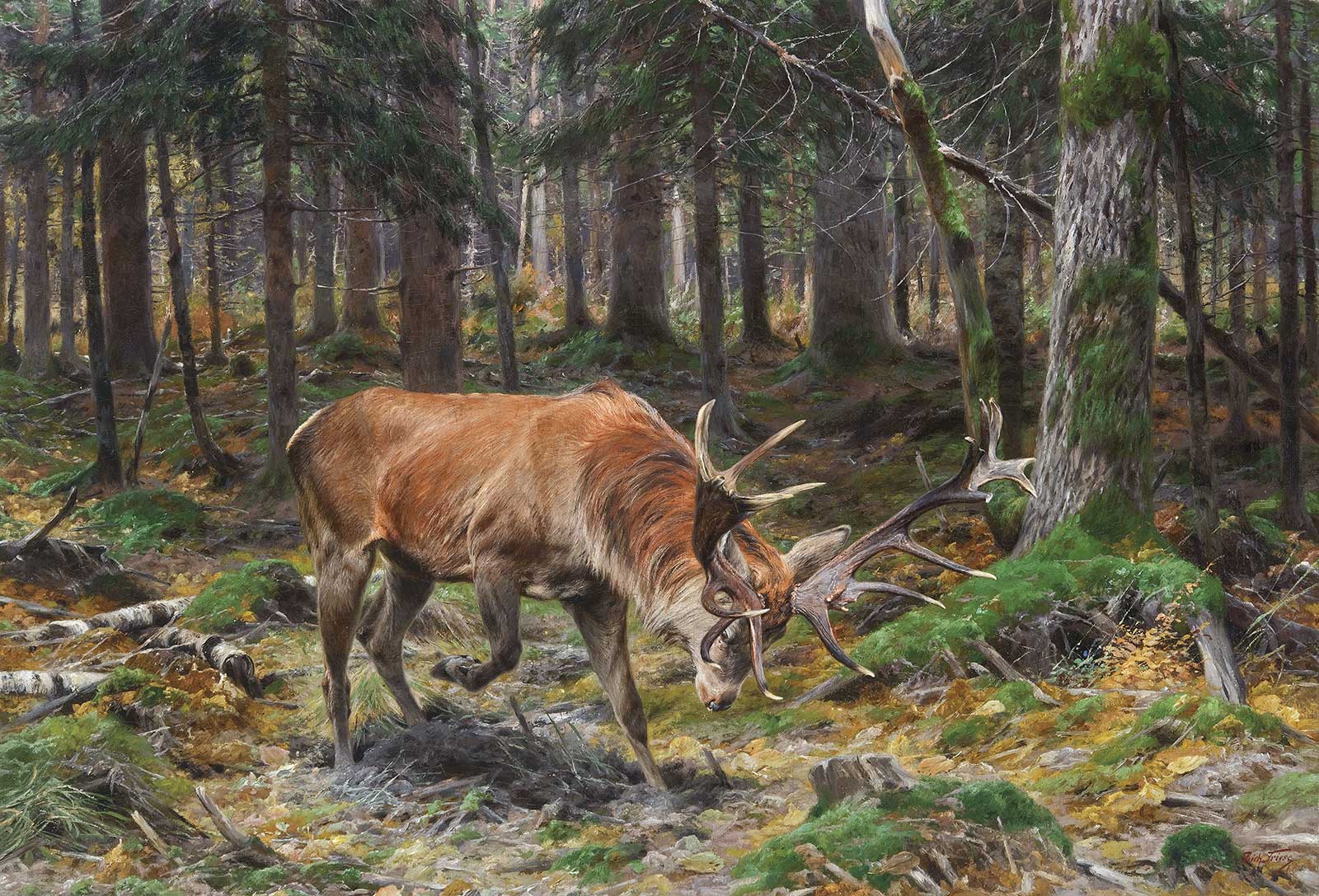
Richard Friese (1854-1918), Deer in a Forest Glade, 1912, oil on canvas. 43 x 62½”. JKM Collection, National Museum of Wildlife Art.
“I feel incredibly fortunate to have the opportunity to chose paintings from two amazing collections of these esteemed painters,” Harris continues. “I picked works that represented each artists’ specialty…Using Rungius as an example, the exhibit features a moose from New Brunswick, an elk from Wyoming and a Caribou from Alberta, all places he visited and animals he saw regularly. If an artist took a special trip to see animals that had rarely been studied in the wild, I wanted to make sure work from those expeditions was represented as well. Friese’s trip to the Svalbard archipelago resulted in some amazing polar bear paintings. Kuhnert painted some amazing pieces after he visited the forest of Białowieža to see European bison (wisent).”
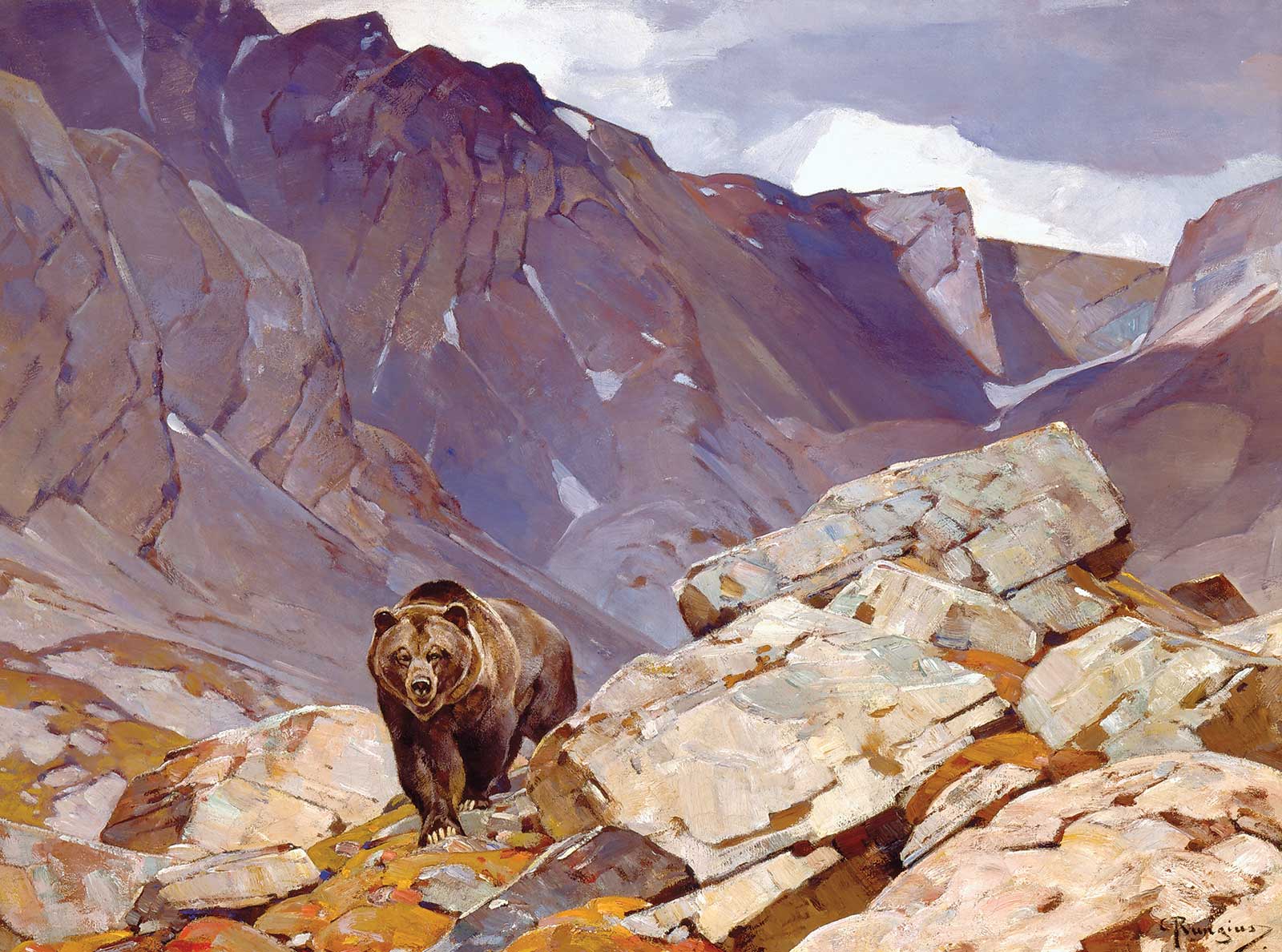
Carl Rungius (1869-1959), Old Baldface, ca. 1940, oil on canvas. 30 x 40”. JKM Collection, National Museum of Wildlife Art. © Estate of Carl Rungius.
The artists brought their academic training into the field to study animals in the wild, Harris says, adding that members of the Big Four undoubtedly laid the groundwork for future generations of wildlife artists. —
Survival of the Fittest: Envisioning Wildlife and Wilderness with Carl Rungius and his Contemporaries
May 27-August 20, 2023
National Museum of Wildlife Art, 2820 Rungius Road, Jackson, WY 83001
(307) 733-5771, www.wildlifeart.org
Powered by Froala Editor