Alfred Jacob Miller (1810-1874) moved from his native Baltimore to New Orleans in 1836 in hopes of establishing a portrait painting studio. He had recently returned from studying in Paris and Rome, steeped in the European romantic tradition. He found studio space on the second floor of a dry goods store and placed several of his portraits in the ground floor window.
He was soon visited by a retired British army captain, William Drummond Stewart (1795-1871), who was looking for an artist to accompany him to the annual fur trappers’ rendezvous on a tributary to the Green River to document the trip. The area is now part of Wyoming. Stewart was a Scottish nobleman who would inherit the title of 7th Baronet of Murthly. He had come to America seeking adventure and had first attended the rendezvous in 1833. He wanted to document what he thought would be his last visit to the rendezvous and Miller joined his entourage.
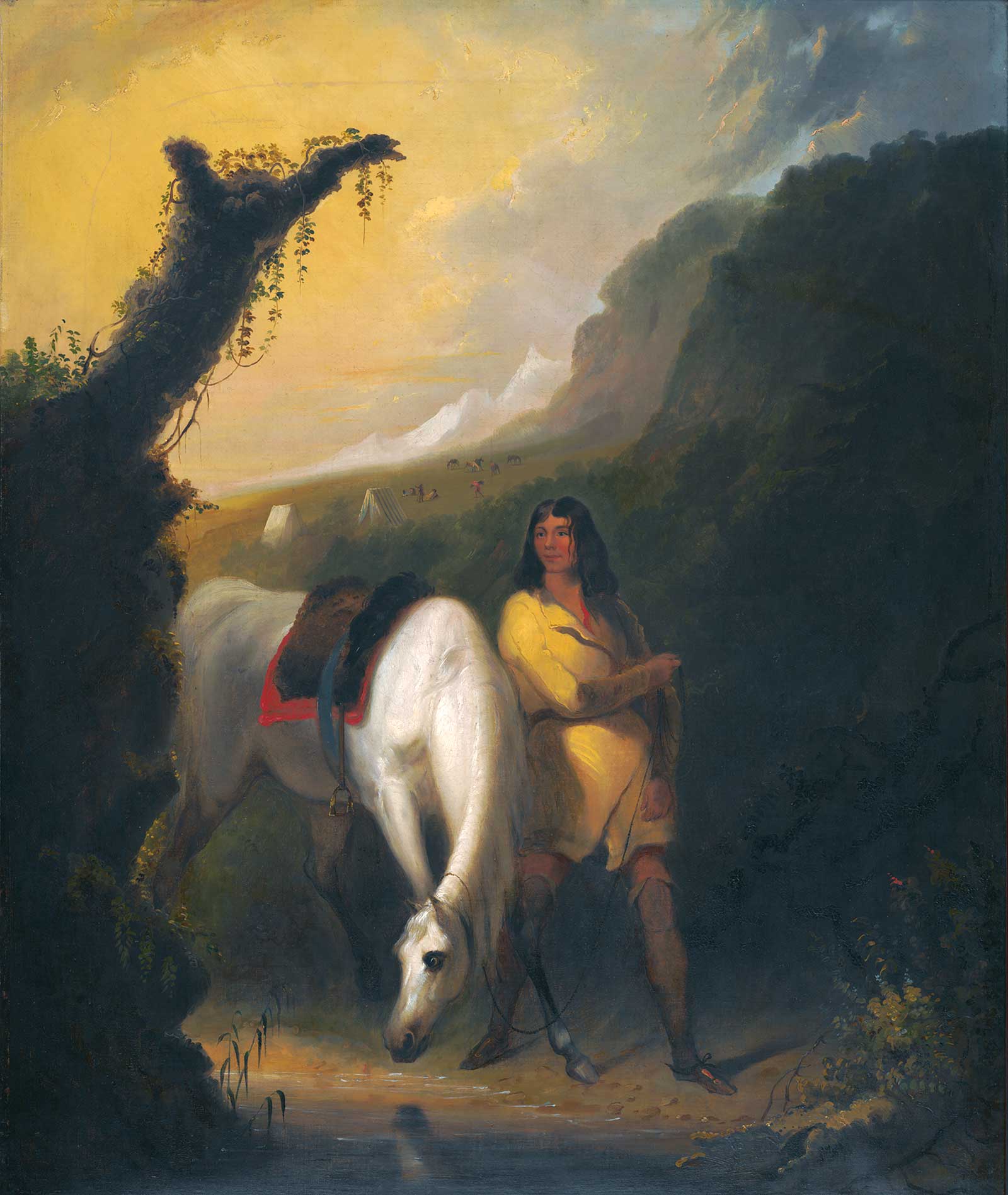
Alfred Jacob Miller (1810-1874), Antoine Watering Stewart’s Horse, 1840, oil on canvas, 30 x 36”. American Heritage Center, Laramie, Wyoming. ah04912_005.
Miller created field sketches on the trip that he later used to produce watercolors and oils for his patron. Many of the watercolors and oils were produced at Stewart’s Murthly Castle in Scotland where they remained until Stewart’s death after which they were dispersed.Ironically, a large portion of Miller’s vast output has returned to the Wyoming area and has inspired two important projects—Fur Traders and Rendezvous: The Alfred Jacob Miller Online Catalogue, the most extensive online collection of Miller’s paintings from his 1837 trip west, and the exhibition, Alfred Jacob Miller: Revisiting the Rendezvous—in Scotland and Today.
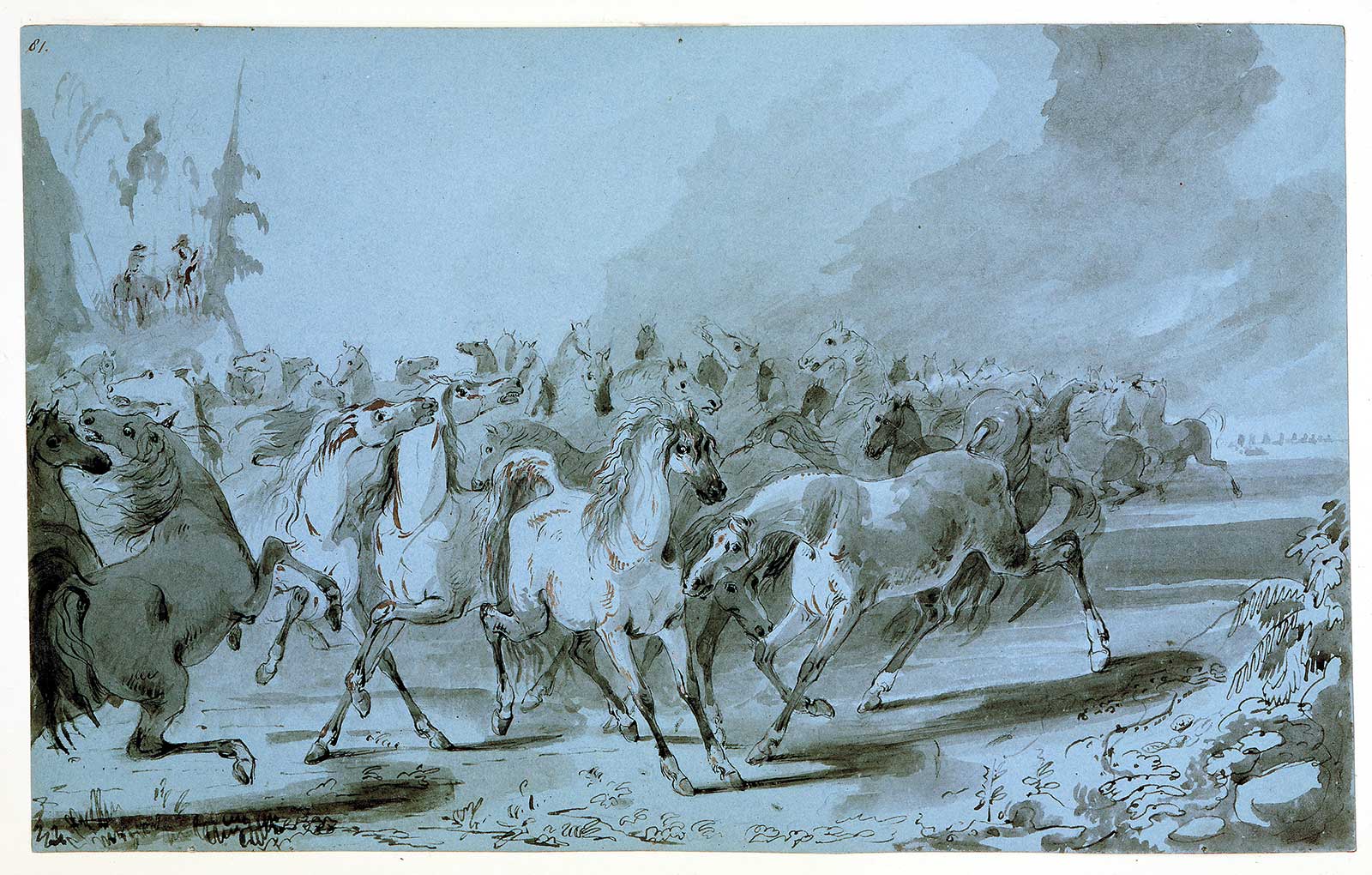
Alfred Jacob Miller (1810-1874), Wild Horses, ca. 1837, wash drawing on blue paper, 8½ x 13¾”. Buffalo Bill Center of the West, Cody, Wyoming. Gift of The Coe Foundation. 5.73.
The online catalog was begun in 2015 as a project of the Ricketts Art Foundation, the Buffalo Bill Center of the West, and the Museum of the Mountain Man. It is the most extensive online database of Miller’s Western paintings in institutional collections. Contributors Peter H. Hassrick (1941-2019) (Buffalo Bill Center of the West), Jim Hardee (Rocky Mountain Fur Trade Journal), and Karen McWhorter (Buffalo Bill Center of the West) contributed to the exhibition, for which McWhorter serves as organizer and curator in partnership with Johanna M. Blume of the Eiteljorg Museum of American Indians and Western Art in Indianapolis.
The exhibition will be shown at the Center of the West in Cody, Wyoming, May 20 through October 22, and will be shown at the Eiteljorg in 2024. Lenders include the two museums, Naoma Tate, J. Joe Ricketts in association with the Ricketts Art Foundation, the National Museum of Wildlife Art in Jackson, and the American Heritage Center (AHC) at the University of Wyoming in Laramie.
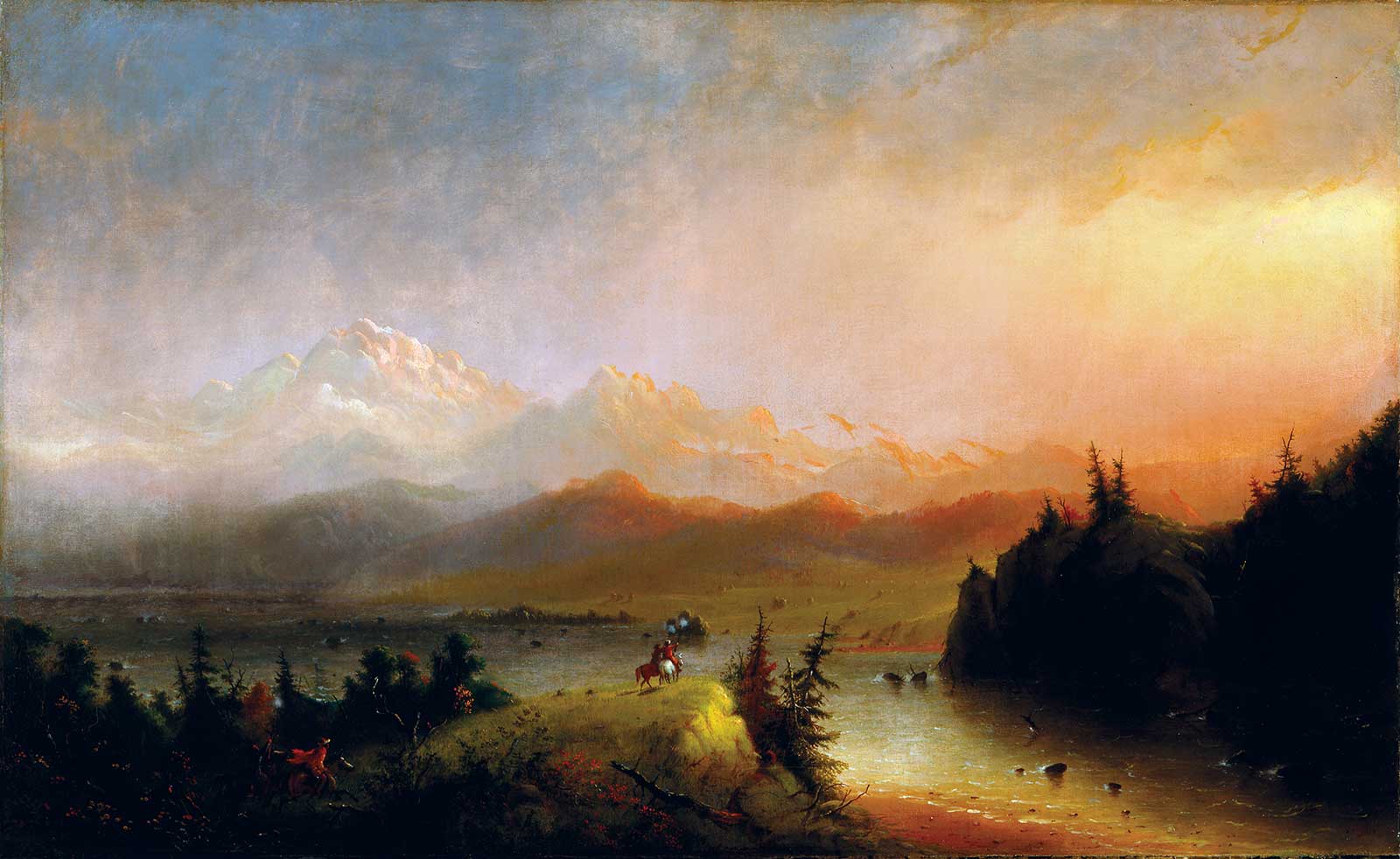
Alfred Jacob Miller (1810-1874), Trappers Saluting the Wind River Mountains, ca. 1864. Oil on canvas, 2115/16 x 3513/16 ". Buffalo Bill Center of the West, Cody, Wyoming. Gift of The Coe Foundation. 10.70.
Perusing the extraordinary online Miller catalog (alfredjacobmiller.com) is a rewarding experience. Essays on aspects of the fur trade, Miller and Stewart are accompanied by links to past and current scholarship as well as high resolution images of Miller’s paintings.
McWhorter describes the catalog as a “dynamic resource,” one that will grow as more works by Miller enter public collections and as more research is done on Miller, Stewart and the fur trade. Describing the exhibition she says, “The experience of sharing space with fine art is irreplicable.”
In addition to the loans, the exhibition “includes 21 paintings and one chromolithograph from the Center of the West’s group of 33 works by Miller, which includes 11 of the 87 small watercolors Miller made for Stewart as a visual documentation of their journey. Miller’s subjects for these were primarily Native peoples they met and with whom they traveled, interesting geological formations, landscapes, hunt scenes and animal encounters, and Stewart and his companions. Each of these subjects is highlighted in the exhibition.
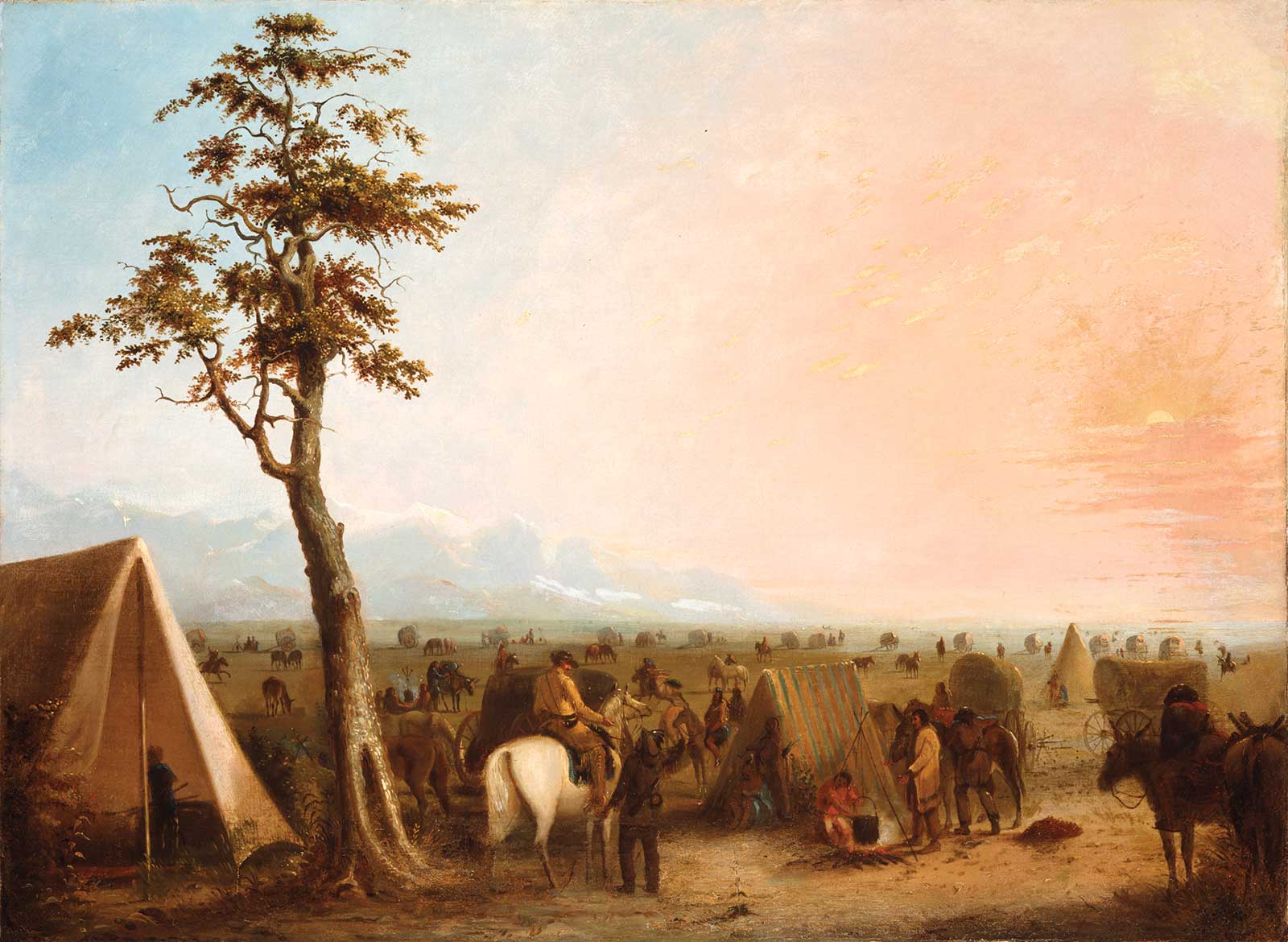
Alfred Jacob Miller (1810-1874), Our Camp, ca. 1846-1860, oil on canvas, 263/8 x 36”. Buffalo Bill Center of the West, Cody, Wyoming. Gift of The Coe Foundation. 11.70,
“The exhibition presents a unique opportunity to view a significant number of these reunited ‘Murthly Castle Millers,’ ranging from intimately scaled watercolors to large oils on canvas (one measuring 8 feet wide).”
European explorers from the Spanish to the French came to North America seeking riches, dashed in their hopes of finding gold or a passage to Asia and its valuable spices and silks. The French, however, found furs among the Indigenous people along the Atlantic coast and the St. Lawrence River in the 1500s. By the early 1800s, fur traders and pioneers were journeying west of the Mississippi River in an adventure that is now nearly lost to history. Miller’s first-hand observations contribute immensely to a germinal period in the story of America.
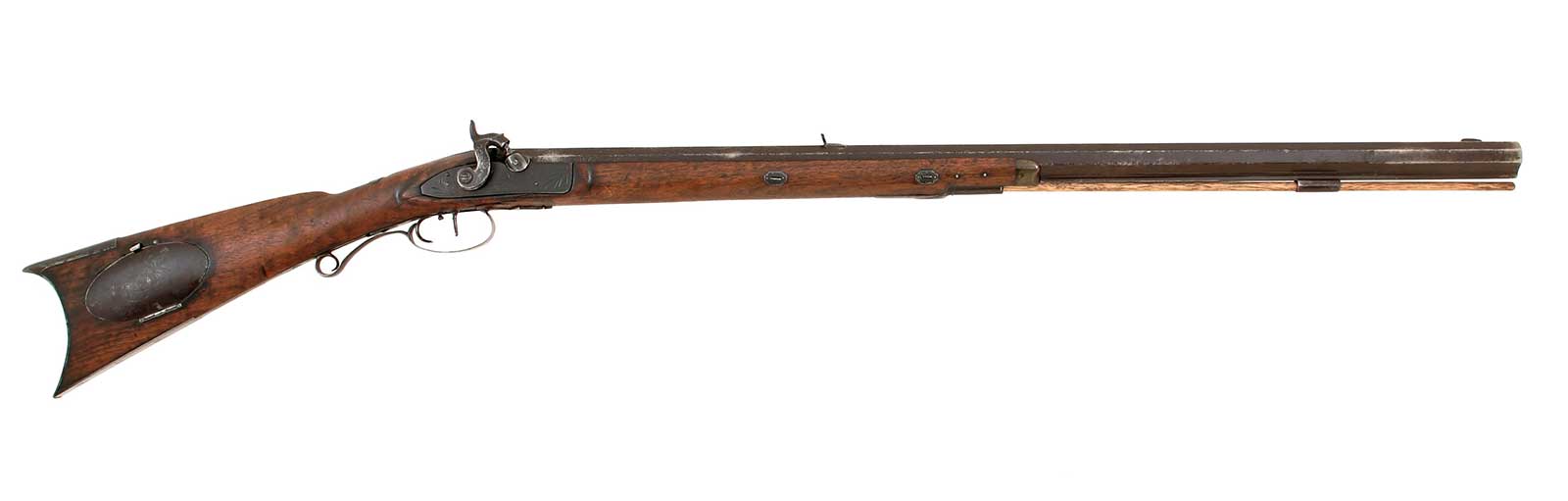
Half stock percussion rifle, J & S Hawken, ca. 1822-1849. Buffalo Bill Center of the West, Cody, Wyoming. Gift of William B Ruger, Sr. and Sturm, Ruger and Company. 1997.4.2.
The rendezvous that Miller and Stewart attended in 1837 was one of 16 held between 1824 and 1840. At the gathering, trappers supplied beaver pelts to the fashion industries of the East Coast and Europe; trappers and Native American people traded and bartered their animal pelts for guns, jewelry and supplies to get them through the next season’s grueling winter.
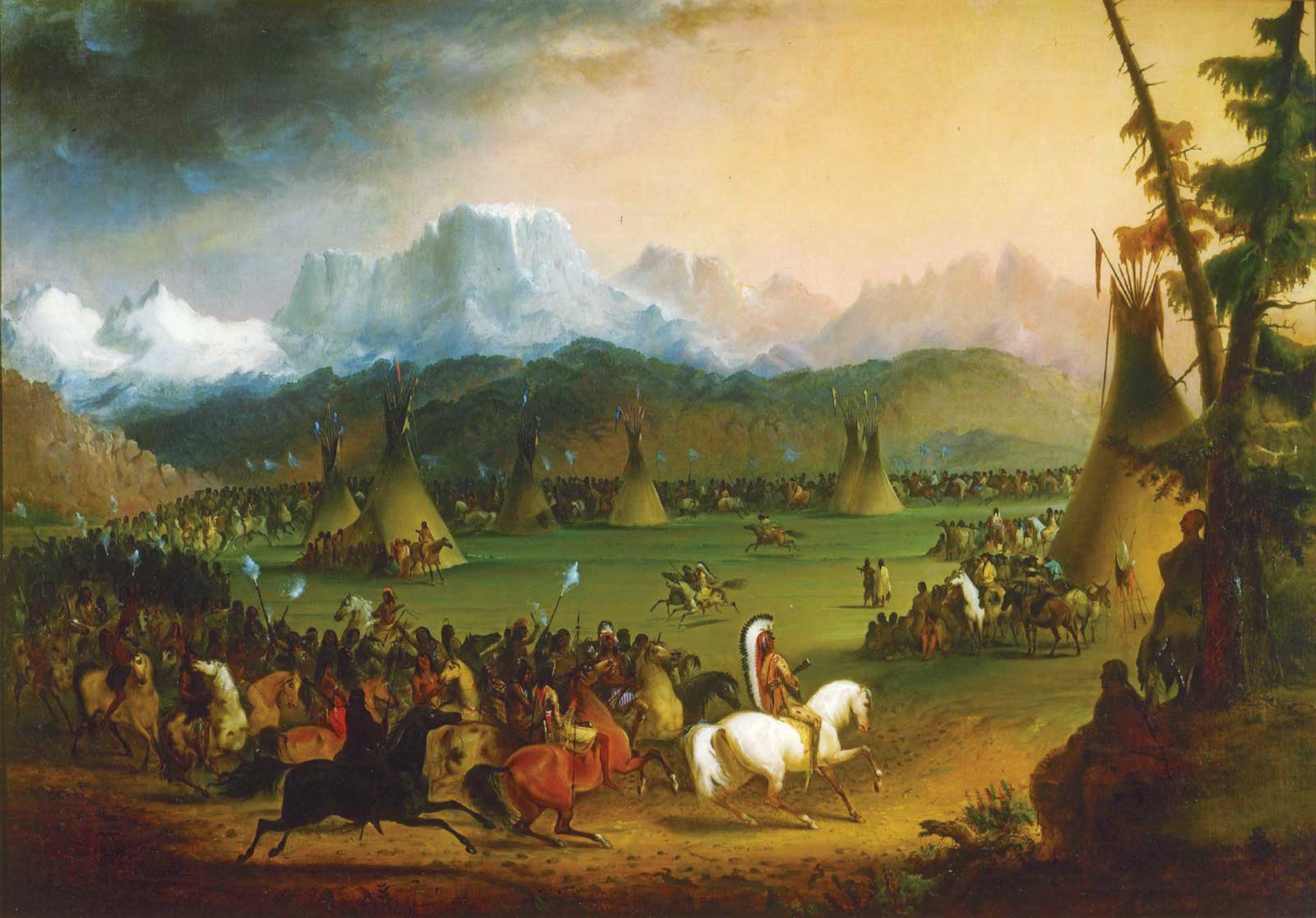
In an essay for the online Miller catalog, McWhorter writes that Miller “described the opening event of the rendezvous as a day ‘devoted to ‘High Jinks,’ a species of Saturnalia, in which feasting, drinking, and gambling form prominent parts.’ Miller portrayed the festivities in sketches made on-site, some of which he later reprised as studio oil or watercolor paintings.”
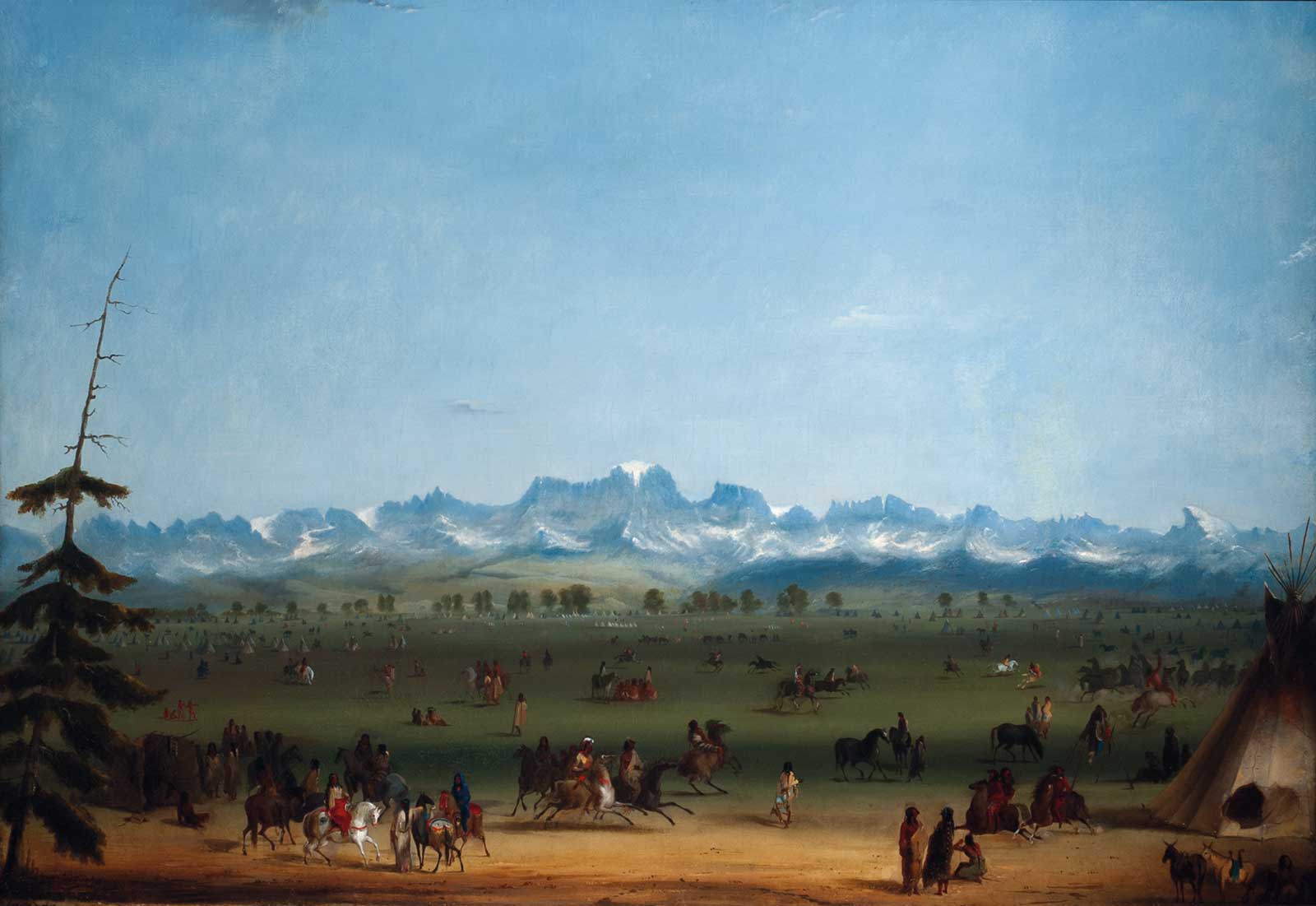
Alfred Jacob Miller (1810-1874), Rendezvous near Green River (General View of the Indian Camp under the Mountains of the Winds), 1838-1839, oil on canvas, 32 x 38”. American Heritage Center, Laramie, Wyoming. ah04912_003.
She cautions that although Miller observed first-hand, he was a product of a romantic view of the American West and its Indigenous people. Some of his paintings are “solely imaginative or based on stories other people told him. Miller’s work was a product of the romantic aesthetic that he was promoting. This would be Miller’s only trip west, and yet he spent the rest of his career revisiting and romanticizing the experience through his art. Although we have to take care in examining the ‘accuracy’ of the images, there is information to be gleaned from them. Art is the unique perspective of a unique person in a unique context.”
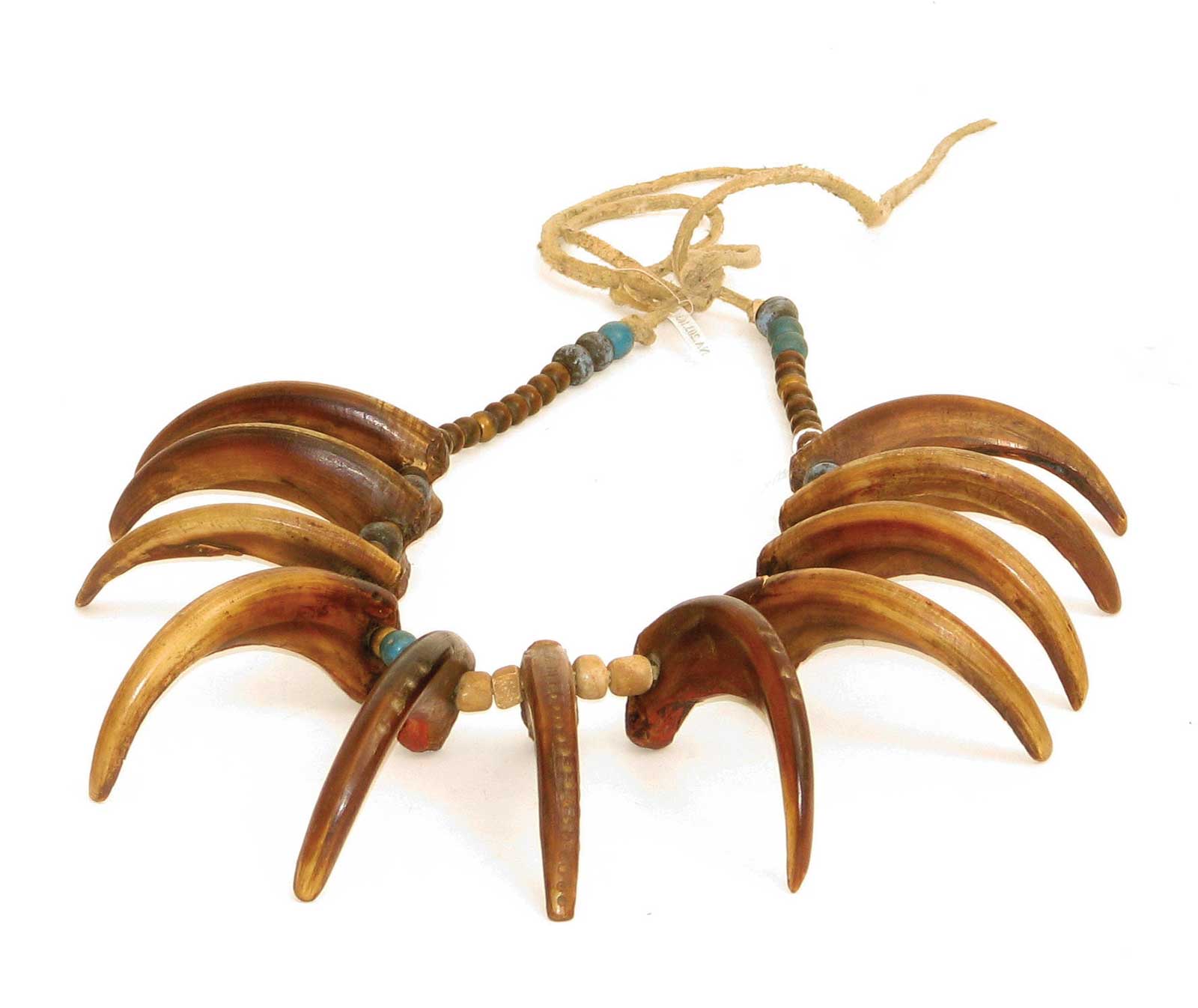
Bear claw necklace (Plains), ca. 1885, bear claws, brass beads, glass beads, tanned hide, pigments. Buffalo Bill Center of the West, Cody, Wyoming. The Paul Dyck Plains Indian Buffalo Culture Collection, acquired through the generosity of the Dyck family and additional gifts of the Nielson Family and the Estate of Margaret S. Coe. NA.203.16343.
As an undergraduate at the Johns Hopkins University in Baltimore, I frequently went downtown to visit the Walters Art Museum (then the Walters Art Gallery) bequeathed to the City of Baltimore by the son of William T. Walters (1819-1894). Little did I know that among the vast treasures of the Walters were 200 watercolors he had commissioned from Miller in 1848—at $12 each.
Among them is a painting, Antoine Watering Stewart’s Horse. Antoine Clement was Stewart’s traveling companion for many years and the caravan’s principal hunter. Miller described him as “one of the noblest specimiens [sic] of a Western hunter; – in the outward journey he killed for us about 120 Buffalo…”
Alfred Jacob Miller (1810-1874), Cavalcade (The Indian Procession), ca. 1839, oil on canvas, 69 x 96”. J. Joe Ricketts in association with the Ricketts Art Foundation.
Horses figure prominently in Miller’s oeuvre. In the online catalog, the late Peter Hassrick commented on the artist’s drawing, Wild Horses. ”Symbolic of the true wilderness in the Far West during Miller’s 1837 visit, the wild horses of the prairie carried a special American message of freedom, independence and vitality…The horses are presented at play, nipping and kicking, bucking and rearing. Yet for all their vivacious and corporeal presence, for all their noisy frolicking, they were also famously fleeting in their habits. Miller wrote that they could vanish as quickly as they were seen. So, being able to record them with such fidelity was a serious tribute to the spontaneity and efficaciousness of his observational powers.”
The online catalog and the exhibition shed light on a no-longer-forgotten period of American history. —
Alfred Jacob Miller: Revisiting the Rendezvous—in Scotland and Today
May 20-October 22, 2023
Buffalo Bill Center of the West
720 Sheridan Avenue, Cody, WY 82414
(307) 587-4771, www.centerofthewest.org
Powered by Froala Editor
Powered by Froala Editor