In 2011, watercolor artists Marlin Rotach and Don Weller had a chance meeting in the photography pit at Cheyenne Frontier Days. Tucked back behind the fence, just out of reach from the kicking hooves and general mayhem of the rodeo arena, they introduced themselves and became fast friends. Though their paintings were very different—“My work was kind of splashy and Marlin’s work is more photorealism,” Weller says—they were linked together by their love of watercolor.
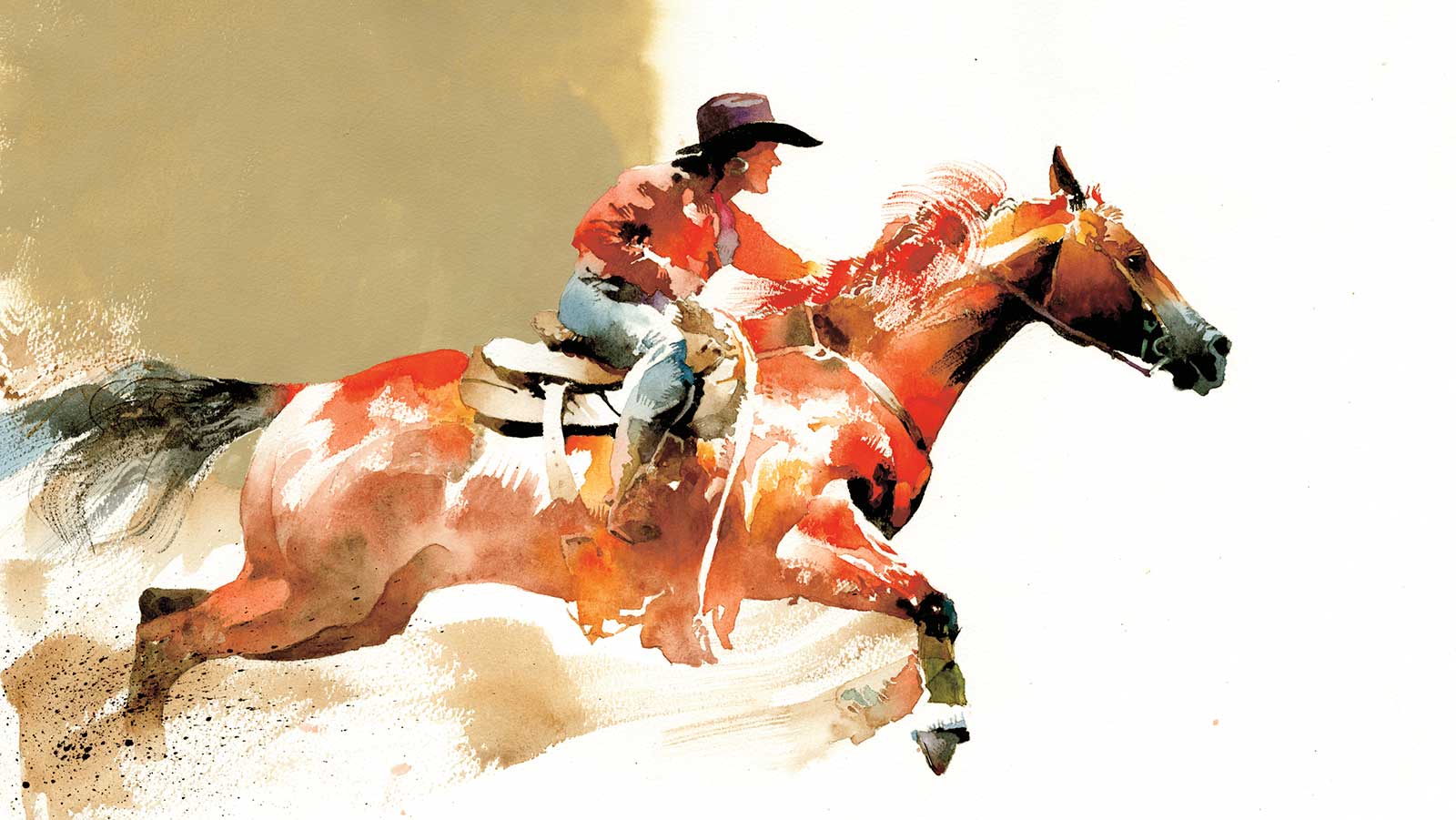 Don Weller, Over the Top Speed, watercolor, 12 x 20”
“Even though we were at extremes as far as what you could do with watercolor, we believed in the power of the medium, so much that we started talking about doing a show to celebrate watercolor,” Weller remembers. “The more we talked about it, we also realized we probably should do a book too.”
Sometimes these kinds of hopes and aspirations are called pipe dreams because of how large and unattainable they are. But then Weller and Rotach went and did it. And both dreams, too—a major exhibition and a book. “It had never been done,” Rotach says, “so we knew we had to do it. It was important to us.”
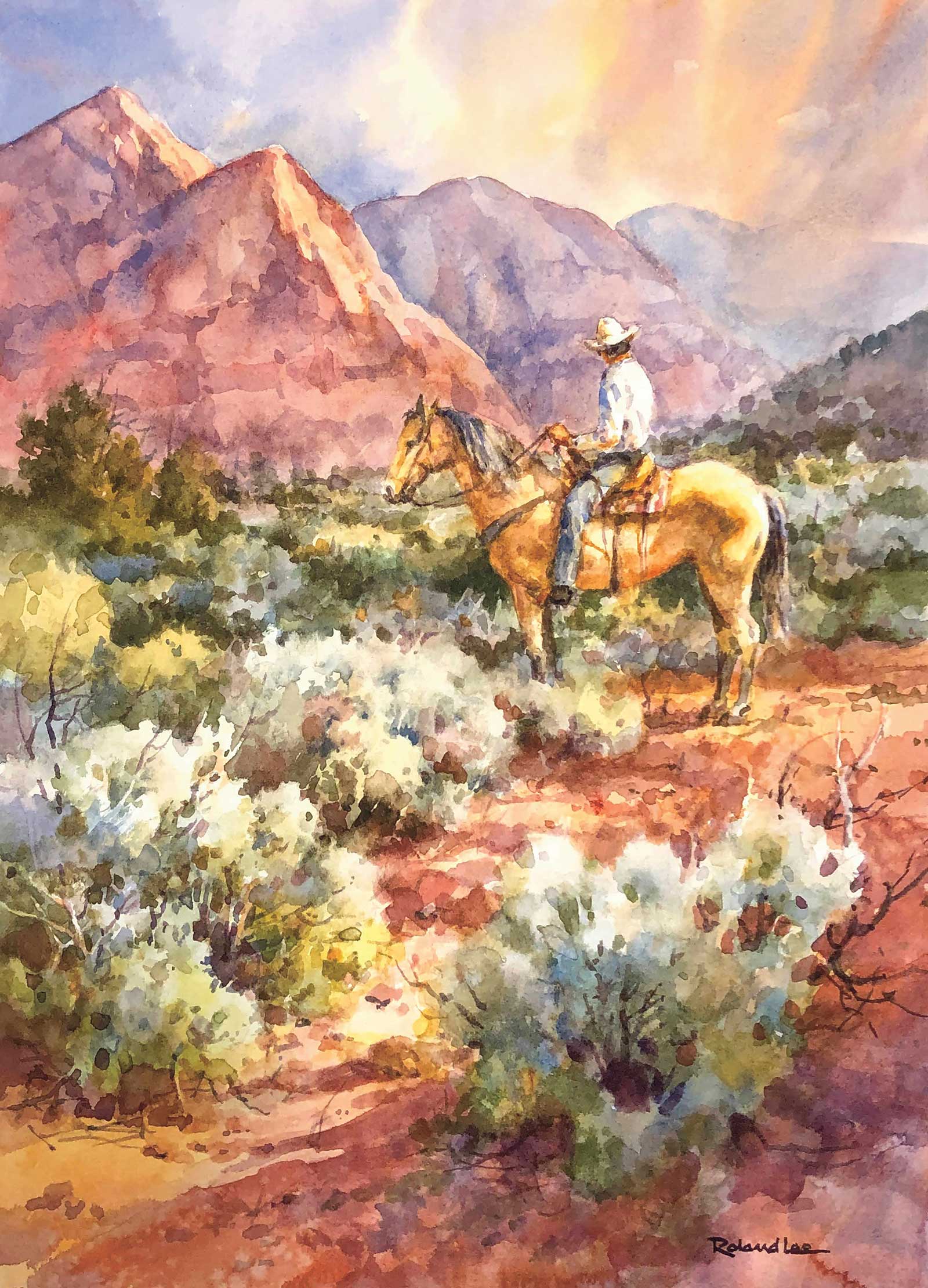 Roland Lee, Where a Man Can Breathe, 1995, watercolor, 14 x 10”
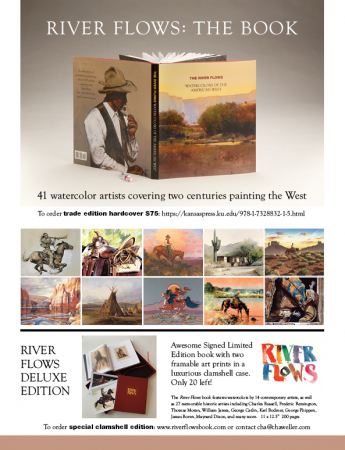
The book, The River Flows: Watercolors of the American West, was published in August 2020 and its goal is twofold: to highlight watercolor from Western art’s past and to celebrate work from the contemporary artists working today in the medium.
“Western art’s history is almost a history of watercolor. All of the early artists who came out West were using watercolor,” Rotach says, referring to George Catlin, Karl Bodmer, Thomas Moran, Alfred Jacob Miller and others. “If you wanted to paint in oil you’d have to almost travel with a chuckwagon full of gear including paints and oils. When you really think about it, the first artists ever were using watercolor. They were mixing water with a bit of pigment and painting on cave walls. So there’s a long history there, especially in the West.”
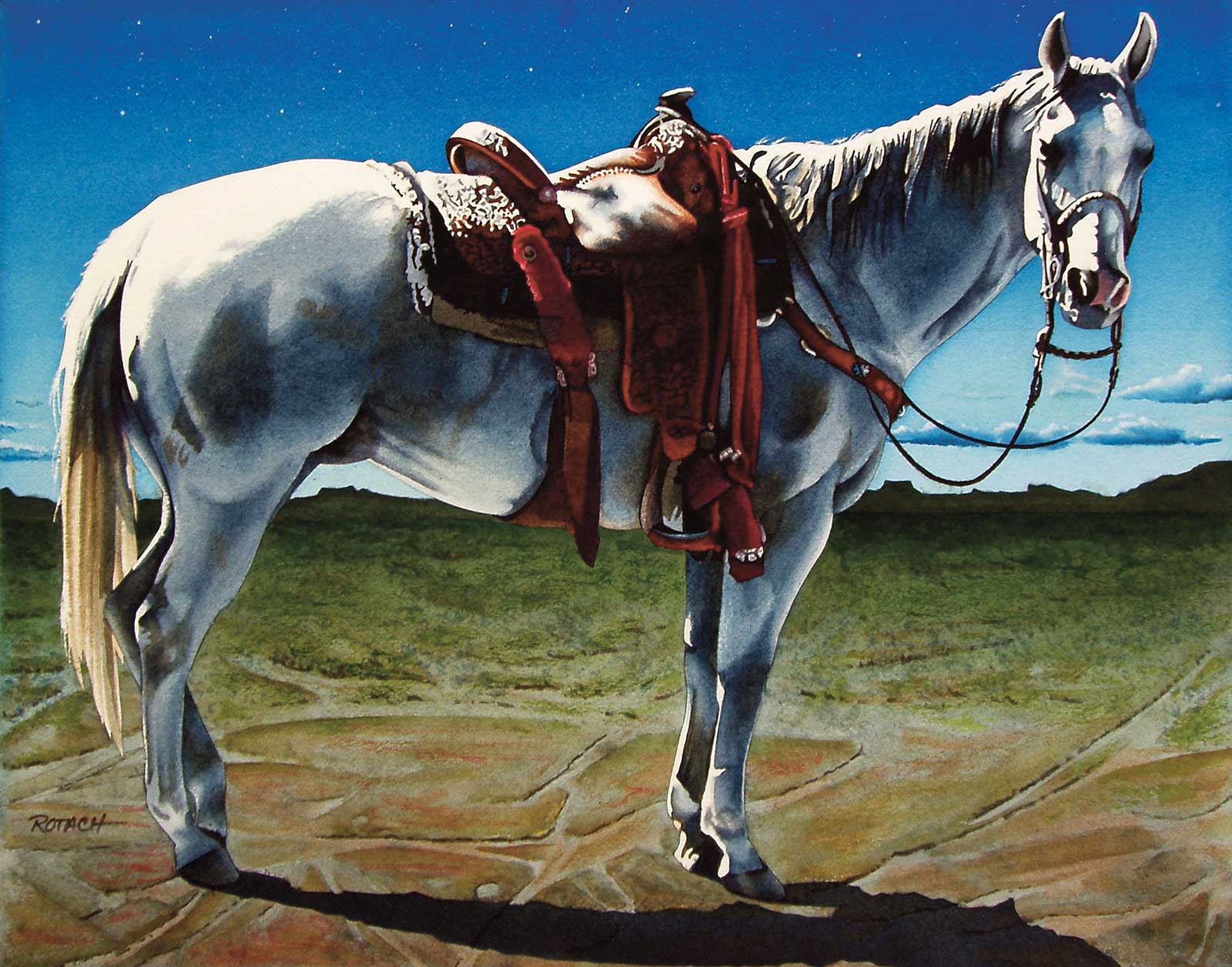 Marlin Rotach, Moonlit Mare, watercolor
The book not only dives into some of this history, but it also presents major watercolor examples, including from artists such as Charles M. Russell, Henry Farny, O.C. Seltzer and Frederic Remington, as well as lesser-known artists such as Woody Crumbo, Gunnar Widforss and Samuel Seymour, who painted during an important 1819 expedition west.
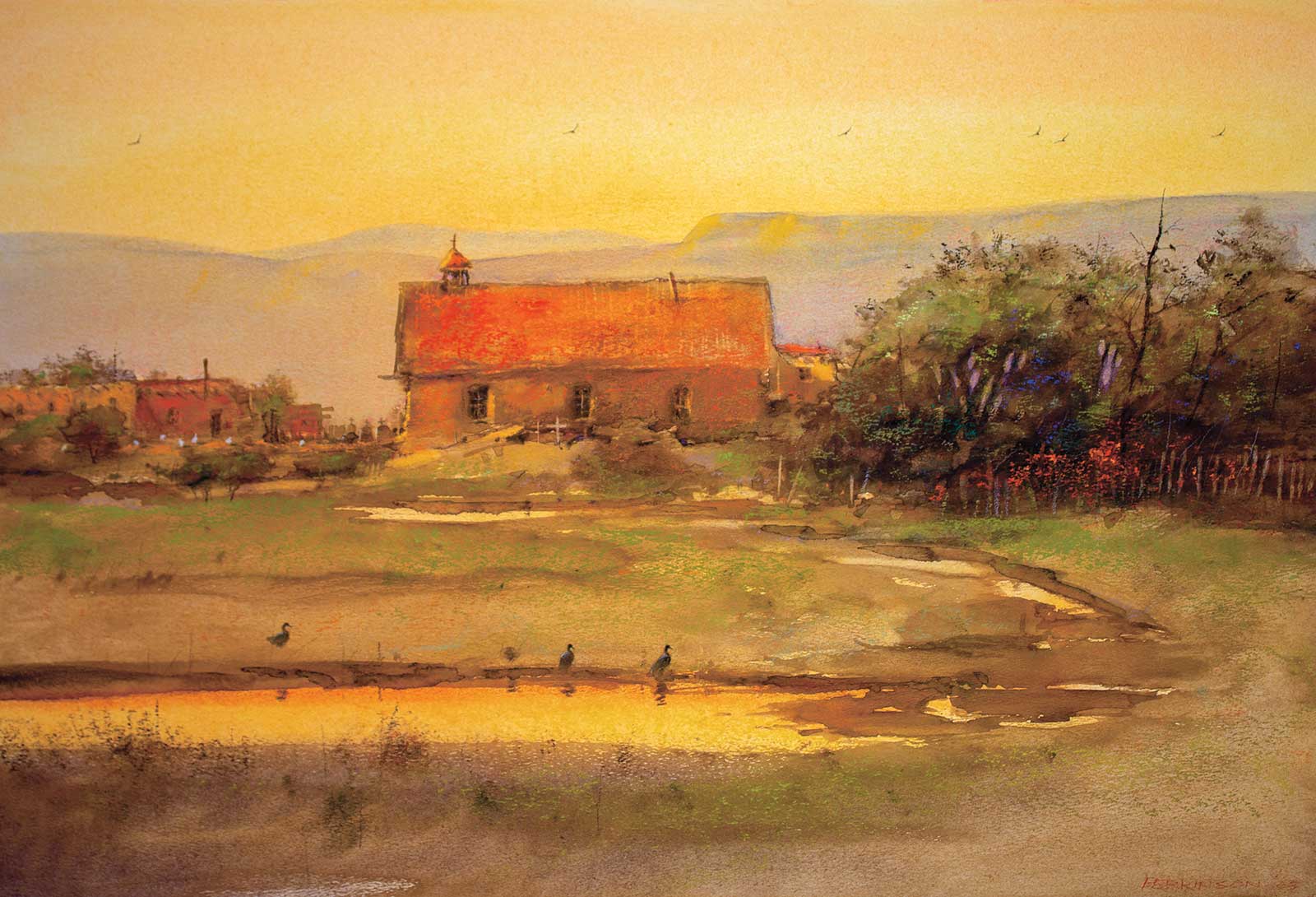 Tom Perkinson, Adobe Church, Northern New Mexico, watercolor and mixed media, 25 x 35”
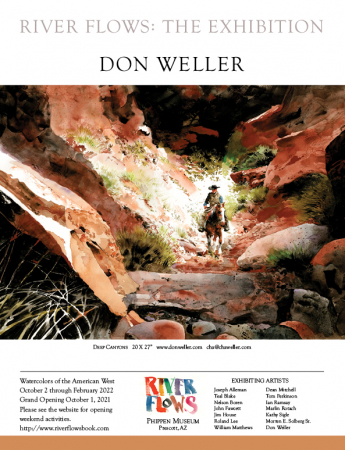
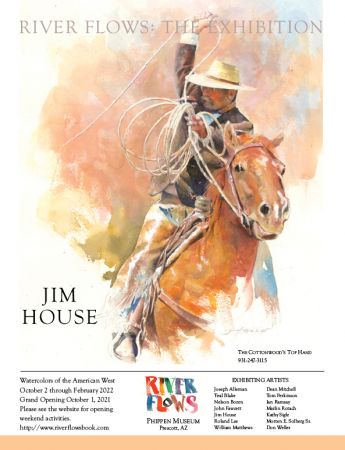
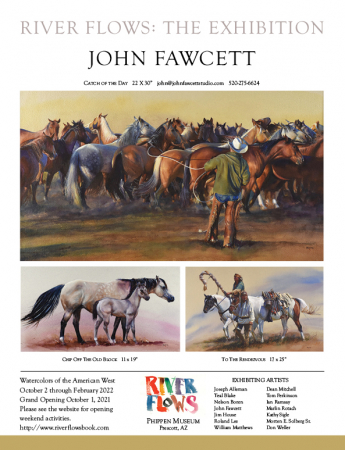
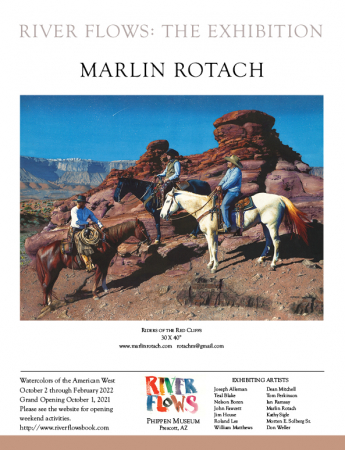
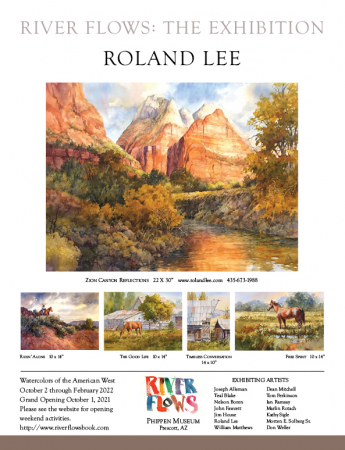
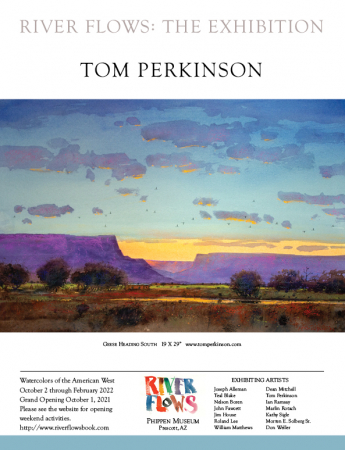
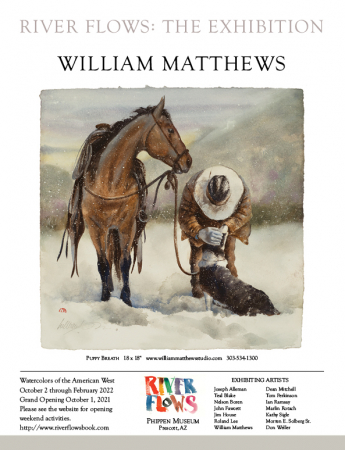
The book then segues into the exhibition, The River Flows: Watercolors of the American West, opening October 2 at the Phippen Museum in Prescott, Arizona. The exhibition will feature a who’s who of Western watercolor: Morten E. Solberg Sr., Tom Perkinson, Ian Ramsay, William Matthews, Roland Lee, Jim House, Nelson Boren, John Fawcett, Dean Mitchell, Kathy Sigle, Teal Blake, Joseph Oakes Alleman and the two masterminds, Weller and Rotach. The exhibition will also be a sale, with all of the works on view available to bidders.
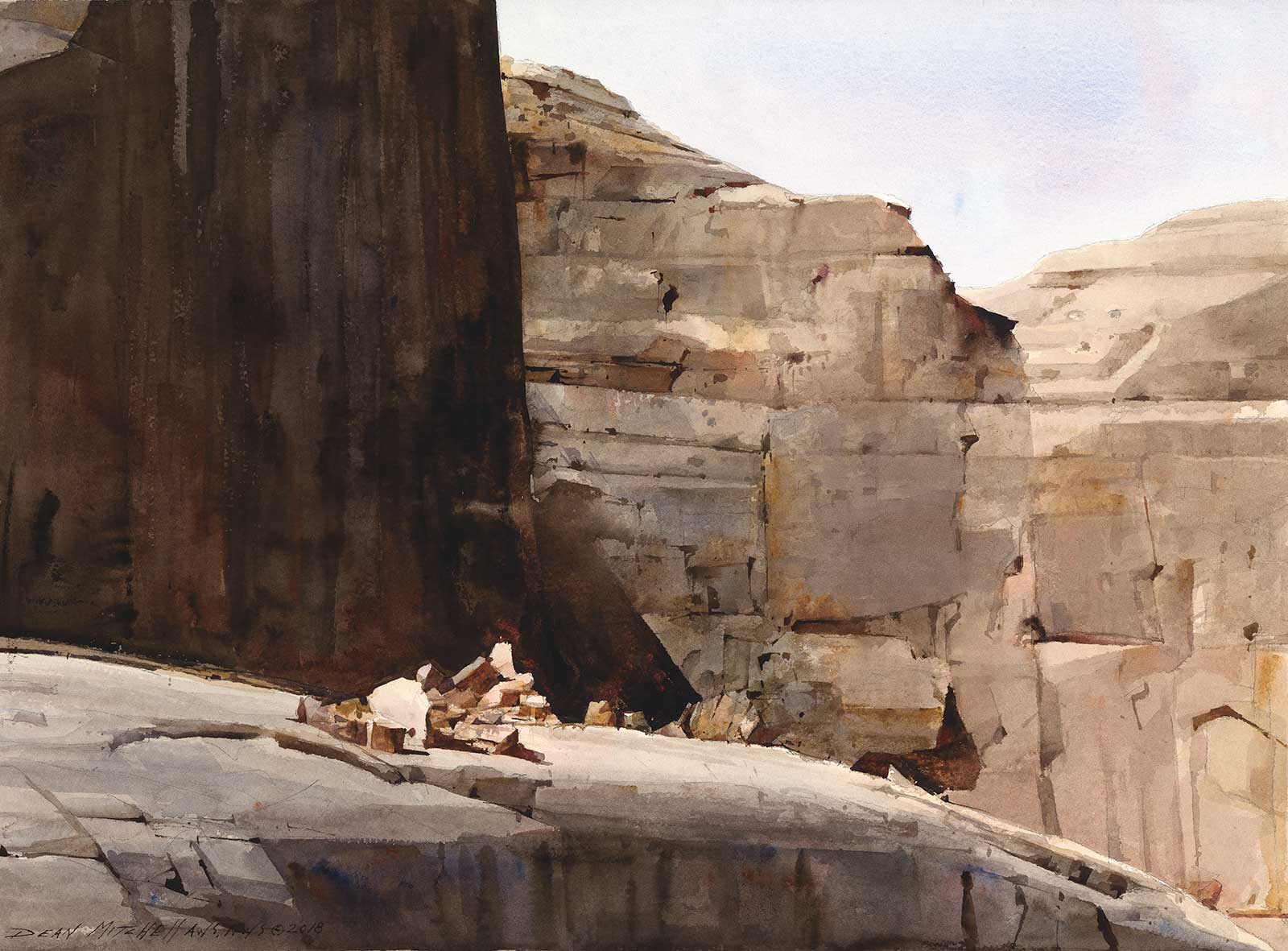 Dean Mitchell, Walls of Zion, watercolor, 22 x 30”
The exhibition will serve several purposes, one being to highlight the work of some of the best watercolor artists working today, but then it will also be a flashpoint for watercolor education and advocacy. Weller and Rotach both say in their own unique ways the same thing: watercolor is often unfairly upstaged by other mediums, at no fault of anyone involved. One remedy to this problem of underrepresentation of the medium—Weller refers to watercolor artists as the “lonely fraternity among the oil painters”—would be for more painters to explore watercolor. Several years ago, at a major museum exhibition, Dean Mitchell went to the podium to accept the top watercolor award, one he had won several times before, and he genuinely pleaded with the crowd: “Give watercolor a try. I can’t be the only winner of this award every year.”
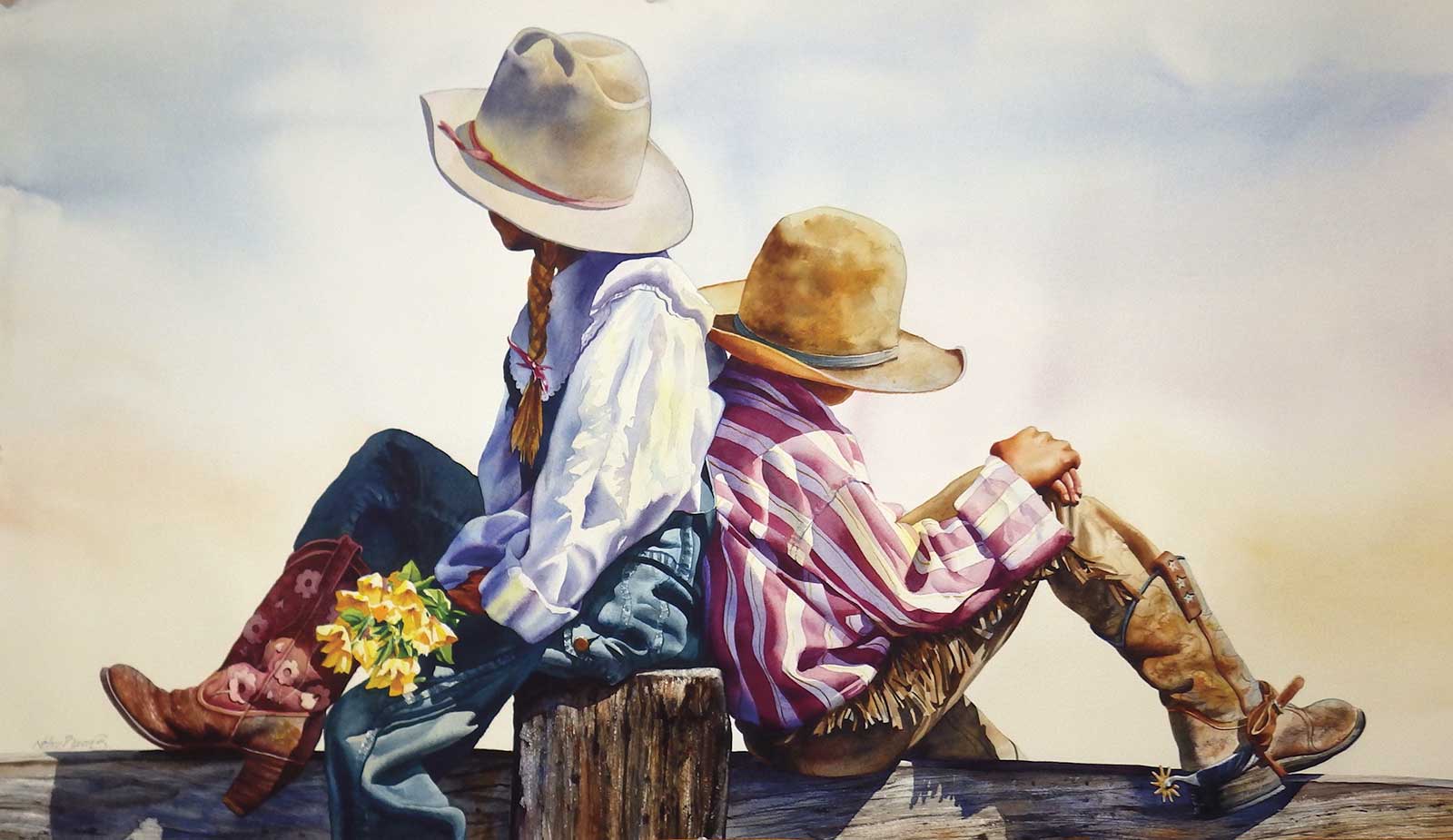 Nelson Boren, Life is Good, watercolor, 24 x 42”
“One of our goals with this exhibition is to change people’s minds about watercolor,” says Rotach. “It has endured for so long and we want to guarantee it continues.”
The River Flows will also hopefully put some watercolor myths to bed, including several pervasive ones that might be holding back collectors from adding to their collections. One of the big ones is that watercolors don’t last because paper and paint fade. “You certainly don’t want to show a watercolor in direct sunlight, but museum glass has gotten so good it can block out 99 percent of the UV light. Just look at these paintings from 100 and 200 years ago, they look beautiful and they have withstood the test of time,” Rotach says, adding that there are even techniques artists are using that allow works on paper to be shown without glass. “Another myth is that watercolor works are often small. I buy Arches paper from France—what I think is the best paper ever made—and it comes in rolls 150 inches wide at 30 yards long. When it comes to the size of paintings, the sky is the limit.”
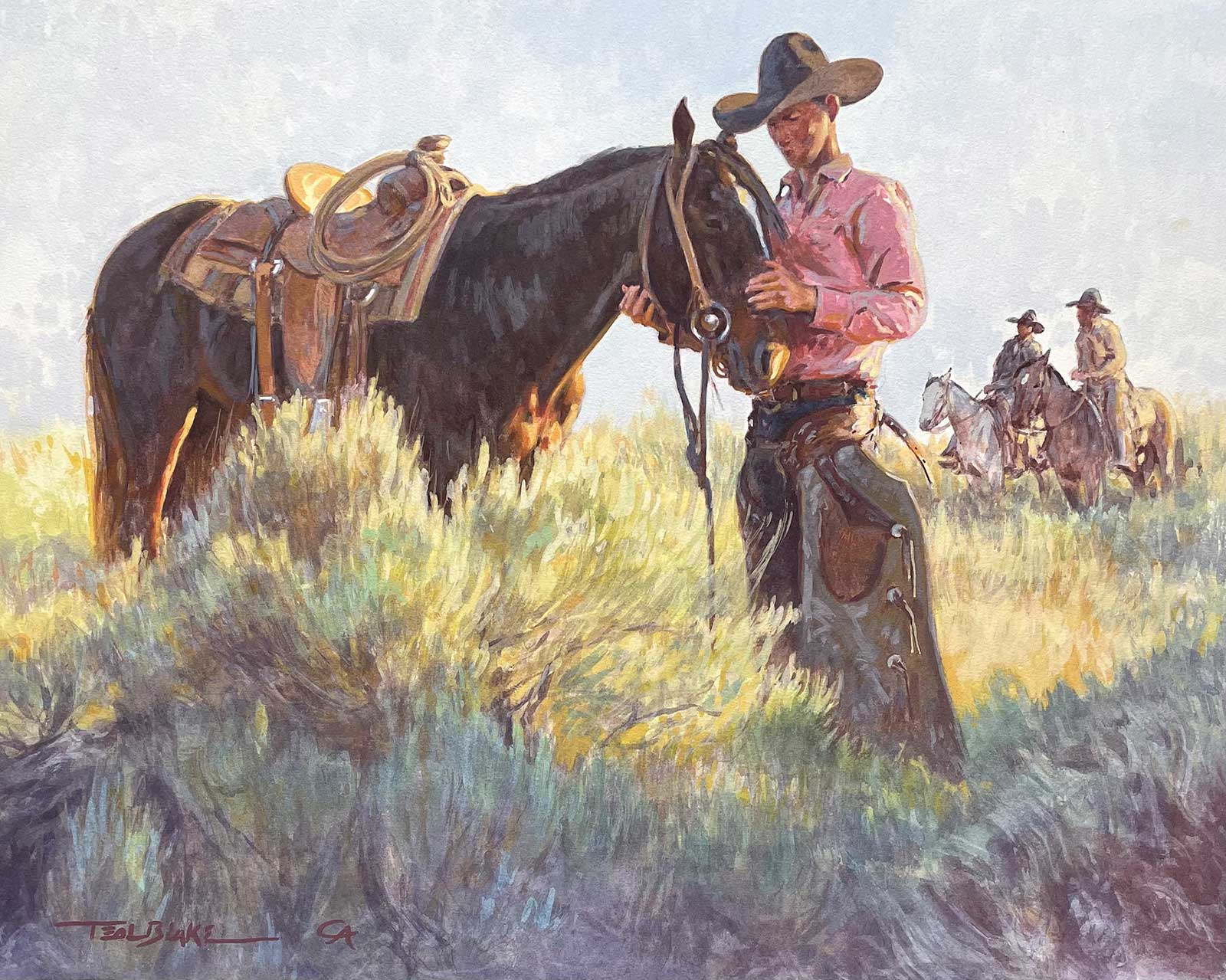 Teal Blake, A Cowboy's Prayer, watercolor, 16 x 24"
John Fawcett, who works in both watercolor and oils, is hoping that the exhibition is an illuminating education for viewers. “I loved watercolor at an early age because of the portability and spontaneity and fluidness of it. You could paint quickly and do it while you were out in the West; that was really paramount to me,” he says. “People like to ask me what I like better, watercolor or oil, and each has their own great characteristic. I like watercolor because it creates happy accidents. But there are some drawbacks, one being that if you make a mistake it’s hard to correct and you have to tear up the paper and start over. You have to almost paint in order. For me it’s looser to tighter, less detail to more detail, less pigment to more pigment. A good drawing underneath usually is the key to make it all work.”
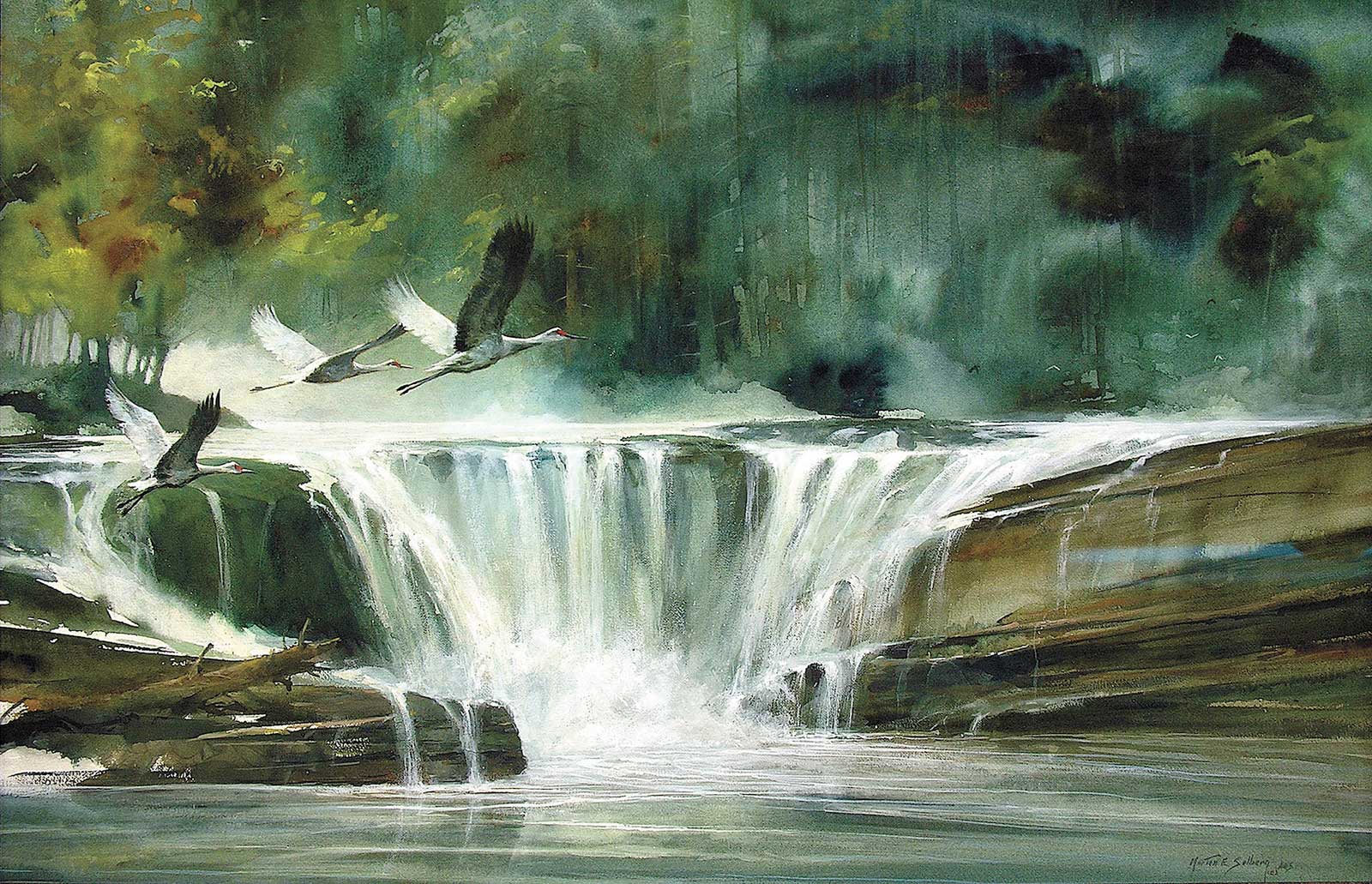 Morten Solberg, Morning Flight Over Lewis Falls, watercolor, 20 x 30”
Another aspect that people might not think about is the paper, which usually has to be meticulously prepared before even the first brushstroke is applied. “Paper quality, paper weight, paper thickness and texture…this all comes into play. Usually the thicker the paper the less chance it has of buckling when it gets wet,” Fawcett says. “For me, I’ll get my paper completely wet in a shower or a sink, or even hose it off outside. Once it’s wet I’ll staple it to a board and let it dry in the sun. Stretching it on a sunny day, or even just using a hair dryer, will cause the paper fibers to shrink and it will cause the paper to become flatter, which mean the paper will be able to absorb more before it buckles.”
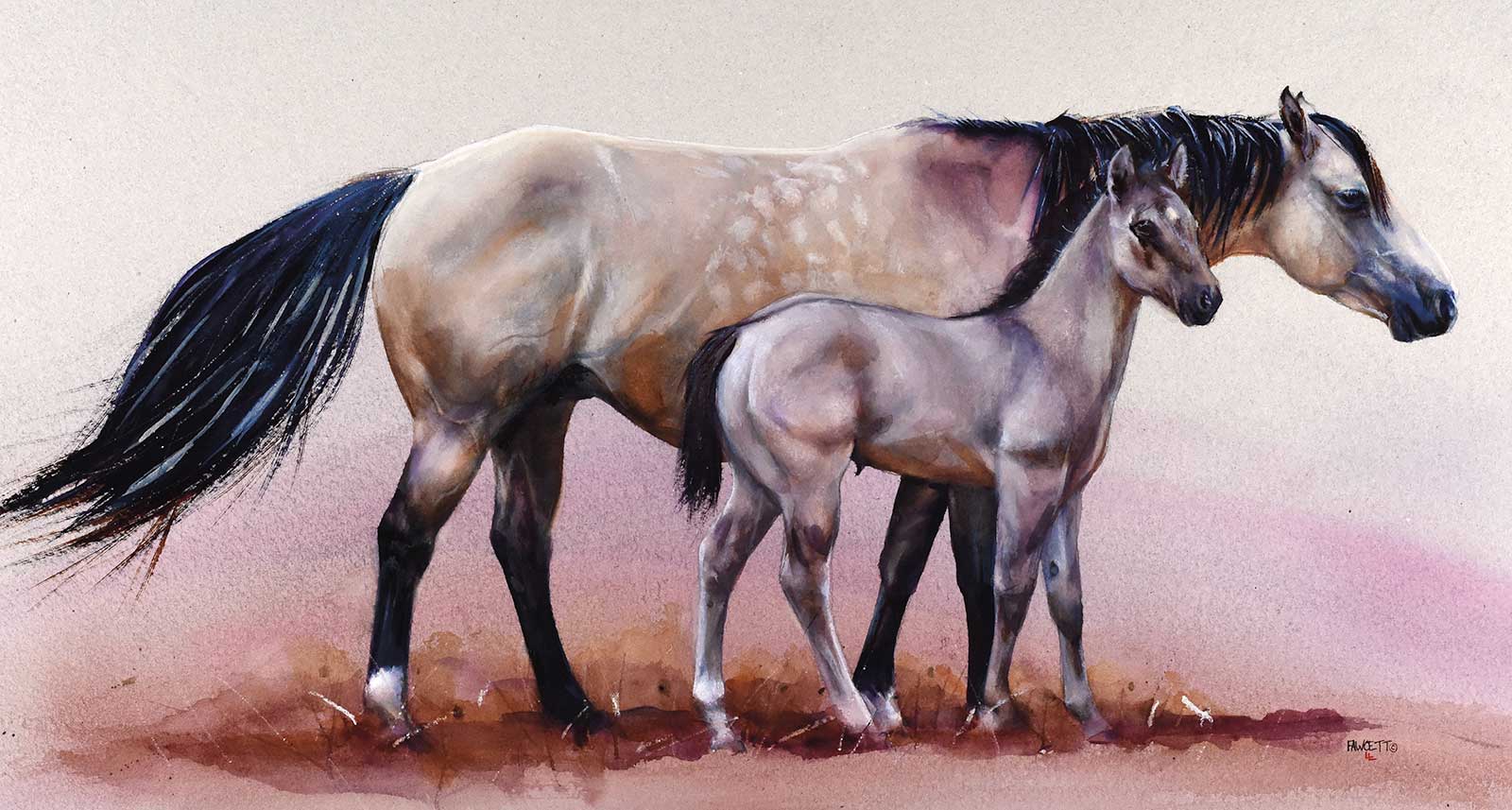 John Fawcett, Chip Off the Old Block, watercolor, 10½ x 19”
These elements of watercolor—the paper, the lightness of the paint, presentation methods of the final pieces—will be on full display at the Phippen show. For Weller, he thinks visitors to the show will identify greatly with the works, particularly since most children’s first experiences with painting are with watercolors. “Everyone remembers it. It was a dry paint mixed with water. You started when you were a little kid. It would come in a little tin with a tiny little brush. You’d get the brush wet and wiggle it around the dry stuff to get your color. Your first painting was a pathetic attempt because maybe the color was washed out or the paper got too wet, but everyone has those memories from art class,” Weller says. “You can’t say that about other mediums, but you can say that about watercolor.”
The River Flows: Watercolors of the American West
October 2, 2021-February 6, 2022
Phippen Museum, 4701 Highway 89 North, Prescott, AZ 86301
(928) 778-1385, www.phippenartmuseum.org
Powered by Froala Editor