In Roman mythology, Romulus and Remus were the founders of the city of Rome. When the twins were born, the king ordered that they be put in a basket in the Tiber River where he hoped they would die and not grow up to overthrow him. They were rescued by a she-wolf who suckled them until they were found by a shepherd and his wife who raised them. They grew up, killed the king (their granduncle) and restored their grandfather to the throne. They then went on to found their own city.
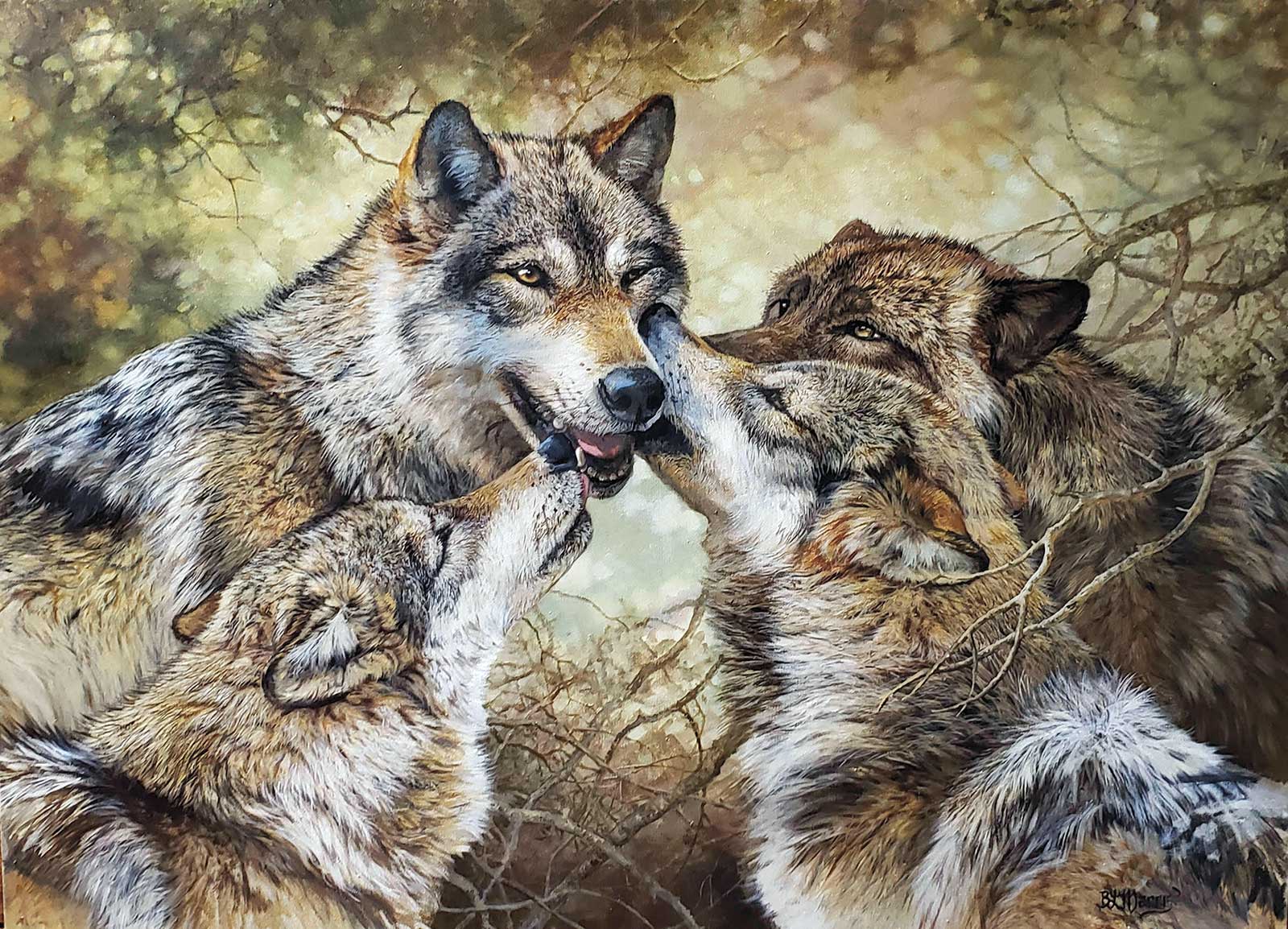 Trailside Galleries, The Way of Wolves, oil on canvas, 30 x 40", by Bonnie Marris.
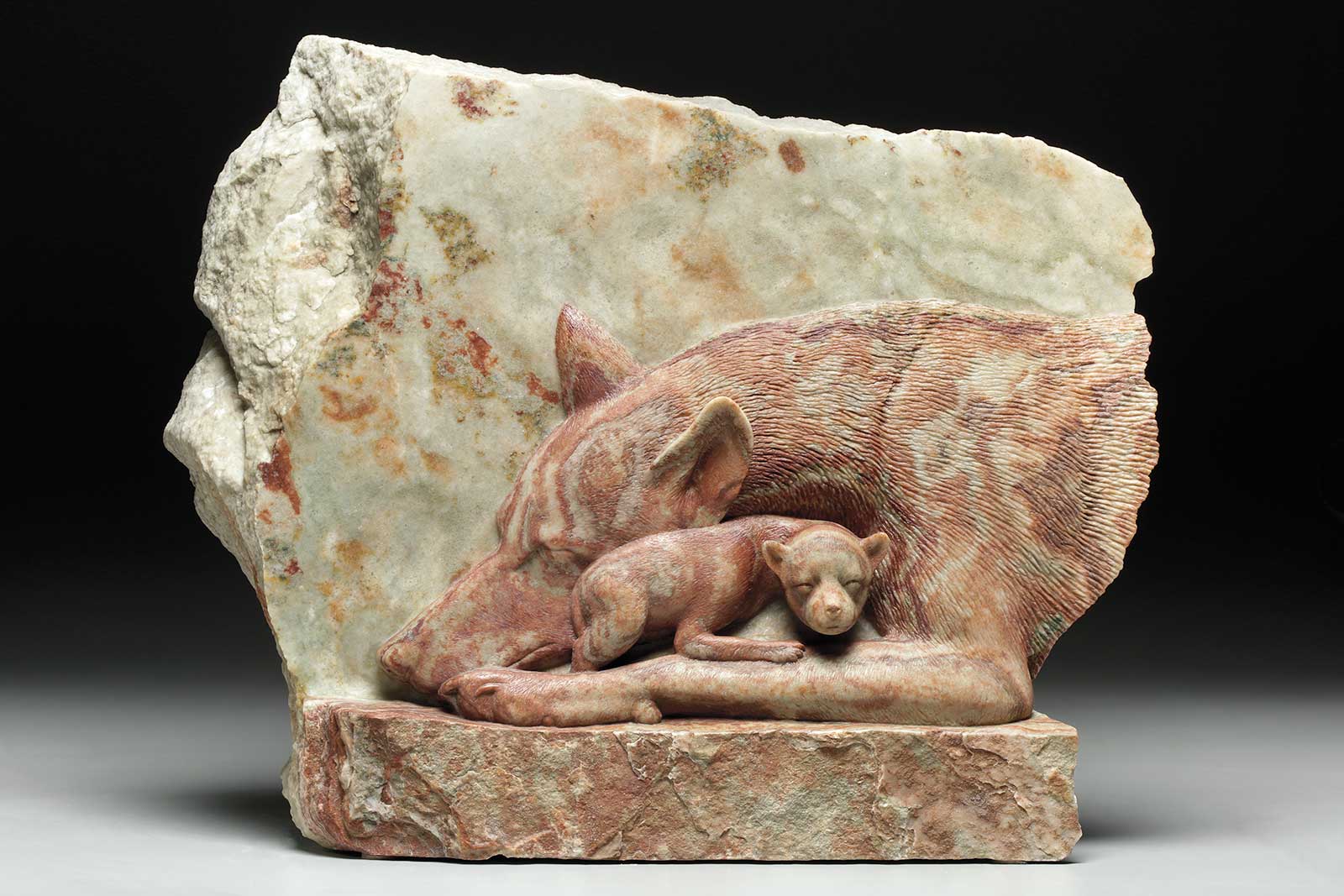 The Bradbury Art Museum, Settling In (American Red Wolf), Utah alabaster, 22 x 27 x 9", by Dale Weiler.
The wolf has been revered and reviled throughout history. Because they preyed on livestock, they were nearly totally eradicated in the Western United States by poisoning, shooting and destructing their habitat. Their elimination in Yellowstone, for instance, allowed elk and moose herds to grow. The elk overgrazed the land and consumed young aspen and willows. Bird habitats were lost and beaver lost their building material for dams, allowing rivers to erode their banks. The reintroduction of wolves has begun a partial restoration of the ecosystem. But, once the delicate relationships of an ecosystem have been disrupted, it’s difficult, if not impossible, to restore them.
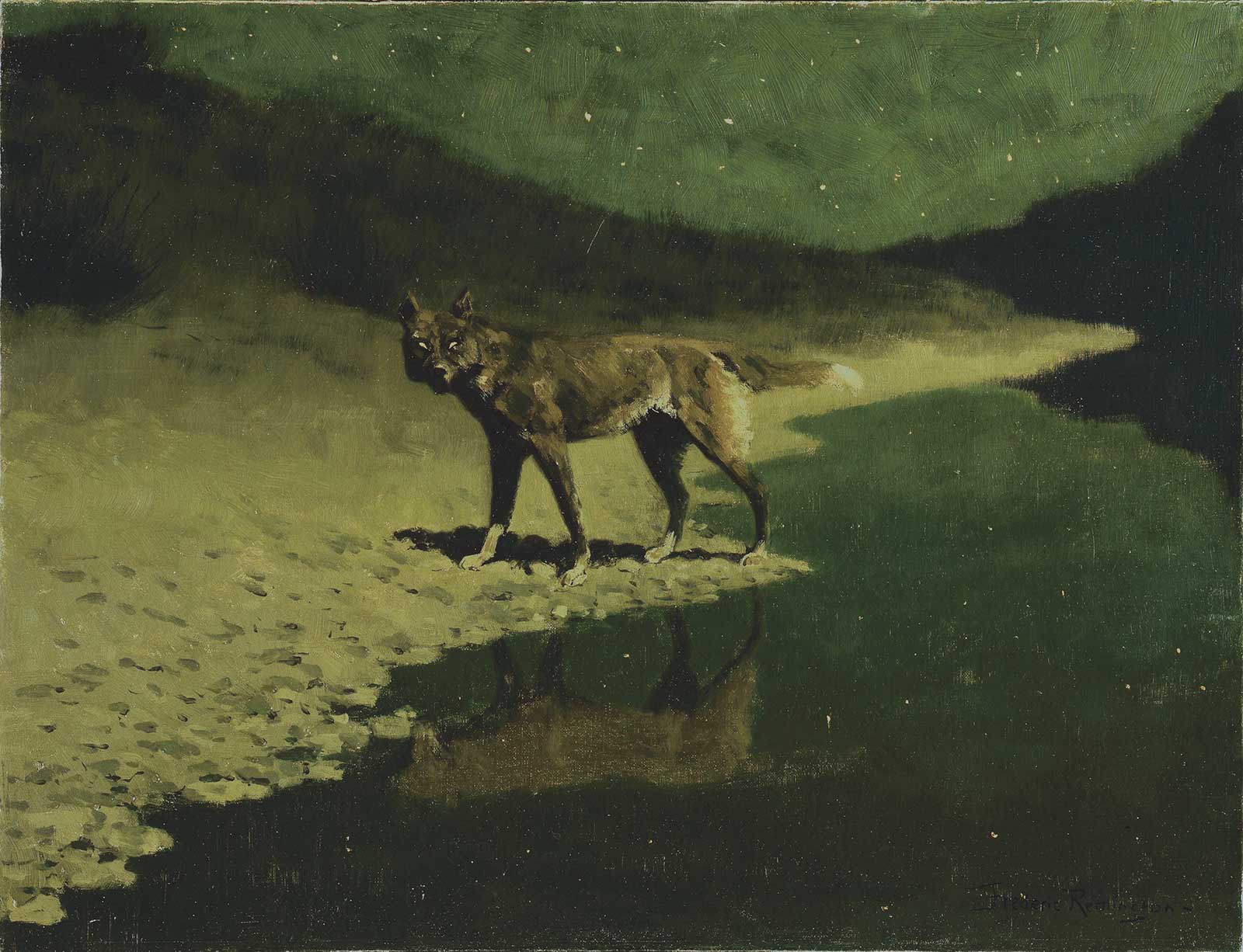 Addison Gallery of American Art, Moonlight, Wolf, ca. 1904, oil on canvas, 201/16 x 26", by Frederic Remington (1861-1909).
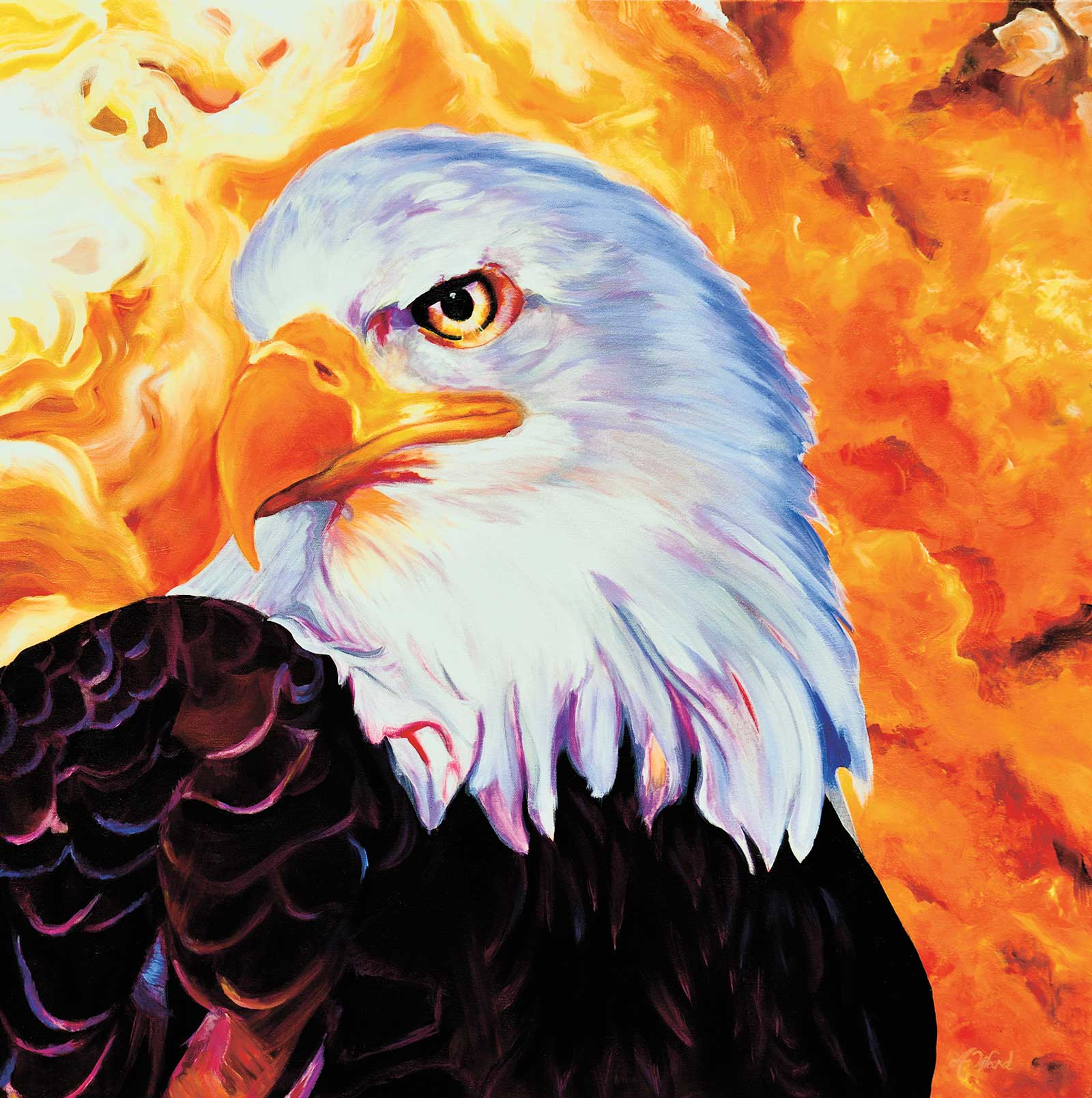 Amanda Ward, Luminous Guide, acrylic on canvas, 30 x 30"
Frederic Remington (1861-1909) depicts not just the animal in his painting Moonlight, Wolf (ca. 1904), but a mindset. The wolf stands at the edge of a stream gazing at the viewer, its eyes reflecting the moonlight and echoing the light of the stars reflected in the water. It is one of his nocturnes, painted late in his short career in which he explores painting the dark. With less detail than his earlier Western genre paintings, they leave interpretation up to the viewer.
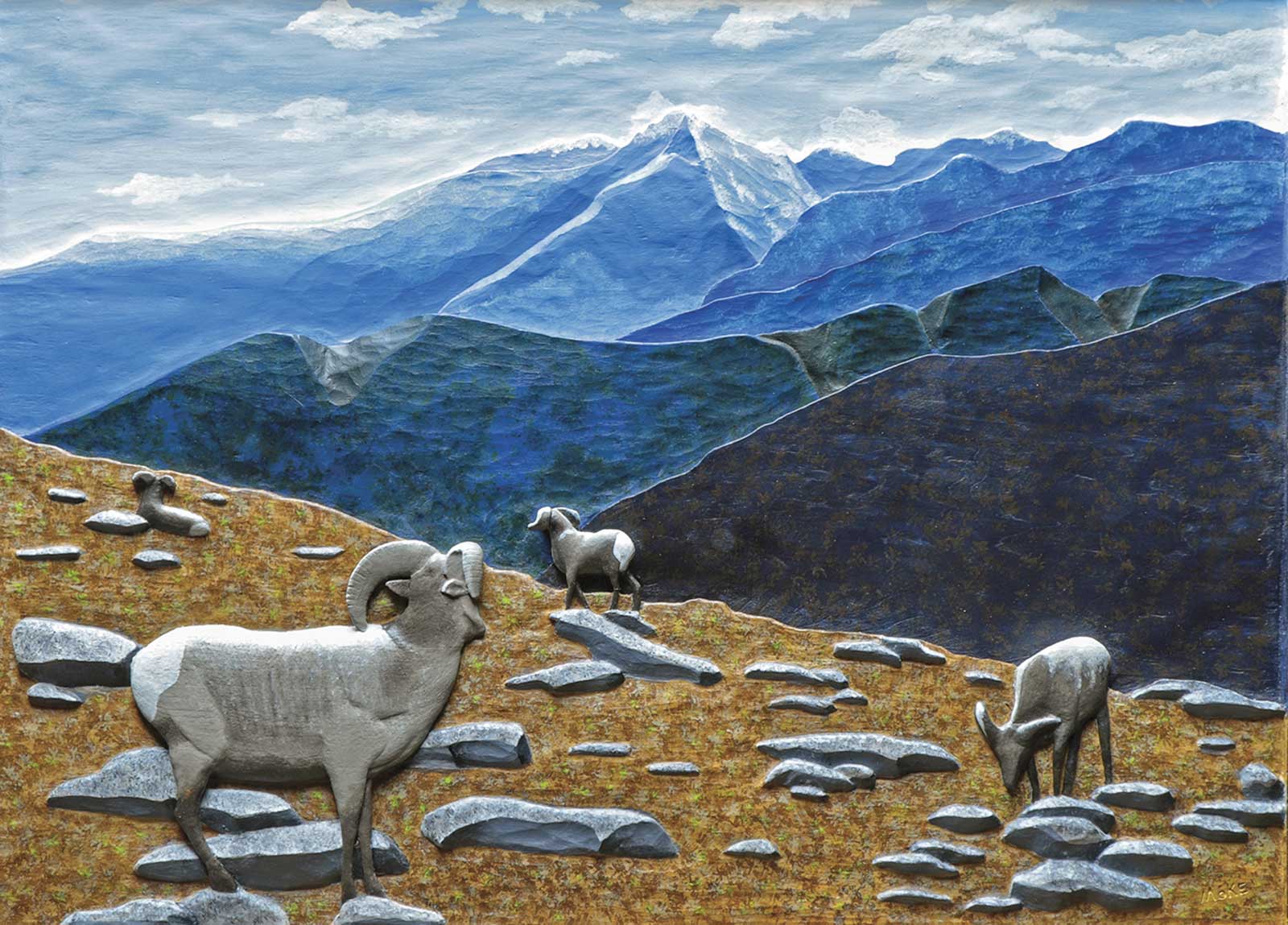 Don Woodard, Bighorn View, linden wood, 20 x 26½"
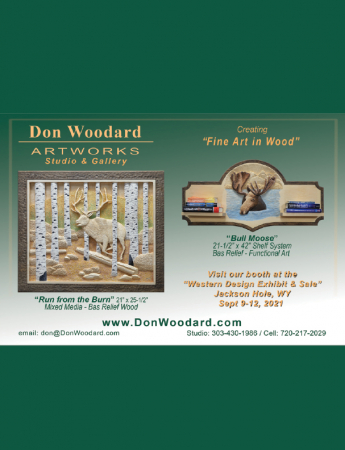
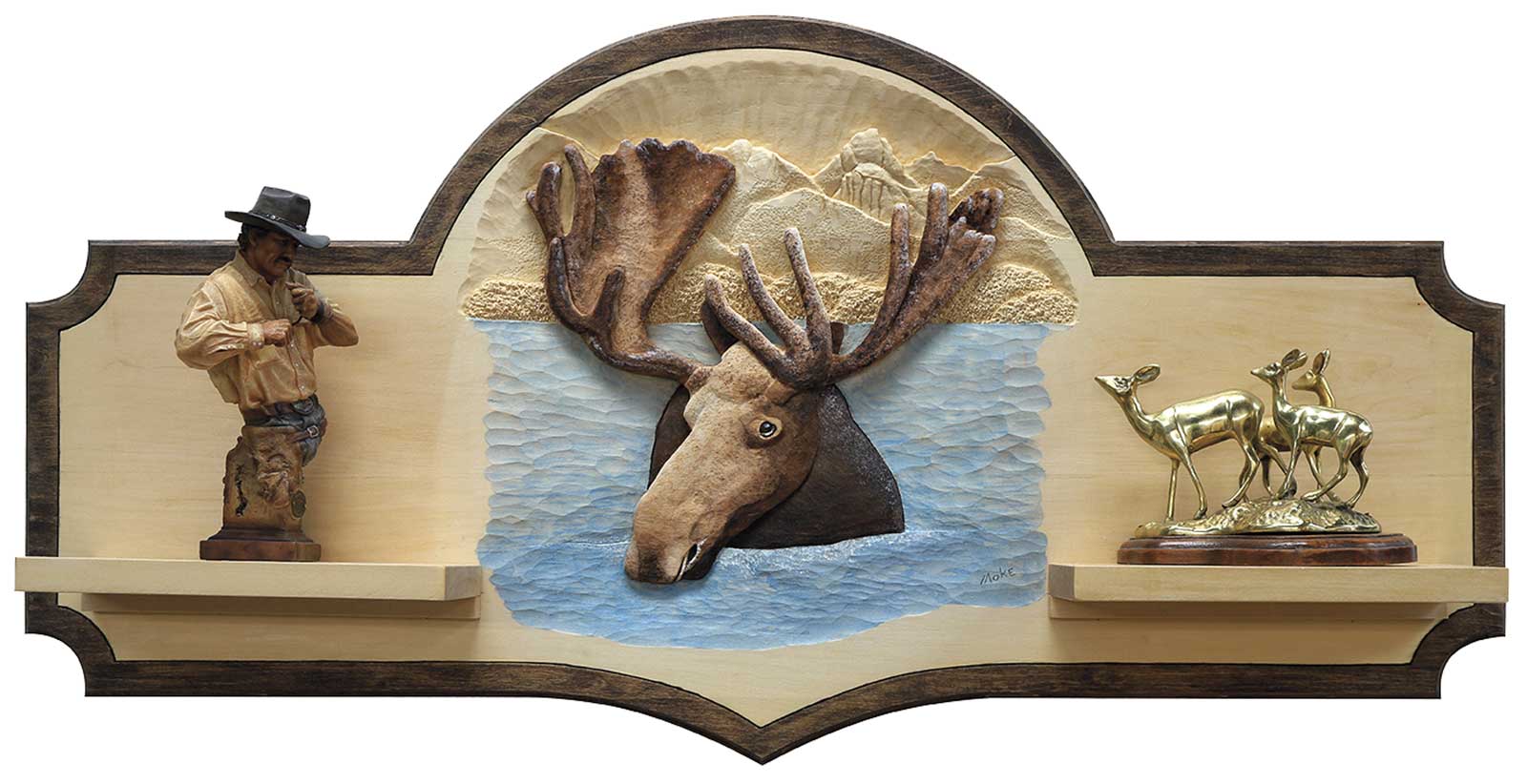 Don Woodard, Bull Moose, linden wood, 21½ x 42"
In an essay written for the Addison Gallery of American Art, Alexander Nemerov asks, “What are we to make of this strange image? In one sense, it represents an idea common in Remington’s time: the wolf as symbol of an intractably hostile nature—a primitive remnant somehow defying the paths of progress that Remington basically endorsed. In The Curse of the Wolves, a short piece published in Collier’s Weekly in 1898, Remington lamented the havoc wrought by wolves on the cattle industry: ‘It is quite disheartening to think that such a pest cannot be gotten rid of in this advanced day.’”
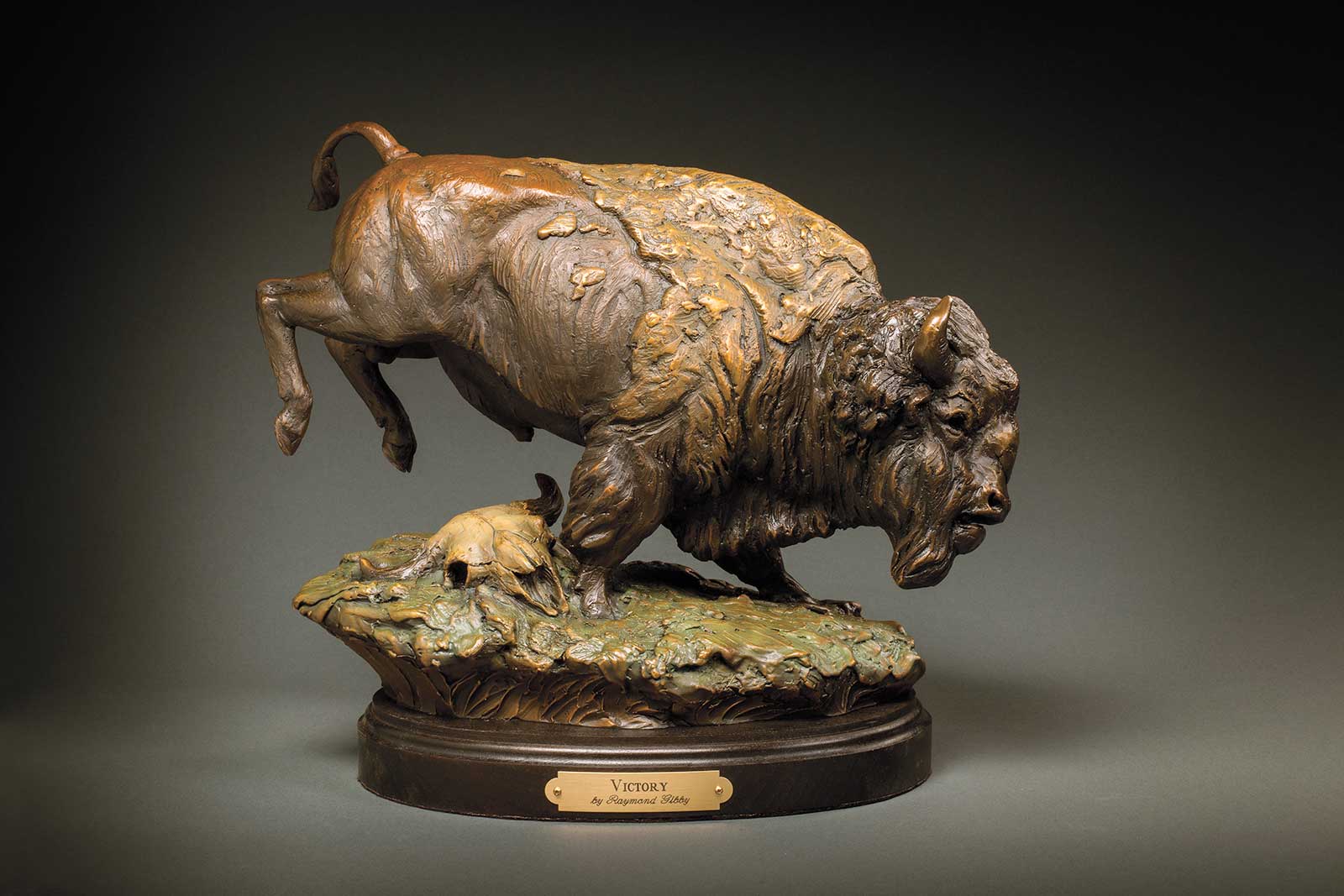 Raymond Gibby, Victory, bronze, ed. of 20, 13 x 15 x 7"
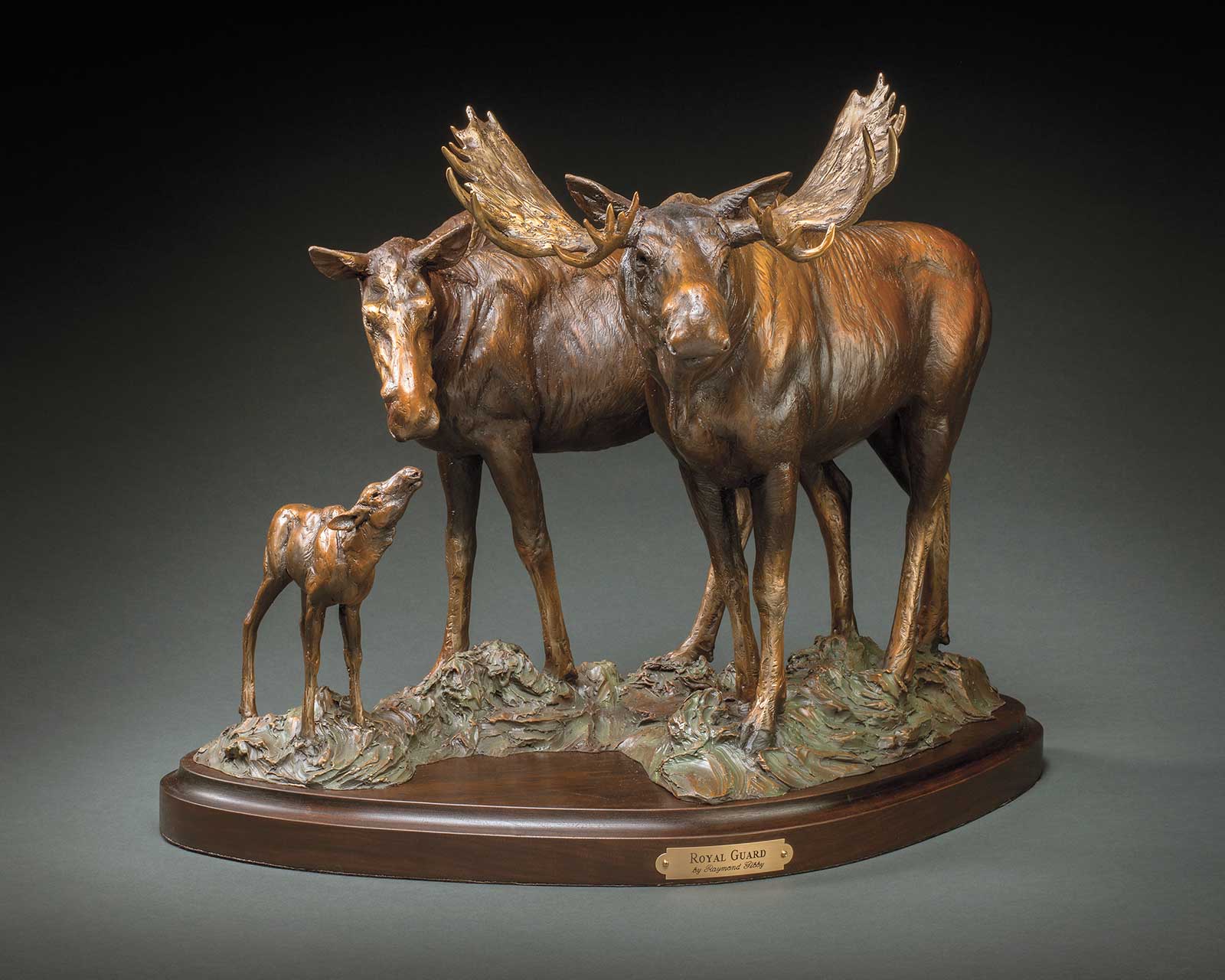 Raymond Gibby, Royal Guard, bronze, ed. of 20, 18 x 20 x 23"
The “pest” is an animal with a complex social life in which the pack cares for pups and for injured and old members. They strategize and adapt their hunting to current conditions. Wolf pups are born blind and deaf, gaining those senses in under two weeks.
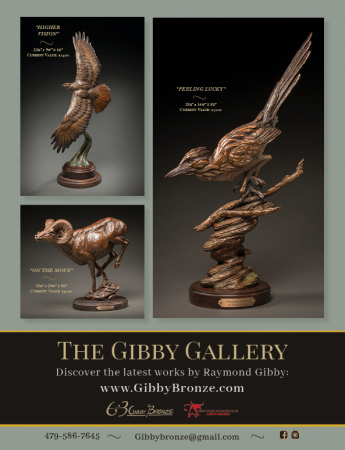
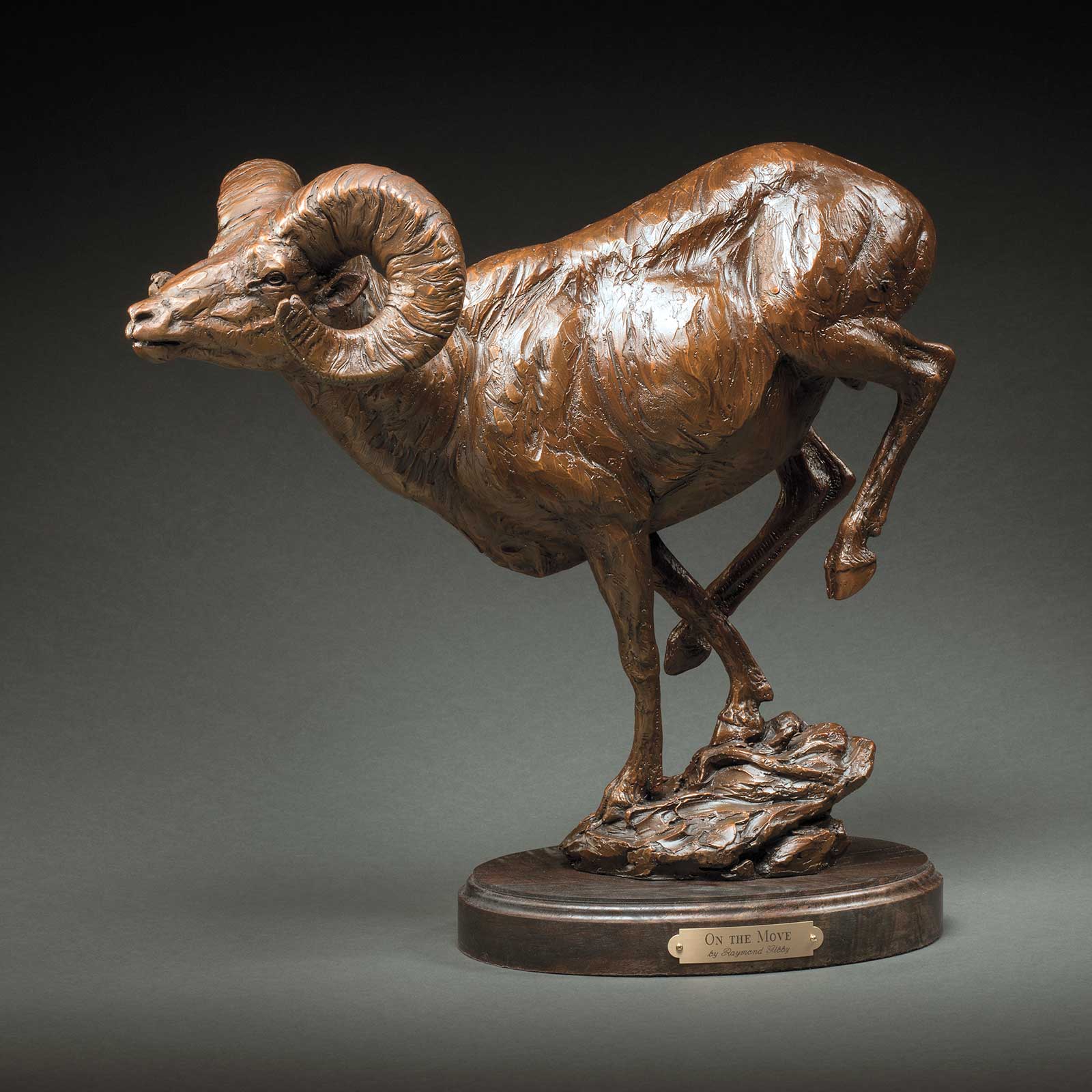 Raymond Gibby, On the Move, bronze, ed. of 20, 18 x 20 x 8"
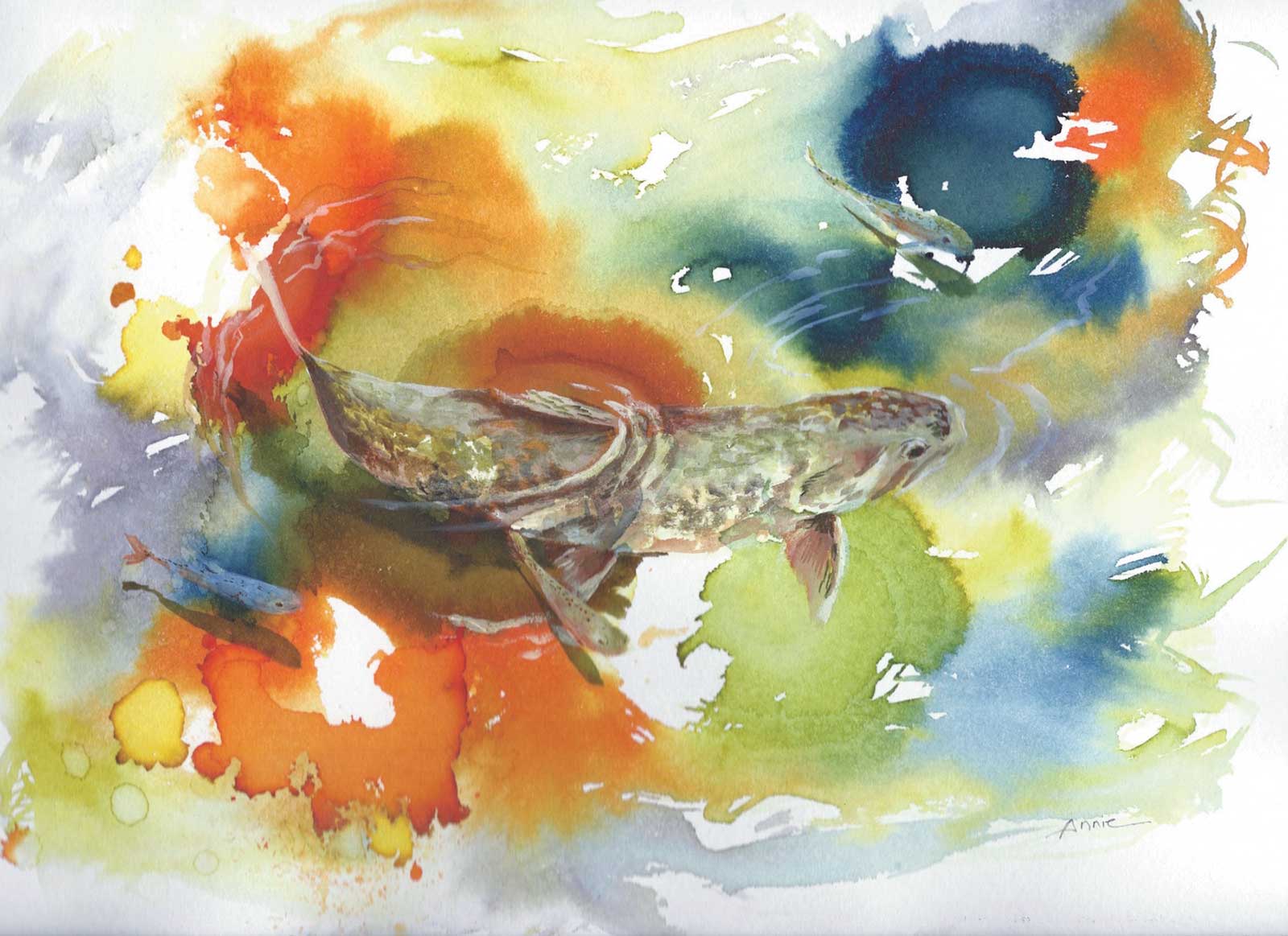 Annie Allen Clark, Cutthroat Splash, dye, watercolor, acrylic, 18 x 20"
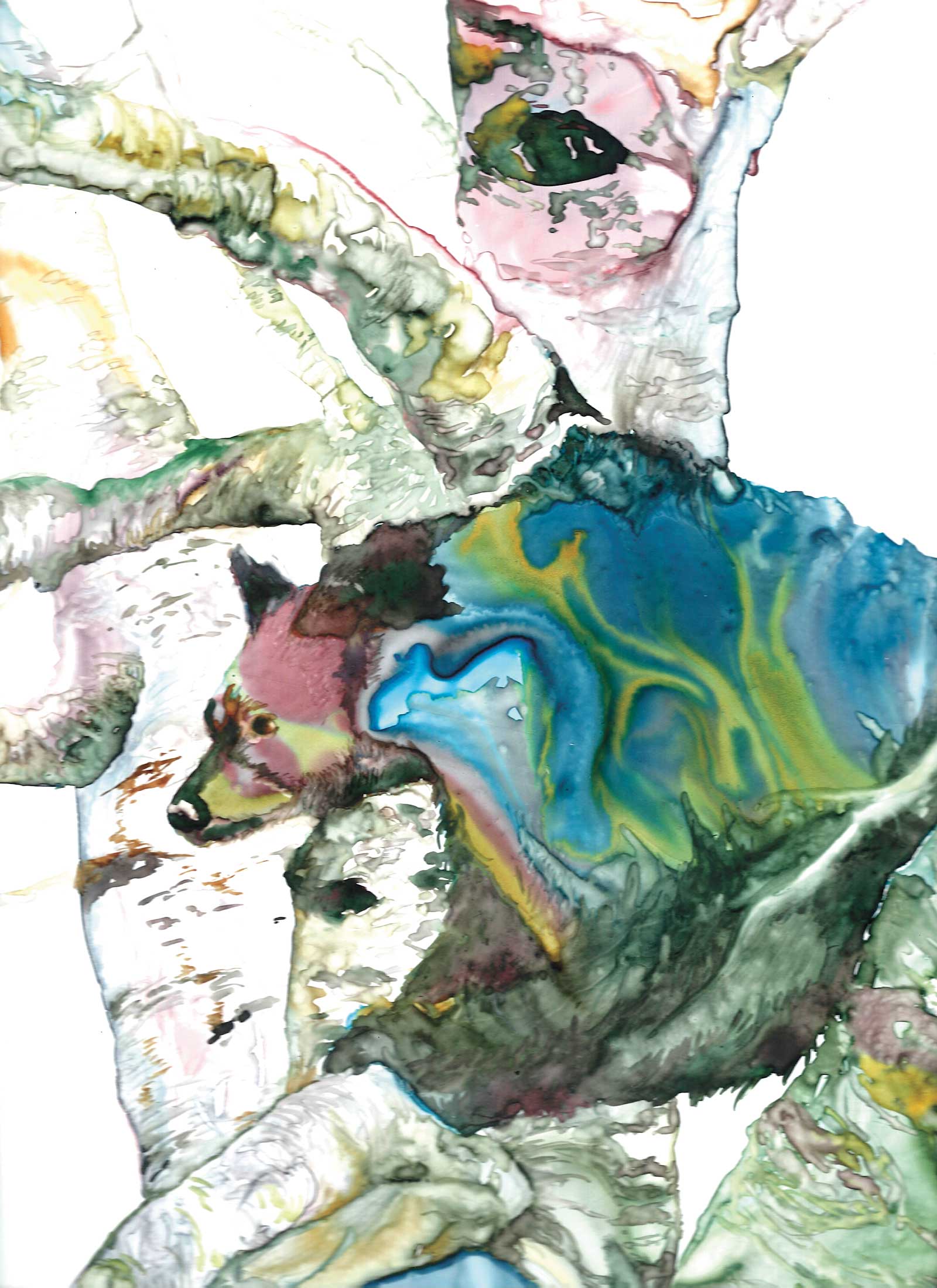 Annie Allen Clark, Aspen Bear, dye, watercolor, acrylic, 20 x 16"
Dale Weiler’s sculpture, Red Wolf, depicts a mother and her newborn with its clenched, shut eyes. Weiler explains that red wolves “are the most endangered wolf in the world. As of April 2021, there are thought to be less than 20 left in the wild. They mate for life and have one litter of pups a year. Often one litter will help their parents care for the next younger group of pups.
Red wolves are great parents and will even care for another wolf’s babies, given the chance.” Weiler and his wife Loti donate all his artwork to critical wildlife conservation causes.
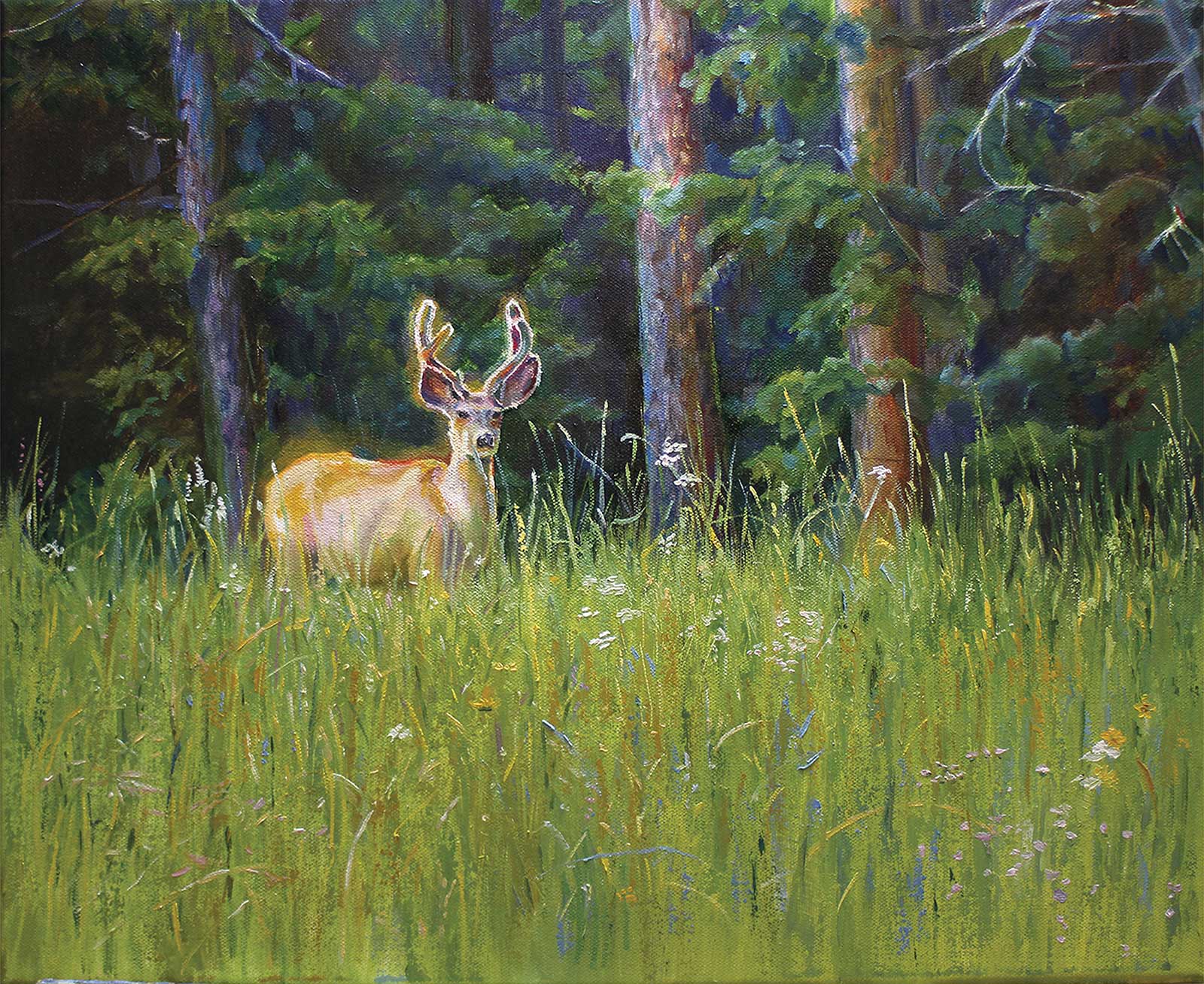 Dan Knepper, The Conversation, oil, 16 x 20"
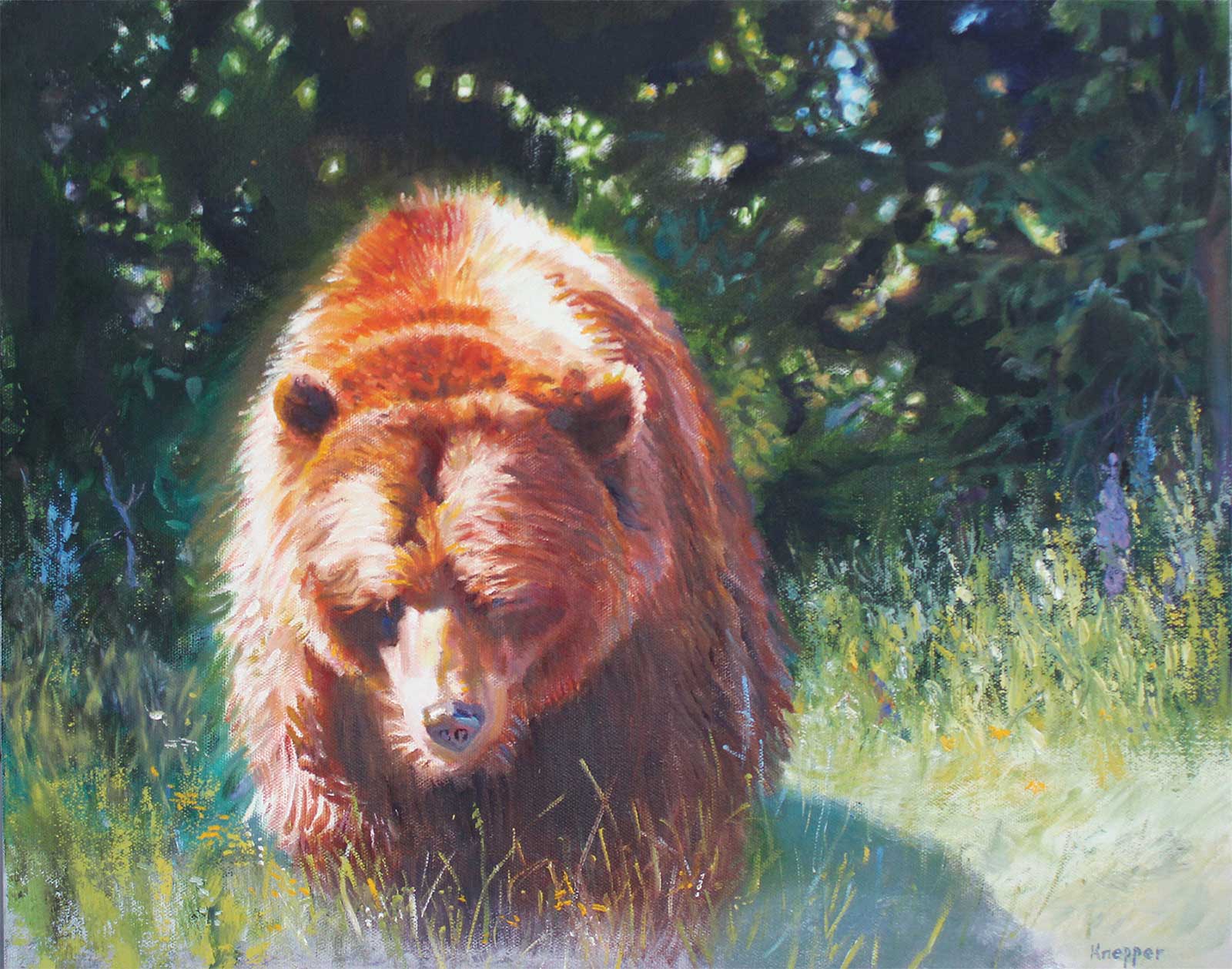 Dan Knepper, Into the Light, oil, 16 x 20"
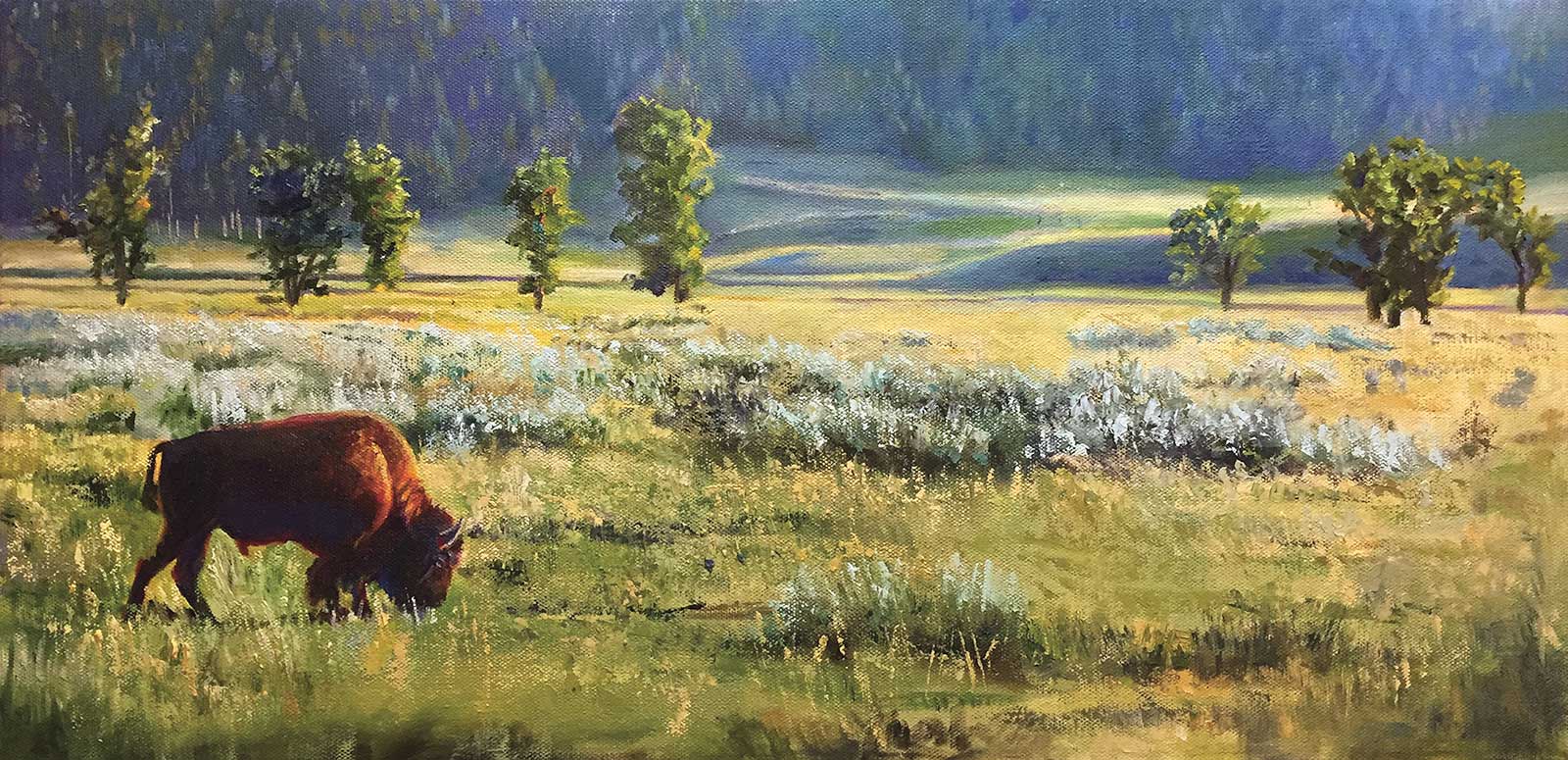 Dan Knepper, One Left, oil, 12 x 24"
Bonnie Marris’s The Way of Wolves, depicts the camaraderie of the pack. She has been observing and painting animals in the wild since she was a young girl. The subtle daylight and playful relationship of the wolves contrasts with Remington’s dark, threatening representation. Marris observes the animals’ ways and returns to her studio to paint them as she experiences them. “We all know that our dogs and cats have personalities and their own ways of being,” she says. “Well, this is also true of grizzlies, of horses, of wolves—all nature’s creatures. Once in Alaska, about 30 yards from my campsite, one wolf from a pack of 20 got down on her front elbows and wagged her tail at me in play mode. Another time, a coyote spent a whole morning watching me watch a grizzly—and then hiked with me all afternoon and sat on a nearby hillside while I waited for more bears.”
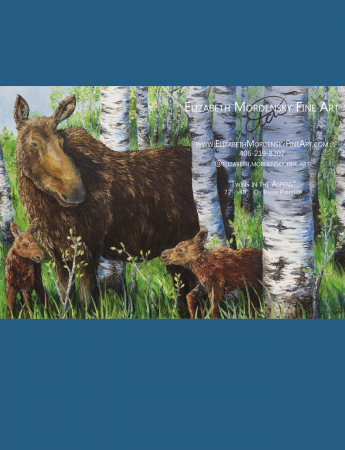
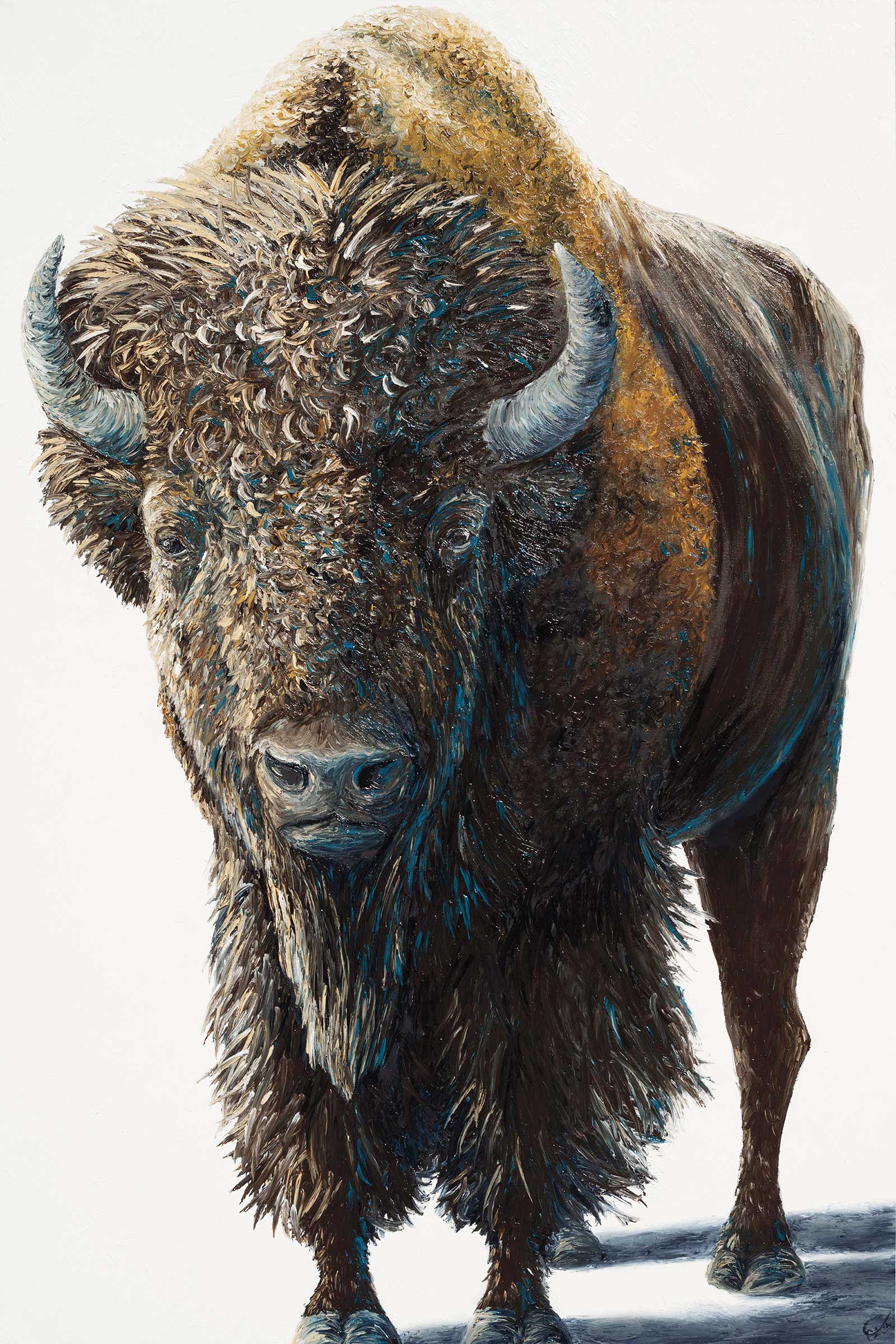 Elizabeth Mordensky, American Bison, oil finger painting, 72 x 48"
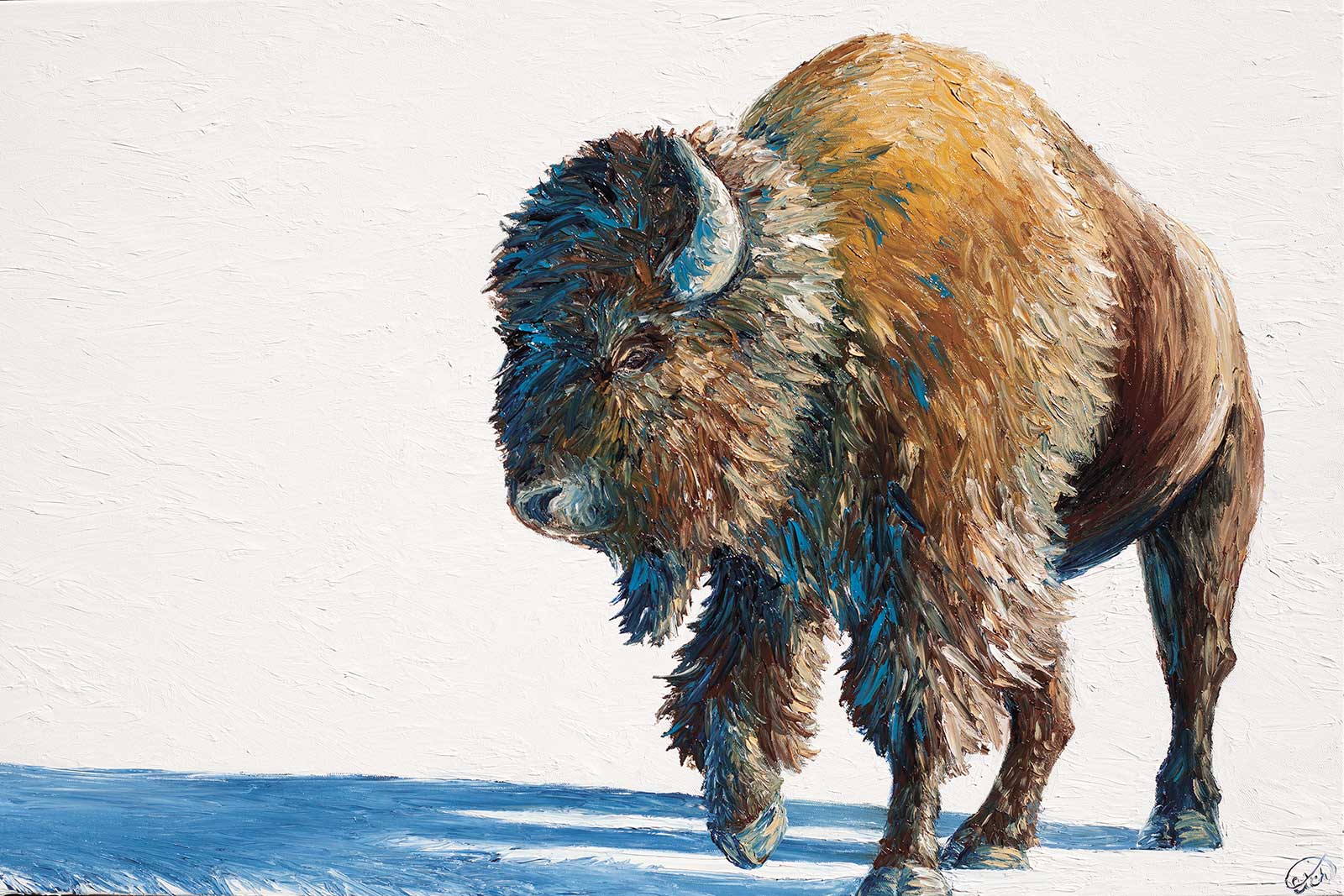 Elizabeth Mordensky, Roam, oil finger painting, 24 x 36"
Continue reading to hear additional stories and inspirations by artists, galleries and museums who are inspired and enlivened by the wildlife art genre. Also take note of key advice in growing or establishing a new collection.
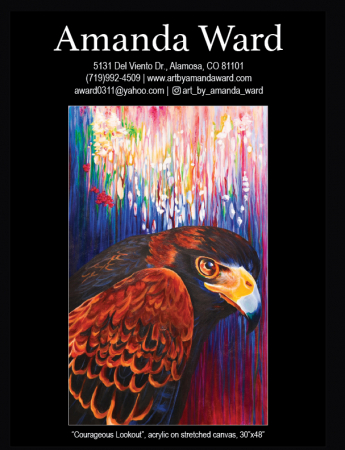
For artist Amanda Ward, birds have been her fascination. “Part of that comes from growing up with parrots, parakeets, cockatiels and other birds in our home,” she says. “My mom was a manager at a bird shop, which meant she would bring parrots home to hand train and also raise baby parakeets and cockatiels. I grew up observing the songbirds that came in my backyard and, eventually, became more captivated by all birds. I am particularly fascinated by birds of prey because of their majestic beauty. In my artwork I enhance this beauty with my use of vibrant color and abstract backgrounds.”
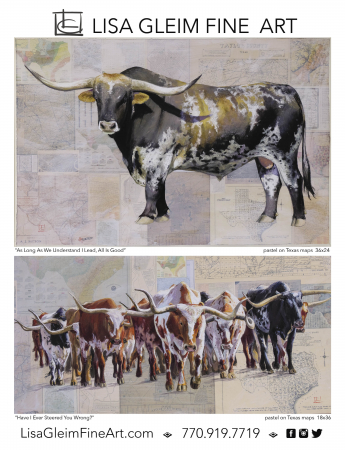
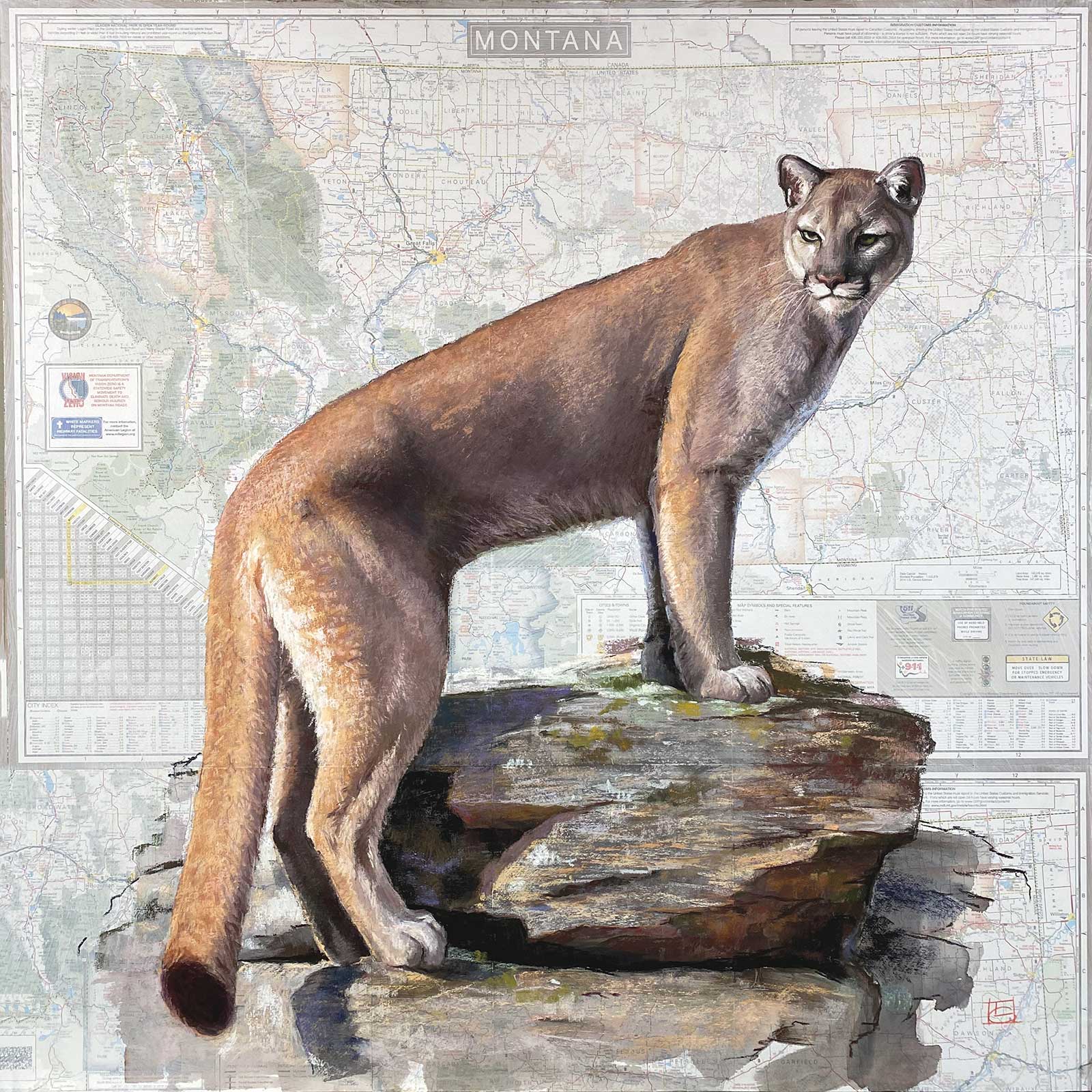 Lisa Gleim, Puma Donna, pastel on Montana maps, 36 x 36"
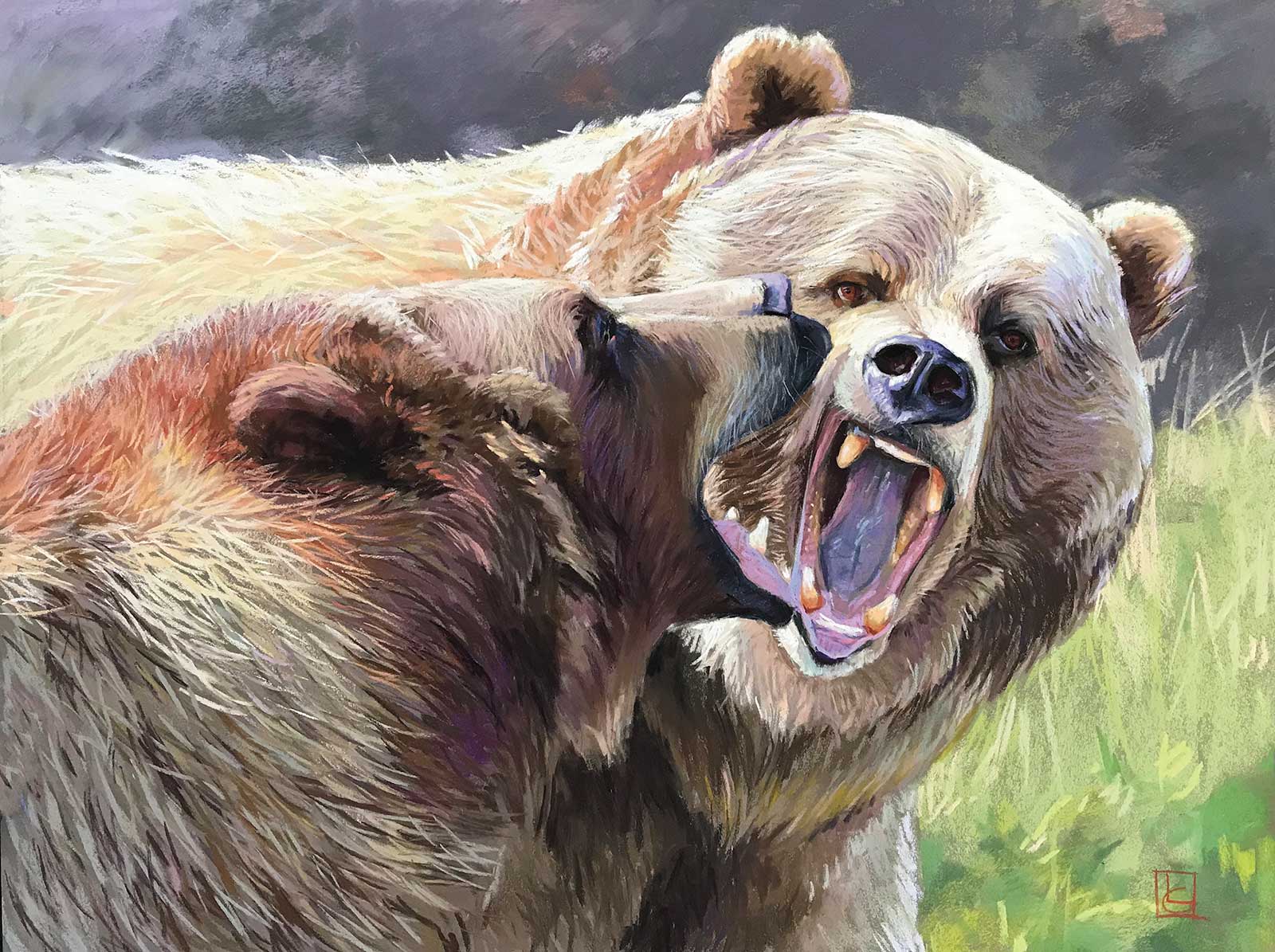 Lisa Gleim, State of Our Union, pastel on sanded board, 18 x 24"
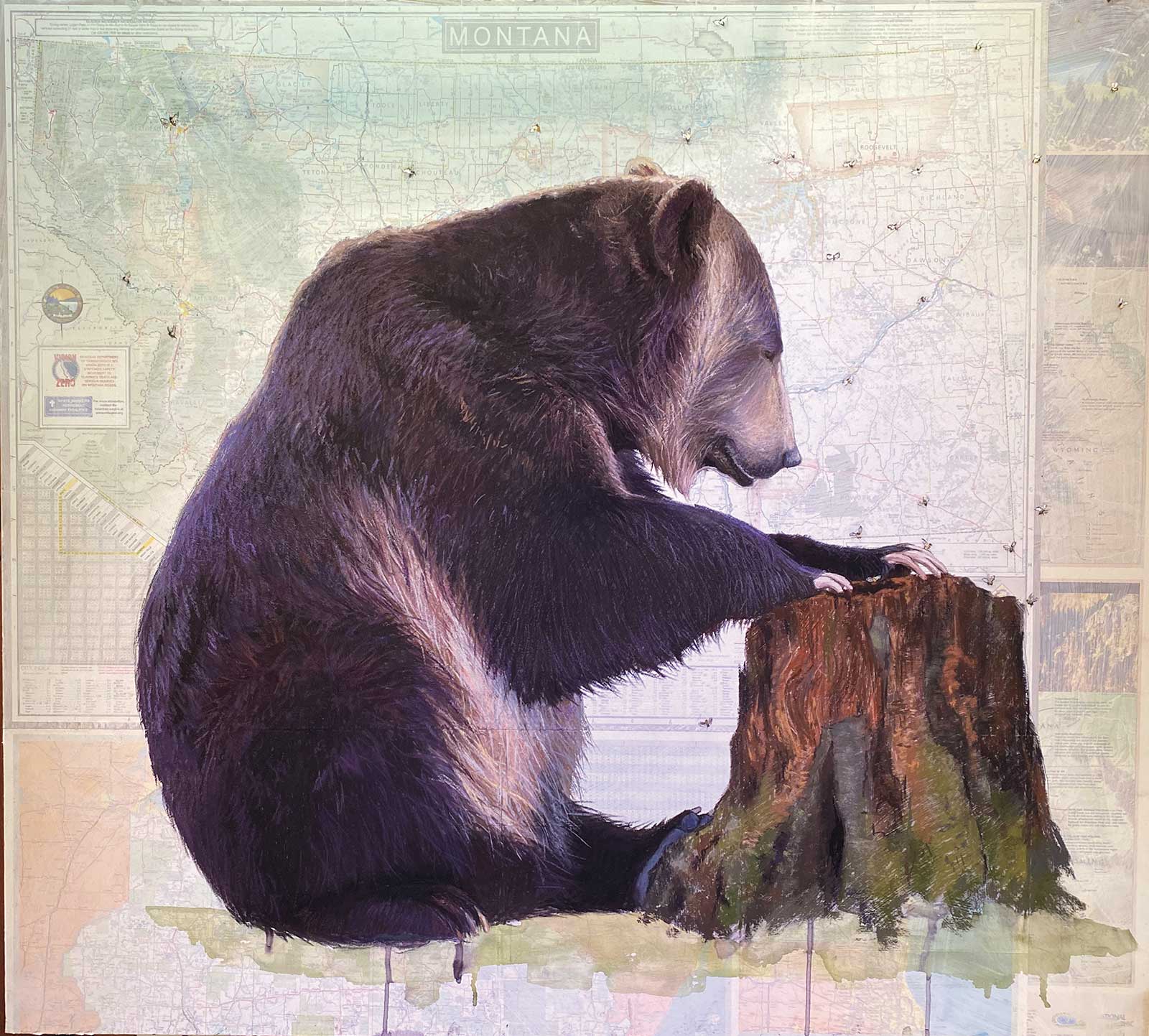 Lisa Gleim, What Hive We Here?, pastel on national and state maps, 36 x 40"
Ward’s advice to collector’s is to buy art that inspires them and that they have a connection to. “They should be in search of art that will bring a smile to their face when they see it hanging on their wall,” she says.
Don Woodard creates “Fine Art in Wood,” where not only are many of his artworks painted, but they are also all hand carved from select woods first. His artworks are very detailed, and he states, “Creating three-dimensional artwork is my passion.” Woodard has been creating bas-relief, mixed media artworks for 20 years and has been participating in nationally juried art shows since 2012. Much of his artwork is inspired by events that he has experienced first hand while leading pack-horse trips into the Rocky Mountain Wilderness for more than 40 years. His wildlife images are inspired by scenes he has witnessed while horseback riding, hiking, camping or driving through national parks and wilderness areas. You can see his latest functional art pieces at the Western Design Conference Exhibit & Sale, being held in Jackson Hole, Wyoming, September 9 through September 12.
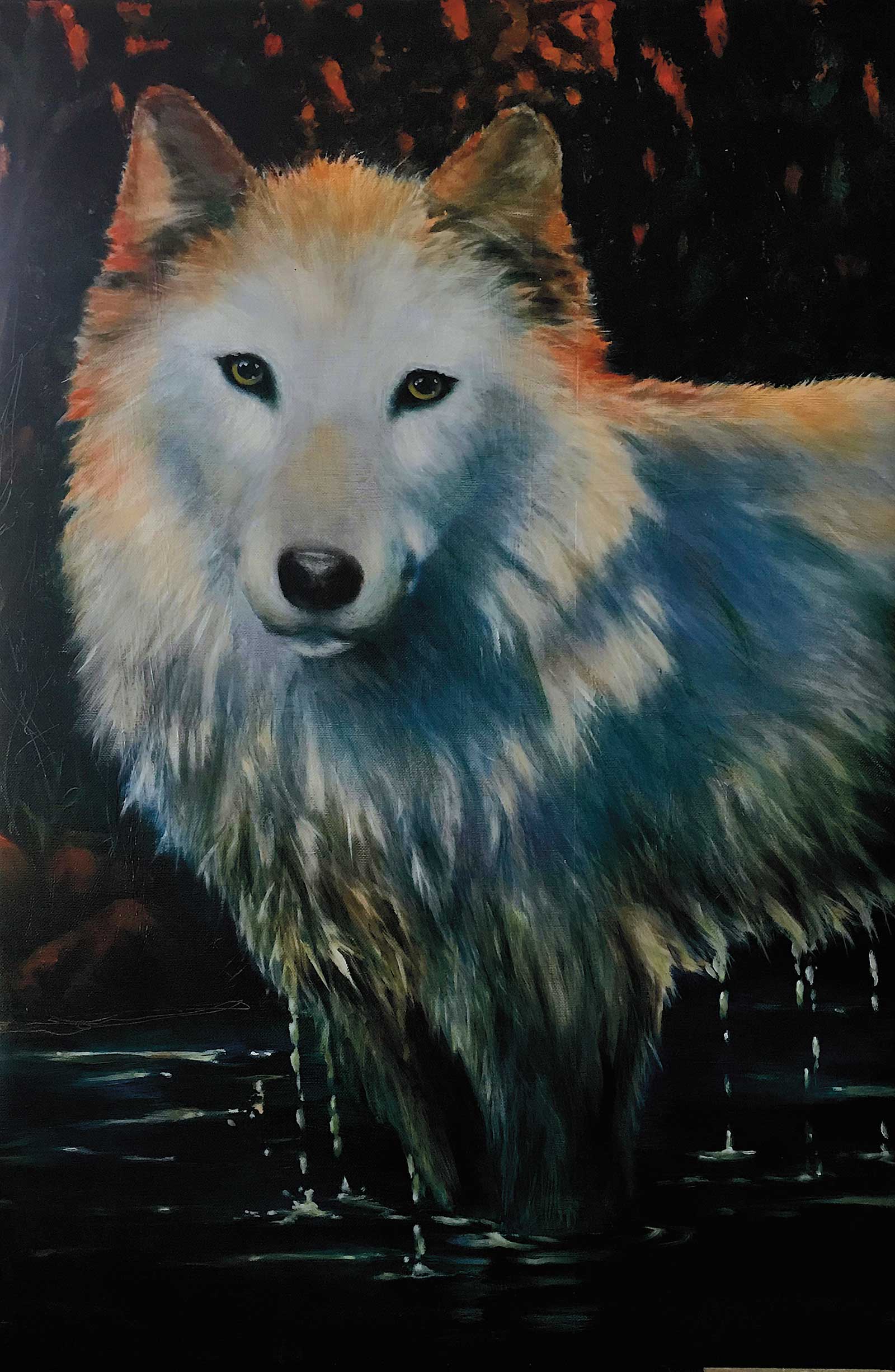 Jackie Lee, Saturday Night Bath, oil on canvas, 30 x 20"
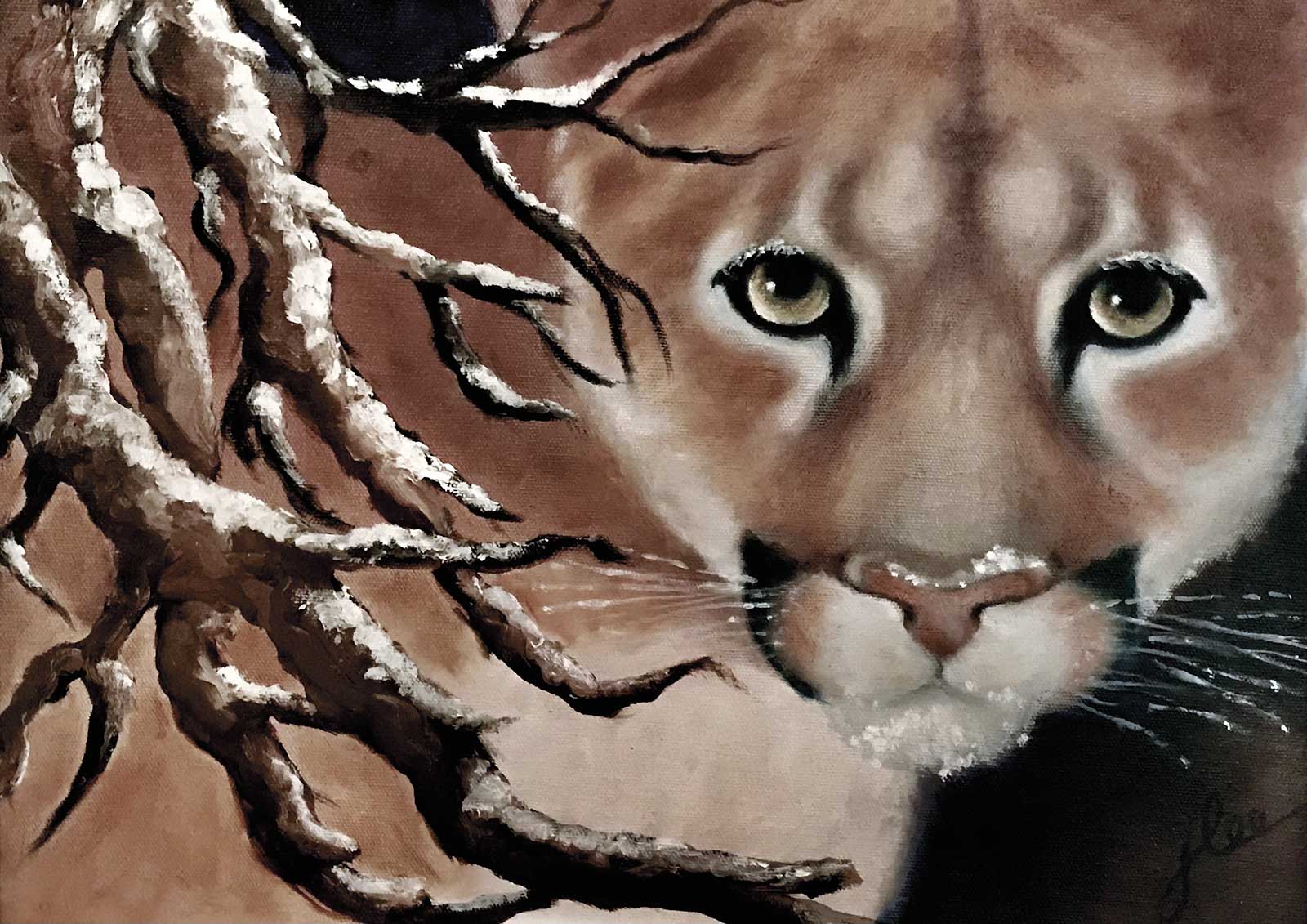 Jackie Lee, Hidden Treasure, oil on canvas, 12 x 16"
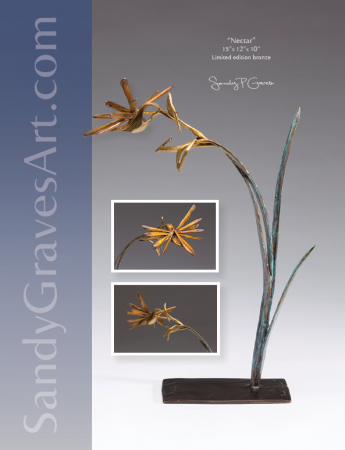
The wildlife sculptures of Sandy P. Graves have always been about emotion and motion. “I connect with the feelings and energies that each animal shares with me and just keep sculpting until the piece matches that feeling,” she says. “Of course there are hours of technical work that go into each piece but even those times I am connecting to that central emotional inspiration. The wildlife that visits my home and neighboring forests of wildlife from across the world all inspire me with their unique textures, shapes, sounds and energies.” Graves suggests buying artwork that gives you the energy that you want in your life. “You will never regret it!” she adds.
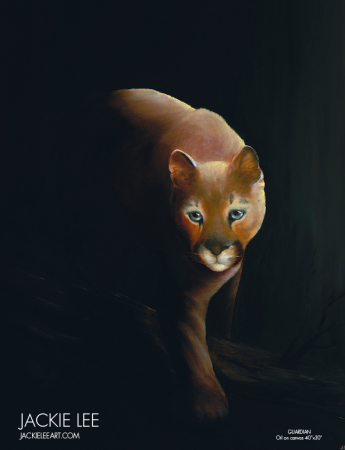
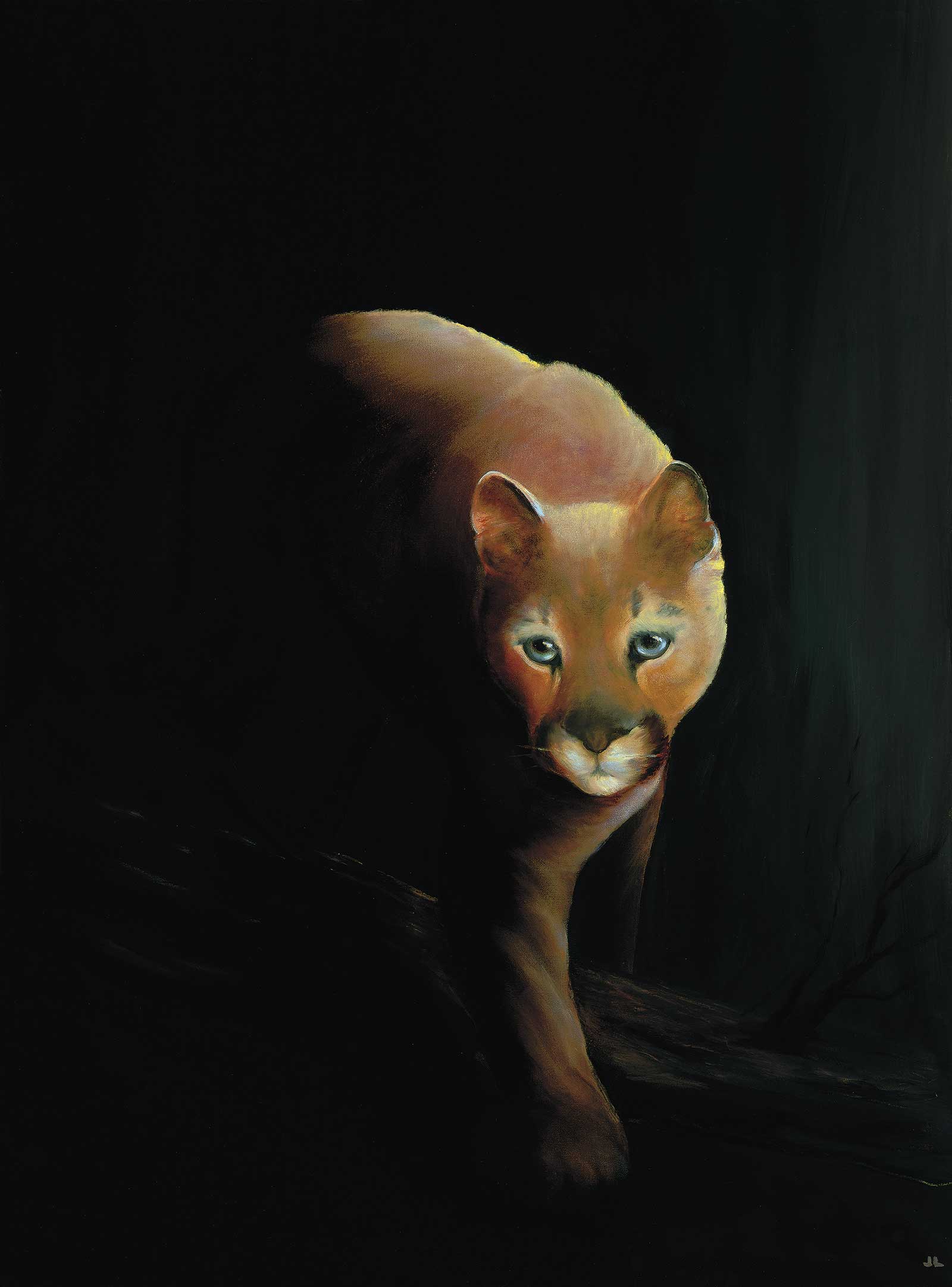 Jackie Lee, Guardian, oil on canvas, 40 x 30"
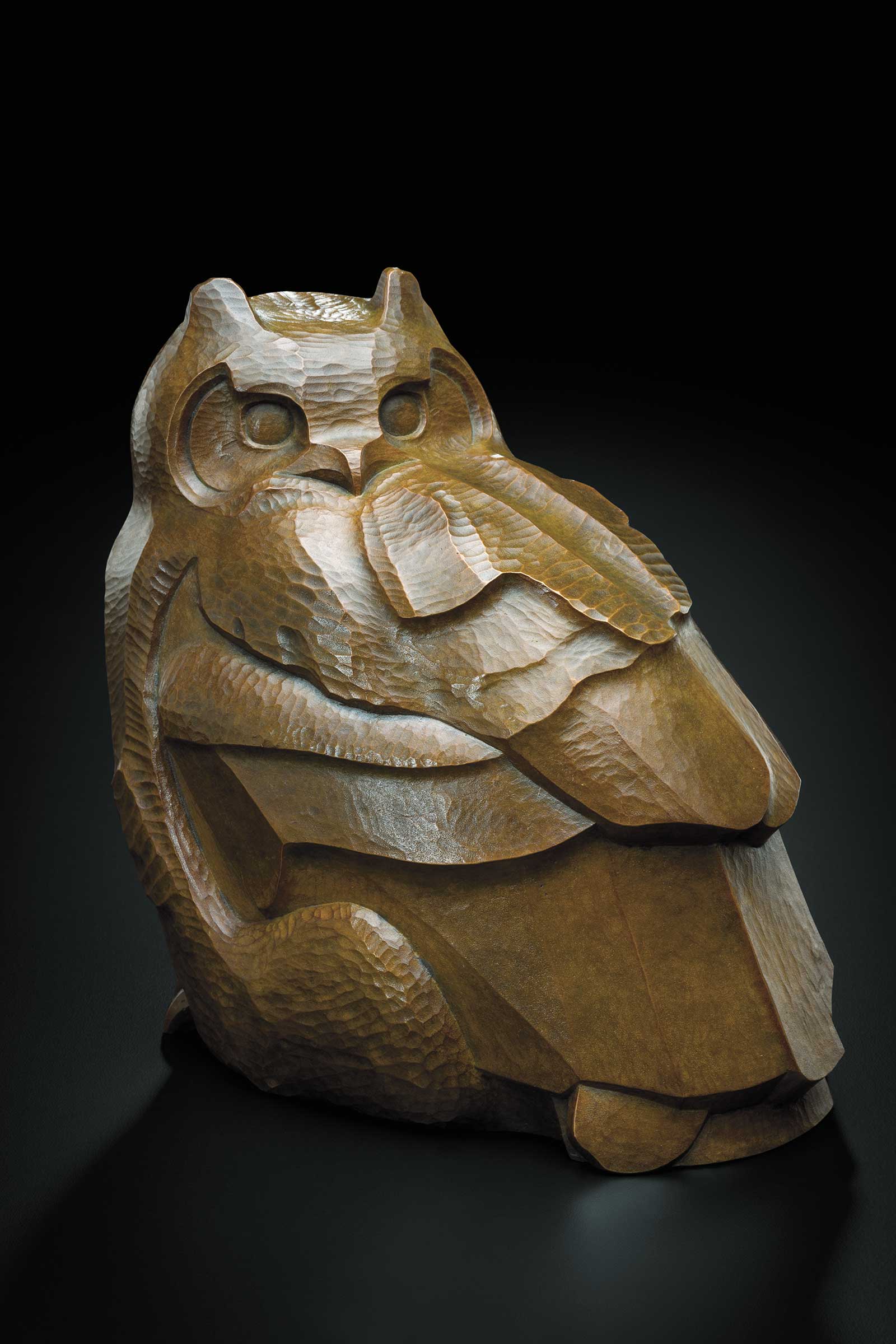 National Museum of Wildlife Art, New Eyes, bronze, ed. of 9, 10 x 10 x 5", by Peregrine O’Gormley.
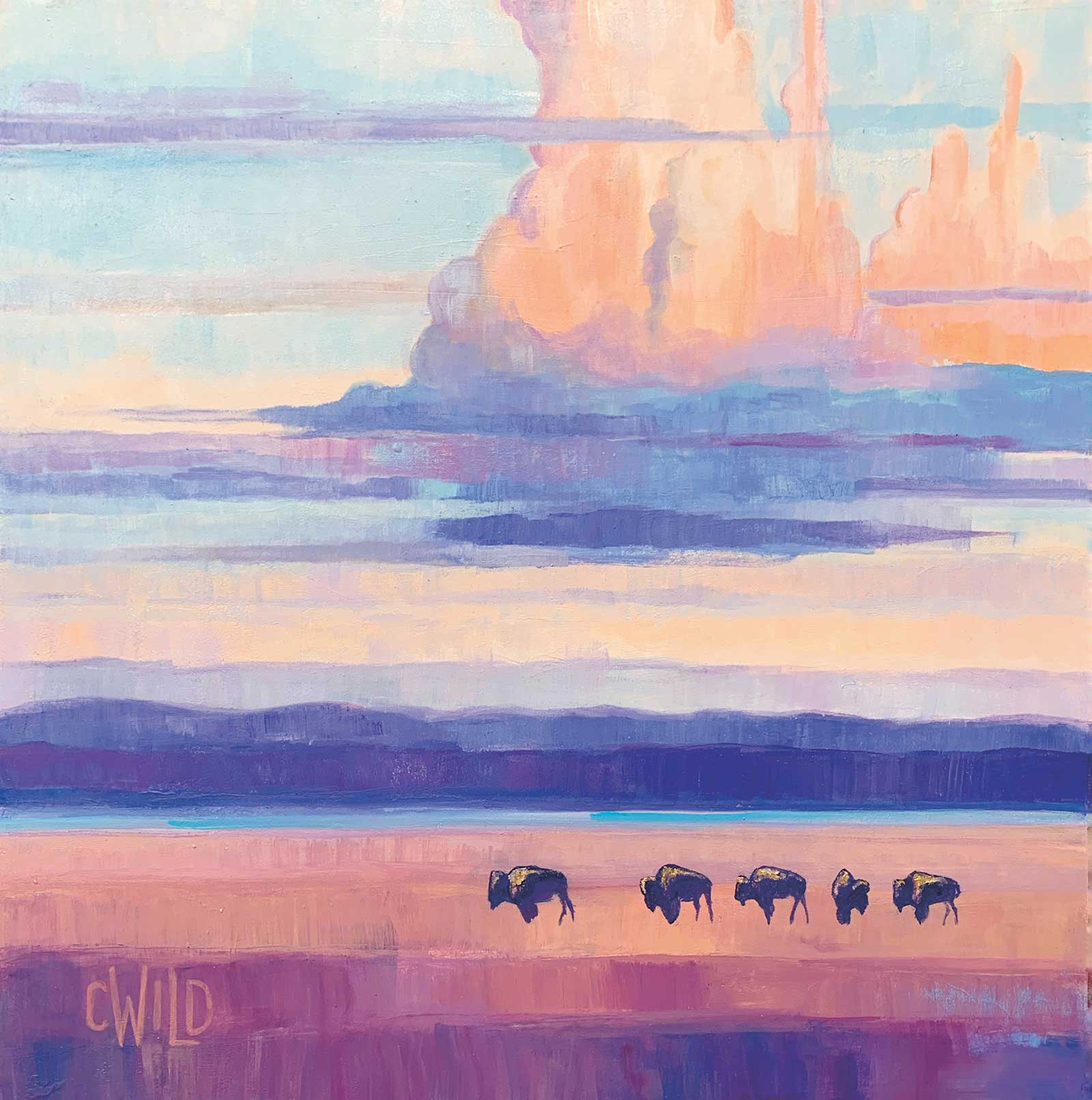 National Museum of Wildlife Art, Summer Promises, acrylic and gold leaf on panel, 16 x 16", by Carrie Wild.
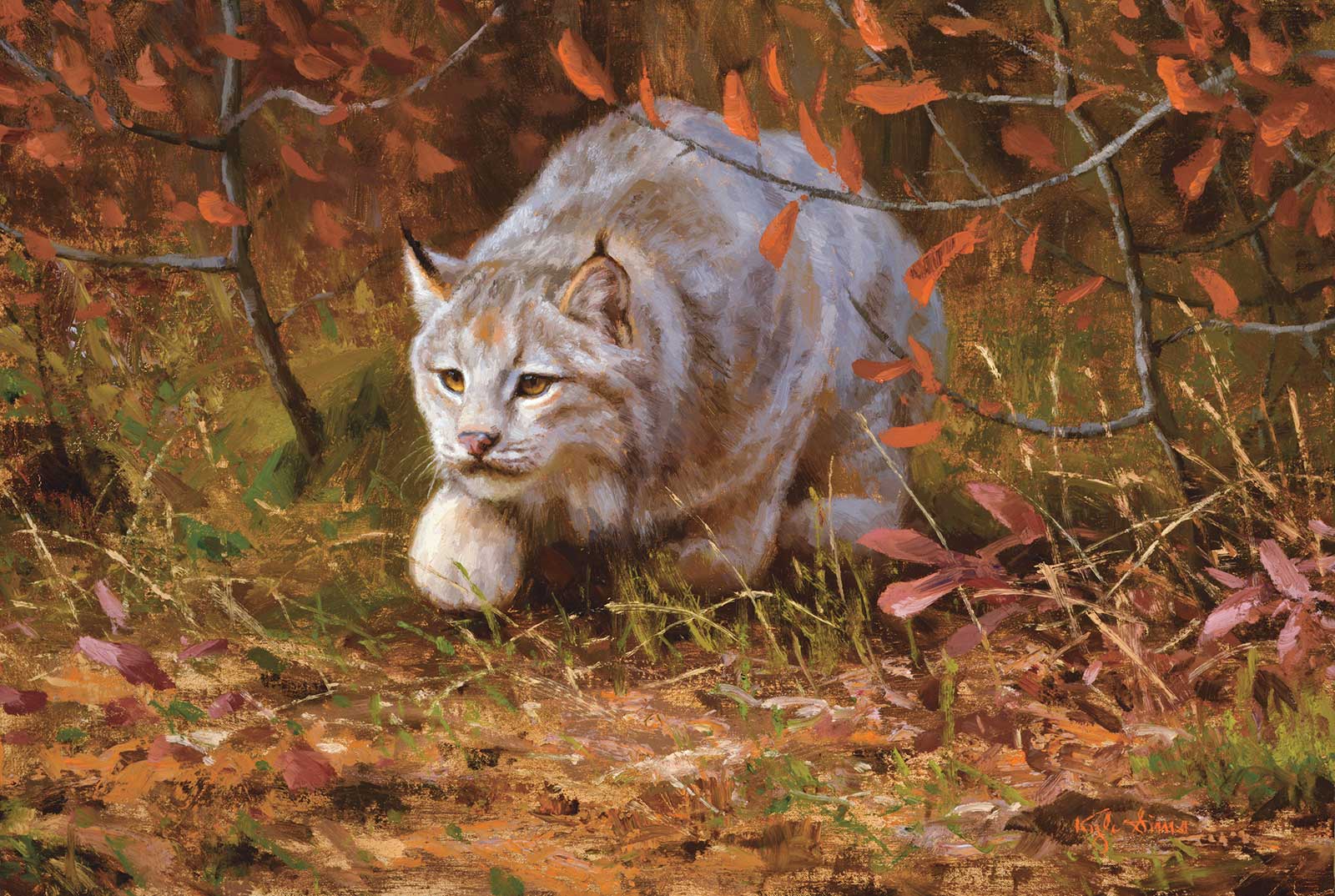 National Museum of Wildlife Art, The Feline Focus, oil, 13½ x 20", by Kyle Sims.
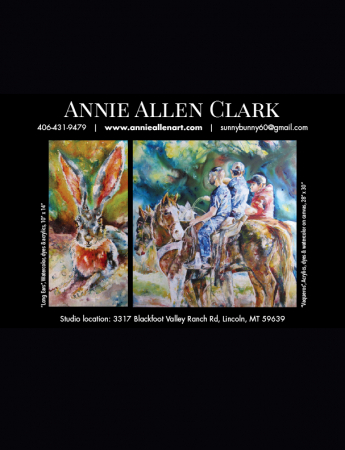
Born in Laredo, Montana, on a small working farm/ranch, Annie Allen Clark is aware of the rhythms of the earth around her, and she understands that humans suffer and rejoice from the energy of the land. “Vital energy existing in land, animals, water and minerals connects our hearts to nature,” she explains. “Humans need connection. They need language and they need the arts to express this language when there are no words.” Clark shares this tale through art. “Rocks become animals and tree roots become magical beings, birds release energized lines of movement through the air. Magic exists in nature, for all, through art.”
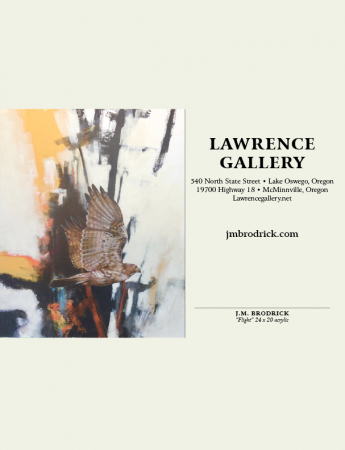
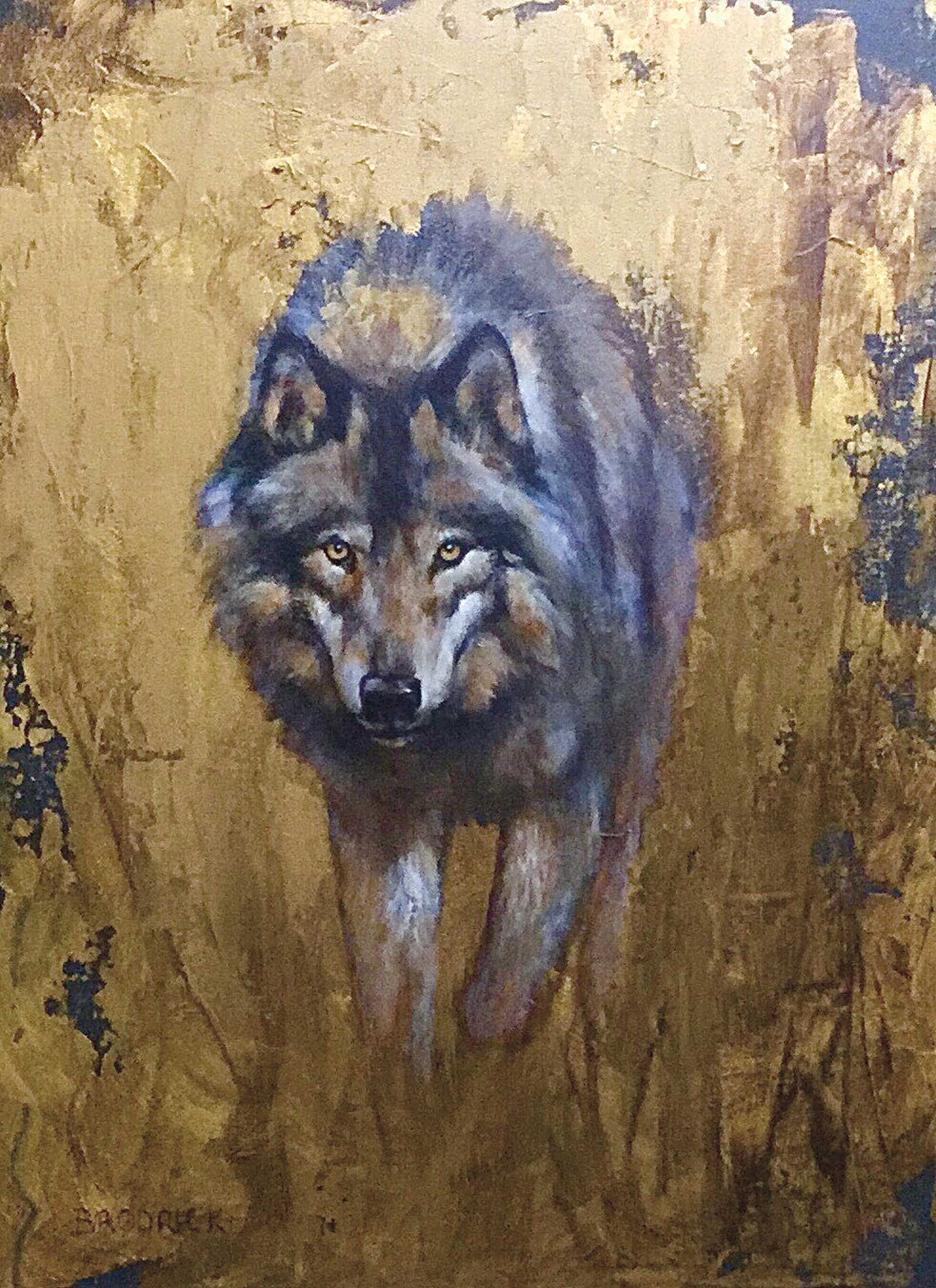 J.M. Brodrick, The Hunt, acrylic, 24 x 18"
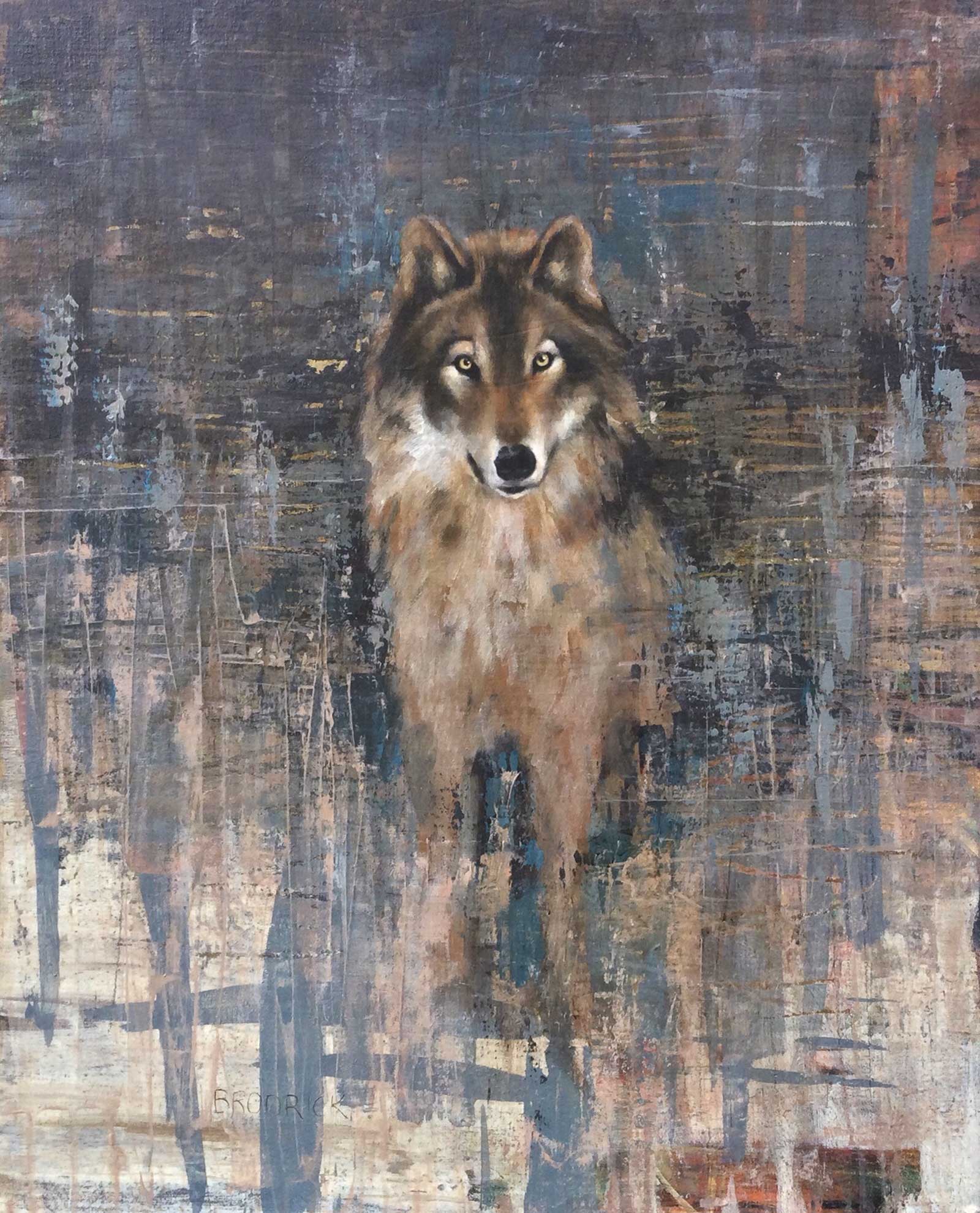 J.M. Brodrick, Camouflage, acrylic, 30 x 24"
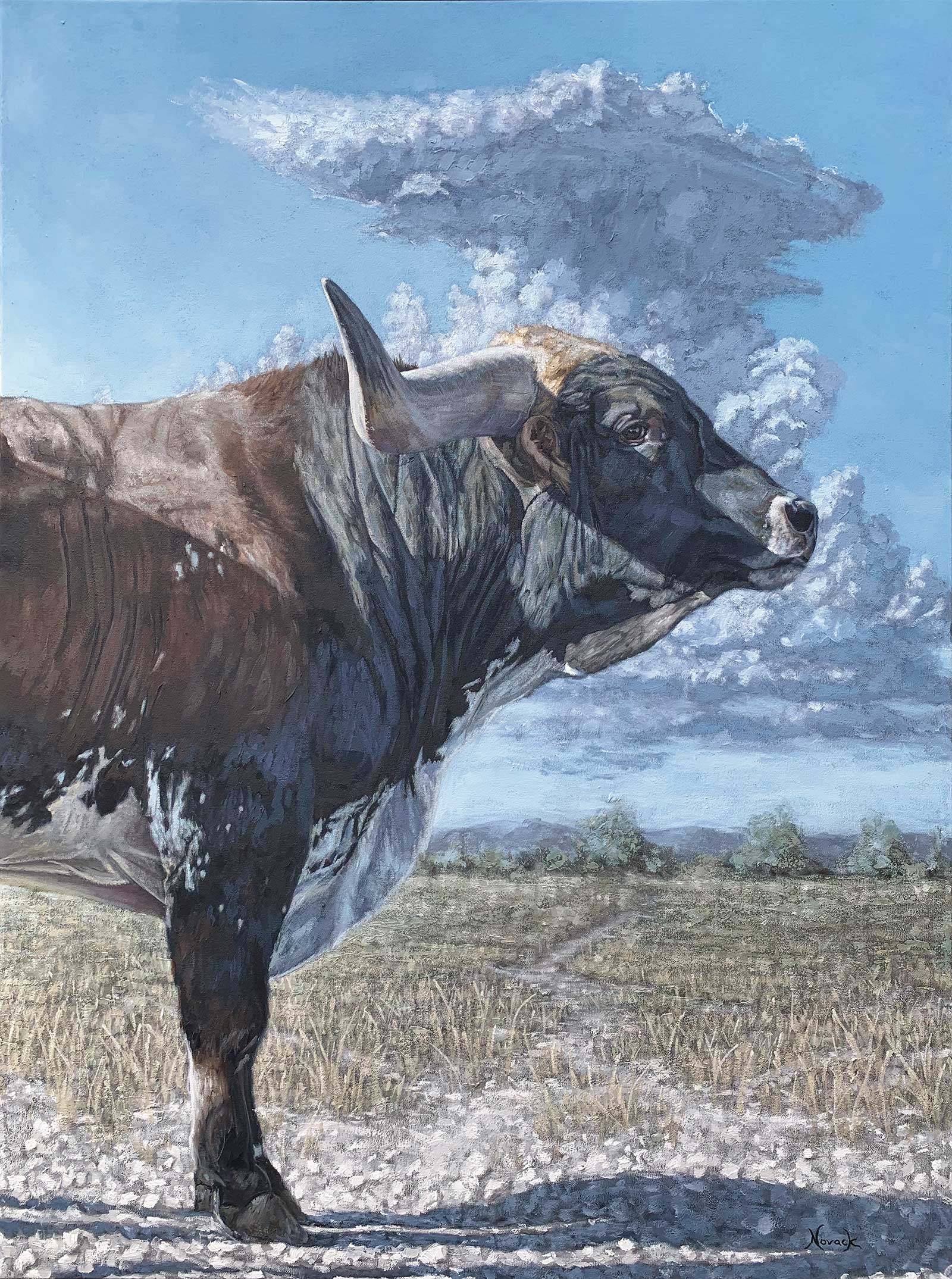 Nathan Novack, Thor, oil on canvas, 30 x 40"
“In wildlife paintings,” says Lisa Gleim, “I want to capture a moment within a story. Suspending time gives a viewer, at first glance, an immediate intimacy with an animal’s spirit. Whether a mountain lion on the hunt, a bear staking out its territory or one appearing somewhat playful when scooping up honey, the emotion in that glimpse is the stringboard into imagining what might come next. I believe these qualities bring a two-dimensional work to life. When art repeatedly engages a collector, the work becomes an endearing and enduring, timeless painting.”
In a masterful realism style, continually honed since graduating from Pennsylvania Academy of Fine Arts, Gleim demonstrates a keen awareness of anatomy and very exacting detail to the countless nuisances of an animal’s exterior and surroundings. She adds, “The coat of an animal emerging from an ocean or lake, for example, changes constantly in color and texture, similarly to the surrounding shifting atmosphere, light and other elements observed in nature.”
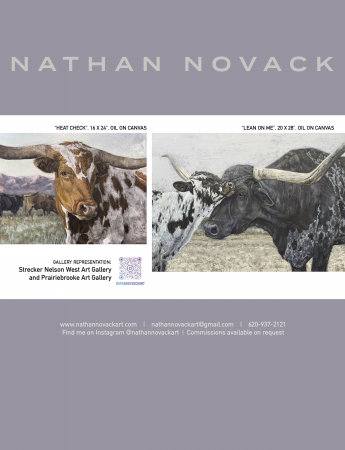
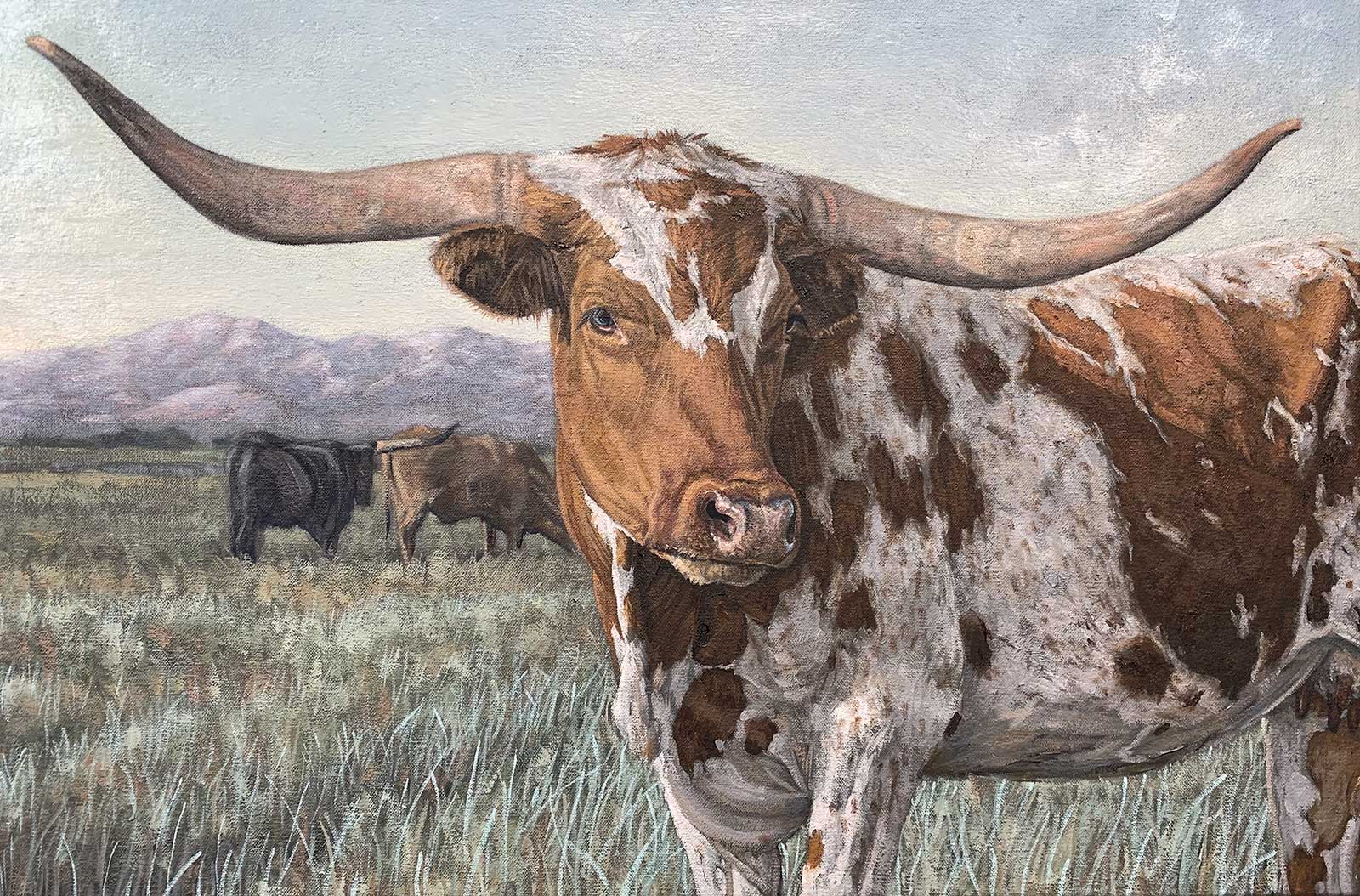 Nathan Novack, Heat Check, oil on canvas, 24 x 16"
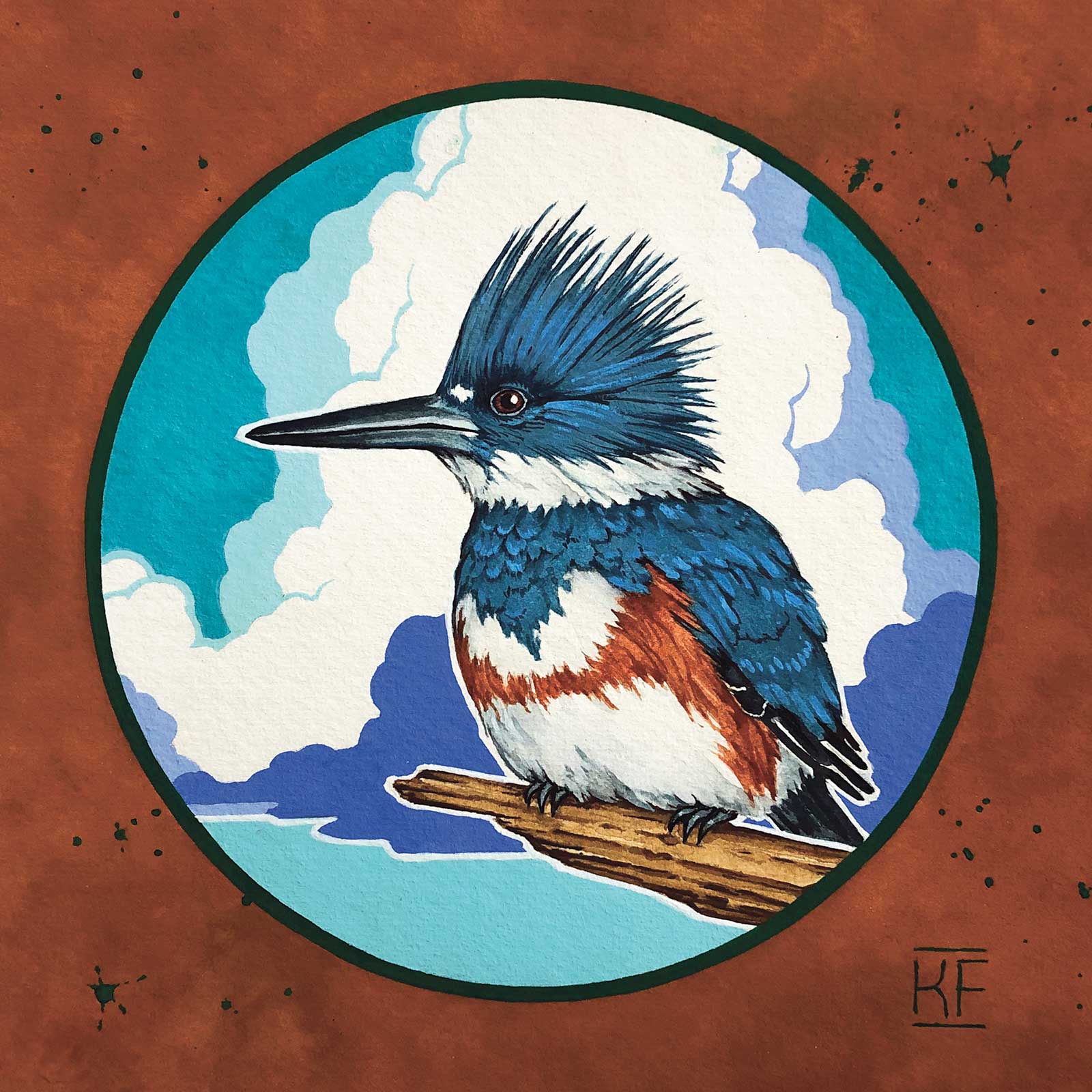 Kenneth Ferguson, Arc of the Diver (Belted Kingfisher), watercolor and gouache on watercolor paper, 8 x 8"
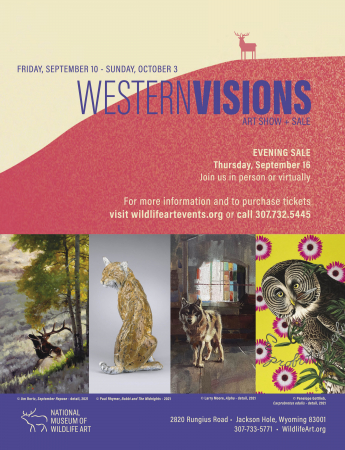
Artist Dan Knepper has had the pleasure of experiencing his wildlife subjects first hand during his many travels in the West, making for some amazing stories. In his piece The Coversation, to be featured in this year’s Western Visions show at the National Wildlife Art Museum, he says, “We stopped along the roadside of an early Wyoming morning so I could jump out and get a reference shot of this beauty. He stood listening to me talking quietly to him until I was finished and then leapt into the woods in a single graceful bound.” The piece Into the Light of a bear ambling through a forest, Knepper explains, “This fellow stepped from the shadows into the light and the warm. Saturated colors of his coat seemed illuminated from within against the cool darks of the trees.” For One Left, Knepper saw the lonely bison in the Lamar Valley of Yellowstone at golden hour and “there were a thousand bison, but this fellow was off by himself. It made me glad to think the park is preserving these amazing animals and he wasn’t actually the last one left,” he says.
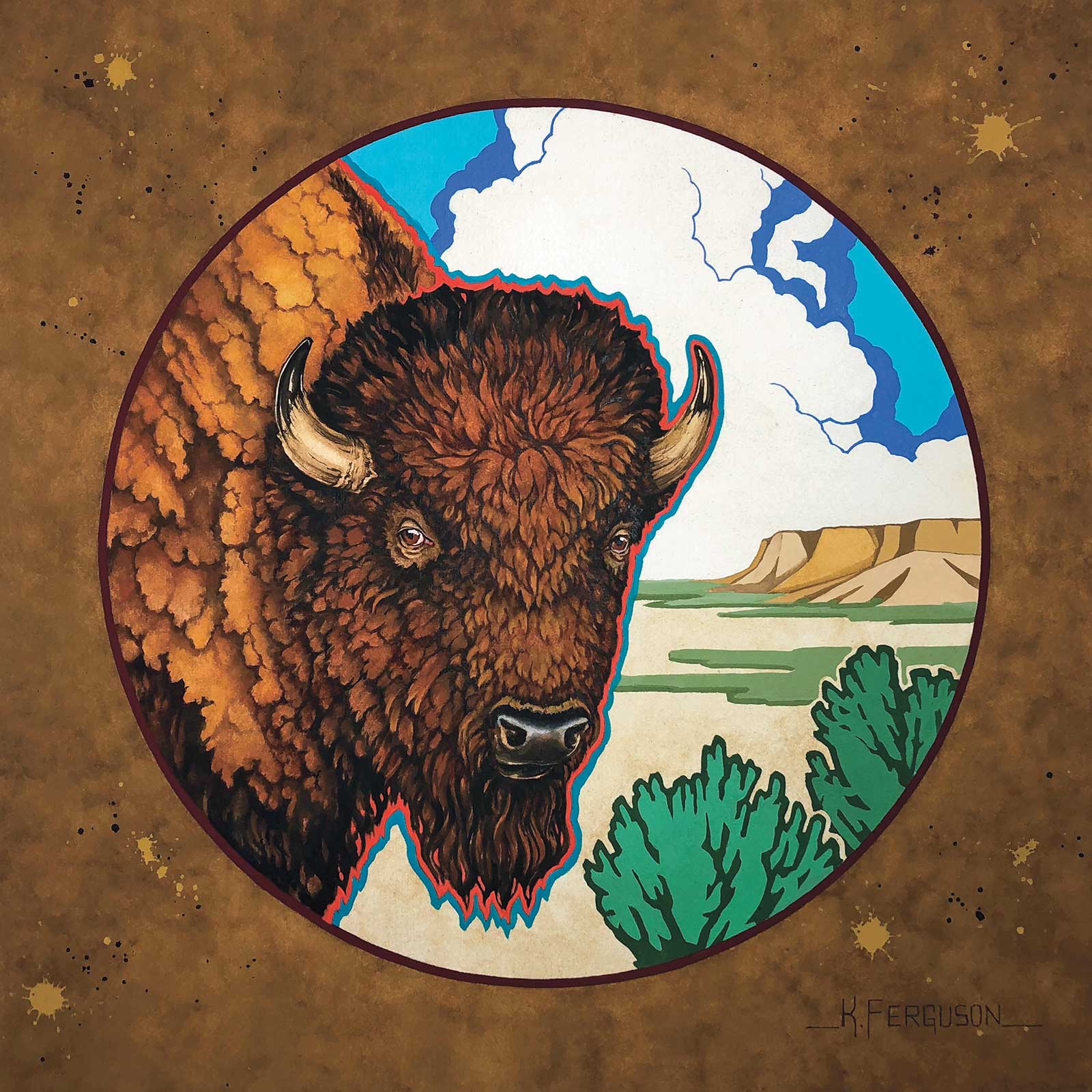 Kenneth Ferguson, High Plains Drifter (American Bison), watercolor and gouache on watercolor paper, 14 x 14"
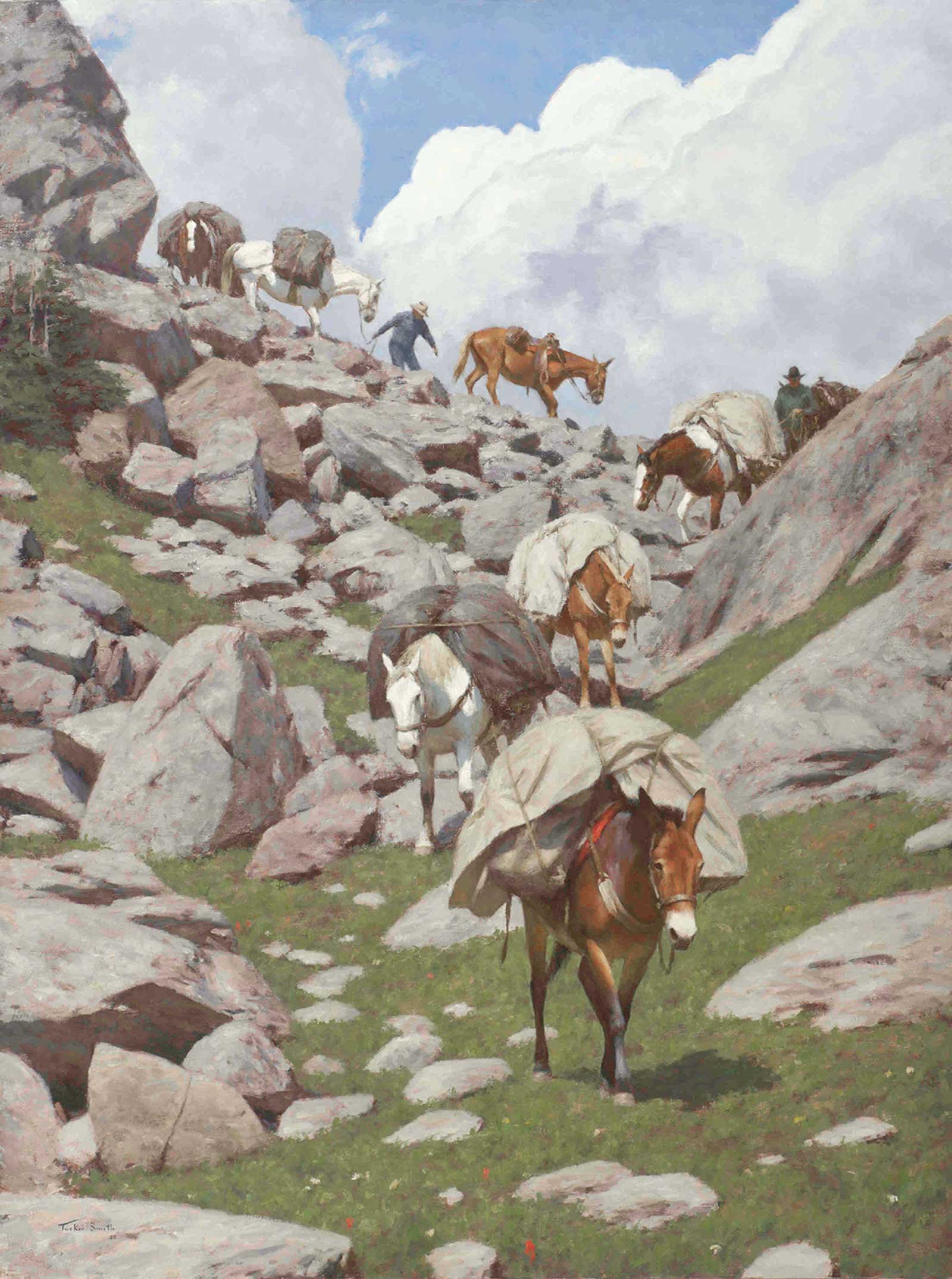 Booth Western Art Museum, Monte’s Shortcut, oil on canvas, 48 x 36", by Tucker Smith.
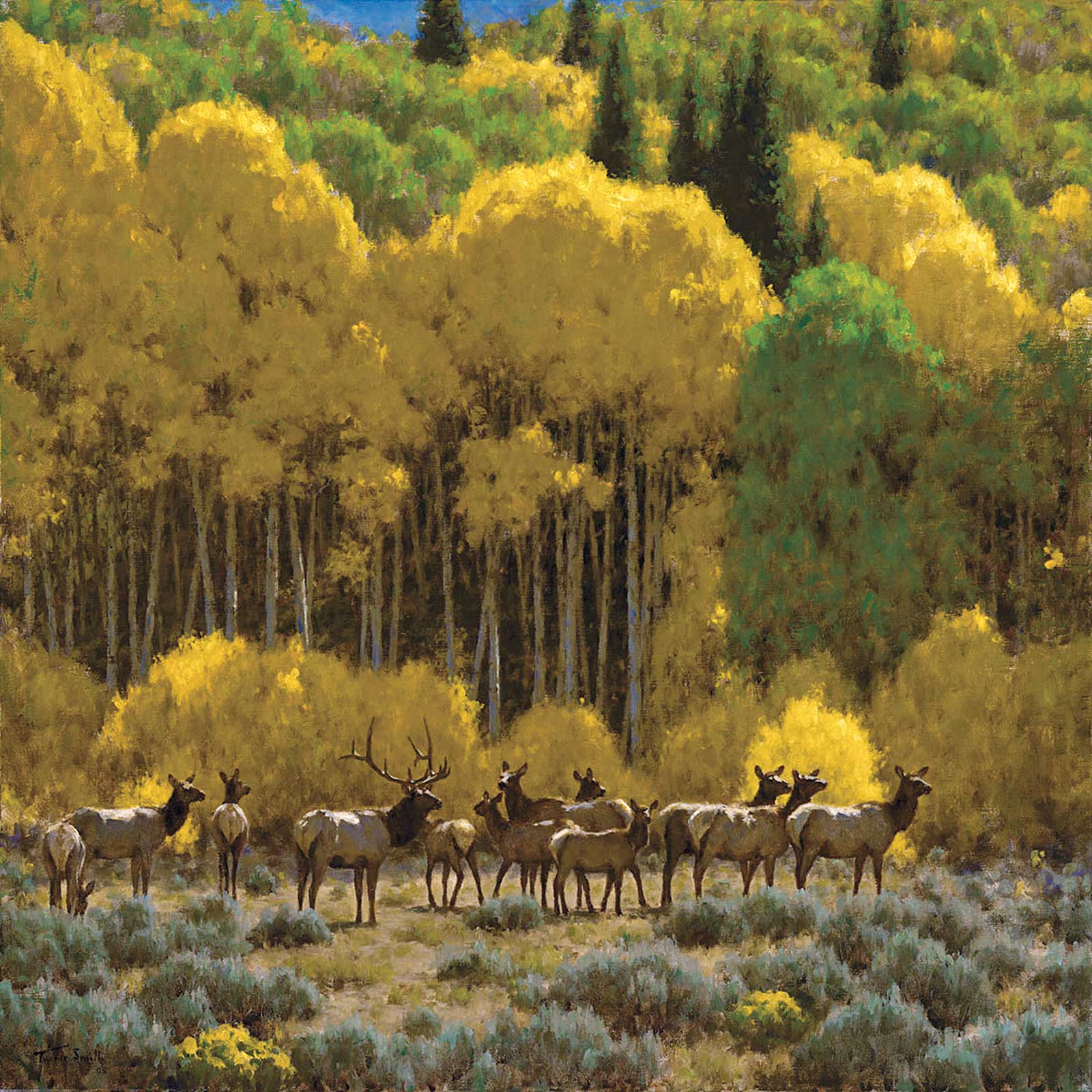 Booth Western Art Museum, The Season, oil on canvas, 30 x 30"
Oil finger-painter, Elizabeth Mordensky, finds inspiration for her art every day as she leads clients through Yellowstone National Park as a wildlife guide. “I am privileged to be able to study wildlife in their natural habitat. I also have the pleasure of watching peoples’ reactions to these amazing animals as they see them in the wild for the first time. This combination of regularly observing wildlife and learning what excites people about each animal continuously kindles ideas for my next piece.” Mordensky brings the wild spirit of the Western United States indoors through beautifully textured paintings that look as if their subject could come alive at any moment.
When it comes to collecting wildlife art, Mordensky says “Go big! Don’t be afraid to let these paintings take up space. A large piece makes a striking impact by giving the wildlife a presence in your home. Once you go big, you will never look back.”
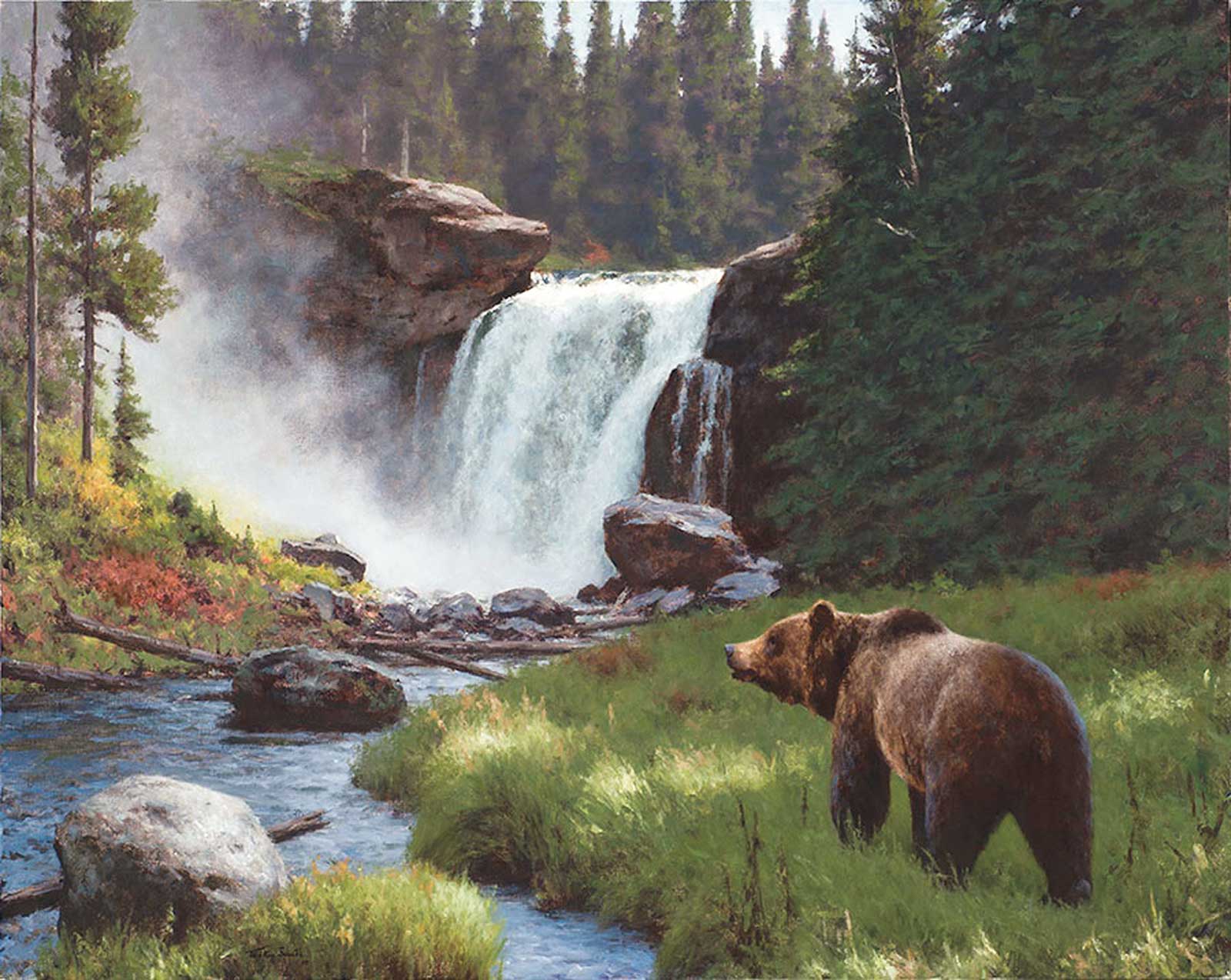 Booth Western Art Museum, Moose Falls Y.N.P, oil on canvas, 30 x 40", by Tucker Smith.
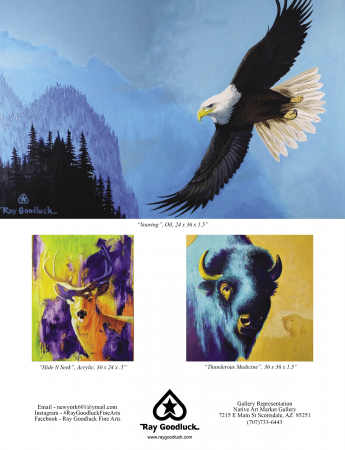
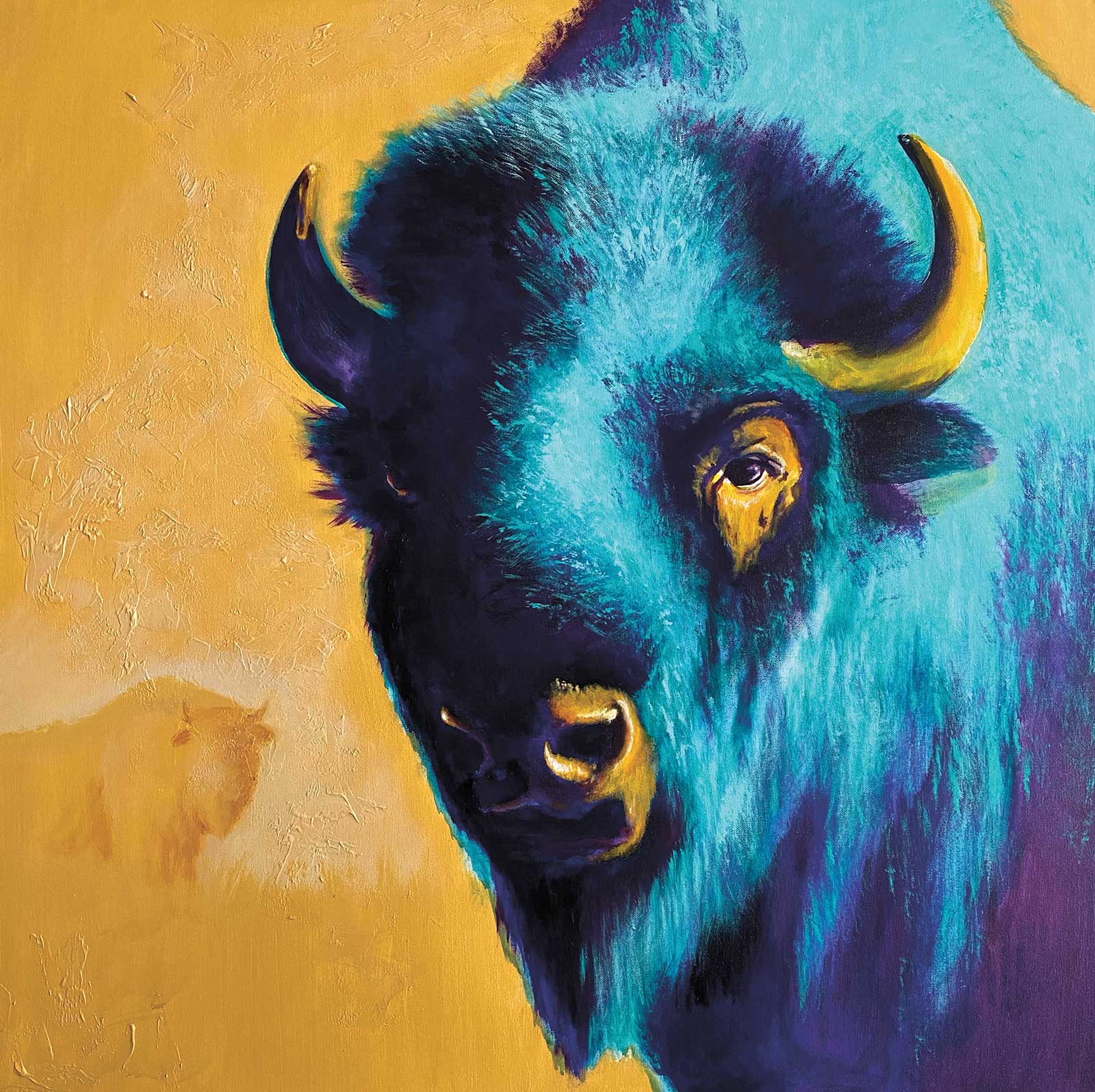 Ray Goodluck, Thunderous Medicine, acrylic, 36 x 36"
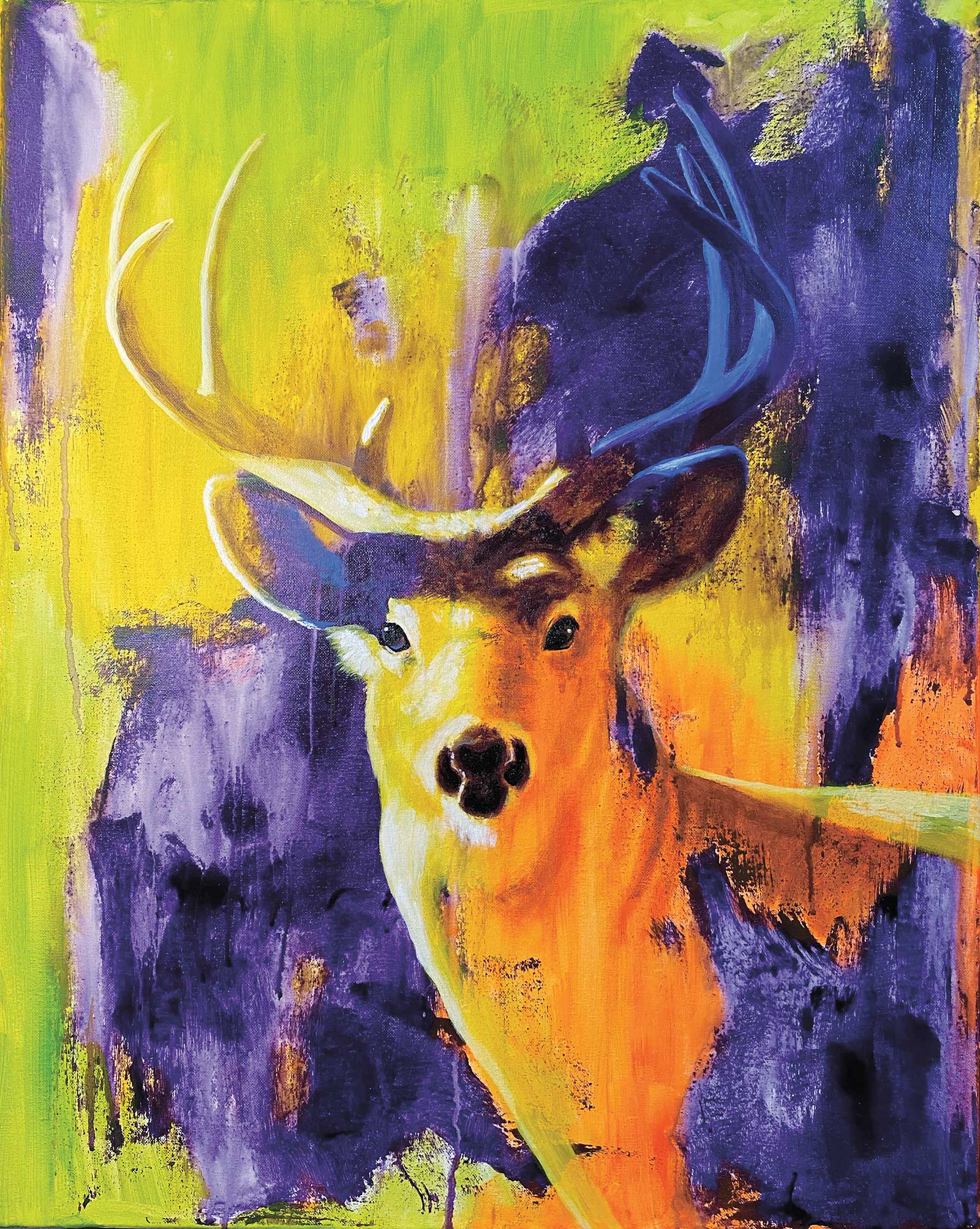
Ray Goodluck, Hide N Seek, acrylic, 30 x 24"
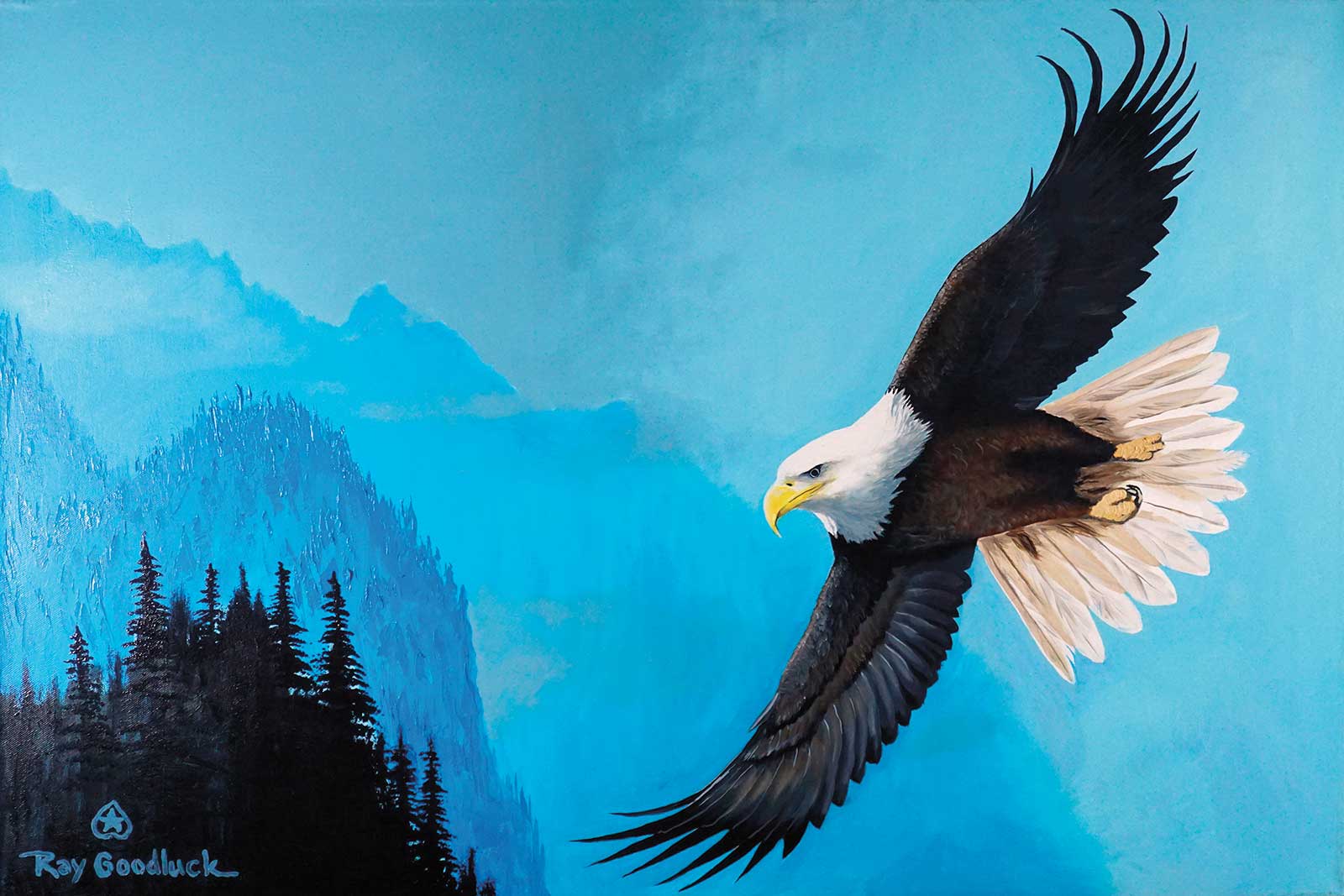 Ray Goodluck, Soaring, oil, 24 x 36"
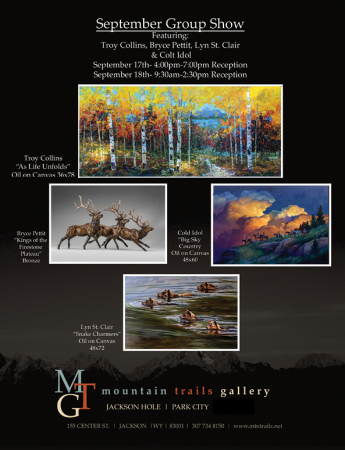
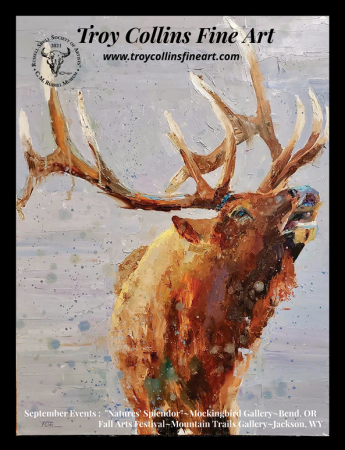
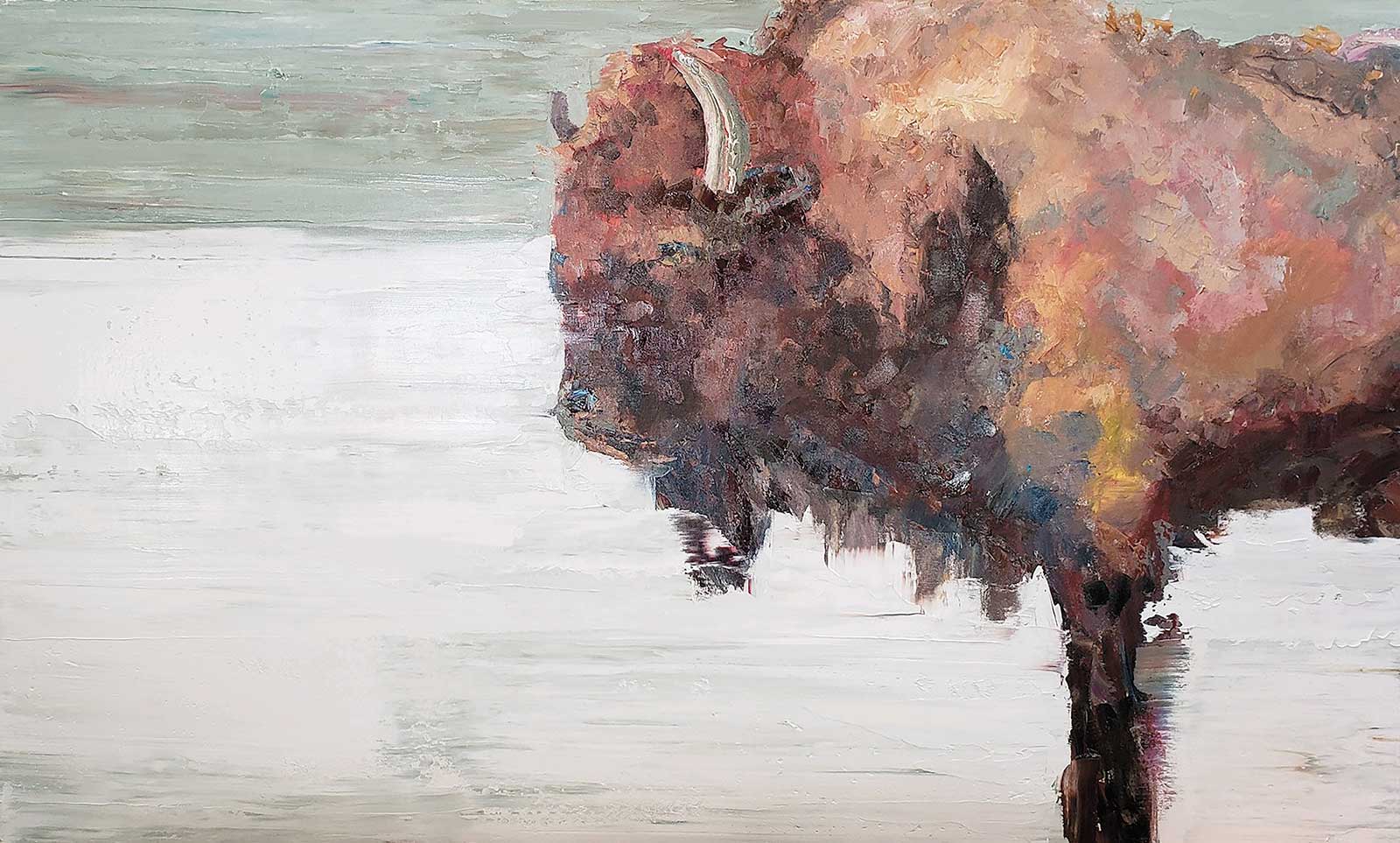 Troy Collins, Icon, oil on canvas, 32 x 72"
Jackie Lee has been involved in animal rescue for many years and has developed a deep attachment to all creatures. “Painting wildlife is an emotional act for me,” she says, “and nothing is as exciting as getting the eyes right—the ‘a-ha!’ moment. It appears dramatic in large wildlife but is also important in pet commissions where it’s essential to get an accurate likeness. I would advise painters to zero in on the eyes of their subjects at the beginning and form a direction based on their expression, then the rest will fall into place. When I’m not painting wildlife, I paint their habitat and landscapes. I find it helpful to go from one genre to the other with each piece, to avoid burnout from the detail required.”
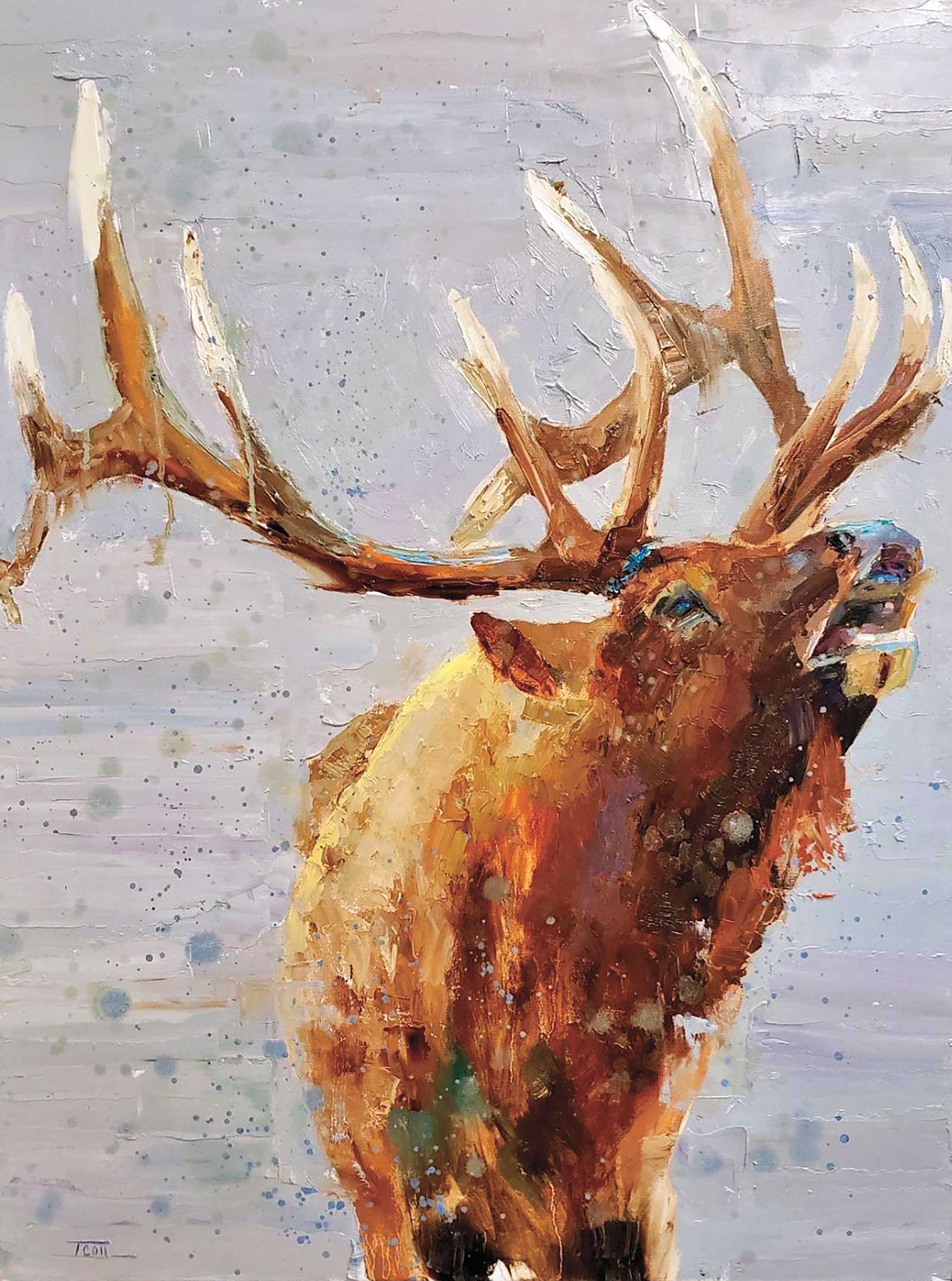 Troy Collins, The Call, oil on canvas, 40 x 30"
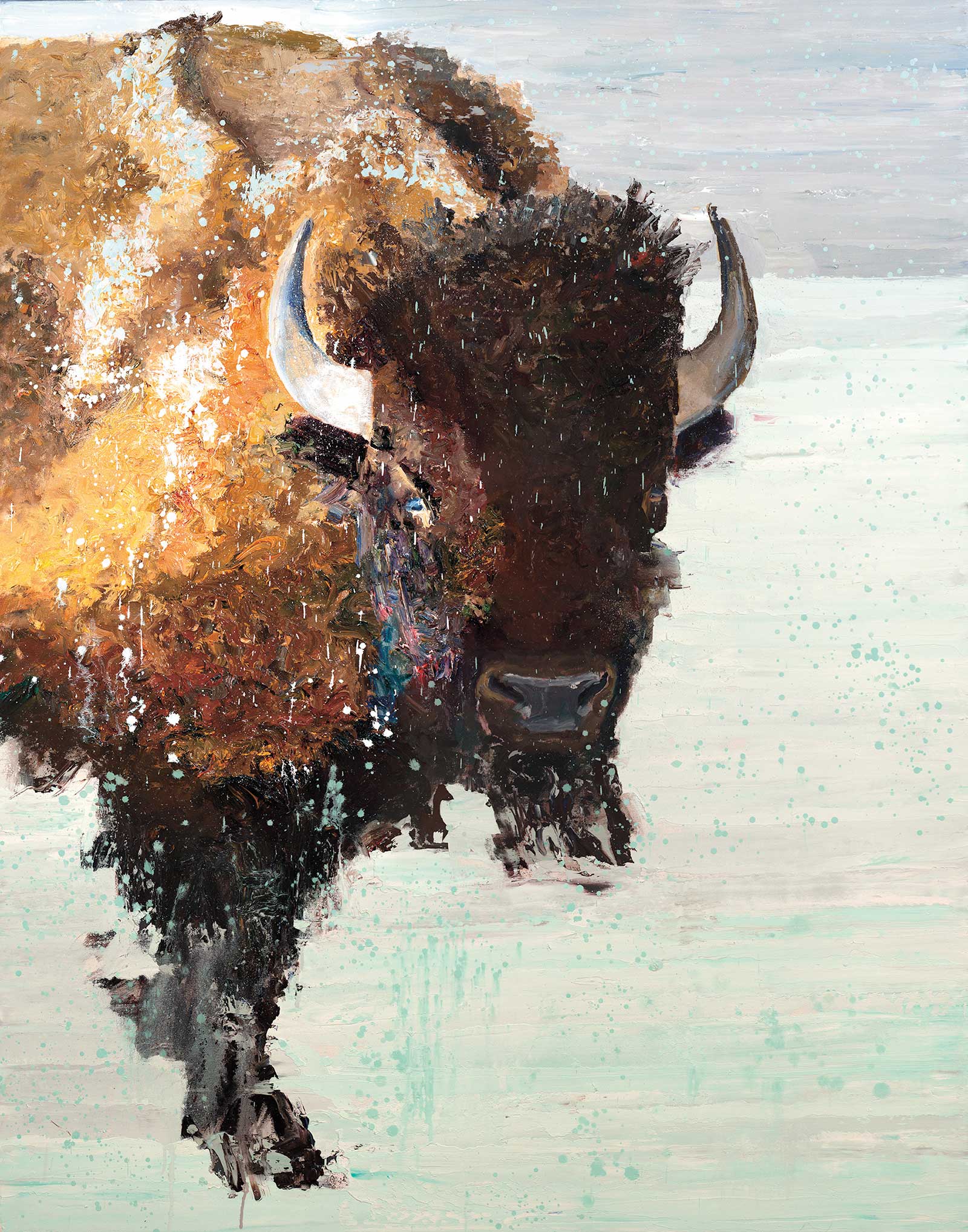 Troy Collins, Great Medicine, oil on canvas, 72 x 52"
This year at the National Museum of Wildlife Art, more than 140 artists are supporting Western Visions, 11 of whom are first-time invitees. This number has allowed for increased diversity in style, wildlife content, price point and artist demographic, all of which will help the museum meet their goals of reaching a broader audience. The event offers something for everyone, from the emerging art enthusiast to seasoned collectors. Artworks are in a smaller format for 2021, with paintings limited to a maximum of 16 by 20 inches and sculptures capped at 18 inches in any one dimension. A new technology partnership with GraVoc is allowing the show to return to their traditional intent-to-purchase format, while offering both in-person and virtual attendance options for their classic evening Art Show + Sale.
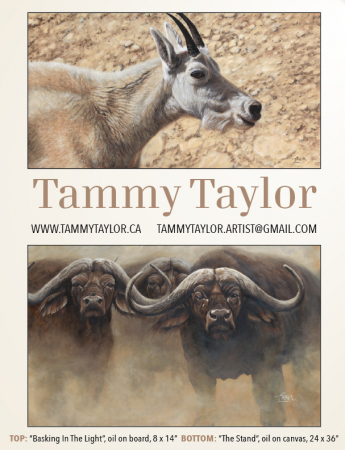
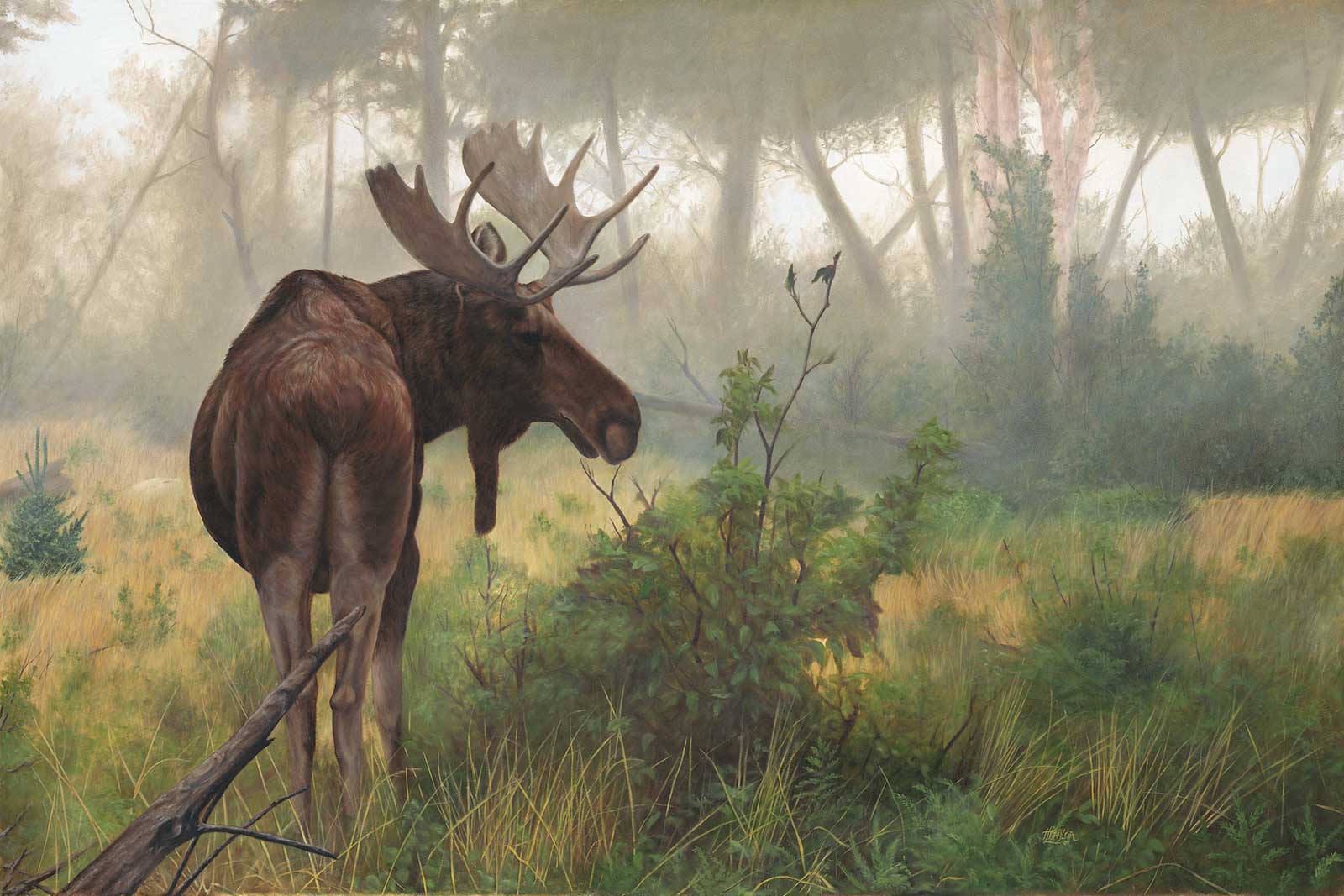 Tammy Taylor, Early Morning Mist, oil on canvas, 24 x 36"
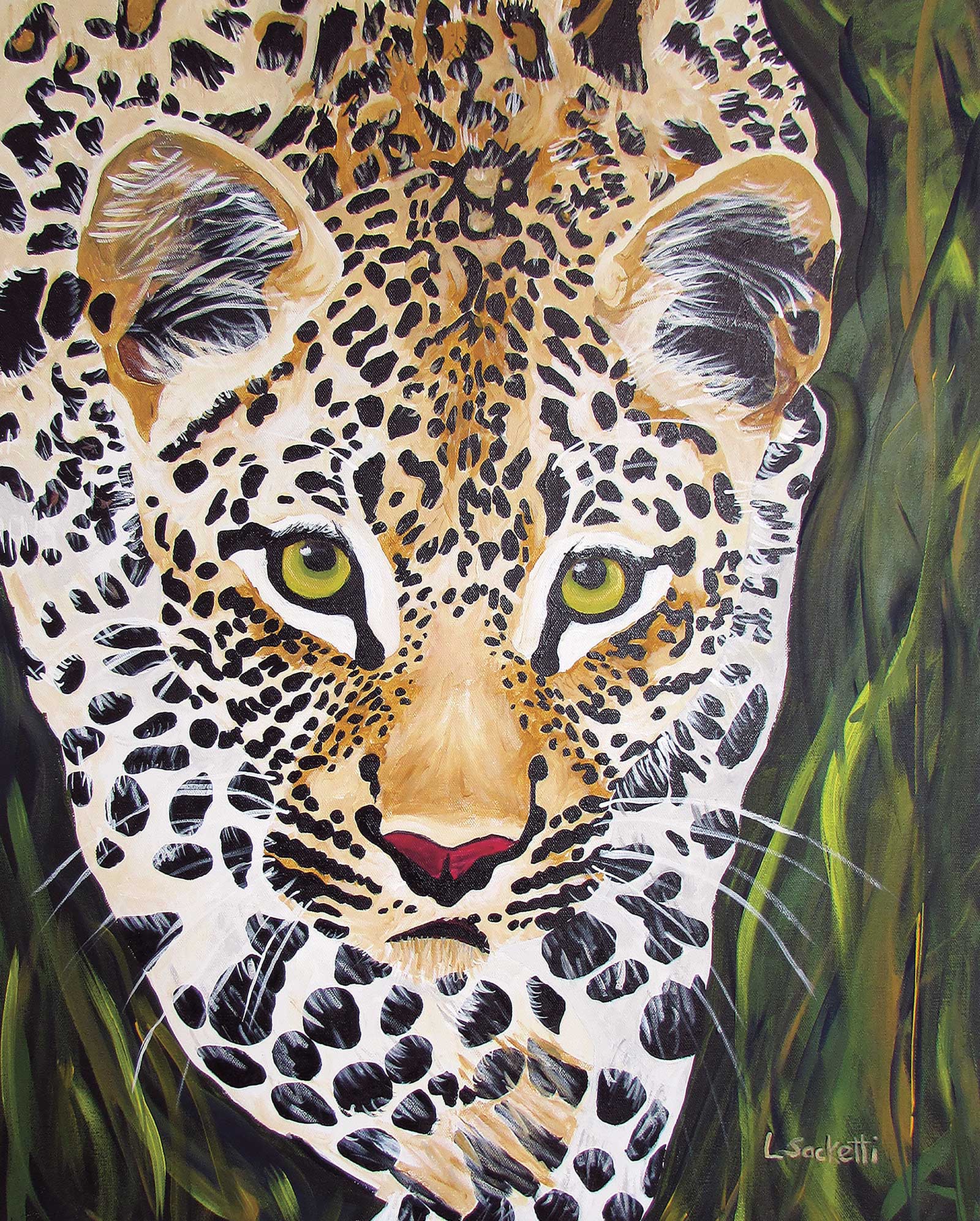 Linda Sacketti, Spotted Leopard, acrylic on canvas, 24 x 30"
“Collecting any genre of art is an incredibly personal experience,” says representatives with the National Museum of Wildlife Art, “and wildlife art is no different! When approaching a possible acquisition, the most important question is—does the work speak to you? Do you love it? While art can be an investment, it is also something you will live with on a daily basis. It needs to be something that evokes a response in you personally, something that will continue to hold meaning for you over the years.”
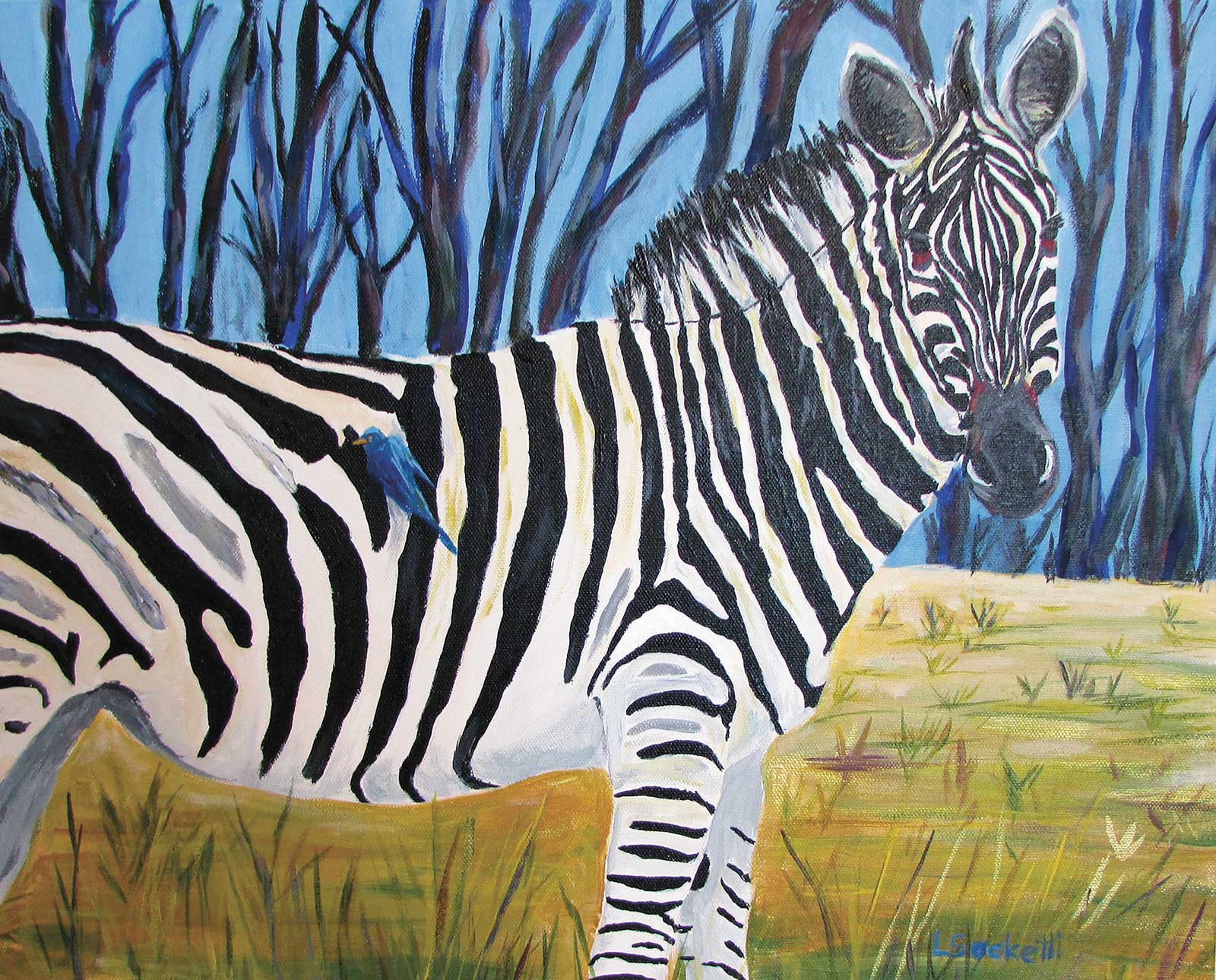 Linda Sacketti, Hitching a Ride, acrylic on canvas, 20 x 16"
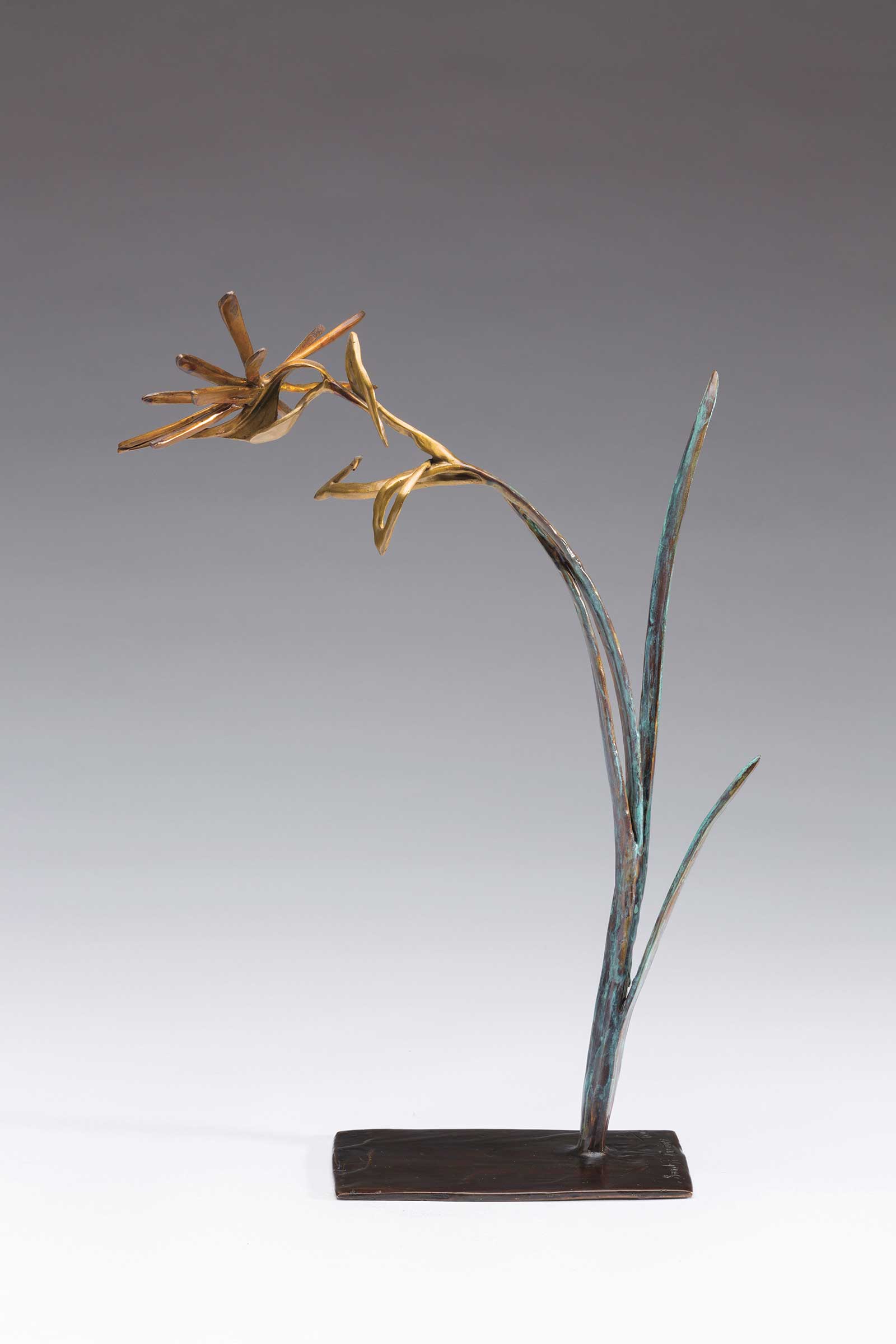 Sandy P. Graves, Nectar, bronze, 15 x 12 x 10"
Artist J.M. Brodrick is a painter working towards merging her need for realism with the beauty of pure abstract. This can be seen in pieces such as The Hunt, of a wolf walking towards the viewer and surrounded by an abstracted gold background, creating a powerful and enigmatic moment. “When collecting,” says Brodrick, “choosing your art should be similar to how you choose your music; an escape from reality for a moment, leaving you feeling better for having experienced it.”
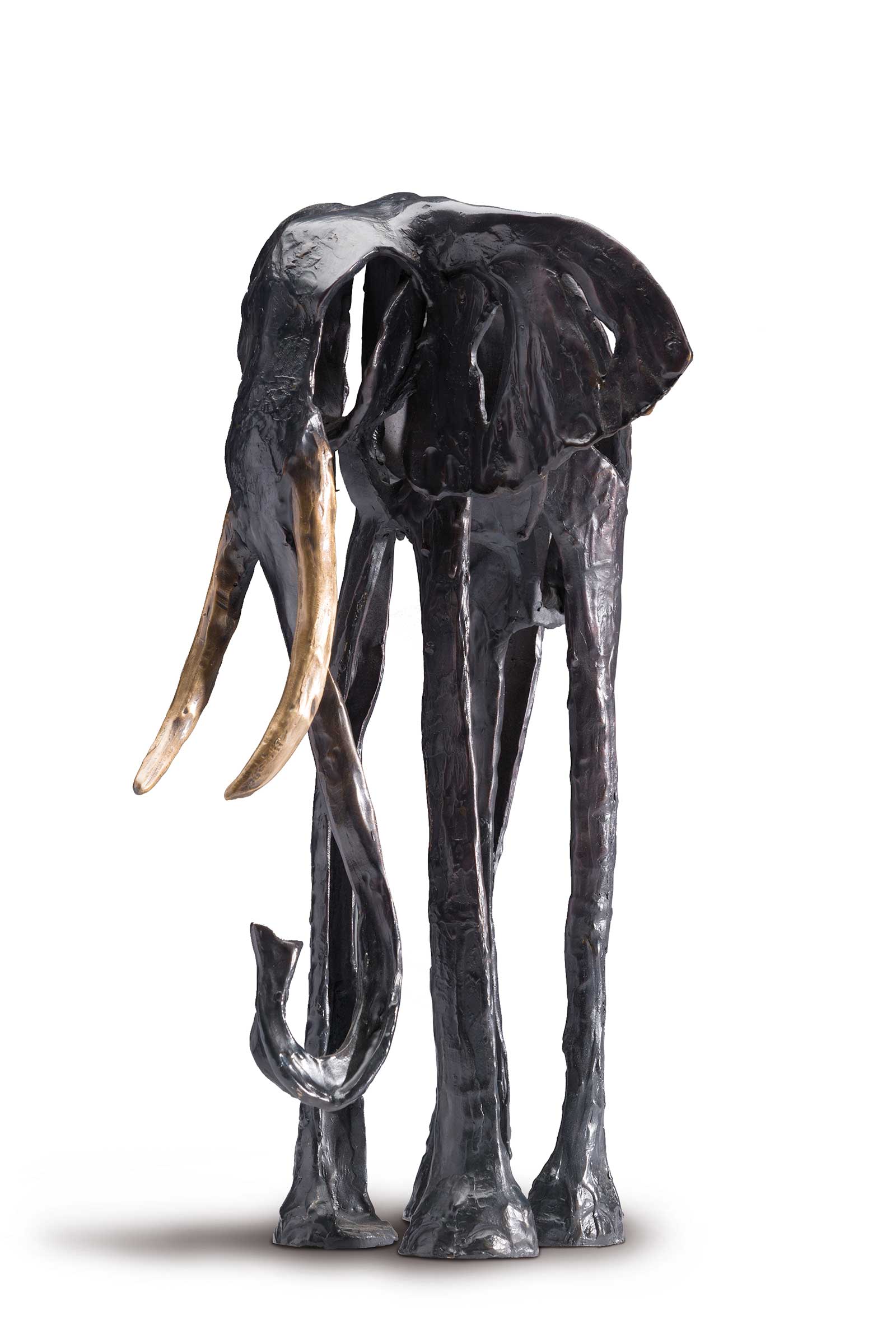 Sandy P. Graves, Tusker, bronze, 14 x 8 x 9"
Nathan Novack captures moments of the bovine life, in contrast to our perception. “Getting to know tendencies and reasoning of behavioral gestures through observations and owner’s knowledge draws much attention,” Novack explains. “For instance, [in my piece] Heat Check, I was able to learn first hand how the longhorn bull reacts to acres full of female longhorns. They somewhat flirt to check on whether females are in heat. Females literally play hard to get initially, disregarding the extra effort the bull longhorn may be putting off. After a few passes at the female and persistency, the female halts and allows nature to take place.”
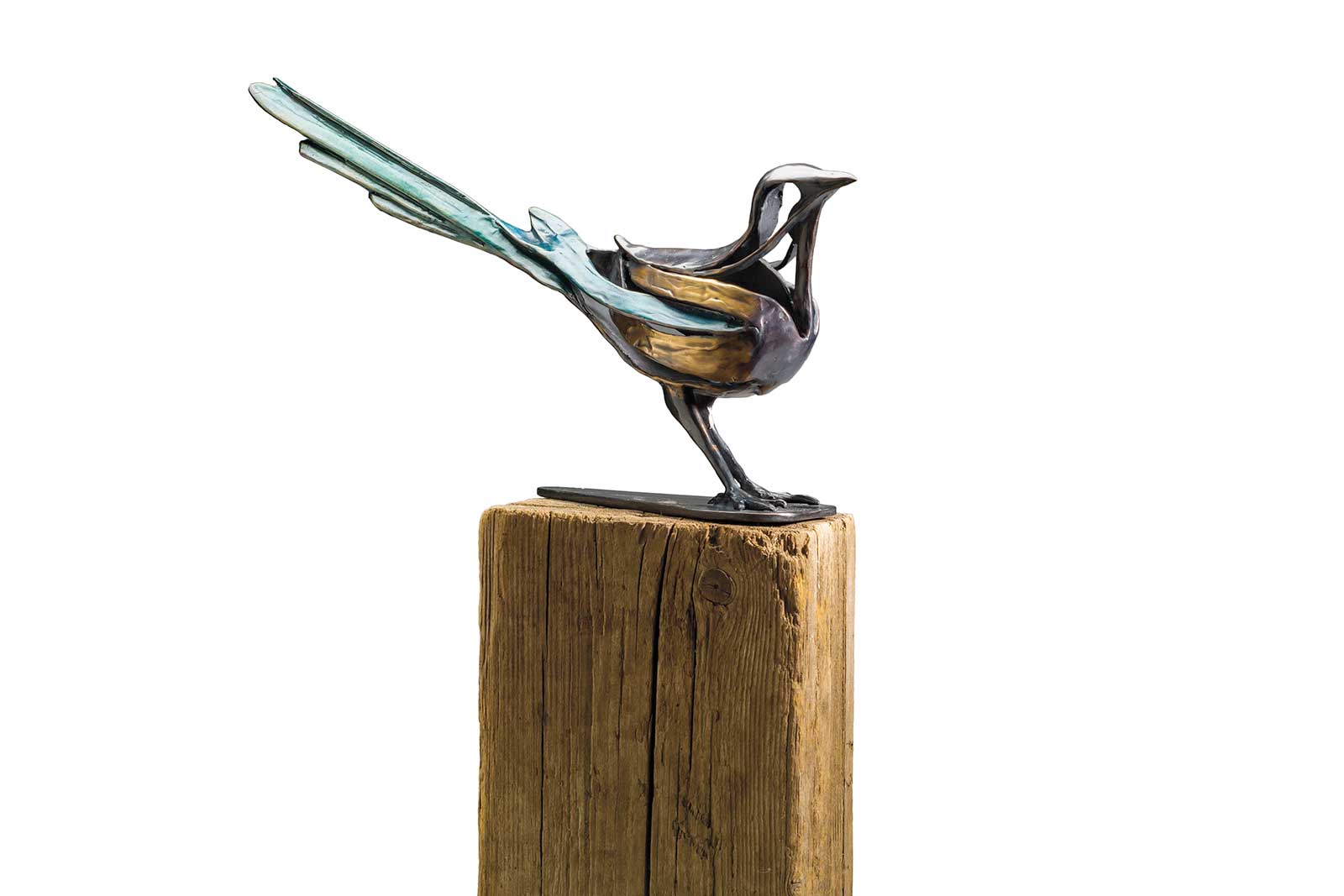 Sandy P. Graves, Lola, bronze, 10 x 4 x 16"
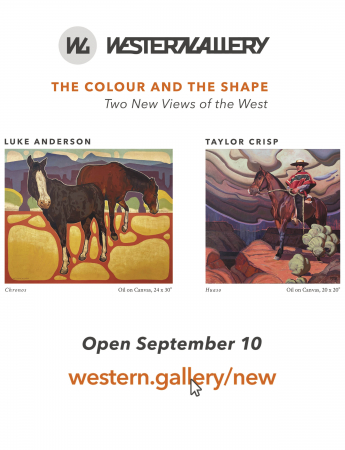
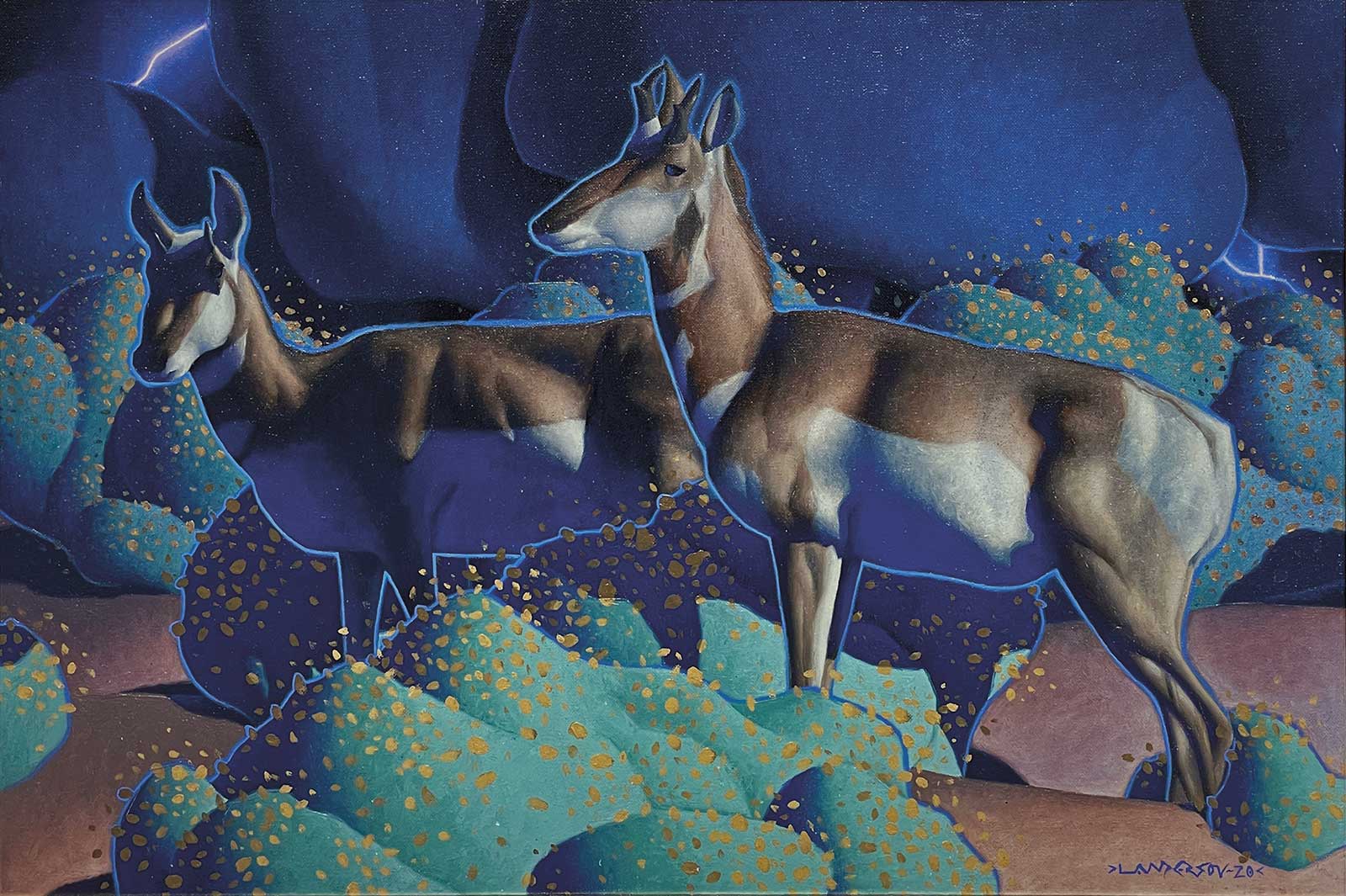 Western Gallery, Strobe, oil on canvas, 20 x 30", by Luke Anderson.
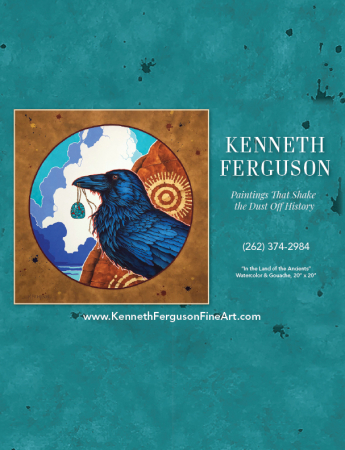
As far back as he can remember, Kenneth Ferguson has been interested in history and nature. “It seemed only natural that my paintings should align with these interests, and that’s pretty much how it’s gone,” says Ferguson. “My sweet spot has been historically accurate paintings of military and tribal subject matters, but subjects of nature have found their way onto the easel more and more often. I especially enjoy portraying creatures of the Northern Plains. With each painting, I make an effort to capture a bit of the animal’s personality—just like with people, I find it’s all in the eyes.”
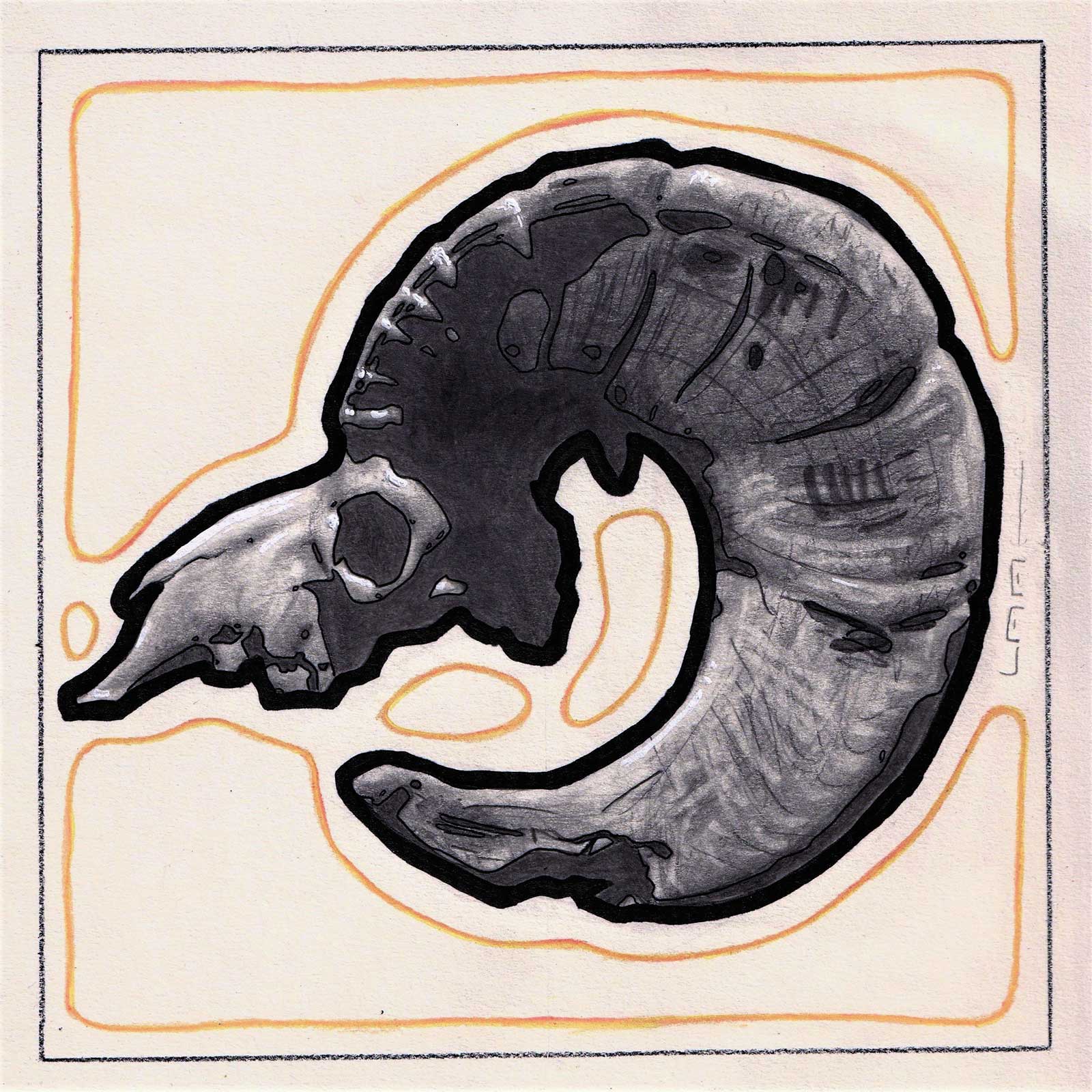 Western Gallery,Fibonacci, graphite, ink and colored pencil on paper, 8 x 8", by Luke Anderson.
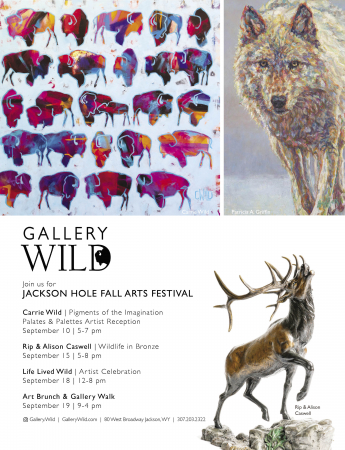
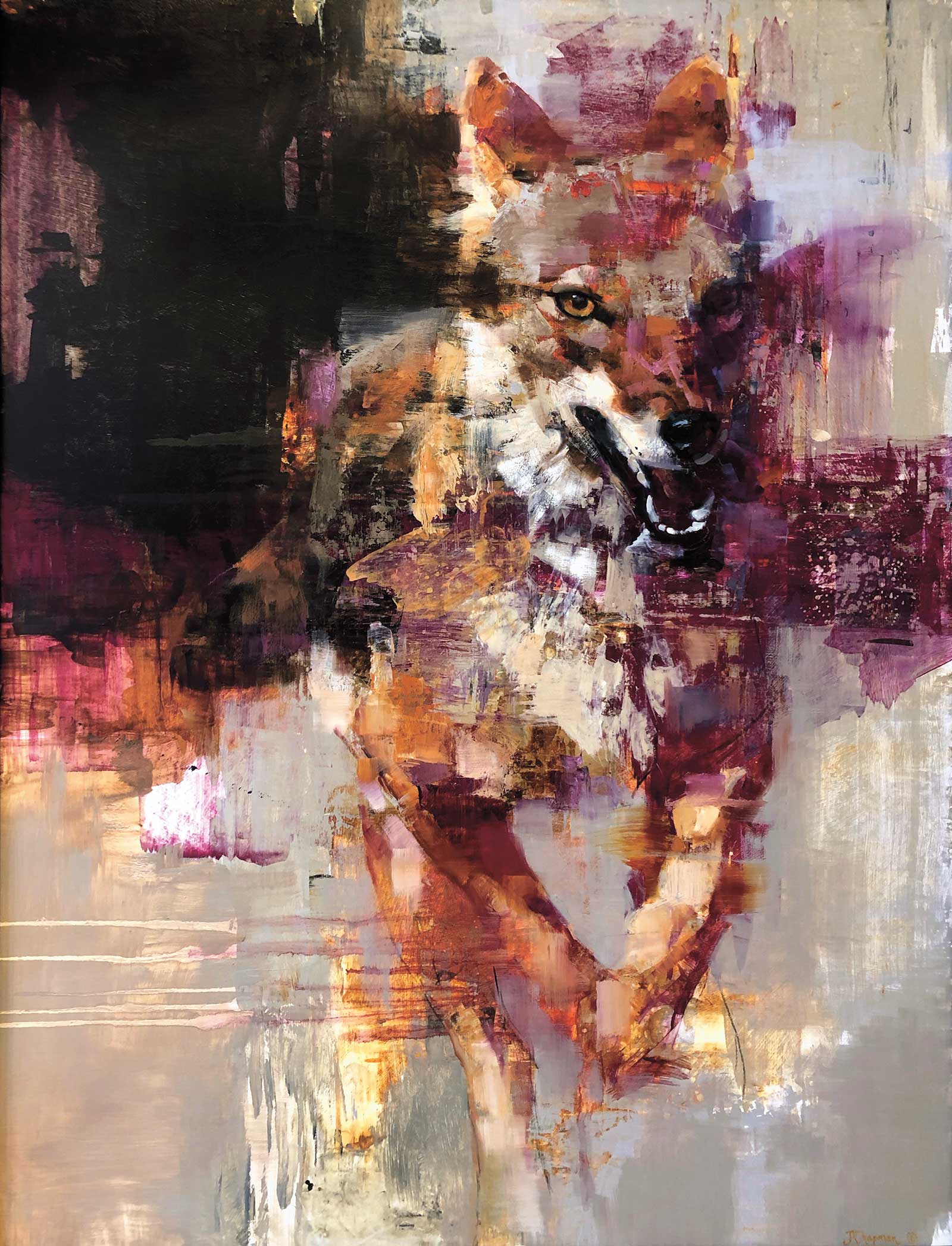 Gallery Wild, Mischief Managed, oil, charcoal and acrylic on panel, 40 x 30", by Julie T. Chapman.
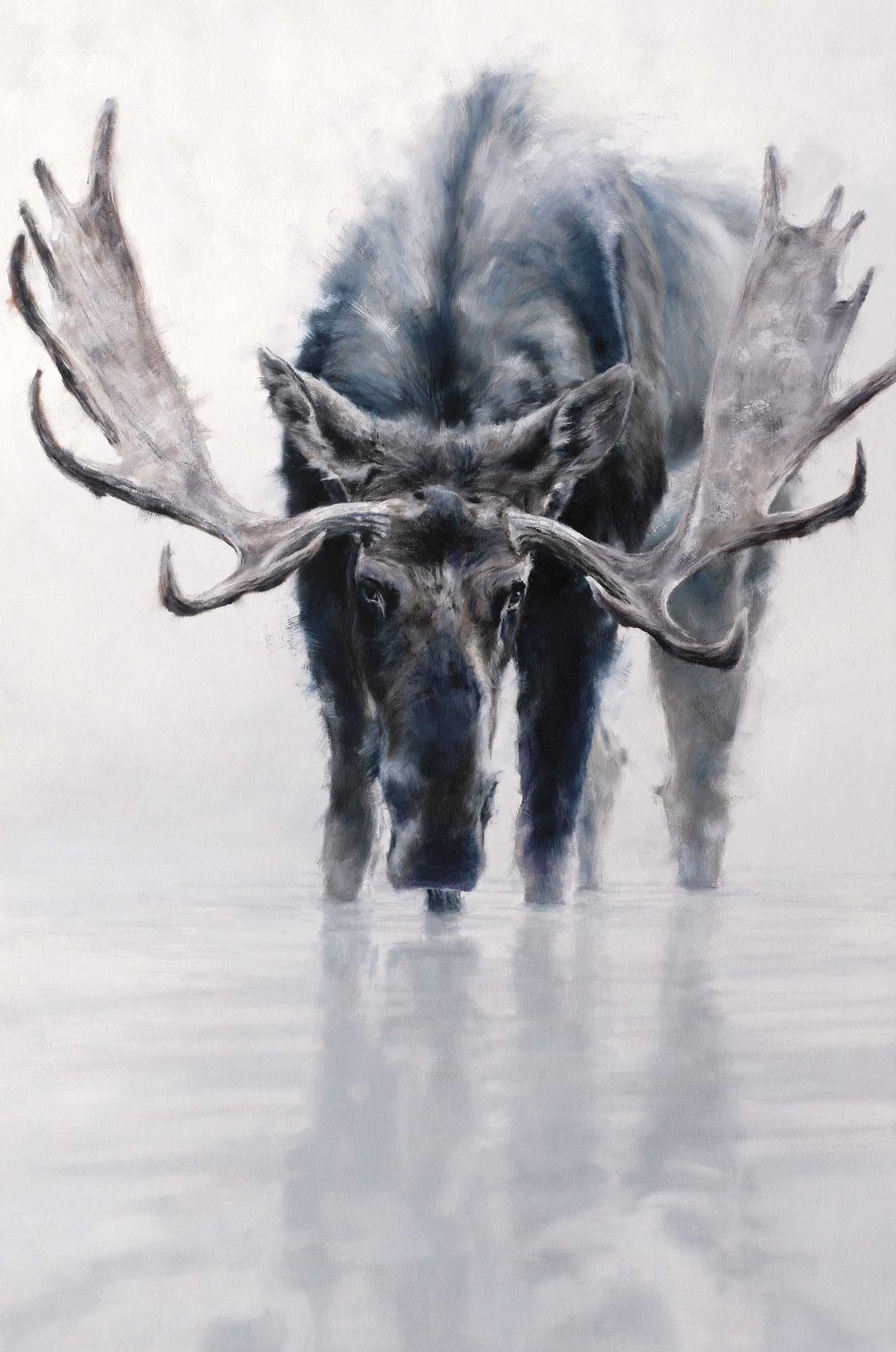 Gallery Wild, In Blue, oil on canvas, 48 x 32", by Doyle Hostetler.
Ferguson believes that the process of collecting is just about as enjoyable as the acquisition itself. “It seems like there’s always more reading and research to do with regard to individual artists, subject matter, the market, trends and so forth, and the purchase of one piece inevitably leads to doors being opened to other interesting possibilities,” he says.
“I guess I would say to collectors, enjoy the ride and always, buy what you love.”
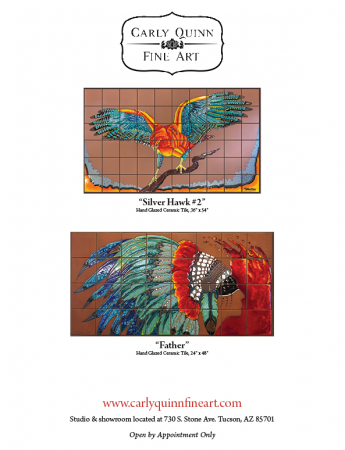
The ceramic tile works seen here, created by Carly Quinn, were inspired by walks through the Sonoran Desert. “Often times when hiking through less-populated areas, I would come across some of these animals and feel a connection,” she says. “I have always been drawn to animals as a subject matter.” Quinn’s use of ceramic tile is not one of great popularity, since it’s an incredibly difficult medium to master. The glaze blending in each piece is the result of years of studying how certain glazes chemically react with one another in different kiln environments. Each piece will last a thousand years, if not more, in harsh environments. These pieces are all part of Quinn’s Kiln Fired Watercolors series, named for her first favorite medium, watercolor.
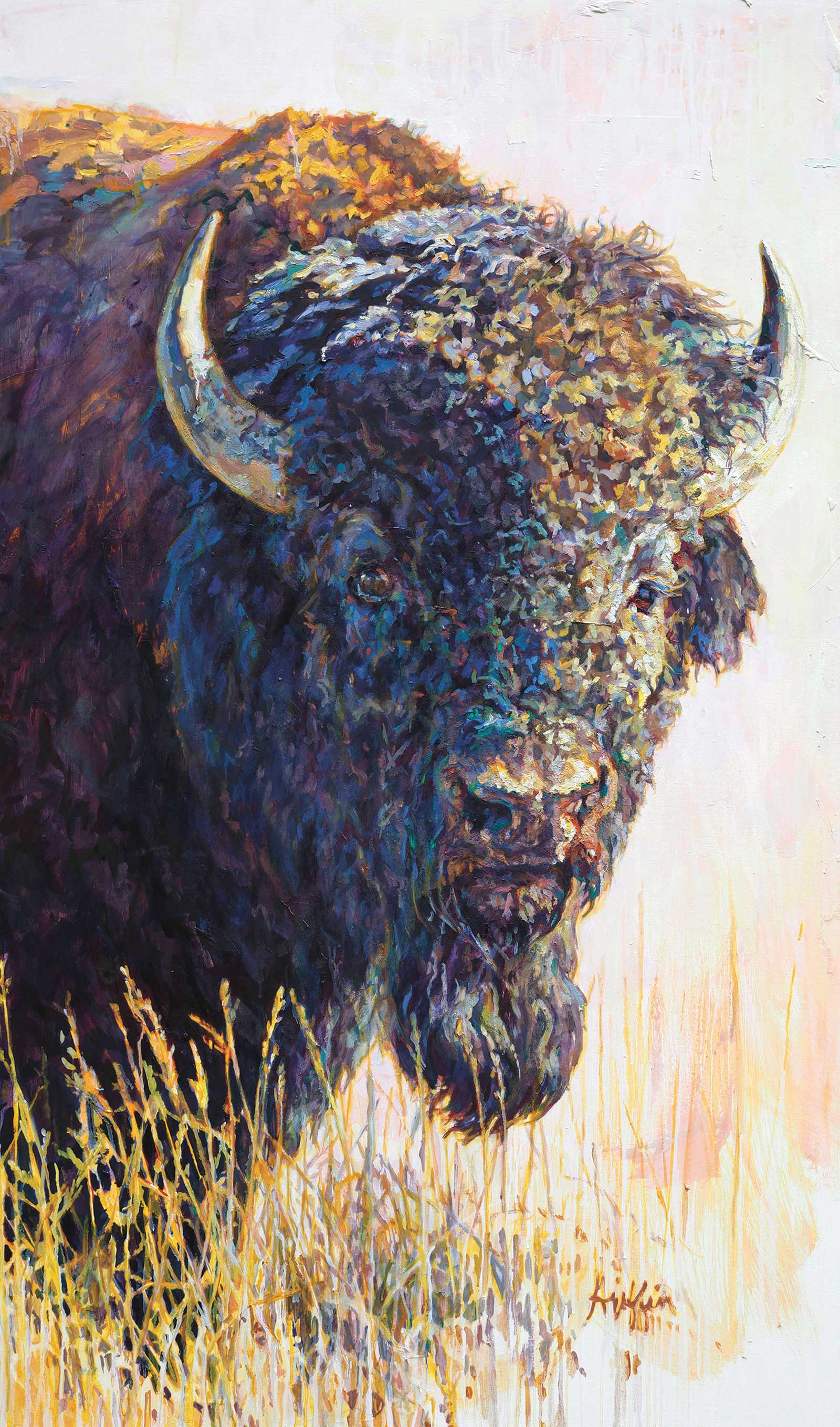 Gallery Wild, Thor, oil on linen, 60 x 36", by Patricia A. Griffin.
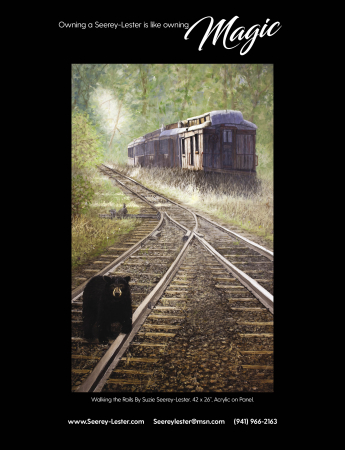
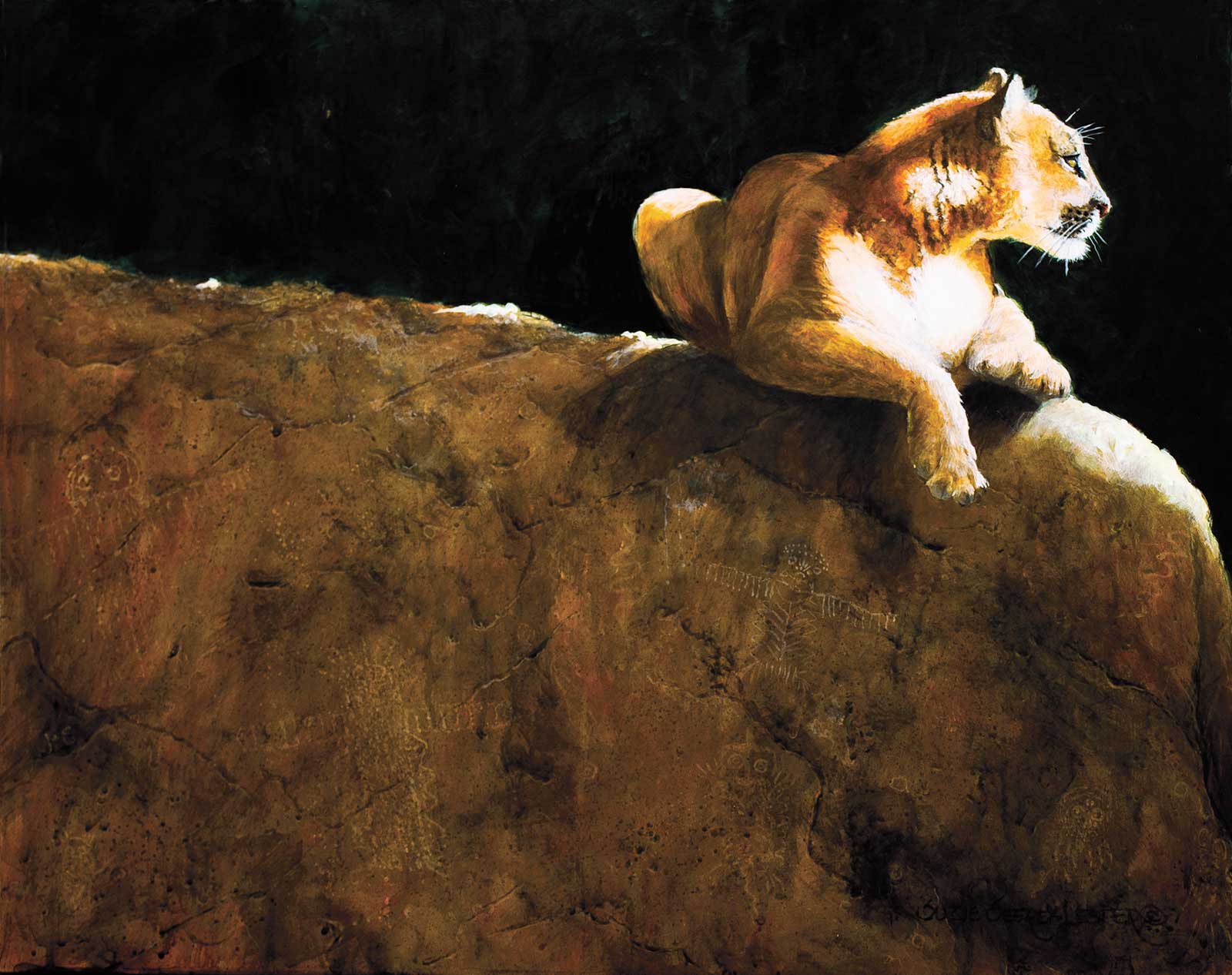 Suzie Seerey-Lester, Shadows of the Past – Petroglyphs, oil on panel, 16 x 20"
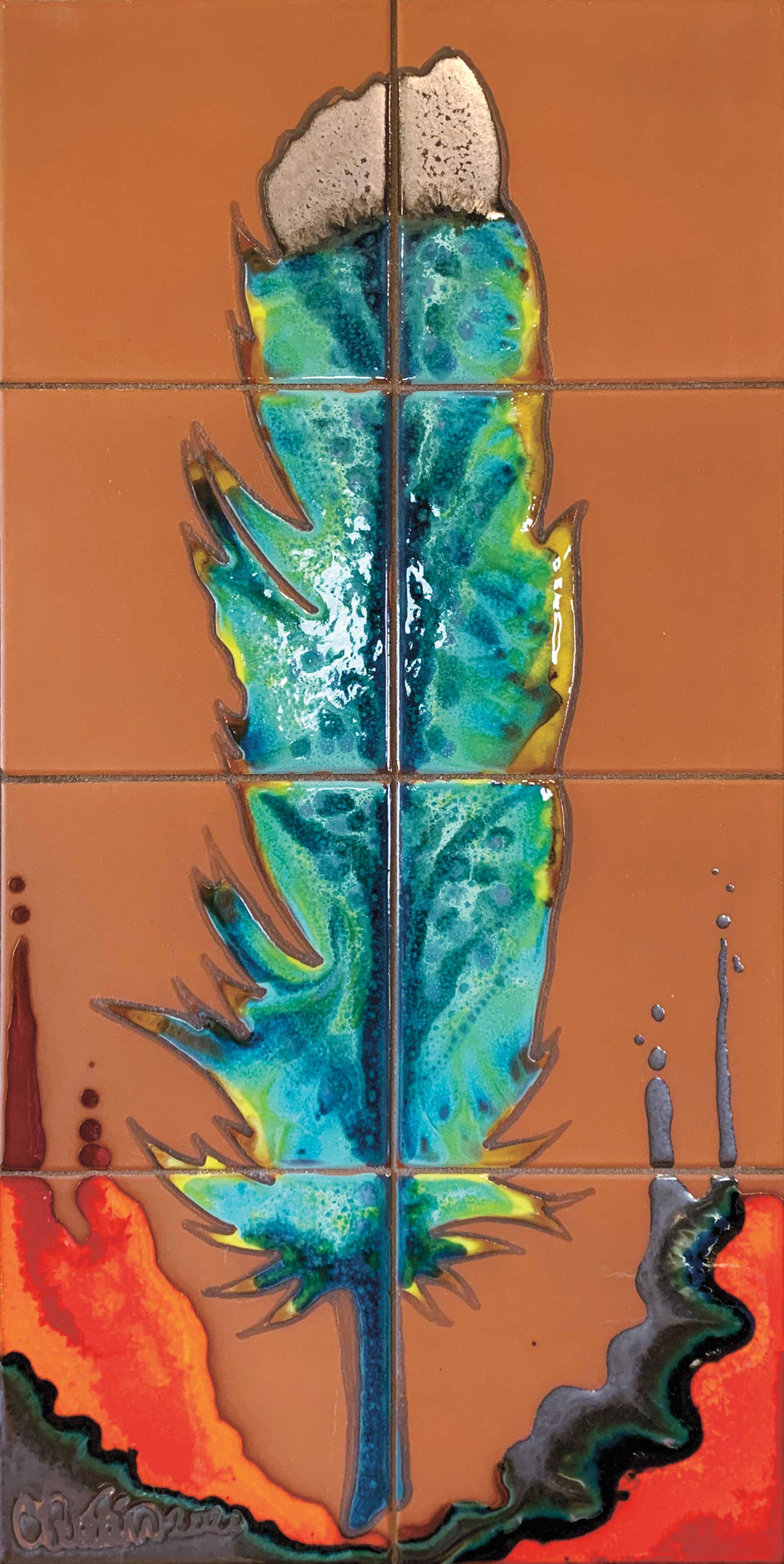
Carly Quinn, Hawk Feather, glazed ceramic tile, 12 x 24"
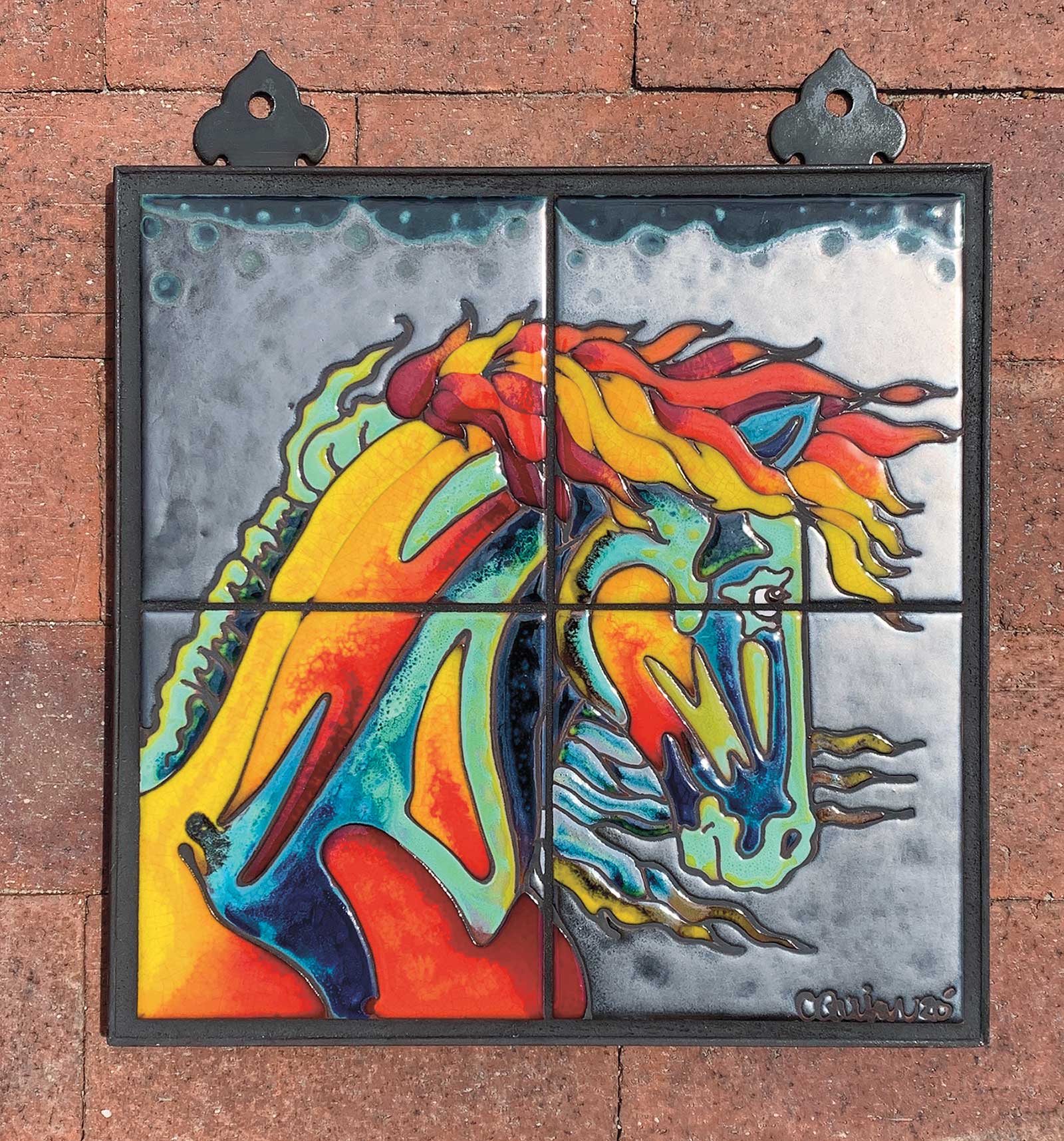 Carly Quinn, Silver Stallion, glazed ceramic tile, 12 x 12"
Her advice to collectors would be to “buy what really speaks to you, a piece that stops you dead in your tracks every time you pass it and that you must take time to study and admire.”
Ray Goodluck is a self-taught artist from the Diné Nation, who first started painting in 2019. “I’m Hashtłishnii (Mud People),” Goodluck says, “born for Honaghanii (one who walks around one). Birds and animals will give you a good example of how to connect with Mother Earth and Father Sky, just like my heart and star logo. Only then will you understand how to live peaceful and free, not only know the definition of it. One knows what to do when their phone is dying but does not know how to recharge oneself, the human body, spirit, mind and soul. That is my inspiration for wildlife paintings.”
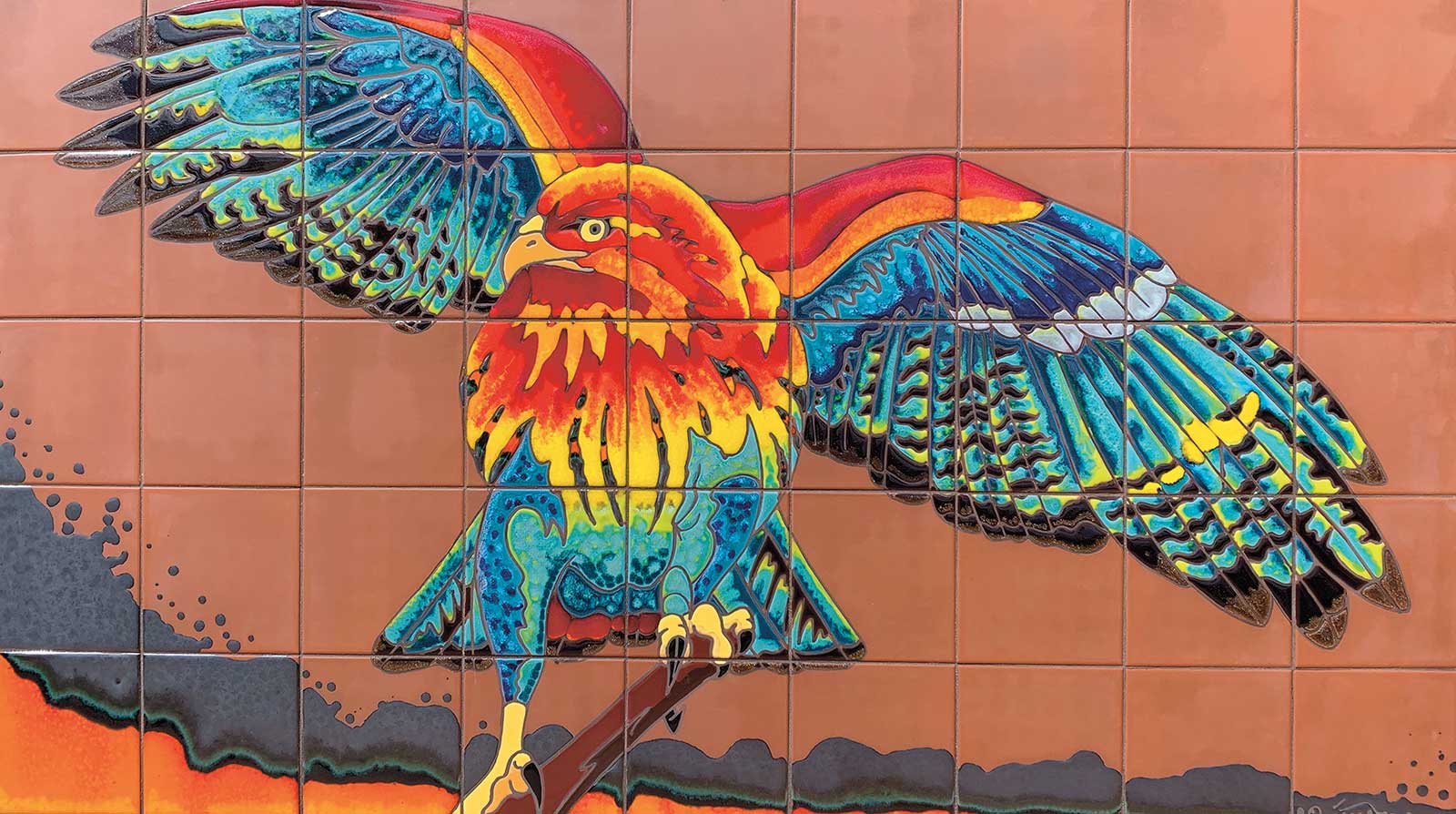 Carly Quinn, Silver Hawk, glazed ceramic tile, 30 x 54"
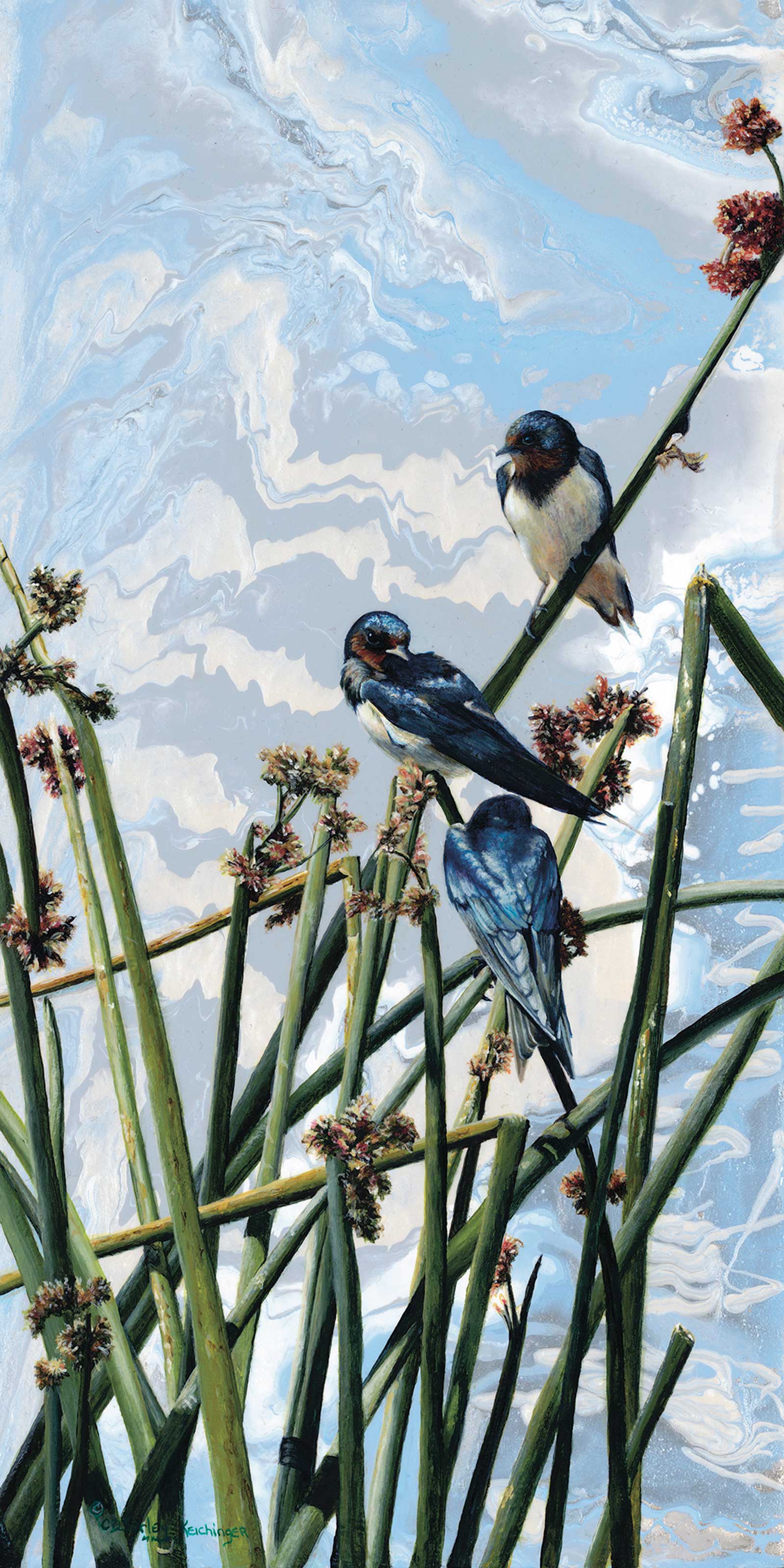 Cindy Sorley-Keichinger, Swallow Dream, acrylic, 18 x 9"
Troy Collins feels that he’s painting the best that he has as a professional artist and is excited for collectors to see his newest works. “I am proud to be a Montana artist and a Russell Skull Society artist who is lucky enough to live in this beautiful state and to be represented by diverse galleries located across the broad expanse of the West,” he says. “I began painting wildlife as a way to represent my Western roots. I actually began to love creating these works and my collectors love them as well.”
Collins is also looking forward to getting back to a new normal, “to be able to gather together after a year of isolation due not only Covid, but my wife’s cancer diagnosis as well,” he says. “I am looking forward to continued healing and turning the corner to a new brighter time. I can see the light at the end of the tunnel and that is exciting and inspiring to me. It will be wonderful to be able to share my gift in person, once again, with my collectors.”
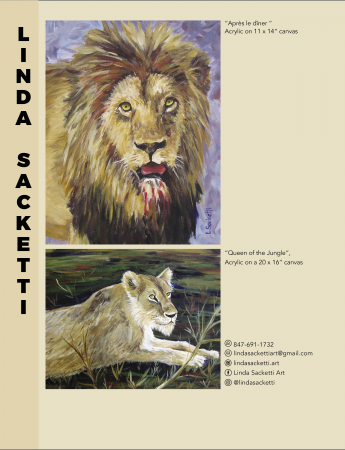
Chicago-based artist Linda Sacketti is known for her colorful, expressionist landscapes and botanical paintings. However, after a trip to Kruger National Game Park in South Africa in 2018, she was inspired to paint the majestic creatures she saw there. “It was an incredible experience to see these beautiful creatures in their natural habitat,” she explains. “I paint from photos that I take and with all the wildlife we saw, I was able to capture many images of these fabulous and majestic animals. When I paint, I try to capture the feeling and emotion that I felt when I originally saw my subject matter. Everything in nature inspires me. I always say that art is an interpretation of reality, not a copy. If I can capture a moment in time that touches other’s hearts and souls, then I have created a successful painting.”
Bronze sculpture artist Raymond Gibby is drawn to the genuine nature of wildlife. “There is no guile in the animal kingdom, just the will to survive and live out the measure of creation, Gibby says. “I love that animals will always choose life. In contrast, so many of the human race seems to be giving up on life, on themselves or letting others dictate their existence. But animals will fight until the last breath. That is how I hope to carry on. I want to be victorious or go down fighting. I also want to care for my kids and make sure they have the skills they need to succeed. I want to be genuine and always choose life and I desire to reflect these themes in my artwork.”
When it comes to what art to collect, Gibby’s greatest advice is to acquire art that is the truest reflection of one’s own innermost spirit.
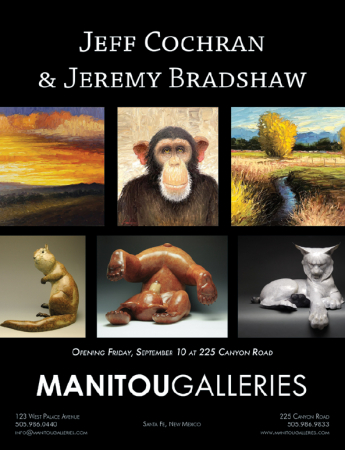
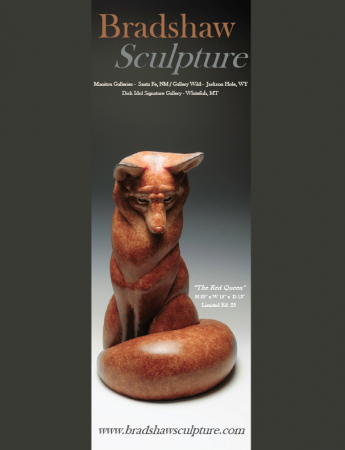
“I have been fascinated with wildlife and animals since childhood,” says bronze wildlife sculptor Jeremy Bradshaw. “Growing up in rural, central California, I was surrounded by chickens, rabbits and cows at my grandparents farm. [While] working, exploring, backpacking and fly-fishing in the Sierra Nevada mountains, my natural curiosity and interest in animals and wildlife continued to increase.” Bradshaw’s pursuit of falconry over the past three decades has led to countless hours of wildlife observation and research, which he utilized to instill both accuracy and character in the animals he sculpts. He continues, “My sculptures come to life because they reflect my life authentically committed to the natural world.”
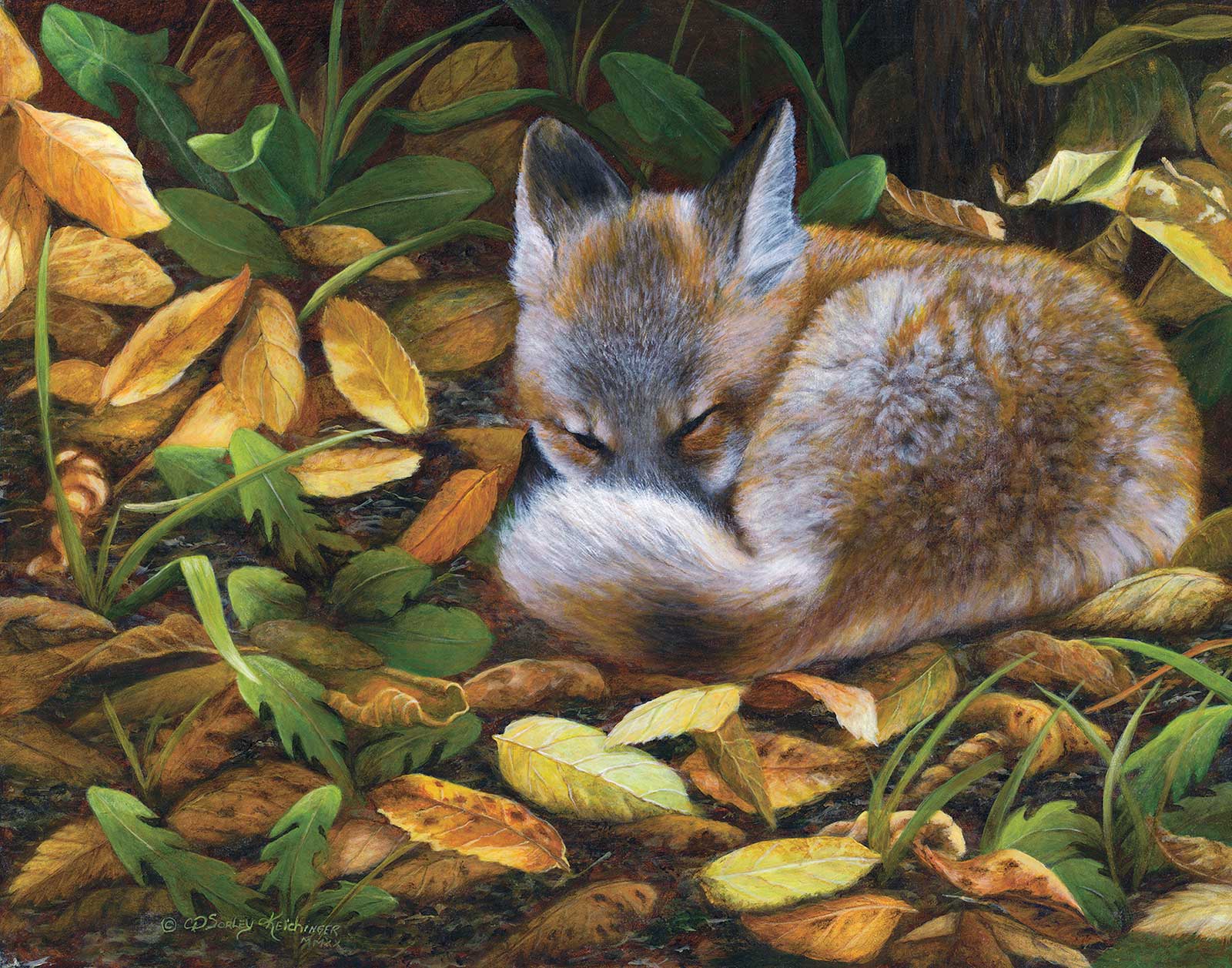 Cindy Sorley-Keichinger, Autumn Snooze, acrylic, 11 x 14"
His advice to collectors is to “find a sculpture that elicits happiness every time you look at it in your home, work or garden.”
A Wyoming native, Luke Anderson, represented by Western Gallery, has seen and painted his fair share of pronghorn and other native species. As an artist exploring the intersection of Western and wildlife subjects with a contemporary vocabulary, he always brings a unique perspective that sets his work apart. Regarding Strobe, Anderson says, “I wanted to paint a nocturne using more than the implied bright moonlight as the primary light source. So, I added a flash of lightning during a thunderstorm to serve as a light source, which achieved the effect that a flash of lightning has in the dark—just a brief, fleeting capture of whatever was happening at that moment.”
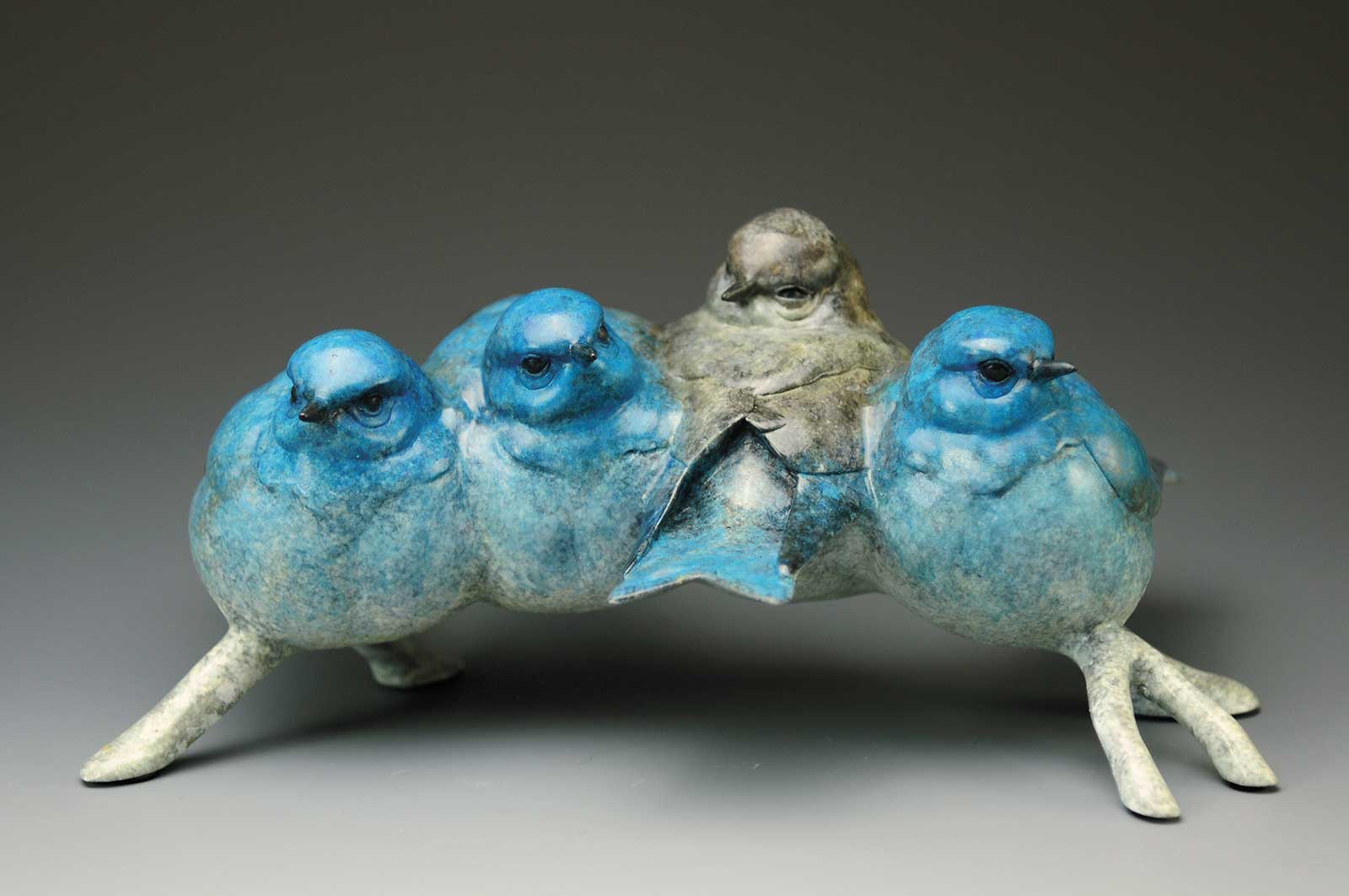 Jeremy Bradshaw, Winter Blues, bronze limited edition 35, 10 x 7 x 5"
George Irwin, founder and director of Western Gallery says of collecting, “As with any acquisition, buy what you love, but when considering a piece of wildlife art, do some research to be sure that the artist and gallery have a real respect for the subjects and their environments. Any drawing or painting of an animal can be pretty, but those created within a conservation mindset are far more meaningful to own.”
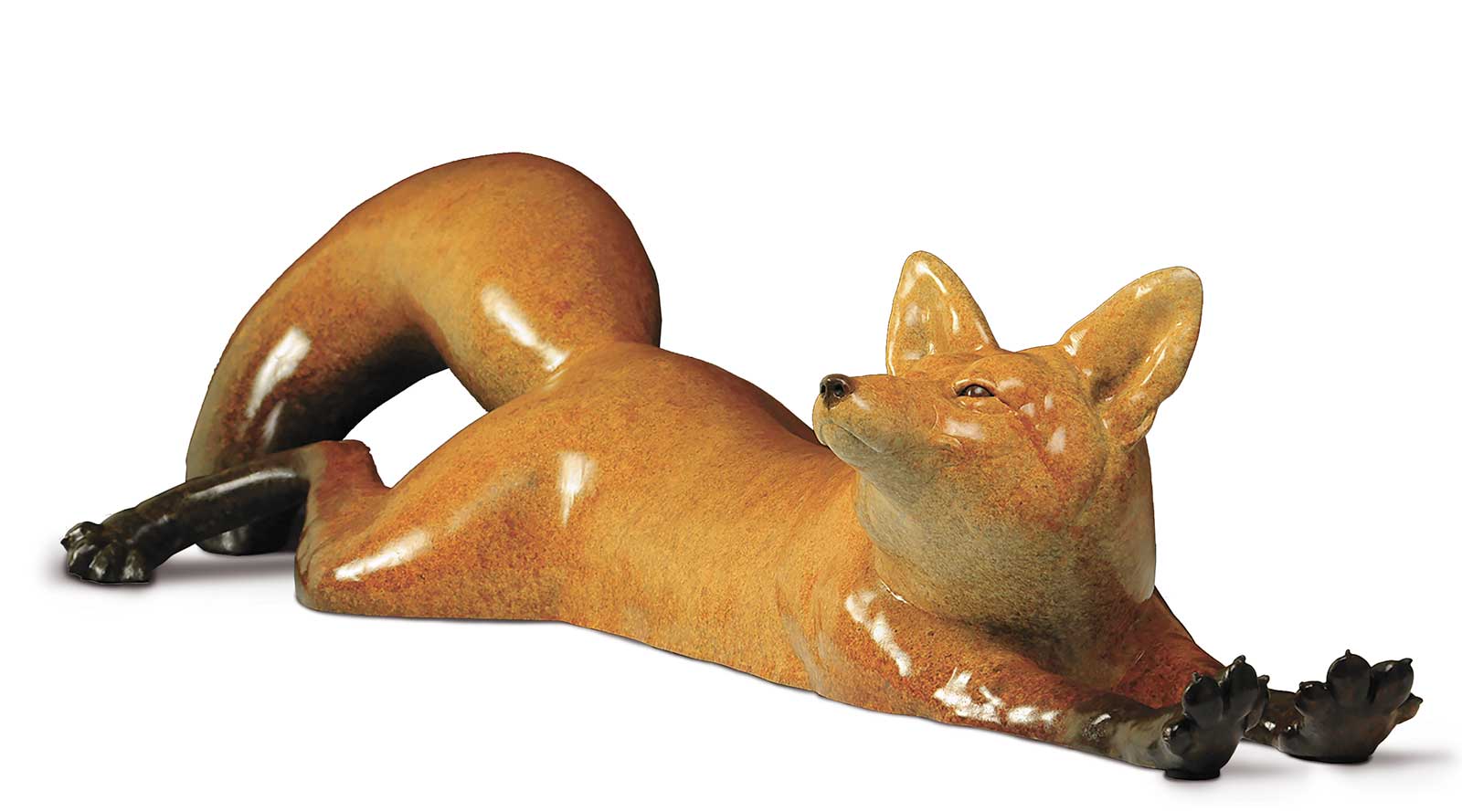 Jeremy Bradshaw, Red’s Reach, bronze, ed. of 25, 45 x 14 x 9"
Gallery Wild is a contemporary wildlife art gallery located in downtown Jackson Hole, Wyoming. The gallery is inspired by wildlife and wild places. The collection features established and emerging artists who offer a variety of mediums that include painting, sculpture and photography. Gallery Wild’s works and philosophy are inspired and directly influenced by thousands of hours in the field observing, studying and falling in love with all things wild. The gallery also features a working artist studio where Carrie Wild and visiting gallery artists share their techniques and artistic process as they create new work. Contemporary art allows space for interpretation and capturing the essence of wildlife and landscapes.
When looking to add Gallery Wild art to your collection, “we encourage people to pay attention to the works that trigger a special emotion or memory, something that encourages you to take a deep breath and smile!”
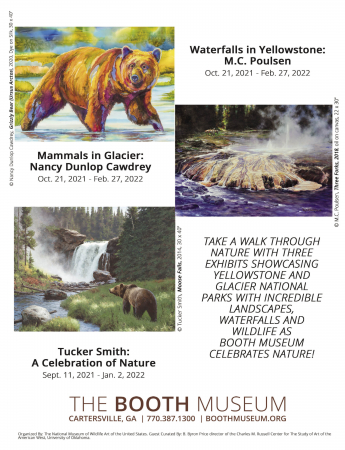
Tucker Smith, featured at the Booth Western Art Museum, is well known for his balanced, subtle paintings inspired by living on the Hoback Rim in Western Wyoming. Now on view at the museum are more than 40 original oils spanning his career, including Western wildlife, locomotives, camp and cowboy scenes, and stunning landscapes. Smith’s exhibition A Celebration of Nature, will run September 11 through January 2, 2022, and is organized by the National Museum of Wildlife Art in Jackson Hole, Wyoming; guest-curated by Director B. Byron Price, Charles M. Russell Center for the Study of Art of the American West, University of Oklahoma.
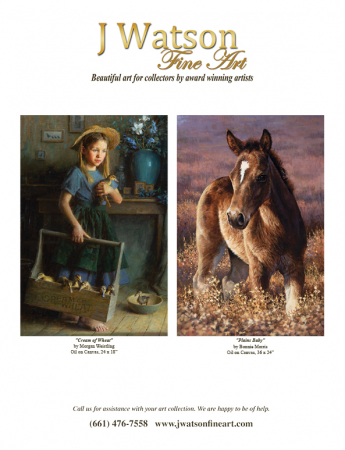
J Watson Fine Art offers original wildlife art by many award-winning and museum artists including Robert Bateman, Carl Brenders, Carl Rungius, John Bye, John Seerey-Lester and Bonnie Marris. The art of Bonnie Marris has been used to support worldwide rare-animal relief programs. In addition to academic training and her love of animals, Marris’ many field trips to the wilderness and being up close to the bison, wolves, bears and other animals she paints have given her unique experiences that contribute to her art. She has won many awards including the patron’s choice, artist’s choice and the Bob Kuhn Wildlife Award at the Autry Museum of the American West. She’s also won other awards at prestigious events around the country.
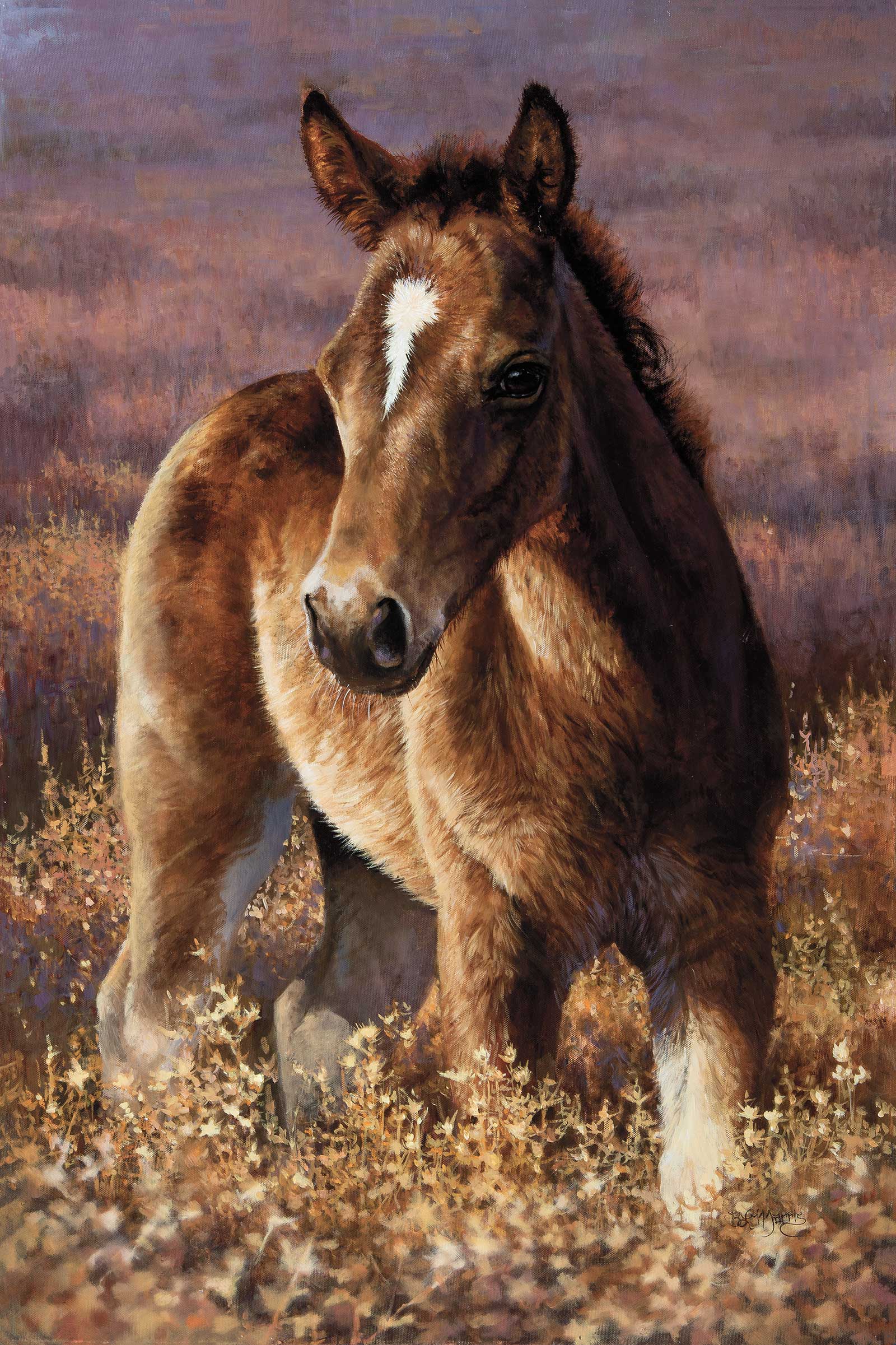 J Watson Fine Art, Plains Baby, oil on canvas, 36 x 24", by Bonnie Marris.
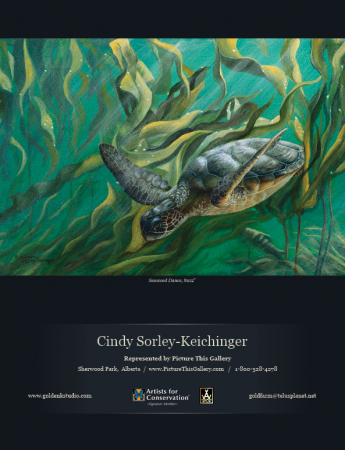
Cindy Sorley-Keichinger was born in Barrie, Ontario, and was trained as a medical laboratory technician, then married a grain farmer and now resides on a farm near Lloydminster, Alberta.
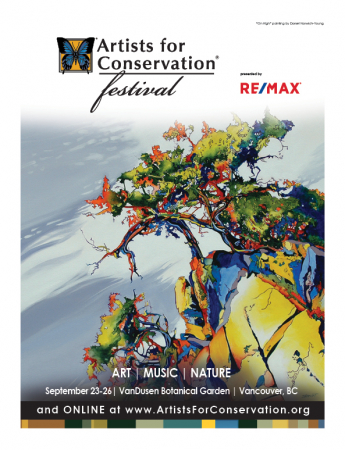
Sorley-Keichinger is primarily self-taught but has taken workshops with top artists in her genre. “My subjects of choice are landscape and wildlife. I find them calming and try to project that in my work. In today’s busy world, a little bit of calm and peace is a necessity.” She is a member of several artist organizations and is particularly proud to be a member of the Artists for Conservation, and an associate member of the Society of Animal Artists. She is also proud to have designed a coin for the Royal Canadian Mint. Sorley-Keichinger will be part of the Artists for Conservation Festival in Vancouver for the month of September. This show features artists of note from all around the world.
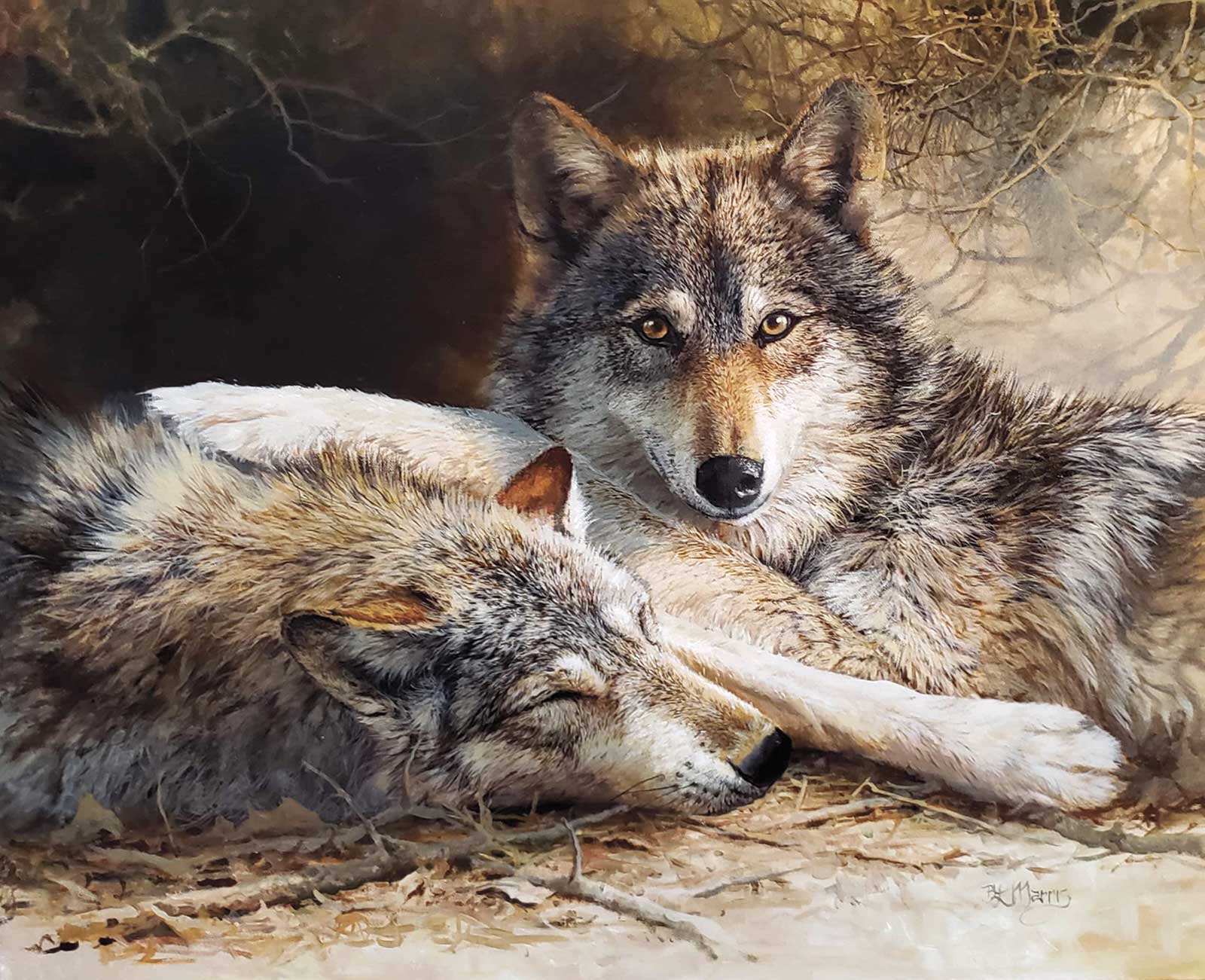 J Watson Fine Art, An Unbreakable Bond, oil on canvas, 24 x 30", by Bonnie Marris.
When collecting, Sorley-Keichinger suggests picking a piece that really grabs you. “The artist credentials and standing should come second to the decision,” she says. “You will be living with the piece, so it should be something you will enjoy looking at for years to come.”
Featured Artists & Galleries
Addison Gallery of American Art
3 Chapel Avenue, Andover, MA 01810
(978) 749-4015, addison.andover.edu
Amanda Ward
Alamosa, CO, (719) 992-4509
award0311@yahoo.com
www.artbyamandaward.com
Annie Allen Clark
Lincoln, MT, (406) 431-9479
sunnybunny60@gmail.com, www.annieallenart.com
Booth Western Art Museum
501 Museum Drive, Cartersville, GA 30120
(770) 387-1300, www.boothmuseum.org
Carly Quinn Designs
730 S. Russell Avenue, Tucson, AZ 85701
(520) 624-4117, www.carlyquinndesigns.com
Cindy Sorley-Keichinger
(780) 847-2294, goldfarm@telusplanet.net
www.goldenkstudio.com
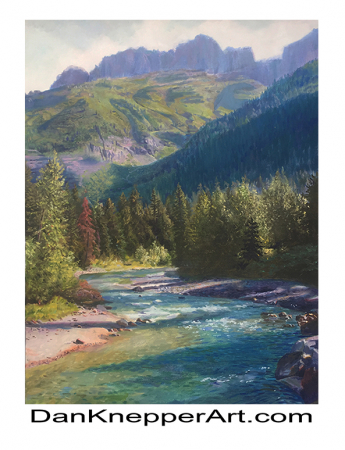
Dan Knepper
danknepperart@yahoo.com
www.danknepperart.com
Don Woodard
Broomfield, CO, (303) 430-1986
www.donwoodard.com
Elizabeth Mordensky
Gardiner, MT, (406) 219-8307
www.elizabethmordenskyfineart.com
Gallery Wild
80 W. Broadway, Jackson, WY 83001
(307) 203-2322, www.gallerywild.com
J Watson Fine Art
(661) 476-7558, info@jwatsonfineart.com
www.jwatsonfineart.com
J.M. Brodrick
www.jmbrodrick.com
Jackie Lee
(707) 328-7755, www.jackieleeart.com
Jeremy Bradshaw
(509) 212-2513, www.bradshawsculpture.com
Kenneth Ferguson
Phoenix, AZ , (262) 374-2984
fergusonfineart@gmail.com
www.kennethfergusonfineart.com
Linda Sacketti
Palatine, IL, (847) 691-1732
lindasackettiart@gmail.com, www.lindasacketti.art
Lisa Gleim
(770) 919-7719, www.lisagleimfineart.com
Nathan Novack
Holcomb, KS, (620) 937-2121
www.nathannovackart.com
National Museum of Wildlife Art
2820 Rungius Road, Jackson, WY 83001
(307) 732-5412, www.wildlifeartevents.org
Raymond Gibby
(479) 586-7645, gibbybronze@gmail.com
www.gibbybronze.com
Ray Goodluck
www.raygoodluck.com
Sandy P. Graves
(970) 846-0201, www.sandygravesart.com
Suzie Seerey-Lester
(941) 966-2163, Seereylester@msn.com
www.seerey-lester.com
Tammy Taylor
(780) 967-3981, tammytaylor.artist@gmail.com
www.tammytaylor.ca
Trailside Galleries
Jackson Hole, WY
(307) 733-3186, www.trailsidegalleries.com
The Bradbury Art Museum
201 Olympic Drive, Jonesboro, AR 72401
870) 972-3687, www.bradburyartmuseum.org
Troy Collins
Hamilton, MT, (406) 830-0657
www.troycollinsfineart.com
Weiler Woods for Wildlife
(828) 335-8991, www.weilerwoodsforwildlife.com
Western Gallery
(512) 693-8787, www.western.gallery.com
Powered by Froala Editor