Norman Saunders was a sensational pulp artist. He also painted covers for slick magazines, men’s adventure magazines, paperbacks, comic books and bubblegum trading cards. His career started in 1926, at the age of 19, and he retired in 1984, at the age of 77. Over that time he created more than 7,000 published illustrations. Throughout his long career his artistic vision was inspired by a genuine love for the Old West.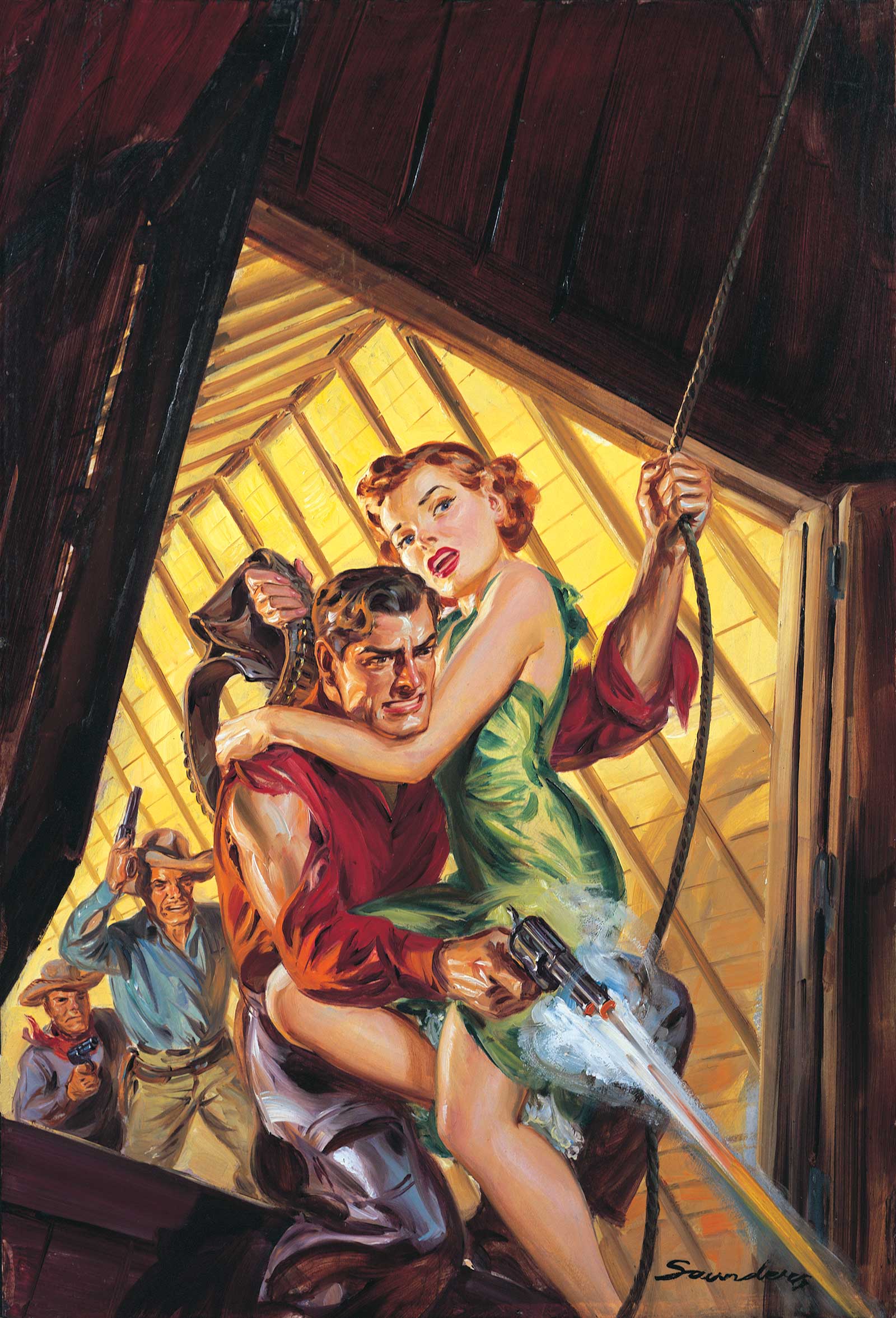 Original painting for Star Western, June 1952.
He was born in 1907 on a pioneer homestead in the Tiger Forest region of northernmost Minnesota, where his father was the game warden for the Chippewa Indian reservation. Since the land was difficult to farm, their main job was hunting and trapping. As a child, Norm loved to travel with his father and grandfather on hunting trips. They camped out in the frozen wilderness for weeks at a time, hunting, trapping and skinning wild game. They sold the furs at a trading post and preserved the meat in their smokehouse. Norm’s most formative experience was listening to his mother read to him before bedtime Mark Twain’s Adventures of Tom Sawyer. He was transported by the story. He made a solemn pact with himself to learn how to read, so he could independently enjoy the sequel, Huckleberry Finn. Mark Twain’s folksy observations of the Old West have inspired millions of readers. His irreverent humor has the ring of truth because it was based on first-hand observation of life.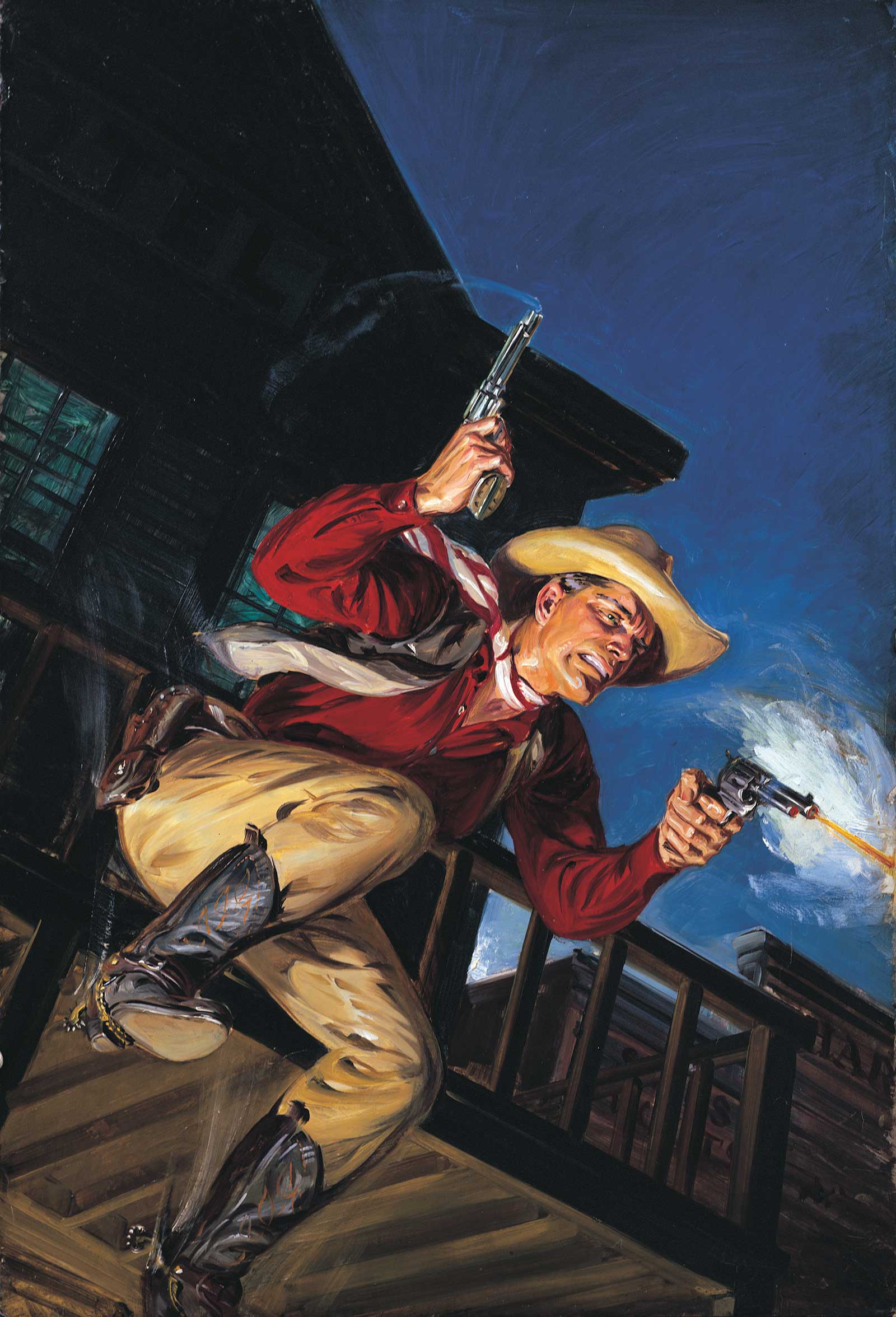 Original painting for Max Brand’s Western Magazine, April 1950.
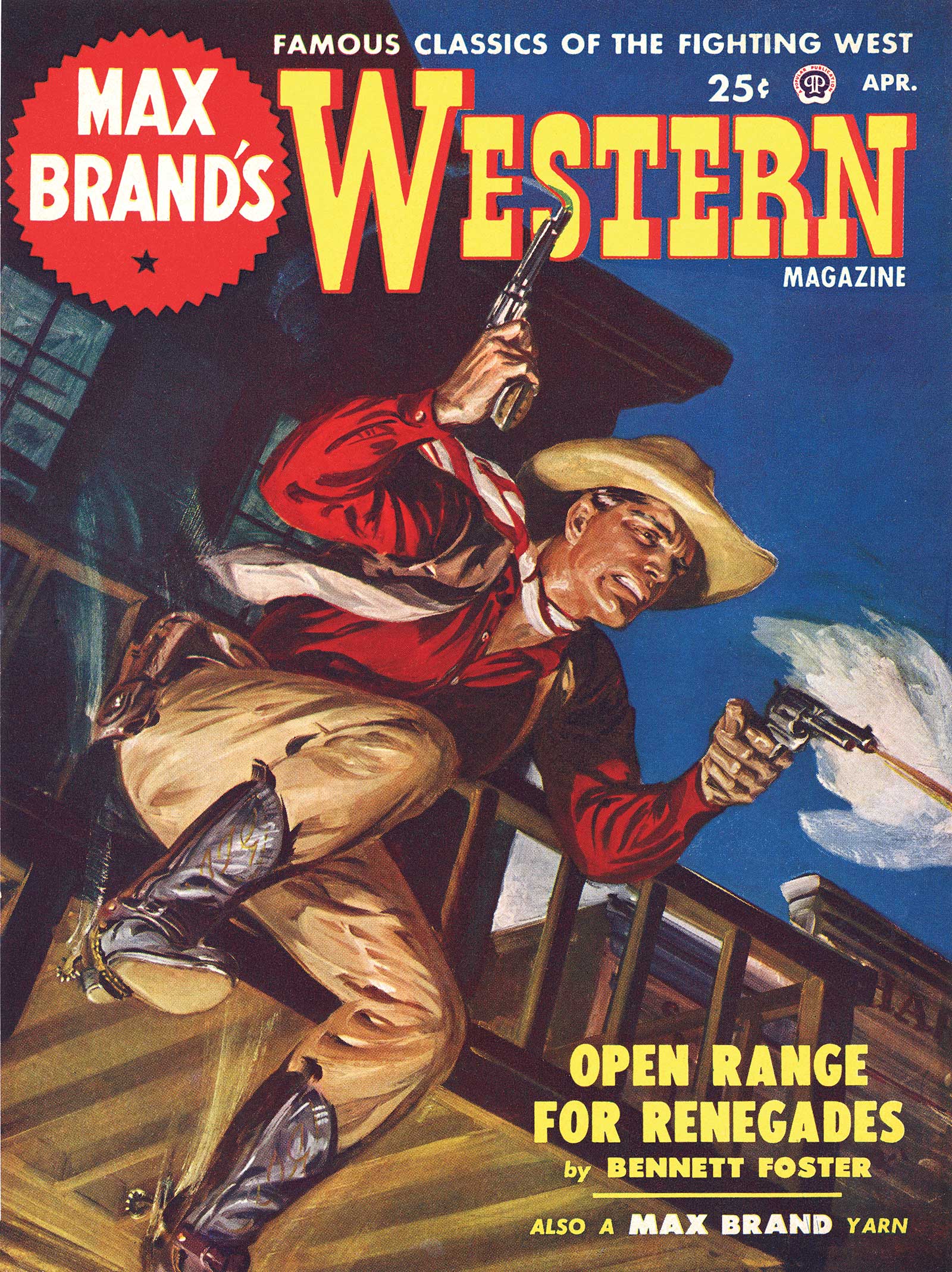 Max Brand’s Western Magazine, April 1950.Little Norm was a talented piano player. He took lessons from the church organist. The artist later recalled her log cabin, “She had a big wall calendar with pictures of Western paintings. In those days we never saw full-color reproductions. All we ever saw were linocuts in the newspaper and steel engravings in the Bible. I was astonished to see colorful works by Frederic Remington, Charles M. Russell and Winslow Homer. That was the first timeI realized there was such a thing as an artist. She also subscribed to the Saturday Evening Post, and I loved the covers by J.C. Leyendecker. One week she showed me a cover by a young fellow named Norman Rockwell. Here was the only other person I’d ever heard of named Norman, so it seemed like a sign!I thought, if that Norman could be an artist, then so could this one!” He assembled scraps of paper and bound them into a hand-made sketchbook, then began to make careful drawings of everything around him. During summer vacation in 1920, at the age of 13, Norm took off on his own to follow his dream of rafting down to St. Louis with Big Jim and Huck Finn. He rode the rails down to St. Cloud and got a job as a piano player in the saloon on a Mississippi river boat. He chronicled this adventure by sketching all of the people, places and things that caught his fancy. The artist once said, “Keep your head up and your eyes open! Stay interested! Don’t walk with your head down in a rut. Stop and look around. Sketch everything of interest to figure out how it works. Once you draw something it’s yours for life. You’ll see. Everything you draw will come in handy someday!”
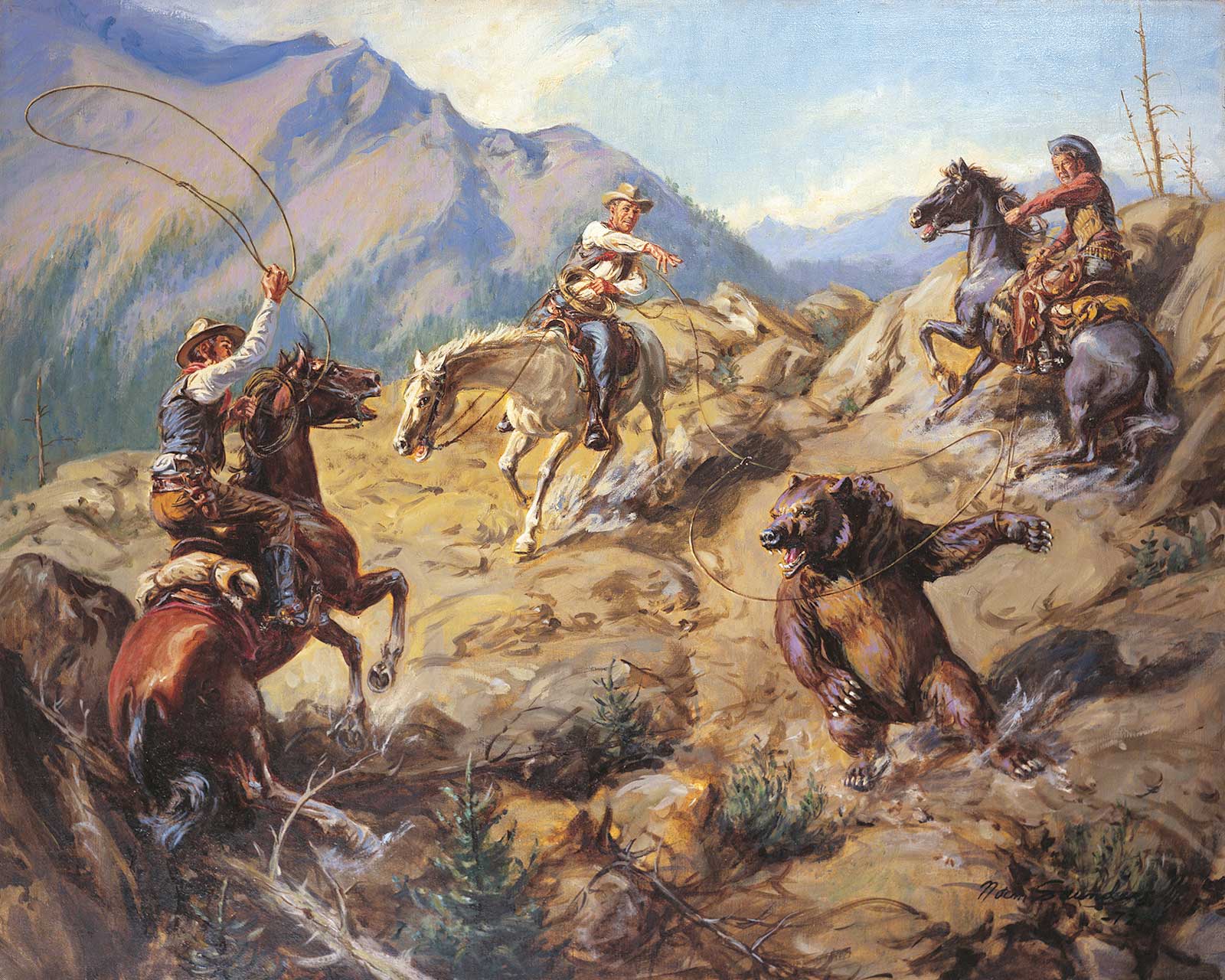 Too Close for Comfort, 1972.
While he was still in high school, he mailed an unsolicited gag cartoon, signed “Nifty Norm,” to Capt. Billy’s Whiz Bang, produced by Fawcett Publication in Robbinsdale, Minnesota. When they printed his drawing, he felt encouraged to become a commercial artist. He subscribed to a two-year correspondence art school in Minneapolis. His teacher was Walt Wilwerding (1891-1966), who illustrated Sports Afield and Outdoor Life. When Norm completed his training, Walt sent him an offer to join the art staff at Fawcett Publications.
Saunders worked there for six years. At first he did paste-up mechanical from photostatic copies, but he was soon drawing hundreds of illustrations for their different magazines. In 1934 he decided to quit his steady job at Fawcett and move to New York City to seek his fortune as a freelance illustrator in “the big league.” During the Great Depression, most artists were grateful for a weekly salary, so freelancers were considered reckless mavericks. Their livelihood entirely depended on the visual appeal of their latest painting. Only a handful of freelance artists earned enough to thrive as “hired guns.” Most had to give it up after a few months, because their savings would run out. The glorious goal of selling a pulp publisher a story illustration only amounted to five bucks. The sale of a cover painting was worth 75 bucks. So it was a hard to make ends meet as a freelance artist, but Saunders was one of the lucky few. He soon found a steady stream of freelance assignments.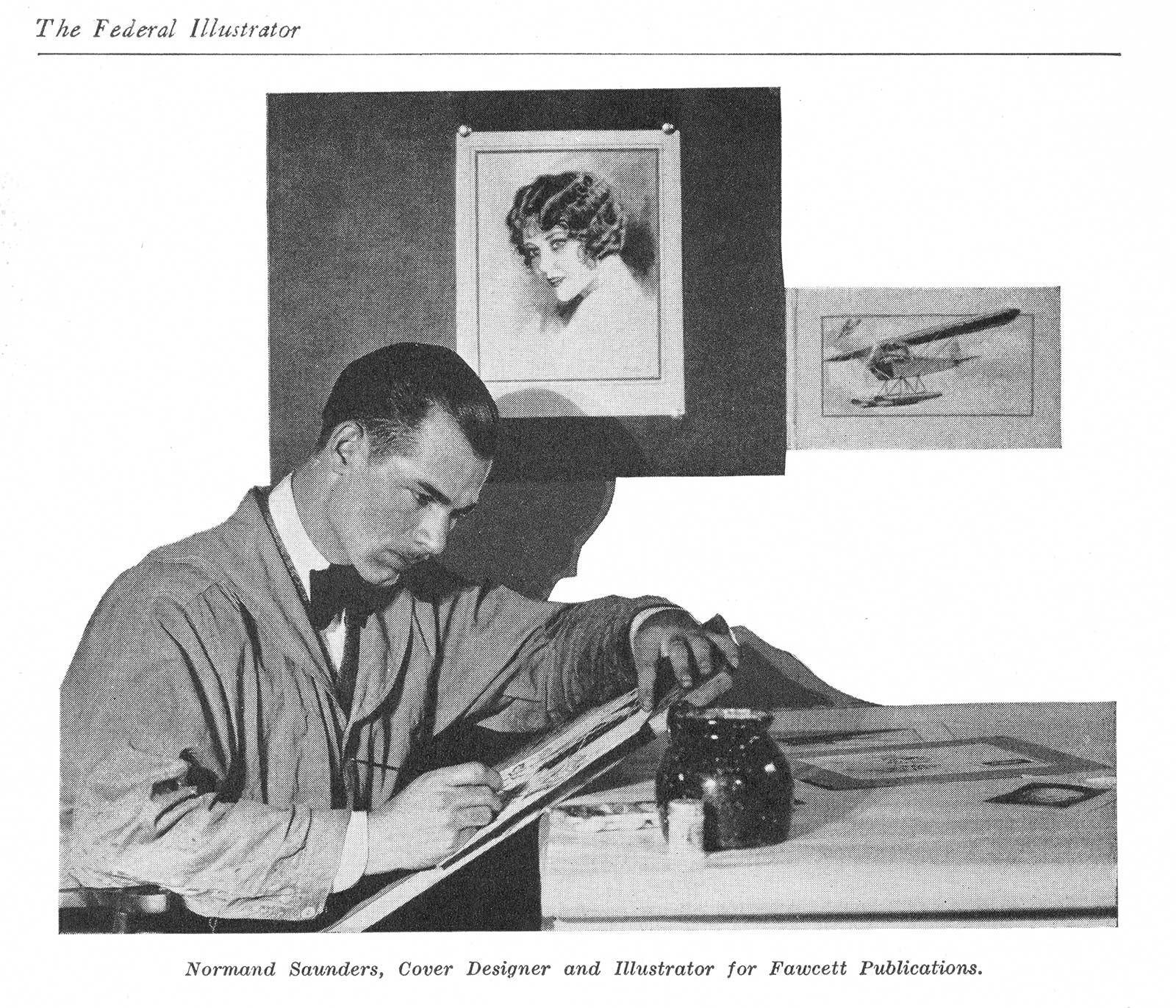 Norman Saunders working at Fawcett Publications, 1929.
In 1935 he enrolled in the Grand Central School of Art to study painting in night classes with Harvey Dunn, an associate of Howard Pyle and N.C. Wyeth. Saunders attended Dunn’s class three nights a week for three years. The time he spent with Harvey Dunn was his graduate-level art training. Dunn taught his pupils to approach their subjects with whole-hearted empathy and truthful observation. His ideas on composition were to strip away all embellishments in preference for the unvarnished truth. Harvey Dunn professed philosophical beliefs that applied to art as well as life, “Art is a universal language because it is the expression of the feelings of man. Anyone can look at a true work of art and feel a kinship to it, and with he who made it, and thereby know they belong to the brotherhood of Man.” On one memorable evening, as Saunders stood painting at his easel, Dunn walked up behind him, looked over his shoulder, and slapped him on the back. Dunn said, “Listen Blockhead [his affectionate nickname for anyone from Minnesota]. You’re too damned good to hang around here any longer pretending to be a pupil. If you stay any longer, you’ll start to paint like me, and I don’t need any disciples! So get out of here and get to work!” That impromptu graduation ceremony was one of Norm’s proudest moments.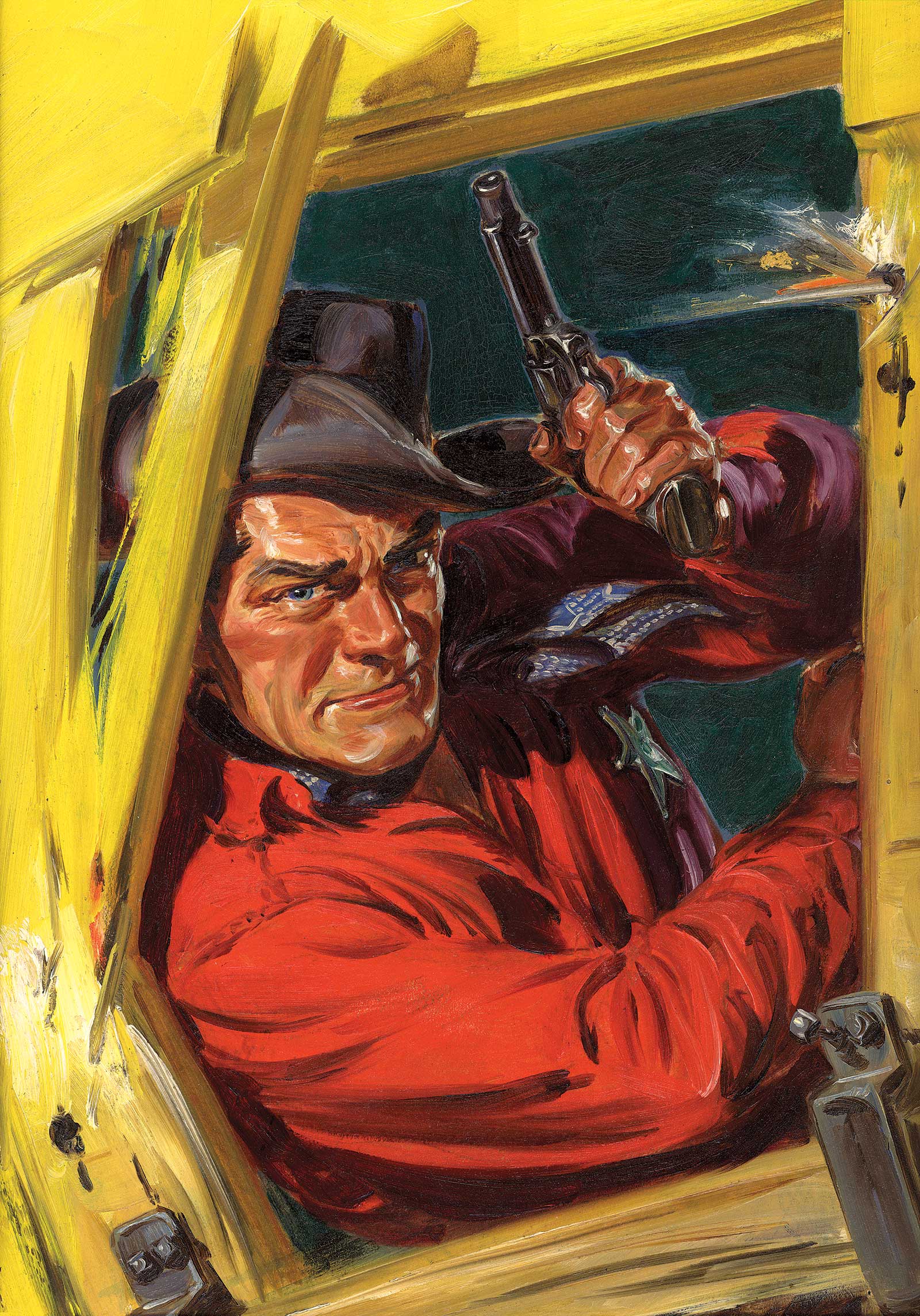 Original painting for 10 Story Western Magazine, June 1950.
Pulp magazines were illustrated by freelance artists, while the higher-paying slick magazines used only established artists who had signed exclusive annual contracts, so the pulps were the “entry-level” market for freelancers. Saunders studied the newsstands to invent cover ideas that were tailored for one specific pulp magazine. He would then make six finished paintings “on spec” (speculation) and bring them to the editor’s office. There were nine publishers of pulp magazines in New York City: Ace, Blue Ribbon, Dell, Fiction House, Popular, Red Circle, Street & Smith, Thrilling and Trojan. Each pulp issue contained eight short stories on the same topic, such as romance, adventure, sports, mysteries or Westerns. Saunders believed a freelance artist could only survive if his painting style identified him, and not his painting subject. “The last thing you want to be is pigeonholed as an expert at only one thing!” He was soon recognized as a top pulp artist. Editors trusted him to consistently produce sensational covers for every subject. His Western art appeared on the covers of All Western, Best Western, Complete Western Book, Lariat Stories, Masked Rider, Popular Western, Star Western, Super Western, Sure-Fire Western, 10-Story Western, Two-Gun Western, Western Aces, Western Short Stories, Western Story, Western Trails and Wild West Weekly.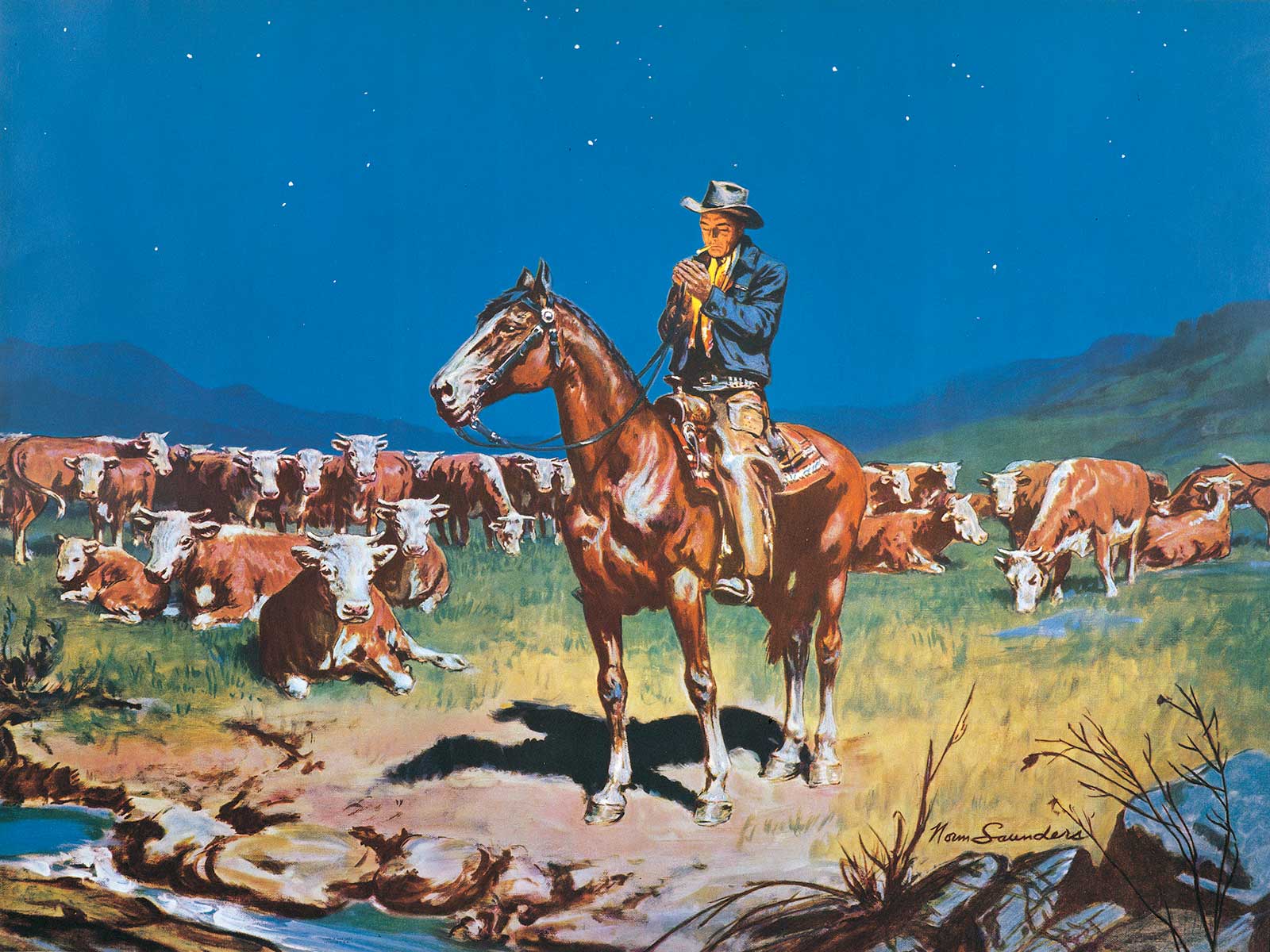 Night Rider, calendar, printed by Fox Lithographic Co., 1957.
Another type of periodical was the non-fiction “true confession” magazine, in which an un-named woman recounted her own scandalous experiences. These were big sellers. In trying to devise a male version of this, publishers invented the men’s adventure magazine. Instead of describing the love-lorn plights of remorseful women, the “sweat mags” were filled with supposedly true stories of heroic conflict. Some of these were set in the Old West. Saunders became a top artist in this field. His work appeared in Adventure, Argosy, Blue Book, Climax, For Men Only, Male, Man’s Book, Man’s Conquest, Man’s Epic, Man’s Story, Men Today, New Man, Real Combat, Saga, Stag and True Western Adventure. The same nine NYC publishers also produced pocket-sized paperback books, which were sold by the millions at newsstands. Later, the American public discovered comic books and many pulp publishers launched their own line of comics. Saunders was doing work for both, paperbacks and comics.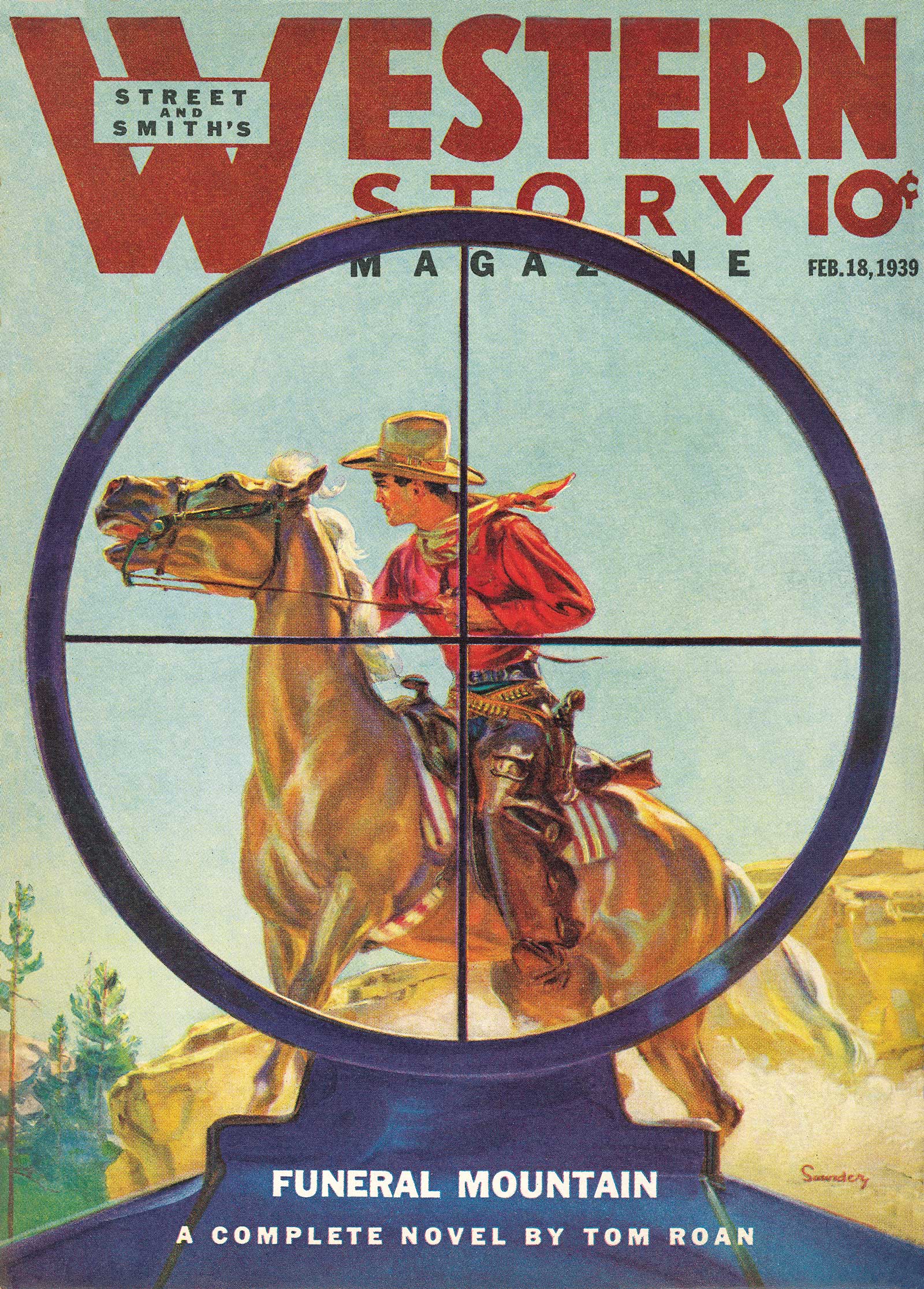 Western Story Magazine, February 18, 1939.
By the end of the 1950s, while the publishing industry fought a losing battle against the rising dominance of television, most freelance illustrators were out of work. Some unemployed artists began to explore modernist trends, such as expressionism, abstract art and op-art, but some of them revisited their first love of the Old West.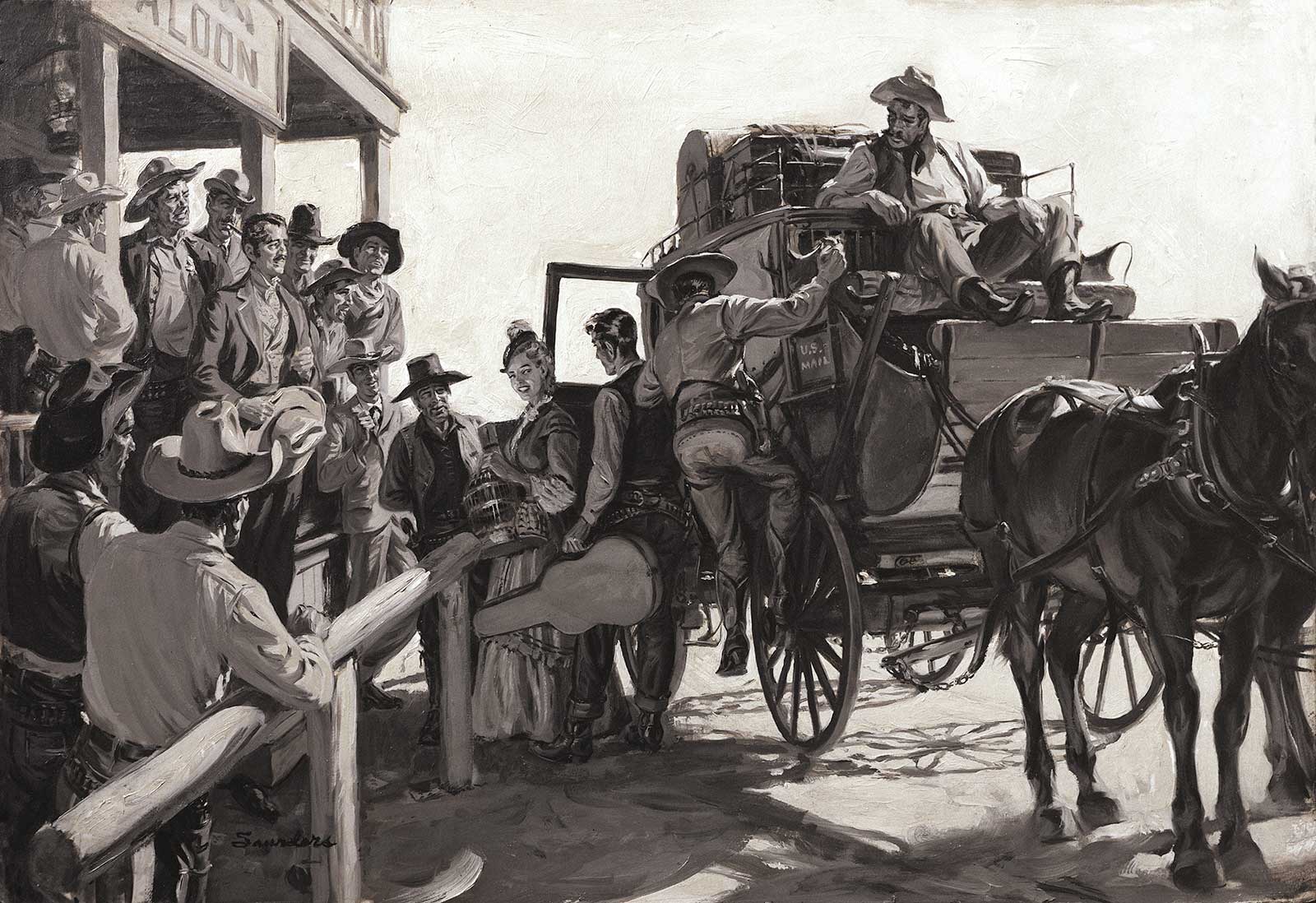 Original story illustration for unknown men’s adventure magazine, circa 1952.
By 1960 there was an entirely new movement of Western Art, invented by retired illustrators, such as Ernest Chiriacka, John Clymer, Gerard Curtis Delano, Charles Dye, Nick Eggenhofer, Tom Lovell and Harold Winfield Scott. Many of them were represented in New York City by the prestigious Kennedy Galleries. When Norman Saunders delivered his first shipment of Western paintings to the gallery’s luxurious showroom on 57th Street, the director offered to help him compose a biographical resumé. Norm told him, “I was born on a homestead in Northern Minnesota. I studied art by a correspondence school, and then worked in the pulps.” “Great!,” said the gallery director, “We’ll just say you were born on a cattle ranch in Wyoming.” Norm didn’t want to contradict him, but he gently mentioned, “I wasn’t born on a ranch. It was my father’s farm.” The big city slicker said, “Yeah, but you did have a cow on the farm, right? So we’ll just call it a ranch. Take my word for it, this sounds better!” It was no accident that so many of Mark Twain’s characters in the Old West were hucksters. They’re a genuine part of Americana. —
Powered by Froala Editor