Forest Park in St. Louis was the site of the Louisiana Purchase Exposition, known as the 1904 World’s Fair. The size of the nation doubled in 1803 with the Louisiana Purchase and President Thomas Jefferson wanted to know more about it. In 1804 he dispatched Meriwether Lewis and William Clark to lead a band of soldiers, mountain men, Native Americans and an enslaved person to explore the area. Their expedition was known as the Corps of Discovery. The Lewis and Clark Expedition began in St. Louis in 1804 and returned two years later.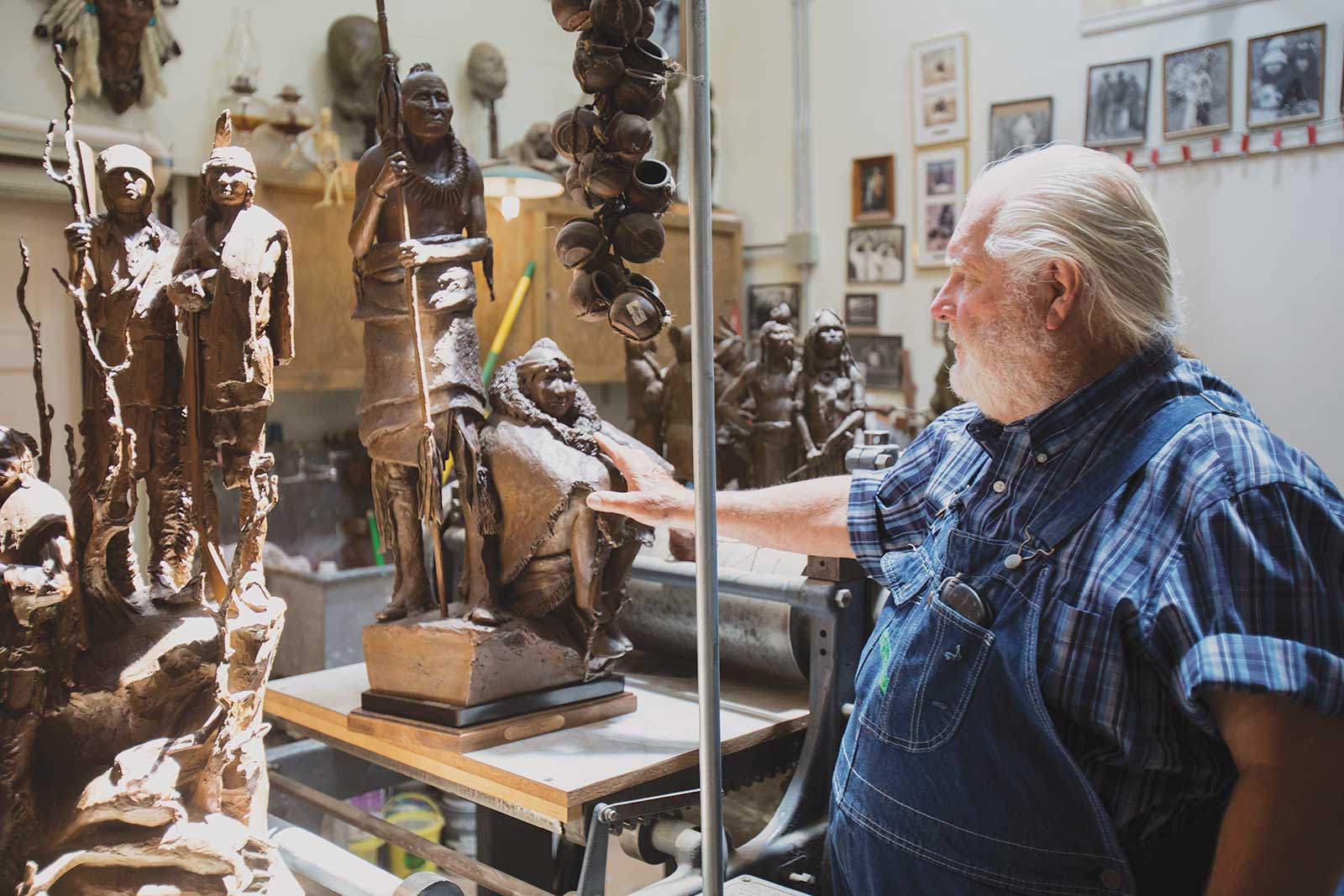 Richard V. Greeves in his Wyoming studio.
The Missouri History Museum was built in Forest Park with profits from the exposition and, today, is an important repository of artifacts and information from the Lewis and Clark Expedition.
Sculptor Richard V. Greeves grew up within walking distance of the park and frequented the museums and the zoo. He ingratiated himself wherever he went, carrying the buckets of food when the zookeepers fed the tigers and other animals, and sitting at Clark’s desk in the museum, drawing the artifacts he was able to examine. He became an amateur historian, practically knowing by heart the voluminous journals written on the expedition.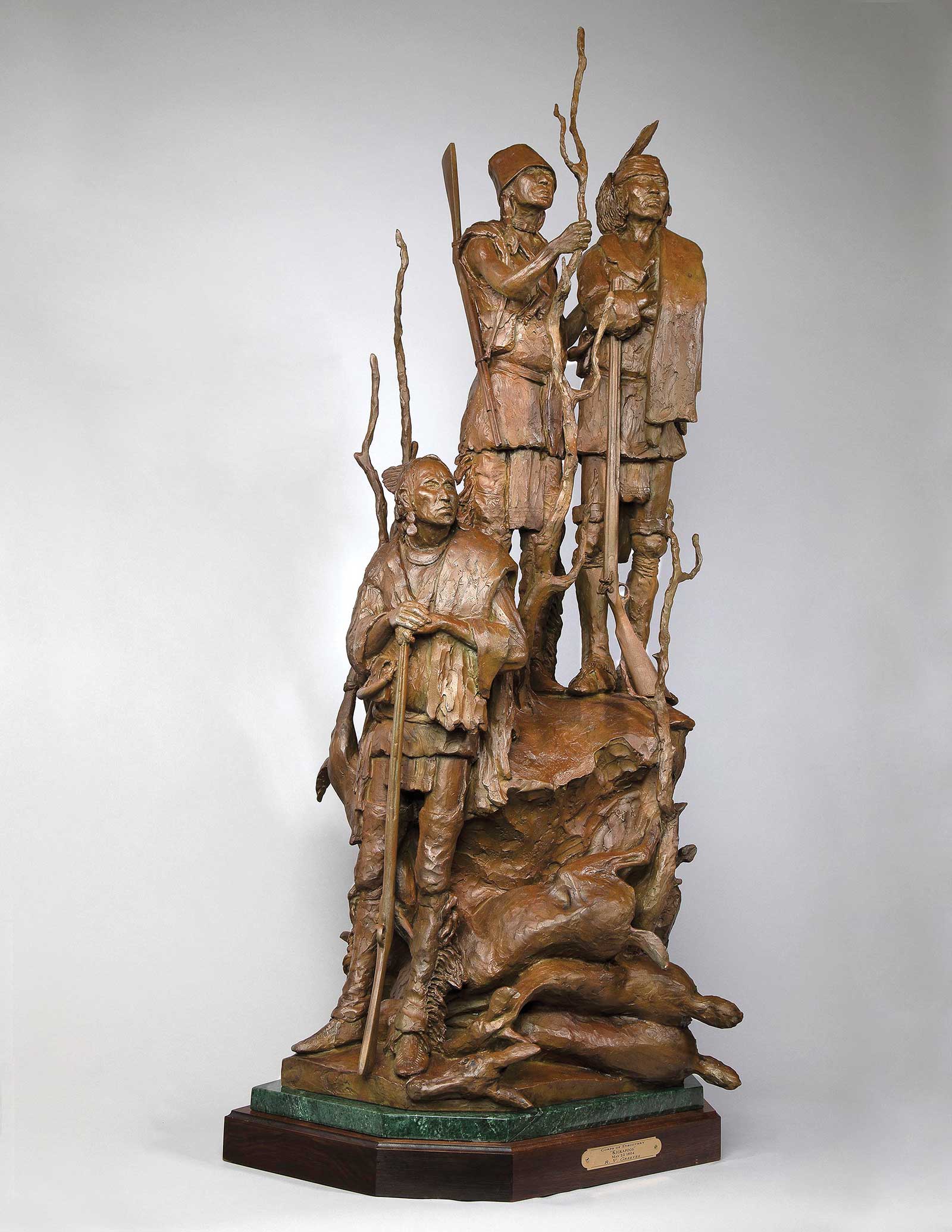 Kickapoos, bronze, 39½ x 17 x 12”
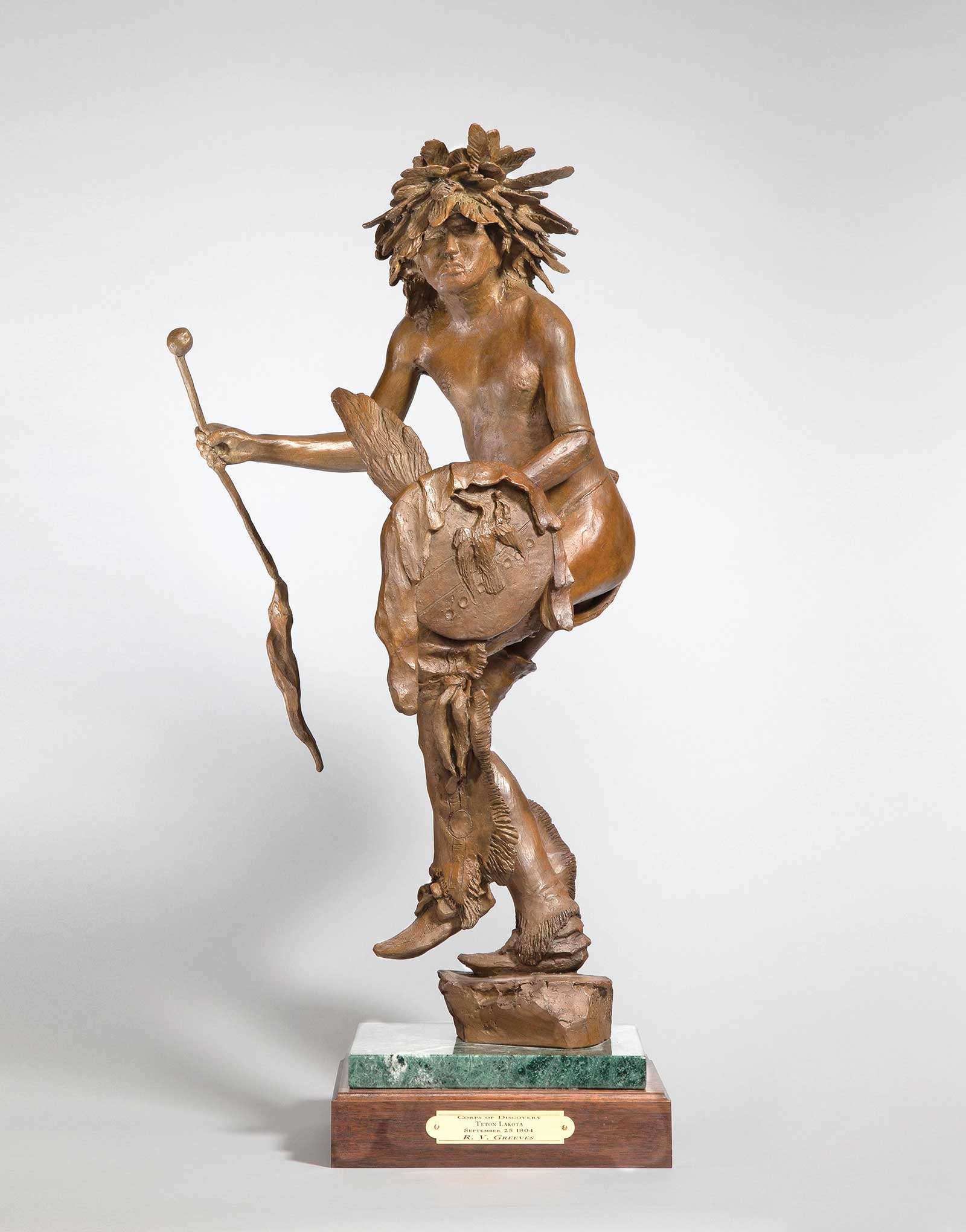 Teton Lakota Dancer, bronze, 24¾ x 11½ x 6½”
“Lewis and Clark wrote journals and assigned the sergeants of each of the expedition’s brigades to record their own thoughts,” Greeves explains. “They had been dealing with woodland Indians and as they moved west, they came across Prairie tribes, then the Plains and Plateau tribes and, eventually, the tribes of the West Coast. They mapped the territory and brought back botanic samples and animals that had been unknown to science. It’s a whole big part of our American history.”
Greeves does have a bone to pick with the explorers, however. “When we finally meet I’m going to set them down and ask why they didn’t take an artist along with them, for gosh sakes. They did a few sketches in their journals but they aren’t very helpful. Karl Bodmer accompanied Prince Maximillian’s expedition on the Missouri River in 1833-34 and documented the Plains Indians. I’m somewhat of an ornithologist and from the feathers in his paintings I can tell the sex of a bird and its age. He was that good.”
Greeves has created countless stone and bronze sculptures of the Indians and animals of the American West at his studio on Wyoming’s Wind River Indian Reservation. An exhibition at Gerald Peters Gallery in Santa Fe, New Mexico, from August 6 through October 31, will highlight some of that work. Richard V. Greeves: Lewis and Clark, Corps of Discovery, 1804-1806—The Native Peoples Lewis and Clark Encountered on their Epic Journey will feature 56 bronze sculptures.
Each of the sculptures bears a plaque giving the date the particular subject was mentioned in the Lewis and Clark journals. Gerald Peters describes the work as “detailed and accurate, sympathetic and compelling.”
“With my experience at the museum it was natural for me to be interested in the exploration of the continent,” Greeves says. At 15 he announced to his mother that he was going out West to live with the Indians. She was strongly opposed, but his father, a fan of the Western novels of Zane Gray, became his advocate and the rest, as they say, is history.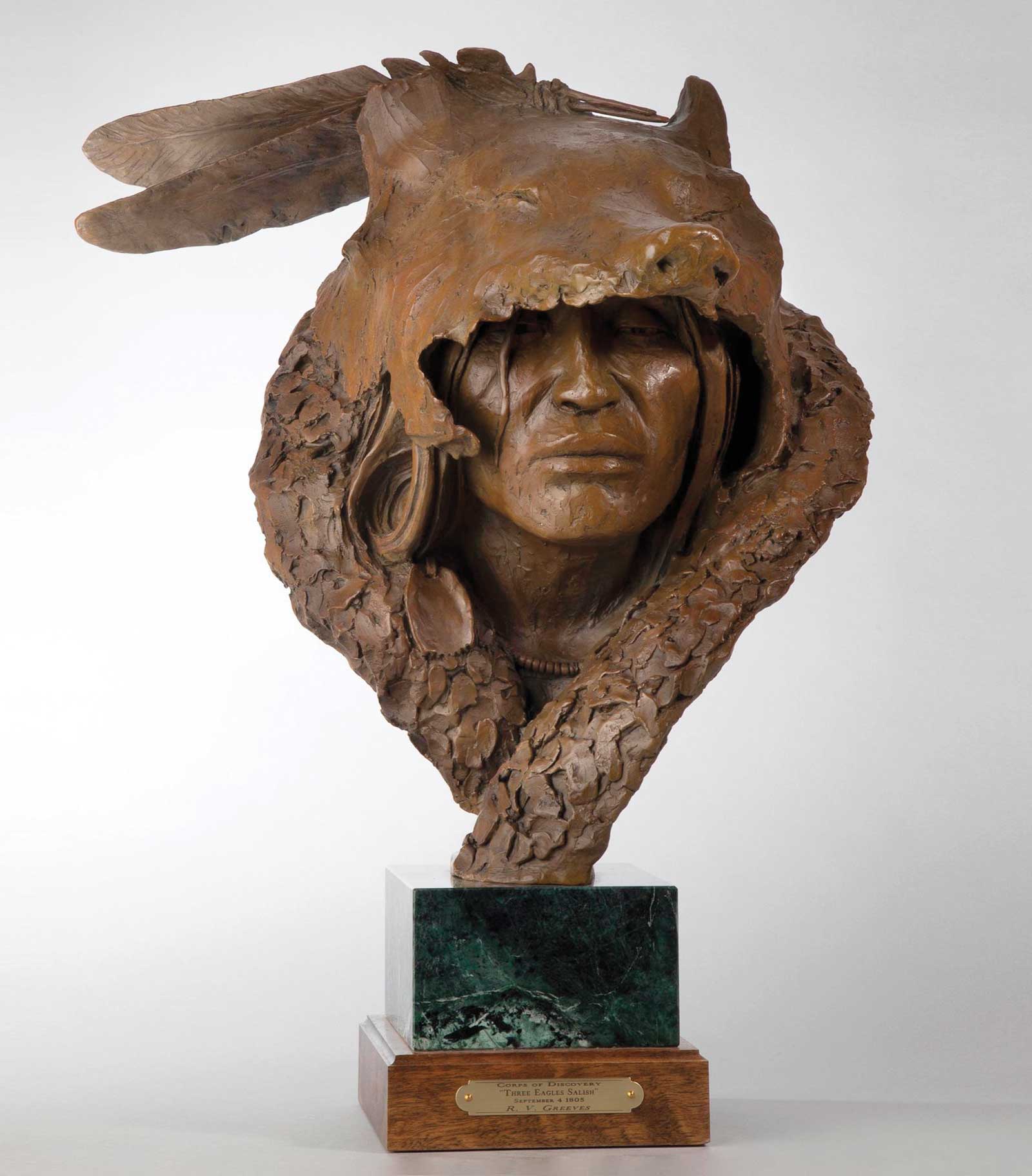 Three Eagles Salish, bronze, 21¼ x 15 x 13”
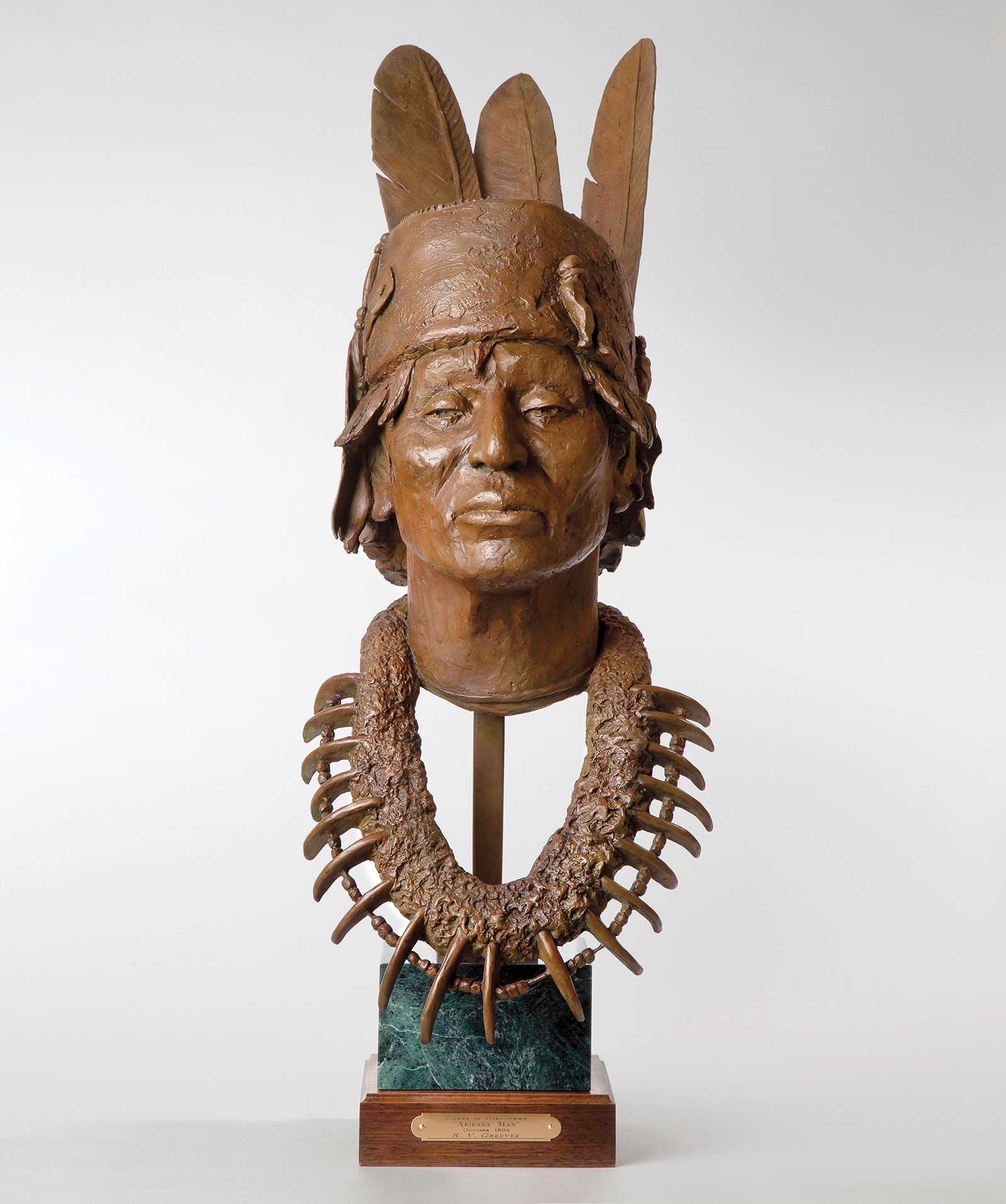 Arikara Man, bronze, 28 x 10 x 15”
Greeves’ detail and accuracy begins deep within the sculpture, first forming an armature that, like a skeleton, will hold the figure up. “It has to be plumb and balanced,” he explains. “Painters and sculptors are different,” he says. “They paint an illusion on a canvas that already exists. We build something in space that doesn’t exist.” He builds up the musculature, which, in the case of animals, is hidden beneath their fur and often, in the human figures, beneath their clothing and ceremonial regalia.
“I have a vast knowledge in my head of the objects in museums,” he explains. He re-creates them in clay and, in the finished bronze, they fit with their human subject creating a feeling of authenticity. His models are chosen from among the 5,000 residents of Wind River and his Native friends from the Canadian border to Mexico. “I’ve been around Native people my entire life,” he says, “and I look for someone who fits the profile of the people from the tribe I want to represent.”
Arikara Man represents a man who appears in the journals in October 1804. He wears an imposing bear claw necklace. Greeves points out that throughout the north and the Plains, bear claws are a mark of power. The people incorporated bear claws, feathers and other items into their clothing, and absorbed the spirit of the animals. Arikara Man was “a walking bear,” he comments.
Strongly evident in the sculpture is the artist’s use of negative space. “Negative space is as important as positive space,” he says. In Arikara Man, the necklace around his neck exists in space, independent of the man’s body. The brain, in effect, fills in the space.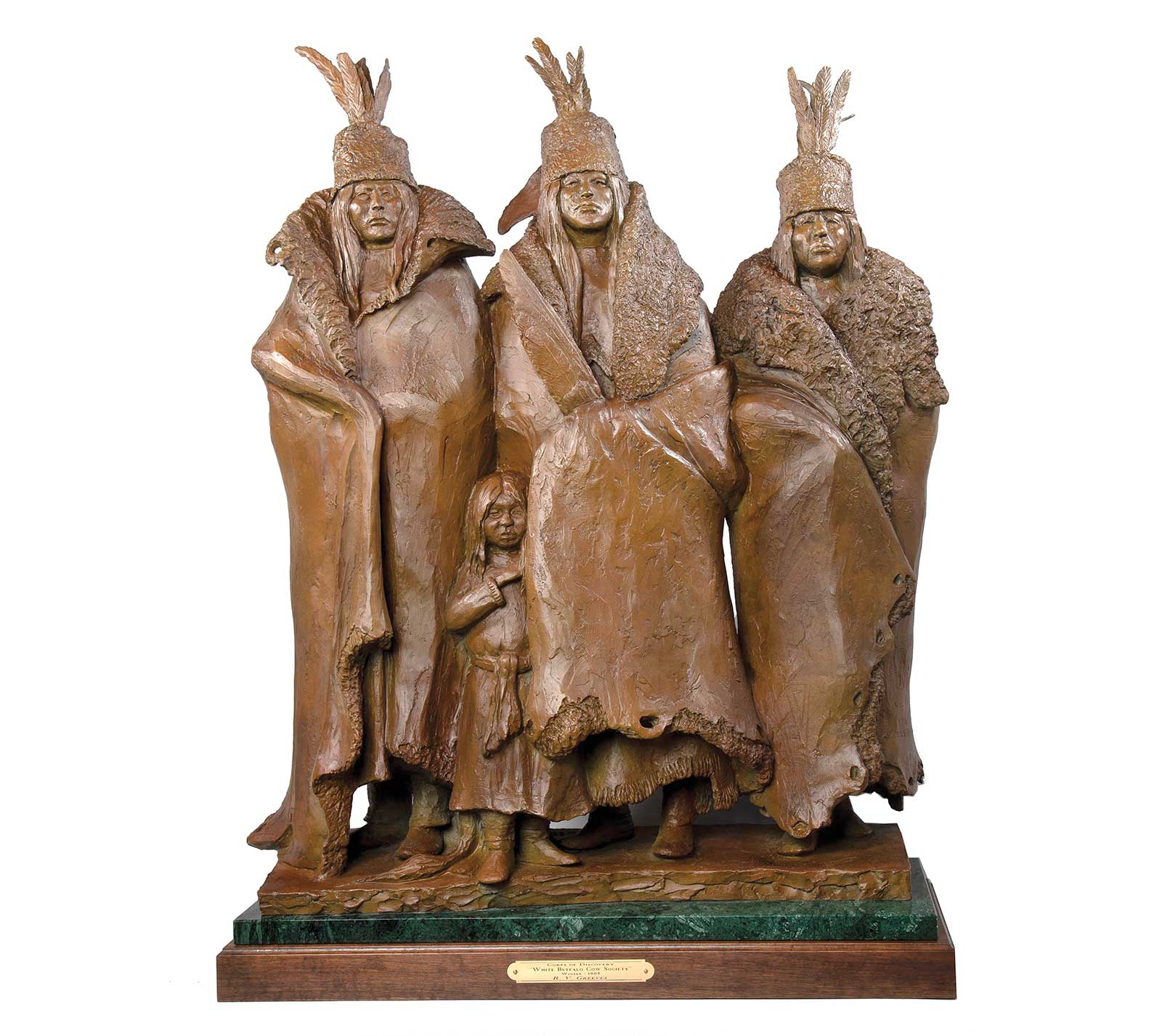 White Buffalo Cow Society, bronze, 28¾ x 21½ x 9¾”
One day while modeling a group of dancers a Canadian Cree friend of his stopped by. His friend began singing. When Greeves asked why, he said, “These guys are having such a good time I want to give them some music.”
Greeves has lived among the Plains Indians at Wind River for many decades. “There is a magic, a mysticism for me here that I really can’t explain. I just feel it,” he says. “Native people have never left the earth. They start all their ceremonies with thanks and praise to the earth and to the sky. They honor water and fire and have never forgotten where they came from.” While most people know about Lewis and Clark, few realize the importance of the Native people who helped make their journey of discovery possible.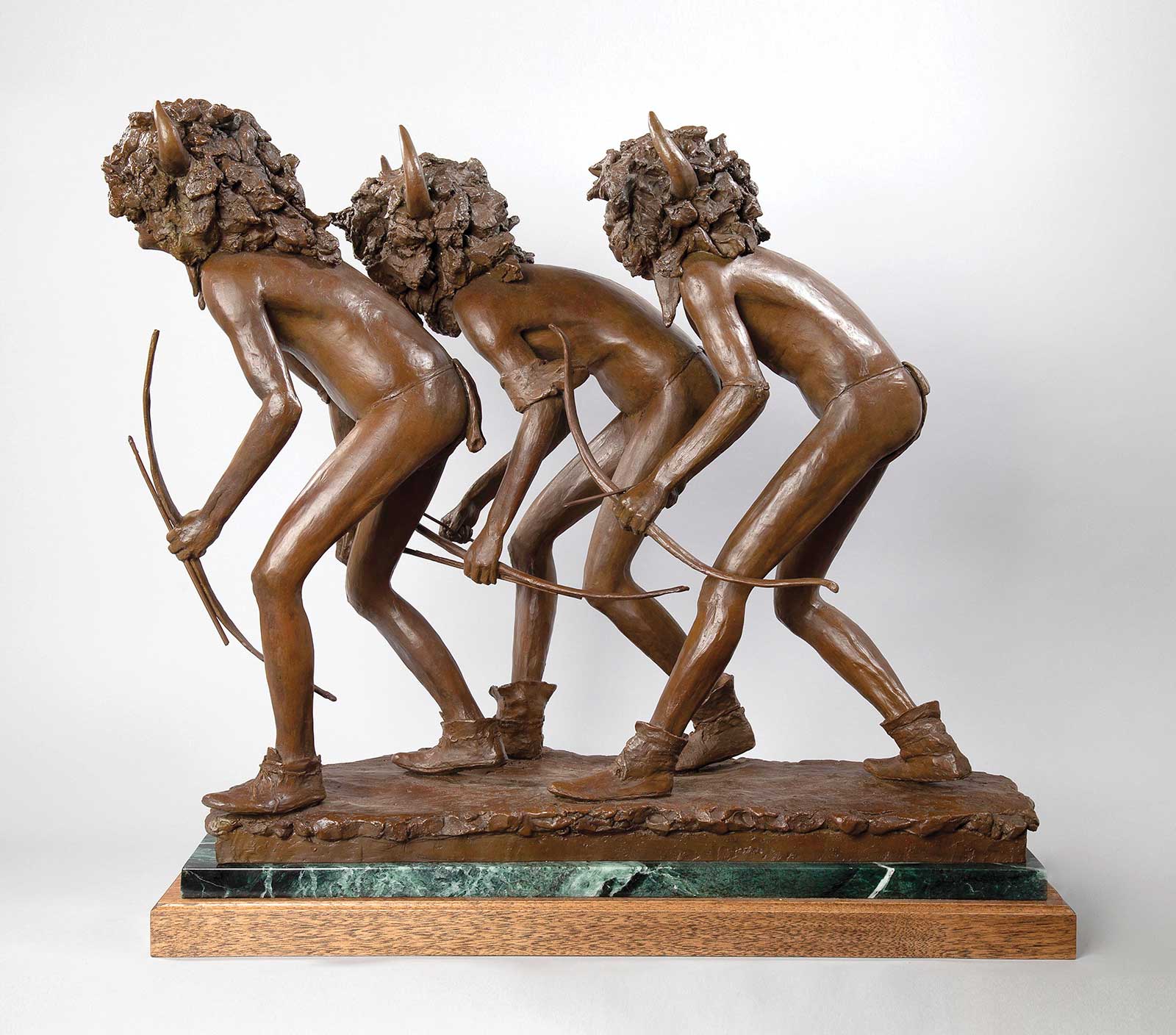 Buffalo Hunters, bronze, 20¾ x 20 x 22”
Greeves continues to honor them in new work. “I’m going to work on this the rest of my life,” he declares. He firmly believes the earth will survive long after civilization disappears. Bronze has the potential to survive forever. He believes his sculptures will always speak for their subjects, declaring, “I was here!” —
Richard V. Greeves: Lewis and Clark, Corps of Discovery, 1804-1806—The Native Peoples Lewis and Clark Encountered on their Epic Journey
August 6-October 31, 2021
Gerald Peters Gallery, 1005 Paseo de Peralta, Santa Fe, NM 87501
(505) 954-5700, gallery.gpgallery.com
Powered by Froala Editor