We believe what we want to believe. And we believe what we need to believe. The goal of the Storytellers was to make you believe what they painted and to reach the same conclusions they reached. People value their own conclusions more highly than others. They will only have faith in a story that has become real for them personally. Once people make the illustrator’s story their story, the artist has tapped into the powerful force of art. Illustrators made images because they needed to tell stories and get paid for them. Those stories generated income not only for themselves, but for authors, publishers, governments and private corporations. The greatest compliment you can bestow on a story illustrator is that his images bore into memory as sharply as the books he illuminated.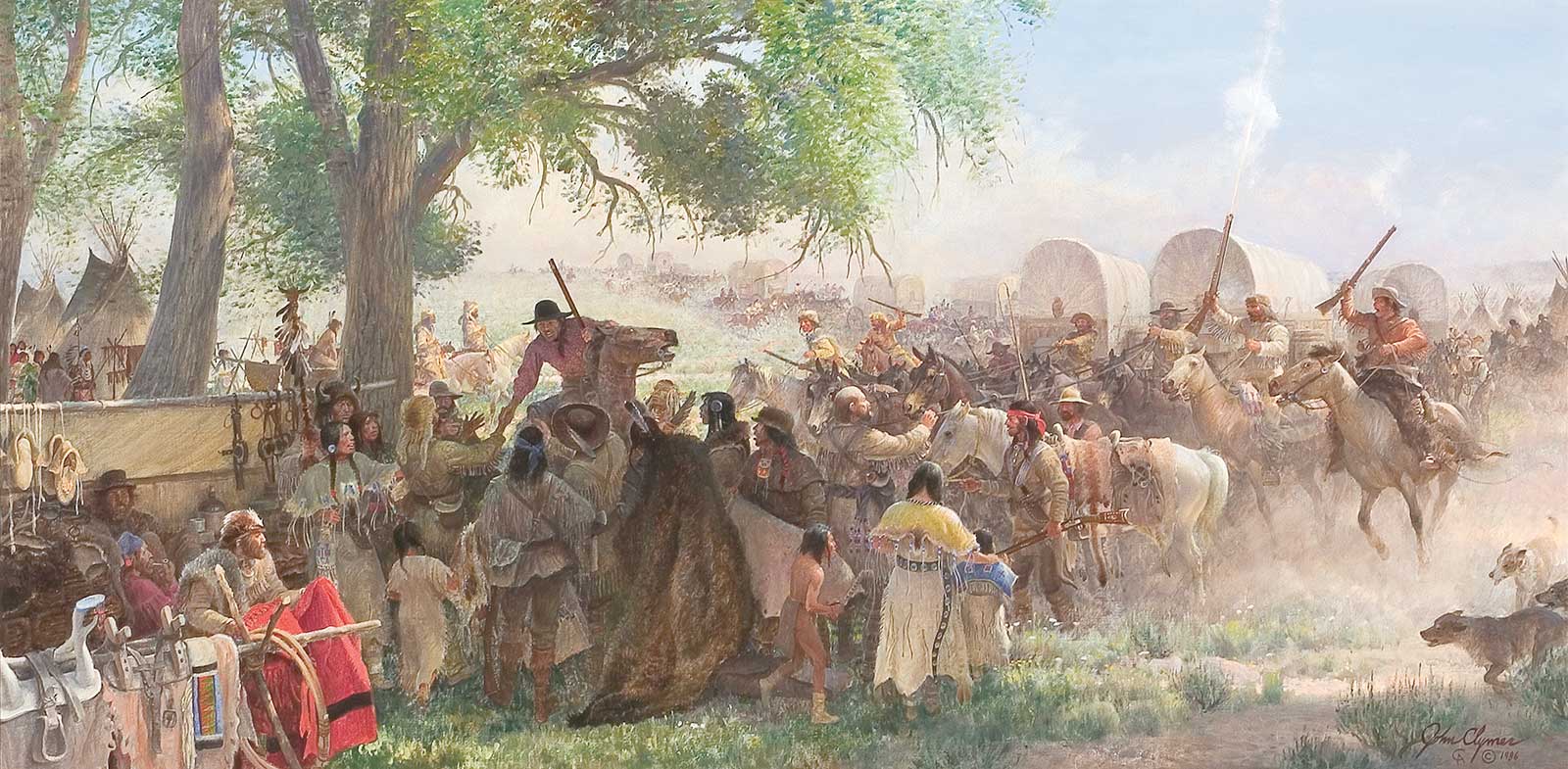 John Clymer (1907-1989), Arrival of the Trade Wagons, Rendezvous—1830, 1986, oil on canvas, 24 x 48”
Throughout the “Golden Age of Illustration” that lasted from the 1880s to 1930, illustrators understood how to communicate effectively through visual imagery. National advertising especially flourished after World War I during the roaring ’20s as Americans confidently acquired material possessions and had the leisure time to use them. Advertising men answered new desires by establishing brand names that delicately encouraged dissatisfaction with possessions seemingly outmoded but not necessarily worn out. In time, their influence ran in tandem with movies directed by such greats such as John Ford and Frank Capra. Magazine illustrations reshaped popular tastes in a way movies also would after 1920.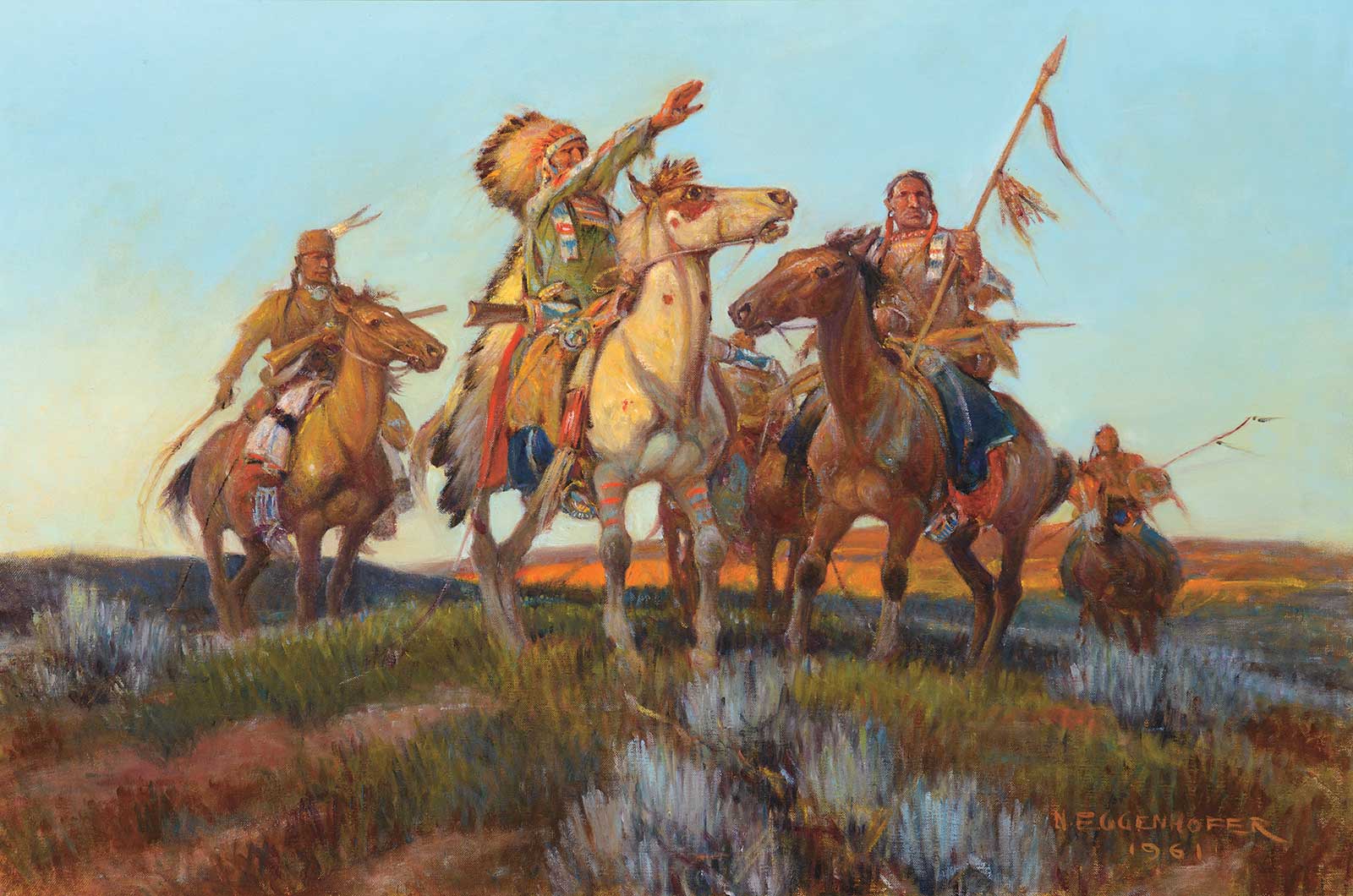 Nick Eggenhofer (1897-1985), How / The Sun Worshipers, 1961, oil on canvas, 20 x 30”
Up until 1900, painters were lumped together and toggled back and forth from illustration work to easel paintings without a concern of crossing a boundary. Traditional genre paintings in the nineteenth century by such masters as George Caleb Bingham and Winslow Homer created images of everyday American life. There was no clear distinction between commercial and fine art. As the 20th century unfolded, visual imagery as seen in illustration and film became the primary means of mass communication. They became a portion of the collected American conscience.
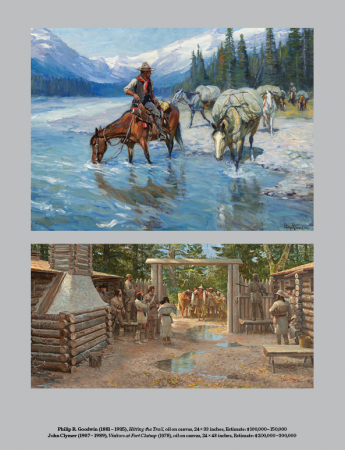
Yet as the 20th century progressed, the splitters demanded clear and separate definitions between illustrators and fine artists. Thus, the illustrator was defined as an artist who answered questions or was paid to pictorially portray the client’s message. The fine artist asked questions, searching and seeking new ideas and created art for art’s sake. Clearly, the easel artist was held at a more prestigious level than the pedestrian illustrator. Sandwiched in between were commercial artists like J.C. Leyendecker and Norman Rockwell who created stand-alone art for the covers of such magazines as The Saturday Evening Post. Naturally, there was a rush by many to become fine artists, and that certainly was the case for many of the Storytellers. Still, a number were satisfied to produce illustration art. Proof of success came in the form of noted awards, especially from the educators of so many fine artists such as the National Academy of Design, the Salmagundi Club and the Art Students League in New York City. Financial rewards followed.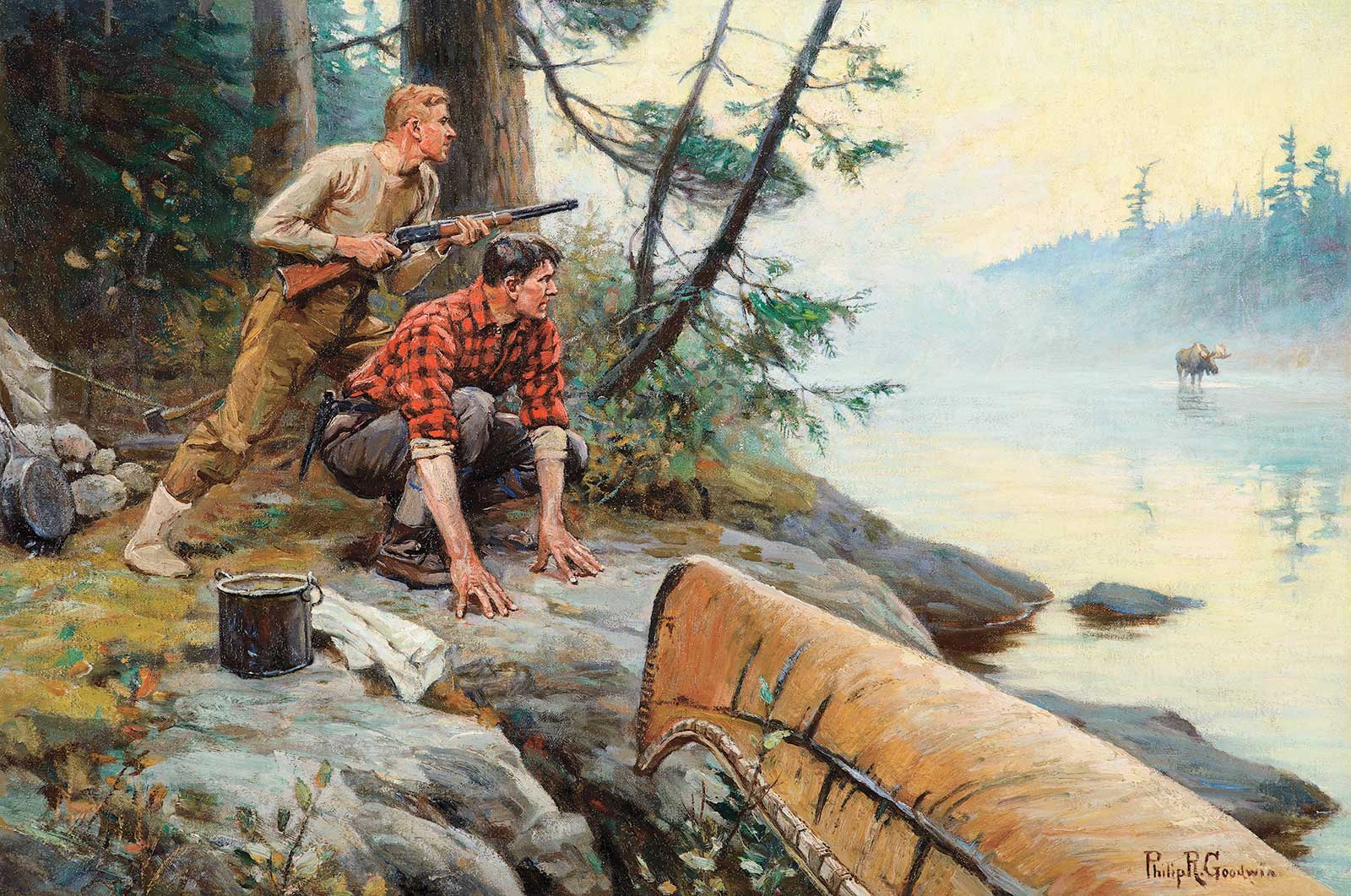 Philip R. Goodwin (1881-1935), A Break at Dawn, oil on canvas laid on board, 24 x 36”
Recently, the lumpers are again gaining traction. Illustration art is becoming more valuable and eagerly collected. Perhaps, the best example of an illustrator coming of age is Norman Rockwell. Throughout his lifetime, he witnessed a dizzying array of art styles come and go. All along his nostalgic portrayals of life in America were dismissed and ridiculed by the elite as “just” illustrations or commercial art. Yet he found great satisfaction in his work. Today, he can now revel in the fact that his art carries a higher price tag than any other artist in this publication. With his 1951 Saying Grace selling at auction in 2013 for
$46 million, one could say he created real fine art. Bolstering his prestige is the fact that some of his major patrons are Hollywood’s most famous actors, directors and producers. In 1976 he said, “Without thinking too much about it in specific terms, I was showing America I knew and observed to others who might not have noted. And perhaps, therefore, this is one function of the illustrator. He can show what has become so familiar that it is no longer noticed. The illustrator thus becomes a chronicler of his time.”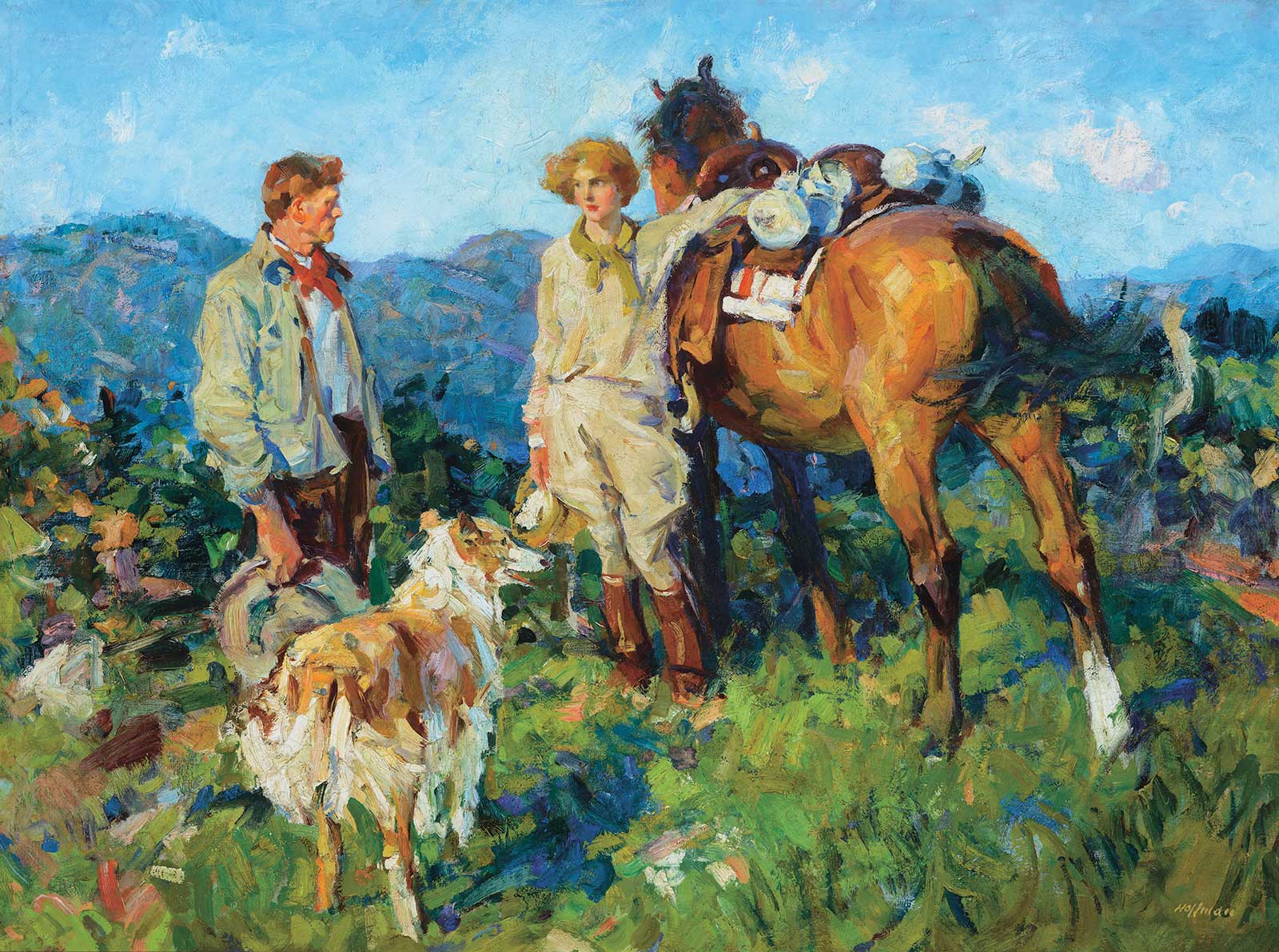 Frank B. Hoffman (1888-1958), A Friendly Conversation, oil on canvas, 36 x 48”
The goal of any art is the individual transformation and communication that happens when a person views it. The real masters of both genres could deliver that moment. The Storytellers were adept at representing American ideologies, adventures and regretted pasts. They simply used their art, instead of words, to create these narratives.
Howard Pyle: The Father of American Illustration. The two driving forces in the illustrator’s tool box were the great illustrator and teacher Howard Pyle and technology in the form of printing and photography, which made illustration work an effective form of advertising and communicating. Pyle, the father of American illustration, was born in Wilmington, Delaware, on March 5, 1853, to parents William Pyle and Margaret Churchman Pyle. As a child, his mother introduced him to Grimm’s Fairy Tales, Robinson Crusoe, novels by Charles Dickens and the works of England’s most celebrated artists, thus associating pictures with text. His formal training was in Philadelphia where he studied drawing techniques for three years with Belgian artist F.A. Van der Wielen. At age 23, he studied at the Art Students League in New York City.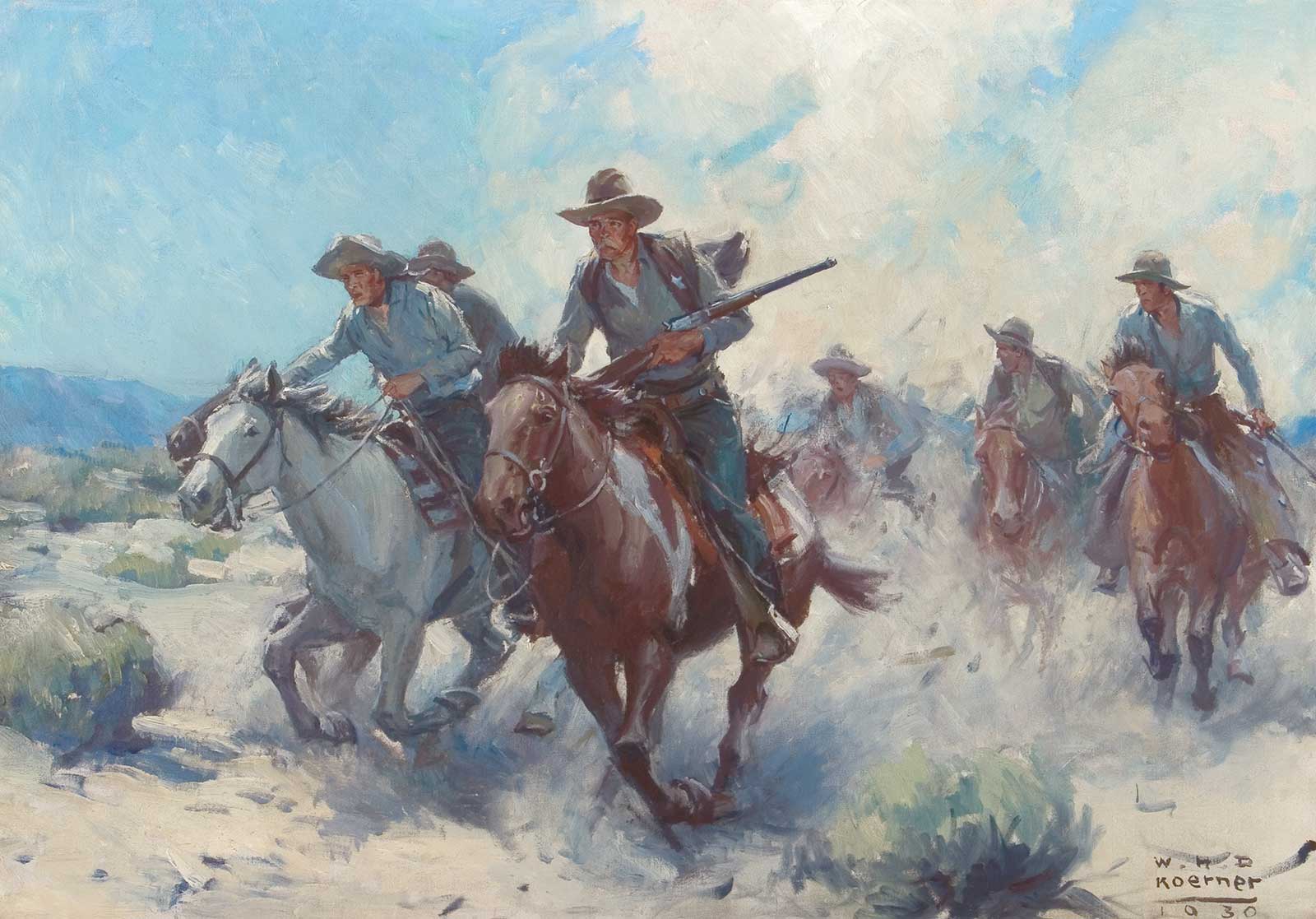 W.H.D. Koerner (1878-1938), The Posse Rode Fast, 1910, oil on canvas, 28 x 40”
His intense work habits were rewarded when a set of illustrated verses was published in the July 1876 Scribner’s Monthly. Later, his illustration career was solidified through association with Harper and Brothers, the largest publisher in America. Charles Parsons, art director at Harper and Brothers, selectively employed an outstanding group of young illustrators including Pyle, Edwin Austin Abbey, Arthur Burdett Frost and Charles Stanley Reinhart. By the time he was 25, Pyle was practically overwhelmed with a continual flow of magazine assignments. In 1879 he had moved back to Wilmington where he lived for the rest of his life. Pyle married Anne Poole in 1881, and they would have seven children.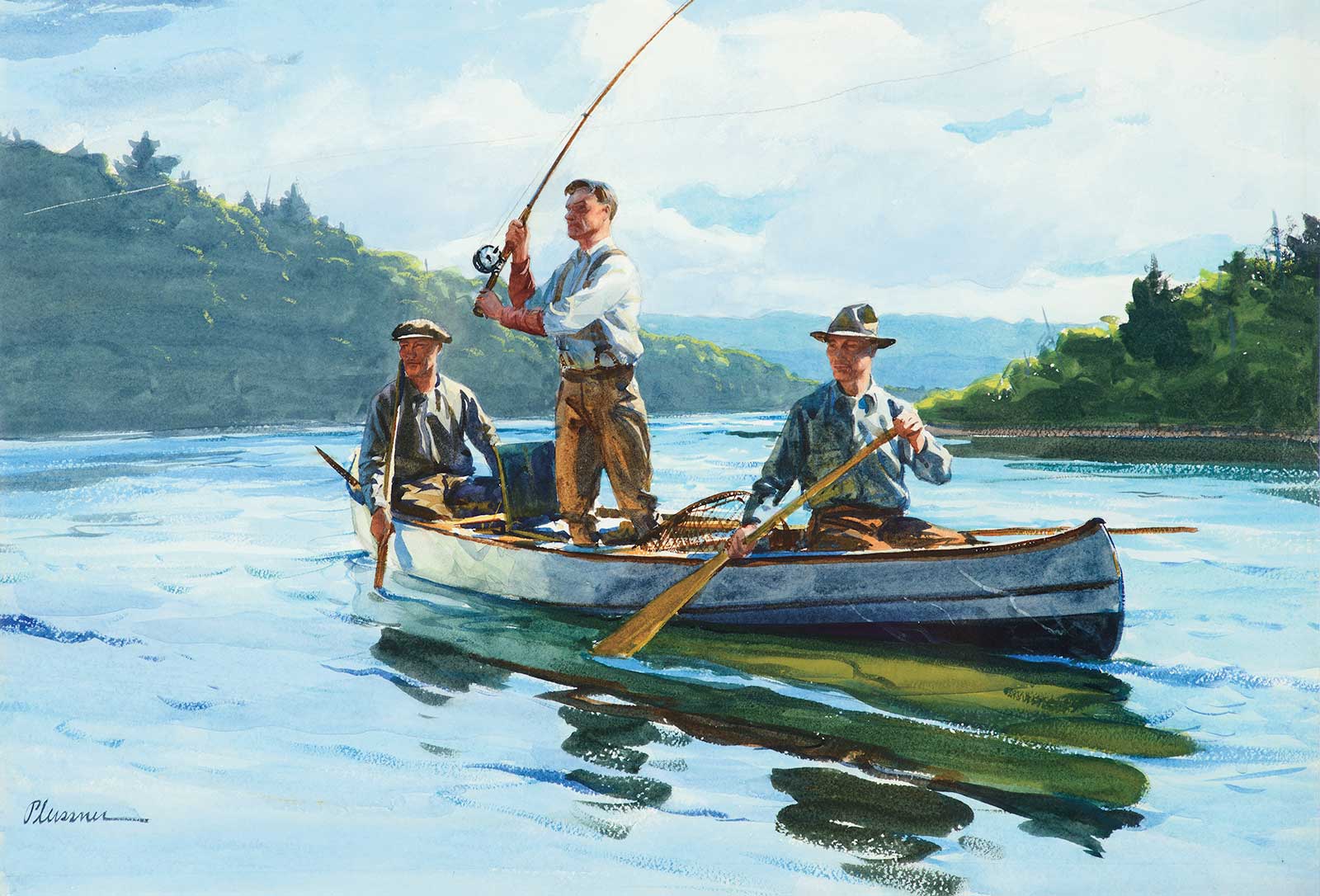 Ogden Pleissner (1905-1983), Casting for Salmon, 1943, watercolor on paper, 18½ x 27”
In 1894 at age 41, Pyle began teaching at the Drexel Institute in Philadelphia where he founded the first School of Illustration (1894-1900). That same year he published 99 illustrations. Within four years, his classes were so popular that Drexel expanded his duties to include an advanced students’ summer program located some 13 miles from Wilmington at Chadds Ford, Pennsylvania, in the Brandywine Valley. The curriculum was structured to address the special talents of a small group of gifted students. The Brandywine Valley with its stone cottages, lush foliage and deep woods seemed to have a mystical quality, inspiring both teacher and students. Perhaps owing to the program’s success, Pyle resigned from Drexel after two summers and began his own art school, the Howard Pyle School of Art (1900-1905) in Wilmington. Over his career, he trained some 200 students. Eighty became accomplished illustrators and several dozen became famous.
Many of them were members of the Society of Illustrators that was founded on February 1, 1901, by nine artists and one businessman. Its mission stated, “The object of the Society shall be to promote generally the art of illustration and to hold exhibitions from time to time.” The first monthly dinners were attended by Howard Pyle, Maxfield Parrish, N.C. Wyeth, Charles Dana Gibson and Frederic Remington, among others. In 1958 the Society’s Hall of Fame named Norman Rockwell as its first member. Others who would join him in the Hall were Dean Cornwell, N.C. Wyeth, Howard Pyle, Charles Dana Gibson, Harvey Dunn, Maxfield Parrish, J.C. Leyendecker, Frederic Remington, John Clymer, Arthur Burdett Frost, Charles M. Russell, Haddon Sundblom, Frank Schoonover, Frank McCarthy, Maynard Dixon, Thomas Moran, John James Audubon, to name just a few.
Pyle’s students at Chadds Ford and Wilmington included an impressive array of talented artists: Maxfield Parrish, N.C. Wyeth, Harvey Dunn, Oliver Kemp, Stanley Arthurs, Frank Schoonover, W.H.D. Koerner, Frank Stick, and PhilipR. Goodwin. At times, almost half of his classes were composed of women. Pyle expressed his thoughts on teaching in a letter to the president of Drexel, “I know of no better legacy a man can leave to the world than that he had aided others to labour at an art so beautiful as that to which I have devoted my life.” His legacy has become known as the “Brandywine Tradition.” Carl Rungius (1869-1959), The Family, 1929, oil on canvas, 28 x 36”
The Brandywine School was the first real training center for American illustrators. They practiced advanced painting techniques that greatly distinguished them from other illustrators of the day. The group of illustrators chose to create a world of their own imagination, while the majority of other contemporary illustrators focused on genre scenes of everyday life. Early magazine illustrations were painted in black and white. However, as printing technology advanced, color was introduced. Pyle successfully led his students through this challenging transition. In time the Brandywine School’s artists contributed over 40 percent of the illustrations printed in Harper’s, and 75 percent of those were in color.
Pyle stated that an illustrator’s talent lies in his ability “to fill out the text rather than to make pictures of some scene described in it.” He taught that when “making pictures to be reproduced in print you are then given no favor and your pictures must be as good as pictures or else they are of no possible use.” “Pictures,” he wrote a friend, “are the creations of the imagination and not of technical facility, and that…which art students most need is the cultivation of their imagination and its direction into practical and useful channels of creation—and I hold that this is exactly in line with all other kinds of professional education, whether of law, medicine, finance, or physics.” Pyle passionately encouraged students to “throw your heart into the picture then jump in after it…; feel the wind and rain on your skin when you paint it.” Thus, he produced artists who were prepared to seamlessly move back and forth between illustration work, commercial art and fine art.
No regular summer classes were held at Chadds Ford in 1903. Nonetheless, Pyle and his students informally returned there to sketch and paint. By 1904 Pyle was holding weekly lectures at the Art Students League in New York City, but in time he stopped teaching and turned his energy toward mural paintings. His first commission, a mural titled The Battle of Nashville, hung in the governor’s reception room in the Minnesota State Capitol building.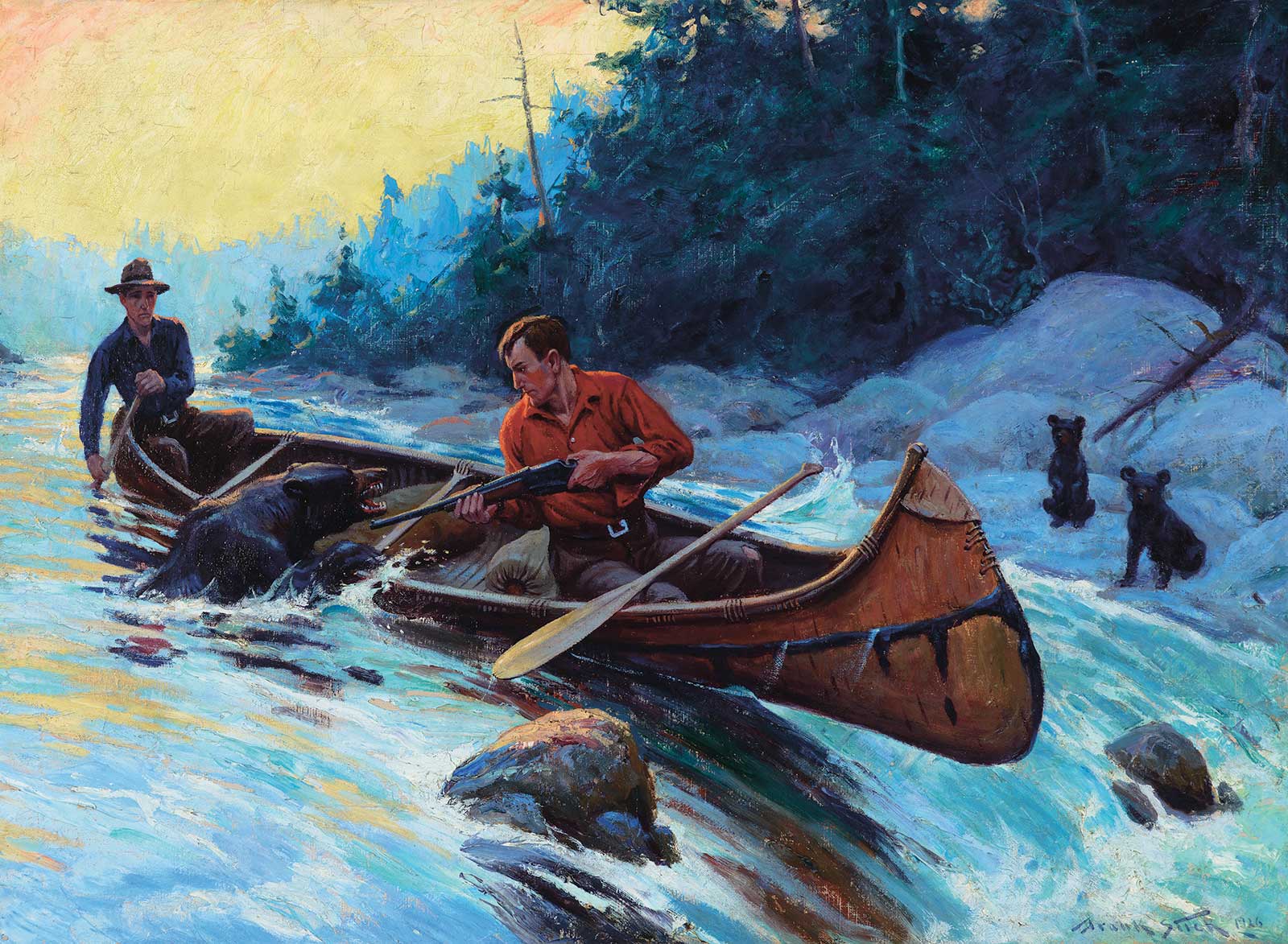 Frank Stick (1884-1966), A Critical Moment, 1926, oil on canvas, 27¼ x 37”
Later, Pyle and his wife decided that despite his poor health, they would travel to Italy. He died in Florence on November 9, 1911, of kidney failure from Bright’s disease, usually caused from a bacterial infection. His illustrations approached 3,500, and half of those were published in the 19 books he had authored. His legacy also lived on in the art of his students. One hundred of his works are in the Brandywine River Museum in Chadds Ford. According to Pyle biographer Lucien Agosta, “His burial in foreign soil was an ironic coda to the life of a man celebrated for his enduring contributions to American children’s literature, devoted to the creation of a characteristic American art, and recognized as the premier illustrator and teacher in what has come to be called ‘the Golden Age of American Illustration.’”
High Tech. Paralleling the early masters of illustration were advances in technology. Book publishers who owned their own printing presses often started publishing magazines in order to keep their presses busy between book productions. General magazines first found a national audience after 1850, and by 1900 there were more than 50 national publications. Yet even without competition from radio, motion pictures, television or the internet, the average citizen was not a magazine reader. By 1890, magazines such as Harper’s, Century and Scribner’s targeted an audience well above average in income and intellectual curiosity. Recognizing this problem, McClure’s (1893-1931) was one of the first periodicals to lower its price to 10 cents a copy in the 1890s, and consequently its circulation topped 400,000, far exceeding that of its competitors. At the beginning of the 20th century, The Saturday Evening Post emerged as the quintessential periodical in America. Norman Rockwell wrote, “The cover of the Post was the greatest show window in America for Illustrators. If you did a cover for the Post you had arrived.”
It was a moment in American history when magazines were at the center of American culture. At the time of the Civil War, 6 percent of the population attended high school, but by the turn of the century, the figure was more than half. Technology boosted magazines as well: the arrival of electricity, halftone reproductions, the linotype machine, photography, the telephone and the typewriter allowed for the speedy production of high-quality products at a reasonable price. As for the magazine’s competition, newspapers were partisan and increasingly sensationalistic, a 400-page book could be daunting, and movies had not yet begun to talk, emote or exceed a couple of minutes in length. And so magazines took up the task of informing and entertaining and sometimes provoking. Cosmopolitan and McClure’s were in everyone’s parlor, their writers’ names on everyone’s lips, especially McClure’s star investigative reporter Ida Tarbell. McClure probably had the greatest eye of all as he published for the first time in the United States Rudyard Kipling, Robert Louis Stevenson, Arthur Conan Doyle and H.G. Wells. After reading a short story by a young California writer, McClure commissioned Jack London to write his second novel, The God of His Fathers & Other Stories (1901).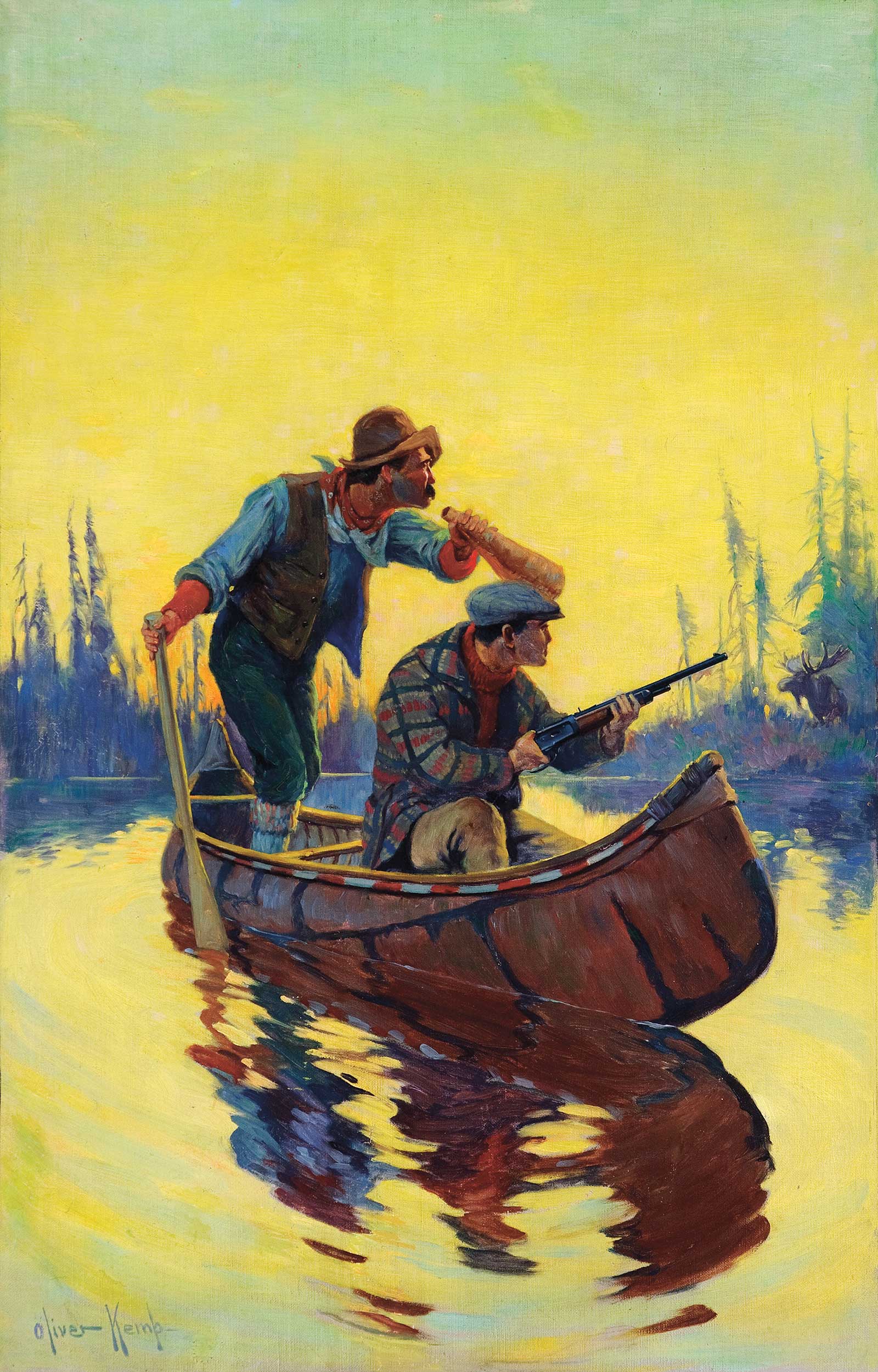 Oliver Kemp (1887-1934), Moose Hunters, 1924, oil on canvas, 36 x 24”
Sporting Art. One of the most important areas of illustration work in America was sporting art advertising. In the “Golden Age of Illustration” hunting and fishing were the kings of sports. Hunting is the recreation most closely associated with sporting art. This relationship was shaped by the manufacturers of ammunition and firearms—leading companies such as Winchester, Remington, Peters, Marlin and Savage-Stevens. These companies were aggressive capitalists who realized that using artwork in their advertising campaigns presented the best means of effectively reaching prospective customers.
While he was a conservationist and founder of the Boone and Crockett Club with George Bird Grinnell, Theodore Roosevelt was known as one of the most enthusiastic hunters in American history. He hunted throughout the Americas and Africa. Why did hunting become so popular and inspired such great artists as Carl Rungius to paint North American big game and Philip R. Goodwin to become known as America’s sporting artist? Look no further than Theodore Roosevelt, the American West’s president. He was idolized by generations of citizens. What was manlier than hunting? In many ways, he carried the baton of Western identity handed off by Buffalo Bill Cody as he championed the strenuous life. Hunting for sport was at its pinnacle in the 1890s. Its “Golden Age” is considered from 1865 to 1900.
The Storytellers had three goals: to sell magazines, calendars and books; to sell the goods in advertisements; and more idealistically in some cases, to define who we are and who we should be as Americans. For instance, Norman Rockwell, J.C. Leyendecker and Haddon Sundblom are credited for the invention of the modern Christmas—a kindly Santa Claus; mysterious packages; tired salesclerks; holly and mistletoe; and exhausted department-store Santas. That is storytelling at its most impactful and nostalgic. —
Western American art historian Dr. Larry Len Peterson is the chair of the C.M. Russell Museum board of directors and the 2019 Montana Heritage Guardian Award recipient, the highest honor bestowed by the Montana Historical Society Board of Trustees in Helena. His book The American West Reimagined: Gems from the Coeur d’Alene Art Auction (2021) has just been released. This landmark publication—12 by 12 inches, 528 pages, and 560 spectacular color illustrations—is accompanied by seven essays and fascinating profiles of 120 artists. The book is available for purchase at www.cdaartauction.com or by calling (208) 772-9009.
Powered by Froala Editor