Looking back at old photos from the Cowboy Artists of America, there is always one smiling face beaming out from the past. Even that first photograph of the CA—in the Oak Creek Tavern in Sedona, Arizona—there he is, grinning from ear to ear: Joe Beeler.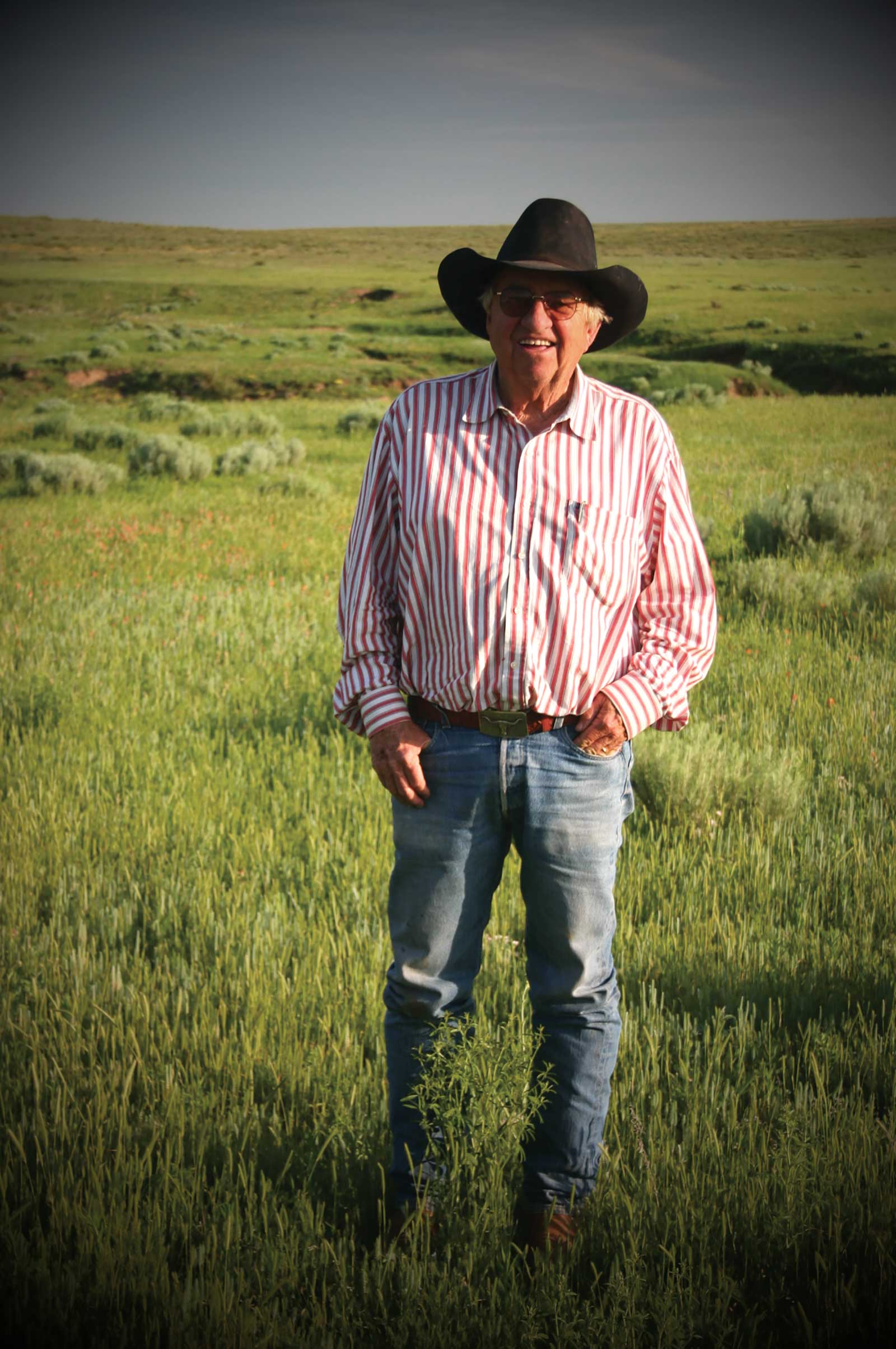 Joe Beeler in the spring of 2005. Courtesy Claggett/Rey Gallery.
The painter and sculptor was the youngest member of the group when it formed in 1965—he was a full 25 years younger than Charlie Dye, and more than a dozen years behind George Phippen and John Hampton—and he was the longest-serving member when he died in 2006. His impact on the group was pronounced and profound. But in many ways his modern legacy is more frequently tied to the CA and how his jovial spirit and quiet guidance were the glue that helped keep the group together for more than 41 years while he was alive (56 years in total). For better or worse, his work as an artist has almost become secondary to his role as ambassador to Western art.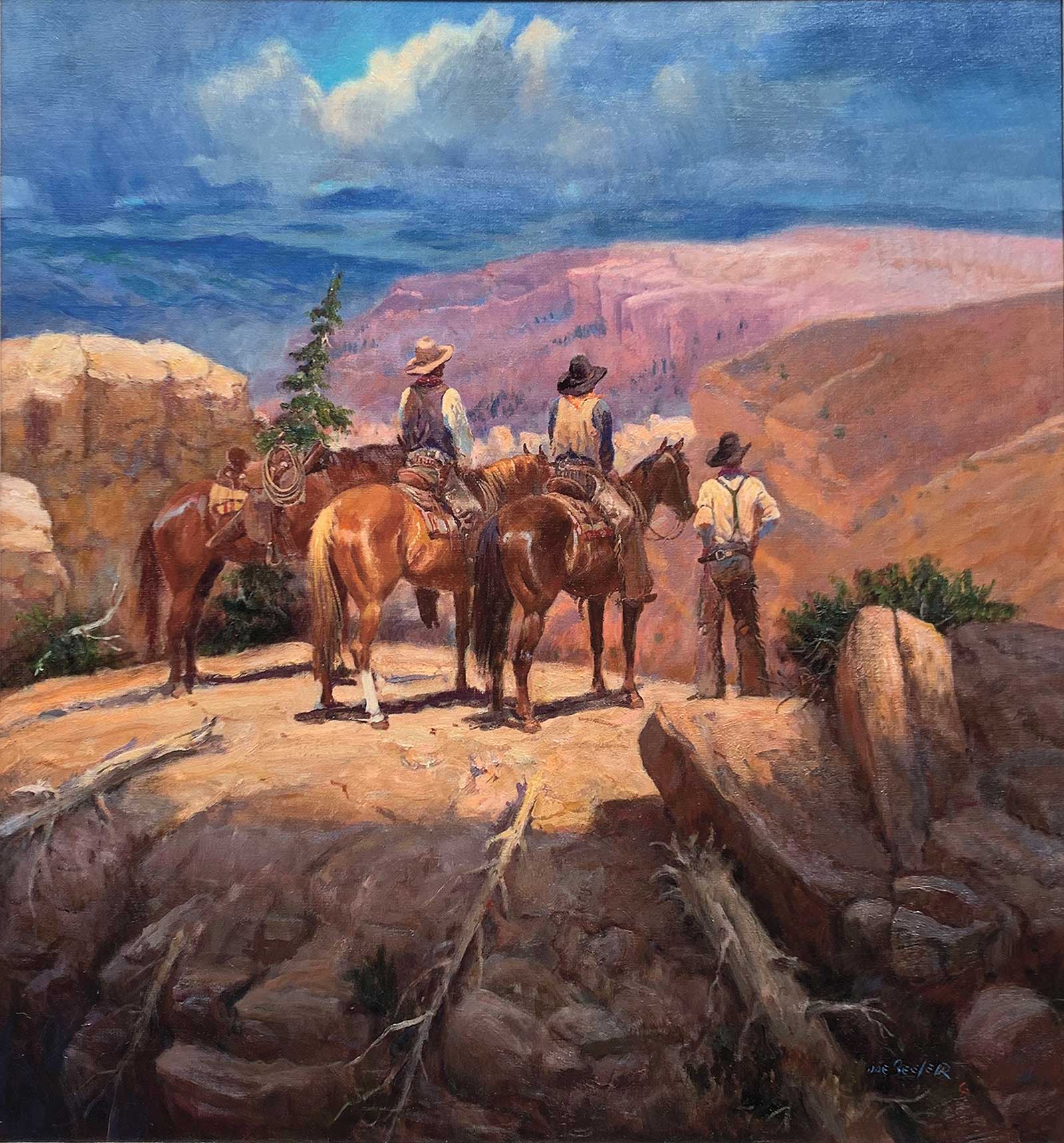 On the Canyon Rim, oil, 30 x 30"
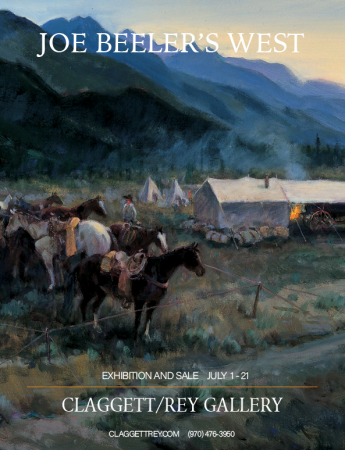
In a new show at Claggett/Rey Gallery, owner Bill Rey hopes to remind collectors that Beeler was also a phenomenal Western artist, regardless of any initials that appeared after his signature. Joe Beeler’s West opens July 1 at the gallery in Edwards, Colorado, and it will feature major paintings and bronzes that speak to Beeler’s artistic nature.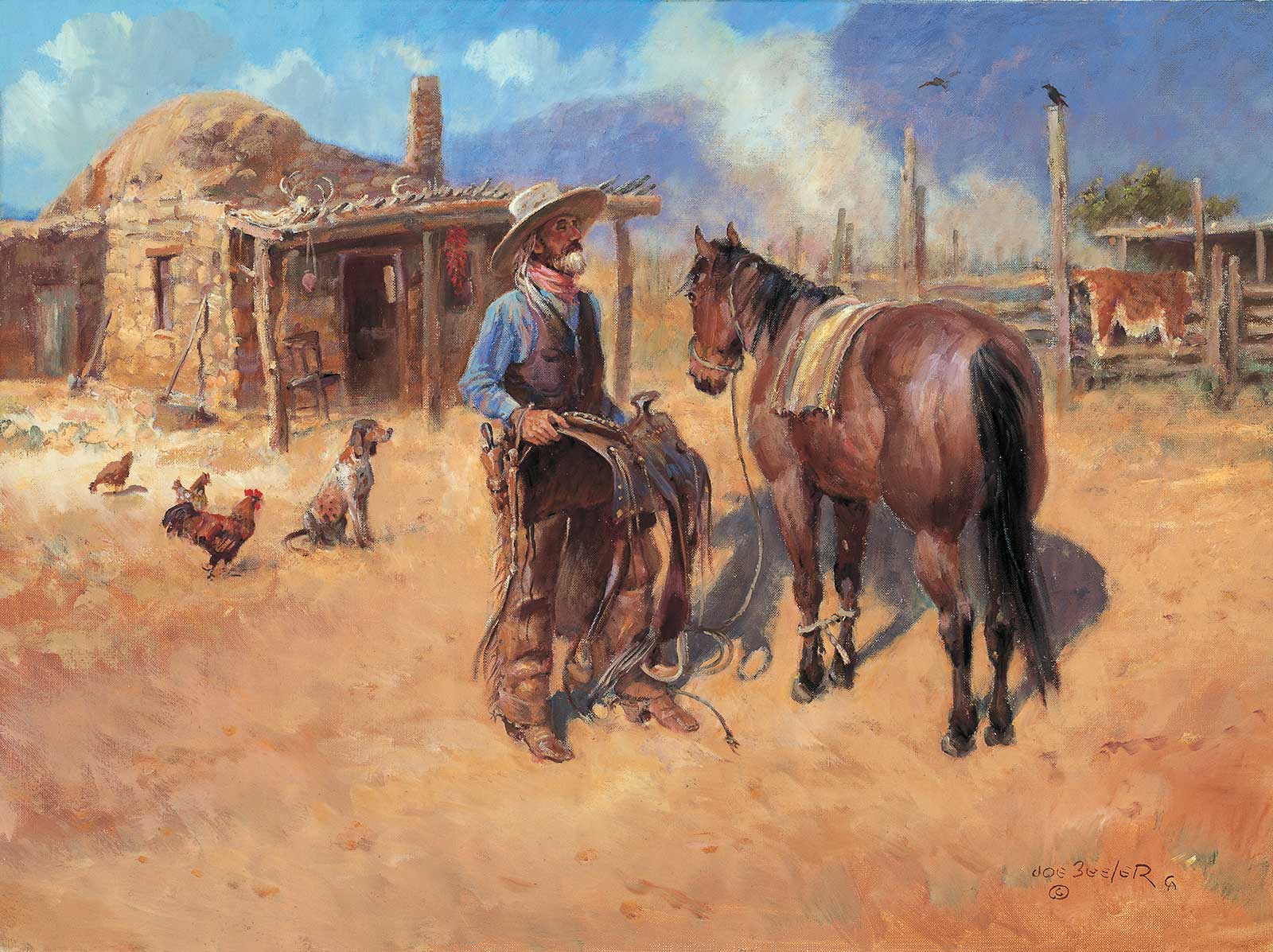 Bare Necessities, oil, 18 x 24”
“Joe was a rare breed, that’s for sure. He was a team roper, a great dancer, he could play the drums, and he could eat with royalty and be on talk shows, but art was always number one for him. And he believed in the West. He was the real deal,” Rey says of the Arizona artist. “It’s been 15 years since his passing, and we felt it was time to get together a major show and beat that drum again. No one has been beating that drum harder these many years, but we felt it was time for a major presentation for his work.”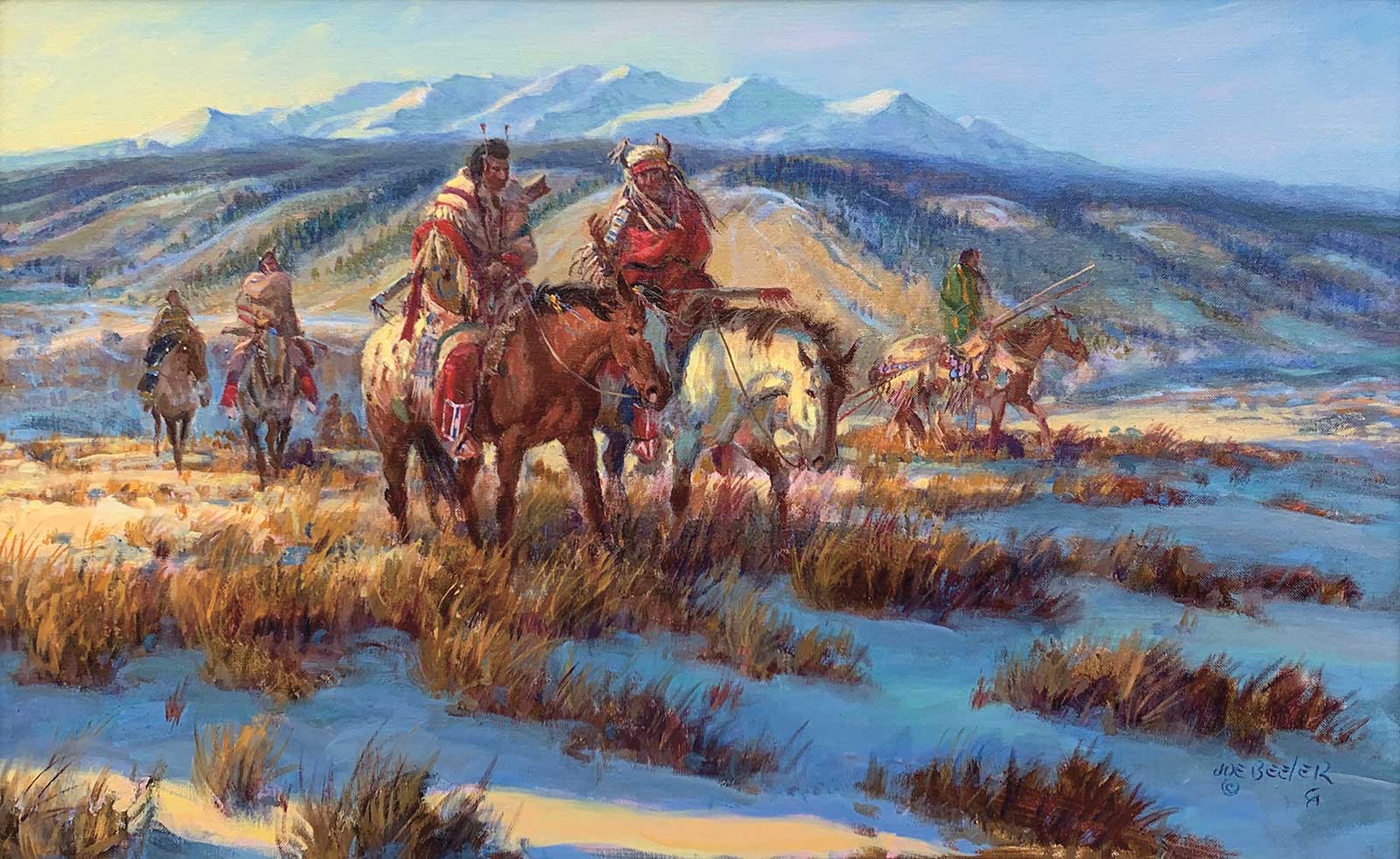 Buffalo Hunters, oil, 15 x 24”
Rey says the gallery will have more than 70 Beeler works in the show, including several major paintings, such as the magnificent On the Canyon Rim. Beeler started working with the gallery in 1989, so Rey, an honorary member of the CA, has a treasure trove of stories about the artist, who was admired all around the West for his straight-shootin’, lovable personality.
“He was one of the people who couldn’t turn off the art. He was incredible with my kids. They would sit on his lap and he would ask them what they wanted him to draw. Before long he was there drawing cheetahs chasing unicorns and whatever else they asked for. Once he took a toy barn and did the cowboy history on one side and the Native American history on the other. He was always on,” Rey remembers. “He was just fun to be around. I’ll never forget his studio bathroom had wallpaper made of hundreds of nude drawings from art school. That came via his wife, Sharon.”
He continues: “Before Sharon passed away in 2004, we took a cruise in Mexico. Joe showed up in his Topsiders, three-quarter-length pants and a classic Tommy Bahama shirt. They had forgotten their passports, so while they waited to get that sorted out they found a cab driver to drive them around to his favorite haunts. The driver was a Oaxacan and Indigenous Native, so Joe ended up doing sketches of all his friends and other people they were meeting. He had such a huge amount of respect for other cultures.”
Rey also remembers Beeler striking up a friendship with Rolling Stones keyboardist Chuck Leavell, who invited the artist backstage to hang out before an Arizona show. “There’s Joe hanging out with the Stones and doing drawings for all the guys,” he says. “He was that person people just really enjoyed being around.”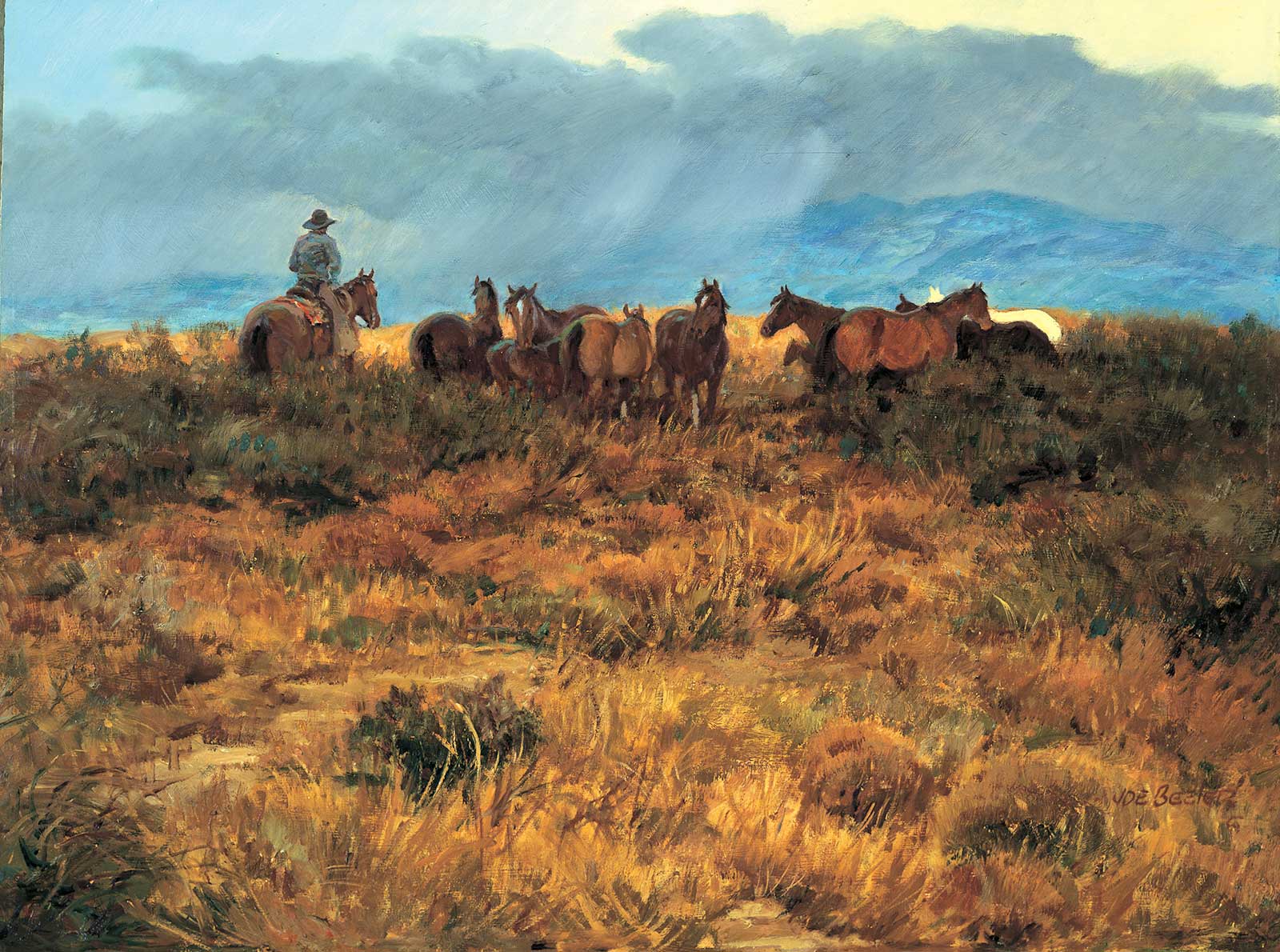 Winter Morning, oil, 18 x 24”
When it comes to his artwork, Beeler bridges an important gap from Charles M. Russell to contemporary Western artists. Of course, both Russell and Beeler were painters and sculptors, but they also even worked in similar styles that allowed them to tell genuine stories about the West and its inhabitants.
“The fundamental fact is what distinguished the art of Charlie Russell, and it applies to Joe Beeler as well. Russell rode the big Montana outfits when they still ran cattle on the open range. He was witness to the declining days of free-roaming Indians and the huge herds of buffalo as cowpunchers and cattle claimed dominion all across the northern plains and prairies. But it didn’t all end, as Russell imagines it might, when cowboys had to climb off their horses to build fences and bale hay,” writes the late Don Hedgpeth in Joe Beeler: Life of a Cowboy Artist. “…The authentic, real life experiences of Charlie Russell and Joe Beeler marked both of them as the kind of men old Montana’s Teddy Blue was talking about when he said, ‘I believe I would know a cowboy in hell with all his hide burnt off. It’s the way they stand and walk and talk.’ Actual experience is what stamps the art of Russell and Beeler as surely as a red-hot branding iron on cowhide.”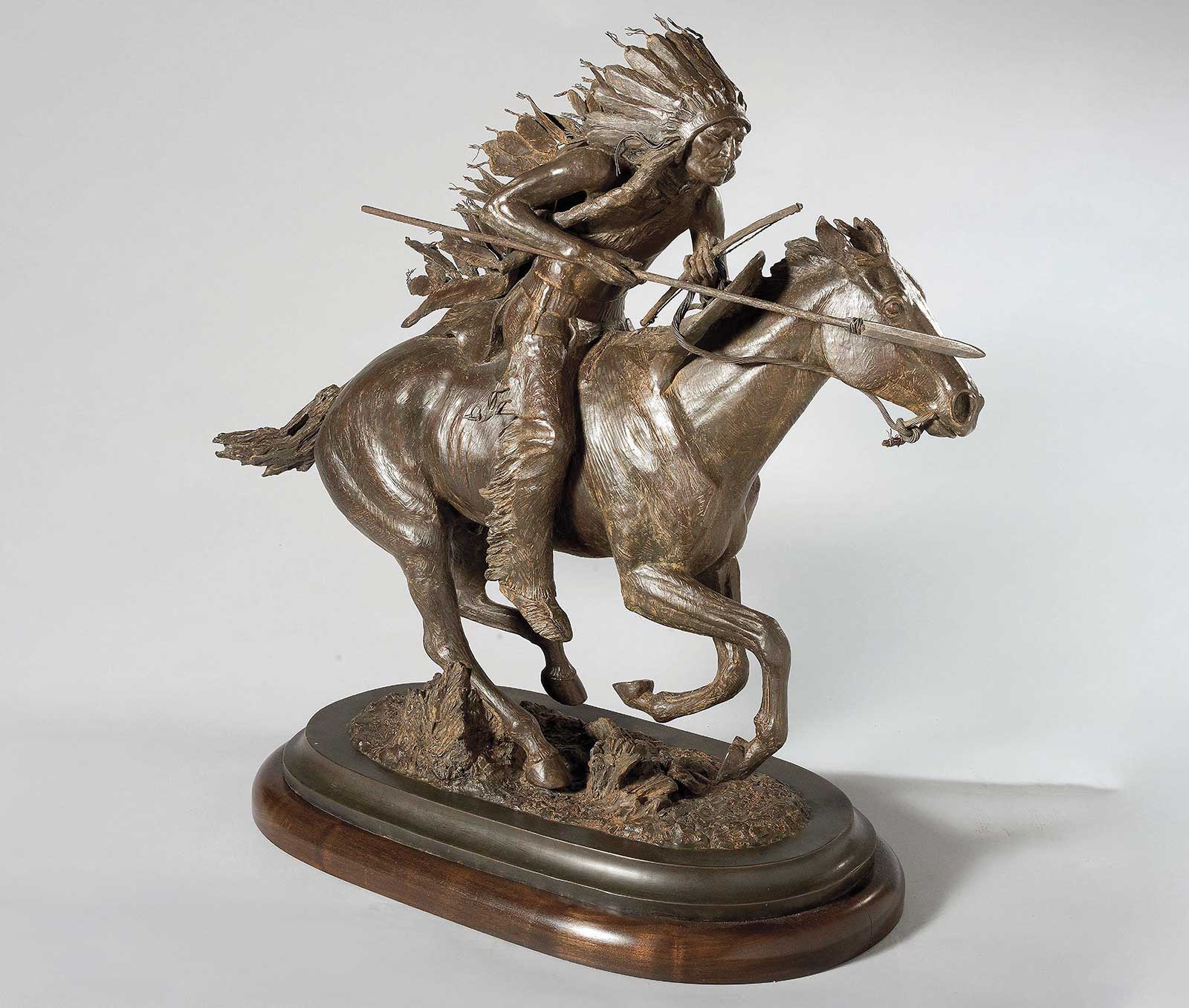 Vengeance, bronze, 30 x 35 x 13”
Rey will even go a step further by saying that Beeler is nearly the direct descendent of Russell because of Beeler’s early work with Joe De Yong. “We see Russell’s legacy continue through Joe De Yong, the only artist Russell ever mentored. Joe De Yong was like an adopted son to Russell…So Russell mentors Joe De Yong and then Joe De Yong mentors Joe Beeler, who carried that lineage down,” Rey says. “To me there is no doubt that there within Beeler, more so than any other artist, is the Russell mindset in every way without it being intentional. They shared many similarities, but Beeler became the better sculptor and just blew the doors offs sculpture.”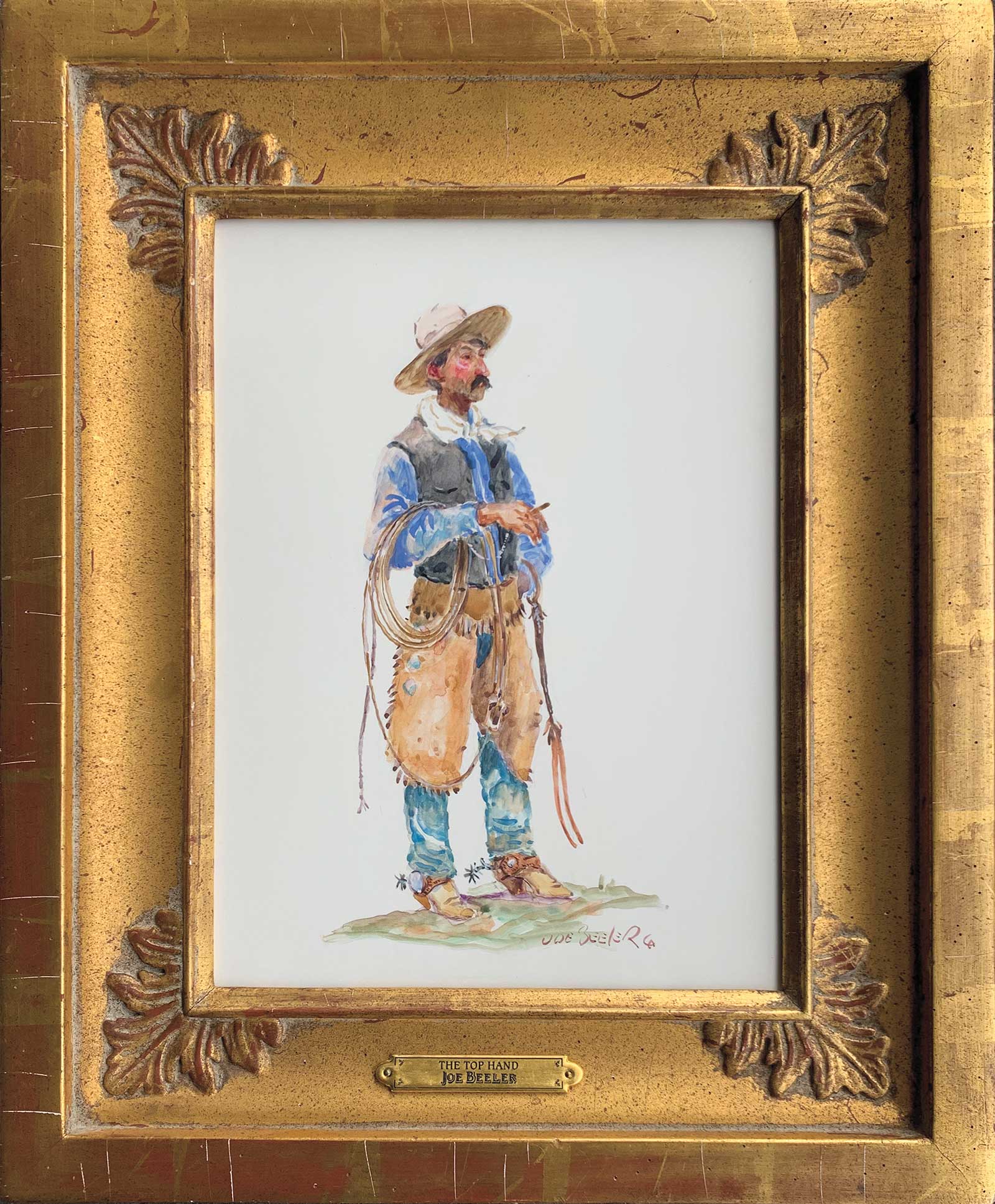 The Top Hand, watercolor, 12 x 9”
De Yong wrote about Beeler 10 years after their first meeting. Hedgpeth quotes the artist in the Beeler book: “Recognizing the qualities that may help foretell the success of a beginning artist, like judging a racehorse, follows no fixed rules,” De Yong wrote. “Talent and originality are obvious musts; but even with examples of the artist’s work in plain sight, the deciding factors may never be apparent, since they are usually easily overlooked secondary qualities that ordinarily might be regarded as having little to do with art, such as personality, sensitiveness, fundamental honest and courage. When chance first brought Joe Beeler and me together, he asked my opinion about his chances for success. My opinion, fortunately, was one that could be expressed willingly and with confidence. ‘In my judgment,’ I told him, ‘you have what it takes and will make the grade. While the first years are bound to be rough in spots, you will come out on top.’”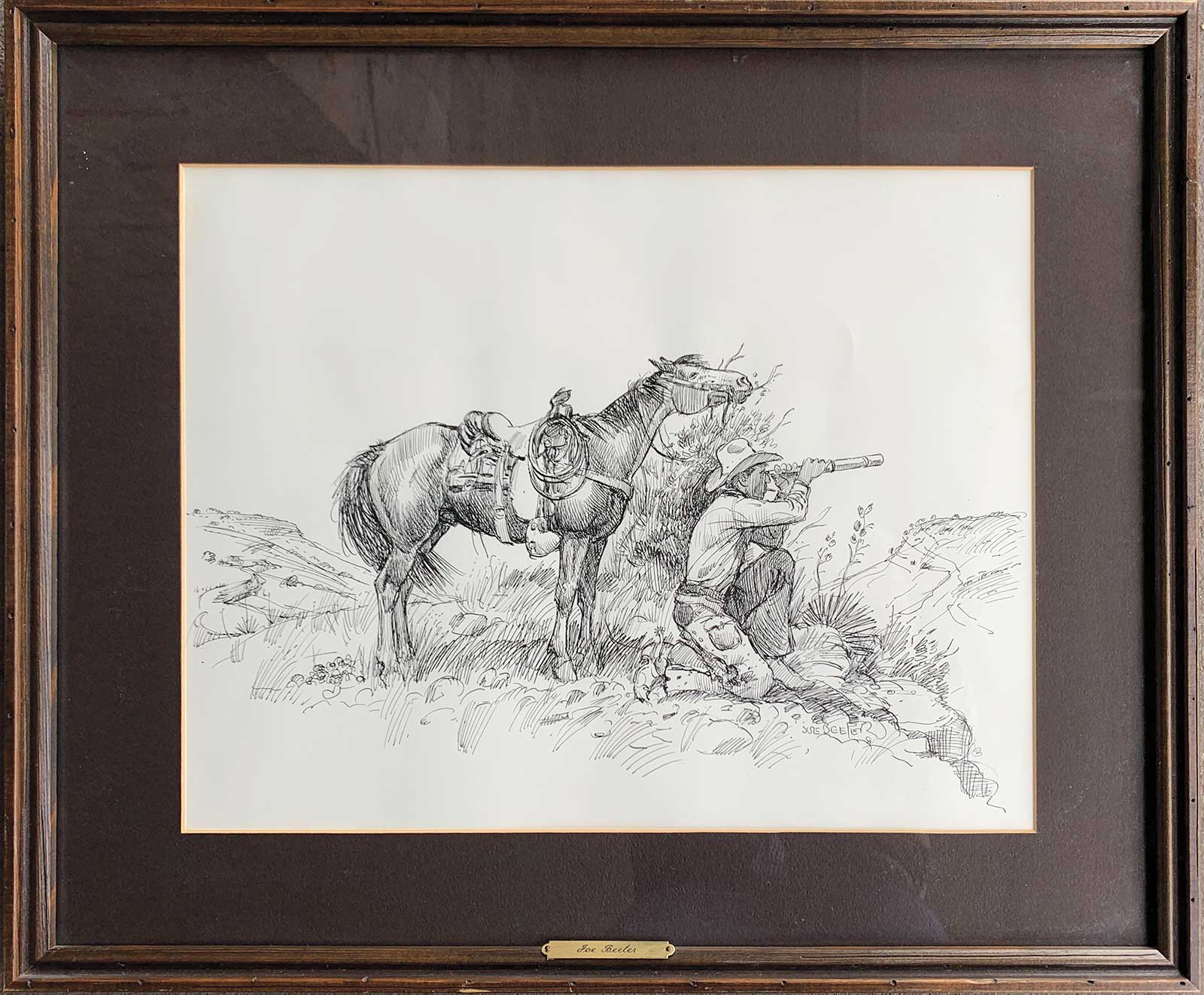 Cowboy Looking Glass, pen and ink, 13 x 16”
And Beeler routinely did come out on top, which is why his names carries so much weight today. Not only did he help start the CA and shepherd cowboy art through a crucial period, but he also carried Russell’s West through the second half of the 20th century. Then, over time, without anyone noticing, it became Beeler’s West—and it was a magnificent place. —
Joe Beeler’s West
July 1-21, 2021
Claggett/Rey Gallery,
216 Main Street, Suite C-100, Edwards, CO 81632
(970) 476-9350, www.claggettrey.com
Powered by Froala Editor