A new exhibition at the Metropolitan Museum of Art, Karl Bodmer: North American Portraits, will present a series of watercolor portraits of Native Americans that Swiss draftsman Karl Bodmer created in the 1830s. The primary focus on Bodmer’s portraiture of Indigenous peoples has not been seen in any previous exhibitions of the artist’s work. 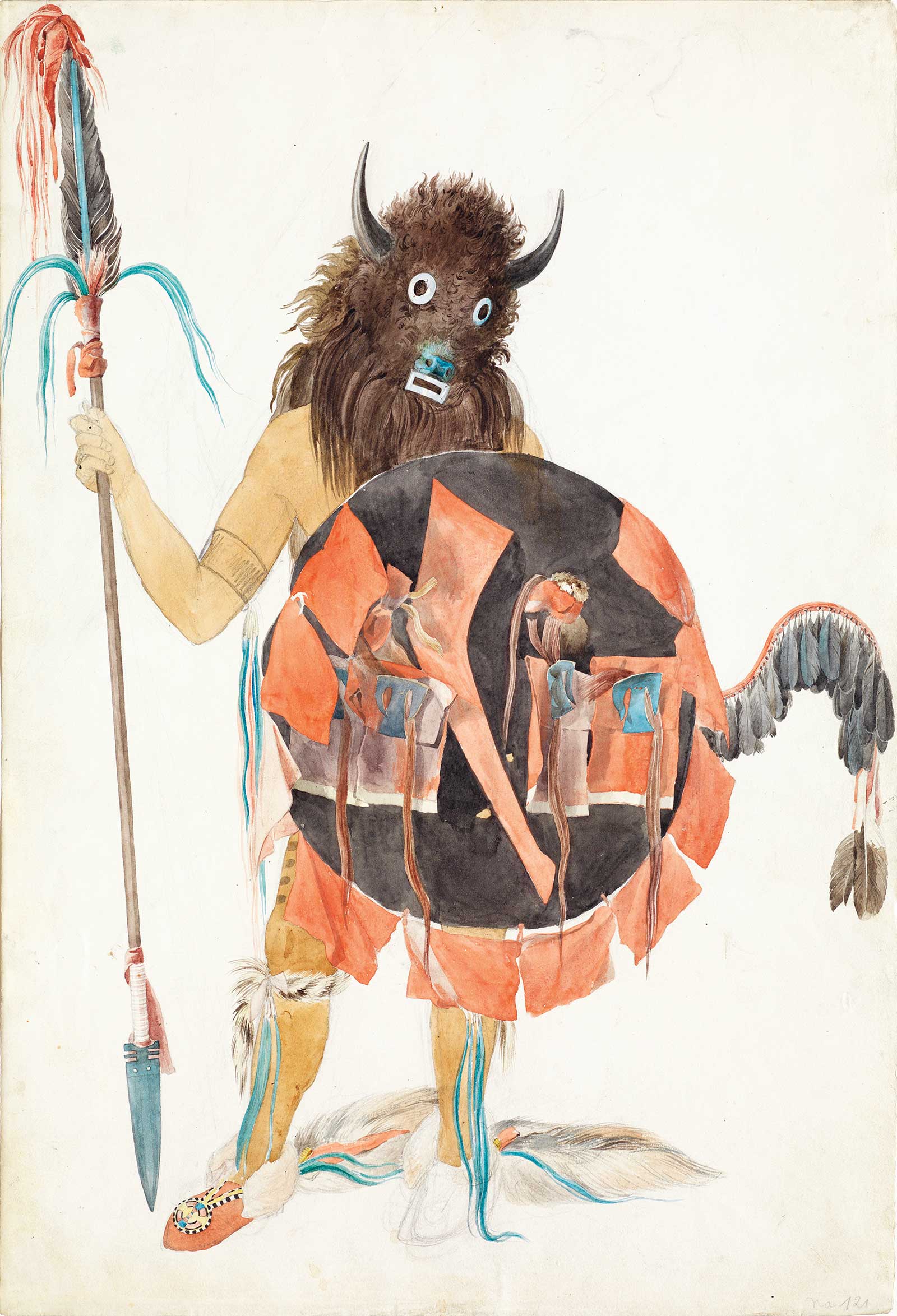 Karl Bodmer (1809-1893), Leader of the Mandan BerÓck-Óchatä, 1834, watercolor and graphite on paper, 17 x 1115/16”. 1986.49.264. Joslyn Art Museum, Gift of the Enron Art Foundation, 1986.
In 1833 to 1834, Bodmer embarked on a voyage along the upper Missouri River, and born out of that was a significant body of work comprising close to 400 landscapes, depictions of everyday life and portraits of Native Americans. “The portraits bring into focus Bodmer’s role as a European artist-observer of Indigenous peoples in the years just before settler-colonization, widespread disease and Native displacement,” says Thayer Tolles, the Marica F. Vilcek Curator of American Painting and Sculpture at The Met. “They are Eurocentric responses to what Bodmer saw and experienced, executed with an astonishing level of precision and nuance. At the same time, the exhibition seeks to bring greater dimensionality to our understanding of these portraits by concentrating on the sitters and their lifeways, and by encouraging future avenues of interpretation through Indigenous perspectives. For instance, how can Bodmer’s portraits support Native artists who are studying 19th-century styles of regalia-making?”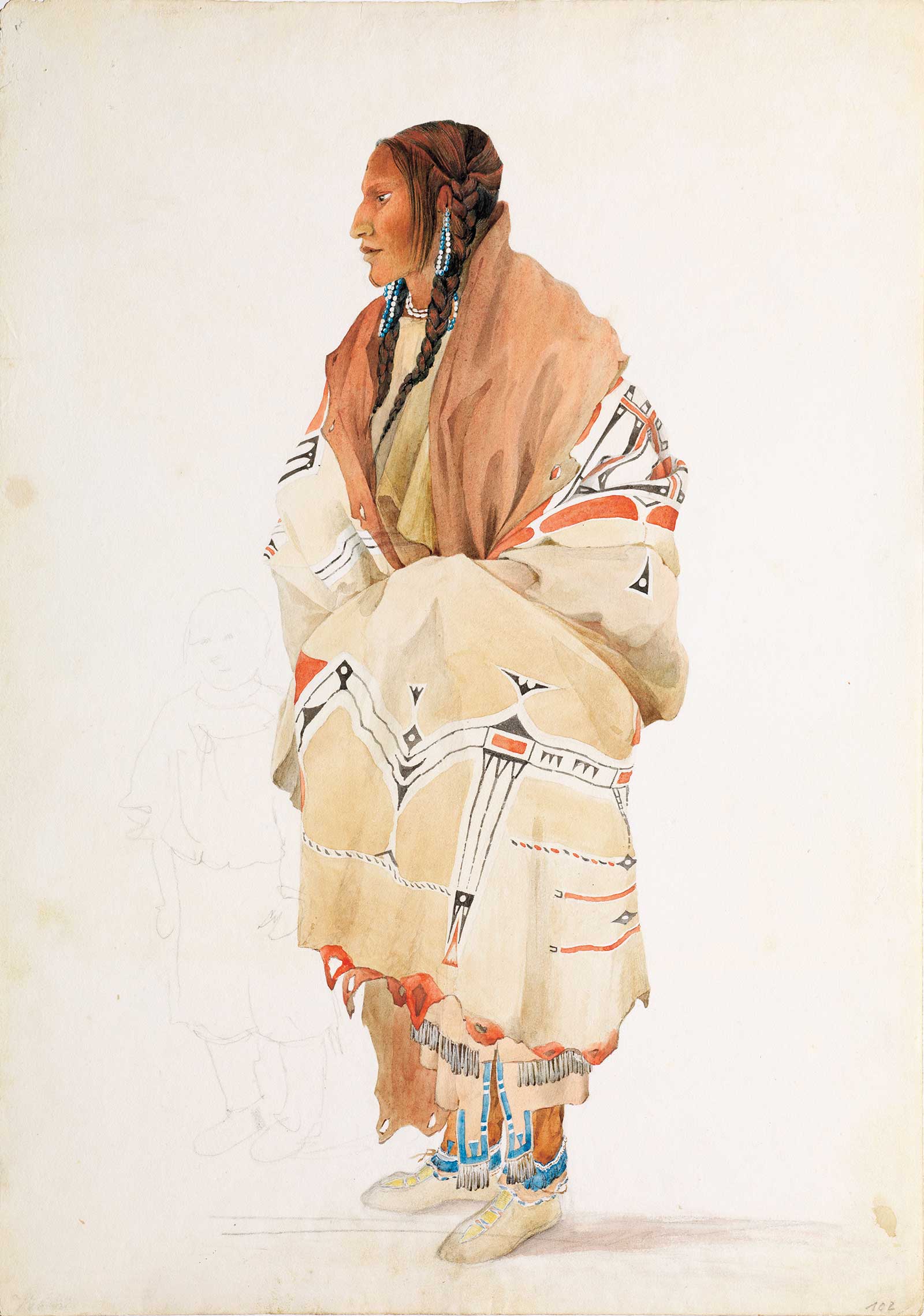 Karl Bodmer (1809-1893), Chan-Chä-Uiá-Te-Üinn, Lakota Sioux Woman, 1833, watercolor and graphite on paper, 171/8 x 117/8”. 1986.49.246. Joslyn Art Museum, Gift of the Enron Art Foundation, 1986.
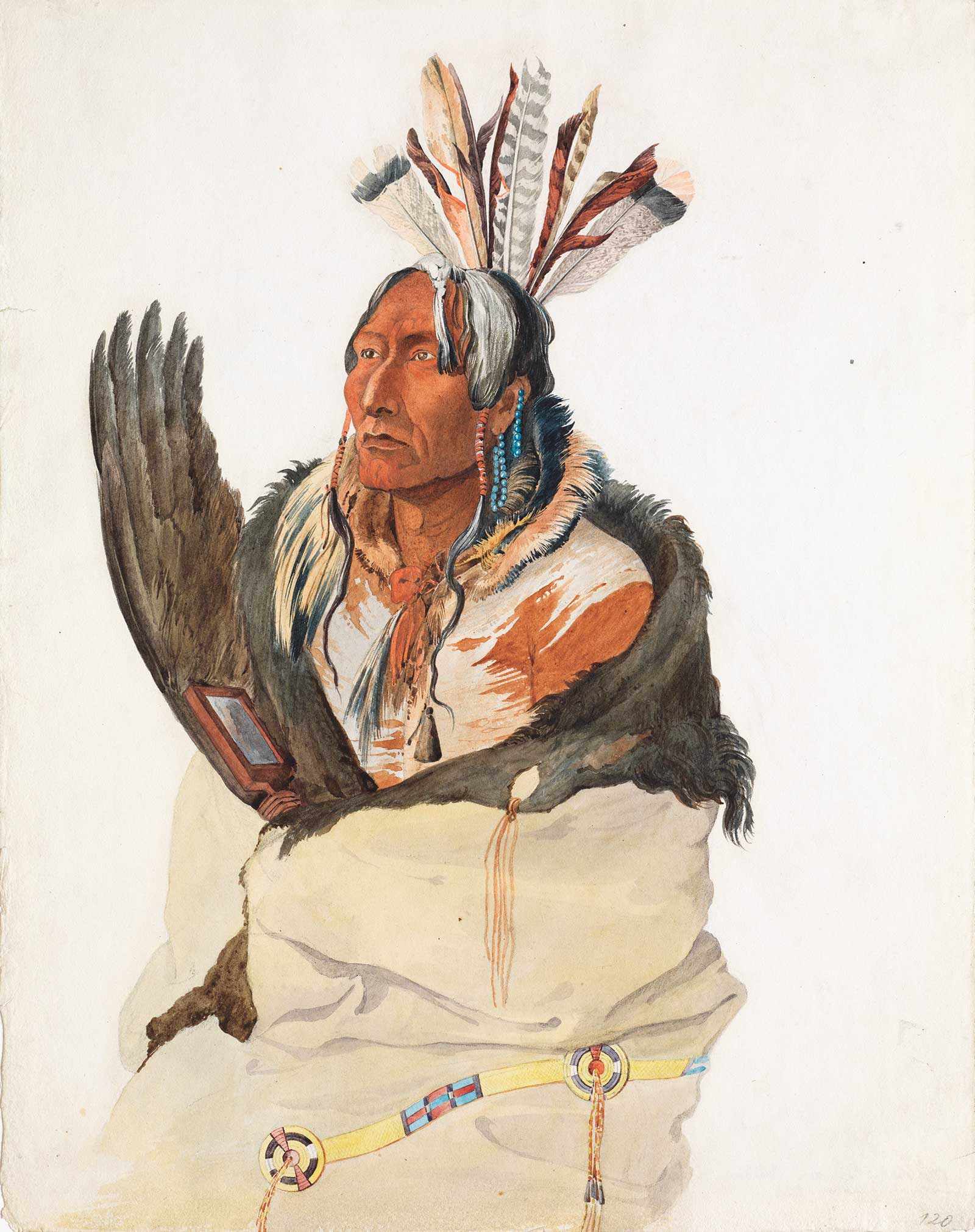 Karl Bodmer (1809-1893), Upsichtä, Mandan Man, 1834, watercolor and graphite on paper, 12⁵⁄₈ x 10”. 1986.49.263. Joslyn Art Museum, Gift of the Enron Art Foundation, 1986.
Bodmer’s paintings in the exhibition include depictions of Indigenous men, women and children bearing cultural regalia. The works have simple, clean compositions, with mellow palettes and primarily white/beige backdrops, placing the emphasis primarily on the subjects. The show will include 35 portraits in total, out of about 90 that Bodmer created. 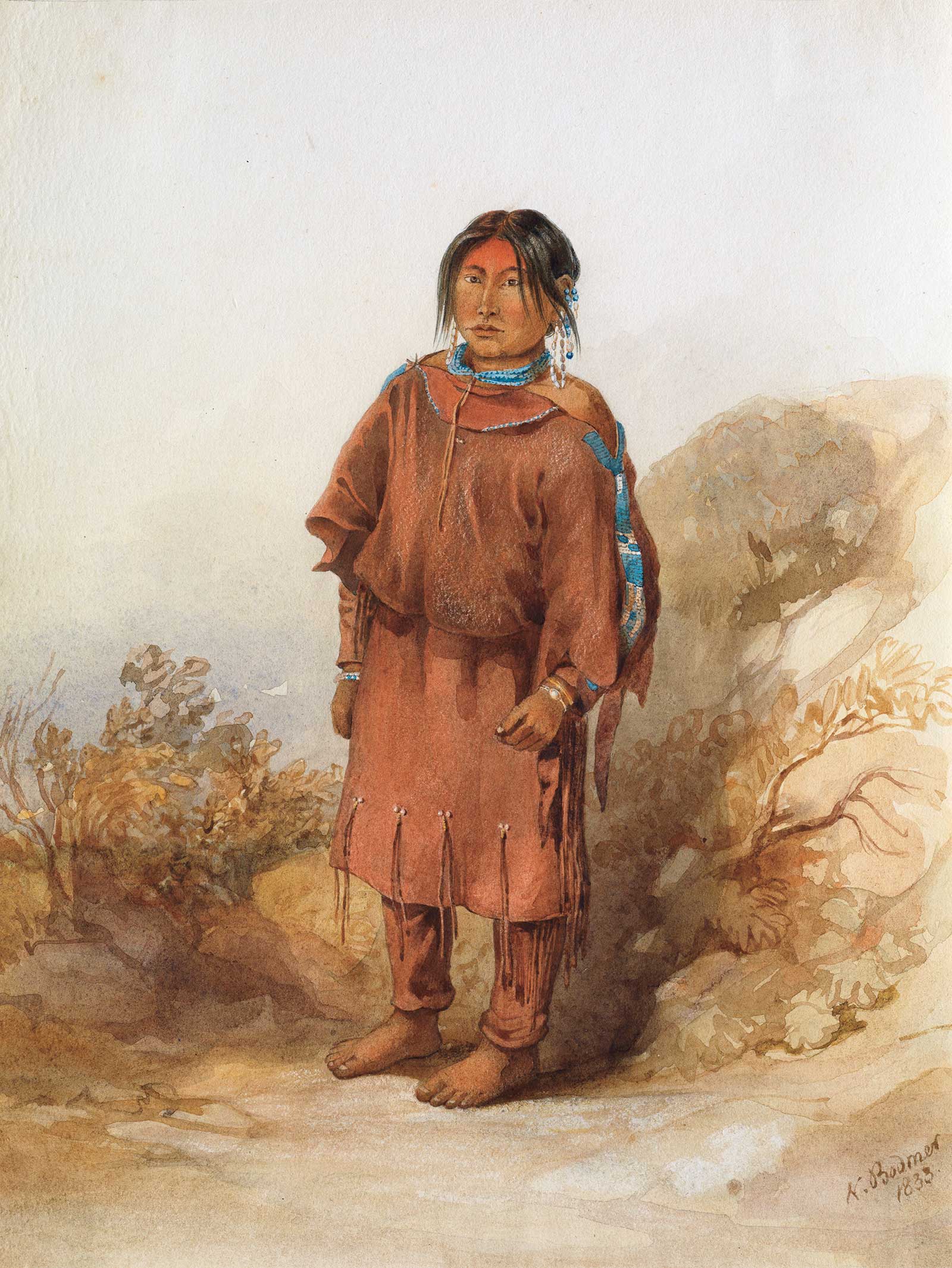 Karl Bodmer (1809-1893), Assiniboine and Siksika Blackfoot Girl, 1833, watercolor and graphite on paper, 10⁵⁄₈ x 8”. 1986.49.378. Joslyn Art Museum, Gift of the Enron Art Foundation, 1986.
“For Karl Bodmer: North American Portraits, we present a multi-vocal approach, expanding interpretation beyond the traditional curatorial perspective to collaborate with 10 Indigenous writers—scholars, artists, and tribal elders—from communities that Bodmer and [German explorer and naturalist] Maximilian [Prince of Wied-Neuwied] visited,” says Tolles. “They each wrote a wall label for a specific work that they selected, activating the watercolors and prints by bringing in fresh and dynamic points of view. These labels are testament to the important living legacy of Bodmer’s work and the sitters who are represented. The texts, which are available on the exhibition’s landing page at www.metmuseum.org, center on themes of intergenerationality and the passing of traditions, stories and knowledge…Our goal is to weave together historical and present approaches to both Bodmer’s portraits and the people who sat for them, and in doing so, to bring our visitors enhanced understanding of the complexity of intercultural exchanges.”
Karl Bodmer: North American Portraits will be on view at the Met Fifth Avenue in the American Wing through July 25. —
Karl Bodmer: North American Portraits
Through July 25, 2021
The Metropolitan Museum of Art
1000 Fifth Avenue, New York, NY 10028
(212) 570-3951, www.metmuseum.org
Powered by Froala Editor