With only the rarest of exceptions, many top awards are presented annually. Academy Awards, Emmys, Grammys, the Nobel Peace Prize, Kennedy Center Honors, the Pulitzer. If you exclude pandemic years, you can almost set a clock by these annual awards presentations.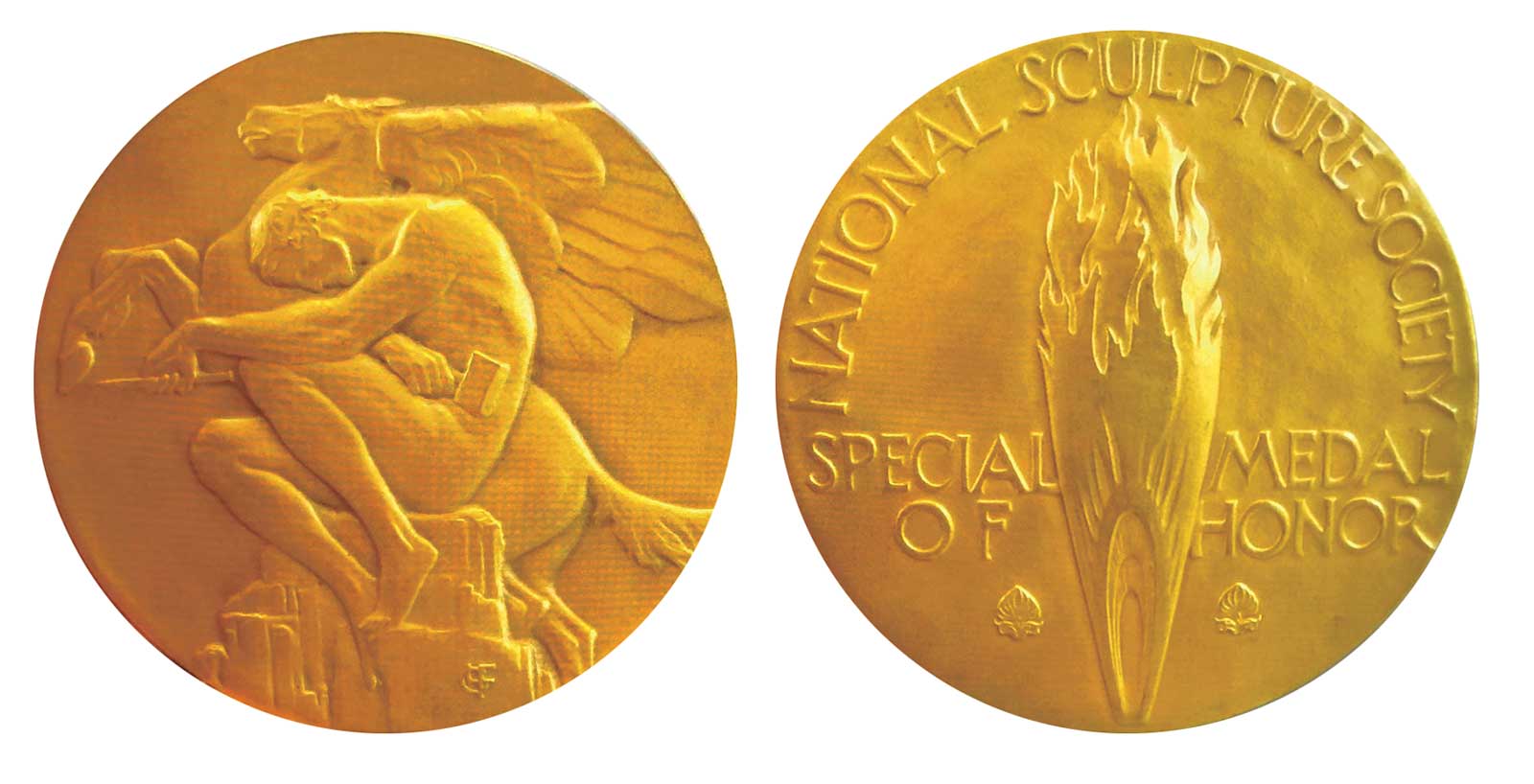 The Special Medal of Honor presented by the National Sculpture Society.
And then there’s the nation’s highest award for sculpture, the National Sculpture Society’s Special Medal of Honor. In 127 years as an organization, the society has presented the award—meant to honor people who have made significant contributions to the art of sculpture—just 45 times. And only 27 times to actual sculptors. The first was Daniel Chester French, who designed the colossal seated figure of Abraham Lincoln within the Lincoln Memorial in Washington, D.C. The last one was Don Ostermiller in 2015.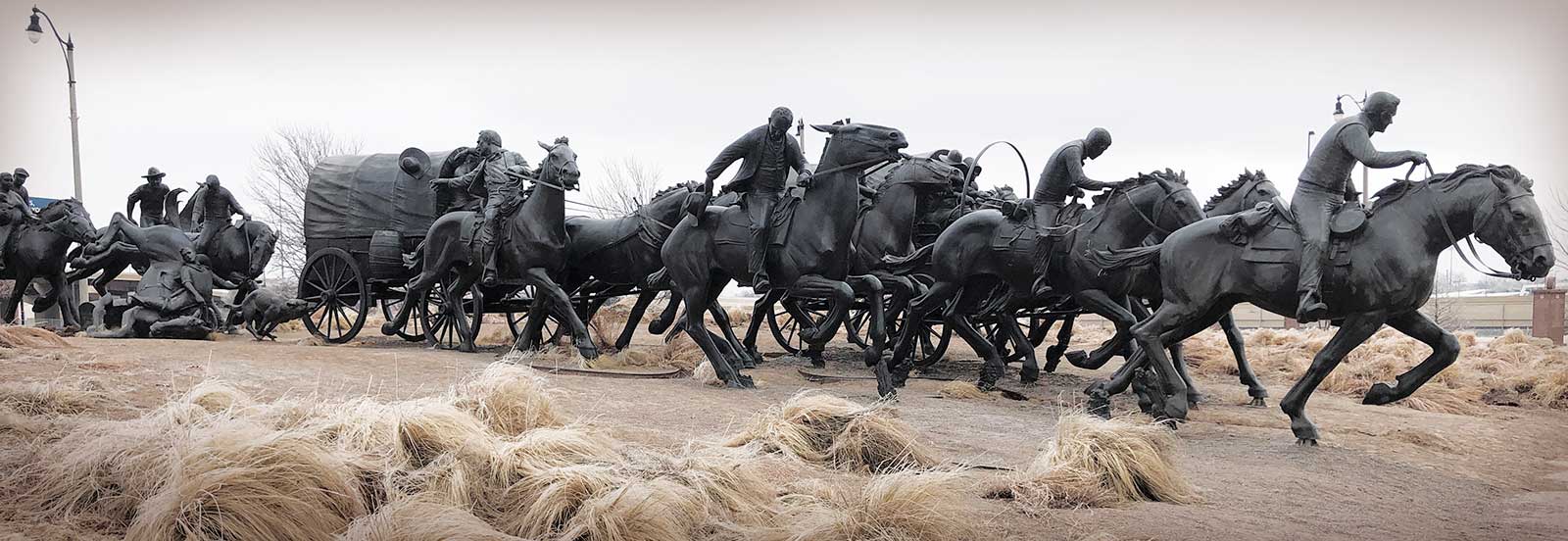 Centennial Land Run Monument by Paul Moore in Oklahoma City. The monument consists of 45 life-and-a-half figures, as well as many wagons and horses.
Well, say hello to No. 28—Oklahoma sculptor Paul Moore.
“When I found out I sort of couldn’t really believe it was true. It’s a huge honor, and I was humbled,” Moore says. “It’s humbling because it’s an award that is rarely given out, but also because the people who won it before me are my heroes. Artists like Daniel Chester French, Paul Manship, James Earle Fraser, Malvina Hoffman…these are the greatest sculptors in the country. I have to say it again, it’s just so very humbling.”
Upon news of the honor, support for Moore was immediate. “For decades, Paul Moore has brought our state’s history to life through his breathtaking bronze works of art,” University of Oklahoma president Joseph Harroz Jr. said in a statement. “At OU, he has immortalized some of our university’s most iconic figures, which will stand sentinel on our campus grounds for generations to come. He is incredibly deserving of this prestigious honor.”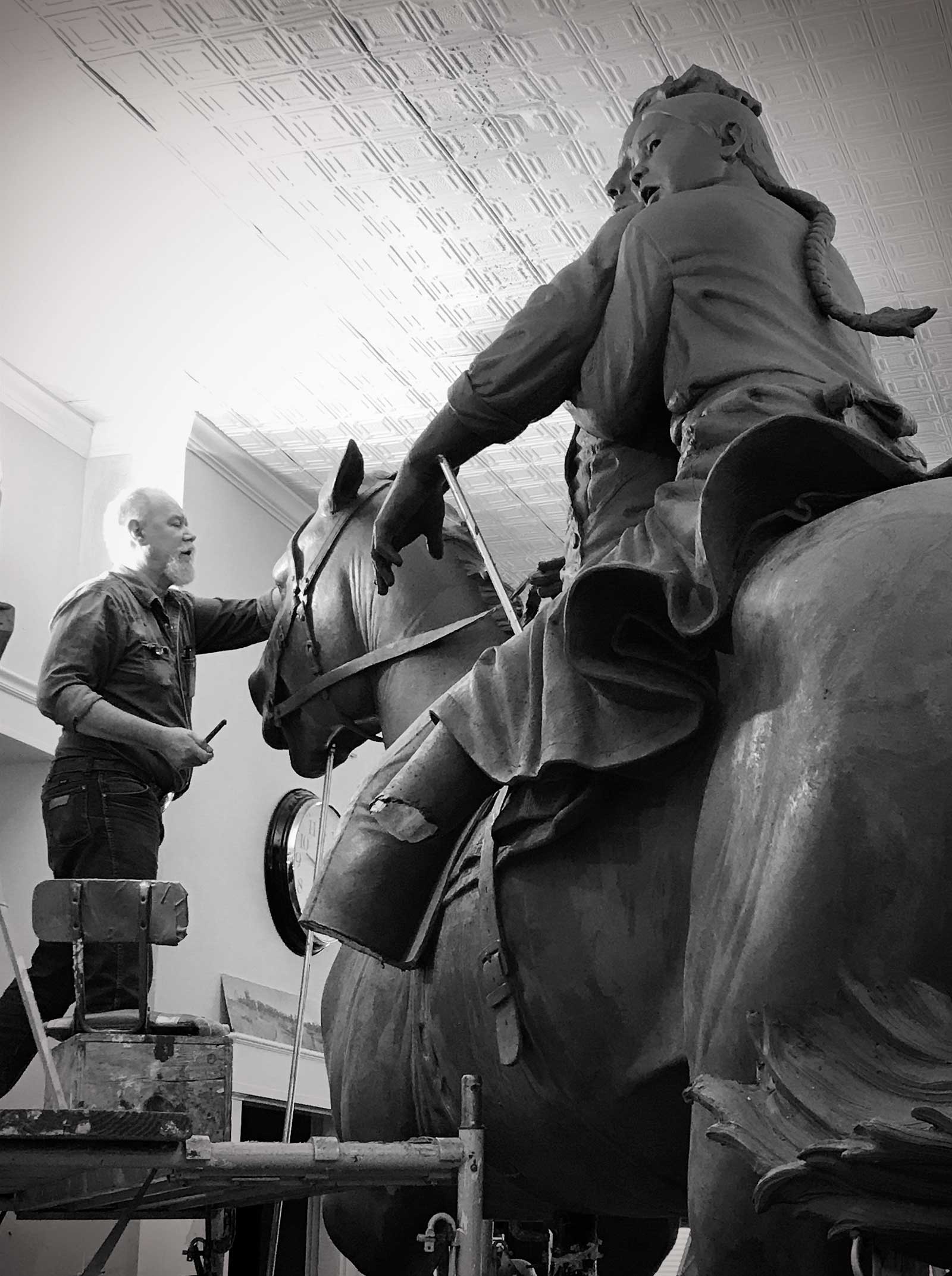 Paul Moore working on one of 45 figures for the Centennial Land Run Monument. Image courtesy University of Oklahoma.
Moore grew up in Oklahoma and California. His father was a Baptist minister whose calling was to go to failing and collapsing churches to build up the congregations and bring the church into a proper running order. At 12 years old, while his family was living in Oklahoma City, they visited the Cowboy Hall of Fame, which is today the National Cowboy & Western Heritage Museum. “My mom gave me her camera. It had five shots left in it, so she told me to choose my five favorite works and take a picture of each one,” he recalls. “I still remember which pictures I took: Fraser’s End of the Trail and his seated Lincoln statue, two Frederic Remington pen-and-ink drawings, and Norman Rockwell’s portrait of Walter Brennan. I still have the pictures of the sculptures.”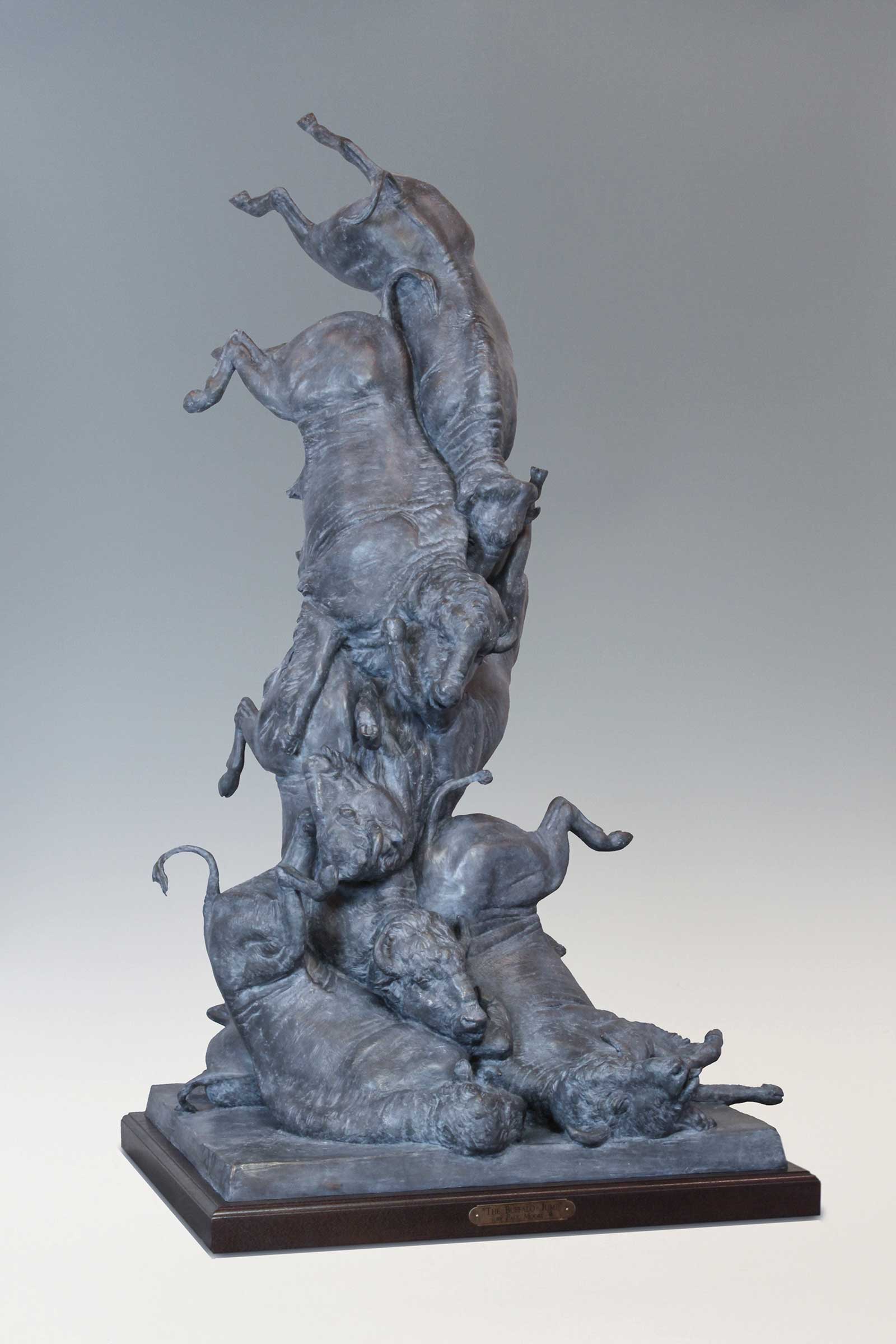 The Buffalo Jump, bronze, 44 x 24½ x 24½”
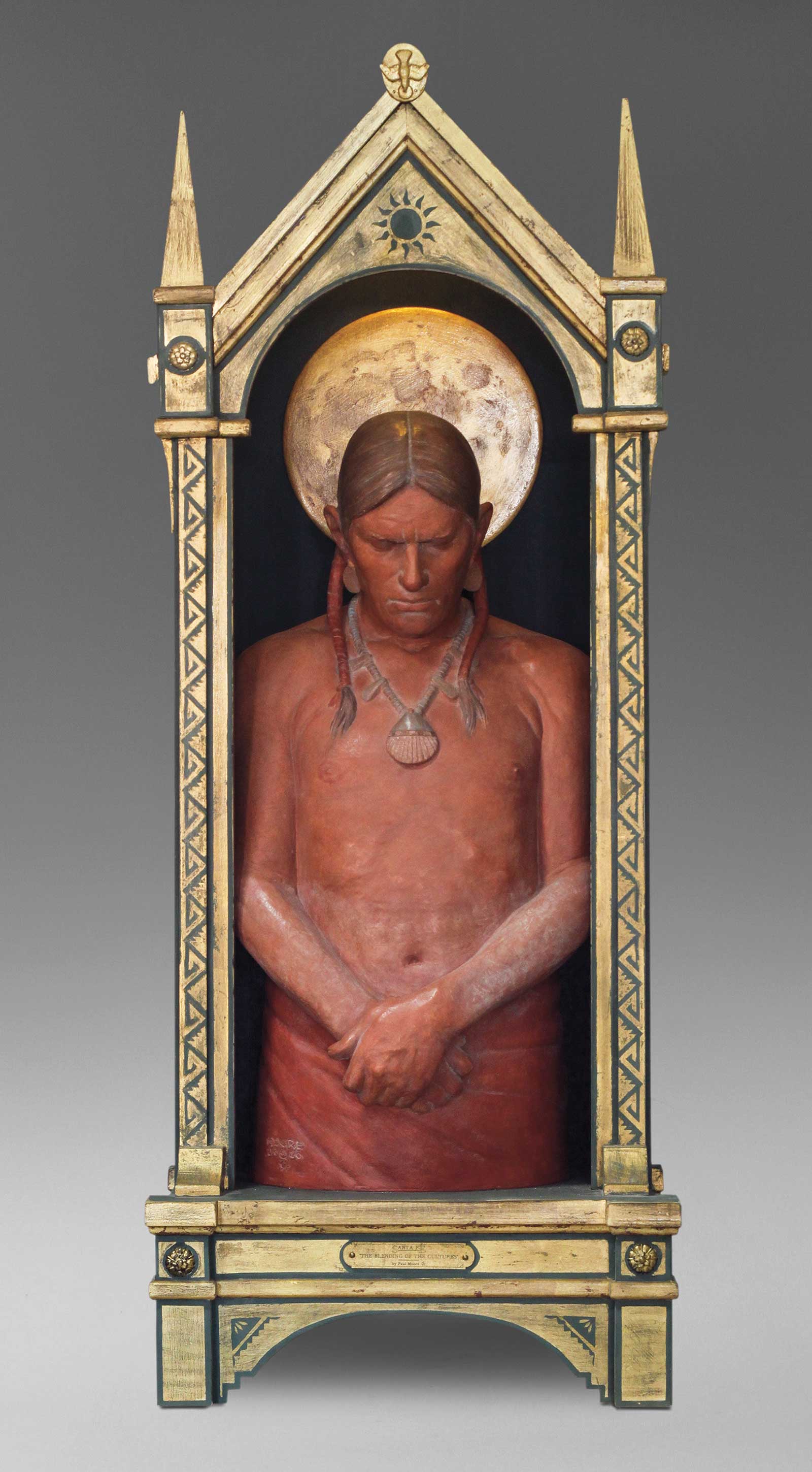 Santa Fe/The Blending of Cultures, mixed media, polymer, wood, tin and gold leaf, ed. 1 of 1, 53½ x 21 x 14”. Available at the Prix de West.
One museum visit was all it took to get him hooked. When he got older he moved to Kalispell, Montana, where he worked in two different foundries to learn how to make bronzes. “I learned every stage of casting because I wanted to do monuments and get in the only museum I ever wanted to be in, the Cowboy Hall of Fame,” he says. “Later I met Joe Beeler, which was a life-changing experience for me. He agreed to spend the day with me. This would have been around 1978. He was so gracious with his time and he really made me realize I needed to learn more.”
Moore later ended up in Santa Fe, New Mexico, where he worked in an enlarging studio and became well known for his precise enlargements, for which he developed his own unique process. He met Glenna Goodacre, Allan Houser, George Carlson and other Western artists, and eventually he was so well known for his enlargements that international artists were seeking him out from Canada and Europe. The “big leap” into his own work was not far off. In the 1980s he rented a small place in downtown Santa Fe and started working his own clay.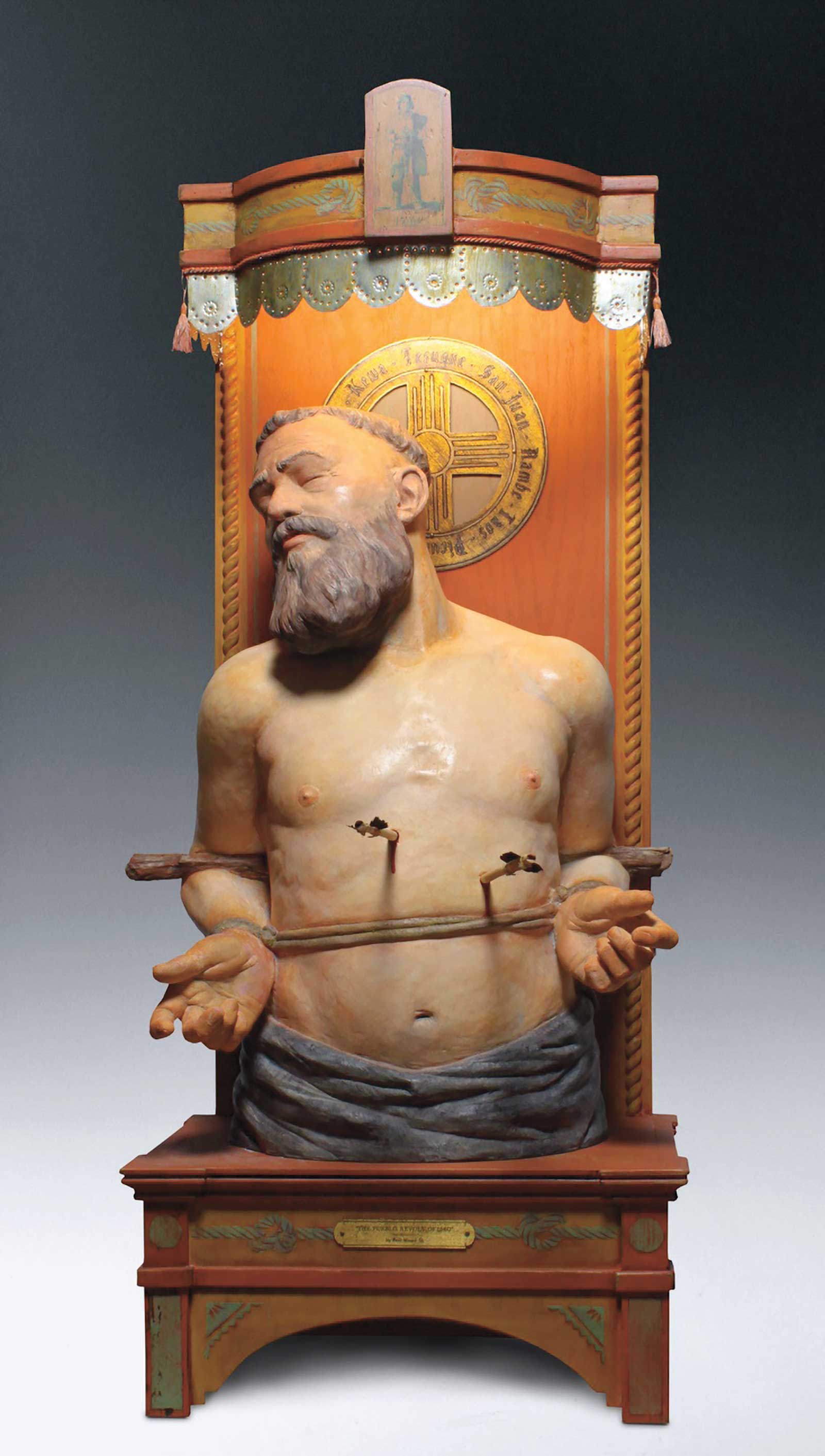 The Pueblo Revolt of 1680, mixed media, polymer, wood, tin and gold leaf, ed. 1 of 1, 49¼ x 22 x 23½”. Available at the Prix de West.
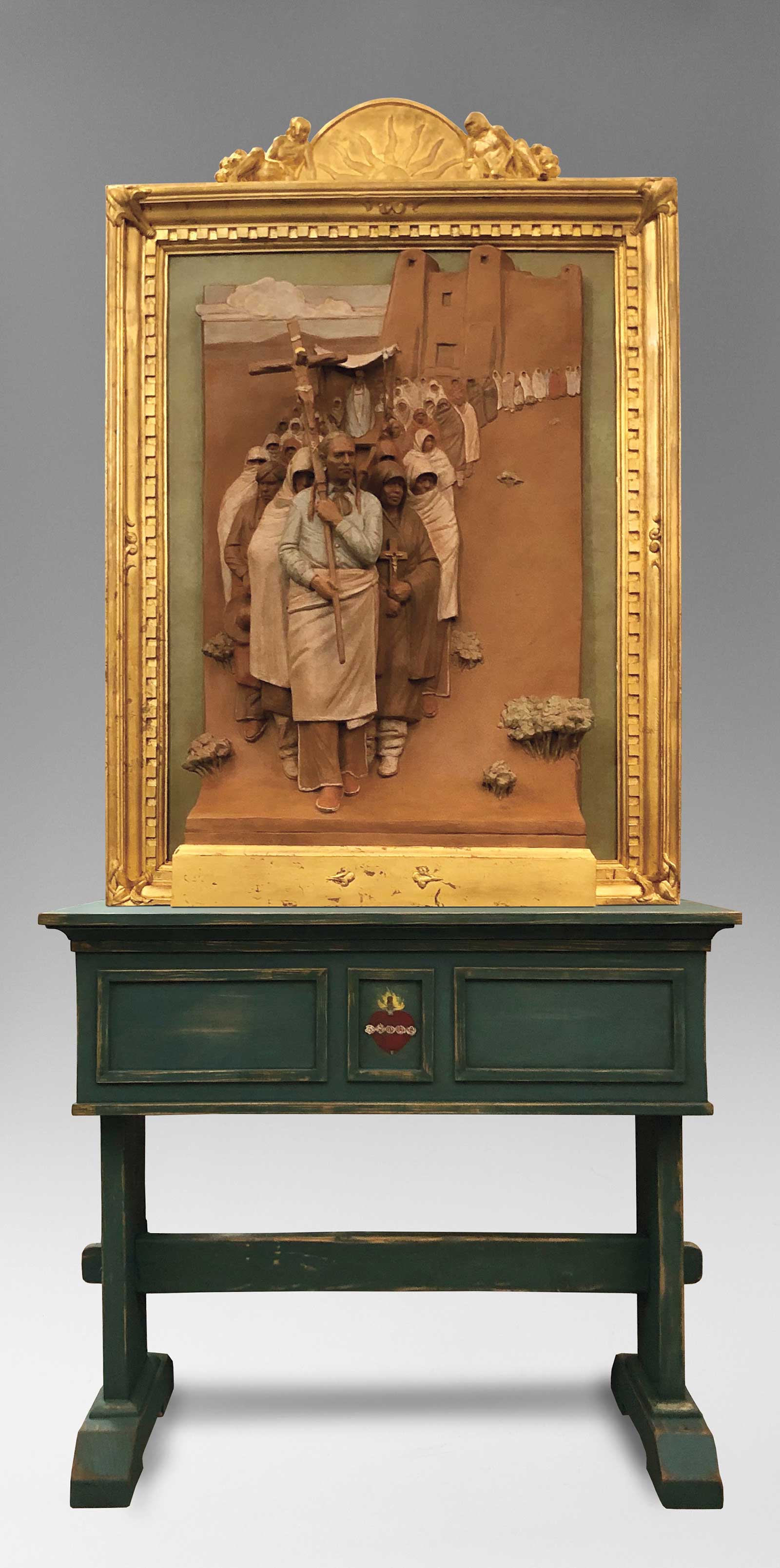 The Procession, bronze, 52 x 35½ x 13”Eventually, through steady work and evocative subject matter, Moore quickly became a hot commodity. He had a steady stream of commissions, he was making monuments and other larger-than-life pieces, he had reestablished the figurative sculpting program at the University of Oklahoma and was one of the most respected sculpting teachers in the country, he had representation in art galleries and, in 2009, was voted into the Cowboy Artists of America. Although it’s hard to quantify and measure, Moore was certainly one the busiest sculptors in the country.
One of his most famous projects is the Centennial Land Run Monument in Oklahoma City. The monument, which would eventually take 24 years to complete, featured 45 life-and-a-half-sized figures as they raced to claim new homesteads. But first came On the Chisholm Trail, a 35-foot piece at the Chisolm Trail Heritage Center in Duncan, Oklahoma. “After that was completed, I was contacted by the state of Oklahoma to make a maquette for an idea and concept. At the time I was up for the challenge, but it would eventually wreck my body over the course of 20 years. And I have the spinal surgeries to prove it,” Moore says. “It was a difficult project, not just because it was so big, but also because it took so long to make. I went through three governors, three or four mayors, all kinds of different people. And the people I was working with, they would eventually retire or quit and I would have to start over with new people. I was averaging about two wagons a year, or three horses and riders a year. It was a brutal schedule, and I was still doing my other work and teaching.”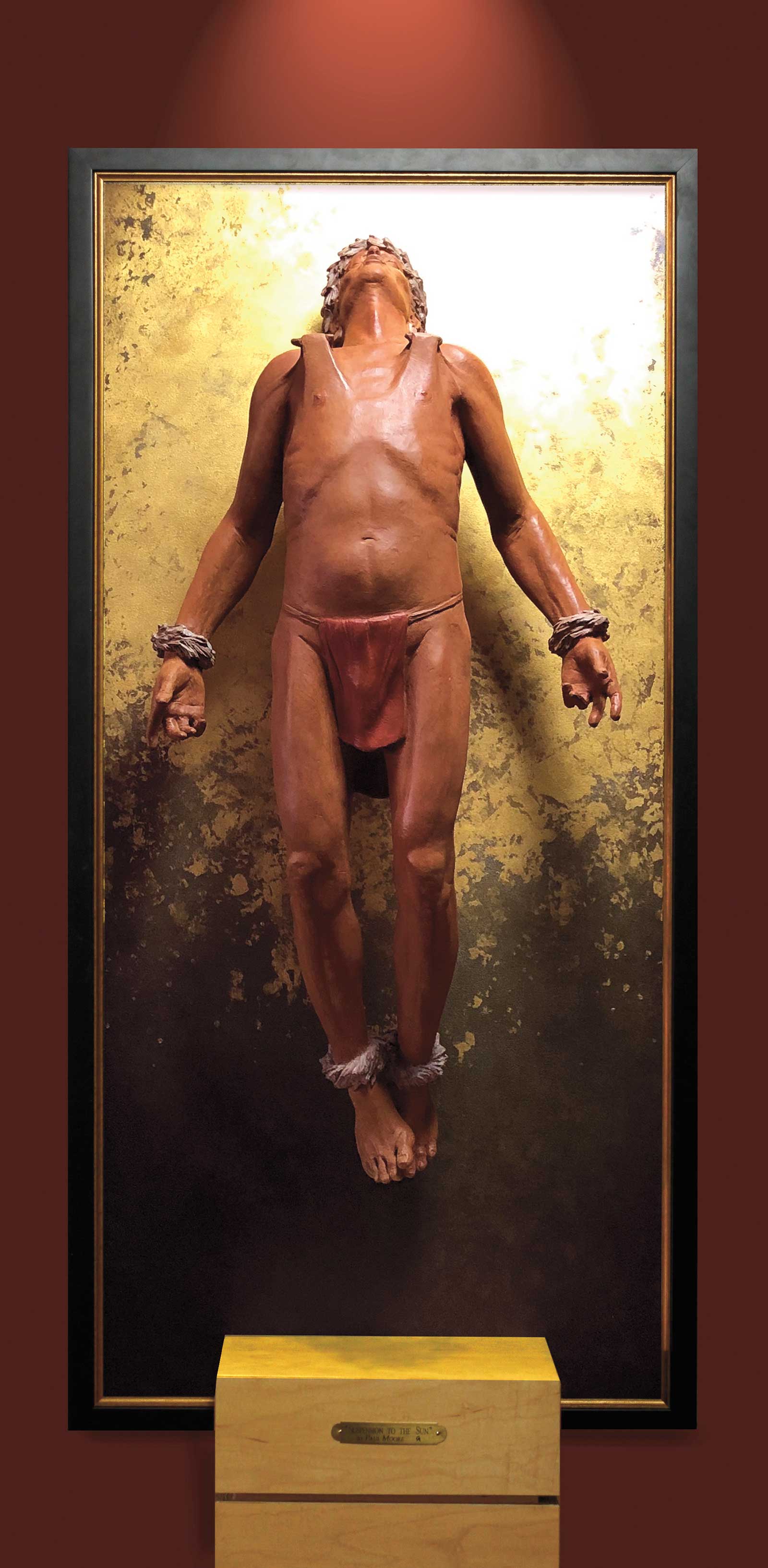 Suspension of the Sun, 2020, bronze and mixed media, ed. of 4, 48 x 23½ x 9½”
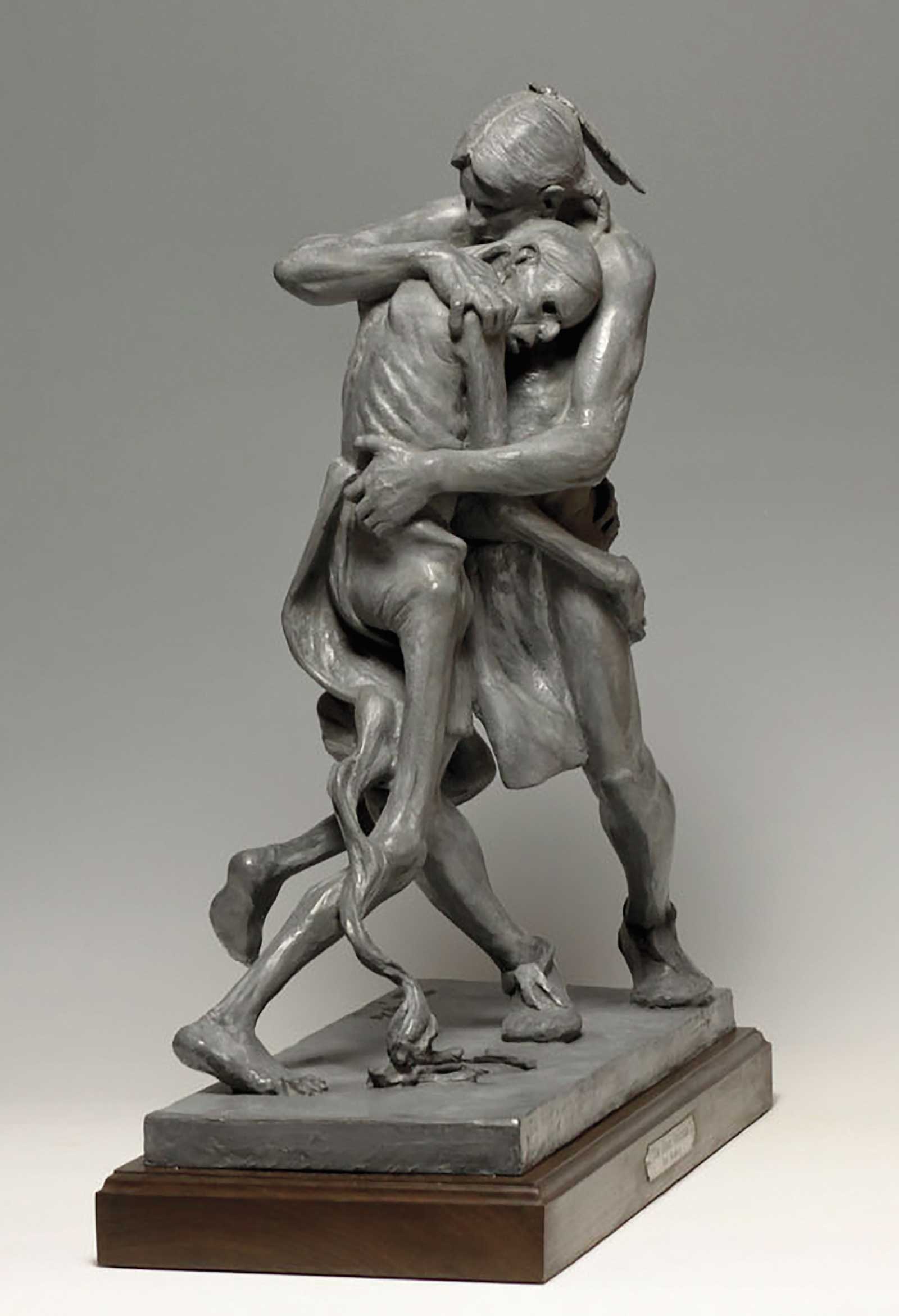 Ghost Wrestler, bronze, 19½ x 10 x 22"
Centennial Land Run Monument is certainly a flashier part of Moore’s career—the sculpture is so large it takes several minutes just to walk its entire length—but those that know his sculpture appreciate his gallery and museum work as well, particularly because Moore doesn’t pull punches. The artist has a clear vision and an honest sense for storytelling. He’s also not afraid to take risks with challenging material. He’s painted corpses on top of camels, severed pony heads being dragged as an act of mourning, buffalo’s cascading in a deadly freefall and, in the Ghost Wrestler, a man fighting with a rotting corpse that has come alive to challenge him as an act of bravery. His work has elements of myths, fables and fairy tales, and yet it is also grounded in the mud of the earth, the sacred simplicity of stories and the power they hold over us.
“I just want to be creative, to be myself, to grow as an artist, to do something each year better than the year before,” he says. “When I’m creating, everything is on the table. Right now, because materials have been difficult to get because of the pandemic, I’ve been experimenting with other materials, including paint, wood and polymers. It’s exciting work.”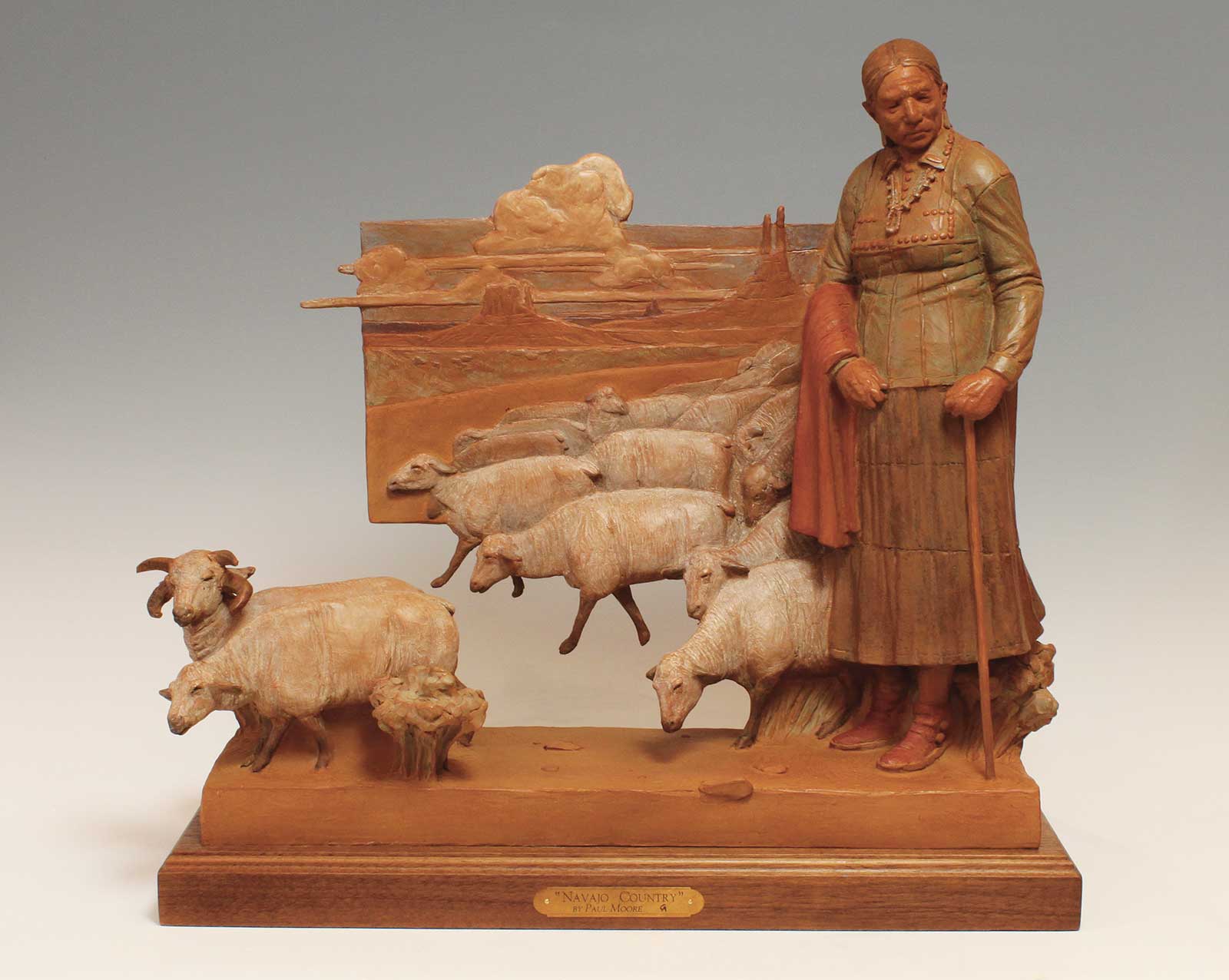 Navajo Country, bronze, 20 x 21 x 8”
For some of his newest pieces, Moore is creating decorative wooden objects that complement the work, whether it’s a Spanish-style table for a bronze to sit on or even a wooden nicho or altar for a figure to be framed within. In Suspension of the Sun, from 2020, the artist has painted a background for his sculptural figure, and he’s also designed a way to make the figure float out of the painting. Whether it’s bas-relief, abstraction, forced perspectives, scale or multiple mediums, he uses every tool in his toolbox—and uses it to perfection. Some of his new work will be unveiled at this year’s Prix de West at the National Cowboy & Western Heritage Museum, where Moore has a piece in the permanent collection. Prior to the Prix, Moore is retiring from teaching. “I’ve been burning the candle at both ends,” he says, “and I’m excited to slow down a bit.”
He continues, “One thing I hope to do is just focus on the things I want to do. There’s different ways of doing things, but artists should always be sticking their necks out. There are so many different ways of telling stories, and sometimes art galleries don’t know what to do with those works, but that’s the kind of artwork that makes this all so exciting. You have to be living on the edge. When you’re never sure if the next piece is going to work out or not, it makes you a better artist.” —
Powered by Froala Editor