In 1915, Charles M. Russell rolled a ball of wax between his fingers, kneading its sticky texture in his palms as he was thinking about what to make with it. He had done wolves, bears and bison—the staples of Western wildlife. He’d even sculpted little gnomes with wooden hats and moss for beards. But for this new piece, he grew even more playful. He mashed the wax and pulled it into a figure with narrow little legs, broad shoulders and a confident stance. The head was exaggerated and large, but it revealed a playful caricature. Russell, the master of paint and clay, found himself using cloth, plaster, metal and string, and then a layer of paint for color. By the end, it was 12 inches tall and a perfect likeness. The title said it all: Charlie Himself.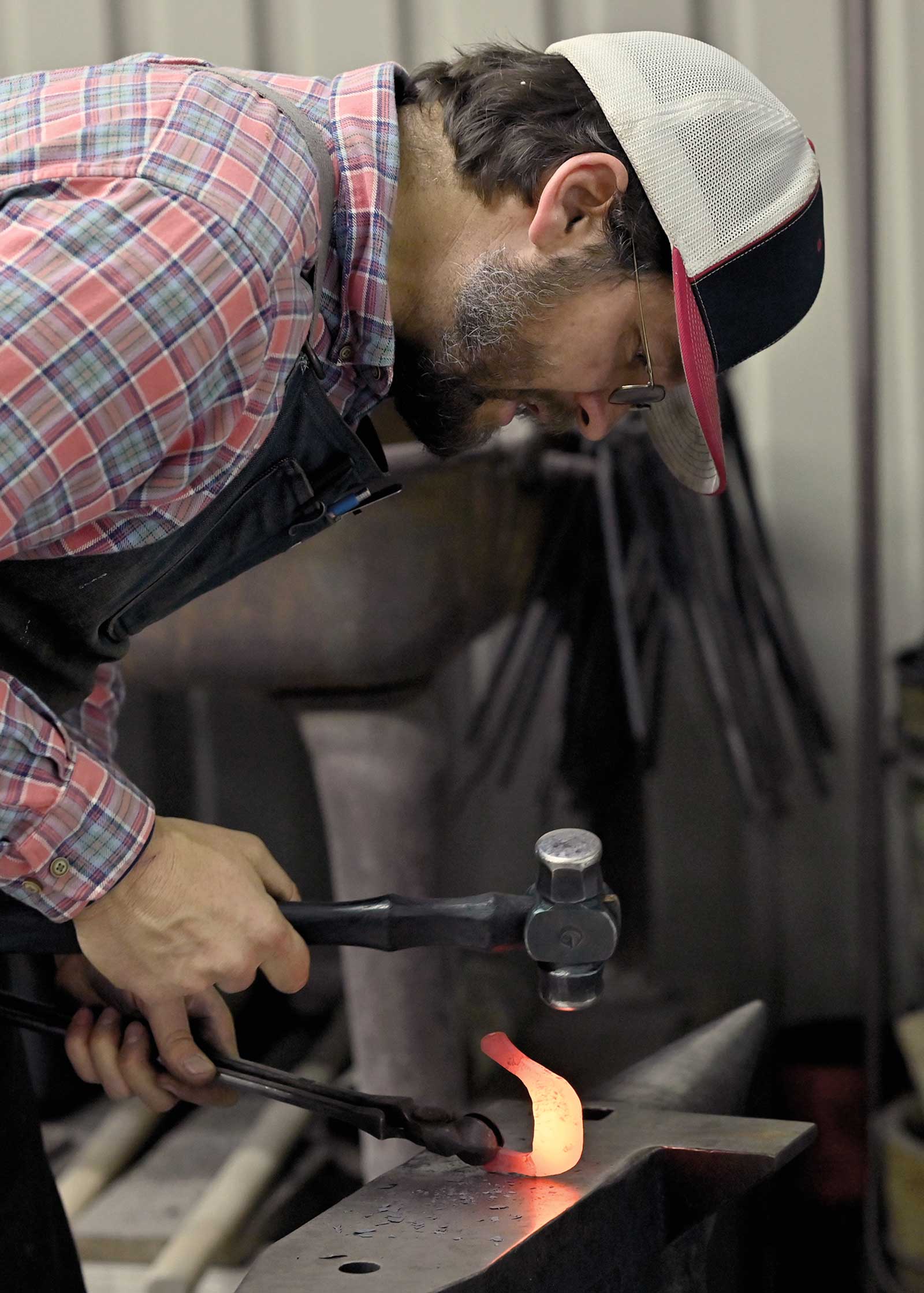 Wilson Capton in his Texas workshop working with the metal for a new project
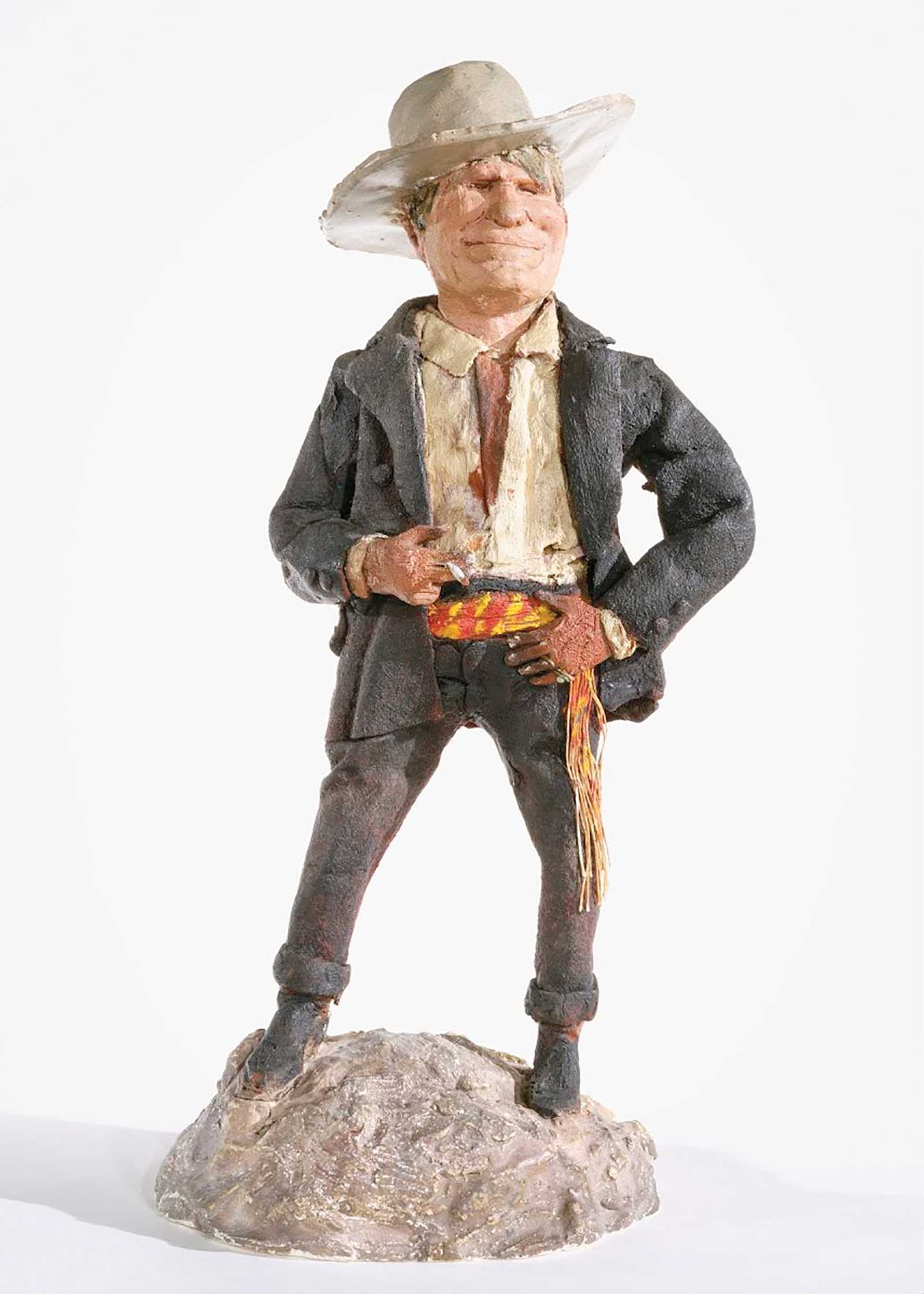 Charles M. Russell (1864-1926), Charlie Himself, ca. 1915, wax, cloth, plaster, metal, string and paint, 12 x 6½ x 5". Amon Carter Museum of American Art, Fort Worth, Texas, Amon G. Carter Collection
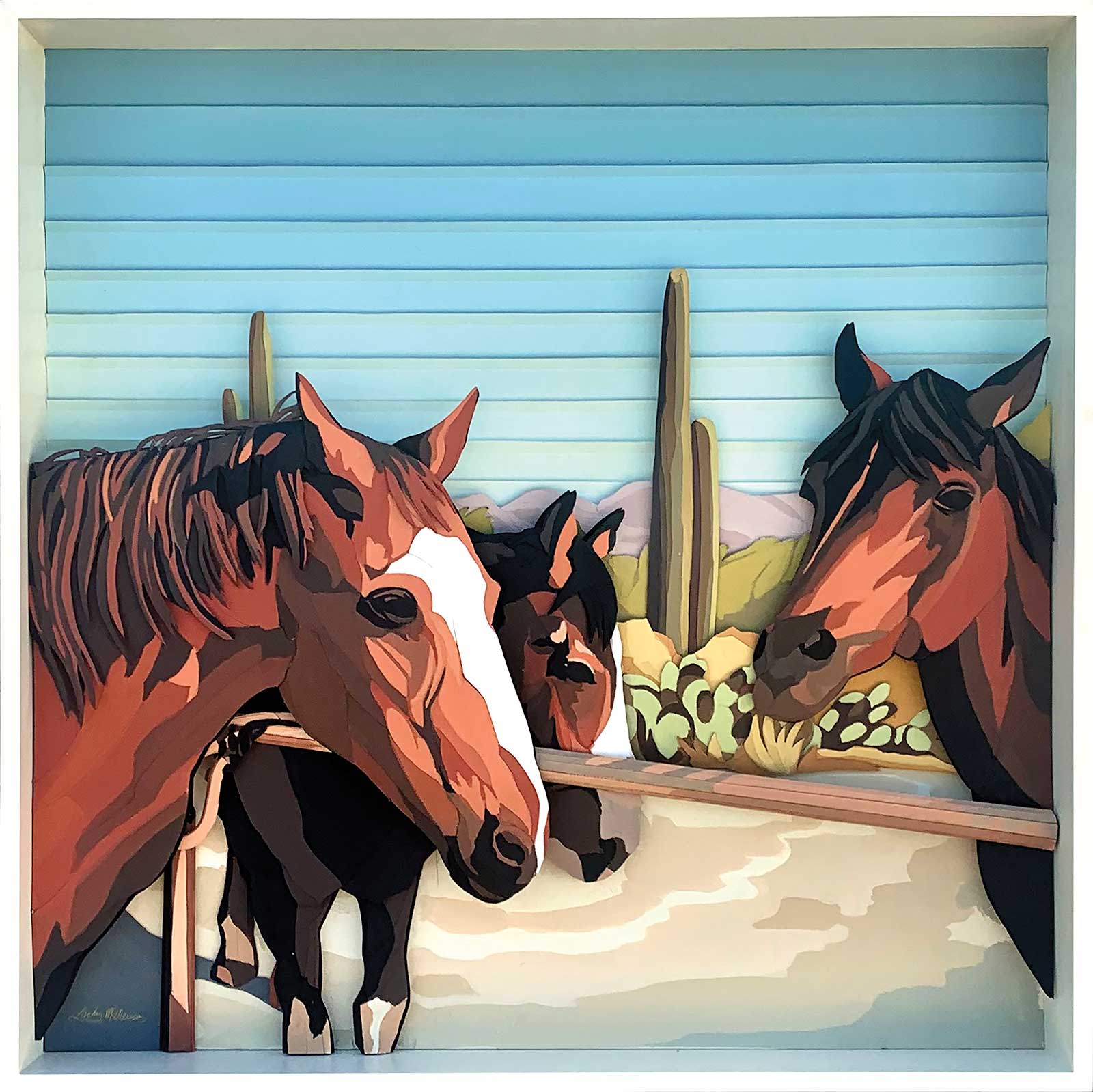 Landry McMeans, Unbridled, archival corrugated board and acrylic, 40 x 40"
It’s fun to think about Russell’s crafty self-portrait for several reasons: First, it’s really a magnificent little likeness, but secondly, it showed he was a master of many materials. The world was his studio, and he would not be confined to just one medium, or even two.
A century later and new generations of artists are utilizing every material at their disposal to create artworks that speak to the Western way of life, be it wildlife in paper forms, desert flora in ceramic, pottery and baskets using natural materials like horsehair or harvested clay, or high-end museum showpieces in leather and silver.
One artist who is doing exciting work that is stretching the boundaries of what art can be is Texas-based artist Landry McMeans, who works in a variety of mediums, including three-dimensional paper reliefs that show colorful scenes of the Southwest. The works, which are cut out of museum-quality cardboard and mounted in shadowboxes, are made of dozens, sometimes hundreds, of pieces, each one painted in acrylic paint. “I design vibrant and colorful scenes of the Southwest and its native flora and fauna. My work is a simplistic and intentional extraction of layered colors and shapes that create a sophisticated and dimensional pop aesthetic. My mediums include hand-cut stencil prints, 3-D cardboard relief and screenprints,” she says. “A compliment to my stencil prints is my 3-D cardboard relief work. Using the same design and stylistic themes, cardboard relief provides the addition of a truly multidimensional experience. I manipulate acid-free cardboard and build it into a shadowbox frame. The final result is a 3-D-textured rendition of these simplistic 2-D stencil print designs that offer a more lifelike and even psychedelic experience.”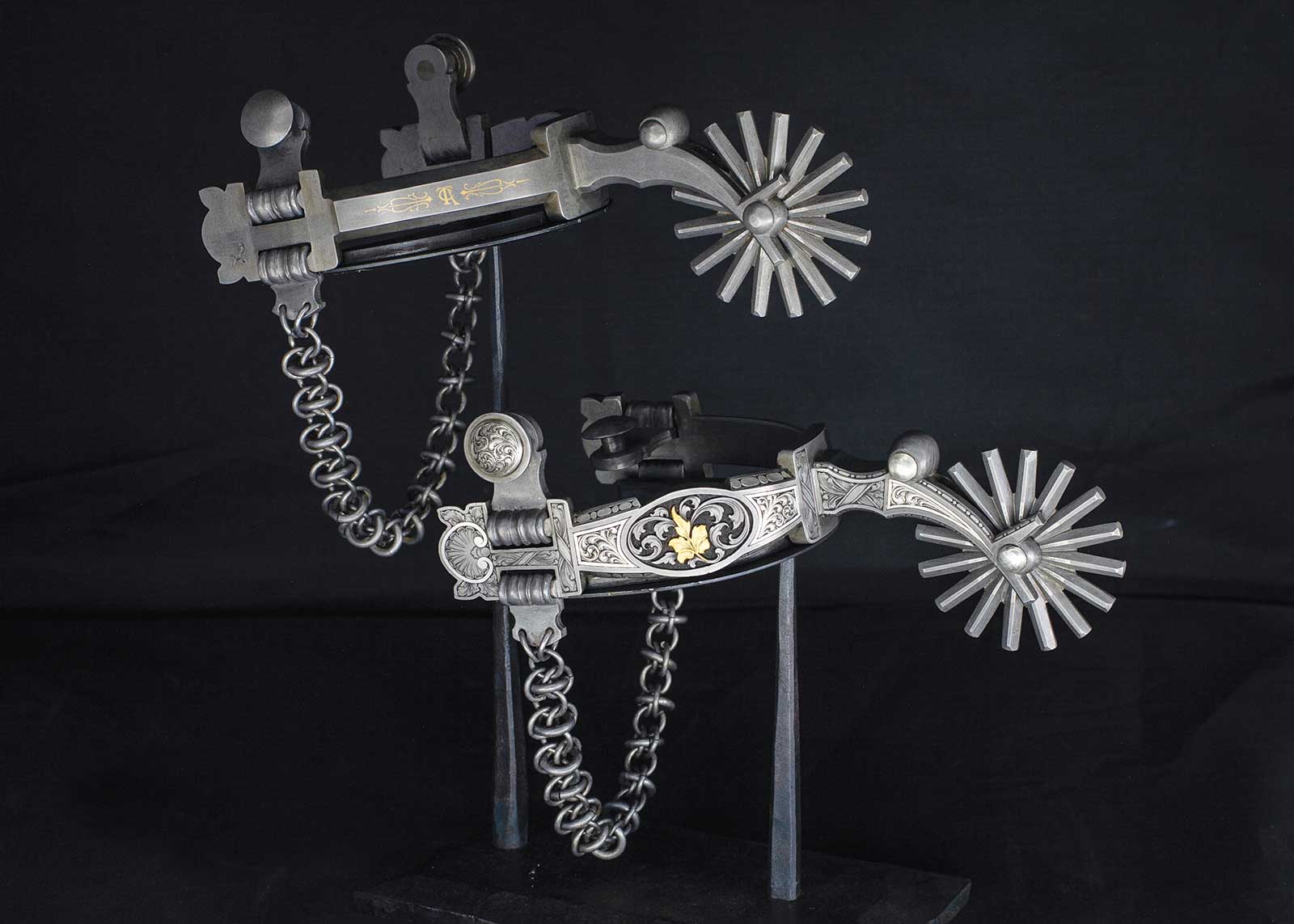 Wilson Capron, California spurs
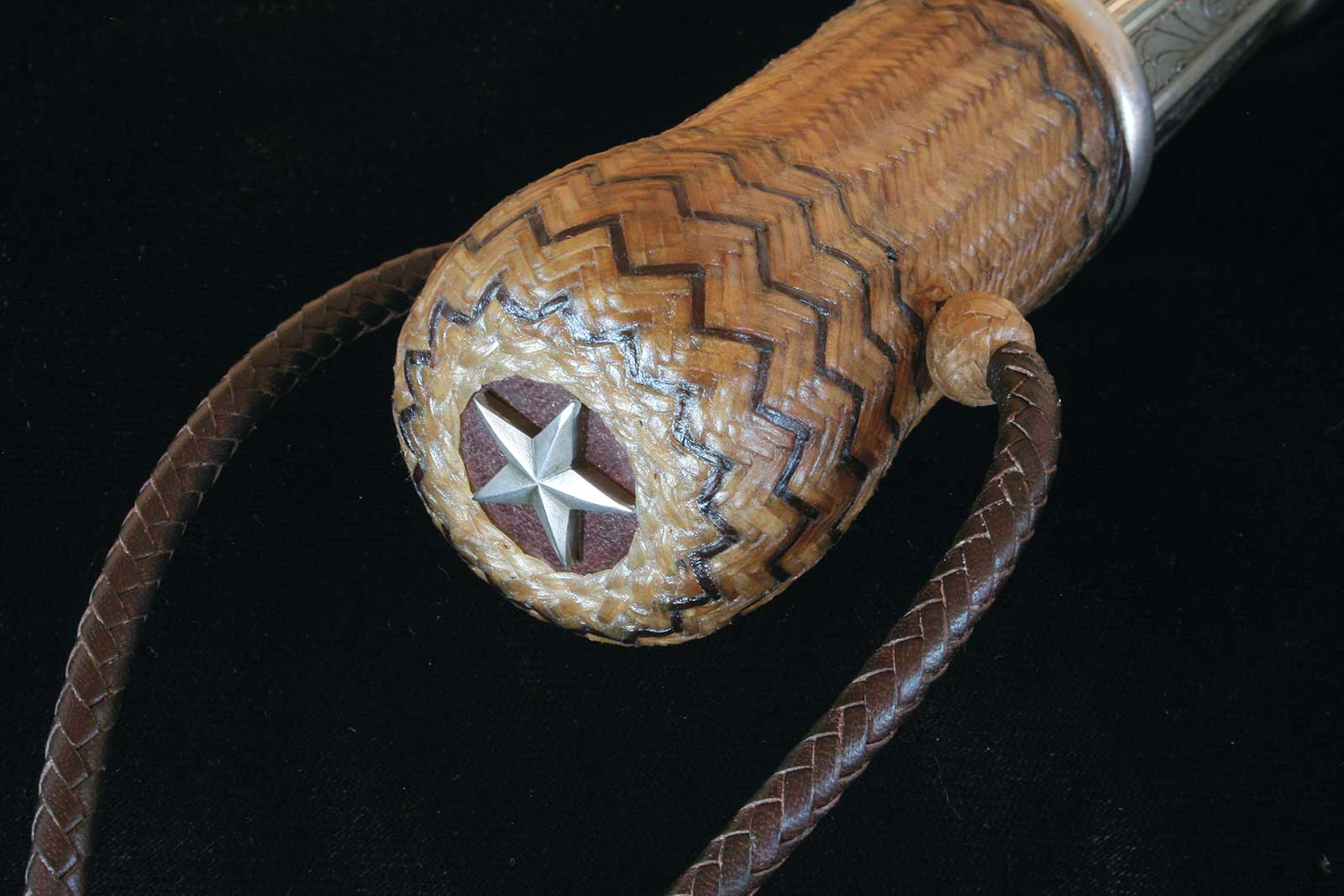 Leland Hensley, quirt handle
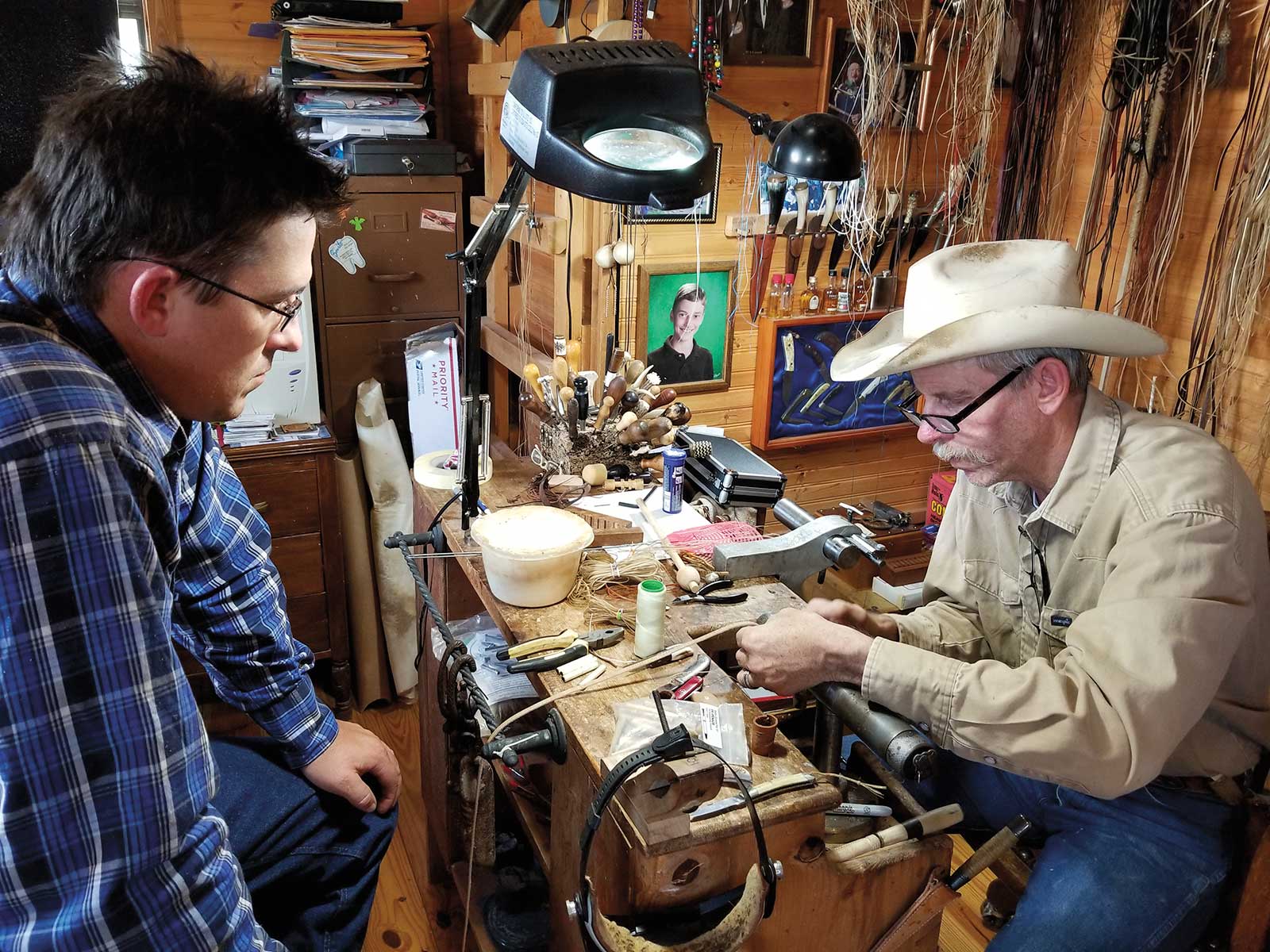 Leland Hensley, right, teaches a student in his Texas studio
When looking at Western art done in exciting materials, it doesn’t take long to find a path that leads to the Traditional Cowboy Art Association, the 23-year-old group made of Western craftsmen from all around the world. Their mandate is simple: “This elite group of saddlemakers, bit and spur makers, silversmiths and rawhide braiders found common cause in the need to attract the next generation to take up these four disciplines and the equally important task of helping the public understand and appreciate the level of quality available today and the value of fine craftsmanship,” according to the TCAA website. Their methods are not only not secret, but they share them with the next generation as a form of preservation.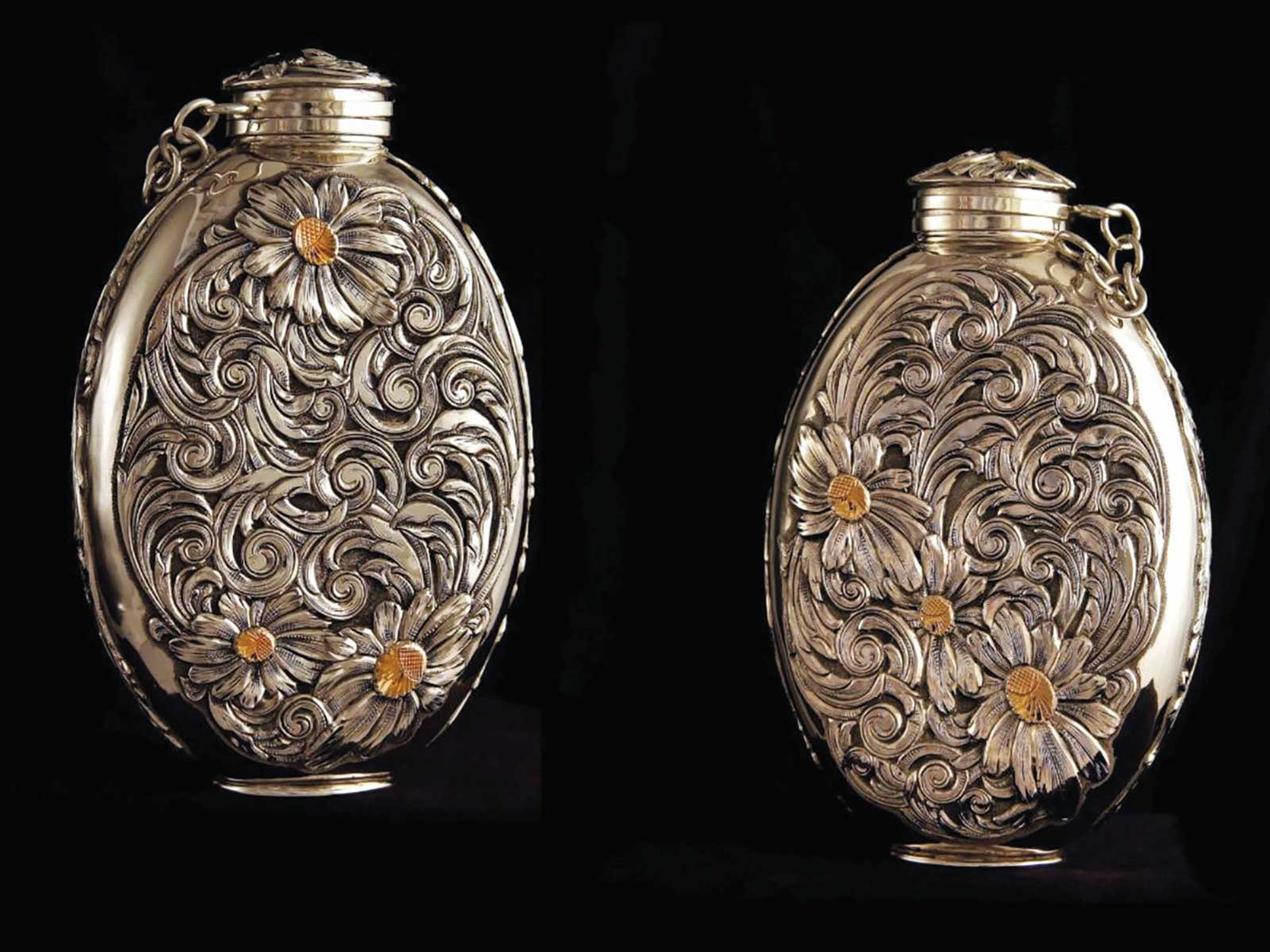 Scott Hardy, silver palm flasks
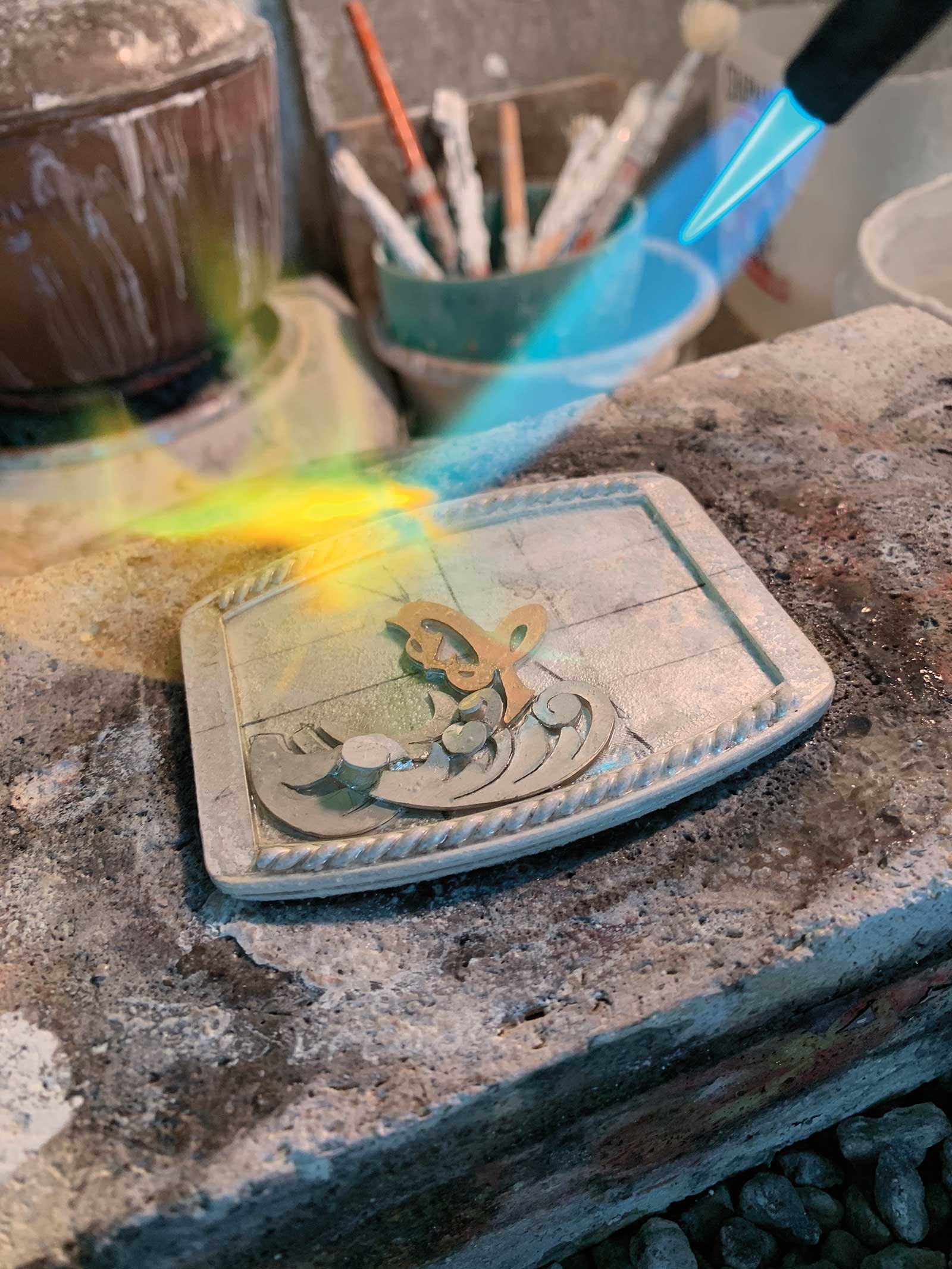 Scott Hardy soldering a buckle in his Canadian studio
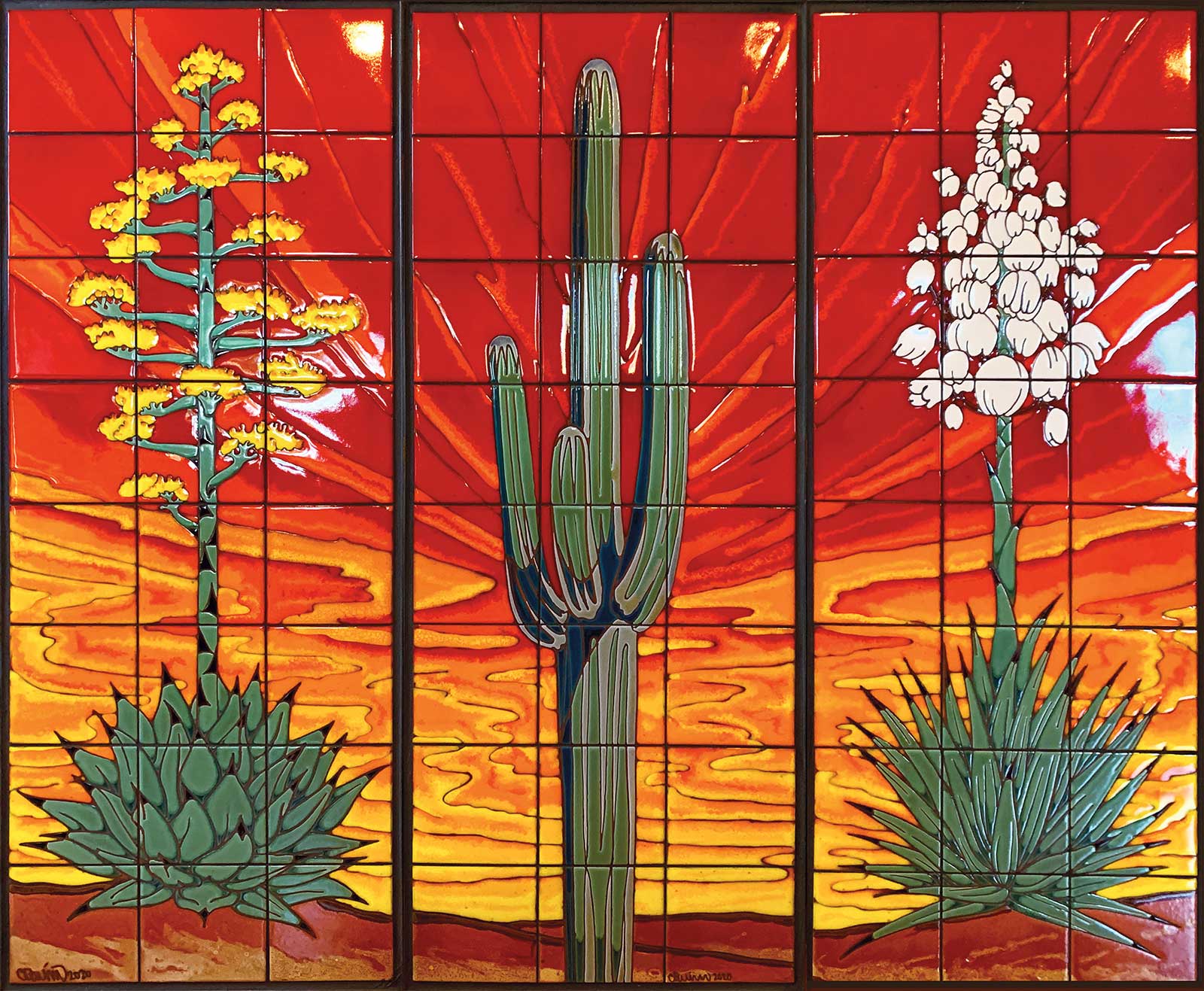 Carly Quinn, Sunset Triptych, ceramic tiles, 48 x 18" each
One of the TCAA artists is bit and spur maker Wilson Capron, whose works are completely functional at every level, yet are so expertly made that most collectors hang them next to their paintings and bronzes. Capron, who came from a ranching family, developed his interest in the West where it mattered most—around horses, cattle and cowboys. His works, which can take months to finish, are done in silver, gold and hand-forged steel, and with exquisite inlay and overlay. Like many of the artists, when he was starting out he was dismayed to find many artists kept their methods secret. It prevented beginners from learning. The TCAA was the remedy. “To preserve these traditions, education was needed. Those trade secrets have to be shared,” Capron says in A.J. Mangum’s book Cowboy Renaissance. “Greg Darnell [TCAA emeritus member] used to share his designs freely. He knew others would try to copy his work, but he also knew the result would look like they made it. He saw no risk.”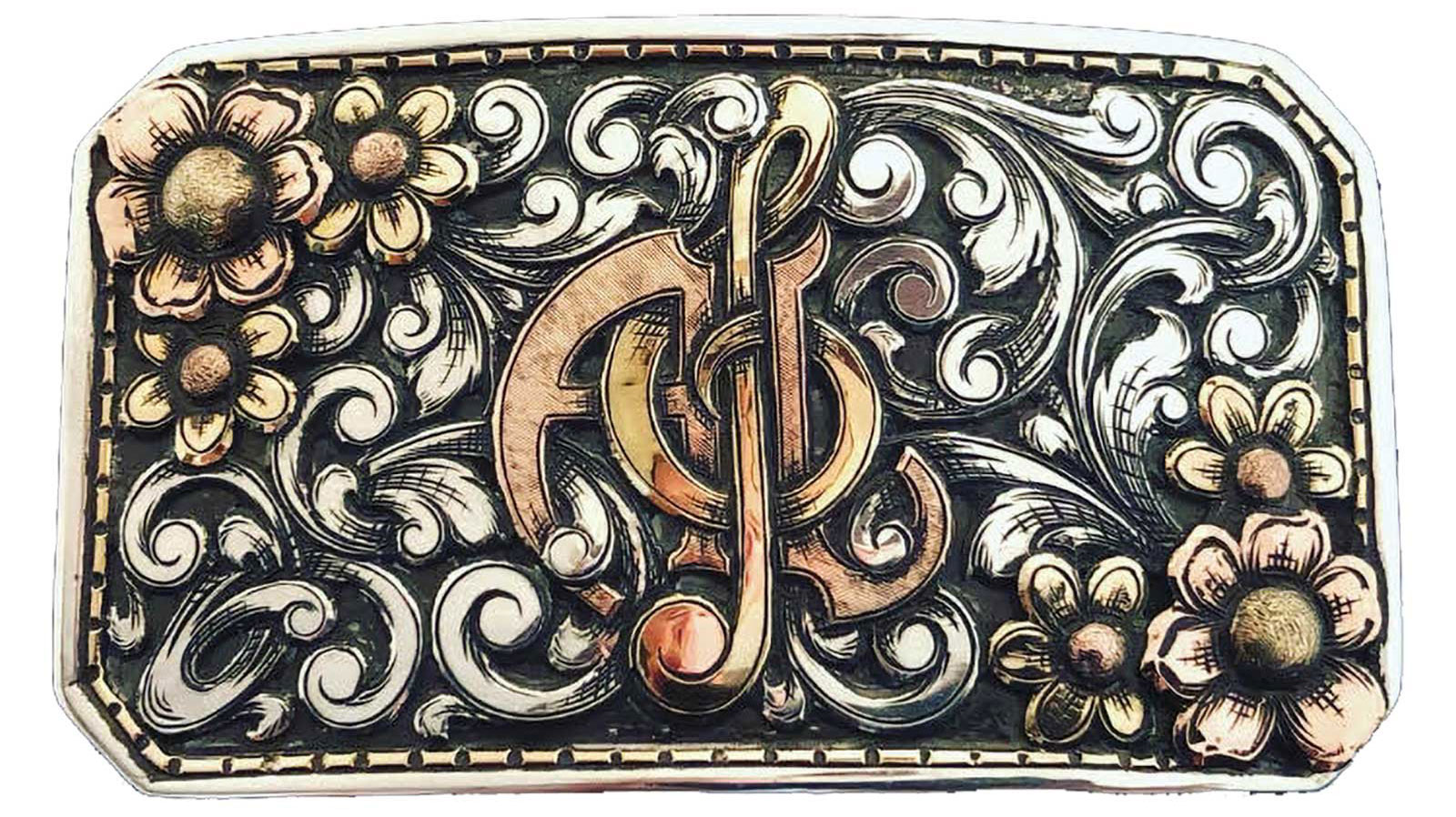 Beau Compton, silver belt buckle
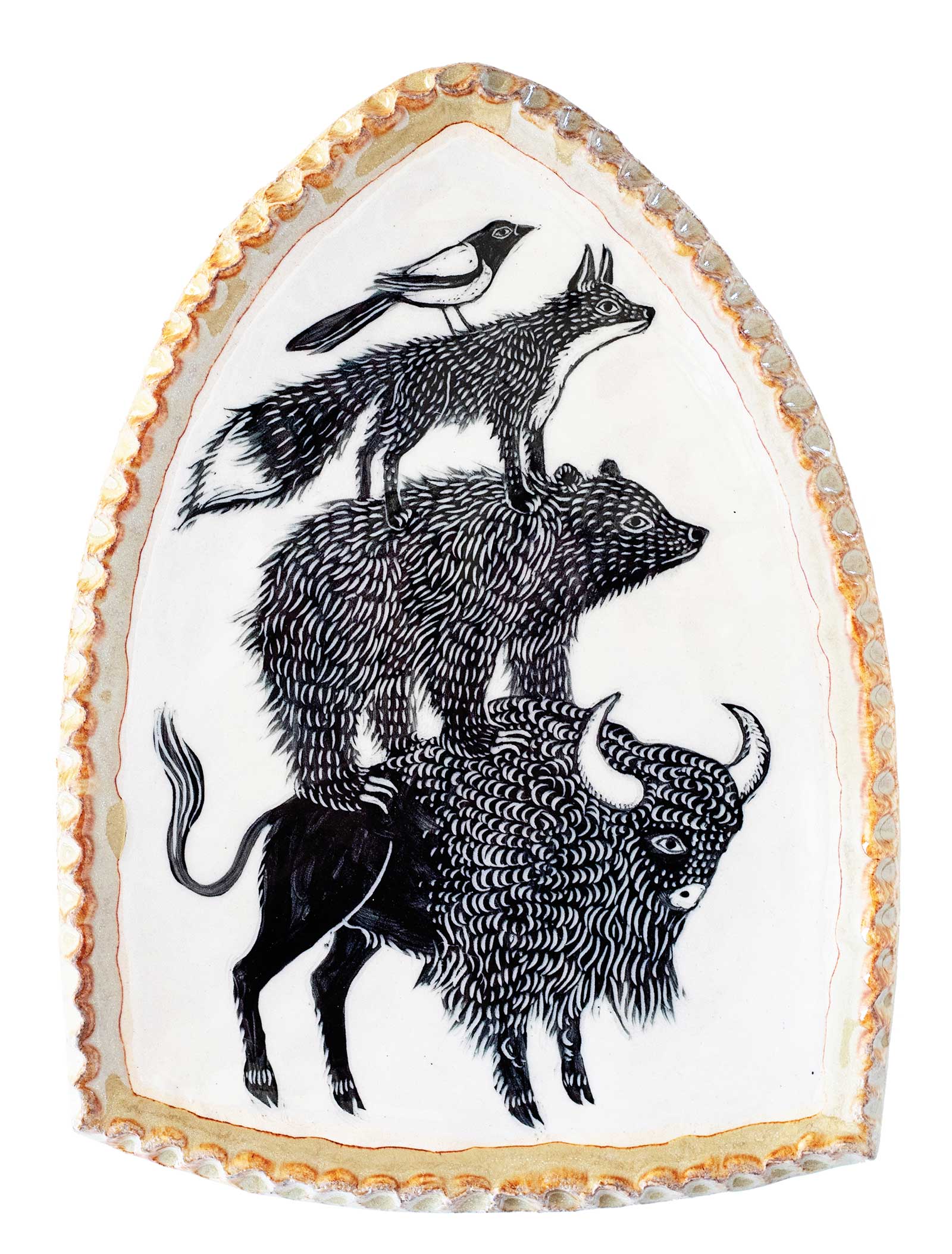 Little Bird Painting, bear plate, ceramic, by Christine Sutton
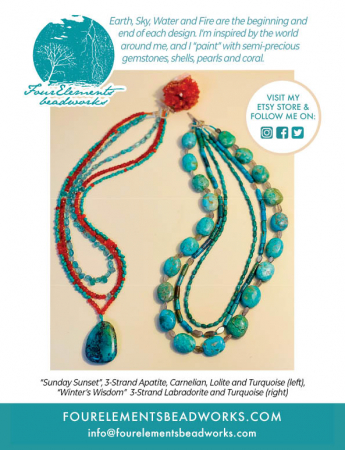
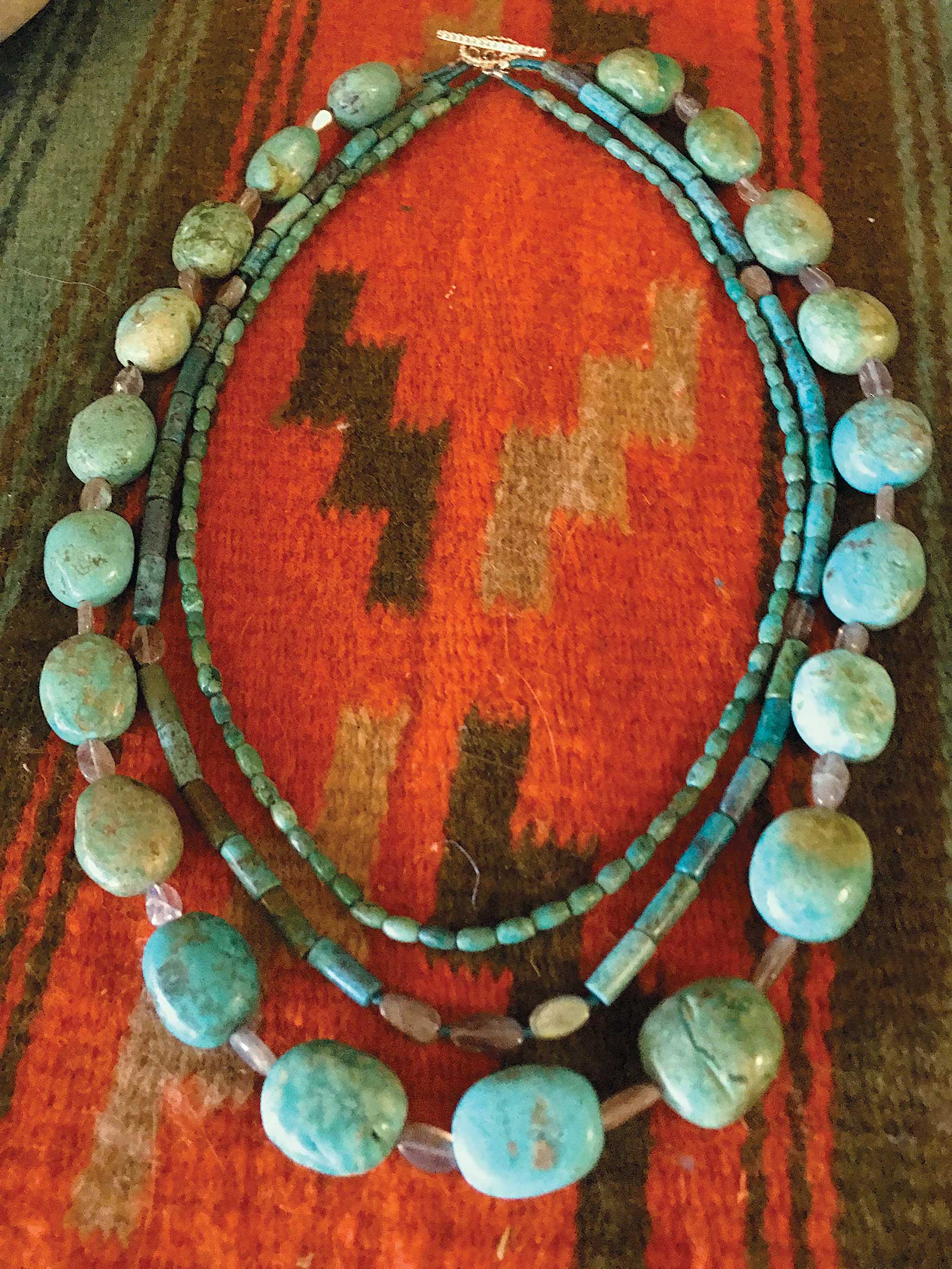 FourElements BeadWorks, Winter’s Wisdom, necklace, by Susan C. Johnson
Other TCAA artists doing remarkable artwork are Canadian artist Scott Hardy, one of the founding members of the TCAA, and silversmith Beau Compton from Tombstone, Arizona. Between the two of them, they’ve made a stunning variety of work out of silver, including bolos, buckles, bracelets, flasks, decanters and even sculptural work.
In the leather braiding category of the TCAA, the group has Texas-based artist Leland Hensley, whose work is a study in exactness and patience. He shaves thin strips from dried cowhide, bevels all four corners at a level that is almost microscopic and then braids the strips together in a pattern so tight there is no room for error. Even describing the process doesn’t do it justice. Several years ago, the TCAA did a live demonstration at the National Cowboy & Western Heritage Museum, and the audience watched the leather braiders with stunned silence. It was magical.
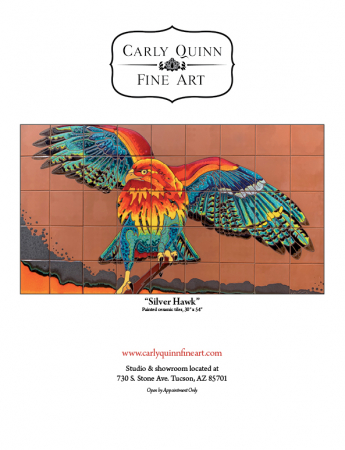
In another medium entirely is artist Carly Quinn, who creates elaborately decorated desert scenes using kiln-fired ceramic tiles. Quinn, who works in Tucson, Arizona, began working with tile in 2005 while she was in college. After her education, she went to work in print and digital media before working for a commercial tile company. She later made the jump to her own business and studio, and today creates fine art murals that show the rich color of the desert and her modern design aesthetic.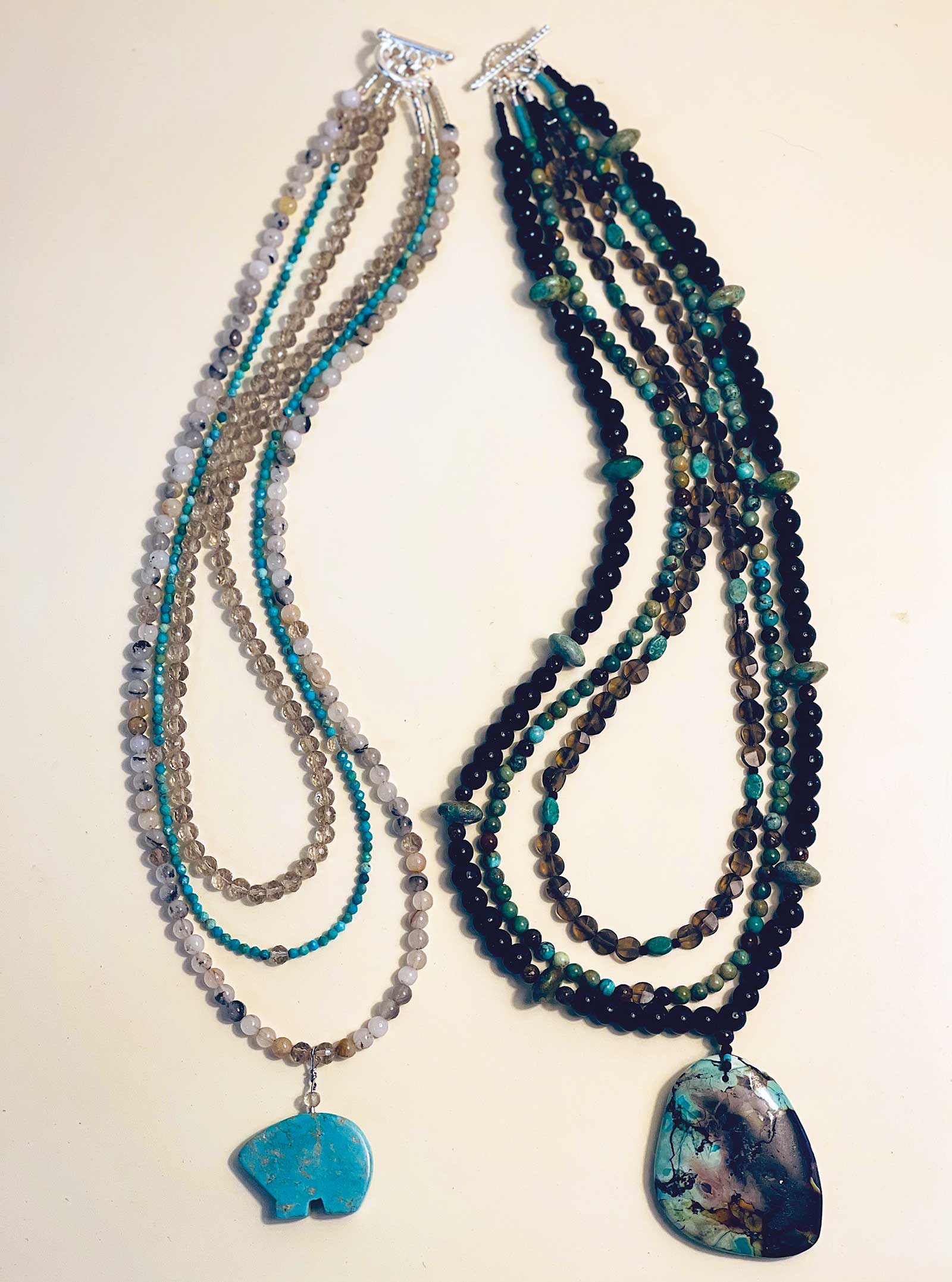 FourElements BeadWorks, Turquoise Bear and New Mexico Hues, necklaces, by Susan C. Johnson
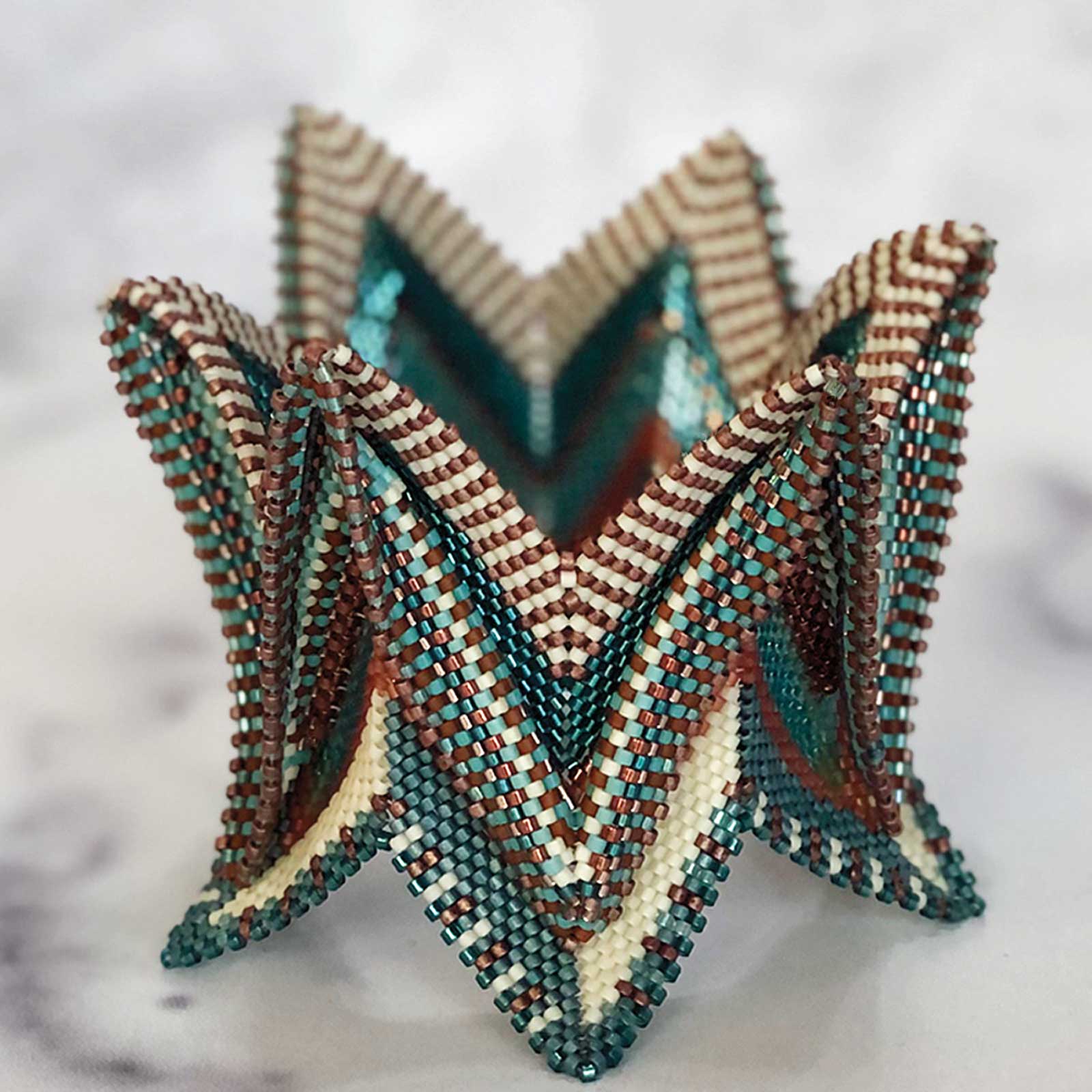 Diana Ferguson, Blue Sky, Red Rock, bead stitched bangle, architectural peyote stitch using glass cylinder beads, monofilament thread, 3"
Another ceramic artist we’re keeping our eyes on is Christine Sutton with Little Bird Designs, which creates custom, one-of-a-kind painted plates and bowls that display creatures of the forest and desert, including bears, bison, foxes and owls. Her works have a unique style that is playful and fun, and yet also shows her skill as a painter and designer. “I’ve been an artist my whole life and love nothing more than when someone connects enough with my art to want it for themselves or a friend, it truly is the highest honor,” she says. “I’m a painter and a printmaker, but have recently fallen in love with pottery for its beauty and daily, touchable usefulness. There is nothing better than including art in daily life.”
For Susan C. Johnson and FourElements BeadWorks, the West is all about inspired design. This can be seen in her handmade jewelry, which uses the colors of the desert and its cultures to tell stories. “Inspiration can come any time, from anywhere while you’re doing anything,” she says. “With that in mind, my dilemma is only that I have other things I have to do every day. FourElements BeadWorks was born out of this daily gift of creative expression known as jewelry design.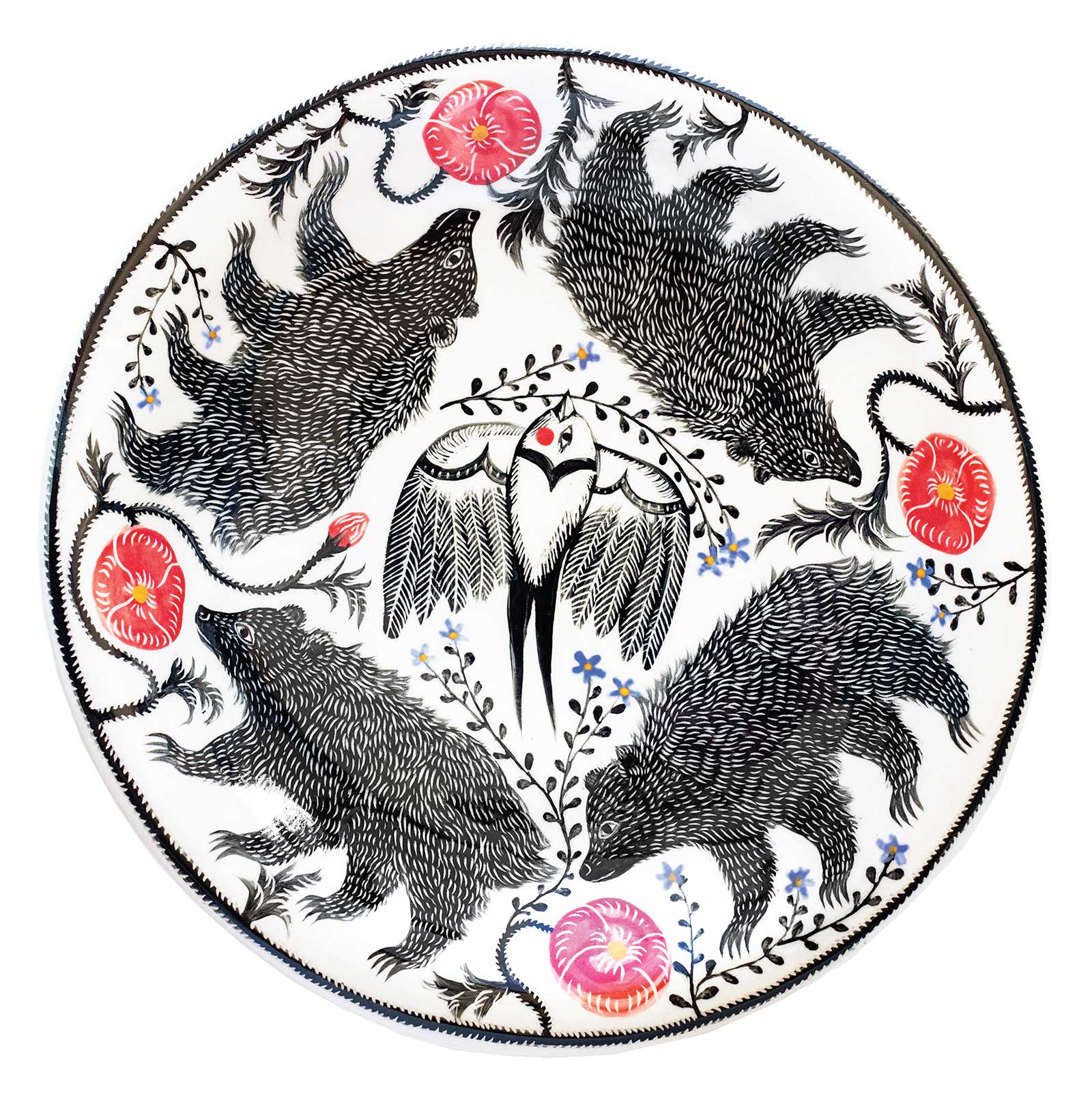 Little Bird Painting, animal dish, ceramic, by Christine Sutton
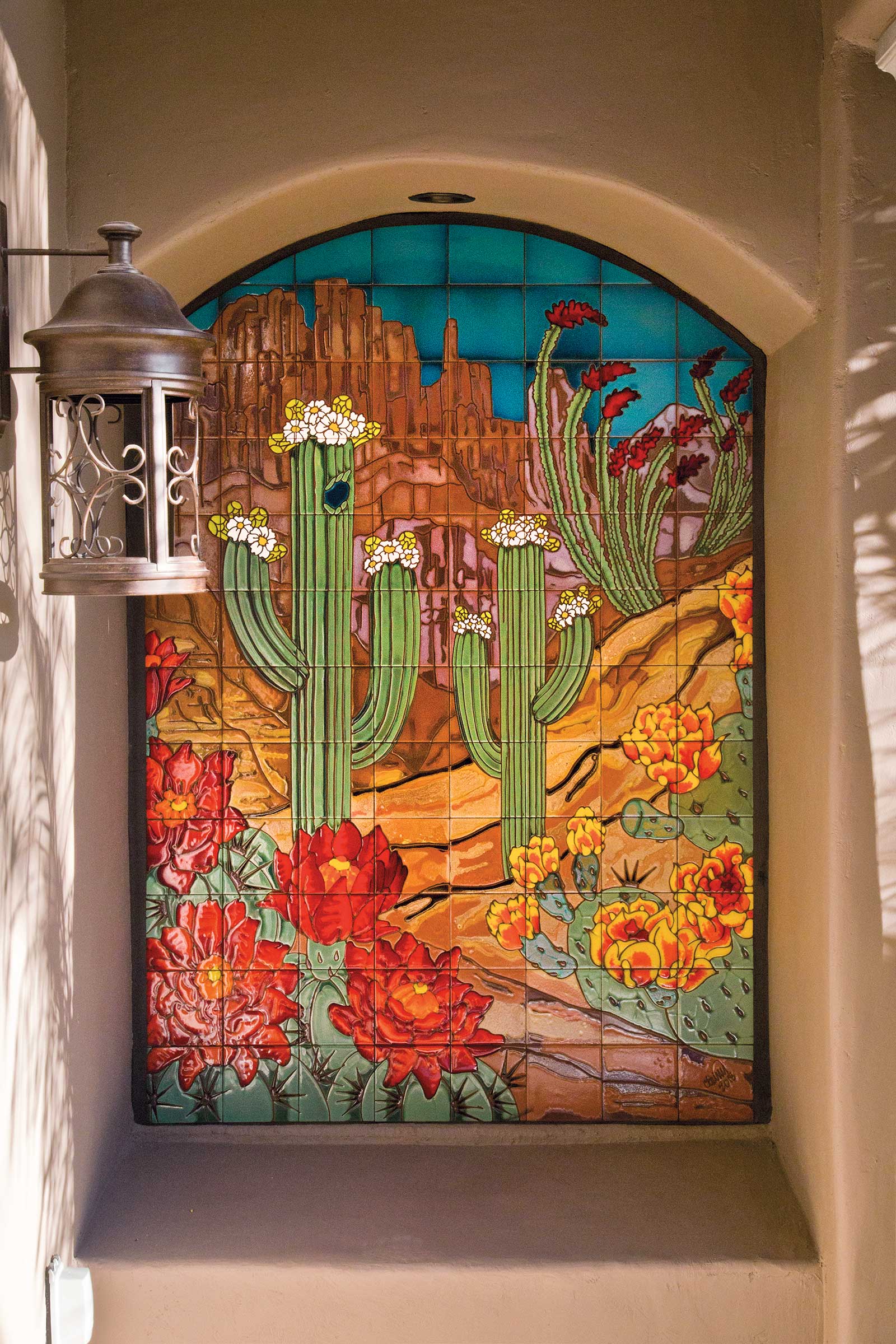 Carly Quinn, Finger Rock, hand-glazed tile mural installation, 72 x 48"
I see the sunset after a rainstorm, and a series of colors and shapes forms the basis for the next collection that I create. A trip to the ocean, the desert or the mountains gives me unlimited ‘data’ for every new collection.”
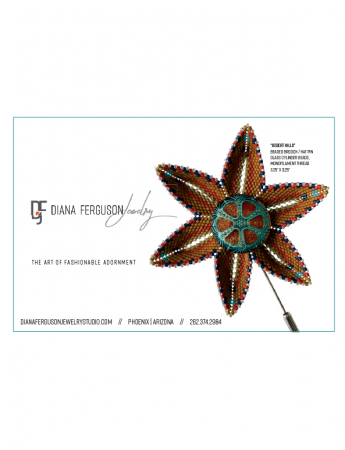
The Phoenix-based Diana Ferguson Jewelry Studio is also inspired by the natural world. Owner Diana Ferguson uses a variety of materials, including metal, hand-patterned paper, glass beads and unique polymers, as well as many other mediums. “When it comes to designing jewelry, I try not to do the same old traditions…I prefer adventurous, colorful, and unforgettable,” she says.
“I strive to create wearables that are equal parts art and fashion, comfort and statement. For me, inspiration comes from my love of color, pattern and process. My one-of-a-kind beadwork ticks all these boxes. Each piece is hand-stitched using tiny glass cylinder beads and a strong yet supple monofilament thread. The construction technique, sometimes referred to as Architectural Peyote Stitch, is free-form and presents a wonderful opportunity for problem solving that keeps me highly engaged and offers a beautiful and unique end result for the wearer.” —
Featured Artists & Galleries
Beau Compton
(719) 661-4959, beaucompton@hotmail.com
Facebook: Beau Compton Silver
Carly Quinn
www.carlyquinnfineart.com
Diana Ferguson Jewelry
(262) 374-2984, www.dianafergusonjewelrystudio.com
FourElements BeadWorks
(505) 467-8549, www.fourelementsbeadworks.com
Instagram: @fourelementsbeadworks
Landry McMeans
orders.landry@gmail.com
www.landrymcmeans.com
Instagram: @landrymcmeans
Leland Hensley
(254) 717-7335, www.lelandhensley.com
Little Bird Painting
www.littlebirdpainting.com
Instagram: @littlebirdpainting
Scott Hardy
(403) 660-9843, scott@scotthardy.com
www.scotthardy.com
Instagram: @scotthardysilversmith
Facebook: ScottHardySilver/Goldsmith
Wilson Capron
www.wilsoncapron.com
Instagram: @wilsoncapron
Twitter: @WilsonCapron
Powered by Froala Editor