Christopher Cardozo was all about the details when it came to Edward S. Curtis. And he knew them all backward and forward. When it came time to sell his collection of material related to Curtis, the famous ethnographer and photographer, Cardozo had chosen the catalog cover, worked out speaking engagements, scheduled public programming for collectors, plotted the physical hanging of the artwork and even started sorting out framing dilemmas, all of it months before an anticipated deadline. His attention to detail was endearing—after all, no one knew Curtis the way Cardozo did.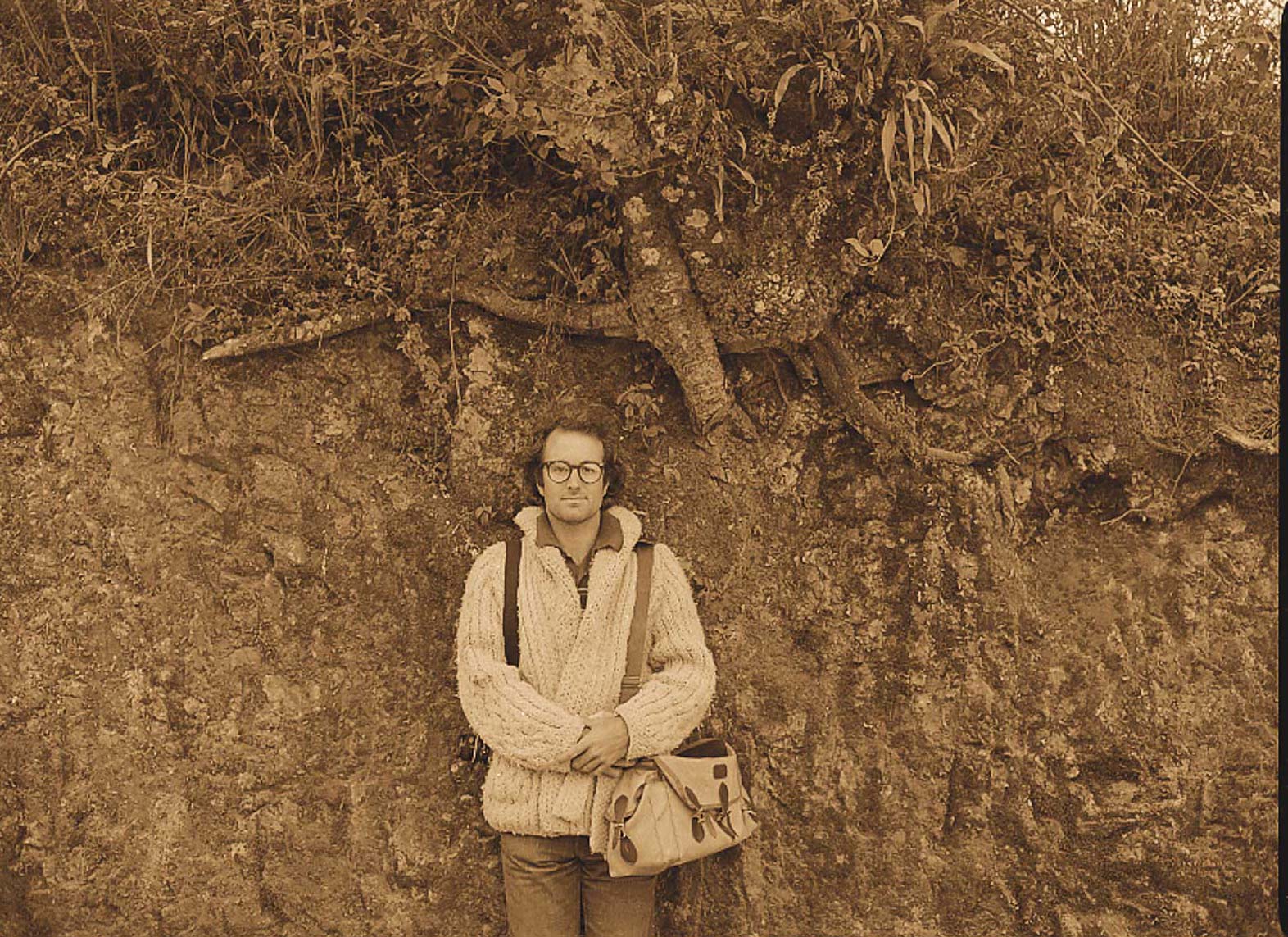 An untitled self-portrait by Christopher Cardozo taken sometime in the 1970s.
But there was also an unforeseen aspect to his involvement: His fingerprints were now on every decision, every work of art, every tiny detail. So when Cardozo died unexpectedly in Minneapolis on February 21, months away from retirement and a new chapter in his life, there was tragedy on every surface.
“Chris was absolutely an exhibition master. Every aspect of his collection, even down to the insurance and climate control, were exactly how he wanted them. He knew what he liked, but he also knew what he needed for these items, and he wasn’t afraid to get them,” says Gillian Blitch, president and CEO of Santa Fe Art Auction. “We were taking weekly phone calls with him, sometimes daily and even twice a day. He was even discussing all the classic Curtis frames he wanted shipped to us. There wasn’t a detail he overlooked or an element that went unnoticed. He was so passionate about Curtis.”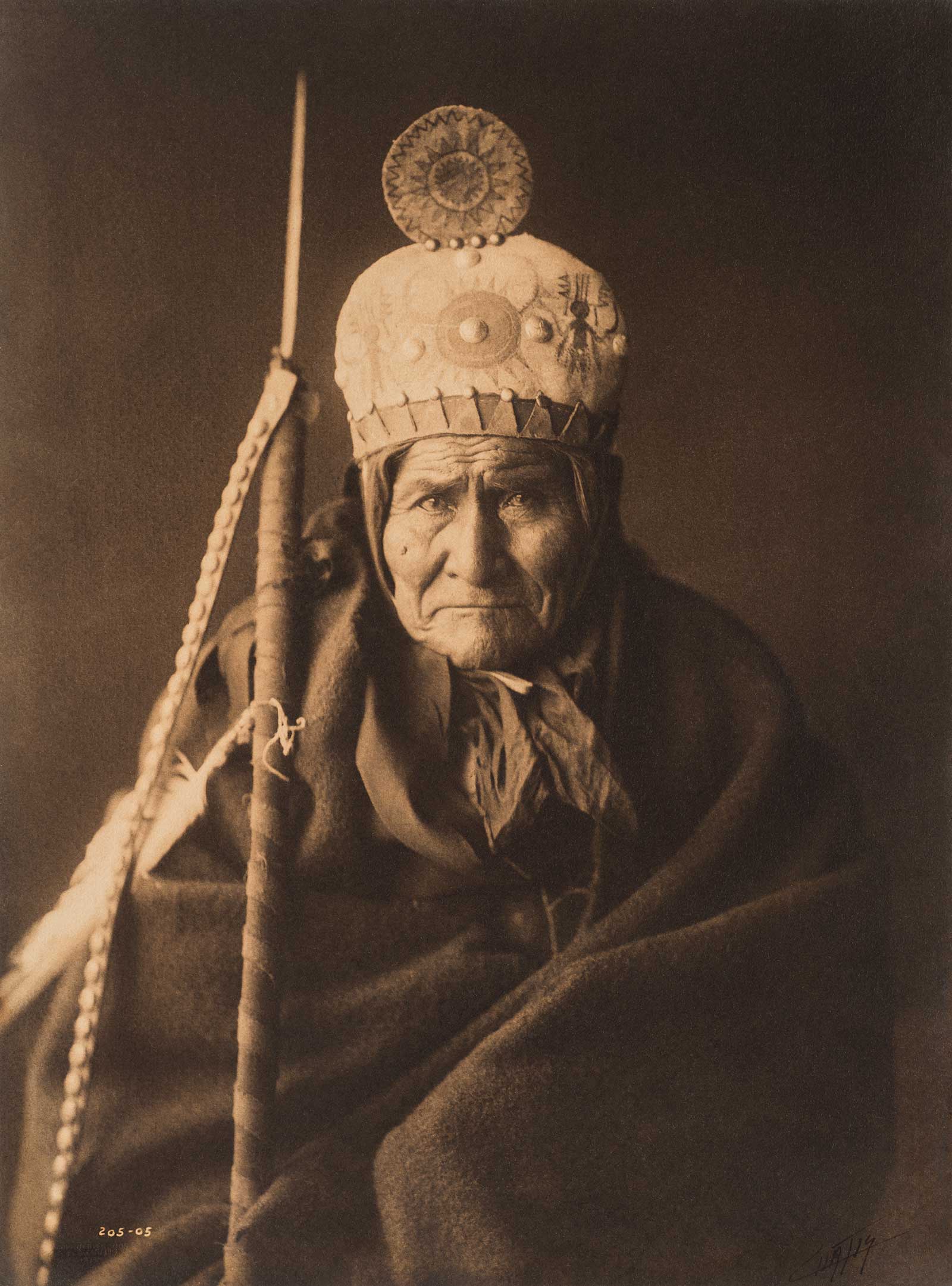 Edward S. Curtis (1868-1952), Geronimo – Apache, 1905, platinum print, 155/8 x 115/8” Estimate: $120/180,000
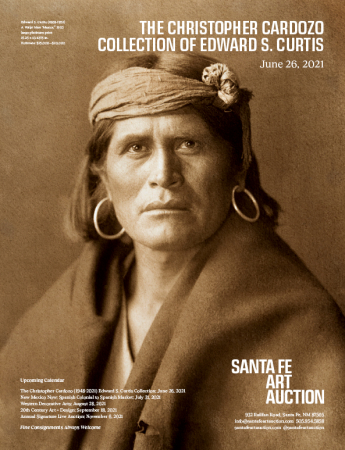
Now, four months after Cardozo’s death, Santa Fe Art Auction has the unique privilege of helping to preserve his legacy while also ensuring a new generation of collector discovers Curtis and his profoundly important work that Cardozo spent 40 years of his life collecting. The auction house, which was chosen by Cardozo before his passing, will be offering his collection of Native American photographs by Curtis to bidders on June 26 in Santa Fe, New Mexico. The sale will feature more than 400 lots, including the very rare original platinum prints, which Cardozo always felt were the highest-quality Curtis material any collector could ever hope to own.
Cardozo was a photographer himself when, in 1972, he discovered Curtis in Albuquerque, New Mexico, after a photography trip to Oaxaca, Mexico. He had scrimped and saved to afford a car to take him from Minnesota to Mexico for an assignment on a movie shoot. When he arrived south of the border, the project had already fizzled, so Cardozo stuck around Mexico and photographed some nearby villages. It was later in New Mexico when a friend saw his photography and commented how it looked like the work of Edward S. Curtis. And he wasn’t wrong. One early image, a self-portrait, shows Cardozo standing, his camera bag slung over his shoulder, against the exposed edge of an earthy outcropping topped with thick vegetation and exposed roots. The image has a sepia tone to it, which makes the connection to Curtis make even more clear. So when the friend in Albuquerque showed him a Curtis print, Cardozo locked into it. “Our dad had given him a credit card for emergencies, but Chris went to Boulder and bought a Curtis photogravure with the card. ‘This is an emergency,’ he said afterward,” remembers his sister, Julie Cardozo. “And that was it. That was how he found Curtis.”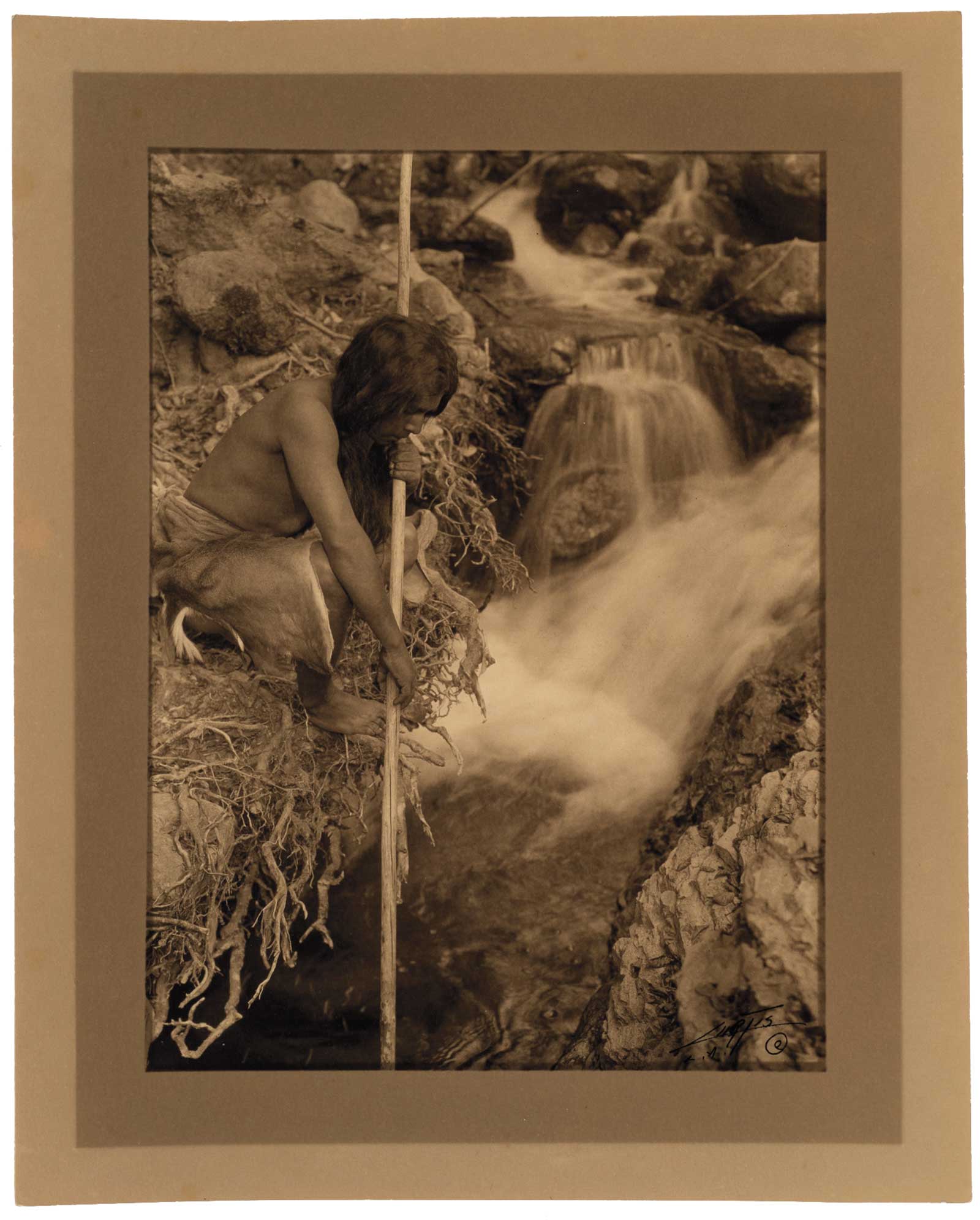 Edward S. Curtis (1868-1952), Untitled (Variant of Watching for Salmon), platinum print Estimate available upon request
The initial collection started slow, but it grew, as did Cardozo’s knowledge of Curtis and what he was trying to accomplish by preserving Native American culture. “People know the photographs, but there is really so much more,” Cardozo would often say before launching into one of any dozen storylines about Curtis: his financial endorsement from J.P Morgan in 1906, the 30-year history of Curtis’ massive publication The North American Indian, his friendship with Theodore Roosevelt, the celebrity-like quality of Curtis’ life prior to the Great Depression or how Curtis died in relative obscurity after the public lost interest in his work. One aspect that Cardozo dwelled upon was the wealth of information in The North American Indian: “It’s so much more than photography of Native American people,” he said often. “It’s their lifeways: their songs, their languages, their stories…Curtis was trying to collect it all. And by many measures he did.”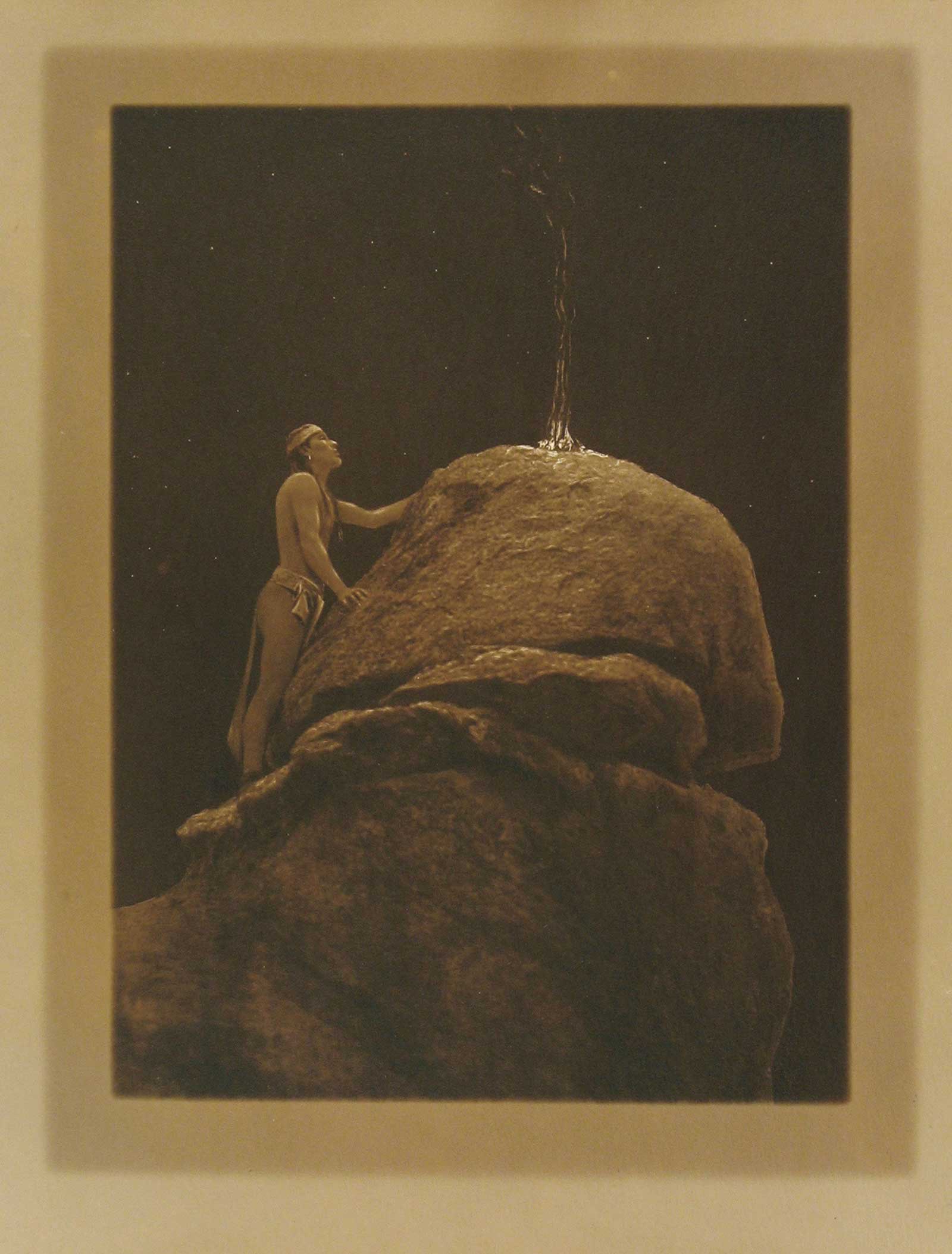 Edward S. Curtis (1868-1952), Signal Fire to the Mountain Gods, orotone, 13½ x 10½” Estimate available upon request
Not only was Cardozo a prominent dealer on Curtis material, but he was also an authority. He curated exhibitions, loaned images for exhibitions, he spoke on Curtis, he repatriated Curtis images back into Native American communities and he also wrote numerous books. In 2015 he meticulously republished The North American Indian that allowed even more people to see and read what Curtis had accomplished. Several years later he published a reference edition that put the 20-volume publication into even more hands. By all accounts, including Western Art Collector’s, Cardozo lived and breathed Edward S. Curtis. And the art world benefited greatly from the renewed interest he brought to the subject.
“It really was his lifelong passion, which is why it was such a big step for him to sell the collection and pursue new things. He was ready to move into the next phase of his life, and he wanted to close out this chapter in a really special way,” says Blitch. “One time, during one of our long discussions, I had called him Curtis by mistake and he was so funny about it. He said, ‘You’re not the first, Gillian.’ Chris had just a really profound respect for Curtis, but also a deep respect for the Native American people he was documenting. Like Curtis, he never approached them like an anthropologic curiosity, but as people.”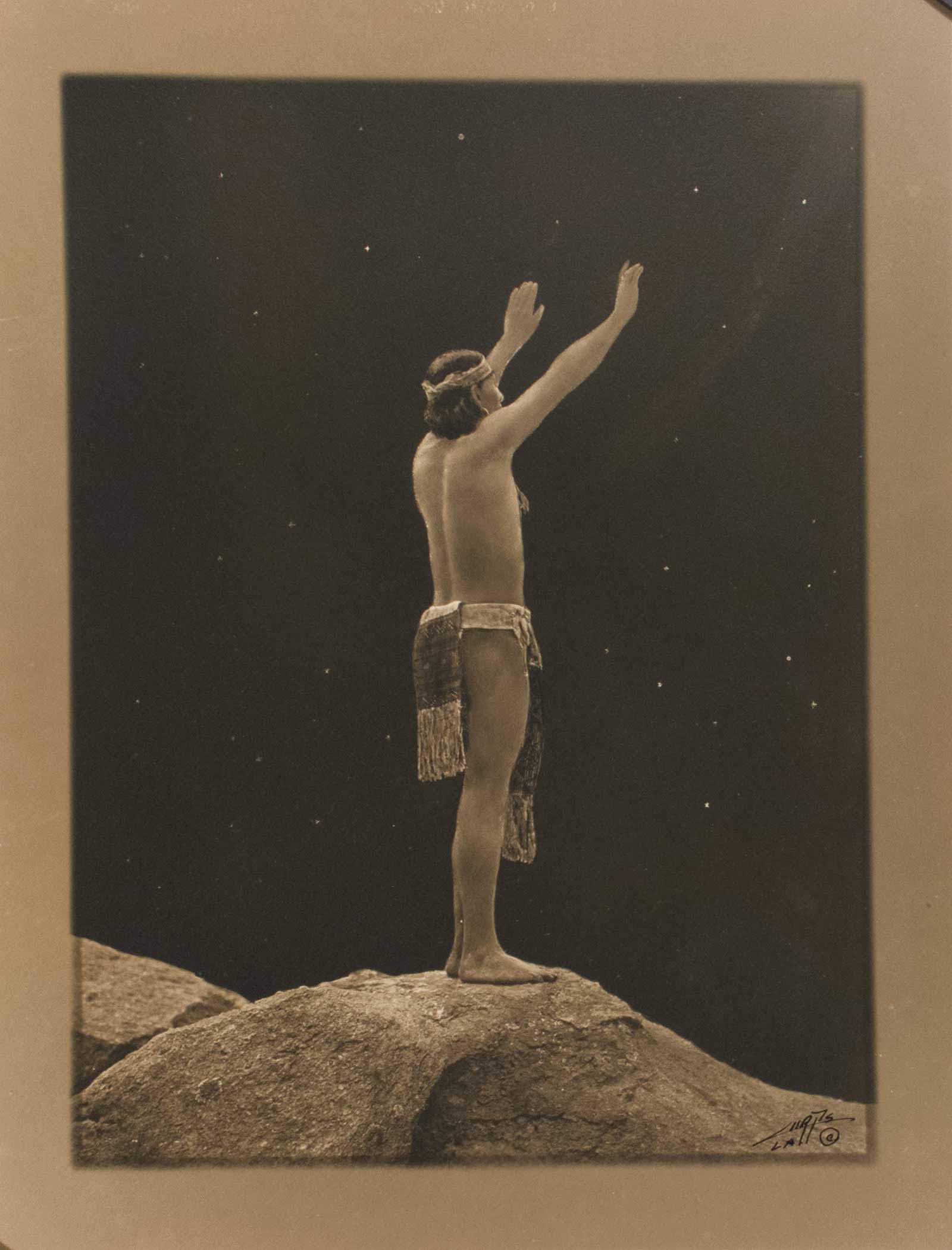 Edward S. Curtis (1868-1952), Prayer to the Stars, orotone, 14 x 11” Estimate available upon request
Joshua Rose, senior vice president at the Santa Fe Art Auction, had worked with Cardozo for many years in different capacities, and even had a personal connection to him—Rose’s grandparents lived next to Cardozo’s parents in Minnesota—and was amazed at the quality of the material that was coming into the auction house. “Chris only collected the best quality, and you really see that here with these pieces,” he says. “And it’s such a great story he had. Curtis was largely forgotten until the 1970s and Chris was one of the people who thought he deserved better and worked to change that. Chris, for the next 40 years, was the biggest spokesman for Curtis and it shows when you look at what he wrote, what he collected and the way he talked about him.”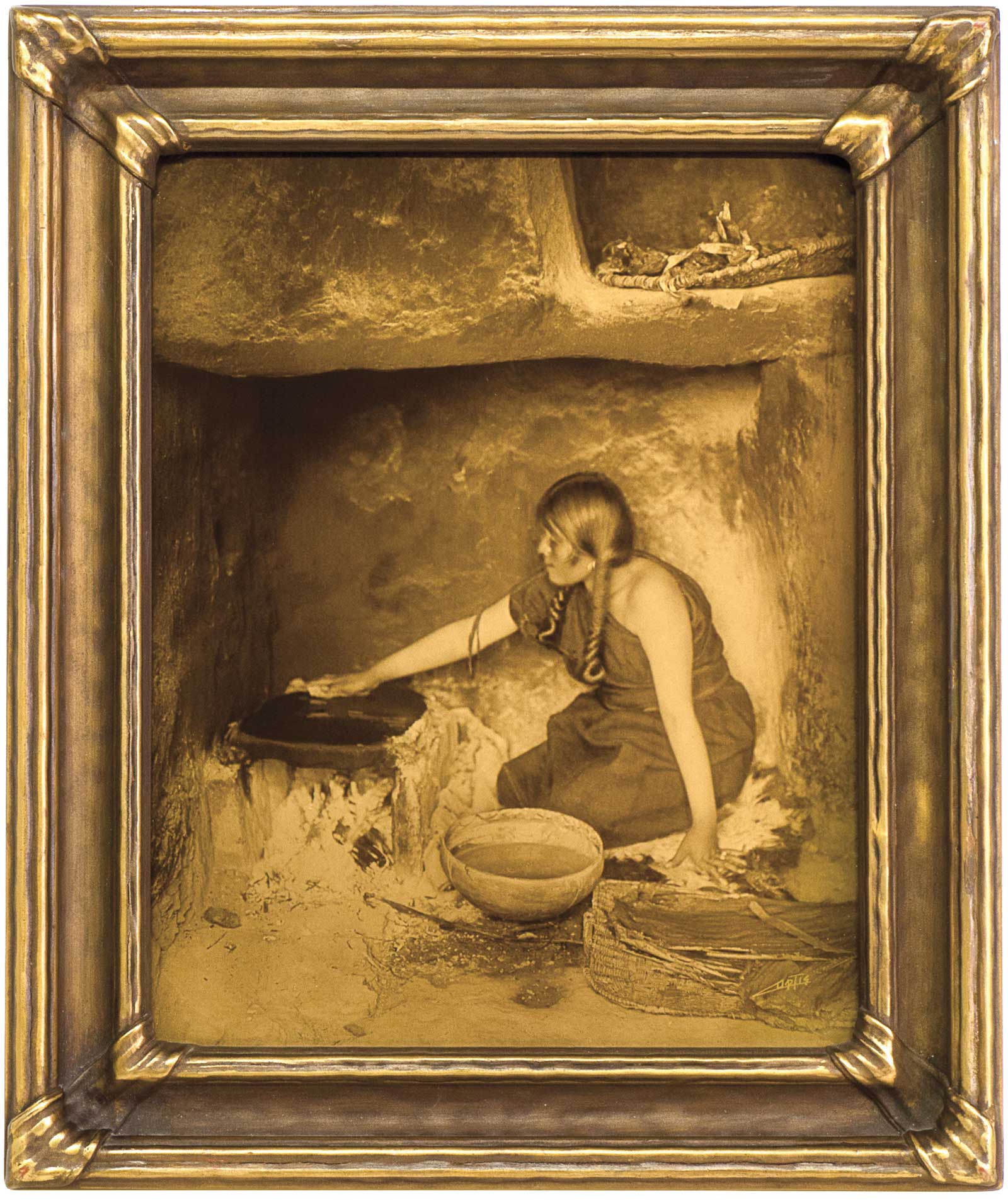 Edward S. Curtis (1868-1952), The Piki Maker, platinum print, 16⅜ x 12½” Estimate available upon request
Items available in the June 26 auction include some of the most important pieces from the Cardozo Collection, including the platinum print of Geronimo – Apache done in 1905. The image, taken just four years before Geronimo’s death, is a formal portrait of the warrior in Apache regalia. Curtis took a more casual portrait, with Geronimo in profile and wrapped in a blanket the same year, though this image is considered one of his great achievements in portraiture with Geronimo looking proud amid his advancing years.
The platinum prints, of which there are many in the sale, were favorites of Cardozo. “Regarded as the highest form of photographic printing by many serious collectors, the process is both expensive and difficult, thus platinum prints are inherently rare,” Cardozo wrote in Edward S. Curtis: One-Hundred Masterworks. “Platinum prints are known for their rich blacks, subtle highlights and broad, nuanced midtones. Because the platinum solution actually permeates the paper, rather than being suspended above it, as in most photographic mediums, the platinum image appears to be integrated within the paper itself. Curtis’ best platinum prints are delicate, generally warm-tones and typically printed on expensive textured watercolor paper. The texture of the paper further softens the image, making it more consistent with Curtis’ Pictorialist aesthetic.”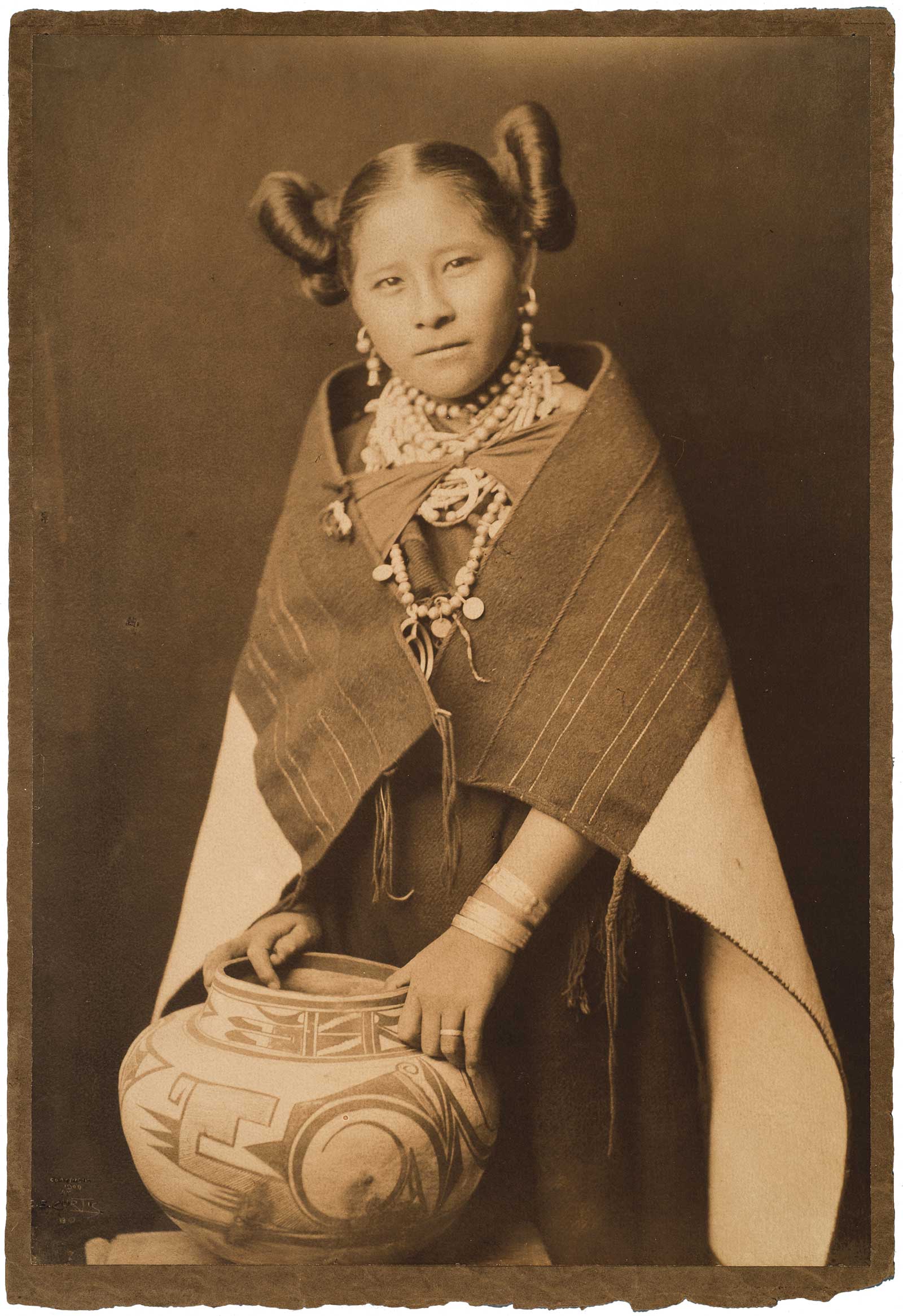 Edward S. Curtis (1868-1952), Moki Girl with Jar, platinum print, 16 x 11” Estimate available upon request
Among the other highlights of the June 26 sale are two works against black skies, Signal Fire to the Mountain Gods and Prayer to the Stars; two incredible outdoors shots, Untitled (Variant of Watching Salmon) and the cyanotype Untitled (Variant of Flathead Warrior); The Piki Maker, a classic Curtis image; and several famous portraits, including Untitled (Moki Girl with Jar), A Walpi Man and A Zuni Governor.
In addition to images, Santa Fe Art Auction will also offer various ephemera, including plate covers that bear writing in Curtis’ hand and signed contracts from his studio. Also available will be a full original set of The North American Indian, of which fewer than 200 exist today. The ones that do exist are kept in vaults and behind locked doors at many of the most prestigious museums and libraries in the world.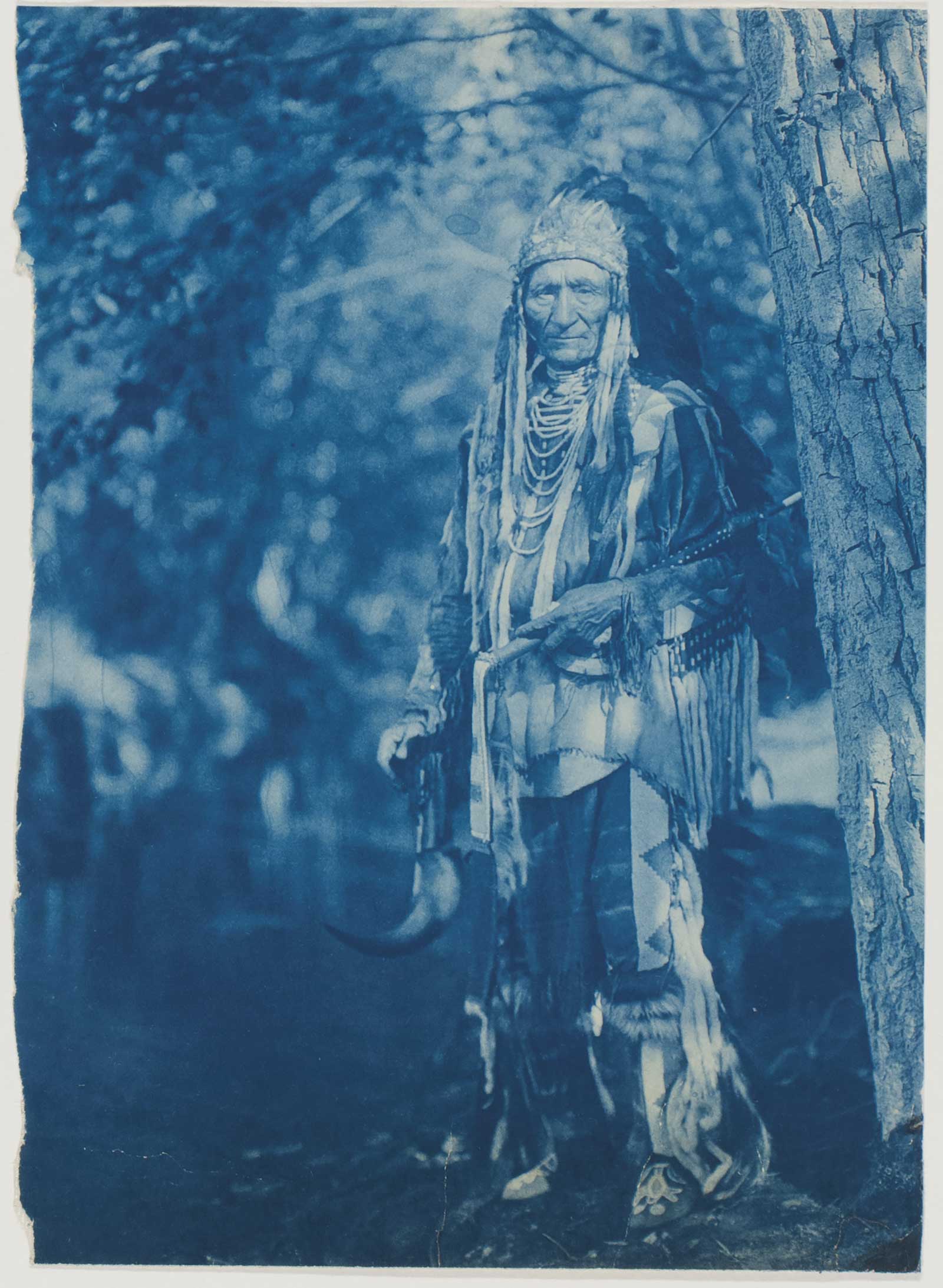 Edward S. Curtis (1868-1952), Variant of Flathead Warrior, cyanotype, 16⅜ x 12½” Estimate available upon request
Another noteworthy aspect of the sale, one that Cardozo took great pride in, was the number of works that will be available that never appeared in The North American Indian. Some of them, including many of the blue-looking cyanotypes, only exist as single images and rarely, if at all, have they appeared in Curtis books. So even today, nearly a century since Curtis’ heyday, these images are being seen, and likely for the very first time by many people. If Christopher Cardozo were here he would grinning ear to ear. —
The Christopher Cardozo (1948-2021) Edward S. Curtis Collection
June 26, 2021 • Santa Fe Art Auction, 932 Railfan Road, Santa Fe NM 87505
(505) 954-5858 • www.santafeartauction.com
Powered by Froala Editor