Chief Seattle (1786-1866), was the leader of the Suquamish and Duwamish tribes in the Pacific Northwest, who worked to unite his own people and to find accommodation with white settlers. He spoke and wrote of his people’s beliefs.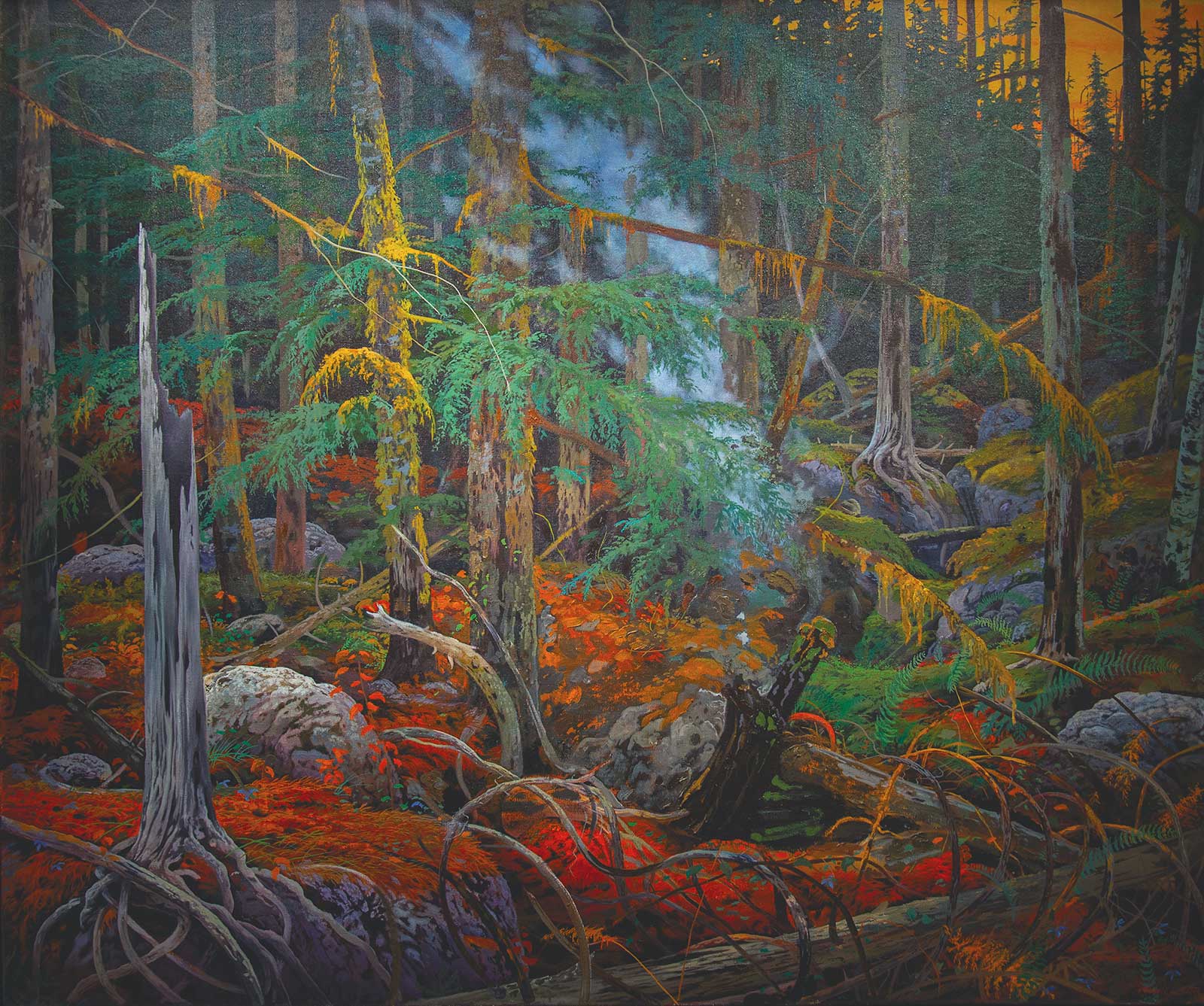 EVOKE Contemporary, Old Growth Forest, oil on canvas, 72 x 102”, by Michael Scott.
“Will you teach your children what we have taught our children? That the earth is our mother? What befalls the earth befalls all the sons of the earth. This we know: the earth does not belong to man; man belongs to the earth. All things are connected like the blood that unites us all. Man did not weave the web of life; he is merely a strand in it. Whatever he does to the web, he does to himself. One thing we know: our god is also your god. The earth is precious to him and to harm the earth is to heap contempt on its creator.”
Years later Carl Jung (1875-1961), the founder of analytical psychology, wrote in his book of nature writings, The Earth Has a Soul, “At times I feel as if I am spread out over the landscape and inside things, and am myself living in every tree, in the splashing of the waves, in the clouds and the animals that come and go, in the procession of the seasons. There is nothing in the Tower that has not grown into its own form over the decades, nothing with which I am not linked.” 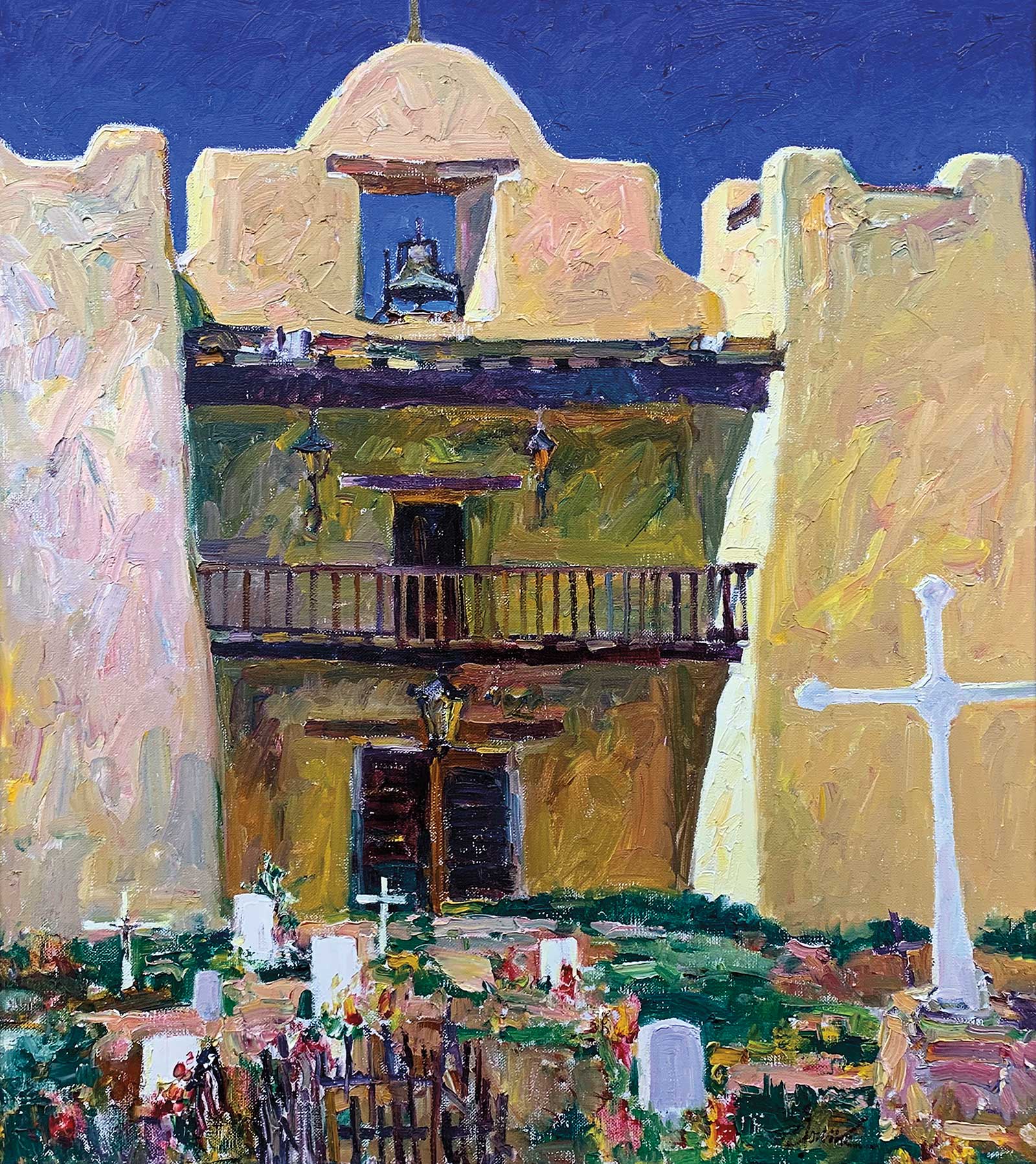 Nedra Matteucci Galleries, Old Pueblo Mission at Zuni, oil on canvas, 40 x 36", by Walt Gonske
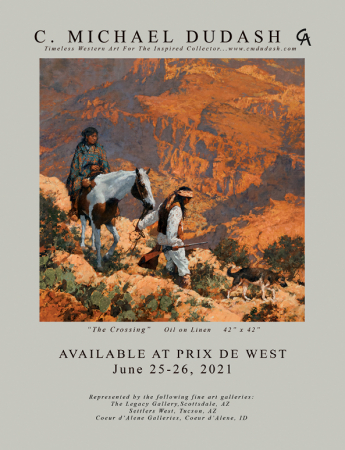
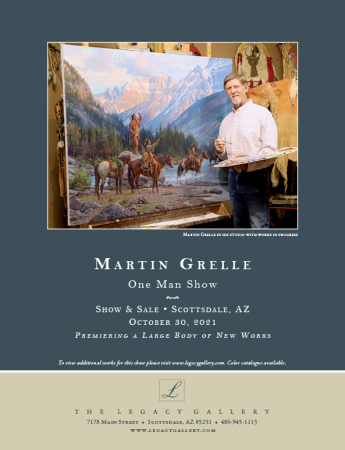
Michael Scott has been concentrating on landscapes in the most recent years of his career. He’s focused on the protected land of the national parks, as well as wildfires bringing their natural renewal and unnaturally vast destruction. Old Growth Forest, at 6 by 8½ feet, envelops the viewer in the experience of the forest. Accustomed as we are to a managed forest with uncluttered floors and comfortable paths, Scott presents the forest primeval with abundant life living symbiotically, for the sake of life itself. He suggests a magical quality to the landscape. The magic remains the more we study and the more we learn as the trees send information to one another through their intricate mycorrhizal network.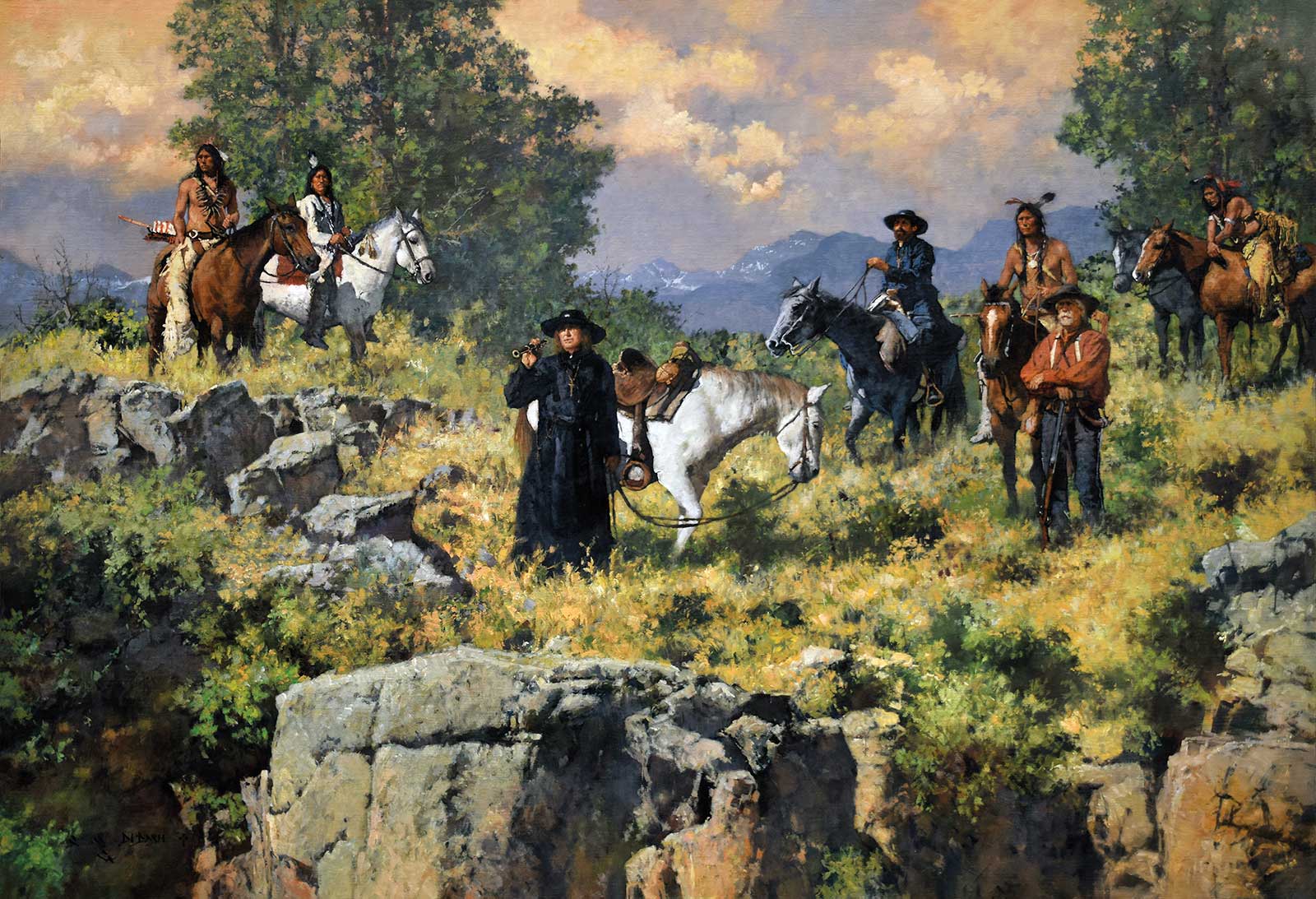 Legacy Gallery, Black Robe – Fr. John Pierre DeSmet, oil, 40 x 58", by C. Michael Dudash
The Flemish Catholic priest Pierre-Jean De Smet, S.J. (1801-1873), began missionary work in the United States in 1838. He would have seen something supernatural in this new landscape, the hand of God. His task was to build missions and to spread the good news of the Bible, but he also established himself as a friend of the Native population, often assisting in peace negotiations among tribes and between tribes and the government. He also wrote vividly of Native customs and was known among the Indigenous people as “the one whose tongue does not lie.”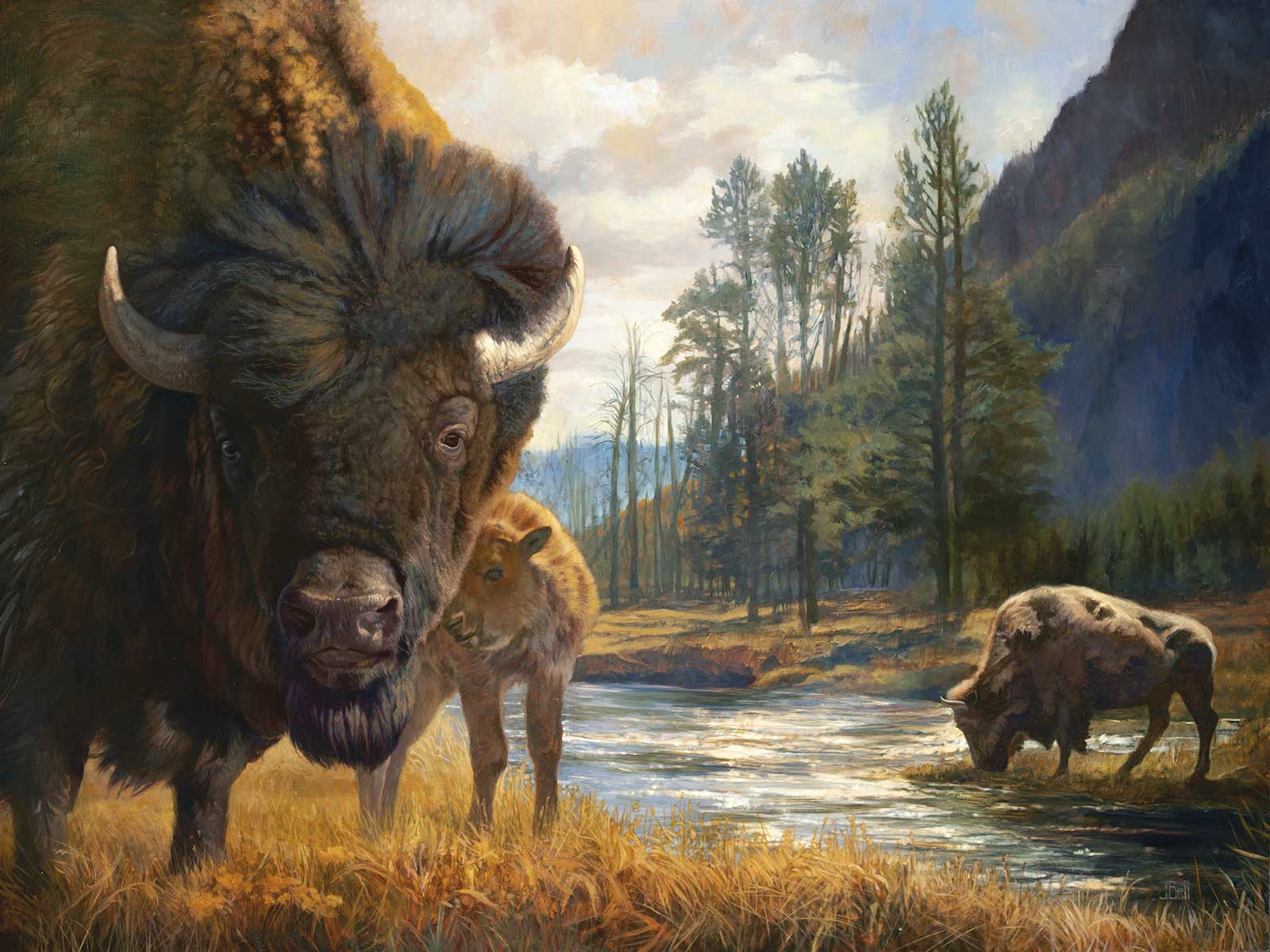 Rehs Contemporary, Madison River Morning, 30 x 40”, by Julie Bell
C. Michael Dudash expresses his calling through his art. He says, “The subject of the great American frontier is something that I never grow tired of bringing to life in my paintings. I love the history, the characters, the costuming, the critters and the landscapes, and the ample opportunities that exist to tell a great story. The themes that permeate Western art also feel like home to me—faith, family, friends, self-reliance and hard work, just to name a few.” In Black Robe – Fr. John Pierre DeSmet, he depicts the priest and his Native and frontiersman guides on their way to a mission in the Rockies.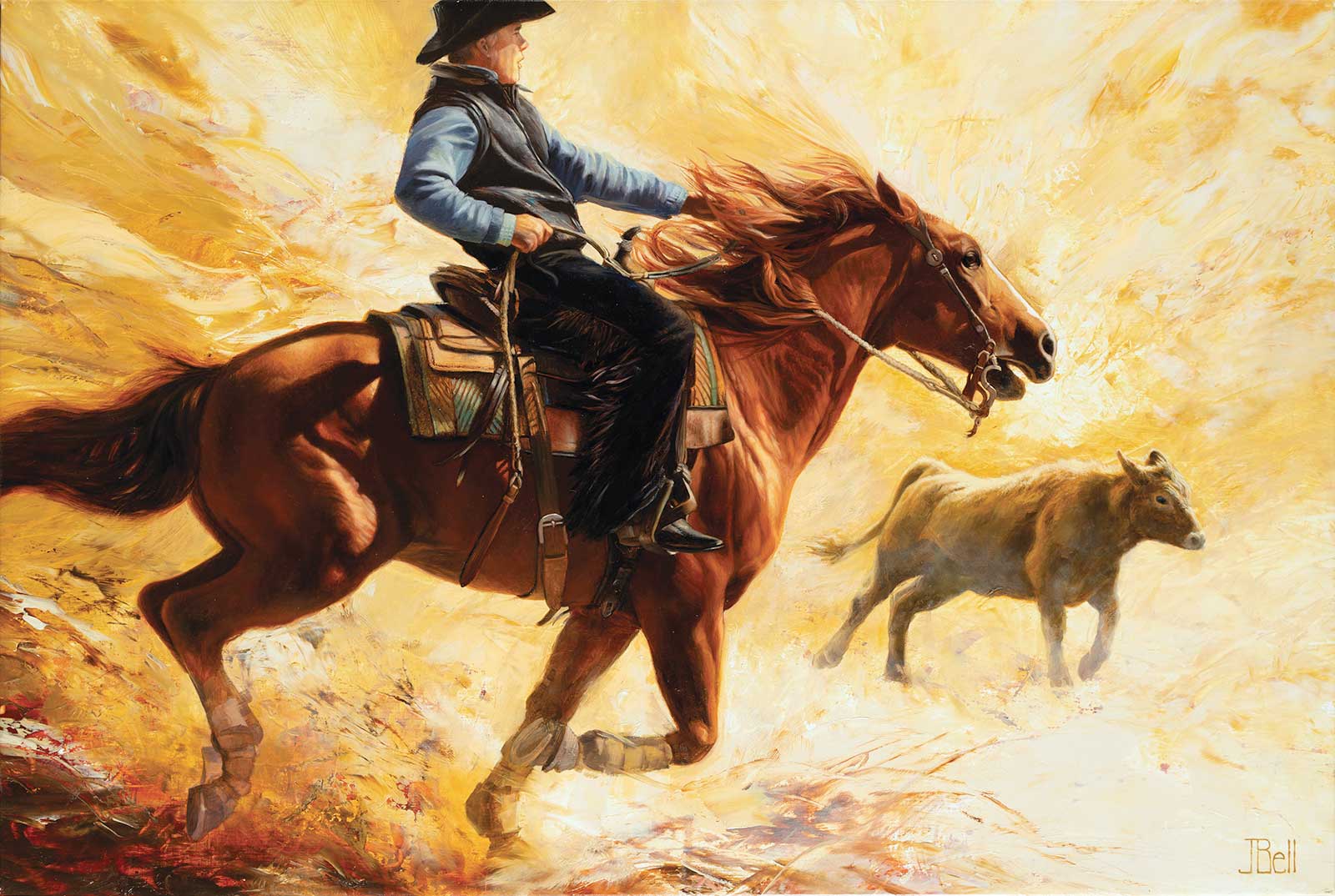 Rehs Contemporary, Big Red, oil on linen, 20 x 30”, by Julie Bell
The Mission of Our Lady of Guadalupe at Zuni Pueblo was established in 1630. It was largely destroyed in the 1680 Pueblo Revolt. It rose again and later fell into disrepair, eventually being rebuilt in 1969 when it was decorated by Zuni artist Alex Seowtewa.
Walt Gonske left his career in commercial art in 1972, moving to Taos, New Mexico, to paint. Gonske’s paintings are rich with color and light. He says, “Each stroke of paint carries emotion and power. I work in a loose, painterly style in part because I want the viewer to see the process and not hide it behind ‘finish;’ for the viewer to maybe even feel how a particular piece of paint was put down.”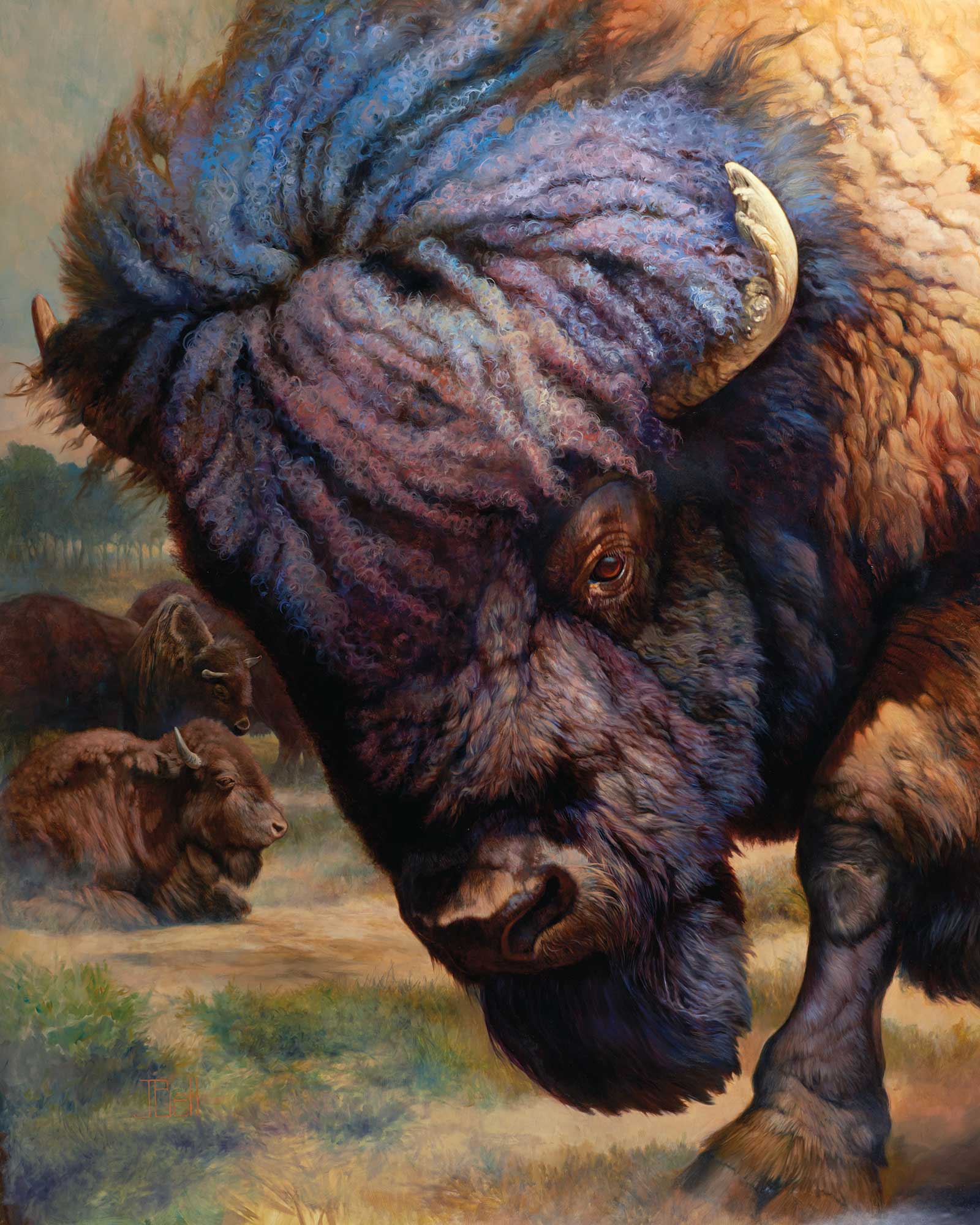 Rehs Contemporary, Champion, oil on linen, 60 x 48", by Julie Bell
The Old Pueblo Mission at Zuni is now a secular building and bears testimony to the history of the frontier from conquest through revolt and the slow accommodation of cultures and of people with the land.
The Western frontier is widely depicted in traditional and contemporary works of art, as many are enchanted by its history and splendor. Those inspired by the frontier and its mythmaking within the West stretch from coast to coast. 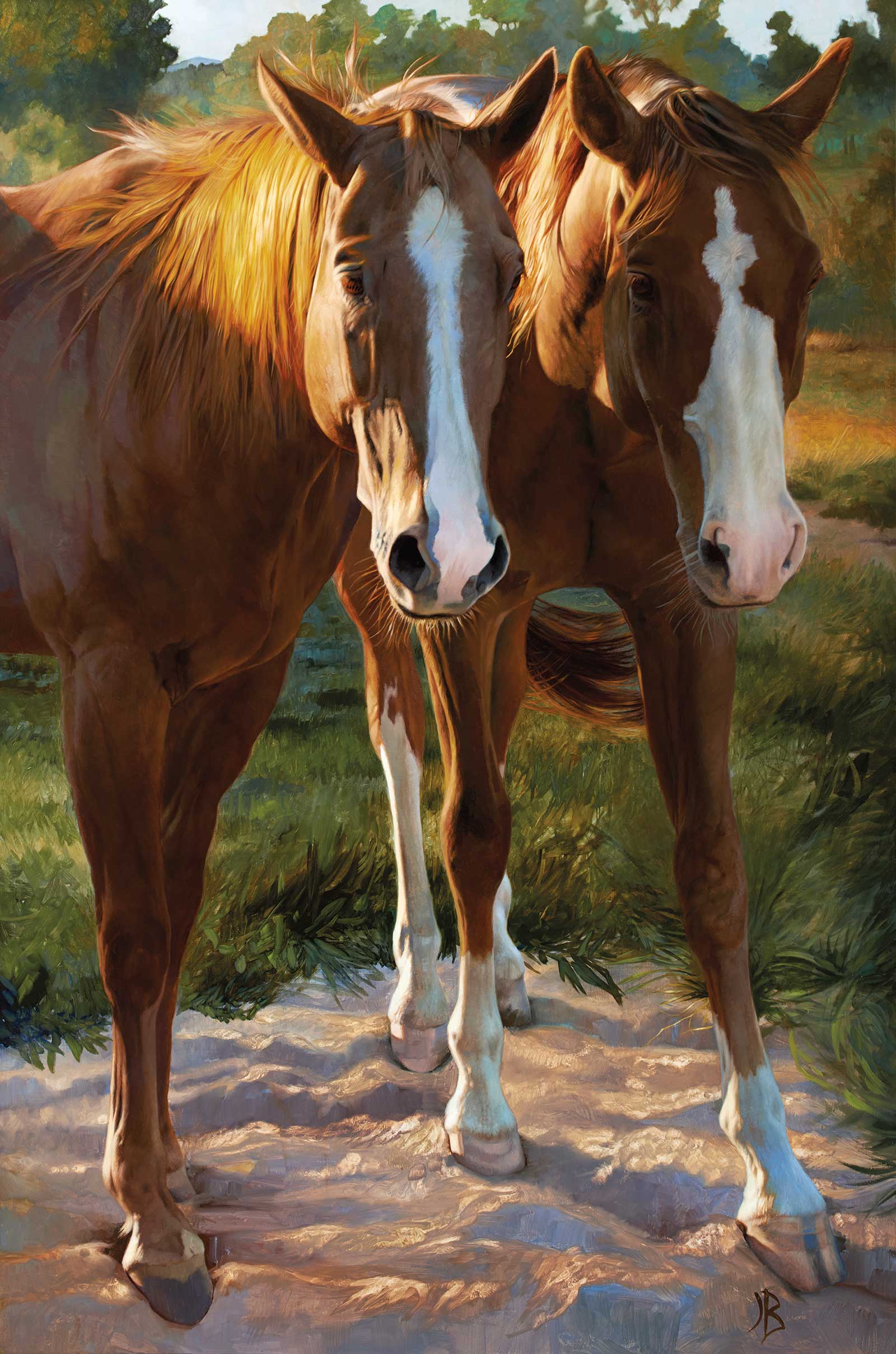 Rehs Contemporary, September, oil on panel, 36 x 24", by Julie Bell.
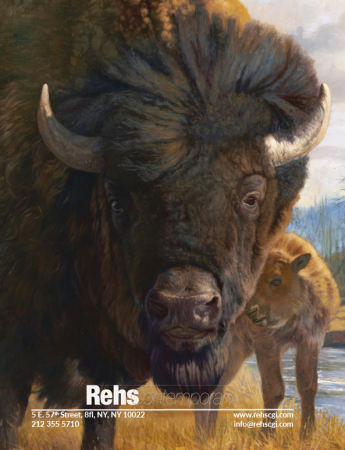
Rehs Contemporary represents a wide range of talented artists creating contemporary works in a variety of subject matter and theme. For gallery artist Julie Bell, wildlife and Western art has become increasingly important in her oeuvre. More than 20 years ago, Bell was working on a project involving wolves and, in that time, she became fascinated with how the animals interacted with each other. That endeavor proved to be a seminal experience for the artist. She has even ventured into creating scenes of animals and humans interacting, trying to capture the sense of movement and emotion when the two individual beings communicate in non-verbal, but powerful ways. Images of horses, bison, foxes and of course wolves, often depicted in a Western landscape, now form a distinct part of Bell’s work. —
Featured Artists & Galleries
EVOKE Contemporary
550 S. Guadalupe Street, Santa Fe, NM 87501
(505) 995-9902, www.evokecontemporary.com
Nedra Matteucci Galleries
1075 Paseo De Peralta, Santa Fe, NM 87501
(505) 982-4631, www.matteucci.com
Rehs Contemporary
5 E. 57th Street, 8th Floor, New York, NY 10022
(212) 355-5710, www.rehs.com
Legacy Gallery
7178 Main Street, Scottsdale, AZ 85251
(480) 945-1113, www.legacygallery.com
Powered by Froala Editor