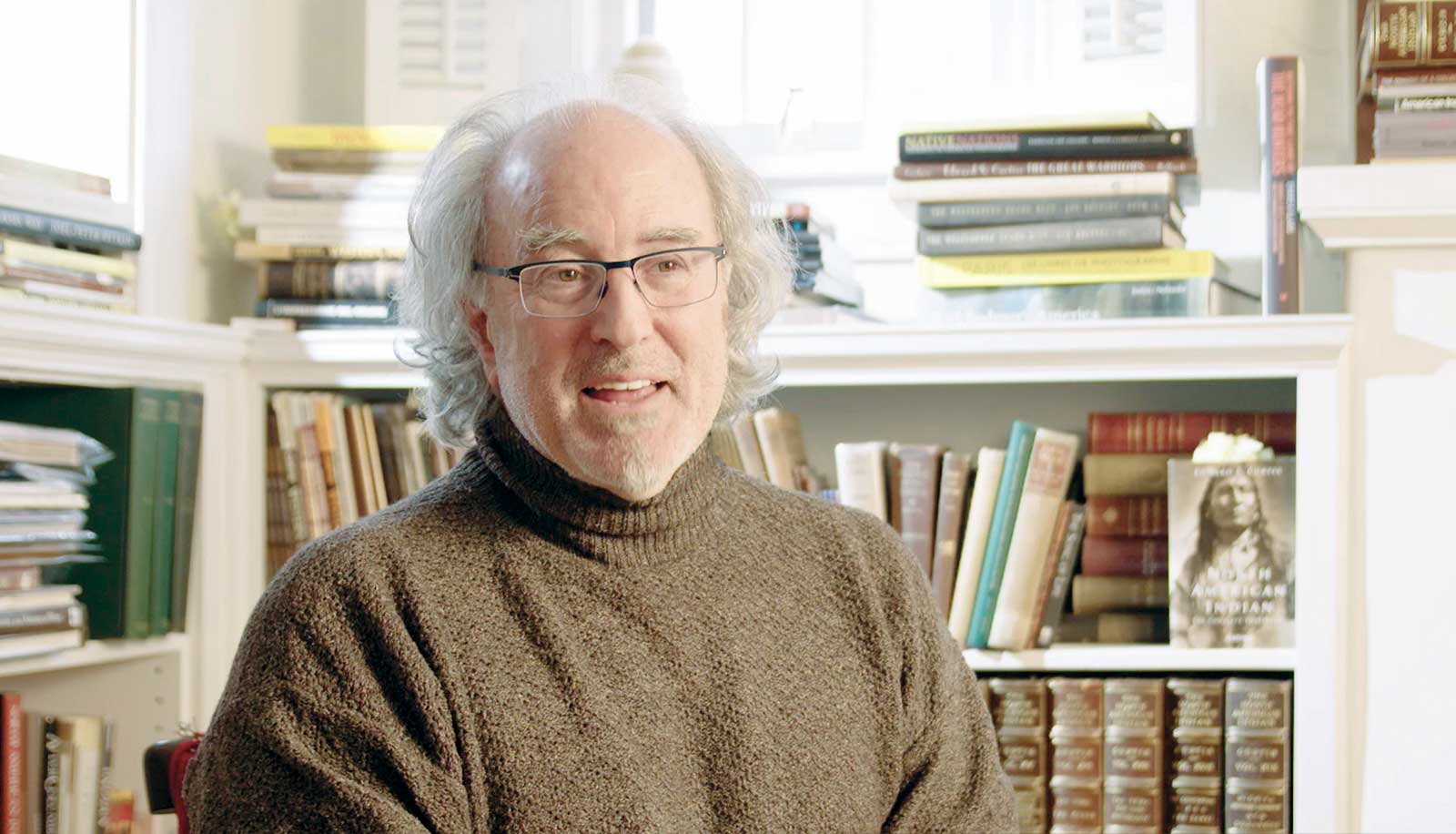
 Chris Cardozo, whose work helped bring renewed attention to the work of Edward S. Curtis. Courtesy Cardozo Fine Art.
For many years, Christopher Cardozo had, as part of his email signature, a quote from Edward S. Curtis, the famous ethnographer and photographer. “It’s such a big dream,
I can’t see it all,” it read. Curtis had spent three decades chasing his dream. Chris spent five decades chasing his. And now their stories are intertwined, as are their legacies. Chris, whose tireless work helped bring a resurgence of interest in Curtis, died February 21 in Minnesota. He was 72 years old.
Born and raised in Minneapolis, Chris was almost destined to become an attorney. “He had his law degree, but didn’t want to be a lawyer,” says his sister, Julie Cardozo, who also worked with him closely in his business. “He eventually went around the country giving seminars to artists about copyright law. He was an artist at heart, including in high school when he started photography. He would take pictures of water and rocks, sometimes nudes on the rocks—nature always played a role. We even had a darkroom in our basement.”
After getting a photography and film degree from the University of Minnesota, Chris ventured to Oaxaca, Mexico, to help make a film in 1972. He saved for five months to afford a VW to get him there. Once he arrived the film wasn’t being made, so Chris stuck around and photographed the nearby villages. On his return trip he stopped in New Mexico, and a friend took one look at the work he had shot in Mexico and told him it looked a lot like the photography of an early 20th-century photographer by the name of Edward S. Curtis. “Our dad had given him a credit card for emergencies, but Chris went to Boulder and bought a Curtis photogravure with the card. ‘This is an emergency,’ he said afterward,” Julie says. “And that was it. That was how he found Curtis.”
Over the years, Chris became one of the most prominent and knowledgeable dealers in Curtis prints, materials, ephemera and of Curtis’ magnum opus, the 20-volume, 20-portfolio book set The North American Indian. He also helped bring Curtis out of obscurity and into a spotlight in American art. “His ultimate goal was to show the world how important Curtis was,” Julie adds. In 2015, Chris republished The North American Indian exactly as Curtis first published it, down to every letter and special character. It was intended for Curtis collectors, but also institutions that could not own—or could not afford to provide access to—original sets, which were worth upward of $1 million. In recent years he also started repatriating Curtis prints to Native American communities, including to descendants of Curtis’ subjects.
Pennsylvania collector Mark Daniel Schwartz was a client and also a friend. “He was a sweet, caring guy, and very dedicated. He felt that Curtis was his mission in life. He was always very caring and thoughtful about the work he was doing,” Schwartz says. “The art world has a void without him. What’s great, though, is he is part of the Curtis legacy. He helped preserve it in the best way he knew how.”
Powered by Froala Editor