Tim Solliday began his career as a billboard painter, learning techniques that would make a painting read from a distance, and practicing ways of applying paint that would never be seen from the highway. He was inspired by his father, a technical illustrator for Douglas Aircraft Company who encouraged him to pursue his interest in art.
While working as an apprentice and later as a journeyman, he studied with Theodore N. Lukits (1897-1992) at the Lukits Academy of Fine Arts. Lukits continued the French atelier method of art education in a time when ateliers were out of fashion and abstraction was de rigueur.
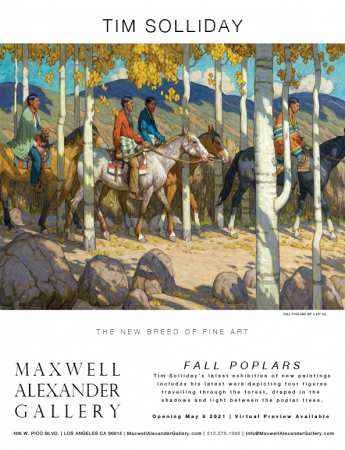
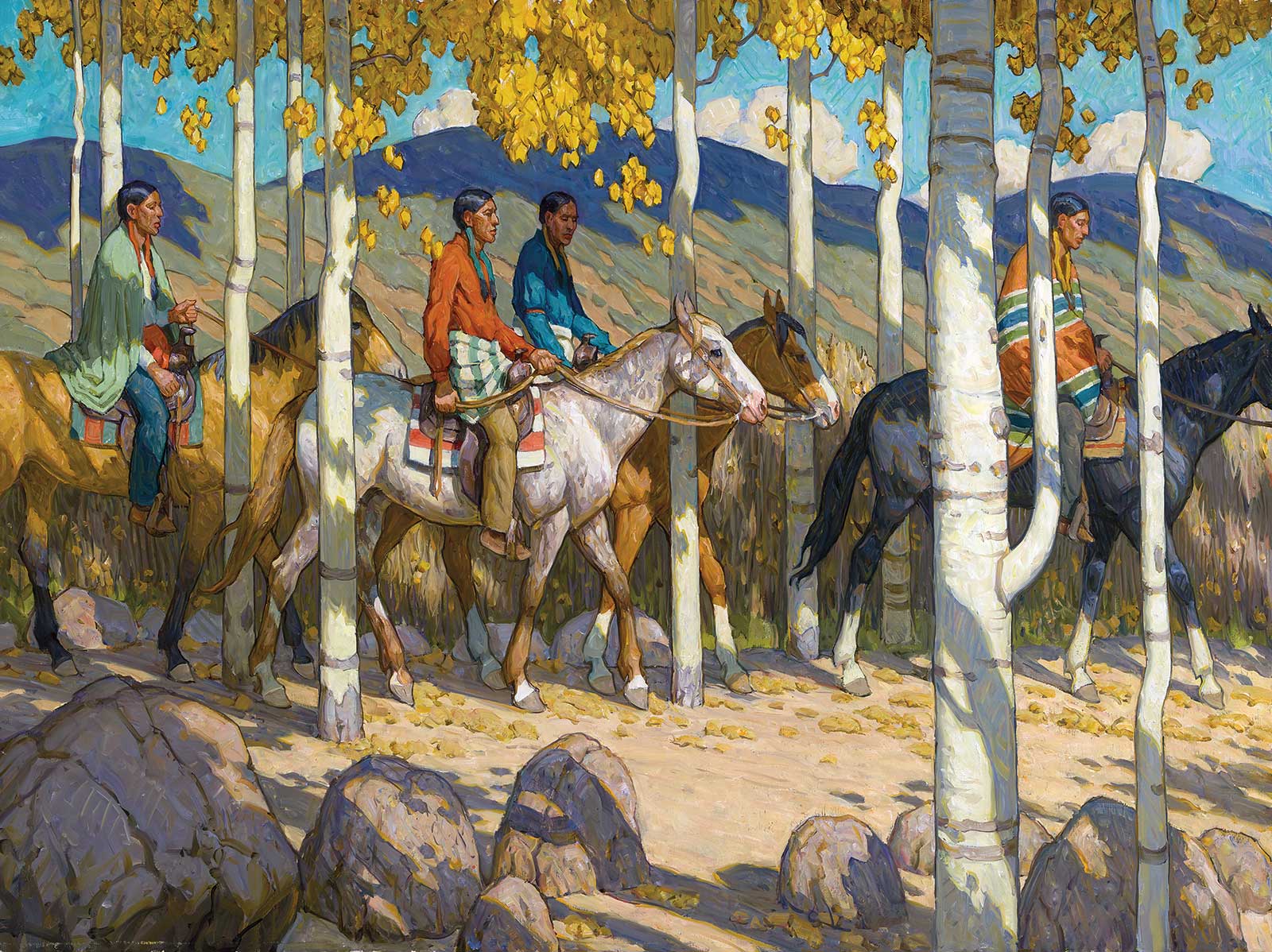 Fall Poplars, oil, 36 x 48”
“Lukits would set up different lighting conditions,” Solliday recalls. “He would use a yellow bulb for high noon, red for sunset and a blue bulb for night and moonlight. It was good training. When I got outdoors I learned what I needed to do to capture the light. When Lukits was teaching he had us make sure the values were right. He taught us to think about light and dark first. Then comes the color.
“I don’t paint a lot of backlit subjects,” he explains. “If the figure is all dark, it doesn’t appeal as much. I enjoy clear light on the subjects. Afternoon light is my favorite.”
In his exhibition at Maxwell Alexander Galleries in Los Angeles, May 8 through June 15, is the 3-by-4-foot painting, Fall Poplars.
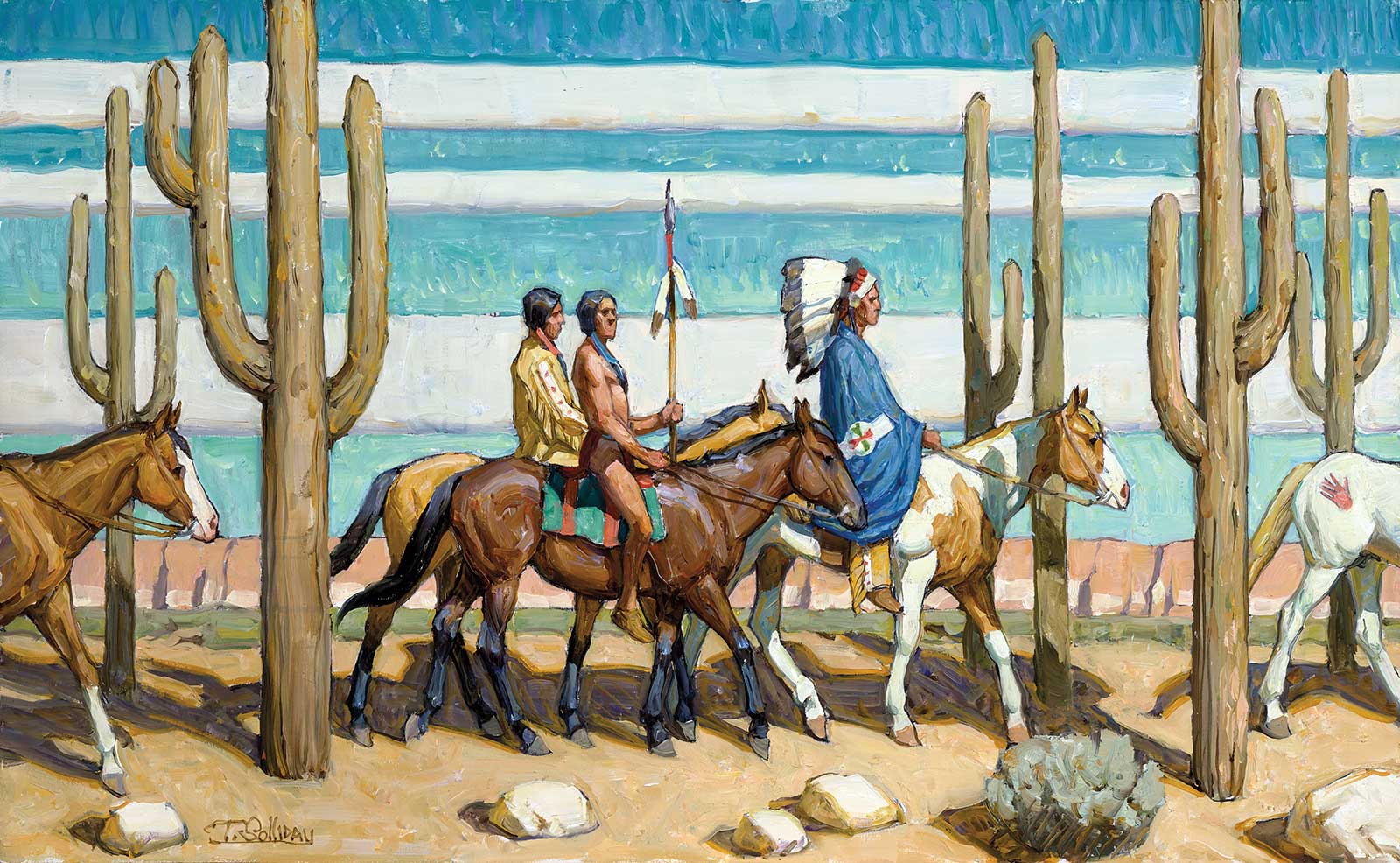 Saguaro Pathway, oil, 12½ x 20½”
“I love putting figures into the natural setting,” he says. Often, his figures are on horseback riding among trees. His years of painting in plein air provided him with a portfolio of several hundred sketches to draw on for the background. Fall Poplars is an example of him at his best.
Beginning with his sources, he develops a graphite drawing to establish values and then creates a pastel drawing that, in itself, is often a finished work. He grids up the pastel drawing to the size of his canvas. “I lay down the general colors and masses,” he explains, “and then come back over them with juicier paint.
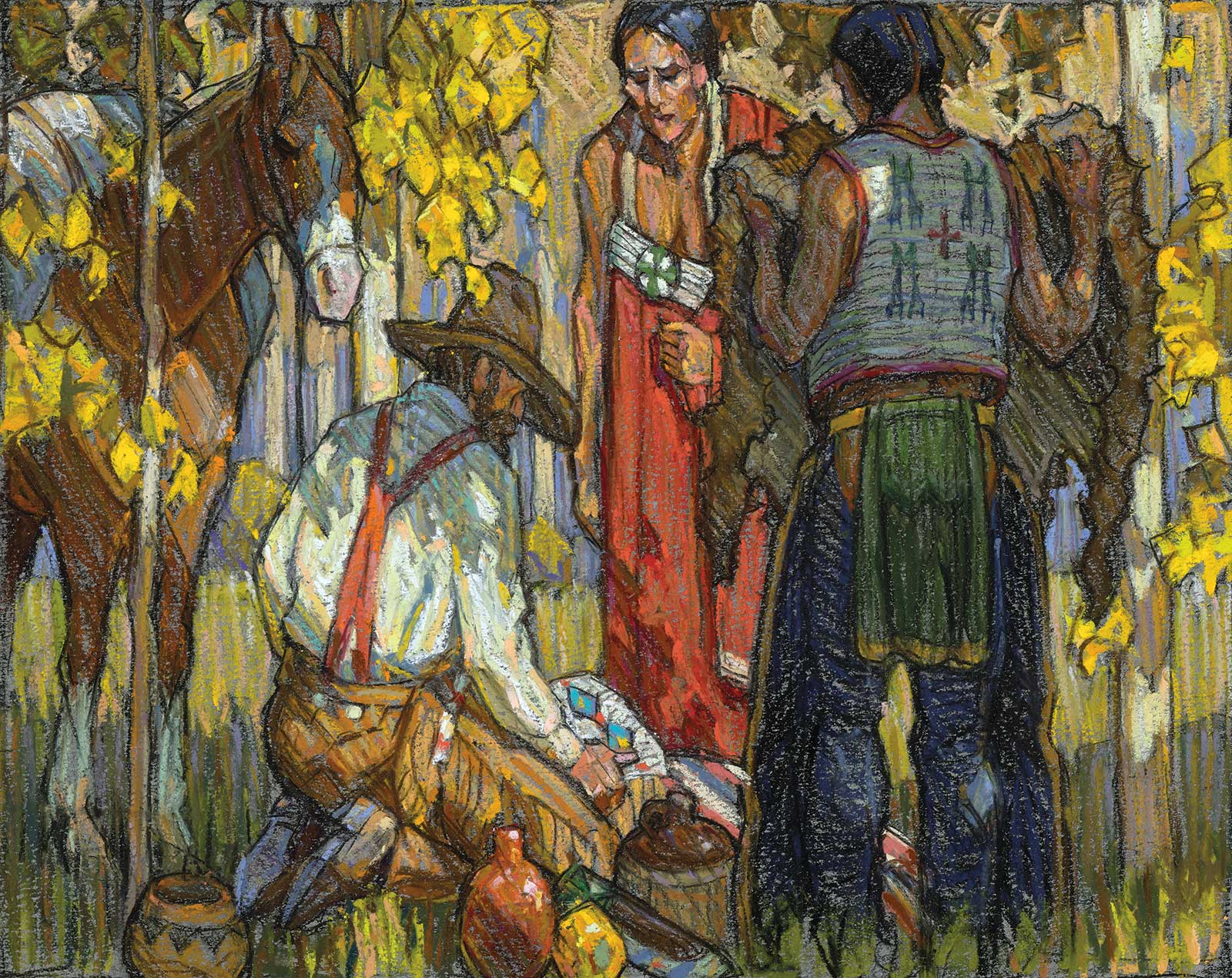 Trading Goods, pastel, 8½ x 11”
I make the oil look like pastel giving that sort of vibrating feel to the color.
“In Fall Poplars, one rider is in the light. The leaves cast a shadow on the rider behind him. If the leaves are low enough they cast a nice dark shadow and radiate the color into the shadow. I almost never use black. The light of the sky reflecting off the trees or the rocks mixes to cause intense color in the shadows.
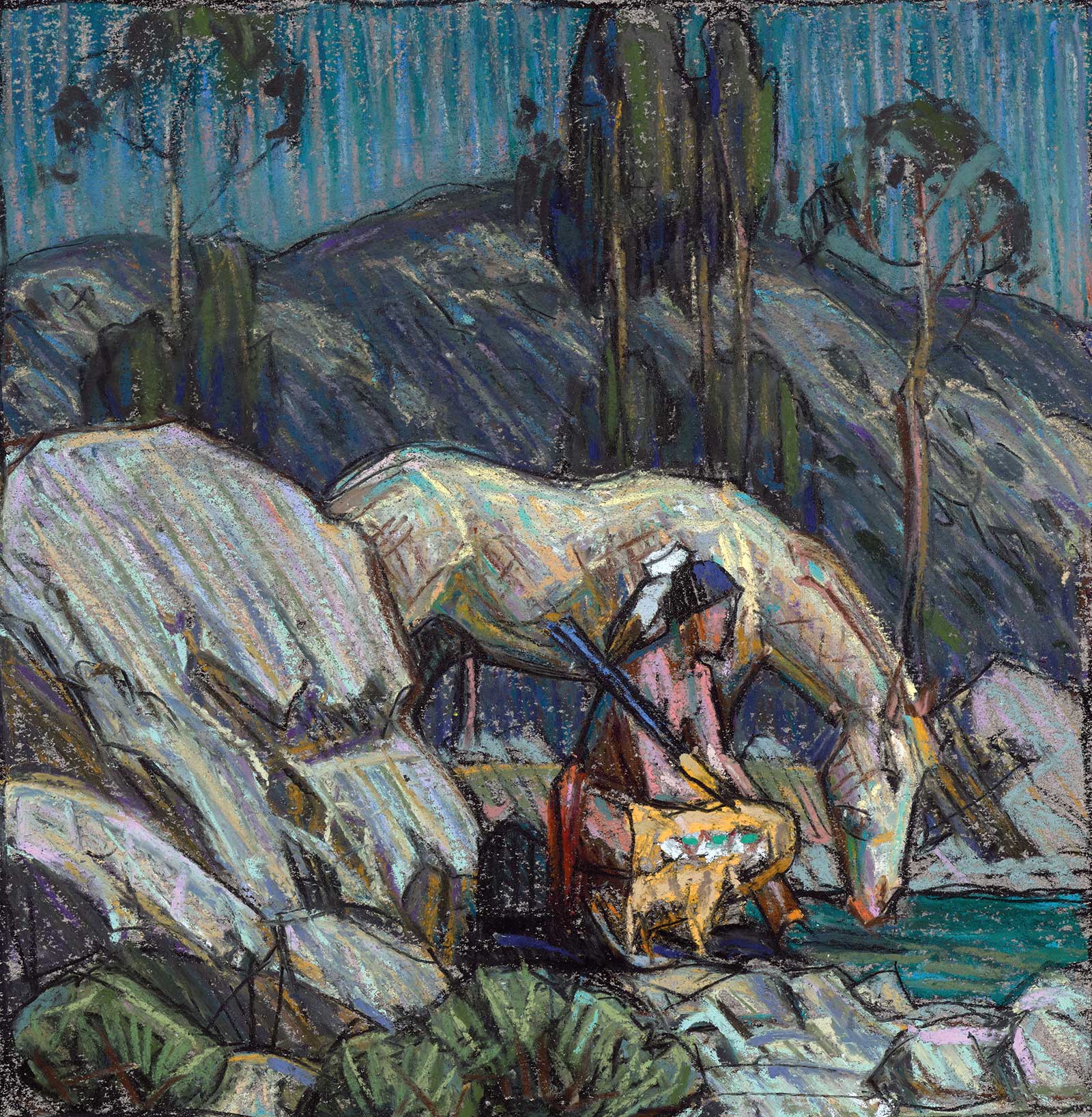 Night Pool, pastel, 6½ x 6½”
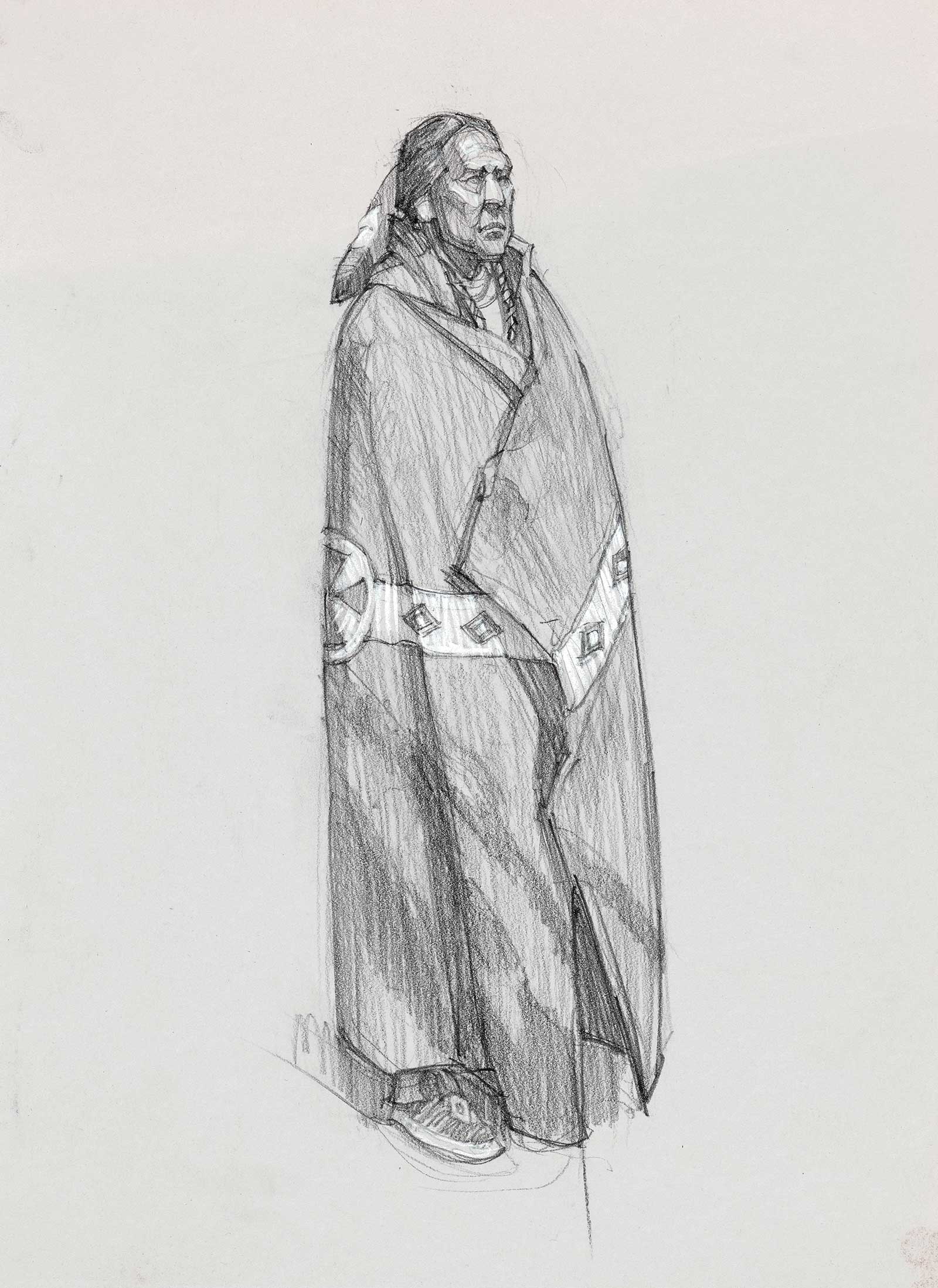 Indian in blanket sketch, 14 x 11"“The riders are probably Pueblo Indians traveling from one pueblo to another, trading. They spend a lot of time outside on a horse under the blue sky and among the trees. They experience creation in a way unlike we who live under roofs. The colors of their clothes and blankets are based on the natural colors of the sand, rocks and plants. Their existence in nature permeated with light and color can’t help but move them to a spiritual connection to God or to the Great Spirit—something greater than themselves. I’m trying to show there’s something going on in their minds as they experience the landscape. Nature and man coexisting.”
Upcoming Show
Up to 12 works
May 8-29, 2021
Maxwell Alexander Gallery
406 W. Pico Bouelvard, Los Angeles, CA 90015, (213) 275-1060
www.maxwellalexandergallery.com
Powered by Froala Editor