The Frist Art Museum is a non-collecting institution housed in the historic 1930s Art Deco main post office building in Nashville, Tennessee. “The vision of the Frist Art Museum is to inspire people through art to look at their world in new ways.”
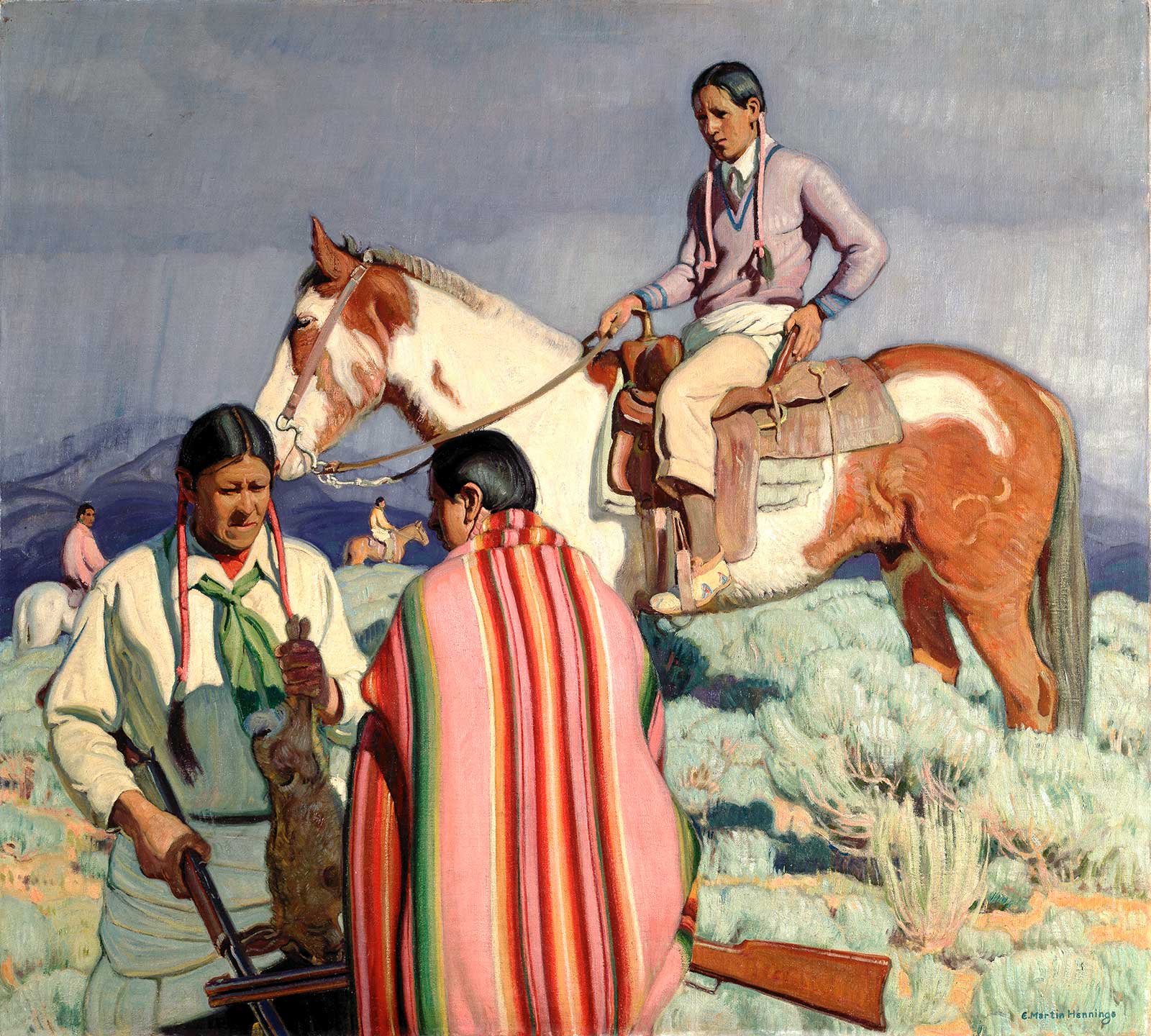 E. Martin Hennings (1886-1956), Rabbit Hunt, ca. 1925, oil on canvas, 35½ x 39½”. Denver Art Museum: William Sr. and Dorothy Harmsen Collection, 2001.449. © E. Martin Hennings.
From March 5 through June 27, the Frist Art Museum partners with the Petrie Institute of Western American Art at the Denver Art Museum for the exhibition Creating the American West in Art, drawing from the extensive collection of the Denver Art Museum. The museum explains, “Throughout the 19th and 20th centuries, depictions of the people, landscapes and wildlife of the West fostered a sense of American identity that was rooted in a pioneering spirit of adventure and opportunity.” Nearly 80 paintings and sculptures ranging in date from 1822 to 1946 comprise the exhibition, and feature masterpieces by many well-known artists of the West. It also includes lesser-known artists who contribute to a more complex picture of the West. The museum notes, “This exhibition explores the nuances of a complex American West, including its often challenging history, especially in relation to Indigenous people, and its vibrant cultural and artistic diversity.”
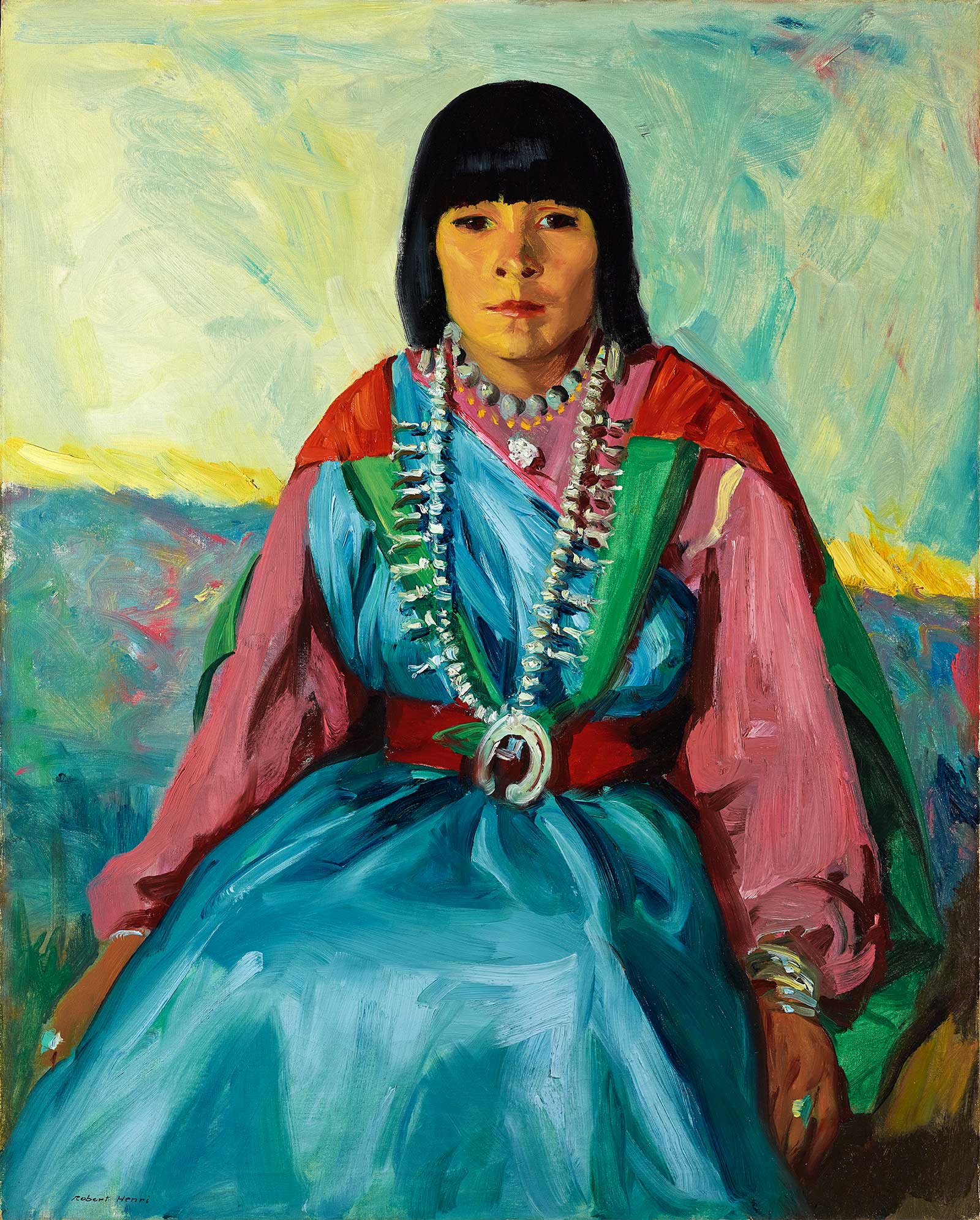 Robert Henri (1865-1929), Tom Po Qui (Water of Antelope Lake/Indian Girl/Romancita), 1914, oil on canvas, 40½ x 32½”. Denver Art Museum: William Sr. and Dorothy Harmsen Collection, 2001.461.
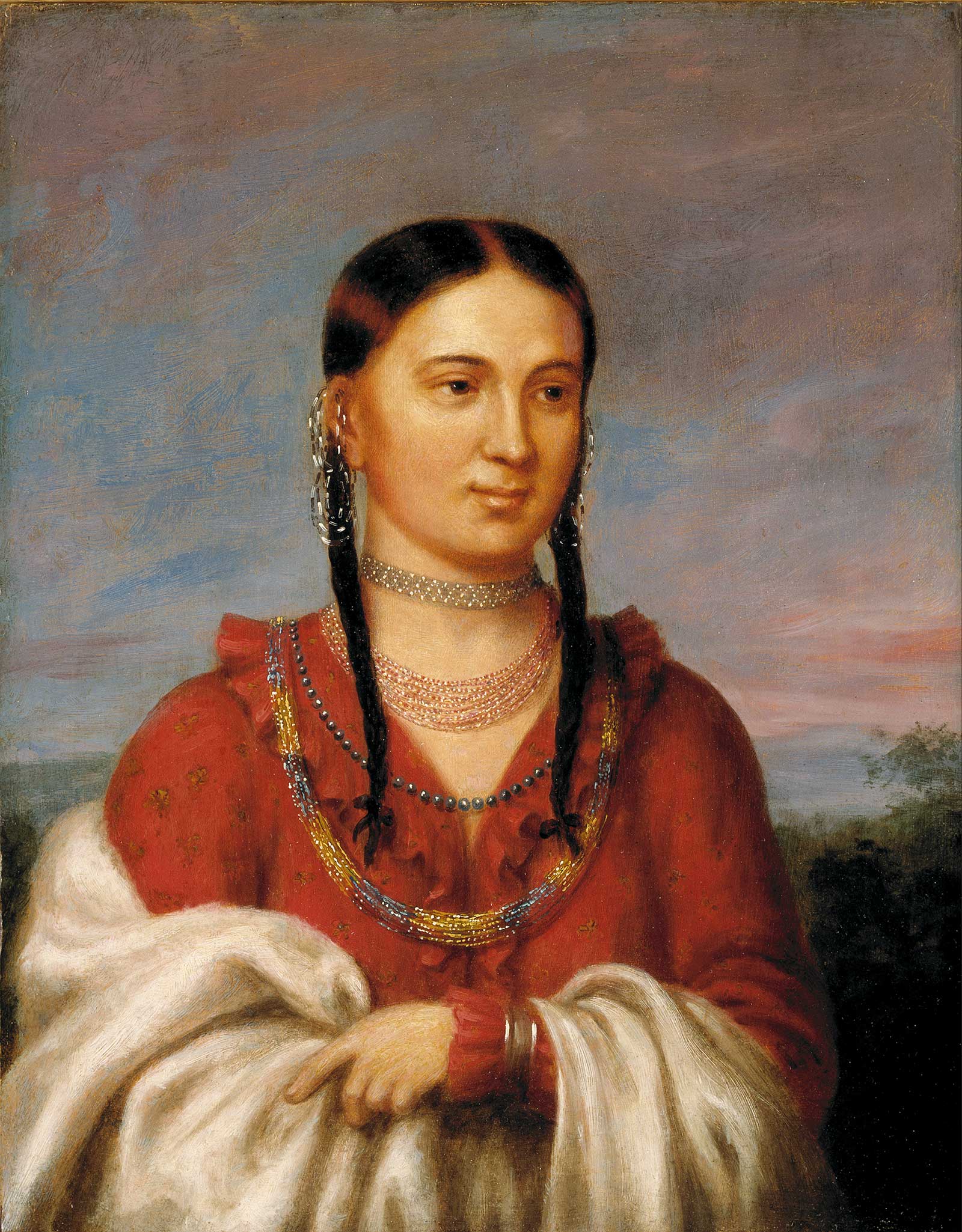 Charles Bird King (1785-1862), Eagle of Delight, ca. 1822, oil on panel, 17 x 13”. Denver Art Museum: William Sr. and Dorothy Harmsen Collection, 2001.462.
The people who made up the historic West were the Indigenous tribes who had lived on the land for millennia, living a rich culture that wed them to the land. Settlers treated them as curiosities and later an inconvenience in their greedy takeover of the land. Artists saw the Native people as a vanishing people. Around the turn of the 20th century, late in its history, Edward S. Curtis (1868-1952), the photographer and ethnologist, set out to create his 20-volume photographic documentation, The North American Indian. He said, “The passing of every old man or woman means the passing of some tradition, some knowledge of sacred rites possessed by no other…consequently the information that is to be gathered, for the benefit of future generations, respecting the mode of life of one of the great races of mankind, must be collected at once or the opportunity will be lost for all time.”
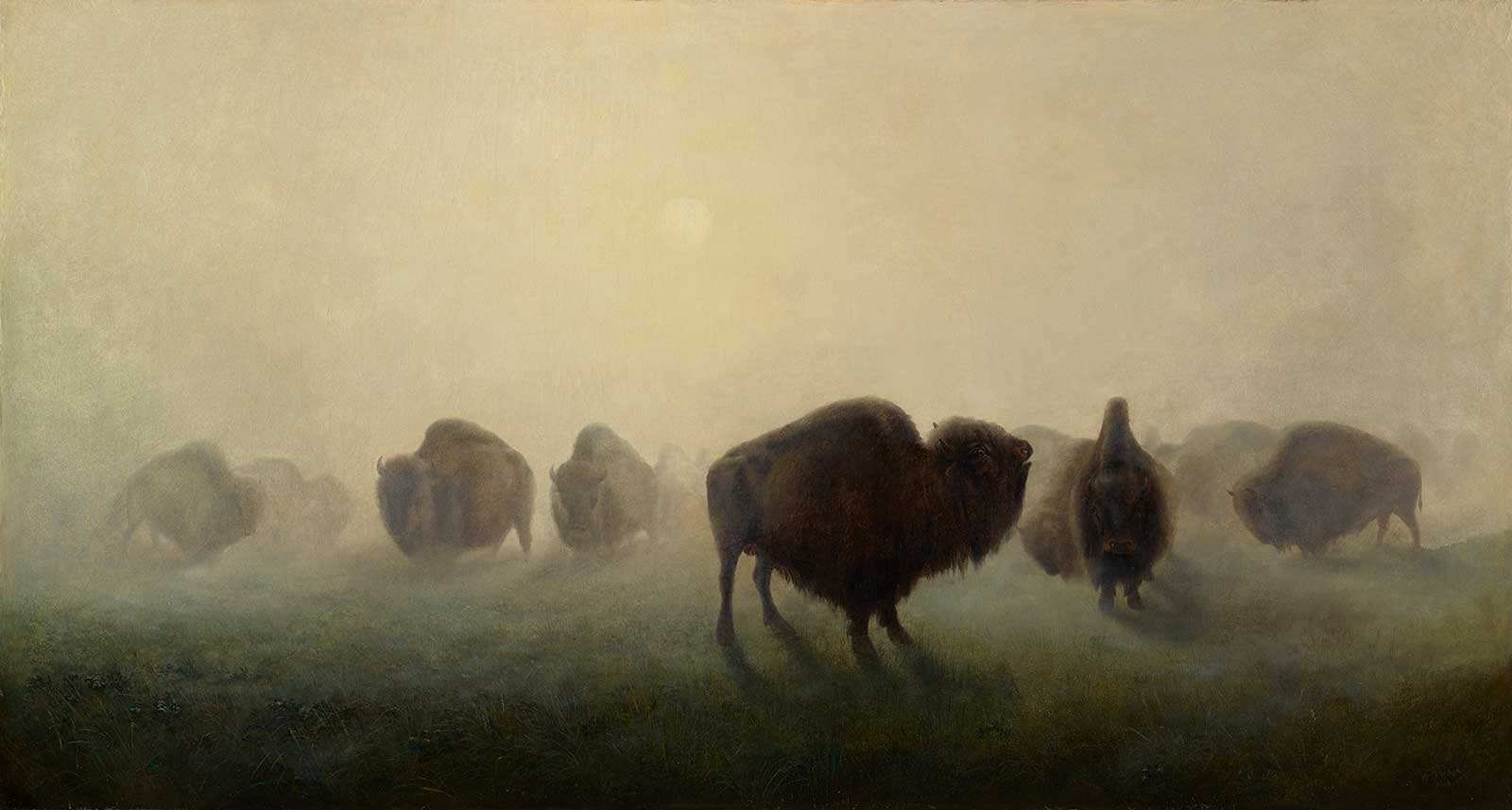 William Jacob Hays (1830-1875), Herd of Buffalo, 1862, oil on canvas, 25½ x 48½”. Denver Art Museum: Fred E. Gates Fund, 1960.39.
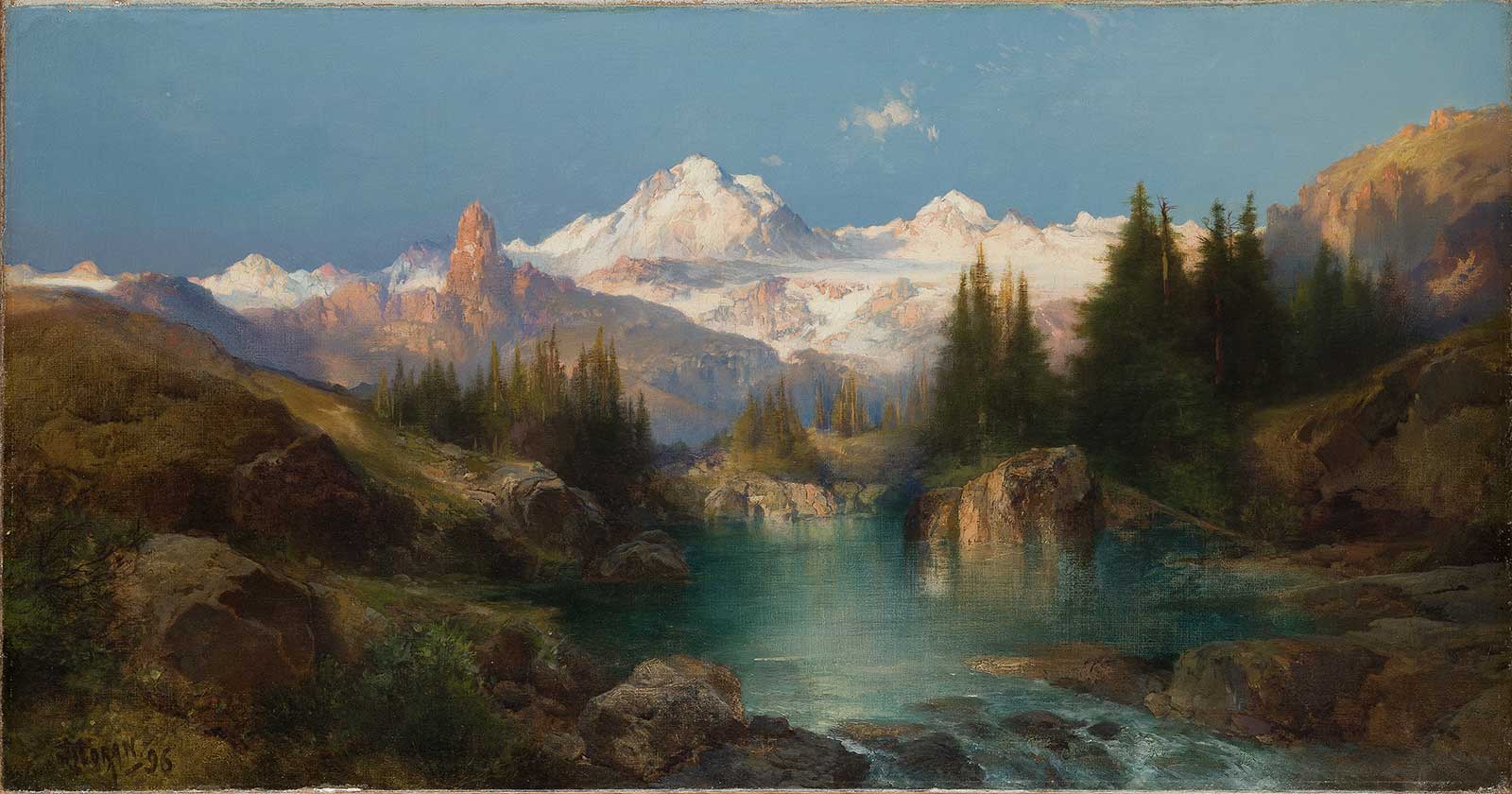 Thomas Moran (1837-1926), A Snowy Mountain Range (Path of Souls, Idaho), 1896, oil on canvas, 14 x 27”. Denver Art Museum: Roath Collection, 2013.109.
One of his photographs, Tom Poqui, 1905, depicts a young Tewa woman posing in a simple woven blanket. Nine years later, Robert Henri (1865-1929) painted the same young woman in his Tom Po Qui (Water of Antelope Lake/Indian Girl/Romacita). She is dressed in colorful clothing and wearing silver and turquoise jewelry. He was living in Southern California when he painted the portrait, influenced by the bright coastal light and his earlier exposure to the work of French modernists.
Charles Bird King (1785-1862) painted his portrait Eagle of Delight in 1822. Hayne Hudjihini (Otoe-Missouria) accompanied her husband and a group of Otoe leaders to Washington, D.C., to meet with President James Monroe to discuss their tribe’s sovereignty. King painted her when she was there. Shortly after returning to Nebraska, she died of measles.
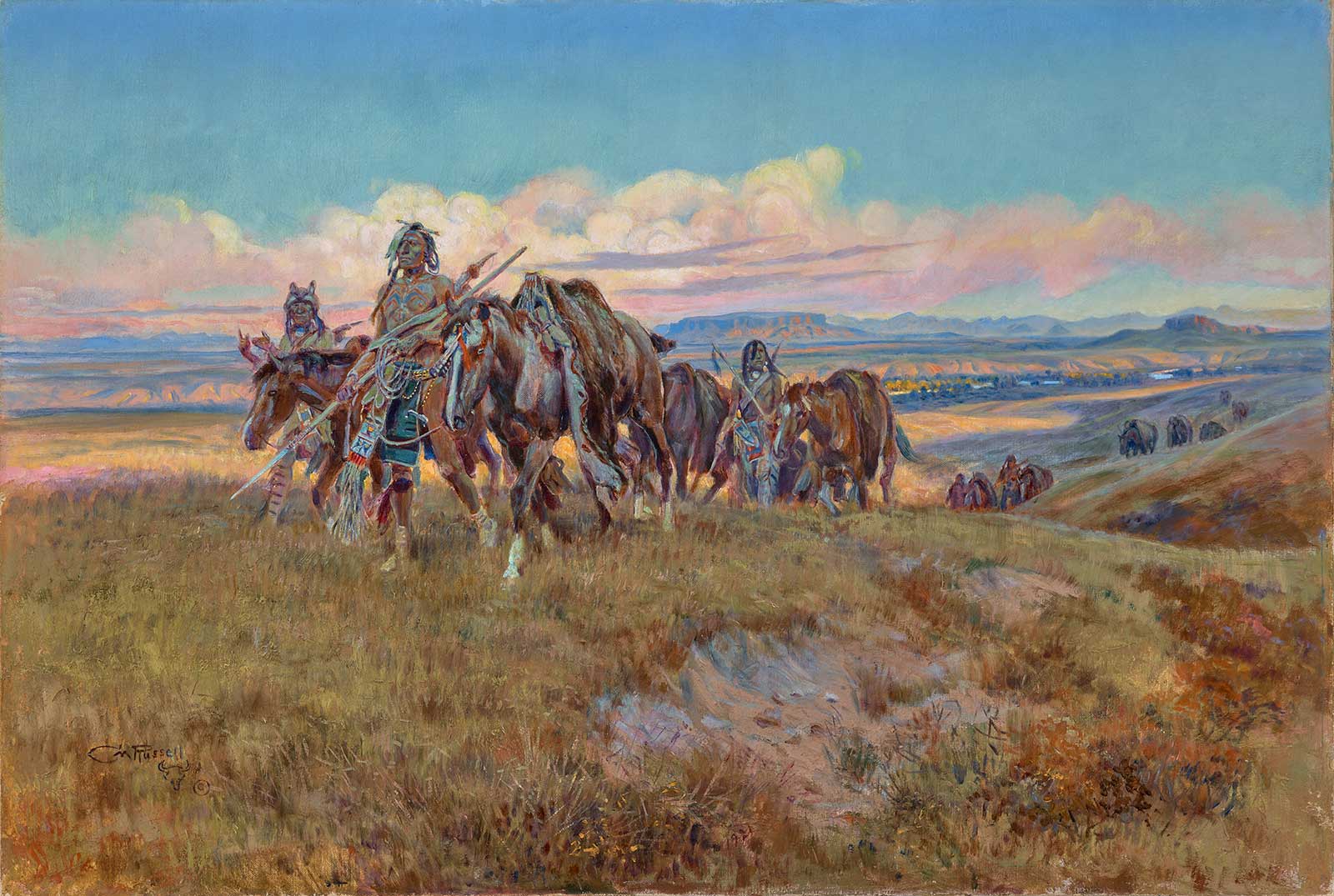 Charles M. Russell (1864-1926), In the Enemy’s Country, 1921, oil on canvas, 24 x 36”. Denver Art Museum: Gift of the Magness Family in memory of Betsy Magness, 1991.751.
Early artists of the West were amazed by the landscape and the abundant wildlife. William Jacob Hays (1830-1875), a naturalist and a painter, took a boat up the Missouri River in 1860, recording the flora and fauna as well as documenting the forts and other installations along the route. He wrote frequently to his parents and remarked to his father about seeing his first buffalo. “The day before we reached Fort Union we saw the first buffalo, the same afternoon we met two buffaloes swimming in the river and soon killed them. There was a perfect volley of balls poured into them. They were taken on board. The meat was very good.” Later, he wrote to his mother, “On my way down the river I saw thousands of buffalo they covered the bluff and prairie as far as we could see.” Well-known in his day, he is seldom mentioned today.
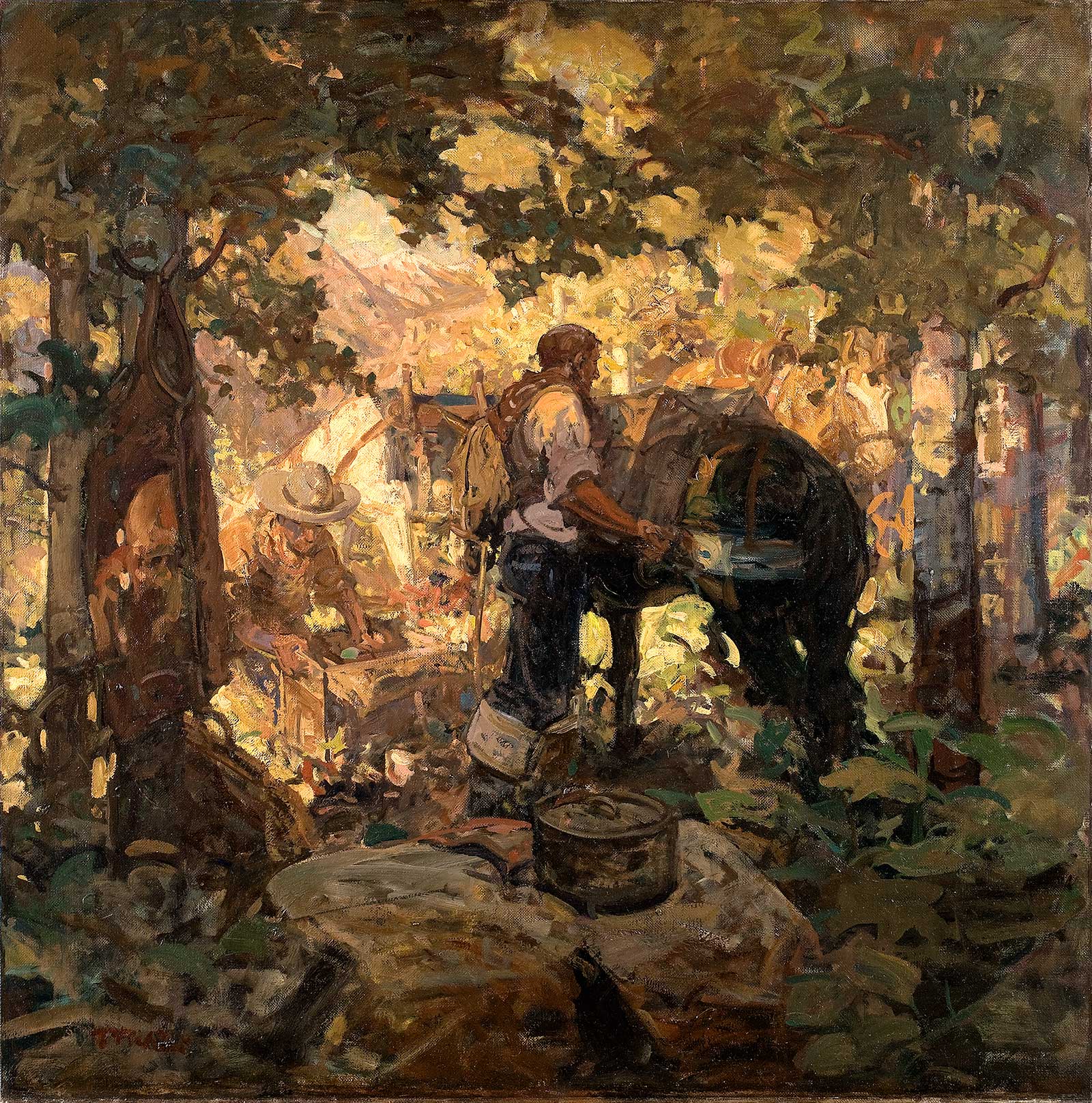 Allen Tupper True (1881-1955), A Wanderlust Memory, ca. 1912, oil on canvas, 37¼ x 37¼”. Denver Art Museum: Funds from Helen Dill bequest, 1936.2.
His painting Herd of Buffalo, 1862, is in the exhibition. In a speech at the Lyceum of Natural History of the City of New York in 1871 he described the decline of the animals: “The Bison...at the rate at which they have been driven back and destroyed, it is probable that they are soon to be known only in history...the number destroyed by man each year [is] not less than half a million.”
Thomas Moran (1837-1926), an immigrant from England, when he was young, traveled West and painted romantic landscapes influenced by his countryman J.M.W. Turner (1775-1851). His paintings of Yellowstone were influential in the preservation of the region and the establishment of the country’s first national park in 1872. His painting A Snowy Mountain Range (Path of Souls, Idaho), 1896, is in the exhibition. The mountain in the painting is named Mount Moran in his honor.
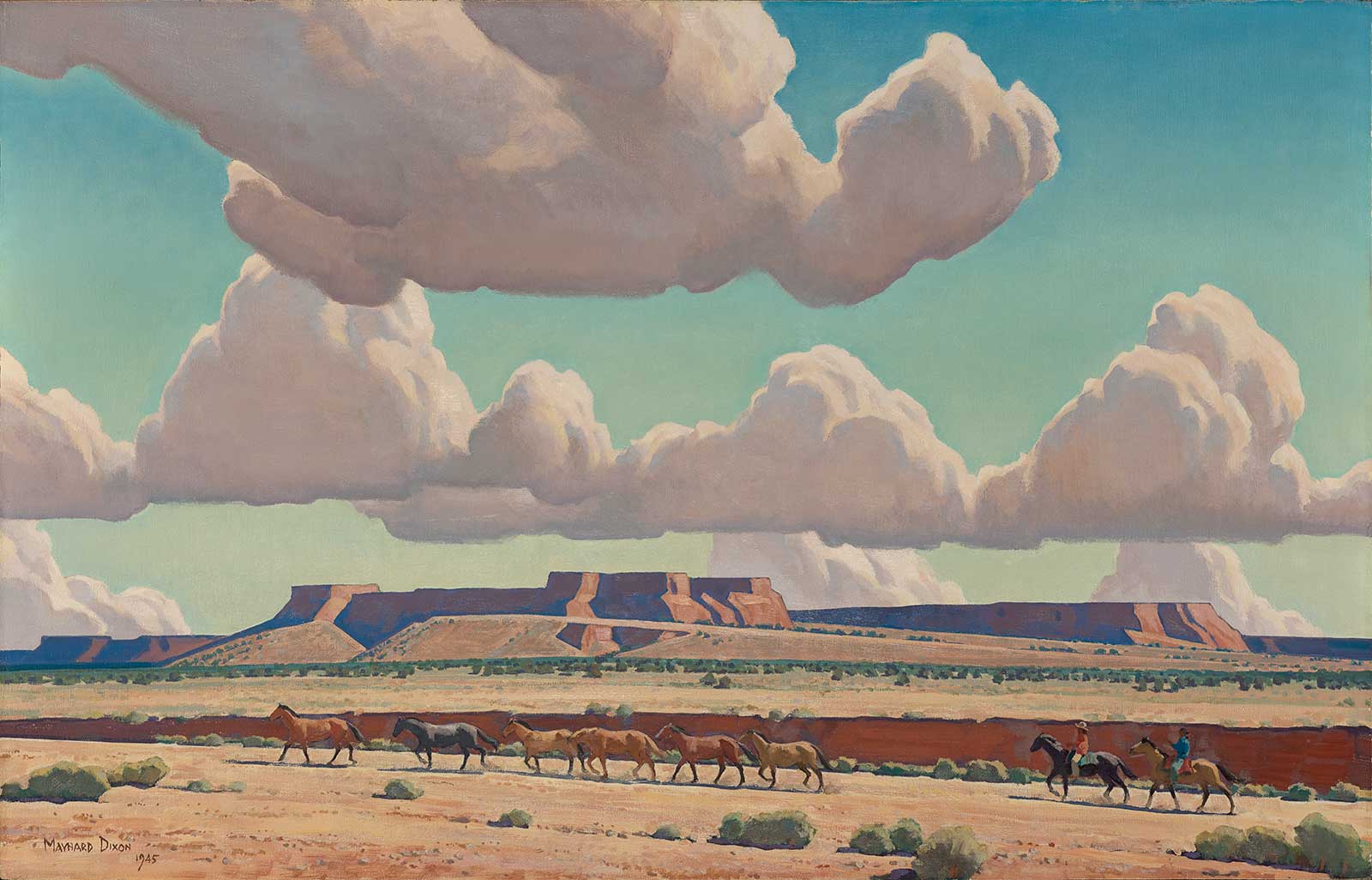 Maynard Dixon (1875-1946), Wide Lands of the Navajo, 1945, oil on canvas board, 24 x 38”. Denver Art Museum: Roath Collection, 2013.100.
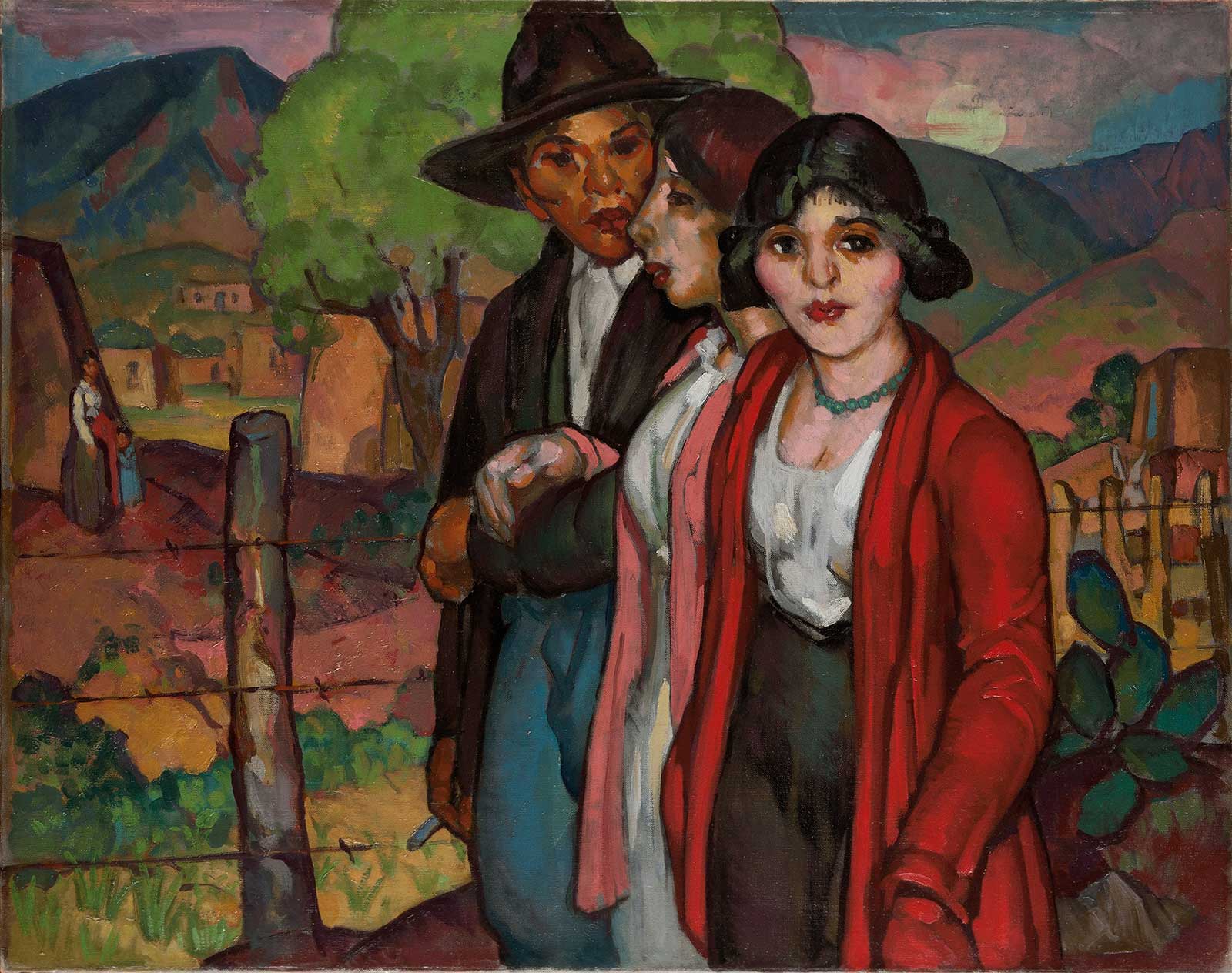 William Penhallow Henderson (1877-1943), The Chaperone, ca. 1916, oil on canvas, 23½ x 29½”. Denver Art Museum: Gift of Mrs. Edgar Rossin, 1974.16.
Maynard Dixon (1875-1946) was born in California and was later advised by his mentor Charles Lummis (1859-1928) to “travel east to see the real West.” He went and was captivated. His command of light and color is distinctive. His style evolved during the period of modernism and he adopted its simplified forms. Wide Lands of the Navajo, 1945, is a fine example of his later work.
The life of the cowboy is integral to the romantic history of the west. Their hard work is illustrated in both paintings and sculpture in the exhibition. Bronzes by Charles M. Russell (1864-1926) and Frederic Remington (1861-1909) are joined by works by Solon Hannibal Borglum (1868-1922), sculptor of the presidents on Mount Rushmore, on land confiscated from the Sioux, and a bronze by Alexander Phimister Proctor (1860-1950)
Proctor wrote, “I am eternally obsessed with two deep desires—one, to spend as much time as possible in the wilderness, and the other, to accomplish something worthwhile in art.” His sculpture, Buckaroo, 1914-15, is in the exhibition.
Powered by Froala Editor