Joel Piassick walked into a gallery in New Orleans and was struck by a painting by Robert McMurtry (Comanche, 1950-2012). “It was like nothing I had ever seen. It was so graphic. I took a chance and bought it and brought it home on the plane.” It was unusual for Joel to purchase something for him and his wife Karen’s collection without consulting with her first. But she liked the painting. “We generally agree about 80 to 90 percent of the time.” Joel explains. Karen disagrees. “I think it’s close to 100 percent. We like the same type of art.
I also like Victorian silver.” “I like bronzes that tell a story,” Joel adds. “When we get auction catalogues,” he says, “we each go through and tag things and later see what we agree on. When we go to a show or to an auction in person, we go through with a completely open mind.”
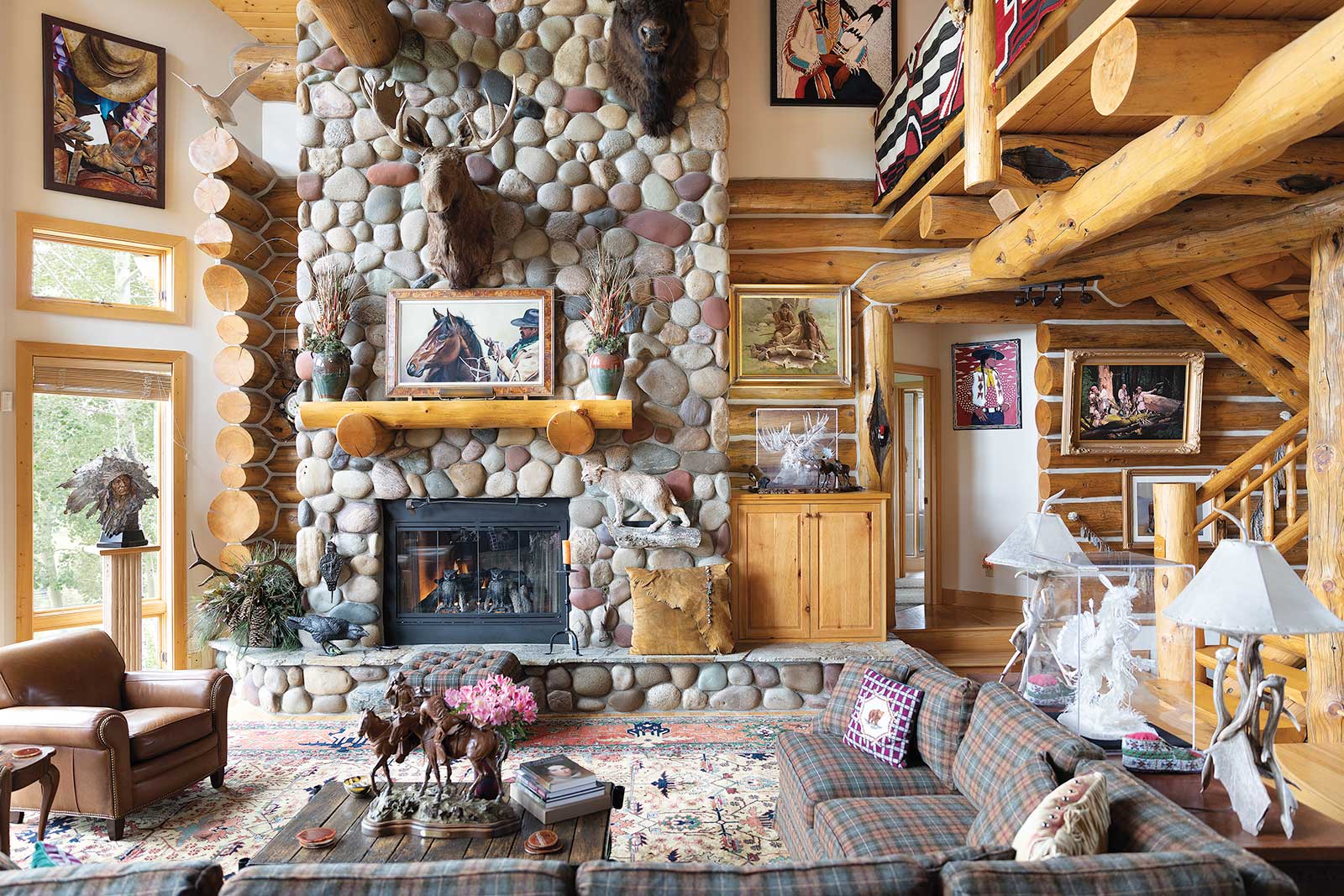 High on the left wall is Nelson Boren’s watercolor Old Hat Worn Leather. On the mantle is William Matthews’ watercolor Headstrong. Above the cabinet is In the Morning Mist, oil, by Z.S. Liang. On the landing is Tuibitsi, acrylic by Robert McMurtry (Comanche, 1950-2012). To the right is No Sign of Hostiles, oil, by John Buxton. In the window on the left is John Coleman’s bronze Lives with Honor. On the hearth is Jim Eppler’s bronze Raven IID. The owl andirons are antique. To the right of the fireplace is Moose, mixed media, by Dan Chen. On the coffee table is Bill Nebeker’s bronze, Early Morning Mount. Behind the sofa are Sioux Lakota beaded hide Mocassins and Traditional Dancer, cast paper, by Allen and Patty Eckman.
When we covered the Piassick’s Birmingham home in the August 2017 issue of this magazine, I commented, “You give new meaning to the word ‘eclectic.’” Karen remarked that when a friend of their daughter saw a photo of her bedroom she asked, “Is that the bedroom you grew up in? Did you live with all that stuff?” Karen also told me “a tree fell on the Birmingham house a year and half ago so we added some space and were able to acquire four new pieces, two of which are already promised to museums.”
In 1985, the couple bought a condominium on the ski mountain in Steamboat, Colorado. Karen had always wanted a log house so they later moved off the mountain to their current home.
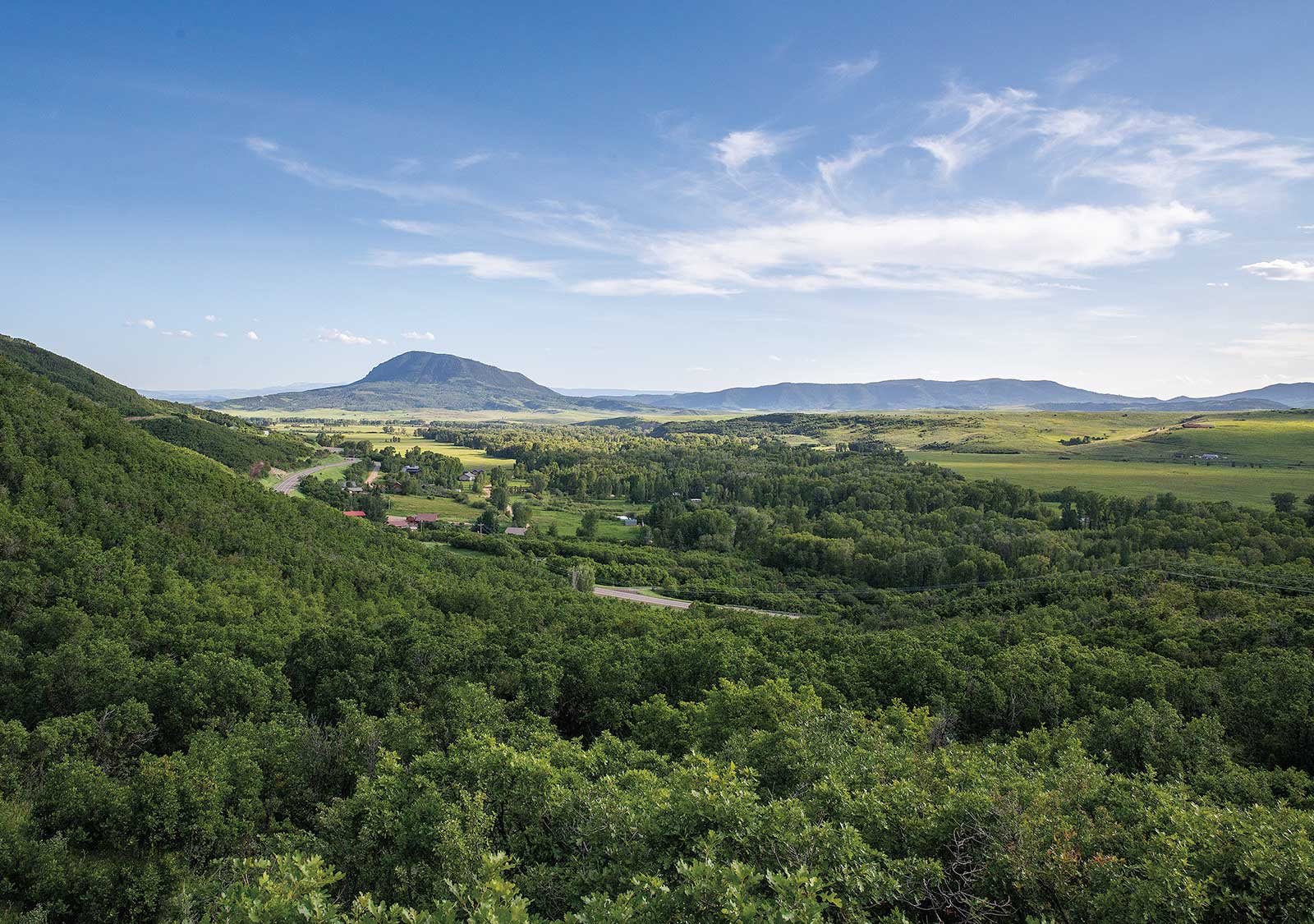 Sleeping Giant and Flat Top Mountains from the Piassick’s home.
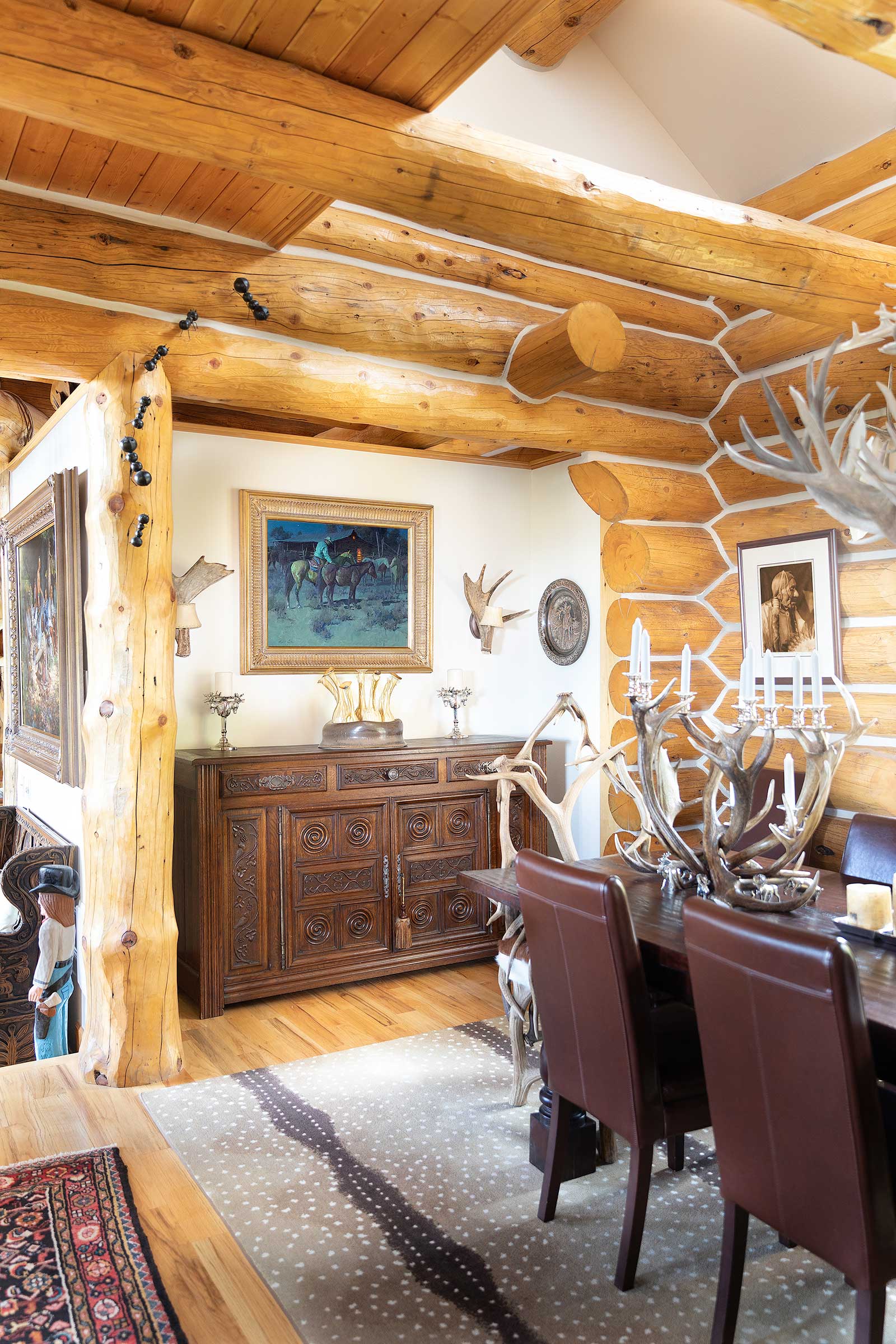 Above the sideboard is Bill Anton’s oil An Old Friend. On the side wall is Esipermi, Camanche, photogravure on tissue, by Edward S. Curtis (1868-1952). To the right of the sideboard is an antique silver charger with an elk motif. Beneath the Anton is Michael Baxley’s ceramic Bloom Set. On the far left is a folk art painted wood Cowgirl. The antler chandelier was made by Joel Piassick.
They had always liked Western art but on a business trip to Atlanta, Joel took a side trip to the nearby Booth Museum of Western Art. “I walked in and was blown away. Karen later went back with me,” he explains. “We joined the museum,” Karen says, “and we started going on some of their trips. We were exposed to a lot more art and became more knowledgeable about galleries, museum shows and auctions.” “One of the great advantages is meeting the artists at their galleries, homes and studios,” Joel comments. “Hearing them explain their work is an unusual benefit. We’ve also met many artists at the Cowboy Artists of America shows.”
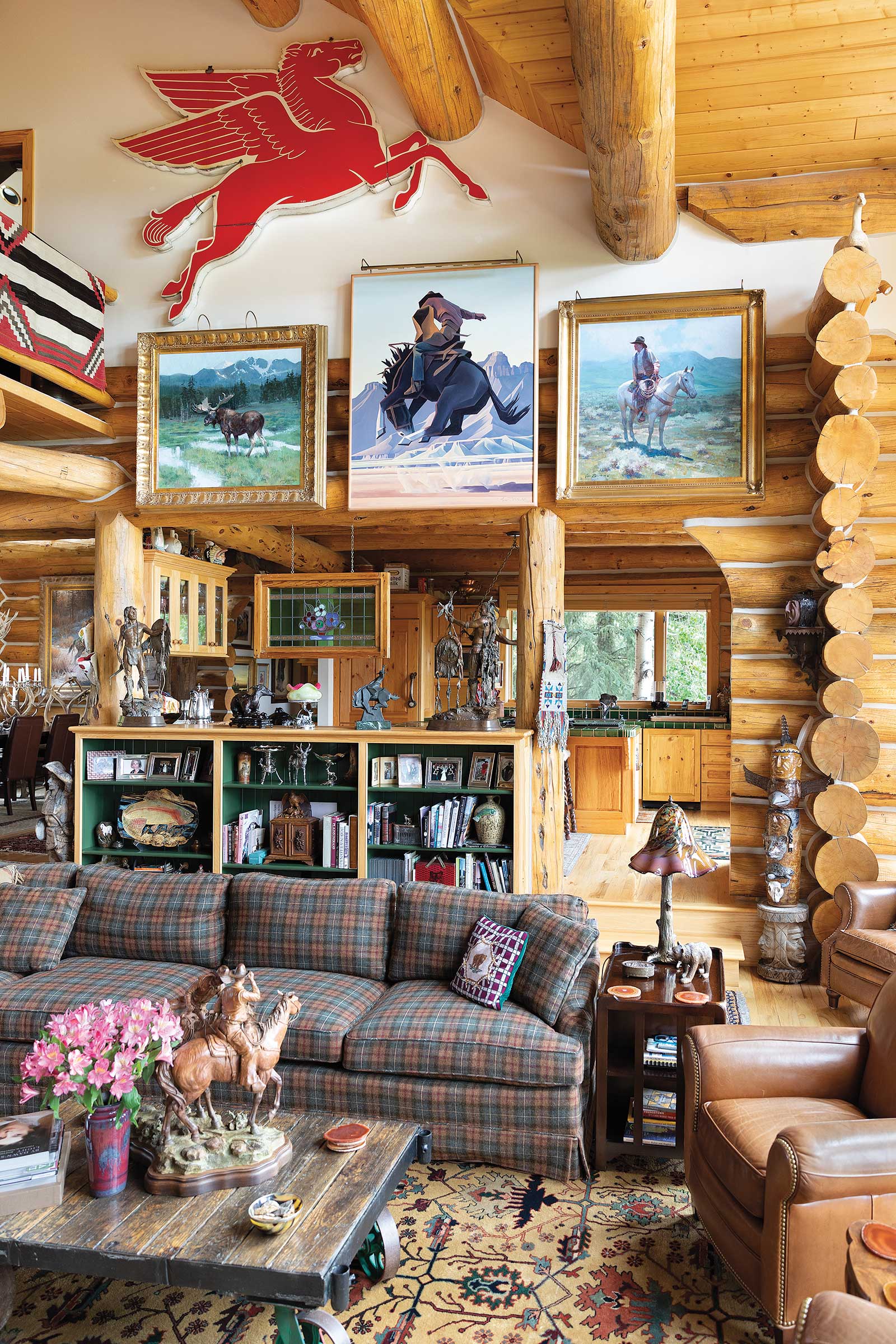 High on the wall is Pegasus, a porcelain steel and painted Mobile Petroleum Co. sign. Beneath it, in the center, is Ed Mell’s oil Jack Knife, flanked by two oils by James Reynolds, King of the Forest on the left and Tall in the Saddle. On the railing is a Navajo wearing rug. To the left, on the post, are Plateau beaded hide gauntlets. On top of the bookcase, from left, is John Coleman’s bronze, Hisoosanchees, Little Spaniard; a carved wood goat from the Black Forest; an antique glass and sterling wedding bowl; Mell’s Jack Knife in bronze; Coleman’s bronze Pasheepaho, Little Stabbing Chief; and a Sioux beaded hide Tobacco Bag. Melvin and Michael Crocker’s ceramic Indian Princess is on the far right. On the floor to the left is a cigar store Indian. In the bookcase are sterling silver compotes and Black Forest pieces. The ceramic platter is a Rainbow Trout by Gail Price. On the floor to the right is a ceramic Totem by Ned Berry. On the coffee table is Bill Nebeker’s bronze Early Morning Mount.
When they were visiting Bill Nebecker’s home and studio on a Booth Museum trip, Karen fell in love with his sculpture, Early Morning Mount, which was in his personal collection. Joel recounts that Karen asked if it was for sale. The artist said it was not. Before long, however, he agreed to give it up and it became a cherished part of their collection.
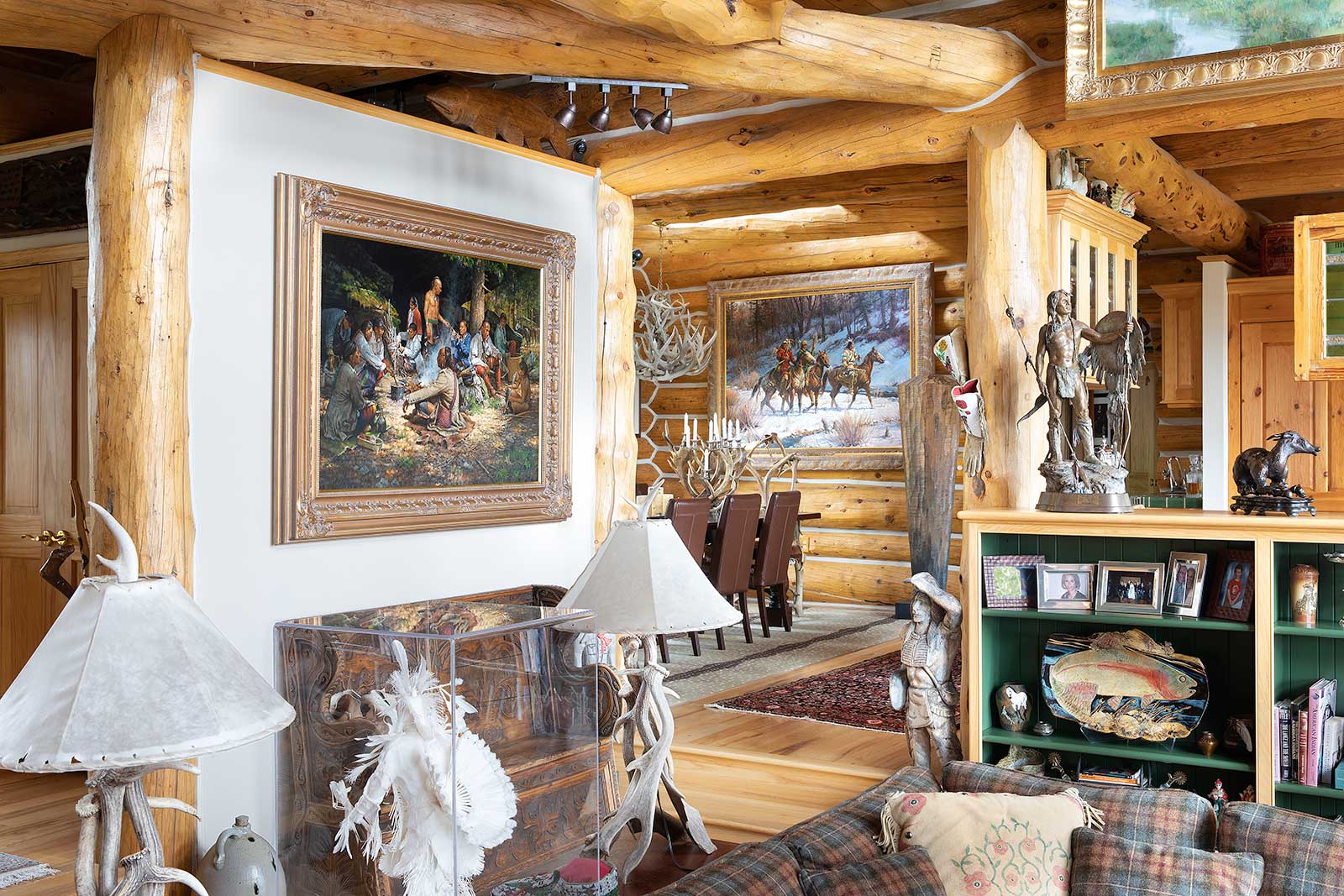 On the left is Robert Griffing’s oil Camp at Bear Rock. Through the passageway into the dining room is Martin Grelle’s oil On a Winter’s Quest. An antique wood Indian stands in front of Michael Bauermeister’s wood floor vase. Hanging above them are Plateau beaded hide gaunlets. John Coleman’s bronze Hisoosanchees, Little Spaniard is on top of the bookcase.
Both Karen and Joel were brought up in Ohio and were familiar with the Eastern Indians. They saw Robert Griffing’s oil Camp at Bear Rocks at a Masters of the American West show at the Autry Museum of the American West and knew they wanted it for their collection. Most museum shows and sales require bidders to drop a ballot into a box next to the artwork. The winner is drawn from the box. “The planets lined up,” Joel observes, and they became the proud owners.
Visiting the Tacoma Museum of Art they fell in love with a sculpture, Elk Buffalo, by Henry Merwin Shrady (1871-1922). Joel told their friend Graham Boettcher, director of the Birmingham Museum of Art, about it. Boettcher later told them a cast from the edition was coming up for sale at the Scottsdale Art Auction. “We went to the auction and bought it,” Joel says proudly. It now graces their home in Birmingham.
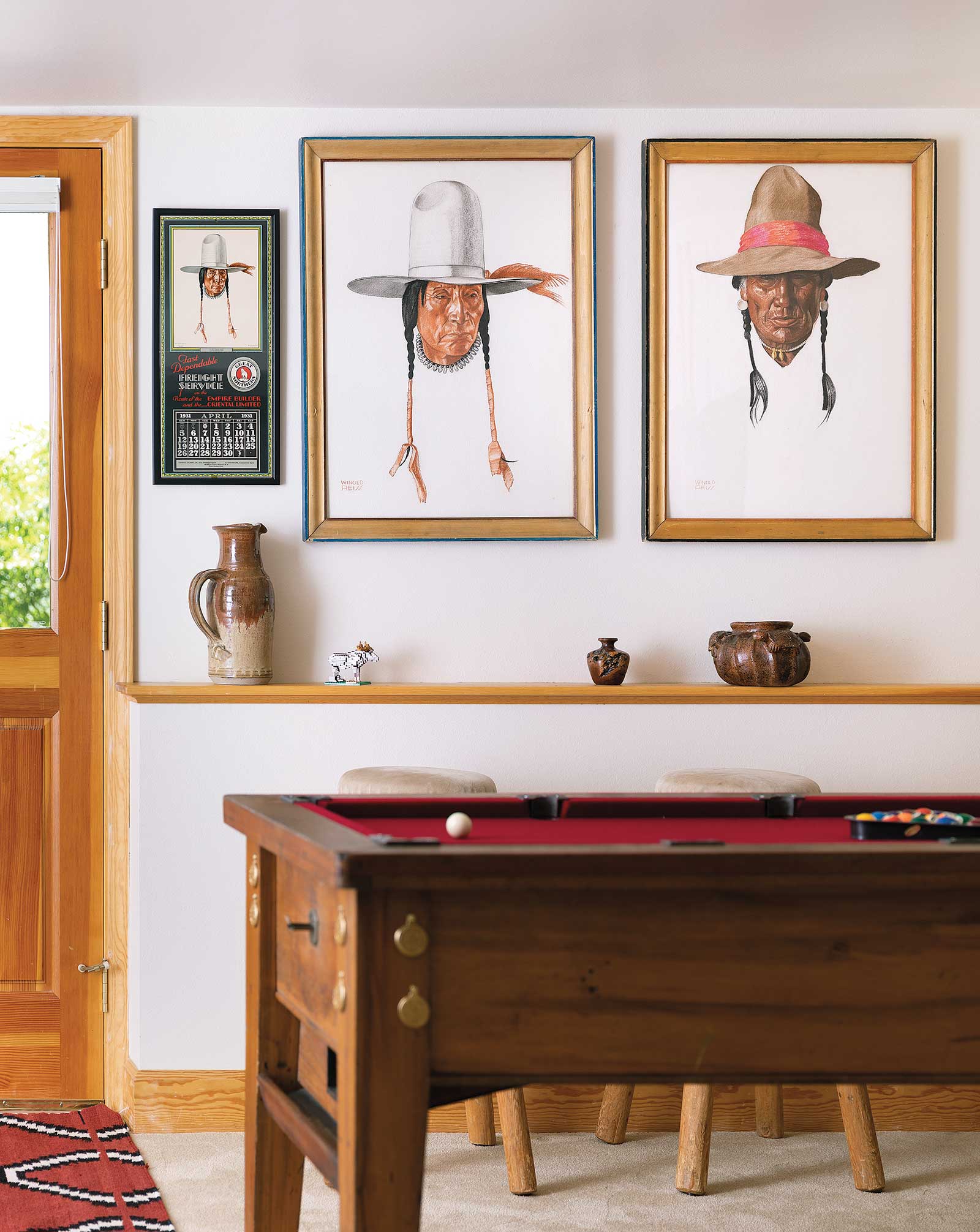 Two pastels by Winold Reiss (1886-1953), Mike Short Man and Chief Eagle Calf, hang next to a reproduction of Mike Short Man on a 1931 Great Northern Railroad calendar. A folk art Cowboy Rider, painted iron, is on the shelf. In the foreground is an antique snookum table, found and refurbished by Joel.
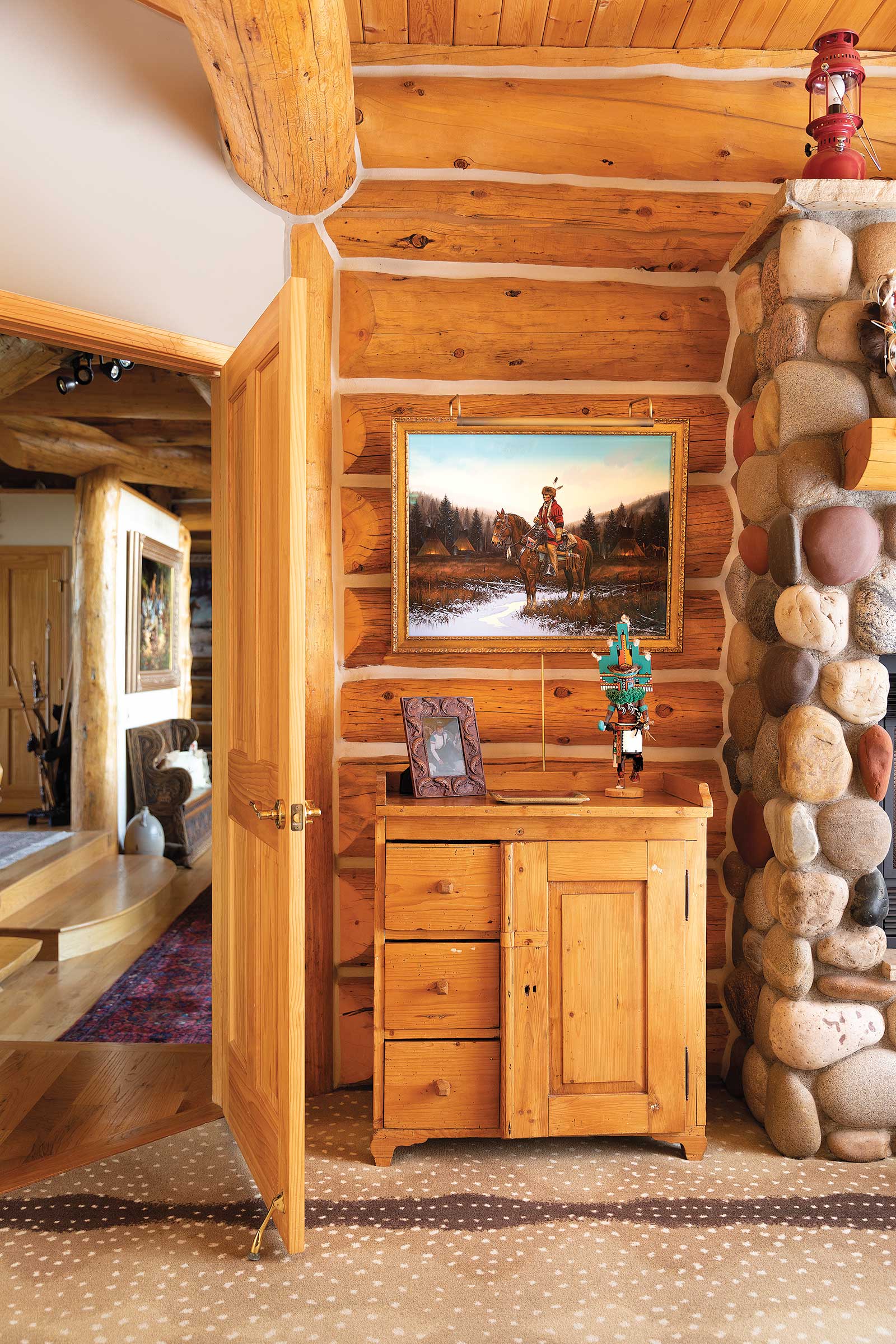 Above the cabinet is Blackfoot Scout, gouache, by John Paul Strain. On the chest is a Hopi katsina, Eagle Dancer, by R. Dunyeric.
In addition to visiting artists’ studios and homes on their museum tours, they also invite artists and collectors into their own home. On one occasion, our editor, Josh Rose, attended a luncheon and saw Ed Mell’s painting Jack Knife, 1985, hanging on the wall. The Piassicks had bought it at auction. As a friend of Mell’s, Josh knew the artist had lost track of the painting after it had left the hands of the original owners. Mystery solved. Jack Knife the painting predates Jack Knife the sculpture which was commissioned in 1993 by Scottsdale Public Art and commands the intersection of Main Street and Marshall Way. A bronze cast from a smaller edition sits on a shelf beneath the painting.
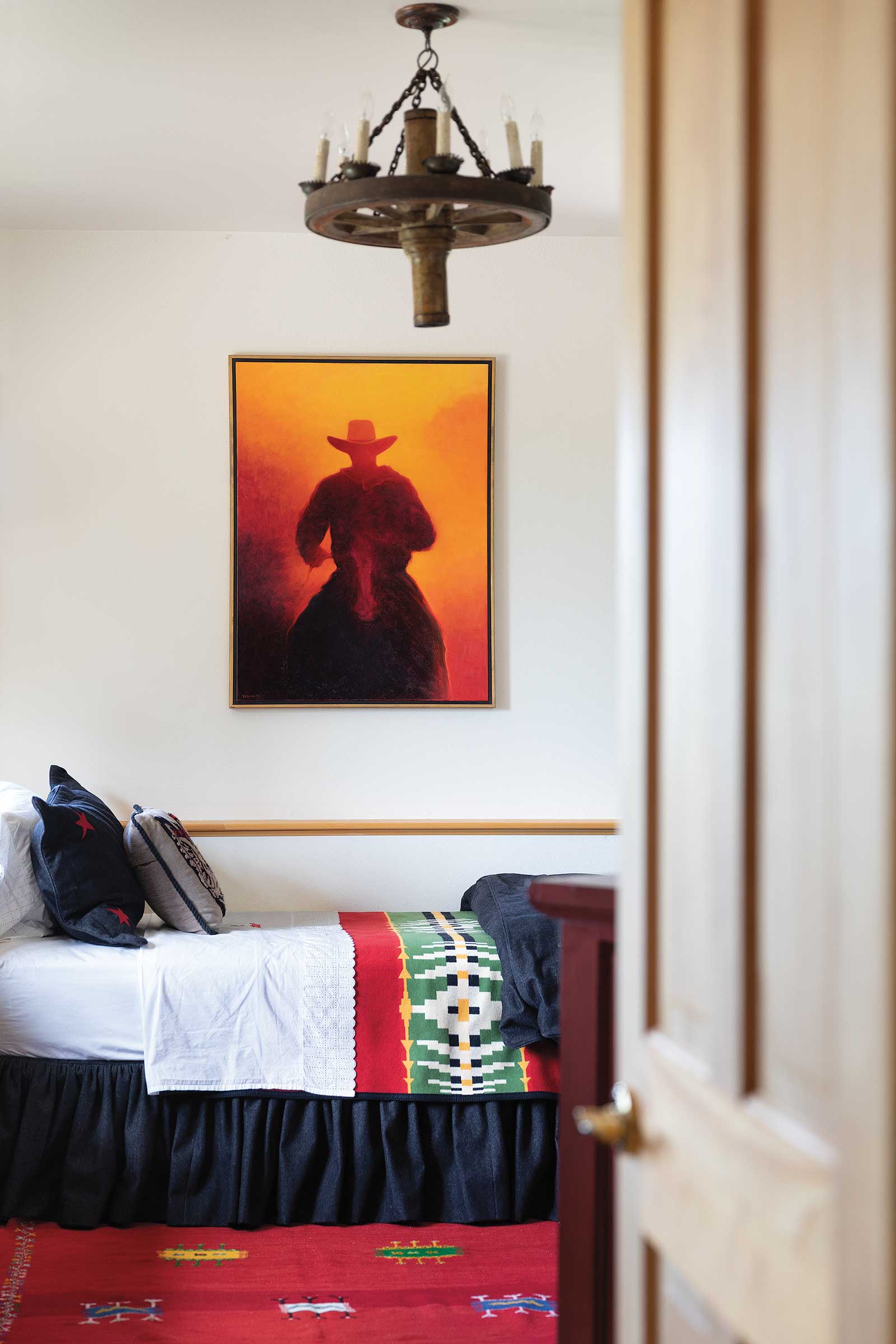 Hanging in a bedroom is Terry Samples’ oil stick work Red Rider.
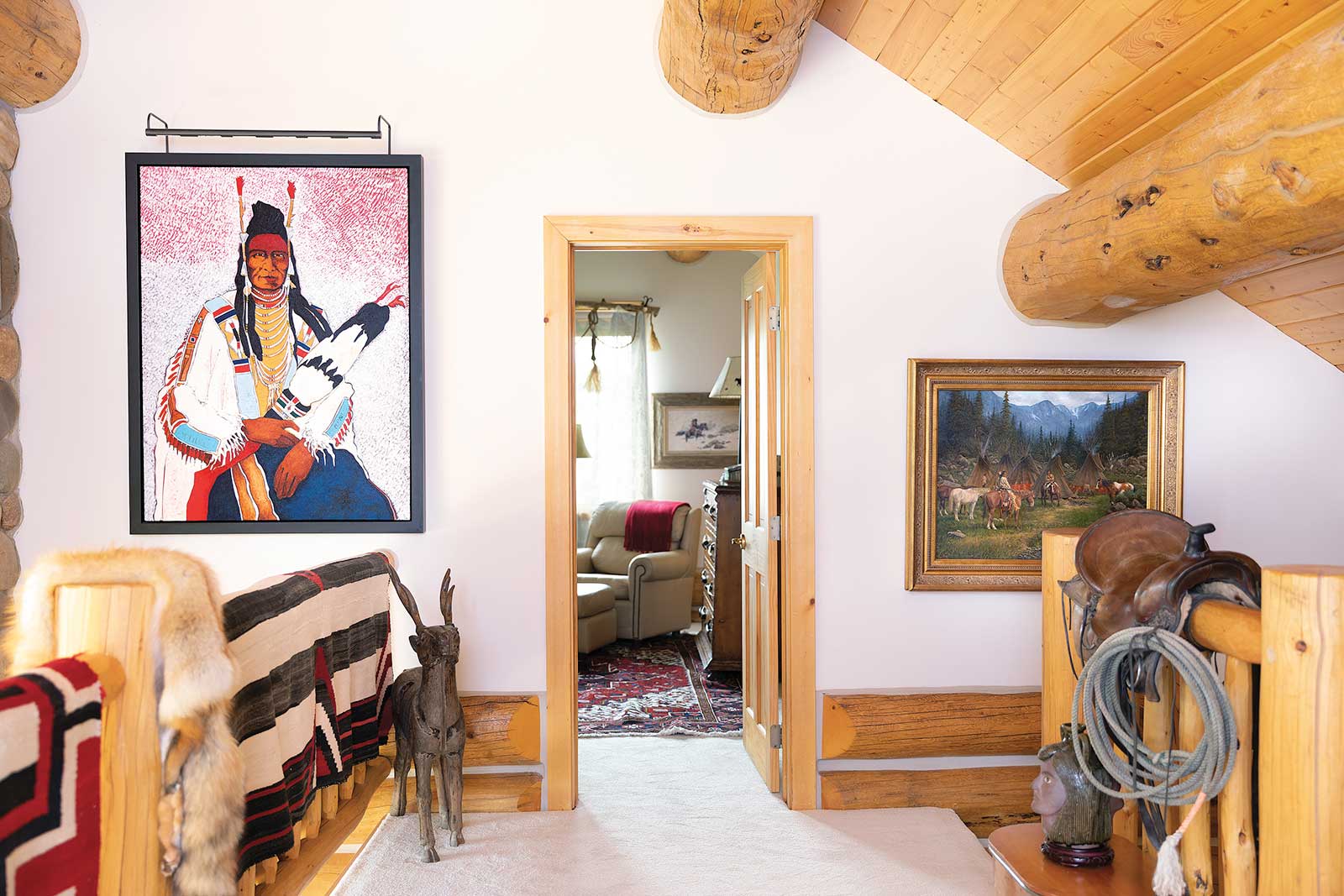 Big Bad Wolf, mixed media, by Kevin Red Star (Crow) hangs on the left. Hanging on the railing are Navajo wool wearing blankets. To the right of the door is Dan Bodelson’s oil Summer Camp. On the right railing is a Schooling Saddle from the Perry-Mansfield Performing Arts School & Camp in Steamboat Springs, Colorado. On the bench beneath it is a ceramic Indian Warrior by Michael and Melvin Crocker.
Both collectors serve on the board of directors of the Steamboat Art Museum. “Culture is part of our life,” Karen says. “It’s not just what’s on the walls. I can’t imagine living without some sort of cultural activity.”
“It’s not just owning the art, it’s living with it.” Joel adds. “In the evening we can turn off the overhead lights and turn on the picture lights, walk around and see something new every time we look at them.”
Powered by Froala Editor