When gold was discovered at Sutter’s Mill in 1848, California’s fate was sealed as a place where fortunes would be made and lost in the West for decades to come. Not only did miners descend on the state—its motto, “Eureka!” relates to the gold find—but so did early photographers.
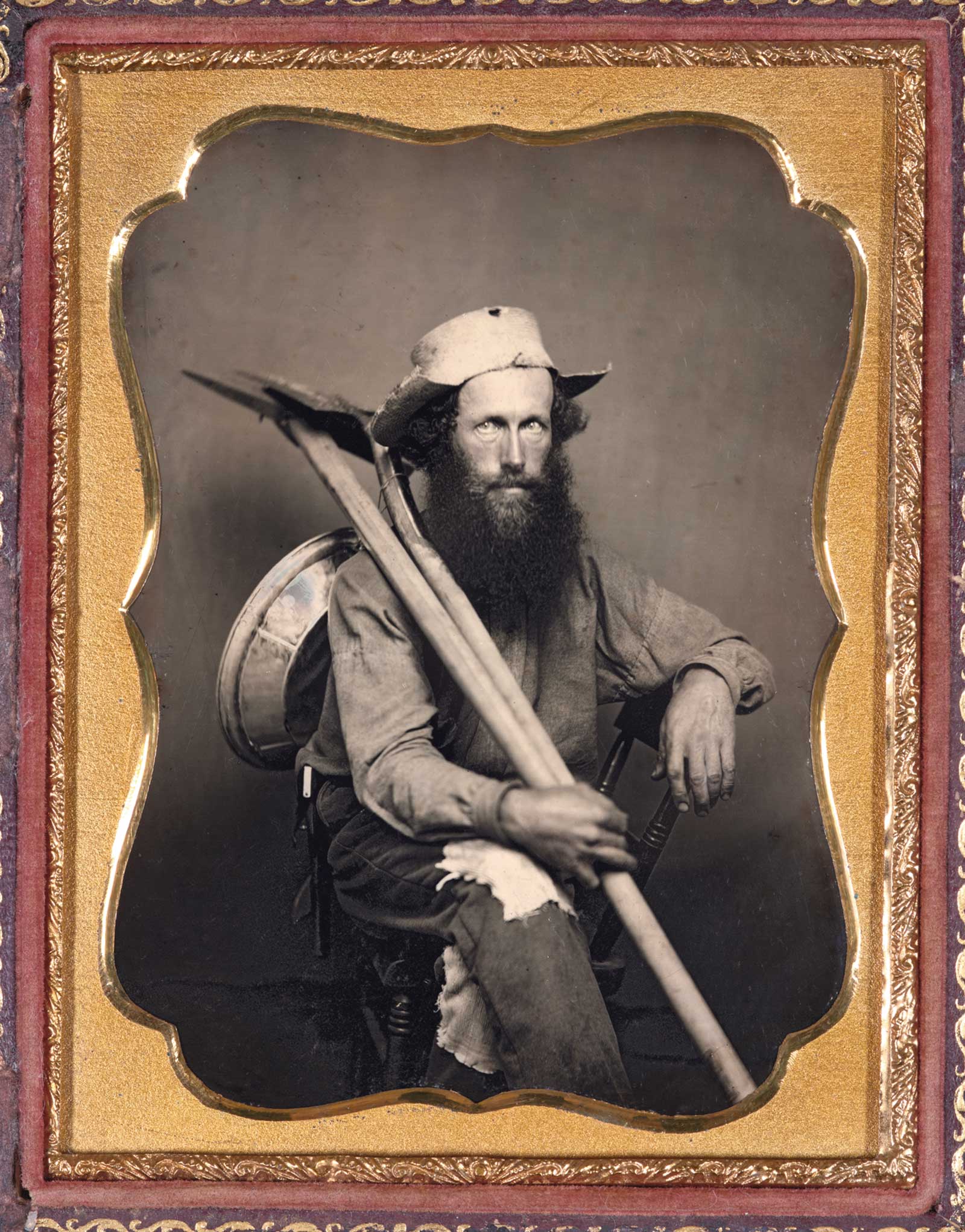 Portrait of a California gold miner with tools, about 1850, Daguerreotype, quarter plate, 4¼ x 3¼”. The Nelson-Atkins Museum of Art, Kansas City, Missouri. Gift of Hallmark Cards Inc., 2005.27.115.
Some of those early photos of the search for gold are now part of a new exhibition at the Peabody Essex Museum in Salem, Massachusetts. Gold Rush: Daguerreotypes of Early California opens April 4 and features images that reveal a nation on the cusp of economic, social and environmental change. Organized by the Nelson-Atkins Museum of Art and curated by Jane Aspinwall, Gold Rush: Daguerreotypes of Early California will feature nearly 100 works and provide an insightful look into this historic event through the eyes of early photographers.
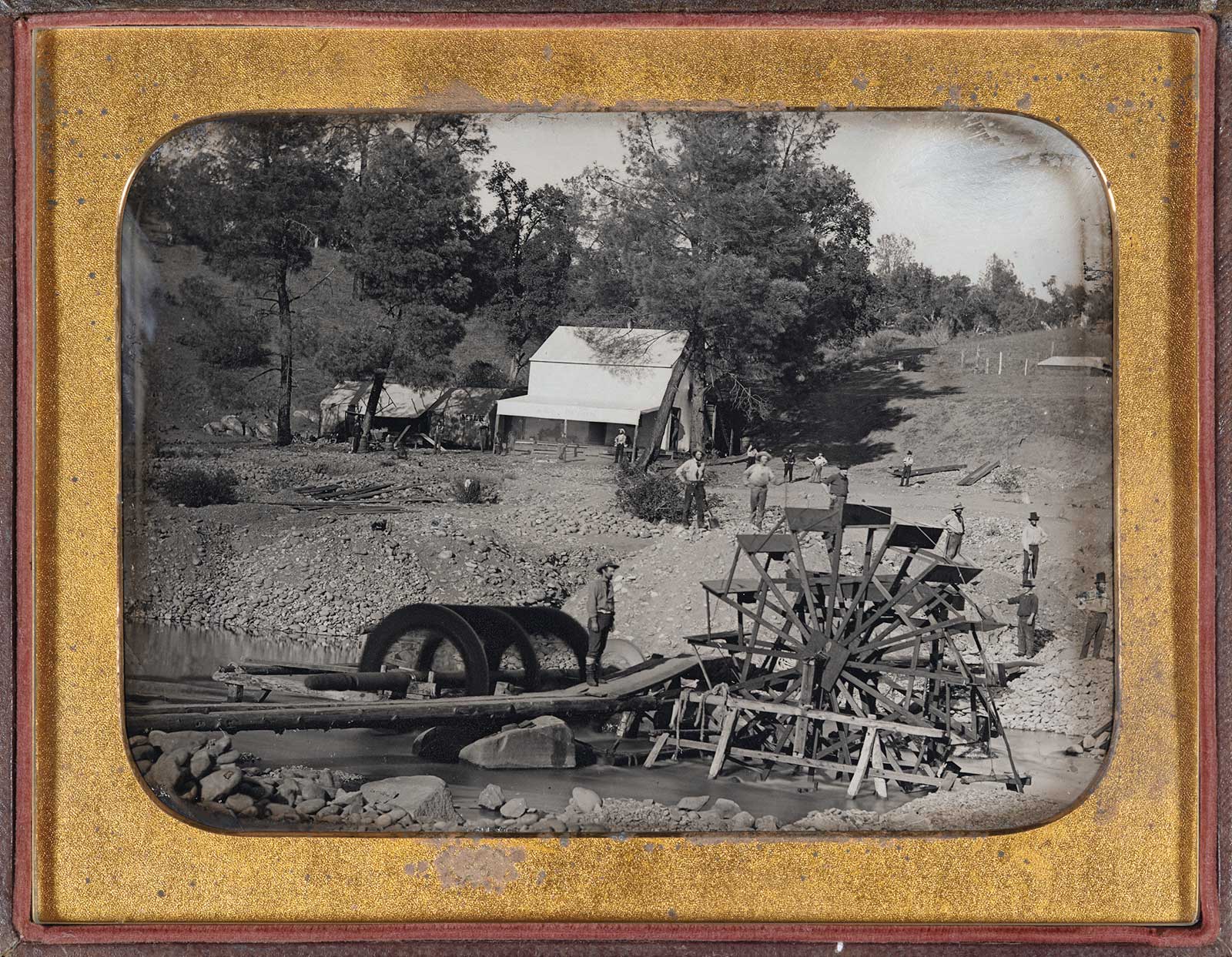 River mining, North Fork, American River, California, about 1850-55, Daguerreotype, half plate, 5½ x 4½”. The Nelson-Atkins Museum of Art, Kansas City, Missouri. Gift of Hallmark Cards Inc., 2005.27.112.
“These photographs offer a rare glimpse into 19th-century America, providing vivid detail and realism,” says Lynda Roscoe Hartigan, PEM’s James B. and Mary Lou Hawkes Deputy Director. “This early form of photography astonished viewers with extraordinary images of everyday life during the gold rush, including city views, studio portraits, gold towns and miners at work in the fields—with a high level of technical and artistic achievement.”
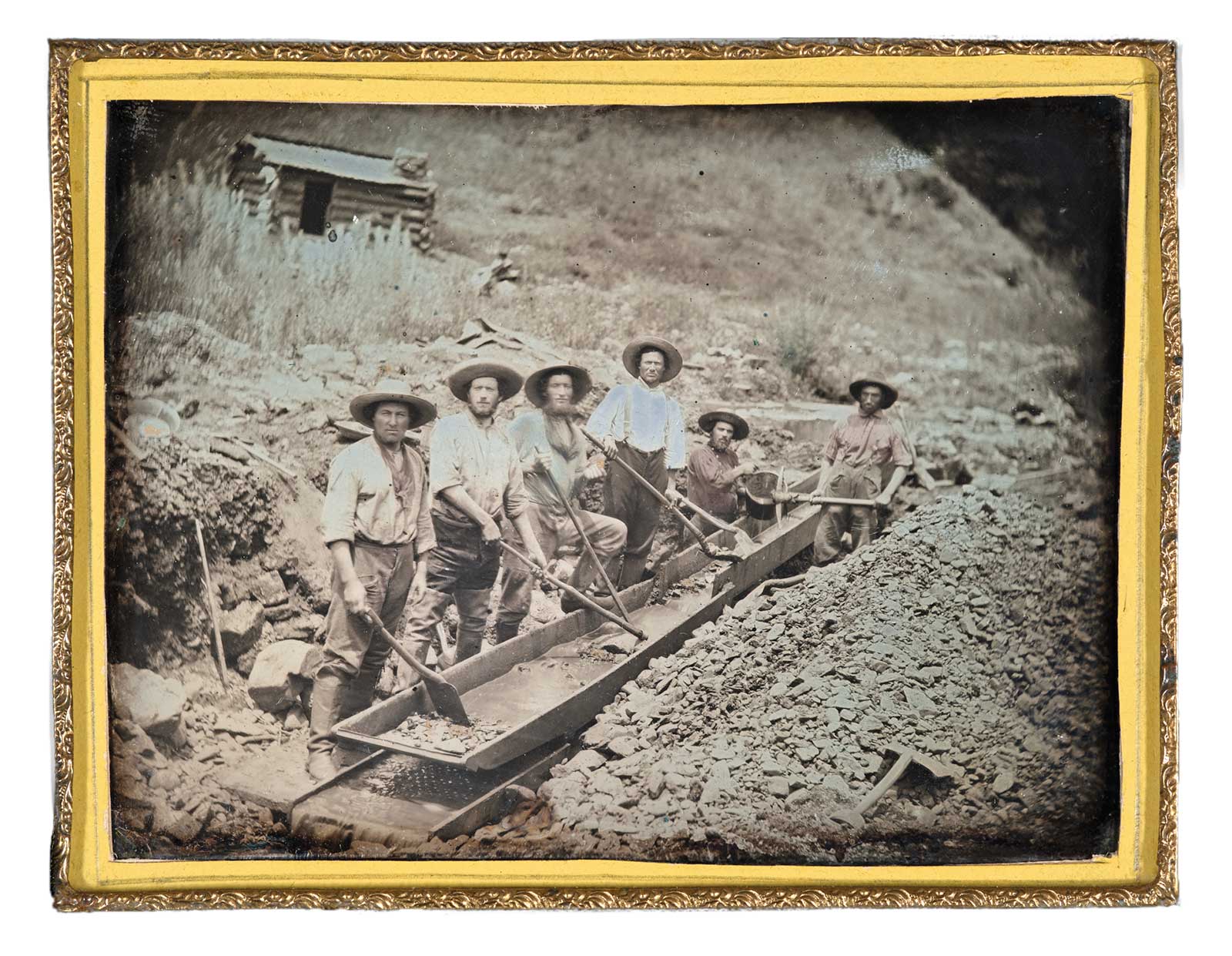 California gold miners with long tom, about 1850, Daguerreotype, quarter plate, 3¼ x 4¼”. The Nelson-Atkins Museum of Art, Kansas City, Missouri. Gift of Hallmark Cards Inc., 2005.27.116.
Despite the promise of endless opportunity, most people who ventured to California in search of gold instead found a combination of disappointment, hardship and uncertainty. Gold fever began to subside in the late 1850s. Though few struck it rich, many stayed in the region. Existing images are powerful, but do not fully convey the experience of the California gold rush, overlooking the contested legacies of westward expansion.
“What we know of the gold rush today is a rich and complex blend of reality and myth,” says Stephanie H. Tung, PEM’s associate curator of exhibitions and research. “Most daguerreotypes from the period reveal certain stories while overlooking other narratives. These absences speak to contested ideas of place, identity and belonging that continue to shape our image of America today.”
For information about the exhibition visit www.pem.org.
Powered by Froala Editor