Toward the beginning of his career Jeremy Winborg was showing work in Maryland and was given some advice: “Stay clear of the figure. No one wants to buy figurative artwork.” For whatever reason, that advice stuck with the aspiring young artist and he painted landscapes almost exclusively. And they were good. Very good. But something was missing.
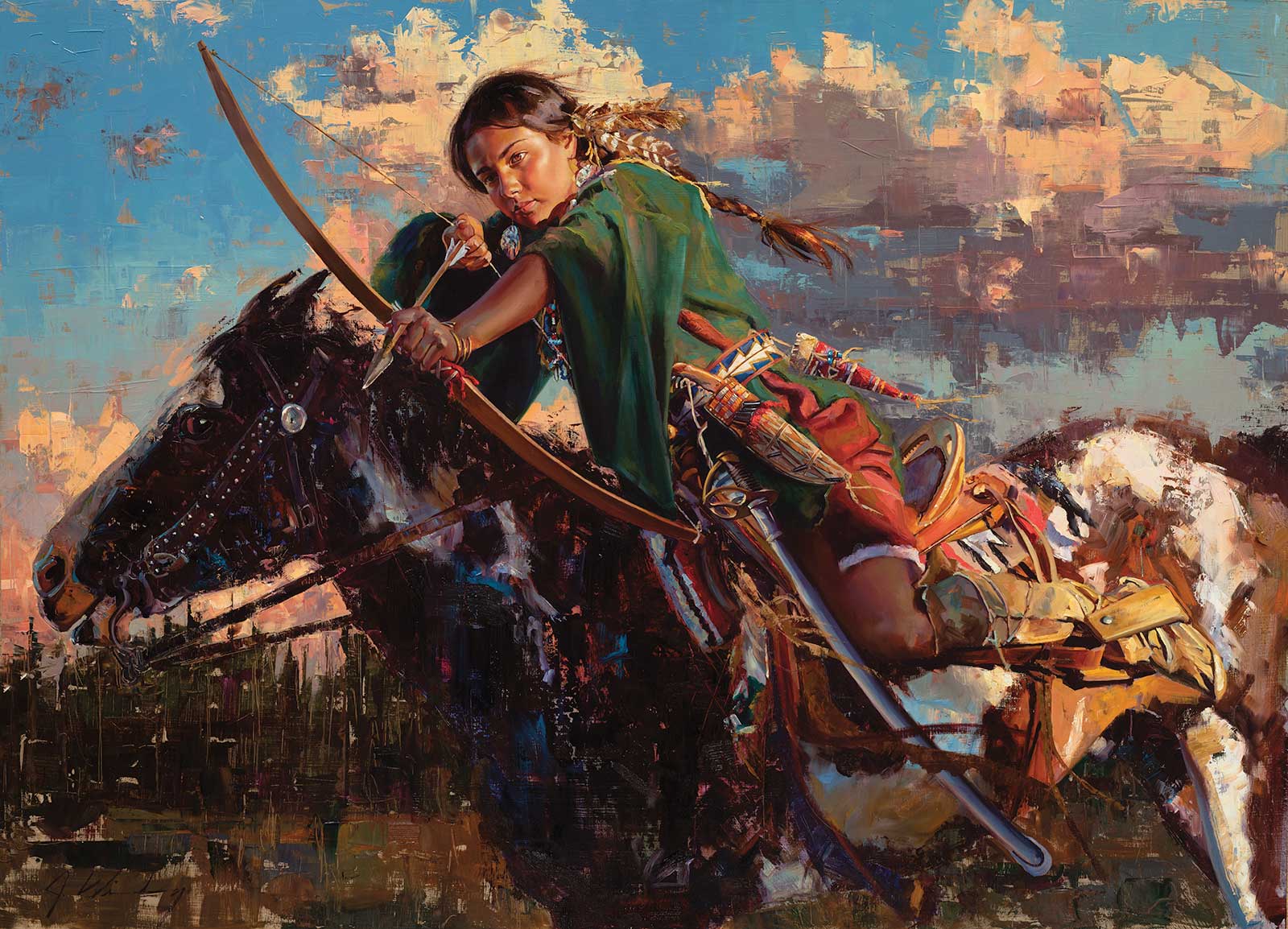 Might and Mane (detail), oil, 36 x 50”
“Years later, by my mid-30s, I finally realized what was told to me was totally bogus,” Winborg says. “I knew things were about to change. And I can even remember the exact painting it happened on. I was working on a piece of my niece and I was trying to figure out the background on it. I was burned out for the day so I just tried this new thing, with sort of an abstracted background. I took it to a show and everyone loved it. I knew I had found something different. And the best part,
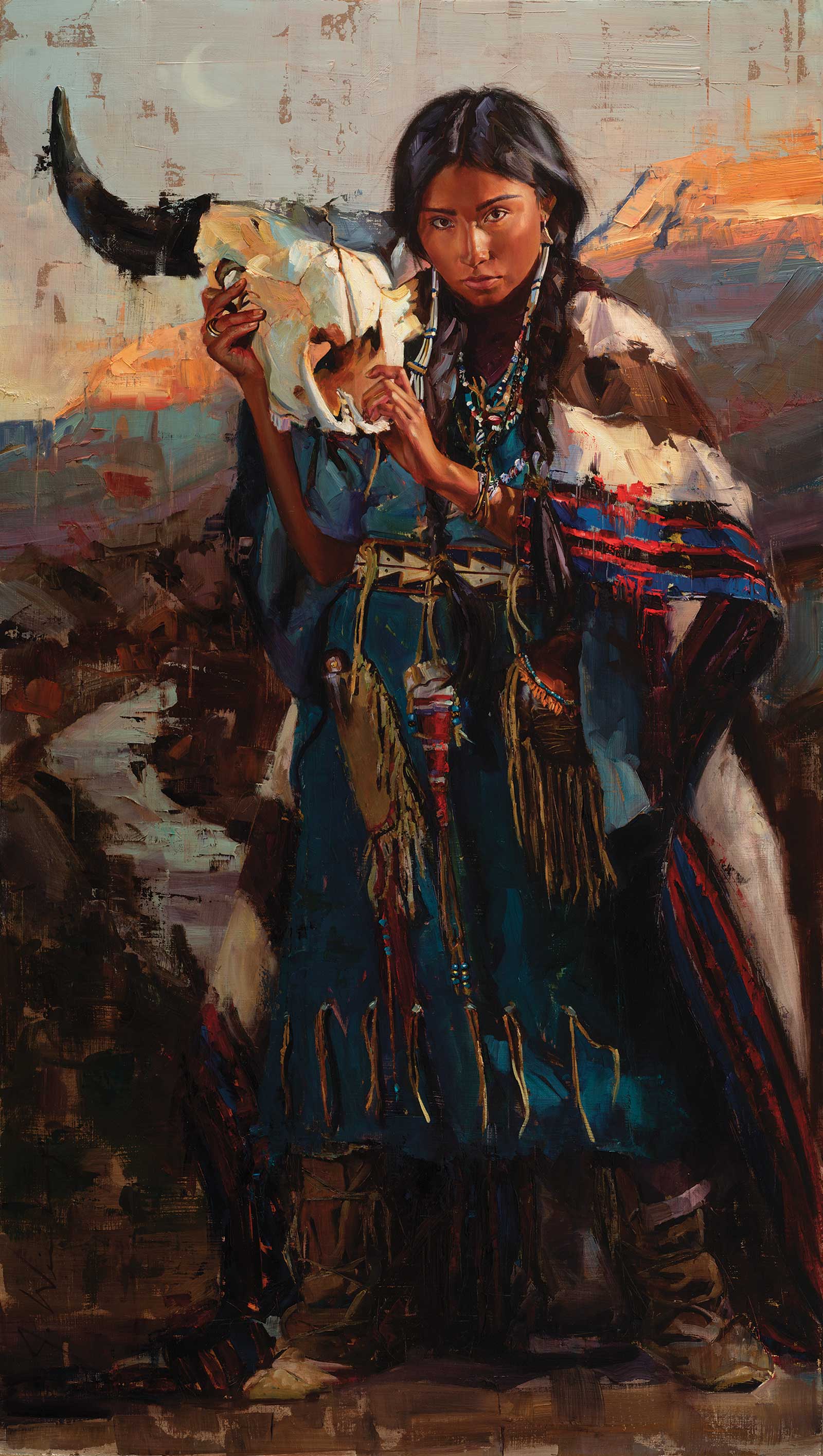 Last Light on the Mesa, oil, 40 x 22½”
I was finally painting something that I wanted to paint, something that was in my voice.”
That was 2016. Since then the Utah-based painter has had a phenomenal ascent through the ranks of Western art. If you’ve been to The Russell in Great Falls, Montana, in the last several years then you’ve seen his sudden rise firsthand. In 2017 he brought a piece to the auction with a high estimate of $6,500. It sold for $10,500. The year after, he brought a piece that sold for $52,000, more than five times over its high estimate. He continued his run in 2019 when he brought a work that sold for $46,800, nearly triple its high presale estimate. All of these auction hits were done in Winborg’s new style: detail in the foreground, abstracted and loosely painted backgrounds, contemporary design married to traditional subject matter and gorgeous color.
Oh, and figures, all of them.
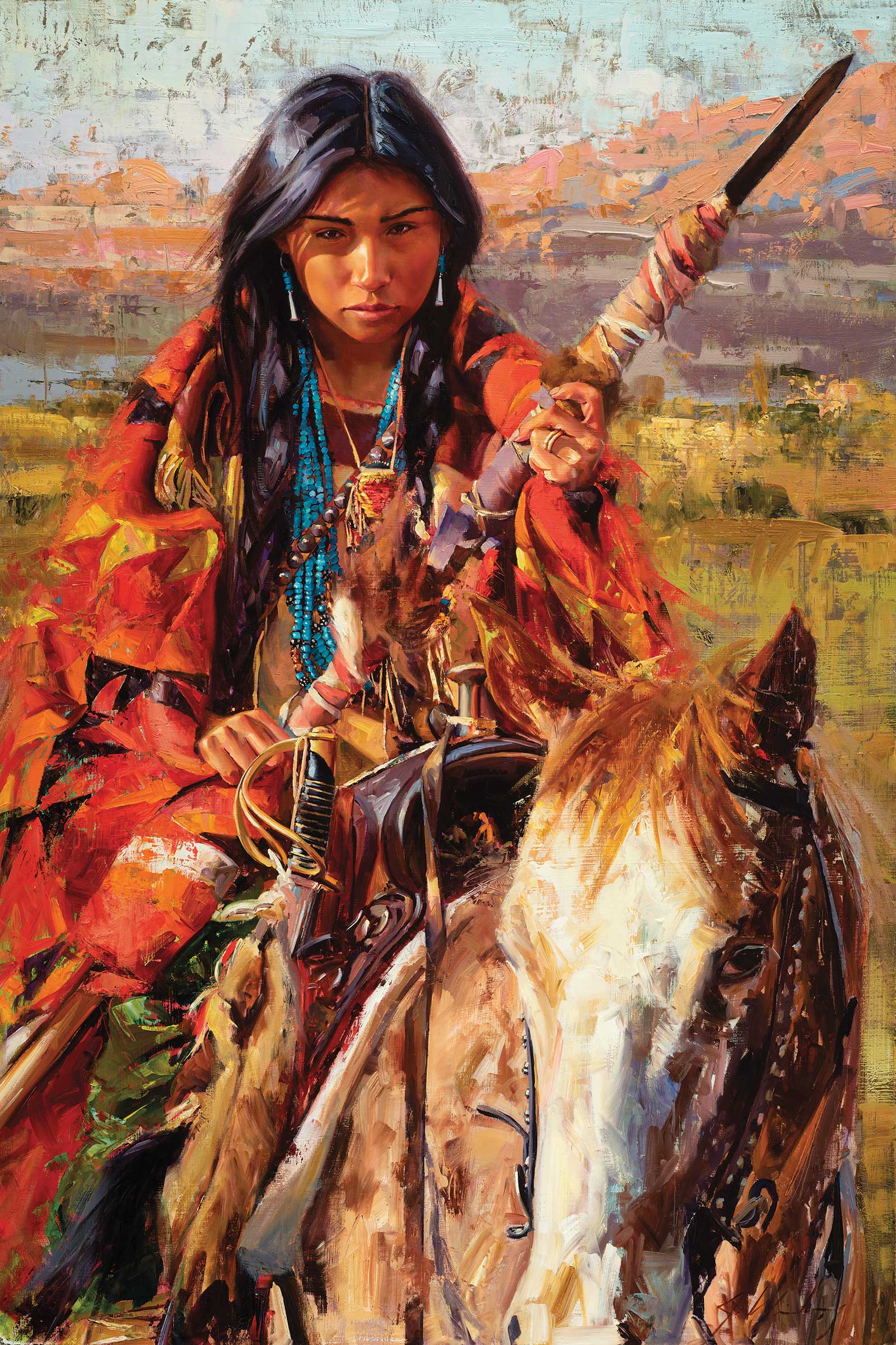 The Protector, oil, 45 x 30”
Still on an unprecedented hitting streak through Western art, Winborg is showing his newest work in a major show opening June 5 at Manitou Galleries in Santa Fe, New Mexico. The show was set in stone months ago, but it’s taken on a new importance following the cancelation of The Russell due to the ongoing health crisis. Winborg is a rock star in Great Falls, and this year he was going to bring what he thinks is his best work. Collectors who flock to the annual event look forward to bidding competitively on his work, with high prices to prove it. The Manitou show will bridge the gap between the spring and the rescheduled Russell, which is now slated for September. “The show couldn’t come at a better time,” he adds.
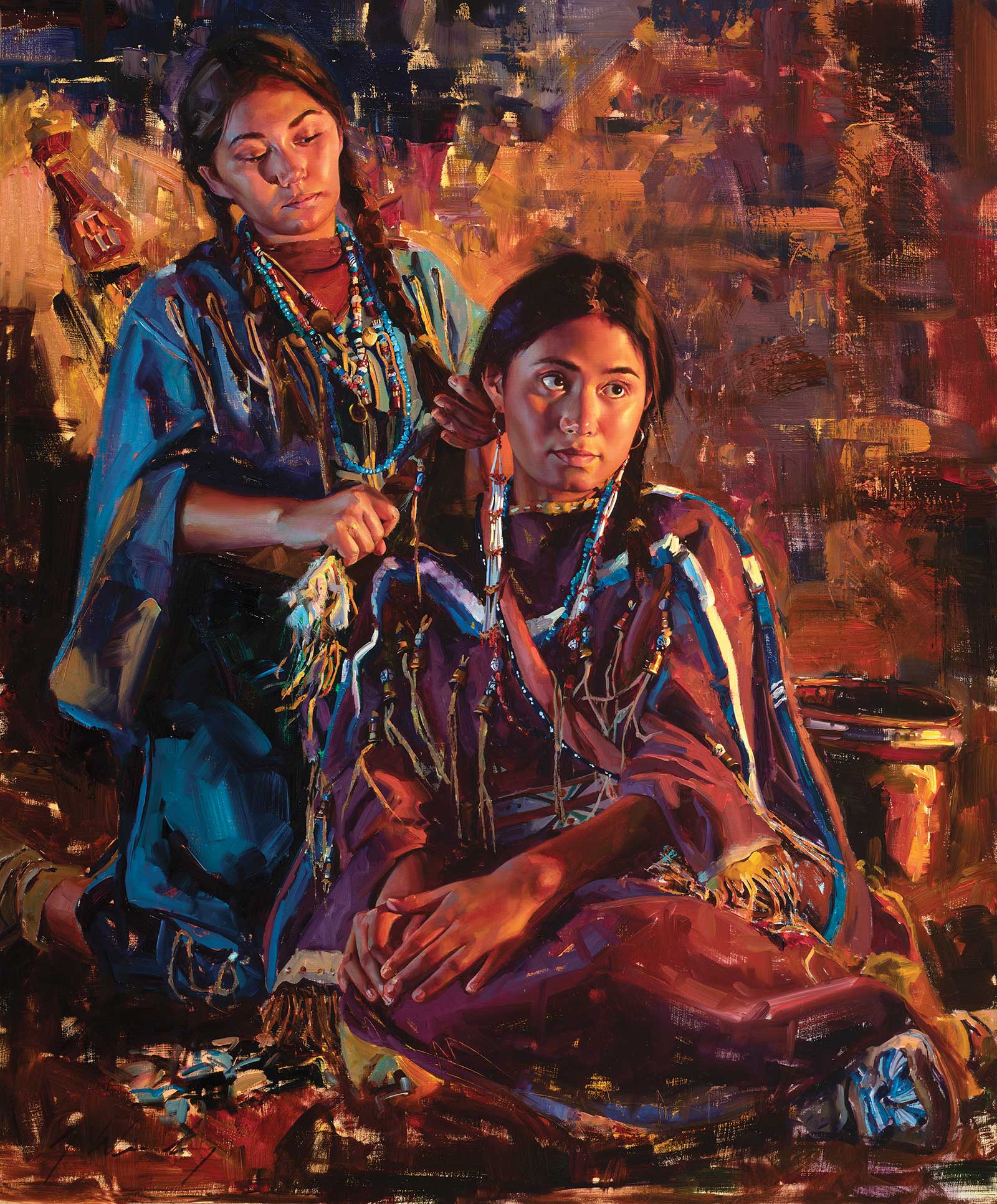 Sisterhood, oil, 39 x 32"Before Winborg’s exciting rise, he was like many aspiring young artists—hungry for opportunity. It first struck when he was 15 years old when the Utah Education Association purchased his first acrylic painting. It would eventually be printed 10,000 times and distributed to every classroom in Utah. “When that $600 check came in the mail, that was one of the most amazing things to happen to me,” he says. “That’s where it really started for me. Right there.”
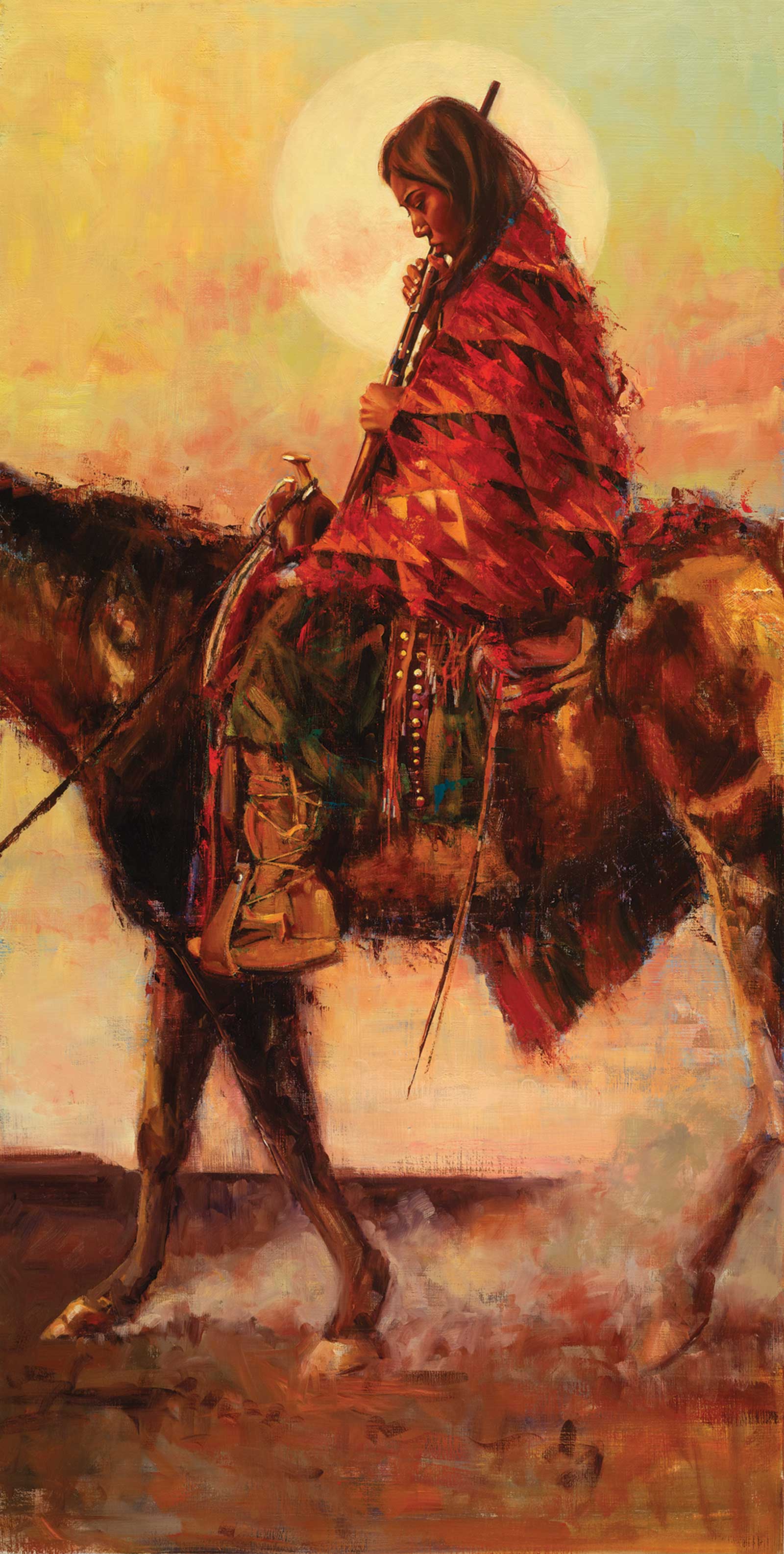 Desert Solace, oil, 40 x 20”
Winborg’s father, illustrator Larry Winborg—they would later share a studio together—had taught his son what an artist’s work ethic looked like. “He had huge clients, including Reader’s Digest and Sports Illustrated. I would get to watch a painting go from start to finish, but also as he landed the job, worked with the clients and even as he drove like a bat out of hell to the FedEx drop-off in Salt Lake City so the work could get to the client on time,” Winborg says. “I was elbow deep in art for much of my life because of him.”
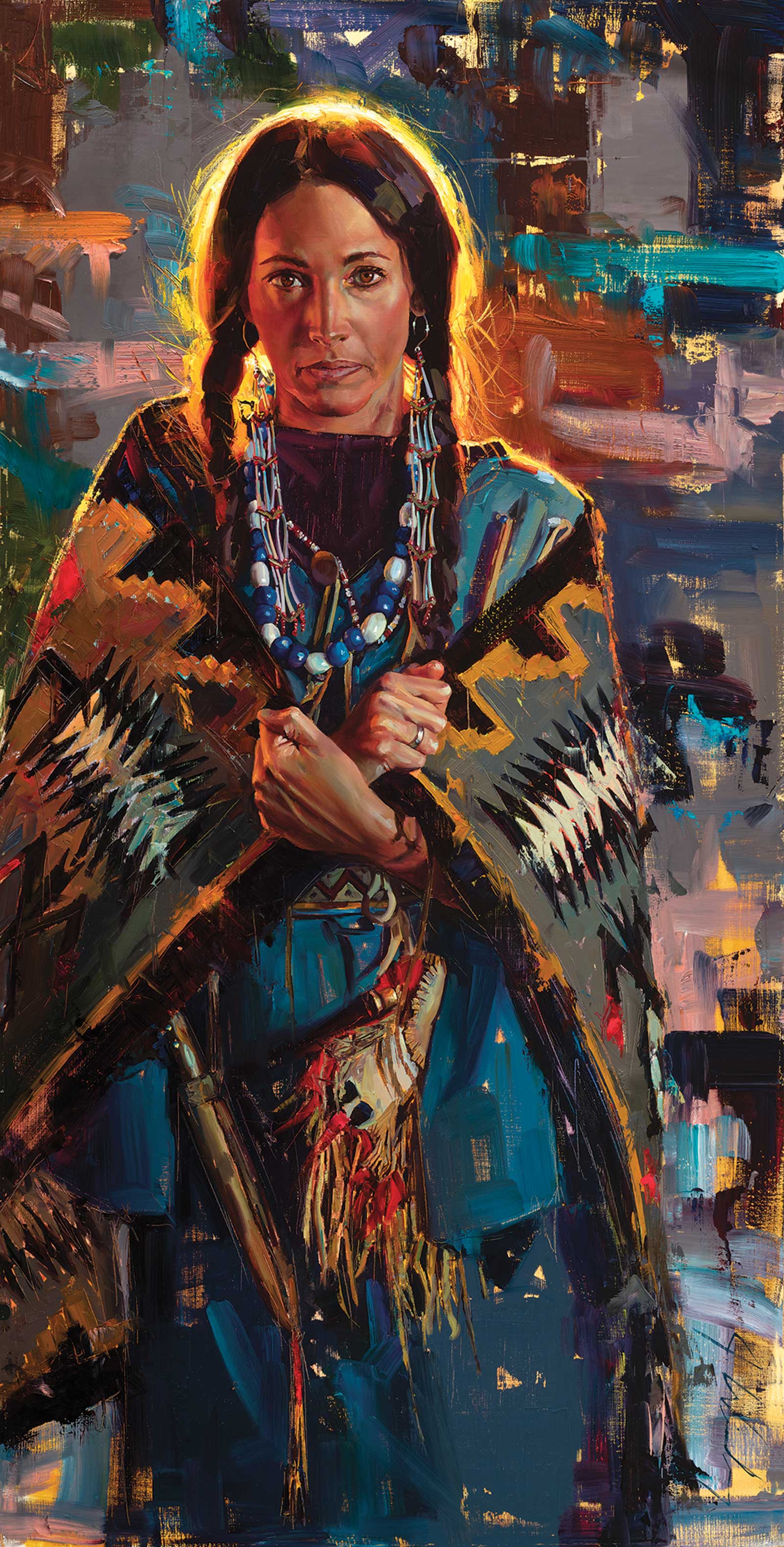 Iron Will, oil, 48 x 24”
After the $600 check, and encouragement from his father, Winborg continued to pursue fine art. He eventually went to Utah State University and later, at 23 years old, he “pulled the trigger” and started buying frames and other materials to make painting his career. He and his wife, Danielle, also started growing their family. (Today they have five children, ranging in ages from 3 to 15.) It’s around here in his career where he found success with his landscapes and cityscapes, but also when he was told figurative paintings don’t sell.
Today, Winborg has fully embraced his new style, which is a pairing of loose impressionistic or abstracted backgrounds with detail-rich realism in his figures, almost all of them Native American women. He discovered this subject matter after painting his Navajo niece. “Since then, I focused on creating Native American pieces that preserve a bit of history in each painting. My paintings feature Native Americans dressed in traditional, authentic clothing with a focus on being historically accurate,” he says. “I am known for bold brushwork, palette knife work and interesting, colorful backgrounds. I enjoy the juxtaposition of the realistic portraiture and abstract, loose backgrounds. The abstract backgrounds are exciting to look at and there’s a peacefulness about the figures and faces where your eyes can rest. My artwork is a labor of love dedicated to honoring Indigenous people, specifically women: their contributions, their resilience, their pride and their strengths. When I create a piece of art,
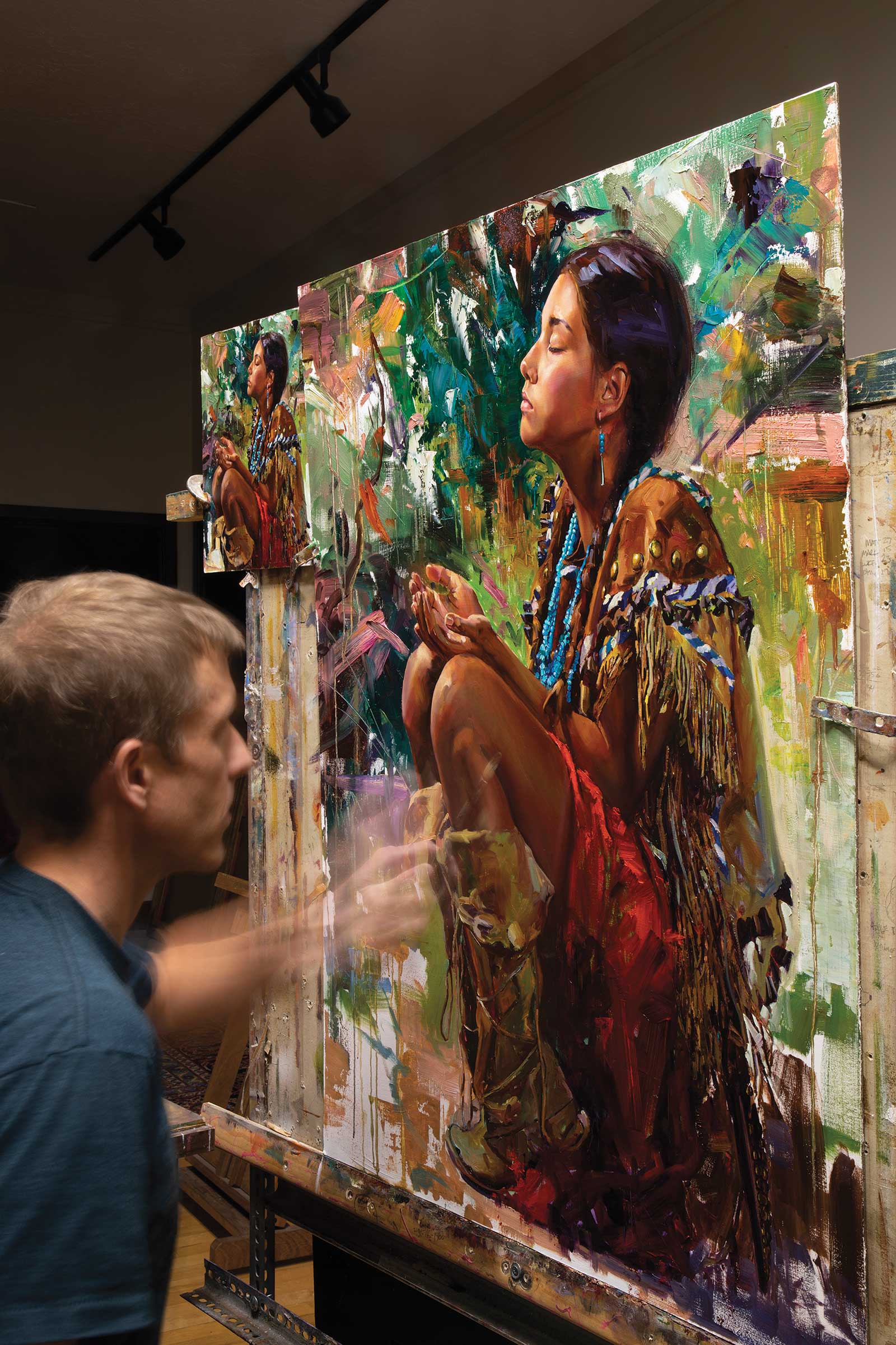 Jeremy Winborg in his studio in Logan, Utah.
I want the person viewing it to feel the emotion of the subject in each piece.”
Works in the new show at Manitou exemplify his themes and interests, particularly strong, resilient women. In Might and Mane he shows a figure leaning down on her horse as she holds an arrow pulled back in a bow. Small details in her clothing and on the horse are beautifully rendered, and yet the background commands equal attention with its bold brushwork and evocative use of form and color. The Protector features a woman under baking sunlight. She holds a lance from atop a horse, and her gaze seems to flash out from the canvas. Sisterhood features two figures, their cheeks glowing from firelight, as they pose within a jagged and fractured field of completely abstracted color.
Winborg says he can paint realism all day, “on a face, on a hand, wherever. All day, even with my kids in the studio with me,” he says. “But as soon as I switch to those backgrounds, the looser work with a palette knife, I get everyone out of the studio. I really focus on these parts of the paintings. Each one has a different feel to them. Sometimes I’ll work with these big trowels. It can be quite fun, but it takes concentration.”
He continues: “I go to bed at night thinking about what I’m going to paint the next morning, and then wake up excited to paint it. That’s everything an artist can hope for in
their career.”
Jeremy Winborg
June 5-28, 2020; reception, June 5, 5-7:30 p.m.
Manitou Galleries, 123 W. Palace Avenue, Santa Fe, NM 87501
(505) 986-0440, www.manitougalleries.com
Powered by Froala Editor