There’s something in Fritz Scholder’s bold colors, heavy lines and arresting compositions that make it nearly impossible to walk by without being drawn into his stories of the Native American experience. One of the most prominent artists of his time, Scholder (Luiseño) forged a new path for Indigenous art as he explored his heritage through his emotionally charged oil paintings and confrontational prints.
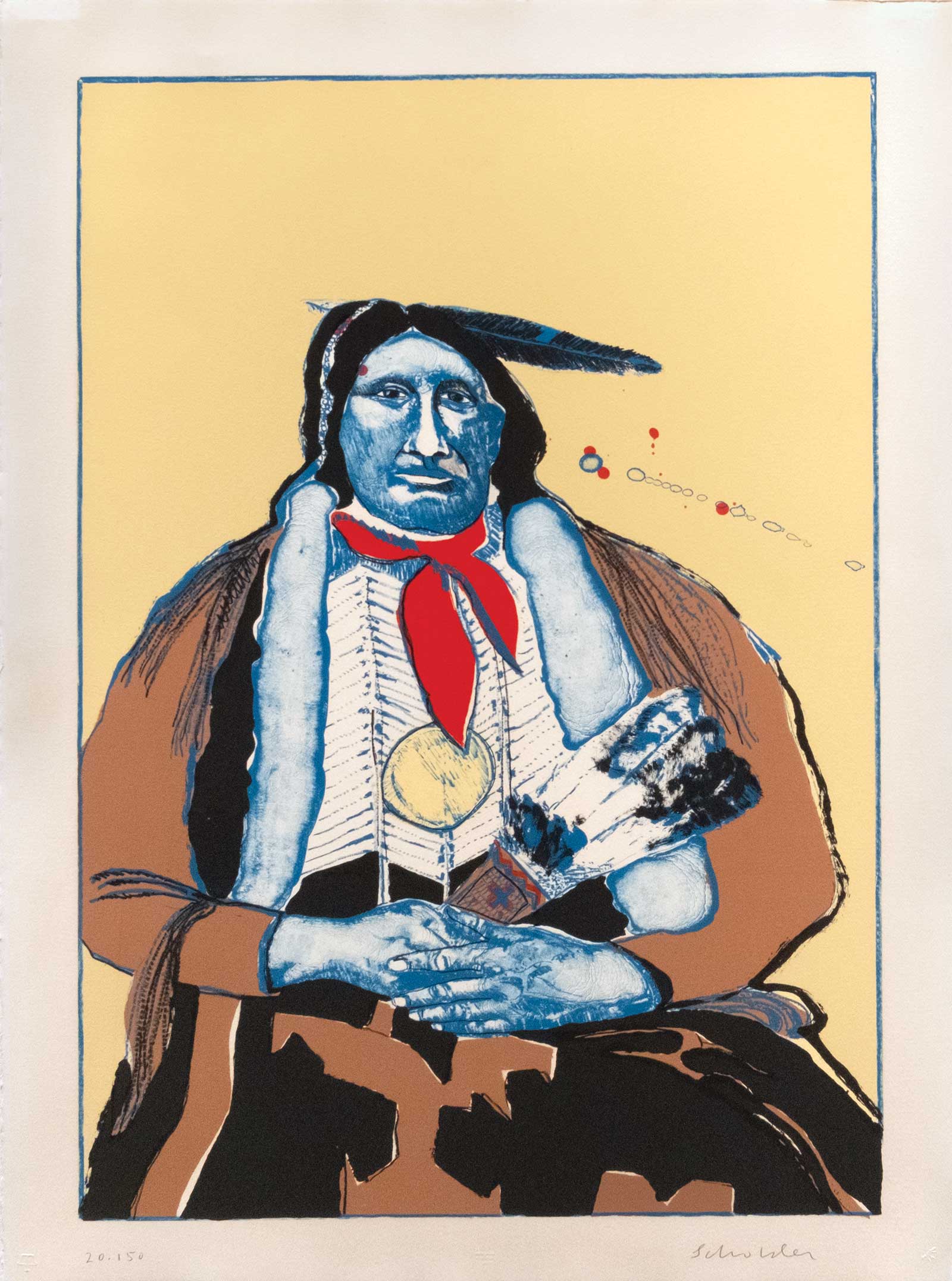
Indian with Feather Fan (State I), 1975, lithograph, 28½ x 19½ in.
In a new exhibition at the Maynard Dixon & Native American Art Museum in Tucson, Arizona, a vast group of these works are on display and for sale through January 30. Titled Fritz Scholder: Enter the Matrix, the show features more than 30 works created between 1967 and 1980.
“He was really hitting his stride at a time when Native culture was being reevaluated,” says Mark Sublette, founder of the museum. “So much was happening with the American Indian Movement and the founding of the Institute for American Indian Arts (IAIA); he really helped show that Native American art is important.”
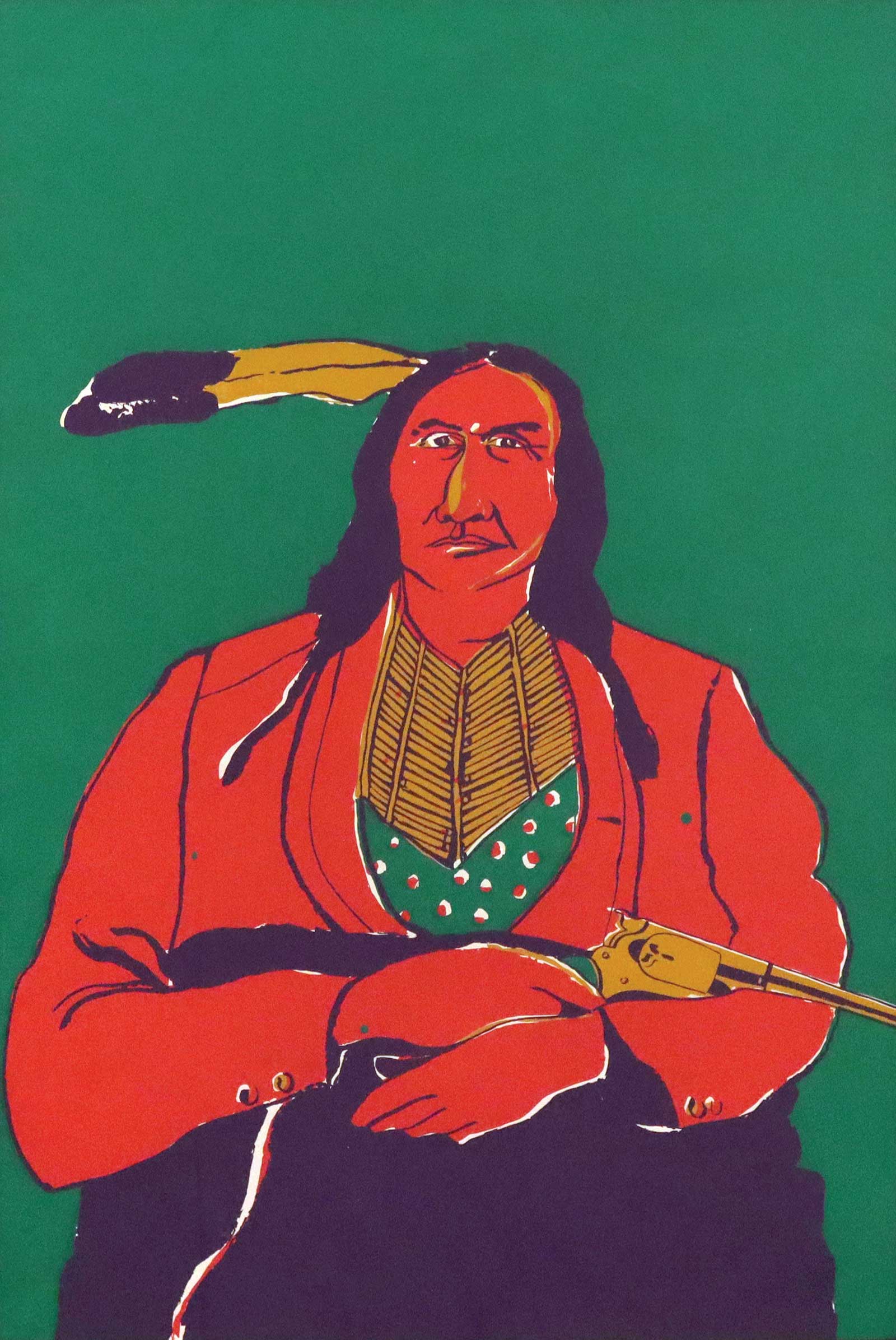
Indian with a Gun, 1973, lithograph, 30 x 22 in.
A long-time collector of Scholder, Sublette has worked to bring together enough works over the last five years to host a show. He says he wanted to focus on this timeframe of the artist’s career because it shows both the depth and breadth of a unique focus in his work. “This specific timeframe is where he was looking at and investigating Native subject matter, which isn’t something he set out to do,” Sublette says. “He realized that it was something that was worth pursuing, and they have become the most important and most sought-after works.”
While some pieces show traditional snake dances and warriors on horseback, Scholder also explored still life, architecture and landscape subjects. The timeframe represented the artist’s goal of rejecting the romantic view of Native Americans as people of history rather than a contemporary culture. The series aimed to show the “real Indian” while also imbuing it with the emotional gravity of past sufferings.
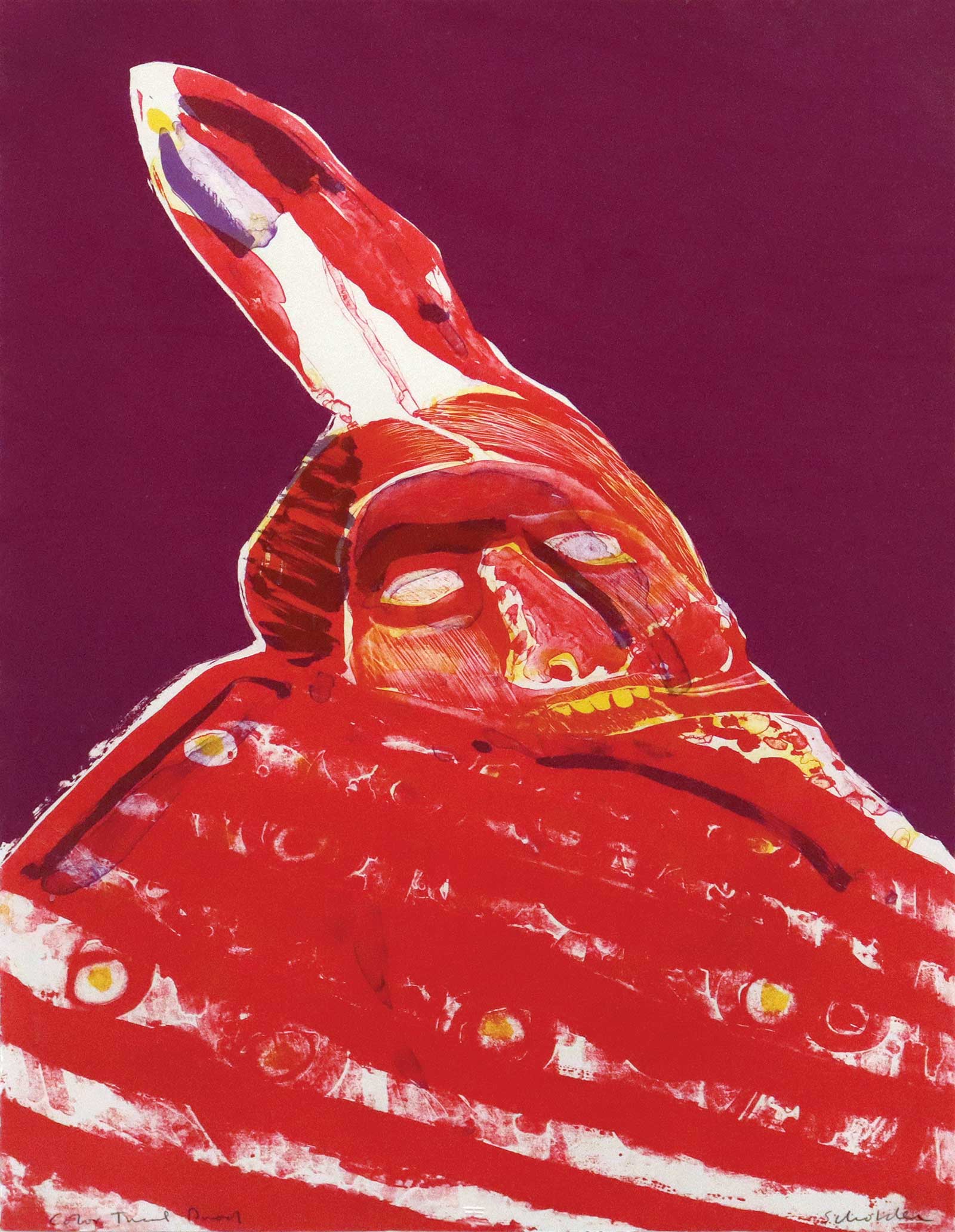
Red Indian, lithograph, 30 x 22 in.
“He was one of the first to be doing this at a time when this was all fresh and new,” Sublette says. “It was earthshattering to be portraying Native Americans in such a fashion, styled in ways people didn’t expect, with such emotion and brutality.”
While some pieces are on loan from other museum collections, many of Scholder’s most iconic pieces are for sale. Sublette highlights a color trial proof edition of Red Indian, as well as another print titled Indian with a Gun, 1973. “The imagery of the subject along with the dots on the breastplate are very reminiscent of T.C. Cannon,” he says. “They did a show together, and you can really see the influence of Cannon in his work as it progressed.”
The show includes some oil paintings and many lithographs. During his time as an instructor for IAIA, Scholder explored printmaking techniques, which have now become a popular medium across Native American art. “He was very fluid. He could do a monotype in a quick fashion because he knew exactly what he wanted to do and made it happen very quickly,” Sublette says. “That tells you about the mastery—he could work fast but the pieces would still be so poignant and emotionally charged.”
Works for sale can be viewed online and will remain on display through the end of the exhibition. —
Fritz Scholder: Enter the Matrix
Through January 30, 2027
Maynard Dixon & Native American Art Museum
6866 E. Sunrise Drive, Suite 150, Tucson, AZ 85750
(800) 422-9382, www.medicinemangallery.com
Powered by Froala Editor


