The story of the American cowboy is one of grit and determination. The pictures and paintings make it look effortlessly romantic and majestic, and there are those moments that would speak to those attributes. But to work on a ranch, or even a farm, is a job that requires strength, resolve, copious amounts of sweat and a taste for dust. And all of it before the sun rises.
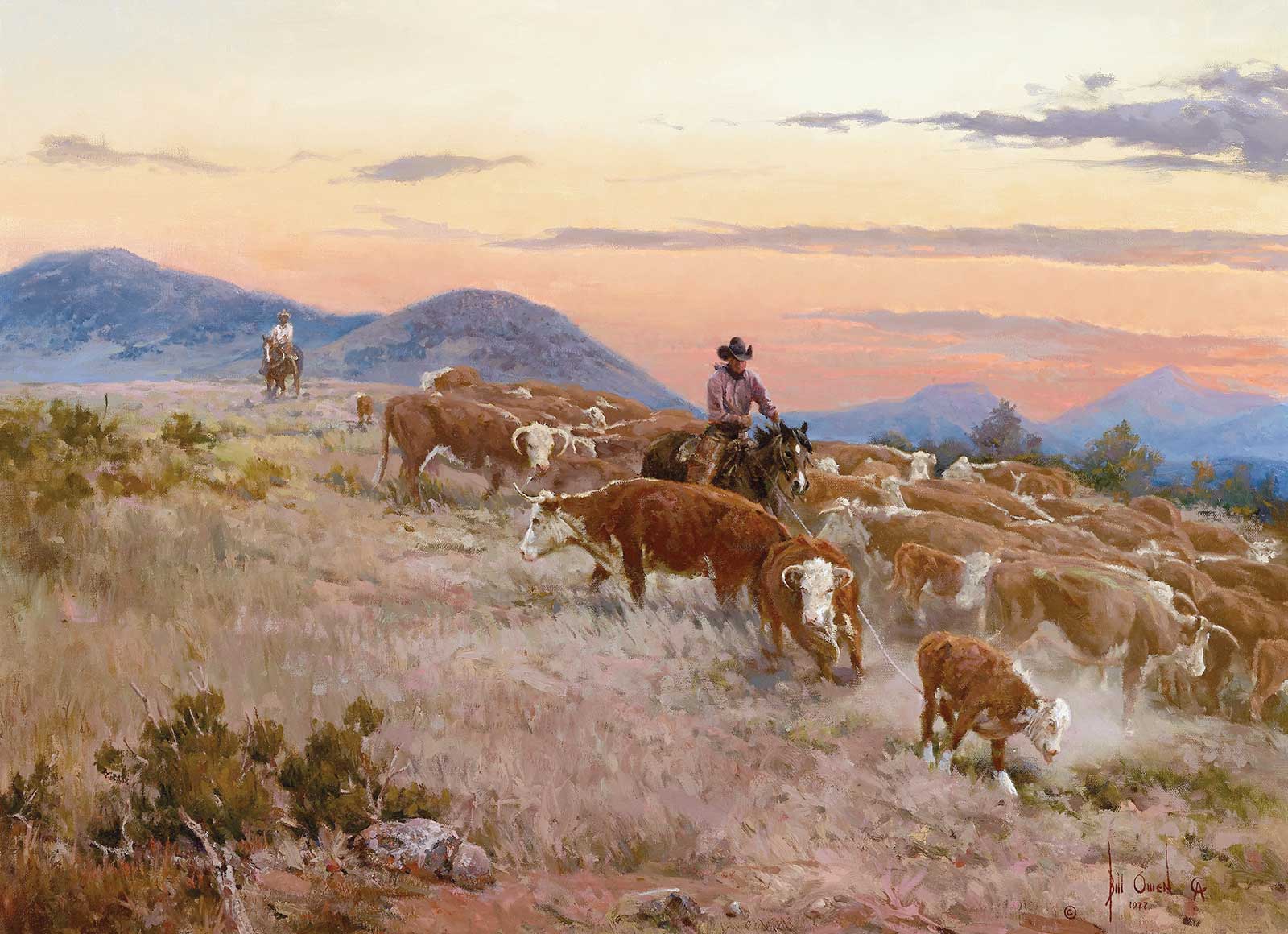 Bill Owen (1942-2013), Roping at Sundown, 1977, oil on canvas, 22 x 30 in.
 Allow the artist Frank Polk to illuminate this further: “We worked pretty hard in those days. You got up pretty early in the mornin’. When you was makin’ the long drives you was pretty near to the head of your drive when the sun came up. You rolled out of the sack about four o’clock or half-past four. Heck, I’ve seen the time down there in Bloody Basin where everybody was strikin’ matches out in the corral while tryin’ to catch their horses. There’s a little story about that I’d like to tell you: There was one cowboy that came out to work on the Horseshoe Ranch when we was camped in Bloody Basin at the LX Bar. The outfit was camped down below the ridge. One day this new cowboy rode up on the ridge and said to the others, ‘Hey, what’s that place down there?’ The cowboys chuckled an’ one of them says, ‘Well, that’s your camp. You’ve been camped there for five days.’ The other feller scratches his head an’ says, ‘Well, I wouldn’t recognize it. I never saw it in the daylight.’”
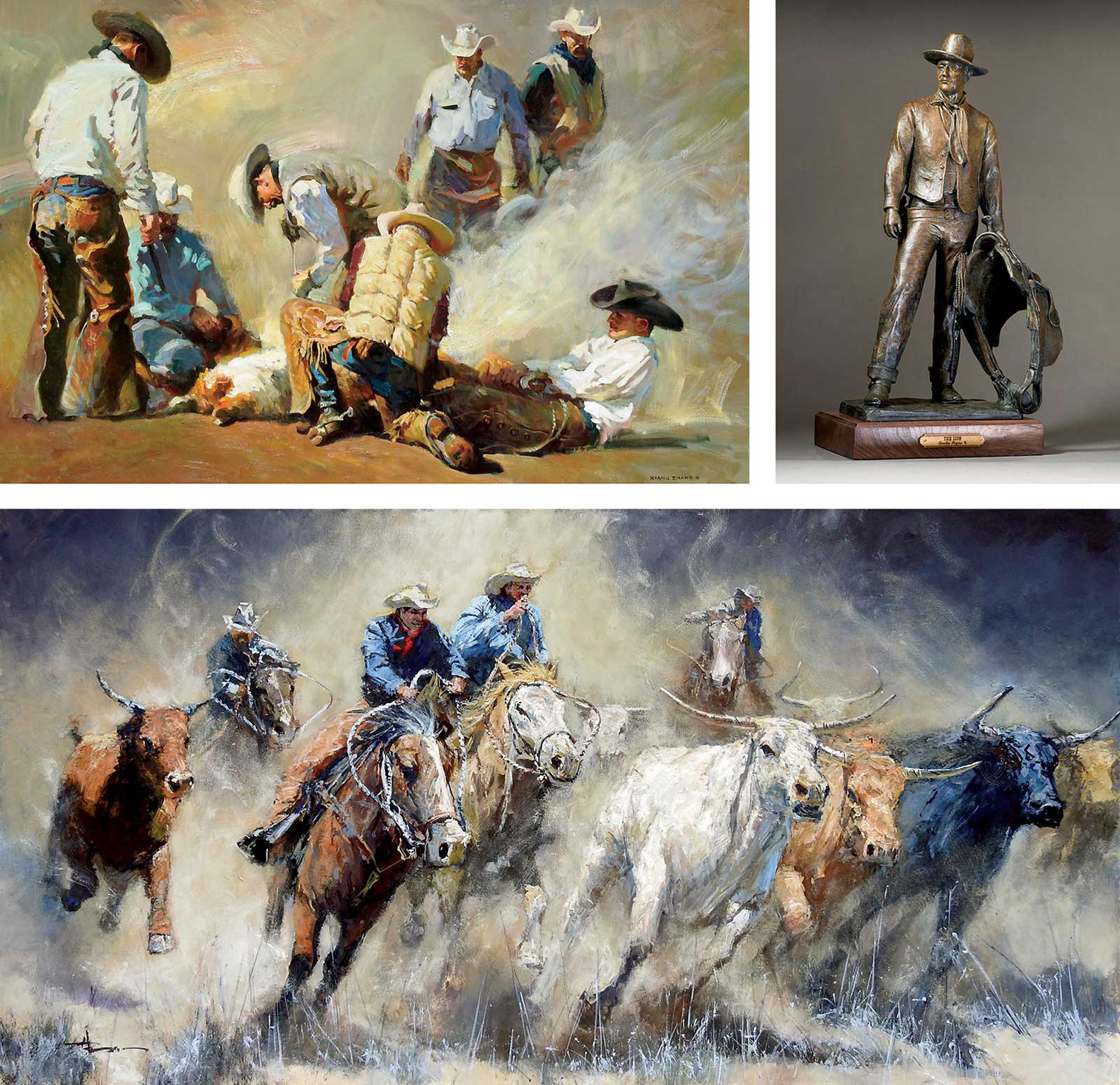
Top: Southwest Gallery, Branding the Beast, oil on canvas, 40 x 60 in., by Xiang Zhang. Santa Fe Trails Fine Art, The Icon (John Wayne), bronze, ed. of 25, 22 x 13 x 8 in., by Dustin Payne. Bottom: Southwest Gallery, On the Ranch, oil on canvas, 32 x 60 in., by Robert Hagan.
Polk, who told of his rugged cowboy days in his book F-F-F-Frank Polk: An Uncommonly Frank Autobiography, wrote about how ranches attracted some of the West’s most colorful characters. They rode hard, drank hard and lived hard, but they put in the work, rose with the sun and didn’t quit until every cow or pony was where it belonged. The times have changed a lot since the early days of ranching, and yet the job looks very similar on ranches today, where work is still done with horse and rider.
These jobs, many of which serve as the cultural backbone of the American West, have been featured in artwork for more than 150 years. Some of the artwork is even made by authentic cowboys who knew their way around ranches all around the country. These include John Wade Hampton, Bill Owen and Edward Borein, who sketched images of the American West from the back of his saddle.
As you explore our annual On the Ranch special section, consider new additions to your collection that highlight ranches of the American West, which include some of the most timeless imagery of the genre.
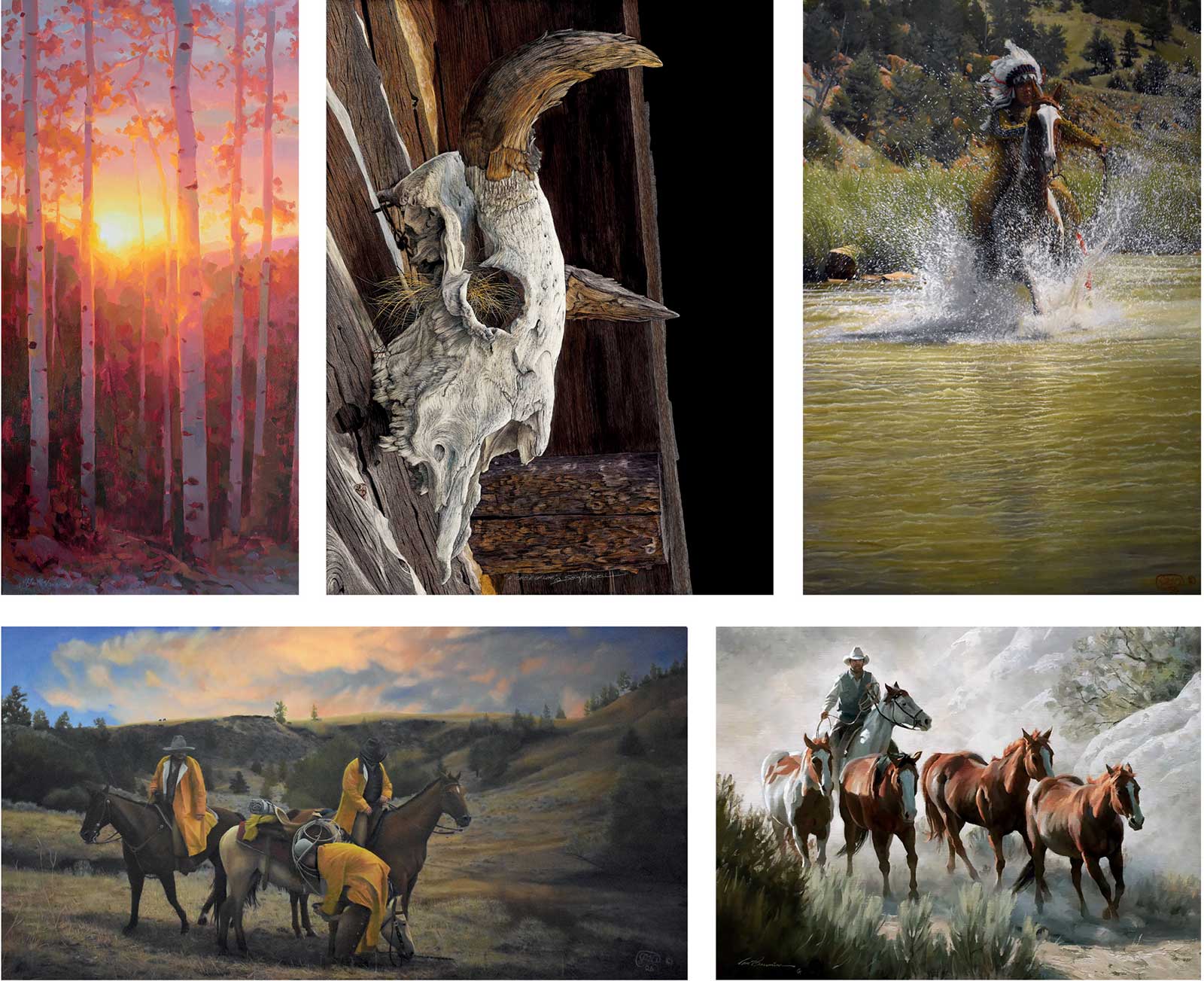
Top: Santa Fe Trails Fine Art, Sunset in the Aspens, oil, 40 x 20 in., by Jessica Garrett Lawrence. Santa Fe Trails Fine Art, A Circle of Life, colored scratchboard, 24 x 18 in., by Sally Maxwell. Phippen Museum, The Charge of Crazy Crow, oil, 27 x 18 in., by James Andrews. Bottom: Phippen Museum, No Matter the Weather, oil, 18 x 35 in., by James Andrews. Legacy Gallery, Bunchin’ the Mares, oil, 22 x 30 in., by Tom Browning.
Michele Couch of Santa Fe Trails Fine Art in Santa Fe, New Mexico, speaks to the spirit that has long defined the gallery’s mission: “Our artists draw deeply from the history of the West, finding inspiration in the resilience of Native American culture, the quiet strength of pioneering life and the beauty of the landscape itself. Each painting, sculpture and artifact reproduction is created with a reverence for authenticity, inviting collectors into a narrative that feels both timeless and intimate.”
That sense of narrative has guided the gallery for more than three decades. Since opening in 1992, it has remained committed to showcasing artists who honor the land, its people and the stories that shaped its rugged beauty.
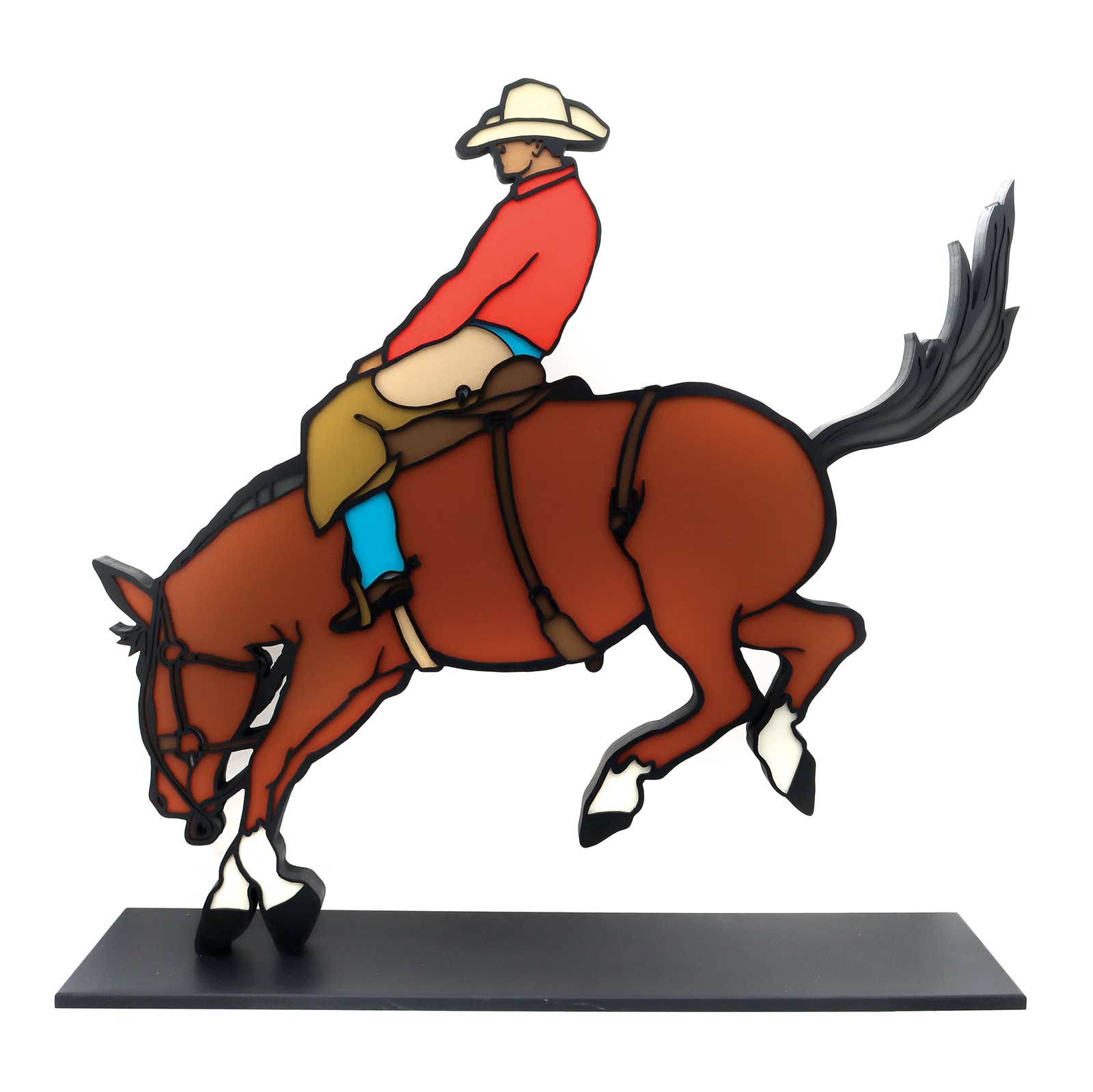
Maxwell Alexander Gallery, Raised in the Saddle, 23 x 23¾ in., by Logan Maxwell Hagege.
That same connection between art and subject is at the heart of the Phippen Museum and its annual celebration of one of the West’s most enduring symbols: the horse. The museum in Prescott, Arizona, will hold its annual Hold Your Horses! Exhibition and Sale, featuring artwork celebrating the horse on and off the ranch. Museum curator Jeannette Holverson explains, “The Phippen Museum’s annual Hold Your Horses! Exhibition and Sale celebrates the enduring beauty and power of the horse through artwork created by some of today’s most accomplished Western artists. The exhibition showcases a diverse range of artistic styles and interpretations of the equine form. Each piece reflects the profound connection between horse and rider that has shaped the American West.”
For nearly six decades, Southwest Gallery in Dallas has built its reputation by representing exceptional artists across every style and medium while maintaining a deep commitment to Western art and sculpture. “With more than 16,000 square feet of exhibition space, collectors will find an expansive presentation ranging from Western paintings and bronze sculpture to contemporary and traditional works that reflect the breadth of the American art market,” says Dana Thompson, a gallery representative.
“This October 2026, Southwest Gallery will present a major Western art exhibition, bringing together distinguished artists in a celebration of the landscapes, stories and spirit that define the West,” Thompson continues. “Designed for both seasoned collectors and new enthusiasts alike, the exhibition will showcase fresh works and create an opportunity to engage directly with artists shaping today’s Western art movement.”
That same spirit of bringing distinguished artists together under one roof defines Legacy Gallery,including Tom Browning, Rick Terry and Bill Anton.
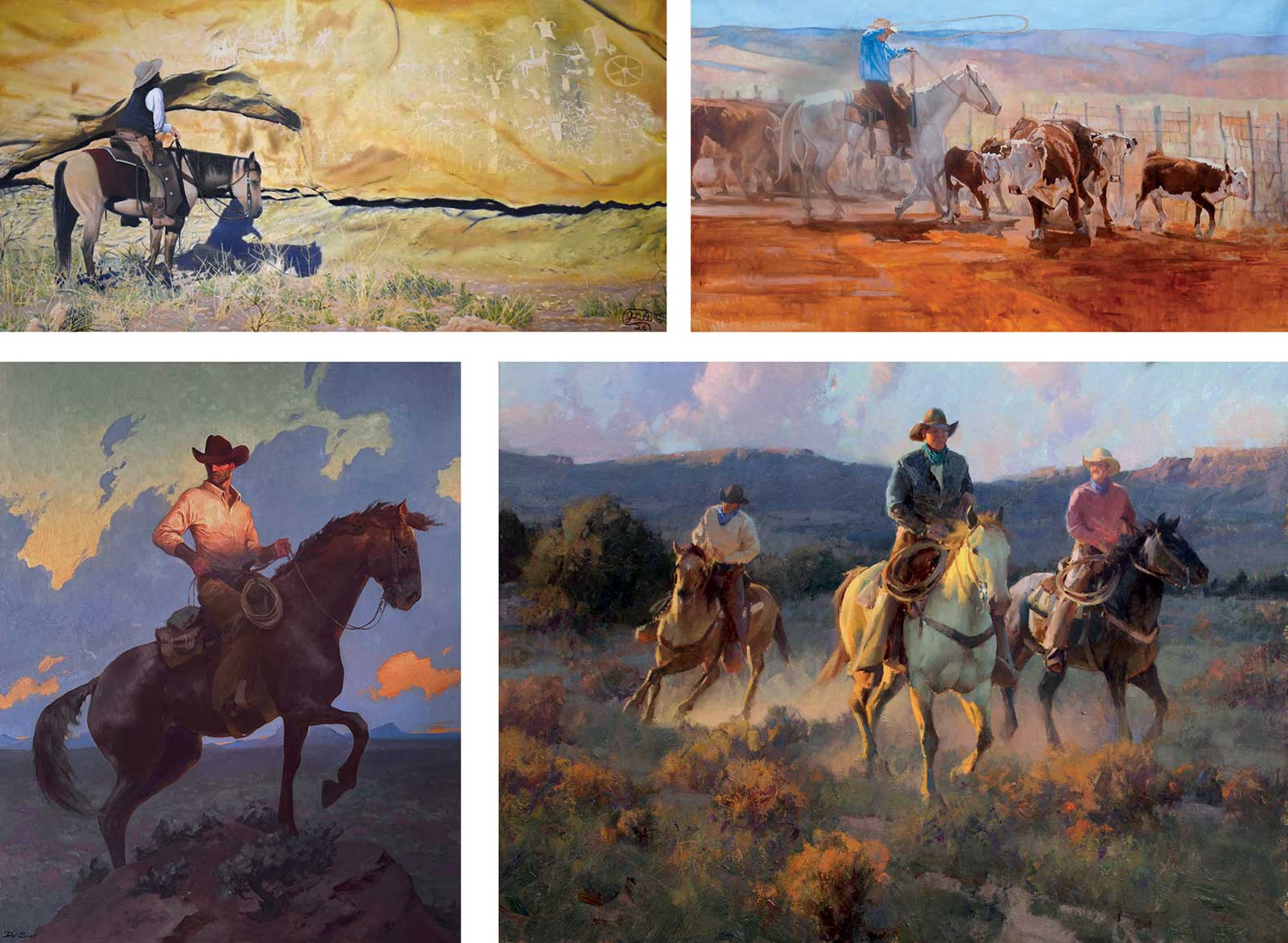 Top: Phippen Museum, Writing on the Wall, oil, 12 x 24 in., by James Andrews. Southwest Gallery, Feeling a Bit Moody Today, oil on canvas, 46 x 77 in., by Tom Dorr. Bottom: Maxwell Alexander Gallery, Last Light, oil, 30 x 24 in., by Dan Stovall. Legacy Gallery, The Morning Commute, oil, 30 x 40 in., by Bill Anton.
When asked why he decided to become an artist, Browning typically says, “I didn’t choose art as a career, it chose me.” He began drawing horses, wildlife and Native Americans at age 7, and after five decades of painting and studying the work of Charlie Russell, James Reynolds and Haddon Sundblom, he never tires of finding exciting ways to express this subject matter with the colorful and fluid brushwork that distinguishes his place in the Western art market. Today, he is best known for his oil paintings portraying horse and cattle drives filled with a convincing sense of light and dust.
Where Browning found his calling in paint, Terry found his in bronze. A fascination with sculpture began in the 1970s after visits to galleries in Jackson Hole, Wyoming. Initially working in ceramic clay, Terry later pursued formal training at Northern Arizona University after years spent working in the Montana and Wyoming oil fields and competing in rodeos. A rodeo injury ultimately led to his return to school, and soon after, a position at a Sedona art foundry, where his passion for bronze casting and sculpture took root.
Rounding out the trio is Anton, who, born and raised in Chicago, became a Western painter known especially for capturing the lifestyle of cowboys. He first traveled West at the age of 7. Anton’s path to Western art began when he attended a Cowboy Artists of America exhibition in the late 1970s at the Phoenix Art Museum. In 1982, he turned to art full time, and visiting ranches in Flagstaff and Prescott, he rode in roundups and learned to work with cattle, developing a love of plein air painting.
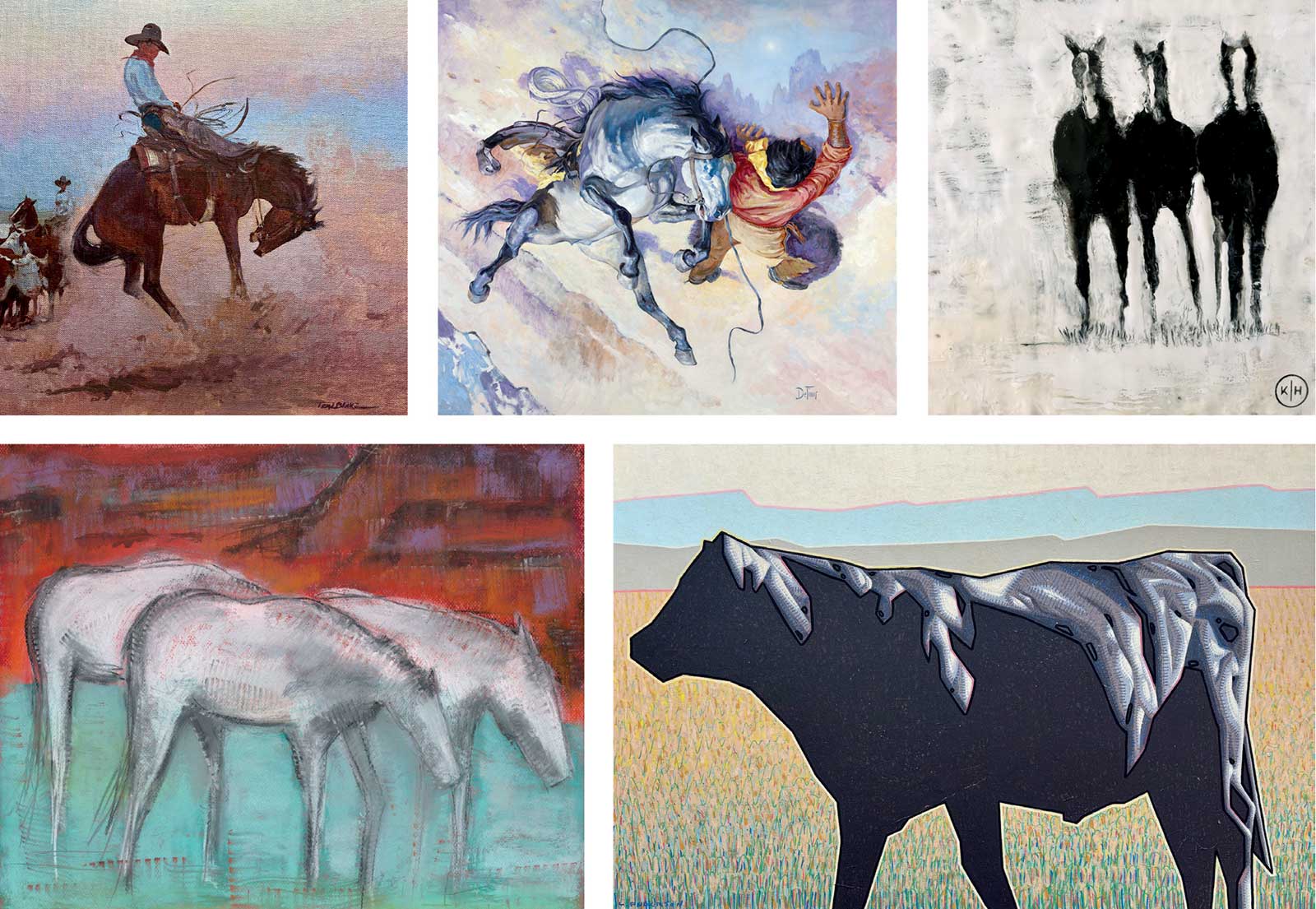 Top: Maxwell Alexander Gallery, Rounder Morning, oil on herringbone, 30 x 30 in., by Teal Blake. Kyril Bruce DeFoor, Between Two Worlds, oil on hardboard, 40 x 42 in. Kathi Holzer, Still Wild, encaustic, 12 x 12 in. Bottom: Kathi Holzer, All the Pretty Horses, pastel, 16 x 20 in. Gallery Wild, Grassland Grazer, acrylic and oil on canvas, 24 x 36 in., by Luke Anderson.
 Gallery Wild routinely offers three strong subgenres from its Jackson Hole, Wyoming, location: wildlife, art of the national parks and artwork that depicts ranching in the American West. Its these ranching subjects—cowboys and cattle, horses and the landscape around ranches—that has given inspiration to artists such as Luke Anderson, Bridgette Meinhold, Nealy Riley and others.
While galleries and institutions like these provide the spaces where Western art is collected and celebrated, it’s the artists themselves who are shaping where the genre goes next. Kathi Holzer, based in Boise, Idaho, is one of those pushing the Western art world into the future. “The West has always represented something deeper to me than a landscape. It is a place of resilience, quiet strength and enduring connection—to the land, to animals and to the people who live close to both,” says Holzer. “Coming to art later in life has allowed me to paint from experience rather than observation alone. My work is inspired by the horses, ranchers and wide-open spaces that embody a way of life increasingly rare in our modern world.” That sense of lived experience carries through into her process as well. “Working in encaustic allows me to build each piece in layers of molten beeswax, pigment and texture,” she continues. “These layers are fused, scraped and revealed again, creating a surface that holds history—much like the landscapes and memories that inspire me. My process is intuitive and physical, and I am drawn to imperfection, atmosphere and the emotional residue left behind in each mark.”
That same instinct toward artistic restraint and interpretation shapes the eye of Beau Alexander, owner of Maxwell Alexander Gallery,who has seen the West represented in countless forms over the years. “What has always interested me most is artwork that simplifies rather than complicates. Whether it’s a painting or a sculpture, the artists I admire make deliberate decisions about what to include, what to leave out and how to guide the viewer’s eye,” says Alexander. “The best works don’t try to copy a photograph or simply document a subject, they interpret it. Through design, value, color, form and composition, they create an experience using their artistic vision.”
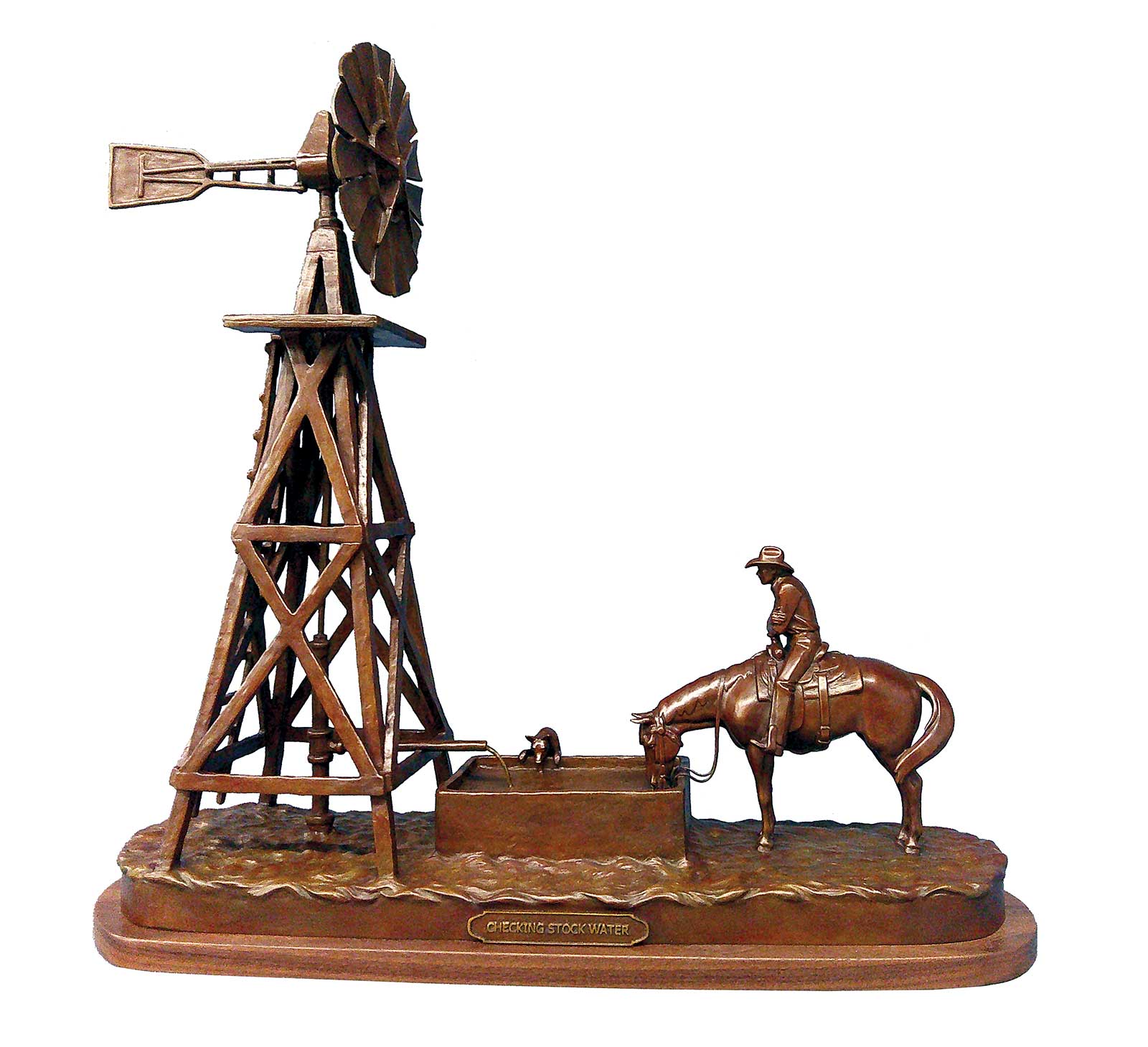 Legacy Gallery, Checking Stock Water, bronze, 22½ x 23 x 8 in., by Rick Terry.
He continues, “Maxwell Alexander Gallery is drawn to artists who have a distinct voice and a genuine point of view. Many of the artists we represent are inspired by the American West, but their work goes beyond subject matter. They create original visual worlds that encourage viewers to slow down and discover something new with each viewing. Constant discovery is what keeps great art relevant long after trends have come and gone.”
That pursuit of discovery finds one of its boldest expressions in the work of Kyril Bruce DeFoor, for whom the American West remains an endless source of inspiration, not for its history alone, but because of its capacity for reinvention. In Between Two Worlds,DeFoor departs from the nostalgic toy cowboy imagery of his recent work and embraces a more historic and painterly approach rooted in the enduring traditions of early Western artists.
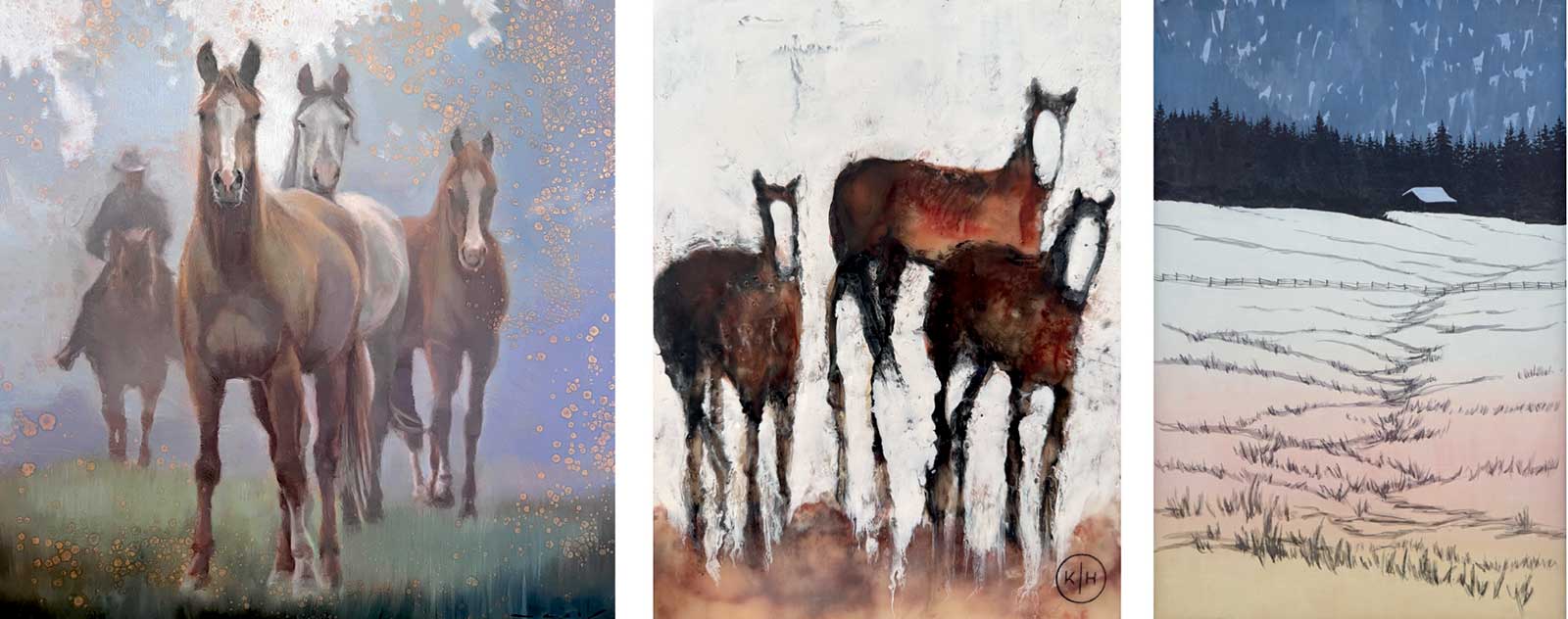
Gallery Wild, Lead and Follow, oil and gold leaf on canvas, 36 x 36 in., by Nealy Riley. Kathi Holzer, Where We Belong, encaustic, 12 x 9 in. Gallery Wild, Purest Form of Generosity, cold wax and oil, 36 x 24 in., by Bridgette Meinhold.
DeFoor describes the piece: “Suspended between control and chaos, horse and rider are turned completely upside-down, transforming a familiar Western scene into something unexpected. The dramatic composition blurs the line between triumph and defeat, inviting viewers to draw their own conclusions about what has happened and what may come next. The action unfolds with a sense of immediacy, as if time itself has momentarily paused at the height of the drama. The horse appears to hover in space while the rider reaches instinctively for balance, creating a scene that feels both intensely personal and universally human.”
DeFoor views each painting as an opportunity to push beyond familiar territory. While his work often draws upon Western themes, his deeper interest lies in exploring new ways to express the human experience and emotional complexity.
All of these artists collectively tell the story of the West, the grit and determination it takes to work on the ranch and make a home within the rugged and timeless landscape. —
Featured Artists & Galleries
Kyril Bruce DeFoor
Stevensville, MT, (575) 973-1004
bruce@d4arts.com
westernpop.com
Gallery Wild
80 W. Broadway, Jackson, WY 83001
(307) 203-2322, www.gallerywild.com
Kathi Holzer
Boise, ID
www.kathiholzerart.com
IG: @kathiholzerart
Legacy Gallery
7178 Main Street, Scottsdale, AZ 85251
(480) 945-1113 225 Canyon Road, Santa Fe, NM 87501
(505) 986-9833 www.legacygallery.com
Maxwell Alexander Gallery
1300 N. Lake Avenue, Pasadena, CA 91104
(213) 275-1060
www.maxwellalexandergallery.com
Phippen Art Museum
4701 Highway 89 North, Prescott, AZ 86301
(208) 353-2325, www.phippenartmuseum.org
Santa Fe Trails Fine Art
200 Old Santa Fe Trail, Santa Fe, NM 87501
(505) 989-7027, www.santafetrailsfineart.com
Southwest Gallery
4500 Sigma Road, Dallas, TX 75244
(972) 960-8935, www.swgallery.com
Powered by Froala Editor


