There is no shortage of artists who have been inspired by New Mexico’s natural beauty and cultural richness. Some of the most celebrated painters from the first half of the 20th century will be featured in Land, Legacy, and Perspective: Landscapes of Northern New Mexico,an exhibition at the Taos Art Museum comprised of 30 important works in its permanent collection. Through artworks by Ernest L. Blumenschein, Leon Gaspard, Gene Kloss, Barbara Latham, Joseph Henry Sharp, E. Martin Hennings, Emil Bisttram, Victor Higgins and many others, the museum aims to draw attention to the history that is embedded in the land and in depictions of it.
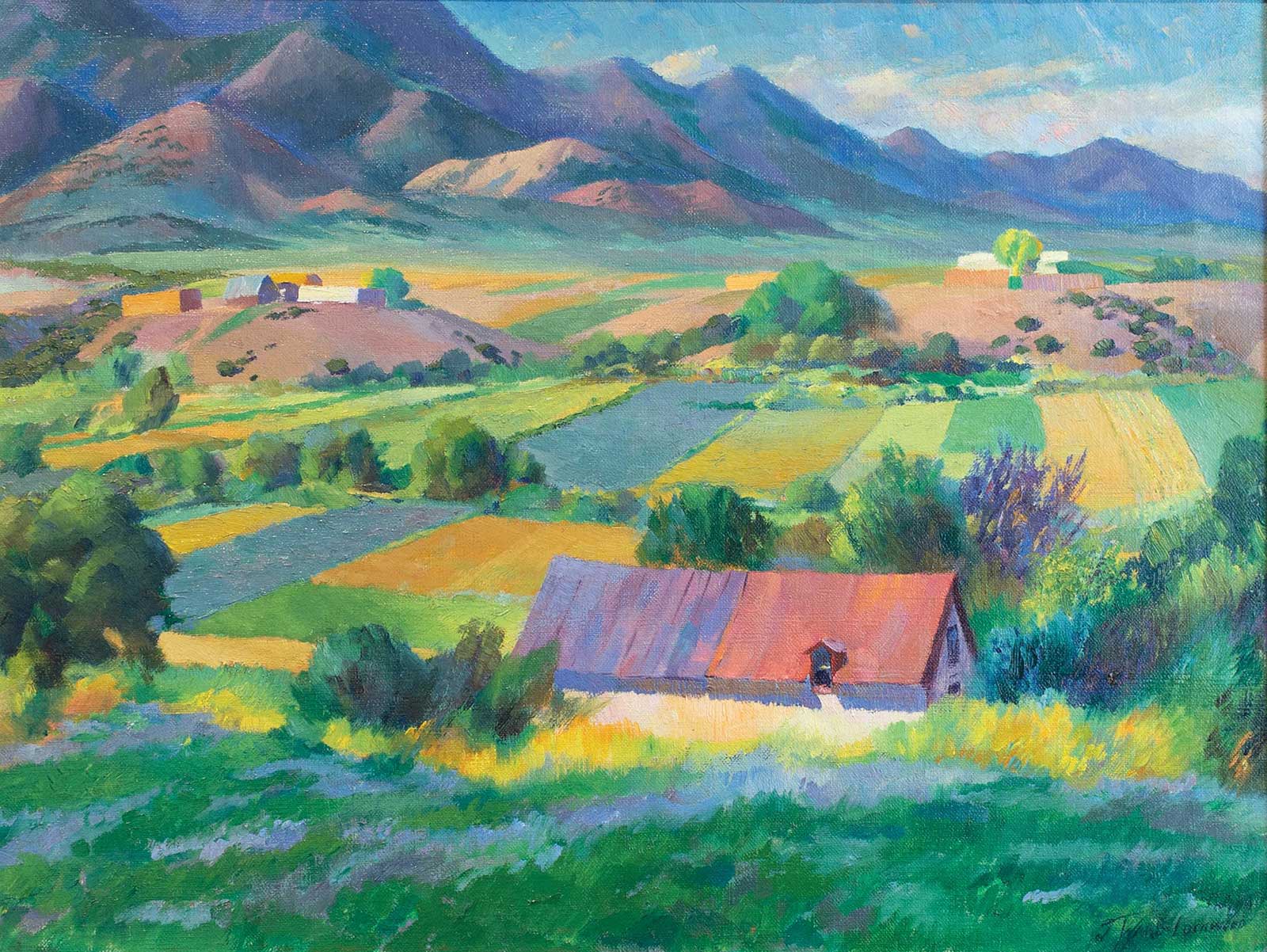
Ward Lockwood (1894-1963), Fields of Llano, ca. 1930, oil on canvas, 18 x 24 in. Permanent Collection of Taos Art Museum, Gift of the Weimer Family Collection.
“The overarching vision was to look at landscape as more than a beautiful view,” explains Christy Coleman, Taos Art Museum executive director. “It also carries deep histories and meaning. Many of the artists in the exhibition came to [the region] as observers and interpreters. They were responding to beauty, but they were also painting landscapes with long, layered histories. Pueblo peoples have deep relationships with these mountains, rivers, mesas, forests and valleys, and that presence is central to understanding this region. Hispano communities, whose history here reaches back to the Spanish colonial period, have also shaped the architecture, agriculture, faith traditions, and village life of Northern New Mexico.”
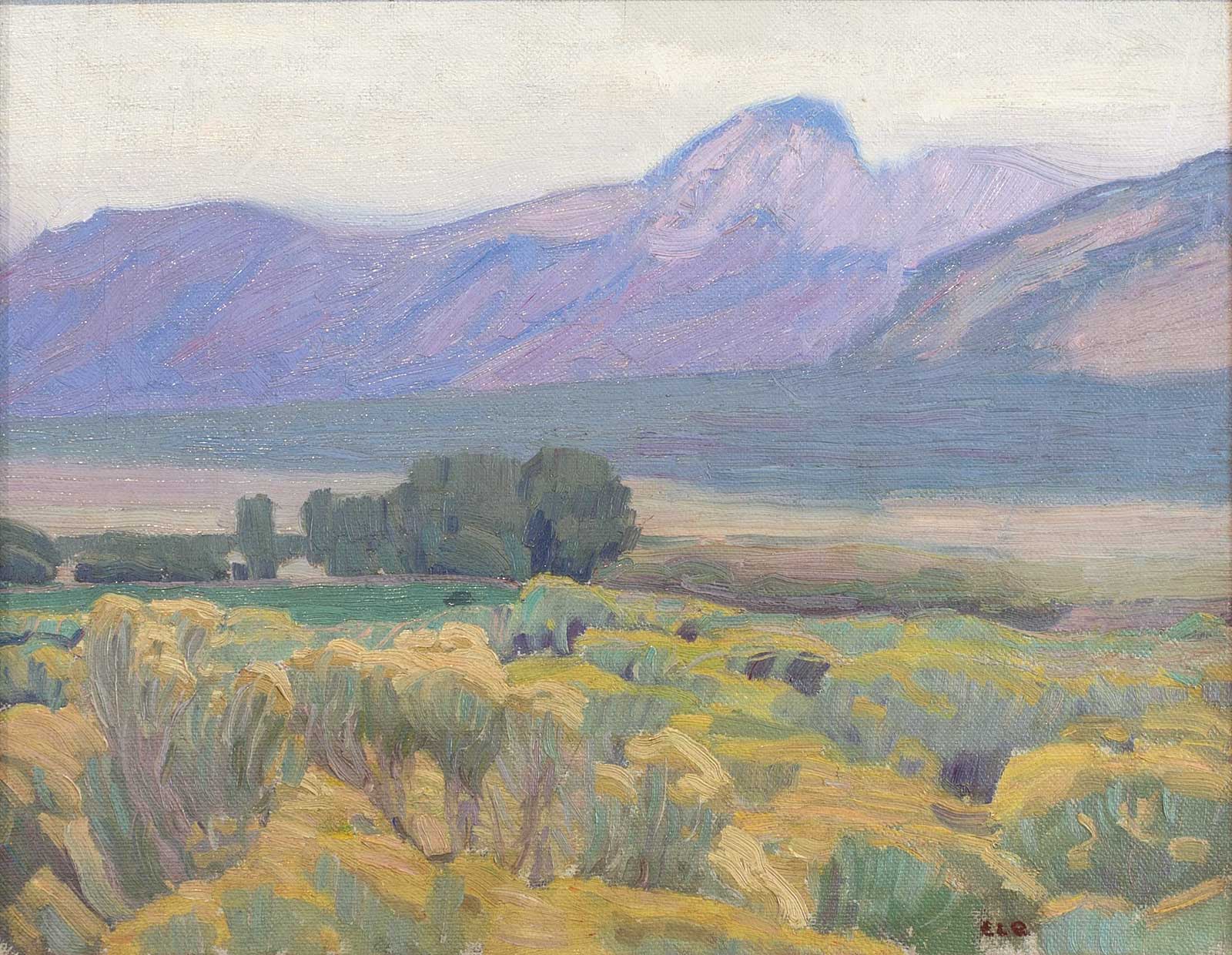
Ernest L. Blumenschein (1874-1960), Taos Landscape, ca. 1920, oil on canvas, 14 x 18 in. Permanent Collection of Taos Art Museum.
Coleman points to Blumenschein’s Taos Landscape, circa 1920, as a quintessential view of the area with the sagebrush and chamisa in the painting’s foreground, the cluster of cottonwoods in the middle, and the open valley and mountains beyond. “It’s beautiful and familiar,” says Coleman. “It’s the kind of image that helped shape how many people came to picture this region…Blumenschein was central to the early artistic legacy of Taos, and his work helped carry images of Northern New Mexico to audiences far beyond this area. But the exhibition is also asking us to look beyond that familiar beauty…into the larger questions of the exhibition: who shaped this image of Northern New Mexico, what stories are held in the land, and how we understand that legacy now.”
Another telling piece in the exhibition is Ward Lockwood’s (1894–1963) Fields of Llano.Executed around 1930, the painting, with its bright patchwork of land parcels and bucolic farm structures, invites curiosity about the lives of those who labored on the land. “Llano, southeast of Taos, has long histories of farming, shared water, village life and Hispano land-grant traditions,” explains Coleman. “It also sits within a much longer history of Indigenous relationships to land and water. The painting is more than a landscape; it portrays a place that people have depended on, cared for, and organized their lives around for generations.”
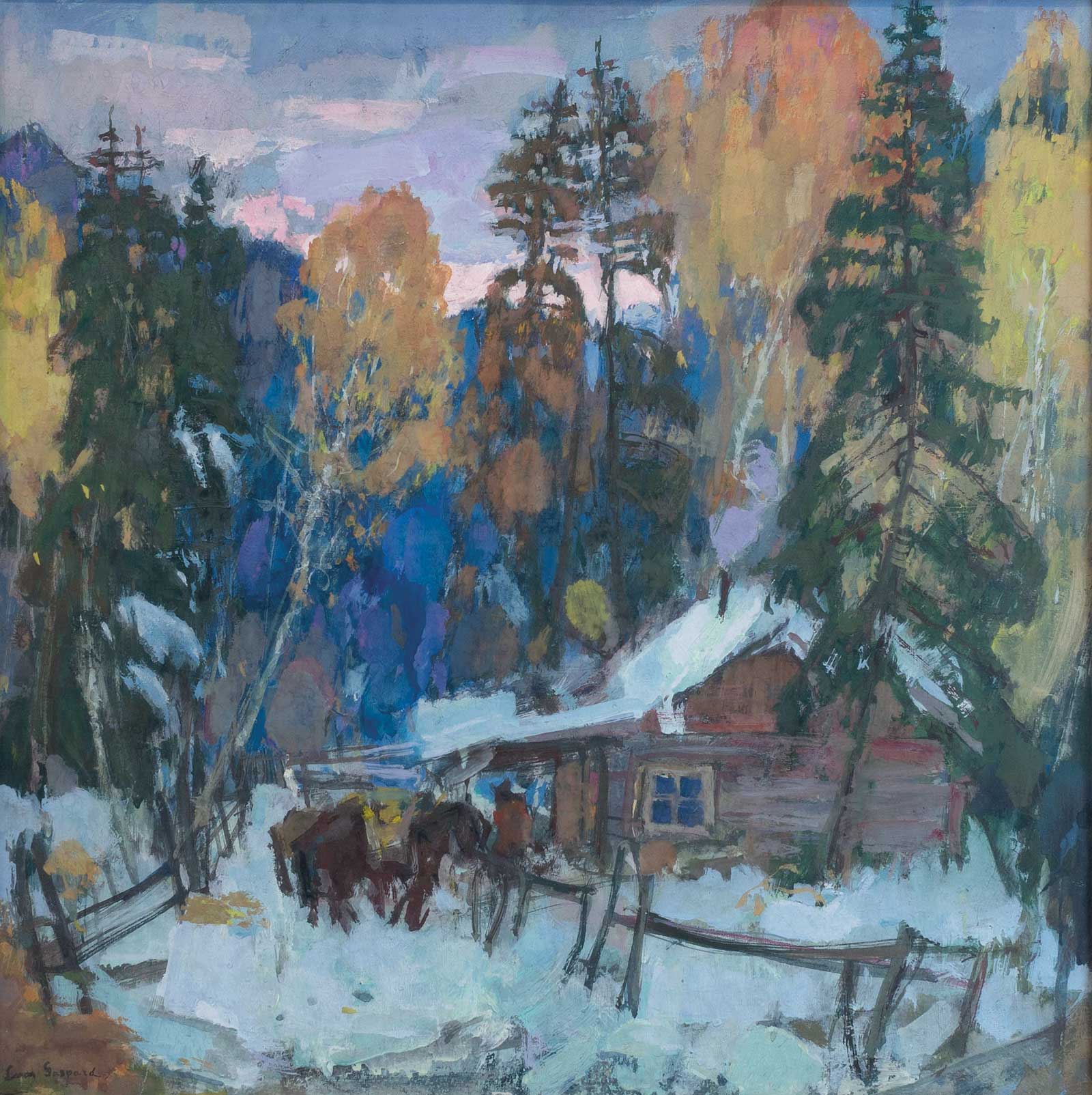
Leon Gaspard (1882-1964), Hondo Canyon Ranger Station, 1920, oil on paper, 22½ x 22½ in. Permanent Collection of Taos Art Museum.
In Hennings’ Thinning Aspens, the trees seem to be the subject of the piece until the two Indigenous riders weaving through the grove come into focus. “That’s the context we wanted to bring forward,” Coleman says. “The mountain forests around Taos were part of Pueblo life, providing wood, game, and routes through the region. The painting is beautiful, but it’s not simply a view of trees. It connects the beauty of the aspens with a much longer history of people knowing, using and moving through the land.”
Other historic insights are offered by Gaspard’s Hondo Canyon, Ranger Station, a snowy mountain scene of an area with deep ties to pueblo culture, Hispano ranching and agriculture, and issues surrounding natural resources. Higgins’ Adobe Gatewaygives us a more focused, intimate view of the landscape through an adobe entrance, a structure made from the earth and unmistakably symbolic of the Southwest, especially New Mexico. With roots in pueblo building traditions, it speaks to the climate and way of life in the region.
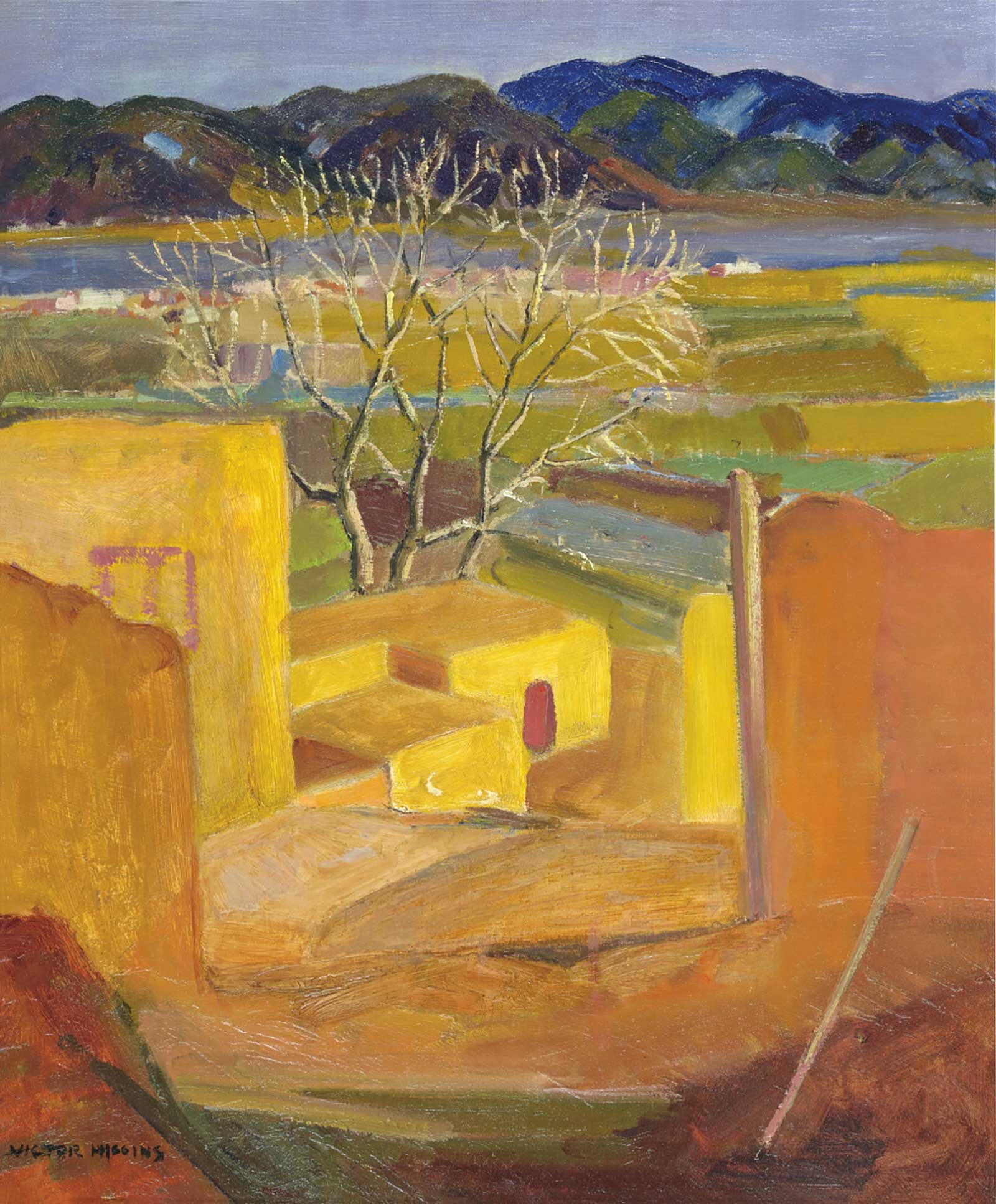
Victor Higgins (1884-1949), Adobe Gateway, ca. 1930, oil on canvas, 24 x 20 in. Private Taos Collection.
“The exhibition is about looking more carefully at what landscape paintings can tell us beyond what we first see,” says Coleman. “These works show us beauty, but they also open a conversation about the people, histories and traditions connected to the land.”
Land, Legacy, and Perspective: Landscapes of Northern New Mexico is on view at the Taos Art Museum in the Janis and Roy Coffee Gallery, through November 1. —
Land, Legacy, and Perspective: Landscapes of Northern New Mexico
Through November 1, 2026
Taos Art Museum
227 Paseo Del Pueblo Norte, Taos, NM 87571
(575) 758-2690 www.taosartmuseum.org
Powered by Froala Editor


