

Maynard Dixon, considered by many art collectors to be the quintessential artist of the West, captured the landscape and the people who called it home in his honest and reverent style.
In 1927, Dixon produced his last major illustration commission: a series of drawings for a new edition of The Oregon Trail, a travel memoir by Francis Parkman. Nine of the images are currently on display at the Hilbert Museum of California Art in Orange, California, as part of the exhibition Witness to a Vanishing West: Maynard Dixon and the Oregon Trail.
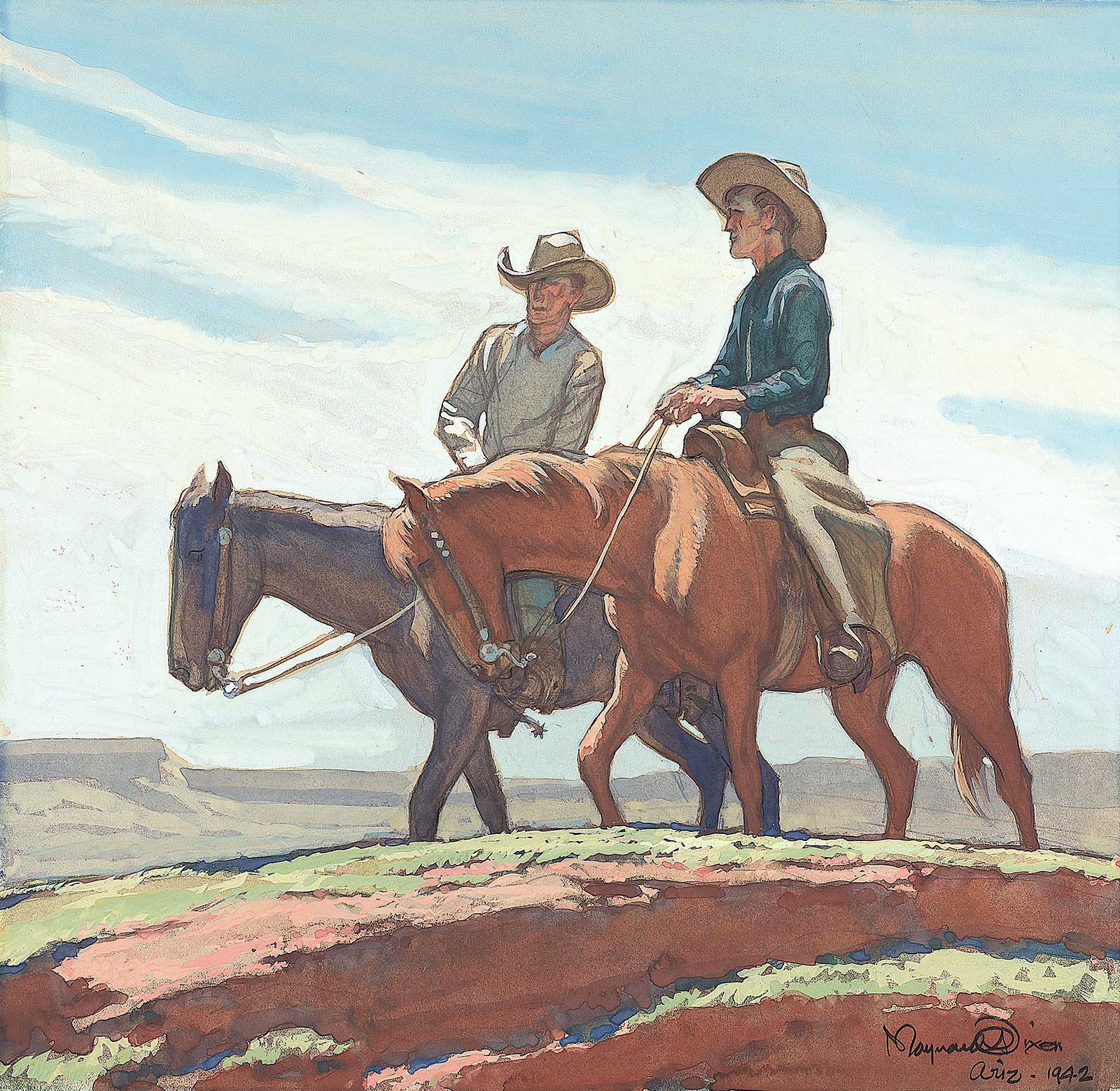
Arizona Cowboys, gouache, 111/2 x 12 in.
The exhibition is part of an 11-month-long celebration for the museum’s 10-year anniversary.
Museum curator Mary Platt describes Dixon’s work in a museum statement as, “at once historically grounded and poetically restrained, they reflect the artist’s lifelong engagement with the landscapes, peoples and fading traditions of the American West.”
Born in Fresno, California, in 1875, Dixon grew up in the expansive landscapes of the West and lived the frontier life other artists of his generation romanticized. By his late teens, the artist was a professional illustrator, and as his career grew he travelled extensively throughout the Southwest, immersing himself in Native American communities, Hispanic villages, capturing ranchers and cowboys.
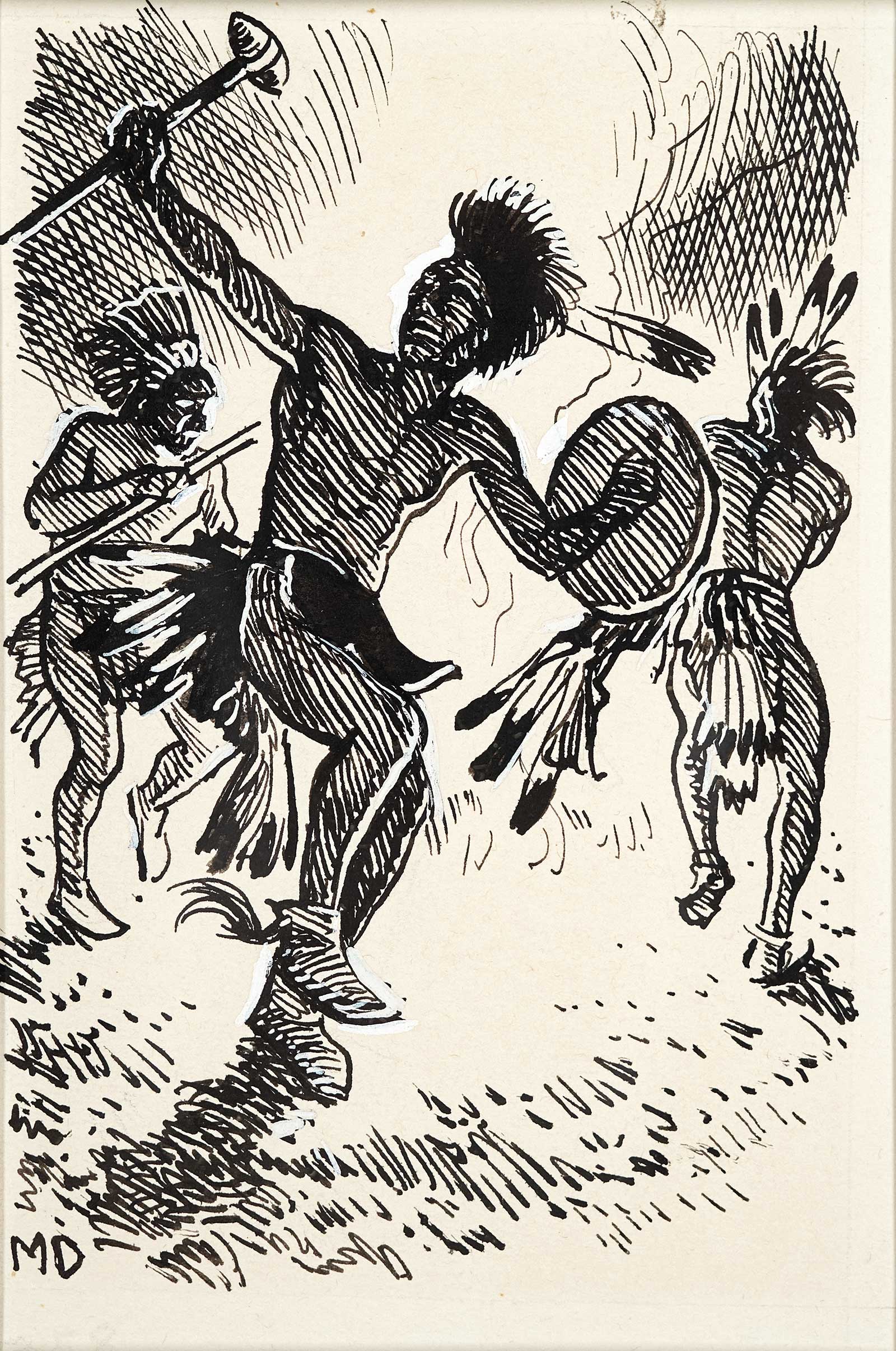
War Dance, illustration for The Oregon Trail
Dixon would sketch on location, sleep under the stars and learn the textures and patterns that made up the fabric of the West. Throughout the years, his style evolved into the bold, modernist forms he’s celebrated for today.
The Oregon Trail was first published in 1849. The memoir, based on the author’s journey across the country, includes encounters with Native American tribes, frontier settlements, hunting expeditions and the beautiful but unforgiving landscapes of the West.
When Dixon was commissioned to illustrate the book in the 1920s, the world Parkman depicted was gone, permanently changed by the railroad and industrialization. However, according to the Hilbert Museum, Dixon understood that the emotional and cultural stakes of the past still mattered, and his drawings are testaments to the endurance of the West.
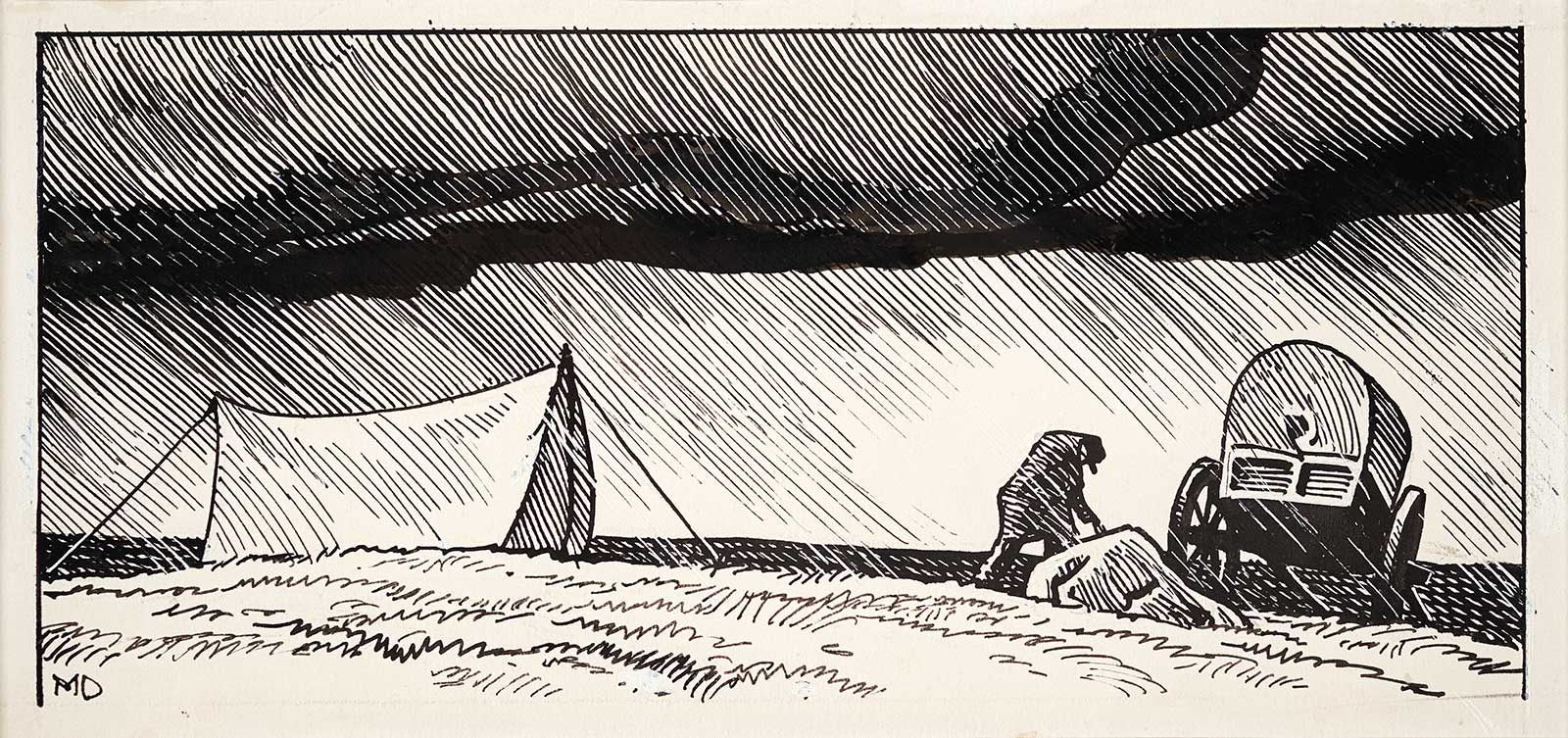
Storm on the Plains, illustration for The Oregon Trail
In simple lines, Dixon conjures wind-swept plains, brewing storms, peaceful camps and honestly captures the tension between humans living in unimaginably vast places. “Nothing is overstated, nothing is romanticized, everything is earned through observation and experience,” says Platt.
This body of work represents the artist’s last sustained project. Each illustration represents Dixon’s belief that art and artists have a responsibility to preserve memory as the world continues to change.
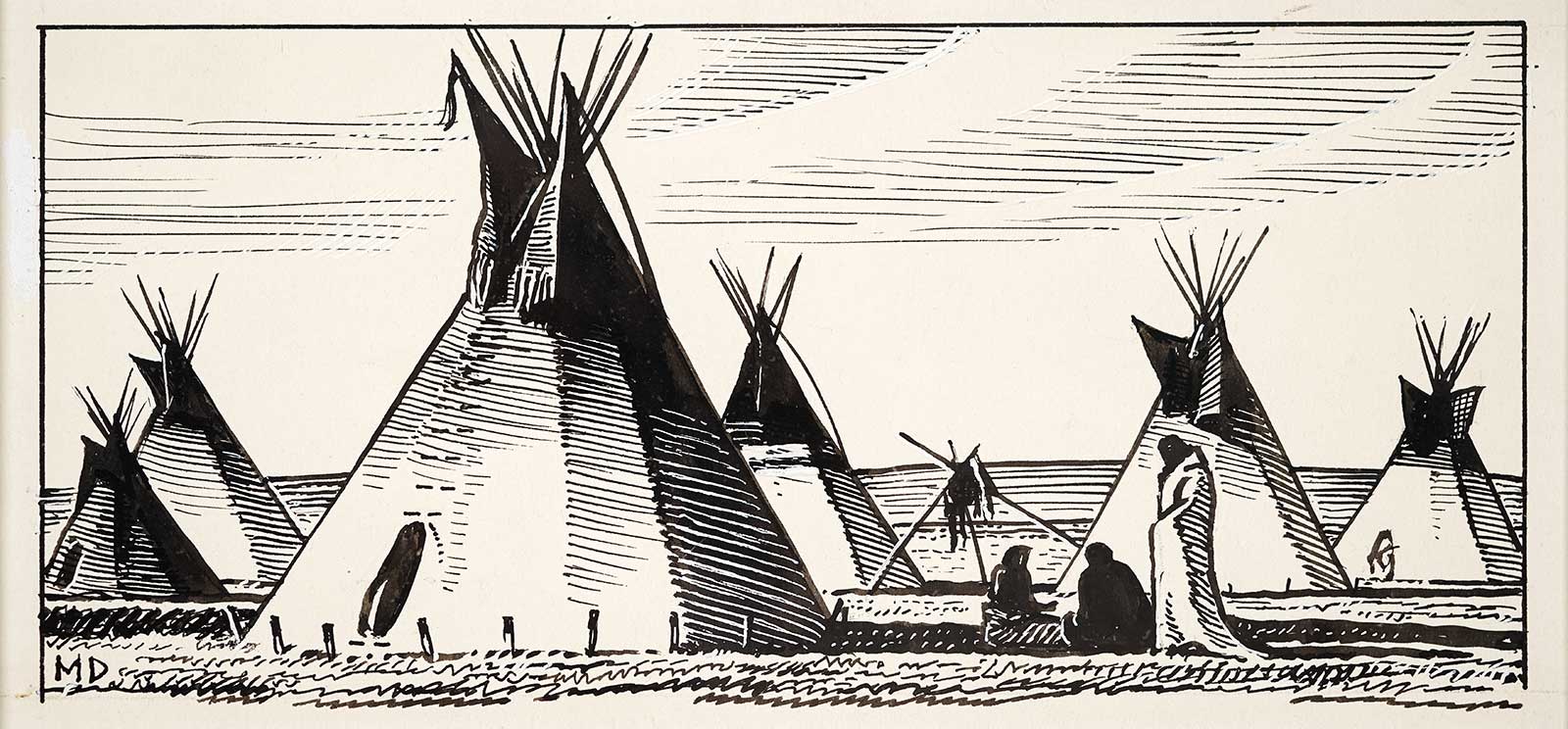
Ogillallah Village, illustration for The Oregon Trail
“In an era when the American West continues to be reimagined and contested, Dixon’s work reminds us that landscapes carries memory, and that art can serve as a form of stewardship, holding stories that might otherwise be lost,” says Platt.
Witness to a Vanishing West: Maynard Dixon and the Oregon Trail will be on view until November 1, 2026. —
Witness to a Vanishing West: Maynard Dixon and the Oregon Trail
Through November 1, 2026
Hilbert Museum of California Art
67 N. Atchison Street, Orange, CA 92866
(714) 516-5880, hilbertmuseum.org
Powered by Froala Editor


