Gordon Snidow painted a calmer side of the West. While he captured the rough-and-tumble life of the working cowboy, he frequently turned his attention to the minutes and hours after the work was done, when the cowboy cracked open a cold one, admired the evening sky and relaxed amid the faint bleating of cows in nearby pastures. His West was a softer and more reflective West. Snidow died on April 12 at his home in Ruidoso, New Mexico. He was 89 years old.
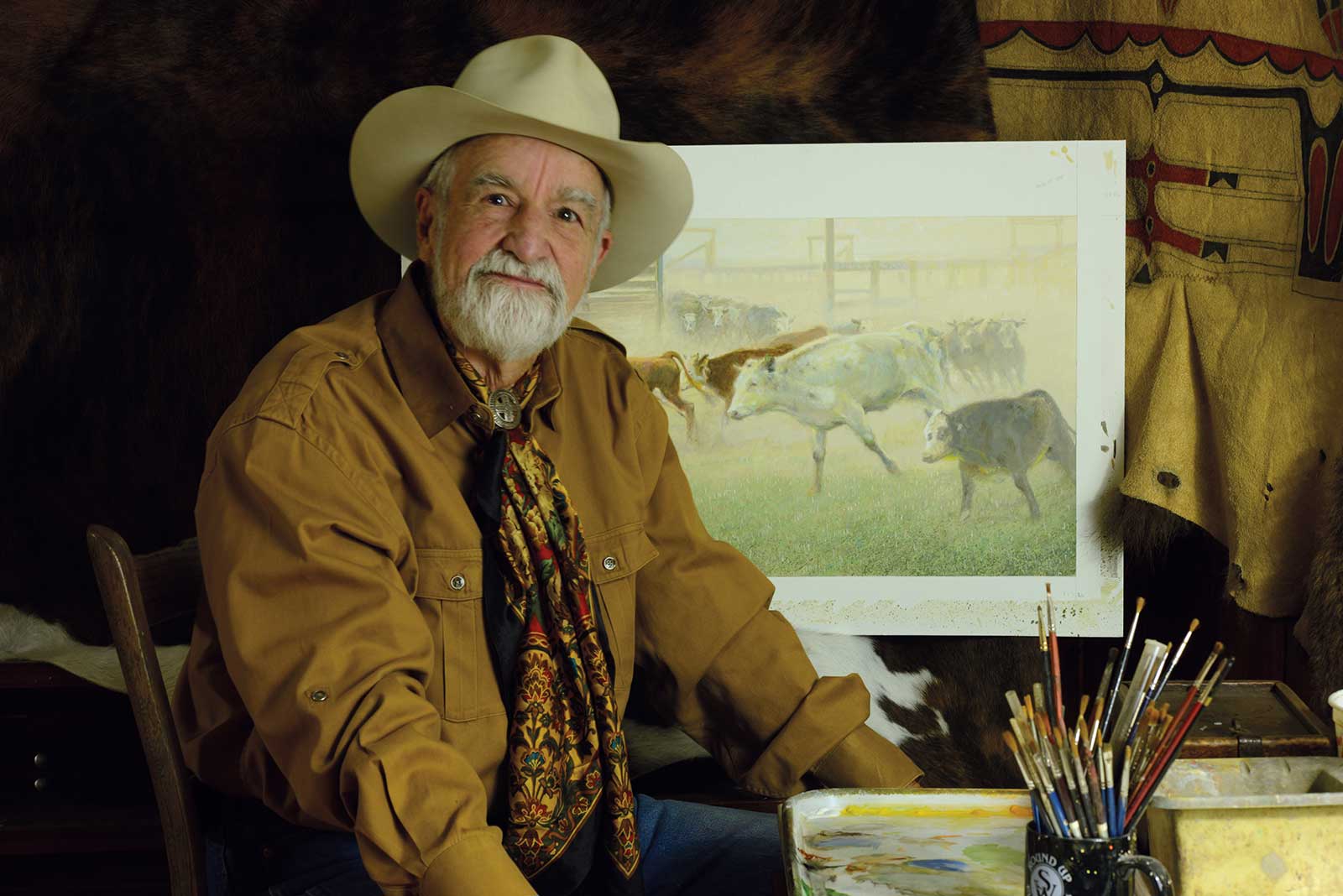
Gordon Snidow in his studio in Ruidoso, New Mexico.
Across a seven-decade career, Snidow faithfully painted the American West across many subjects and themes, including cowboys, frontiersmen and mountain men, Native Americans, homesteaders, farmers and even nude cowgirls, which he turned into a popular bronze. His career began in 1959 when he graduated from the ArtCenter College of Design in Los Angeles. In New Mexico, he split his time between fine art and illustration, and later joined the Cowboy Artists of America in 1966, which was only a year old at the time. He served in the group for 25 years, including three years as president, and became an emeritus member as the CA’s top medal winner with 27 gold and silver medals, including three medals for best of show. He also co-founded and served on the first board of what was then the Cowboy Artists of America Museum (today it is the Museum of Western Art) in Kerrville, Texas.
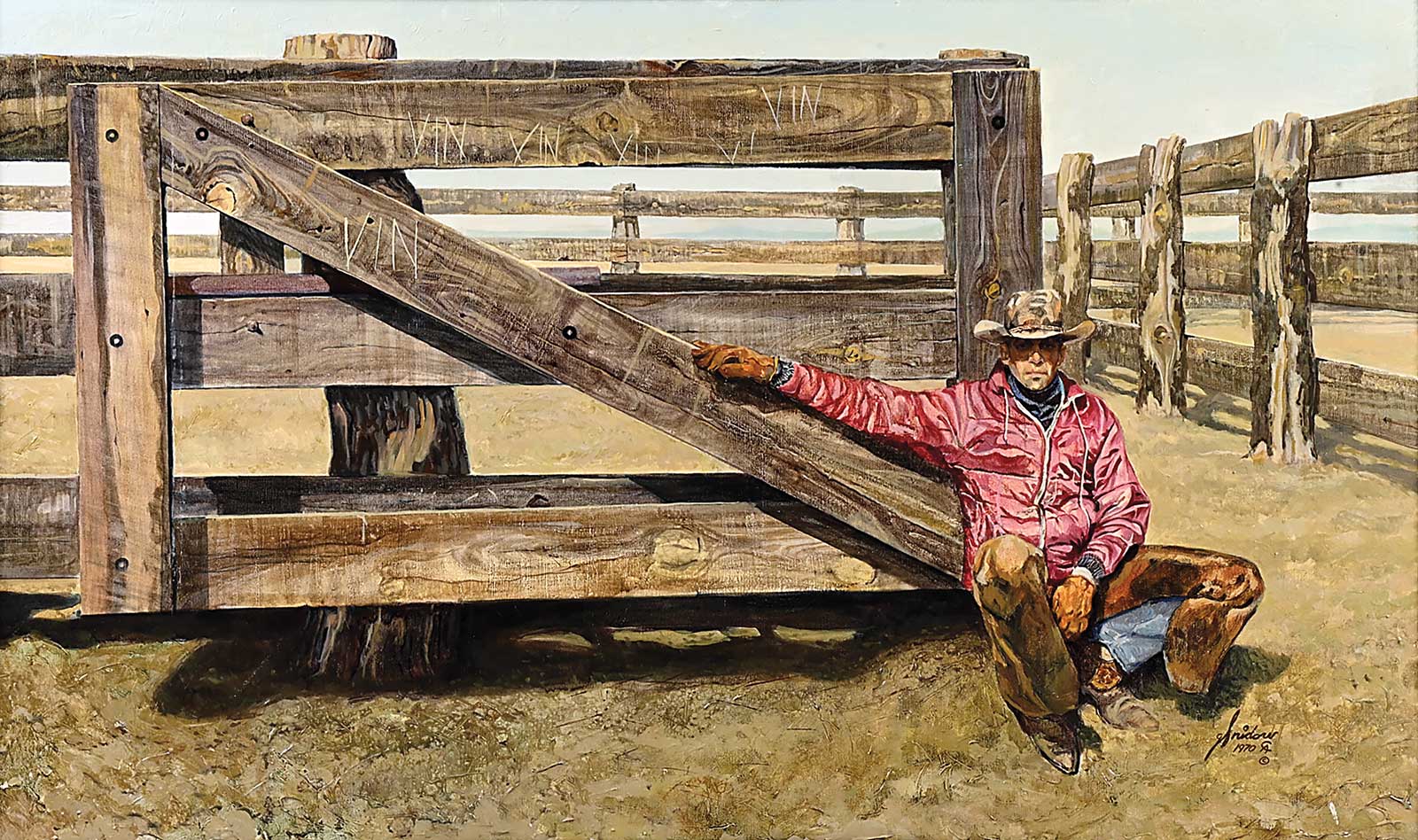
Vince 1970, oil, 30 x 50 in.
His work went beyond Western art in the 1970s and 1980s when he partnered with the Coors Brewing Company to produce images of cowboys enjoying a beer after a long ride. He also completed a series of works on American women and also homelessness in the West. “These portraits reflected his belief in portraying life ‘the way it is—ugliness and all,’ ensuring that the story of the West included not only its icons, but those often overlooked,” his obituary notes.
For many, though, the appeal of his work was his empathy and humanism as a painter. “Along with his energetic pictorializations of buckaroos north and south, at work and at rest, he chose to apply his technical virtuosity to others who inhabit his world and complete his vision,” wrote Peter Hassrick in Gordon Snidow: My Story. “Sometimes he elected to paint men whose stories had been written years before. Expanding his interpretation of the verity of Western life, he painted veterans of the range whose wrinkles, false teeth, bifocals and bunions define them as much as the captivating experiences they recount…[The paintings were] evidence of Snidow’s deft and sympathetic translation of character into paint.” —
Powered by Froala Editor


