Aaron Hazel says, “I enjoy letting the viewer see the process of my mark making.” He makes marks with spackle knives, palette knives, brushes and often his fingers.
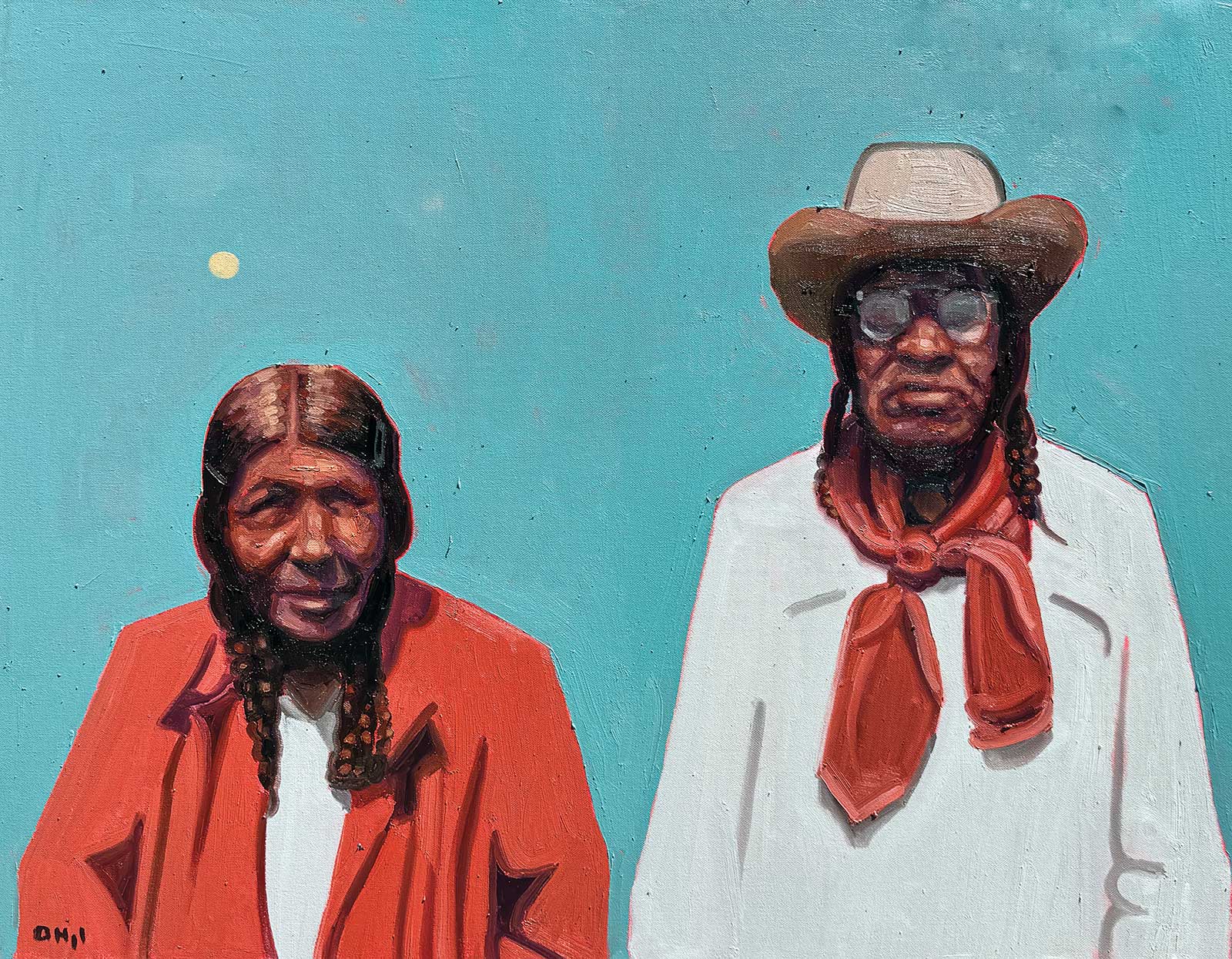
Coyote Woman & Her Husband Louis Bear Child, oil, 30 x 40 in.
In his painting Will, he laid down a turquoise wash onto which he would ordinarily have sketched in the forms with a pencil. In this case, he used a broader black Sharpie. Quickly applied white oil paint over the turquoise wash and within the Sharpie outline becomes a convincing white shirt, while Will’s pants and large brass belt buckle are merely suggested. “In my current work I’m trying to show the spontaneity of working with a brush,” says the artist.
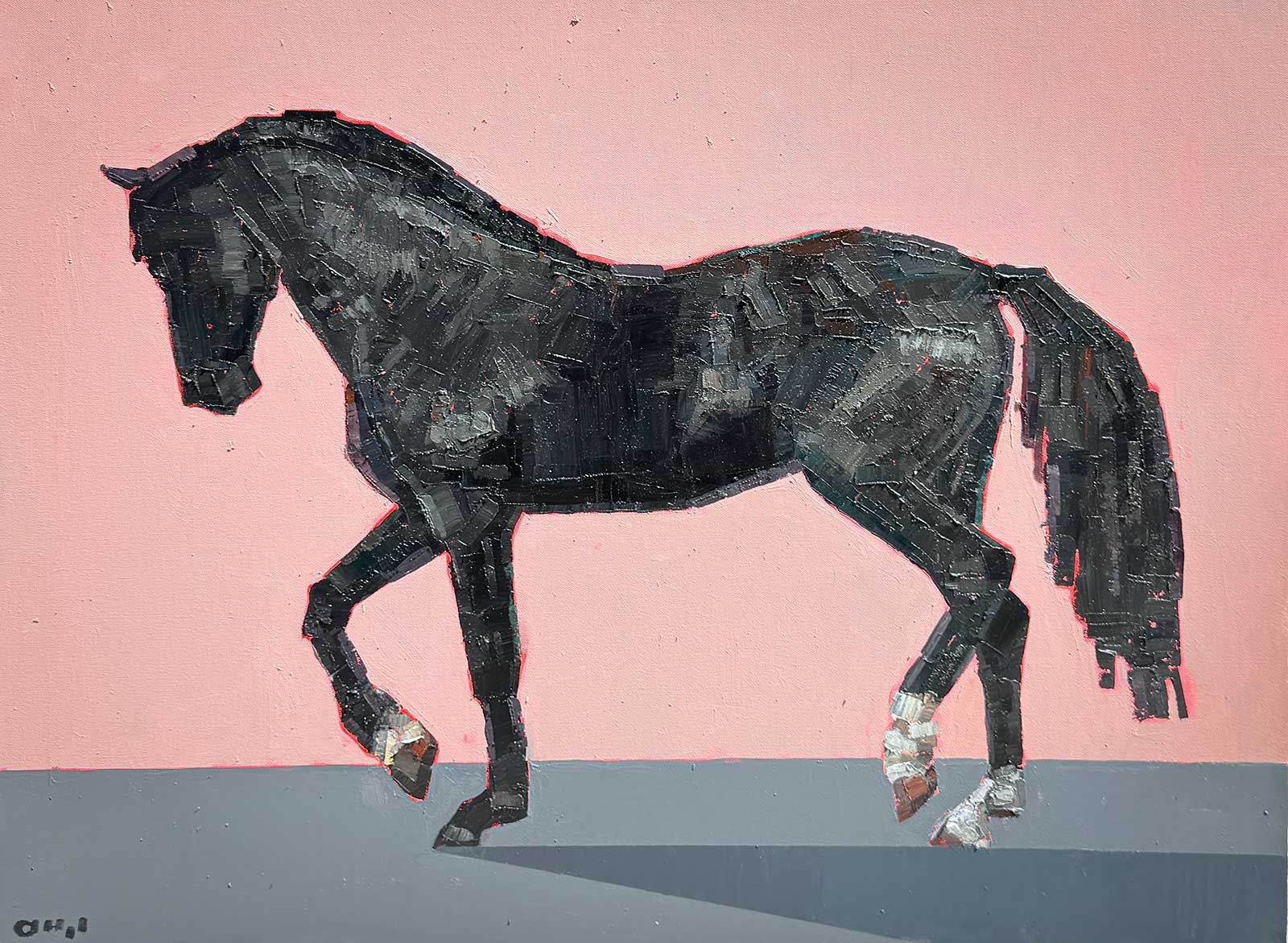
Mavis, oil, 30 x 40 in.
Hazel’s subjects are often painted against a featureless background. In this painting, the red dot of the sun gives, he says, “perspective and a sense of place.”
Will was a former slave in Texas and was depicted on a black-and-white postcard. “He spoke to me,” Hazel comments. Carefully observing the values in the postcard, he adds color of the same value.
Cyndi Hall of Manitou Galleries in Santa Fe, New Mexico, comments, “As a person of color himself, Hazel approaches each subject with curiosity, respect and a desire to learn. His work reflects an ongoing exploration of the individuals who have shaped the American frontier, while encouraging viewers to reconsider what Western art can be and whom it represents. By illuminating these often overlooked stories, Hazel expands the visual language of the West and creates space for a more complete and inclusive understanding of its history.”
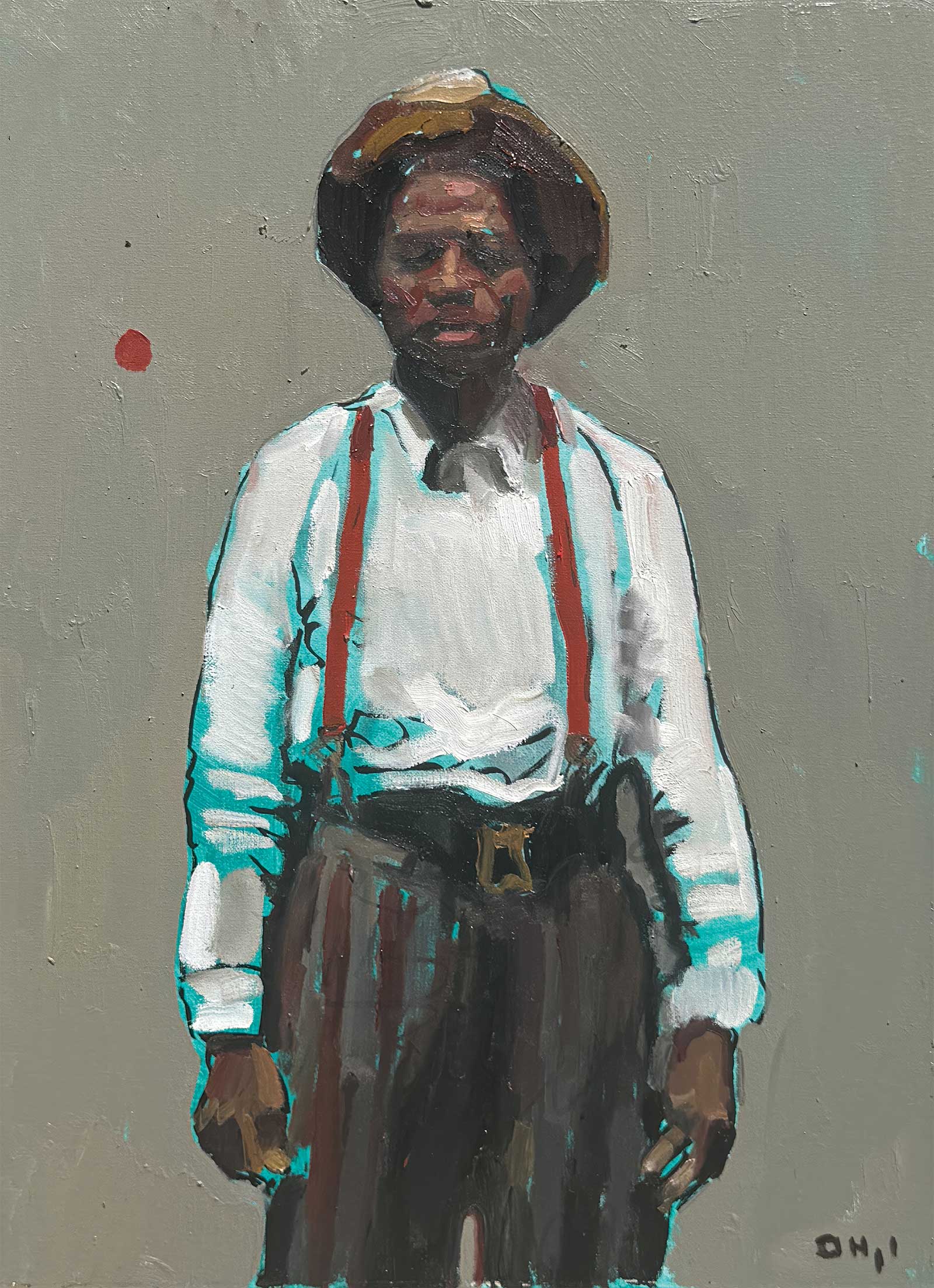
Will, oil, 24 x 18 in.
Hazel played basketball at Whitman College in Walla Walla, Washington, where he received his bachelor’s degree. “I’m very experimental with my portraits,” he says. “The challenges are like playing against a new basketball team and figuring out how to beat them.”
One of the new works is a double portrait, Coyote Woman & Her Husband Louis Bear Child.Again, he uses a brush rather than a palette knife, painting detail in their expressive faces and barely suggesting their clothing. Louis Bear Child was a respected elder among the Piikuni (Blackfeet) tribe in the 20th century, preserving tribal customs and passing down oral histories. He was often photographed with his wife, otherwise known as Mrs. Susie Bear Child.
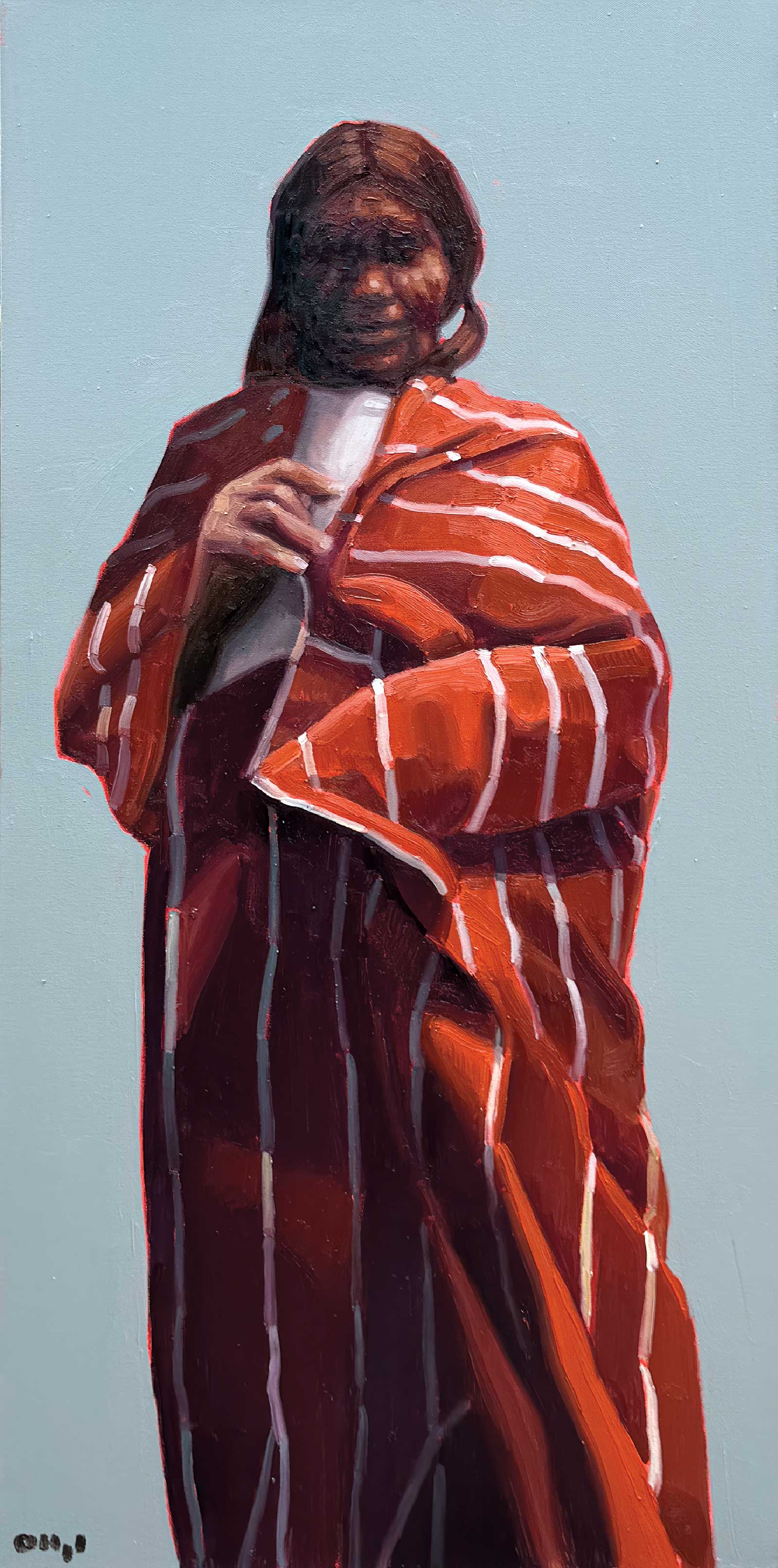
Elk Woman, oil, 48 x 24 in.
“I’m interested in how they interact,” Hazel comments, “his serious expression and her smile.”
Hazel’s latest paintings will be shown in the exhibition Go West at Manitou Galleries in Santga Fe from August 14 to 23. —
Manitou Galleries 123 W. Palace Avenue » Santa Fe, NM 87501 » (505) 986-0440 » www.manitougalleries.com
Powered by Froala Editor


