It’s one of the most ambitious exhibitions the Briscoe Western Art Museum has ever undertaken—a bilingual show tracing nearly 400 years of Tejano history, culture and identity, and an even deeper examination of how Tejano culture shaped Texas and the American West. Opening July 24, Tejano Legacy: Another American Origin Story will present more than 100 rare artworks, artifacts and immersive storytelling drawn from private collections, the Briscoe’s permanent collection and other lenders across the United States and Mexico, with artwork dating as far back as the 16th century all the way to present day. Several works loaned from Mexican institutions will be seen in the United States for the first time.
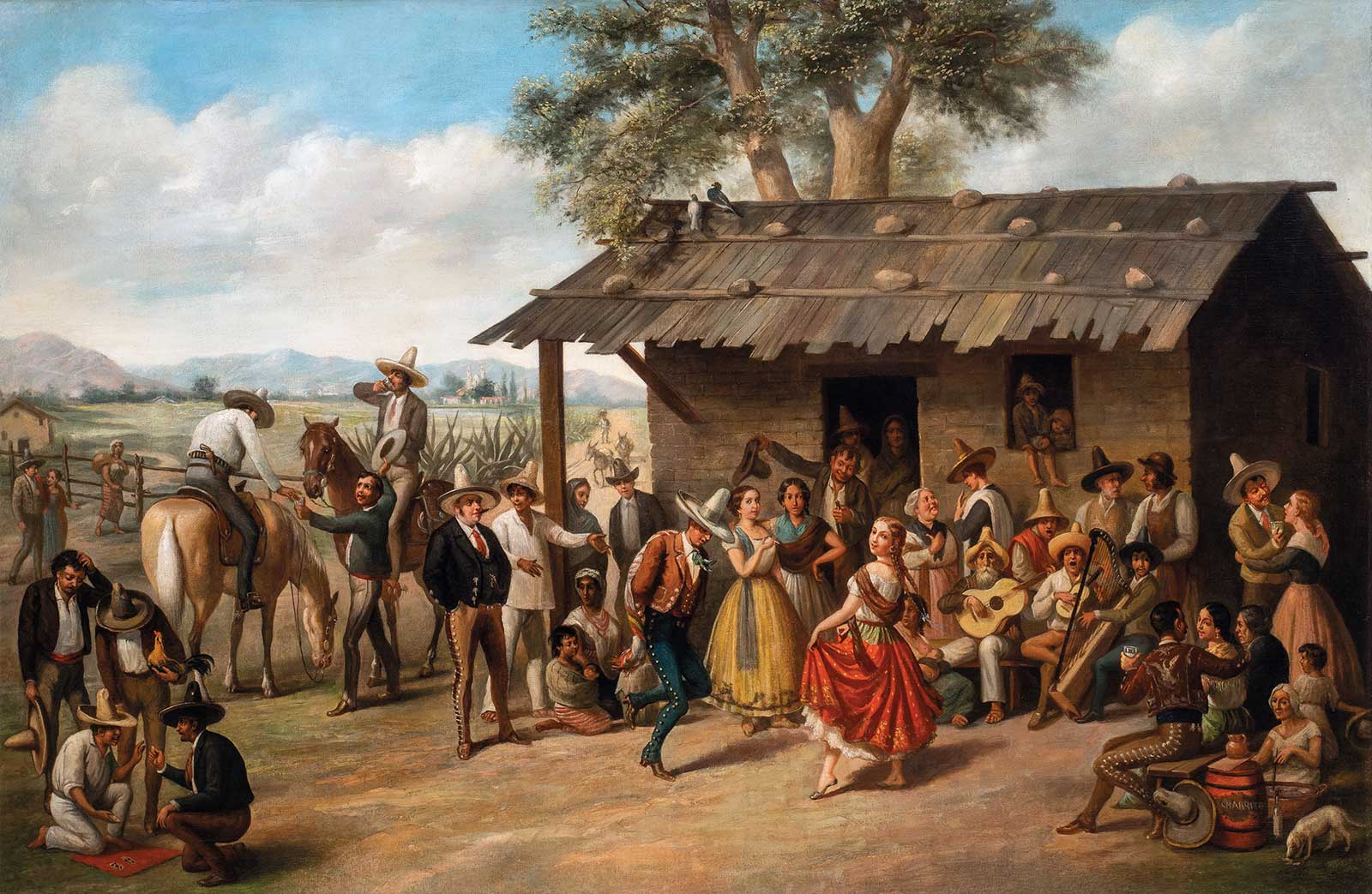
Artist Once Known (Mexico), Fandango (Fiesta de pueblo), mid-19th century, oil on canvas, 51 x 70¾ in. Briscoe Western Art Museum Permanent Collection.
“What makes the artwork in Tejano Legacy: Another American Origin Story especially meaningful is that it expands and deepens our understanding of the American West by tracing its roots far earlier than the traditional cowboy narrative,” says Jason Kirkland, the Briscoe’s director of collections and exhibitions. “Many of the works in the exhibition predate the emergence of the American cowboy, revealing the cultural foundations, traditions and communities that shaped the West long before the frontier mythology most audiences recognize today.”
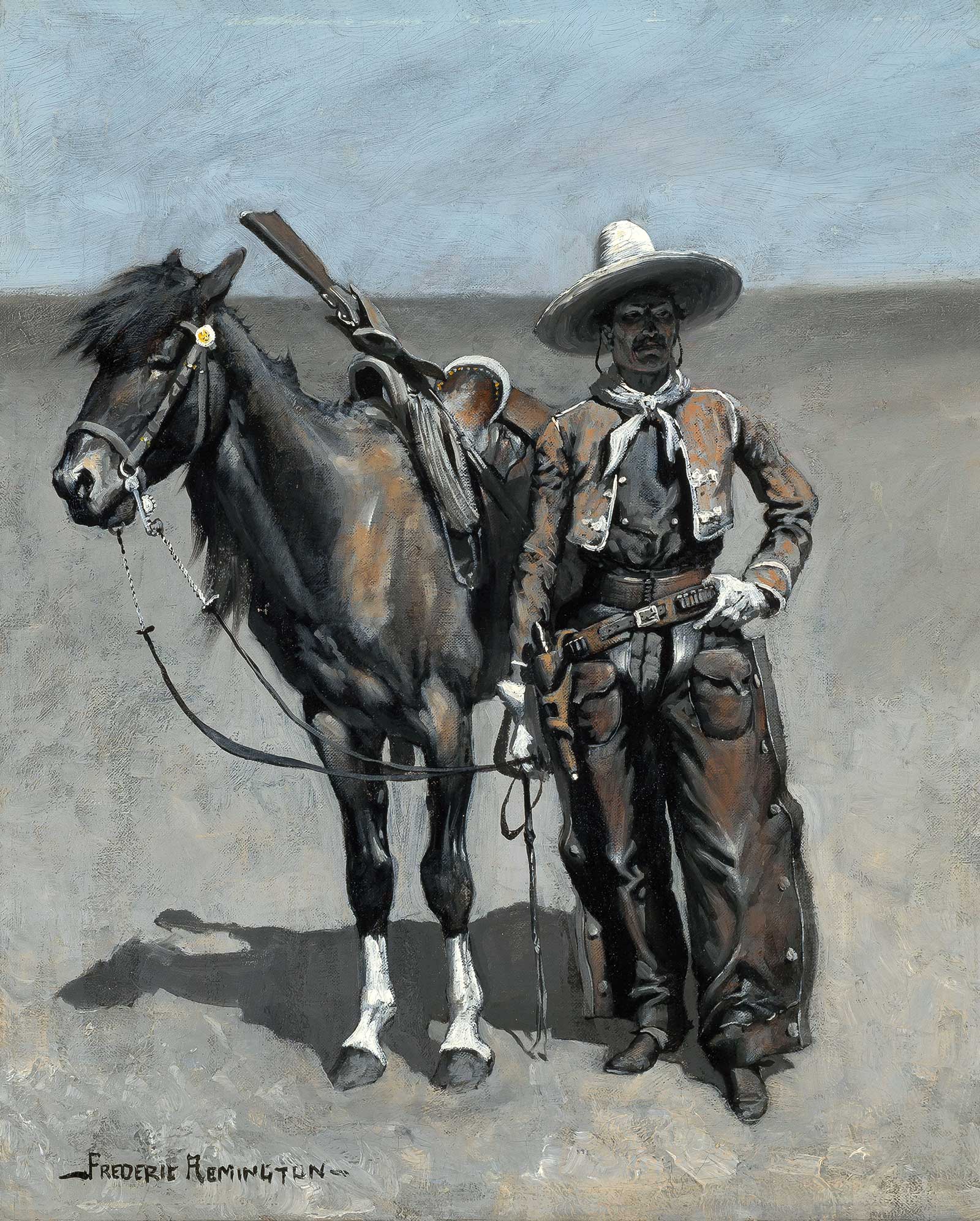
Frederic Remington (1861-1909), A Mexican Buccaroo – In Texas, ca. 1890, oil on canvas, 21½ x 17½ in. Loan of the Jack and Valerie Guenther Foundation.
Kirkland explains that through exploring the exhibition, visitors will learn a number of fascinating things about the West, some quite unexpected. “The exhibition demonstrates that the story of the West did not begin with the cattle drives of the late 19th century,” he says. “Instead, it reaches back nearly 400 years to the Spanish colonial period, when Tejanos, vaqueros and Indigenous communities established ranching traditions, horsemanship and cultural practices that would later define cowboy culture across North America. These artworks and artifacts help illustrate how the West was shaped through generations of cultural exchange, resilience and adaptation.”
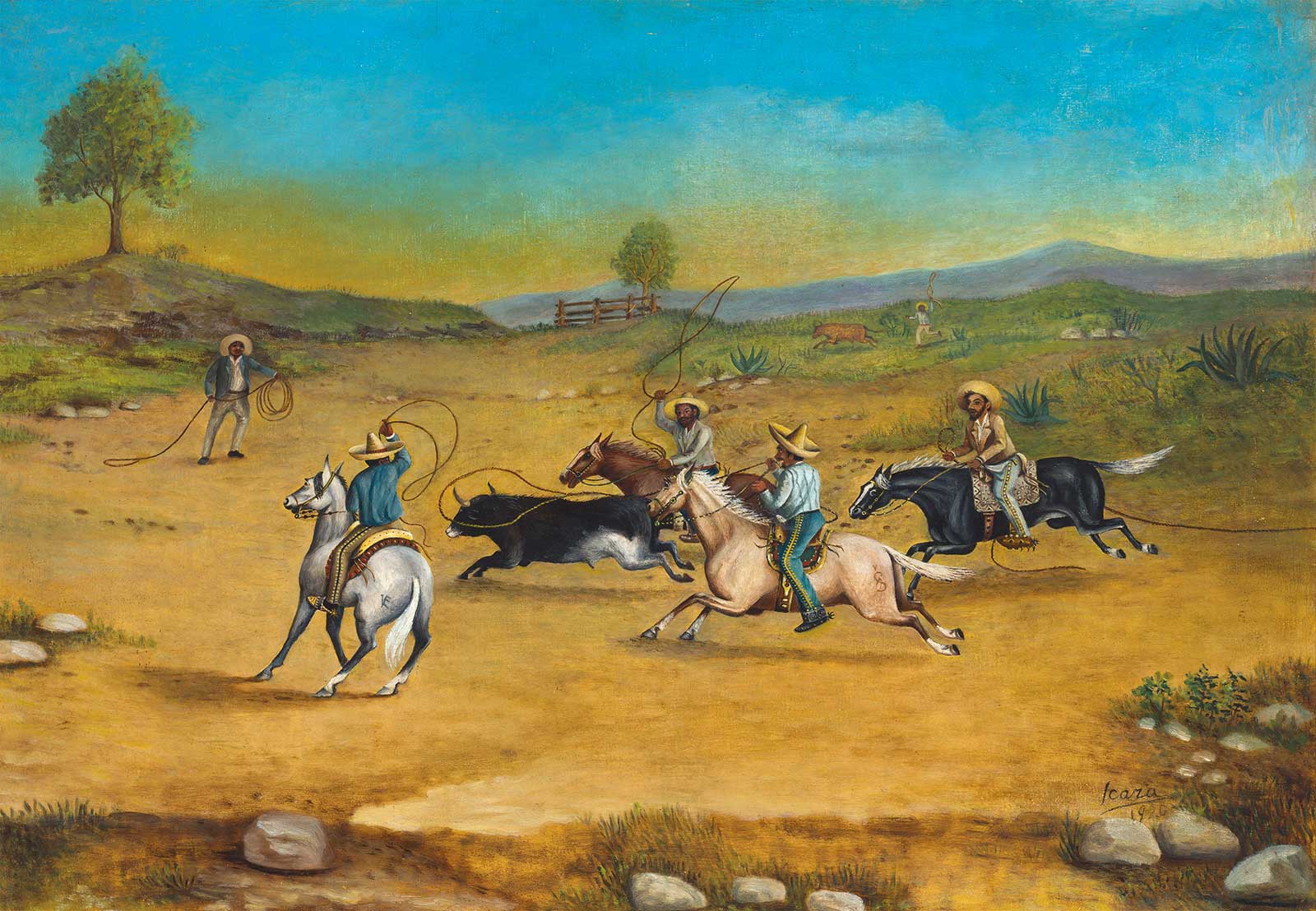
Ernesto Icaza Sánchez (1866-1935), Lassoing Cattle (Lasando una res), late-19th century, oil on canvas. Private Collection.
Visitors should keep an eye out for works like Ernesto Icaza Sánchez’s Lassoing Cattle, which is especially important because it visually documents the vaquero traditions that became the foundation for the American cowboy identity. “Sometimes referred to as ‘El Charro Pintor’ or the Charro Painter, Sánchez was known for capturing the energy and authenticity of ranch life in Mexico during the late 19th century. Born into a family with ranching interests and a skilled horseman himself, Sánchez brought remarkable realism to his depictions of charros and vaqueros in motion. In Lassoing Cattle, viewers see the horsemanship, ranching skills and relationship between rider, horse and cattle that defined hacienda life and ultimately influenced cowboy culture throughout the American West. The painting functions not only as a work of art, but also as a historical document preserving the traditions, attire and working practices of vaqueros whose influence extended far beyond Mexico,” says Kirkland.
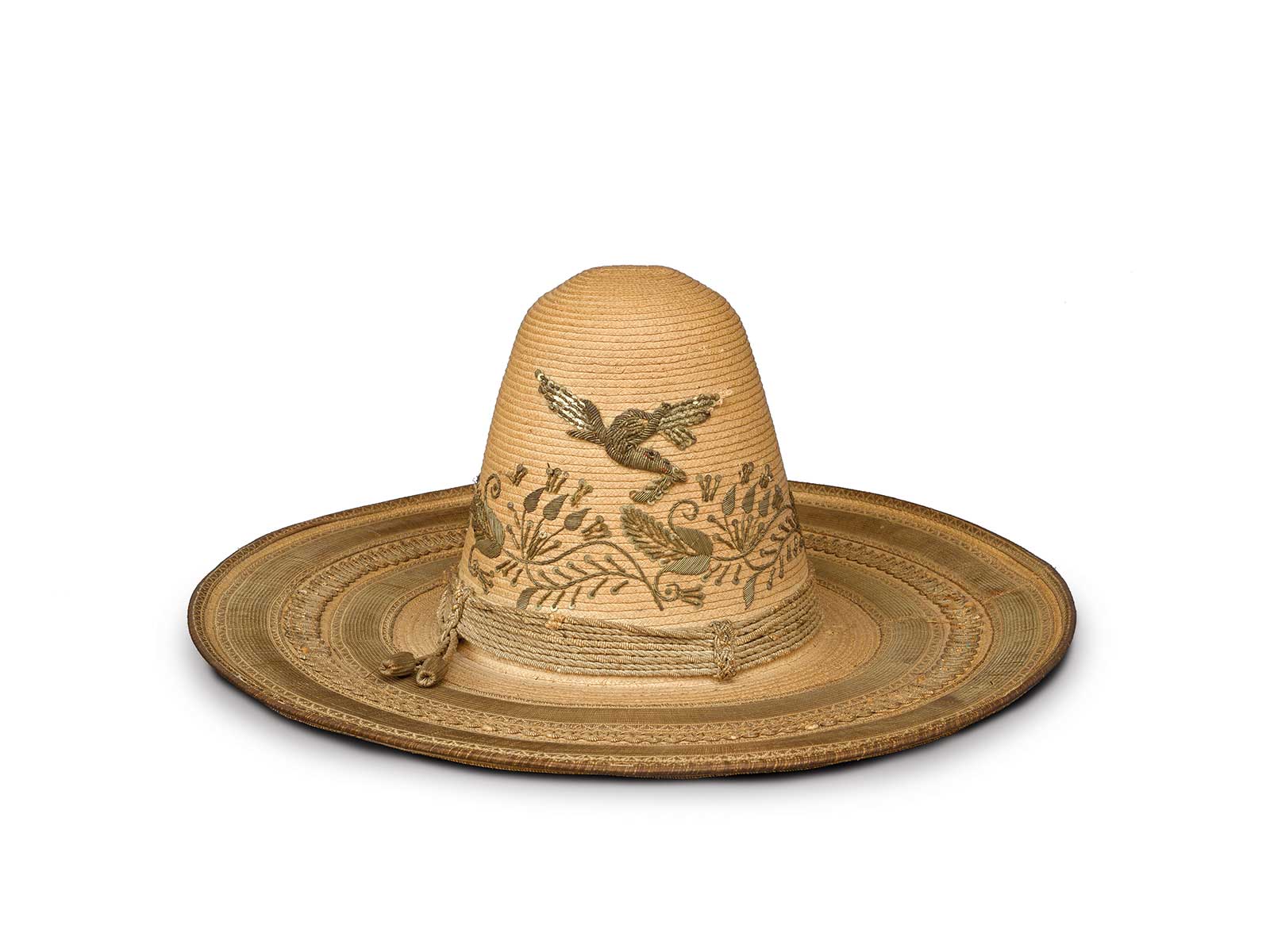
Artist Once Known (Mexico), Charro Hat with Piloncillo Crown, 19th century, silver embroidery, 18 x 8 in. Private Collection.
Fandango is a mid-19th-century oil by an unknown artist, depicting a lively gathering of people.
“Similarly, Fandango offers a different but equally important lens into the cultural identity of the West,” Kirkland continues. “While ranching and horsemanship are central to the Western story, community life, celebration, music and cultural traditions are equally essential. The painting reflects the 19th-century artistic movement known as ‘costumbrismo,’ which focused on realistic depictions of everyday customs, traditions and social life. Through scenes of celebration and community gathering, works like Fandango helped establish a sense of national and regional identity by elevating ordinary people, traditions and shared cultural experiences.”
Tejano Legacy: Another American Origin Story will hang at the Briscoe Western Art Museum in San Antonio, Texas, through January 18, 2027. —
Tejano Legacy: Another American Origin Story
July 24, 2026-January 18, 2027
210 W. Market Street
San Antonio, TX 78205
(210) 299-4499
www.briscoemuseum.org
Powered by Froala Editor


