Jeremy Lipking remembers a period right before the internet took hold of everyone’s lives and careers. Before an artist could email images to a gallery in 10 seconds. During a time when unrepresented painters had to hit the road with artwork stacked neatly in car trunks.
“This was probably in the early 2000s, back when the internet was still a very small place, especially in the art world. Most galleries didn’t have websites, and even museums didn’t have an internet presence. It might as well have been like the 1800s,” he says. “I was trying to figure out how to get into a gallery. I was so naïve at the time, but I knew that I needed to have a group of paintings to show somebody that were at least similar in style and subject, and had some cohesiveness to them.”
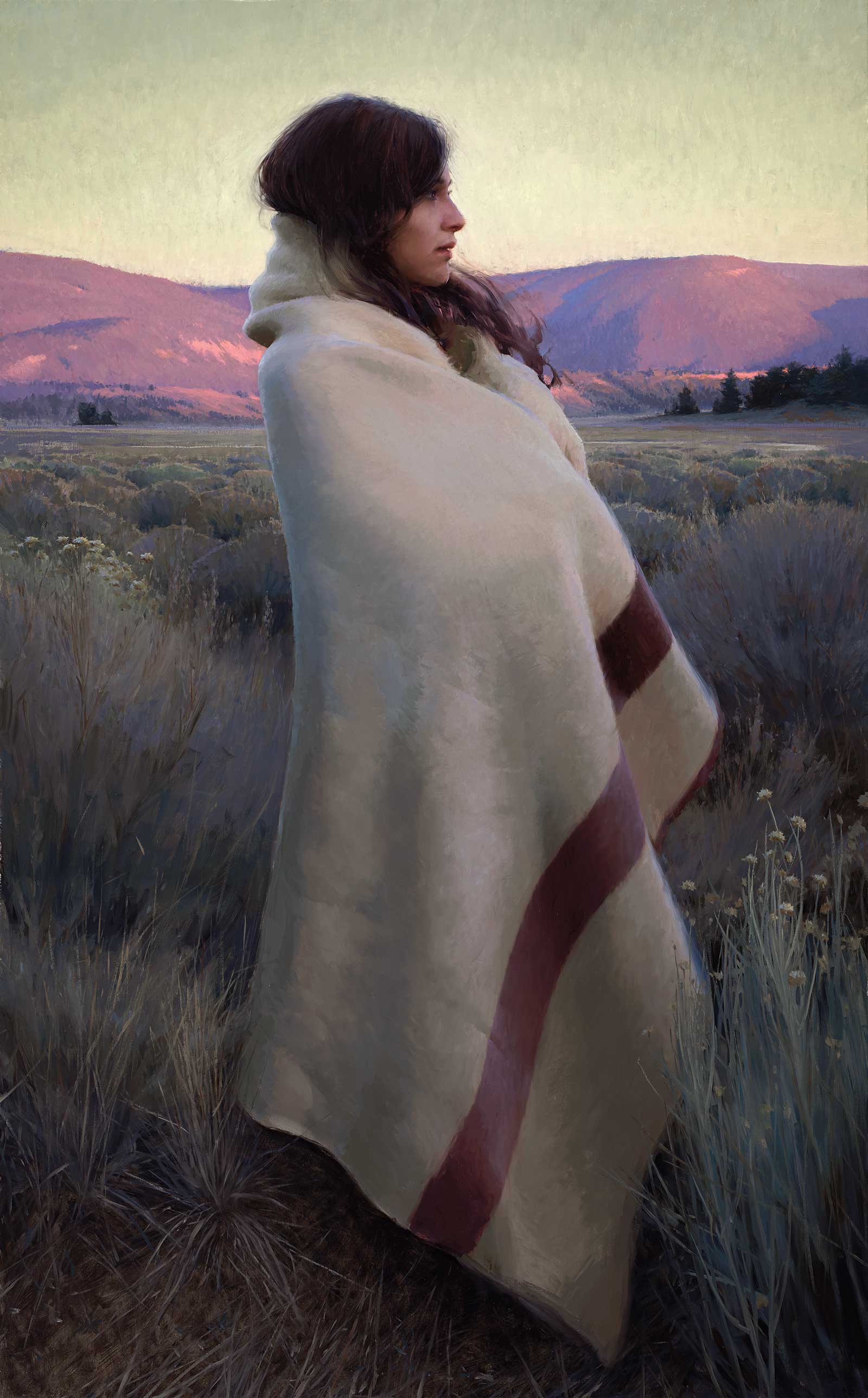 Silence & Sagebrush, 2014, oil, 58 x 36 in. Collection of the Prix de West at the National Cowboy & Western Heritage Museum, Oklahoma City, OK.
Lipking was living in Westlake Village, near Thousand Oaks, California. He scoured through art magazines and found several galleries in Laguna Beach, so he put some paintings in his car and began the two-hour drive south along the Pacific Coast. He walked into one gallery with paintings tucked under his arms.
“I hit the buzzer and [the gallery owner] let me in. I said, ‘Hey, I have some paintings I’d like to show you and get some feedback, or maybe even show them in the gallery.’ She wouldn’t even look at them,” Lipking remembers. The gallery owner told him he had to submit a portfolio. “I was trying to explain to her that I just drove two hours to get there. ‘Can you at least look at them?’ I held one up and she turned her head and put up her hand. She didn’t even want to look at them.”
Careers have been derailed on less. Lipking’s was delayed, but only slightly—he took them to a gallery next door, and all the work was purchased on the spot.
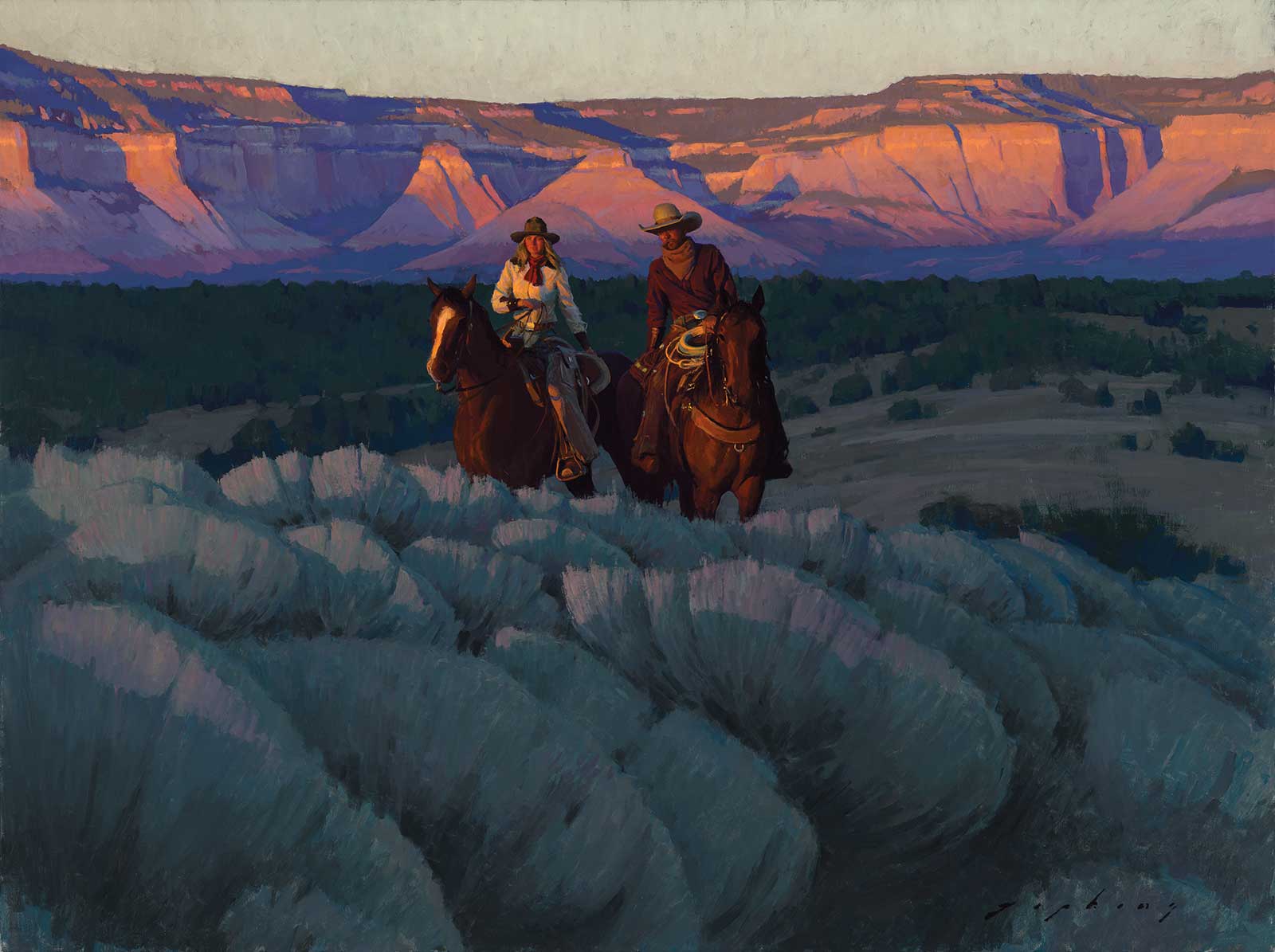
The White Line, 2025, oil, 30 x 40 in.
Today, the California-based artist is one of the top figurative painters in the country. He’s celebrating 30 years as a painter with a major retrospective at the Booth Western Art Museum in Cartersville, Georgia. Jeremy Lipking — 30 Years a Painter opens April 11. It will feature more than 40 paintings, some from as far back as 1996, as well as a printed catalogue. The retrospective will fit in nicely at the Western museum, which has embraced artists of all types, including painters like Lipking, who walks confidently on the razor’s edge between Western art and contemporary American realism.“When I saw Jeremy Lipking’s painting titled Between the Past and Present at the Prix de West Invitational Art Sale & Exhibitionin 2016, I made it my goal at that time to have an exhibition of his work at the Booth Western Art Museum. I’m thrilled that after 10 years it is finally happening,” says Lisa Wheeler, the Booth’s director of curatorial services.

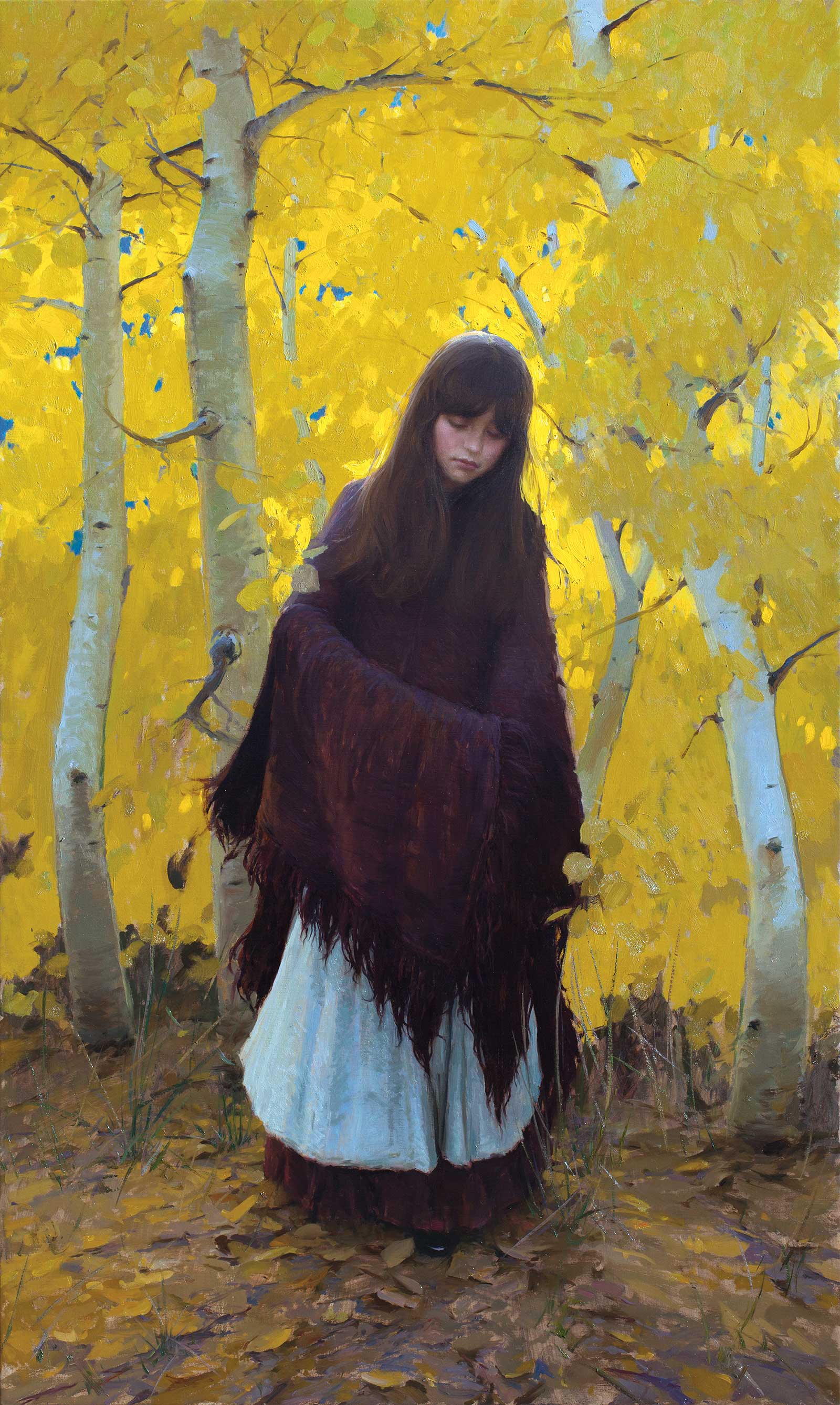
Fall Aspens, 2016, oil, 40 x 24 in. Collection of Laura Barletta at the New Salem Museum and Academy of Fine Art.
Some of the early paintings are special for the artist because they were created during an important period of his life, when Lipking was attending the California Institute of Art. He started as a student, but after his teacher retired mid-semester, Lipking took turns teaching the class. He was in his early 20s. He recalls running other classes with painter Aaron Westerberg. “I taught a couple, and then Aaron was there,” he says. “We were the people who collectted payment and took roll, that kind of thing.”
Lipking looks back fondly on those early days in the trenches of California’s thriving art scene. He remembers the strong emphasis on plein air painting, but also notes that he felt that plein air was a means to an end, not the final work. He points to writing by Jean Stern for the California Art Club. Stern, then the executive director of the Irvine Museum, wrote: “It’s tempting to continually paint small, appealing little jewels that tend to sell well, and unfortunately, many artists are unknowingly (or knowingly?) making a career of it. But one does so at his or her own peril. Inevitably, all three elements of the arts community will grow disillusioned: the artist ultimately gets labelled ‘a painter of minor works’; the dismayed collector realizes that his collection is full of nothing but small paintings; and the dealer will concede that the cost and effort expended to sell small paintings is the same as to sell large paintings, which command a higher profit margin.”
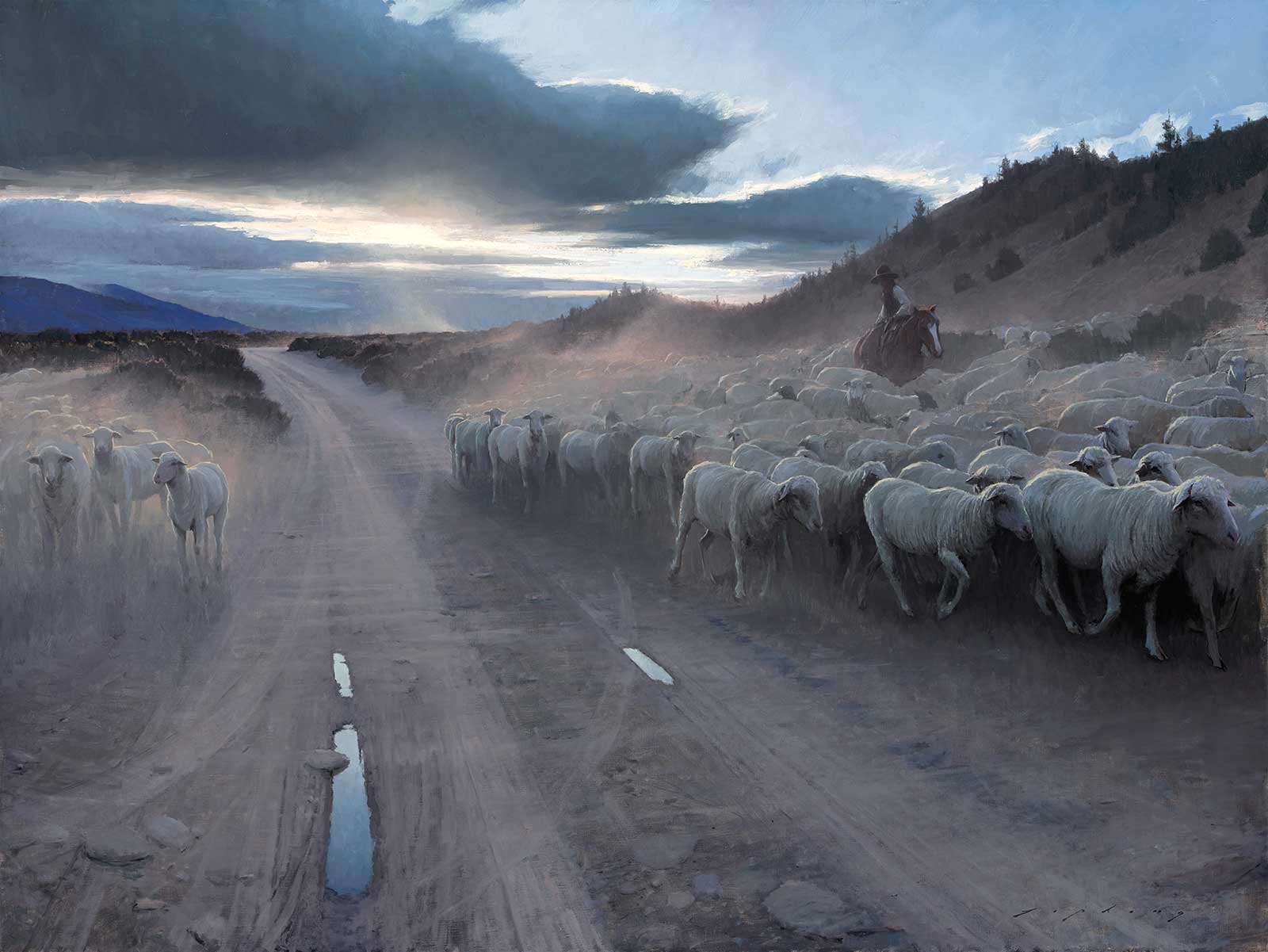
Crossroads, 2019, oil, 30 x 40 in. Collection of Sam Smith, Arcadia, OK.
Lipking avoided these pitfalls by focusing largely on studio paintings in a variety of subjects: figurative works and nudes, still lifes, and quiet scenes of nature and vast landscapes, many of them in the Sierra Nevada Mountains, where he has a cabin from his great grandparents. (He has such a fondness for the region, he named his first daughter Sierra.) Interestingly, maybe because of the plein air craze going on in art circles at the time, Lipking remembers there weren’t many figurative painters when he was coming up in the late 1990s and early ’00s. “There was an artist who was well known at the time, a guy who made his living selling California landscapes. When I started getting into the figure, I was really into [John Singer] Sargent and [Richard] Schmid, and learning to draw and paint the figure. He said something like, ‘You’re wasting your time because nobody wants to buy a painting of a person that they don’t know.’ So, unless I was doing portrait commissions, there was no point,” he says. “But I loved the figure and I didn’t care if I knew the person or not.”
The retrospective will include numerous figurative works, many of them depicting his six children or his wife, Danielle. “They keep score,” Lipking laughs. “They know who’s been in more paintings than the others. I like painting them. They make great models.”
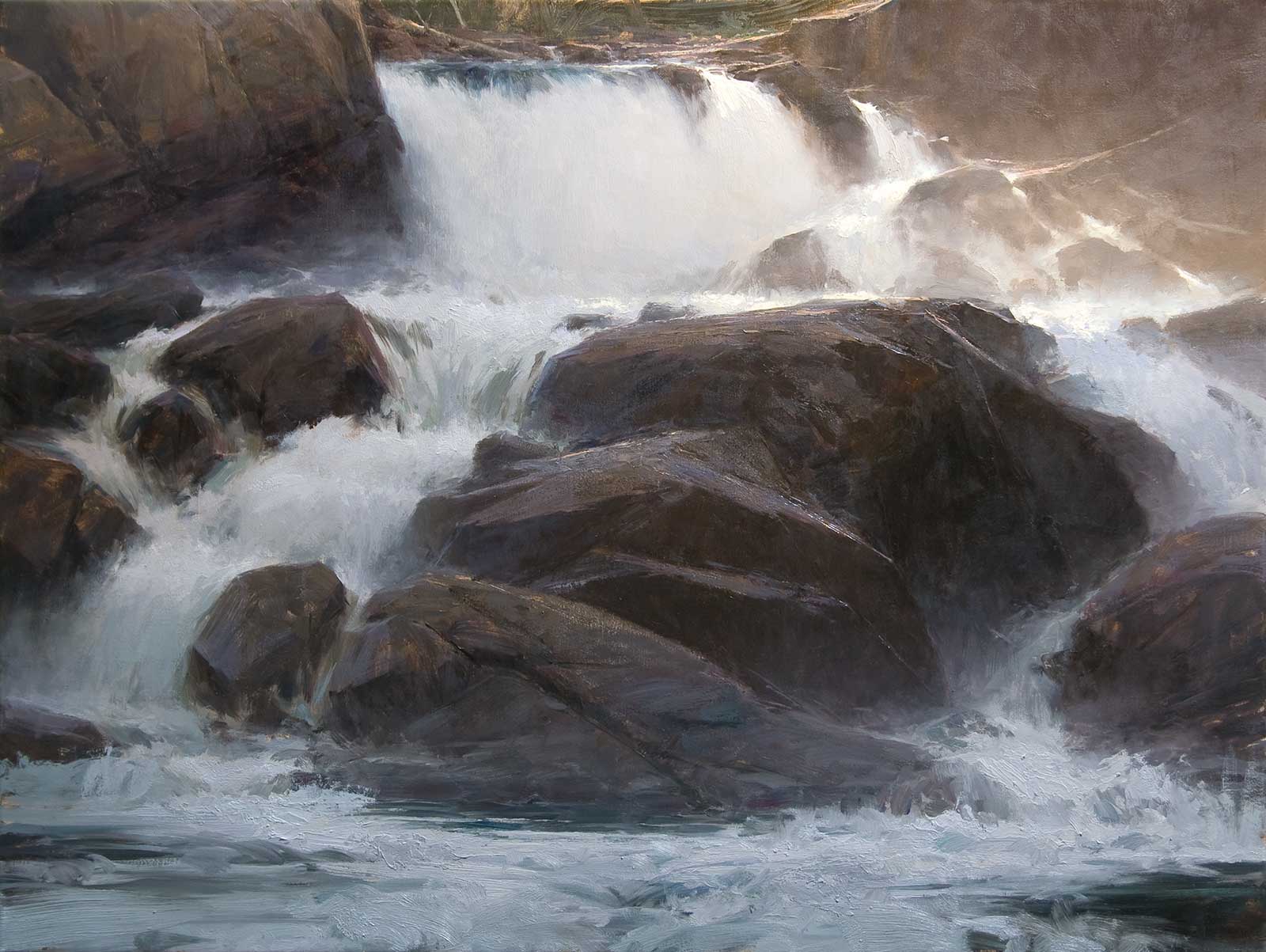
Spring Waterfall, 2008, oil, 30 x 40 in.
Amid the more contemporary works will be a mixture of pieces with Western themes, something the artist has embraced throughout his career. Lipking is one of the few American artists who has regularly appeared in this magazine as well as our sister publication, American Art Collector. He straddles an interesting line between the two genres. And he enjoys that.
“I guess it depends on what we mean when we say the West, or Western subjects. It’s not just horses and figures. I think the landscape is a big part of that, too. Once you leave the coast of California, you’re in the Southwest. Just 20 miles from the [coast] and you start seeing deserts and Western landscapes. So, I consider myself a Western painter.”
He is also a Native American painter as an enrolled member of the Keweenaw Bay Indian Community of the Lake Superior Band of Chippewa Indians.
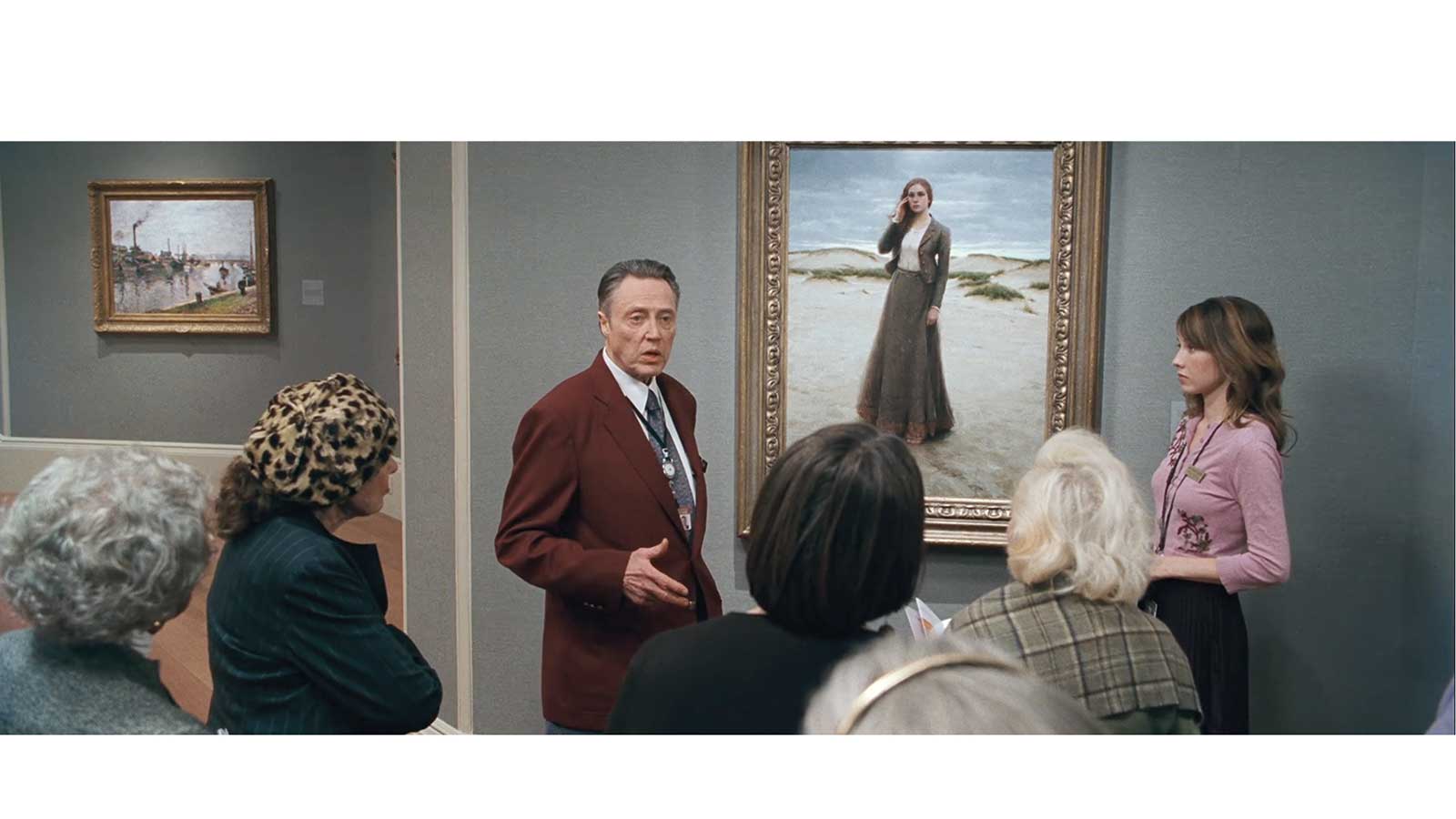
Christopher Walken with Jeremy Lipking’s The Lonely Maiden in the 2009 crime caper The Maiden Heist. The painting will be on view at the Booth Western Art Museum.
Western work in the exhibition includes The White Line and Riders Under Vermilion Cliffs, both of which show his delicate brushwork with sunset light on distant cliffs; Silence & Sagebrush, a piece that won the 2014 museum purchase prize at the Prix de West in Oklahoma City; and several of his aspen paintings, one of which is Falls Aspens.
Another fun curiosity in the Booth show will be a painting Lipking created for the 2009 Peter Hewitt crime comedy The Maiden Heist. In the film, Morgan Freeman, Christopher Walken and William H. Macy play characters who conspire to steal the painting The Lonely Maiden before it is moved to another museum. Lipking painted the work that serves as the central plot device in the movie.
“In the movie, it’s painted by a fictitious 19th-century painter. I had to paint it in that style and it had to slightly resemble Marcia Gay Harden, who was Christopher Walken’s wife in the movie,” he says. “That was a painting I ended up having some anxiety on because I just had no time to do it. I think I had about two weeks to paint, dry and ship.”
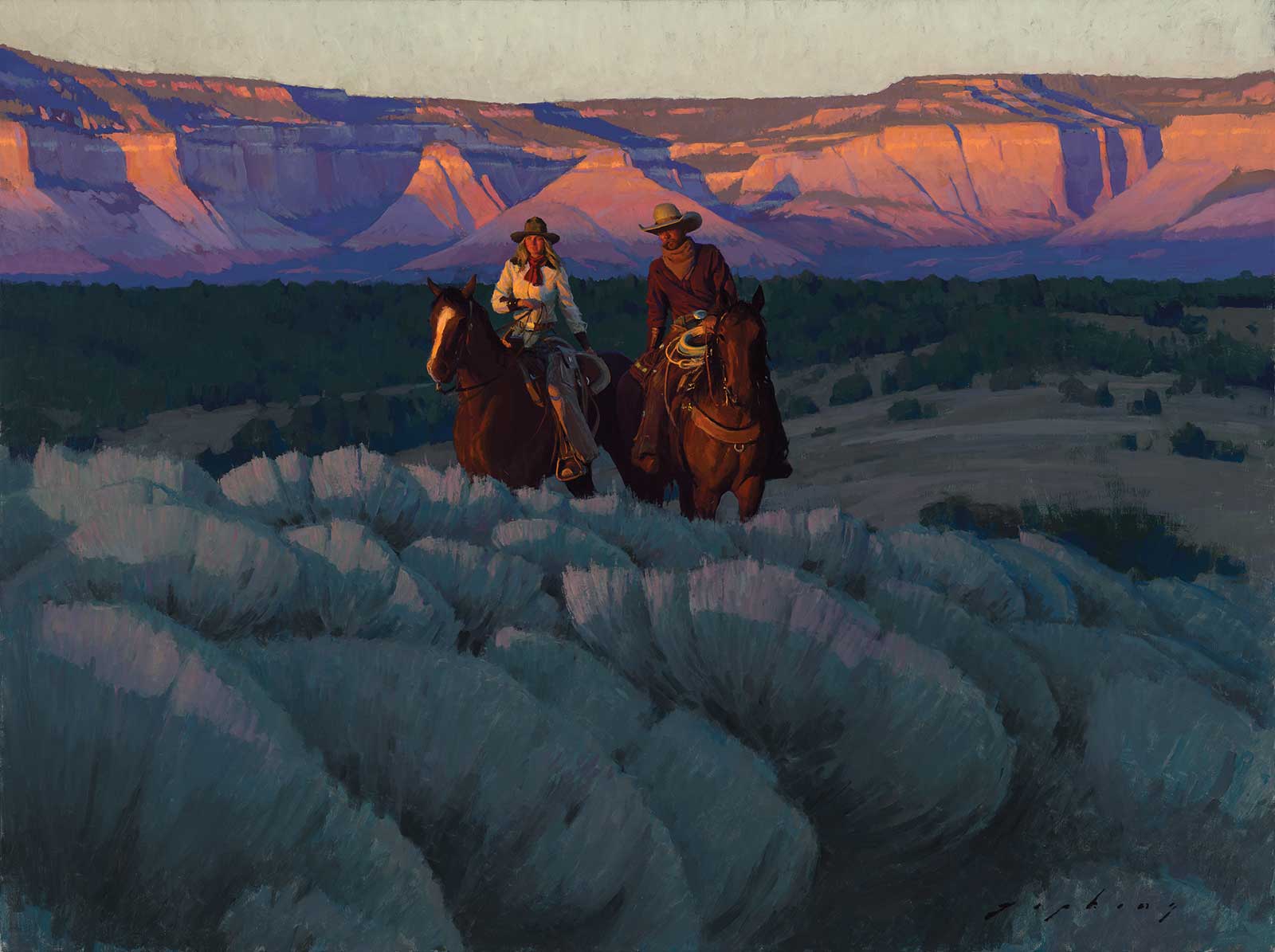
Riders Under Vermilion Cliffs, 2014, oil, 30 x 40 in. Collection of Michael and Judy Lombard, California.
Lipking was connected to the filmmaker after he gave an art presentation at a Los Angeles party. “Someone from the industry must have seen me so my name was around. I was working on a show at the time, so I was really busy. In fact, I probably wanted to do my own show anyway, so I gave them my regular price from a gallery and it was out of their budget. They wanted me to go down in price, but I said no. So they found someone else to do the painting. But then once they started shooting the movie, they didn’t like the painting. They came back to me telling me they found some more money so they could pay my price. But they needed it in two weeks,” he says. Lipking says the deadline wasn’t too bad to work around, but like many commissions, there was micromanaging behind the scenes. “We had these meetings, with multiple people who all had ideas about how they wanted the painting to look. And some of them didn’t match up.
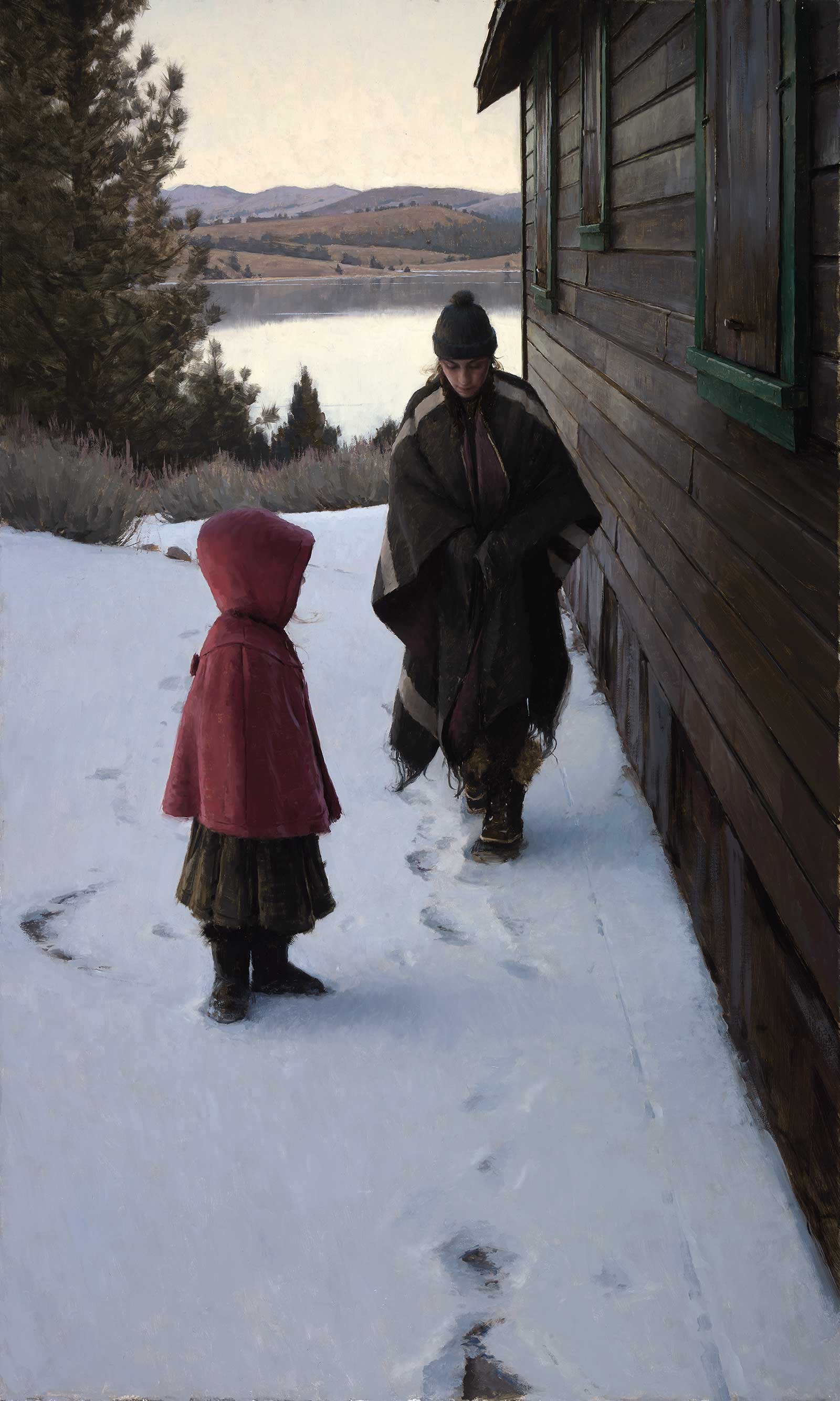
Twilight Trail, 2018, oil on linen, 40 x 24 in.
In the end, though, the painting worked out and served the movie. The original ended up in the collection of one of the producers, who is lending the painting to the Booth show. The painting was never framed, so Lipking and the Booth have found an appropriate way to display it. They are laying the painting flat in a wood crate, which matches a similar scene in the film.
While the retrospective will have dozens of tremendous paintings, the show really reinforces Lipking’s brilliant subtlety—with light, the figure, and the Western landscape. Lipking is soft-spoken and deliberate with his words as he pokes around the edges of what he wants to say. He’s a tall and imposing figure, but he treads lightly and savors the stillness of what is before him. These are the marvelous qualities that can be seen in his work. —
Jeremy Lipking — 30 Years a Painter
April 11-August 16, 2026
Booth Western Art Museum 501 Museum Drive, Cartersville, GA 30120
(770) 387-1300, www.boothmuseum.org
Powered by Froala Editor


