Nature can’t be tamed. It’s a physical impossibility. Even the bravest, most prepared guide—one who is an expert on every animal and plant, has every topographical map committed to memory, is geared up with the latest outdoor equipment—even they are still susceptible to weather, acts of God and flukes of nature.
But these unpredictable, uncontrollable and untamable qualities of nature, when paired with unfathomable beauty, are what make people continue to seek out wild areas all around the world, especially in North America. Whether it’s bison in Yellowstone, pristine vistas at the Grand Canyon, sunsets in Southern Utah, large predators in Glacier National Park or the summits of Yosemite, wilderness areas call to visitors precisely because they can’t be tamed. That is the appeal.
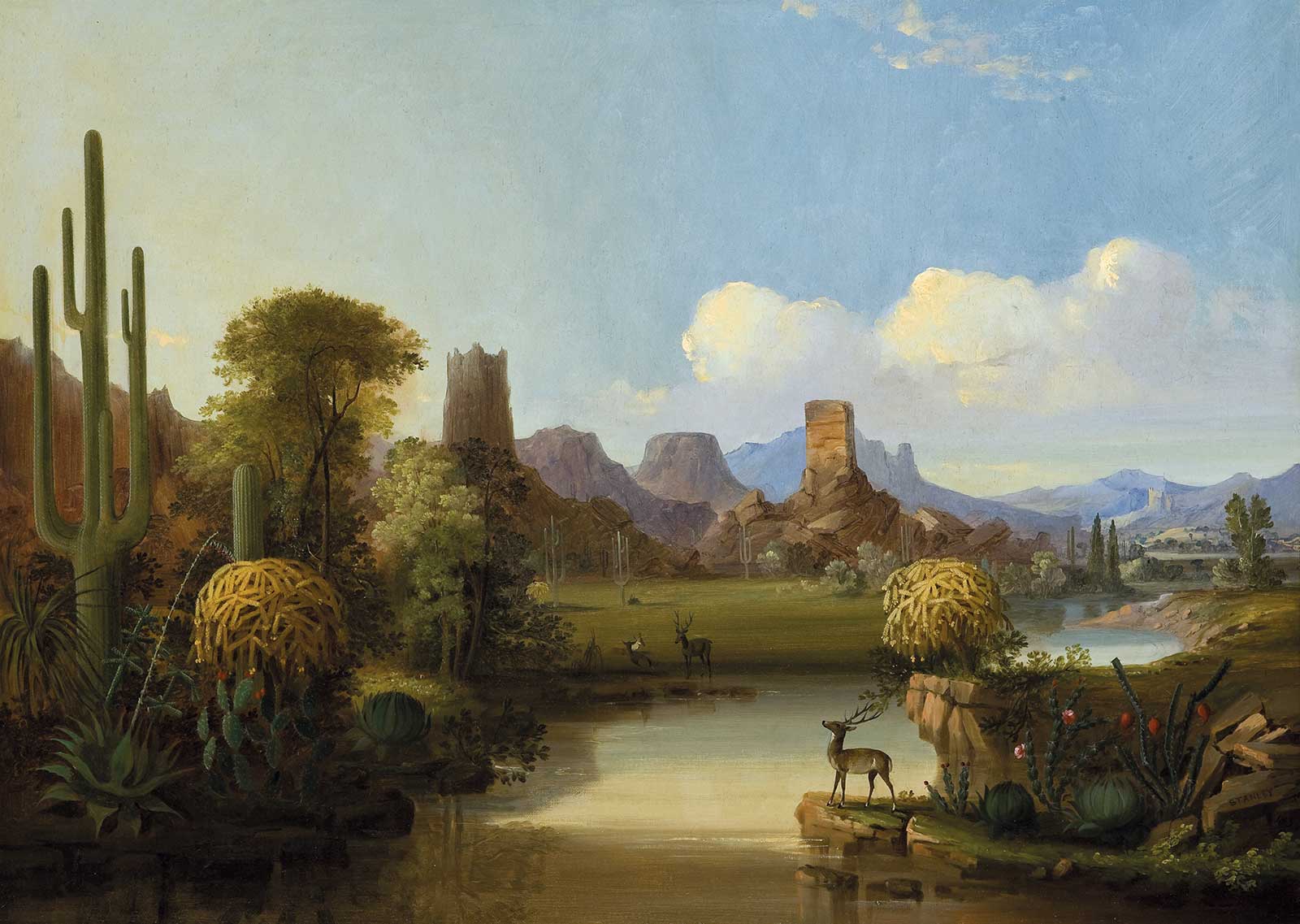 John Mix Stanley (1814-1872), Chain of Spires Along the Gila River (Cadena de chapiteles a lo largo del río Gila), 1855, oil on canvas. Phoenix Art Museum, 1968.20. Photo by Ken Howie.
Artists have unique challenges when it comes to the wilderness around the country. Nature may not be tamed in person, but an artwork is bound by a different set of rules. The depictions—in both painting and sculpture—can be true to life, but they can also be idealized, even romanticized. Nature, at least in this sense, can be perfected by an artist.
Consider John Mix Stanley’s 1855 painting of Arizona, Chain of Spires Along the Gila River (Cadena de chapiteles a lo largo del río Gila). The painting skews slightly from the reality of Arizona: the landscape is rendered strangely, the cacti are almost otherworldly in their straightness and uniformity, and the placement of the plants in relation to water, land and animals is not accurate. Anyone who has been to Arizona would recognize the scene enough to place it in the Grand Canyon State, but they’d also know some rather large liberties were taken.

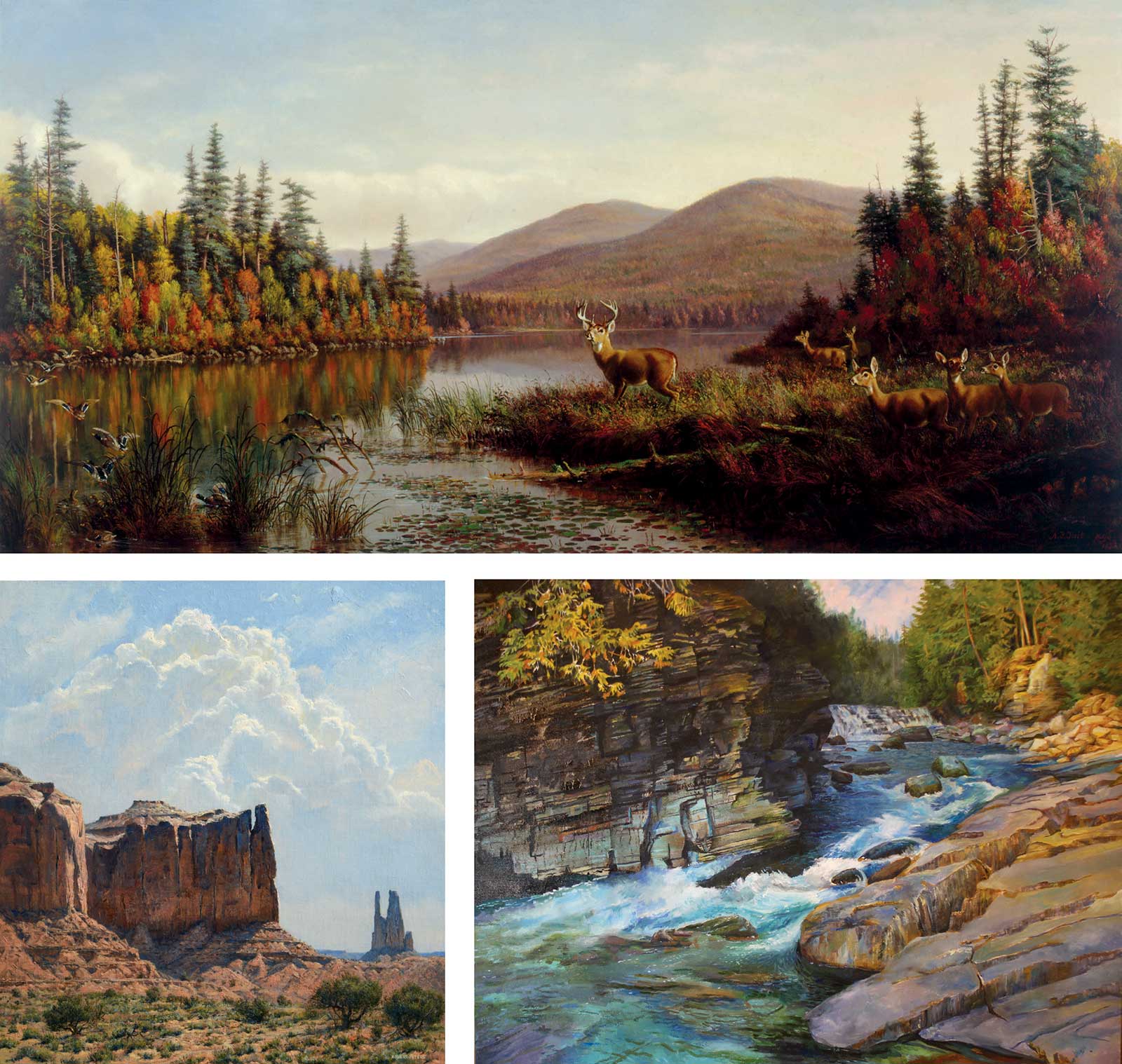
Top: Arthur Fitzwilliam Tait (1819-1905), Autumn Morning, Racquette Lake, 1872, oil, 36 x 72 in. Bottom: Robert Peters, Navajo Skies, oil on linen, 30 x 28 in. Courtesy Legacy Gallery; Dan Knepper, Montana, Heart and Soul, oil, 30 x 40 in.
Was Stanley wrong? Not according Peter Hassrick, who co-wrote Painted Journeys: The Art of John Mix Stanley. Chain of Spires Along the Gila River, he writes, was the “spiritual promise of a land that could be settled by Americans and that for him was sanctified by the same divine hand that was said to support the concept of Manifest Destiny. From deep within the fastness, Stanley took this opportunity to deny the observations that had stood firmly for nearly 30 years, that the West was ‘the Great American Desert.’” In fairness, Hassrick does add that Stanley’s “poetic image of the Gila River Valley” was a vision not shared by many others. One critic called it “wild and strange” and noted, “I wish from the bottom of my heart I had seen the end of this toilsome march.”
Stanley’s painting, love it or hate it, represents the huge swings that paintings of American wilderness can take, from ultra-realistic images that explore authentic experiences to more poetic images that explore emotional experiences. Both can be true.
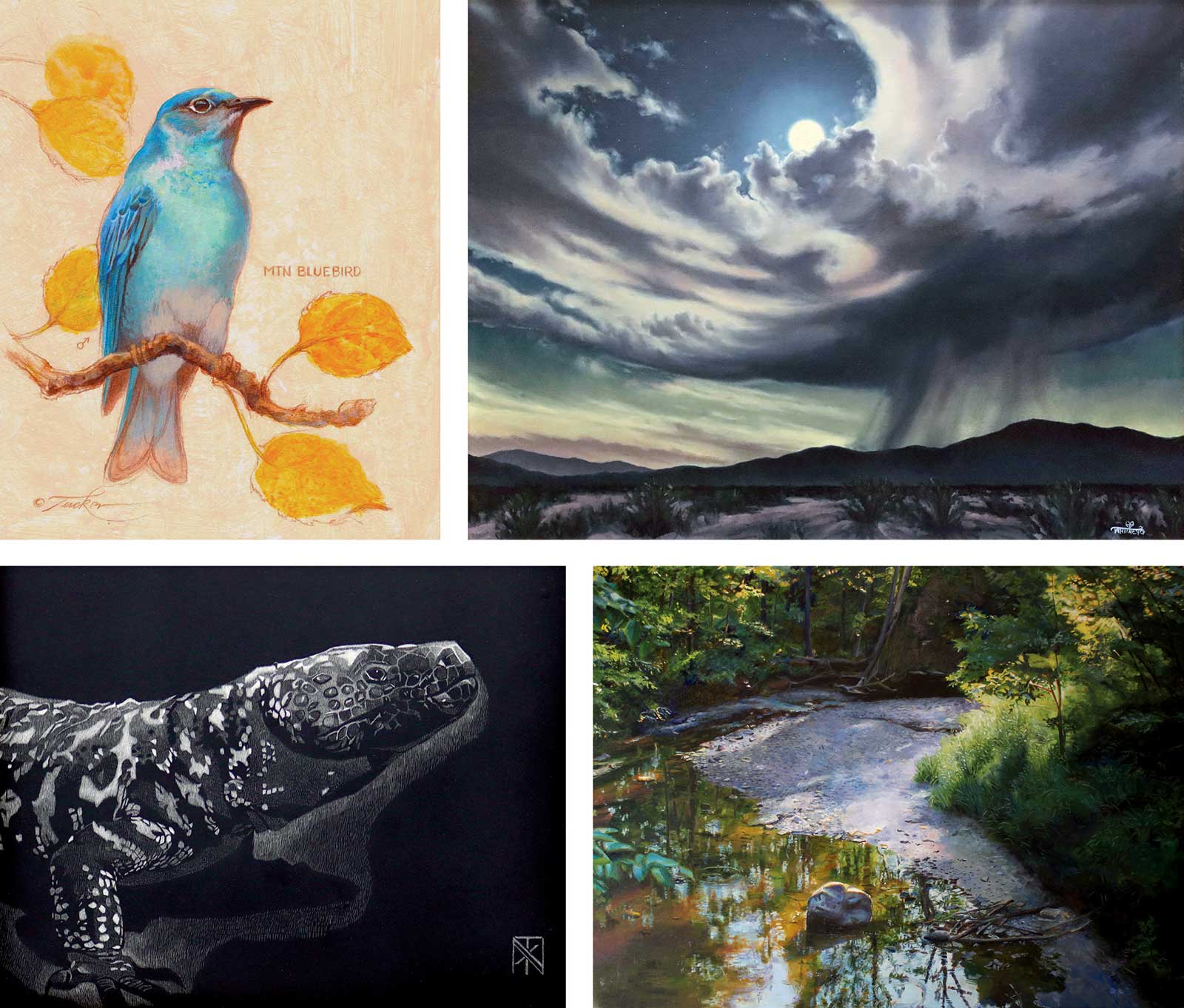
Top: Mark Sublette Medicine Man Gallery, Mountain Blue Bird, acrylic on illustration board, 10 x 8 in., by Ezra Tucker; Mark Sublette Medicine Man Gallery, Moon Storm, oil on linen panel, 30 x 40 in., by Whitney Gardner. Bottom: Mark Sublette Medicine Man Gallery, Galinda, scratchboard, 8 x 10 in., by Nelson Tucker; Dan Knepper, I Know Where the Stones Are, oil, 30 x 40 in.
As counterpoints to the Stanley piece, consider Arthur Fitzwilliam Tait’s 1872 painting Autumn Morning, Racquette Lake, and also a work from a living artist, Robert Peters’ Navajo Skies. Both paintings accurately depict the landscape. About Navajo Skies, the artist writes, “The Monument Valley region, located in northeastern Arizona and southwestern Utah, is home to the Navajo (Diné) people and possesses some of North America’s most dramatic landscapes. It has long been a well-liked location for both artists and photographers. Since childhood I have been captivated by its unique beauty. Awed by the region’s extraordinary vastness and striking buttes and mesas, I have been inspired to paint it numerous times. For me, it perfectly encapsulates the meaning of the expression ‘where the land meets the sky.’”
These examples are just three perspectives on the wild areas of North America. Each artist brings with them their own authenticity, emotion and perspective. There are no wrong answers. As you explore this section, fittingly called Into the Wilderness, enjoy these other artists’ views of nature.
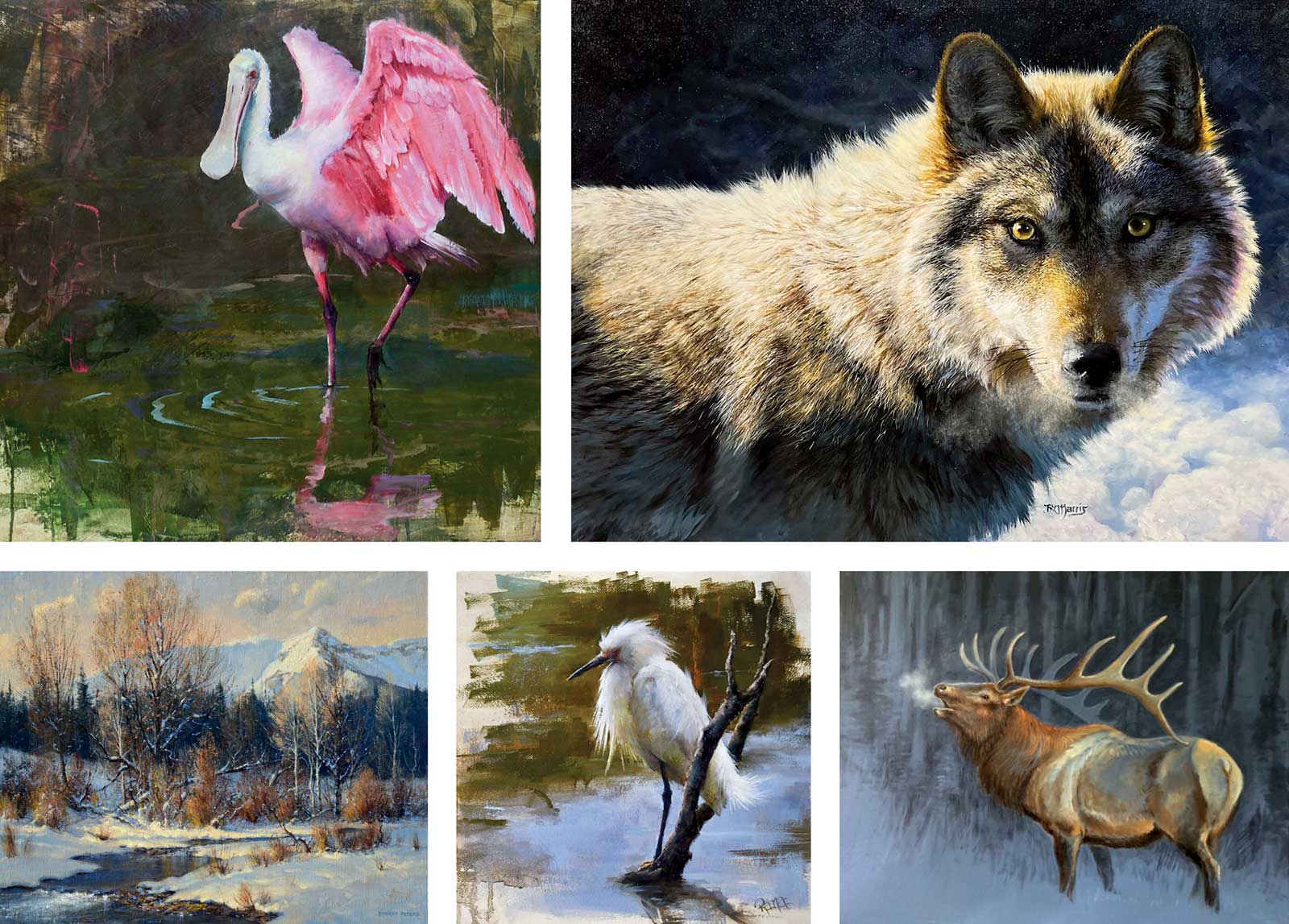
Top: Rana Jordahl, Wing It And See, oil, 24 x 24 in.; Legacy Gallery, A Frozen Moment, oil, 30 x 40 in., by Bonnie Marris. Bottom: Legacy Gallery, Remnants of the Season, oil, 20 x 24 in., by Robert Peters; Rana Jordahl, Egret Nothing, oil, 12 x 12 in.; Joyce Cleveland, Courting, oil on canvas, 16 x 20 in.
Artist Dan Knepper didn’t grow up in the mountains, but to him, they still feel like home. “I can breathe there,” he says. “The national parks are such incredible jewels, especially those in the Rockies. There are breathtaking views everywhere you look, and I have an overwhelming urge to wander and explore, from the jaw dropping beauty of Glacier through the wildlife of Yellowstone, down through the iconic beauty of the Tetons and into the grandeur of Rocky Mountain National Park. I hope we continue to protect and preserve these time capsules.” Knepper paints these wild places and the wildlife that inhabits them with the hope of transporting the viewer to a particular moment where the light is just right, to connect them to that place in that moment.
Darcie Peet’s recent painting Humbling, Approaching Denali came to fruition after a six-hour ride on a rickety old school bus that carried Peet and her companions to a lodge at the very end of the road deep in Denali National Park. One evening, fellow guests persuaded Peet to take a small plane flight around Denali. At 10 p.m., with daylight still lingering, the six passengers squeezed into a tiny plane and circled the massive peak, spotting climbers high on its slopes. “I’ve never forgotten seeing this striking and powerful peak on our flight around Denali, but felt it might be ‘too cold’ for clients to develop into a painting. I finally took the challenge, painting a remarkable experience I will never forget. And I was so glad to be back safely on the ground!” says the artist. The piece is also a finalist in the 2025 Art Renewal Center International Salonand is available at A. Banks Gallery in Bozeman, Montana.
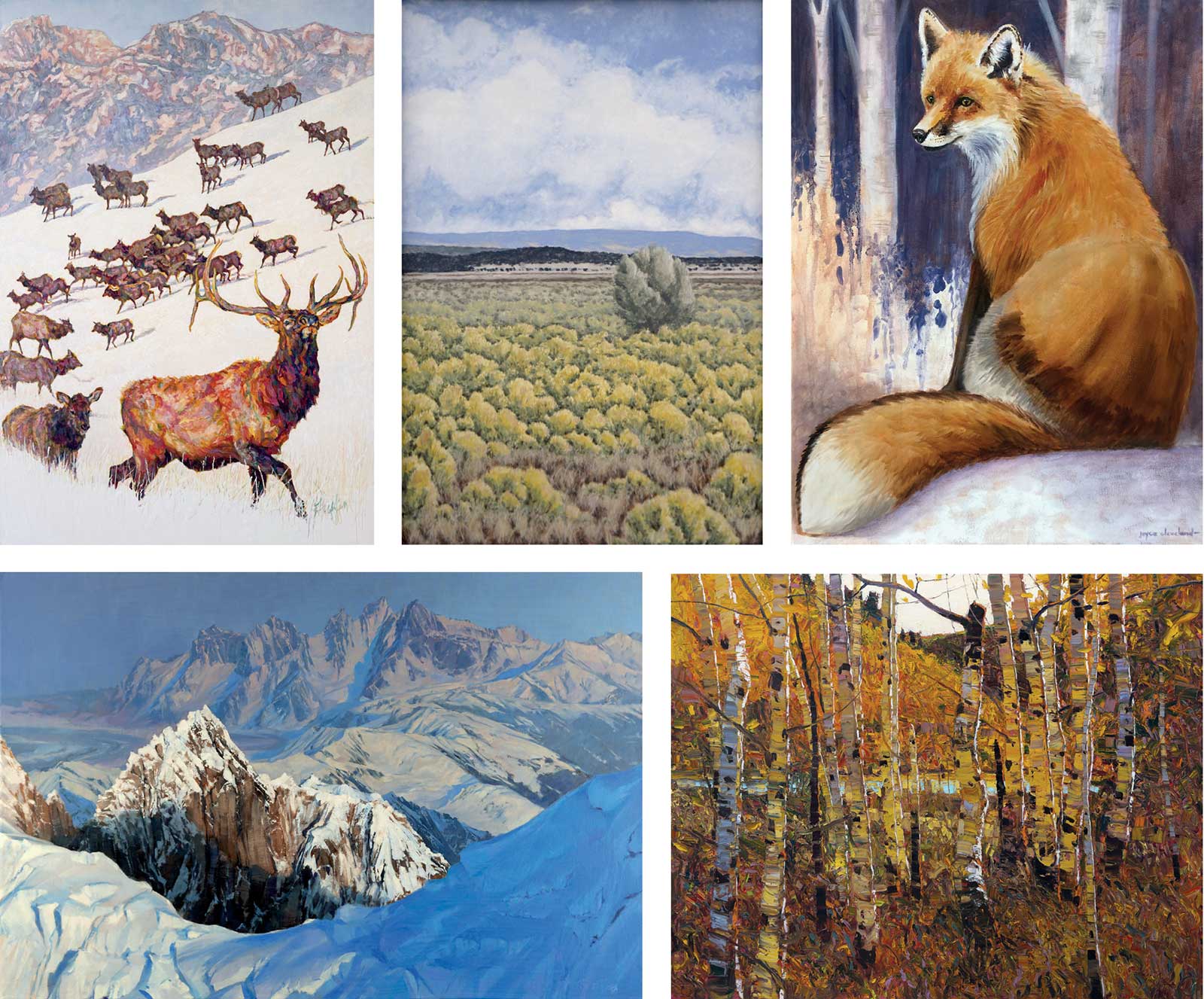
Top: Gallery Wild, Triumph, oil on canvas, 72 x 48 in., by Patricia A. Griffin. Bottom: Gallery Wild, Tell Me About It, cold wax and oil, 36 x 24 in., by Bridgette Meinhold; Joyce Cleveland, Foxy Lady, oil on canvas, 18 x 24 in. Bottom: Darcie Peet, Humbling. Approaching Denali, oil, 20 x 30 in.; Gallery Wild, A Proclamation, oil on canvas, 48 x 60 in., by Silas Thompson.
“At Gallery Wild wilderness is not just a subject, it’s a collaborator. Our collection is shaped by artists who spend real, intentional time in wild places, allowing the rhythm of open landscapes, the quiet persistence of wildlife and the spirit of the West to guide their hands,” says Carrie Wild, artist and owner of Gallery Wild. “That immersion creates work that carries the peace, clarity and perspective only the natural world can offer. For collectors, I always recommend seeking pieces that feel alive. Works born from firsthand experience rather than distant observation; artwork that sparks a deep feeling of ownership over a shared memory…Our conservation ethos is rooted in the belief that protecting wild places ensures the survival of the beauty that inspires both artists and collectors. When acquiring a piece of wilderness art, consider not only how it enriches your home but how it helps preserve the very landscapes and wildlife that make this genre so powerful.”
Mark Sublette Medicine Man Gallery in Tucson, Arizona, features a wide array of top-quality artwork, from historic and contemporary Native American art, to Western and wildlife art. Among the artists represented at the gallery who paint animals and nature scenes are Whitney Gardner, Ezra Tucker, Nelson Tucker and many more.
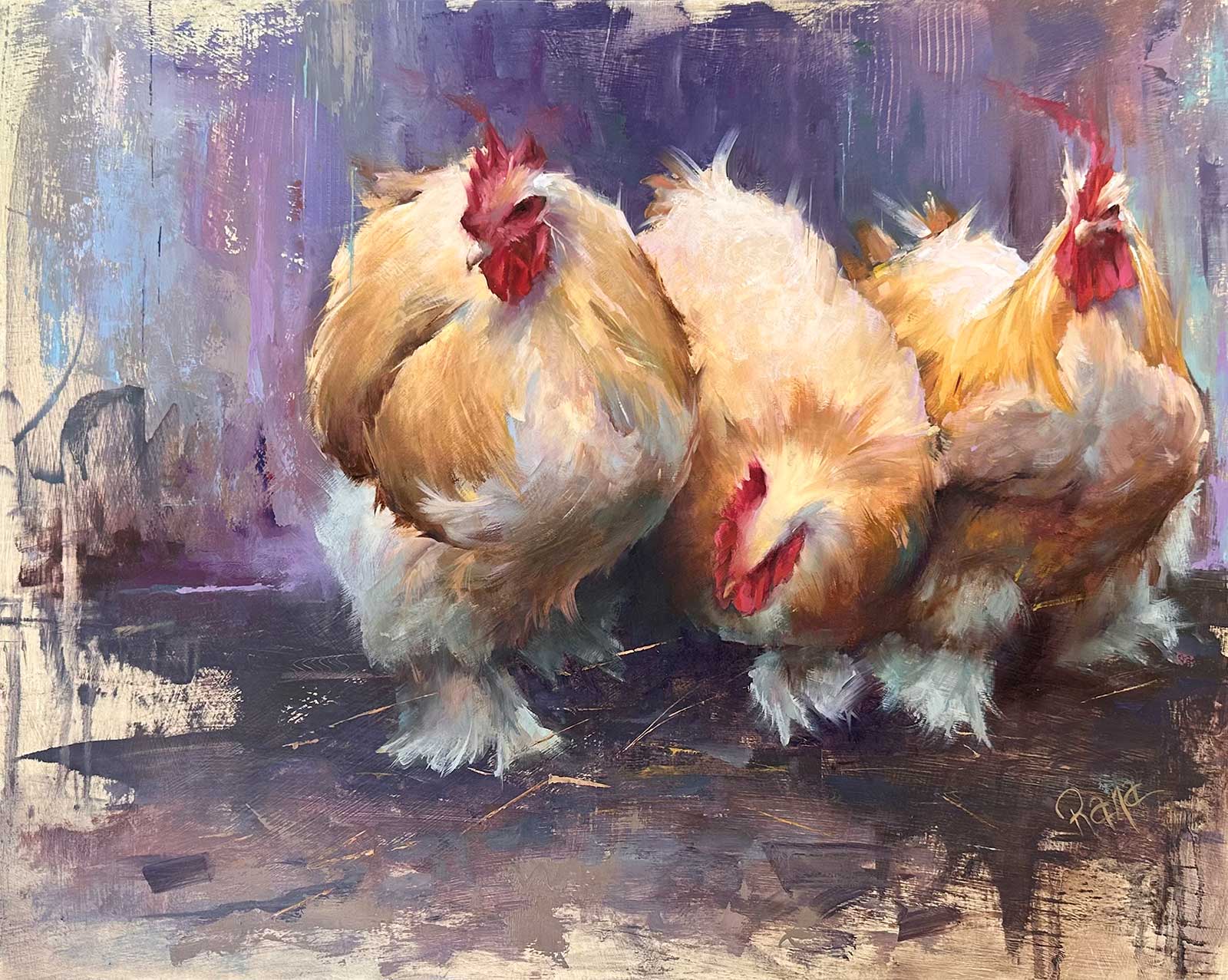
Rana Jordahl, Hentertainment Tonight, oil, 16 x 20 in.
Wildlife and wilderness painters Mark Boedges, Robert Peters and Bonnie Maris are all represented by Legacy Gallery in downtown Scottsdale, Arizona. “While I paint many different kinds of subjects, the landscape is my first and greatest love. Like many artists, I strive to achieve a painterly realism in my work,” says Boedges. “As students, we are taught to focus on what is essential in our subject, but this can be a subjective judgment. For me, what is essential about nature is its complexity. Everywhere I look, I see the grittiness, cragginess and fine-grained texture of the natural world. It is this essential ruggedness and complexity that I try to capture in paint.”
For Peters, the Western landscape is a source of endless inspiration, and enthusiasm and respect for the natural world continue to be the driving forces behind his landscape paintings. He also finds the technical challenges of his art to be motivating and rewarding. “One of the most energizing things about painting is improving the quality of what you do,” Peters says. “I believe there is no limit to how far you can take your ability. Over the years, I’ve also realized it’s important for me to share my personal vision of the West with others. It’s a thrill when my paintings resonate with the viewer on a personal level.”
Marris is celebrated for her powerful and intimate portrayals of wildlife, particularly the predators she reveres, including wolves, bears, foxes and big cats. Her work captures not only the physical beauty of animals but also the emotional depth and spirit of the wild.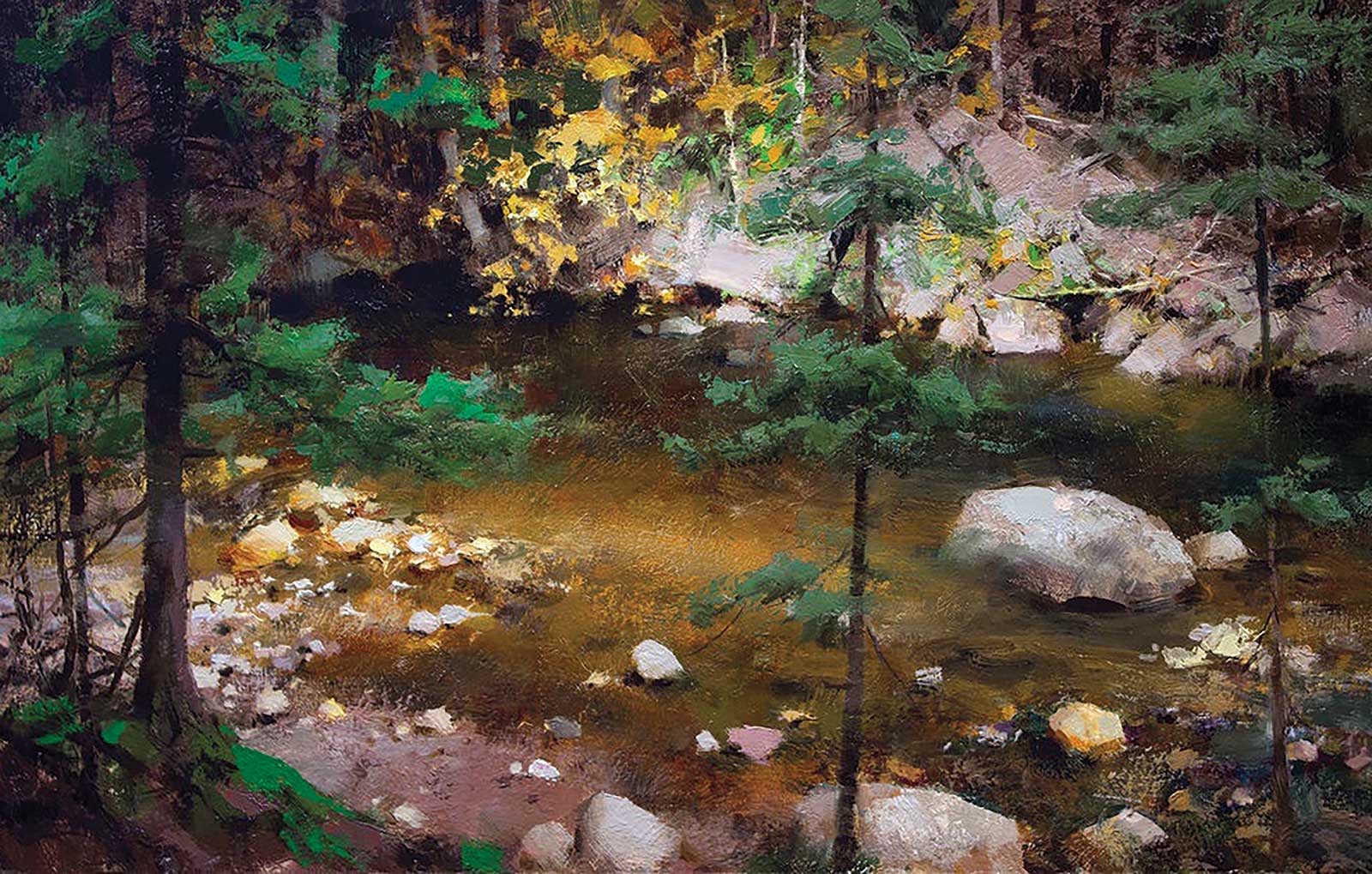
Legacy Gallery, West Running River, oil, 14 x 22 in., by Mark Boedges.
South Carolina-based artist Rana Jordahl’s artwork is a tribute to the quiet, often overlooked rhythms of the natural world. Each painting begins with a personal encounter—often fleeting and silent—that reminds her of humanity’s small place within an ancient and interconnected landscape. Moving beyond mere representation, Jordahl seeks instead to capture the spirit and unspoken bond that exists within these creatures. Whether it is the quiet dignity of a great blue heron or the raw power of a bison, her goal is to translate that fleeting energy onto the canvas. “When purchasing wildlife art…start with an emotional connection, not just an aesthetic match. A piece should stop you in your tracks and make you feel something, whether it is peace, strength or wonder,” says the artist.
Joyce Cleveland is inspired by the wildlife of North America. “On a crisp autumn evening in Yellowstone, a chill settled into the air as a powerful bull elk began calling to his cows. His breath rose visibly against the shadowed forest, weaving through the trees,” she says of her recent painting Courting. “The interplay of warm and cool tones created a compelling visual moment—one that felt perfectly suited for the canvas.” Another recent piece, Foxy Lady, is a portrait of a red fox in a white winter scene. “On a recent visit to the Tetons, I observed a red fox searching for food in a meadow. She suddenly moved toward the edge of the woods, then paused, perhaps aware she was being watched, sat down and glanced back. In the painting, I emphasized her full, fluffy tail to guide the viewer’s eye into the composition. I titled the piece Foxy Lady in reference to her graceful, prancing movements.” —
Featured Artists & Galleries
Dan Knepper
(937) 489-1078
www.danknepperart.com
danknepperart@yahoo.com
Darcie Peet
www.darciepeet.com
www.facebook.com/darciepeet
Gallery Wild
80 W. Broadway, Jackson, WY, 83001
(307) 203-2322, info@gallerywild.com
www.gallerywild.com
Joyce Cleveland
clevel1858@aol.com
Legacy Gallery
7178 E. Main Street, Scottsdale, AZ 85251
(480) 945-1113, www.legacygallery.com
Mark Sublette Medicine Man Gallery
6872 E. Sunrise Drive, Suite 130, Tucson, AZ 85750
(520) 722-7798, www.medicinemangallery.com
Phoenix Art Museum
1625 N. Central Avenue, Phoenix, AZ 85004
(602) 257-1880, www.phxart.org
Rana Jordahl
181 Beresford Creek Street, Daniel Island, SC 29492
(843) 270-4896, www.ranajordahl.com
IG: ranajordahl_fineart
Powered by Froala Editor


