In 1919, having outlived both Frederic Remington and Charles Shreyvogel respectively by 11 and 7 years, Charles Marion Russell was entering some of the last productive years of his life. By then he was widely acknowledged as the leading living example of artists who painted and sculpted the American West. In 1924, he received a letter from his friend Irvin S. Cobb, who summered with Charlie and Nancy Russell at Bullhead lodge on Lake McDonald in Glacier National Park. Cobb was a popular much-admired comedian and a frequently quoted public commentator, who said, much in the manner and spirit of Mark Twain, “I want to tell you what is the truth!”:
“That [truth] is that you can do more with camel’s whiskers and earthen pigments out of tubes than any man present residing in this hemisphere. America owes you a lot for putting on canvas the life of the West that is going fast.”
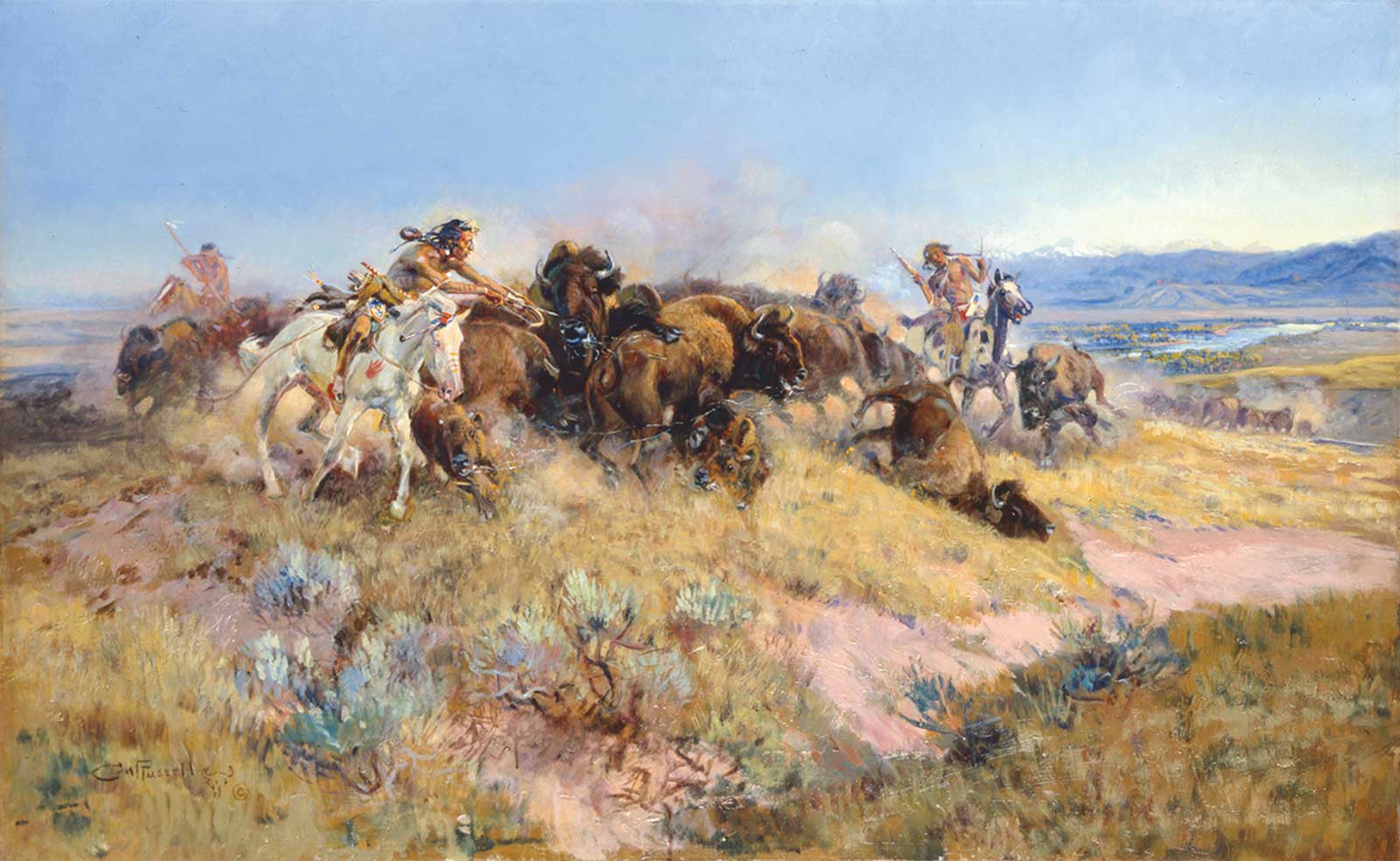
Figure 1: Charles M. Russell (1864-1926), Buffalo Hunt [#40], 1919, oil on canvas, 29½ x 47½ in. Petrie Collection, Denver, CO.
By 1925, Charles M. Russell was entering the last phase of his life. Nevertheless, he remained dedicated to portraying his own “distinct take” on the history and cultural values of the American West. This included particular focus on his nearly half century of cowboy experiences in Montana and its adjacent territories. As a result, he was still actively envisioning and executing predominantly strong oil-on-canvas artistic works. Most of these no doubt built on the foundation that he and his wife, Nancy Russell, had fashioned over much of the prior decade-plus period after their return to the United States from England following their art exhibition in London in 1914. Among others, these include a half dozen or more special artistic gems (all of them included in Charles M. Russell: Catalogue Raisonne): Piegans (1918), Men of the Open Range (1923), Free Trader (1924), Cowboys From the Quarter Circle Box (1925), Laugh Kills Lonesome (1925), Pay Dirt (The Discovery of Last Chance Gulch) (1925) and Tracks Tell Tales That Rivers Make Secret (1926).
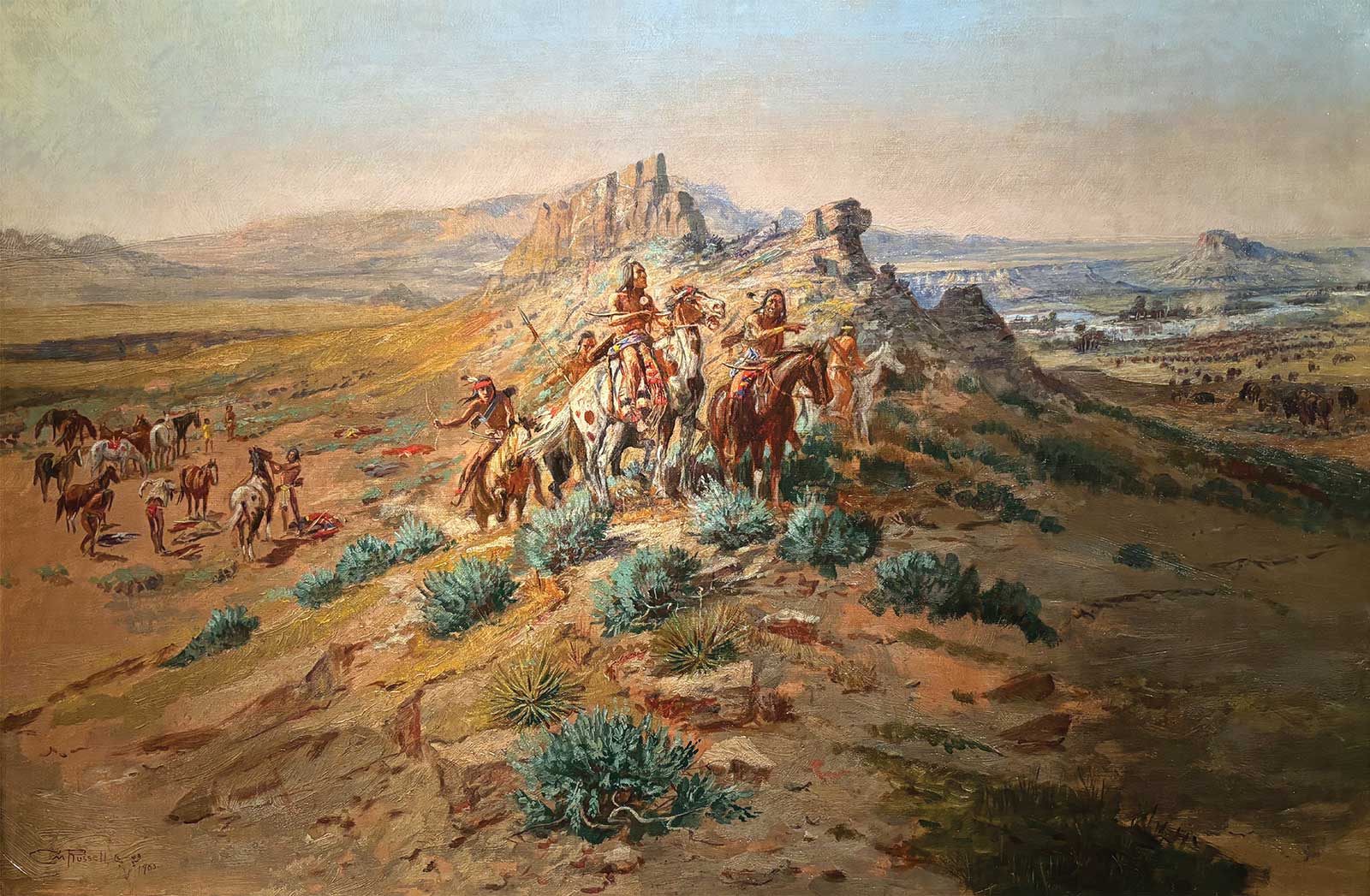
Figure 2: Charles M. Russell (1864-1926), Preparing for the Buffalo Hunt, 1900, oil on canvas.
Russell rendered Native American scouts successfully executing a special category of buffalo hunt called a “surround.” This is a particular example of Native American ingenuity. The surround, which was the title of a later 1911 Russell work, deserves some further explanation, as it should become better clarified in the following paragraphs.
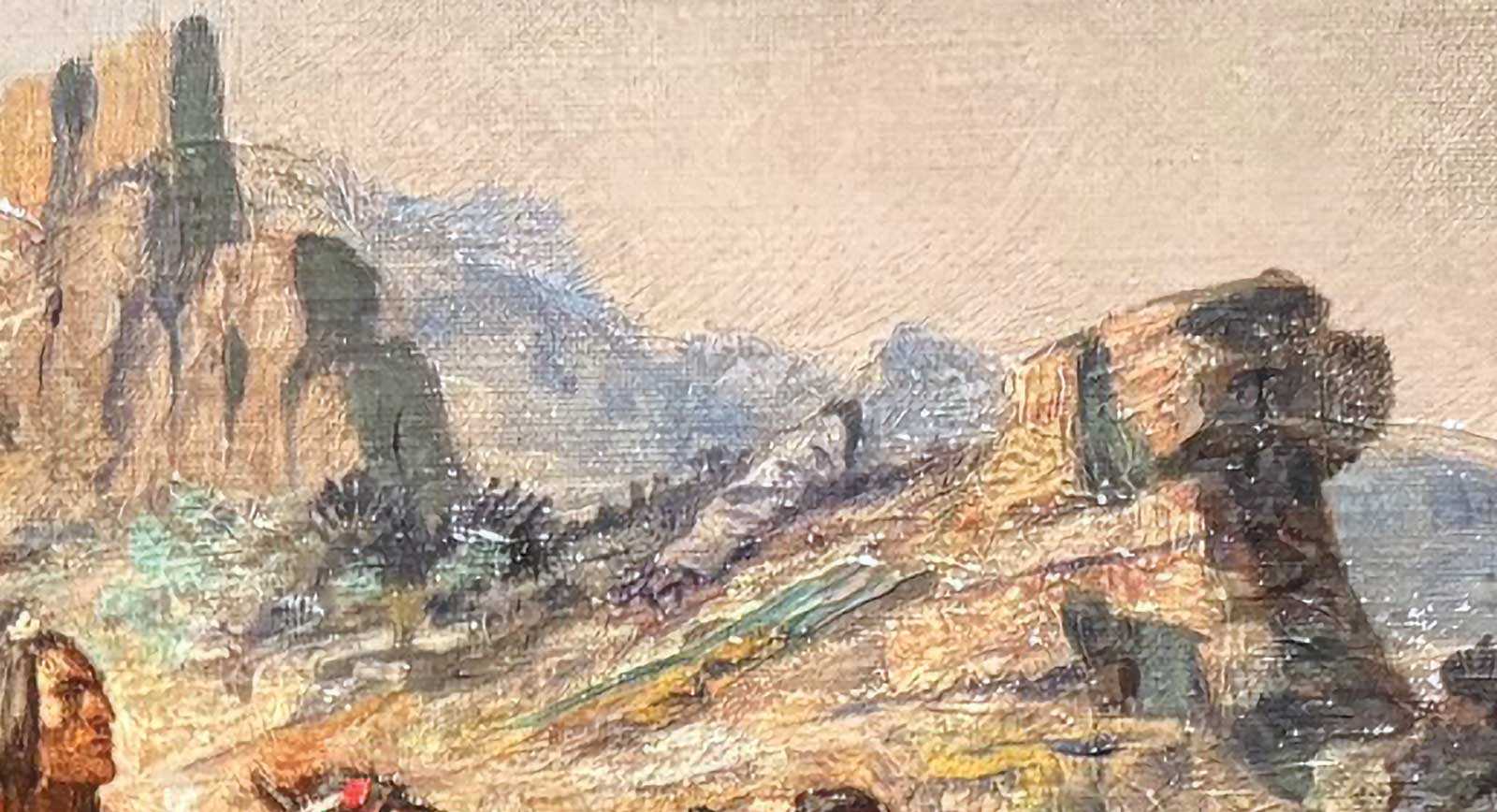
Figure 3: Detail of Preparing for the Buffalo Hunt showing the blanket-wrapped figure serving as a lookout.
In 1919, during the early years of the last decade of his life, Russell created another of his masterpiece oils titled Buffalo Hunt [#40]. This essay addresses what buffalo hunting scouts would be required to accomplish in order to ensure successful, safe harvesting of these magnificent animals during their “great fall” hunt. It is so characteristic of this last creative period of Russell’s extraordinarily productive life. Figure 1 embodies all the elements that dominated his painting style in those strong twilight years: the brilliance of Montana’s landscapes, the long light across the high country plains, the intensity of color that washes over the vast prairies and the river traces that cut through this remarkable land. Once again Russell turns to the dominant theme of his creativity and chooses a group of Indians to be the players in his drama. He was always referred to as “the Cowboy Artist” and it is true he created great reconstructions of the short-lived history of the free-range cowboy of the plains. But the vast majority of Russell’s finest artistic creations are concerned with the life and rugged survival of the Northern Plains Indians. They lived by an age-old pattern of nomadic tribal life which Russell admired without reservation and, in fact, greatly helped to memorialize into an authentic mythology that today we all are increasingly delighted to embrace.
Russell knew this way of life—it still existed in a small way when he came into Montana’s Judith River Basin in 1880. There are newspaper reports of small bands of Indians on buffalo hunts there as late as 1883.
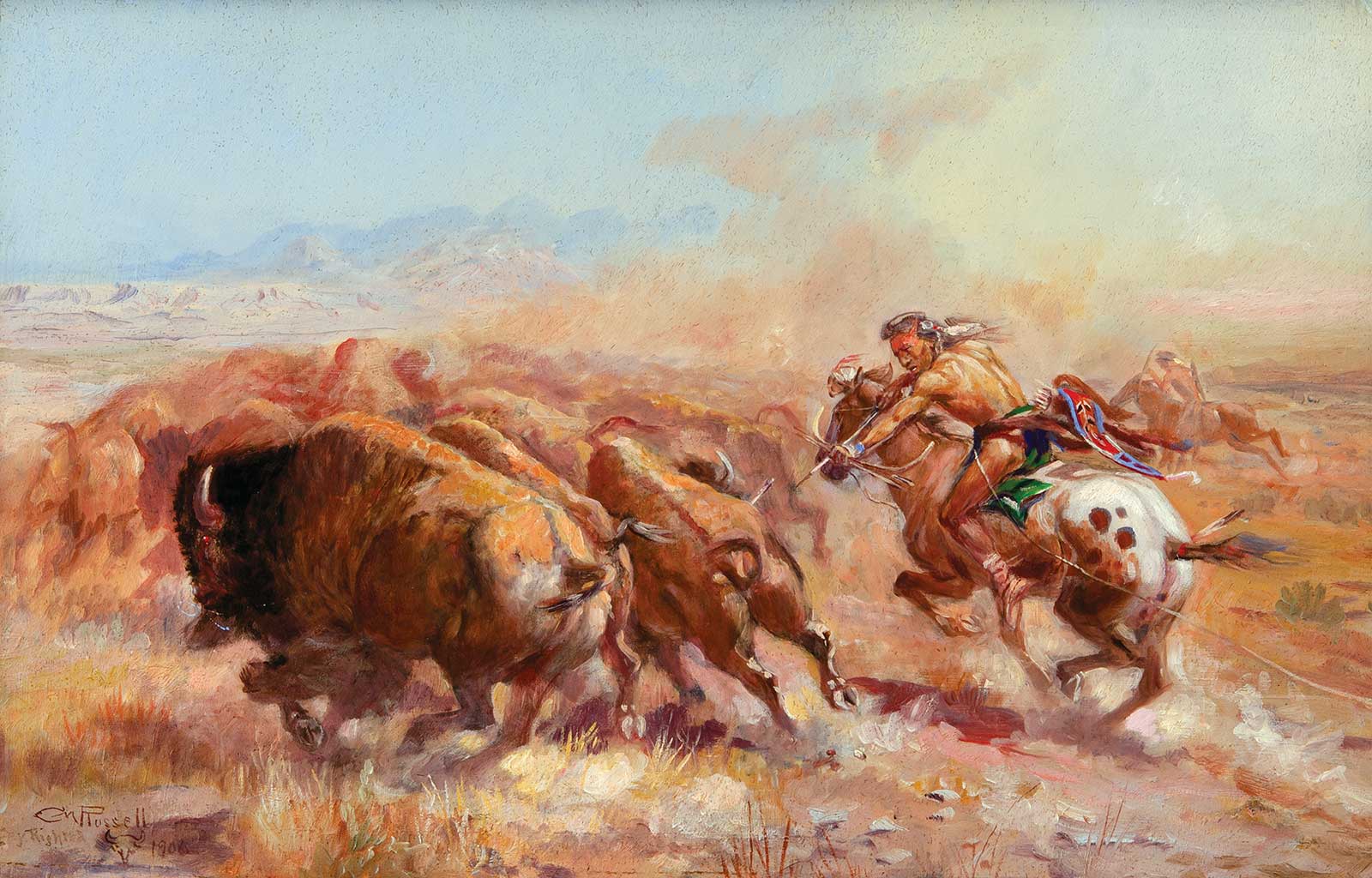
Figure 4: Charles M. Russell (1864-1926), The Run, 1906, oil, 11½ x 18 in.
Critics have periodically been tempted to denigrate the motive for Russell’s ‘romantic’ compositions of Indians—moving camp, in horse raids, on buffalo hunts. What critics might want to further examine is Russell’s tribute to a way of life he celebrated and respected for its examples of how a man, or a woman, should live on and with the land.
In this great painting, Buffalo Hunt #40,one sees a small group of celebrated Piegan hunters (a Blackfeet confederacy sub-tribe) riding on the outer edges of an encircled herd. Piegan scouts had an assigned responsibility of riding “on the edge” or “out in front” of the main tribal movements. They were responsible for fending off any danger that might be encountered on the trail. Principally, they were protecting the women and children of the Blackfeet tribe, getting them safely from one hunting camp site to another. Russell recognized and advocated for the nobility of this mission. He painted several variations of this theme, though few with quite the exuberance found in this composition. The total assuredness of these Indians, moving easily across the land—the command they express in their responsibility, the delight of “being on the move,” the anticipation of a new camp site—all this, and more, is incorporated into this powerful pictorial drama, involving preparations for buffalo hunting via what became known as a “surround.”
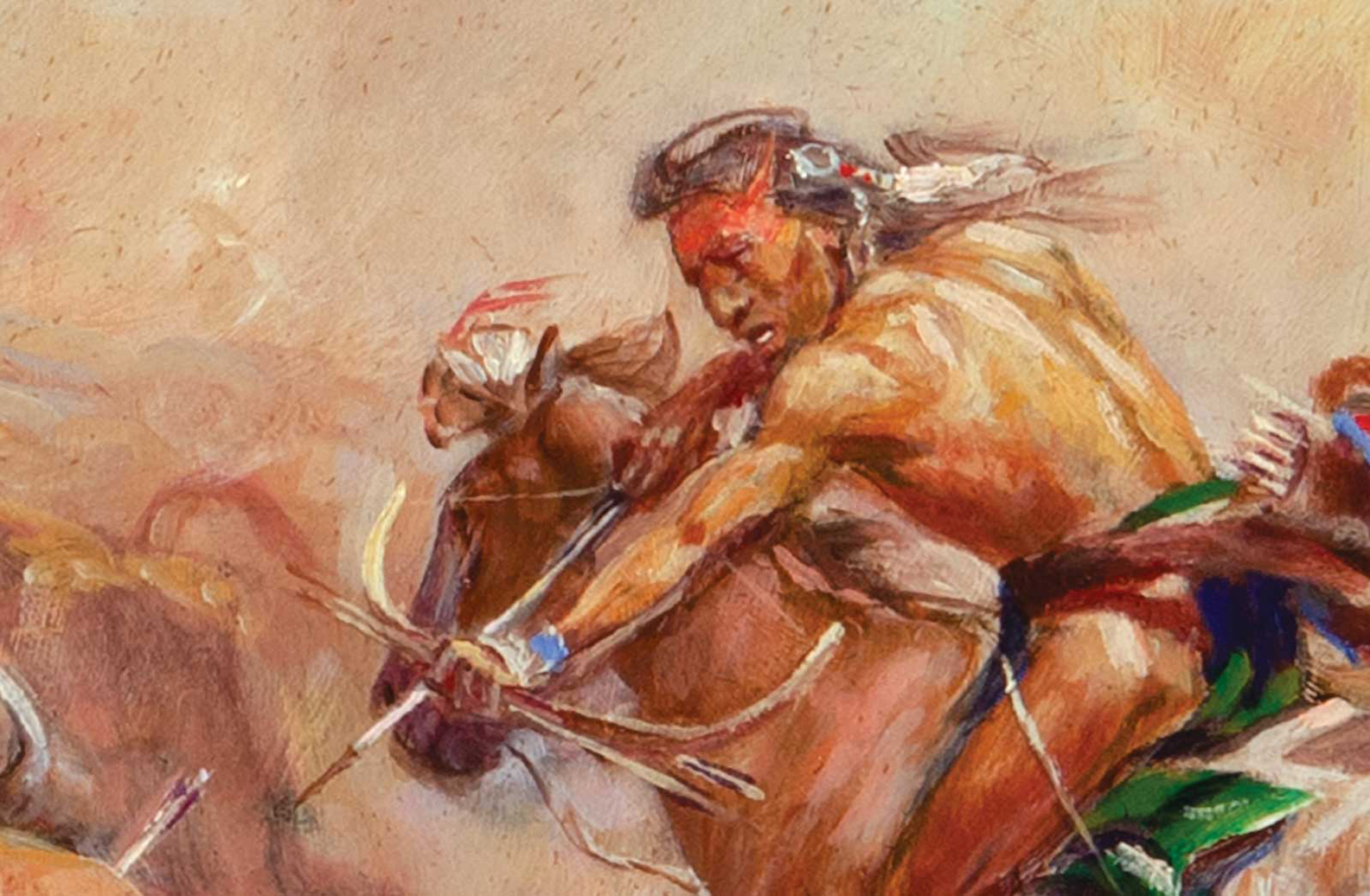
Figure 5: Detail of The Run showing the hands, bow and arrows of the hunter.
Scouts were also very involved in providing security for the Blackfeet tribe on buffalo tribal hunting relocations in pursuit of executing the “surround.” This technique was a particularly important event. Colonel Richard Irving Dodge’s book, Our Wild Indians, published in 1883, has carefully described the role of runners as scouts in order to select the most appropriate sites for successfully, and more safely, harvesting large buffalo herds for the tribe’s winter food requirements.
What follows below is a detailed presentation by Dodge about an ideal setting for using the “surround,” a creatively effective high-volume hunting technique. This was cleverly developed by innovative Indian tribes as a means of maximizing the fall harvest. It involved fully utilizing the superior maneuvering advantages gained from hunting buffalo on horseback. This was critical to cope with the logistical challenges of providing adequate food for winter survival by the tribe. As Dodge further states: “Early in October, when the buffalo is at his fattest, preparations begin for the ‘great fall hunt,’ [often known as the ‘surround’], which was made for the purpose of killing sufficient animals, not only to furnish dried and well-preserved meat for the coming winter’s (food) supply, but heavy skins for teepees, parfleches, saddles, etc., and lighter ones for clothing, bedding, and for trade. Runners [i.e. scouts] were sent out to explore the country for long distances and seek out those locations most qualifying for this hunting camp technique. It must be near water, of course; there must be plenty of timber, where from to cut poles for the erection of the drying scaffolds [for the harvested meat]; there must be level ground for stretching and drying the skin; and above all, it must be in a region abounding in game…Once the spot is selected, based on the careful and well-seasoned judgment of the scouts for this unique type of hunt, the whole band moved to it, lodges were pitched, scaffolds erected and everything put in order for work.”
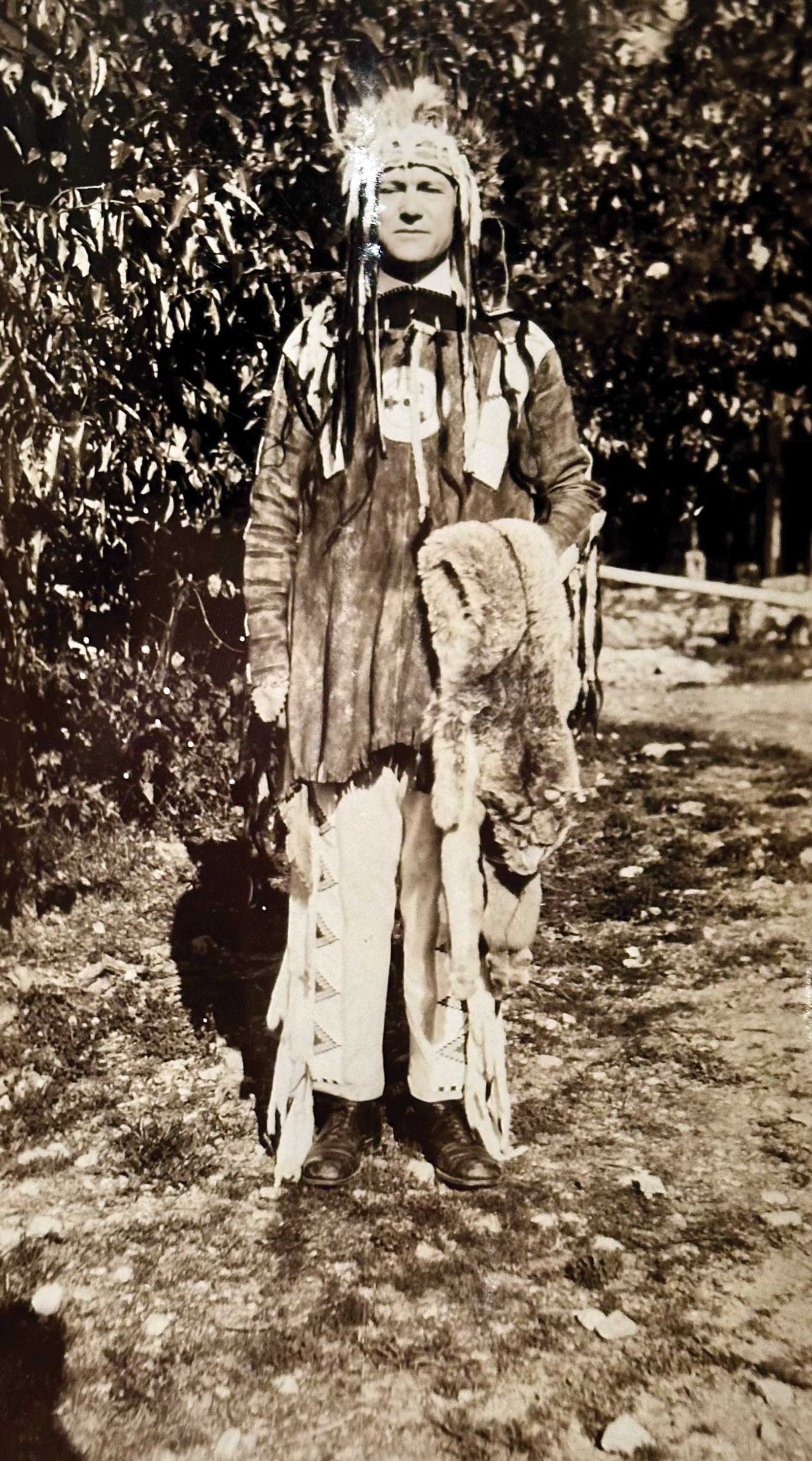
Figure 6: Author and explorer James Willard Schultz.
In Preparing for the Buffalo Hunt (Figure 2), Russell depicts much of what Colonel Dodge has articulated as comprising the buffalo hunt’s preferred site for a location to successfully implement a “surround.”
The pull-out detail in Figure 3 of a blanket-wrapped brave appears because it is an added measure intended to ensure that the buffalo in the valley have not detected the scent of the hunters who are off to the far left stripping down to only their loincloths. This is done so that their strong thighs can enable them to stay as securely mounted to their horses as possible during the hunting process of careful encirclement of animals by way of the surround. Russell’s depiction in The Run (Figure 4) shows why this is a critical step to avoid becoming dismounted or possibly even able to remount using the trailing rope shown. If remounting fails, “trampled mortality” is then a more likely outcome, providing only a sad recalled memory for his wife and son as Figure 7 clearly illustrates.
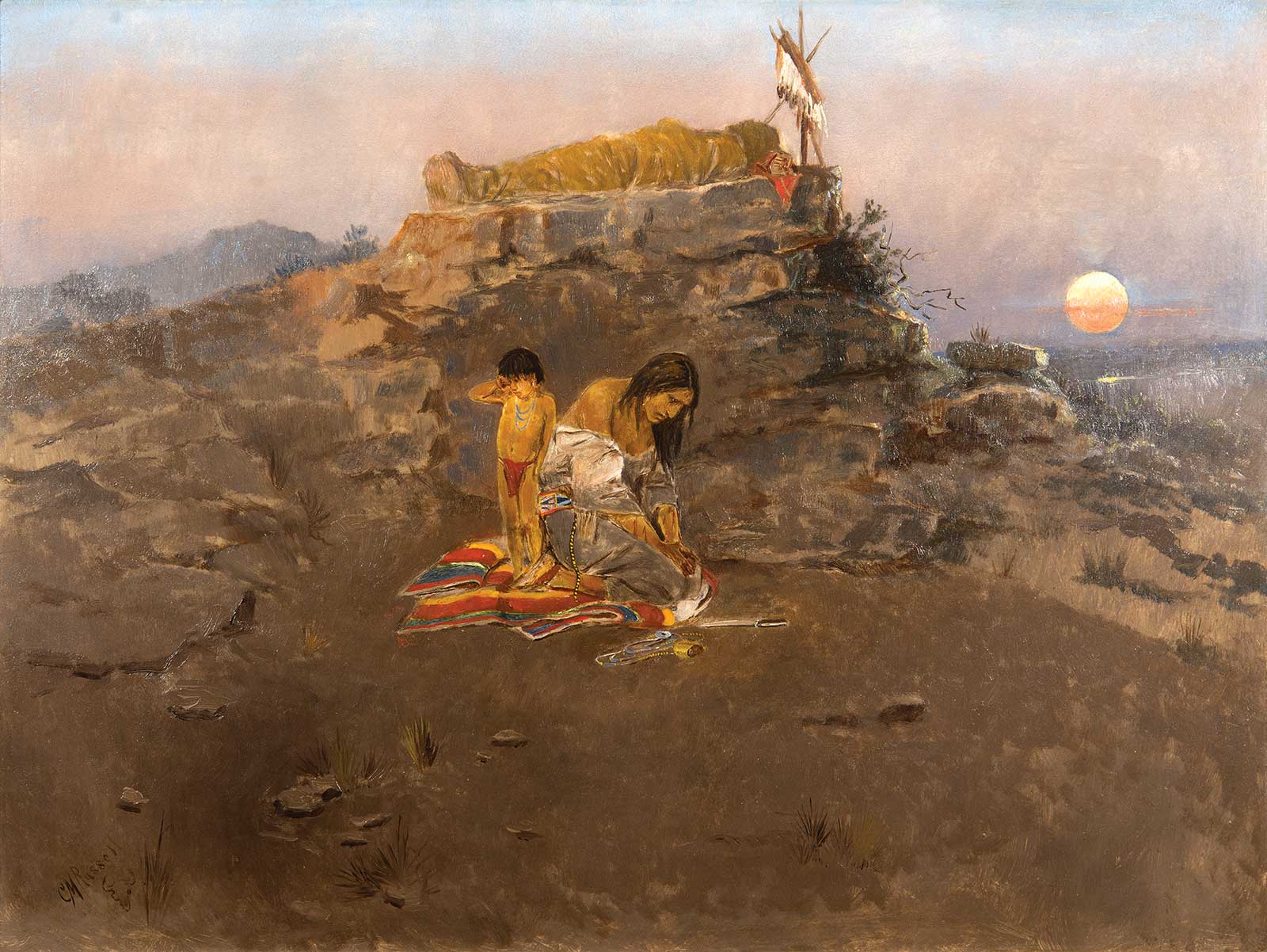
Figure 7: Charles M. Russell (1864-1926), Her Heart is on the Ground, 1896, oil on canvas.
Dodge continues: “Other conditions being favorable, the camp is, whenever possible, pitched in broken country, for the favorite and most successful mode of killing large numbers of buffalo is by use of ‘the surround,’ and this is only practicable when hills and hollows, breaks and ravines render the approach to the herd easy, and prevent other herds from seeing or hearing the commotion and noise attendant upon its destruction as Russell deftly depicts in Preparing for the Buffalo Hunt (Figure 2).
“All being ready, the best hunters are out long before the dawn of day. If several herds of buffalo are discovered, that one is selected for slaughter whose position is such that the preliminary maneuvers of surround and the shouts and shots of the conflict are least likely to disturb the others. A narrow valley, with many lateral ravines, is very favorable. If the herd is on a hill or otherwise unfavorably situated, the hunters might [rationally] wait for it to go to water, or by discreet appearances at intervals, or (somehow encourage) coax it to the best spot. During all this time, the whole masculine portion of the hunter’s band capable of doing execution in the coming slaughter is congregated on horseback, in some adjacent ravine, out of sight of the buffalo herd, silent and trembling with suppressed excitement. The herd being in proper position, the leading hunters hail off the men, and send them under temporary captains to designated positions. Keeping carefully concealed, these parties pour down the valley to leeward, and spread gradually on each flank of the wind, until the herd is surrounded, except on the windward side. Seeing that every man is in proper place, and all ready, the head hunter rapidly swings in a party to close the gap, gives the signal, and with a yell that would almost wake the dead, the whole line dashes and closed on the game. The buffalo make desperate rushes, which are met in every direction by scouts and shots and circling horsemen, until utterly bewildered, they almost stand still to await their fate. In a few moments the slaughter is complete. A few may have broken through the cordon and escaped. These are not pursued if other herds are in the vicinity.”
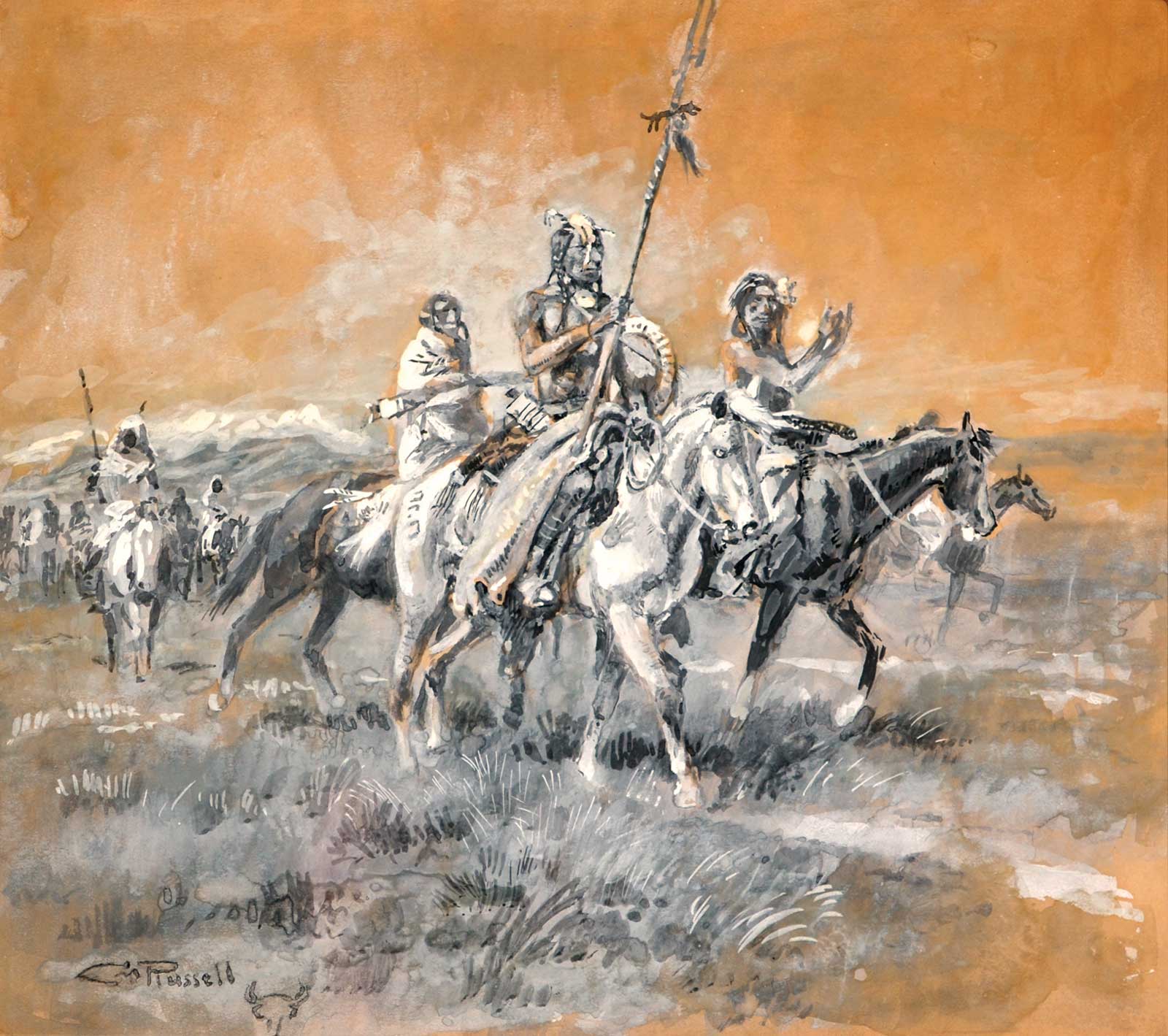
Figure 8: Charles M. Russell (1864-1926), Finger That Kills Wins His Squaw, watercolor and gouache, 11¼ x 12½ in.
Author’s note: “Figures 8 and 10 involve different mediums, but the similarity of composition is intriguingly noteworthy.”
The slaughter completed, the “soldier’s return to camp to swell and strut, and vaunt each of his own individual exploits, while the women skin, cut up and carry to camp almost every portion of the dead animals.”
Colonel Dodge added the following additionally revealing disclosure: “I have never personally witnessed a surround. The above description is given on the authority of white men and Indians who have assisted in many. The dog soldiers are exceedingly tenacious of their rights, and object strenuously to the presence of any one who may not be punished for violation of their rules. The chief dare not, without their counsel, give permission for any outsider to accompany the band in a surround. Those who belong to the band by marriage, and a few others specially favored, are the only white men who have ever been eyewitnesses to this most exciting of Indian scenes. A white hunter, considered very reliable, told me that he had once seen nearly 300 buffalo killed in one surround, the whole affair occupied less than 10 minutes after the signal was given, and that not a single buffalo escaped.”
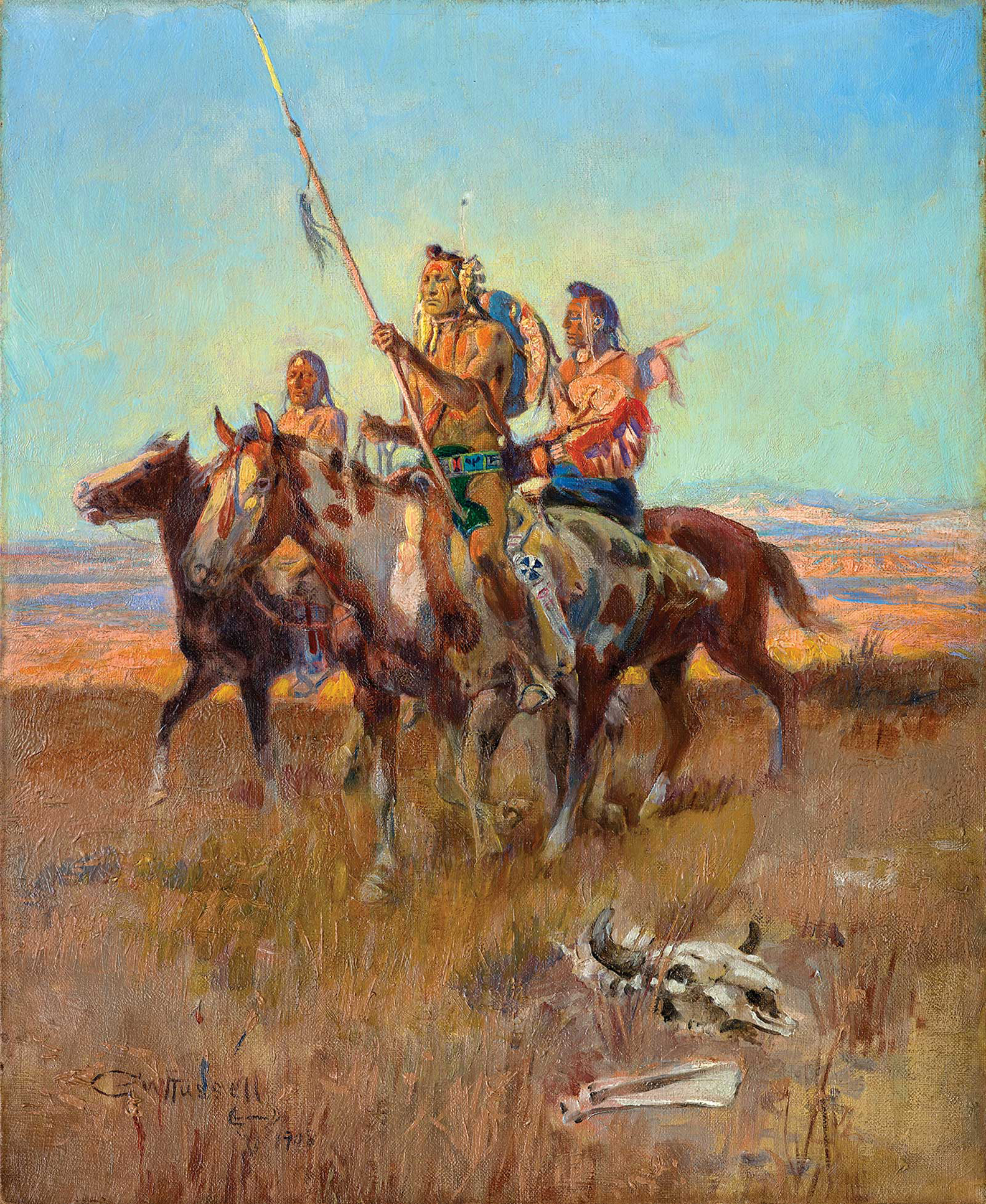
Figure 9: Charles M. Russell (1864-1926), Piegans, 1908, oil on canvas, 17½ x 14¼ in.
As Russell deftly depicts in Figure 7, and as the figure strongly suggests, the possible adverse consequences of a mounted buffalo hunting dislodgement were dire for the brave himself and tragic for his family dependents. Russell’s artistic success often stems from his capturing the allure, and romance, as well as the daunting prospect of real danger with physical even life-threatening riskiness shown in this painting. It undoubtedly incentivized him to persevere again and again in subsequent years to depict this same demanding yet culturally informative subject matter. For example, he executed this composition both in 1896 and 1917. Noted Russell historian and scholar, Frederic Renner, ultimately counted a total of 75 Russell depictions of buffalo hunting scenes. When one considers that many of these qualify as masterworks, it seems fair to view Native American buffalo hunting as a leading candidate to be Russell’s signature compositional format. This is analogous to what landscapes of Green River, Wyoming, were for Thomas Moran. This degree of focus on Indian subject matter is somewhat ironic given that it involves the person who became most widely known as Montana’s (and ultimately America’s) most famous “open-range cowboy artist” of his era.
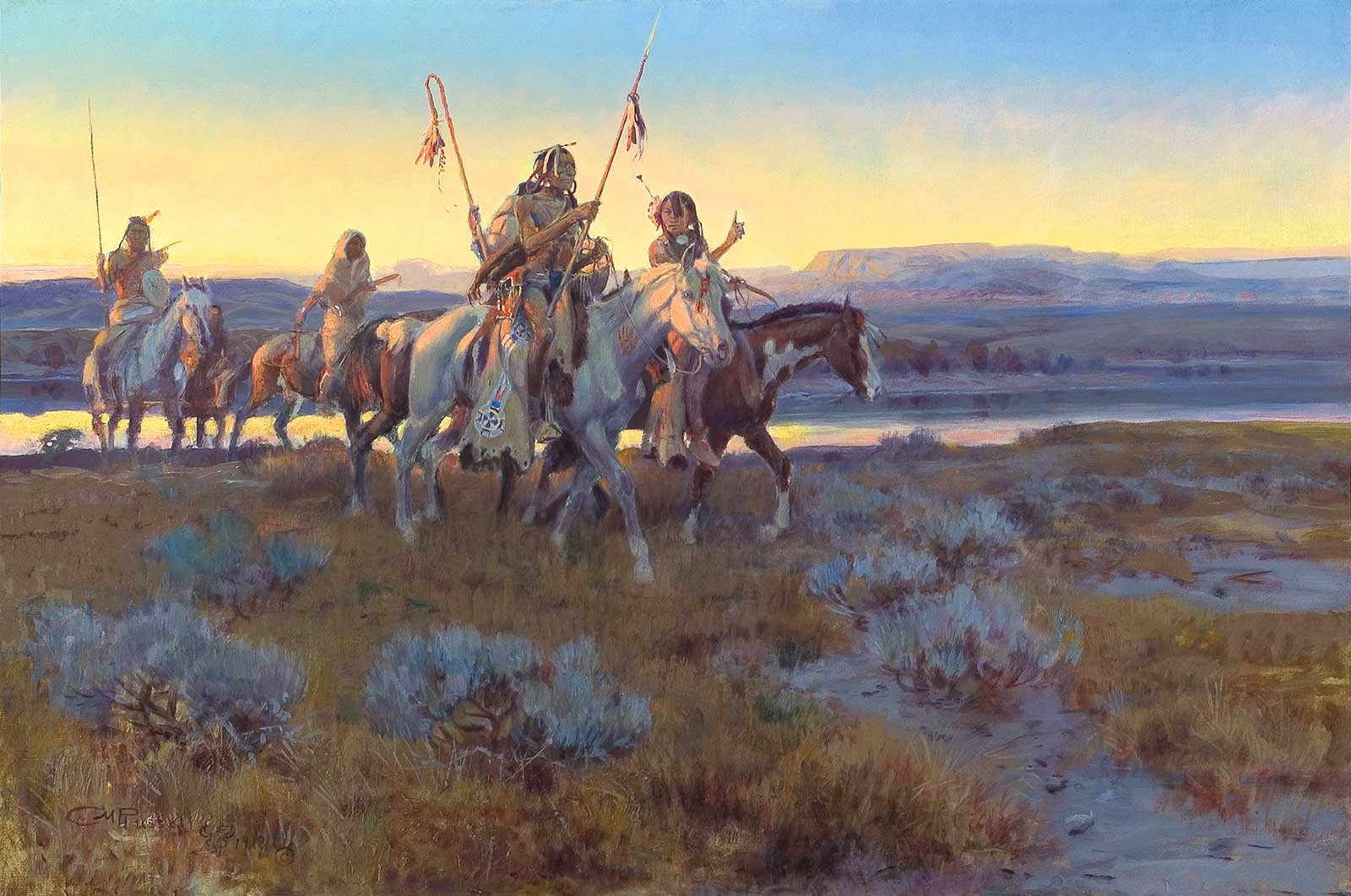
Figure 10: Charles M. Russell (1864-1926), Piegans, 1918, oil on canvas, 24 x 36 in. Petrie Collection, Denver, CO.
Dodge, whose writing from Our Wild Indians is quoted here, graduated from the U.S. Military Academy at West Point in 1848 and spent more than three decades as an army officer with numerous wide-ranging, first-hand experiences involving Native Americans in the West. His book focuses on the ideal setting for using the surround hunting technique as a means of maximizing the fall harvest. This was critical to cope successfully with the logistical challenges of providing adequate food and hides for winter survival by the tribe.
In Russell’s painting The Run (Figure 4), the artist provides an exceptionally intense portrayal of the very chaotic bow-hunting action that occurs once the signaled encirclement yell is given that “would almost wake the dead.” Please also note the multiple deadly arrows available to the mounted hunter in the image. Gripped at the bow’s grasping point they can be quickly delivered when needed.
James Willard Schultz (Figure 6), Russell’s close friend, was one of the white men Dodge describes in his book. He married a Blackfeet Indian named Nathani (for “Fine Shield Woman”), was adopted into the tribe and actually participated in a number of buffalo hunts. In a series of articles published in Eastern magazines, he described his adventures including buffalo-hunting pursuits. After reading Schultz’s accounts of these activities, one cannot ever view Russell’s buffalo hunt pictures quite the same way. An emotionally detached perspective is not possible or even likely. One good example of this is found in Why Gone Those Times?, a posthumously published volume which presents a formidable set of his magazine articles that were initially published during Schultz’s days as a member of the Blackfeet tribe. Schultz’s artist friend, Russell, makes these adventure stories truly come alive.
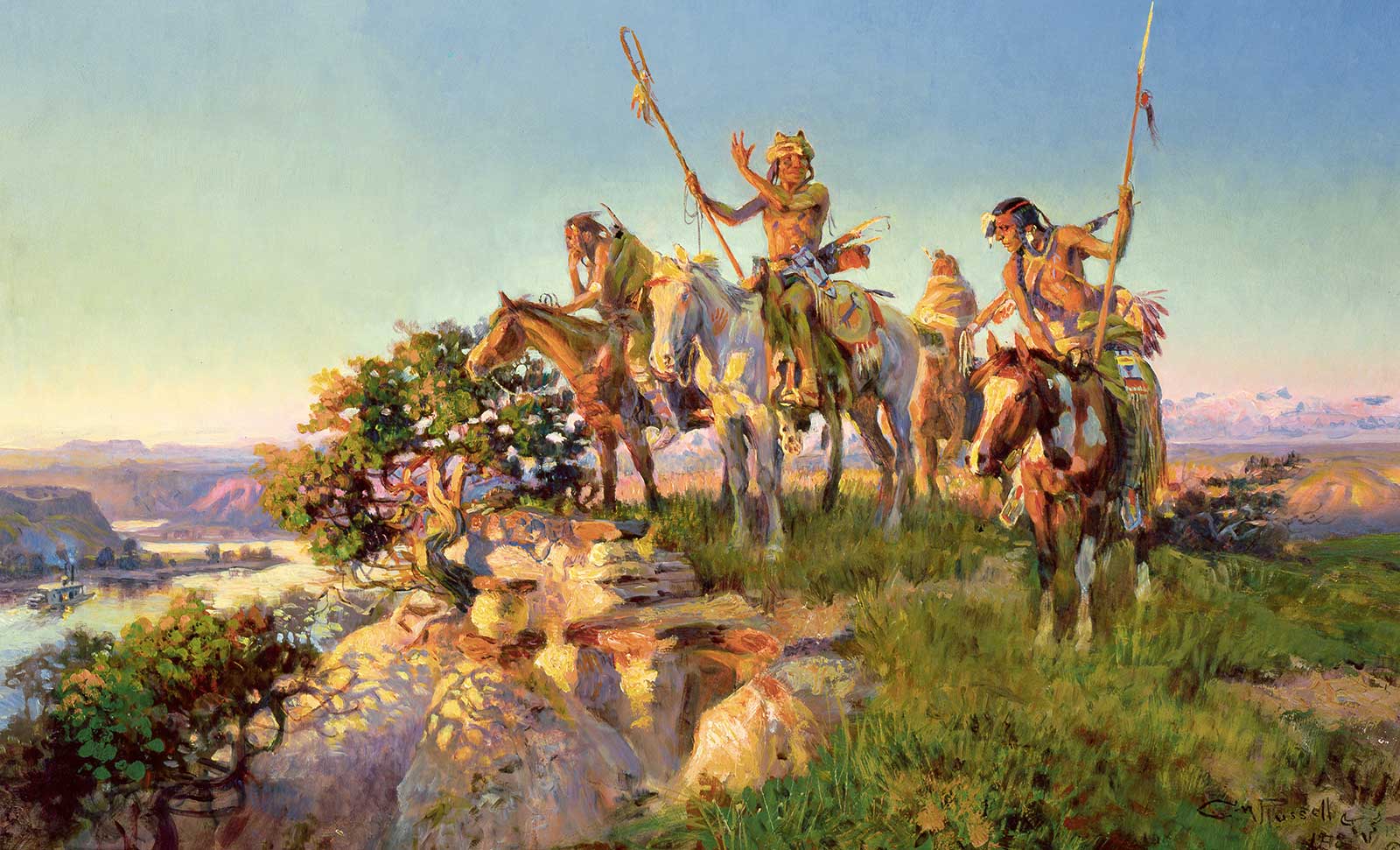
Figure 11: Charles M. Russell (1864-1926), The Fireboat, 1918, oil on board, 15 ½ x 24½ in. C.M. Russell Museum, Great Falls, MT, a gift from the Trigg Collection.
Interestingly, in Schultz’s book, Blackfeet Tales of Glacier National Park, both Schultz and Lt. John H. Beacom (promoted to major in 1889), were identified in Chapter 4 of that book. They were well acquainted with each other having participated with Blackfeet guides in a series of efforts to name a number of mountains and other historical sites that were becoming candidates on land that would be part of an evolving plan for Glacier National Park.
There is one additional aspect described by Colonel Dodge that helps explain the need to coordinate how horse-mounted braves became so competent despite the challenges posed involving buffalo hunting via the surround. As Russell often depicted in his paintings, the Native American horseback hunters would communicate with each other using techniques involving hand-signaled sign language. Numerous examples are evident in some of the Russell images identified in this essay. They include The Wolf Men (1925), Piegans (1908), Piegans (1918), Pay Dirt (1925), as well as The Fireboat (1918) and Charles M. Russell and His Friends (1928), and Finger that Kills Wins His Squaw (1906). Each of these images provide convincing evidence of how effective these signals were in aiding such communications. —
Powered by Froala Editor


