In 1965, Joe Beeler, Charlie Dye and John Wade Hampton met at a ranch in Sonora, Mexico, to ride and rope, but also to watch as authentic cowboys worked cattle and horses. These early accounts don’t mention paintbrushes, easels or even sketchpads. The purpose of the trip was fellowship and creative support among artists. These principles, along with authenticity to the West, would become the foundation of the Cowboy Artists of America, which is now celebrating its 59th year.
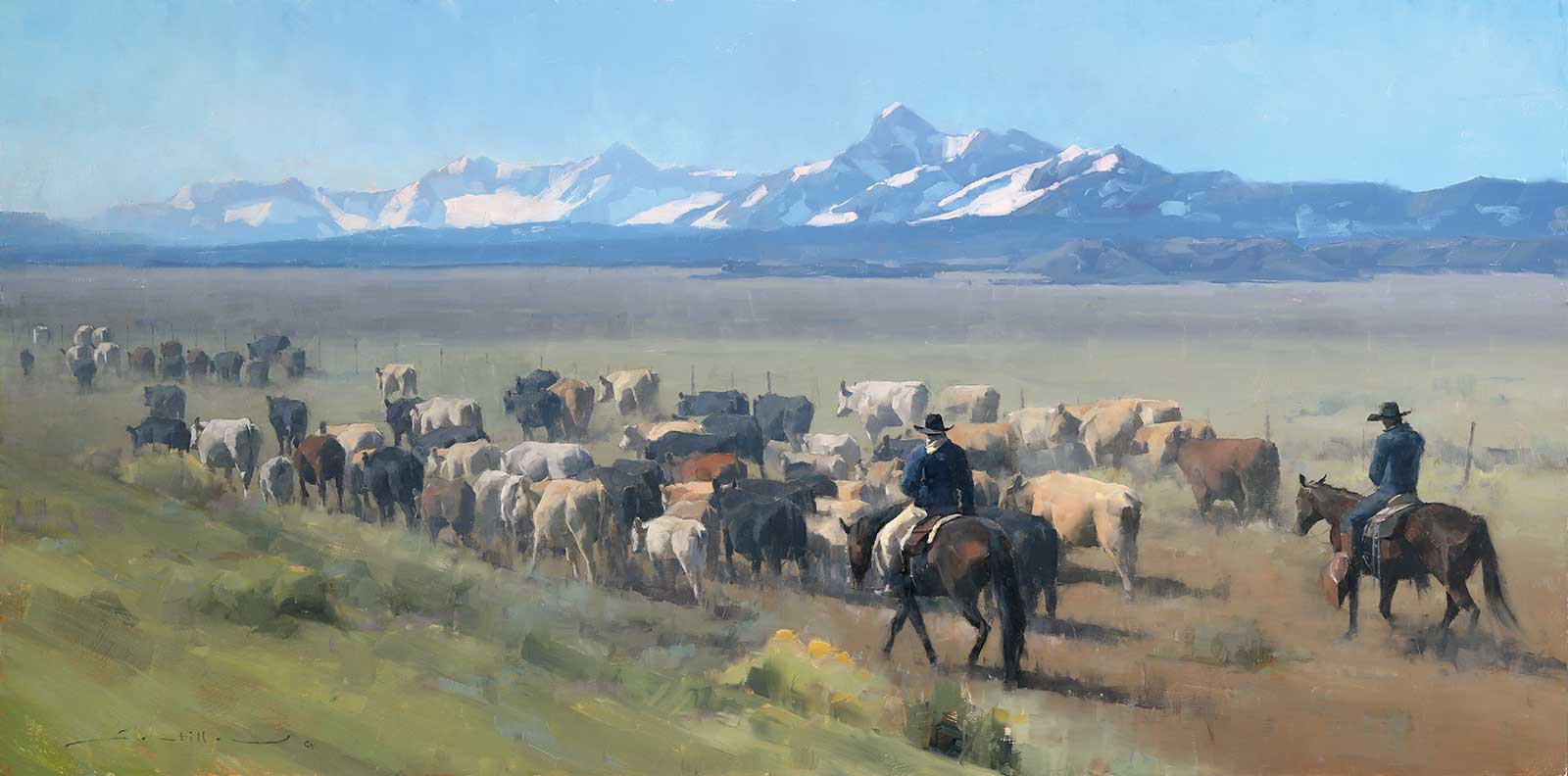
Dave Santillanes, Summer Range, oil, 24 x 48 in.
Today, the 19 active members of the group are keeping those dreams alive with a CA that has moved firmly into the 21st century. It’s a changed world when compared to 1965: Western art is more widely appreciated today (B. Byron Price refers to Beeler, Dye and Hampton as “a trio of struggling Arizona artists” in the group’s history of the 1965 trip), the lines between contemporary and traditional Western art have blurred, and the internet and social media both play a role in celebrating the group and spreading the gospel of the West. But, as the members will tell you, horses, cattle and cowboys haven’t much changed in 59 years. Some things are timeless.
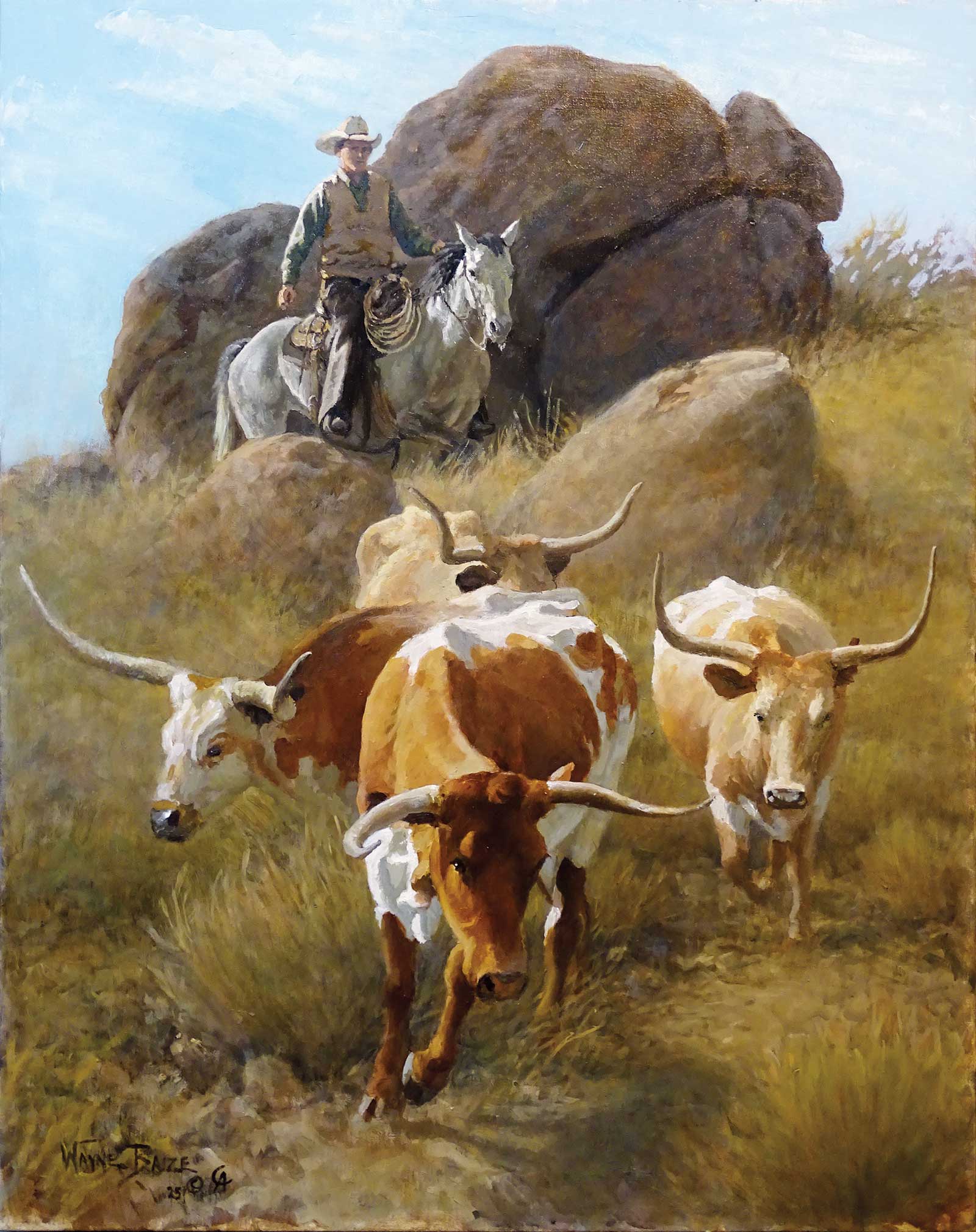
Wayne Baize, Down From on High, oil, 28 x 22 in.
“Anyone who has even a cursory knowledge of the CA knows that when this group was started, it was the only game in town. Back in those days, every Western superstar was in the group. And the CA pioneered the way shows are held, and the way the art was sold off the wall. The shows have come and gone, and so have the artists and the galleries, but the relevance of the CA has never left,” says C. Michael Dudash, the group’s current president. “We ask a lot about who’s going to replace us and keep the vision going, and then we get these young guys in the group and we can see them cementing the CA’s legacy even further. The CA will shift and change and adapt to the market, but also, it will always be the CA that the founders envisioned. That’s the beauty of the group.”
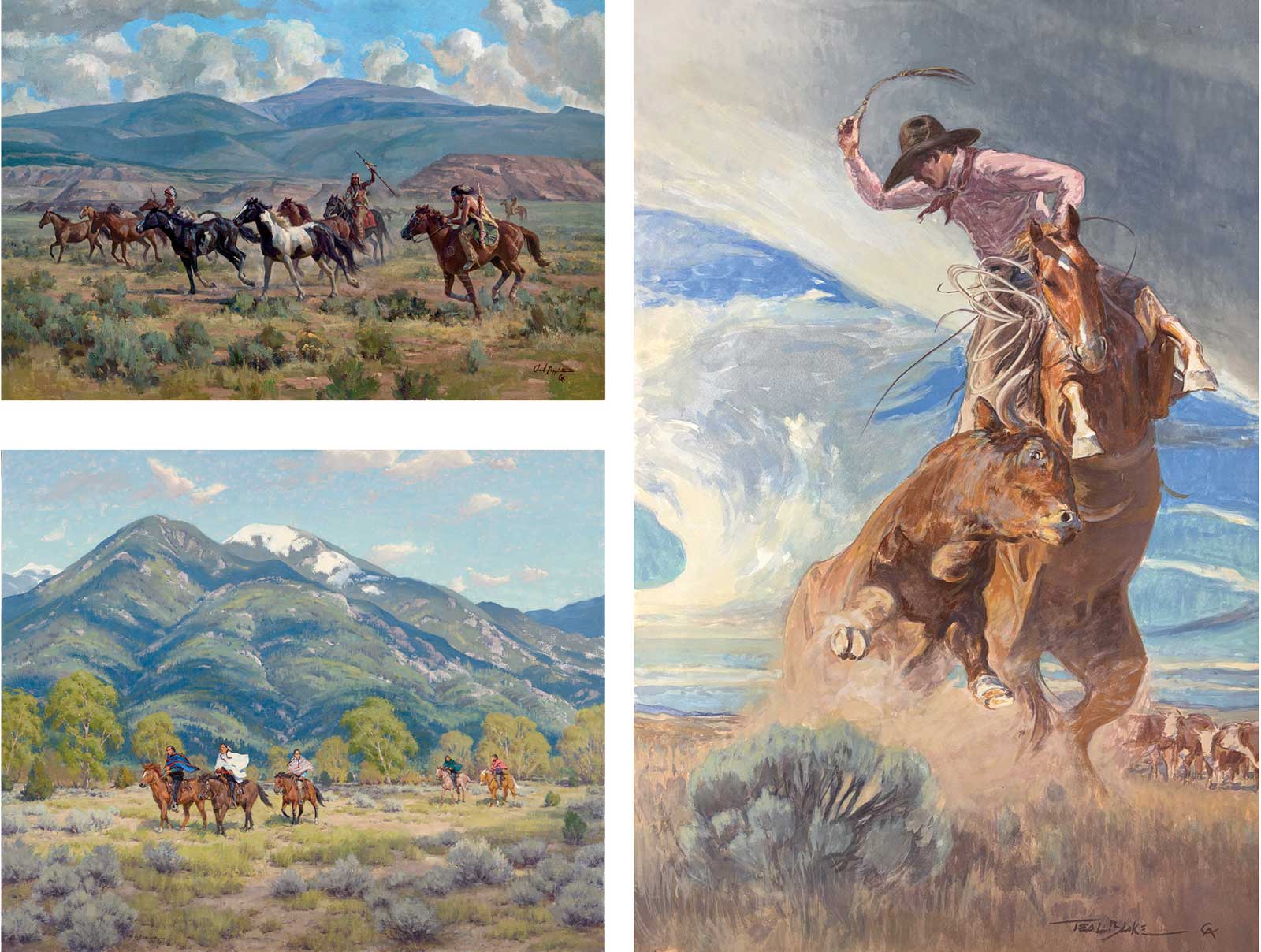
Clockwise from top left: Chad Poppleton, Horse Thief Basin, oil on panel, 30 x 48 in.; Teal Blake, The Red Bull, oil, 30 x 20 in.; Ron Rencher, The Winds of Change, oil, 30 x 36 in.
The group will convene in Fort Worth, Texas, on November 7 and 8 for the Cowboy Artists of America 59th Annual Exhibition & Sale. It will be returning to the Will Rogers Memorial Center, which is neighbors with great Texas cultural venues such as the National Cowgirl Museum & Hall of Fame, Fort Worth Museum of Science & History and the Amon Carter Museum of Art. All 19 active members can submit up to seven pieces each, with additional work coming from some of the emeritus members.
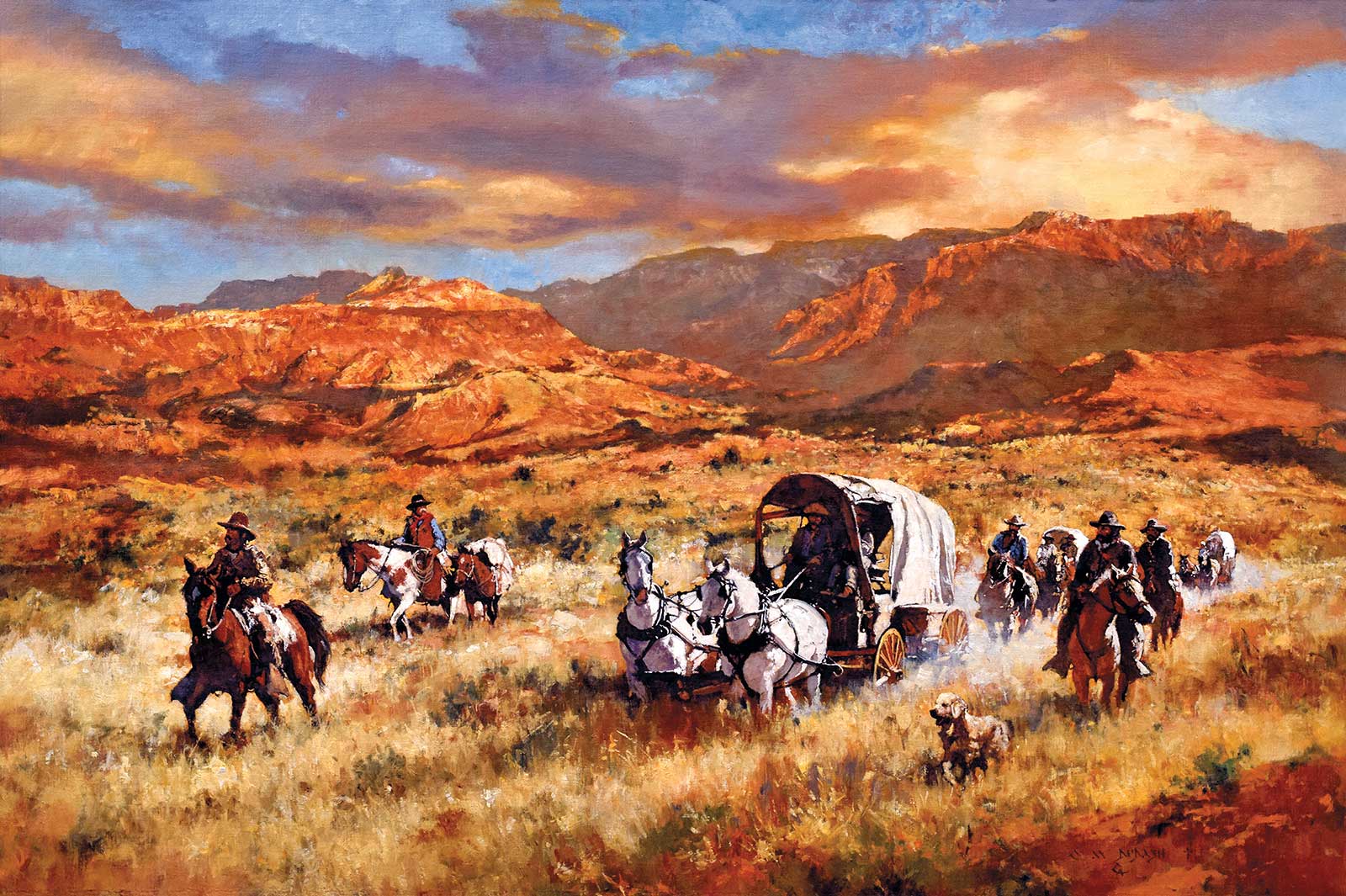
C. Michael Dudash, The Long Trail, oil on linen, 32 x 48 in.
For Dudash, he will be showing a mixture of Native American, cowboy and pioneer paintings that draw on Dudash’s fascination of early history in the American West. For his painting The Long Trail, he shows a wagon train with numerous riders surrounding the wagons as they cut through tall, desert brush. “Wagon train paintings have always held a special fascination for me—they seem to stir up a lot of emotions and imaginations. And I’ve painted several over the years,” he says of the work. “The sheer strength, resilience, courage and grit that our forefathers possessed as they followed their dreams, must be revered and admired. The Long Trail, once again has given me the opportunity to paint what I love—horse and rider, old wagons, dust and a dog traveling through the endless beauty of the great American West.”
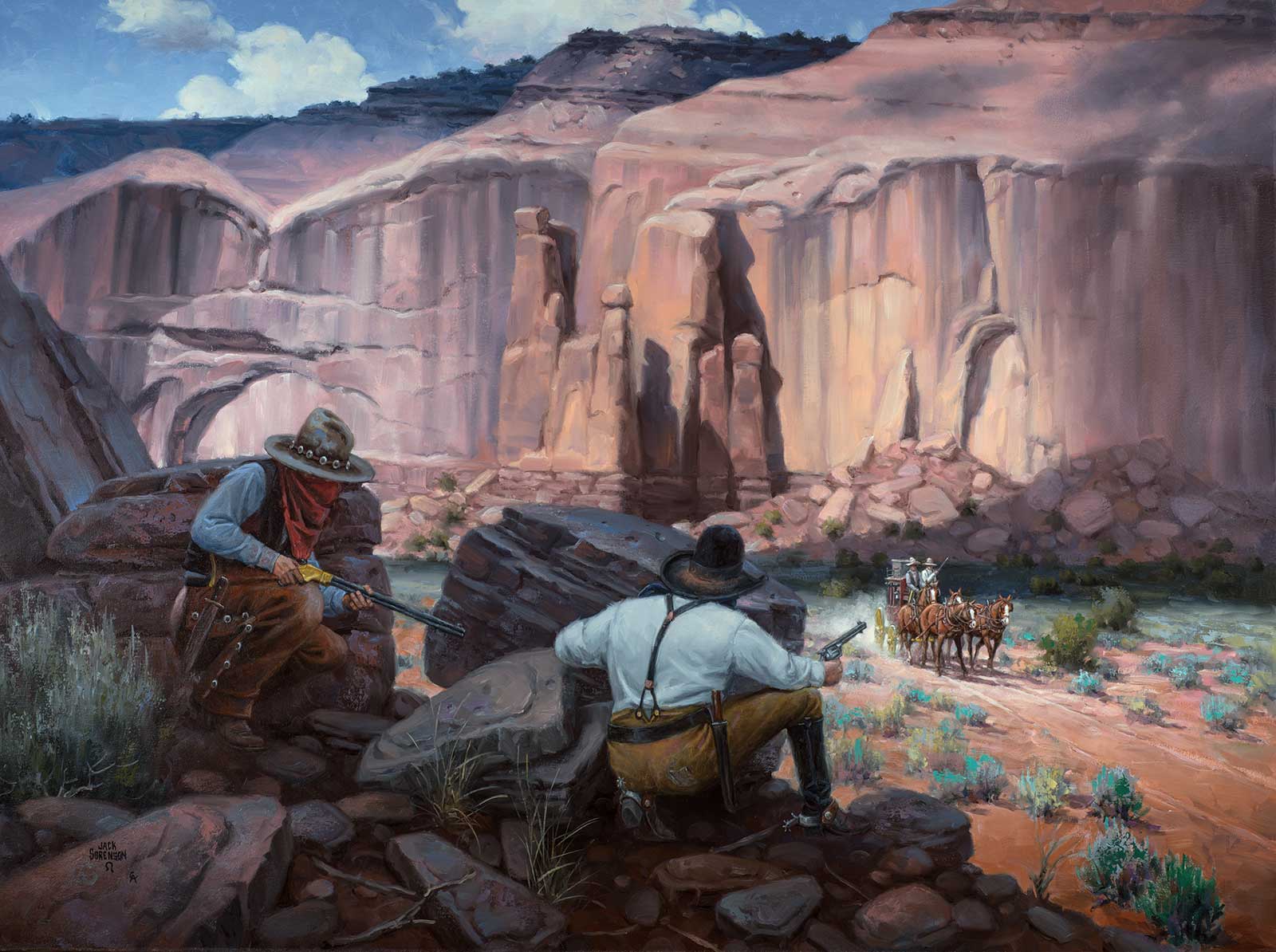
Jack Sorenson, A Couple Shady Characters, oil on linen, 30 x 40 in.
Chad Poppleton is also drawn to history, which is why he painted a Native American scene with nearly a dozen horses. “[In Horse Thief Basin] a group of Sioux warriors have raided the Crow tribes summer grazing pastures, capturing a few bands of horses. It took skill and especially bravery to gather so many during the daytime,” he says. “Horses meant life to the Native Americans, giving them the abilities to remain nomadic and sovereign. Horses equaled wealth and power amongst most tribes, thus they were guarded with their lives. The black and white paint stallion was especially important because he was believed to have strong medicine, therefore, he will be a welcomed addition to the Sioux horse herds passing the medicine mark on to his offspring.”
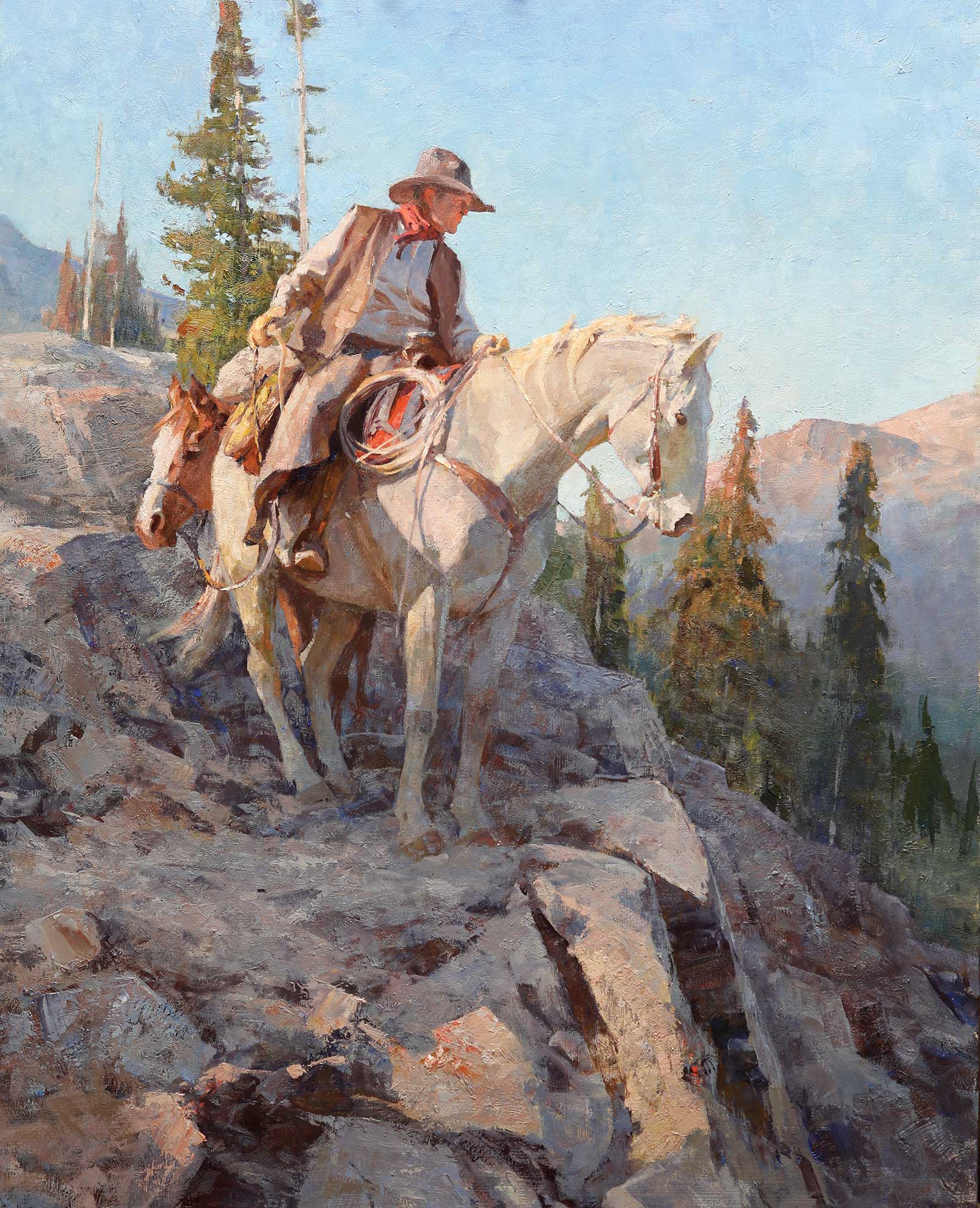
Grant Redden, Lost Trail, oil, 30 x 24 in.
Clark Kelley Price shows another angle of history with his painting The Mail Must Go Through, a dramatic image showing a mail carrier, an arrow piercing his leg, riding through rough country trying to escape from a dangerous situation. “The motto of the Pony Express was ‘the mail must go through.’ The route for delivery of the United States mail from St. Joseph, Missouri, to Sacramento, California, was accomplished all by horseback and rider. It was a very dangerous endeavor. Some of the riders for the Pony Express were attacked and killed by different Native American tribes. The rider had to travel alone as fast as his horses could carry him. The average distance for each rider was about 100 miles—stopping every 15 miles or so at express stations to change to a fresh horse,” Price says. “Traveling day and night was about a 10-day journey start to finish. Mail was delivered much quicker than it had been up to that point, thanks to the Pony Express. All of the men and women who participated in the Pony Express were brave souls. Many were only teenagers or in their early 20s. Although it is believed that women did not ride, they helped out in many other ways. My great, great, great uncle broke and trained horses for the Pony Express at the Deep Creek station in Nevada, and his exemplary service inspired me to paint this scene to give honor and credit to all those involved.”
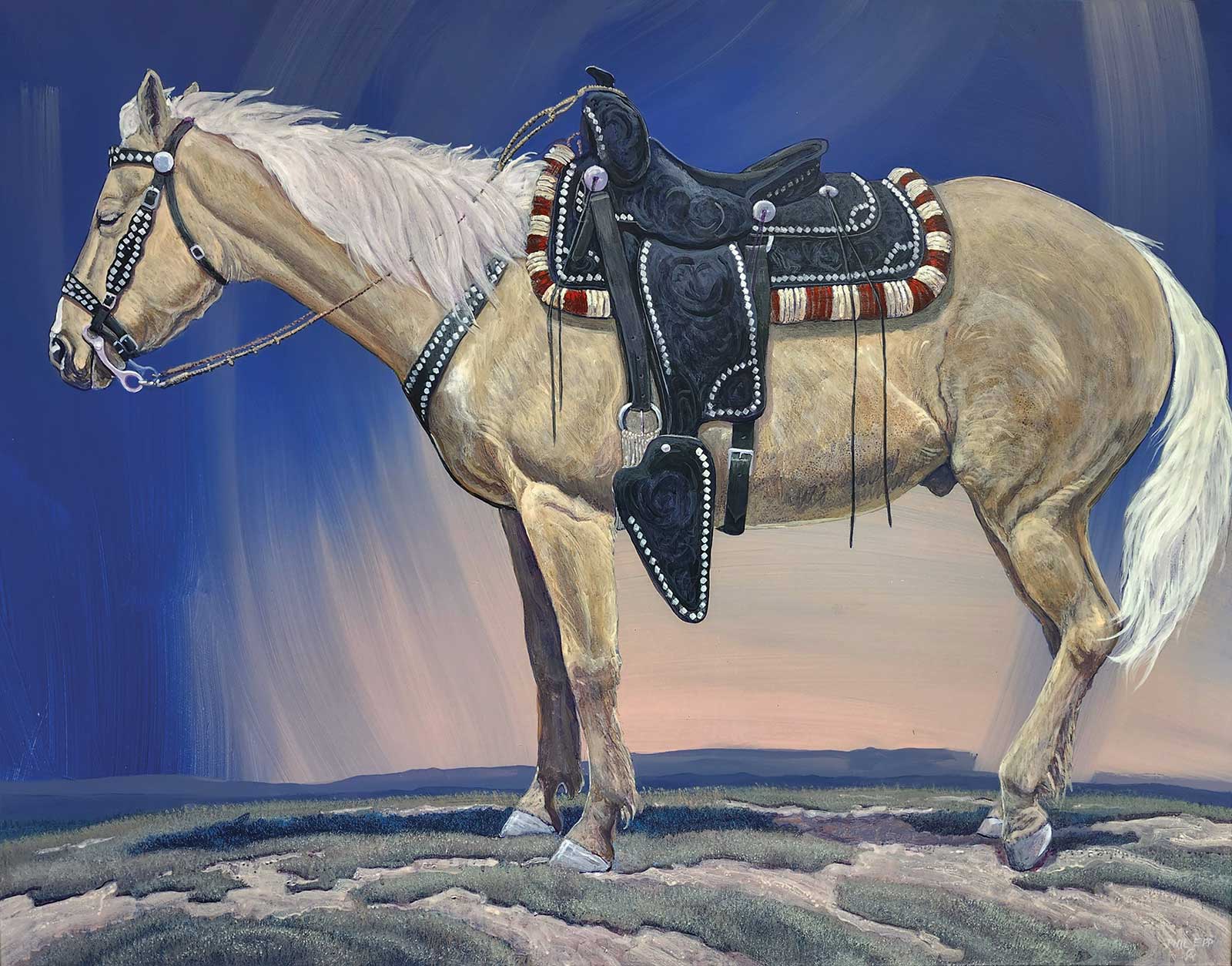
Phil Epp, Parade Saddle, acrylic on board, 36 x 46 in.
The West was a dangerous place for everyone, and frequently the danger came from unseen forces, which is the theme of Jack Sorenson’s painting A Couple of Shady Characters, showing an ambush moments before it springs. “I enjoy paintings which have strong storylines. In this case, the viewer gets to imagine how this robbery will play out. The stagecoach may get safely away, or it might end in a shoot-out. I set the stage, you decide,” he says. Another work he’s bringing shows a rider being bucked off a horse during a river crossing. “When I was breaking horses, I always made sure they could swim. As you may know, many horses will blow up their stomachs when swimming. That’s why I would often loosen my cinch before entering the water. Apparently, this cowboy loosened his a bit much, hence the title, Loose Cinched, Thirst Quenched.”
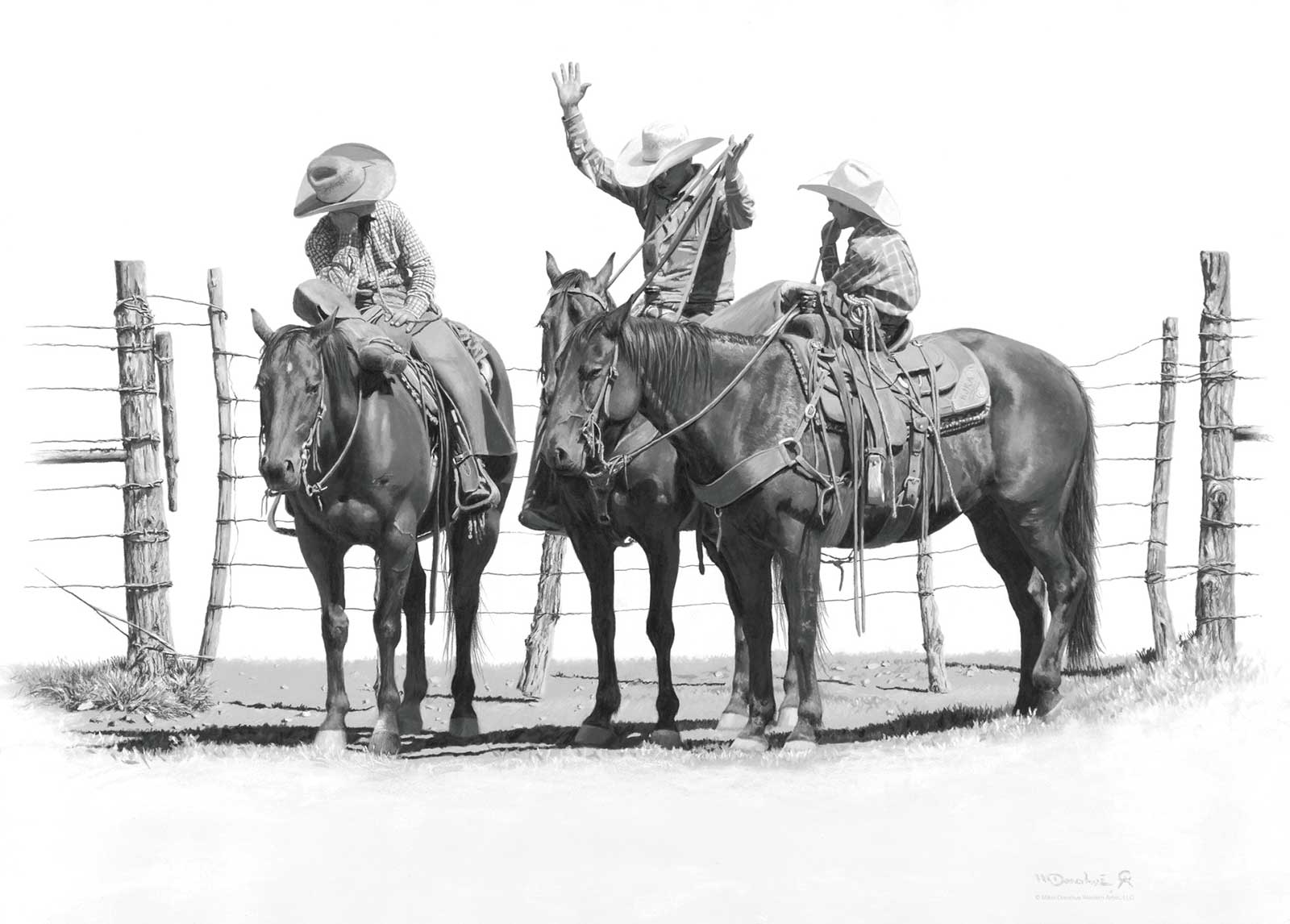
Mikel Donahue, Teller of Tall Tales, colored pencil, 18 x 24 in.
Festivities for the annual show start on November 7 with an awards ceremony and preview starting at 6 p.m. The following day, November 8, there will be an autograph signing at 10 a.m. and artist demonstrations at 11 a.m. That evening, starting at 5 p.m., will be the sale, with the first bell ringing at 6:30 p.m. The works will only hang for those two days, so buyers are encouraged to attend or register for absentee bidding on the CA’s website. —
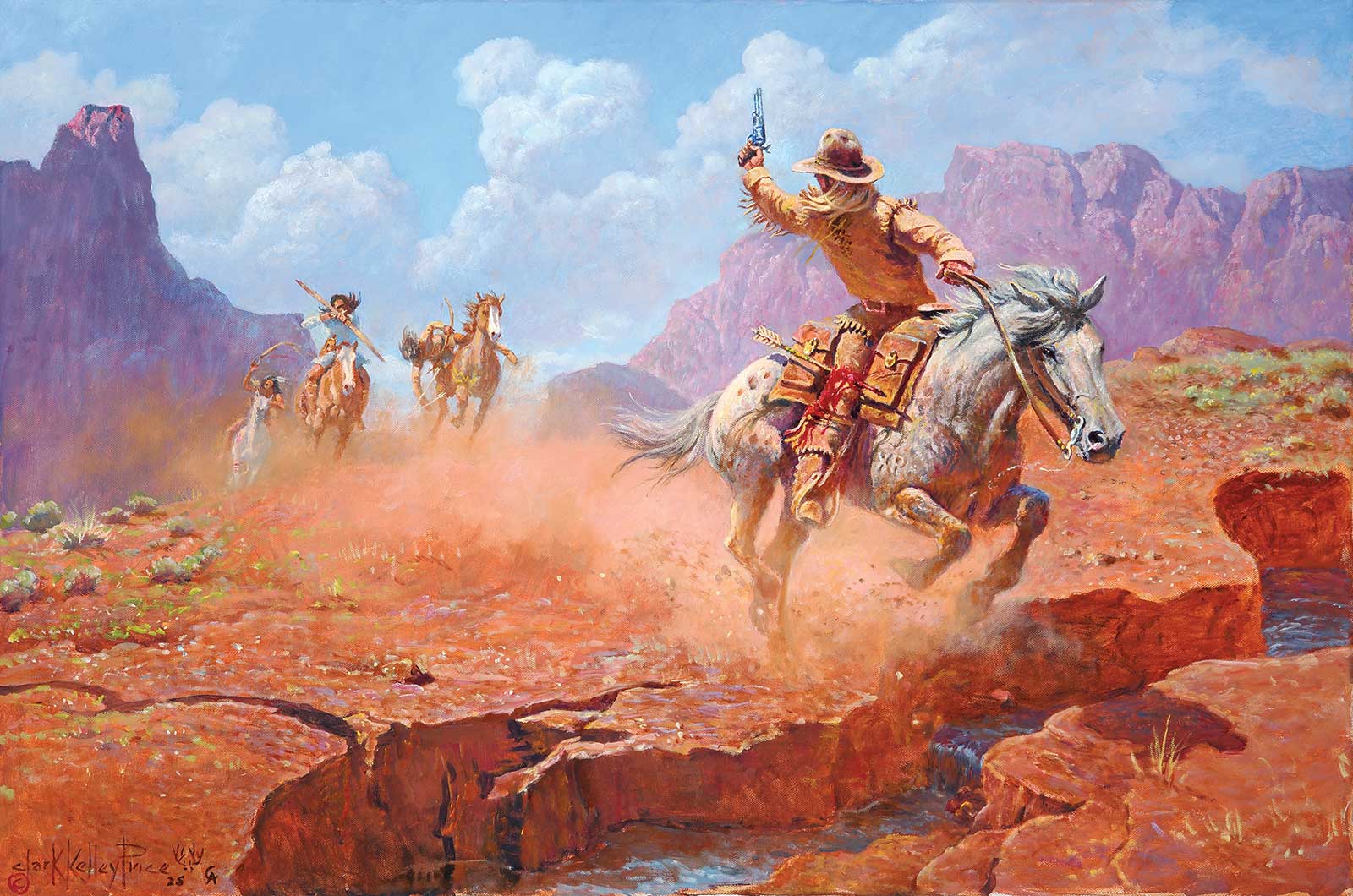
Clark Kelley Price, The Mail Must Go Through, oil on canvas, 24 x 36 in.
Cowboy Artists of America 59th Annual Exhibition & Sale
November 7-8, 2025Will Rogers Memorial Center
3401 W. Lancaster Avenue Fort Worth, TX 76107
www.cowboyartistsofamerica.com
Powered by Froala Editor


