Ed Mell famously didn’t like to talk about his work. If you wanted to crack into a deeper conversation with the late Arizona painter, you had to talk about cars, his true passion outside of his studio, or artists whose works he enjoyed. On that second topic, Mell made no secret of his main influence—Maynard Dixon.
In an interview in 2018, Mell commented on Dixon and other artists, and how their work filtered through his own. “You kind of absorb it all and then something else comes out of you that is mixed with all your influences,” he said. “In the end, we’re all part of the continuum of Southwest art, each heading in our own direction.”
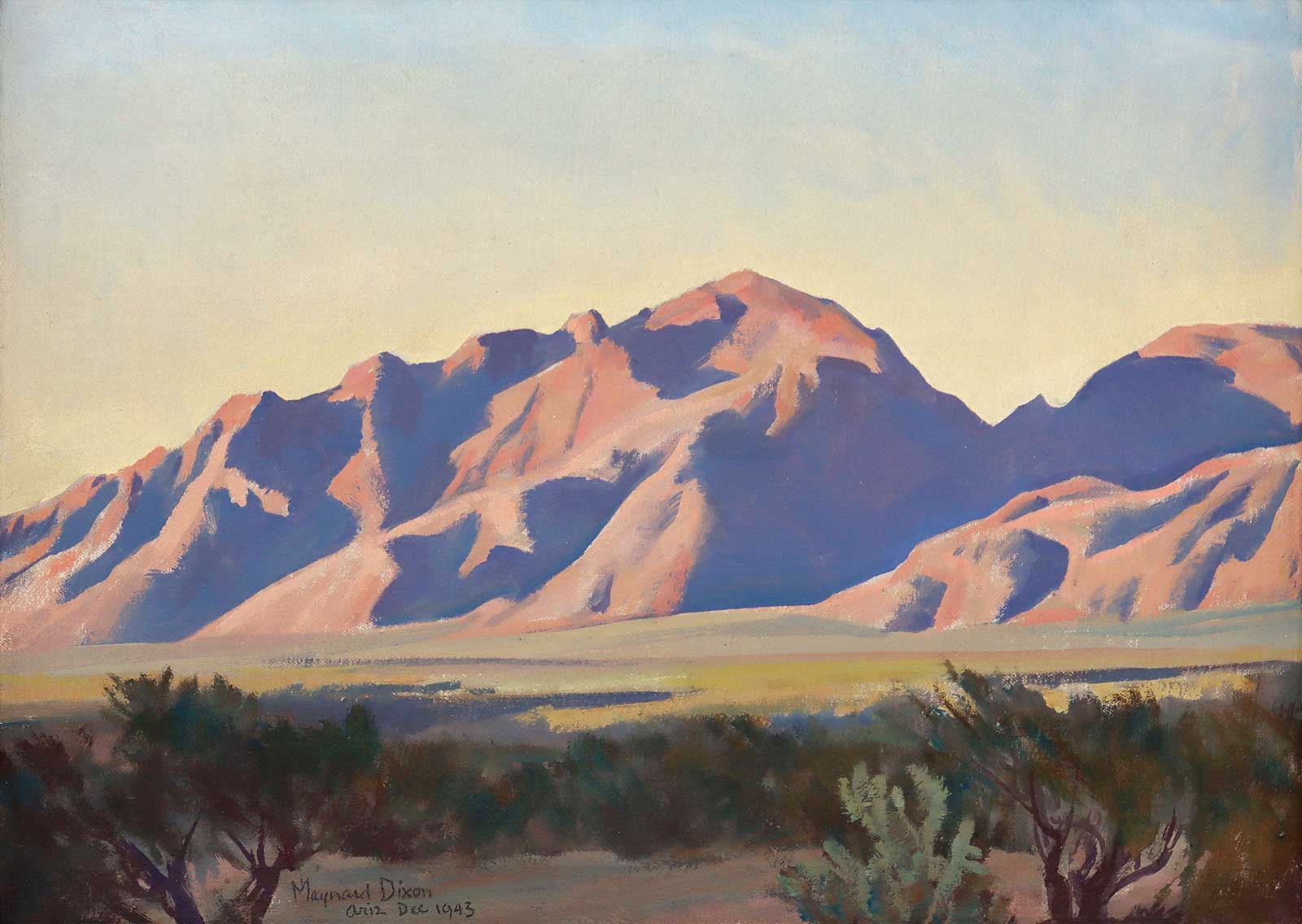
Maynard Dixon (1875-1946), Catalinas at Sundown, 1943, oil on canvas, 12 x 16 in.
He was influenced by many painters—including Victor Higgins, Andrew Dasburg and Ernest L. Blumenschein—but none more vital to his understanding of the West than Dixon. Medicine Man Gallery and the Maynard Dixon Museum in Tucson, Arizona, will pair the two artists together in Ed Mell • Maynard Dixon: Icons of the West, opening September 16. The exhibition will mark the first major show for Mell since his passing in early 2024.
Presenting the exhibition is gallery owner and museum founder Mark Sublette, whose career in the art world has intersected with both artists: he was friends with and represented Mell for more than 25 years, and he’s an author and authority on Dixon, who serves as the centerpiece of the year-old Maynard Dixon & Native American Art Museum. “The exhibition is several things, but for many it will be a way of healing as we celebrate Ed’s life,” Sublette says. “And then when I put on my historian hat, the exhibition will allow us to look at these two remarkable artists and how both became influential figures.”
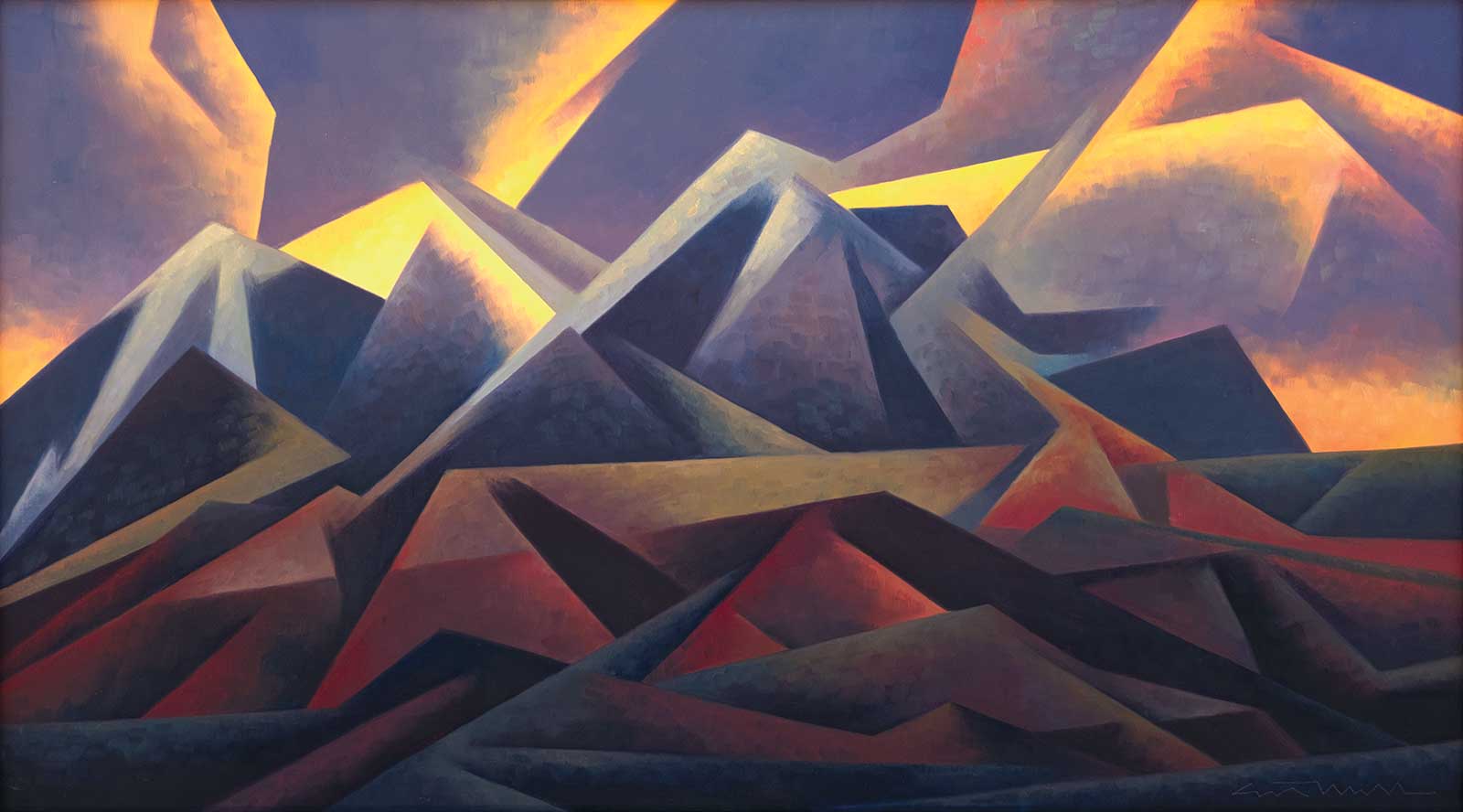
Ed Mell (1942-2024), Escalante Transition, 2003, oil, 35 x 19½ in.
Not only will Sublette present the exhibition at the Maynard Dixon Museum, he will also present an estate sale of Mell material at Medicine Man Gallery, which is around the corner from the museum. The estate sale will take place September 5 through 19, and will feature sculpture, paintings and drawings from the estate. The exhibition runs from September 16 through January 31, 2026. Sublette will also publish an exhibition catalog, which will examine the careers of Mell and Dixon, and also focus on similarities and differences.
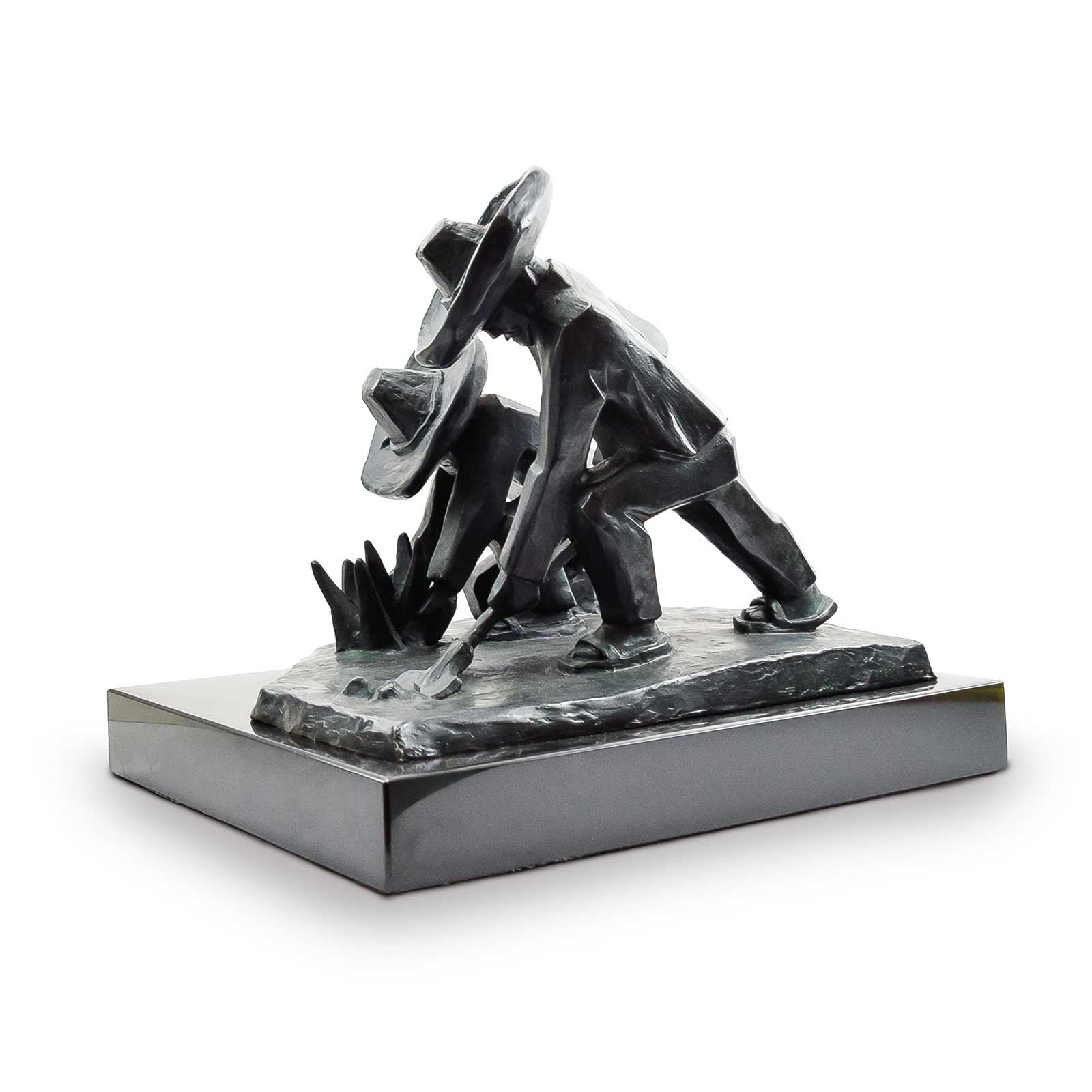
Ed Mell (1942-2024), Hands of the Earth, bronze, ed. of 35, 14 x 17 x 13 in.
The author was surprised at some of the similarities, of which there are many. “For me, the big ones are that they both basically go to New York in their 30s for illustration, and they both leave—Dixon after five years, and Ed after six years—to go do fine art painting by the time they were 37 years old,” Sublette says. “Both men started late, comparatively speaking, in fine art, and both were in New York when their viewpoints on the world changed. For Dixon it was dramatic. For Mell, his drastic change came after he returned to Arizona and spent time with the Hopi people in his home state. For both men, their experiences with Native Americans renewed their understanding of spirituality.”
When it comes to differences, Sublette identifies one particular genre. “The most obvious one is flowers. Ed painted quite a few flowers, as many as 15 percent of his work. Dixon never did that,” he says. “I postulate in my catalog that he never worked in that area because Dixon and [second wife] Dorothea Lange go to New York City and that’s where he meets Alfred Stieglitz and where he first sees work by Georgia O’Keeffe. He doesn’t like what they are doing and thinks that what they are professing is not genuine, so he didn’t want to have anything to do with that work. Now, would Dixon not paint flowers because of Stieglitz or O’Keeffe? That is something he would do, in the same way he wouldn’t do bison coming down the trail because he didn’t want to be Charlie Russell.”
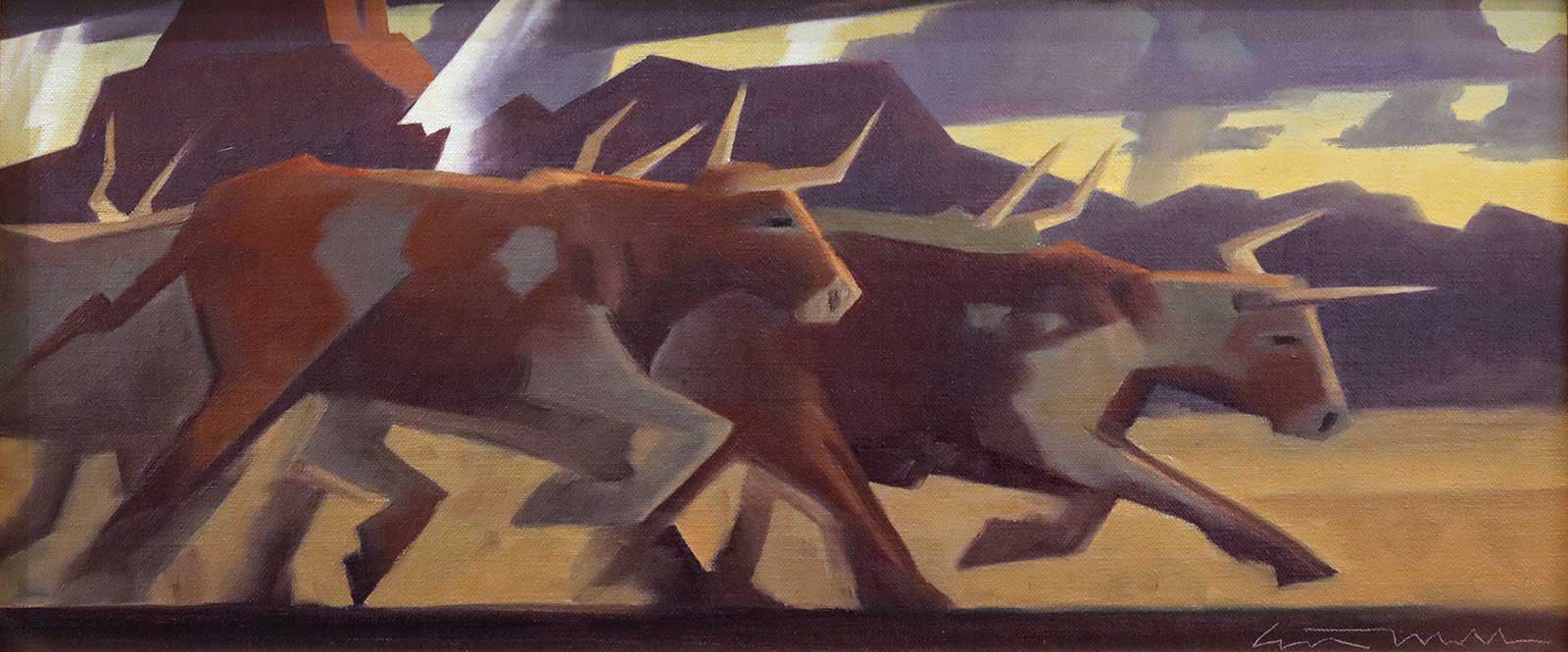
Ed Mell (1942-2024), Cattle Storm, 2005, oil, 8 x 18 in.
This is not to suggest that Dixon was averse to modern art, Sublette adds. “Dixon liked modern art and he was there protesting when some of his bohemian artist brothers were vetted out of shows for being too modern,” he says. “But Dixon also knew his own place in the art world. He said once, ‘Where I am, they call me a horse-and-buggy guy.’ Dixon knew modern art and understood it, but he was more interested in his own art journey. I think that struggle was one that Ed felt as well.”
What Sublette hopes the show accomplishes, and something he’s been championing for more than 20 years, is to show viewers how Dixon influenced multiple generations of artists, including Mell, and then to frame Mell as a similar force, whose works will influence new generations of artists moving forward. One already doesn’t have to look far to find Mell’s impact on numerous artists working today, something that the Phoenix painter was aware of and appreciated.
The exhibition is also a celebration of the Western landscape, which both artists painted throughout their long careers in the Southwest. Mell and Dixon had unique visions of what the West looked like, the feelings it left within them and perspectives that allowed them to explore their subjects in fascinating ways.
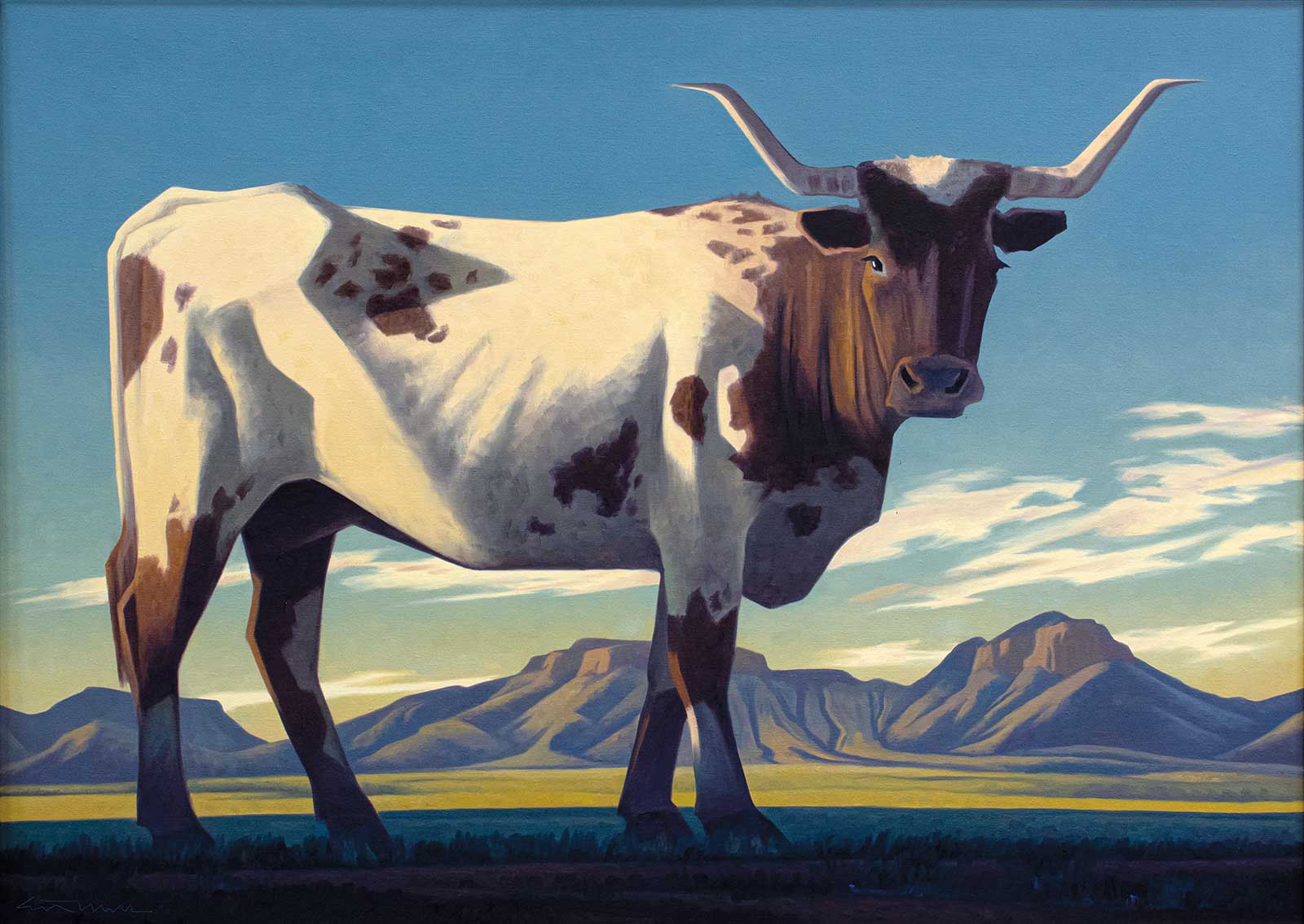
Ed Mell (1942-2024), Sonoita Longhorn, 2005, oil on canvas, 32 x 58 in.
For Mell’s side of this equation, Donald Hagerty captured it best in the book Beyond the Visible Terrain: The Art of Ed Mell. “While the starting point is nature for Mell, his work is more expressive, even cinematic, with a cautious emphasis on naturalistic interpretation. From what he has seen, from what he remembers, and from what he invents, Mell captures the poetry of a moment in his paintings and makes it stick. Within those categories, he disassembles then reassembles pieces of the landscape—or for that matter, a flower or a longhorn steer—into a formal simplicity that is instantly recognized as his. Although his cowboy and longhorn paintings are done with an eye for humor and nostalgia, their angular, heroic and often monumental shapes helped Mell see his landscapes with greater clarity and with renewed enthusiasm,” Hagerty writes. “The paintings of Ed Mell are not real—that is, they are not transcriptions of a particular place, although some titles may indicate a precise location or the name of a specific flower—yet they are believable. They venture beyond strict replication of reality into the realm of imagination. There are no extraneous details, and every form on a canvas is honed down to essential color and shape. His signature on a painting has become the style that pervades it. As he rides the line between literal and non-literal representation, realism and abstraction, his art opens new visual impressions, and serves as an equivalent for the theatrical space that is the Colorado Plateau and the confidential universe of flowers. He perceives different worlds of far, lonely places, with their endless distance, and of things close at hand.”
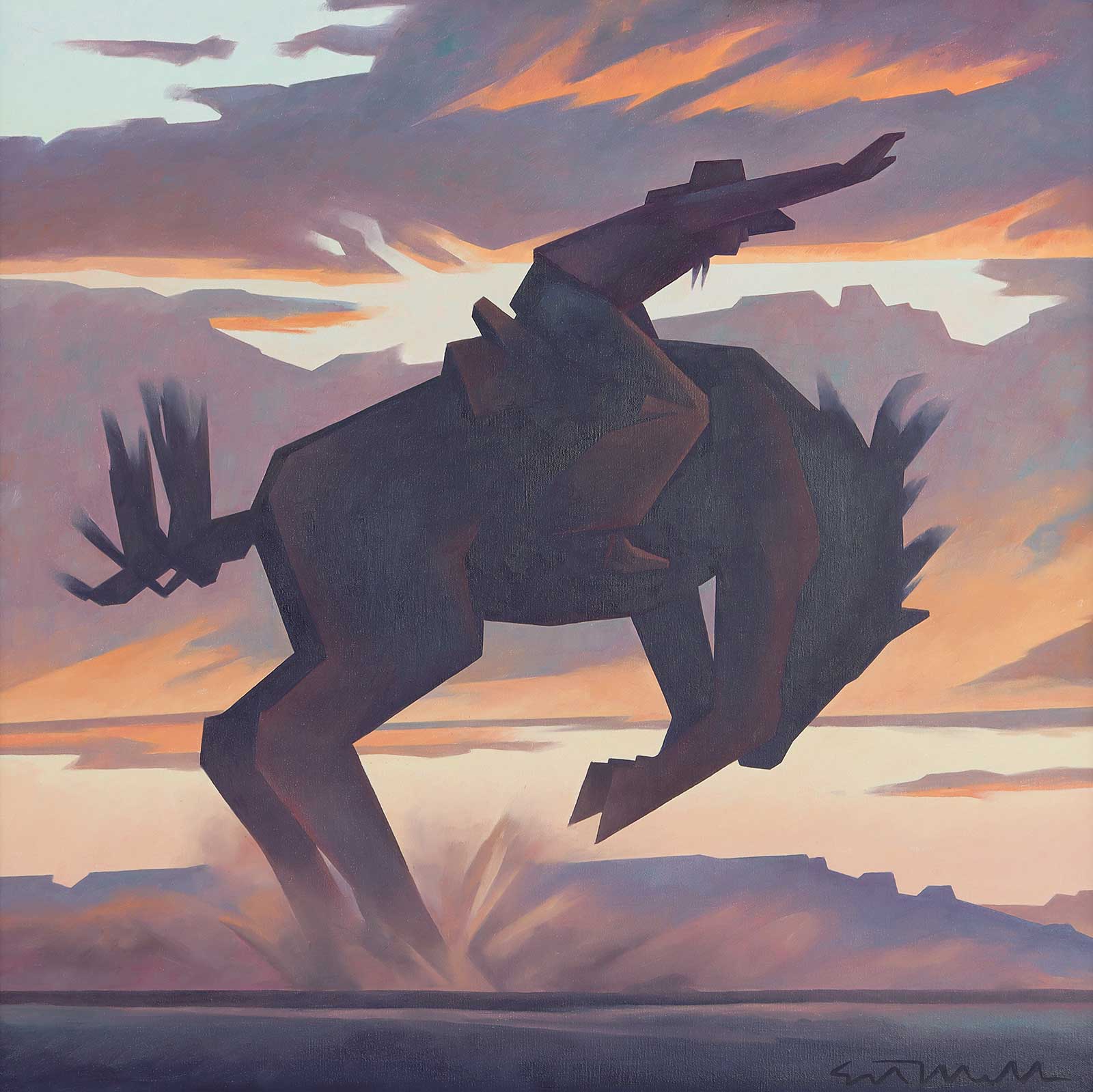
Ed Mell (1942-2024), Sunset Silhouette, 1992, 30 x 30 in.
Although that was written about Mell, it applies to Dixon as well, which is what makes an exhibition like Ed Mell • Maynard Dixon: Icons of the West not only vital, but necessary. —
Ed Mell • Maynard Dixon: Icons of the West
September 16, 2025-January 31, 2026
Maynard Dixon & Native American Art Museum
6866 E. Sunrise Drive, Suite 150, Tucson, AZ 85750
(520) 722-7798
www.maynarddixonmuseum.org
Estate Sale & Auction
September 5-19, 2025
Mark Sublette Medicine Man Gallery
6872 E. Sunrise Drive, Suite 130, Tucson, AZ 85750
(520) 722-7798, www.medicinemangallery.com
Powered by Froala Editor


