In the mid-1800s, two leading Western artists were painting horses regularly: George Catlin and Alfred Jacob Miller. Their horses were—and I’m being charitable here—not perfect. The horses’ eyes were a little buggy, their faces were often cartoonish and the proportions were just a tad off.
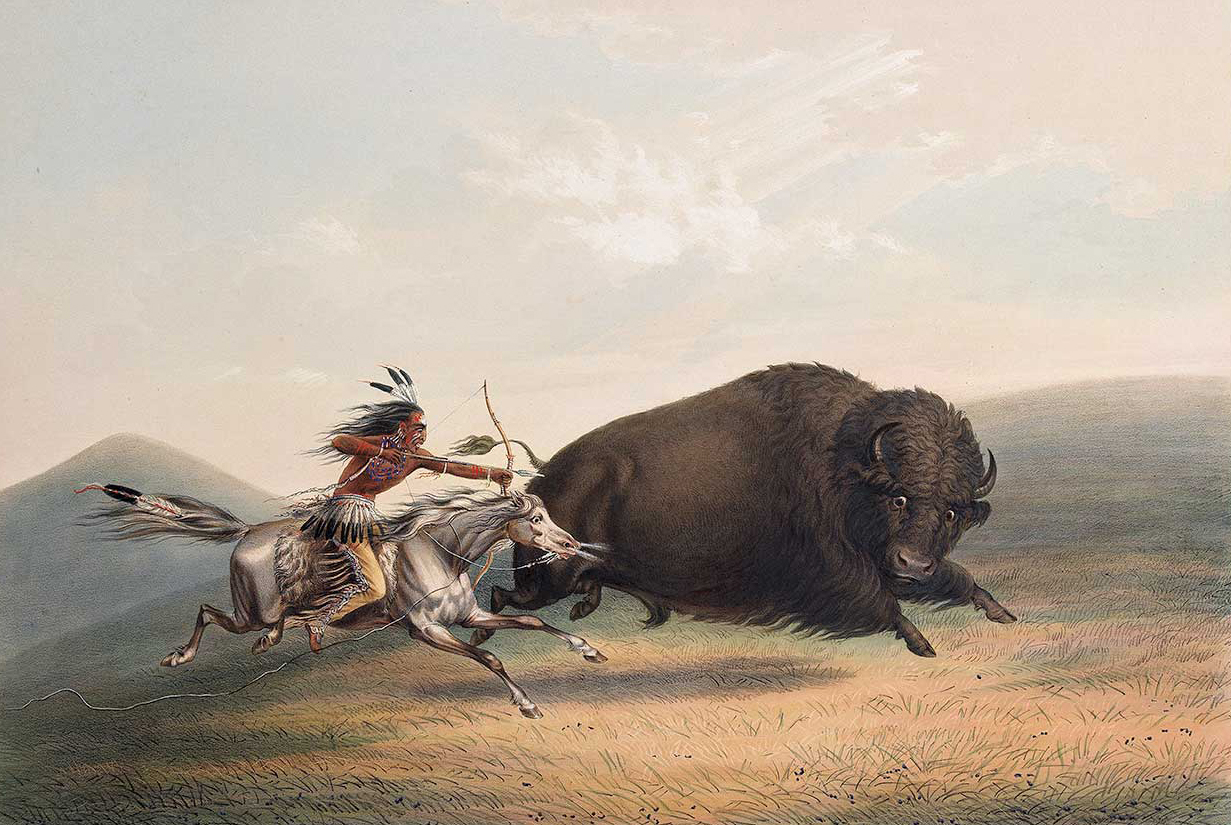
George Catlin (1796-1872), Buffalo Hunt, Chase, 1844, hand-colored lithograph, 11 5/8 x 17 7/8 in.
We forgive these imperfections because, in context with the state of American art in the 1800s, these works are marvelous examples of early Western art. Very few other artists were painting horses the way Catlin and Miller were. They painted horses not just as props but as important characters within the American West. They were hunting aids, escape vehicles, trustworthy companions, symbols of stature, weapons of war and tribal currency. Horses were, for Catlin and Miller, majestic symbols of freedom in the West’s frontier.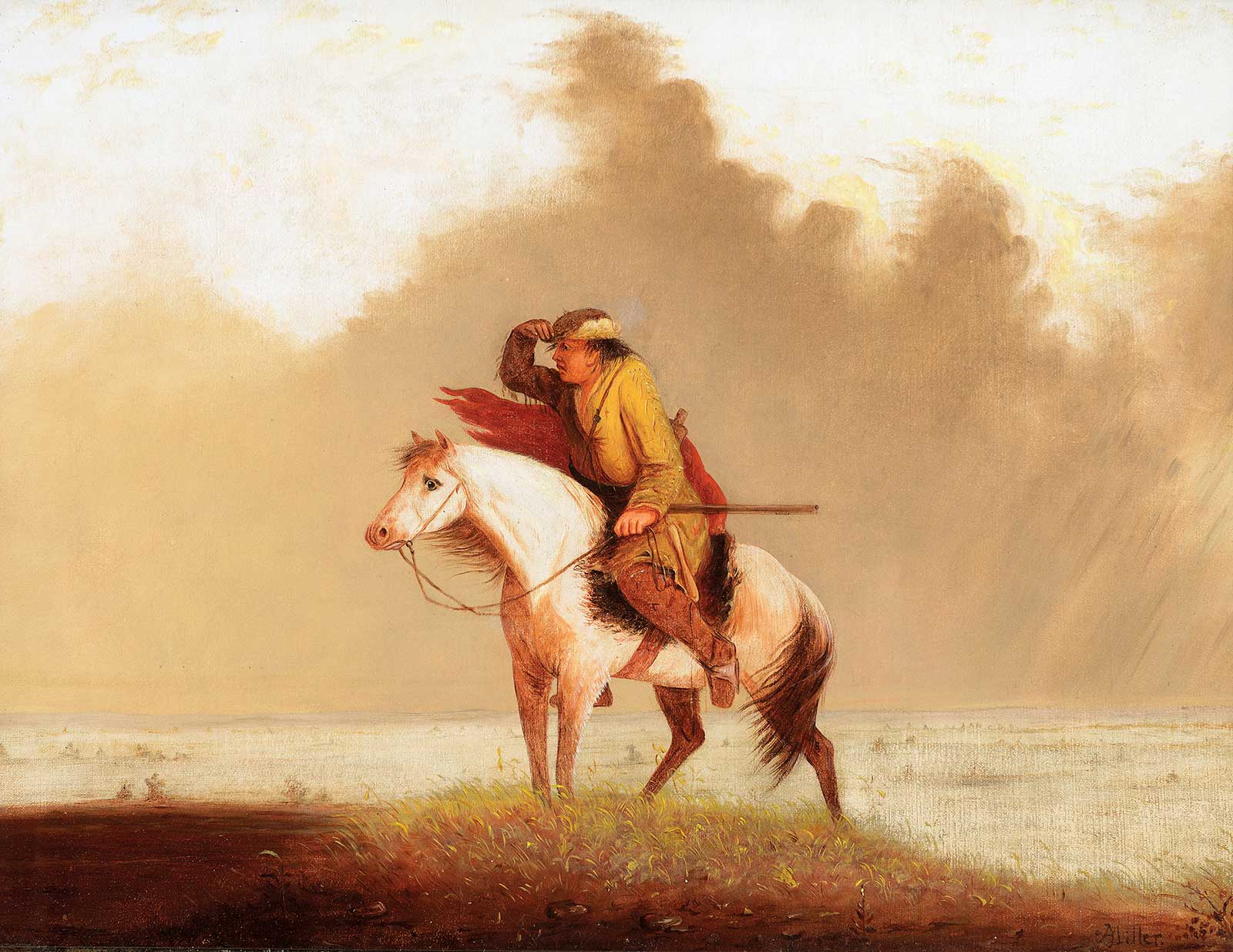
Alfred Jacob Miller (1810 -1874), The Lost Greenhorn, oil on canvas, 18 x 24 in. Courtesy Coeur d’Alene Art Auctions.
The general inaccuracy—some might call it artistic stylization—of their horses was reflective of several things: action scenes of horses were rare in the early to mid-1800s (even Benjamin West’s horse imagery from the late 1700s showed equine subjects with unrealistic characteristics), photography was still in its infancy and largely limited to portraiture, and the artists were slowly improving their figures and animals with each new work. Miller, for example, made noticeable improvements to his creatures throughout his career. When he painted a grizzly bear sometime before 1858, the poor animal looked like a large rat without a tail. Horses did not suffer the same fate and Miller added nuance to horses continuously throughout his career.
The next chapters of Western art would see many of the great horse artists emerge: Frederic Remington, Charles M. Russell, Edward Borein, Charles Schreyvogel, Olaf C. Seltzer, Frank Tenney Johnson and others. These artists were locked into the symbolism of the horse that so enticed Miller and Catlin. Horses were not just a form of transportation, a moving seat with legs, but pivotal components of the magic and mystique of the West. They had also mastered the horse’s form and pose, and all the little details like stride, the muscular movement of a horse’s body, the position of the ears and mouth, and the gear that was attached to a horse.
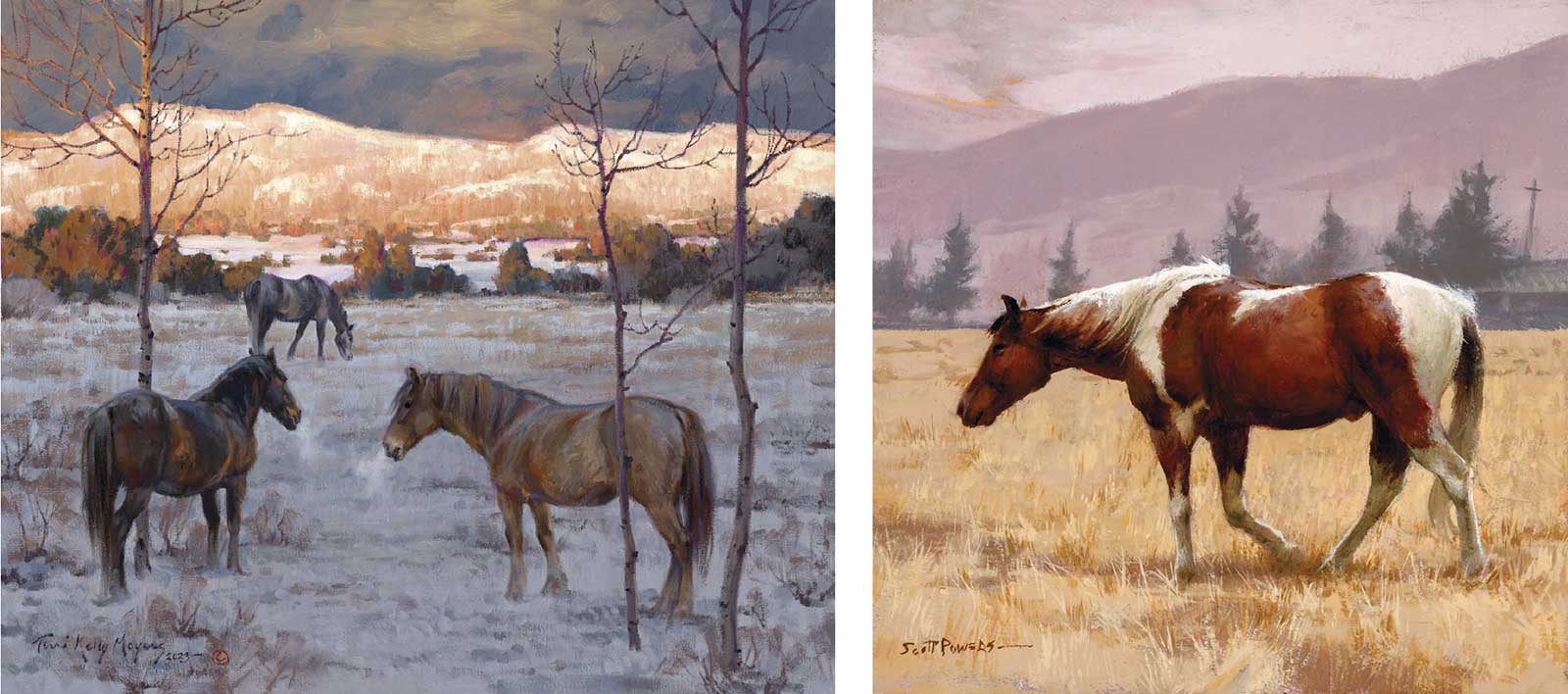
Legacy Gallery, Winter’s Cloak, oil, 20 x 24 in., by Terri Kelly Moyers; Legacy Gallery, Through Smoke and Embers, oil, 8 x 8 in., by Scott Tallman Powers.
Many mid- to late-20th century artists would master the horse and continue this great tradition. Artists like Olaf Wieghorst, William R. Leigh, Frank McCarthy, Marjorie Reed, Gerard Curtis Delano, Howard Terpning, James Reynolds and others. One iconic work from this period is Robert Lougheed’s 1970 oil Scattering the Bell Riders, which shows 10 horses at seemingly every angle. The painting is a celebration of the cowboy, but also of the animal that moved him around the West—the horse.
Today, this rich history of equine-themed art continues in Western art, with no signs of slowing. And while authenticity and realism are greatly enjoyed by many collectors, attention is also being paid to artists who distort, abstract and transform the horse into modern versions that exemplify the distance between Alfred Jacob Miller and now. Whether it’s 1850, 1950 or 2025, horses have remained an important force in the American West.
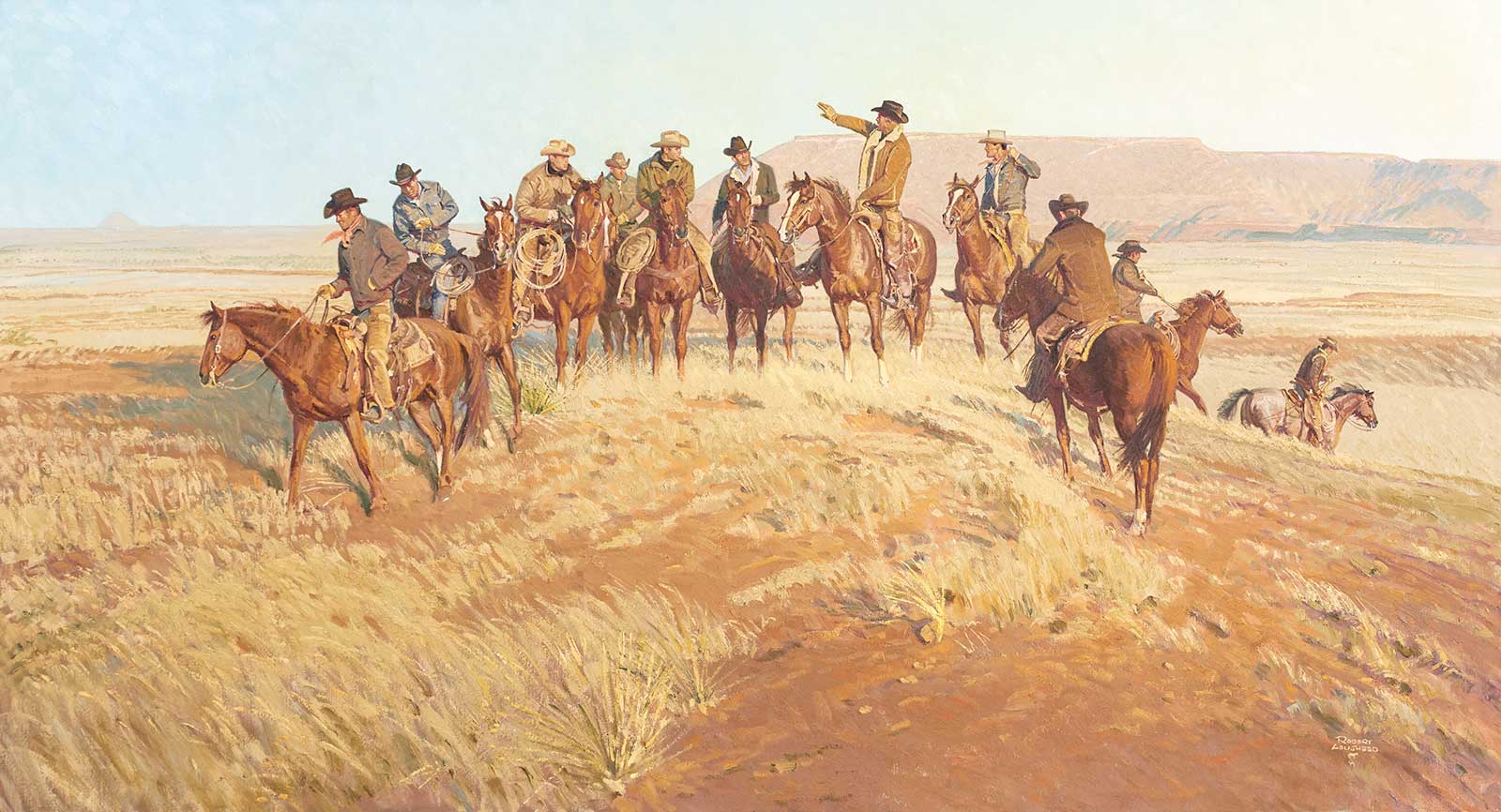
Robert Lougheed (1910-1982), Scattering the Bell Riders, 1970, oil on canvas, 36 x 66 in.
Legacy Gallery, based in Scottsdale, Arizona, represents a bevy of artists that depict horses in all their stunning glory. This includes Terri Kelly Moyers and her painting Winter’s Cloak. “Even as a child growing up in Calgary, Alberta, Canada, she was constantly drawing with her main subject matter being horses,” says gallery representatives. “[After college], she continued working independently until she attended a month-long painting workshop taught by the artist Robert Lougheed. It was there that she began in earnest painting animals from life as well as rubbing shoulders with and getting advice from artists from all over America.”
Additional horse imagery includes Through Smoke and Embers by Scott Tallman Powers, who garnered inspiration from different cultures all over the world. “The people, places and experiences have sewn their way into Scott’s work, giving him a better understanding of the world we live in,” says Legacy. “He has travelled extensively to many countries to find the inspiration he thrives on, and searches to find balance between cultures. Scott’s goal is to express the stories and experiences as honestly, sensitively and with as much integrity as he can.”
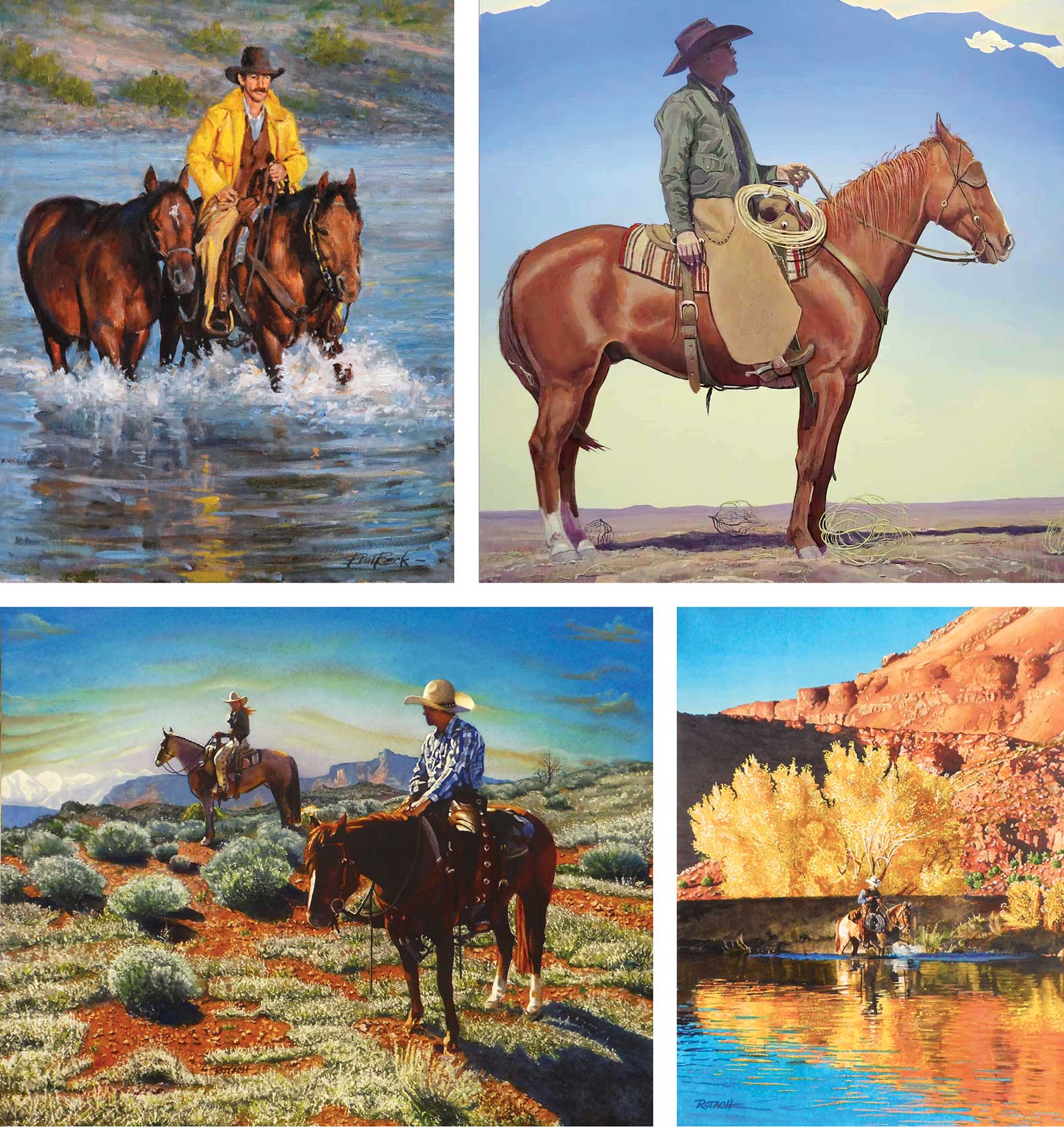
Top: Phippen Museum, Cheyenne Crossing, oil, 18 x 14 in., by Phil Beck; Legacy Gallery, Sight and Sound, acrylic, 40 x 40 in., by Phil Epp. Bottom: Phippen Museum, Vision on the High Desert, watercolor, 16 x 20 in., by Marlin Rotach; Phippen Museum, Splash of Color, gouache, 24 x 18 in., by Marlin Rotach.
Phil Epp’s unique paintings, like the horse and cowboy painting Sight and Sound, are filled with billowing cloud formations, windswept prairies and vast deserts. He states, “They celebrate the naïve, the simple, the pure, the unspoiled and the spiritual.” Epp works mostly in acrylic paint, using up to sixteen layers to achieve the brilliance of his images.”
The Phippen Museum’s Hold Your Horses! Invitational Exhibition & Sale is a celebration of the spirit, power and beauty of the horse in Western art. Held annually, this exhibit and sale brings together talented artists who capture the essence of these magnificent animals in a variety of styles and mediums. Each artwork reflects the artist’s deep admiration for the horse, often drawing inspiration from personal experiences, historical narratives and the role of these animals in Western heritage. Whether depicting a working ranch horse, a wild mustang or a quiet moment between rider and horse, every piece tells a unique story.
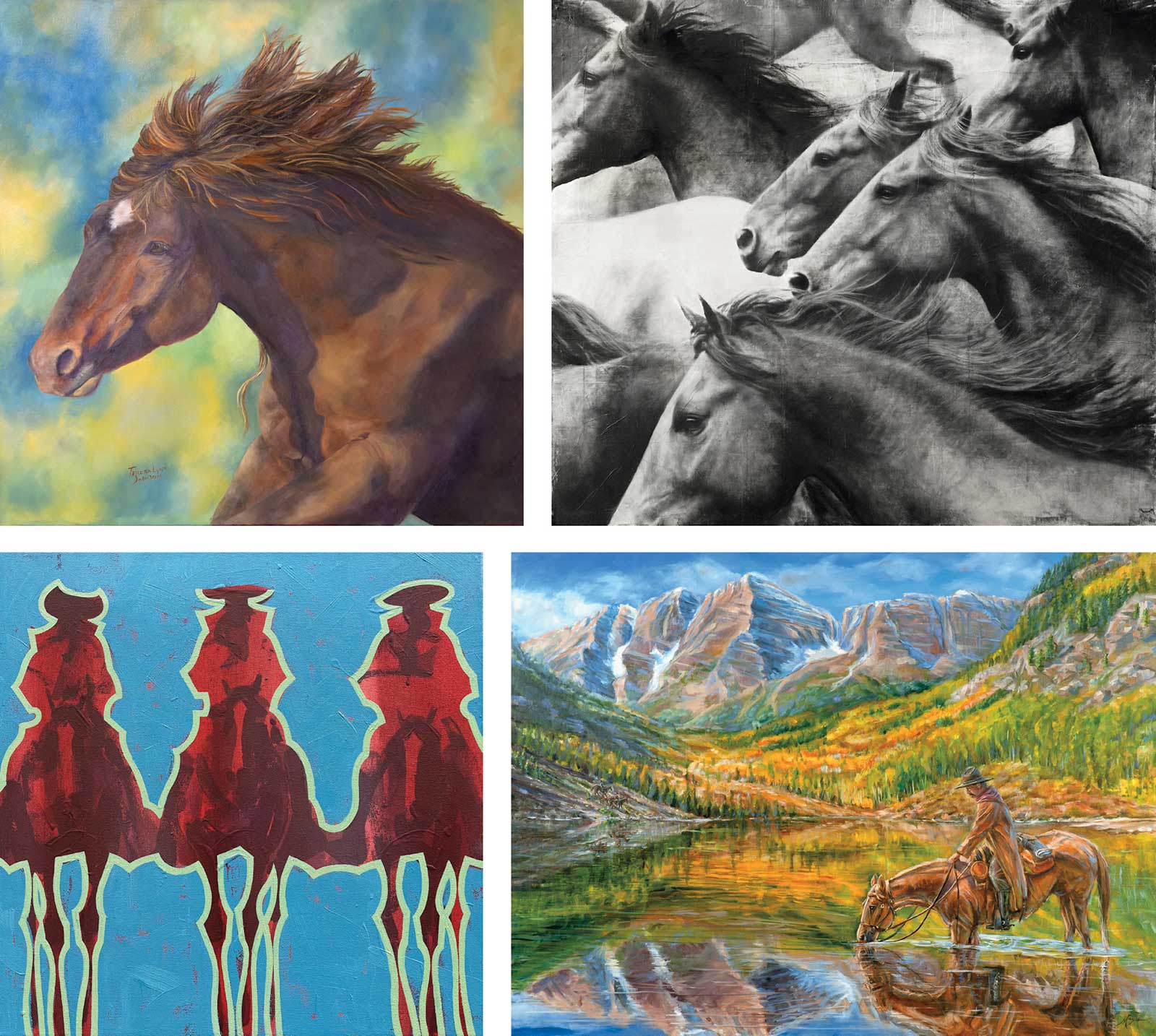
Top: Teresa Lynn Johnson, There is Power in the Blood, oil, 30 x 30 in.; Altamira Fine Art, Alliance, oil on panel, 68 x 78 in., by Kenneth Peloke. Bottom: Altamira Fine Art, Bocados Machotes #3, mixed media on canvas, 20 x 20 in., by Duke Beardsley; Gregory Mayse, Serenity, oil on linen, 30 x 40 in.
The museum notes that, “authenticity and emotional connection are key when purchasing Western horse art. Collectors look for artwork that speaks to them—pieces that evoke an emotion or memory.”
Altamira Fine Art specializes in the exhibition and sale of Western contemporary artwork, offering an active exhibition schedule year-round between two gallery locations in Jackson, Wyoming, and Scottsdale, Arizona. “While horse art is prevalent in both the Scottsdale and Jackson Hole markets, it’s a subject that truly transcends regionality,” says the gallery. “The spirit, power and freedom of the horse has widespread appeal, and the variety of styles with which our artists portray the subject are vast. From a Pop Art sensibility to monochromatic realism, the beauty of the horse prevails.”
Altamira represents horse imagery like Bocados Machotes #3, by Duke Beardsley; Alliance by Kenneth Peloke; and Dawn of the Awakeningby Rocky Hawkins.
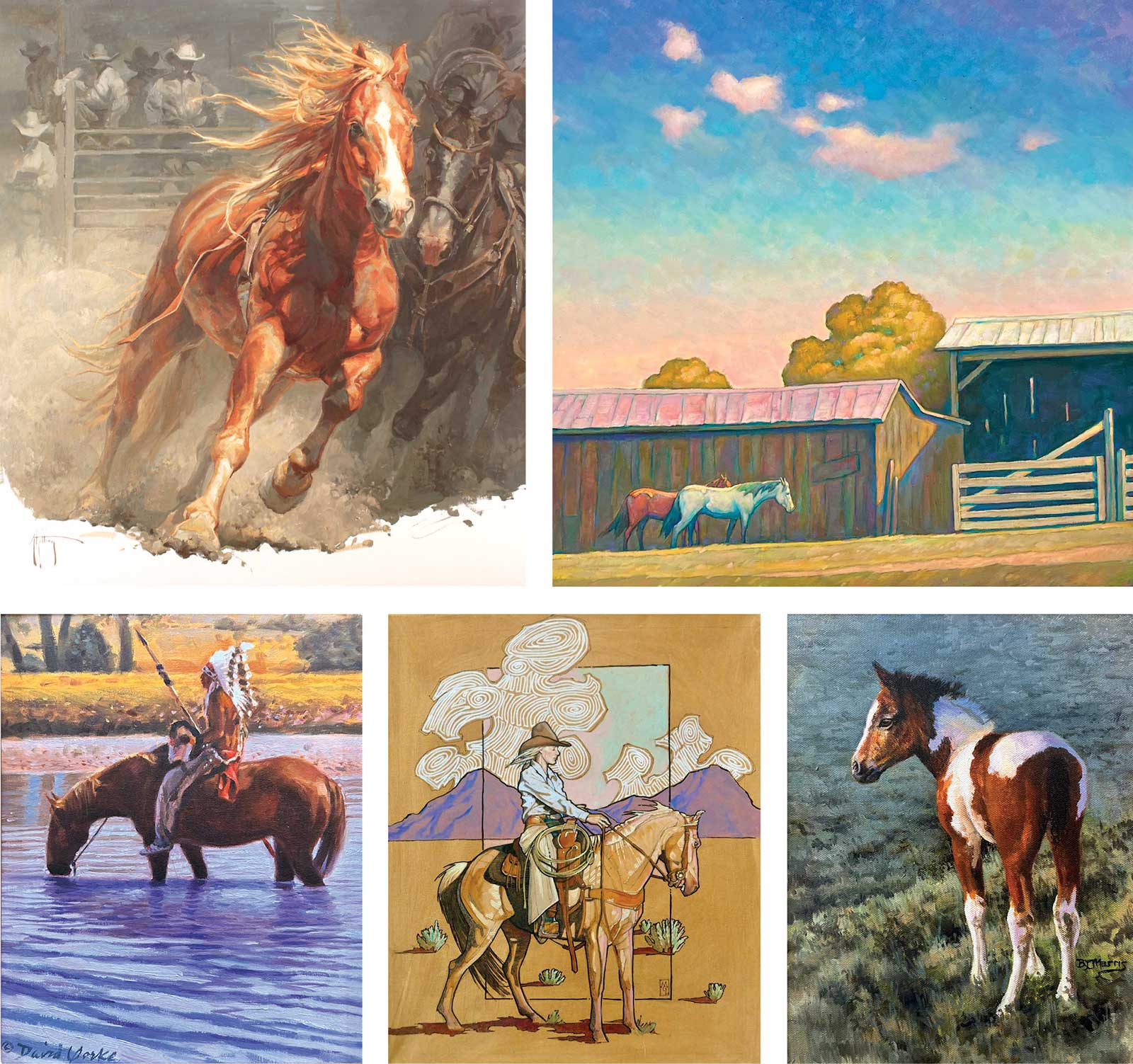
Top: Coeur d’Alene Galleries, He Said He Could Ride, oil on linen, 40 x 36 in., by Abigail Gutting; National Cowboy & Western Heritage Museum, Two Mares, oil, 30 x 30 in., by Howard Post. Bottom: The Plainsmen Gallery, The River of Life, oil, 10 x 8 in., by David Yorke; Maia Chavez Larkin, Blonde-on-Blonde, oil and ink on canvas, 24 x 20 in.; The Plainsmen Gallery, Hannah’s Little Girl, 14 x 11 in., by Bonnie Marris.
Found at The Plainsmen Gallery, based in Dunedin, Florida, are examples of the horse, among other significant Western artworks. This includes pieces like David Yorke’s The River of Life. “This peaceful little jewel captures a tranquil moment with a Sioux Indian along the Cheyenne River in South Dakota, just north of the Badlands,” notes the gallery. “Award-winning artist, Yorke, is known for his detailed, lifelike horses and figures that tell a story.”
In Hannah’s Little Girl, artist Bonnie Marris, shows her love of horses, one animal of many that has captured the artist’s heart and mind. “This small equine painting, created in a contemporary style, contrasts the detailed image of the colt with the impressionistic golden background,” says Plainsmen representatives.
Both paintings are featured in the Florida gallery’s Wildlife & Western Visions Group Show.
Since 1973, Western artists and art collectors have gathered at the National Cowboy & Western Heritage Museum for Prix de West,the nation’s premier Western art exhibition and sale. The 53rd annual event will be open to the public from June 6 to August 3. The highly anticipated event is the museum’s largest annual fundraiser.
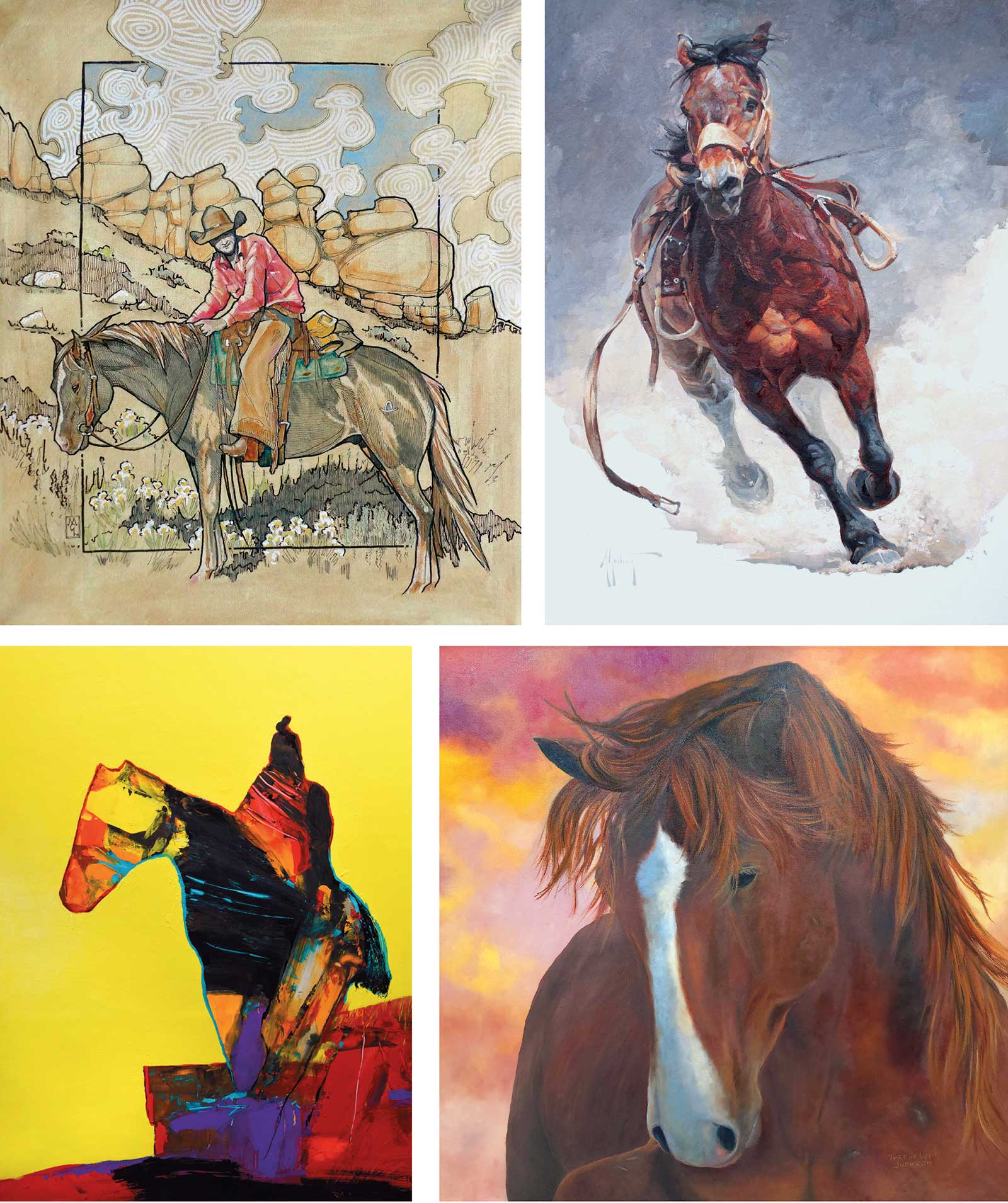
Top: Maia Chavez Larkin, Cool of Afternoon, oil and ink on canvas, 24 x 20 in.; National Cowboy & Western Heritage Museum, Born for This, oil on linen, 40 x 30 in., by Abigail Gutting. Bottom: Altamira Fine Art, Dawn of the Awakening, acrylic on panel, 40 x 30 in., by Rocky Hawkins; Teresa Lynn Johnson, Wild and Free, oil, 30 x 30 in.
The art sale weekend spans June 20 and 21, when collectors, both in person and online, will enjoy a fixed-price art sale as well as a range of seminars, workshops, receptions, dinners and an awards presentation. Among the presenters that weekend will be Greg Beecham, Thomas Blackshear II, C. Michael Dudash, Daniel F. Gerhartz, Abigail Gutting, Daniel J. Keys and Gladys Roldán-de-Moras.
Prix de West features nearly 300 works from more than 90 invited artists, ranging from historical subject matter that reflects the early days of the West, to more contemporary and impressionistic artistic expressions. Landscapes, wildlife and illustrative scenes are always highlighted in the exhibition.
Among these highlights, collectors will find an array of artworks depicting the horse, such as Abigail Gutting’s Born for This; Howard Post’s Two Mares; and Gladys Roldán-de-Moras’ Charreando.
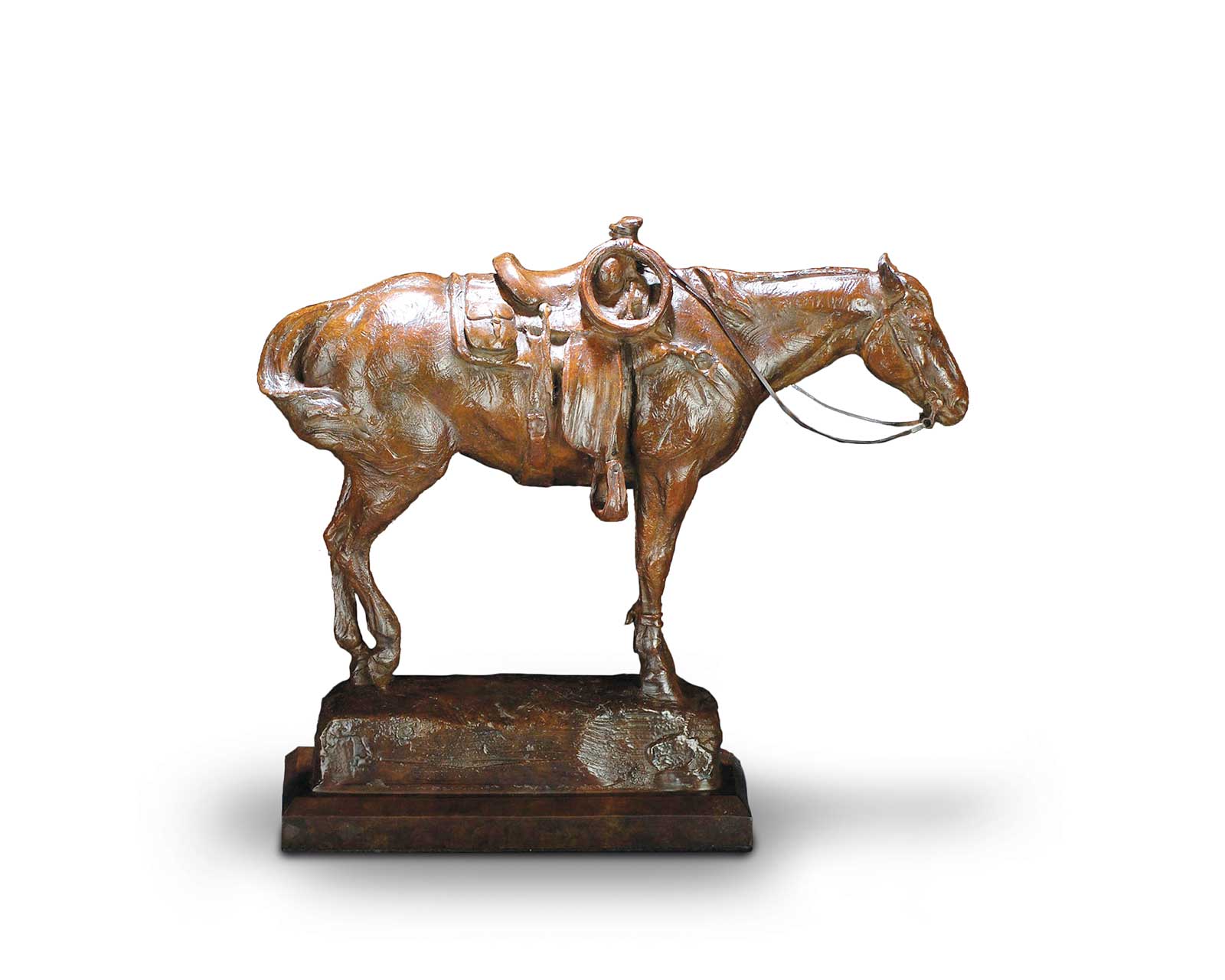
Coeur d’Alene Galleries, Taking a Break, bronze, 12 x 13½ x 4½ in., by Tim Shinabarger
Coeur d’Alene Galleries notes that “there isn’t a subject that encapsulates the West more than the horse. It’s as iconic a symbol as the bison when talking about the American West. The horse was crucial to Native Americans and cowboys, so you can’t collect the West without the horse.”
The gallery, known for its annual event March in Montana and based in downtown Coeur d’Alene, Idaho, features the finest in original Western, wildlife and sporting art from the 19th, 20th and 21st centuries. Specializing in both the historical masters and today’s most sought-after contemporary artists, the gallery has created a tradition of premium artwork and unparalleled personal service. This includes works like Abigail Gutting’s He Said He Could Ride and The Boss, along with Tim Shinabarger’s Taking a Break.
Artist Teresa Lynn Johnson was inspired to paint her pieces There is Power in the Blood and Wild and Free after a horseback trip she took with a guide to study the wild horse herds in the Adobe Valley (California). “It was such an awesome experience to find and be able spend time close to the herd,” she says. “As an artist, who could resist painting the beauty and spirit of these wonderful animals?” Johnson is currently working on additional pieces depicting wild horses.
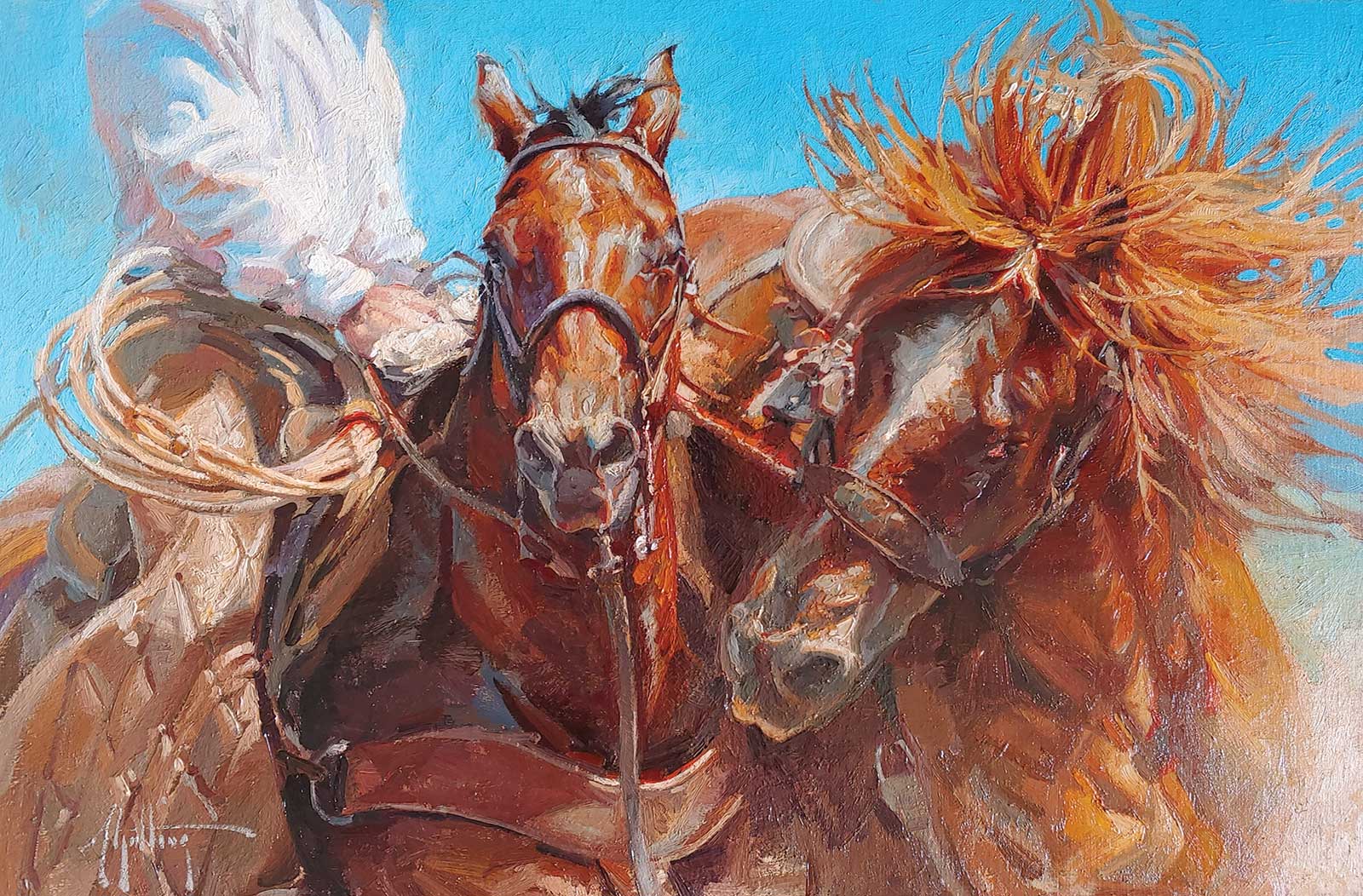
Coeur d’Alene Galleries, The Boss, oil on linen, 20 x 30 in., by Abigail Gutting
“Horse art is a great way to daily remind ourselves how fortunate we are to have freedom and to be able to express a bit of a wild spirit in ourselves,” the artist adds. “Wild horses represent freedom—poetry in motion.”
Since 2016 oil painter Gregory Mayse of Fort Collins, Colorado, has been creating story-telling paintings of the American West, often including imagery of horses. His award-winning works showcase a range of contemplative moments, action-packed narratives and even the lighter side of the Old West. “I paint life in the American West because it has always held a place in my heart since I was very young,” he says. “Each piece tells a story, from the portraits to the interactions and even the settings.” This July he will have four pieces available at the Cheyenne Frontier Days Art Show & Sale.
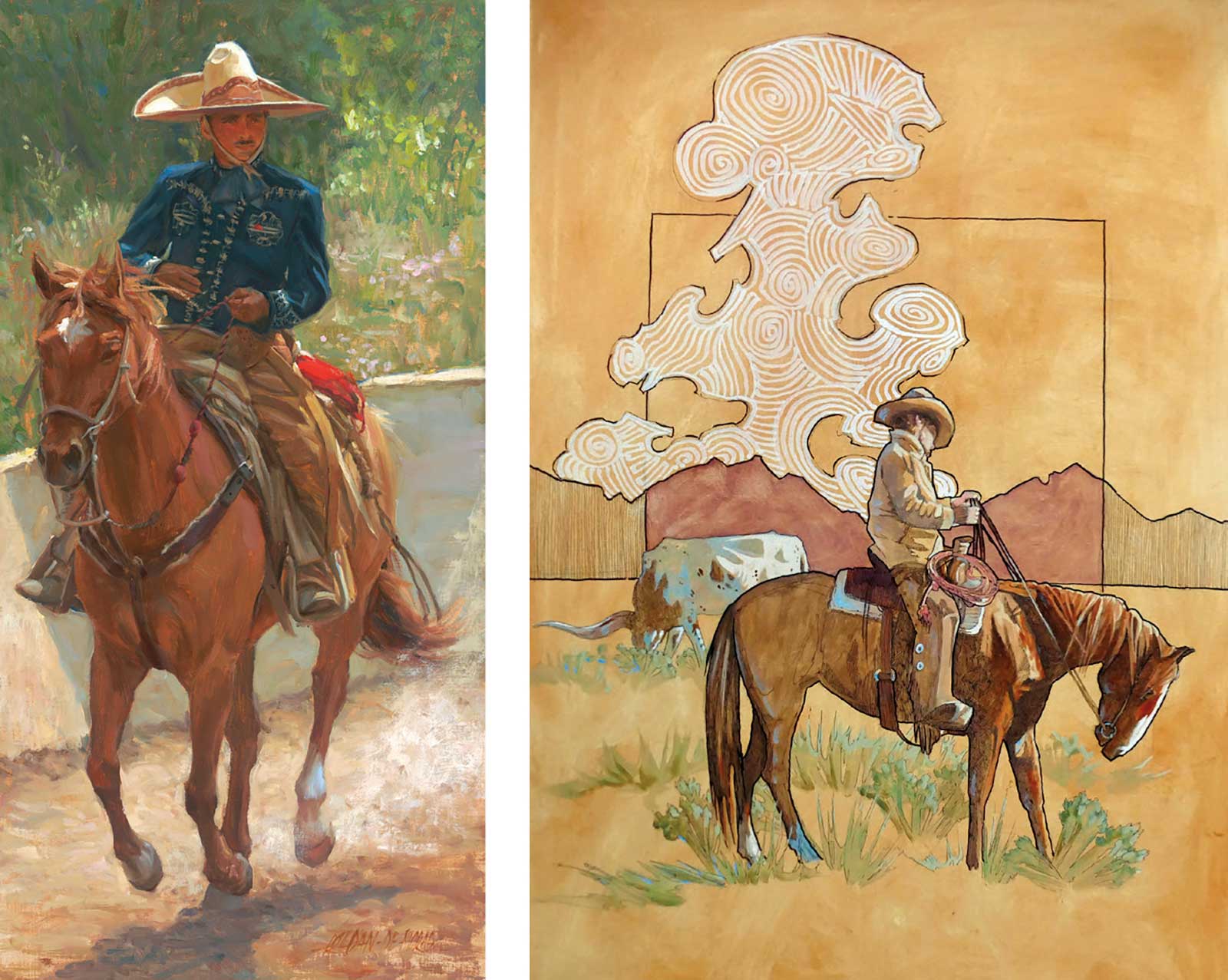
National Cowboy & Western Heritage Museum, Charrenando, oil on linen, 24 x 12 in., by Gladys Roldán-de-Moras; Maia Chavez Larkin, Longhorn Drowsing, oil and ink on canvas, 36 x 24 in.
Maia Chavez Larkin grew up spending half of every year on her family ranch in Southern Colorado, and the other half between New York, New Mexico and Southern France. Summer months on the ranch meant riding fences with the family or lazing bareback and bridle-less on her Arab gelding in the meadow below the family cabin. “My Dutch/French mother, an award-winning wildlife artist, rode English, and my Mexican American father, a respected Western artist in his own right, rode Western. As a kid, I rode anything I could compete in: 4H games, Western horsemanship, jumping, dressage, I even tried fox hunting once.”
In graduate school, Larkin studied architectural illustration and after two decades as an illustrator she followed a dream and switched to Western art four years ago. “These days, the majority of my work is based on my time at Sombrero Ranches in the wild and beautiful northwest corner of Colorado, where the multi-generational Mantle family have been training their herd of hundreds of horses since the 1950s,” says Larkin. “There is a great deal of nostalgia for the past in Western art, but I’m also interested in illustrating and documenting the cowboy life that endures across the West today.” —
Featured Artists & Galleries
Featured Artists & Galleries
Altamira Fine Art
7038 E. Main Street, Scottsdale, AZ 85251
(480) 949-1256
172 Center Street, Jackson, WY 83001
(307) 739-4700
www.altamiraart.com
Coeur d’Alene Art Auctions
(208) 772-9009, www.cdaartauction.com
Coeur d’Alene Galleries
213 Sherman Avenue, Coeur d’Alene, ID 83814
(208) 667-7732 www.cdagalleries.com
Teresa Lynn Johnson
Aztec, NM, (505) 334-2744
www.teresalynnjohnson.com
Instagram: @teresalynnjohnsonartist
Maia Chavez Larkin
www.maiachavezlarkin.com
Instagram: @maiachavezlarkin
Legacy Gallery
7178 Main Street, Scottsdale, AZ 85251
(480) 945-1113, www.legacygallery.com
Gregory Mayse
(970) 412-3600, www.gregorymayse.com
National Cowboy & Western Heritage Museum
1700 NE 63rd Street, Oklahoma City, OK 73111
pdw.nationalcowboymuseum.org
Phippen Museum
4701 Highway 89 North, Prescott, AZ 86301
(928) 778-1385
www.phippenartmuseum.org
The Plainsmen Gallery
2141 Main Street H, Dunedin, FL 34698
(727) 734-8200, www.plainsmen.com
Powered by Froala Editor


