More is withheld than is revealed in recent artworks by sculptor Richard Burke and painter Luke Anderson. The pair share a show at Gallery Wild in Santa Fe, New Mexico, beginning March 21. Despite different mediums, the two approach their work in much the same fashion. That begins with reduction. Birds for Burke, landscapes for Anderson.
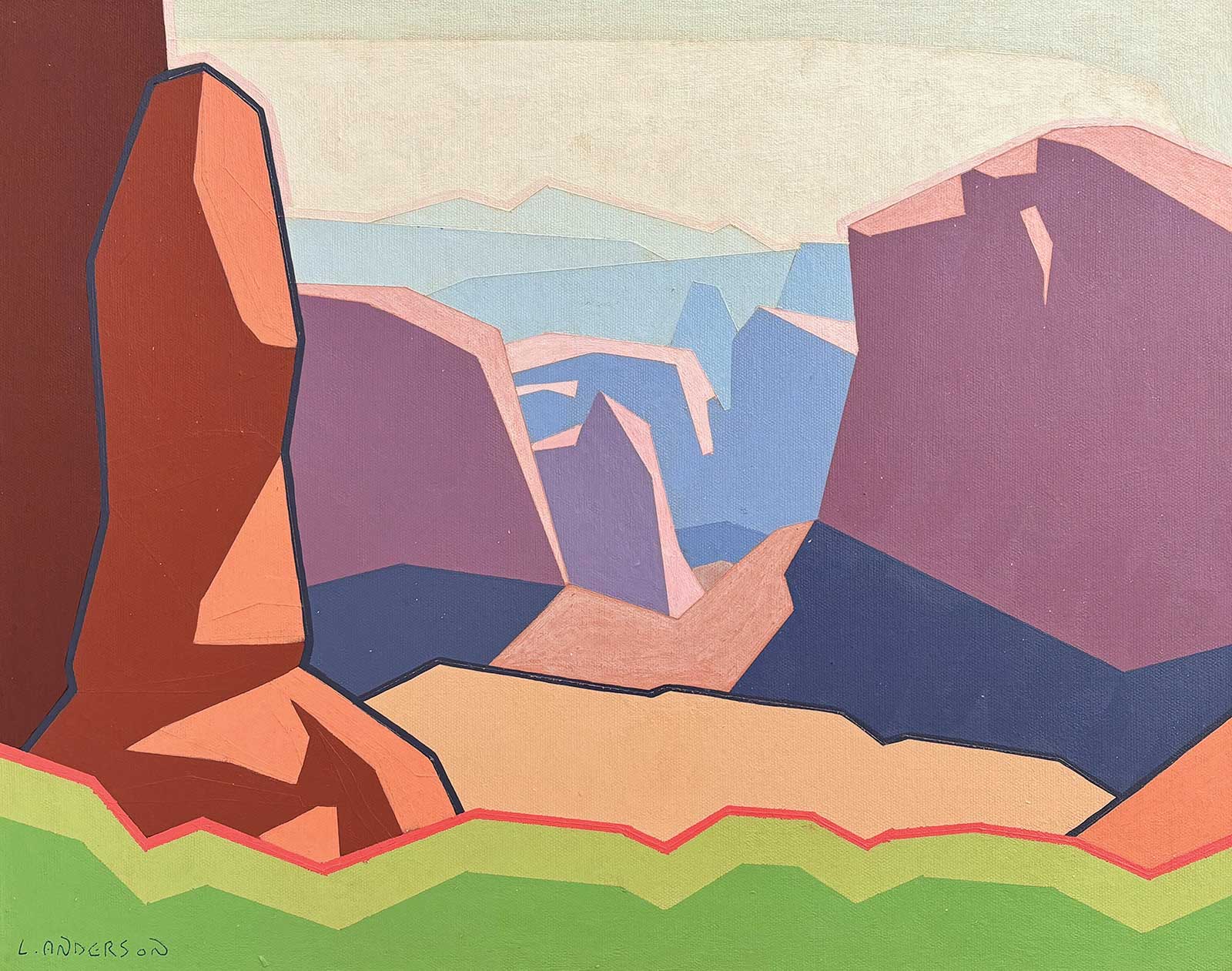
Luke Anderson, Continuum, acrylic and oil on canvas, 16 x 20 in.
“When I was younger, in the ’90s, I did some highly detailed, very intricately carved wood sculptures of raptors,” Burke says. “It felt kitschy to me, even at the time. I wanted to figure out how to simplify or abstract the form to where it’s about the right size and about the right gesture or posture, and then make the mind come up with where the back would be or where the wing would be.”
For an artist, reducing and simplifying doesn’t mean easier.
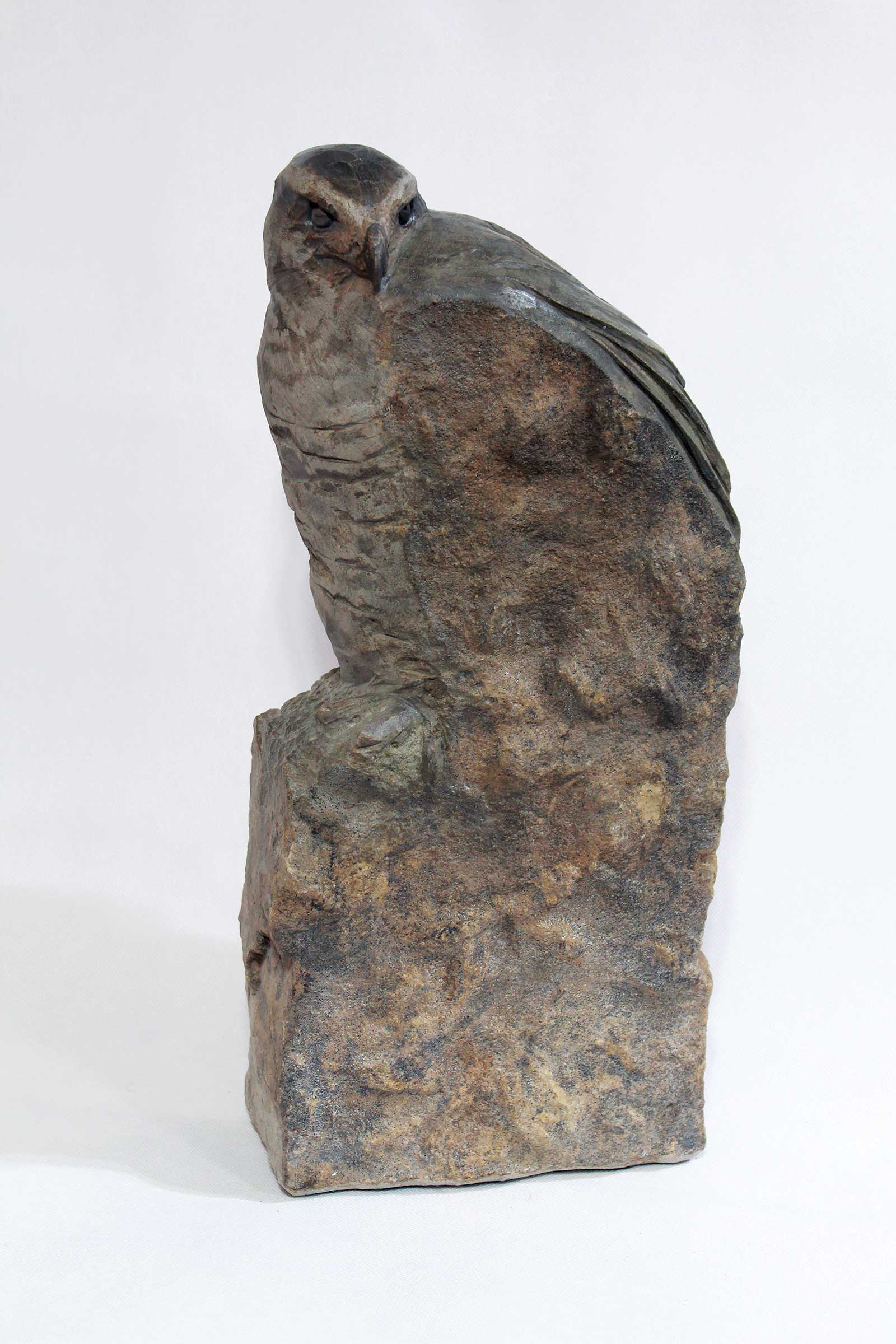
Richard Burke, Reticent, limestone, 18 x 8 x 4½ in.
“The more I take out and the more I try to abstract, the more difficult it becomes to make it work,” Anderson says. “People don’t always [understand] abstraction and minimalism. Some of my pieces might appear as just one color in one particular area, but it maybe took me six or seven tries and layers to get that particular flat area of color the exact shade and value that it needed to be to complete the illusion.”
It seems counterintuitive, but throughout art history, the more skilled an artist becomes, typically, the less detailed their work becomes. Such is the case for Burke and Anderson.
“How much can you take away and strip down and still get the essence of it,” Anderson adds.
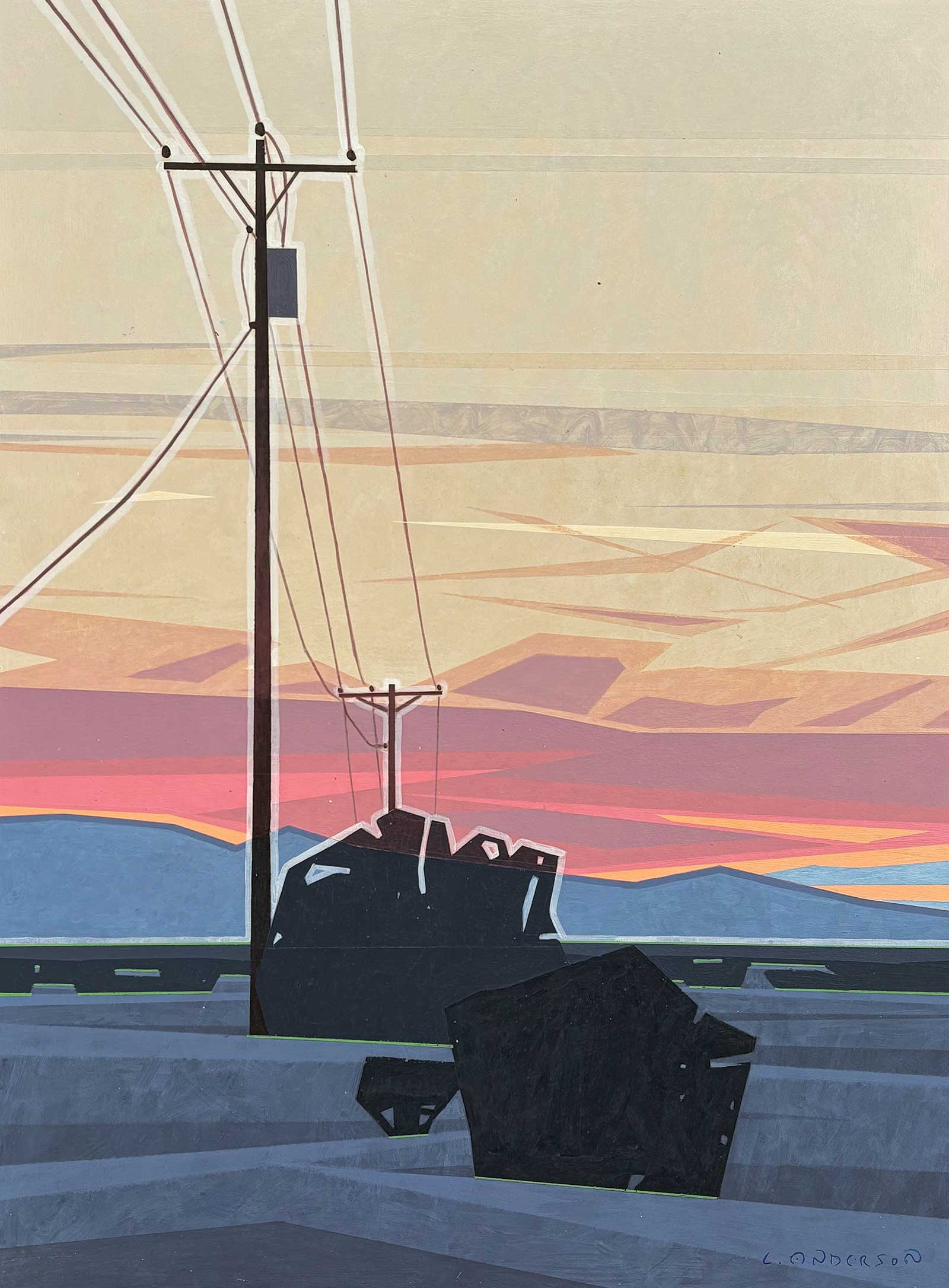
Luke Anderson, Amargosa Sunset, acrylic and oil on panel, 24 x 18 in.
For the lack of detail in Burke and Anderson’s artworks, there’s nothing missing. Burke’s blocky, chunky owls and hawks are more suggestions of forms than something pulled from the Sibley Field Guide to Birds. Glimpses almost. Anderson’s landscapes read like memories. Our memories are not photorealistic. The images are imperfect, hazy, more akin to feelings.
The duo also shares an affinity for age. Deep time, in the case of Burke’s limestone sculptures. “One of the reasons I like the idea of stone itself is because it bears with it the age, eons,” he says. “I like the weight and the permanence and the fractures.”
Anderson, similarly, finds appeal in the timeless. “I’ve always been around thrift stores, antiques, secondhand stuff, hand me downs, family heirlooms,” Anderson says. “I always appreciated rugged and durable, well-made materials that got better with age.”
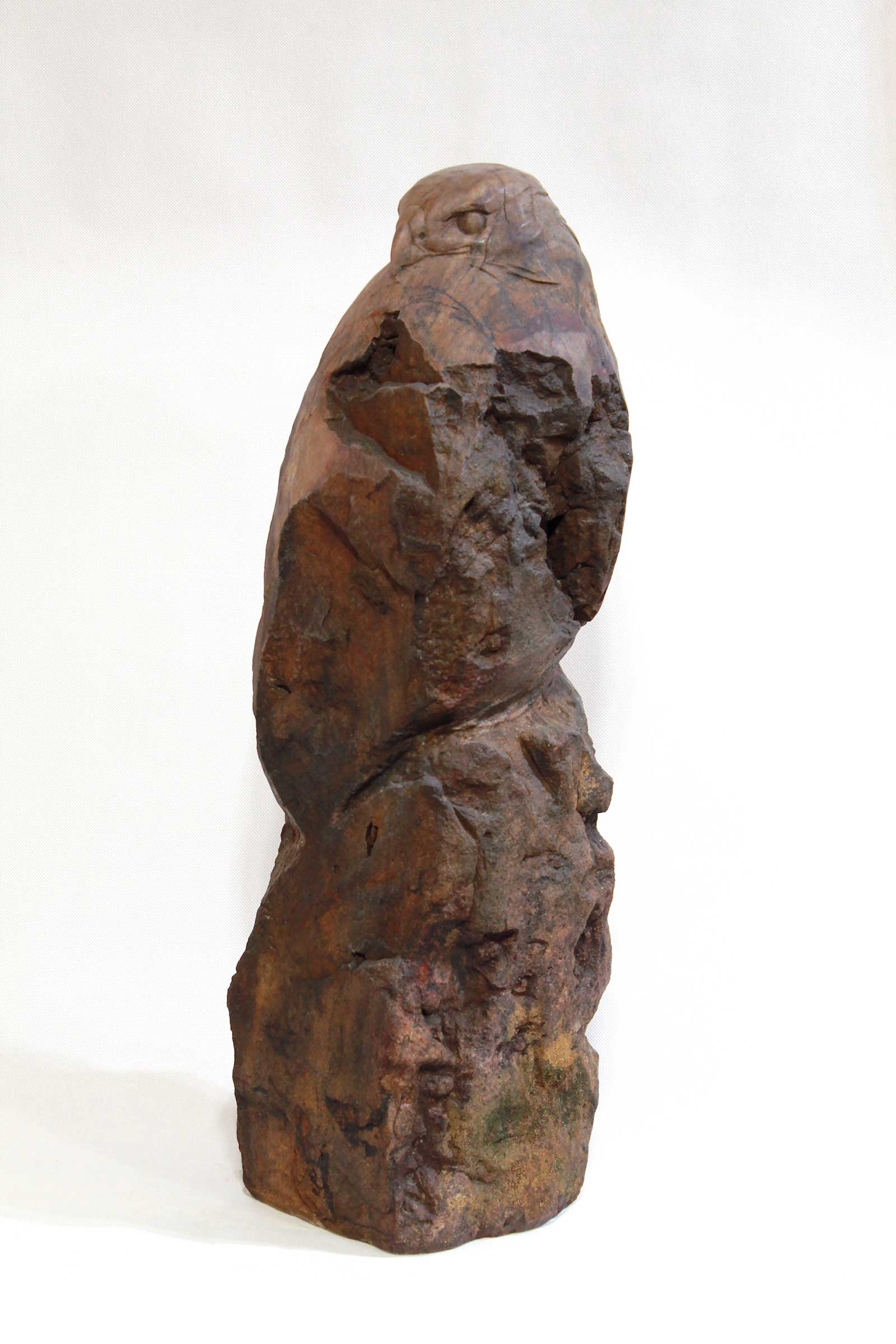
Richard Burke, Recovery, quartzite, 24 x 7 x 6 in.
To achieve this quality in his paintings, Anderson sands and distresses their surfaces. He adds multiple layers of transparent oils and washes on top of the acrylic, creating a warm tint, a patina. He’s after the effect of antique magazines or even faded Polaroid snapshots.
Anderson and Burke don’t provide all the answers in their artworks. They ask admirers to fill in the blanks, to finish the story. In doing so, their pieces possess a lasting intrigue often lacking in the straightforward. —
Gallery Wild 203 Canyon Road » Santa Fe, NM 87501 » (505) 467-8297 » www.gallerywild.com
Powered by Froala Editor


