The Tucson Museum of Art’s exhibition Divergence of Legacy: Art of the American West in the 21st Century is the result of the museum’s community-based curatorial approach which, the museum explains, “involves a series of focused conversations between community curators and TMA staff to collaboratively determine themes, select artworks, and rethink approaches to interpretation and display for exhibitions. This process is reflective of, and committed to, collaboration, relationship building, and shared stewardship of works of art in the museum’s collection.”
The community curators included Elizabeth Denneau, Dwayne Manuel, Ruben Urrea Moreno, Harrison Preston, YuYu Shiratori, Feng-Feng Yeh, and Alisha Vasquez and Rikki Riojas with the Mexican American Heritage and History Museum.
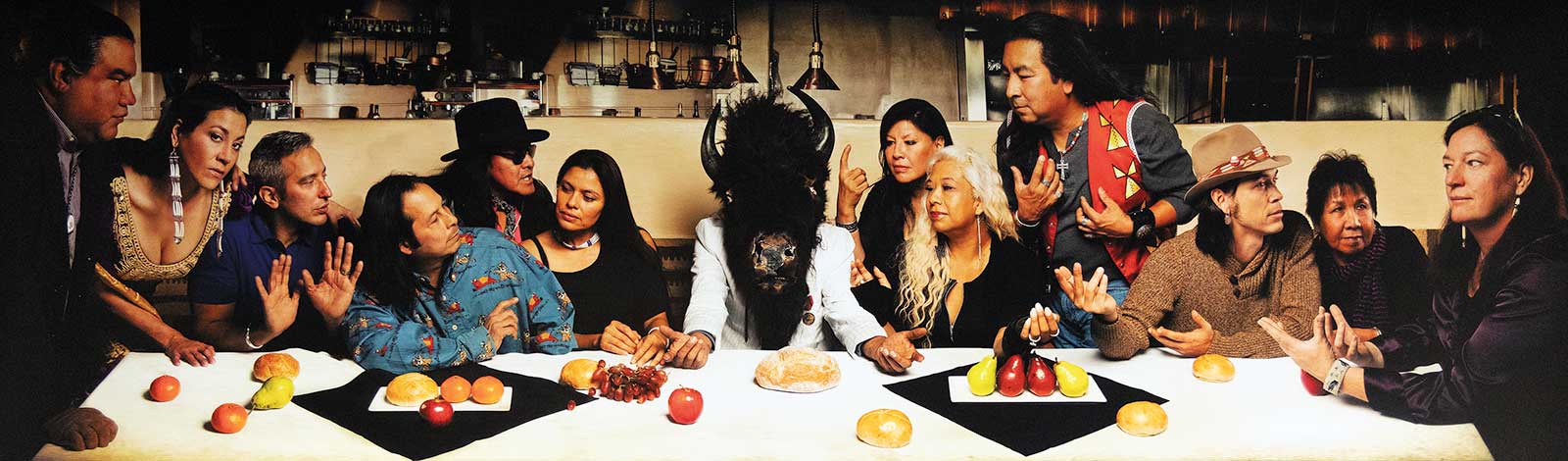
Cara Romero (Chemehuevi), Last Indian Market, 2014, archival photograph on Legacy Platine paper, PP 2/2, 36 x 119 in. Collection of the Tucson Museum of Art. Museum Purchase. Funds provided by Western Art Patrons. 2023.25 / © Cara Romero.
Feng-Feng Yeh, a multi-disciplinary artist who founded the Chinese Chorizo Project in Tucson after she became “very moved by the story of allyship between Mexican and Chinese Americans at a time when all these pivotal immigration policies were being enacted that were quite racist,” commented on the experience of collaborating with the other community curators on the exhibition.
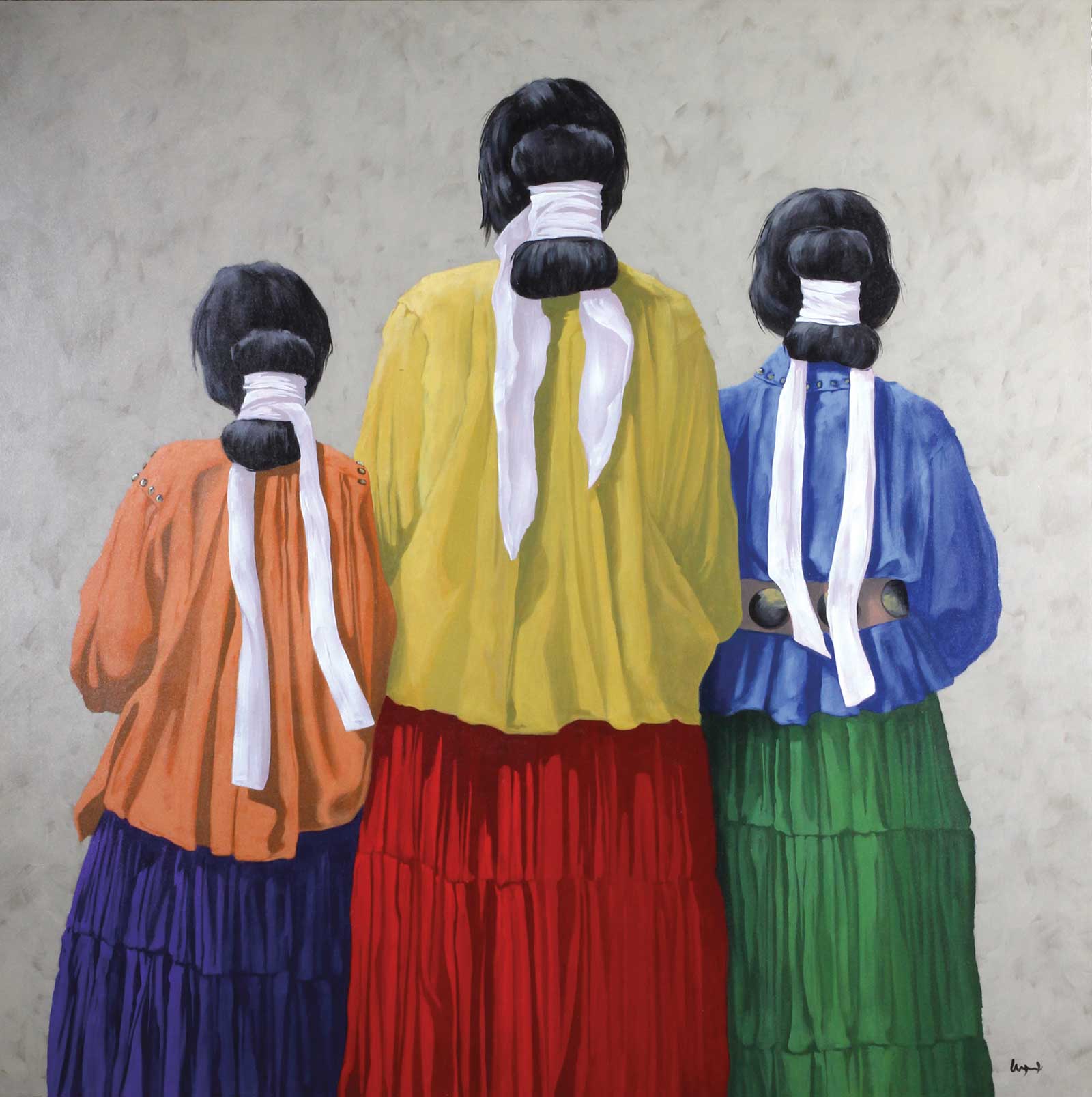
Mary Wyant, Three Girls, acrylic on canvas, 54 x 54 in. Collection of the Tucson Museum of Art. Gift from the private collection of Thomas M. and Jeanne H. Collins. 2015.13.1.
“Who gets to define a narrative and how does that power shape a culture, a people, a land and a time? Serving as a community curator for Tucson Museum of Art’s Divergence of Legacy exhibition, offered a holistic experience. Our long-form discussions with collective contribution by a diverse group of community educators and artists explored relevant topics that deal with the broader struggle of examining the American identity and existence.
“We were asked to define ‘Art of the American West’ that set off a chain reaction of needing to redefine many key words. What is traditional Western art and how can we curate to offer a show that can feel reflective of our community across time? What is divergence? Is it the grit of a people, of a place? What is progress and expansion and who gets to define those values? How have ‘technological advances’ affected us?
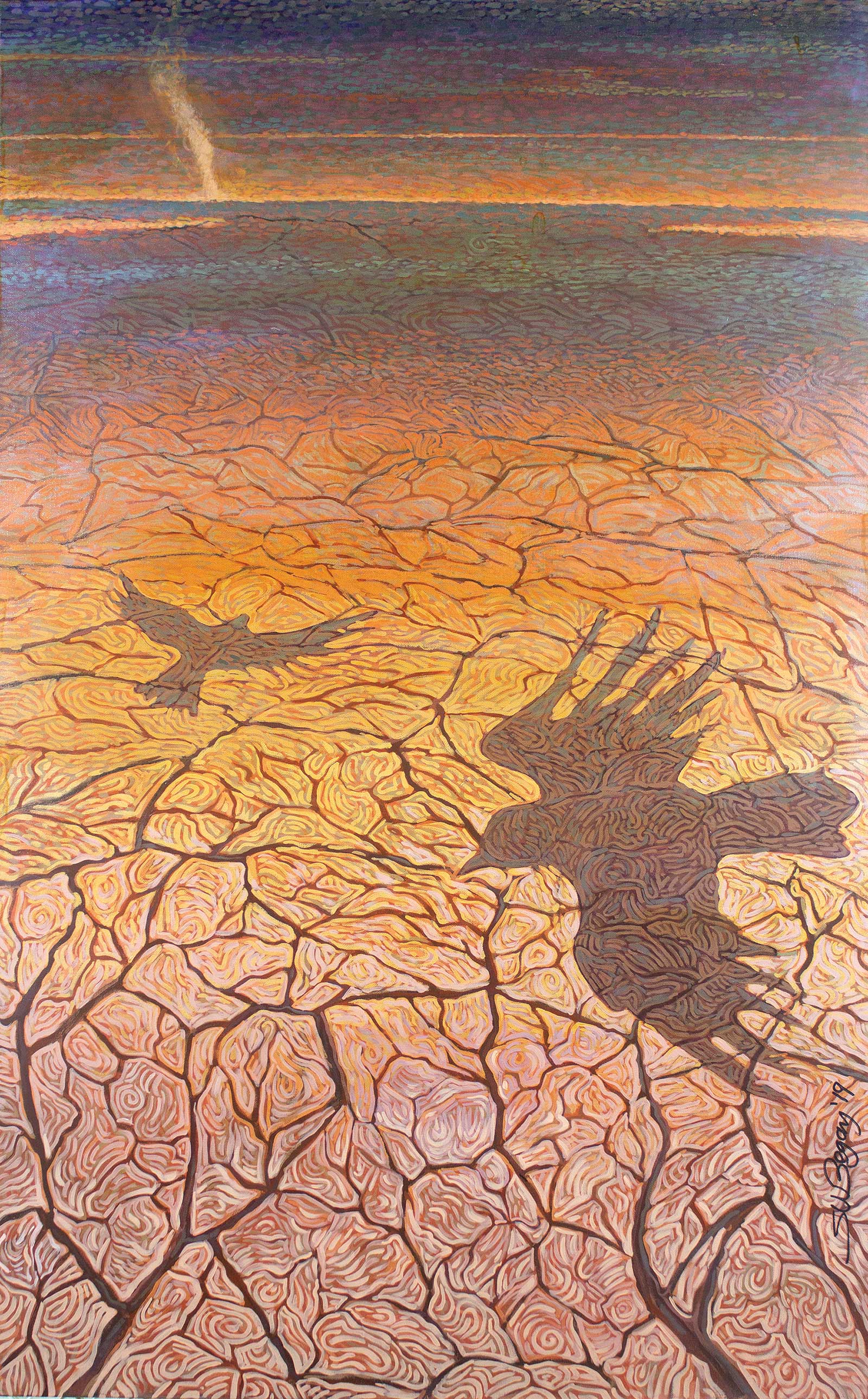
Shonto Begay (Navajo (Diné)), Above Parched Ground, 2019, acrylic on canvas, 48 x 30 in. Collection of the Tucson Museum of Art. Museum Purchase. Funds provided by Jerry Freund. 2021.14.
“I hope the exhibition will ultimately result as a jump-off point for our community to continue to evolve the dialogue about Western ideology and the role it has in defining our culture narratives and the powers and values that shape our lives.”
The complexity of the art of the American West is well-represented in the museum’s collection. Its centennial exhibition, Time Travelers: Foundations, Transformations and Expansions at the Centennial,held last year, was an impressive display of thoughtful curation and inclusion.
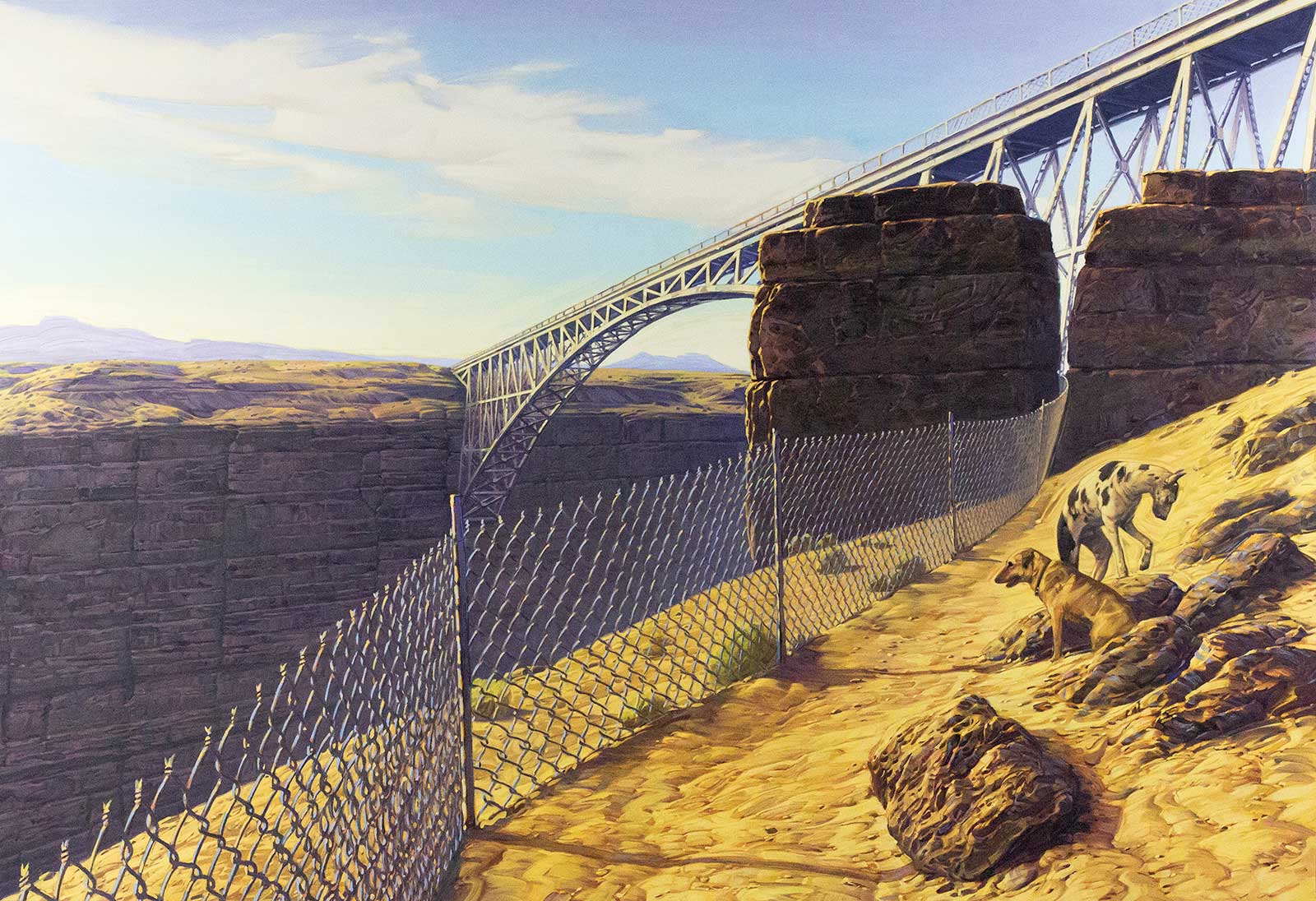
Chuck Forsman, Chasm, 1983, oil on Masonite, 48 x 70 in. Collection of the Tucson Museum of Art. Gift of the Patrick Mather Trust in honor of Dorothy Mather. 2019.4.
Among the works in the current exhibition is Shonto Begay’s Above Parched Ground, 2019. Begay (Diné) is an artist, author and educator. He grew up herding sheep and attended several Bureau of Indian Affairs boarding schools.
When I first spoke with him in 2011, he said, “We live in the part of the land where the skin of Mother Earth is thin, so we tread lightly with prayer on our lips. The thinness of the epidermis brings us closer to meet the soul of the mother. That’s why I’m drawn back to it.
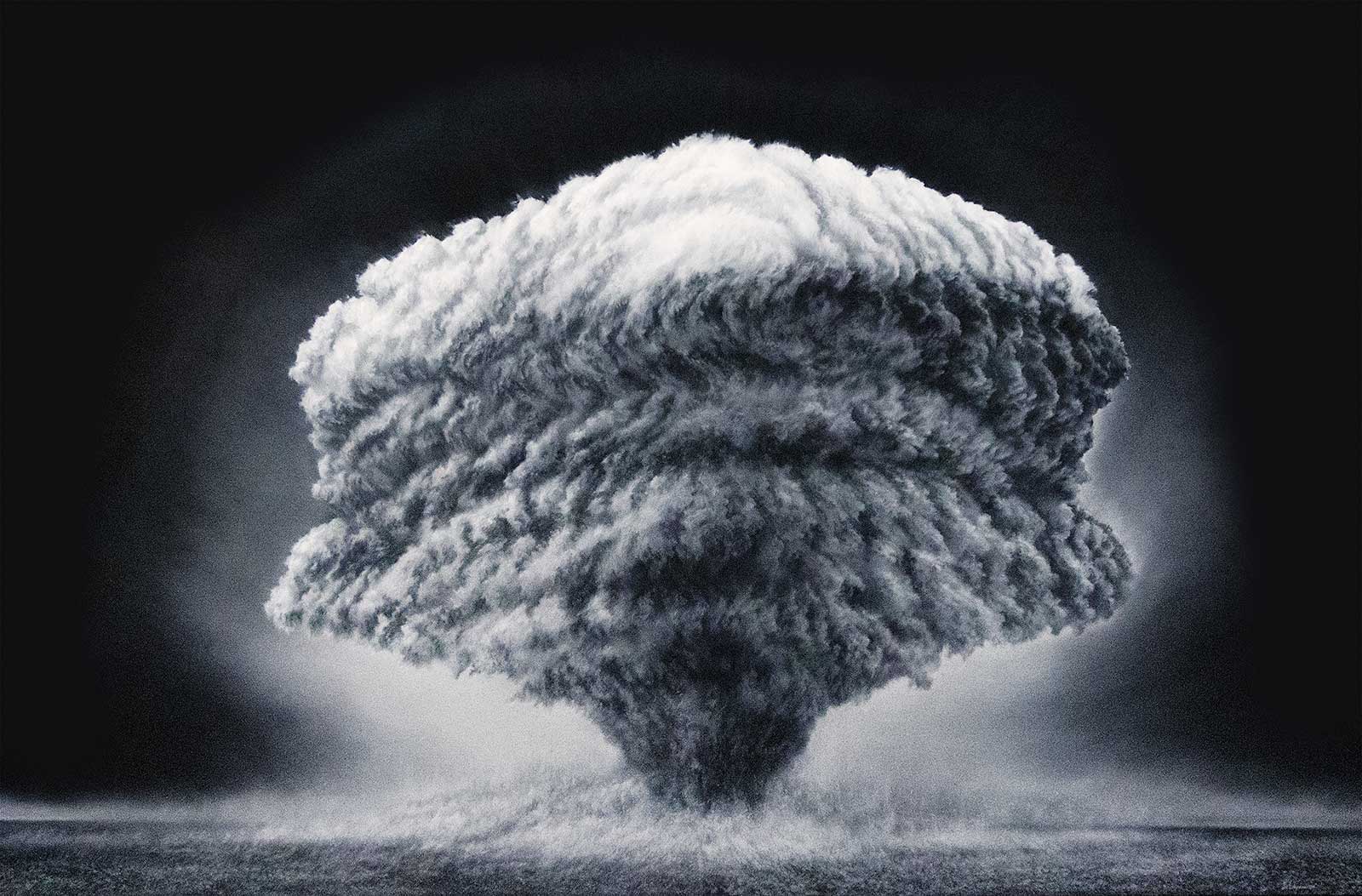
Ellen Wagener, Koyaanisqatsi (Life Out of Balance), 2008, pastel on paper mounted on board. Collection of the Tucson Museum of Art. Museum Purchase, Funds Provided by Robert Greenberg. 2008.9.1 / © Ellen Wagener.
“The land is quiet and sacred, but its stories are always audible. Anyone can pass into it—into a kinship with it. With patient eyes and quiet mouth we see more from that communication.”
Above Parched Ground is an example of his landscapes depicting the vagaries of nature and the relationship of nature and humankind. The shadows of ravens appear on the ground while a dust devil swirls in the distance, symbolizing how something ominous is always nearby and a part of life, according to the artist.
Cara Romero (Chemehuevi Indian Tribe) created her 119-inch-wide photograph of Santa Fe area Native artists and other creatives as part of her goal to “create a critical visibility for modern Natives, to get away from that one-narrative story, and to dig into our multiple identities.”
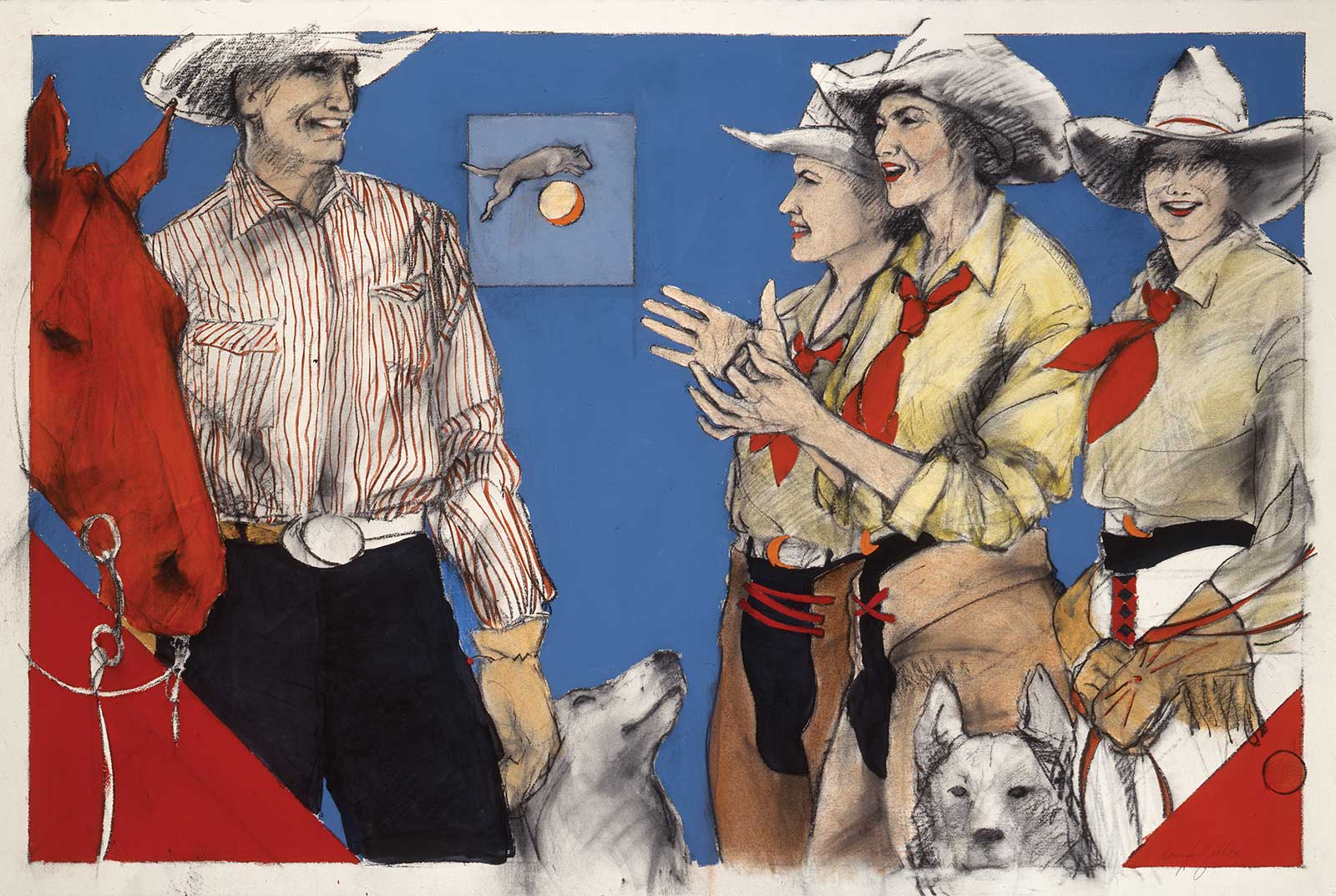
Donna Howell-Sickles, And the Dog Jumped Over the Moon, 1993, mixed media on paper, 40 x 60 in. Collection of the Tucson Museum of Art. Museum Purchase. Virginia Johnson Fund. 1995.60.
Pictured in Last Indian Market, 2014, are, left to right: Smoke Signals director Chris Eyre (Cheyenne/Arapaho), art historian Amber-Dawn Bear Robe (Siksiksa Nation), jeweler Kenneth Johnson (Seminole), potter Diego Romero (Cochiti), painter Darren Vigil Gray (Apache), sculptor Kathleen Wall (Jemez), artist and performer Marcus Amerman (Hopi/Choctaw), fashion designer Pilar Agoyo (Cochiti), jeweler Marian Denipah (Okay Owingeh), jeweler Steve LaRance (Hopi/Kakota), sculptor Cannupa Hanska-Luger (Mandan/Hidatsa/Arikara/Lakota), printmaker Linda Lomahaftewa (Hopi/Choctaw) and painter America Meredith (Cherokee).
The exhibition will be on view February 22 through June 22. —
Divergence of Legacy: Art of the American West in the 21st Century
February 22-June 22, 2025
Tucson Museum of Art
140 N. Main Avenue, Tucson, AZ 85701, (520) 624-2333, www.tucsonmuseumofart.org
Powered by Froala Editor


